






Abstract
Introduction:
Management of localized urachal carcinoma (UrC) requires an enbloc resection of umbilicus, bladder dome, along with the urachal tract and, bilateral pelvic lymph node dissection. 1 A transection of urachus near umbilicus to gain access into the space of Retzius during robotic-assisted laparoscopic approach violates the oncological principle. 2 However, there is a technical difficulty when proceeding without transecting the urachus near the umbilicus. Here, we aim to describe our technique of belly drop-in robot-assisted enbloc resection for urachal mass and analyze its outcomes. To our knowledge, we present the largest reported consecutive series on robot-assisted partial cystectomy (RAPC) in the management of UrC.3,4
Material and Methods:
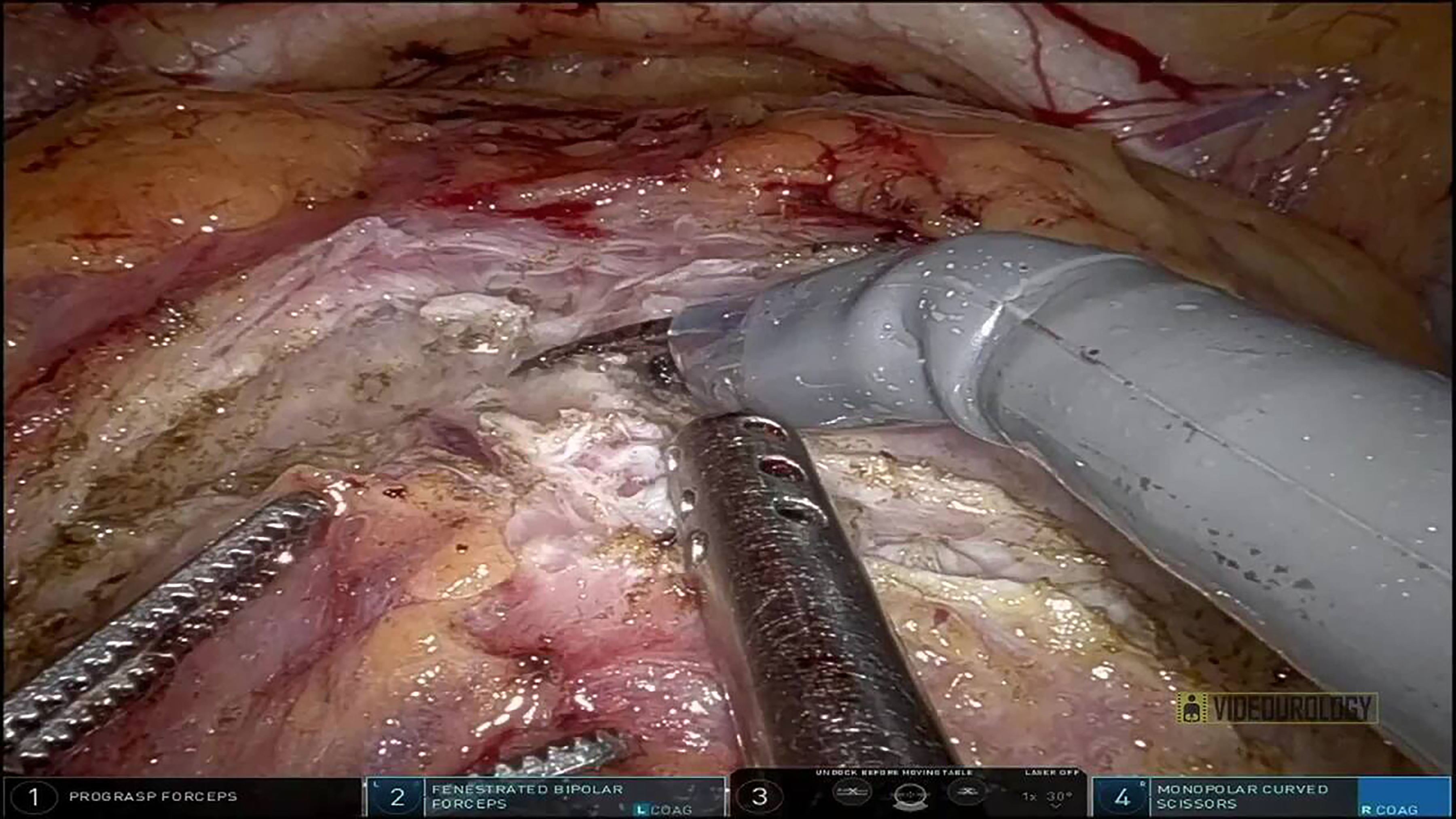
We retrospectively analyzed 14 patients who underwent RAPC for UrC with the belly drop-in enbloc resection technique consecutively from our prospectively maintained bladder cancer database between January 2020 and March 2024. Procedures were performed as described stepwise in the accompanying video using da Vinci Xi robotic system (Intuitive Surgical, Sunnyvale, CA, USA). In all these patients, the umbilicus was meticulously cleaned with chlorhexidine gluconate 4% w/v solution on the day preceding and on the day of surgery. Surgical steps include: (1) Establishment of pneumoperitoneum and insertion of ports, (2) Inspection of the abdominal cavity, (3) Umbilicus resection, ensuring an intact anatomical continuity with the urachus, (4) Umbilicus with an intact continuity with the urachus is pushed into the peritoneal cavity, and the anterior rectus sheath is approximated with 1-0 vicryl, (5) Re-establishment of pneumoperitoneum and bladder drop with adequate skeletonization of bladder dome, (6) Scoring of tumor margins with intra-operative cystoscopy guidance and small cystostomy creation, (7) Bladder emptying and tumor excision under direct vision with immediate bagging of specimen, (8) Two-layer cystorrhaphy, (9) Bilateral pelvic lymph node dissection (extended template), and (10) Removal of bagged specimen through resected umbilical site. Information on patients’ demographics, perioperative outcome parameters such as operative time, length of stay (LOS), estimated blood loss, complications, histological findings, and follow-up data was analyzed. Postoperative complications were graded by the Clavien-Dindo Classification (CDC) system.
Result:
The median age was 51 years (IQR 46–61). Nine patients (64%) were Sheldon stage IIIa, while five (36%) were stage IIIc. The mean operative time from docking to closure was 160 minutes (range 135–210), and the mean estimated blood loss was 120 mL (range 100–140 mL). There were no intraoperative complications. The median LOS was 3 days (IQR 2–4), and 2 patients (14.3%) had CDC grade II complications. Histopathological examination revealed adenocarcinoma in all the patients. Negative surgical margins were achieved in all patients. All stage IIIc patients received adjuvant chemotherapy. At a median follow-up duration of 45 months (IQR 28–58), the 3-year cancer-specific survival was 83.9% (95% CI 63.6–100) and, the 3-year recurrence-free survival was 76.6% (95% CI 53–99). None of our patients had any recurrence in the local site (bladder and pelvic node).
Conclusion:
Our technique of belly drop-in RAPC with enbloc omphalectomy for UrC is safe and an intuitive approach for en bloc resection with excellent oncological outcomes.
Author(s) have received and archived patient consent for video recording/publication in advance of the video recording of the procedure.
No competing financial interests exist during the last 3 years that might create a conflict of interest in connection with the video. The background music used is non-copyrighted and sourced from Incompetech.
Runtime of video:
06 mins 41 secs.