






Abstract
Introduction:
Flexible ureteroscopy (fURS) for renal stone management is often limited by impaired visibility, inefficient dust evacuation, and fragment migration. Suction-assisted access sheaths such as ClearPetra may improve intrarenal pressure control and facilitate active removal of stone fragments and dust. We describe a standardized stepwise technique for optimized use of ClearPetra during suction-based intracalyceal lithotripsy.
Materials and Methods:
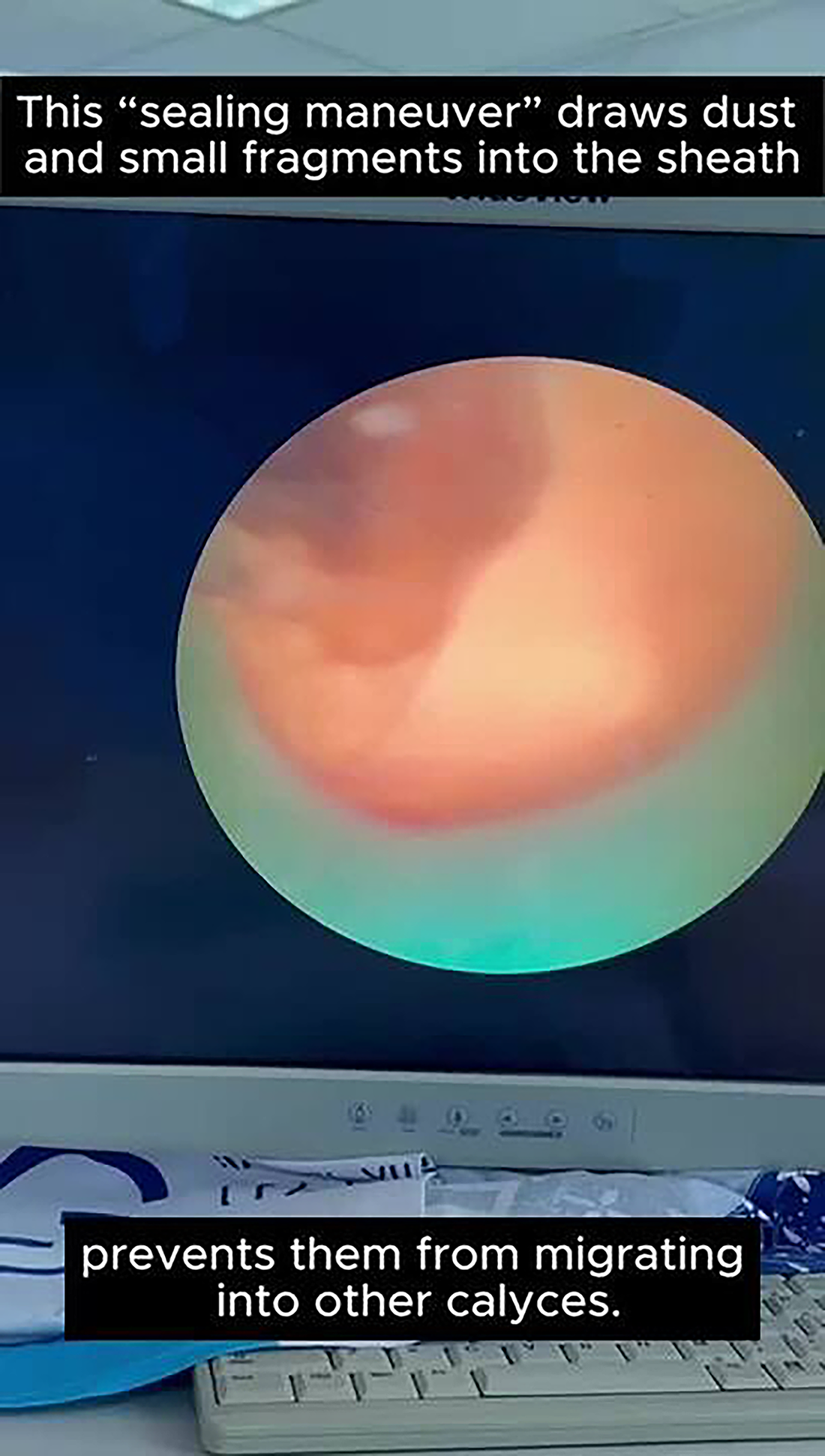
A structured stepwise technique for ClearPetra-assisted fURS was developed and applied in renal stone procedures. The ClearPetra sheath was advanced under direct vision into the target calyx without suction to maintain the collecting system’s stability and prevent collapse. Once positioned, the sheath ring was aligned directly against the stone, creating a sealed intracalyceal working chamber. Suction was then activated to enable continuous evacuation of stone dust and small fragments through the sheath. For larger stone fragments, the ureteroscope was maintained in a stable position, and holmium laser lithotripsy was applied centrally within the fragment to reduce stone burden without withdrawing instruments. Unlike conventional basket extraction techniques, when a large fragment became partially engaged within the sheath lumen, the ureteroscope was not withdrawn. Instead, popcorning was performed at the distal tip of the sheath, allowing progressive fragmentation of the stone while maintaining continuous suction. Dust and progressively smaller fragments were aspirated alongside the scope until complete fragment evacuation was achieved. At the end of lithotripsy, the sheath was repositioned into the proximal ureter, suction was discontinued, and the collecting system was refilled for systematic final inspection.
Results:
The technique enabled stable intracalyceal access with continuous suction-assisted evacuation of stone dust and fragments. Visualization remained consistently clear throughout the procedure due to active removal of particulate debris. Larger fragments were effectively managed in situ without scope withdrawal, using intracavitary laser fragmentation followed by immediate aspiration. The approach facilitated efficient stone clearance and reduced the need for repeated instrument exchanges. Final inspection after system refill confirmed adequate visualization of the collecting system.
Conclusions:
The stepwise ClearPetra-assisted fURS technique provides a reproducible method for optimizing suction-based intrarenal lithotripsy. It enhances visualization, improves dust and fragment evacuation, and allows efficient management of larger stone fragments without repeated scope withdrawal. This approach may improve procedural efficiency and completeness of stone clearance in renal stone surgery.
Disclosure Statement:
The authors declare no financial or commercial conflicts of interest. The study was conducted at the Department of Urology, Sheba Medical Center. Written informed consent for video recording and publication was obtained and archived prior to the procedure.
Running Time:
1 min 22 secs.
Keywords