







Abstract
Social media platforms are fighting misinformation by adding warning flags and suggesting related content. However, it is still unclear how users understand these flags and whether they influence users’ willingness to share content or believe false information—especially on video platforms such as TikTok. Do users notice these flags? If so, do the flags change how they view the content? Inoculation theory suggests that if individuals are forewarned about the potential for misinformation and are exposed to weakened forms of such misinformation, they may become less susceptible to misinformation. Does inoculating users with flagged content reduce false acceptance and sharing intentions later? To address these questions, we conducted a user study (N = 322) utilizing a TikTok-like interface, employing a 2 (misinformation warning: absent, present) × 3 (counterargument in pre-suggested false-flagged content: absent, cue, action) between-subject experimental design. While users noticed flags as intended, their perceptions regarding the frequency and harm of misinformation remain unchanged. Furthermoe, neither warning nor counterargument messages effectively reduced users’ acceptance of misinformation or their intention to share it, highlighting the boundary conditions of inoculation theory within immersive short video contexts. Interestingly, media literacy and TikTok dependency have emerged as significant predictors of false acceptance. This study discusses the practical implications for the design of ethical social media interfaces.
Introduction
The rumor that Samsung withdrew a $1 billion advertising deal for the 2024 Paris Olympics was widely circulated online. This claim originated from a TikTok user’s post marked with a “Satire” flag. 1 Despite the label indicating the content was satirical, the video went viral on TikTok and contributed to the spread of misinformation about the Paris Olympics. This raises important questions: Why do users trust information marked as satire? Does such a misinterpretation occur even when a video is officially flagged as misinformation by the platform? If so, is this due to the persuasive nature of the video modality, or do users simply disregard the labels, even when they notice them?
The New York Times has argued that TikTok is becoming a new home for misinformation. 2 TikTok has embedded tools that allow users to separate video and audio tracks from existing content, allowing them to create seemingly original videos. When a video goes viral, this process allows the same or similar content to essentially go viral multiple times. 3 Although content may circulate repeatedly across platforms, misinformation labeling remains a fundamental mechanism for mitigating the inadvertent dissemination of misleading information. A misinformation flag is a type of label, tag, or warning notice placed on content—especially online posts, videos, or articles—that signals the information might be false, misleading, or unverified. It was first introduced by Facebook in 2016 during the U.S. presidential campaign, following evidence that highly viral false news articles were disproportionately shared on the platform. 4 Initially, Facebook applied warning labels to content that had been debunked by third-party fact-checkers. The platform later shifted to a “Related Articles” format, which presented fact-checking information beneath questionable stories. 5 TikTok has since adopted a similar approach. Specifically, TikTok addresses potentially false or misleading content—sometimes mistakenly referred to by users as “false flags”—through a combination of user reporting, independent fact-checking partnerships, and automated moderation systems. 6
However, the effectiveness of this approach remains controversial. Many users struggle to comprehend misinformation flags 5 and prior research has produced mixed findings: some studies suggest that such flags reduce users’ acceptance of false information,7,8 whereas others argue that they have limited or no effect.9,12,18 Moreover, the lack of a standardized format, placement, or wording for misinformation flags can lead to greater confusion.13–15 To narrow this research gap, this study aims to explore (1) whether users notice misinformation flags in actual video social media interfaces, (2) whether the misinformation flag reduces users’ credibility of the content, and (3) if not, whether additional intervention helps users resist misinformation and decreases their intention to share it.
Given that platforms have adopted a range of mitigation strategies already—such as de-ranking misleading content, applying fact-checking labels, and providing related informational links—this study turns to inoculation theory as an alternative explanatory framework to examine the effectiveness of additional interventions. Inoculation theory explains an individual’s resistance to persuasion through a biomedical analogy. Just as vaccines trigger the production of antibodies to protect against future infections, a weakened version of a persuasive attack can stimulate an individual’s cognitive–motivational processes, making them more resistant to persuasion. 16 When applied to misinformation, inoculation theory suggests that if individuals are forewarned about the potential for misinformation and exposed to weakened forms of it, they may become more resistant to misinformation. 18 Thus, we argue that warning users about the presence of misinformation on social media, along with the counterargument procedure—consisting of reasoning about why misinformation should not be trusted and exposing users to actual misinformation—will reduce false acceptance.23
In highly immersive video-based social media such as TikTok, prompting the required action with a counterargument message could help users be attentive to the preexposed false-flagged content and generate their own rebuttals. Contextual warnings, which do not interrupt the user or require any action, are much less effective at changing behavior compared to interstitial warnings, which interrupt the user and necessitate interaction. Thus, we propose the research question and hypotheses (Table 1).
Proposed Hypotheses
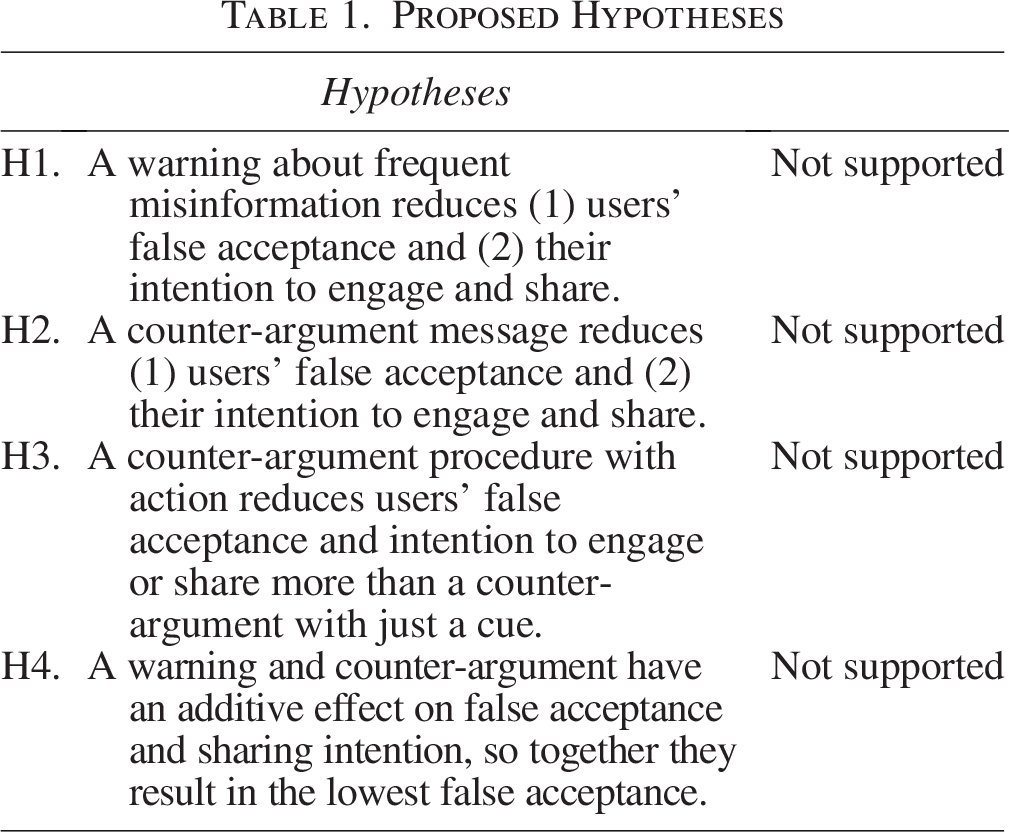
For video-based social media users, controlling for media literacy and TikTok dependency, what is the relationship between a misinformation warning message (absence vs. presence), counter-argument procedure (absence vs. presence with cue vs. presence with action), and false acceptance, intention to engage, and intention to share the misinformation?
Method
A between-subjects experiment was used to test the conceptual model with two warning conditions and three counterargument conditions.
Participants
CloudResearch was used to recruit participants who resided in the United States, were 18 years of age or older, and had a TikTok account. This study was approved by the Institutional Review Board of the researcher. A total of 322 participants who passed the attention check were included in the final analysis; participants’ ages ranged from 21 to 66, with an average age of 39.5 (SD = 9.5). Of the participants, 55.2 percent were male, and 41.8 percent were female. The survey took ∼8.3 minutes to complete, and participants received $1.6 as compensation.
Stimulus materials
Using Figma, which is a collaborative interface design tool, we developed six conditions. The flow began with the TikTok login screen, followed by a warning message (presence vs. absence), four videos, a counterargument message (absence vs. cue vs. action), and a misinformation video (Figure 1). We also added a control condition without a false flag in the final video (Figure 2). The details of this flow are presented in Figure 1.
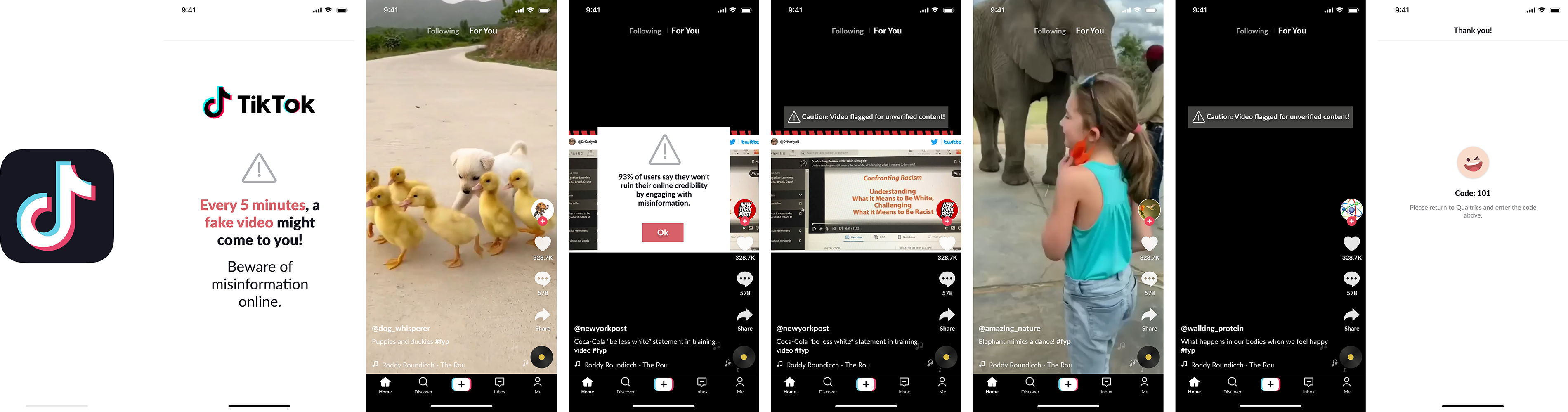
Stimuli flow. The series of photos shows screenshots of the actual short-form video stimuli presented to participants. They were first exposed to a warning message, followed by two videos, a counter-argument message cautioning them about false-flagged content, one general video, and finally a false-flagged video.
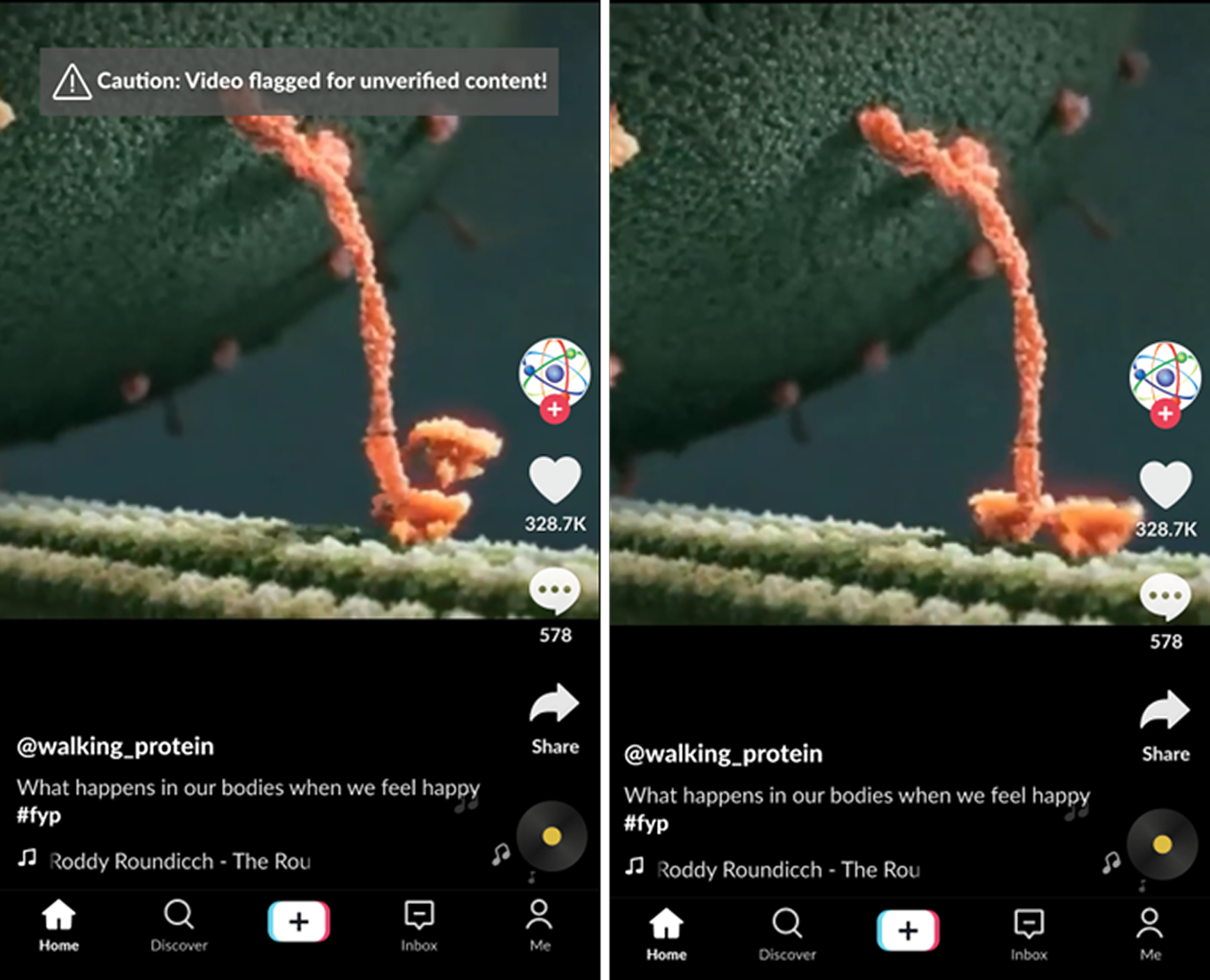
Misinformation flag. This shows the screenshot of short-form video stimuli with false flag and without false flag.
The warning message was operationalized as the presence or absence of the first susceptibility message. The counter-argument procedure was operationalized under three conditions: absence (control condition), presence with a cue, and presence with action (Figure 3). In the cue condition, a counter-argument pop-up appeared for five seconds before disappearing. In the action condition, the pop-up required participants to click “Ok” to proceed. In both cases, false information flags were shown afterward.
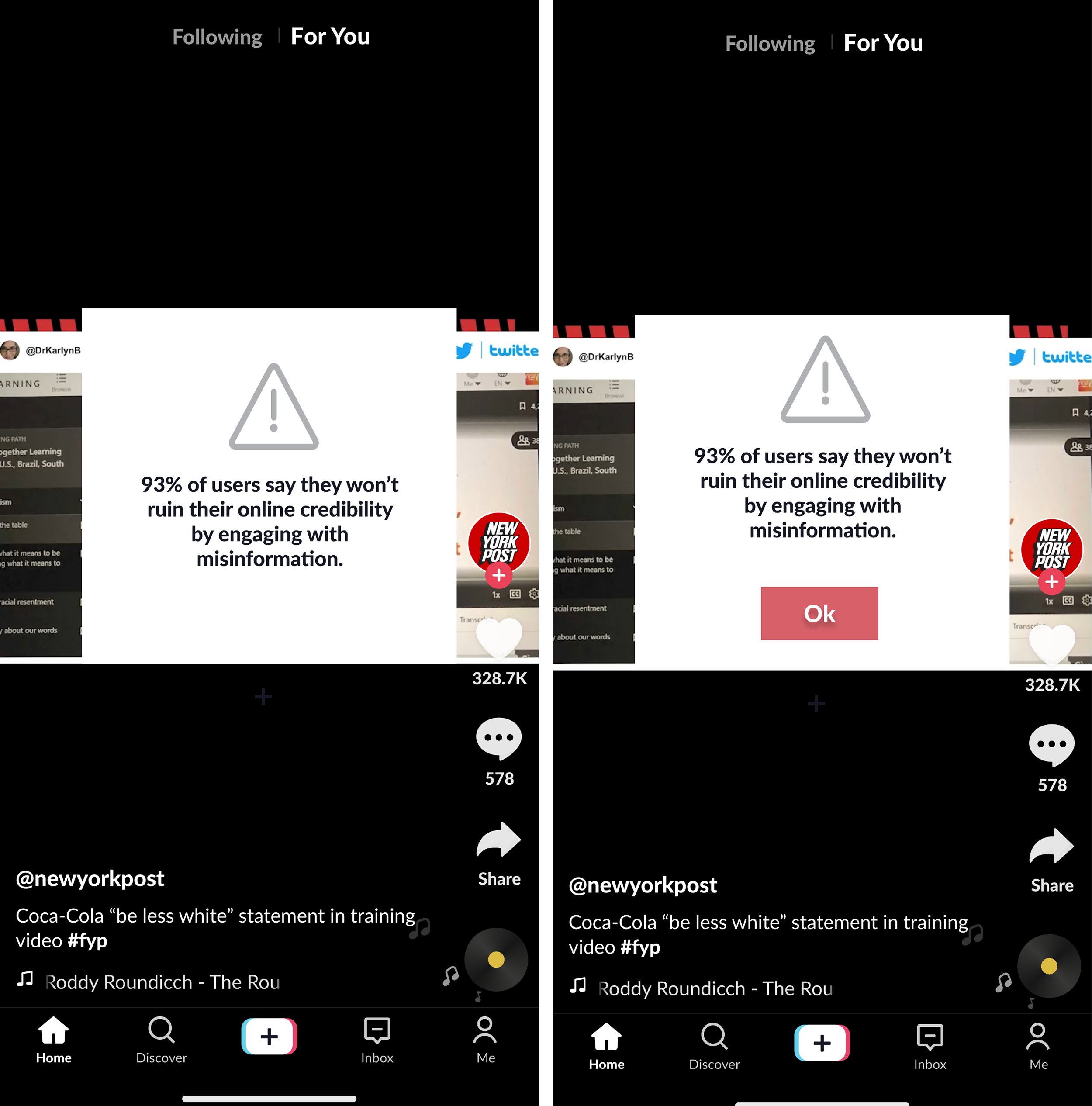
Cue vs. action in counter-argument message. This shows how counter argument message was manipulated. In the cue condition, a counter-argument pop-up appeared for five seconds before disappearing. In the action condition, the pop-up required participants to click “Ok” to proceed.
We considered two covariates in this study: media literacy (i.e., how much people understand digital media information) and TikTok dependency (i.e., how frequently participants use TikTok and how dependent they are on it).
Procedure
Participants were assigned to one of the seven conditions (six experimental condition + one control condition without false-flagged misinformation). Once they went through the TikTok interface, all relevant variables, including mediators and dependent variables, were measured (Table 2). Finally, the respondents were asked about their demographic information.
List of Measures for Variables
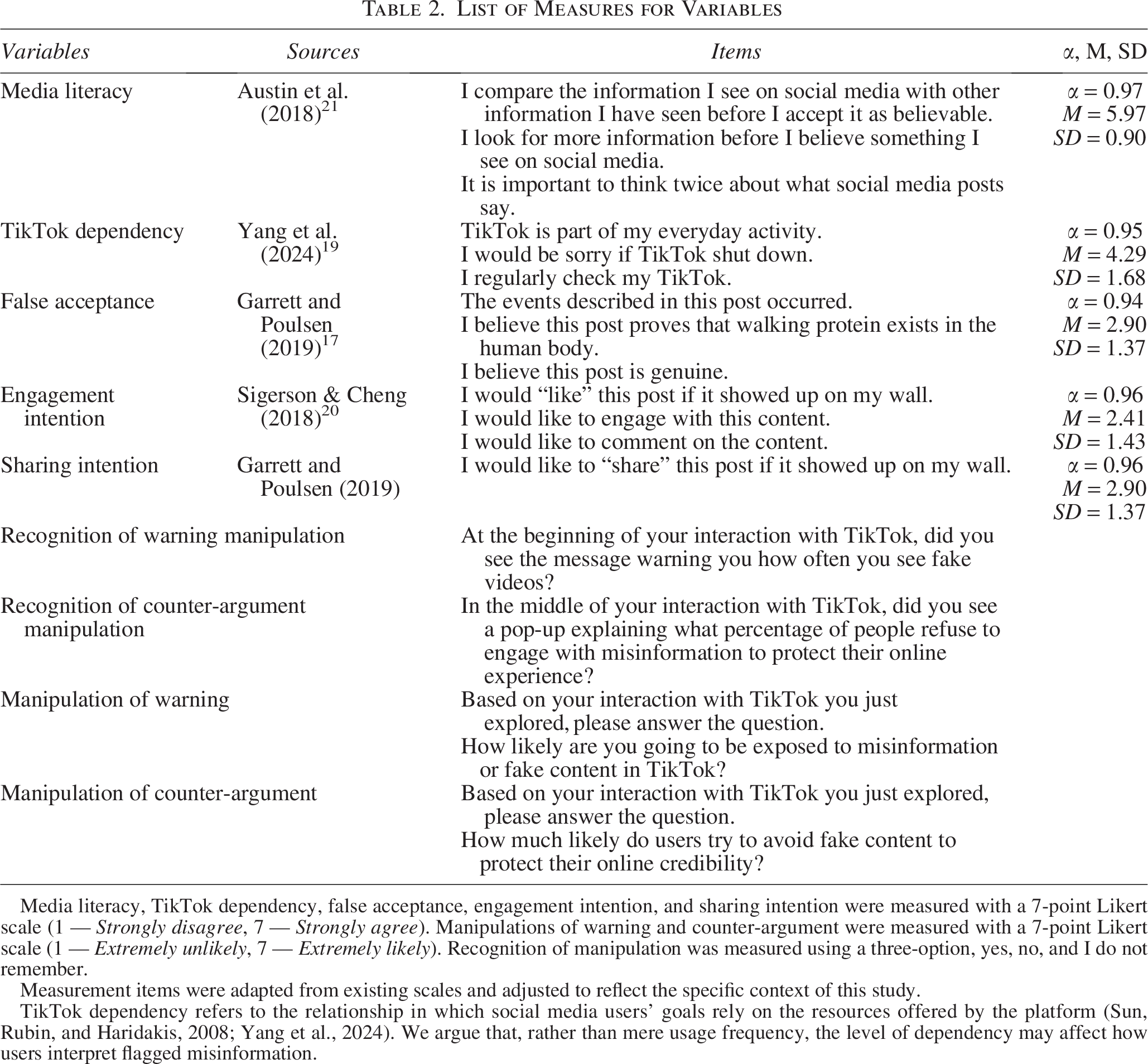
Media literacy, TikTok dependency, false acceptance, engagement intention, and sharing intention were measured with a 7-point Likert scale (1 — Strongly disagree, 7 — Strongly agree). Manipulations of warning and counter-argument were measured with a 7-point Likert scale (1 — Extremely unlikely, 7 — Extremely likely). Recognition of manipulation was measured using a three-option, yes, no, and I do not remember.
Measurement items were adapted from existing scales and adjusted to reflect the specific context of this study.
TikTok dependency refers to the relationship in which social media users’ goals rely on the resources offered by the platform (Sun, Rubin, and Haridakis, 2008; Yang et al., 2024). We argue that, rather than mere usage frequency, the level of dependency may affect how users interpret flagged misinformation.
Results
We conducted two manipulation checks for the warning message: whether participants saw it and whether it affected their perceived exposure frequency to misinformation. Only the first manipulation check was successful x2 (2, 276) = 105.27, p < 0.001. We evaluated the counterargument message manipulation using the same procedure. Similarly, participants identified the message x2 (4, 276) = 148.19, p < 0.001, but the message did not change their perception.
To understand whether the misinformation flag itself has an effect without additional intervention, we compared participants’ credibility of the content depending on the existence of the flag. Involvement in the topic was controlled for all the tests. A one-way ANCOVA showed that the misinformation flag did not affect participants’ credibility of the content. To test the hypotheses, a MANCOVA was conducted. The results revealed that neither the warning message nor the counter-argument had a significant effect on users’ false acceptance a , engagement intention b , and sharing intention. Warning and counter-arguments also did not show an interaction effect (Table 3).
False Acceptance: Warning × Counter Argument
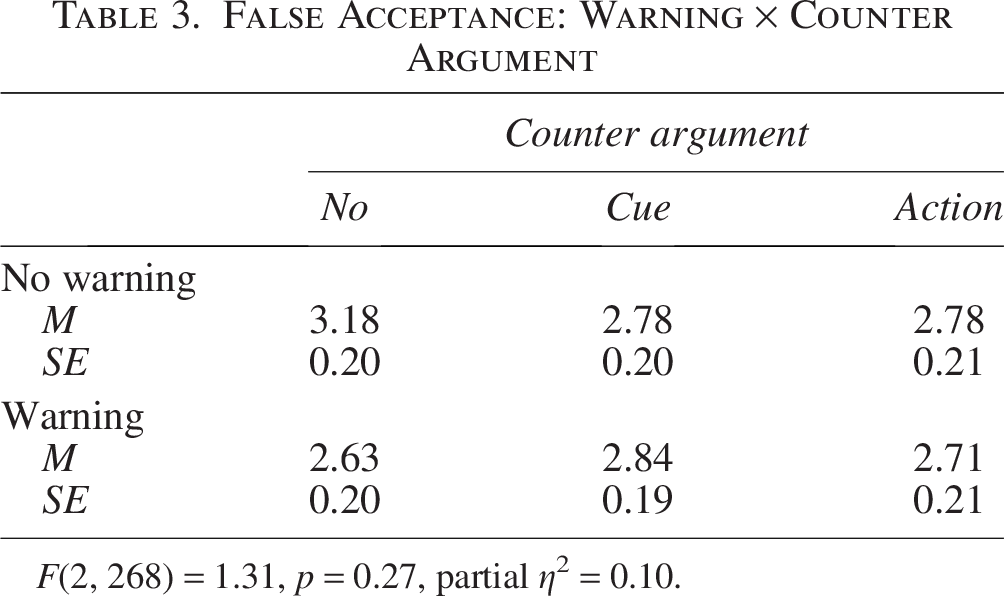
F(2, 268) = 1.31, p = 0.27, partial η2 = 0.10.
The correlation analysis showed that TikTok dependency and media literacy were highly correlated with false acceptance, engagement intention, and sharing intention (Table 4). Linear regression analysis was employed to examine TikTok dependency and media literacy as predictors of false acceptance, engagement intention, and sharing intention. The results show that TikTok dependency and media literacy accounted for a significant portion of the variance in the outcome variables (Tables 5 and 6). False acceptance was positively associated with TikTok dependency and negatively associated with media literacy. A similar pattern was observed for both the engagement and sharing intentions.
Correlations of All Measured Variables
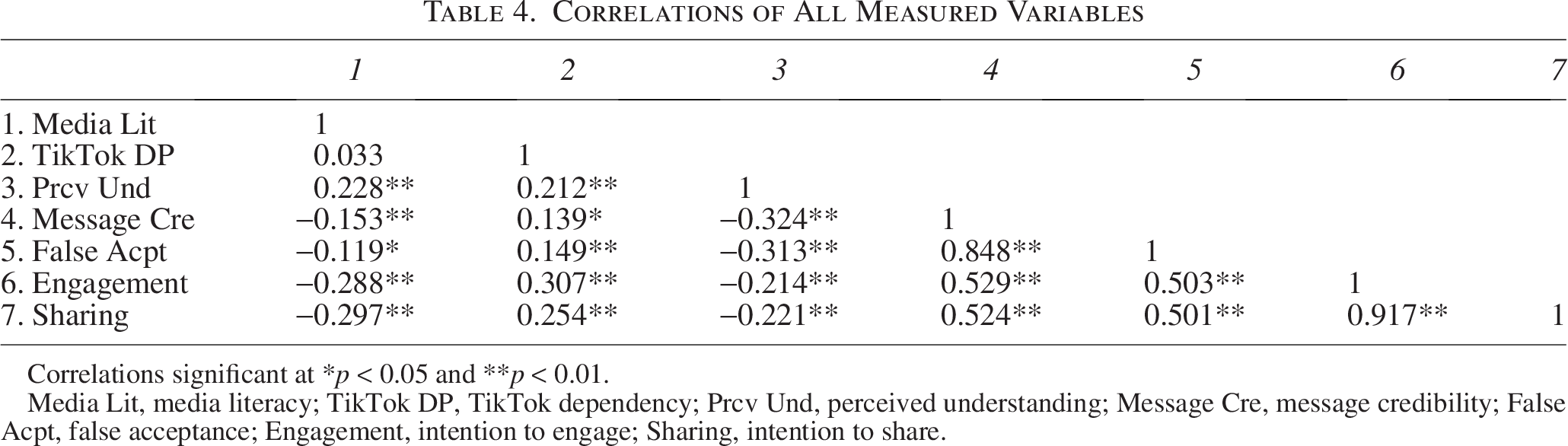
Correlations significant at *p < 0.05 and **p < 0.01.
Media Lit, media literacy; TikTok DP, TikTok dependency; Prcv Und, perceived understanding; Message Cre, message credibility; False Acpt, false acceptance; Engagement, intention to engage; Sharing, intention to share.
Predictors of Engagement Intention
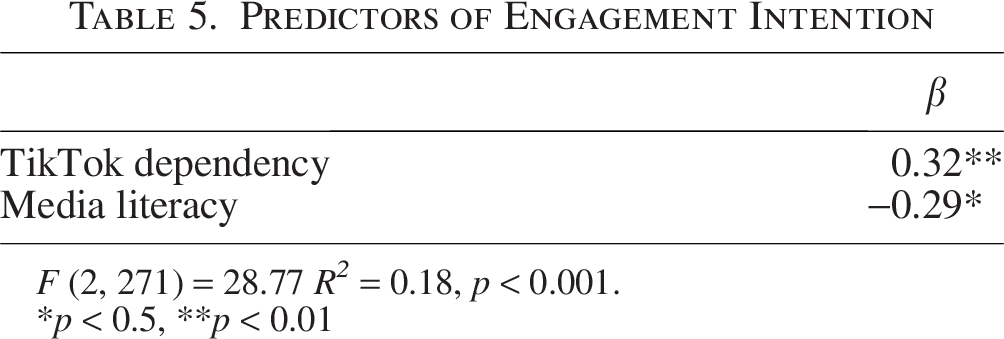
F (2, 271) = 28.77 R2 = 0.18, p < 0.001.
*p < 0.5, **p < 0.01
Predictors of Sharing Intention
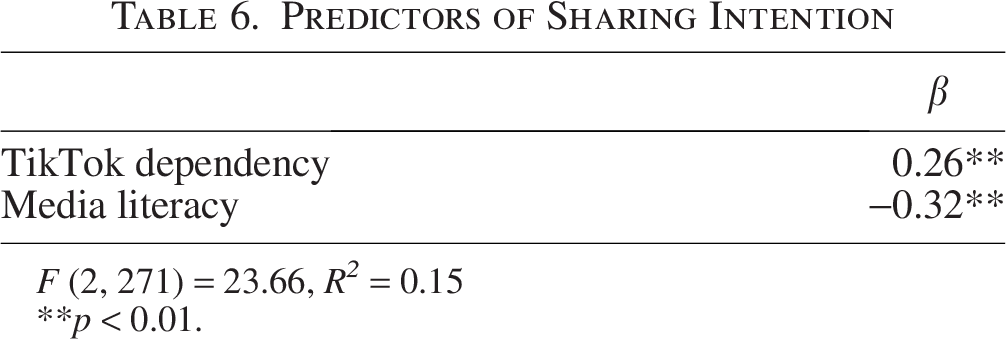
F (2, 271) = 23.66, R2 = 0.15
**p < 0.01.
Discussion
Previous studies on preventing the spread of misinformation in social media have primarily focused on specific topics or on educating users,23–25 often without considering how these strategies can be implemented within real social media interfaces. 26 Research applying inoculation theory also has typically been conducted in controlled settings 23 —for example, using games where users take the role of fake news generators to examine how such mechanisms affect their ability to combat misinformation. 26 While these studies offer valuable insights, very few have tested whether inoculation strategies are effective within actual social media environments. The current study sought to examine whether previous findings can be meaningfully implemented in a real social media platform.
The study results suggest that applying inoculation effects within real social media interfaces has important limitations. Participants noticed the message, but it did not meaningfully change their perception or subsequent false acceptance. Specifically, the experimental condition—characterized by a brief, single exposure to the stimuli—may have contributed to the null findings. Prior research indicates that warnings are often effective only after repeated exposure, 28 and meta-analyses have shown that inoculation treatments require time to build meaningful resistance to misinformation. 29 Given that implementing repeated exposures to achieve full inoculation in real social media interfaces poses considerable practical challenges, this study contributed to understanding a boundary condition of the theory in real-world social media contexts. Future research should explore how to address this boundary condition without undermining users’ social media experience.
In addition, the limited effectiveness of warnings and counterarguments may be explained by the immersive and fast-paced nature of short video formats, 30 which can easily divert users’ attention from the intended messages. Participants remembered seeing the intervention message, but it did not affect their perception. This might be related to the immersive nature of the series of videos to which they were exposed. 30 Furthermore, as the findings reveal that users’ media literacy and TikTok dependency significantly affected false acceptance and sharing intentions, platform designers should consider tailored strategies that account for users’ behavioral patterns and knowledge levels.
Conclusion
To reduce users’ false acceptance of misinformation, sustained efforts and interventions that provide actionable advice are essential. In our study, users noticed the misinformation flag even within engaging video stimuli; however, the message did not meaningfully affect their perceptions and, consequently, failed to reduce false acceptance. Identifying effective interventions that can meaningfully shift user perceptions and inoculate users in real social media interfaces remains a critical area for future research. In the meantime, recognizing that user perceptions may not be easily altered, enhancing media literacy over the long term may offer a more sustainable solution. Given that TikTok dependency is a significant predictor of false acceptance and engagement intention, platforms can develop tailored approaches for users with a high TikTok dependency. In addition, considering that content-sharing intention is negatively associated with users’ media literacy, we suggest that platforms can also consider targeting a specific audience that has low media literacy but high TikTok dependency with the right intervention.
Footnotes
Acknowledgment
The author would like to thank Andrew Pacheco for his work on the stimuli and Dr. Aiping Xiong for her feedback on the direction of the article.
Author Disclosure Statement
No competing financial interests exist.
Funding Information
The current study did not receive any funding.
Author’s Contribution
Y.J. contributed to the conceptualization, implementation of the research, analysis of the results, and writing of the article.
a
Warning: F (1, 270) = 1.49, p = 0.22, partial ηp2 = 0.005 Counter argument: F (2, 269) = 0.16, p = 0.86, partial ηp2 = 0.001
b
Warning: F (1, 270) = 0.02, p = 0.9, partial ηp2 = 0.000 Counter argument: F (2, 269) = 1.13, p = 0.32, partial ηp2 = 0.008