






Abstract
The growing prevalence of short video platforms among middle-aged and older adults raises questions about their mental health implications. Using a national survey of 5,039 Chinese adults aged 50 years and above, this study examined how short video use relates to depressive symptoms through competing mechanisms using structural equation modeling. The results showed a dual-path pattern: Short video use was associated with fewer depressive symptoms via more positive attitudes toward aging, but also with increased symptoms via Internet addiction. Moderation analyses indicated that higher levels of Internet addiction were associated with a weaker protective cognitive pathway. Greater diversity in platform use was linked to higher addiction risk and reduced cognitive benefits, suggesting that fragmented engagement may correspond to less favorable psychosocial patterns. Urban–rural differences further indicated that these pathways are context-dependent. Overall, the findings highlight the importance of both behavioral patterns and usage structure in understanding the mental health effects of digital media in later life.
Keywords
Introduction
Research on digital media and mental health has increasingly shifted from concerns about access to questions of how digital technologies are used and the consequences of their use. As digital access becomes widespread, differences in patterns and quality of engagement have emerged as key determinants of psychosocial outcomes, particularly among middle-aged and older adults.1,2 In this context, short video platforms have rapidly gained popularity because of their low entry barriers and algorithm-driven personalization, making them an important yet understudied form of digital engagement in later life.
Existing empirical studies present a paradox. On the one hand, frequent social media and video use have been found to be related to mental health problems, such as depression, anxiety, lower levels of happiness, and decreased life satisfaction among adults.3–6 On the other hand, short videos may serve as a powerful tool to engage with new information, access entertainment, 7 and maintain social connections. 8 Such engagement may be associated with a more positive outlook on the aging process itself. Holding more positive attitudes toward aging is a crucial psychological resource 9 and is robustly associated with better mental health and lower levels of depressive symptoms.10–12 However, these two perspectives are typically examined in isolation, resulting in an incomplete understanding of how short video use relates to mental health.
To address this gap, we propose that these seemingly contradictory effects can be understood through a resource competition framework. Drawing on limited psychological resources theory,13,14 we argue that short video use activates both behavioral and cognitive processes that compete for finite attentional and self-regulatory resources. 15 Engagement that is linked to more favorable cognitive outcomes, such as more positive attitudes toward aging, requires reflective processing and self-regulation, whereas engagement associated with addictive tendencies may draw on these same limited resources through habitual and repetitive use. As a result, the two pathways cannot operate independently or additively but may instead be inherently constrained by resource competition.
Furthermore, behavior–cognition conflict theory suggests that while cognitive engagement with short videos may be linked with feelings of youthfulness, relevance, and social connectedness, excessive or compulsive use may conflict with older adults’ internalized norms regarding self-control, health, and “successful aging.” 16 The psychological tension arising from this inconsistency necessitates prioritization of one orientation over the other, thereby amplifying one pathway while attenuating the competing pathway.
Together, these perspectives imply that short video use may be associated with two competing pathways: a beneficial cognitive pathway and a detrimental behavioral pathway. (a) A protective pathway via attitudes toward aging and (b) a detrimental pathway via Internet addiction. Using a large national sample of middle-aged and older Chinese adults, we tested a parallel mediation model and further examined whether these pathways interact and vary across social contexts.
Methods
Participants and procedure
Data for this study were drawn from the China Digital Divide and Digital Inclusion Survey (CDDDIS), a national survey conducted between November 2022 and January 2023. The sampling design comprehensively accounted for administrative ranking, population size, economic development, urbanization level, and operational feasibility of cities (municipalities or prefecture-level cities). The CDDDIS is a nationally representative survey of Chinese mainland, covering 53 county-level units and 252 rural villages or urban communities. The survey targeted individuals aged 50 years and above, using a stratified multistage probability-proportional-to-size sampling method. Finally, the survey achieved a total sample size of 5,231 participants, and the response rate was 86.49 percent.
After listwise deletion of cases with missing data on key variables, the final analytical sample consisted of 5,039 participants (50.9 percent female), with a mean age of 61.79 years (standard deviation [SD] = 9.37). The study was approved by the Ethics Committee of Renmin University of China. All participants provided their written informed consent to participate in this study.
Measures
Short video use
Participants’ short video consumption was measured with a single item asking about their average daily usage duration in the past week. Responses were coded on a 7-point ordinal scale: 0 = never, 1 = ≤30 minutes, 2 = 30 minutes–1 hour, 3 = 1–2 hours, 4 = 2–3 hours, 5 = 3–4 hours, and 6 = >4 hours. Higher scores indicated greater frequency and duration of short video use. In addition, we assessed participants’ use of short video applications via a multi-response item that asked which platforms they had used in the past week. Use was defined as either having the application installed on a mobile or other device or having watched short videos through a web platform. Response options included Douyin, Kuaishou, Huoshan, Xigua Video, Haokan Video, Pear Video, Weishi, WeChat Channels, other (specified by the respondent), and “do not use short video applications.” We summed the number of selected applications to create a measure of diversity in short video use, with higher scores indicating engagement with a wider range of platforms.
Attitudes toward aging
Attitudes toward aging were measured using the 12-item short version of the Expectations Regarding Aging Survey. 17 The scale assesses both positive and negative perceptions of aging. In this study, all items were scored so that higher total scores indicated more positive attitudes toward aging. The scale demonstrated good reliability in the current sample (Cronbach’s α = 0.75).
Internet addiction
Internet addiction was assessed using a 10-item version of the Revised Chen Internet Addiction Scale, which has been validated for Chinese populations. 18 The scale captures core addiction symptoms, including compulsive use, withdrawal, and tolerance. A sample item is “I feel distressed or down when I cannot go online.” Items were rated on a 4-point scale (from 0 = never to 3 = always). A total score was calculated, with higher scores representing greater severity of Internet addiction. The scale demonstrated excellent internal consistency in the current study (Cronbach’s α = 0.91).
Depressive symptoms
Depressive symptoms were measured using the 10-item short form of the Center for Epidemiological Studies Depression Scale (CES-D-10). 19 This scale is a widely used and validated measure for assessing depressive symptomatology in community samples, including Chinese elderly populations. 20 Participants rated the frequency of symptoms over the past week (e.g., “I felt lonely”) on a 4-point scale (from 0 = rarely or none of the time to 3 = most or all of the time). After reverse-scoring the positive items, a sum score was computed. Higher scores indicated more severe depressive symptoms. The scale showed good reliability (Cronbach’s α = 0.70).
Covariates
Based on prior literature, we included several demographic and socioeconomic variables as covariates to control for potential confounding effects. This included age (in years), gender (0 = male, 1 = female), education level, marital status (0 = non-married, 1 = married), employment status (0 = unemployed, 1 = employed), hukou (household registration type; 0 = rural, 1 = urban), number of living children, social network size, living alone (0 = no, 1 = yes), need for caring for parents (0 = no, 1 = yes), activities of daily living, quarantine duration during the COVID-19 pandemic (log-transformed), annual income (log-transformed), and self-reported socioeconomic status.
Analytic strategy
We employed structural equation modeling (SEM) in Stata 16.0 to test the proposed parallel mediation model. Model specification included paths from short video use to both mediators (attitudes toward aging and Internet addiction), as well as paths from both mediators to depressive symptoms. A direct path from short video use to depressive symptoms was also estimated. All covariates were included in the model, with paths estimated to all endogenous variables. To formally test the significance of the indirect effects, we used the bootstrapping method with 5,000 resamples to generate 95 percent bias-corrected confidence intervals (CIs). Furthermore, to formally examine the competitive nature of the two indirect effects, we compared the magnitudes of the indirect pathways through attitudes toward aging and Internet addiction by constructing bootstrapped CIs for their difference. In addition, we introduced Internet addiction as a moderator to investigate its moderating role in the associations from short video use to attitudes toward aging and from attitudes toward aging to depressive symptoms, with a focus on whether Internet addiction weakens these positive associations. To address the limitation of a single-dimensional measure of short video use, we incorporated diversity of short video use as an additional independent variable into the parallel mediation model, examining its specific effects on the aforementioned pathways. Moreover, multigroup analysis was conducted to explore potential urban–rural differences in the association between short video use and depressive symptoms. To assess the potential threat of common method bias arising from the use of self-reported survey data, we conducted two diagnostic tests. First, Harman’s single-factor test was performed using all observed items for attitudes toward aging, Internet addiction, and depressive symptoms. Second, we estimated a single-factor confirmatory factor analysis model in which all observed items were loaded onto one common latent factor. Common method bias would be considered a serious concern if a single factor accounted for a large proportion of covariance among the measures or if the single-factor model showed acceptable fit. Finally, to examine the stability of the findings, we conducted several sensitivity analyses. First, short video use was recoded into three categories: nonuse, light usage, and heavy usage. Light usage was defined as short video use scores of 1–3, whereas heavy usage was defined as scores of 4–6. Second, depressive symptoms were recoded as a binary outcome using a CES-D-10 cutoff of ≥10. 19 Third, we repeated the analyses after excluding upper-tail extreme values. Because CES-D-10 and Internet addiction scores are discrete integer-based scales, the cutoffs were chosen to approximate the upper 5 percent of each distribution. In addition, to partially reduce observable selection differences between short video users and nonusers, we adopted propensity score matching (PSM), using whether participants used short video applications as the grouping variable to estimate the associations between short video use, attitudes toward aging, Internet addiction, and depressive symptoms.
Results
Preliminary analyses
Descriptive statistics for the full sample and for the urban and rural subsamples are presented in Table 1. The total sample (N = 5,039) had a mean age of 61.79 years (SD = 9.37), with a nearly even gender split (50.9 percent female). Preliminary analyses indicated potentially important differences between urban and rural participants across several demographic and outcome variables, warranting further investigation into the moderating role of geographic context.
Descriptive Characteristics of the Study
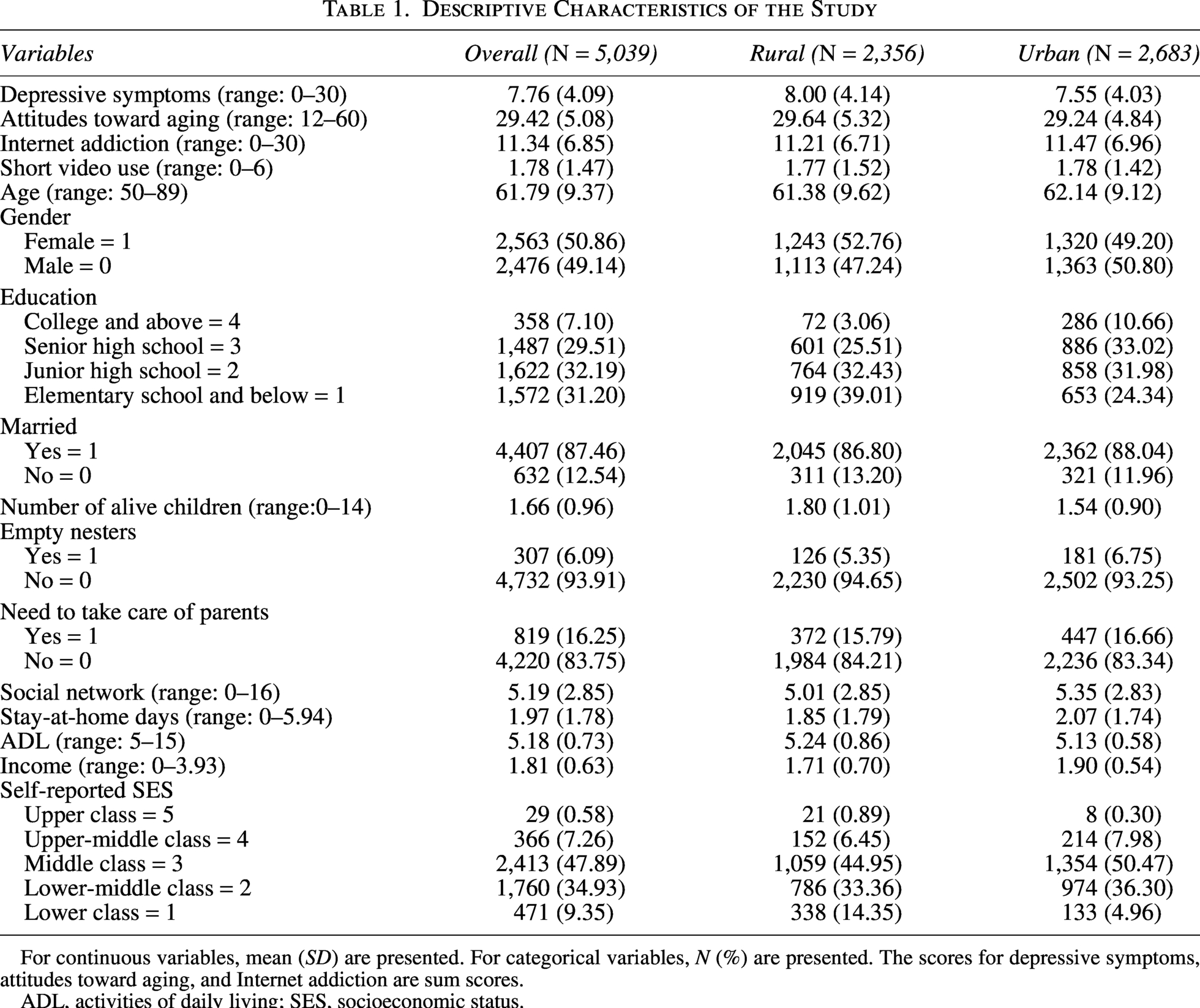
For continuous variables, mean (SD) are presented. For categorical variables, N (%) are presented. The scores for depressive symptoms, attitudes toward aging, and Internet addiction are sum scores.
ADL, activities of daily living; SES, socioeconomic status.
Structural model of short video use, mediators, and depressive symptoms
To test the central hypothesis that short video use is associated with depressive symptoms via opposing indirect pathways, we estimated a parallel mediation model using structural equation modeling. The model, which specified two simultaneous pathways via attitudes toward aging and Internet addiction, showed a good fit to the data: χ2(874) = 5,248.421 (p < 0.001), Root Mean Square Error of Approximation (RMSEA) = 0.032 < 0.05, Comparative Fit Index (CFI) = 0.912 > 0.9, Tucker-Lewis Index (TLI) = 0.901 > 0.9, Standardized Root Mean Square Residual (SRMR) = 0.046 < 0.05. Meanwhile, the standardized estimates of factor loading for attitudes toward aging, Internet addiction, and depressive symptoms ranged from 0.425 to 0.611, 0.582 to 0.753, and 0.405 to 0.539, respectively. Factor loadings were acceptable, with most values exceeding 0.4, and all being statistically significant (p < 0.001).
Figure 1 shows the simplified path diagram for association between short video use, attitudes toward aging, Internet addiction, and depressive symptoms, and the detailed results of SEM estimates are presented in Supplementary Table S1. The results provided evidence consistent with our dual-pathway framework. As hypothesized, short video use was associated with two distinct pathways. First, a protective pathway was identified: greater short video use was significantly associated with more positive attitudes toward aging (β = 0.052, p = 0.003), which in turn were strongly linked to lower levels of depressive symptoms (β = −0.344, p < 0.001). Second, a simultaneous detrimental pathway was also evident: short video use had a strong association with increased Internet addiction (β = 0.345, p < 0.001), which subsequently was linked to more severe depressive symptoms (β = 0.126, p < 0.001). Notably, even after accounting for these two mediators, a significant direct effect from short video use to lower depressive symptoms remained (β = −0.098, p < 0.001).
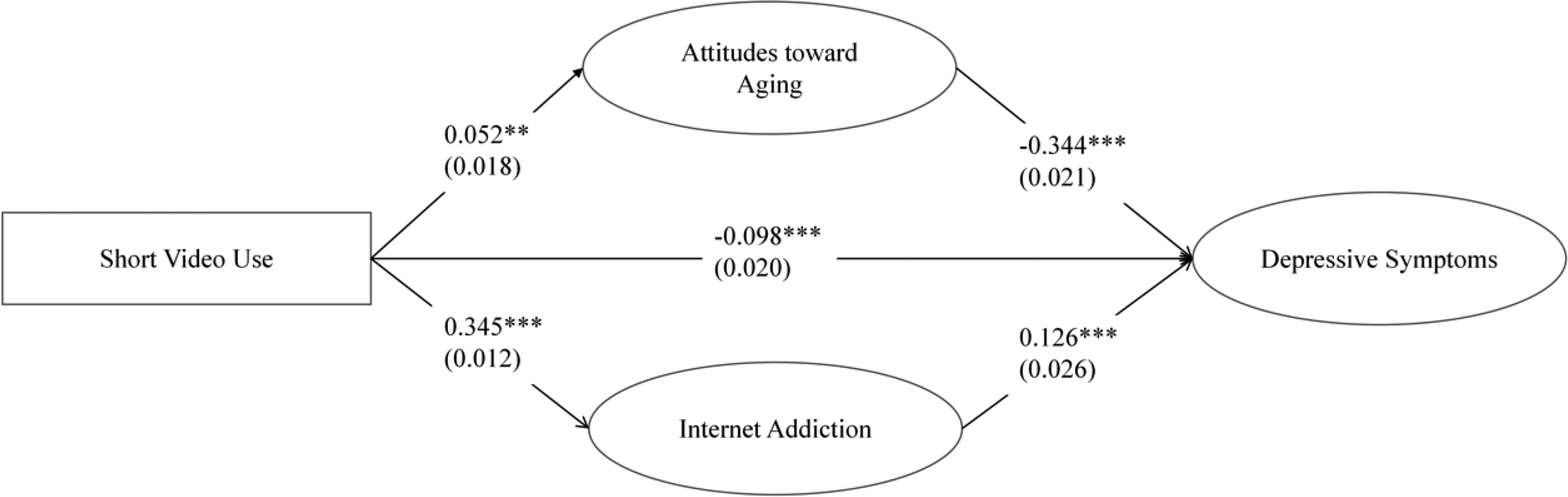
The parallel mediation model linking short video use to depressive symptoms. **p < 0.01, ***p < 0.001. All the path coefficients are standardized.
Next, a formal bootstrapping analysis was conducted to quantify and test the significance of these pathways, with detailed results shown in Table 2. The analysis indicated a significant negative indirect effect through attitudes toward aging (β = −0.004, p = 0.008) and a significant positive indirect effect through Internet addiction (β = 0.009, p < 0.001). Subsequent contrast analysis revealed that the positive indirect effect via Internet addiction was significantly stronger than the negative indirect effect via attitudes toward aging. Specifically, the difference between the absolute values of these two competing pathways was statistically significant (
Direct and Indirect Effects from the Parallel Mediation Model
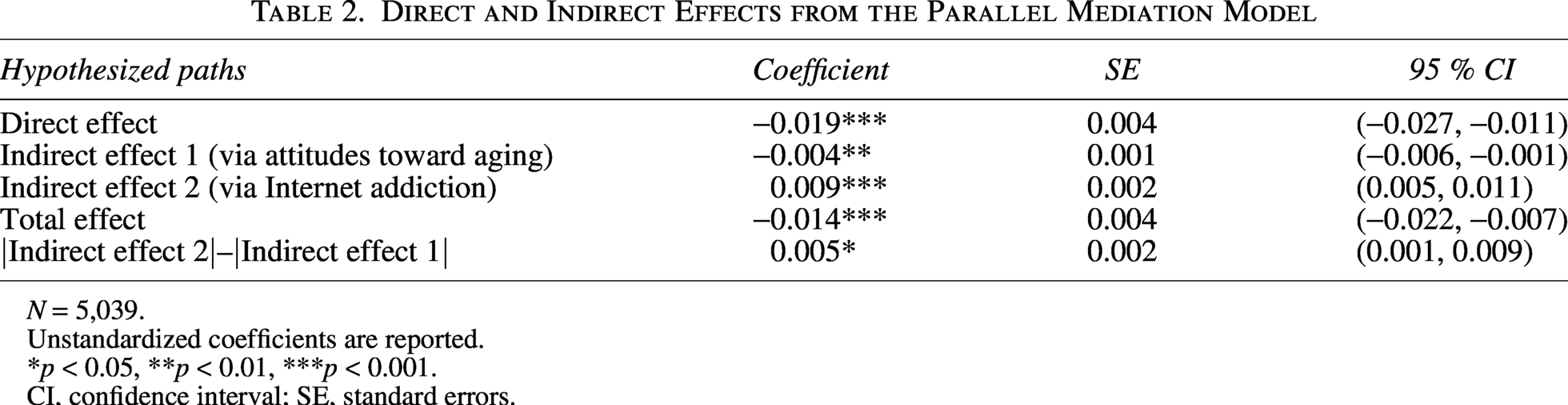
N = 5,039.
Unstandardized coefficients are reported.
*p < 0.05, **p < 0.01, ***p < 0.001.
CI, confidence interval; SE, standard errors.
Internet addiction as a moderator
The moderating effects of Internet addiction along the pathway from short video use to attitudes toward aging and subsequently to depressive symptoms are presented in Figure 2, with detailed results presented in Supplementary Table S2. The findings revealed that Internet addiction negatively moderated the positive association between short video use and attitudes toward aging (β = −0.097, p < 0.001), as well as the negative association between attitudes toward aging and depressive symptoms (β = 0.064, p < 0.001).
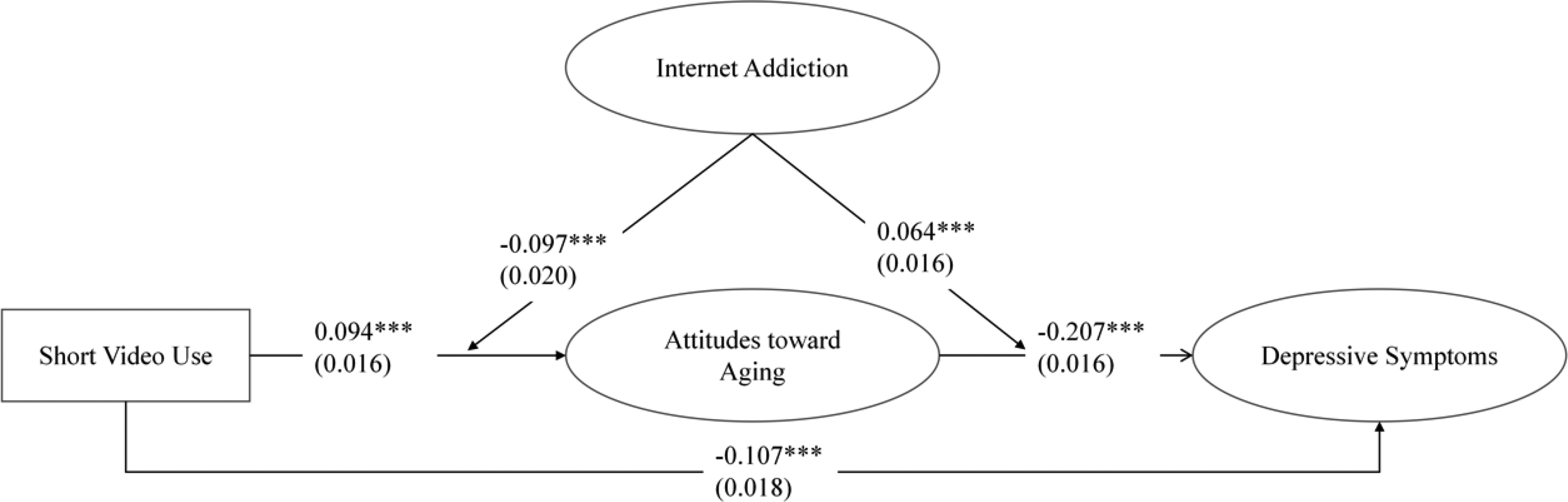
The moderating role of Internet addiction in the chain path from short video use to depressive symptoms via attitudes toward aging. ***p < 0.001. All the path coefficients are standardized.
Incorporating diversity of short video use as an explanatory variable
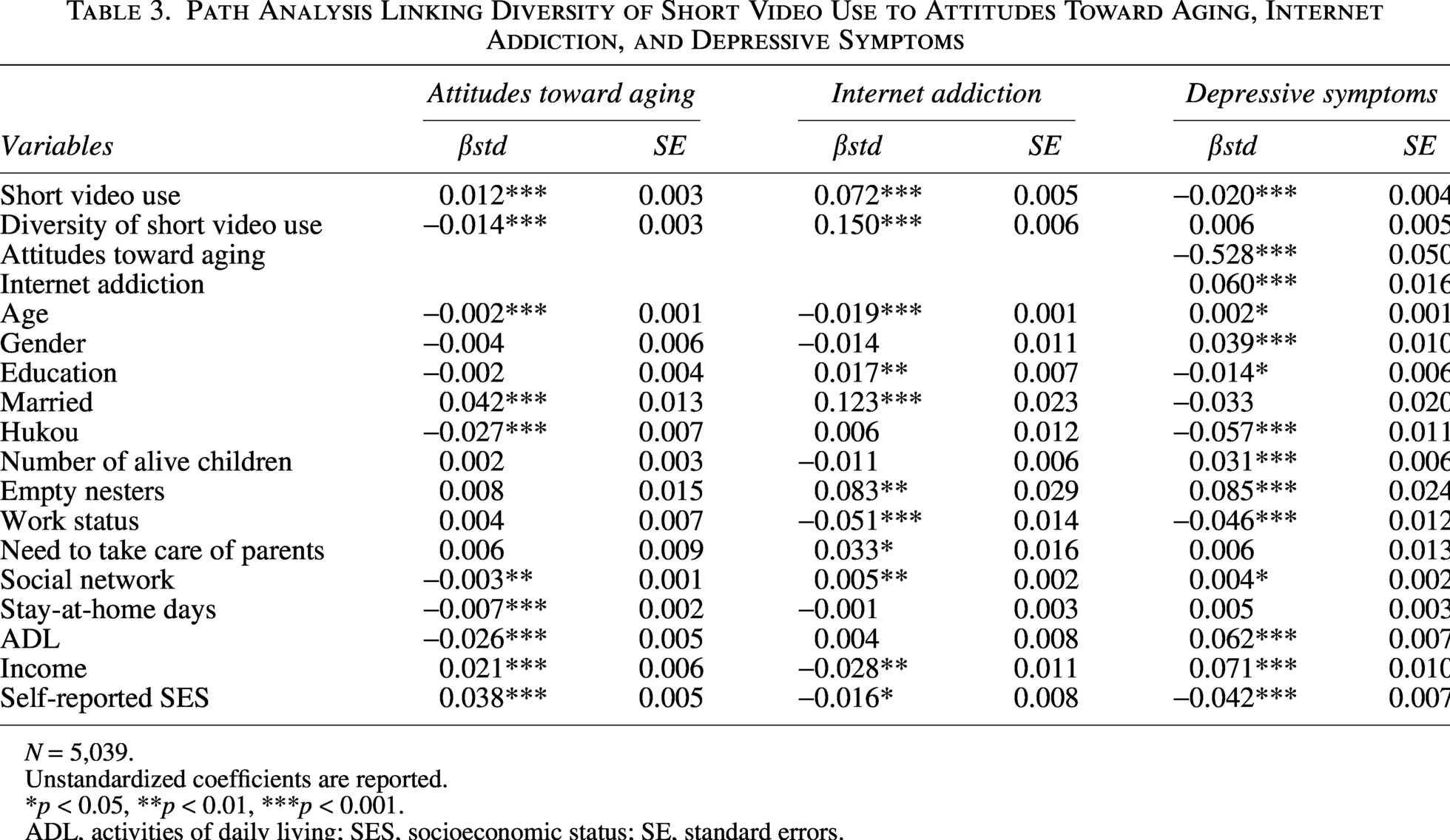
Results from the parallel mediation model that incorporated diversity of short video use as an additional independent variable are presented in Table 3. In this model, the direct path from short video use to depressive symptoms and all indirect paths via Internet addiction and attitudes toward aging were statistically significant. The findings indicated that diversity of short video use was positively associated with Internet addiction (β = 0.150, p < 0.001) and negatively associated with attitudes toward aging (β = −0.014, p < 0.001), while it showed no significant association with depressive symptoms.
Path Analysis Linking Diversity of Short Video Use to Attitudes Toward Aging, Internet Addiction, and Depressive Symptoms
N = 5,039.
Unstandardized coefficients are reported.
*p < 0.05, **p < 0.01, ***p < 0.001.
ADL, activities of daily living; SES, socioeconomic status; SE, standard errors.
Urban–rural differences in the mediation pathways
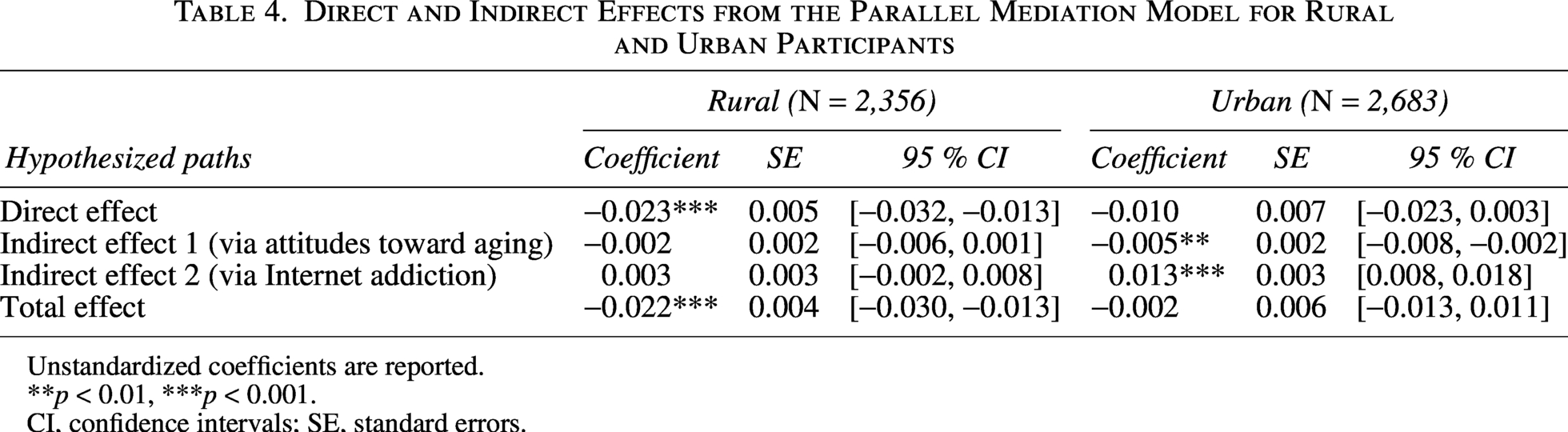
Figure 3 shows the simplified path diagrams estimated with rural and urban participants, respectively, the detailed results of SEM estimates are presented in Supplementary Tables S3 and S4. The results indicated that all pathways in the parallel mediation model were statistically significant among urban participants, whereas no significant associations were observed between short video use and attitudes toward aging or between Internet addiction and depressive symptoms, among the rural participants. Bootstrap test results in Table 4 showed that both the direct (β = −0.023, p < 0.001) and the total (β = −0.022, p < 0.001) effect were statistically significant among rural participants, whereas neither the indirect effect via Internet addiction nor the indirect effect via attitudes toward aging was significant. In contrast, the direct and total effects were not significant in the urban participants, whereas both indirect effect via Internet addiction (β = 0.013, p < 0.001) and that via attitudes toward aging (β = −0.005, p = 0.003) were statistically significant. To further verify these urban–rural differences, we incorporated an interaction term between short video use and hukou into the model, with the results presented in Supplementary Table S5. The analysis revealed that hukou negatively moderated the negative association between short video use and depressive symptoms (β = 0.014, p = 0.023), providing further evidence that the direct association between short video use and depressive symptoms was stronger among rural older adults.
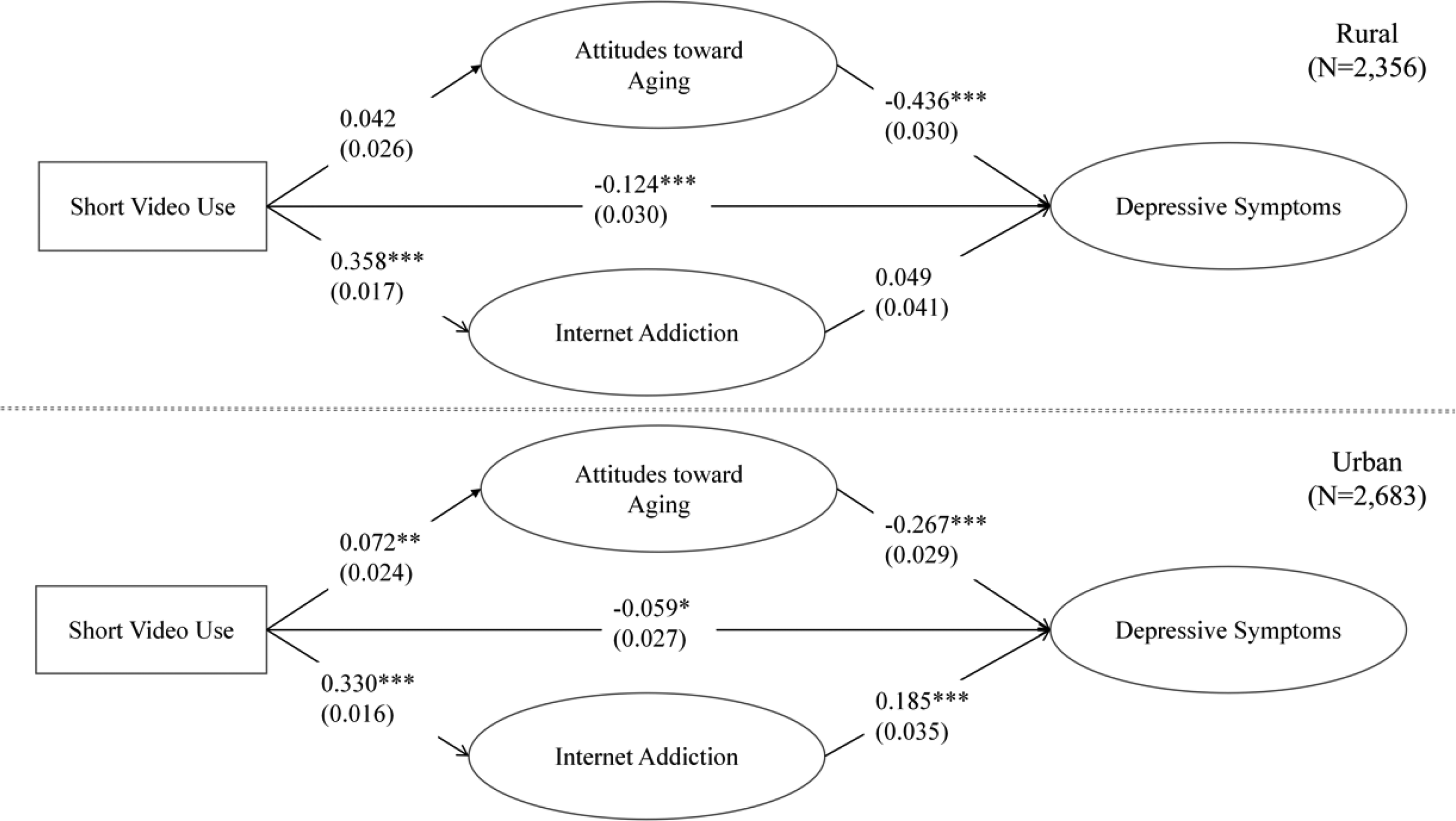
Path diagram of short video use, attitudes toward aging, Internet addiction, and depressive symptoms for rural and urban participants. *p < 0.05, **p < 0.01, ***p < 0.001. All the path coefficients are standardized.
Direct and Indirect Effects from the Parallel Mediation Model for Rural and Urban Participants
Unstandardized coefficients are reported.
**p < 0.01, ***p < 0.001.
CI, confidence intervals; SE, standard errors.
Common method bias
The diagnostic tests did not suggest that common method bias was a serious threat to the findings. In Harman’s single-factor test, the first unrotated factor explained 18.48 percent of the total variance, which was below the commonly used threshold of 40 percent. In addition, the single-factor CFA model showed poor fit to the data, χ2(464) = 19,207.103, p < 0.001, RMSEA = 0.090, CFI = 0.575, TLI = 0.545, and SRMR = 0.112. These results suggest that common method bias was unlikely to fully account for the observed associations. Nevertheless, given the cross-sectional and self-reported nature of the data, common method bias cannot be completely ruled out.
Sensitivity analyses
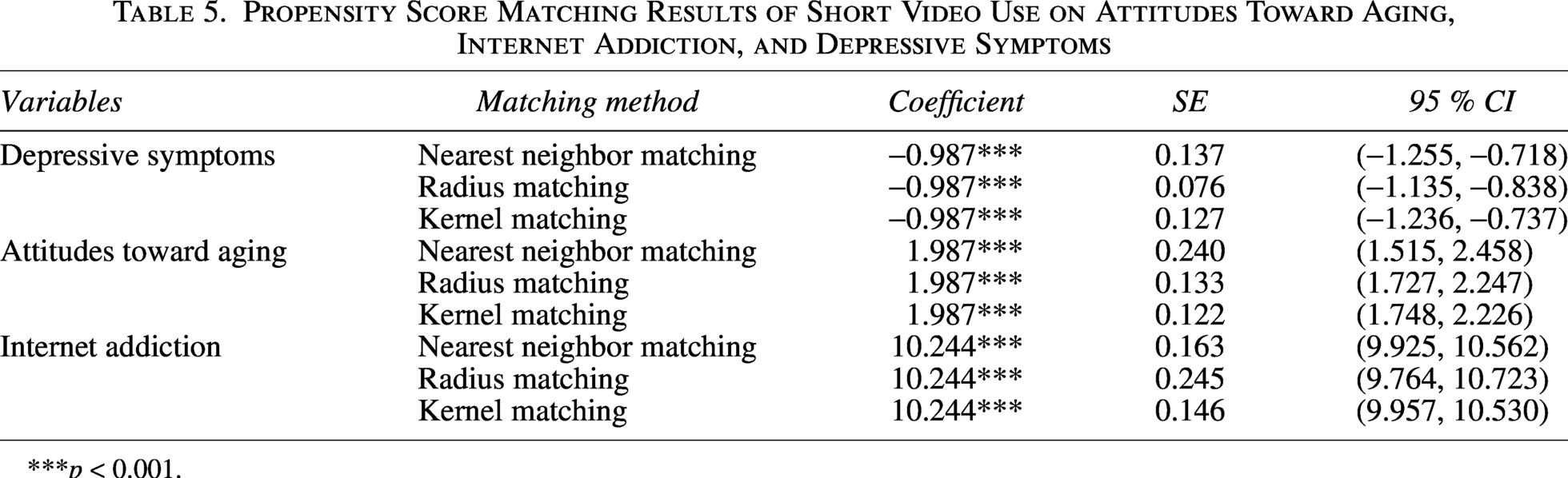
We conducted several sensitivity analyses to examine whether the main findings were stable across alternative variable operationalizations and sample restrictions. First, we recoded short video use into three categories: nonuse, light usage (scores 1–3), and heavy usage (scores 4–6). The results were substantively consistent with the main analysis, with heavy usage showing patterns corresponding to the main results (see Supplementary Figure S1). Second, we recoded depressive symptoms as a binary outcome using the CES-D-10 cutoff score of ≥10. The results remained consistent with those obtained using the continuous depressive symptom score (Supplementary Figure S2). Third, we excluded upper-tail extreme values using cutoffs approximating the highest 5 percent of each variable’s distribution. Specifically, excluding respondents with CES-D-10 scores ≥16 removed 223 respondents, accounting for 4.43 percent of the analytical sample, leaving N = 4,816. Excluding respondents with Internet addiction scores ≥21 removed 189 respondents, accounting for 3.75 percent of the analytical sample, leaving N = 4,850. The results remained substantively stable after these exclusions (see Supplementary Figures S3 and S4). As an additional robustness check, we used propensity score matching to partially reduce observable differences between short video users and nonusers. The PSM results were consistent with the main findings (Table 5). However, given the cross-sectional design, these results should be interpreted as supplementary robustness evidence rather than evidence of causal effects. Covariate balance after matching is reported in Supplementary Table S6.
Propensity Score Matching Results of Short Video Use on Attitudes Toward Aging, Internet Addiction, and Depressive Symptoms
***p < 0.001.
Discussion
This study provides evidence that short video use among middle-aged and older adults is associated with depressive symptoms through two competing pathways, reflecting both beneficial and detrimental processes. Rather than supporting a unidimensional view, the findings suggest that digital engagement may operate through a resource-constrained dual-path mechanism.
The protective pathway suggests that short video use may be associated with more positive attitudes toward aging, which are associated with lower depressive symptoms. Short videos may provide accessible entertainment, health information, and opportunities for social learning, which may help older adults feel more engaged, encounter alternative aging-related narratives, 21 and maintain a sense of connection.22,23 This indicates that digital engagement may be linked to adaptive cognitive processes, potentially enhancing psychological resilience in later life. At the same time, the detrimental pathway via Internet addiction was stronger and positively associated with depressive symptoms. The immersive and algorithm-driven nature of short video platforms may be linked to compulsive patterns of use. 24 This highlights the risk that excessive or habitual use may be associated with poorer well-being by consuming self-regulatory resources and reinforcing maladaptive behavioral patterns among older adults.25,26
The competitive mechanism observed in this study can be explained by limited psychological resources theory and behavior–cognition conflict perspectives.13–16,27–29 Specifically, the rapid-switching nature of short video engagement imposes significant demands on cognitive control and increases subjective cognitive effort, 27 similar to media multitasking. 28 Short video use concurrently engages cognitive processes that shape attitudes toward aging and behavioral tendencies that are associated with addictive use, yet both processes rely on finite attentional and self-regulatory resources, creating an inherent trade-off. As resources are increasingly consumed by habitual or excessive use, fewer resources may remain available for reflective cognitive processing, which may correspond to a weaker protective pathway. At the same time, intensified addictive behavior may conflict with older adults’ aging-related self-concepts, generating behavior–cognition inconsistency that further amplifies the detrimental pathway. Importantly, our additional analyses provide additional evidence consistent with the possibility that these pathways interact competitively. Higher levels of Internet addiction were associated with a weaker formation of positive aging attitudes and a diminished protective effect of these attitudes. This finding supports the interpretation that limited psychological resources are unevenly allocated across competing processes, with excessive use constraining beneficial cognitive outcomes.
Beyond usage intensity, our findings highlight the role of usage structure, particularly the diversity of short video platforms. Greater diversity of use was associated with higher levels of Internet addiction and less positive attitudes toward aging, suggesting that fragmented, low-loyalty engagement may shift users toward more addictive and less cognitively beneficial patterns. Frequent platform switching likely increases exposure to algorithm-driven content and reinforces habitual use while limiting sustained attention and reflective processing. 28 From a resource competition perspective, such fragmented engagement may be linked to greater demands on limited cognitive resources, corresponding to stronger behavioral risks and weaker protective cognitive processes. Thus, not only how much but also how coherently individuals engage with digital media matters. 27
The observed urban–rural differences further underscore the context-dependent nature of the competitive dual-path mechanism. Among urban middle-aged and older adults, the competitive mechanism was more pronounced: The detrimental pathway via Internet addiction outweighed the protective cognitive pathway, yielding a null overall effect. This pattern is consistent with higher digital density and stronger algorithmic exposure in urban settings, which may intensify habitual use and reinforce addiction-related risks. 1 In contrast, among rural middle-aged and older adults, short video use is associated with reduced depressive symptoms primarily through direct effects, while neither mediation pathway was significant. This may indicate that short video use functions as a form of compensatory engagement in resource-constrained environments by providing stimulation and connection that may not otherwise be available. At the same time, the weaker role of attitudes toward aging may reflect structural constraints, such as lower education and social resources, that limit the formation or impact of positive aging cognitions. 30
Given the relatively small effect sizes observed in this study, the findings should be interpreted with appropriate caution when considering practical implications. Rather than supporting broad or large-scale “digital harm reduction” interventions, the results are better understood as providing directional evidence for more targeted and proportionate strategies. Small effect sizes are common in population-based research on digital media and mental health, where outcomes are shaped by multiple interacting factors. At the same time, the finding that the detrimental pathway via Internet addiction was significantly stronger than the protective cognitive pathway suggests an important implication for intervention prioritization. From a short-term perspective, reducing problematic or addictive use patterns may represent a more urgent and effective target, particularly among high-risk users. In contrast, from a longer-term perspective, promoting more positive attitudes toward aging may yield more sustained protective benefits. Accordingly, interventions should focus on specific high-risk patterns, such as excessive or fragmented use, and vulnerable subgroups while promoting balanced and purposeful engagement. More broadly, the results highlight that short video use represents only one component within a complex set of determinants and should be addressed within a multifactor framework that integrates digital behavior with broader social and health-related factors. Future longitudinal research is needed to examine how these competing pathways evolve over time.
Several limitations should be noted. First, the cross-sectional design of our study precludes definitive causal inferences. Longitudinal research is needed to track the dynamic interplay of these pathways over time, as the relationship between Internet use, including short video use and smartphone use, and depression may be bidirectional. 31 Second, our measure of short video use relied on daily usage duration and diversity of short video use, which failed to capture critical nuances, including content type (e.g., educational vs. entertaining), engagement style (active creation vs. passive consumption), and motivational context (e.g., seeking social connection vs. alleviating boredom).32,33 Moreover, self-reported duration is susceptible to recall bias, and future studies should adopt more granular (e.g., multi-item scales assessing usage details) and objective (e.g., smartphone-collected usage data) measures to improve accuracy. Third, the external validity of our findings is limited by the sample of Chinese middle-aged and older adults. Cultural factors (e.g., collectivistic values, cultural norms around aging, and digital media adoption patterns) may uniquely shape the relationships examined. Therefore, caution is warranted when extending these results to other cultural or ethnic contexts. Finally, we did not incorporate protective factors (e.g., social support 34 and physical activity 35 ) that likely counteract the detrimental pathways. Future research should incorporate a broader set of behavioral and social variables to develop a more comprehensive understanding of the determinants of mental health.
Conclusion
This study provides evidence consistent with a resource-constrained dual-path model of short video use among middle-aged and older adults. Short video use was associated with lower depressive symptoms through more positive attitudes toward aging, while also being associated with higher depressive symptoms through greater Internet addiction. In addition, higher levels of Internet addiction were associated with weaker protective cognitive pathways. The findings also highlight the relevance of usage structure, as greater diversity of platform use was linked to a higher addiction risk and less positive attitudes toward aging. Urban–rural differences further suggest that the balance between these competing pathways may vary across social contexts. Given the cross-sectional design and modest effect sizes, these findings should be interpreted as associations rather than causal effects. Overall, the results highlight the need for targeted and balanced digital well-being strategies rather than broad claims about the benefits or harms of short video use.
Data Availability Statement
The datasets used and/or analyzed during the current study are available from the first author or corresponding author upon reasonable request.
Ethical Approval and Informed Consent
This study involving human participants were reviewed and approved by the Renmin University of China. The study was approved by the Ethics Committee of Renmin University. All participants provided their written informed consent to participate in this study.
Supplemental Material
sj-docx-1-cyb-10.1177_21522715261458458 — Supplemental material for The Double-Edged Sword of Short Video Use: Opposing Pathways to Depressive Symptoms in Middle-Aged and Older Adults
Supplemental material, sj-docx-1-cyb-10.1177_21522715261458458 for The Double-Edged Sword of Short Video Use: Opposing Pathways to Depressive Symptoms in Middle-Aged and Older Adults by Rize Jing, Shengpeng Guo, Jia Tang, Long Li, and Aiguo Ding
Footnotes
Acknowledgment
The authors would like to thank all participants and staff involved in the China Digital Divide and Digital Inclusion Survey.
Author Disclosure Statement
No competing financial interests exist.
Funding Information
This work was supported by grants from the National Nature Science Foundation of China (grant number 72404274), the Fundamental Research Funds for the Central Universities, and the Research Funds of Renmin University of China (grant number 25XNKJ07). The study sponsor had no role in the study design, data analysis and interpretation of data, the writing of article, or the decision to submit the article for publication.
References
Supplementary Material
Please find the following supplemental material available below.
For Open Access articles published under a Creative Commons License, all supplemental material carries the same license as the article it is associated with.
For non-Open Access articles published, all supplemental material carries a non-exclusive license, and permission requests for re-use of supplemental material or any part of supplemental material shall be sent directly to the copyright owner as specified in the copyright notice associated with the article.
