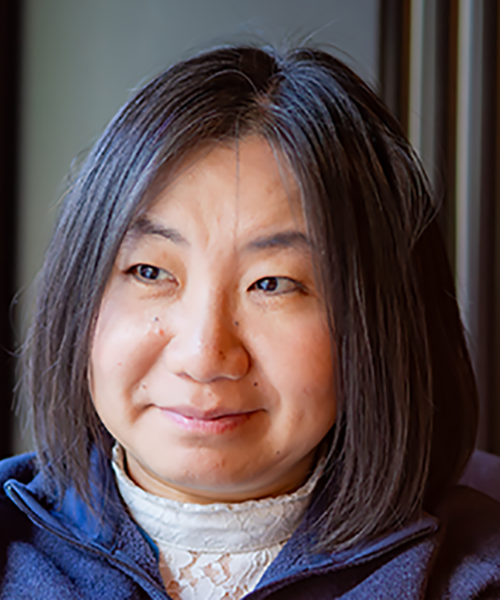
Dr. Pereira:Good afternoon. My name is Filipe Pereira, professor at Lund University and editor-in-chief of Cellular Reprogramming. I’m very happy to bring you a new episode of Reprogramming Stars, our flagship series capturing the findings, projects, and ideas of the leaders in cellular reprogramming.
Dr. Shangqin Guo
Reprogramming Star: Dr. Shangqin Guois an Associate Professor of Cell Biology and Group Leader at Yale Stem Cell Center, Yale University, USA. The overarching goal of Dr. Guo’s lab is to understand the rules of cell fate control by employing three interrelated biological model systems: (1) Induced pluripotency (Yamanaka reprogramming) initiated from myeloid progenitors, (2) Malignant transformation initiated from myeloid progenitors, and (3) Multipotent hematopoietic stem cells committing to become myeloid progenitors. Her lab is focused on applying acquired knowledge in those three systems to assist the generation of desired cell types for cell replacement therapies or to control the emergence of cancer cells. They have previously visualized Yamanaka reprogramming of myeloid progenitors (somatic/hematopoietic cells) at minutes resolution, revealing that the transition into pluripotency is initiated from cells undergoing an ultra-fast cell cycle. Subsequently, the analysis of these fast-cycling progenitors led them to the development of an innovative live cell cycle speed reporter. In a continuous discovery of cell fate regulation principles, research from Dr. Guo’s group aims to understand why or how cells that share the same genetic codes adopt different cell identities and how cell cycle dynamics relate to cell fate decisions.
Today, we have Dr. Shangqin Guo, an associate professor of cell biology and group leader at the Yale Stem Cell Center, Yale University, USA. Dr. Guo earned her PhD from Boston University in 2005. She then conducted her postdoctoral studies at David Scadden’s lab at Mass General Hospital (MGH) and the Harvard Stem Cell Institute. In 2009, she moved to Yale University as an associate research scientist, where she started teaching herself how to do reprogramming using hematopoietic progenitors to generate induced pluripotent stem cells (iPSCs). In 2013, she started her own group to study the rules of cell fate regulation using these systems as models. Her scientific achievements were celebrated with prestigious awards and grants, such as the Stem Cells Young Investigator Award, the NIH Director’s New Innovator Award, and the Yale Cancer Center’s Class of 1961 Cancer Research Award. Dr. Guo, thank you so much for joining me today. It is a pleasure to have you featured as a reprogramming star.
Dr. Guo: Thank you, my pleasure.
Dr. Pereira: Your lab has a simple motto: “Deducing the roles of cell fate control.” This reflects the vision of most reprogramming scientists. We would like to know about the start of your journey in the field of cellular reprogramming.
Dr. Guo: I was in the audience when Shinya Yamanaka was giving a talk at MGH in the summer of 2006. I was just curious and followed the crowd to a packed auditorium. The way he told their scientific journey was so electrifying that I was hooked right then and there. I was witnessing a discoverer describing scientific history from my corner on the floor. The discovery that four transcription factors can reprogram differentiated cells into iPSCs uncovered unforeseen cell fate plasticity. For the next 2 to 3 years, I also heard a lot of primary research from Konrad Hochedlinger’s lab. I have heard enough talking about reprogramming being inefficient and the reason being unclear. Konrad’s research describes that hematopoietic stem and progenitor cells are more efficiently reprogrammed than mouse embryonic fibroblasts. So, when I moved to Yale in the beginning of 2009, I thought I would try my hands in reprogramming and transform the struggles of being transplanted into a new niche into an opportunity to try something new. My neighbor at Yale, Diane Krause, had just bought a fabulous new microscope for long-term live cell imaging—so, I put some granulocyte-macrophage progenitors (GMPs) under Diane’s microscope hoping to see the iPSC process. It took some tweaking, but it wasn’t hard to capture the reprogramming movies. When I could see how GMPs turned into iPSCs move-by-move, I knew the so-called stochastic model could not be true in these cells. That was when I decided to focus on GMPs—there’s something rather unique to them that enables them to shed their somatic identity much more easily, going against what the field believed in. I wanted to study these cells. Undoubtedly, this was the question I wanted my lab to work on.
Dr. Pereira: Your story shows how important it is for us to move between different environments. Otherwise, we get stuck into ways of thinking. It is interesting to see how you got inspired.
Dr. Guo: MGH is really a magical place; there are just so many fresh ideas.
Dr. Pereira: During that time, Yamanaka was probably giving talks around the world. In less than a year, there were so many people already working with iPSCs. I was amazed by how fast all of it has developed.
Dr. Guo: It’s how robust their system is. Somebody who had never touched it before would be able to replicate it on the first try.
Dr. Pereira:Exactly. Speaking of your own research, you published a paper in 2019 entitled “MKL1-actin pathway restricts chromatin accessibility and prevents mature pluripotency activation” (Hu et al., 2019). Can you tell us about the main findings of this study?
Dr. Guo: Sure. A lot of it directly came from observing and rewinding movies of iPSC reprogramming. I could press play on the process and ask: what is so unique about this stochastic behavior? When we watched enough of the reprogramming movies, we realized that reprogramming initiates from cells undergoing ultra-fast cell cycle, not only from GMPs, which naturally cycle fast, but also fibroblasts. When we prospectively isolated the ultra-fast cycling fibroblasts and compared them to the slower cycling counterpart, we were struck by their difference in cell morphology, although we didn’t know at the time what that difference meant. We performed RNA sequencing and observed that the top category of differentially expressed genes was actin cytoskeleton. We were then imaging reprogramming using fibroblasts expressing CAG:H2B-GFP—we saw that the fast-cycling cells were barely visible under the microscope. The A in the CAG promoter stands for actin. Again, my neighbor Diane, who studies a type of leukemia driven by a fusion protein called Rbm15-MKL1, taught me everything to know about the functional relationship between actin and MKL1. Actin binds to MKL1 to keep it in the cytoplasm; when the actin level is low, MKL1 is freed to go into the nucleus to make more actin, thereby maintaining the actin level. Diane also had all the MKL1 expression constructs. So, we expressed an MKL1 mutant that doesn’t bind to actin but can do everything else. This mutant blocked all reprogramming activity. We could see that blocked cells have smaller nuclear volume and lower chromatin accessibility. This paper showed that the actin cytoskeleton is not only a structural component of the cell—it has a rather dominant role in determining cell identity.
Dr. Pereira: It’s curious that you mentioned this. During my PhD, I was doing cell fusion experiments with human B cells and mouse embryonic stem cells. The first thing we saw in those heterokaryons that shared two nuclei was an enlargement of the B-cell nucleus to about the same size as the stem-cell nucleus. Interestingly, John Gurdon reported similar observations in Xenopus oocytes. He also discussed the role of nuclear actin.
Dr. Guo: Well, people knew very well by that time that epithelial-mesenchymal transition genes are down-regulated in early reprogramming. The language was just never used to say: actin cytoskeleton is weakened. Our paper established that dampening MKL1-actin activity is critical for pluripotency induction; this process is accompanied by a measurable change in nuclear volume.
Dr. Pereira:With the new Cell Painting technology, you can highlight different subcellular structures. Have you considered applying this higher level of resolution to an elegant system such as yours?
Dr. Guo: Absolutely, I want to watch the reprogramming process at subcellular resolution and map all the elements. It is still one of my passions. I am currently not actively pursuing this because it requires sophisticated imaging, annotation, and analysis. There is also this ingrained perception that imaging-focused projects are not mechanistic enough.
Dr. Pereira:I see. These systems could also be coupled with perturbation assays, right?
Dr. Guo: Certainly. We actually have published an approach focused on the imaging aspect. We perturbed, for example, E-cadherin, and then watched how reprogramming proceeded. We could see that iPSCs activated Oct4-GFP but remained as dispersed individual cells rather than clustering and forming a colony.
Dr. Pereira:What about the paper “Resolving Cell Cycle Speed in One Snapshot with a Live-Cell Fluorescent Reporter” (Eastman et al., 2020)? Would you like to tell us about its main contribution?
Dr. Guo: I’m very proud of that paper. This was the thesis work of a talented graduate student who loves imaging. We knew from the literature that cell cycle length or speed would be important—this is universally true throughout different cellular contexts, and we also see it in our movies. However, we could only tell if a cell was dividing fast after watching at least two consecutive divisions; we could not capture fast-cycling cells on the go. The field has many designs for cell cycle phase reporters, but no cell cycle speed reporter. We developed a reporter based on a color-changing protein, the fluorescent timer. This fluorescent timer is very similar to mCherry in sequence, but the newly synthetized protein is blue. The blue form persists for about an hour and then permanently matures into the red form. Math would tell us that the blue form would be relatively enriched in cells of shorter cell cycle, assuming all else being equal. In our reporter mouse, fast-cycling cells are bluer and slow-cycling cells are redder. Hence, the blue-to-red ratio informs the length of the cell cycle. On tissue sections, you immediately see this organization without any other label. You can sort fast-cycling cells directly by flow cytometry. Essentially, this paper presents a tool for the field to enjoy. We are aware that a bunch of labs are embracing it and have already published their findings, which we are very happy to see.
Dr. Pereira:Can you give us a couple of examples of what people have been using the tool for?
Dr. Guo: One cellular context that has been published is from Merav Socolovsky. She studies erythroid progenitor cell fate decisions. We thought that GMPs divide fast, but erythroid progenitors beat them in the cell cycle race! I’ve also seen endothelial cell studies using this reporter mouse (Dinakaran et al., 2024). Quite a few other requests for the reporter construct and mice have been made—these are in cell systems way beyond my expertise. I know they are working on this because they ask me technical questions from time to time, but since they are not yet published, I’m not in a position to disclose their ongoing work.
We have also been further developing it. The first-generation reporter has a limitation: it works really well for fast-cycling cells but can’t really discern between cells that divide overall slower. For example, it wouldn’t resolve a 2-day cell cycle from a 3-day cell cycle. Beyond a certain point, slow dividers look the same. We keep pushing to get funding for an improved version of the reporter that can better resolve slow-dividing cells.
Dr. Pereira:I think that would be really useful. I was just curious about the fact that erythroid progenitors cycle faster since they don’t reprogram as well as other cells. Do you know why?
Dr. Guo: We don’t know yet. If we take GMPs and erythroid progenitors from the same reprogrammable mice and compare them side by side, the latter don’t reprogram as well. I believe it has something to do with their maturation: erythroid progenitors condense their chromatin to an extreme extent to prepare for enucleation. So, although they cycle faster, they must also organize their chromatin in a profoundly different way. We are still working on the GMPs, but it would be great to learn more about the erythroid progenitors.
Dr. Pereira:I think this concept of fast-cycling, elite cells for cell fate reprogramming is becoming apparent from additional studies, right?
Dr. Guo: Yes, Thomas Graf’s lab, for example. What they found in their work with C/EBPa pulsed B-cell progenitors is very similar to what we observe with GMPs.
Dr. Pereira:Some transdifferentiation studies also point to the need for cell division. I think it’s very nice that your study expanded collaborations and new findings in the field. In 2023, you published a paper entitled “Serum Response Factor Reduces Gene Expression Noise and Confers Cell State Stability” (Zhang et al., 2023). What does this paper describe?
Dr. Guo: Serum response factor (Srf) is the binding partner for MKL1 to transactivate actin genes. During the work described in the MKL1 paper, we generated Srf knockout (KO) iPSCs to disrupt the actin-MKL1/SRF pathway. We performed single-cell RNA sequencing, and these cells were computationally analyzed by a bioinformatician from our group. We kept hearing that having serum in the culture medium destabilizes pluripotency, so our thoughts were that Srf KO iPSCs had to be more pluripotent or more stably pluripotent. We were 180-degree wrong—Srf KO iPSCs were noisier and contained a more heterogenous population ranging from 2C-like cells, which precede naïve pluripotency, to lineage marker+ cells, which arise after pluripotency dissolution. Hence, Srf constrained cellular heterogeneity. Intriguingly, Srf KO iPSCs were also more mesenchymal-like and more inflammatory—two features typical of aging. We suggested that, at least in this cellular context, Srf appears as if it is constraining several salient features of aging: heterogeneity, mesenchymal gene expression, and inflammation.
Dr. Pereira:How does this protein control noise?
Dr. Guo: What we could detect was that the loss of Srf led to increased γ-H2AX, a marker of DNA damage. Whether DNA damage is directly responsible for the gene expression noise, we don’t know.
Dr. Pereira:Did you measure DNA methylation using epigenetic clocks?
Dr. Guo: It was a small project at the time, so we didn’t measure methylation.
Dr. Pereira:Would you like to share your most exciting current projects?
Dr. Guo: We have this preprint “Morphomechanic tuning of ERK by actin-TFII-IΔ regulates cell identity” (Wu et al., 2023), which is the culmination of our years of work trying to understand the different morphology of the fast-cycling cells. Conceptually, I find it unsatisfactory when papers show that a particular treatment increased reprogramming efficiency from something like 0.1% to 1% or even 10%. A lot of these treatments are chemicals. So, if these chemicals are hitting the true mechanism, why do 99% or 90% of the cells still fail to reprogram? On the flip side, how is the 0.1% reprogramming without any chemical help? What exactly is stochasticity or noise? Our hypothesis got refined when we realized the difference in cell morphology reflects different cell height in 2D culture—fast-cycling cells are about twice as tall as slow-cycling cells, and this is related to how much actin stays inside the nucleus. Tall cells have a lot more nuclear actin; iPSCs/ESCs are naturally tall cells, so they have a lot more actin in their nuclei than fibroblasts. Flattening the cells to the natural height of fibroblasts is sufficient to drive all cells out of pluripotency. This realization allowed me to see a model that accounts for the so-called heterogeneity or stochasticity; cells may overcome it by adjusting cell shape according to environmental cues. For example, plating cells at higher density reduces cell spreading, and that increases reprogramming efficiency. Plating cells on softer substrates has similar effects. This goes in line with previous observations demonstrating that nuclear actin is required for the expansion in nuclear volume right after mitosis.
Dr. Pereira:So, you could potentially control the expansion of the nucleus in the first stages of reprogramming, right?
Dr. Guo: That is what I’m suggesting—I’d love for there to be tools to control nuclear volume directly. What we have found, for now, is that nuclear actin promotes reprogramming by binding to an isoform of the transcription factor TFII (TFII-IΔ), which controls extracellular signal-regulated kinase (ERK) activity thresholding. Tall cells manage to set their ERK activity in a low level and very narrow range. Because so many cues affect ERK activity, any fluctuation can bump ERK out of range, that is, making the reprogramming process appear as if stochastic. We demonstrate that this stochasticity can be largely eliminated when ERK activity is tuned within a narrow range, resulting in activation of pluripotency in most of the cells in culture.
Dr. Pereira:How tight is the window?
Dr. Guo: Outside of a two-fold range, you lose most of that effect.
Dr. Pereira: I think it’s very difficult to distinguish formal stochasticity from the difficulty in controlling efficiency. It’s good to see that the process can become deterministic if you push the right button.
Dr. Guo: That’s my goal. If we know which button to push, cells should listen and behave as we wish.
Dr. Pereira:Very good. Is there any other study you wish to highlight?
Dr. Guo: Another line of research we do is hematopoiesis, which feels a bit outside of “typical reprogramming” because this type of cell identity change occurs naturally, even without experimental manipulation. We recently published a paper that showed hematopoietic stem cells overexpressing a linker histone favor lymphoid fate over myeloid fate (Karatepe et al., 2025). This is a much-desired phenotype because aging hematopoietic stem cells lose this ability. This line of research was the product of our continued fascination about myeloid progenitors—the actin/morphomechanics went outside the myeloid progenitors because learning how other somatic cells reprogram helps to appreciate the peculiarities and universalities. Even though this type of fate conversion is not considered reprogramming, the same molecular players are at work. This form of linker histone seems to be very important for aging. A lot of people ask: How do the Yamanaka factors turn the aging clock back? I think we are in a position where we can directly compare these approaches to partially answer this question.
Dr. Pereira: If it’s a linker histone mechanism, it probably can be separated by the action of the transcription factors in terms of pluripotency induction versus rejuvenation.
Dr. Guo: We want to rejuvenate cells without tumor formation.
Dr. Pereira: Yes. Are you planning experiments to remove the linker histone? Is there anything that can control its amount? I am just thinking about potential applications.
Dr. Guo: By collaborating with Dr. Art Skoultchi at Einstein, we have the linker histone KO mice, and we generated mice with controllable linker histone overexpression. We’re basically dialing the linker histone dosage back and forth. In terms of potential regulators, we are looking; inflammation itself could be a signal.
Dr. Pereira:I also want to address a review paper that you recently published entitled “Molecular basis of cell fate plasticity—insights from the privileged cells” (Scalf et al., 2025). Do you think our current vision of cell plasticity, mostly biochemically centered, has been preventing our ability to control and generate specific cell fates?
Dr. Guo: That is my personal view. There are many reprogramming studies focusing on omics approaches. These are incredibly important, but cells are not only little biochemical factories—they are also physical objects. They are materials and have to obey physical laws. I don’t think that’s being given enough attention. Much of the physical cues have been dismissed as being non-specific because there are no receptors, consensus binding motifs, catalytic activities, etc. Any biophysical perturbation changes a slew of cellular properties, so how do we control specificity? I acknowledge that, but isn’t that what cells face and deal with? So, I think for reprogramming approaches to be successful, biophysical cues would have to play a bigger role.
Dr. Pereira:In light of that, what is your future vision for the field?
Dr. Guo: The ultimate goal is being able to create any cell type from, let’s say, blood cells. When will we get there? I don’t know.
Dr. Pereira:Kind of like cell types à la carte?
Dr. Guo: Yes. When I try to explain my work to colleagues who are not reprogramming scientists, I say: I would like to be your personal cell bank, with the ability to provide any desired cell types.
Dr. Pereira:Hopefully, we are walking in that direction. Do you believe collaborations are essential for the success of the field?
Dr. Guo: Absolutely. Now more than ever. Since I am not an engineer or a biophysicist, when I need to measure the biophysical properties of cells undergoing reprogramming, I need help. Those experts often find what I ask easy to do. It is not easy for me, so let’s work together! I am always seeking collaborations with physicists or mathematicians because it is absolutely essential.
Dr. Pereira:We could tell by getting to know your story that breakthroughs were born from collaborations. Do you have any advice for young scientists?
Dr. Guo: Seek out good mentors, pay attention to who is willing to support you. Sometimes it’s a matter of luck; you get put in a situation or environment that’s beyond your control. But in any group of people, seek out those who see something in you. They don’t necessarily need to be senior or older than you are. For example, Diane Krause, who I have mentioned previously, didn’t have to do any of what she did for me. But without her microscope, I would not have been able to do any of this. She has been my mentor since the day I landed at Yale.
Dr. Pereira:Very good. In this career, we are always facing new challenges and have mentors for every new step. I would like to close the interview with some questions that are not strictly related to research, so everyone knows a little more about you. If you could have a science-related super ability, what would you choose?
Dr. Guo: I think I would like to be a cell whisperer to tell cells how to behave. For them to listen to me would be my desired superpower.
Dr. Pereira:That would be so much easier. If you were not a scientist, what would you be?
Dr. Guo: A writer, I’m pretty sure. I really enjoy good books, and sometimes I imagine myself writing some of those. So, if I wouldn’t have to write grants anymore, I would still write something else.
Dr. Pereira: It’s great that you like writing, because you have to write so many grants in this career that enjoying it is already a big advantage.
Dr. Guo: Especially now, in the era of AI. These tools might be able to draft anything, but they cannot replace the act of writing. We might have cars, but we still enjoy walking. Enjoying writing is still inherently human.
Dr. Pereira: We are the ones who innovate and create. Dr. Guo, thank you so much for taking the time to join me today. It was great to learn more about you and your science.
EastmanAE, ChenX, HuX, et al.Resolving cell cycle speed in one snapshot with a live-cell fluorescent reporter. Cell Rep, 2020; 31(12):107804.
3.
HuX, LiuZZ, ChenX, et al.MKL1-actin pathway restricts chromatin accessibility and prevents mature pluripotency activation. Nat Commun, 2019; 10(1):1695.
4.
KaratepeK, Mafra de FariaB, ZhangJ, et al.Linker histone regulates the myeloid versus lymphoid bifurcation of multipotent hematopoietic stem and progenitors. Proc Natl Acad Sci U S A, 2025; 122(43):e2509412122.
5.
ScalfSM, WuQ, GuoS. Molecular basis of cell fate plasticity—insights from the privileged cells. Curr Opin Genet Dev, 2025; 93:102354.
6.
WuQ, ZhangJ, LongB, et al.Morphomechanic tuning of ERK by actin-TFII-IΔ regulates cell identity. bioRxiv, 2023:2023.
7.
ZhangJ, WuQ, HuX, et al.Serum response factor reduces gene expression noise and confers cell state stability. Stem Cells, 2023; 41(10):907–915.