







Abstract
An established body of literature shows that females have higher levels of fear than males. Research suggests that women typically resort to rather constraining behavioral actions that limit their participation in public life. However, it is unclear whether the strategies women use to avoid victimization are tied to community context, especially for high-risk populations, such as women offenders. We build from insights of previous research by examining what strategies female probationers and parolees use to avoid victimization and their perception of how effective such strategies are in keeping them safe, whether the subjective and objective measures of neighborhood context is related to women’s strategies and whether the strategies used to avoid victimization vary by race and economic status.
An established body of literature shows that women have higher levels of fear than men. This finding is paradoxical, as research shows that for most crimes, women are less likely to be victimized compared to men (Ferraro, 1995). Women’s higher fear is tied to their concern about sexual victimization (Ferraro, 1996; Gordon & Riger, 1989). Because women perceive that their risk of sexual assault is high, they are more likely to manage fear of crime by relying on a number of precautionary strategies to protect themselves. Research suggests that women typically resort to constraining behavioral actions that limit their participation in public life (Cobbina, Miller, & Brunson, 2008; Day, 2000; May, Rader, & Goodrum, 2010; Rader, Cossman, & Allison, 2009).
Despite the growing number of studies on fear of crime and the strategies individuals use to manage fear, there remain some gaps in the literature. First, most research on this topic has focused on college and community samples (Ferraro, 1995; May et al., 2010; Rader et al., 2009) instead of high-risk populations, such as offenders, and few studies consider whether the strategies women offenders use to avoid victimization are tied to community context. This area of research neglect is surprising, as women who have been convicted of engaging in criminal activity generally reside in impoverished neighborhoods that have high levels of unemployment, poverty, and crime (Dodge & Pogrebin, 2001; Petersilia, 2003); thus, neighborhood conditions may affect the types of strategies they use to stay safe. Second, although race is known to affect fear of crime (Madriz, 1997), very few studies have explored whether race (but see Rader et al., 2009) is tied to the types of strategies women use to avoid victimization. Given these research gaps, we draw from the literature on fear of crime and social disorganization to consider what strategies women use to avoid victimization and their perception of how effective such strategies are in keeping them safe. We also examine whether key subjective and objective measures of neighborhood context as well as women’s victimization experience are related to women’s strategies and whether the strategies used to avoid victimization vary by race.
Fear of Crime and Constrained Behavior
Research consistently notes that gender is a strong predictor of fear of crime (Day, 1994; Ferraro, 1996; Madriz, 1997). This work demonstrates that women report higher fear of crime, even though they are less likely to be victimized than men (with the exception of sexual assault). This discrepancy is often termed the “gender-fear paradox” because women’s fear of crime does not coincide with the actual reality of their criminal victimization. A common explanation for the paradox is that women fear crime at higher levels than their chances of victimization warrant because of an overarching fear of sexual violence (Ferraro, 1996; Lane & Meeker, 2003; May, Rader, & Goodrum, 2010; Scott, 2003). For most women, “fear of crime is fear of rape” (Warr, 1984, p. 700); thus, sexual assault influences women’s perception of victimization risk (Ferraro, 1996).
An alternative explanation of the gender-fear paradox is often couched in terms of women’s perceived sense of physical vulnerability. Because of their smaller physical stature, women may have heightened fear and lack confidence in protecting themselves from a potential attacker (Hale, 1996; Hollander, 2001; Madriz, 1997; Smith & Torstensson, 1997). This explanation has been developed in the sociology of gender literature in which scholars argue that fear of crime reflects larger societal gender inequality (Kimmel, 2004).
In either case, because of concerns about being victimized, fear of crime often leads to behavioral changes, and research suggests that women use a variety of constraining behaviors to reduce their risk of victimization (Gordon & Riger, 1989; Stanko, 1990; Wesely & Gaarder, 2004). Many adopt avoidance risk-reduction strategies, such as staying away from unsafe areas or restricting daily activities because of fear of crime (Ferraro, 1995; Hollander, 2001; Pain 2001; Stanko, 2001). Studies also suggest that women adopt defensive behaviors to protect themselves from victimization, such as installing additional locks on windows and doors, adding outdoor lighting, owning a dog, keeping a weapon in the home for protection, carrying something for protection, or taking self-defense classes (Ferraro & LaGrange, 1987; May et al., 2010). Many scholars argue that the resulting behavioral changes that women engage in as a result of fear of crime constrain them in an “invisible prison” (Madriz, 1997, pp. 16), as their freedoms are limited by attempts to reduce their likelihood of victimization (Meyer & Post, 2006).
Race, Neighborhood Context, and Constrained Strategies
In the United States, African Americans are more likely than other racial and ethnic groups to reside in economically distressed neighborhoods with high levels of crime. Many large urban neighborhoods remain highly segregated and face extreme levels of racial isolation (Massey & Fisher, 2010). Consequently, individuals who typically reside in such neighborhoods are more likely to have few connections to political and economic resources, and they are more likely to experience high levels of poverty, unemployment, inequality, and discrimination than people in areas inhabited primarily by Whites (Massey & Denton, 1993; Wilson, 1996). As a result, highly disadvantaged communities lack strong social control of crime and may even facilitate criminal cultural adaptations (Peterson, Krivo, & Browning, 2005).
More specifically, research shows that Black women offenders, and to a lesser extent, other women of color often live in disorganized communities with limited political, social, and economic resources (Owen & Bloom, 1995; Richie, 2001) and high levels of crime (Cobbina, Morash, Kashy, & Smith, 2014). In examining how Black and White female offenders negotiate neighborhood crime in distressed communities, Cobbina, Morash, Kashy, and Smith (2014) found that, consistent with these general patterns, Black women were more likely to describe more neighborhood crime, and lived in census tracts with higher disadvantage, and lower affluence and residential stability than White women. The greater concentration of neighborhood disadvantages for women of color may occur because they have greater financial limitations than White women. An alternative explanation is the burden created by race, which limits opportunities to live in neighborhoods with less crime regardless of economic resources (Peterson & Krivo, 1993, 2005; Pratt & Cullen, 2005). The latter explanation may create a double burden on women of color by limiting their financial means and then restricting them to the most disadvantaged and high-crime areas where there are few effective strategies to avoid victimization.
What is absent from most of prior research is consideration of how race is tied to women offenders’ choices of strategies for avoiding victimization. For example, research has shown that race influences fear of crime (Madriz, 1997) and is an important predictor of defensive precautionary measures (Rader et al., 2009). Yet, it is unclear whether race-related strategies to avoid victimization are tied to community context. This study brings the literature on neighborhood contexts, race, and risk avoidance strategies together.
The Current Study
Most probationers and parolees reside in economically distressed neighborhoods with high crime rates (Dodge & Progrebin, 2001; Petersilia, 2003; Pew Center on the States, 2009; Richie, 2001). To expand understanding of the effects of such commonalities, we examine the strategies women offenders use to avoid victimization in neighborhoods they perceive as unsafe or crime ridden, and we assess whether such strategies are connected to perceived community crime and objective measures of community social disorganization. Perceptions of community crime suggest vicarious victimization. Because studies suggest that race predicts the use of precautionary measures to stay safe (Rader et al., 2009), we examine whether victimization avoidance strategies differ for women of color and other women. Because research suggests that women’s sense of vulnerability influences their fear of victimization, we also consider whether experience of victimization in the neighborhood is related to the choice of strategy.
Method
Study Design and Sample
We employed multiple data collection methods in this study. Specifically, we used available census tract data to reflect neighborhood conditions and a face-to-face interview with female probationers and parolees to gather self-reports that resulted in quantitative data of perceived neighborhood crime. We also used detailed qualitative data to identify women’s strategies for avoiding victimization in their neighborhoods and their perceptions of the effectiveness of these strategies. The analysis links women’s strategies that were identified inductively from qualitative data to quantitative measures of perceived neighborhood crime, objective indicators of neighborhood conditions, and self-reported prior victimization.
Data for this study come from a broader investigation of probation and parole agents’ interactions with female felons. A sample of 402 women felons in Michigan was obtained by recruiting 73 agents whose caseloads approximated the proportion of women supervised in 16 counties within 1.5 hr drive from the research office. These counties include 68.5% of the 2011 population in Michigan, all major cities (e.g., Detroit and Grand Rapids) and a combination of rural and suburban areas. Parole agents were oversampled in relation to probation agents to increase parolees to 25% of the sample.
A principal investigator reviewed the caseload list with each agent and assisted the agent in identifying eligible clients. Women were recruited to participate in the project based on the following requirements: They (a) had been supervised by their agent for approximately 2 to 3 months, (b) had some history of drug/alcohol involvement, and (c) had been convicted of a felony offense. Agents provided eligible clients a project contact card to arrange a time to hear about the study, introduced clients to project interviewers, or sought permission to share women’s contact information with interviewers. The interviewers carried out the recruitment and consent process. Interviews took place between November 2011 and November 2012 at probation and parole offices, respondents’ home, or in public settings, such as coffee shops, fast-food restaurants, or a public library. All interviews were voluntary, and participants were promised strict confidentiality 1 and paid US$30 for their participation in the interview producing data for this article.
Quantitative Data
Quantitative data indicated social disorganization and perceived neighborhood criminal activity for the neighborhood in which the respondent lived at the time of the interview. Respondents were asked about the location of their residences and crime-related characteristics of their neighborhoods. Trained interviewers entered cross streets near each residence and quantitative responses to questions about the presence of neighborhood crime into a computerized database during one-on-one structured interviews. Then census tract indicators of social disorganization were obtained for the place of residence at the time of the interview. We used three indicators of social disorganization (economic disadvantage, affluence, and residential stability) known to be related to crime rates (Sampson, Raudenbush, & Earls, 1997). An indicator of concentrated disadvantage was based on percentage of families in poverty, receiving public assistance, unemployed, female-headed with children, and African American (α = .93 from a reliability test for all Michigan census tracts). Indicators of the absence of disorganization reflected concentrated affluence (based on percentage of adults with incomes US$75,000 and over, with a college education, and percentage of the civilian labor force in professional/managerial jobs; α = .86); and residential stability (based on the percentage of residents aged 5 and older who lived in the same house 5 years ago and percentage of owner-occupied homes, α = .84). The census tract variables are based on standardized scores.
To measure the amount of perceived neighborhood crime, respondents were asked to respond yes or no to the question, “Is your neighborhood safe?” They also responded yes or no to the questions: Are there drugs in the neighborhood? Are there gangs in the neighborhood? Have you heard gunshots in the neighborhood? Are there break-ins in the neighborhood? Is there violence in the neighborhood? Have you been a victim of a crime in the neighborhood? Do police come into the neighborhood a lot? The responses to these seven questions were combined to create a scale (α = .81) that indicated women’s perception of criminal activity in the neighborhood.
Qualitative Data
In addition to quantitative data, we used qualitative, in-depth interviews with semistructured, open-ended questions that allowed for considerable probing. If women reported their neighborhoods were unsafe, there was heavy police presence, they had been victimized in their neighborhoods, or that crime occurred in the area, then they were first asked what strategies they used to avoid victimization in their neighborhood. They were then asked whether they believe the strategies they used were effective in keeping them safe and why or why not.
Interviews were audio recorded, transcribed, formatted, and read into Nvivo software for analysis. We analyzed the data using a constant comparative approach that entailed developing and reworking categories as the data are read and coded (Glaser & Strauss, 1967). The transcripts were examined to identify reoccurring concepts, themes, and categories, which the first two authors compared and refined (Holsti, 1969). Once the categories were agreed upon, two authors coded 40 transcripts for the themes reflecting different strategies in order to develop interrater reliability and assess any discrepancies. Cohen’s κ was established at .95 for 40 cases. The remaining cases were coded independently by the first author.
Of the 402 women, 26.6% (107) gave no indication of neighborhood crime. Of the remaining 295 women, 3.3% (9) were missing data due to audio file corruption, interviewer failure to ask follow-up questions, or nonresponse. The qualitative analysis to identify types of strategies was based on the valid responses of 286 (71.1%) women who explained how they avoided victimization despite crime in their neighborhoods.
Results
Description of the Sample
The sample includes 402 female felony offenders with most on probation and one quarter on parole. 2 They ranged in age from 18 to 60 years, with a mean age of 34 years. Respondents identified as racially/ethnically diverse, with just under half Caucasian/not Hispanic, one-third Black/not Hispanic, and one-fifth multiracial, Hispanic, and other racial and ethnic groups. Just over half fell into each of the categories, unmarried and dating (57%), had minor children (54%), and unemployed but able to work (55%). As a result of being unemployed, 85% had an annual income that was below US$10,000. With regard to criminal history, the age of first arrest ranged from 9 to 54 years with a mean age of 23 years. In addition to the current felony conviction, women averaged three prior misdemeanors and one prior felony conviction.
Qualitative Strategies to Avoid Victimization
Of the 286 women who explained how they avoided victimization despite crime in their neighborhoods, 61% reported using one strategy, 22% used two strategies, and 13% used three or more strategies to avoid victimization. 3 Table 1 displays the proportion of women who reported using the different types of strategies. We provide an in-depth description of the six most common strategies, listed from most to the least used. They include relying on home physical security, staying home, avoiding criminal places/times, avoiding everyone, watching surroundings, and avoiding criminal people. While a few women relied on defensive behaviors (e.g., purchasing home physical security and watching surroundings) to stay safe, most implemented avoidance behaviors (e.g., staying home, avoiding criminal places/times, avoiding everyone, and avoiding criminal people). The following discussion examines female offenders’ accounts of the strategies they used to avoid victimization while living in economically distressed neighborhoods where crime is prevalent.
Percentage and Number of Women in Neighborhoods With Crime Who Use Each of Several Strategies to Avoid Victimization.
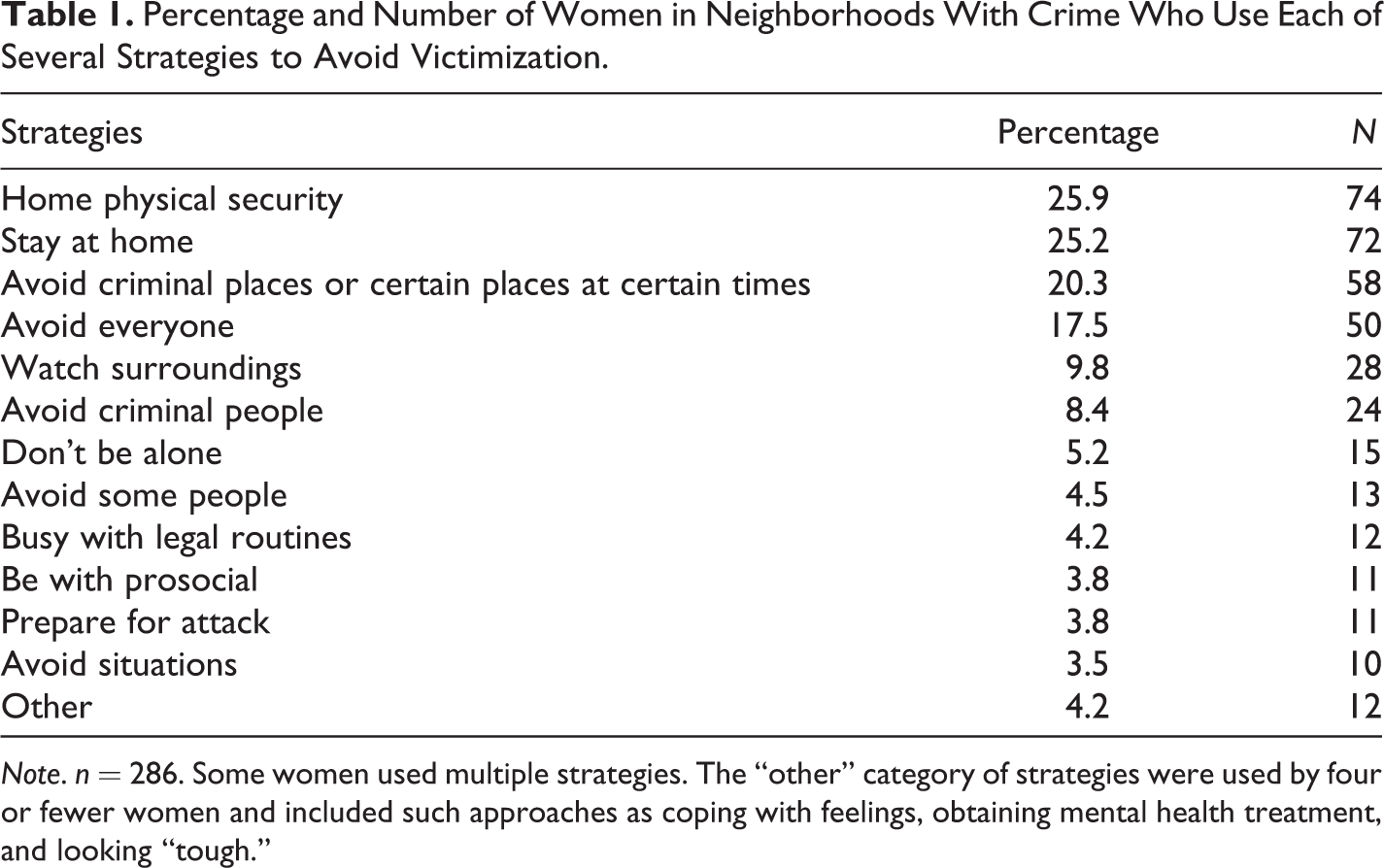
Note. n = 286. Some women used multiple strategies. The “other” category of strategies were used by four or fewer women and included such approaches as coping with feelings, obtaining mental health treatment, and looking “tough.”
Home physical security
The most common strategy to avoid becoming a crime victim in the neighborhood was to utilize precautionary measures in the home to deter potential intruders. This strategy was used by 26% of women. Specifically, many women indicated that they kept their doors and windows locked. Respondent 634 said, “I lock the door, like I’ll make sure the doors and stuff are locked. Like I’ll get up out of bed to make sure the stuff [is] locked.” Likewise, Respondent 640 stated, “I keep my windows locked when I leave. You know when it’s nice out I come home and I open up my windows, but I keep them locked and there’s no way to get in.” When asked whether the use of such a strategy was effective, she stated “yes” because her property has “not been vandalized.” Respondent 644 noted that she now “locks the door…[because] we never locked any doors before.” Not only did she claim to keep her doors locked, but she reported that “everybody’s got everything locked” in the neighborhood, and as a result, no break-ins have occurred in the area.
Some women also reported that to avoid victimization, they relied on dogs for protection. For example, Respondent 650 stated, “I have a dog…and it’s a pit bull so people stay away from those.” She believed this to be a useful strategy because “nothing’s happened yet.” And to stay safe, Respondent 625 replied, “I have dogs…Two English labs.” She reported that though she does not have a home security system, having dogs “keeps me feeling safe when [my boyfriend] is on business trips and he’s out of the house for days at a time because he has to be. That keeps me safe.” Similarly, to avoid victimization, Respondent 635 asserted, “I’ll take the dog out with me…[which is] a lab pit-bull mix.” Though she acknowledged that her dog is “nice” and “not an attack dog,” she claimed that “when it’s dark and if there’s somebody out there, she [the dog] would know before I would…[and] she would sense somebody out there.” Notably, even though some women did not have guard dogs to protect and defend them, they perceived that the very presence of a dog provided a level of protection.
Others relied on dogs for protection to augment the use of other forms of security measures to stay safe. For instance, in addition to locking her doors, when walking in the neighborhood, Respondent 634 takes her dog “for a walk all the time…[and] nobody bothers me.” Likewise, Respondent 670 said that in addition to putting Lock Guard Armor “on both my main doors [and] every window in my house…I have two dogs…and they keep me aware of everything.” Consider the following exchange:
Do those strategies work for you; the Armor Guards and the dogs?
Haven’t had a break-in.
Haven’t had a break-in, and the dogs keep you alert to anything going on too?
Squirrel, kittens, they just bark, that’s what they do. They hear everything.
So why does protecting yourself with dogs and the Armor Guard work for you?
Because, it’s going to take time to break into the house, and you basically, by the time you do all that, the dogs barking, and that’s an alert.
Other women utilized multiple tangible countermeasures to avoid being a victim. For example, Respondent 660 stated that in an attempt to stay safe “lights are always on, the doors are locked, my garage is always locked, we have sensor lights, [and] cars are always locked.” As a result, she asserted “I feel safer than I would, let’s say, if all my doors were unlocked.” And Respondent 996 stated that in order to avoid being a victim, she keeps “windows locked, [my] son’s got an alarm on his truck, [and we] keep the porch light on,” all of which she believed worked well to keep her safe.
Overall, women used a number of distinct forms of home physical security to stay safe, ranging from locking windows and doors, having pets, utilizing an alarm system, and keeping lights on in the house. For the most part, these strategies were perceived as helpful in keeping women safe from becoming a crime victim.
Staying home
One quarter of women stayed at home to maintain their safety. For the most part, women viewed their own neighborhoods as unsafe; thus, they made every effort to stay to themselves within the confines of their home. Respondent 1156 said “I don’t go out much.” Similarly, Respondent 1169 maintained, “[I] always stay indoors.” Respondent 1183 stated, “I just go in the house and stay in the house,” which she believed was useful in keeping her safe.
Many women who stayed home attempted to fill their days with indoor activities. Respondent 1201 explained “I just stay in the house. That’s all I do; eat, sleep and use the bathroom.” And Respondent 648 said “I watch TV or listen to music. Just relaxing,” which she believed worked well for her. And Respondent 109 stated “I just stay in the basement. You know, it’s safe there, just watch TV.… I don’t got to go nowhere.… I’m a laid back person; I have people coming to me.” She considered this as a valuable strategy for staying safe because it “[s]eparate myself from [crime].” Respondents were very much aware that involvement in criminal activity and being in close proximity to other individuals who broke the law placed them at greater risk of victimization (Griffin & Armstrong, 2003; Stewart, Elifson, & Sterk, 2004). Thus, they put considerable effort into staying to themselves indoors.
The many women who stayed inside to stay safe were not necessarily alone. It was common for women to stay inside with family and relatives who kept them company. Respondent 1180 asserted, “I stay in the house and I just deal with my daughter and my kids; that’s it.” Similarly, Respondent 653 said, “[I] stay in the house, or go to my auntie’s house, or my friend’s house. Just stay out of the way.” She assumed this was a good strategy because “we’re not getting caught in gun fire or nothing.”
While most women perceived staying within the confines of one’s own house to be effective, others discussed its shortcomings. For example, though Respondent 202 acknowledged staying home to avoid being a crime victim, when asked how it was working, she admitted: “I mean, it’s working but like my husband’s like, ‘you’re so anti-social!’” Similarly, Respondent 1206 stated that to avoid potential victimization “I just stay at home with my mum and dad. I don’t do anything.” However, she lamented “I cannot stand living with my parents whatsoever. It just…It makes me want to use [drugs] being there, sometimes the stress level is just, it’s just all overbearing.” Though Respondent 1206 felt she escaped neighborhood dangers by staying within the boundaries of her home with her parents, she viewed this strategy as the source of her stress, tempting her to resort to drugs to cope.
Although a central theme in women’s descriptions of victim-avoidance strategies was to stay home, some did spend time in public spaces in their neighborhoods. Those who left home at times indicated they did this only when necessary. Respondent 107 asserted “I don’t go anywhere unless I’m going to my appointment or something like that. Then I’m in the house.” Similarly, Respondent 1162 stated “I just stay here [home], and if I do have to go out to the doctor’s or something, I have somebody that comes picks me up.” And Respondent 1210 said, “[I] stay at my place and don’t go anywhere unless I really have too.” According to her, this worked well in keeping her safe because “I’m not out walking the streets like I used to and running into somebody [who engages in crime].” For many of these female probationers and parolees, they not only wanted to avoid victimization but they also wanted to avoid being asked to, or tempted to, engage in crime themselves (Cobbina et al., 2014). In sum, staying home provided women with an increased sense of personal safety. However, even though remaining indoors insulated women from neighborhood risks of victimization, a few women recognized that it came at a considerable cost, as many retreated from fully participating in community life (Cobbina et al., 2008).
Avoid criminal places or certain places at certain times
One-fifth of women reported that they avoided criminal places to prevent criminal victimization. Most women using this strategy perceived their neighborhoods as unsafe. Asked what strategies she used to avoid being victimized, Respondent 1186 reported “leaving and going to another neighborhood,” as she believed that her residential neighborhood placed her at risk for violence and other dangers. A few women specified that they avoided travelling down certain streets, as that was where most crime occurred. For example, Respondent 1175 said that “[I] stayed on this side of the street. I’m serious, there’s a big difference when you cross that street.” Similarly, Respondent 214 responded “I know what streets to go down. I’ve lived in the city my whole life. I know what streets to avoid.” Women’s perceptions are consistent with Weisburd, Groff, and Yang’s (2012) study emphasizing that specific “streets,” and not necessarily the entire neighborhood, serve as the places where crime is likely to occur.
Many women discussed making a concerted effort to avoid neighborhoods, or the “streets,” that were known for illicit activities. Respondent 105 stated, “I don’t hang out on the street. Where I live, the drugs and the hookers are on the corner.… I would never hang out on the street corner.” Respondent 600 asserted that she would “go up a safer street instead of going up one where there’s the drugs and the violence. I just go up a different street.” Likewise, Respondent 146 explained the reason she avoids traversing beyond her block: I’m not gunna go three blocks over, three blocks down and hang out with them and chill .… no because it’s where all the drama is, it’s where all the shooting comes from. That’s where everybody gets drunk at nighttime and a fight breaks out and somebody decides they got a gun in their pocket and they’re gunna pull it out and shoot. And bullets don’t got no names on them. That’s stupid. Well I’ll tell you one thing, anything I do is during the day so if I got shopping it’s during the day. I don’t be outside at night unless I’m sitting on my porch and know that I’m safe now at home. I was on my porch at night, but as far as, you can’t avoid anything, you know, you just can be at the wrong place at the wrong time when something happens. But the best I can do is do everything that I need to do that’s important during the day. If I need something from the store, then I’m gunna get it during the day because I’m not going out at night by myself.
Avoid everyone
While some women attempted to avoid criminal places to stay safe, others made effort to avoid everyone, regardless of whether they were involved in criminal activity. Specifically, 18% of women in the study stayed away from everyone in an effort to avoid being a victim. Respondent 1218 stated “[I] stay to myself…[because] when you stay to yourself, you won’t have to deal with none of it, won’t have to be no victim around there.” Similarly, Respondent 1327 responded that “I don’t really associate with too many people. I’m like a loner type of thing.” She explained why she believed this to be a useful strategy: Cause I can’t predict what another person might do, you know, I can meet with you and you just jump out and start shooting people. I mean, like what the hell? I just stick to me because I’m the only person that can control me, so if I know my environment is controlled, I feel safe.
For several women, isolation from people to stay safe extended to distrust of neighbors. Respondent 629 asserted “I don’t really associate with a lot of people in the neighborhood. Like I know everyone, but for the most part I keep to myself.” And Respondent 1200 explained, “you know how some people get outside and want to communicate? I don’t do all that.… I throw my hand out, wave and keep it moving.” According to her, “I think it’s safer not to display what you got. What people’s problems is to me is when they tell people what they’re doing and when they’re going to do it. I think that’s a problem.” Feelings of distrust toward neighbors were prevalent in women’s accounts and were connected to their attempts to avoid their neighbors.
Other women, however, remained cordial but still attempted to limit contact with people in the neighborhood. Concerns about personal safety led to suspicious feelings toward neighborhood residents. Respondent 1106, for instance, explained her effective strategy, “I speak to my neighbors but I don’t try to make friends with anyone…basically I just stick to myself.” Respondent 1018 said “[w]e only associate with a couple of the neighbors on the block, so we basically keep to ourselves and it keeps us out of the drama going on in the neighborhood.” While women attempted to be friendly with others, issues of distrust remained salient in their mind. Respondent 1223 said, “[I’m] still [going to] be friendly and cordial with people but still keep to myself.” She explained why she thought this was a successful strategy: Because once you be friendly towards people then they can include…I mean they like can probably mess over you and try to work their way into your apartment and all—you know, ain’t no telling. Like the person that stabs you in the back or robs you, usually be a friend or somebody you know. It’s not really nobody that you just don’t know.
Watch surroundings
Another common strategy that 10% of women used to avoid victimization was to watch their surroundings. To begin with, some stated that they simply observed nearby individuals. Respondent 1187 said she avoided being the target of a crime by “being aware of my surroundings,” which she perceived was useful in staying safe. Likewise, Respondent 803 stated that “[w]hen I walk I look behind myself.” Asked if such a strategy was effective in keeping her safe, she provided an ambiguous response: “I would hope so, I don’t know. I haven’t been hurt yet, knock on wood, you know.” Others perceived such an approach was not particularly useful, as it failed to avert an assault incident. For example, Respondent 384 said “I try to be observant. I made sure I got out of people’s way…I always smile, open the door for people. I thought I was being observant, cautious…but I was attacked.” This account indicates that despite the strategies that one uses, women continue to fear crime because victimization is always possible.
Women commonly coupled watching their surroundings with another strategy. Specifically, several women described relying on home physical security and watching their immediate area. Respondent 1017 said “I definitely make sure that the doors are all double locked and we have our security light on outside. And if I go out at night—I’m pretty… I take precautions.” Asked what precautions she took, she explained “[I] make sure nobody’s too close to me if I’m taking a walk. I keep my eyes open all the time, I’m very observant,” which she believed worked to keep her safe. Similarly, Respondent 1209 asserted that “[I] keep my car locked all the time, lock our doors at night and [if] we ever leave the house, and I just keep aware. I keep watch of things and when the police are going by and strange cars are going by and things like that.” While she admitted that she was unsure if this approach worked to keep her safe from being a crime victim, she acknowledged that it “just helps me stay alert and aware of what’s going on around.”
Other women described staying to themselves, but when they traversed public spaces, they observed their surroundings. Some took a more proactive approach. For example, Respondent 720 said that “being at home” was a tactic she used to avoid victimization; however, she also acknowledged that “I’ll look around the house and—or I’ll drive around my neighborhood so if I see somebody I don’t know or something like that, I’ll just…keep an eye on them.” And Respondent 1184 maintained, “I just stay to myself basically. If I have to go out, I make sure I’m watching my surroundings and everybody that’s around me.” She perceived such a plan to be useful in reducing her risk of being preyed upon. And Respondent 708 noted multiple strategies to stay safe: I guess I’m aware of my surroundings; I do not go out late at night. You know, if I need something I can wait until the morning, you know. I don’t go into areas where I know when things go on. That’s usually drugs or something. Like I told you, along with that comes violence a lot of the times, from my own experience anyways. Just making sure that I lead a lifestyle that’s kind of quiet and safe.
Avoid criminal people
Finally, 8% of women reported staying away from people engaged in criminal activity as a way to avoid being a crime victim. For instance, to avoid victimization, Respondent 1169 said “I just stay away from negative people…[and] violent people,” which she believed was helpful in staying safe. Respondent 206 affirmed, “I just steer clear of who I know I’m supposed to steer clear of.” In the same way, Respondent 371 said she simply “don’t socialize with those people.” All of these women contended that such tactics were beneficial in keeping them safe from being a crime victim.
Some women made specific mention of avoiding drug-involved individuals, as they were aware that contact with them increased their risk of victimization. Asked what strategy she used to avoid being a victim of crime in her neighborhood, Respondent 1,007 replied, “I don’t hang out with the people that use them [drugs].” Similarly, Respondent 133 stated “I just associate with people I already know and people who aren’t using, just stay away from them.” And Respondent 1227 detailed an incident in which she was approached by a drug dealer: “One guy tried to sell me weed [marijuana] and I just told him get away from me.… I said [it] very adamant[ly]: ‘You need to get away from me right now.’ And he left me alone.” According to Respondent 1227, and others, they believed that steering away from drug- and criminally-involved people reduced their likelihood of being a target of victimization.
Mixed Method Analysis of the Relationships of Subjective and Objective Measures of Neighborhood Context to Use of Strategies to Avoid Victimization
The strategies women use to avoid victimization may differ by their perceptions of neighborhood crime and/or objective measures of neighborhood context, as Cobbina et al. (2014) found in a study of the same sample of women who used various strategies to avoid breaking the law in neighborhoods with crime. To better understand women’s choice of strategies for avoiding victimization, we examined the associations between indicators of neighborhood context and the use of particular victim-avoidance strategies.
Tables 2 and 3 present the results of analysis that revealed significant relationships of perceptual or objective indicators of neighborhood context with one or more strategies that women used to avoid victimization. 4 Chi-square analysis was used to test for the relationship of the categorical variable, perception of the neighborhood as safe or unsafe, and each of the commonly used strategies. A separate series of χ2 analyses was used to examine the connection of prior victimization in the neighborhood to each strategy. The remaining indicators of neighborhood conditions were continuous variables derived from census data or a count of the number of different types of crime women saw in their places of residence. Thus, t-tests were used to assess equality of means across groups differing in the use of each type of victimization avoidance strategy.
Neighborhood Characteristics (Categorical Variables) and Victimization Experience With Significant Relationships to Strategies for Avoiding Victimization for Women With Some Indicator of Neighborhood Crime.
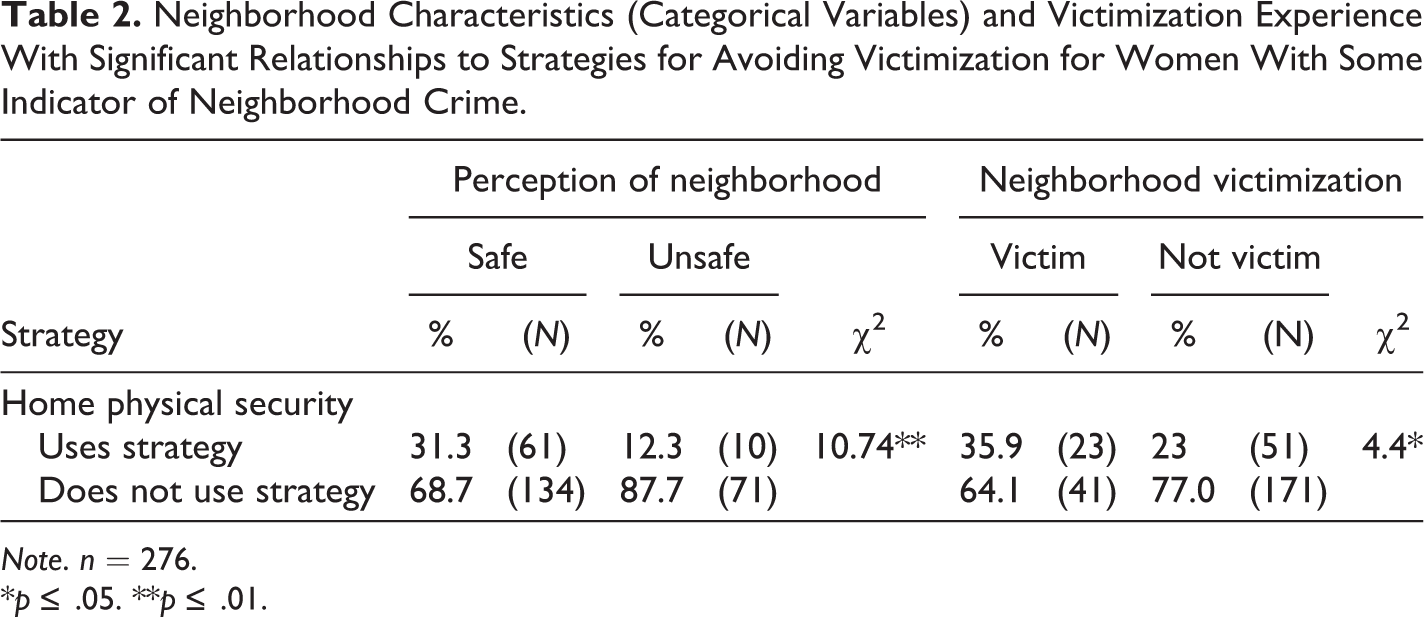
Note. n = 276.
*p ≤ .05. **p ≤ .01.
For the χ2 analysis, only the strategy of using physical home security for protection was significantly related to the perception of the neighborhood as safe. Unexpectedly, as shown in Table 2, compared to women who described their neighborhoods as unsafe, a higher proportion of women (31.3% vs. 12.3%) who perceived their neighborhoods as safe used home physical security. Consistent with this finding, women who did not use the physical home security strategy had significantly higher census tract indicators of disadvantage and significantly lower census tract indicators of concentrated affluence and residential stability (Table 3). There was also a tendency (p = .107) for the women who did not use physical home security to perceive a greater number of different types of criminal activity in their neighborhoods. Thus, multiple indicators suggest that physical home security is the strategy of choice for women in better off neighborhoods. Additionally, physical home security is somewhat more likely to be used by women who were victimized by a crime in the neighborhood (used by 35.9% of 64 victimized and 23.0% of 22 not victimized women; χ2 = 4.4; p = .037).
Neighborhood Characteristics (Continuous Variables) With Significant Relationships to Strategies for Avoiding Victimization for Women With Some Indicator of Neighborhood Crime.
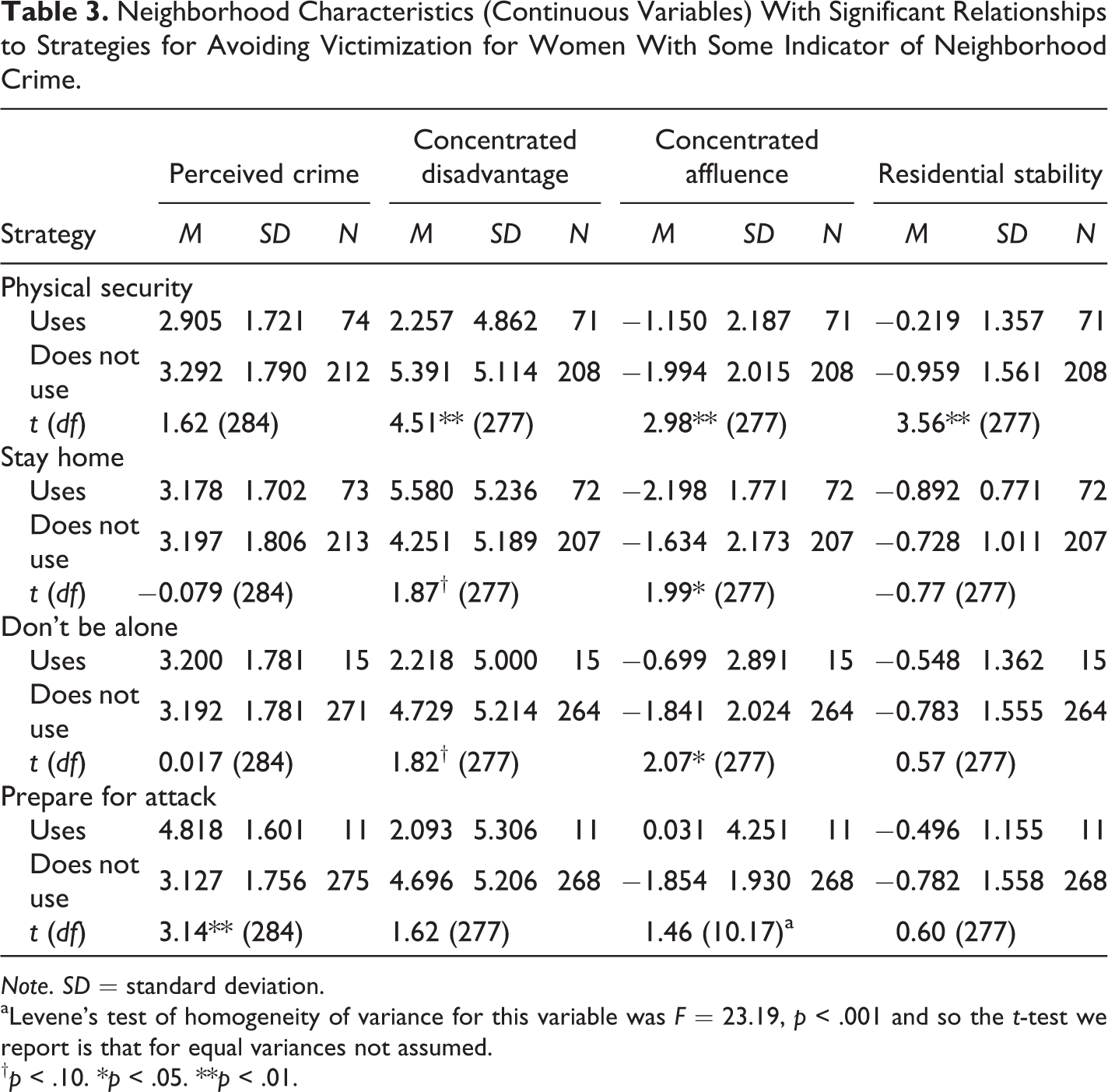
Note. SD = standard deviation. aLevene’s test of homogeneity of variance for this variable was F = 23.19, p < .001 and so the t-test we report is that for equal variances not assumed.
† p < .10. *p < .05. **p < .01.
Another strategy that is associated with better-off neighborhoods is avoiding being alone (Table 3). Women who use this strategy have significantly higher levels of concentrated affluence in their neighborhoods. They also tended (p = .070) to live in neighborhoods with lower levels of social disorganization.
Women who used the strategies of staying home and preparing for attack to avoid victimization lived in the less advantaged neighborhoods. Specifically, as shown in Table 3, women who prepare themselves for an attack report significantly more types of crime in their neighborhoods. Those who stay home to avoid victimization have significantly less concentrated affluence in their neighborhoods, and they tend to have more economic disadvantage (p = .063). It is likely that women in advantaged and more affluent neighborhoods can afford to purchase physical security systems to keep their home safe. In contrast, women who perceived more crime in their neighborhood and who are from the least affluent areas often attempt to avoid victimization by staying home. It may be that women residing in poor neighborhoods believed that the only way to stay safe is to relegate themselves to the private sphere, which insulates them from neighborhood risk. Also, the strategy of not being alone is positively related to the census indicator of community affluence, perhaps because more people who can act as protectors from victimization are available in better off neighborhoods. Finally, women who perceived more crime in their neighborhood were more likely to prepare themselves for potentially being attacked, for example, by carrying mace, pepper spray, or a weapon.
Mixed Method Analysis of Race/Ethnicity in Relation to Strategies to Avoid Victimization
The strategies women used to avoid victimization also varied by race (see Table 4). Whites were significantly more likely to use physical security than Black and Multiracial women. It may be that White women live in the more advantaged areas and can afford security systems for their homes, while minority women may have few financial resources to purchase an alarm system or other security device. Additionally, there was a trend for both Black and Multiracial women to stay home to avoid victimization. Again, if these women are concentrated in more disorganized neighborhoods, home may be the only place where they feel safe from harm. Overall, women of color used more constraining strategies that hampered their ability to participate in public life, while White women used less restrictive strategies to avoid becoming a crime victim.
Racial/Ethnic Differences in Choice of Strategies for Avoiding Criminal Victimization.
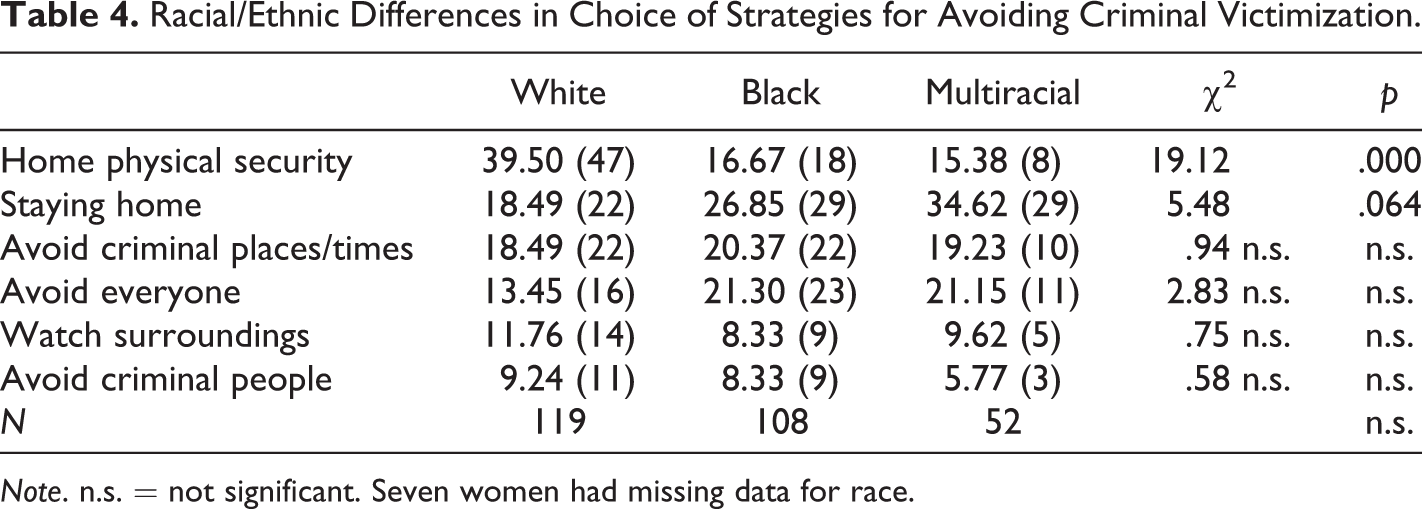
Note. n.s. = not significant. Seven women had missing data for race.
Discussion
Fear of crime and risk management strategies have garnered substantial attention in the scholarly literature. The goal of this study was to broaden understanding of how women manage their risk by focusing on a high-risk population. First, we explored the strategies women probationers and parolees use to avoid victimization in neighborhoods viewed as unsafe, documenting their perceptions of how effective such strategies are in keeping them safe. Second, we examined whether the strategies are tied to perceived and objective measures of community context. Finally, we determined whether the strategies used differ for women of different racial/ethnic groups.
Overall, we found that while some women adopted defensive behaviors (e.g., relying on home physical security and observing their surroundings in public spaces), most used avoidance strategies to stay safe (e.g., staying home, avoiding criminal people and places, and staying away from everyone). Although women who relied on home physical security perceived the strategy as useful in keeping them safe from crime, those who watched their surroundings provided more ambiguous responses. Some asserted that the strategy was effectual, others were unsure, and a few noted that it proved to be ineffective in avoiding their risk of victimization. With the exception of a few women, the use of avoidance strategies was commonly perceived as being beneficial in keeping women safe, as many believed that individuals just could not be trusted. Thus, a common response was to distance oneself from others, which can lead women to feel disconnected from others, and result in decreased cohesion within communities. This has implications for collective efficacy, as generating social ties among neighborhood residents is necessary for controlling community crime (Bursik & Grasmick, 1993; McNulty & Bellair, 2003; Sampson, Morenoff, & Earls, 1999). When residents fail to develop social bonds around common values, it weakens the residents’ capacity for social control, leading to elevated crime levels (Sampson et al., 1997); thus, increasing the likelihood that women who live in unsafe neighborhoods will be victimized.
Women’s use of defensive and avoidance precautionary strategies to avoid victimization was tied to both perceptual and objective measures of neighborhood context. Unexpectedly, women who perceived that their neighborhoods were unsafe were less likely to rely on home physical security. Rather, those who lived in more advantaged, affluent, and residentially stable neighborhoods were more likely to rely on physical security for their homes. It is likely that individuals who live in socially organized communities have the financial resources to purchase security devices to protect their home.
Moreover, women who were victimized in the neighborhood were slightly more likely to use physical home security to avoid subsequent victimization. Such findings make intuitive sense if women were victims of a property offense, as prior property loss may have an independent influence on the use of home physical security. Unfortunately, our study findings are limited in that we did not have separate measures of property and personal victimization. Future research should differentiate between the two types of victimization experiences to determine whether it is tied to victimization avoidance strategies.
An additional disadvantage of women in the least safe communities was that they were less likely to spend time with other people to avoid victimization than women in more affluent communities. For many women living in the poorest neighborhoods, staying inside the confines of their own homes is where they felt safest from neighborhood crime. However, this strategy limited their mobility, as concerns about potential victimization served as a powerful social control that generally relegated women living in economically distressed communities to the private sphere (Cobbina et al., 2008; Gordon & Riger, 1989; Stanko, 1990). Because women residing in very poor, high-crime neighborhoods are more likely to resort to isolating strategies to stay safe, they may face unique challenges as they attempt to navigate their communities. Moreover, when women restrict themselves to the private sphere, it inhibits their ability to develop social networks, which is problematic. Studies show that in the general population, compared to men, women have more limited networks (Marsden, 1987; Moore, 1990), making it difficult to develop social capital (Lin, 2000; Wilson, 1996) and human capital (i.e., education and job skills; Reisig, Holtfreter, & Morash, 2002) to overcome adverse situations. This limitation is compounded for women in the most disadvantaged communities.
Not only were the strategies women used tied to neighborhood context, but they also varied by race. White women who lived in advantaged neighborhoods were more likely to use home physical security to stay safe compared to Black women. In contrast, Black and Multiracial women commonly reported staying home to avoid victimization. Our study findings show that while women use a range of precautionary strategies to reduce their risk of victimization, women of color largely relied on more restrictive strategies to stay safe. This may be because women of color are most concentrated in disadvantaged neighborhoods with high levels of crime (Krivo, Peterson, & Kuhl, 2009). Consequently, women of color limited their activities to a considerable extent by reorganizing their lifestyle to avoid people and places that were perceived as dangerous. While such a strategy may appear wise in keeping one safe, such constraining behavioral strategies can substantially reduce quality of life and reproduce social inequalities that generate and reinforce exclusion from social interaction, specific places, and particular activities (Pain, 2001). Studies suggest that fear of crime and the use of extensive precautionary strategies in anticipation of victimization serve to reinforce the marginalization of those who are generally socially or economically disadvantaged to start with (Morash, 2006; Pain, 2001).
The current study has relevance beyond its intellectual import. We believe it is necessary to assist those facing hardships and bring attention to the unique challenges that individuals of color face because they are most restricted to disadvantaged high-crime neighborhoods. While White individuals who live in socially disorganized neighborhoods also need assistance, studies show that Blacks and Hispanics largely reside in highly disadvantaged areas, which has shown to be detrimental for communities of color (Krivo et al., 2009; Massey & Denton, 1993; Massey & Fisher, 2000; Peterson & Krivo, 1993). One way to assist individuals who live in disadvantaged neighborhoods is to help them move to less distressed areas. Thus, if women of color are offered the opportunity to move, it may reduce their perception of neighborhood crime, thereby diminishing their use of constrained behavior and allowing them to fully participate in social life.
Additionally, we must face the reality that women of color have limited choices of where to live (Petersilia, 2003). In general, African Americans tend to receive less information than Whites about available housing (Ross & Yinger, 2002). Also, renters and home buyers tend to be steered into neighborhoods with racial compositions that reflect their own racial/ethnicity, and discrimination in mortgage lending reinforce continued segregation (Ross & Yinger, 2002; Yinger, 1995). Moreover, female probationers and parolees often experience discrimination in securing housing (Petersilia, 2003), which is especially the case among those residing in neighborhoods characterized by high rates of poverty, social disadvantage, and crime. Clearly, barriers to living in socially organized communities characterized with less crime need to be addressed.
In addition to structural changes, more concerted efforts need to be made to help women build relationships even while residing in high-crime, disorganized, disadvantaged neighborhoods. Case managers and community program staff can coordinate support groups for women residing in poor neighborhoods on a weekly or monthly basis. Such groups would allow women to get out of the confines of their homes, interact with one another, and build support networks. To enable women to forge bonds with others, we believe that safe and reliable transportation should be provided to women to events, especially at night. Perhaps female probationers and parolees can be given mentors who can also assist with transportation needs to help women obtain new social supports. We also suggest that supervising agents convey to their clients common but less constraining strategies that have been used to effectively reduce victimization risk among those returning to unsafe neighborhoods. It is particularly important to educate women about their actual risk of victimization and the choices they can make to reduce their likelihood of victimization while still participating in various aspects of social life. However, if supervising officers are to convey to their clients less constraining strategies they can adapt to stay safe, it must be used with caution, as studies show that the use of behavioral strategies can create increased levels of fear of crime (Ferraro, 1996). As a result of the realities that female probationers and parolees face, we believe that alternative strategies should be considered to help poor women of color living in economically distressed neighborhoods, given that race and place are tied to the types of strategies they use to avoid victimization.
Despite the unique findings, we must note a couple of limitations. First, while our study findings show that neighborhood context indicators are related to women’s strategies, we were unable to make a strong causal inference, as we did not control for variables that could make the associations spurious. Findings point to the need for additional research of this type to better understand causality. Second, the scope of the study focused solely on female offenders. Given that men are more likely to be victimized than women (except for sexual assaults), future studies should be conducted on a sample of male offenders to determine whether the strategies women and men use to avoid victimization varies across gender. Finally, we did not measure vicarious victimization, except through the perception of crime in the neighborhood scale. Future research of this type should measure both personal and vicarious victimization of women and how they affect the use of respondents’ victimization strategies.
Notwithstanding these limitations, this study represents an important step in understanding the strategies women use to avoid victimization. While a great many studies have been amassed on fear of crime, most focus on college and community samples (Ferraro, 1995; May et al., 2010; Rader et al., 2009) and few consider whether the strategies women offenders use to avoid victimization are tied to community context and race. Understanding the nature of the link between neighborhood contexts, race, and risk avoidance strategies will pay dividends for our understanding of fear of crime and the strategies individuals use to manage fear.
Footnotes
Declaration of Conflicting Interests
The author(s) declared no potential conflicts of interest with respect to the research, authorship, and/or publication of this article.
Funding
The author(s) disclosed receipt of the following financial support for the research, authorship, and/or publication of this article: This material is based upon the work supported by the National Science Foundation under Grant No. 1126162 and by a Strategic Partnership Grant from the Michigan State University Foundation.