







Abstract
Using survey data from a sample of White, Black, and Hispanic male offenders (n = 311), this study examines whether the relationship between procedural justice and obligation to obey the law is substantiated among a sample of offenders. Further, this study explores the impact that sharing the race/ethnicity of the defense attorney, prosecutor, and judge in their most recent conviction has on male offenders’ perceptions of court procedural justice and their perceived obligation to obey the law. The findings reveal that male offenders who perceive the courts as more procedurally just report a significantly greater obligation to obey the law. In addition, Black and Hispanic offenders who shared the race/ethnicity of the prosecutor in their case perceived the courts as significantly more just. Implications and directions for future research are discussed.
Extant research has demonstrated that procedural justice is a key factor in helping to enhance people’s obligation to obey the law (Baker et al., 2015; Jackson et al., 2012; Tyler, 2006; Tyler & Huo, 2002; Wolfe, Nix, Kaminski, & Rojek, 2016). This finding has reinforced the belief that criminal justice actors may have control over whether or not the public complies with the law and legal authorities. Specifically, how legal authorities act in their encounters with people, that is, more or less fairly, may influence those people’s obligation to obey the law (Mazerolle, Antrobus, Bennett, & Tyler, 2013). While such prior studies on the process-based model of regulation have provided valuable information, there remain several areas for additional research.
First, likely due in part to the complications in accessing known offenders (Pickett, Metcalfe, Baker, Gertz, & Bedard, 2014), previous investigations of the process-based model have primarily focused on the general public or on minor offenders (Murphy, 2004, 2005; Tyler, 2006). Despite the difficulties involved in examining offenders, a handful of studies have explored procedural justice perceptions among individuals actually involved in a criminal lifestyle and at a high risk for future criminal behavior, such as inmates (Baker et al., 2015; Casper, Tyler, & Fisher, 1988; Papachristos, Meares, & Fagan, 2012; Piquero, Fagan, Mulvey, Steinberg, & Odger, 2005; White, Mulvey, & Dario, 2015). This study aims to expand on this existing literature by examining the process-based model among known offenders.
Next, prior research on the process-based model has primarily focused on perceptions of the police with perception of the courts receiving less consideration (Baker et al., 2015; Sunshine & Tyler, 2003). Although some prior studies of procedural justice have failed to distinguish between police and courts, treating them instead as a single group of legal authorities (Tyler & Huo, 2002), other research suggests that police and courts may be viewed quite distinctly (Baker et al., 2014; Roberts & Hough, 2005). For example, in one study, Tyler (2006) found that perceptions of the courts may be more salient for people than perceptions of the police. Another more recent study found that certain demographic variables such as people’s age, level of education, and race/ethnicity were significant predictors of their perceptions of court procedural justice but not their perceptions of police procedural justice (Baker et al., 2014). As such, this study examines the antecedents of perceived court procedural justice, and how perceptions of court procedural justice are associated with people’s obligation to obey the law.
Third, prior literature suggests that sharing one’s race or ethnicity with criminal justice actors may result in more positive assessments of those authorities (Baker et al., 2015; Tyler & Huo, 2002; Weitzer & Tuch, 2006). These findings extend generally from two theoretical areas. The first explores shared race/ethnicity from the perspective of the group-value model which suggests that being able to identify with an authority may increase perceptions of status which in turn increases perceptions of procedural justice (Lind & Tyler, 1988). The second extends from social identity theory, which examines the importance of people’s in-groups and out-groups (Abrams & Hogg, 1990; Hogg, 2006). People’s categorizations about their in-groups and out-groups “draw on readily accessible social categorizations (e.g., gender, race, profession)—ones that are valued, important, and frequently employed aspects of the self-concept” (Hogg, 2006, p. 119). Because people may be unclear about the status of their in-group, they rely on in-group members, particularly ones in positions of authority, as evidence about their status, and they adjust their views accordingly (Abrams & Hogg, 1990). To further test these perspectives, this study explores how sharing the race/ethnicity of court actors affects offenders’ perceptions of the procedural justice of the courts and their obligation to obey the law.
To address these gaps in the current literature, the present study employs data from a survey of males incarcerated in a correctional facility in Florida. The survey included measures of the racial/ethnic characteristics of the court actors with whom the inmates interacted, the inmates’ perceptions of court procedural justice, and their obligation to obey. In the sections that follow, the relevant prior literature is reviewed, after which the methodology is described and the results are discussed.
Review of the Literature
Court Procedural Justice and Obligation to Obey
Research on the relationship between people’s perceptions of procedural justice and their obligation to obey is rooted in the process-based model of regulation (Tyler, 1989). This approach is built on two key propositions. First, the extent to which people perceive authorities to be fair and their motives just, the more obliged they will be to obey law, even if they do not receive the outcome they desire (Tyler, 2006). Second, authorities have control over whether people perceive them to be procedurally just (Tyler & Huo, 2002). Evidence of these propositions has been established in several studies of the public’s perceptions of the police (Mazerolle et al., 2013; Sunshine & Tyler, 2003; Wolfe et al., 2016). However, tests of the process-based model within the courts have received comparatively less research attention.
The fact that the process-based model has not been tested as frequently in the courts is somewhat surprising considering that the foundational work positing the importance of procedural justice was conducted in a court setting. Specifically, Thibaut and Walker (1975) found that people who took part in simulated adversarial trials perceived the trial as fairer than those in an inquisitorial setting. Casper, Tyler, and Fisher (1988) built on the work of Thibaut and Walker (1975) by examining antecedents of court procedural justice among felony defendants. While their results indicated that some factors they explored affected defendants’ perceptions of court procedural justice, such as how they were treated by the police, other factors such as the defendants’ criminal record and whether or not they had a public a defender did not affect their perceptions of the courts (Casper et al., 1988). In a more recent study, Baker and colleagues (2014), using a sample of incarcerated females, similarly found that perceptions of police affected respondents’ perceptions of court procedural justice as did extralegal factors including the respondents’ age, education level, and race/ethnicity. However, none of these studies evaluated whether court procedural justice was correlated with respondents’ obligation to obey the law or whether the demographic characteristics of court actors affected defendants’ views about the courts or the law.
Among the few investigations that have examined the relationship between people’s procedural justice perceptions of the courts and their obligation to obey the law, several have failed to distinguish between perceptions of the courts and perceptions of the police combining the two types of perceptions into a single item—perceptions of legal authorities (Tyler, 2006; Tyler & Huo, 2002). This conflation of perceptions of police and courts ignores the nuanced relationship of these two types of perceptions and potentially obscures the unique correlates and effects of each (Baker et al., 2014; Sprott & Doob, 2009). For example, research by Papachristos, Meares, and Fagan (2012) showed that while prior offenders’ procedural justice perceptions of the police were significantly associated with perceived legitimacy, no such relationship emerged when the focus was on perceived procedural justice of prosecutors. However, in one study that directly evaluated the relationship between known female offenders’ procedural justice judgments and their obligation to obey the law, Baker and colleagues (2015) found a strong consistent relationship between perceptions of court procedural justice and respondents’ obligation to obey. As such, the recent literature provides only limited information about the potential generalizability of the process-based model to known offenders when evaluated within the context of individuals’ perceptions of the courts.
Importance of Shared Race/Ethnicity With Court Authorities
The salience of sharing one’s race/ethnicity with authorities is articulated within the procedural justice literature through Lind and Tyler’s (1988) group-value model. The group-value model posits three antecedents of procedural justice: status, neutrality, and trust. Lind and Tyler’s (1988) status component of the group-value model emphasizes the importance of being a member of a respected and authoritative group. In one of the first tests of this model, Tyler (1989) found that all three factors of the group-value model, in addition to perceived voice, significantly influenced perceptions of procedural justice. An important limitation of Tyler’s (1989, 1994) research on the group-value model is that it did not directly consider the potential effects of authorities’ demographic attributes, such as their race or ethnicity. This is notable because the group-value model suggests that such identification may shape status perceptions and, in turn, influence views about authorities.
The importance of shared race/ethnicity can also be found in social identity theory. Like the group-value model, social identity theory similarly emphasizes the importance of group status (Abrams & Hogg, 1990; Hogg, 2006). According to the theory, people create self-identifying classifications based on a variety of social categorizations such as their race/ethnicity, gender, or occupation. These classifications create the basis for individuals’ self-concept about their in-group (Abrams & Hogg, 1990). In generating these conceptualizations about their in-group, people look to others, particularly others in positions of authority, to shape their perceptions of their in-group status. To the extent that individuals share in-group categorizations with authority figures, the more likely they may be to identify with the beliefs and directives of those authorities. For example, Tyler and Huo (2002) examined the importance of citizens’ sharing their ethnicity with legal authorities, broadly defined, with whom they had recently interacted (e.g., the citizens’ had called police for help, gone to court as a plaintiff, etc.). They found that Black and Hispanic citizens’ willingness to accept decisions made by authorities did not vary depending on whether the authorities were White or non-White, but White citizens were significantly more willing to accept decisions made by White authorities, even after controlling for process issues. Unfortunately, Tyler and Huo (2002) did not evaluate how shared race/ethnicity affected respondents’ perceptions of procedural justice or obligation to obey the law and, as noted above, they combined interactions with police and court actors into an omnibus measure of legal authorities.
There has, however, been one study that has directly evaluated the impact of shared race/ethnicity with court actors on known offenders’ procedural justice judgments of the courts and their obligation to obey the law. In their study of female offenders, Baker and colleagues (2015) found that respondents who shared the race/ethnicity with the prosecutor in their case were significantly more likely to perceive the courts as fair and those who perceived the courts as fair were significantly more likely to obey the law. When the models were disaggregated by race/ethnicity, though, Baker et al. (2015) found that for non-Whites, shared race/ethnicity with courts actors was not significantly related to perceptions of court procedural justice. Rather, for non-Whites, having interacted with a non-White prosecutor regardless of race or ethnicity was positively and significantly associated with perceptions of court procedural justice (Baker et al., 2015). While the contributions of Baker et al. (2015) are noteworthy, it remains unclear if similar findings would result from a study of known male offenders.
Current Study
Building upon the prior literature on shared race/ethnicity, procedural justice, and obligation to obey discussed above, the current study aims to explore three main research questions. First, is the theoretically posited and empirically demonstrated relationship between perceived court procedural justice and obligation to obey substantiated among male offenders? Second, what impact will sharing one’s race/ethnicity with court actors have on male offenders’ perceptions of court procedural justice and their obligation to obey? Third, do the effects of shared race/ethnicity with court actors vary between Whites and non-Whites?
Data and Method
In order to evaluate known offenders’ interactions with and perceptions of courts and their obligation to obey, survey data were collected from a voluntary anonymous sample of males incarcerated in a medium-security correctional facility in southern Florida. All study procedures and methods were approved by the university institutional review board and the review board of the Florida Department of Corrections. Data collection occurred in early 2012. Individuals were approached in their cell block during recreational time or in their program classes and asked to participate in the study. They were informed that the survey was entirely voluntary and permitted to continue their normal daily activities if they declined to participate in the survey. On the day of survey administration, 977 males were incarcerated at the facility and 414 of them completed the questionnaire resulting in a response rate of 42.4%. To examine the key independent variables relating to shared race/ethnicity, respondents were asked whether the attorney who represented them, prosecutor, and judge in the case that resulted in their incarceration was White, Black, Hispanic, or some other race or ethnicity. As such, only individuals who self-identified as White, Black, or Hispanic could be identified as sharing the race/ethnicity with the court actors in their case. As a result, the men who identified as Asian (n = 6), American Indian (n = 7), or other (n = 17) or skipped the race/ethnicity question (n = 33) were omitted from the study. In addition, 38 respondents were dropped due to missing data on variables examined in the study, and an additional two cases were removed as a result of undue influence and leverage. 1 This resulted in a final analytic sample of 311 males.
Measures
Obligation to obey
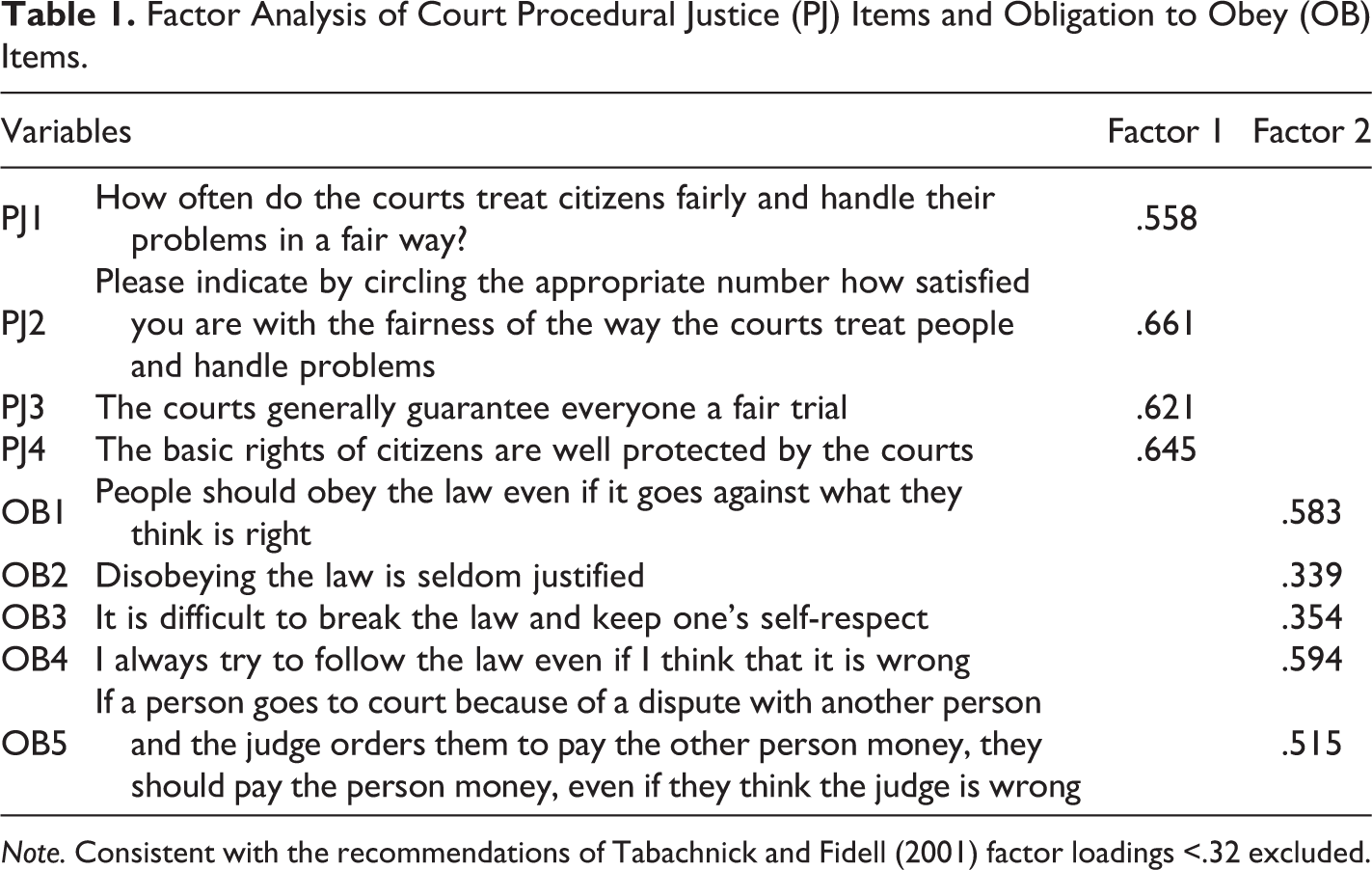
To measure respondents’ obligation to obey, five questions were combined into a mean standardized index with a Cronbach’s α = .65 2 Although this reliability coefficient is lower than the traditional .70 threshold suggested by Nunnally (1978), it is considerably higher than obligation to obey αs reported in prior studies. For example, Tyler and Huo’s (2002) measure had an α = .47. In Tyler’s (2006) seminal Why People Obey the Law, his obligation to obey measure had an α = .57. In two recent studies, Wolfe (2011) reported an α = .55 and Baker et al. (2015) in a study of incarcerated females reported an α = .64. In addition, all five of the Obligation to Obey items loaded on a single factor (see Table 1). It is also worth noting that the number of items in a scale is an important factor in determining the size of the α coefficient (Cortina, 1993). Further, as Cortina (1993) notes, “those who make decisions about the adequacy of a scale on the basis of nothing more than the level of alpha are missing the point of empirically estimating reliability” (p. 101). For these reasons, I proceed with some confidence that despite the modest α, these 5 items represent a single underlying theoretical construct.
Factor Analysis of Court Procedural Justice (PJ) Items and Obligation to Obey (OB) Items.
Note. Consistent with the recommendations of Tabachnick and Fidell (2001) factor loadings <.32 excluded.
Perceived court procedural justice
Four items were used to measure respondents’ perceptions of court procedural justice. The items were combined into a single mean standardized index with a Cronbach’s α = .75. Again, all 4 items loaded on a single factor (see Table 1 for loadings and question wording). Once again, this gives me some confidence these 4 items do in fact represent a single underlying construct of Perceived Court Procedural Justice.
While several recent studies (see, e.g., Baker et al., 2015; Gau, 2011) have demonstrated the discriminant validity of perceptions of procedural justice and individuals’ obligation to obey the law, an exploratory factor analysis was conducted to provide additional evidence that the two measures were separate and distinct constructs. As the results in Table 1 show, all obligation to obey measures loaded on one factor and all procedural justice items on the other. Tabachnick and Fidell (2001) suggest retaining items with factor loadings of .32 or greater and all loadings exceed this threshold.
Shared race/ethnicity with court actors
To measure respondents shared race/ethnicity with court actors, respondents were prompted with the statement: “For the next set of questions I would like for you to think about the conviction that sent you here.” They were then asked to identify the race/ethnicity of the attorney representing them, the prosecutor, and the judge. Additionally, participants were asked to self-identify their own race/ethnicity. Using these measures, three dummy variables were created: Shared Race with Defense Attorney, Shared Race with Prosecutor, and Shared Race with Judge. For each variable, respondents were coded 1 if their self-identified race/ethnicity matched that of the court actor and were coded 0 if their self-identified race/ethnicity did not match that of the court actor.
Voice
Consistent with prior literature (Baker et al., 2014, 2015; Tyler, 2006), voice was measured with a single item. Respondents were asked “I would like you to think of the last time you encountered the courts. How much of a chance or opportunity did the court give you to describe your problem to them before making any decisions about how to handle it?” Response categories for this measure were 1 = not much, 2 = a little opportunity, 3 = some opportunity, and 4 = a great deal of opportunity.
Controls
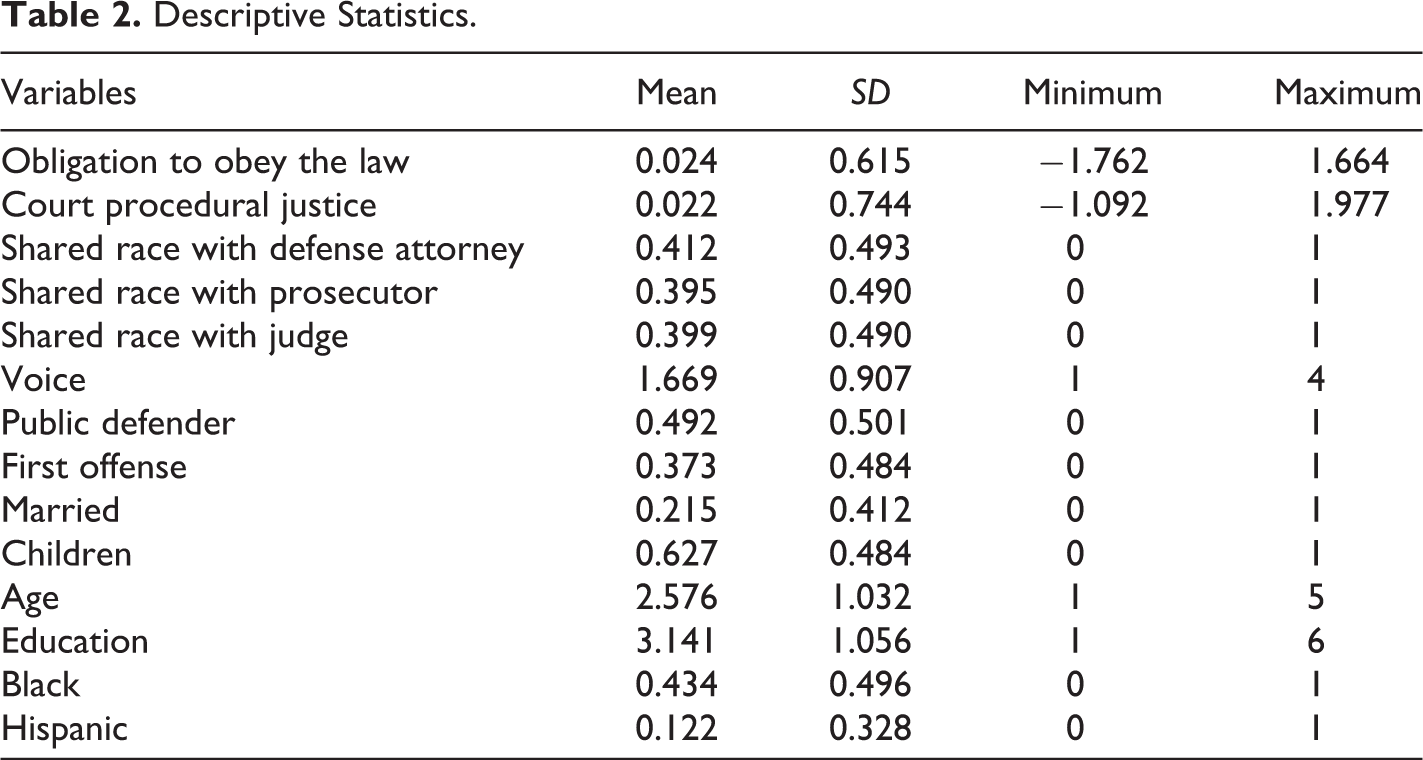
Two variables related to respondents’ criminal justice experience were controlled for. The first was whether the respondent had a public defender in their case. The second was whether or not the conviction resulting in their incarceration was their first offense. In addition, five individual demographic characteristics of the respondents were controlled for age, race/ethnicity, children, marital status, and education. Age was an ordinal measure 1 = 24 or younger, 2 = 25–34 years, 3 = 35–44 years, 4 = 45–54 years, 5 = 55–64 years, and 6 = 65 or older. Race/ethnicity was measured according to individuals’ self-identified race/ethnicity and operationalized for this study by creating two dummy variables 1 = Hispanic, 0 = non-Hispanic and 1 = Black, 0 = non-Black, leaving White as the reference category. Children were measured based on a single question asking whether or not respondents had any children. Marital status was measured dichotomously as 1 = married, 0 = unmarried. Finally, education was measured as individuals’ self-reported highest grade of completion. Response categories were 1 = grade school or less, 2 = some high school, 3 = high school graduate, 4 = some college, 5 = college graduate, 6 = post graduate degree. Descriptive statistics of all variables are presented in Table 2.
Descriptive Statistics.
Analytic Strategy
Using ordinary least squares (OLS) regression, analysis begins by examining the impact of shared race/ethnicity with each court actor, voice, and the control variables on respondents’ perceived court procedural justice. Next, disaggregated models are examined to explore differences in the effect of shared race/ethnicity with court actors on court procedural justice among Whites and non-Whites. Then, using OLS, obligation to obey is regressed on shared race/ethnicity with the court actors, perceived court procedural justice, voice, and the controls. Finally, disaggregated models predicting obligation to obey among Whites and non-Whites are analyzed.
Results
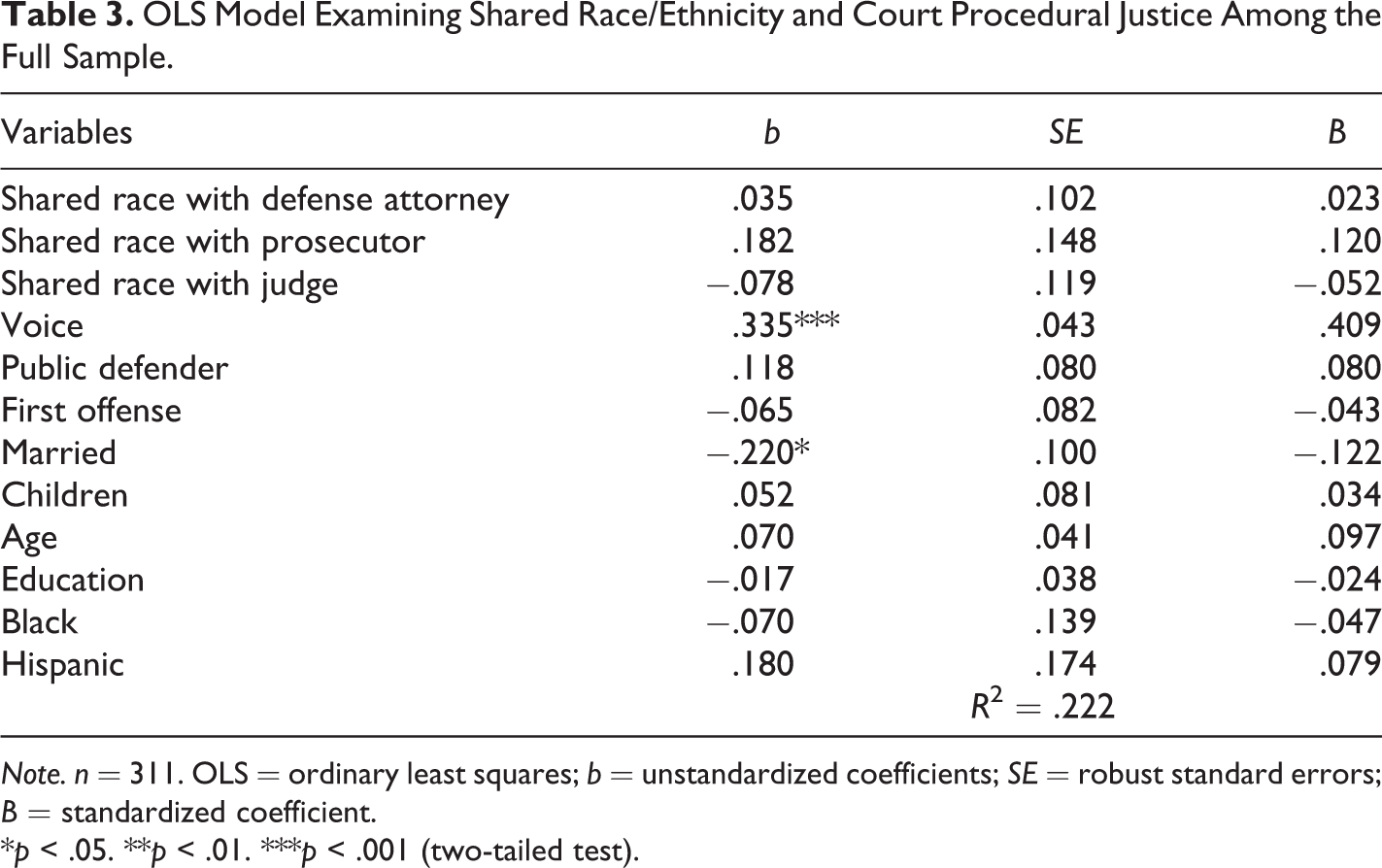
The results of regressing perceptions of court procedural justice on shared race/ethnicity with each court actor, voice, and the controls among the full sample are presented in Table 3. Findings indicate that sharing the race/ethnicity with the defense attorney, prosecutor, or judge in the respondents’ most recent conviction has no effect on their perceptions of court procedural justice. Perceiving greater voice in their interactions with the court is significantly and positively associated with perceptions of court procedural justice. Among the controls, being married is significantly and negatively associated with perceptions of court procedural justice.
OLS Model Examining Shared Race/Ethnicity and Court Procedural Justice Among the Full Sample.
Note. n = 311. OLS = ordinary least squares; b = unstandardized coefficients; SE = robust standard errors; B = standardized coefficient.
*p < .05. **p < .01. ***p < .001 (two-tailed test).
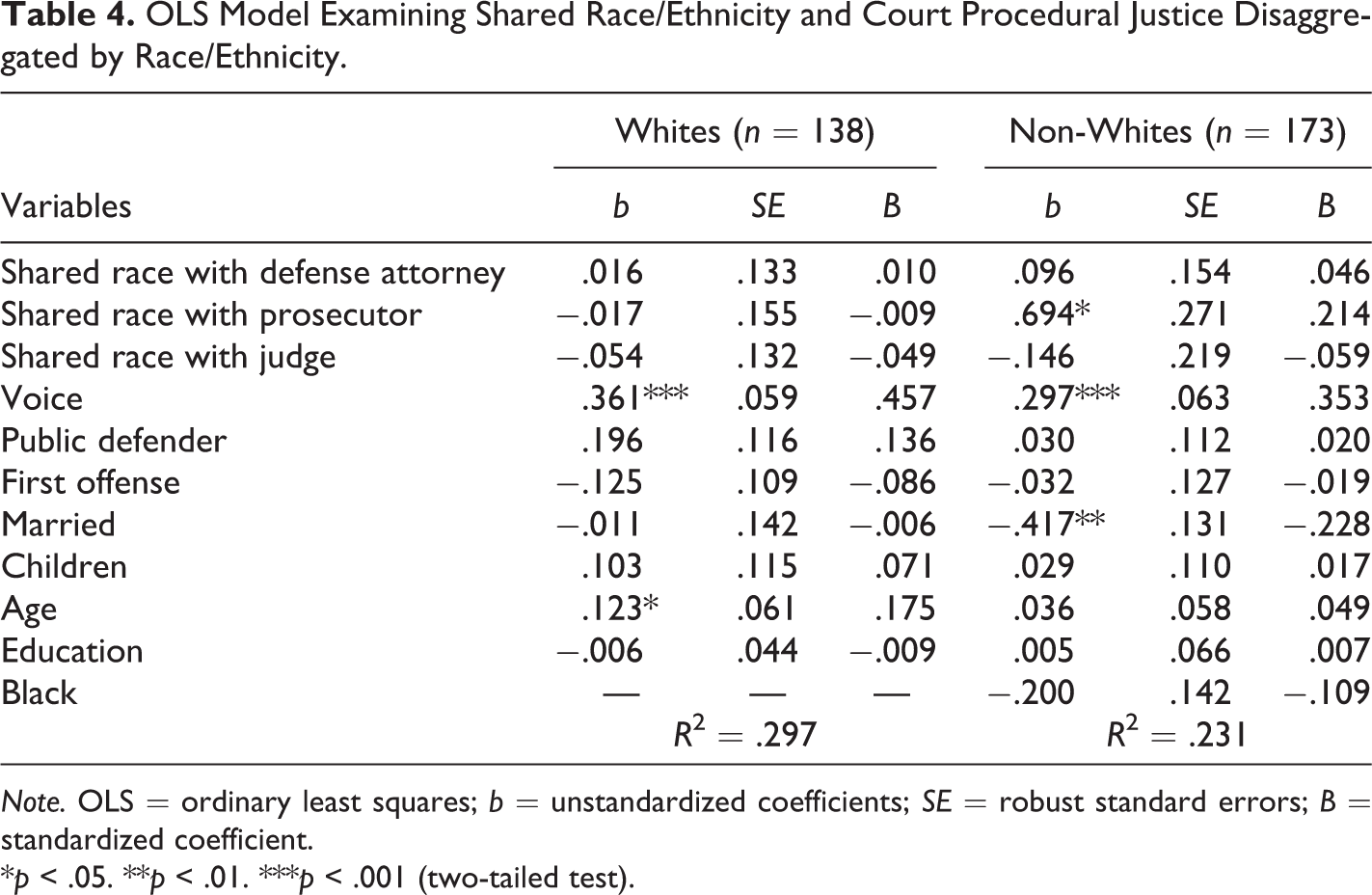
In order to examine potential differences among White and non-White respondents’ perceptions of court procedural justice, disaggregated models were conducted and the results appear in Table 4. The results of the model for Whites are similar to those in the full sample model. Voice is positively and significantly associated with perceptions of court procedural justice as is age. None of the shared race with court actor measures are significantly associated with White respondents’ perceptions of court procedural justice. Results of the non-Whites model show a significant positive association between voice and perceptions of procedural justice and a negative significant association between marriage and procedural justice identical to the full sample model. In addition, the non-Whites model indicates that sharing the race/ethnicity with the prosecutor in their case is significantly and positively associated with non-White respondents’ perceptions of court procedural justice. Given that shared race/ethnicity with prosecutor was significant in the non-White model but not in the White model, a difference of coefficients test (Paternoster, Brame, Mazerolle, & Piquero, 1998) was conducted in order to examine whether the difference between the coefficients was significant. Results indicate that the difference in the two coefficients was significant (z = 2.277, p < .05). This suggests that sharing the race/ethnicity with one’s prosecutor has a significantly greater impact on non-Whites’ perceptions of court procedural justice than it does on Whites’ perceptions.
OLS Model Examining Shared Race/Ethnicity and Court Procedural Justice Disaggregated by Race/Ethnicity.
Note. OLS = ordinary least squares; b = unstandardized coefficients; SE = robust standard errors; B = standardized coefficient.
*p < .05. **p < .01. ***p < .001 (two-tailed test).
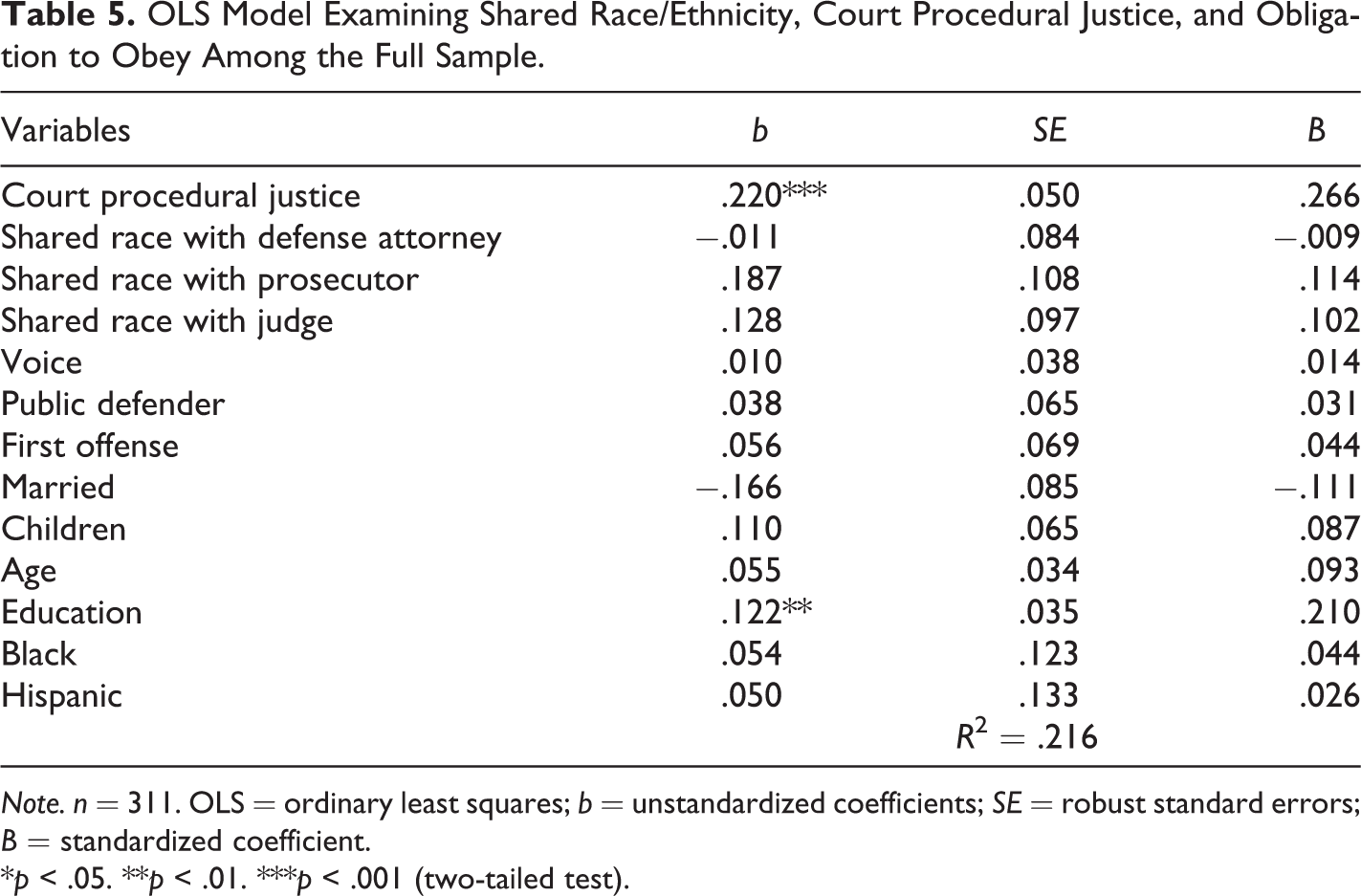
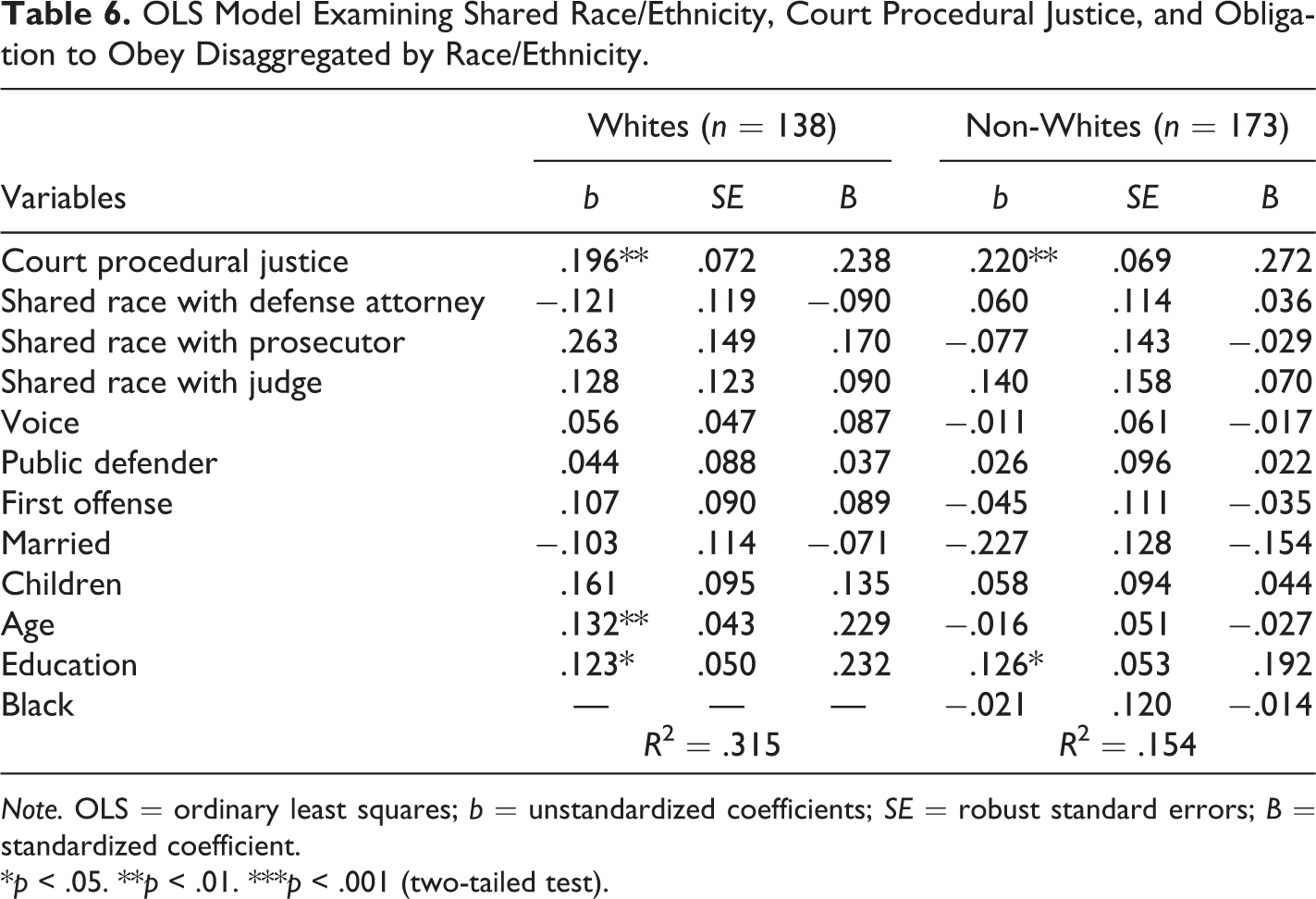
The results of the analysis regressing obligation to obey on perceptions of court procedural justice, shared race/ethnicity with court actors, voice, and the control variables are presented in Table 5. Findings indicate that perceptions of court procedural justice and individuals’ education level are significantly and positively associated with respondents’ obligation to obey. However, none of the other variables analyzed are significantly associated with obligation to obey. Again, to examine difference among Whites and non-Whites, disaggregated models were conducted. The results of the disaggregated models predicting obligation to obey are presented in Table 6. Findings from the Whites and non-Whites models are very similar to the full sample model. The only difference among the models is that in the Whites, model age is positively and significantly associated with respondents’ obligation to obey while age is not significant in the non-Whites model.
OLS Model Examining Shared Race/Ethnicity, Court Procedural Justice, and Obligation to Obey Among the Full Sample.
Note. n = 311. OLS = ordinary least squares; b = unstandardized coefficients; SE = robust standard errors; B = standardized coefficient.
*p < .05. **p < .01. ***p < .001 (two-tailed test).
OLS Model Examining Shared Race/Ethnicity, Court Procedural Justice, and Obligation to Obey Disaggregated by Race/Ethnicity.
Note. OLS = ordinary least squares; b = unstandardized coefficients; SE = robust standard errors; B = standardized coefficient.
*p < .05. **p < .01. ***p < .001 (two-tailed test).
Discussion and Conclusion
This study aimed to explore the relationship between shared race/ethnicity with court actors, perceptions of court procedural justice, and obligations to obey the law among male offenders. Several key findings emerged from this study. The theoretically proposed and previously demonstrated relationship between perceived court procedural justice and obligation to obey emerged among male offenders. This finding reinforces one recent study which similarly found a link between perceptions of court procedural justice and obligation to obey the law among female offenders (Baker et al., 2015). In addition, this relationship held for both White and non-White offenders in current and previous studies (Baker et al., 2015). This suggests the potential generalizability of the process-based model to both those at high risk for potential future criminal activity and to offenders of diverse racial and ethnic backgrounds.
For non-White male offenders, sharing the race/ethnicity of the prosecutor in their case enhanced their perceptions of court procedural justice. This finding supports the salience of the status component of the group-value model for predicting procedural justice, at least among minorities. The results also provide evidence that social identity theory may be generalizable to aspects of the criminal justice system. For example, previous studies found non-Whites unaffected by shared race/ethnicity with legal authorities (Tyler & Huo, 2002) or found that having any non-White prosecutor, regardless of shared race/ethnicity, increased perceptions of court procedural justice (Baker et al., 2015). In addition, both Tyler and Huo (2002) and Baker and colleagues (2015) found that Whites who shared the race of legal authorities viewed them more positively. The present study found no significant relationship among White male offenders’ shared race with any of the court actors and their perceptions of the courts. While these findings are somewhat inconsistent with prior research, they actually result in clearer policy implication related to the need for greater racial diversification of the courts.
The positive significant relationship between shared race with legal authorities among Whites found in both Tyler and Huo (2002) and Baker et al. (2015) suggests that increased racial/ethnic diversification of legal authorities—which may reduce the odds that Whites would interact with White legal authorities—could actually reduce support for legal authorities among Whites. Given that in this study, no significant relationship exists between the race or ethnicity of court actors and Whites’ perceptions of the courts, the implications are that increased racial/ethnic diversification of court actors would do little to affect the perceptions of Whites. But as a result of the significant relationship between shared race/ethnicity with prosecutors and perceptions of court procedural justice found among non-Whites, increasing the racial/ethnic diversity of the courts may significantly improve non-Whites’ perceptions of the institution.
While this article adds to a host of prior studies calling for increased racial/ethnic diversity of criminal justice authorities, it is important to note the relevant significance of the findings of this study for the process-based model of regulation. Recall that the key propositions of the process-based model are that authorities can control people’s obedience to the law through their fair and just procedures, and authorities have control over whether people perceive them to be procedurally just. And while this study finds supporting evidence for the first proposition, it also points out that there are potential factors outside of the control of authorities such as their race or ethnicity and that of the person they encounter that may impact people’s perceptions of procedural justice. As such, it is possible that authorities may behave in a procedurally just manner, but others’ perceptions of the fairness of the authorities behavior may be attenuated because of factors they cannot change.
Like prior research (Baker et al., 2014, 2015), this study found that the more people felt they had an opportunity to be heard prior to the court making a decision about their case, the fairer they perceived the courts. If aspects beyond the control of authorities such as their race/ethnicity can impact some offenders’ perceptions of the courts, then dynamics within the control of court actors that can affect people’s perceptions of the courts should be emphasized. To the extent this is true, giving offenders’ as much opportunity as possible to be heard and participate in their in defense may be critical for securing offenders’ procedural justice perceptions and in turn their obligation to obey the law in the future.
In addition to demonstrating the need to increase the racial diversity of the courts and provide greater voice to offenders in the courts prior to sentencing, the findings of this study point to the need for increased training of criminal justice authorities, particularly in interracial encounters. As the group-value model and social identity theory suggest, the psychological factors associated with one’s status may be especially important for people who are unclear about their social position. Interracial encounters with criminal justice authorities may place racial and ethnic minorities at a particular disadvantage for perceiving they are a member of an important and respected group. For example, critical race theory would suggest that non-Whites negative perceptions of encountering a White prosecutor may be indicative of their inability to identify generally with a predominantly White court system (Haney-López, 2006). Non-Whites may perceive the courts as part of a criminal justice system unable to empathize with their life circumstance and their current situation (Lynch, 2014); a court system that has played a critical role in controlling minorities for the sake of White dominance (Haney-López, 2006). The adversarial nature of the U.S. court system may further exacerbate this potential perceived lack of empathy among racial and ethnic minorities. The perceptions of minorities who encounter the courts may be particularly affected by their interactions with, and judgments of, the most adversarial actor from the perspective of a criminal defendant—the prosecutor.
While this study details important findings and has critical implications for the court system, it also points to areas in need of additional exploration. This study was performed on a sample of offenders from a single state incarcerated a single institution. Future research should explore the impact of shared race/ethnicity of court actors on perceptions of courts among larger and more diverse samples of offenders. In addition, this study focused exclusively on White, Black, and Hispanic offenders. Future studies should expand the impact of shared race/ethnicity to other racial and ethnic groups. This study also focused on the shared race/ethnicity of offenders with the judge, prosecutor, and defense attorney in their case but did not evaluate how the racial/ethnic diversification of a jury (for those who went to trial) may have affected their attitudes about the courts. Additionally, future research should also explore to what extent reported obligations to obey translate into actual willful compliance with the criminal justice system.
In sum, this study demonstrated the generalizability of the process-based model of self-regulation within the context of male offenders’ perceptions of the courts. It further showed the importance of increasing the opportunities for offenders to be heard in their interactions with courts and the need for greater racial and ethnic diversity among criminal justice authorities. The key theoretical and policy implications of this study also laid critical groundwork for future studies to expand upon.
Footnotes
Declaration of Conflicting Interests
The author(s) declared no potential conflicts of interest with respect to the research, authorship, and/or publication of this article.
Funding
The author(s) received no financial support for the research, authorship, and/or publication of this article.