







Abstract
Now more than ever, criminal justice agencies are looking to fill their ranks with a diverse workforce that reflects the populations they serve. Criminal justice is a field where diversity matters, is encouraged, and is sought after in recruitment efforts. Also, research shows that females are highly effective in this discipline due to their unique communication skills. Therefore, it is important for females and minorities to feel they are welcomed and belong in those agencies. This article explores how perceptions affect the employability of women and people of color. Exploring their level of confidence or anxiety about their future ability to adapt to their work environment could offer insights on how to better support criminal justice students and on how to help agencies to better integrate and maintain diversity in their organizations. This study examines criminal justice students’ sensitivity to status-based rejection. Specifically, college students in the field of criminal justice were surveyed regarding their anxieties and beliefs about how others’ perceptions of their status (gender, race, and/or ethnicity) might affect their professional careers. Results suggest that while females of all races and African American students of any gender are significantly more likely to be concerned about the potential for status-based rejection when employed, or trying to become employed, in the field of criminal justice, female Hispanic students are concerned about the combined effects of their race and gender on their future careers. Policy implications are discussed.
Keywords
Policing, law, and corrections have traditionally been occupations represented primarily by White males (Gibson, 2018; Hassell & Brandl, 2009; Nicholas, 2013; Payne-Pinkus, Hagan, & Nelson, 2010; Thurston, 2019). The need for the presence of diversity among criminal justice practitioners is essential (Wilson & Wilson, 2014). Many arguments have supported the advantages of a diverse workforce in the field. It has been suggested that organizations would better serve the public if they reflected the demographic characteristics of the individuals whom they serve (Meier & Nicholson-Crotty, 2006; Schuck, 2014). Policies of ethnic diversification may have the potential to reduce ongoing tensions and foster tolerance in ethnically underrepresented communities, whose cultural backgrounds are different from those in political power (Weitzer & Hasisi, 2008). Diversity promotes fairness and trust, encourages citizen support and cooperation with the system of justice (Hassell & Brandl, 2009). Research has also shown that women tend to be less confrontational than men, receive fewer complaints, excessive force liability lawsuits, and allegations of excessive force (Horne, 2014; Nicholas, 2013; Schuck & Rabe-Hemp, 2007). As a consequence, it makes sense for criminal justice agencies to continue to recruit minorities and women as well as create a work environment that is attractive to and supportive of them (Bergman, Walker, & Jean, 2016; Hassell & Brandl, 2009).
Despite continuous efforts to increase the diversity of their workforce, women and racial minorities are still underrepresented in the fields of policing, law, and corrections (Gibson, 2018; Hickman & Reaves, 2006; Kay, Alarie, & Adjei, 2016; Payne-Pinkus et al., 2010; Schuck, 2014; Stroshine & Brandl, 2011). Research indicates that agencies have made minimal progress in recruiting more women (Cordner & Cordner, 2011; Langton, 2010; National Center for Women & Policing, 2002). For example, even though women and minorities now enter America’s largest law firms in growing numbers, relatively few are retained through the first decade of practice to join these firms as partners (Hagan & Nelson, 2010; Payne-Pinkus et al., 2010). Outsider status causes women and minorities to experience a number of challenges on the job such as discrimination, harassment, and greater levels of psychological and physical stress compared to their White, male counterparts (McCarty, Zhao, & Garland, 2007). Perceptions of inequality at work may be an important reason that deters some women and minorities from seeking employment in the field in the first place (Hassell & Brandl, 2009). This study explores how student’s perceptions might affect whether they apply for criminal justice jobs and their expectations once they enter the workforce. We conducted a survey to explore sensitivity to status-based rejection among female and minority criminal justice majors, which will expand on the research by Mendoza-Denton, Downey, Davis, Purdie, and Pietrzak (2002). They proposed a process model whereby experiences of rejection based on membership in a devalued group can lead people to anxiously expect, readily perceive, and intensely react to status-based rejection. They focused on race-based rejection sensitivity among African Americans in college. We tested this model and expanded its scope to include females and other racial minorities who major in criminal justice. According to Wilson and Wilson (2014), perception plays a significant part in social behavior as it represents a crucial aspect of a person’s sense of reality. Negative perceptions or, conversely, changing those perceptions early might affect diversity across all parts of the criminal justice system and that can, in turn, affect public trust, reduction in the use of force, and so on.
Literature Review
Some research has found few race or sex differences in terms of outcome variables like job satisfaction and job stress (Van Voorhis, Cullen, Link, & Woff, 1991; Wright & Saylor, 1991). However, other studies have found, in general, that race and sex make a difference in shaping work experiences and perceptions. Many women and minority men continue to face obstacles to their presence as police and correctional officers in formerly segregated contexts; they are discriminated against by coworkers and supervisors and find the overall working environment to be hostile and difficult (Britton, 1997). Although criminal justice agencies have increased the representation of racial minorities and women, the assimilation of these individuals into these organizations continues to be challenging, as groups of individuals may receive or perceive unequal treatment at work in spite of equal opportunity laws. A significant number of these practitioners realize that this treatment exists as a normative part of their career, and it has an adverse effect on their morale, job satisfaction, and personal feelings of growth (Britton, 1997; Kay et al., 2016; Wilson & Wilson, 2014).
Research consistently demonstrates that racial/ethnic minorities experience workplace problems that differ from the problems of Whites (Hassell & Brandl, 2009). For ethnic minorities, the sense of being “invisible” increases their occupational stress. For example, there is a shared perception among African Americans that systematic barriers exist in agencies that limit their advancement and affects career longevity (Bolton, 2003). Studies have found that African American police officers experience more feelings of being criticized than their White counterparts (Dowler, 2005) with the dominant position of White males in policing making the inclusions of females and racial minorities difficult and uncomfortable (Haarr & Morash, 2004).
Likewise, change for women is taking longer than expected because it means a change in the heavily gendered culture of the criminal justice field, where occupational segregation and predominantly male workforces have been the norm (Zhao, He, & Lovrich, 2006) and sex discrimination has been problematic (Deschamps, Paganon-Badinier, & Marchand, 2003; Thompson, Kirk, & Brown, 2006). A host of studies detail some of the unique stressors females experience. These include negative attitudes of males, the lack of acceptance, and sexual harassment (Chaiyavej & Morash, 2008; Deschamps et al., 2003; Nicholas, 2013; Thompson et al., 2006). Females feel that their male partners often question their abilities (Shelley, Morabito, & Tobin-Gurley, 2011). Studies found that women reported significantly higher levels of harassment; bias in hiring, promotion, and assignments; and underestimation of physical and psychological abilities; as well as lack of influence compared to males (Hartley, Mnatsakanova, Burchfiel, & Violanti, 2014; Morash, Kwak, & Haar, 2006). Holder, Nee, & Ellis (2000) argued that minority females may be subjected to “triple jeopardy” on the job as they can experience elements of racism, sexism, and also face unique problems as both female and minority officers.
Sensitivity to Status-Based Rejection
Despite the removal of legal and other structural barriers to achieving diversity, research suggests that being targets of discrimination and prejudice, members of stigmatized groups might be particularly likely to develop expectations of rejection by those who do not share their stigma and by social institutions that have historically excluded or marginalized them (Bowen & Bok, 1998). Direct or vicarious experiences of mistreatment, prejudice, discrimination, and exclusion based on membership in a devalued social group can communicate rejection (Branscombe, Schmitt, & Harvey, 1999). This rejection, especially when perceived as painful and distressing, can generate anxious expectations that future status-based rejection will occur (Allison, 1998). Situations in which concerns about the possibility of a devaluing experience based on group characteristics are pertinent (a Muslim male at an airport) should more readily activate expectations of status-based rejection. Thus, situations that are viewed as benign by the nonstigmatized may pose considerable threat to the stigmatized (Allison, 1998).
Mendoza-Denton and colleagues (2002) proposed a model whereby experiences of rejection based on membership in a devalued group can lead people to anxiously expect, readily perceive, and intensely react to status-based rejection. They examined whether these anxious expectations of rejection can strain social relationships and undermine people’s confidence in an institution’s fairness and legitimacy, diminishing the motivation to persist in the pursuit of valued goals. Expectations of status-based rejection may also compromise one’s sense of belonging at those institutions, which may undermine retention. The impact of rejection sensitivity should be especially evident in institutional settings such as law enforcement from which African Americans, for example, have been traditionally excluded or marginalized on the basis their group membership and in which they continue to be underrepresented. Mendoza-Denton and colleagues (2002) found that status-based rejection expectations have implications for people’s sense of acceptance and well-being, their social relationships, and their career achievement within a social institution that evolved reflecting the values and norms of a higher status group. They concluded that status-based rejection expectations affect people’s attachment to such institutions and the relationships people form within them.
This model has been subsequently tested in various contexts, outside of the criminal justice field. London, Rosenthal, and Gonzalez (2011) assessed the role of gender rejection sensitivity among women in nontraditional fields. Their findings suggested that variability in gender rejection sensitivity within women can predict a variety of engagement outcomes, including feelings of self-doubt, perceptions of sexism, self-silencing, and alienation within the context of a competitive, male-dominated law school culture. A study of undergraduates of African American backgrounds found that those who felt more positively about their racial group appeared less affected by racial rejection (Kiang, Blumenthal, Carlson, Lawson, & Shell, 2009). Page-Gould, Mendoza-Denton, and Mendes (2014) found that race-based rejection sensitivity was related to greater stress symptoms among Black adults who reported fewer cross-race friends but not among participants who had more cross-race friends. In 2006, Liao examined the role of race-based rejection sensitivity on perceptions of subtle racism among White and Black students. She found that Black students and/or with higher endorsement of race-based rejection sensitivity were more likely to perceive subtle racism than White students and/or with lower endorsement of race-based rejection sensitivity. Also, Chan and Mendoza-Denton (2008) found that status-based rejection sensitivity is useful in understanding Asian Americans’ coping with the possibility of discrimination.
Current Study
Although women and people of color experience different types of problems and obstacles to career success in the criminal justice field, there are similarities in the types of barriers that these groups experience when working or applying for promotions. As a consequence, it may not be surprising that minority and female criminal justice students have some concerns regarding their employment prospects in the field upon graduation (Reskin & Bielby, 2005). There is currently very little research about why more women and minorities do not choose to apply for jobs in the criminal justice field. The present study will contribute to filling that gap. We conduct a survey to explore sensitivity to status-based rejection among female and minority criminal justice majors. Perceptions of students, based on their race or gender, might affect the types of jobs or promotions they apply for or even if they choose to apply at all. Finding out whether sensitivity to status-based rejection would influence their decision can offer a path toward increasing diversity in all sectors of the criminal justice system. As research has shown, increased diversity would help solve some of the concerns that affect fairness and public trust in the American criminal justice system. Assessing students’ level of confidence or anxiety about their future ability to adapt to their work environment could offer insights on how to better support these future professionals.
Methodology
Participants/Sample and Procedure
This study was conducted at a small private university in the suburbs of Chicago. Surveys were administered in the spring of 2018 to several criminal justice morning and evening classes. Both undergraduate and graduate students from the criminal justice program participated. The undergraduate program had 305 students, and the graduate program had 81 students during this period. The study utilized a nonprobability convenience sampling technique. Specifically, students were surveyed in classrooms in which the professors indicated that they were amenable to the project. Five undergraduate and two graduate classes were sampled. 1 In total, 108 students in the criminal justice program responded to the questionnaire, resulting in a sample that is approximately 60% female and 40% male, with 56% of respondents selecting Caucasian as their race/ethnicity, 27% Hispanic/Latino(a), 11% African American, and approximately 6% some other race or ethnicity.
Measures
The questionnaire utilized in this study was a modified version of the Rejection Sensitvity-Race Questionnaire developed by Mendoza-Denton et al. (2002). This survey contained 35 items. The survey items consisted mostly of questions where participants were asked to imagine that they were in a situation where status-based rejection was possible. Then, participants were asked to rate both how anxious/concerned they were about being rejected due to status. Participants were also asked to report the likelihood of actually being rejected in such situations as a result of their status. Responses were given on a scale of 1–6. For expectation questions, 1 indicated very unlikely and 6 indicated very likely. For questions about concern and anxiousness, 1 meant very unconcerned and 6 indicated very concerned. These questions were intended to determine the degree to which students were anxious or concerned as a result of their status as well as the extent to which students actually expected negative outcomes to arise as a result of their status/membership to a particular social category.
Research Questions and Supporting Hypotheses
The following research questions and supporting hypotheses will be addressed:
Variables
Independent variables in the current analysis include race, gender, and age. Prior to proceeding, it is important to first define these concepts as well as the dependent variables currently being examined. Where race is concerned, students were asked to select their race/ethnicity from a list that included Caucasian, Hispanic/Latino, African American, Asian, and Other. Approximately, 94% of the sample were Caucasian, Hispanic, or African American. This means that there were not enough Asian respondents to analyze the racial group separately, and they were added to the “Other” racial category. For this analysis, race was dummy coded, with Caucasian (the largest group) serving as the reference category. Gender was measured as being either 1 (male) or 2 (female), while age was measured categorically, in 5-year increments, ranging from 1 (18–22 years of age) to 7 (48 years of age and over).
The first dependent, or outcome, variable being examined involves student concerns about employability. For that, survey respondents were first asked, how concerned/anxious they are about their race/ethnicity negatively affecting their employability in the Criminal Justice (CJ) field. They were then asked a second question regarding how concerned/anxious they are about their gender negatively affecting their employability in the CJ field. In both cases, the respondents were asked to select their level of concern on a scale ranging from 1 to 6, where 1 represents the lowest level of concern and 6 represents the highest level of concern. The second dependent variable being examined involves students concerns about being treated differently at work. For this, respondents were asked to imagine that they were hired to a department where they are among the minority. They were then asked how concerned/anxious they would be that they would be treated differently (again, on a scale from 1 = very unconcerned to 6 = very concerned).
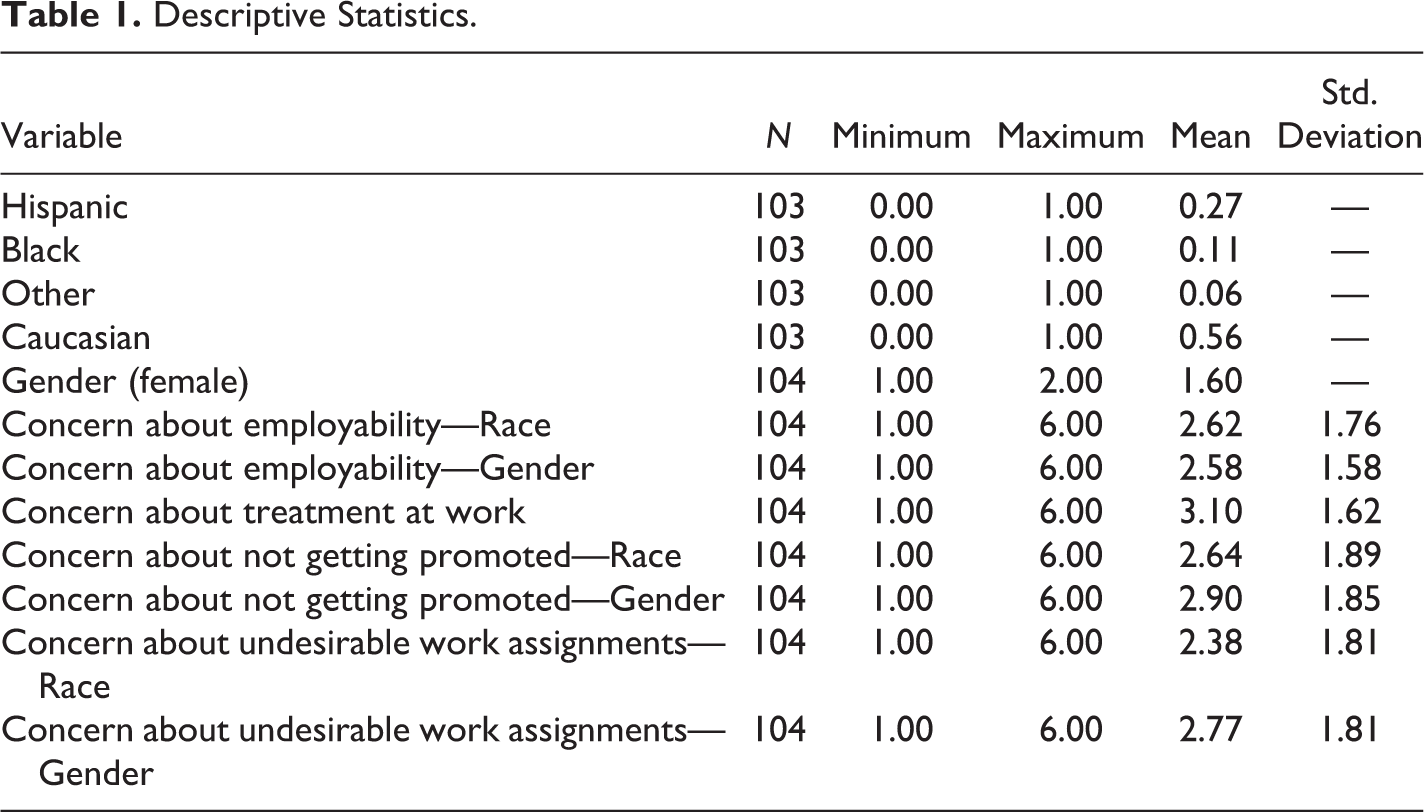
The third outcome being examined is the level of student concern about job promotions. Specifically, survey respondents were asked to imagine that they were an employee in a criminal justice agency. Then, they were asked how concerned/anxious they would be that they would not receive a promotion because of their race/ethnicity and separately because of their gender. As with previous measures, responses ranged from 1 to 6, with 6 indicating the highest level of concern. Finally, study participants were again asked to imagine that they were working at a criminal justice agency. They were then asked how concerned/anxious they would be that they would receive an undesirable work assignment due to their race/ethnicity and then separately due to their gender. Again, responses could range from 1 to 6, with 6 indicating the highest level of concern. Table 1 illustrates the descriptive statistics of all variables being examined in the current research.
Descriptive Statistics.
Analytical Strategy
Given that the respondents were asked to choose their levels of concern from a numerical scale, the dependent variables being examined are continuous. In addition, descriptive statistics and charts (histograms) were run to evaluate the distribution of each dependent variable. While some were slightly skewed to the right, the variables were roughly normally distributed, and linear regression was chosen to analyze the effects of individual characteristics on college students’ concerns about status-based rejection surrounding employment in the field of criminal justice. 2 The model statistical significance was evaluated using a model p value, calculated from an F ratio, while the model’s substantive significance is measured using R 2. Statistical significance of the individual predictors was obtained using a p value that is produced from a t statistic, which is standard for the SPSS statistical software package (version 25). Finally, the substantive significance of the predictors is measured using standardized regression coefficients.
Results
Table 2 illustrates the results of linear regression models that examine predictors of students’ concerns about employability. Where students were asked specifically if they were concerned about employability because of their race or ethnicity, we can see that the model is statistically (p = .000) and substantively (R 2 = .247) significant. In this case, the combined predictors in the model explain 24.7% of the variance in the dependent variable. Where the individual predictors are concerned, Hispanic and Black students, respectively, are the ones who are statistically significantly more concerned that their race/ethnicity will affect their employability in the field of criminal justice.
Concern About Employability.
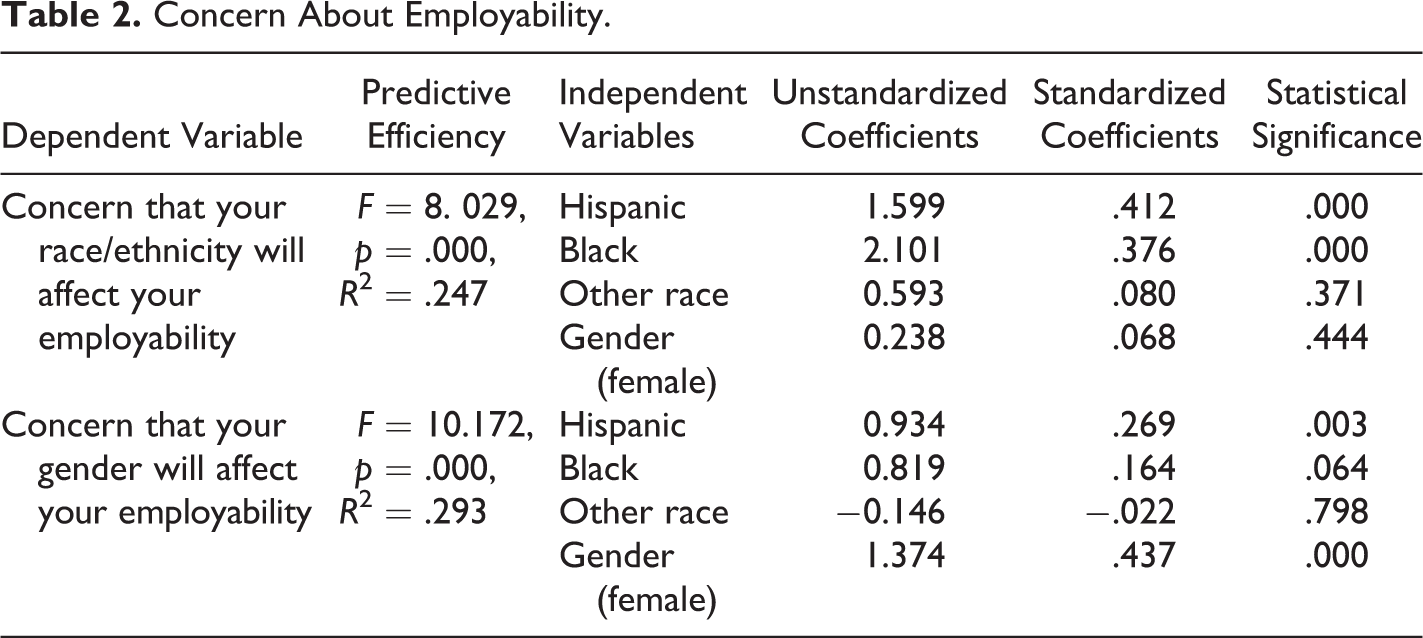
Where students were asked specifically if they were concerned about employability because of their gender, the model is again statistically (p = .000) and substantively (R 2 = .293) significant. In this case, the predictors in the model explain 29.3% of the variance in the dependent variable. In addition, in order of strength, we can see that female and Hispanic students are the ones who are statistically significantly more concerned that their gender will affect their employability in the field of criminal justice.
Table 3 illustrates the results of the logistic regression model that examines students’ concerns about being treated differently at work, if they should find themselves in the minority. Because being in the minority of employees hired at an agency can include both gender and racial minority statuses, there was only one model run to assess this. This model is statistically (p = .010) and substantively (R 2 = .125) significant, with the model explaining 12.5% of the variance in the dependent variable. In order of substantive strength, we can see that it is Hispanic and Black students who are statistically significantly more likely to be concerned about being treated differently at work, if they work in a place where they are in the minority.
Concern About Being Treated Differently at Work.
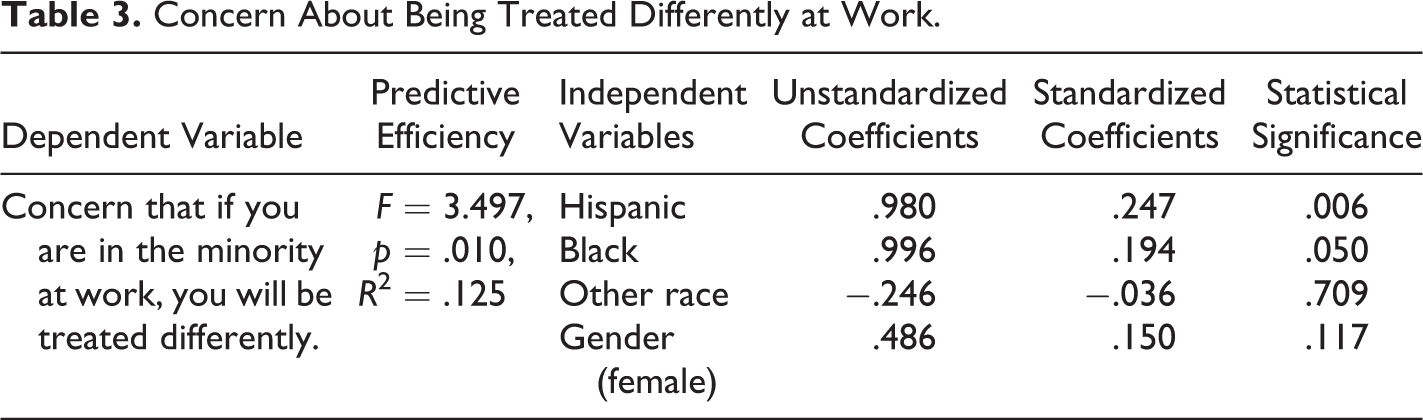
Table 4 illustrates the models that examine student concerns about not being offered promotions when working in the criminal justice field. When students were asked specifically if they were concerned that they would not be offered a promotion because of their race or ethnicity, we can see that the model is statistically (p = .000) and substantively (R 2 = .255) significant. Combined, the variables in this model explains 25.5% of the variance in the dependent variable. Where the individual predictors are concerned, it appears that Black and Hispanic students, in that order, are statistically significantly more concerned that their race/ethnicity will affect their chances of being offered a promotion, once they are employed in the field of criminal justice.
Concern About Not Receiving a Promotion.
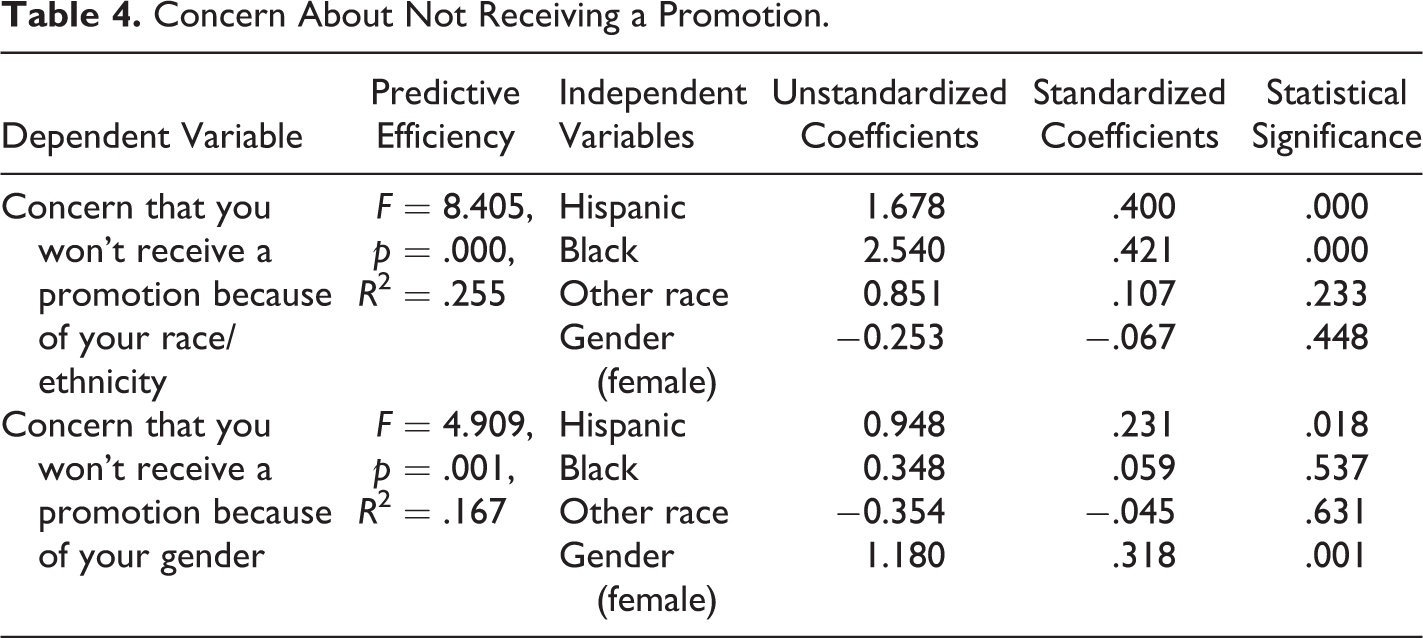
Where students were asked specifically if they were concerned that they would not be offered a promotion because of their gender, the model is again statistically (p = .001) and substantively (R 2 = .167) significant. Here, the model explains 16.7% of the variance in the dependent variable. In addition, in order of strength, we can see that female and Hispanic students are statistically significantly more concerned that their gender will affect their chances of being offered a promotion, once they are employed in the field of criminal justice.
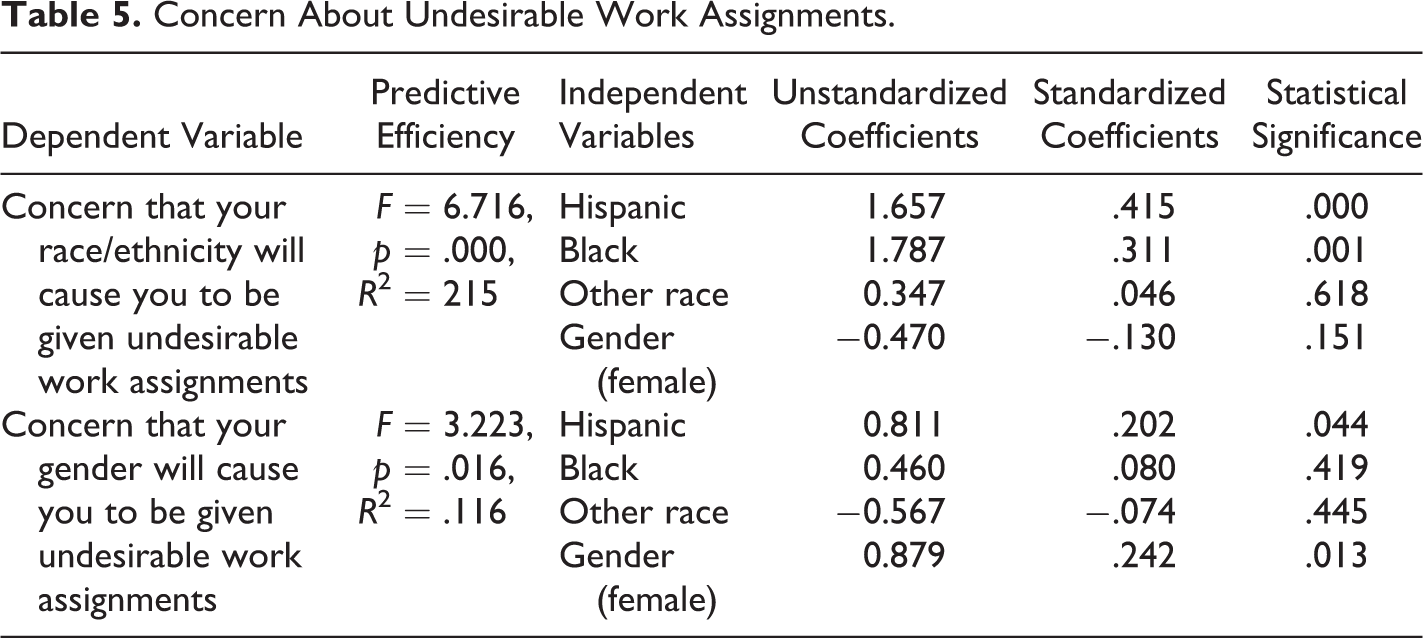
The final table (Table 5) illustrates the results of the linear regression models that examine students’ concerns about being given undesirable work assignments. When specifically asked if they were concerned that they would be given an undesirable work assignment because of their race or ethnicity, we can see that the model is statistically (p = .000) and substantively (R 2 = .215) significant. Here, the model explains 21.5% of the variance in the dependent variable. In order of substantive strength, it is Hispanic and then Black students who are statistically significantly more concerned that their race or ethnicity will cause them to be given undesirable work assignments when working in the criminal justice field. Where students were asked if they were concerned that they would be given an undesirable work assignment because of their gender, the model is again statistically (p = .016) and substantively (R 2 = .116) significant. The combined predictors explain 11.6% of the variance in the dependent variable. In order of strength, it is female and Hispanic students who are statistically significantly more likely to be concerned that their gender will cause them to be given undesirable work assignments when working in the criminal justice field.
Concern About Undesirable Work Assignments.
Discussion and Implications
Several things deserve discussion here. First, the results suggest that both Hispanic and African American or Black students are concerned that their race could affect their employability, how they are treated during employment, whether they will be promoted on the job, and whether or not they will receive an undesirable work assignment. Interestingly, in every model except for promotion (Table 4), being Hispanic was a stronger predictor of concern than was being Black. This suggests that it is important to have a greater focus on Hispanic individuals’ reasons for not seeking careers in the criminal justice system, in addition to the examination of the concerns of individuals who are Black or African American.
From the results presented, it is also clear that female students were more likely to be concerned that their gender would affect their chances of gainful employment in the field of criminal justice. This result is interesting because it suggests that females may not be seeking jobs in the criminal justice field, even if agencies are willing to hire them. Perhaps even more interesting though, is the fact that Hispanic individuals are also concerned about their gender affecting the outcomes examined here. This means that Hispanic females may have even greater concerns about whether they will be successful in terms of employment in the American criminal justice system.
Again, these results are important because they indicate that even in college classrooms in which students have chosen to take a course focused on criminal justice, not everyone is convinced that they have an equal chance of employment, equitable treatment, or promotion if they should choose to work in that field. Scholars have argued since the 1970s that greater racial and (later) gender diversity in criminal justice agencies, particularly in policing agencies, would potentially increase public trust and could possibly result in fairer treatment of citizens by officials in those organizations (e.g., see Decker & Smith, 1980; Goldstein, 1977; Lonsway, 2000; Walker, 1985; Walker, Spohn, & DeLeone, 2000). In addition, criminal justice agencies across America now claim to be equal opportunity employers, and many even state a desire to increase the racial and gender diversity in their respective organizations. Yet, despite this, nearly 50 years after the initial calls for more diversity of professionals working in the American criminal justice system, statistics indicate that full-time law enforcement officers are 87.5% male (fbi.gov; The Federal Bureau of Investigation, 2017) and 72.8% White 3 (Reaves, 2015), the American Bar Association reports that practicing attorneys in the United States are 64% male and 85% White/Caucasian 4 (americanbar.org; American Bar Association National Lawyer Population Survey, 2019), and Census data suggest that bailiffs, correctional officers, and jailers across the United States are 72.1% male and 68.3% are White 5 (datausa.io; Data USA, 2017). If the goal of having criminal justice agencies that are as diverse as the populations they serve is part of the solution to making the U.S. criminal justice system less violent and more fair, we have yet to fully achieve that goal.
In terms of implications, the current research suggests that achieving racial and gender diversity in criminal justice agencies will require that those agencies go beyond simply telling applicants that they will hire, or even want to hire, female or non-White individuals. More research needs to be done separately on different racial and ethnic groups, by gender, in different areas of the country, to better understand why individuals in each group, and subgroup, may feel concerned about applying for work in the field of criminal justice. It would also be helpful if that research distinguished between the different areas of the criminal justice system in the United States (i.e., police, courts, and corrections), as concerns may vary by the type of job an individual is considering. Those findings could then be used directly by CJ agencies to better address the concerns of female and Non-White individuals when they interact with potential applicants. Criminal justice agencies should also use that information to guard against unfair treatment of individuals as they assist in processing them through their careers. In addition to CJ agencies, universities could benefit from a better understanding of the specific concerns of people of different gender and racial/ethnic groups, in order to better prepare students for the field and allay some of the fears. Overall, though, this research suggests that increasing diversity in criminal justice agencies requires more than just agency’s willingness. It requires the consideration of a range of things including, but not limited to, media images of the criminal justice system, agency culture and practices, and societal ideas and expectations. Many of those issues can be better understood by examining the internal concerns of the individuals those agencies wish to recruit.
Limitations
As with any research, this one is not without limitations. First, the sample size for this analysis was relatively small (n = 104), and the sample was taken from a single university in the Chicago area. This means that the results are not generalizable to a larger audience. In addition, there are a number of other variables that need to be examined, in order to be able to make more valid and universal claims pertaining to which groups have the most concern about working in the field of criminal justice, and why. That being said, there is currently a fairly public lack of trust between the public and agents of the American criminal justice system (Kladney & Royce, 2015; Martinez, 2018). Part of the solution to that issue may be the continued push to diversify CJ agencies. This research examined the level of concern female, Hispanic, and Black college students had about their future employment in that system. Results suggest that we need to better understand and address the concerns of subgroups of people such as female Hispanic individuals, if that goal is to be fully achieved.
Footnotes
Declaration of Conflicting Interests
The author(s) declared no potential conflicts of interest with respect to the research, authorship, and/or publication of this article.
Funding
The author(s) received no financial support for the research, authorship, and/or publication of this article.
