







Abstract
Muslim refugees face unique challenges following resettlement, which are shaped by their intersecting identities. Discriminatory policies have further exacerbated misunderstandings and prejudice against Muslim refugees in post-resettlement contexts. This convergent mixed-methods study examined the post-resettlement challenges and discrimination experiences of Muslim refugees and their impact on well-being. Quantitative data (n = 26) assessed discrimination, mental health, integration, and post-migration difficulties, while qualitative interviews (n = 8) provided deeper insights into the effects of these policies. Findings revealed that 56% of participants reported emotional stress and living difficulties, including limited access to services and concerns for families in their home countries. Positive correlations emerged between psychological distress, discrimination, and postmigration living difficulties. Findings underscore that discrimination against Muslim refugees, particularly those identify as women, is multifaceted and often manifests in subtle and nuanced ways. This highlights the importance of recognizing their intersecting identities and the potential for encountering covert forms of discrimination. Strengthened community networks, safe cross-cultural dialogues, and inclusive policies fostering a welcoming environment are essential to support integration and promote refugee well-being and a sense of belonging. These efforts can facilitate the development of effective programs and services and enhance the resettlement experience for Muslim refugees.
Introduction
Due to brutal wars, conflicts, and human rights violations occurring across various continents, millions of people have been displaced from their homelands. At the end of 2023, 122.6 million individuals were forcibly displaced worldwide, which includes nearly 37.9 million refugees and 8 million asylum-seekers (United Nations High Commissioner for Refugees [UNHCR], 2024). While the numbers are at a record high, the international community was either not prepared for such a flow of refugees or not willing to deliver the support and help to provide shelter and asylum for displaced people. Despite the specific regulations to treat refugees with dignity, borders have been closed, vetting processes and policies have been stricter, and walls and fences have been raised to keep refugees out of the national borders of the countries that have a long history of welcoming refugees such as the United States.
The Universal Declaration of Human Rights clearly states that every person has “the right to life, liberty and security of person” and to “seek and to enjoy in other countries asylum from persecution” (United Nations, 2019). However, political rhetoric has had an emphasis on how refugees have the potential to be a threat to national security. As a consequence, macro-level discriminatory actions have taken place in refugee resettlement contexts. One macro-level action can take place in the form of a travel ban, which is an executive order that legally restricts the entry of foreign nationals from specific countries. In January 2017, President Donald Trump's first version of an executive order on travel prohibited noncitizen travel from seven countries that are predominantly Muslim for a period of 90 days, later revised due to lawsuits (Chishti & Bolter, 2019). The final version of the order, issued in September 2017, continued to include mostly predominantly Muslim countries (Chishti & Bolter, 2019). Actions like The U.S. Travel Ban have accelerated misunderstandings about refugees, particularly Muslim refugees, in local societies and resulted in discrimination and xenophobia against forcibly displaced individuals (Council on American Islamic Relations [CAIR], 2017; Elnakib, 2022; Interiano-Shiverdecker et al., 2022).
Hate crimes, acts of violence, death threats, and discrimination toward the Muslim population in the United States dramatically increased following the events of 9/11 (Disha et al., 2011). There was a 17% increase (464 incidents) in anti-Muslim bias incidents nationwide in 2017 over 2016 and a 15% increase in reported hate crime cases targeting Muslim Americans including children, youth, and families after the travel ban took place in January 2017 (CAIR, 2017). Even when culturally integrated, Muslim Americans who are born in the United States and are fluent in English have reported higher rates of perceived discrimination and lower rates of perceiving Americans as being friendly, compared to their foreign-born counterparts (Lajevardi et al., 2020). Another study demonstrates that Muslim Americans responded to discrimination during the 2016 presidential campaign through behavioral changes such as retreating from public visibility in the form of avoiding interactions with those who are not Muslim, limiting social media posts, and reducing visitations to places such as parks, restaurants, and shopping malls (Hobbs & Lajevardi, 2019). Refugee participants, if not their family or friends, faced discrimination and direct threats under the Trump administration. They reported persistent fear and hypervigilance on a daily basis (Elnakib, 2022; Interiano-Shiverdecker et al., 2022).
Very little literature has been conducted on the voices of Muslim refugees and immigrants discussing their experiences of discrimination. There is limited research that examines the experiences of Muslims in America and how their well-being is impacted by discriminatory policies. Given the lack of evidence on this issue, this study explores the post-resettlement challenges and experiences of discrimination against the Muslim refugee population during and after the Trump era and these experiences’ impact on the population's well-being.
Literature Review
In the U.S. immigration and refugee policies history, there are many examples of mass detentions or deportations of immigrants, and also discrimination towards refugees of particular national origins. Much of these discriminative attitudes have taken place because of a perceived security threat, foreign policy issues, and ideologies (Jaret, 1999). There is often a tension between universal human rights and the country's concern about national security when it comes to immigration and refugee policies (Crage, 2016). For example, in the United States, the executive order banning travel from seven Muslim-majority countries claiming the need for protection against terrorism has had a significant negative impact on individuals (Szaflarski & Bauldry, 2019). Studies show that there is no increase in crime rates in communities with immigrants and refugees. For example, Lee et al. (2001) conducted a study in neighborhoods of Miami, El Paso, and San Diego, which found that immigration generally does not increase homicide rates among Latinos and African Americans. Their findings challenge the notion of the “criminal immigrant.” Stowell et al. (2009) also indicated that immigration does not contribute to increased crime rates. They found that immigration to large U.S. metropolitan areas either has no effect or is associated with a decrease in crime, which contradicts claims that increased migration leads to higher crime. The same rhetoric and stereotyping are also prevalent in Europe. Leerkes et al. (2019) analyzed a representative Dutch survey to examine whether people of Turkish and Moroccan descent self-report more crimes than native Dutch individuals. They identified two “minority paradoxes.” First, both minority groups reported similar or lower crime rates than the majority group. Second, first-generation immigrants reported fewer crimes than expected, given their social disadvantages. Although there is evidence showing no direct relationship between crime rates and immigrants or refugees, anti-refugee and anti-immigrant sentiments have led the public to believe that stricter policies are necessary, which resulted in increased discrimination, xenophobia, and Islamophobia in the United States (Cherkaoui, 2016). As a result, the resettlement program was capped at 18,000 refugees for the 2020 fiscal year, which was the lowest number since the U.S. refugee program started in 1980 (Migration Policy Institute, 2023).
Refugees are willing to build social relationships with the members of the dominant community, however, the prejudgments they face create complexities in their acculturation, limit their participation, and affect their socialization (Ugurel Kamisli, 2020). Experiencing discrimination is associated with lower levels of perceived safety (Shaw et al., 2021). Muslim refugee women, similar to other Muslim women groups in the United States, face structural barriers in their daily lives, for example, in their access to health care (Islam et al., 2017) or employment (Khamush, 2017). Higher levels of self-consciousness and self-monitoring have been found among Muslim women “due to wearing hijab, having an accent, skin color, and carrying an Arabic name” (Khamush, 2017, p. 301). The continual necessity to justify one's clothing as well as other ethnic and religious practices is experienced as cultural violence (Saleem et al., 2022) which in turn leads to increased feelings of exclusion and marginalization. Muslims without strong support networks are more vulnerable during these difficult times (Elnakib, 2022). The stigma associated with being Muslim, along with discrimination, and racism significantly increased the likelihood of depression among Arabic-speaking immigrants and refugees in the United States and Canada (Elshahat & Moffat, 2022).
Exposure to these negative experiences and events on a daily basis can lead to psychological distress among Muslim refugees. Over the past two decades, studies have found consistent associations between the impact of discrimination on mental and physical health including the Diagnostic and Statistical Manual of Mental Disorders (DSM)-diagnosed mental disorders, and objective physical health outcomes (Lewis et al., 2015). Refugees also experience prolonged exposure to high levels of psychological stress (Syria Public Health Network, 2016; Szaflarski & Bauldry, 2019). When facilitative and safe environments are not provided by institutions in the host or resettlement countries, refugees experience social isolation, lack of self-determination, daily stressors, and discrimination (Kim, 2016; Li et al., 2016; Siriwardhana et al., 2015; Yalim, 2020). Thus, informational, instrumental, and emotional supports by service providers, organizations, and wider institutions are important for refugees to develop supportive systems during the resettlement process (Agbényiga et al., 2012). Appropriately responding to the psychosocial needs of refugees is a complex task due to variations in sources of distress, stigma, and the substantial impact of structural and contextual barriers (Hassan et al., 2016). Thus, it is critical to understand these associations to improve the psychosocial well-being of refugees and reduce misconceptions and discrimination against the Muslim population.
Conceptual Framework
Considering the intersectional characteristics of Muslim refugees, specifically their status as refugees originating from predominantly Muslim and Arabic-speaking nations, the potential for heightened risks of everyday discrimination and micro-aggressions in host countries, such as the United States, becomes evident. The application of an intersectionality framework proves invaluable in comprehending the complexities of oppression and gives a richer context to refugees’ lived experiences across the world. The intersectionality framework, developed by Crenshaw (1989), extends beyond traditional analyses of race and gender to encompass a comprehensive examination of how factors such as age, ability, religion, nationality, ethnicity, and class intersect and influence one another. This approach facilitates a profound understanding of dominant contrasts of inequalities and privileges across various levels (Hernández & McDowell, 2010).
The Muslim population is characterized by considerable racial and ethnic diversity, lacking a singular majority racial group. Islam stands out as the most diverse followed religion globally, boasting over 1 billion adherents (Malik, 2017; Pew Research Center, 2017). The composition of U.S. Muslims reflects this diversity, with 41% identifying as white (encompassing Arabs and individuals of Middle Eastern descent), 28% as Asian (including those of Pakistani or Indian origin), and one-in-five identifying as black or African American (Pew Research Center, 2017). This racial diversity creates another intersection of marginalization for Muslims. Demographic complexity underscores the importance of recognizing and addressing the multifaceted dimensions of identity and discrimination within the Muslim refugee population in the United States.
Daily perceptions of implicit discrimination in the shape of micro-aggression or insensitive comments are grounded in these intersectional identities of the Muslim population as well as Islamophobia (Mounir, 2023). According to a recent Pew study (Alper et al., 2024), the percentage of U.S. adults who say Muslims face a lot of discrimination in the United States increased from 39% to 44% since 2021. The same study reported that 67% of U.S. Muslims surveyed say there is a lot of discrimination against Muslims. The perception of widespread discrimination against Muslims is prevalent compared to other minorities. U.S. adults think there is a lot of discrimination against Blacks (40%), Jews (40%), Arabs (39%), Hispanic people (28%), and Asian people (24%). Comparatively speaking, while all minority groups experience bias, Muslims are more likely to experience its explicit expression. The dramatic increase in anti-Muslim and anti-Islam rhetoric across U.S. media has correlated with a rise in negative public views of Muslims (Cashin, 2010).
This study is broadly informed by the following research questions: How do immigration/refugee policies in the United States influence the lived experiences of Muslim refugees? What are the psychological and social consequences of these policies for refugees in the United States? What are the key factors that contribute to the well-being of Muslim refugees?
Methods
The study used a convergent mixed-methods design, which includes quantitative and qualitative data collection concurrently, and quantitative and qualitative data analyses during a similar time frame (Creswell & Clark, 2011). The measures of discrimination, mental health, and integration were used to understand the impacts of current policies on refugees’ well-being and daily life. Quantitative data were obtained through individual survey interviews; this phase was followed by semistructured group qualitative interviews. The use of this design aimed to provide data that reflect the underlying cultural and contextual realities of refugees as a result of antirefugee policies.
In refugee studies, the use of qualitative methods with quantitative methods can provide a less structured context for eliciting information, describing the nuances of the refugee experience, such as the ups and downs of being a refugee or an asylum-seeker in a resettlement country, and giving voice to underrepresented groups. Combining the two methods helps explain local and cultural constructions that are more meaningful to the context of refugees. This study was approved by the University of Central Florida Institutional Review Board (IRB).
Overall Sample
The study drew upon a sample of displaced adult Syrian and Iraqi women and men refugees in Central Florida who were 18 years of age and older. The quantitative component consisted of 26 refugee participants. Among these participants, eight of them were interviewed for an in-depth understanding of their experiences. The participants received a $20 grocery gift card as an appreciation of their time and effort.
Snowball sampling was used to locate the sample population, which alleviated the problems regarding the lack of social visibility of some potential participants. Personal contacts, community leaders, and multiple initiation points helped locate the refugees and reduced selection bias (Smith, 2009; Sulaiman-Hill & Thompson, 2012).
This mixed methods study integrated both quantitative and qualitative data collection and analysis simultaneously. The data collection took place between February 2022 and April 2022.
Quantitative Methods
The quantitative component included a survey composed of the following instruments. Those available in Arabic were used, while the English-only instruments were translated into Arabic and then double-checked for accuracy by Syrian and Iraqi translators. An interpreter, whose native language is Arabic, was available during data collection. The interpreter asked the survey items to participants who were not literate.
The Refugee Health Screener-15 (RHS-15)
RHS-15 is a 15-item tool to assess emotional distress among the refugee population (Refugee Health Technical Assistance Center, 2011). The first 14 items are scored on a 5-point Likert scale ranging from 0 (not at all) to 4 (extremely) with the 15th item being scored from 0 (no distress) to 10 (extreme distress). It has high reliability for various refugee populations (Fellmeth et al., 2018; Kaltenbach et al., 2017) and the Cronbach's alpha for the full scale lies at 0.951 (Hollifield et al., 2013). Several empirical studies used the RHS-15 screener to determine its clinical and social utility and incorporated it in refugee healthcare assessment (Al-Obaidi et al., 2015; Cronkright & Lupone, 2018). For the current study, the full scale had a high level of internal consistency, as determined by Cronbach's alpha of 0.934.
The Postmigration Living Difficulties (PMLDs) Questionnaire
The PMLD covers 25 common difficulties experienced by R&AS within the past 12 months which are scored on a 5-point Likert Scale ranging from 0 (no problem) to 4 (serious problem). A total of 22 items from the PMLD were used in the study. The items related to asylum difficulties were not included due to the refugee status of the participants. It was developed based on discussions with a wide range of legal workers, cultural advisers, and community leaders (Silove et al., 1997). This questionnaire is used by various studies with different groups such as Afghan, Iranian, Syrian, Tamil, and Burmese refugees (Alemi et al., 2016; Schweitzer et al., 2011; Silove et al., 1998; Steel et al., 2011; Yalim, 2021). The internal reliability of this scale was high for the current sample (Cronbach's α = 0.90).
The Everyday Discrimination Scale (EDS)
This scale has been used widely as a measure of perceived experiences of discrimination in different groups (Barnes et al., 2004; Kim & Noh, 2014). Williams et al. (1997), who developed the scale, stated that “discrimination is a structured part of everyday experiences and includes not only major stressful life experiences but recurrent indignities and irritations in everyday situations” (Williams et al., 1997, p. 338). It is a self-report scale that asked individuals how often they received less courtesy, less respect, and poorer service than others, and were threatened (Kim & Noh, 2014) using a 6-point Likert scale ranging from 0 (never) to 5 (almost everyday). For the current sample, the scale had high internal consistency (Cronbach's α = 0.950).
The Immigration Policy Lab (IPL-24) Integration Index
IPL-24 is a survey-based measure of immigrant integration that applies to different groups. It allows for comparisons across countries and provides construct validity in capturing the multidimensional nature of integration (Harder et al., 2018). The index captures six dimensions of integration including psychological, economic, political, social, linguistic, and navigational. Harder et al. (2018) defined integration as the degree to which immigrants or refugees have the knowledge and capacity to build a fulfilling life in the host society. For the current study, only a few questions of the overall IPL-24 were used. First, in order to get an idea of the participants’ social integration, three questions of the social dimensions were utilized: (a) frequency of having eaten dinner with Americans, who are not part of the family during the past 12 months. Harder et al. (2018) developed this question based on Max Weber's theory of commensality, which indicates, that sharing meals signifies social equivalence or acceptance in diverse societies globally, (b) the number of Americans to have contact with during the last 4 weeks, a question which was also developed by Harder et al. (2018), and (c) having provided everyday favors to Americans in the last 12 months. Harder et al. (2018) broadly based this question on the Urban Poverty and Family Life Survey of Chicago. Furthermore, the linguistic dimension (English language skills) was utilized. This dimension consisted of four questions asking the participants to rate their ability to read, speak, write, and listen in English on a 5-point Likert scale, ranging from 0 (very well) to 4 (not well at all), which was then reverse coded (1 = not well at all to 5 = very well). For the current sample, the internal reliability of this scale was high (Cronbach's α = 0.965).
Description of own health was a single-item question, asking participants to describe their own health on a 5-point Likert scale ranging from 0 (excellent) to 4 (very bad).
The quantitative data was analyzed using SPSS Version 27 (IBM Corp, 2020). First, univariate descriptive statistics were run in order to describe the sample characteristics. Next, Pearson's product-moment correlation analyses were conducted for all continuous variables, to understand the relationship between the main variables. Lastly, independent sample t-tests were performed to determine if there were differences in EDS and PMLD scores between those who settled before 2017 and those who settled in 2017 and after.
Quantitative Findings
Demographics
Almost all participants in the sample had a refugee status (92.3%). Two participants arrived in the United States as refugees and became naturalized citizens after completing the required number of years in the United States. The majority were female (65.4%) with 34.6% of refugees being men. All respondents self-identified as Muslim. The participants’ average age lay at 37 years old with a little more than half of them coming from Syria (53.8%). Approximately two-thirds (65.2%) of the respondents settled in the United States of America prior to 2017 and had been in the United States for an average of 6.57 years. Almost three-quarters (73.1%) were married, and approximately three-fifths (61.5%) reported having a secondary or high school degree. A little more than one-third of the sample (38.5%) were unemployed and not seeking employment followed by 23.1% being students or working part-time (19.2%). More than half of the participants (56%) described their health as normal or good. Participants older than 45 years rated their health as normal to very bad (see Table 1).
Socio-Demographic Characteristics of Participants.
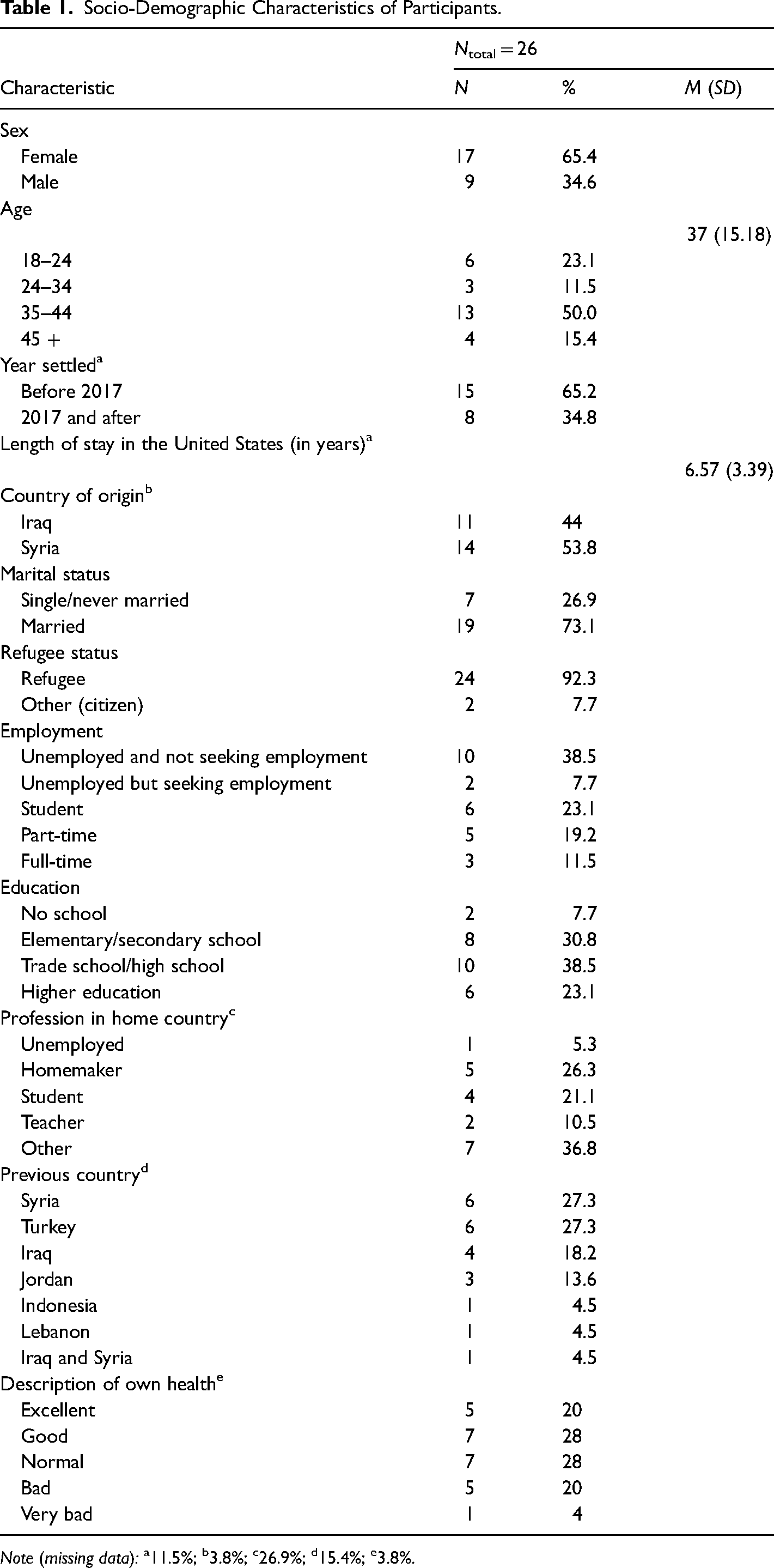
Note (missing data): a11.5%; b3.8%; c26.9%; d15.4%; e3.8%.
Social Factors
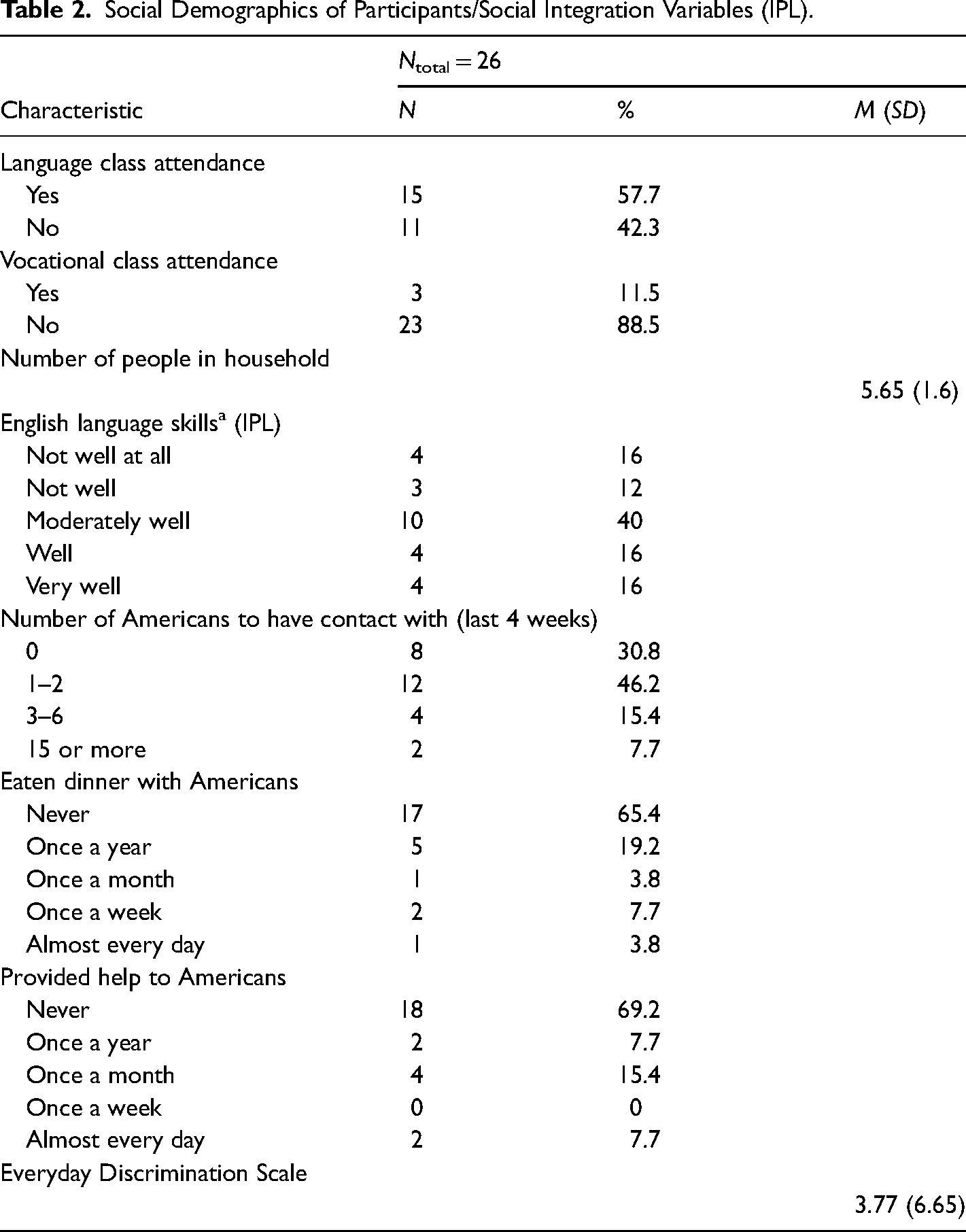
A little more than half of the participants (57.7%) indicated having attended a language class, whereas the majority (88.5%) did not participate in a vocational class. Moreover, participants reported having on average 5.65 people in their household. Regarding their English language skills, about 40% of the participants had on average moderately well English language skills (speaking, writing, reading, and listening). When it comes to contact with Americans, the majority of participants have little contact with members of the host society. More specifically, almost half of the participants (46.2%) reported that they had contact with only one to two Americans during the last 4 weeks. Around two-thirds indicated that they have never eaten dinner with Americans or provided help to Americans in the past 12 months (65.4% and 69.2%, respectively). Lastly, on a scale from 0 (never) to 45 (almost every day), participants reported very few discrimination experiences as evidenced by a mean value of 3.77 on the EDS (see Table 2).
Social Demographics of Participants/Social Integration Variables (IPL).
Psychological Factors
A little more than half of the participants (56%) received a positive result on the first 14 items of the RHS scale indicating that they met the criteria for a positive risk of emotional stress related to anxiety depression and/or PTSD. Their score on the distress thermometer; however, was not positive (M = 3.3, SD = 2.7). Furthermore, the majority of participants never felt like an outsider in the United States of America or isolated from American society (84% and 73.1%, respectively). Last, almost three-quarters (72%) indicated their intention to live in the United States in the future (see Table 3).
Psychological Demographics of Participants.
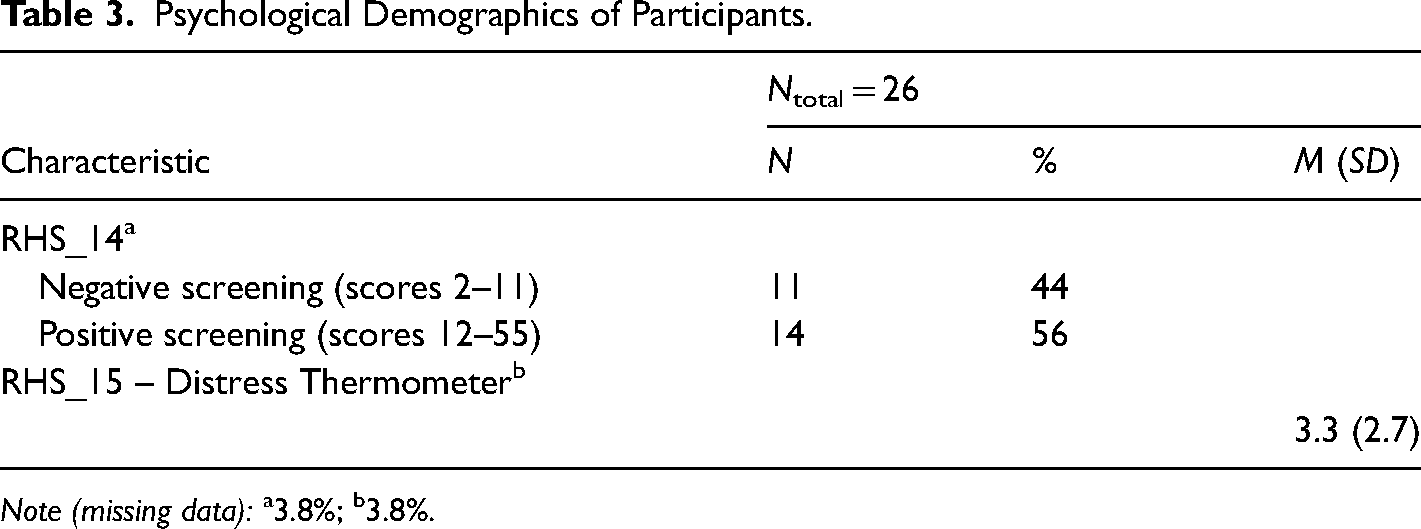
Note (missing data): a3.8%; b3.8%.
PMLDs
Having poor access to medical services including dental care (M = 2.31) and counseling (M = 1.88) were the most frequent PMLDs in the whole sample. Other most pressing PMLDs were being unable to return home to family in an emergency (M = 2.19) and communication difficulties/language difficulties (M = 1.96). Additional pressing PMLDs among the participants were worries about family back home, loneliness and boredom, and isolation (being/feeling alone). Almost half of the participants (47%) who resettled in 2017 or later expressed the most concerns about family back home, being unable to return in case of an emergency, loneliness, boredom, and isolation, ranging from somewhat of a problem to a serious problem. About 67% of participants who had been living longer than those resettled in 2017 or later reported significant issues with poor access to dental care and communication/language difficulties. Additionally, 53% of the sample viewed access to counseling and government assistance with welfare as ranging from a fairly big problem to a serious problem (Table 4).
Pearson's Correlation Analyses for Key Variables.
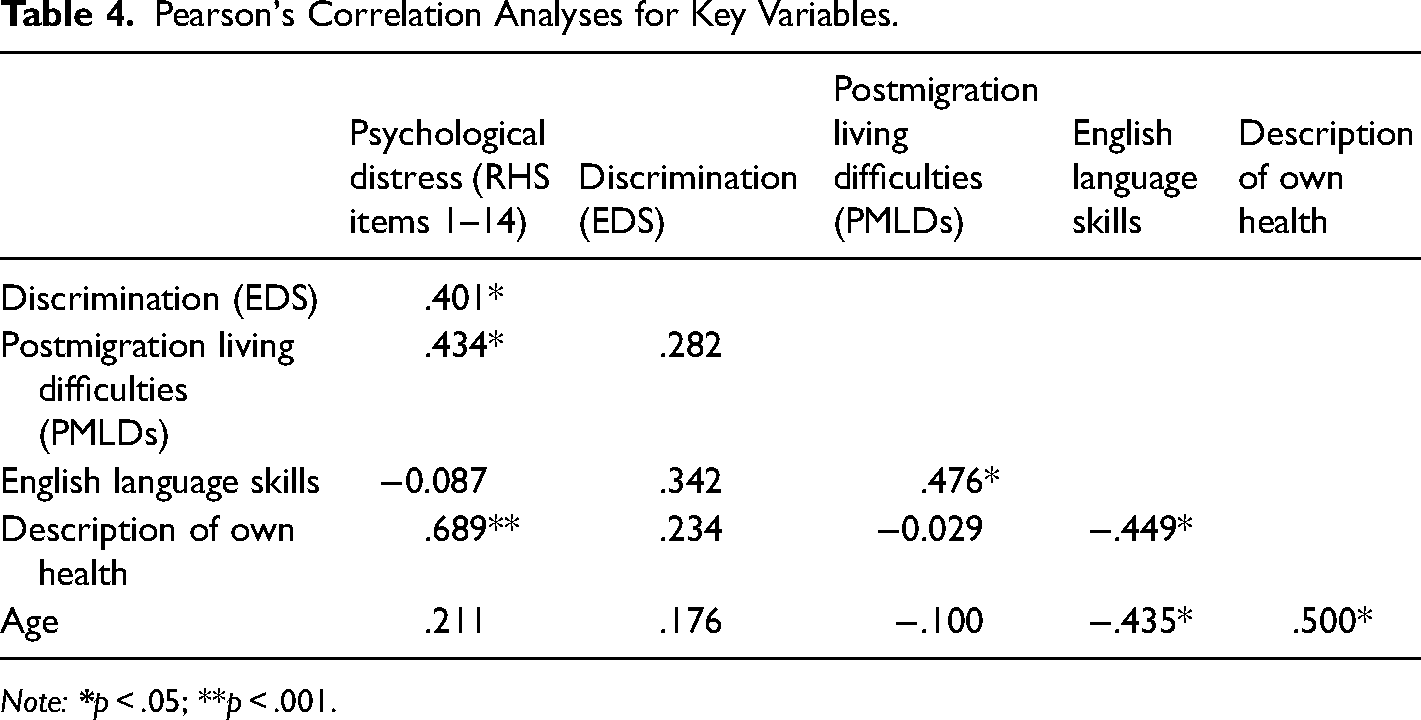
Note:
Correlation Analyses
Pearson's product-moment correlation was run to assess the relationship between each continuous variable (see Table 5). Results demonstrated significant positive correlations between psychological distress and the following variables: discrimination, PMLDs, and self-reported health. These findings suggest that elevated distress tends to be associated with an increased prevalence of discrimination experiences, PMLDs, and diminished health status. Moreover, significant positive correlations were observed between PMLDs and English language skills. This suggests that as PMLDs increase, English language skills tend to improve. The positive correlation between age and self-reported health indicated that, as participants aged, they tended to report poorer health. Additionally, significant negative correlations were identified between English language skills and description of own health as well as age, respectively. This suggests that better language skills tend to be linked to improved health and a younger age.
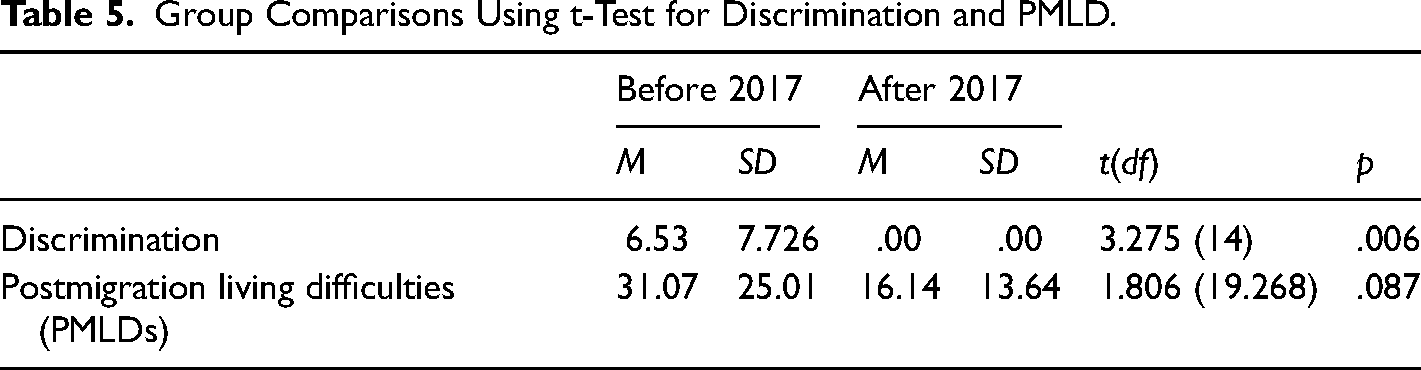
Group Comparisons Using t-Test for Discrimination and PMLD.
Group Differences
Fifteen participants settled before 2017 and eight settled in 2017 and after. Independent samples t-tests were run to determine if there were differences in EDS and PMLD scores between those who settled before 2017 and those who settled in 2017 and after (see Table 5). The EDS sum score was higher among those who settled before 2017 (M = 6.53, SD ± 7.73) than among those who settled in 2017 and after (M = 0.00, SD ± 0.00), a statistically significant difference, M = 6.53, 95% CI [2.26, 10.81], t(14) = 3.275, p = .006. The PMLD score was also higher among those who settled before 2017 (M = 31.07, SD ± 25.01) than among those who settled in 2017 and after (M = 16.14, SD ± 13.64), a nonsignificant difference. Additional correlation analyses between the length of stay in the United States, PMLDs, and EDS, respectively, revealed a significant positive correlation between the length of stay in the United States and PMLDs but not for EDS. This suggests that those who have lived in the United States for a longer period of time tend to experience more PMLDs.
Qualitative Methods
The qualitative component of the study involved semistructured individual in-depth interviews, which lasted between 30 and 70 min. The eight participants who completed the survey were also interviewed for in-depth interviews. The participants who were willing to take part were included in the interviews. Those who declined either had time constraints, needed to return to work, or were hesitant due to fear of being interviewed. The interview guide included questions focused on participants’ daily life in the United States, the opportunities and challenges they faced in both their home country and the United States, and the impact of policies. Some examples of questions included: “Did refugee/immigration policies in the U.S. change since you came here? If so, how are things different for you?,” “Have you had any difficulties due to refugee/immigration policies in the U.S.?,” “Do you feel welcomed by society here?”, and “In what areas should the government support you and your family better?” Open-ended questions encouraged participants to explore the topics in depth, while follow-up questions probed for further details, ensuring a richer understanding of their experiences and perspectives. The in-depth interviews were conducted in Arabic with the help of an interpreter, who simultaneously translated the participant's responses into English for the researcher. Afterward, all recordings were reviewed by a bilingual research assistant to ensure accuracy. The researchers then analyzed the English-translated transcripts following this accuracy check.
The qualitative data was analyzed using the grounded theory approach (Charmaz, 2014). The first researcher was present during the interviews. Initially, the third researcher performed open coding, scrutinizing the data line by line, which led to the identification of initial codes and patterns. Then, the first and third researchers analyzed the data separately. They then came together to discuss recurring patterns and themes. Through constant comparison, the first and third researchers refined and organized these codes into categories, forming the foundation for focused coding. Afterward, the focused codes were further refined and transformed into conceptual categories.
Qualitative Findings
Demographics
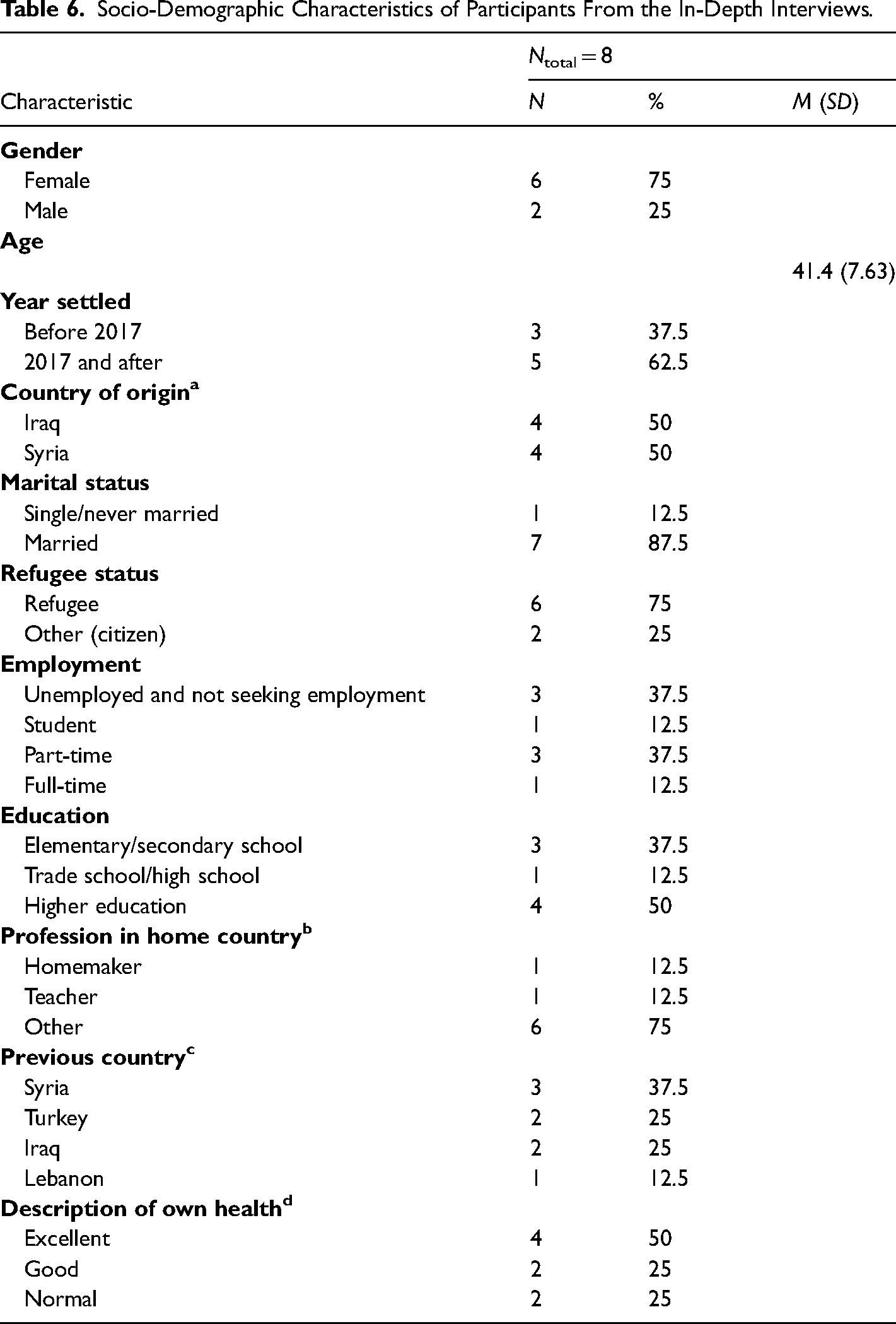
The qualitative interviews included a sample of eight participants drawn from those who completed the survey. The majority were female (75%), with an average age of 41.4 years (SD = 7.63). Most participants (62.5%) had settled in their current location in 2017 or later. Equal proportions originated from Iraq and Syria (50% each) and self-identified as Muslim. Marital status was predominantly married (87.5%), while employment status varied. Educational attainment leaned higher, with half having pursued higher education. Self-reported health status was generally favorable, with 50% describing their health as excellent, 25% as good, and 25% as normal (Table 6).
Socio-Demographic Characteristics of Participants From the In-Depth Interviews.
Effects of Historical Events
Historical events, including the COVID-19 pandemic, elections, the Travel Ban, and ongoing security rhetoric by governments, have disrupted the process of family reunification for the refugee participants. We waited for 5 years to be able to come to the U.S. 5 years. (Syrian woman) …Trump banned refugees from here. But since he left, it got better. My daughter's husband's brother. He and his family got stuck and they have been there for 8 years now … I think even with Biden things are very slow, backed up. (Iraqi woman) I had to borrow some money from my friend, and I bought a car and now work with Lyft and Uber … Before COVID, things were okay, but after COVID, it is very difficult. (Syrian woman)
Moreover, disruptions caused by COVID-19 led to the implementation of additional health screening processes for refugees. We were ready to come and we already did the medical test and everything but we had to wait 6 more months so we had to redo all the medical tests and had to spend more money to do all that. (Syrian woman)
In line with prevalent PMLDs, participants expressed concerns about their families back home. One participant underscored the significance of seeking therapeutic assistance to cope with the worries and anxieties stemming from their concerns about family members in their home country and the additional PMLDs they experience. Anytime I can expect to hear bad news. This is just on my side, growing, growing, growing. Without therapeutics, mental health, this is going to be a big, get worse. (Iraqi woman) I am human, I require food, clothing, a doctor, medication (which is really expensive), transportation, I need a salary. It's my right to get money—why did you bring me here then? So, I applied to the SSI. They told me I don’t have any medical issues. I told them, yes, I do—I have depression, I have phobias, I need a psychologist. (Iraqi woman)
Experiences With Resettlement Agencies
Resettlement agencies serve as the initial point of contact for refugee families upon their arrival in the United States. Participants shared a range of various adverse experiences with the agencies contributing to heightened stress and difficulties, particularly during the initial stages: The organization should help us with everything, for example, school, and insurance, help us set everything up then leave us. But halfway through they didn’t continue with us, their contract ended and they just left … there was another family that helped us. (Syrian woman) They brought us to the apartment in [street name], they just left us there. 2 months. Nothing. We didn’t hear from anybody, we only had $500 that we brought with us from back home … We didn’t even know to drink water, to not drink water—the kids were drinking water, they got sick, a neighbor gave us medication. And after 2 months, the neighbor told us to call the organization. When we called the organization, they said “Oh, you guys are here? We forgot about you; we didn’t even know.” (Iraqi woman) She was not prepared with the big car to pick up us from the airport. It was a very small car and we did not fit in it. And the house wasn’t ready and not in a good area. (Iraqi woman) …the resettlement agency did not help much—after the second month we never saw him (agency worker) again and he did nothing for us. (Iraqi woman)
The Notion of Discrimination
It is evident that all disadvantaged groups are facing increased levels of discrimination, and the participants in this study described incidents specifically targeting members of the Muslim community. For example, Muslim women, in particular, may be more vulnerable to such threats, given that the use of the hijab serves as a visible indicator of their religion. My daughter worked at Macy's. And an old woman approached her asking her name with an attitude. She then started screaming at her saying stuff like “Why are you here? Go back to where you came from! Go get out of here—why do you come here? (Iraqi woman) …She told them [police] “An Arabic woman, I think she's illegal, why she's here, she hit me, she hit my son!” … She accused me that I pushed her! And the police believed her. When they took me to jail they took my hijab … I will not trust people outside. Not all of them are ok with Muslims … I stopped wearing hijab. And my husband fighting with me, he told me don’t. I told him I don’t want to go through this anymore, please. I don’t feel safe. (Iraqi woman)
Participants experienced more nuanced forms of discrimination, characterized by its covert nature. Covert discrimination involves behaviors that are less apparent, making them challenging to attribute to biases and often going unnoticed. Some incidents described by participants were not explicitly labeled as discrimination but induced a sense that something was amiss in the attitudes or looks of others. The experiences of these participants were not captured by the survey data, as they reported no discrimination (scoring zero on the EDS). The way they look at us, especially since we wear hijab. I feel like sometimes they are scared of us and avoid us on purpose. And sometimes I feel like I want to speak to them. I want to tell them this is Islam. Islam is safe, peace. We are safe. (Iraqi woman) We don’t talk that much with neighbors, but at least we say hi. We are so friendly, but I think Americans in general don’t like to go here where we live or the place; our neighborhood. They don’t like to make any kind of friendship or to get to know someone. They do not have this interest. (Iraqi woman) They used to look at us with the hijab … but not anymore … Everybody is good here. (Syrian woman)
Maintaining Low Profile
Individuals may opt to overlook covert discrimination occurrences to maintain a sense of safety and avoid potential issues with members of the dominant culture in the country. This coping mechanism can manifest in behaviors such as keeping a low profile in their neighborhood or isolating themselves from social interactions. I have a fear of socializing and being around people. I’d rather just stay home and be alone. That's why I am always at home. (Iraqi woman) We have a good relationship with our neighbors. But our relationship is limited between people. Maybe because we feel like strangers here, so we don’t want to cause any trouble and just live in peace with no issues. Not to get into people's business. So, everything is very limited for us. (Iraqi woman)
Past traumatic experiences in their home country have complicated their feelings toward law enforcement. This complexity can contribute to the inclination to maintain a low profile within their community and may deter them from seeking protection when needed. We feel complicated. We see a police car, and we get scared. … We get scared and stay to the side. But at the same time, when we see police, we know they are there to protect us. We know they can protect us and we shouldn’t be scared. But maybe we are just complicated. (Iraqi woman) We just come and go. It's because we don’t speak English, so we don’t talk to them. (Syrian woman)
Fatalism
Dealing with these negative experiences introduces a sense of fatalism among participants. Adverse events are often viewed as part of God's plan, embraced without question. Everything could happen for a reason, and I believe that this is my test and God willing, it's not gonna happen again. (Iraqi woman) Subhanallah, it felt like wherever we walked things would get ruined after us. We left the city, it got attacked. We left the airport, it got occupied. Thank God, we left with an airplane, but we had friends stuck there. This is a story we will never forget. I went to [home country] and then back to [country], but it's written for me to come here considering the series of events that happened. (Iraqi woman) I told my husband let's go back to [home country]. They didn’t let us. They said we already opened your case, you’re not allowed to go back to your country. And we stayed there, thank God always. And God brought us here. We don’t choose, it's all God's plan.” (Syrian woman)
Discussion
Consistent with extant literature, our refugee sample exhibited indications of emotional stress associated with anxiety, depression, and/or PTSD and experiencing living difficulties in postresettlement contexts. Poor access to medical services (e.g., dental and counseling) was the most distressing PMLD our sample experienced in the United States. Following these difficulties, the conditions of extreme precarity (e.g., unable to return home in an emergency, loneliness and boredom, and isolation) and marginalization and family-related stressors (e.g., communication difficulties and worries about family back home) were other common PMLDs in our sample. Alemi et al. (2016) found that conditions of extreme precarity and marginalization and family related stressors have a strong effect on distress among Afghan refugees in Türkiye. Yalim (2020) also found similar PMLDs among Syrian refugees in the United States. While our sample demonstrated consistency with prior studies, it is noteworthy that unlike other studies utilizing the same questionnaire, poor access to dental and counseling services emerged as the most prevalent PMLDs in this study. Our findings also highlight the distinct challenges faced by refugees depending on their resettlement timeline. Those resettled after 2017 are more concerned about psychosocial (e.g., loneliness and isolation) and family related concerns, while those who have been living longer report greater difficulties with communication and services, particularly dental care and governmental help. The disparities suggest that longer-term resettlement may exacerbate barriers to accessing critical resources, underscoring the need for tailored support programs that address both the emotional and practical challenges of refugees at different stages of resettlement. Along with these findings, as our participants’ age increases, their health ratings tend to worsen. The lack of access to medical services may lead to negative outcomes over time in the context of resettlement. This finding holds important implications, highlighting challenges associated with accessing medical services. Qualitative interviews provided further clarification, emphasizing difficulties such as the limitations of insurance plans. Moreover, our study contributes to the understanding that Muslim refugees, contrary to prevailing beliefs, may be open to receiving counseling services, even when there is a stigma attached.
Being open to receiving counseling services is crucial, given that the results of this study also showed significant positive correlations between psychological distress and discrimination as well as PMLDs, respectively. These findings are consistent with the literature, which emphasized the link between discrimination and psychological distress (Ajrouch et al., 2010; Assari & Lankarani, 2017; Willis et al., 2021), and between postmigration stressors and psychological distress (Nowak et al., 2023; Tonsing & Vungkhanching, 2020). Given these associations, it is important to consider the unique experiences and needs of the refugee population when offering counseling services, as well as to provide services that are culturally appropriate (Pachner et al., 2021).
Despite the anti-refugee discourse during the Trump era, reported quantitative experiences of discrimination among our sample were not high. Only refugees, who resettled prior to 2017, reported more instances of discriminatory experiences compared to those who arrived in the United States after 2017. This may be explained by the length of time participants have spent residing in the United States, with those residing longer potentially experiencing a greater number of acts of discrimination. However, the correlation analyses yielded nonsignificant results, which is likely attributed to the relatively small sample size. Another explanation may be that for some refugees, the concept of discrimination appeared unfamiliar or proved challenging to articulate. When questioned about their encounters with discrimination, many respondents answered with experiences that were primarily rooted in overt incidents, manifesting as direct prejudicial treatment. While the interviews also suggested the presence of covert discrimination, this was less clearly articulated. Themes such as “maintaining a low profile” and the idea that “discrimination is common” hinted at the possibility of covert discrimination, but these instances were not explicitly detailed. Covert forms of discrimination, which are less visible, harder to attribute to prejudice, and easily overlooked, may still play a role, but were not as clearly identified in the participants’ interviews. They may not openly report their negative experiences especially when they are covert discrimination experiences. One reason behind this might be that they could develop a greater sense of appreciation for the country that accepted them. Fozdar and Torezani (2008) state that the notions of “relative gratification” and “politeness imperative” can be a potential reason for the low number of reported experiences. According to these notions, refugees may face discrimination, but they think that their quality of life is better off compared with those back home. Refugees conceptualized their previous experiences as far more severe than anything they could ever experience in the United States and value the absence of war (Shaw et al., 2021). This creates immense feelings of gratitude among many refugees for merely living free from the threat (Interiano-Shiverdecker et al., 2022). Similarly, the citizenship and integration process can foster a sense of assimilative patriotism, where refugees outwardly and vigorously express their love for America as proof of their loyalty. Another explanation is that Lajevardi et al. (2020) describe a paradox where, despite increased integration into American society, Muslims, particularly those with visible markers of identity like hijabs or beards, experience heightened discrimination as they are socialized to expect equality. This discrimination, driven by political rhetoric and policies, contributes to stress, lower self-esteem, and feelings of alienation, even for those who achieve success in other areas of life.
The intersectional characteristics of Muslim refugees may heighten vulnerability to everyday discrimination within this group. The present study's findings revealed no statistically significant differences between men and women with regard to experiences related to discrimination. These results contrast with prior research which suggested that discrimination against Muslim refugees becomes more complex due to its gendered nature, with Muslim women being disproportionately affected (Pew Research Center, 2017). This is often attributed to the prominent marker of religious identity, namely, the hijab.
The matter of discrimination within the refugee population is notably complex, surpassing individual perceptions of overt discrimination. The majority of discriminatory practices are manifested in nuanced and subtle ways, rendering them difficult to identify and address. Disregarding intersectionality in exploring the acculturation experiences of Muslim refugees leads to an incomplete understanding. Neglecting the intersecting identities of refugees results in the formulation of overgeneralized practices that lack sensitivity to the cultural, religious, and ethnic diversity prevalent among refugee groups.
Fatalism is a prevalent mindset among refugees, aiding in the coping process with the challenging experiences associated with being a refugee (Shannonhouse et al., 2023; Smigelsky et al., 2017). There exists a subtle distinction between expressing gratitude to God and passively accepting injustices as part of God's plan. Certain events that warrant advocacy efforts may be overlooked due to a fatalistic perspective. Therefore, it becomes crucial to educate the refugee population about their rights, particularly in cases of discrimination and the various forms of discrimination they might encounter. Education initiatives must be directed towards empowering refugees with knowledge about their rights, laws, and the mechanisms of reporting incidents of discrimination.
Resettlement agencies often lacked resources which resulted in adverse experiences for refugees, particularly in their initial months in the United States. These challenges were exacerbated during the Trump administration, as budget cuts resulted in the shutdown of some programs (Refugee Council USA, 2019). Upholding fundamental human rights, regardless of nationality or immigration status, necessitates concrete actions within immigration and refugee policies. The securitization and criminalization of migration fall short of safeguarding the human rights of migrants (Zubaroglu-Ioannides & Yalim, 2022). When individuals are branded as criminals solely based on factors such as religion, language, or appearance, the capacity for empathy and compassion is significantly compromised. Addressing xenophobia and hatred calls for a transition towards compassionate migration policies (Arrocha, 2019). Implementing this change requires a collective global effort, incorporating both empathetic rhetoric and substantive policy adjustments, to restore a strong sense of humanity in the discourse surrounding migration.
Strengths, Limitations, and Future Directions
While this study is one of the few published studies that capture the attitudes and voices of Muslim refugees in the United States using a mixed-methods approach, it also has limitations. Although the quantitative component includes a relatively large sample size, considering the invisibility of the Muslim refugee population and the challenges posed by COVID-19, as well as the discriminatory policies toward Muslim refugees during Trump's first presidency, the in-depth interviews involved only eight participants, which represents a small sample. As a result, the findings cannot be generalized. However, despite the small sample size, the study was able to amplify the unique voices of the participants. The study cannot also draw conclusions such as whether this particular refugee group experiences more depression or discrimination than other refugee groups, due to the lack of a comparison group. Additionally, this data cannot determine whether negative outcomes, such as depression, are primarily caused by the participants’ refugee status or by other factors, such as unemployment, health issues, or family-related challenges. This study did not directly examine issues related to gender and intersectionality. A potential direction for future research is to explore these topics more explicitly, particularly in relation to the experiences of Muslim women, such as the hypervisibility of women wearing the hijab. While the study aimed to address the impact of negative discourse, the way participants described their experiences of discrimination was not fully explored. This may be due to the small sample size and participants’ tendency to avoid openly discussing these issues, which points to an area for further research. Additionally, the potential impact of reporting and cultural bias effects on participants’ accounts of discrimination should be considered. Social desirability or fear of stigma may have led participants to underreport or adjust their experiences, particularly with covert discrimination. Cultural differences in understanding and expressing discrimination could also have influenced participants’ responses. These biases highlight the need for caution in interpreting the findings and suggest areas for future research.
Implications and Conclusion
While participants report a sense of belonging, their limited contact with Americans presents a paradox that challenges conventional assumptions about the role of social ties in fostering belonging. This suggests that other factors, such as cultural resilience or intracommunity support, may play a more significant role. Future research could delve deeper into these dynamics to better understand the complex relationship between social connections, refugee integration, and the multifaceted nature of belonging. At the individual level, programs developed based on the findings of this study can facilitate a process for refugees to build personal strength, capacity, and self-efficacy. At the community level, refugees’ social networks should be strengthened, and a safe environment should be built for conversations between refugees and members of the dominant society. To effectively reach Muslim communities for psychosocial support, it's important to engage local imams, scholars, and community leaders who can share mental health resources and help reduce stigma. Offering workshops and education at mosques or community centers creates accessible spaces for discussion. Additionally, partnering with culturally competent mental health professionals ensures that concerns are addressed in a way that resonates with the community, building trust and encouraging help-seeking. Policymakers, considering the findings of this study, need to create a welcoming environment for refugees, which can help convey a sense of belonging. The study can assist clinicians and organizations in developing more effective services and integration programs for Muslim refugees. These efforts can eventually facilitate the integration of refugees into their new communities.
Footnotes
Acknowledgments
The authors greatly acknowledge the support of the interpreter and the community leader, Fatima Ait Rami.
Declaration of Conflicting Interests
The author(s) declared no potential conflicts of interest with respect to the research, authorship, and/or publication of this article.
Funding
The author(s) disclosed receipt of the following financial support for the research, authorship, and/or publication of this article: This work was supported by the Society for the Psychological Study of Social Issues.
