






Abstract
In 2021, the FBI sought to retire the Uniform Crime Report (UCR) Summary Reporting System (SRS) and fully transition to the National Incident-Based Reporting System (NIBRS). However, it is unclear how this transition to a “NIBRS-only” system might impact statistics on race/ethnicity and crime in the United States. To date, research offers few comparisons of race/ethnicity and crime patterns in NIBRS versus traditional UCR reporting systems. In addition, studies that provide these comparisons were conducted years ago (1) before the full transition to NIBRS when the program had limited coverage (less than 30% U.S. population coverage) and (2) before the rapid growth in U.S. minority groups and especially Hispanic populations seen throughout the twenty-first century. The current study addresses this gap in research by comparing racial/ethnic portraits of crime (cross-sectionally and over time) across four of the FBI's “public facing” official crime data systems—(1) Crime in the United States (CIUS) reports, (2) NIBRS Offender data, (3) NIBRS Arrestee data, and (4) NIBRS Arrestee National Estimates. Findings suggest that Black offending and arrest patterns are generally consistent across data sources, but depictions of Hispanic crime involvement differ sharply depending on which data source is used.
From 1930 to 2020, the Uniform Crime Report's (UCR) Summary Reporting System (SRS) served as the United States’ primary official data source on crime. Collected by the Federal Bureau of Investigations (FBI), the UCR SRS was designed to compile aggregate counts of both offenses known to law enforcement and arrests for the eight index crimes of murder, rape, robbery, aggravated assault, burglary, motor vehicle theft, larceny, and arson, as well as counts of arrests for 21 additional Type 2 offenses (Rantala & Edwards, 2000). For many years, the UCR SRS was widely considered the “go to” source on official crime data for researchers, media outlets, and the U.S. public. However, in 1989, the National Incident-Based Reporting System (NIBRS) was introduced by the FBI as an alternative data collection system, with the expectation that it would replace the UCR SRS.
NIBRS was developed with the goal to “enhance the quantity, quality, and timeliness of crime statistical data collected by the law enforcement community and to improve the methodology used for compiling, analyzing, auditing, and publishing the collected crime data” (FBI, 2000, p. 1). This more complex incident-based system allowed for improvement over the SRS system in many ways. Where the UCR SRS only contains overall summary data, NIBRS contains detailed information on the characteristics and circumstances of each crime incident, demographic information on victims and offenders/arrestees, and a wider set of offense types (52 offenses) than recorded in the SRS (FBI, 2024a). Unlike the SRS, NIBRS allows for the collection of more than one offense per incident (i.e., no hierarchy rule) and a more intersectional understanding of offender and victim demographics (Chilton & Jarvis, 1999). Researchers have also leveraged the depth of NIBRS data to investigate crime clearance rates, situationally specific crimes such as intimate partner violence, and macro-level perspectives such as racial threat theory (Addington, 2006; Eitle et al., 2002; Roberts, 2009; Stolzenberg & D’Alessio, 2007). Ultimately, NIBRS allows for a much more comprehensive and flexible view of crime in the United States.
Although it held tremendous potential, NIBRS suffered from limited coverage at its inception and would serve as a backdrop to the much more representative and highly utilized UCR SRS for three decades. In 2002, 12 years following the official roll-out, NIBRS agencies covered 17% of the U.S. population, and no agency covering a population of over 1 million people participated in NIBRS (Addington, 2008). By 2013, NIBRS only covered 29% of the population and had almost no coverage in 9 of the top 20 most highly populated states (McCormack et al., 2017). Although the specific reasons for the slow adoption of NIBRS likely differ for each agency, several barriers to implementation were described by SEARCH (1997), which collected data from 65 of the largest law enforcement agencies in the United States. Some of these barriers included a lack of funding, uncertainty of benefits, and a lack of education regarding NIBRS among key agency decision-makers and stakeholders (see McCormack et al., 2017 for a brief review).
However, in 2021, the FBI officially implemented a full transition to NIBRS as its primary official crime data source, with the expectation that the UCR's SRS would be retired. Although the NIBRS participation rate has been rapidly rising post-2020, its coverage remains incomplete and much lower than the 90%-plus coverage seen in the UCR's SRS. This limited coverage led the FBI to temporarily accept SRS reporting data again in 2022 as part of its Crime in the United States (CIUS) release, but the plan remains to finalize the full shift to NIBRS in the near future (FBI, 2022). Now that NIBRS is serving as the FBI's primary official crime data source, it is important to consider how this change in data collection systems impacts our understanding of crime patterns in the United States, especially across race/ethnicity, which is the focus of the current study.
Notably, a handful of studies began this work when NIBRS was first introduced, comparing the patterns of crime produced by NIBRS versus UCR SRS numbers. However, these comparisons were often seen as preliminary snapshots due to sparse coverage of NIBRS (i.e., below 30% national coverage) (see discussions in Addington, 2008; Chilton & Jarvis, 1999; McCormack et al., 2017). Early comparisons between the two systems generally showed similar results regarding overall crime patterns in the United States. However, outside of several noteworthy studies (e.g., Chilton & Jarvis, 1999; Pattavina et al., 2017), few analyses have examined how the systems compare in terms of the racial and ethnic distributions of offending and arrest patterns. In addition, these comparisons relied on earlier data (e.g., early 2000s), and much has changed since they were produced.
First, the racial and ethnic landscape in the United States has changed dramatically since NIBRS was introduced and these earlier studies were published. Most notably, the country has seen large increases in the number of Hispanic residents. From 2000 to 2020, the U.S. Hispanic population rose from 35.3 million to 62.1 million (Pew Research Center, 2022). Second, NIBRS coverage has rapidly expanded, rising from less than 20% national coverage in 2000 to more than 70% coverage by 2022 (FBI, 2024b). Yet, this coverage remains much lower than in the old SRS system. Third, and perhaps most concerning, NIBRS data continues to have minimal coverage for some of the most racially and ethnically diverse states with the largest minority populations, which could have profound implications for national racial/ethnic crime estimates (McCormack et al., 2017, 2023). For example, as recently as 2021, NIBRS covered less than 30% of the populations in Florida, California, and New York (FBI, 2024b)—three states that collectively account for more than 20% of the U.S. Black population and 40% all Hispanic residents in the country (United States Census Bureau, 2022). In light of these shifts in NIBRS adoption and in the racial/ethnic landscape in the United States, there is a pressing need to examine how the NIBRS transition impacts the estimates of crime patterns overall, and especially by race/ethnicity.
The current study seeks to address these gaps by comparing race/ethnic offender and arrest figures from NIBRS with more traditional UCR SRS-based arrest figures cross-sectionally and over time across the eight index offenses. Notably, we do not utilize the raw NIBRS data for these comparisons, a point which we return to in our discussion section. Instead, our goal is to compare the “public-facing” reports, documents, and figures from NIBRS and traditional UCR systems that are most accessible and widely used by researchers, media, lawmakers, and the American public for identifying U.S. crime patterns (overall and by race/ethnicity). Specifically, this study will cross-sectionally (2020 and 2022) compare racial/ethnic crime figures across CIUS arrest totals, NIBRS offender and arrestee totals, and NIBRS arrestee national estimates. Additionally, this study will compare race- and ethnic-specific CIUS arrest figures with NIBRS offender figures over time from 2013 to 2022. However, before doing so, it is necessary to first understand what official data (including the UCR SRS and earlier versions of NIBRS) have historically revealed about racial and ethnic patterns in offending.
Race and Crime According to Official Statistics
There has been longstanding debate over the value of using official arrest statistics to examine the racial distribution of offending in the United States (Hindelang, 1978). Many have argued that racial differences in arrests are largely a result of differential enforcement and processing rather than actual differences in criminal behavior (e.g., Chambliss & Seidman, 1971; Chapman, 1968). Critics suggest that this bias is made clear by findings from self-report studies showing White and Black differences in offending that are far smaller than those seen in official crime statistics (Chambliss & Nagasawa, 1969; see reviews in LaFree et al., 2008; Steffensmeier et al., 2011). Despite these critiques, there is now a large body of work that has demonstrated the value of using official statistics to examine race/ethnicity and crime patterns (especially for serious violence and homicide) in the United States (D’Alessio & Stolzenberg, 2003; Elliott & Ageton, 1980; Hindelang, 1978; Hindelang et al., 1979, 1981; LaFree et al., 2008; Steffensmeier et al., 2010, 2011).
Hindelang (1978) and Hindelang and colleagues (1979, 1981) offered some of the first efforts to assess the value of official crime data for assessing race patterns in crime in the United States. In these seminal studies, Hindelang and colleagues compared race-specific crime data from the UCR SRS, self-report studies, and victimization data from what would become the National Crime Victimization Survey (NCVS). After analyzing the victimization data and comparing it to official and self-report measures, the authors found that UCR and victimization data offered similar pictures of race and offending, showing overrepresentation of Black involvement in serious violent crimes. Despite these similarities, the authors acknowledged that official records showed larger racial differences in crime, suggesting potential for law enforcement bias in race-crime data. Although this remains a serious critique of official data on race and crime, additional studies have reproduced these findings, showing that official data on race and crime mirror patterns seen in the NCVS (e.g., Beck, 2021; LaFree et al., 2008; Steffensmeier et al., 2011). Clearly, official data have notable caveats and possible biases as measures of race and crime, but there is now a large body of research suggesting that they have value as a window to observing race patterns in serious violent offending, at least as seen by law enforcement.
Although the usefulness of relying on official statistics—such as the UCR SRS—to measure race patterns in crime can be debated, the consistent findings on the racial distribution of arrests cannot be. For decades, the SRS has shown that Black individuals account for a disproportionate number of arrests compared to their proportion of the population for serious violent offenses (e.g., Beck, 2021; Hindelang, 1978). Despite some fluctuations over time, this phenomenon has remained the case in the most recent UCR reports leading up to the NIBRS transition. However, with the full transition to NIBRS, it is important to know whether NIBRS estimates offer the same picture of race/ethnicity and crime as traditional UCR reporting programs. In addition, if they do differ, it is important to identify why and how much this depiction of race, ethnicity, and crime in NIBRS has changed.
Race/Ethnic Comparisons Using NIBRS
Although the NIBRS program was introduced more than three decades ago, there have been relatively few comparisons of NIBRS statistics on race/ethnicity and crime with other data sources. This is likely due to the limited coverage offered by NIBRS in the early years of the program (see reviews in Addington, 2008; McCormack et al., 2017, 2023; Roberts, 2009). However, a handful of noteworthy exceptions exist that compare NIBRS, UCR SRS, and sometimes NCVS data on race and crime.
A study by Chilton and Jarvis (1999) marks one of the earliest racial comparisons of the UCR SRS and NIBRS. The researchers compared UCR SRS and NIBRS data on homicide arrests and offenses exclusively from 1993. Given the limitations of the available NIBRS data at the time, the authors only utilized NIBRS data submitted by police agencies across nine states. After comparing the two sources, Chilton and Jarvis (1999) concluded that NIBRS findings on race and crime were generally similar to what was reflected in UCR data, showing disproportionate Black involvement. Ultimately, the authors concluded that with more coverage in the future, NIBRS could serve as a dependable data source to examine race/sex/age distributions of crime in the United States.
D’Alessio and Stolzenberg (2003) provided a more indirect comparison between SRS data and NIBRS. In their study—largely an extension of Hindelang's (1978)—they leveraged NIBRS's ability to capture race data on both offenders (as perceived by the crime victim) and arrestees. They compared racial proportions of NIBRS arrestee and NIBRS offender counts “to determine the extent that black overrepresentation in official arrest statistics is explained by differential offending or by differential selection into the criminal justice system via arrests by police” (D’Alessio & Stolzenberg, 2003, p. 1384). Facing similar data limitations to Chilton and Jarvis (1999), D’Alessio and Stolzenberg (2003) were limited to making comparisons across 17 states. Like Hindelang (1978) and others, they found overrepresentation for Black individuals in serious violent crime offending. Their most notable finding, however, was that when comparing NIBRS offenders and arrestees, Black individuals appeared to be under-arrested given their involvement in crimes reported to the police. Taken together, they suggest that NIBRS generally provides a similar picture of race and crime as seen in the UCR SRS—Black individuals are arrested at a disproportionate rate for serious violent offenses, which they attribute largely to differential involvement in these offenses.
Since the Chilton and Jarvis (1999) and D’Alessio and Stolzenberg (2003) analyses, research has provided few comparisons of race and crime depictions in NIBRS versus the UCR SRS, with almost none covering contemporary time periods during the full NIBRS transition. However, a few relevant studies are worth noting. Although they do not compare NIBRS and UCR SRS data, two studies by Fogliato et al. (2021, 2024) provide assessments of NIBRS race-crime data by comparing NIBRS offender versus arrest statistics (Fogliato et al., 2021) and comparing NIBRS and NCVS data (Fogliato et al., 2024). These studies reached similar conclusions to D’Alessio and Stolzenberg (2003) regarding racial disparities between offending and arrests but highlighted the importance of crime characteristics on the magnitude and direction of the disparities. Generally, Fogliato et al. (2021) found that after controlling for state, White and Black offenders were arrested at similar rates for forcible rape and murder, but White offenders were arrested at higher rates for assault and robbery. More recently, leveraging NIBRS and NCVS data, Fogliato et al. (2024) found that after adjusting for unreported crimes, racial disparities in arrests tend to be minimal. These recent findings utilizing NIBRS data tend to mirror findings from decades prior.
Pattavina et al. (2017) offer a direct comparison between NIBRS and the UCR SRS, using 2015 arrest data from the UCR SRS and NIBRS (which still only provided 29% population coverage). The authors compared racial distributions across 27 offenses. In 21 of those offenses, NIBRS suggested that a higher proportion of arrests were made up by White offenders than shown in the UCR SRS. At the same time, the authors note that the differences across data sources were small and amounted to only a few percentage points. Either way, their study provides some indication that the picture of race and crime seen in NIBRS may differ (at least partially) from that seen in other data sources once the full shift to NIBRS is complete.
The Current Study
Much has changed since Chilton and Jarvis (1999) and the other studies described above made their comparisons of NIBRS and UCR data across race, which suggests a need for renewed attention to how NIBRS (versus other data sources) portrays race/ethnic patterns in crime. First, NIBRS coverage has dramatically increased over time. At the time of the Chilton and Jarvis (1999) study, the NIBRS system included only nine states. Even as late as 2015, when Pattavina et al. (2017; see also McCormack et al., 2017) made their comparison, NIBRS offered less than 30% coverage of the U.S. population. In contrast, by 2021 when the FBI began the full transition to NIBRS, the program offered coverage for 70% of the population, and by 2022, NIBRS had reached over 75% coverage.
Second, the racial/ethnic landscape of the U.S. population has changed markedly during the early decades of the twenty-first century. The non-White population has rapidly expanded, and the Hispanic population has become the largest minority group in the United States (United States Census Bureau, 2023). The country has become far more diverse, and estimates suggest that Whites may account for less than 50% of the U.S. populace by 2050 if these population trajectories persist (United States Census Bureau, 2014). As such, the racial/ethnic comparisons of NIBRS and SRS statistics have likely changed as the U.S. population has shifted. Thus, there is a need to revisit these comparisons, especially including Hispanic populations (which were not assessed in most of the prior studies described above).
Third, beginning in 2021, the FBI began to fully transition to the NIBRS system and plans to discontinue the old SRS system that researchers and agencies relied on for nearly 100 years. At this point in time, NIBRS now serves as the FBI's primary official data collection system for crime. As such, there is an urgent need to identify how this transition influences the picture of race and crime obtained from official crime data. NIBRS provides more detailed information compared to the UCR SRS system, but it still faces several caveats that could dramatically influence the way that race/ethnicity and crime are portrayed. Although the increased NIBRS coverage is encouraging, it remains well below the >90% coverage obtained by the old UCR SRS system (FBI, 2022). The rapid adoption by many agencies (rising from less than 30% to nearly 75% coverage in a single decade) may introduce errors in NIBRS records. In addition, some of the most diverse states with the largest minority populations have had the lowest participation rates in NIBRS, which could influence race/ethnicity and crime estimates (McCormack et al., 2023). As of 2021, Florida, California, and New York accounted for more than 40% of the country's Hispanic population and 20% of the Black population (Pew Research Center, 2023; United States Census Bureau, 2021). However, NIBRS participation in these diverse states has been exceptionally low, with each state having less than 20% population coverage as late as 2021 (see Figure 1) (FBI, 2024b). Given that these states account for large shares of the minority populations in the United States, their incomplete and shifting coverage could fundamentally alter the picture of race/ethnicity and crime derived from the NIBRS system. With NIBRS now serving as the “go to” source for official crime statistics, it is important to conduct a thorough assessment of how it depicts race, ethnicity, and crime, both over time and compared to the UCR SRS system.
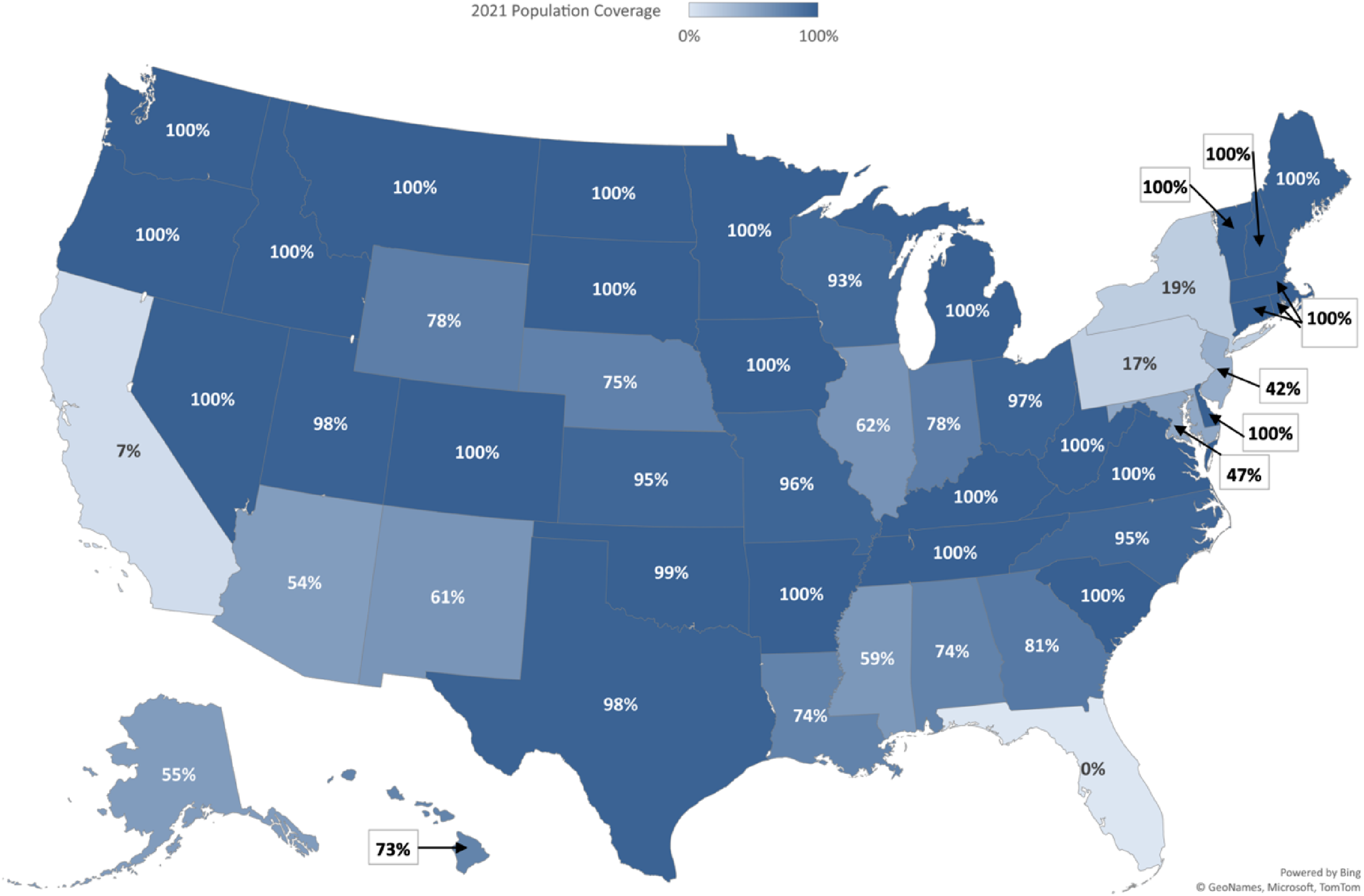
Map of NIBRS Population Coverage in 2021.
The current study seeks to do so and extends prior research in four important ways. First, this study moves beyond standard Black-White assessments to also examine Hispanic depictions of crime across UCR SRS and NIBRS data sources, which were not included in most prior comparisons of SRS and NIBRS programs. Importantly, the reports and data sources used here are designed in a way that combines race and ethnicity rather than reporting race or ethnicity, with individuals who identify as Hispanic or Latino also being included in racial categories (which is discussed in more detail below) (McCormack et al., 2023). Second, this study includes both cross-sectional comparisons (2020 and 2022) and comparisons over time (from 2013 to 2022) to assess how the NIBRS transition may have influenced depictions of race/ethnicity and crime. Third, this study seeks to provide a “roadmap” for navigating the many new public-facing FBI data reports, documents, and figures produced during and after the NIBRS transition. Even for academics well-versed in UCR and NIBRS data, the public data reports and Crime Data Explorer statistics reported on the FBI's website can be complex, ambiguous, and easily misunderstood. For example, some of the crime data sources include raw counts of NIBRS offenses or arrests (for participating agencies only), while others use complex population adjustment and estimation techniques to produce nationwide crime estimates. At the same time, other data releases combine data from both the UCR SRS and NIBRS. These distinctions and differences are not immediately apparent to trained experts, let alone to lay audiences. As such, this study offers an important evaluation and roadmap comparing the FBI's “public-facing” official crime data sources. We acknowledge that digging into the raw NIBRS data for more detailed comparisons is a necessary and important next step in this line of research. However, providing a detailed assessment of the public data sources is an essential first step in this process. Finally, and perhaps most importantly, the current study provides an updated look at what these competing data sources tell us about race, ethnicity, and crime in the United States. In the past few years, NIBRS participation rates have rapidly increased, and previous comparisons using older NIBRS data must be revisited and reassessed. Ultimately, we seek to both provide a clearer understanding of the nation's official crime data sources, while also assessing how depictions of racial and ethnic crime patterns could shift as a result of the NIBRS transition.
Methods
Data
Data for the current study come from publicly available sources on United States arrest and offense data released by the FBI. Four specific official data sources compiled by the FBI will be compared cross-sectionally (for 2020 and 2022) and over time (from 2013 to 2022): (1) Crime in the United States reports, (2) NIBRS Offender data, (3) NIBRS Arrestee data, and (4) NIBRS Arrestee National Estimates. In the following sections we describe each of these data sources in more detail, including the information they contain (SRS data, NIBRS data, or both), how they are compiled, and the degree to which they overlap or draw on unique information. In addition, a summary of comparisons across the data sources is provided in Table 1. First, though, it is worth a brief discussion of how race/ethnicity determinations are made for arrestees and offenders. Typically, a determination for the race of arrestee—for the SRS and NIBRS—is made based upon the arresting officer's perceptions unless some other form of race identification (e.g., driver's license) is made readily available to the officer. Thus, these assessments of race are often officer-driven rather than relying on the arrestee's self-report (Kaplan, 2024). The race/ethnicity determination for an offender is a bit more complex. These determinations are often made by law enforcement officers when the suspect is immediately identified but can also come from victim and witness perceptions of the offender. Notably, NIBRS allows for the identification of an “unknown” race or ethnicity for the offender when it is not readily apparent to officers, victims, or witnesses. These reporting differences are important to consider when making comparisons between offenders and arrestees.
Comparison Across FBI Data Sources Included in the Current Study.
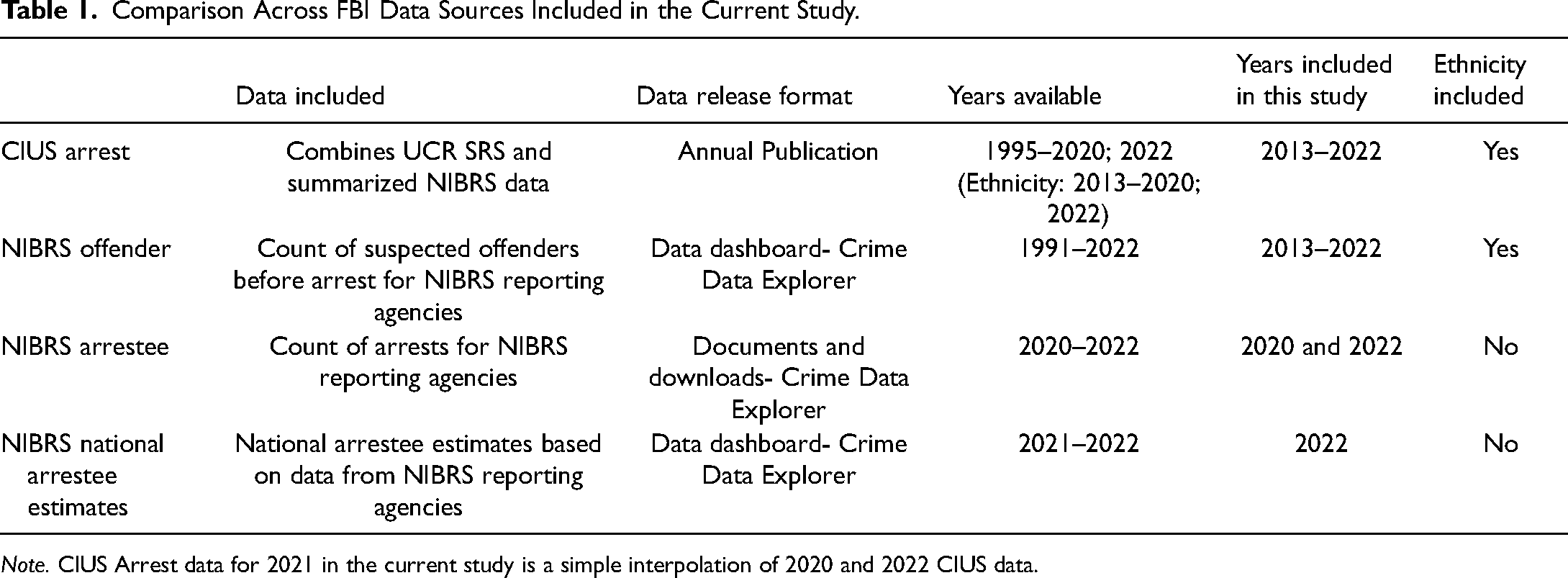
Note. CIUS Arrest data for 2021 in the current study is a simple interpolation of 2020 and 2022 CIUS data.
Crime in the United States Arrest Reports (CIUS) (2013–2022)
Each year the FBI's UCR program releases the CIUS report which provides race/ethnic-specific data on arrests for violent and property crime offenses (FBI, 2024c). Data in the release come from both SRS data and summarized data from NIBRS. As NIBRS participation has increased over time, a greater portion of the CIUS comes from summarized NIBRS data rather than SRS data. This “summarized” NIBRS data is solely from NIBRS-reporting agencies, but in the form of aggregated numbers from more detailed information collected by these agencies. This aggregation of the NIBRS incident-level data allows for a closer approximation to SRS data concerning country-wide crime demographics. Historically, the proportion of arrests by race has been provided as part of the CIUS release. Since 2013, the release also included the proportion of arrests across each crime by ethnicity (Hispanic versus non-Hispanic). As of 2021, the CIUS was intended to only include summarized NIBRS data as part of the full transition to NIBRS. However, due to low NIBRS participation rates, a limited version of the CIUS was released in 2021 that did not include racial or ethnic breakdowns. As of 2022, the FBI began accepting SRS data again to complement the NIBRS data for the CIUS release, and racial and ethnic breakdowns were again included. In the current study, CIUS race or ethnicity figures for 2021 are interpolated from 2020 and 2022 rates.
NIBRS Offender (2013–2022)
NIBRS offender data are made available on the FBI's Crime Data Explorer page as part of an interactive data dashboard (FBI, 2024b). These data represent total “raw” offense counts by offense type from NIBRS reporting agencies and are based on reports of the suspected offender for an offense known to the police, before any arrest is made. Data on both the race and ethnicity (i.e., Hispanic) of suspected offenders across crime categories are included. Additionally, information is made available on offenses where the race/ethnicity of the offender is not known. For the current study, the assumption is made that the racial and ethnic proportion of the unknown offender category follows the same pattern as the proportion of known offenders. 1
NIBRS Arrestee (2020 and 2022)
NIBRS arrestee reports are available under documents and downloads on the FBI's Crime Data Explorer page (FBI, 2024b). The tables available here represent the total “raw” arrest counts and percentages by race for individuals arrested by NIBRS reporting agencies. Notably, arrests made by agencies not participating in NIBRS are not reflected in these data. Unlike the NIBRS offender data, the race determination is made after an arrest has occurred. These data are made available for 2020 through 2022. These reports do not specify Hispanic ethnicity of arrestees.
NIBRS Arrestee Estimates (2022)
Given continued problems with limited NIBRS coverage, the FBI developed a complex population estimation technique for NIBRS data to provide national estimates of arrestees (rather than the raw counts described above) for the interim until there is more universal coverage across the United States (Berzofsky et al., 2022). 2 These national estimates are based on arrest data from NIBRS reporting agencies. The estimation technique was designed to account for the lower number of NIBRS-reporting agencies compared to traditional SRS agencies, while remaining flexible to account for major fluctuations across time. Given the current limited coverage of NIBRS, population estimates are provided along with confidence intervals—unlike what had been done with more representative UCR SRS data. Estimate data from this technique has been made available to the public starting in 2021. National arrestee estimates are available by race for 2021 and 2022 and are now included on the FBI's Crime Data Explorer webpage. However, NIBRS national arrestee estimates are not available by Hispanic ethnicity on this public-facing interactive page.
Analytic Plan
The goal of the current study is to identify how the shift to NIBRS may impact the picture of crime in the United States, overall and especially across race/ethnicity. To do so, we include several assessments of NIBRS data and comparisons between the different FBI data sources and public reports described above. First, we will provide a cross-sectional (2020–2022 period) comparison of Black and White offending and arrests across the eight index crimes—murder, rape, robbery, aggravated assault, burglary, larceny-theft, motor vehicle theft, and arson. These Black and White comparisons were prioritized given the high proportion of the U.S. population made up of Black and White individuals (United States Census Bureau, 2022). For these years, the CIUS arrest figures by race will be compared to both NIBRS arrest data and NIBRS offender data. Notably, we do not include a 2021 comparison because CIUS statistics on racial and ethnic distributions of crime were not released for that year. For 2022, we also provide a comparison with the NIBRS national arrestee estimates.
Next, we conduct a similar cross-sectional analysis comparing Hispanic versus non-Hispanic data for the eight index offenses. Notably, NIBRS public release arrest figures for 2020 and 2022 do not include ethnicity information. As a result, CIUS arrest data will solely be compared to NIBRS offender data for cross-sectional Hispanic and non-Hispanic assessments.
Following the cross-sectional comparisons, we compare race/ethnic depictions of crime across each of the data sources over time. The goal here is to assess how the adoption and transition to NIBRS may shape our understanding of racial/ethnic crime trends over time. Specifically, this paper will look at trends in the Black and Hispanic shares of offenders and arrests in CIUS and NIBRS data across the eight index offenses from 2013 to 2022.
Results
2020/2022 Racial Comparison
As noted above, we begin by cross-sectionally (2020 and 2022) comparing the Black and White shares of offenders and arrests shown in each of the FBI reporting programs examined here. The results of these comparisons for the eight Index offenses are shown in Table 2. For 2020, comparisons are made across CIUS arrest totals, NIBRS arrest totals, and NIBRS offender totals. For 2022, NIBRS national arrestee estimates—introduced in 2021—are also included.
2020 and 2022 White vs. Black Percentages in Arrests and Offenders in CIUS and NIBRS.
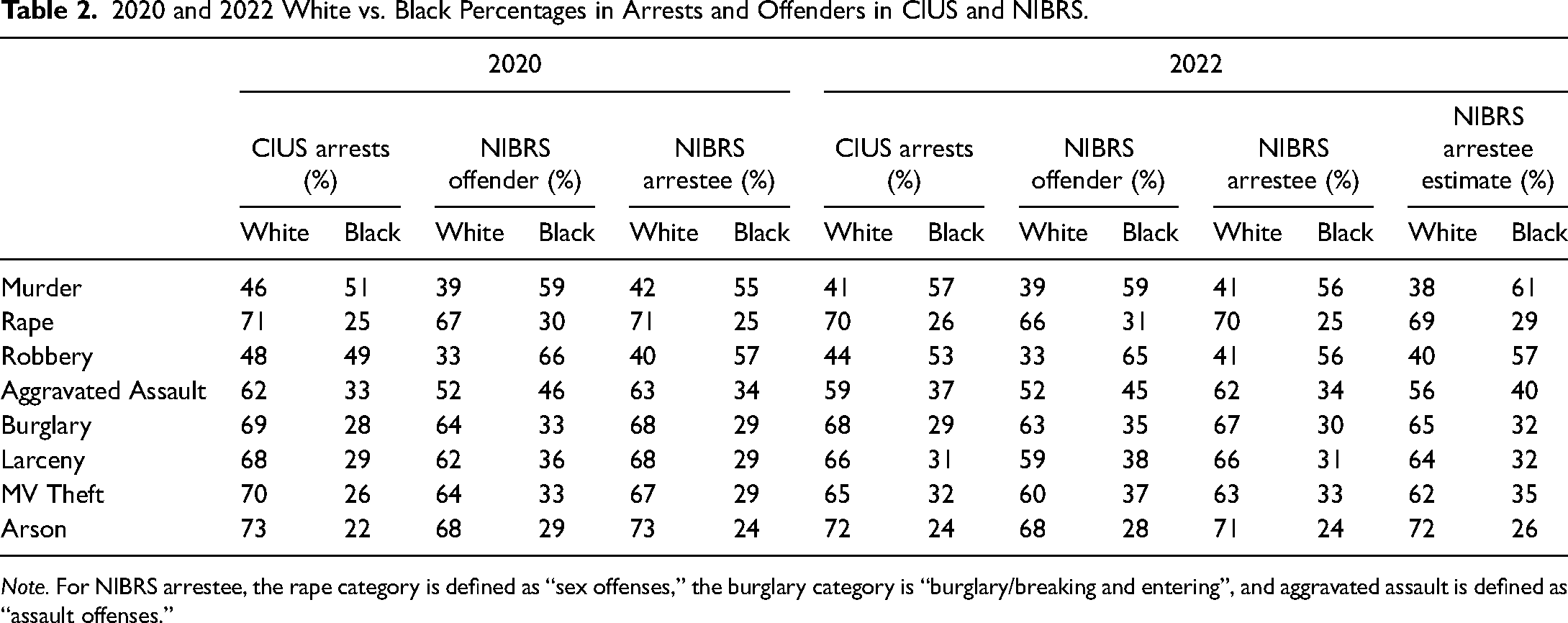
Note. For NIBRS arrestee, the rape category is defined as “sex offenses,” the burglary category is “burglary/breaking and entering”, and aggravated assault is defined as “assault offenses.”
A review of Table 2 shows many similarities across the different data sources in the racial distribution of offenders and arrests. For example, the 2022 data show that Whites account for 41% of homicide arrestees in both the CIUS and NIBRS arrest data (and 38% in the NIBRS arrestee national estimates). Similarly, the 2022 White share of arrestees for burglary is 68% in CIUS data, 67% in NIBRS data, and 65% in NIBRS arrestee national estimates. This pattern holds across the other index offenses. For each offense, the racial distribution of arrests is within two or three percentage points across the different data sources, suggesting that CIUS and NIBRS data provide similar pictures of Black and White arrest patterns.
In addition, a few common themes emerge across the various data sources. For example, the sources mirror one another in suggesting that Black individuals are disproportionately involved in offenses and arrests (especially for murder and robbery) given their proportion of the population (about 13.6% of the U.S. population) (United States Census Bureau, 2022). For example, in 2020 and 2022, Black individuals accounted for between 51% and 61% of the murder arrests and offenders and 49–66% of the robbery arrests and offenders. In addition, NIBRS offender data from 2020 and 2022 show higher Black shares than seen in any of the arrest data. This is especially the case for robbery where, in 2020, Black individuals accounted for 66% of NIBRS offenders but 49% of CIUS arrests. Notably, this mirrors prior work showing greater Black involvement in NIBRS offense statistics compared to arrest figures (D’Alessio & Stolzenberg, 2003). Taken together, these findings indicate that although there are some slight differences across data sources (especially when comparing offender and arrest figures), the pictures of Black and White Index offending and arrests are largely consistent across each of the data sources examined in this cross-sectional snapshot.
2020/2022 Ethnic Comparison
Table 3 provides the 2020 and 2022 Hispanic ethnicity comparisons across the CIUS arrest data and NIBRS offender data. These are the only two public-facing data sources from the FBI at the time of analysis that provide national data on ethnicity and offending. The raw NIBRS data do provide more detailed information on arrestee ethnicity. As noted earlier, however, the focus here is to compare the “public-facing” estimates of race/ethnicity and crime across data sources to identify how the adoption of NIBRS might influence the picture of race/ethnicity and crime produced in the most readily accessible FBI official crime reports and figures.
2020 and 2022 Hispanic vs. non-Hispanic Percentages in Arrests and Offenders in CIUS and NIBRS.
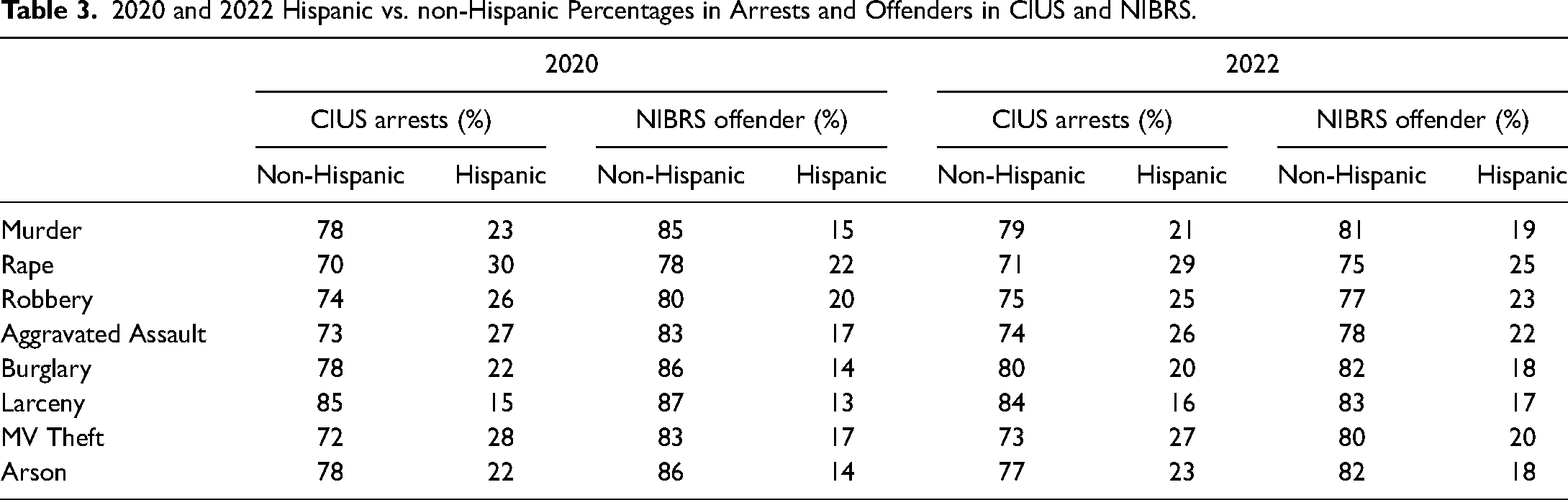
Based on CIUS arrest data, it appears that Hispanic individuals are slightly overrepresented in arrests. United States Census Bureau population estimates from 2022 indicate that 19.1% of the U.S. population are of Hispanic or Latino ethnicity (United States Census Bureau, 2023). However, the CIUS data from 2020 and 2022 suggest that the Hispanic share of arrests was between 22% and 30% for all offenses except larceny (15–16%). In contrast, NIBRS offender data did not show the same degree of overrepresentation for Hispanic offenders. In 2020, the Hispanic share of NIBRS offenders was between 13% and 17% for all offenses except rape and robbery (which were slightly higher at 22% and 20%, respectively). 2022 NIBRS offender data were closer to CIUS arrest numbers, showing slightly higher Hispanic involvement in offending. In sum, the ethnicity comparisons indicate that NIBRS offender data show less minority involvement than arrest figures. As a result, conclusions about whether Hispanic populations are overrepresented for Index offenses depends on which data source (NIBRS offenders versus CIUS arrests) one uses.
Black Index Crime Arrests Over Time, 2013–2022
We now turn to the second portion of our analysis, which compares race/ethnic-specific time trends in arrests and offending across the FBI's different sources of data from 2013 to 2022. Turning first to Black-White comparisons, Figure 2 shows the Black proportion of CIUS arrests and NIBRS offenders over time for each of the eight Index offenses. We provide comparisons over time only for these two data sources because the NIBRS arrest and NIBRS arrestee national estimates are not available in public-facing FBI data sources before 2020.
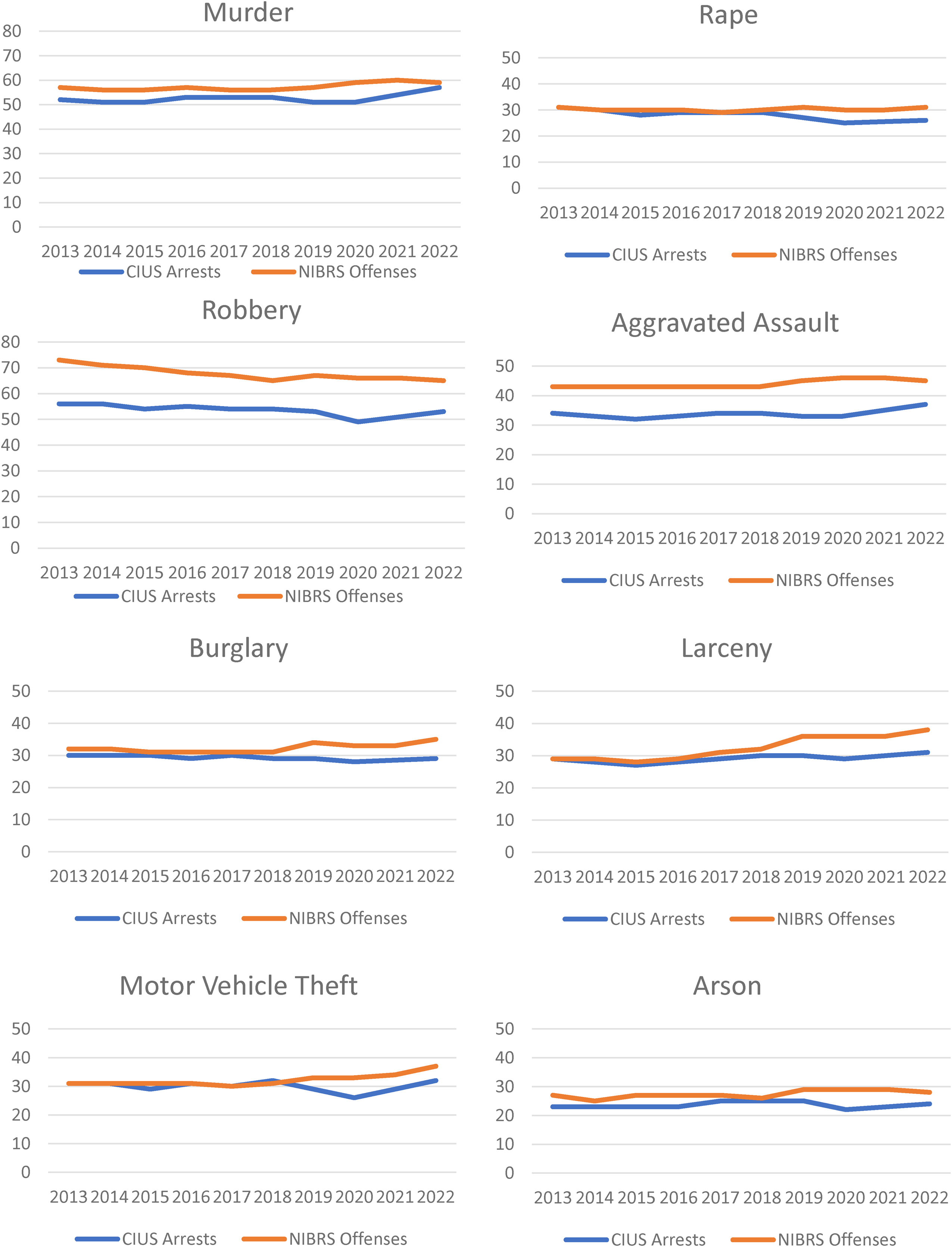
Percentage of Arrests/Offenses Accounted for by Black Individuals, 2013–2022.
When looking at the trends over this 10-year period, a few things stand out. For one, the Black proportion of both arrests and offenders was largely stable over this period. For example, the Black percentage of rape and aggravated assault offenders in NIBRS hovers around 30% and 42% respectively from 2013 to 2022. However, there are some exceptions. For several property crimes, there is a slight upward trend toward the end of the series in the Black proportion of NIBRS offenders. For example, the Black share of burglary and larceny offenders rose from about 30% in 2013 to approximately 35% and 40% respectively by 2022. Additionally, Black individuals accounted for a higher proportion of CIUS arrests (57%) for murder in 2022 than they had in the previous 9 years. In contrast, the Black proportion of CIUS arrests for rape has been on a slight downward trajectory from 2013. Where Black individuals accounted for 31% of rape arrests in 2013, they accounted for 26% by 2022. Finally, the Black proportion of NIBRS offenders has typically exceeded the Black proportion of CIUS arrests across this period. This trend is most obvious for violent crime where Black offender proportions for murder, robbery, and aggravated assault have been higher than the proportion of Black arrests every year over this span. Again, however, the general picture of Black involvement in Index offenses is generally consistent over this time period across both data sources examined here.
Hispanic Index Crime Arrests Over Time, 2013–2022
Trends in Hispanic CIUS arrests and NIBRS offenders are provided in Figure 3. This figure shows some important differences from the Black trends described above when comparing data sources. The NIBRS offender data show sizable increases in the share of Hispanic offending from 2013 to 2022 for all eight Index offenses. For example, the Hispanic share of offenders for homicide, robbery, and aggravated assault in NIBRS data all doubled from about 10% in 2013 to 20% or more by 2022. Similarly, Hispanic shares of property crime offenders in NIBRS data mirrored these trends, more than doubling for all four property offenses.
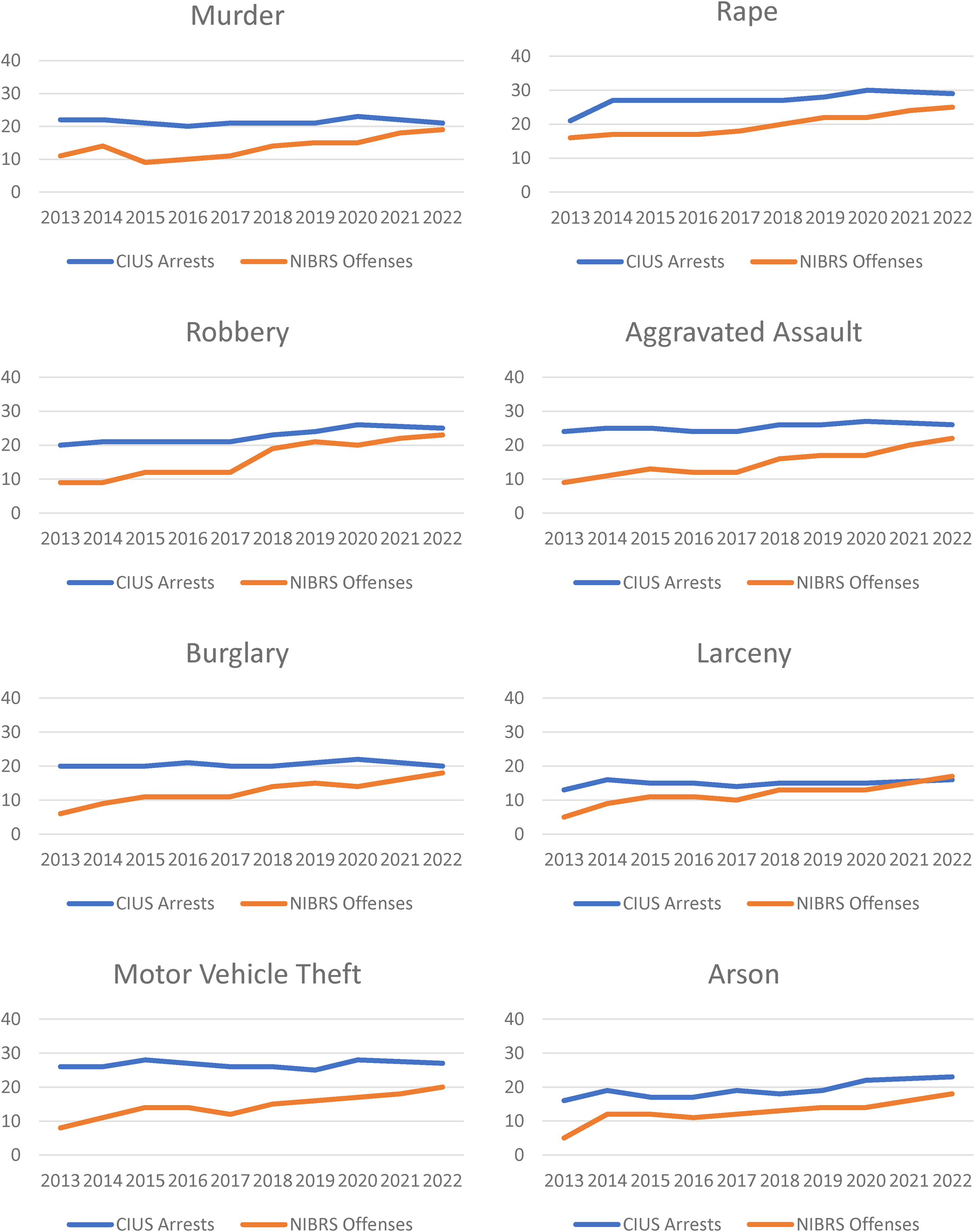
Percentage of Arrests/Offenses Accounted for by Hispanic Individuals, 2013–2022.
In contrast, CIUS arrest data show a markedly different trend in Hispanic crime. The Hispanic proportion of CIUS arrests generally remained stable for most offenses, showing little increase or decrease throughout the study period. A few exceptions include rape, robbery, and arson, where the arrest data show a slight upward trend in Hispanic involvement. For the other five offenses, Hispanic shares of arrests showed no discernable change from 2013 to 2022.
It is notable that as of 2022, the Hispanic proportion of offenders largely converged with the Hispanic share of CIUS arrests after being lower for the prior decade. In fact, the Hispanic proportion of NIBRS larceny offenders in 2022 was the first instance where the Hispanic share of NIBRS offenders surpassed the Hispanic CIUS arrest share. An observation of this trend over time suggests that a cross-sectional look at Hispanic arrests versus offenses within the past few years tells a very different story than several years prior. In addition, and more importantly, these findings show that conclusions about Hispanic shares of offending and especially Hispanic trends in crime can differ sharply depending on which of the FBI's public-facing data sources one uses to assess Hispanic crime.
Discussion
In 2021, the FBI planned to discontinue the UCR SRS and make NIBRS the FBI's sole official data source on crime in the United States. Although the full transition to NIBRS has been slower than first anticipated, it has now become the FBIs primary “go to” official data source on crime and is slated to completely replace the old SRS system in short order. However, questions remain about what this full transition to NIBRS means for our understanding of racial and ethnic patterns in crime. Addressing this issue is important given how drastically the racial and ethnic landscape has shifted in the United States in the early twenty-first century. In addition, it is important given that NIBRS coverage has historically been quite limited, especially in the most diverse states where minority populations predominantly reside. Although a small set of studies have examined race and ethnicity comparisons between NIBRS and the old UCR system, most were conducted more than a decade ago—well before the full shift to NIBRS and during a period when NIBRS covered less than 30% of the U.S. population. In light of these issues, research is needed that explores whether and how the full shift to NIBRS may impact the picture of race/ethnicity and crime produced in the FBI's public-facing official crime data sources.
The current study sought to address these issues by comparing the CIUS with NIBRS public-facing data on race/ethnicity and crime in the United States, cross-sectionally and over time. The first assessment considered a 2020 and 2022 cross-sectional comparison of Black and White involvement in CIUS arrests, NIBRS arrests, NIBRS offenders, and NIBRS national arrestee estimates. Some similarities across sources were evident. The alternative data systems generally provided a consistent picture regarding the Black-White distribution of Index Crime arrests and offenders. Consistent with prior research, Black individuals accounted for a disproportionate number of arrests and offenders—especially for violent crime—according to these data sources (D’Alessio & Stolzenberg, 2003; Hindelang, 1978). Although this was consistent across sources, the largest disproportionality existed for NIBRS offender totals compared to arrest figures. This finding of incongruence between offender and arrest numbers for Black individuals is not new (D’Alessio & Stolzenberg, 2003). Some researchers have suggested it may reflect legal cynicism—where individuals in poor minority communities see the police as illegitimate and unresponsive, leading to a lower likelihood of an offense ending in arrest in these places (D’Alessio & Stolzenberg, 2003; Kirk & Matsuda, 2011). Although it is beyond the scope of this paper to identify the precise reason for this incongruence, it is important to note that this historical finding remains in these more contemporary comparisons.
The next assessment involved a 2020 and 2022 ethnicity (Hispanic) comparison across CIUS arrest and NIBRS offender data. For 2020, a consistent theme emerged across all crimes. For each offense, Hispanic individuals accounted for a higher proportion of CIUS arrests than their proportion of NIBRS offenders. In other words, if one were to consider NIBRS offender numbers as the indicator of true offending known to police, Hispanic individuals are over-arrested for every single crime considered here. Notably, relying on data from 2020 suggests Hispanic individuals, for the most part, do not offend at a disproportionate rate but are arrested as though they do. These results mirror findings from Beck's (2021) comparison between the UCR and NCVS. Interestingly, this incongruence between Hispanic arrest and offender figures was much less prevalent in 2022. Although Hispanic proportions of arrests—compared to offending—remained higher for most offenses, both figures began to merge and suggest that Hispanic individuals are slightly overrepresented in both offending and arrest numbers.
The second half of our analysis focused on time trends in racial/ethnic crime figures across these different data sources. For Black offending and arrests, the overall picture was one of relative stability over time. For most offenses, the Black proportion of NIBRS offender rates surpassed the Black proportion of CIUS arrests (for similar findings, see D’Alessio & Stolzenberg, 2003), and these levels of involvement did not change markedly from 2013 to 2022. Of course, there were a few exceptions to this pattern. In some instances, The Black proportion appeared to rise over time, while in others, the Black proportion showed a decline. However, the overall picture of Black involvement showed stability over time and across data sources.
In contrast, the Hispanic trends in official crime data varied dramatically from 2013 to 2022 depending on which data source was examined. Over this time period, the Hispanic share of CIUS arrests remained largely stable, with little upward or downward movement. However, the Hispanic proportion of NIBRS offenders increased sharply over time, more than doubling for most Index offenses between 2013 and 2022. Although we are unable to identify the precise reasons for these different trends in Hispanic offending and arrests, we suggest several potential explanations.
One might look at the rising Hispanic shares of NIBRS offenders and be tempted to conclude that the Hispanic population in the United States has accounted for an increasing share of offending compared to earlier years. Reporting only the NIBRS offending data without comparing it to other sources could easily produce such responses. This explanation, however, does not appear to effectively explain the stable trends in Hispanic arrests over time based on CIUS reports (which rely on both SRS and NIBRS data). That is, the share of Hispanic arrests did not change, even though there was a rapid rise in Hispanic offenses reported in NIBRS. There seemingly then must be another explanation, or at least a more nuanced reality. A second and (we believe) much more likely explanation is that the increasing proportion of Hispanic NIBRS offenders is a direct result of the increasing NIBRS coverage in areas with large Hispanic populations. As highlighted earlier, some of the areas of the country with the largest Hispanic populations dramatically increased their NIBRS participation between 2013 and 2022 as the NIBRS system became more widely adopted. For example, California and Florida (two states with particularly large Hispanic populations) both had near 0% NIBRS participation prior to 2020 but had 54% and 38% population coverage respectively by 2022. Perhaps, with increasing NIBRS coverage across the country, NIBRS Hispanic offender numbers are simply catching up to the CIUS arrest figures. With the sharp increase in NIBRS participation over the past few years, it is possible that we have reached a point where NIBRS offender and arrest totals more closely overlap with one another. However, it is also possible that with increasing NIBRS participation, Hispanic offender numbers will continue to trend upward until they surpass Hispanic arrest numbers similar to what has been seen for Black individuals. At this point, however, it is clear that one's understanding of ethnicity and crime can differ greatly depending on the specific data used and the time period examined.
Limitations and Future Research
As highlighted above, the current study offers a much-needed assessment of how racial/ethnic patterns and trends in crime compare across the FBI's public-facing data programs throughout the NIBRS transition. However, there are several caveats to this study and remaining questions that should be addressed in research that extends the current analysis. In particular, future research should look beyond the public-facing crime data and explore the raw data files for both SRS and NIBRS crime statistics. Doing so would allow for a more direct comparison between the SRS and NIBRS systems, rather than relying on NIBRS comparisons to the CIUS release that—while traditionally dominated by SRS data—has increasingly incorporated NIBRS agency data in recent years. Analyses of NIBRS raw data files would also allow for a more comprehensive comparison across sources and more extensive data on Hispanic patterns of crime than is offered in the public-facing data and figures. One notable limitation of the current study was the inability to capture ethnicity measurement separate from race. In each of the public-facing reports and figures assessed, Hispanic individuals were included in one of the racial categories, with previous findings suggesting that Hispanic or Latino individuals are most often documented as White (Steffensmeier et al., 2011). By digging into the raw NIBRS data files, researchers will be able to capture a more nuanced understanding of how Hispanic individuals were identified racially, and how this may affect our overall understanding of Black, White, and Hispanic offending and arrest patterns. Even so, NIBRS collection of race and ethnicity rather than race or ethnicity leads to some fundamental complications (McCormack et al., 2023).
In addition, future research should assess racial/ethnic patterns and trends in NIBRS data beyond the eight Index offenses and three racial/ethnic groups included in this study. Although it is undoubtedly valuable to understand Black, White, and Hispanic breakdowns across the Index offenses, it is also important to assess racial/ethnic shares of offending and arrest across a wider array of offense types and for other race/ethnic groups (e.g., Asian, Native American, multiracial groups). The NIBRS system was developed to provide rich detail about crime incidents and events. Thus, future research should explore how race/ethnicity is connected to different offense settings, circumstances, and victim/offender relationships in NIBRS data. Finally, as NIBRS coverage continues to expand and as the racial and ethnic landscape of the U.S. population changes, it is important that researchers revisit these relationships and comparisons. The current study provides an important first step in understanding how the full transition to NIBRS might shape depictions of race, ethnicity, and crime in the United States. Perhaps most notably, this study shows that Hispanic (but not Black) shares of Index offenses differ sharply depending on the data source and time period examined. We suggest this may be due to expanded NIBRS coverage rather than growth in Hispanic offending. However, much more research is needed that extends this work to gain a complete understanding of the way that the NIBRS transition and expanded participation have shaped race/ethnic depictions of crime.
Footnotes
Declaration of Conflicting Interests
The authors declared no potential conflicts of interest with respect to the research, authorship, and/or publication of this article.
Funding
The authors received no financial support for the research, authorship, and/or publication of this article.
