






Abstract
Introduction
Racial disparities have been documented at all stages of criminal-legal processing and are often attributed to discretion in legal decision making (Kurlychek & Johnson, 2019). From an individual's initial arrest to parole, every decision made by criminal-legal professionals can reduce, maintain, or amplify racial disparities in criminal-legal outcomes. Although prior literature has investigated how criminal-legal stakeholders’ decisions (i.e., arrest, charging, and sentencing) can lead to racially disparate outcomes (Kurlychek & Johnson, 2019; Schlesinger, 2007; Wooldredge et al., 2015), limited research exists about how professionals make sense of racial disparities. Further, little is known about which criminal-legal professionals are perceived as key contributors to racial disparities, and which may best address them.
The objective of this study is to explore how key criminal-legal system professionals (law enforcement agents, prosecutors, public defenders, judges, and community corrections officers) and justice-involved community residents make sense of racial disparities within their community. We conducted a cross-sectional survey of various criminal-legal stakeholders in a mid-sized Midwest jurisdiction. Our findings highlight a disconnect between law enforcement agents and other criminal-legal stakeholders regarding who they believe is responsible for and capable of addressing racial disparities.
Literature Review
Racial and Ethnic Disparities in the Criminal-Legal System
Racial and ethnic disparities may be introduced, maintained, or reduced at each stage of criminal-legal system contact (Du, 2021; Kovera, 2019; Mitchell, 2005). Black defendants consistently experience worse outcomes than White defendants regarding police contact and arrest, with Black individuals being likely to be the target of a traffic stop, to experience the threat of force, and to experience the use of nonfatal force than White individuals (Pierson et al., 2020; Tapp & Davis, 2020). In a meta-analysis estimating the effect of race on the police decision to arrest, Kochel et al. (2011) concluded that Black suspects were 1.38 times more likely to be arrested than White suspects.
Multiple studies have examined the extent to which racial disparities exist in the pretrial stage. Evidence suggests that Black defendants throughout the United States are more likely to be detained pretrial than White defendants (Demuth, 2003; Demuth & Steffensmeier, 2004; Menefee, 2018; Sawyer, 2019). When Black defendants are assigned monetary bail, they can receive bail amounts up to $10,000 higher than those assigned to White defendants (Arnold et al., 2018). Black individuals, along with Hispanic individuals, are also less likely to post bail relative to White individuals and more likely to have a longer sentence as a result of not posting bail (Sacks et al., 2015; Sacks & Ackerman, 2014). Prosecutorial charging decisions may contribute to racial disparities (Lu, 2006; Wu, 2016). Evidence is more mixed as to whether charge dismissal decisions are influenced by race. Spohn and Horney (1993) and Franklin (2010) found no evidence to suggest that race had a significant impact on dismissal, but Wooldredge and Thistlethwaite (2004) observed that Black defendants charged with intimate misdemeanor assaults were more likely to have charges dismissed than White defendants. When prosecutors pursue charges, however, Black defendants are less likely than White defendants to have charges reduced (Kutateladze, 2018; Shermer & Johnson, 2010).
In addition, racial disparities may be introduced, further perpetuated, or reduced at the sentencing stage. Federal sentencing data suggest sentencing disparities have fluctuated over the past two decades (from 1998 to 2019) but have been consistently implicated with race (Holmes & Feldmeyer, 2023). In a meta-analysis of sentencing decisions, Mitchell (2005) found that Black defendants tend to be sentenced more harshly than White defendants. For example, the odds of having an upward departure were 21% and 39% greater for Black and Hispanic defendants, respectively, relative to White defendants (Johnson, 2003). In the federal jurisdiction, Black individuals in the United States are incarcerated at a rate five times that of White individuals (Carson, 2022). Black and Hispanic male defendants receive sentences 13.4% and 11.2%, respectively, longer than White male defendants (United States Sentencing Commission, 2023). Recent work also highlights how implicit biases can shape sentencing outcomes. For example, Kenthirarajah et al. (2023) demonstrated that defendants with more stereotypically Black names received longer sentences than individuals with less stereotypical names.
Racial disparities can persist post-incarceration as well. Black individuals are more likely than White individuals to violate their parole terms (Mechoulan & Sahuguet, 2015), to recidivate (Ropes Berry et al., 2020), and face more barriers to reentering society (Williams et al., 2019). Despite making up only 13% of the U.S. adult population (U.S. Census Bureau, 2023), Black individuals represent 37% of the people on parole in 2021 (Kaeble, 2023). Further, in a 9-year study tracking individuals post-incarceration, Alper and Matthew (2018) found that 43% of ex-prisoners were arrested in the first year, 68% within 3 years, 79% within 6 years, and 83% within 9 years of release. Moreover, the proportion of rearrests for Black ex-prisoners was consistently higher (within a year: 46%; 3 years: 72%, 6 years: 83%, and within 9 years: 86%) relative to the overall average. Those who avoid reincarceration still face challenges in finding employment (Petersilia, 2003) and securing housing (Chesney-Lind & Mauer, 2003).
Empirical Research on the Causes of Racial Disparities
Despite empirical evidence of disparities being introduced, maintained, and amplified throughout the criminal justice system, pinpointing the contributors to racial disparity in the criminal-legal system is difficult. Criminal-legal professionals’ perceptions of the causes of disparities may shape how they conceptualize racial disparities and their beliefs about who is responsible for creating and reducing disparities. Unconscious bias and stereotypes likely contribute to disparate outcomes within the criminal-legal system (Du, 2021; Kovera, 2019; Petersilia, 1985). Evidence suggests that implicit bias specifically predicts disparities better than other forms of explicit bias (Greenwald et al., 2009). In a simulation study, Rachlinski et al. (2009) found that White judges demonstrated implicit bias on an Implicit Association Test (IAT) by giving harsher sentences to defendants when judges had been primed with words associated with Black individuals rather than White individuals. In a separate study using an IAT, Levinson et al. (2009) found that jury-eligible adults held an implicit association between Black individuals and guilt, and that those with stronger associations were also more likely to interpret ambiguous evidence as evidence of guilt.
Criminal justice policies have also been shown to create racial disparities by disproportionately impacting people of color. Although Nixon's “War on Drugs” policy in the 1970s intended to reduce illegal drug trade in the United States, this policy ultimately disproportionately criminalized Black and Hispanic individuals (Levins, 2021). For example, the policy of arresting individuals for marijuana possession disproportionately affected Black individuals because Black individuals were twice as likely to purchase marijuana outdoors and three times more likely to purchase it from a stranger, thereby increasing their chances of getting caught by the police (Ramchand et al., 2006).
In addition to unconscious biases and policies that create disparate outcomes, racial disparities may be perpetuated through structural racism. Although current legal practices are intended to treat individuals equally regardless of race, many of the current tools used today are embedded with racially biased measurements. Pretrial risk assessments, tools used by judges to determine whether an individual should be detained pretrial or released on recognizance, have been criticized for using risk factors that are intertwined with race (Harcourt, 2015; Minow et al., 2019; Pretrial Justice Institute, 2020). Scholars criticize that risk factors, such as prior criminal history and charge level, embed racial bias in risk tools because Black individuals are more likely to be arrested and more likely to face significantly more severe charges relative to White individuals (Harcourt, 2015; Starr, 2014). Moreover, identifying any variable that is not intimately associated with race and ethnicity is difficult. Even noncrime-related factors, such as employment, are associated with race. Quillian and Lee (2023) examined trends in racial and ethnic discrimination and found evidence of stability in discriminatory hiring practices despite the implementation of antidiscrimination legislation and hiring practices to increase diversity.
Stakeholders’ Perceptions of Racial Disparities
Little is known about whether and how criminal-legal stakeholders make sense of racial disparities. Prior research on perceptions of racial disparity has focused on residents’ views of race in the criminal-legal system, with the Pew Research Center contributing to current knowledge of public perception. A recent survey revealed that both Black and White adults agreed that Black individuals are treated less fairly than White individuals when dealing with police and by the criminal justice system (Horowitz et al., 2019). In addition to reporting unfair treatment by police officers, Black individuals were more likely than White individuals to report being treated less fairly in the courts (Anderson, 2014).
In contrast to public perception surveys, research examining how criminal-legal professionals perceive of racial disparities is less abundant. One reason for the lack of research is the superficial belief that the criminal-legal system is colorblind (Van Cleve, 2016). In her book Crook County, Van Cleve (2016) uses over 100 interviews with judges, prosecutors, and public defenders and over 10,000 hr of courtroom observations to explain how a criminal-legal system that claims to be colorblind can achieve racially discriminatory results. Van Cleve is not alone in using qualitative methods to understand stakeholders’ beliefs about racial bias. Through 59 interviews with state judges, Clair and Winter (2016) found that judges attributed disparities partially to differential treatment by themselves and other criminal-legal actors. Nearly all judges interviewed acknowledged the existence of racial disparities, but their explanations for why disparities existed varied. To the researchers’ surprise, many judges admitted that their own implicit and explicit biases contributed to racial disparities. Further, judges alluded to differential treatment and disparate impact as the main causes of disparity.
Researchers have used quantitative methods to measure attitudes about racial disparity. Lai and Lisnek (2023) studied police officers’ perceptions of racial disparities by quantitatively assessing the impact of implicit bias training on their beliefs, motivations, and actions. They found that officers post-training felt more knowledgeable about racial prejudice and more motivated to address racial bias (Lai & Lisnek, 2023). Although police officers reported strong intentions to implement their newly learned bias-managing strategies, Lai and Lisnek (2023) found that, post-training, officers used these strategies significantly less than intended and less than in pretraining. Although they found the reduced use of bias-managing strategies concerning, Lai and Lisnek (2023) considered that police officers’ definition of “use” became stricter, resulting in underreporting.
Another study linked self-report survey data with real-world decision making. By matching a prosecutor's survey responses that measured beliefs about racial bias with their real-life case decisions, Shaffer (2023) found that prosecutors who attributed racial disparities to racial bias had lower imprisonment rates for Black defendants with criminal histories than similarly situated White defendants. Conversely, prosecutors who believed that disparities are explained by differences in criminal conduct, rather than racial bias, imprisoned Black and White individuals at similar rates. Although these studies demonstrated how beliefs may impact behavior, the studies focused on specific roles within the criminal-legal system and did not incorporate the broader professional context. Disparate outcomes are rarely the result of isolated decisions; rather, they emerge through a series of interdependent actions across multiple decision-making points and professional roles. Many professionals, past the traditionally studies judges, law enforcement agents, and prosecutors, make decisions in response to prior choices and in anticipation of others’ future actions, so focusing on a single professional role may obscure the collaborative and cumulative nature of decision making and ultimately limit inferences. To better understand how perceptions of racial bias inform criminal-legal decision making, further research is necessary to examine the perceptions of a wider range of criminal-legal stakeholders.
The Current Study
Few studies have examined how criminal-legal professionals perceive the causes of racial disparities in the legal system and which roles they view as responsible for introducing, maintaining, or reducing them. Given the range of perspectives concerning racial bias's existence within the criminal-legal system, this study examines criminal-legal professionals’ perceptions of contributors to racial disparity. By asking about multiple potential factors, such as individual decision making, systemic policy, and broader socioeconomic factors, we aim to capture how professionals distinguish between structural and interpersonal sources of disparity. Further, although prior research has investigated a single profession's perceptions and behaviors, these studies have not assessed how an individual's profession informs the individual's perceptions. As most criminal-legal decisions are made in collaboration, an individual's beliefs and behaviors may be influenced by peers. Our study advances current research practices by examining perceptions in a broader context. Understanding how criminal-legal professionals view their peers in terms of contributing to or addressing racial disparities can offer insight into how various roles communicate with one another and highlight areas where relationships may benefit from strengthening.
Given the gaps in the literature, this exploratory study uses the following research questions: (1) How do perceptions of factors responsible for disparities differ by criminal-legal role and (2) How do perceptions of criminal-legal professionals’ contributions to and responsibility for addressing racial and ethnic disparities differ by respondent role?
Methods
Our study uses quantitative cross-sectional survey data to investigate perceptions of racial disparities amongst six criminal-legal stakeholders. This study occurred in a single Midwestern jurisdiction with approximately 140,000 residents. In this jurisdiction, most residents identify as White (85.6%), followed by Asian (7.0%), Black or African American (4.0%), and two or more races (3.0%). Approximately 4.9% identify as Hispanic or Latino (U.S. Census Bureau, 2023). A large proportion of individuals have earned a high school diploma (94.7%), while almost half of the jurisdiction has completed a bachelor's degree (48.2%; U.S. Census Bureau, 2023). Almost a fifth of the jurisdiction lives in poverty (18.2%; U.S. Census Bureau, 2023).
This jurisdiction's circuit court operates as a unified court with nine divisions and one commissioner court with 10 presiding judges. Four of the nine divisions process civil cases, while another four process criminal cases. One court specializes in juvenile cases. In 2023, the jurisdiction disposed of over 18,000 cases, 6,000 of which were criminal cases.
Data Collection Procedures
In 2022, researchers invited a wide range of criminal-legal professionals to participate in a survey investigating attitudes on racial and ethnic disparities. The survey results discussed here were part of a larger survey administered that examined perceptions of prosecutorial discretion and attitudes on racial and ethnic disparities. Survey development for the section asking about racial and ethnic disparities was informed by several sources (Clair & Winter, 2016; Neville et al., 2000). Prosecutor's Office respondents received the entire survey, while other criminal-legal professionals received a subset of the survey. All participants received questions about attitudes toward racial and ethnic disparities. All survey participants provided electronic consent to participate in the study and could choose at any time to end participation in the survey data collection. All Prosecutor's Office attorneys and staff were recruited to participate in the survey data collection (n = 39). Potential participants were recruited through three waves of email communication. Distributed emails contained an anonymized link to the electronic survey. Potential participants could access the survey for 4 months.
We recruited all state and local law enforcement agencies within the jurisdiction and their officers, public defenders, criminal court judges, and community corrections officers to participate in survey data collection. We employed two approaches to recruit professionals external to the Prosecutor's Office. In one approach, we requested elected and supervisory prosecutors to introduce our research team and share contact information with other executive or supervisory justice system professionals. Research team members then directly communicated with identified staff members to discuss the study and recruit participants. Our second approach involved research team members directly connecting with executive or supervisory justice system professionals. Potential participants received an initial email invitation across internal email listservs. Each justice system entity received its own anonymized survey link. Four subsequent waves of email reminders were distributed over the 4-month recruitment period.
Lastly, the survey was also administered to justice-involved county residents. We used three approaches to capture community perceptions. For all three approaches, the recruitment period was open for 3 months, overlapping with the survey availability for the Prosecutor's Office and local law enforcement. The first method involved a referral network approach whereby staff and volunteers from community organization conducted direct outreach to potential participants. Attorneys and program administrators at the Prosecutor's Office and executive members of the local branch of the National Association for the Advancement of Colored People (NAACP) guided the development of a sampling frame of community organizations that deliver services to justice-involved residents or advocate for criminal-legal system reforms. Twenty-one local organizations were recruited and encouraged to distribute recruitment materials to their staff, volunteers, and clients via an anonymized survey link. The second recruitment approach involved inviting individuals participating in a prosecution-led diversion program. Recruitment materials and an anonymized link were emailed to current and recently enrolled participants. The third recruitment approach involved sending recruitment materials through the Prosecutor's Office victim assistance unit. This unit distributes orientation materials and information on scheduled court hearings for all victim-based offenses. Study recruitment materials were distributed along with a QR code connecting individuals to an anonymized survey.
Study Sample
A total of 223 participants opted into the survey data collection (see Table 1). Unfortunately, many participants selected “Prefer not to answer” to the demographic questionnaire. Overall, our study sample was on average 47.1 years old (SD = 14.5; n = 120/223; 53.8%) and primarily identified as White (n = 112 / 223; 50.2%), non-Spanish, Hispanic, or Latino (n = 121/223; 54.3%), and male (n = 69/223; 30.9%).
Sample Descriptive Statistics.
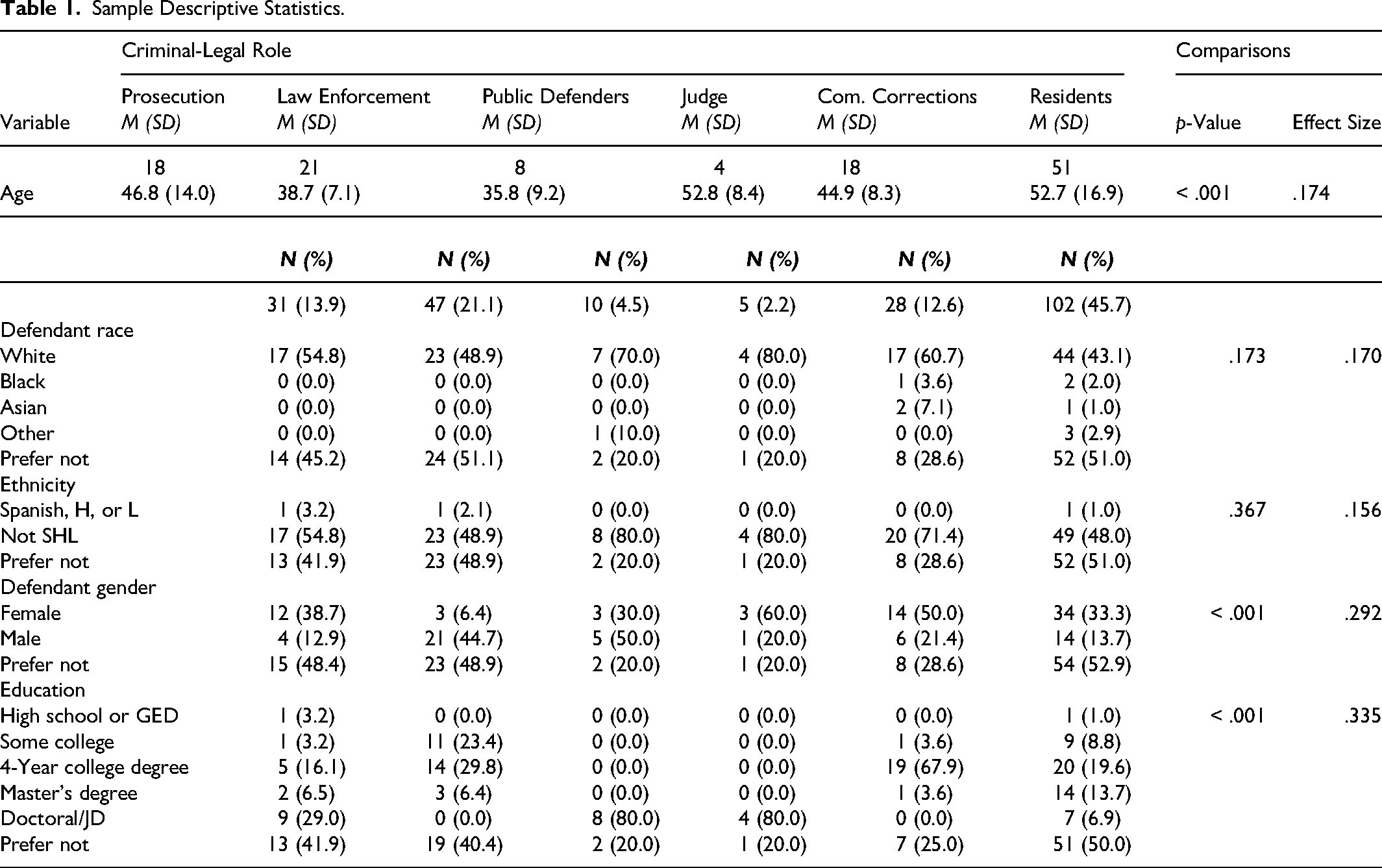
Of the study sample, 31 individuals came from the Prosecutor's Office (n = 31/39; 79% response rate). These individuals were on average 46.8 years old (SD = 14.0, n = 18/31; 58.1%) and primarily identified as White (n = 17/31; 54.8%), non-Spanish, Hispanic, or Latino (n = 17/31; 54.8%), and female (n = 12/31; 38.7%).
A total of 90 participants external to the Prosecutor's Office opted in to the survey. Unfortunately, due to the referral method used to recruit law enforcement agents, public defenders, criminal court judges, and community corrections officers, we are unable to calculate response rates for these groups of criminal-legal professionals. Just over half of the participants were law enforcement agents (n = 47/90; 52.2%). These individuals were on average 38.7 years old (SD = 7.1; n = 21/47; 44.7%), primarily identified as White (n = 23/47; 48.9%), not Spanish, Hispanic, or Latinx (n = 23/47; 48.9%), and male (n = 21/47; 44.7%).
We recruited 10 participants from the Public Defender's Office (n = 10/90; 11.1%). These participants were on average 35.8 years old (SD = 9.2, n = 8/10; 80%), primarily identified as White (n = 7/10; 70%), not Spanish, Hispanic, or Latinx (n = 8 / 10; 80%), and male (n = 5/10; 50%). All five criminal court judges in the jurisdiction participated our survey (n = 5/90; 5.6%). These individuals were on average 52.8 years old (SD = 8.4; n = 4/5; 80%) and primarily identified as White (n = 4/5; 80%), not Spanish, Hispanic, or Latinx (n = 4/5; 80%), and female (n = 3/5; 60%).
Lastly, 28 individuals from community corrections opted into the survey (n = 28/90; 31.1%). These individuals were on average 44.9 years old (SD = 8.3, n = 18/28; 64.3%) and primarily identified as White (n = 17/28; 60.7%), not Spanish, Hispanic, or Latinx (n = 20/28; 71.4%), and female (n = 14/28; 50%).
Almost half of the study sample was made of justice-involved residents (n = 102). Using the first recruitment approach (i.e., through a referral network approach), 70 individuals opted in to the survey. Twenty-four individuals opted in to the survey through the second recruitment approach (i.e., through prosecutorial-led diversion programs), and eight individuals opted in to the survey through the third recruitment approach (i.e., through the Prosecutor's Office victim assistance unit). Overall, justice-involved residents were on average 52.7 years old (SD = 16.9; n = 51/102; 50%) and primarily identified as White (n = 44/102; 43.1%), not Spanish, Hispanic, or Latinx (n = 49), and female (n = 34/102, 33.3%).
Measures
Participants were asked to rate the degree to which each factor contributed to racial and ethnic disparity: “There are many possible explanations for racial and ethnic disparities in criminal justice outcomes. In [jurisdiction], to what extent would you say the following factors are responsible for racial and ethnic disparities in criminal justice outcomes?” The predetermined six factors included: Different Levels of Criminal Behavior; Criminal Justice Actor Decision Making (e.g., police arrest); Unconscious Bias or Stereotypes; Different Opportunities (e.g., school, housing); Socioeconomic Status (e.g., ability to pay fees, transportation availability); and Criminal Justice Policy (e.g., mandatory arrest, diversion eligibility, possession of syringe as felony). Participants also had the opportunity to provide an alternative response with an open-ended Other, Please Specify option. The response set included the following options: Completely Responsible [4], Very Much Responsible [3], Somewhat Responsible [2], Unsure [1], and Not at all Responsible [0].
We then asked participants to rate (1) the degree to which each criminal justice agency or actor contributed to racial and ethnic disparities and (2) the degree to which they could address disparities. The first prompt asked, “Whether intentional or not, how much would you say the following criminal justice actors contribute to racial and ethnic disparities in criminal justice outcomes in [jurisdiction]?” The second prompt asked, “How much power would you say the following [jurisdiction] criminal justice actors have to address racial and ethnic disparities?” In both prompts, participants were asked to consider the following six factors: Police, Prosecutors, Defense Attorneys, Judges/Magistrates, Probation Officers, and Parole Officers. Participants were encouraged to provide an Other, Please Specify open-ended response to the survey prompt. The response set for both prompts consisted of the following options: A Great Deal [4], Moderately [3], Very Little [2], Unsure [1], and Not at All [0]. Higher scores signal that a specific criminal justice agency or actor contributes a great deal to or has great power to address racial and ethnic disparities, while lower scores suggest minimal (or no) contribution or power to address disparities.
The independent variable corresponds to the stakeholders participating in the survey and consisted of six attributes: Prosecution represents attorneys and staff from the jurisdiction's Prosecutor's Office; Law Enforcement captured sworn law enforcement agents from state and local law enforcement agencies within the jurisdiction; Public Defender consists of attorneys from the jurisdiction's Public Defender Office; Judge represents the jurisdiction's criminal court judge; Community Corrections is associated with responses from the jurisdiction's supervisory and line probation, community corrections, and parole officers; and Residents represents the views of local residents and includes participants in prosecution-led diversion programs and residents in communication with the Prosecutor's Office victim assistance unit.
Analytic Strategy
Given the exploratory nature of the current investigation and the limited evidence base on perceptions of racial disparities among criminal-legal stakeholders, we did not define a priori hypotheses regarding between-stakeholder differences. We first present raw mean values and standard errors for each dependent variable overall and across roles to describe overall trends and how participant role impacts perceptions and subsequent ratings, respectively. We conducted multilevel mixed-effects linear regressions to measure the continuous ratings for all three questions. We used a stepwise block approach for the multilevel models and conducted a likelihood ratio test after each block to assess fit. The first block tested the unconditional null model to estimate the intraclass correlation coefficient (ICC) and to verify that there was sufficient person-level variability in outcomes. The second block included fixed effects, whereas the third block added an interaction term. For all models, the dependent variable was a Likert rating (0–4).
Model 1 analyzed respondents’ perceptions of factors contributing to racial disparities. The fixed effects block included two main effects: Respondent Role (law enforcement, Prosecutor's Office, public defender, judge, community corrections) and Factor (criminal behavior, criminal justice actor decision making, etc.). The interaction term (Respondent Role * Factor) examined how an individual's role impacted perceptions of factors. Models 2 and 3 examined respondents’ perceptions of other criminal-legal professionals. Model 2 analyzed criminal-legal professionals’ perceived contributions to racial disparities, while model 3 assessed criminal-legal professionals’ perceived ability to address racial disparities. Both models included main effects for Respondent Role and Criminal-Legal Profession as well as an interaction term (Respondent Role * Criminal-Legal Profession) to examine whether a respondent's role impacts perceptions of other professions. Since we were interested in perceptions between criminal-legal professionals, we excluded community residents (n = 102) from the latter two models. Due to the small sample size (n = 5), we excluded judges in all models. For interpretability, we report average marginal effects to decompose interaction terms and present predicted margins with bar charts. All analyses were conducted with Stata v.18.0.
Some scholars argue that cross-level interactions should include a random slope for the level 1 variable involved in the interaction (Bell et al., 2019; Heisig & Schaeffer, 2019); however, disagreement exists regarding this practice (Raudenbush & Bryk, 2002). Given the study design, a random slope for the level 1 variable would not have been meaningful. Specifically, each person rated each criminal-legal professional role once, resulting in a single observation per person and precluding estimation of a unique person-level slope. As a result, we excluded the random slope from all models.
Results
Factors Driving Racial and Ethnic Disparities
Overall (n = 123), without taking participant role into account, participants did not identify one distinct factor most responsible for racial and ethnic disparities in their local jurisdiction. Socioeconomic status was rated on average the most responsible for racial disparities (M = 2.5, SD = 0.1), followed by different opportunities (M = 2.4, SD = 0.1), and unconscious bias and stereotypes (M = 2.3, SD = 0.1). Participants overall ranked criminal justice policy (M = 2.1, SD = 0.1), criminal justice actor decision making (M = 2.0, SD = 0.1), and criminal behavior (M = 1.8, SD = 0.1) as the factors least contributing to racial and ethnic disparities. Ten individuals provided open-text responses identifying other factors responsible for racial and ethnic disparities, but no two responses suggested the same factor (Supplemental materials A).
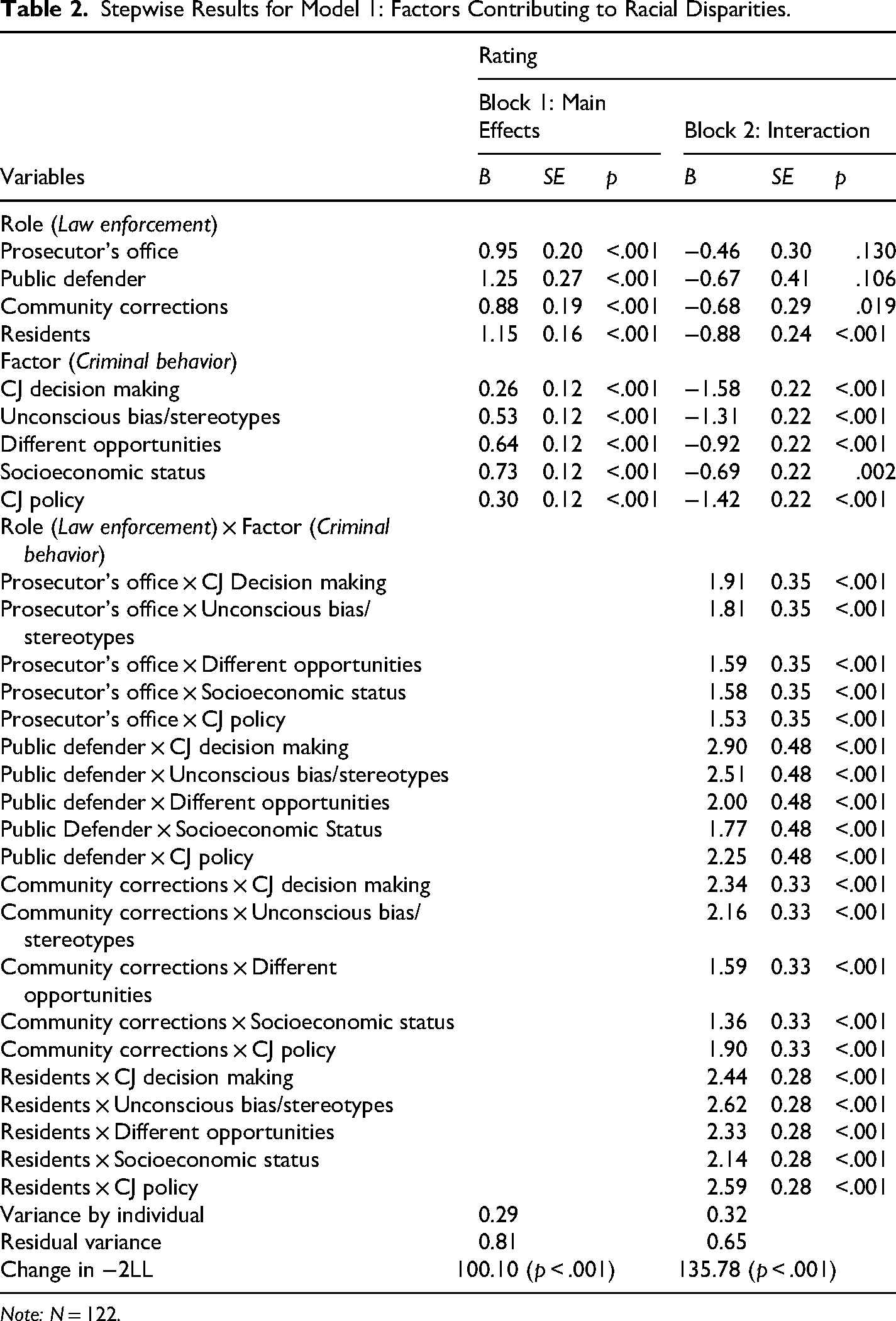
Our first model (n = 122) valuated how a respondent's role in the criminal-legal system impacted perceptions of factors contributing to racial disparities. The unconditional null model identified that 35.2% of the variability among ratings existed between individuals, with 64.8% of the variability attributed to within-respondent differences. Inclusion of the fixed-effect block significantly improved model fit (p < .001). Following the addition of main effects, inclusion of an interaction term for Respondent Role * Factor also improved overall model fit (p < .001).
Main effects from model 2 suggested that independent of factor, law enforcement officers provided the lowest ratings (p < .001); however, independent of respondent role, criminal behavior was rated the factor least contributing to racial disparities (Table 2; p < .001). Significant interactions existed between all respondent roles and factors, suggesting that respondent role moderated factor ratings. In the interest of brevity, we highlight only a few key trends. For example, we observed a significant interaction between prosecutors and law enforcement officers in their ratings of criminal behavior and in criminal justice decision making. Average marginal effects showed that, although prosecutors and law enforcement officers rated criminal behavior similarly (Average Marginal Effect (AME) = −0.46, p = .130), prosecutors rated criminal justice decision making higher than law enforcement officers (AME = 1.46, p < .001). Further, this trend applied to all factors: prosecutors rated all other factors higher than law enforcement (p < .001), but prosecutors and law enforcement officers rated criminal behavior similarly. Average marginal effects also revealed the same trend among public defenders (p ≤ .006).
Stepwise Results for Model 1: Factors Contributing to Racial Disparities.
Note: N = 122.
The interactions between community corrections officers and law enforcement officers revealed a different perspective. Average marginal effects indicated community corrections officers rated criminal behavior significantly lower than law enforcement officers (AME = −0.68, p = .019), but they also rated criminal justice decision making significantly higher than law enforcement agents (AME = 1.66, p < .001). Further, community corrections officers rated all factors higher than law enforcement agents (p ≤ .019), while they rated criminal behavior significantly lower than law enforcement officers. Average marginal effects indicated the same trend for community residents’ ratings. Predicted margins decomposing these interactions are presented in Figure 1 (with exact values in Supplemental Table B1 and average marginal effects in Supplemental Table C1).
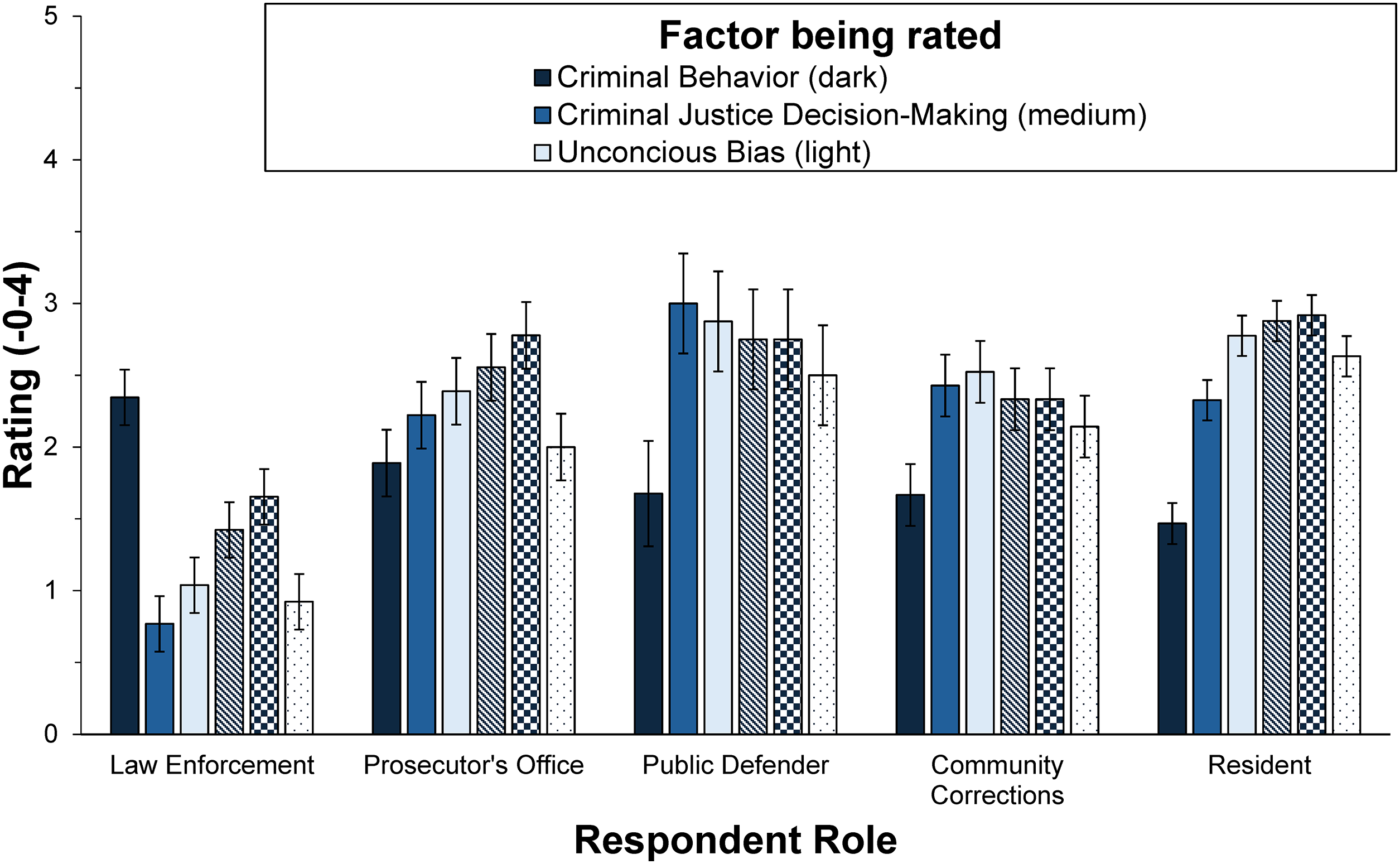
Factors Contributing to Racial Disparities.
Professions Contributing to Racial and Ethnic Disparities
We next asked participants about which criminal-legal professionals contributed to racial and ethnic disparities in their local jurisdiction's criminal justice outcomes. Overall (n = 114), participants rated police as the greatest contributors to racial and ethnic disparities (M = 2.8, SD = 0.1), followed by prosecutors (M = 2.5, SD = 0.1) and judges (M = 2.4, SD = 0.1). Participants rated probation officers (M = 2.3, SD = 0.1), defense attorneys (M = 2.2, SD = 0.3), and parole officers (M = 2.0, SD = 0.1) as contributing the least to racial and ethnic disparities. We received 10 free-response answers to this question. Six of the 10 responses identified the general public as contributing to racial and ethnic disparities; however, the responses did not point to a single specific subpopulation. Rather, respondents pointed to general public at large (e.g., crime-reporting citizens, “employers,” “defendants,” White people calling the police on people of color, and “victims”) as contributing to racial and ethnic disparities in their jurisdiction (Supplemental materials A).
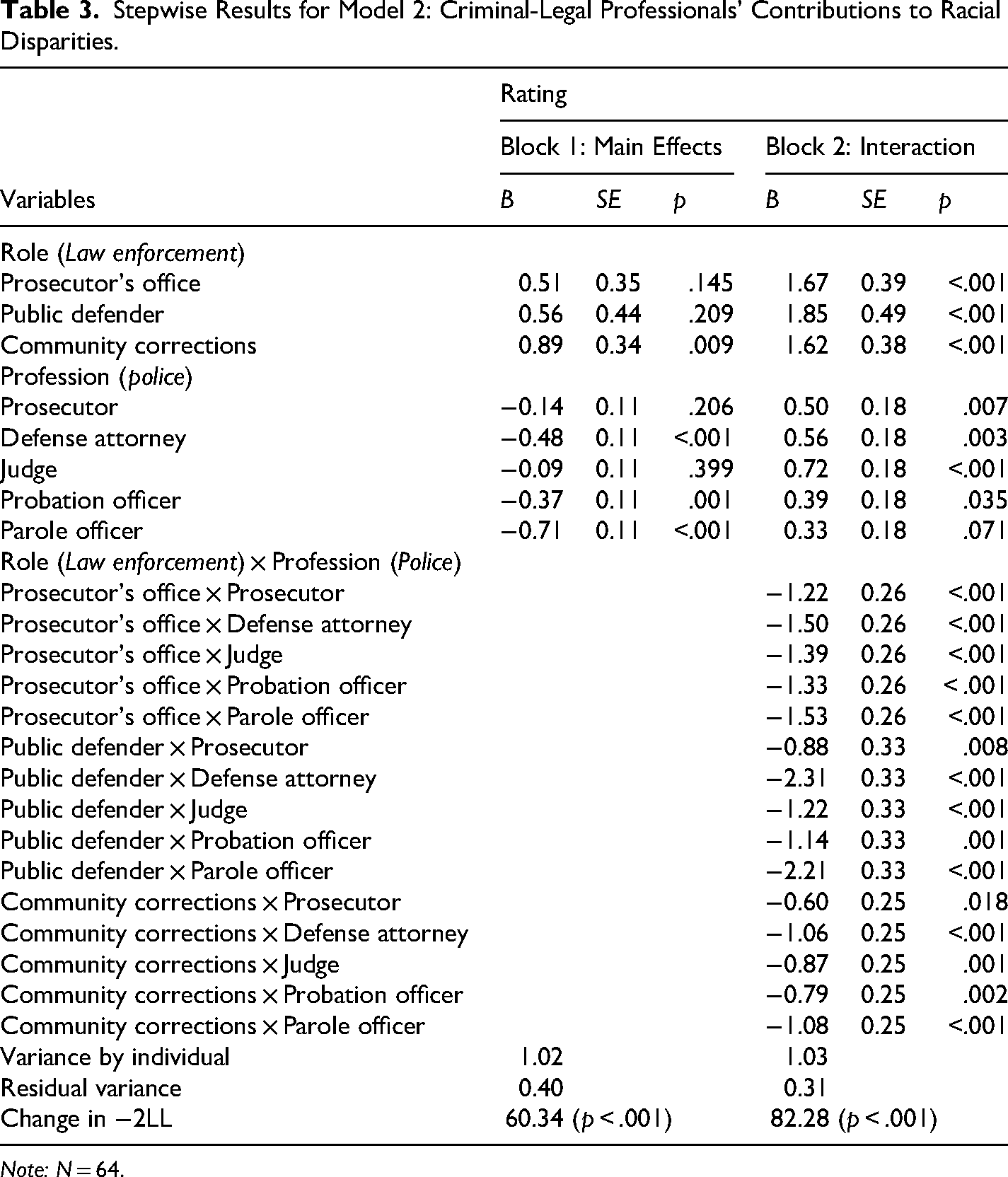
Our second model (n = 64) evaluated how a respondent's role in the criminal-legal system influenced ratings of other criminal-legal professionals’ contributions to racial disparities. Our unconditional null model identified 70.5% of variability among ratings existed between individuals, with 29.5% of variability attributed to within-respondent differences. Inclusion of our next block significantly improved model fit (p < .001). Following the addition of main effects, inclusion of an interaction term for Respondent Role * Criminal-Legal Profession improved overall model fit (p < .001).
Model 2 indicated that, irrespective of the profession being rated, Prosecutor's Office agents, public defenders, and community corrections officers gave higher ratings than law enforcement officers (Table 3; p < .001). Further, independent of respondent role, prosecutors, defense attorneys, judges, and probation officers were rated as contributing more to racial disparities than police (p ≤ .035). Results suggested that respondent role moderated individuals’ ratings of criminal-legal professions. Average marginal effects indicated that Prosecutor's Office agents’ ratings of police were significantly higher than law enforcement officers’ ratings of police (AME = 1.67, p < .001). However, Prosecutor's Office agents’ ratings of all other criminal-legal professions were similar to the ratings of law enforcement officers (p ≥ .249). Public defenders’ ratings followed a similar trend: public defenders’ ratings of police (AME = 1.85, p < .001) and prosecutors (AME = 0.87, p = .048) were significantly higher than law enforcement officers’ ratings, whereas ratings of defense attorneys, judges, probation officers, and parole officers were similar to law enforcement officers’ ratings (p ≥ .150).
Stepwise Results for Model 2: Criminal-Legal Professionals’ Contributions to Racial Disparities.
Note: N = 64.
Community corrections officers’ ratings generally followed a similar trend to those of the Prosecutor's Office and public defenders; however, their ratings reflected additional differences. Community corrections officers rated police (AME = 1.62, p < .001), prosecutors (AME = 1.02, p = .007), judges (AME = 0.75, p = .046), and probation officers (AME = 0.83, p = .027) as contributing significantly more to racial disparities than law enforcement's ratings of these professionals, whereas community corrections officers and law enforcement officers rated defense attorneys and parole officers similarly (p ≥ .132). Predicted means of the decomposed interaction are presented in Figure 2 (with exact values in Supplemental Table B2 and average marginal effects in Supplemental Table C2).
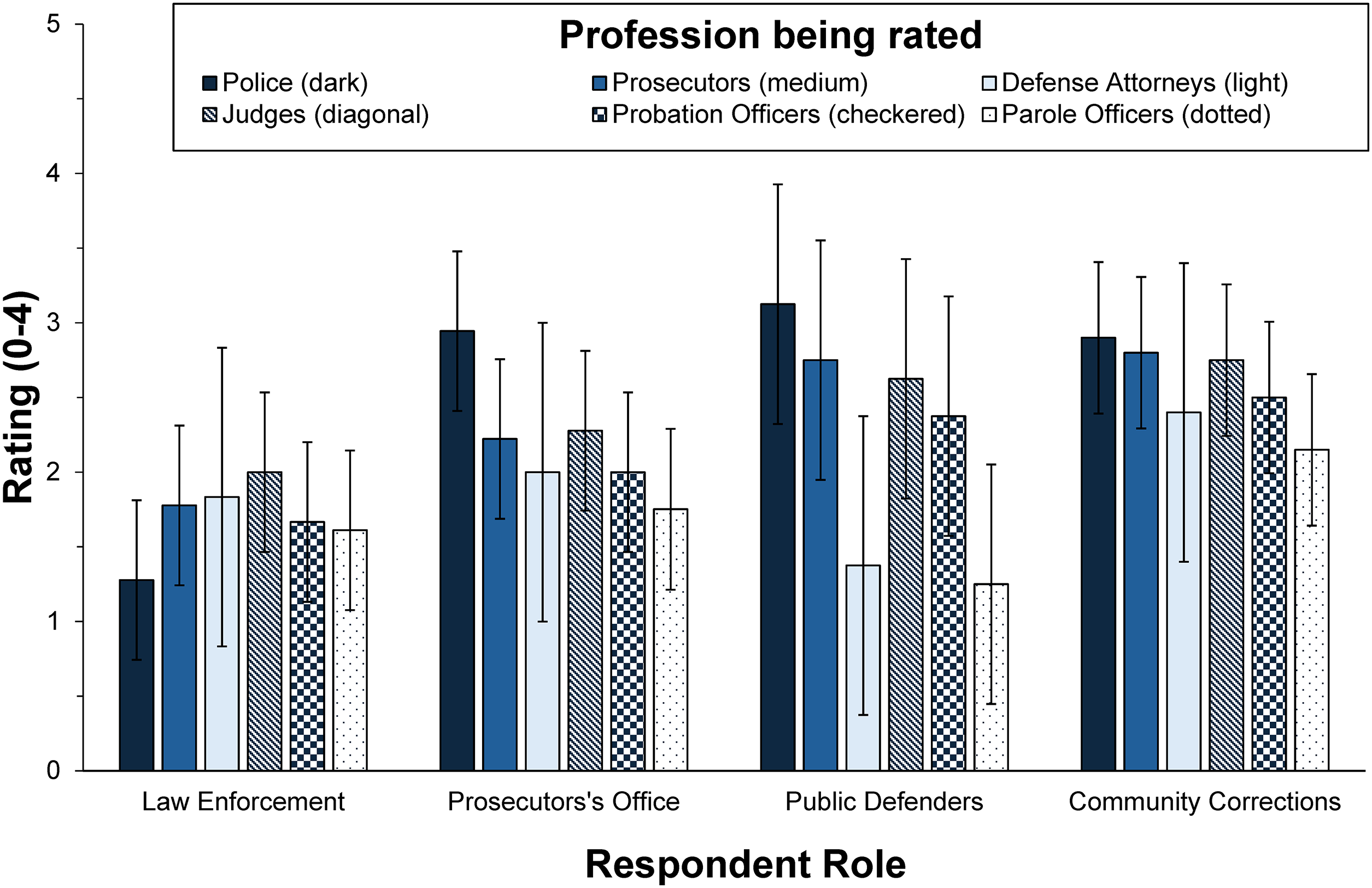
Criminal-Legal Professionals' Contributions to Racial Disparities.
Professions Capable of Addressing Racial and Ethnic Disparities
Lastly, we asked participants to rate the extent to which they believed each criminal justice professional had the power to address racial disparities. Although 118 individuals answered questions about police officers, defense attorneys, judges, probation officers, and parole officers, only 51 answered the question about prosecutors. Further, only 47 provided responses to all six items. Although all analyses are limited to complete cases, we report descriptively from the larger set of responses to maximize transparency. Among the 118 respondents, not taking the respondent role into account, judges were perceived as the most capable of addressing racial disparities (M = 3.3, SD = 0.1), with police officers closely following (M = 3.2, SD = 0.1). Participants rated defense attorneys and probation officers as similarly capable of addressing racial disparities (M = 2.3, SD = 0.1), with parole officers (M = 2.1, SD = 0.1) perceived as the least capable to address disparities. Of the 51 responses, prosecutors were perceived similarly as capable as defense attorneys and probation officers (M = 2.3, SD = 0.1). Four participants provided free-response answers, but we observed no shared perspectives (Supplemental materials A).
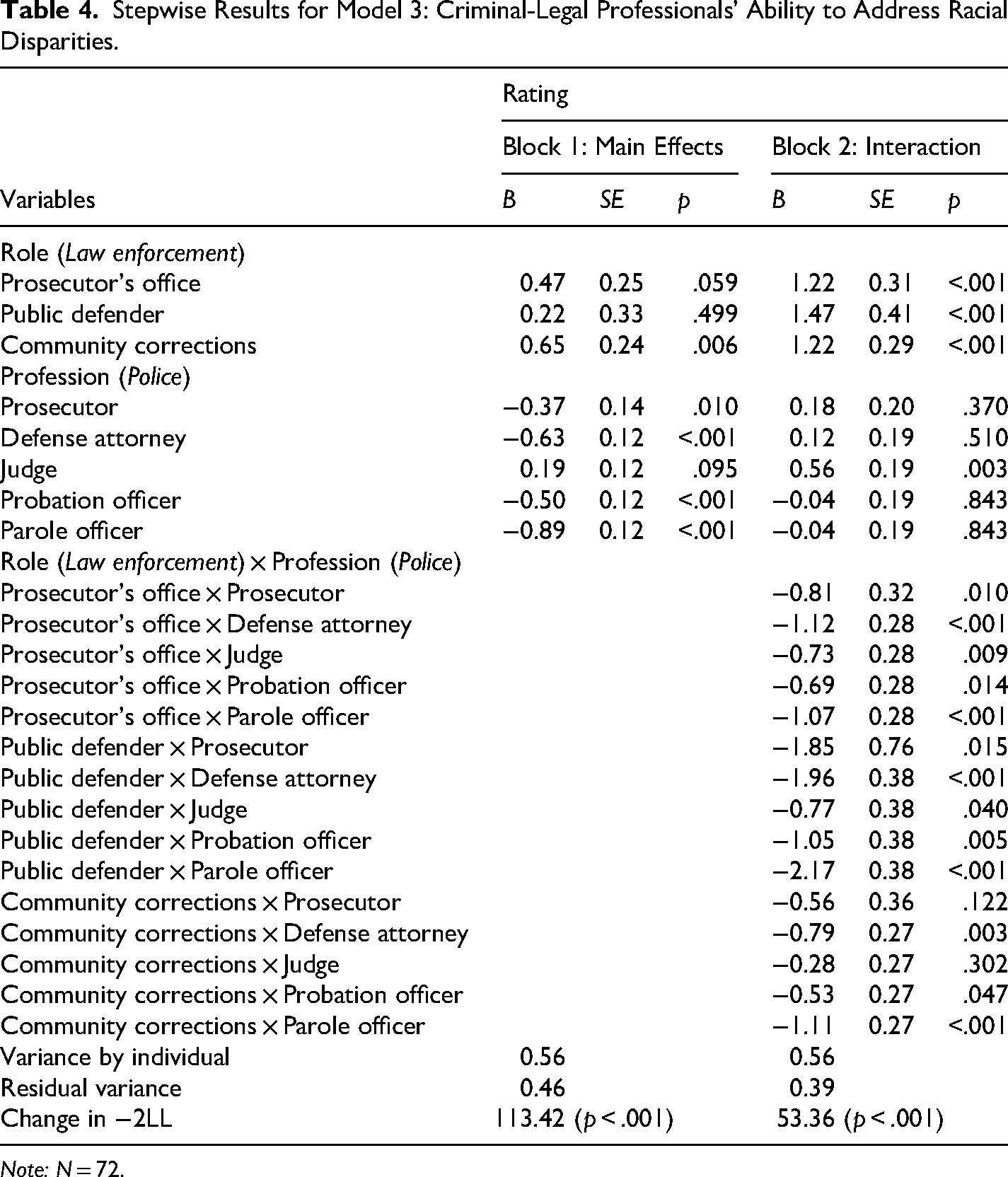
Our third model (n = 72) examined how a respondent's role impacted their perceptions of which criminal-legal professionals could address racial disparities. Our unconditional null model identified 47% of variability among ratings existed between individuals, leaving 53% of variability attributed to within-respondent differences. Inclusion of fixed effects significantly improved our model fit (p < .001). Following the addition of our main effects, inclusion of the interaction term for Respondent Role * Criminal-Legal Profession improved overall model fit (p < .001). Overall, all respondent roles (Prosecutor's Office, public defenders, judges, and community corrections officers) gave higher ratings than law enforcement officers. Additionally, overall ratings of probation and parole officers were lower than those of police officers, whereas ratings of prosecutors, defense attorneys, and judges were generally higher than those of police officers.
Main effects from model 3 indicated that, independent of the profession being rated, respondents from the Prosecutor's Office, public defenders, and community corrections officers generally provided higher ratings than law enforcement officers (Table 4; p < .001). Independent of respondent role, judges were rated as the criminal-legal profession most capable to address racial disparities (p = .003). Multiple significant interactions between respondent role and criminal-legal profession suggested that respondent role moderated ratings of criminal-legal professions. Average marginal effects indicated that ratings of police by Prosecutor's Office agents were significantly higher than ratings of police by law enforcement officers (AME = 1.22, p < .001), while ratings of prosecutors were similar between Prosecutor's Office and law enforcement agents (p = .227). This trend was consistent across all criminal-legal professions, meaning Prosecutor's Office agents and law enforcement officers rated all professions, except police, similarly (p ≥ .078). Public defenders’ ratings exhibited a similar trend such that their ratings of police were significantly higher than law enforcement officers’ ratings of police (AME = 1.47, p < .001), but ratings of the other criminal-legal professionals were similar between respondent roles (p > .075).
Stepwise Results for Model 3: Criminal-Legal Professionals’ Ability to Address Racial Disparities.
Note: N = 72.
Like Prosecutor's Office respondents and public defenders, community corrections officers’ ratings of police were significantly higher than law enforcement officers’ ratings (AME = 1.22, p < .001). Unique to community corrections officers was that their ratings of judges (AME = 0.94, p = .001) and probation officers (AME = 0.68, p = .018) were significantly higher than law enforcement officers’ ratings of judges and probation officers. Predicted means of the decomposed interaction are presented in Figure 3 (with exact values in Supplemental Table B3 and average marginal effects in Supplemental Table C3).
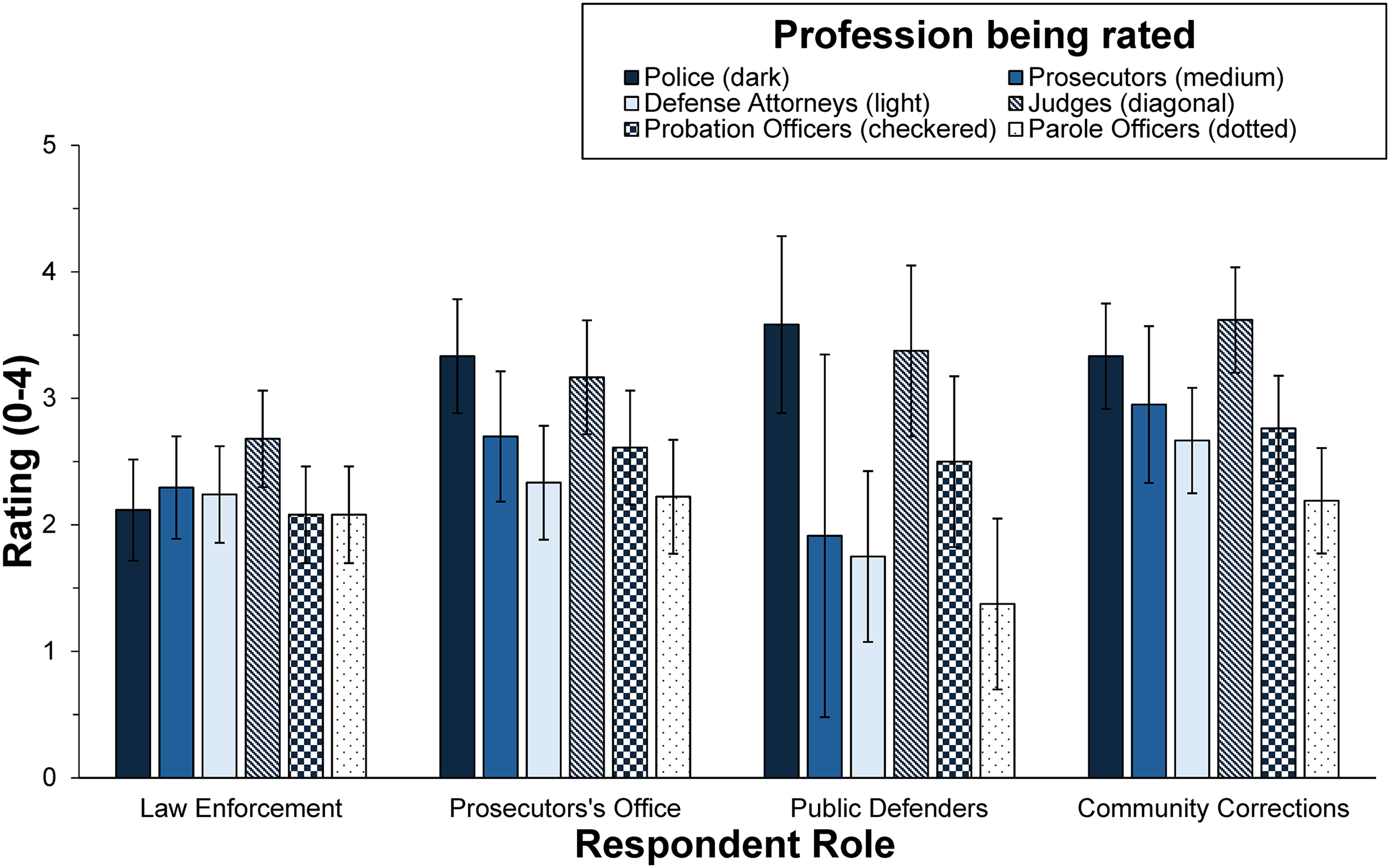
Criminal-Legal Professionals' Ability to Address Racial Disparities.
Sensitivity Analyses
Based on our findings from models 2 and 3, we also conducted sensitivity analyses to examine the effect of self-rating. Using a dummy recode to indicate whether the respondent's role matched the professional being rated, we found that respondents rating their own profession tended to view their profession as contributing less to racial disparities and as less capable of addressing them. Self-rating is associated with a 0.38-point decrease in perceived contributions to racial disparities and a 0.44-point decrease in perceived ability to address racial disparities (p < .001). Results tables for both sensitivity analyses are available in the Supplemental materials (Tables D1 and D2).
Discussion
We investigated criminal-legal professionals’ perceptions of factors and stakeholders contributing to racial and ethnic disparities. Overall, respondents identified socioeconomic status, differing opportunities, and unconscious bias and stereotypes as the three factors most contributing to racial and ethnic disparities. Participants broadly perceived police officers, prosecutors, and judges as the most responsible for contributing to racial disparities but also as the most capable of addressing disparities. We observed significant interactions in each of our models, suggesting that the respondent's role significantly influenced their perceptions and ratings of contributing factors and of other professionals’ involvement with racial disparities.
Respondents acknowledged that structural conditions and interpersonal decision making can maintain and accumulate disparities across case processing. These observations are consistent with findings from Clair and Winter (2016), who found that judges attributed racial disparities to both personal biases, other professionals’ decisions, different criminal behavior, and structural factors. The National Academies of Sciences, Engineering, and Medicine (2023) recently summarized the state of research on racial disparities, outlining empirical evidence on how structural disparities drive disparities in crime, case decisions, and postrelease outcomes. Individuals of color continue to experience residual effects of historically discriminatory practices, including in modern criminal justice policies and practices. For example, legal decision-makers repeatedly use criminal history throughout case processing (e.g., at the pretrial release stage, at sentencing, and at probation) to make decisions, even though criminal history has been tied to race after years of disproportionate treatment and bringing communities of color into the system at higher rates (Kurlychek & Johnson, 2019). Through repeated use of criminal history in decision making, the effect of race becomes amplified as the individual moves through case processing. Such policies and practices, while not intentionally discriminatory, contribute to structural forces that reinforce, amplify disparities throughout criminal-legal processing, and lead to an individual's cumulative disadvantage. To better understand how criminal-legal professionals conceptualize racial disparities in case processing, future studies, especially qualitative interviews like those conducted by Van Cleve (2016), should probe more deeply into how perceptions and behavior interact and shape each other.
Respondents rated judges as the most capable of addressing racial disparities, highlighting a potential disconnect between perceived authority and actual influence. Although judges make several key decisions—such as those relating to pretrial release, determination of guilty, and sentencing—their decisions are influenced by both structured decision-making tools (e.g., risk assessments, pretrial decision-making matrices, and sentencing guidelines) and earlier decisions made by other professionals in the system. Judges often use decision-making aids that emphasize variables known to promote structural racism, such as charge severity or criminal history (Kurlychek & Johnson, 2019). Further, prosecutors can shape case trajectories by determining charges and offering plea deals. In addition to highly rating judges, respondents also rated prosecutors as being capable of addressing racial disparities. These perceptions are consistent with prior studies examining prosecutors’ power and influence on racial disparities (Kutateladze et al., 2014; Schlesinger, 2013; Shaffer, 2023). By the time a case reaches the judge, many factors outside the judge's control contribute to racial disparity. This discrepancy between a judge's perceived and actual power to address disparities underscores the importance of further investigation into the downstream effects of prior decisions.
The observed significant interactions across all models indicate that a respondent's role significantly influenced perceptions. Law enforcement officers tended to view police as contributing the least to racial disparities and as being the least capable of addressing them, whereas the other criminal-legal professionals rated police as both more responsible and more capable. These discrepant ratings emphasize the influence of context and perspective. Although we did not collect participants’ political orientations, work by Reny et al. (2025) suggests that individuals entering law enforcement are more likely to hold right-leaning views on race relations and other social issues (e.g., immigration, women and gender roles, homosexuality, drug use, etc.). Law enforcement officers have also been found to score higher in Social Dominance Orientation than other criminal-legal stakeholders such as jurors and public defenders (Sidanius et al., 1994). Higher levels of Social Dominance Orientation reflect stronger endorsement of social hierarchies and are associated with greater support for punitive practices and use of force (Davis et al., 2024; Swencionis et al., 2021). Together, these patterns may help explain why law enforcement respondents in our study were more likely to attribute racial disparities to differences in criminal behavior and less likely to view themselves as responsible for contributing to disparities.
Research has shown that police discretion creates and perpetuates racial and ethnic disparities (Alpert et al., 2018; Antonovics & Knight, 2009; Gase et al., 2016; Goel et al., 2016). However, the context under which law enforcement officers work may directly influence their perceptions. Policies like hot spot policing and broken windows policing deploy officers to high-crime areas, which potentially exposes officers to more crime than other criminal-legal professionals who work primarily within the courts. Research suggests Black communities are subject to heightened surveillance, more aggressive policing strategies, and discretionary enforcement than White communities (Alpert et al., 2005; Carroll & Gonzalez, 2014; Engel et al., 2012; Gelman et al., 2007; Khruakam & Hoover, 2012). Unlike prosecutors, judges, public defenders, and community corrections officers, law enforcement officers interact with individuals before entering the criminal-legal system. By walking beats, making stops, or conducting investigations, officers are actively patrolling for crime. As a result, law enforcement officers may be more likely than other professionals to view criminal behavior as a primary driver of disparities. Moreover, positioned at the front end of criminal-legal processing, law enforcement officers may not see the consequences of their actions, leading them to underestimate the impact of those actions on downstream decisions.
Several reforms have attempted to address racial disparities in the criminal-legal system, including ongoing education policy reforms and increased organizational support for professionals. However, effectiveness remains mixed. For example, implicit (or anti-bias) training for police officers aims to reduce discriminatory behavior, yet multiple studies have found little to no sustained impact on officer decision-making or behavioral outcomes (James, 2018; James et al., 2023; Lai & Lisnek, 2023; Smith, 2015; Worden et al., 2020, 2024). At the federal level, reforms constraining judicial discretion—such as the implementation of Federal Sentencing Guidelines or retroactive sentencing adjustments under the Fair Sentencing Act—have sought to reduce disparities, but racial gaps in sentencing persist (United States Sentencing Commission, 2023).
In response to high-profile deaths of unarmed individuals in police custody (e.g., George Floyd, Eric Garner, Michael Brown), advocates have increasingly called for cross-professional collaboration to alter both perceptions and practices. Collaborative models between mental health and criminal justice agencies, such as Crisis Intervention Teams (CITs), have shown promising organizational-level effects, including improved officer satisfaction, perceived reductions in use of force, and decreased stigma toward mental illness (Kamin et al., 2022; Lamberti, 2016; Nick et al., 2022; Watson & Fulambarker, 2012). However, evidence remains mixed regarding whether CIT implementation objectively reduces arrests, citizen injuries, or actual use of force (Rogers et al., 2019).
Although the effectiveness of these collaborations in reducing officer- and citizen-related harm remains unclear, continued development and evaluation of cross-professional partnerships in the criminal-legal system (e.g., prosecutors and law enforcement, judges, and law enforcement) may still be valuable for future reforms. For example, regular case review meetings or shared training on charging and sentencing consequences may help professionals develop a more holistic perspective of how decisions made at one stage influence outcomes at later stages. Improved communication across roles may increase awareness of how each professional contributes to racial disparities and may highlight opportunities for intervention within their respective decision points.
Implications for Research, Policy, and Practice
This study provides insight into criminal-legal stakeholders’ perceptions of themselves and others regarding their contributions to and ability to address racial disparities. Respondents’ ratings of police, judges, and prosecutors highlight the complex ways in which criminal-legal professionals make sense of disparity. Although traditional research often measures racial disparities by examining differential outcomes due to individual decision making, scholars have recently started to examine how an individual's understanding of the nature of racism may impact perceptions of racial disparities. As an individual's conceptualization of the nature of racism is intimately tied to one's perceptions and responses to racial disparities (Rucker et al., 2024; Rucker & Richeson, 2021), additional research could benefit from combining survey data with administrative data to determine how attitudes inform decision making. Shaffer's (2023) combination of self-report data from prosecutors with real-life case decisions demonstrates how perceptions can influence decisions and invites follow-up studies on different criminal-legal professionals. Further, replicating this study in other jurisdictions can offer insight into how local cultures and policies shape individual beliefs about racial disparity.
Policymakers and researchers may wish to regularly assess criminal-legal professionals’ perceptions of the causes of racial disparities to identify any misconceptions and develop appropriate interventions to provide education and training. Policymakers could also add higher education requirements as a stipulation of most criminal-legal jobs. Law enforcement agents with a bachelor's degree may perform and think differently about police and offending behavior than officers with less education (Smith & Aamodt, 1997; Telep, 2011). Teaching officers to recognize how an environment can influence perceptions is a critical first step in changing perceptions and ultimately, reforming behavior. Further, education about the causes and consequences of structural racism may encourage individuals to view racial disparities as a collective issue. Acknowledgement that racism does not simply refer to interpersonal biases could foster a greater willingness to collaborate across criminal-legal professions to find more system-wide solutions.
Lastly, our findings offer practical implications for criminal-legal professionals. Continued education about causes of racial disparity must be paired with expanded opportunities to reduce disproportionate system involvement. As the first point of contact in the criminal-legal system, law enforcement agents play a pivotal role in addressing disparities. Although police-led diversion programs and police-involved crisis response models may reduce recidivism (Cadoff et al., 2023), officers may still require organizational support to shift their practices and biases. Embedding these alternative responses into department protocols could help normalize and incentivize their use, leading officers to feel more empowered to address disparities.
Limitations
This study is not without limitations. Our sample appeared relatively homogeneous in race and ethnicity because many individuals did not report demographic information. Missing demographics could impact the external validity of our results because racial and ethnic identity likely shapes individuals’ perceptions of systemic racism, oppression, and inequity. As a result, responses from a predominantly White, non-Hispanic sample may not generalize to groups with different lived experiences. For example, more than half of Hispanic adults report experiencing at least one of eight kinds of discrimination incidents (e.g., criticized for speaking Spanish, told to return to their country, called offensive names, etc.; Pew Research Center, 2021). In another study, when asked how racial inequalities in the United States should be addressed, reforms relating to policing and the courts and judicial process were the second and third most-frequently selected strategies selected by Black Americans (49% and 48%, respectively; Pew Research Center, 2022), followed by prison reforms (52%). Given these differences in experiences and perceptions across racial groups, our findings may underestimate the magnitude of our observed effects regarding attitudes toward police, prosecutors, and judges. Future research should replicate our study with a more diverse group of participants to ensure that our findings were not specific to a predominantly White and not Hispanic, Latino, or Spanish sample.
Additionally, our study was limited by the small sample sizes for system professionals. Surveying criminal-legal professionals presents a unique challenge. Although “hard-to-reach” populations traditionally refer to justice-involved individuals and marginalized communities, Cheng (2025) argues that state actors are also hard to access because institutional structures control who is permitted to participate in research. Professionals such as police officers, prosecutors, judges, and community corrections officers face organizational restrictions, confidentiality concerns, and heavy workloads, all of which limit their availability and willingness to engage in research studies. Despite these barriers, our study successfully accessed and recruited participants from across multiple points in the criminal-legal system. We worked diligently to follow the introductions and referrals of the Prosecutor's Office's leadership to other key criminal-legal professionals. These actions helped build lines of open communication and partnerships that facilitate system access. However, we were not immune to silent denials of system access (Cheng, 2025). A nontrivial portion of individuals who opted into the study did not complete the survey or left substantial portions unanswered. Nonresponse is a common challenge in survey research and may indicate nonresponse bias. Given the exploratory nature of this study, we encourage future research to develop strategies to improve access to these professionals and increase response rates to strengthen external validity.
Conclusion
This study sought to explore how criminal-legal professionals and system-impacted residents in a small Midwestern jurisdiction perceive the causes of racial and ethnic disparities. Participants identified of both system- and individual-level factors driving racial disparities, emphasizing the complex manner through which racial disparities arise within the criminal-legal system. Findings underscored the duality of responsibilities placed on judges, police, and prosecutors as they were considered the greatest contributors to racial disparities and as the most capable of addressing disparities. Even well-intentioned efforts to mitigate disparities occur within institutions shaped by longstanding inequities. Addressing racial disparities requires a deeper understanding of how decision making is shared across professionals and how structural conditions shape individual behavior. Future research should continue to examine how professional role, institutional context, and conceptualizations of disparity interact to influence both the reproduction and remediation of racial inequality.
Supplemental Material
sj-docx-1-raj-10.1177_21533687261460870 - Supplemental material for Whose Job is It Anyway? Criminal-Legal Professionals’ and Community Members’ Perceptions of System Disparities
Supplemental material, sj-docx-1-raj-10.1177_21533687261460870 for Whose Job is It Anyway? Criminal-Legal Professionals’ and Community Members’ Perceptions of System Disparities by Anna Knes, Tri Keah Henry, Evan M. Lowder, Carmen Diaz and Eric Grommon in Race and Justice
Footnotes

Author Contributions
Funding
The authors received no financial support for the research, authorship, and/or publication of this article.
Declaration of Conflicting Interests
The authors declared no potential conflicts of interest with respect to the research, authorship, and/or publication of this article.
Supplemental Material
Supplemental material for this article is available online.
References
Supplementary Material
Please find the following supplemental material available below.
For Open Access articles published under a Creative Commons License, all supplemental material carries the same license as the article it is associated with.
For non-Open Access articles published, all supplemental material carries a non-exclusive license, and permission requests for re-use of supplemental material or any part of supplemental material shall be sent directly to the copyright owner as specified in the copyright notice associated with the article.
