







Abstract
An increasing number of cancer predisposition syndromes (CPSs) have been associated with childhood cancer in light of advent advances in genomic medicine. While children and adolescents with CPSs present with compounded medical and psychosocial sequalae across the developmental trajectory, little is known about how adaptive psychosocial outcomes are conceptualized and promoted. Exploring adaptive and modifiable targets in psychological care may potentially promote coping among patients with CPSs and their families. The study undertakes a scoping review to describe, synthesize, characterize, and identify gaps in the literature on adaptive psychosocial outcomes among young people with CPSs and their caregivers. Adhering to PRISMA Extension guidelines and checklist, a systematic search in four databases was most recently conducted in February 2024: (PubMed, EMBASE, CINAHL, and PsycINFO). A total of 642 titles were screened and 36 articles were reviewed at the full-text level. Of those, five met the study inclusion criteria. The majority of articles were descriptive and centered around caregivers of at-risk patients with CPSs. The scoping review describes what is known about adaptive psychosocial outcomes associated with pediatric CPS and underscores the substantial gap in existing literature. Several important findings were identified across studies: significance of undergoing genetic testing, perceived surveillance benefits, positive psychological outcomes, intra-family communication, young people and caregiver psychosocial support. Future research is needed to investigate adaptive psychosocial outcomes associated with CPSs and delineate potential coping mechanisms. Findings may inform the development and dissemination of evidence-based psychological approaches designed to promote coping with pediatric CPSs.
Keywords
Introduction
Cancer predisposition syndromes (CPSs) are hereditary genetic conditions that significantly raise an individual’s likelihood of developing specific types of cancer.1–3 An emerging number of germline pathogenic variants in CPSs have been associated with childhood cancer in recent decades. A growing body of literature documents the underlying genetic etiology of multiple childhood and adolescence cancers. Currently, it is estimated that approximately 10%–14% of pediatric cancers are attributable to germline mutation in cancer predisposition genes.1,4,5 Identifying a CPS can lead to early cancer detection and potentially improve a patient’s cancer surveillance management, morbidity, and treatment approaches.3,6
Genetic testing and genomic sequencing are increasingly incorporated into the care of pediatric patients with cancer as well as pediatric patients with significant family histories of hereditary cancer. Exploring the multifaceted psychosocial aspects associated with CPSs across the trajectory of care and development is needed. Lifespan research investigating psychosocial outcomes related to CPSs documents increased psychosocial distress associated with genetic testing, CPS diagnosis, intensive long-term surveillance management, and family communication about hereditary cancer.7–9 Potential factors linked with heightened psychological distress include a number of clinical, demographic, cognitive, and affective variables such as personal history of cancer, first degree relative with cancer, and maladaptive coping style.10–12 Further risk factors associated with heightened psychological distress among young people with cancer predisposition syndromes include cancer risk perceptions, uncertainty, undergoing genetic testing and counseling, genetic knowledge, and social support.7,9,11 Similarly, studies have shown distress among caregivers following their children’s germline sequencing and a diagnosis of an underlying cancer genetic risk.13–16
The psychosocial research associated with CPSs has largely concentrated on adult cancer predisposition populations as they pertain to commonly diagnosed hereditary cancer syndromes. This research also focused on identifying risk factors and adverse psychosocial outcomes related to CPSs. In contrast, research exploring modifiable and adaptive factors often linked with improved coping among pediatric patients with CPS remains limited. These factors potentially include feelings of reassurance, engagement in a proactive approach to health, and increased sense of control.7,9,11 While a diagnosis of pediatric CPS carries a myriad of challenges and compound developmental disruptions, a range of adaptive psychosocial outcomes may promote adaptation and well-being. Resilience research in pediatric oncology illustrates how adaptive processes may emerge during distress given that negative and positive outcomes typically co-occur. In a large National Cancer Institute’s Adolescent and Young Adult Health Outcomes and Patient Experience (AYA HOPE) study, adolescents and young adults (AYAs) diagnosed with cancer reported positive psychosocial outcomes even when distress was experienced.17–19 Implications highlight the need to extend resilience and adaptive coping research to patients with CPSs to advance well-being mitigate adverse outcomes in the setting of genetic cancer risk.
The literature has yet to systematically characterize existing peer-reviewed studies on adaptive psychosocial outcomes among young people with CPSs and their caregivers. The objective of this scoping review was to synthesize the existing literature on adaptive psychosocial outcomes associated with pediatric CPSs. This review presents current published research on this topic and paves the road for clinical care considerations and future research exploring adaptive coping mechanisms among patients with CPSs and their families.
Methods
This study was conducted in accordance with the preferred reporting items for systematic reviews and meta-analyses extension for scoping reviews checklist. 20 The search was conducted in February 2024 by a medical librarian, using PubMed, EMBASE, CINAHL, and PsycINFO. The search strategy, developed between the medical librarian and other authors, included keywords related to cancer predisposition syndromes and psychological resilience. These included but were not limited to “cancer predisposition syndrome*,” “familial cancer syndrome*,” “hereditary retinoblastoma,” “Li-Fraumeni syndrome,” “coping,” “resilience,” and “psychological adaptation.” Using the Emtree and MeSH controlled vocabularies, and with the input of all authors, specific cancer predisposition syndromes were included by name to maximize the sensitivity of the search. The full search strategies for all databases are available in Supplementary Appendix A1. The date range for all databases was limited from 2013 to the date of the search. This determination was made corresponding with the recent genomic expansion and to best address the current review’s objective and scope. The inclusion criteria applied were narrowed to English-language and peer-reviewed publications (Table 1). Studies examining RASopathies, which are a group of clinically related developmental disorders caused by germline mutations in genes that encode components of the RAS/mitogen-activated protein kinase pathway, were excluded (Table 1). Results from all databases were exported to EndNote and deduplicated using the method validated by Bramer et al. (2017). 21 Deduplicated citations were uploaded to Covidence for screening and data extraction. Of the 642 results, 36 were screened at a full-text level and five were included for extraction.
Scoping Review Inclusion and Exclusion Criteria
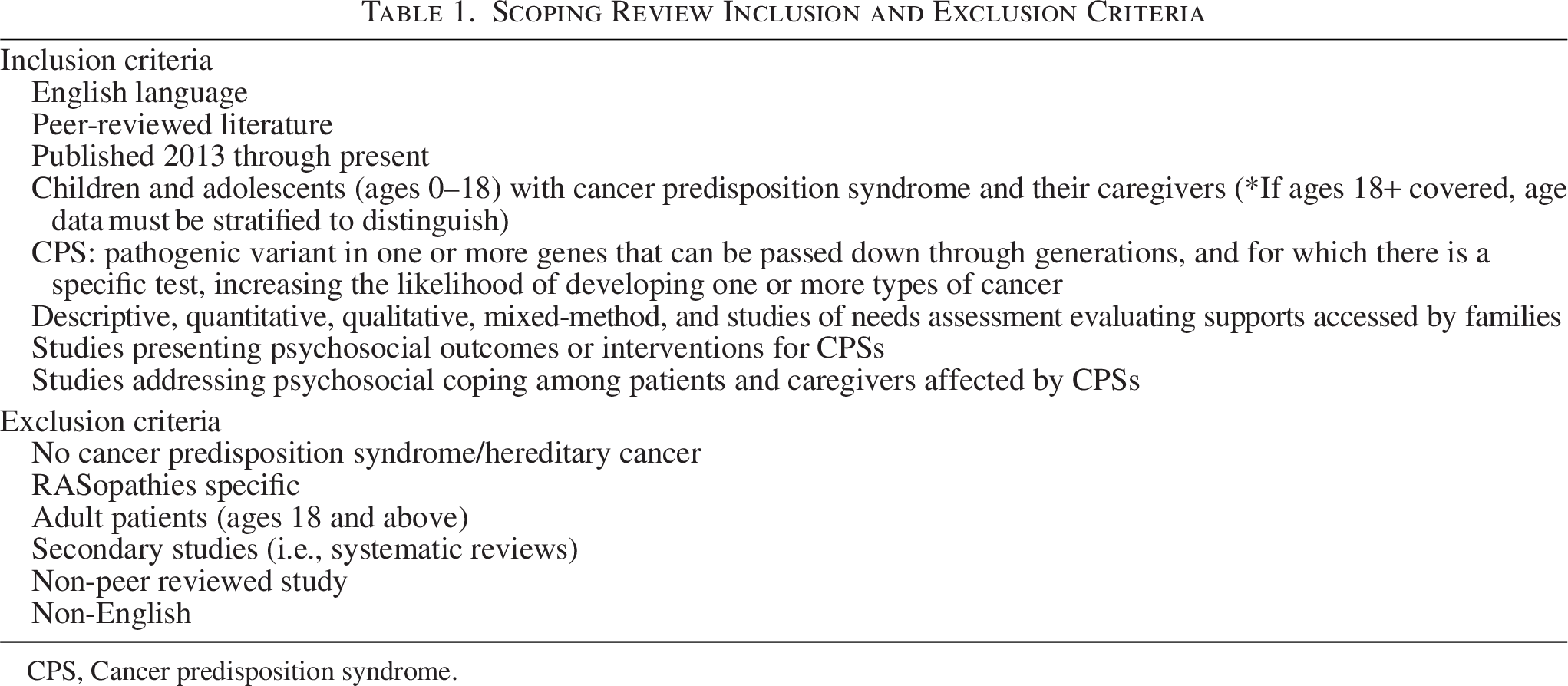
CPS, Cancer predisposition syndrome.
Results
Study characteristics
Database searching retrieved 644 records, resulting in 642 potential records. Of these, 606 records were excluded at the title and abstract levels review. A total of 36 articles were reviewed at the full-text level and five articles met study inclusion criteria. One study by Howard Sharp et al., 2023, 13 while meeting our inclusion criteria, was excluded in the data synthesis leaving 4 articles in total (Fig. 1). This study was excluded because the target of this study differed than the current focus of the review on pediatric CPSs. Specifically, this prospective study investigated parent quality of life following germline genomic sequencing for their children only after a cancer diagnosis and not broadly in the setting of CPSs.
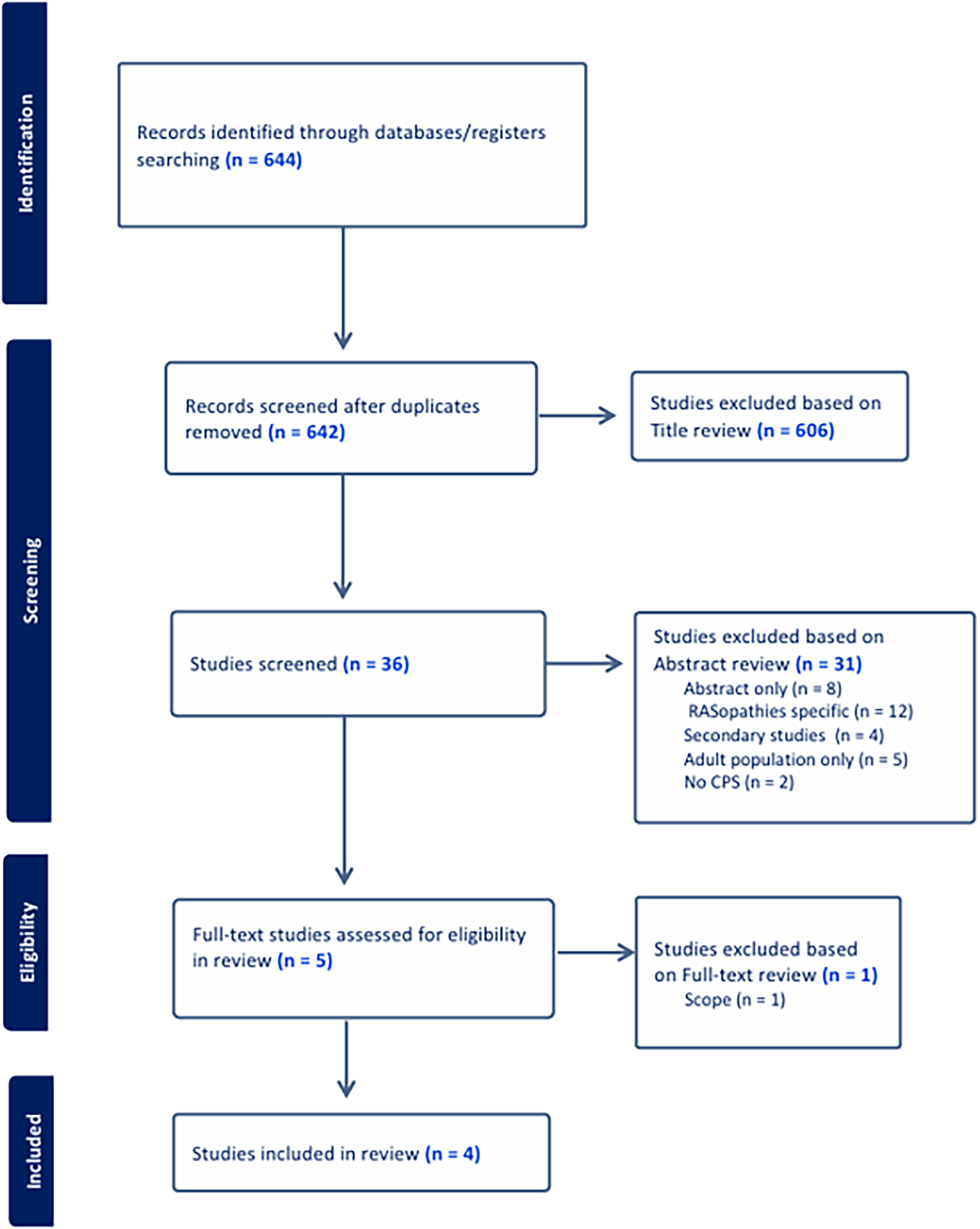
PRISMA flowchart of the screening and eligibility for scoping review. This flowchart has been modeled after Moher et al. (2009). PRISMA, the preferred reporting items for systematic reviews and meta-analyses.
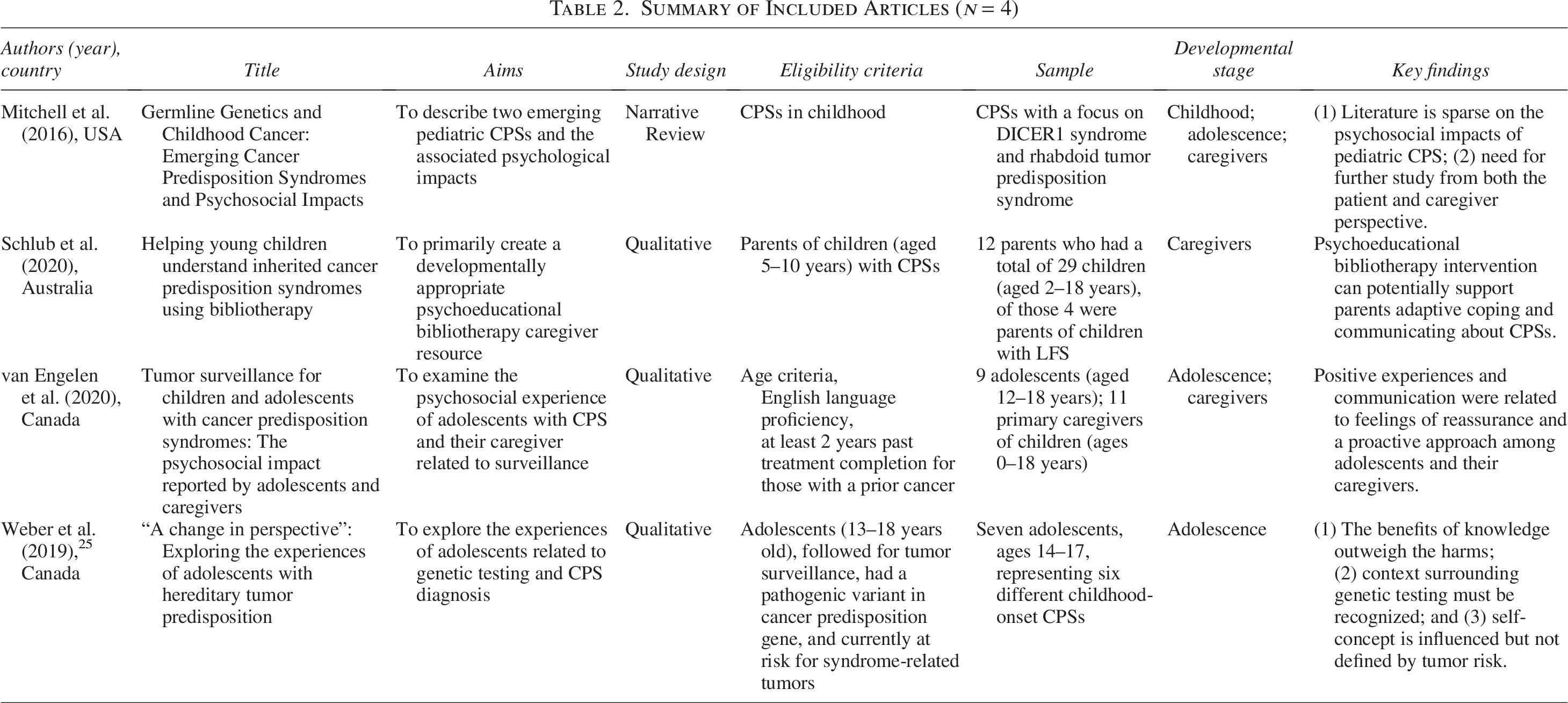
A summary of study characteristics for the four included articles22–25 is presented in Table 2. All studies were descriptive in design. Studies methodologies were primarily qualitative (n = 3) with one narrative review (n = 1). One study was conducted in the United States. 22 The remaining were international studies: Australia (n = 1); 23 Canada (n = 2).24,25 Two studies included both child and caregiver experiences in the setting of CPSs,22,24 one included only caregiver outcomes, 23 and one included only adolescents (aged 14–18). 25 Findings were synthesized and categorized as described below: advantages associated with undergoing genetic testing, perceived benefits of surveillance, positive psychological outcomes, intra-family communication, young people and caregiver psychosocial support.
Summary of Included Articles (n = 4)
Significance of undergoing genetic testing
The current review identified several perceived values of undergoing genetic testing among young people and their caregivers in the setting of CPSs. Reported benefits included improved understanding of cancer risk to oneself and family members, reduced uncertainty, increased agency in relation to risk status, improved knowledge about the etiology of cancer and recurrence risk, and informed decision making about CPS care management.22–25
When exploring the experiences of young people with CPSs and their perceptions of living at risk, findings indicate that they often consider the value of genetic testing.22,25 Specifically, findings suggest that undergoing genetic testing minimized uncertainty regarding risk status for developing cancer and facilitated proactive engagement in early detection through surveillance. 25 Knowledge about CPS was also suggested to support psychological adaptation to tumor diagnosis at times and mitigate repercussions of not knowing of CPS particularly as it relates to pertinent health consequence and fertility considerations.22,24,25
Perceived benefits of surveillance
The review examined the surveillance experience from the perspectives of young people with CPSs and caregivers. The most common perceived advantage of CPSs surveillance was early malignancy detection.22,24,25 Other benefits of participating in CPSs surveillance included reduced anxiety about current health status, centralized care, and improved sense of control by actively participating in one’s own health management.22,24,25
From a caregiver perspective, surveillance benefits centered around reassurances about their child’s health status. Caregivers also demonstrated improved emotional well-being by developing a sense of control about their child’s cancer risk, particularly when minimal intervention approaches for tumor surveillance were utilized. 23 Despite variability, for many caregivers the worry of developing cancer typically magnifying around surveillance was noted to lessen over time even with the practical burdens and dynamic demands of surveillance.22,24,25
Positive psychological outcomes
While recognizing the challenges associated with CPS, young people also identify positive aspects of their experience. Seeking knowledge of CPS was consistent with salient needs during distinct developmental stages. Specifically, young people with CPSs reported dynamic needs for increased independence, motivation to learn about genetic predisposition, and empowerment to engage in medical decisions guiding health care delivery.22,25
Young people with CPS also identified changing life perspectives about health and illness along with an adaptive integration of pertinent genetic information and an understanding of hereditary cancer risk into their developing self-concept.24,25 Many reported experiencing personal growth as they explored future choices about surveillance recommendations across the developmental trajectory, transition into young adulthood, family planning, education, and career choices. 24
Intra-family communication
Intra-family communication needs were highlighted across several studies in the review. Caregivers identified several barriers to effective intra-family communication including child’s young age, worry about added burden, concern about potential negative impact on child’s well-being, and fear of misinformation related to cancer genetic predisposition.22–24 While family communication about hereditary conditions was regarded as a challenge among many caregivers, the review revealed caregivers desire for open conversations with their children and the need for developmentally appropriate vocabulary to effectively engage in these discussions.23,24
One study in the current review was the first to explore the use of bibliotherapy as a psycho-educational resource to support intra-family communication in the setting of CPSs. 23 The study revealed that participating caregivers viewed bibliotherapy as easy to use and relevant particularly when the adolescent is first tested or diagnosed with CPS. This tool provided caregivers with age- and developmentally appropriate language to engage openly in conversations around genetic risk. This further fostered in-the-moment communication to address the adolescent’s potential misconceptions and fears related to genetic cancer risk. 23
Young people and caregiver psychosocial support
The review highlights the need for patient-centered psychosocial support throughout childhood and adolescence. Particularly, young people expressed the desire for social connectedness and receptiveness to engage in psychotherapy to support coping, express thoughts and feelings, promote knowledge, ask questions, and share their lived experiences.24,25
Similarly, caregivers expressed a need for additional psychosocial support as they navigate their child’s CPS diagnosis, multigenerational hereditary cancer, sibling relationships, and intra-family communication. Caregivers identified limited available psychosocial and community support tailored towards optimizing coping among caregivers in the setting of hereditary cancer.23,24 A need for targeted psychoeducation resources on facilitating communication around child’s cancer risk and surveillance, and in turn improving caregiver psychosocial coping, were outlined.
Discussion
There are numerous psychosocial implications associated with the diagnosis of pediatric CPS. Recent psychosocial research began to document the multidimensional psychosocial outcomes among young people with CPSs and their caregivers. To date, adaptive psychosocial outcomes associated with pediatric hereditary cancer risk remain uncharacterized. This scoping review is the first to map the literature on this evolving topic and identify substantial gaps in the existing literature. The present scoping review explores and synthesizes what is known about adaptive psychosocial outcomes associated with pediatric CPS. The search for studies pertaining to pediatric CPSs and adaptive psychosocial outcomes resulted in four included studies. Although limited literature is available on adaptive psychosocial outcomes in the setting of pediatric CPSs, several important findings emerged across studies including, the significance of undergoing genetic testing, perceived benefits of surveillance, positive psychological outcomes, intra-family communication, and need for young people and caregiver psychosocial support.
The current review identified adaptive psychosocial outcomes among young people with CPSs and their caregivers. Consistent with a “knowledge is power” mindset, the perceived benefits associated with knowledge of CPSs following genetic testing were considered to outweigh other negative effects.22–25 Information seeking and improved genetic knowledge was relevant particularly around significant life events and during distinct developmental stages such as adolescence. Findings also underscored the perceived benefits of CPS surveillance. These benefits centered around reassurances about health status as well as improved sense of control by engagement in a proactive approach to health.22,24,25 Similarly, the review highlighted positive psychological outcomes associated with pediatric CPSs. Young people with CPS recognized changing life perspectives about health and illness and an integration of cancer predisposition into their developing self-concept.24,25 It is plausible that meaning making in the CPS experience further promotes psychological adjustment and personal growth 26 by addressing the existential impact of cancer predisposition across the lifespan.
Communication regarding hereditary cancer is a complex process. Findings highlight the importance of empowering caregivers with strategies to enhance communication with family members and improve informed decision making related to CPSs.23,24 Caregivers will benefit from tailored communication tools to enhance health literacy and genetic knowledge. This may in turn facilitate accurate and open information sharing among child-caregiver communication.
The review underscored clinical gaps and limited psychosocial support provided for young people with CPSs and their caregivers across the lifespan and care continuum. Revisiting genetic counseling, targeted psychoeducation, and psychological assessment in the setting of CPSs are imperative. This is especially pertinent during developmental transitions from childhood to adolescence, during adolescence and young adulthood, transition to adulthood, and additional contextualized events such as transition from pediatric to adult care and in family planning.22,23,25 The conceptualization and dissemination of developmentally appropriate psychosocial care in the setting of pediatric CPS remains underdeveloped.
Implications
This scoping review demonstrates the capacity for dynamic adaptive coping in adolescents with CPSs and their caregivers, even when the challenges related to genetic testing, surveillance, and communication were identified. Results also highlight the sparsity of and need for patient-centered psychosocial support during the trajectory of care and across lifespan especially during adolescence. Exploration of perceived benefits at differing stages of care, from diagnosis to management, is critical to incorporate in discussions about hereditary cancer with patients. This will facilitate the identification of appropriate and longitudinal psychosocial support for young people with CPS as well as tailored caregivers’ support. This would be particularly imperative for patients at salient developmental stages, transition of care, and caregiver communication.
Future research is needed to better delineate adaptive coping mechanisms among young people with CPS and their caregivers. This will help inform clinical care considerations by which providers can promote patients’ well-being beyond symptom control. Specifically, findings support the importance of facilitating developmentally appropriate information seeking, fostering a sense of control, and aligning communication preferences with goal concordant care throughout the CPS care continuum. Future research on communication preferences is needed to best inform communication considerations for interdisciplinary providers delivering care to young people with CPS across lifespan and the care continuum.
Limitations
Limitations of this scoping review are noted related to search strategy and eligibility for inclusion. Articles reviewed were limited to English language, which may limit representation of patients with CPS or inclusion of study authors. Reviews of literature published since 2013 inherently limit the scope of the literature included in the current review, missing other research conducted prior to that date. CPSs included in the scoping review and those excluded, including RASopathies, may also limit generalizability of these findings to associated conditions. The relatively small sample sizes for included studies were also noted. Although this appears representative of the current state of pediatric CPS studies, often being more exploratory in nature, it is recognized as an additional study limitation. Studies also offered limited demographic information regarding study participants, often only age and sex, without indication of psychosocial factors of race and socioeconomic indicators. Future research with broader samples and demographic data may help deepen understanding of factors impacting coping with identified CPSs.
Conclusion
Overall, existing literature on psychosocial impacts of hereditary cancer in adolescent patients with a focus on adaptive psychosocial outcomes is limited. Future research investigating adaptive psychosocial outcomes is needed to best inform evidence-based psychological approaches designed to promote coping with pediatric CPS.
Authors’ Contributions
J.W.H.: Conceptualization (lead); writing—original draft (lead); formal analysis (equal); writing—review and editing (equal). K.K.T.: Conceptualization (supporting); formal analysis (equal); review and editing (equal). C.R.: Methodology (lead); writing—review and editing (supporting).
Footnotes
Author Disclosure Statement
No competing financial interests exist.
Funding Information
No funding was received for this article.
Data Availability Statement
Data is available upon reasonable request.
Supplemental Material
References
Supplementary Material
Please find the following supplemental material available below.
For Open Access articles published under a Creative Commons License, all supplemental material carries the same license as the article it is associated with.
For non-Open Access articles published, all supplemental material carries a non-exclusive license, and permission requests for re-use of supplemental material or any part of supplemental material shall be sent directly to the copyright owner as specified in the copyright notice associated with the article.
