







Abstract
School counselors can integrate hope-fostering interventions into their work with students as part of a comprehensive, evidence-based school counseling program. In the past 2 decades, youth’s reported levels of hopelessness have increased significantly. Scholars have noted that hopelessness is linked to concerns in youth’s safety, mental health, and decision making; conversely, hope appears to be a protective factor for youth. Career development scholars have highlighted hope-centered work as a helpful approach for adult clients’ progress when they encounter personal and career-related challenges. Hope-Action Theory may hold promise for strengthening youths’ well-being and career development when adapted to meet pre-K–12 students’ developmental needs. In this conceptual article, we describe Hope-Action Theory, a theoretical and evidence-based approach to foster students’ hope and to address students’ well-being and career development. We include case illustrations for implementation in individual counseling, group counseling, and classroom lessons, and discuss implications for pre-K–12 school counselors.
Introduction
According to the Youth Risk Behavior Survey, 42% of adolescents surveyed across the United States in 2021 reported feeling persistently sad or hopeless, an increase from 28% of adolescents in 2011 (Centers for Disease Control and Prevention [CDC], 2023). Hopelessness is defined as a mindset in which an individual believes that a negative outcome in the future is unavoidable due to lack of perceived personal agency (Demetropoulos Valencia et al., 2021; Spirito et al., 1988). Feelings of hopelessness among young people increased significantly between 2009 and 2019 (Hertz & Barrios, 2021), and the CDC (2023) suggested that experiences of persistent sadness and hopelessness increased for students of all demographic identities, making it a widespread concern for youth. The impact of the COVID-19 pandemic further exacerbated youths’ sense of hopelessness and related mental health concerns (Hertz & Barrios, 2021; U.S. Department of Education, 2021). The concerning trends in students’ hopelessness and heightened mental health needs may also hold deleterious effects for their long-term career development and planning. When students are hopeless, they are more likely to be disengaged in school and to see career planning as irrelevant (Smith et al., 2014). Alternatively, hope has been defined as a process “which enables people to set valued goals, to see the means to achieve those goals, and to find the drive to make those goals happen” (Snyder et al., 2002, p. 298). Integrating hope-fostering interventions into school counselors’ evidence-based school counseling practices may prove beneficial for countering students’ experiences of hopelessness while also fostering their career development.
School counseling scholars developed the evidence-based school counseling (EBSC) model as an approach for identifying and evaluating school counseling interventions to promote students’ success (Carey et al., 2008; Dimmitt et al., 2007). The EBSC model includes three primary elements: (a) using data to drive decision making about school counseling services; (b) identifying, developing, and implementing research-informed interventions; and (c) evaluating the effects of the interventions on youth outcomes (Dimmitt et al., 2007; Dimmitt & Zyromski, 2020; Zyromski & Dimmitt, 2019; Zyromski et al., 2018). School counselors may employ EBSC practices throughout a comprehensive school counseling program, by means of school-wide approaches, classroom lessons, or small-group and individual counseling (Zyromski et al., 2018). Moreover, EBSC practices are useful for addressing all three school counseling domains of academic, career, and social/emotional development. Over time, the EBSC model has expanded to include contextual factors of students’ lived experiences, such as ecological contexts (e.g., school, family, peers, community, sociopolitical climate) and intersectional identity contexts (e.g., age, gender, race, ethnicity, socioeconomic status, culture, ability; Dimmitt, 2018; Zyromski et al., 2018). As EBSC literature has grown, scholars have noted the importance of increasing evidence-based approaches that attend to students’ social/emotional and well-being factors (Dimmitt & Zyromski, 2020; Wood & McMahon, 2024). Thus, using the EBSC model to examine potential hope-fostering interventions may provide additional strategies for school counselors.
Career development scholars have highlighted hope-centered work for promoting progress in late adolescent and adult clients when they encounter personal and career-related challenges (Amundson et al., 2018; Niles et al., 2014). When school counselors adapt hope theories (e.g., Niles et al., 2014; Snyder et al., 2002) in their work, they provide opportunities for increasing student engagement, strengthening student well-being, and bolstering student motivation for engaging in career planning. Specifically, Hope-Action Theory (HAT; Niles et al., 2014) has shown promise with its promotion of individuals’ sense of hope, well-being, and career-related factors such as career decisiveness, goal setting, and planning. In this conceptual article, we describe HAT as a theoretical and evidence-based approach to foster students’ hope, enhance student wellness, and increase student engagement in career planning. We also: (a) address the connection among career development, mental health, and hope; (b) present the necessity of hope as a factor for student success; (c) describe the components and application of HAT; (d) offer specific evidence-based strategies and actionable steps for school counselors to implement HAT with students in pre-K–12 settings; and (e) demonstrate HAT’s applicability to EBSC practice through case illustrations.
Career Development and Mental Health
Previous scholars have indicated that mental health and career development are intertwined (Dik et al., 2022; Herr, 1989; Redekopp & Huston, 2018). Without intervention, hopelessness, depression, and anxiety among youth will likely persist or worsen in adulthood. Hopelessness and mental health issues are often related to maladaptive behaviors such as alcohol use, substance use, and delinquency, and to dropping out of school (Kirby et al., 2022). Mental health symptoms can also negatively impact the brain development of youth related to the development of emotional regulation and executive functioning (George et al., 2021), both of which are critical for optimal career success. Given that mental health concerns can significantly impact youths’ career development, readiness, and attainment (Ellison et al., 2019), school counselors must seek effective strategies that bolster students’ well-being resources and subsequently foster students’ career development.
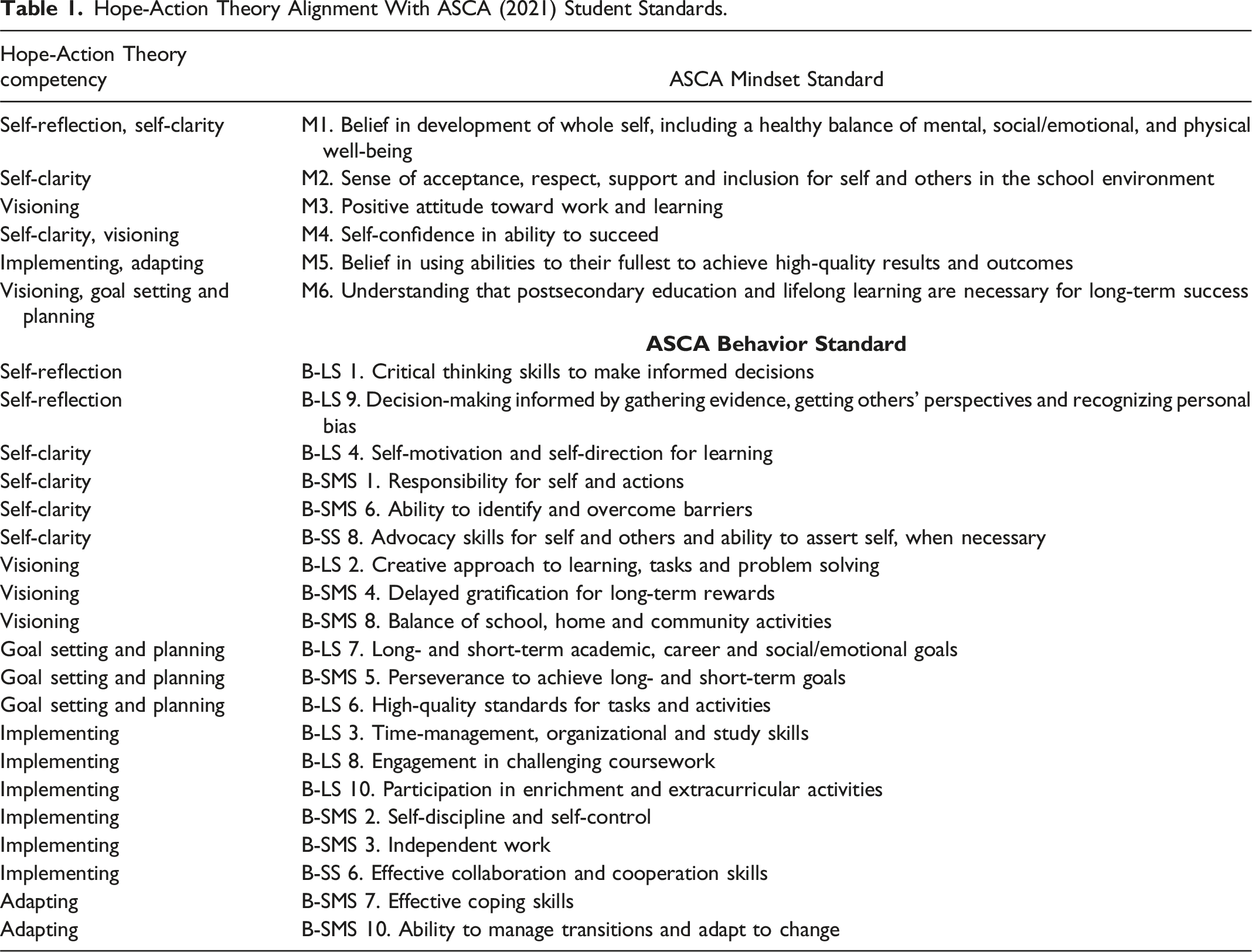
The ASCA Student Standards: Mindsets & Behaviors for Student Success (American School Counselor Association [ASCA], 2021) reinforce the interconnection of career and social/emotional factors. In previous iterations of the ASCA National Model (ASCA, 2012), standards for social/emotional, academic, and career domains were distinct. However, the ASCA Student Standards outline behavioral standards that highlight the ways social/emotional and career processes are complementary. For example, standards include: long- and short-term academic, career, and social/emotional goals (B-LS 7); perseverance to achieve long- and short-term goals (B-SMS 5); ability to manage transitions and adapt to change (B-SMS 10); and effective collaboration and cooperation skills (B-SS 6), among others. Not only are these standards relevant to academic and social/emotional development, but they also are closely related to successfully navigating career development. Further, the ASCA Student Standards mirror the integral elements of hope: identifying goals, envisioning pathways, and having the motivation to achieve one’s goals.
Hope in Childhood and Adolescence
According to Snyder (2002), hope thinking begins in early childhood. As children progress in school, hope becomes integral to short- and long-term decision making, such as course selection, extracurriculars, and relational goals (Fraser et al., 2021; Pedrotti et al., 2008; Snyder et al., 2002). The decisions students must make become more complex as they develop, and having a sense of hope is correlated with higher school attendance, self-esteem, adaptability, ability to learn from failure, problem-solving skills, and resilience (Kirby et al., 2022; Marques & Lopez., 2014; Snyder et al., 2002). Students with higher levels of hope tend to have higher grade point averages, increased graduation rates, and a greater sense of fulfillment with their social lives (Bashant, 2016; Kirby et al., 2022; Snyder et al., 2002). Researchers advocate for school counselors to foster students’ hope by helping them to create meaningful and realistic goals, increase positive self-talk, and challenge negative thoughts (Akos & Kurz, 2016; Bashant, 2016; Pedrotti et al., 2008; Snyder et al., 2002).
Within the Youth Risk Behavior Survey (CDC, 2023), scholars cited hopelessness as an indicator of emotional well-being and suicide risk, and evaluated whether students’ feelings of hopelessness impacted their typical activities (e.g., Jones et al., 2020; Jones et al., 2024). Hopelessness is usually intertwined with a sense of helplessness and maladaptive thought cycles that include self-blame and catastrophizing (Nguyen et al., 2023). Researchers have also seen a notable pattern of individuals in early adolescence having significantly lower levels of hope when compared to youth and older adolescents (Kirby et al., 2022). Scholars have suggested that circumstances such as being in a high-poverty school, lack of connection, sexual abuse, and bully victimization are correlated with a sense of hopelessness in youth (Demetropoulos Valencia et al., 2021; Nguyen et al., 2023; Soylu et al., 2022). Students who are part of the LGBTQ community are also more likely to experience hopelessness (Hatchel et al., 2019). From an EBSC lens, these findings highlight the ecological and contextual factors that can impact hope and hopelessness. When considering the implementation of hope-fostering interventions, school counselors should first collect data regarding students’ sense of hope and hopelessness, and any possible relevant contextual factors. For example, Demetropoulos Valencia and colleagues (2021) sought to measure students’ levels of hopelessness by asking questions such as whether they (a) felt life was worth living, (b) “felt hopeful about the future” (p. 1135), (c) believed they would live to the age of 35, and (d) believed they would be killed by the age of 21. These researchers found that such feelings of hopelessness were related to violent behavior during adolescence and a diminished sense of well-being, further underscoring the relevance of hope and hopelessness to youth’s mental health.
In contrast, when adolescents are exposed to interventions directed toward increasing hope, research results indicate an increase in student “resilience, coping skills and emotional regulation” (Kirby et al., 2022, p. 506). Kirby and colleagues (2022) examined the effectiveness of Hopeful Minds, a school-based hope intervention program designed to promote mental health and social/emotional learning among 11- to 14-year-old students. The researchers evaluated students’ hope, resilience, depression, and anxiety pre- and post-intervention, and found that students’ levels of hope significantly increased from pre- to post-test. Moreover, students’ levels of hope appeared to predict higher levels of resilience and lower levels of depression and anxiety. Thus, hope appears to serve as a protective factor from mental health concerns and risky behaviors such as suicide, self-injury, and violence toward others (Demetropoulos Valencia et al., 2021; Kirby et al., 2022). Hope also may predict students’ career-related factors (Kim et al., 2022). For example, in a study of students in Grades 4–6 (N = 456), Kim and colleagues (2022) found that hope statistically significantly predicted students’ curiosity and self-concept. In other words, when a student has higher levels of hope, they will also have increased mental health resources (Kirby et al., 2022), decreased risks for safety and mental health concerns (Demetropoulos Valencia et al., 2021), and may be more readily engaged in career development processes (Kim et al., 2022). Thus, hope-fostering interventions may be particularly influential on students’ social/emotional development and overall well-being.
Theoretical Framework: Hope-Action Theory
Within school counseling literature, scholars have identified Snyder’s Hope Theory as a potentially beneficial framework for supporting students’ middle school transition (Akos & Kurz, 2016), helping undocumented students navigate the college access process (Groce & Johnson, 2021), or strengthening personal characteristics and school environments (Pedrotti et al., 2008; Snyder et al., 2002). However, HAT (Niles et al., 2014), may provide school counselors with additional avenues for fostering students’ hope. Many students (and adults) lack a framework that they can rely upon to navigate the career planning process across the lifespan. HAT was designed to provide this framework. Initially developed as a career development model that expands upon Snyder’s Hope Theory (Niles & Gutierrez, 2019), HAT has garnered empirical support in the literature as an evidence-based model (e.g., Clarke et al., 2018; Yoon et al., 2019). More specifically, when community college, university, and adult populations are taught how to use the components of HAT, they have typically demonstrated an increase in hope, greater capacity to engage in self-reflection, a more focused self-clarity, the capacity to envision future possibilities that excite them, knowledge of goal setting and planning steps, ability to take action toward a desired goal, and capacity to integrate new information into their subsequent career planning (Amundson et al., 2018; Smith et al., 2014).
The HAT Competencies
HAT comprises six competencies involved in an individual’s career planning, with hope at the center of the process (Niles & Gutierrez, 2019). According to HAT, with support, individuals can engage in the ongoing and intentional processes of (a) self-reflection, (b) self-clarity, (c) visioning, (d) goal setting and planning, (e) implementing, and (f) adapting. Further, these competencies are influenced by a bidirectional relationship with the environment, which includes systemic and societal changes that can impact an individual’s journey (Amundson et al., 2020; Niles & Gutierrez, 2019). For example, ongoing engagement in self-reflection and self-clarity highlight the fact that an individual’s self-concepts are constantly evolving and, therefore, provide a space for integrating intersectional identities in the career navigation process.
Hope
Being hopeful is essential for positive career development. Hopefulness relates to envisioning a meaningful goal and believing that positive outcomes are likely to occur should specific actions be taken (Snyder, 2002; Snyder et al., 2002). Having a sense of hope allows the person to consider the possibilities in any situation and propels the individual to act. Snyder (2002) described hope as “the perceived capability to derive pathways to desired goals and motivate oneself via agency thinking to use those pathways” (p. 249). Thus, hopeful thinking has three necessary and reciprocal components: (a) goals: a target one hopes to achieve in the future, (b) pathways thinking: one’s ability to think of multiple ways to reach a goal, and (c) agency thinking: one’s self-perception of their capacity to find ways to reach goals (Snyder, 2002). For example, if one has strategies for goal achievement but does not possess agency thinking then one is not likely to persevere in the face of obstacles. Likewise, those who possess confidence that a goal can be achieved but lack strategies for goal achievement are likely to stagnate because they lack clarity regarding taking specific actions (Snyder et al., 2002). Having a hopeful attitude becomes a catalyst for identifying one or more goal-related action steps. When individuals encounter insurmountable barriers to goal achievement, they must demonstrate adaptability to identify and pursue action steps around the obstacles that will allow them to achieve their goals. HAT provides a framework students can use to identify purposeful goals based on self-clarity.
Self-Reflection and Self-Clarity
Self-reflection involves the capacity to examine one’s thoughts, beliefs, behaviors, and circumstances (Niles & Gutierrez, 2019). It requires the willingness to consider questions such as: What is important to me? What do I enjoy? What skills do I enjoy using? What skills would I like to develop? What opportunities are presented to me in my environment? What sort of lifestyle do I hope to have? How effectively am I using the talents I want to use, engaging in activities that I enjoy, and participating in activities important to me? Do I have a vision for my future? Self-reflection involves taking time to pause and consider one’s evolving self-concept as it is embedded in a particular life context. Regular engagement in self-reflection provides a solid foundation for subsequent career planning and increases the probability that new information will be considered in career planning.
Intentional self-reflection leads to self-clarity (Niles et al., 2010; Niles & Gutierrez, 2019). In this way, self-reflection and self-clarity are linked. Self-reflection involves taking the time to ask questions. Self-clarity occurs as individuals develop answers to key questions about themselves and their circumstances. It is a lifelong process because the necessary engagement in self-reflection to develop self-clarity is a task that one never completes. Each learning experience creates the need for reflecting upon the implications of that learning for oneself and one’s situation; this reflection provides the opportunity for developing self-clarity in one’s evolving life context. With consistent effort, driven by a sense of hope (and often the assistance of a school counselor), students’ self-clarity emerges. In many ways, the process is like painting a self-portrait. That is, self-reflection is akin to the artist entering the studio with the goal of translating an image onto the canvas using the artist’s palette of experiences to develop a clear and accurate self-portrait (self-clarity). The majority of career theories acknowledge the importance of self-understanding to the career decision-making process. Everything starts from the foundation of self-awareness. A person who has developed self-clarity has developed the readiness necessary to engage in possibility thinking (visioning), goal setting, implementing, and adapting (Amundson et al., 2020).
Visioning
Visioning involves brainstorming future career possibilities and identifying desired future outcomes. Brainstorming focuses on quantity, rather than quality. In this instance, quantity relates to using self-clarity to develop as many career options as possible. Once a sufficient list of options has been generated, the individual again uses self-clarity to identify those options that are most desirable. Desired options then receive focus for greater exploration and information gathering to develop in-depth knowledge of them and ascertain whether they continue to be desirable. From this list, the individual selects specific career goals.
Goal Setting and Planning
Once goals are identified and strategies for achieving them are in place, goal implementation occurs. Implementing means taking actions that are in line with identified plans and goals (Niles & Gutierrez, 2019). For example, if a person has engaged in self-reflection to develop self-clarity regarding possible academic majors—and then used self-clarity to also consider related occupations, established goals, and identified plans to enroll in a specific major—the next step is to enroll in that major (implementing). Career practitioners working with clients engaged in implementing often find themselves taking the role of coach (i.e., offering support, encouragement, and guidance). This helps their clients maintain hope that they can implement action to achieve their identified goals.
Implementing and Adapting
As individuals take actions toward goal achievement, they acquire new information. A gap always exists between what one knows about an option before implementing that option and what one learns about the option once engaged in it. Adaptability involves the ability to change with change (Niles & Gutierrez, 2019). That is, although one may have identified specific goals, the adaptable person remains open to new information that may lead to either reinforcing current goals or developing new ones. Adapting to new information in this way is essential because, as noted previously, the person and their context evolve constantly, and opportunities (both planned and unplanned) present themselves continually. Without hope, however, none of this is possible. Individuals would simply give up when encountering obstacles, and everyone encounters obstacles in pursuing their goals. Researchers have found that students low in hope tend to avoid tasks that are necessary to achieve their goals (Snyder et al., 2002). For example, if a person thinks they are likely to fail a test, they might delay studying for it because they have little hope that studying will lead to a successful outcome (passing the test). Thus, the three components of hope (i.e., agency thinking, pathways thinking, and goals) are cornerstones for effective career and educational planning.
New information acquired when one acts and implements a goal leads once again to self-reflection, which leads to self-clarity that will, in turn, lead to a determination as to whether the current course of action is appropriate or needs to be revised. The dynamic interaction between the person and the environment requires vigilance about engaging in self-reflection and maintaining self-clarity. Thus, maintaining an understanding of how the evolving self informs career goals, while also having the flexibility to respond in an adaptive way to change, is essential. For the school counselor, evaluating and monitoring the student’s degree of hope for coping with each of these tasks successfully is crucial for maintaining positive momentum and active engagement in career planning.
Assessments for Evaluating Hope
Collecting data prior to and following an intervention are integral elements of the EBSC model (Dimmitt et al., 2007; Zyromski & Dimmitt, 2019). Various hope scales have been designed to measure hope and hopelessness in youth. For example, the Hopelessness Scale for Children (HSC; Kazdin et al., 1983; Kazdin et al., 1986) and the Children’s Hope Scale (CHS; Snyder et al., 1997), may be useful instruments for school counselors when seeking to gather baseline data and evaluate students’ hope outcomes following an HAT intervention. Kazdin and colleagues (1983) designed the HSC for youth ages 5–13 years old, and it has since been validated and studied with adolescents (Gao et al., 2023; Spirito et al., 1988). The HSC is a 17-item, self-report questionnaire that has demonstrated internal consistency ranging from acceptable (alpha = .80 [Gao et al., 2023]) to strong (alpha = .97 [Kazdin et al., 1986]). Participants indicate their agreement with the items by selecting true or false in response to statements such as “I want to grow up because I think things will be better” and “Things just won’t work out the way I want them to.” Snyder and colleagues (1997) designed the CHS to measure children’s reported levels of hope. The CHS is a 6-item self-report scale designed for children ages 8–16 (Snyder et al., 1997). It includes items such as “I think I am doing pretty well” and “When I have a problem, I can come up with lots of ways to solve it.” Participants respond to each item by selecting the response that describes them best from 1 (none of the time) to 6 (all of the time). Initial validation of the CHS yielded internal consistency scores of .72 to .86, indicating acceptable to good reliability (Snyder et al., 1997). The CHS has since been studied with youth samples around the globe, demonstrating acceptable (e.g., alpha = .73 [Guse et al., 2016]; alpha = .79 [Lin et al., 2023]) to good (e.g., alpha = .86 [Richter et al., 2024]; alpha = .88 [Yang et al., 2021]) internal consistency. Particularly for school counselors serving elementary grades, the HSC and the CHS can be administered to gather students’ baseline and outcome data. The results of the scales can then be examined alongside other possible indicators of students’ success (e.g., career awareness, career readiness, behavioral data, academic progress, mental health) to evaluate students’ existing need and overall effectiveness following an intervention.
Another assessment is the Hope Action Inventory (HAI; Niles et al., 2010), which is theoretically grounded in HAT. The HAI is a 28-item Likert-type scale designed to measure student competencies related to hope, self-reflection, self-clarity, visioning, goal setting and planning, implementing, and adapting. The HAI was written for an eighth-grade reading level and has been studied with samples of university students, refugees, adults seeking employment, and individuals in recovery from substance use (Amundson et al., 2018; Clarke et al., 2018; Currie et al., 2024; Yoon et al., 2015, 2019). Individuals indicate their agreement to each item by selecting a response from 1 (definitely false) to 4 (definitely true). Items include statements such as “I am hopeful when I think about my future,” “I often dream about my future,” and “I can list at least five things that I am good at.” Scholars have found the HAI to demonstrate good internal consistency (alpha = .88 [Currie et al., 2024]; alpha = .84, alpha = .92 [Yoon et al., 2019]), convergent validity with other measures of hope, and negative correlations with measures of hopelessness (Currie et al., 2024). Taking the HAI may help a student identify their strengths and weaknesses as well as understand how HAT competencies are helpful in career and educational planning. Moreover, the constellation of a student’s HAI scores provides the school counselor with a snapshot of the student’s strengths and areas for growth. For example, if a student scores high in visioning (i.e., they identify a goal to pursue) and low in self-clarity, the school counselor will need to examine how the student identified a goal to pursue when they seem to lack clarity about important aspects of who they are. Finally, the HAI can be used as an evidence-based evaluation tool by measuring students’ status before and after receiving career interventions. HAI assessment results can inform school counselors and stakeholders about the effectiveness of the interventions used.
Case Illustrations and Implications
To illustrate HAT’s applicability for pre-K–12 school counselors, we offer three case illustrations to demonstrate specific HAT-based strategies at multiple tiers of student support. When a school counselor helps a student to actively engage in these processes, not only do they help the student find a sense of hope in possible career opportunities, but they also help the student find a sense of hope that can enhance their overall well-being. These illustrations are designed to demonstrate how HAT can be applied following the EBSC model and may be useful at elementary and secondary levels and in classroom, group, and individual counseling settings.
HAT and Classroom Lessons
In the spring of the academic year, a school counselor is planning to develop a unit of classroom lessons for fifth-grade students as they prepare to transition to middle school. At this stage, students are beginning to consider curricular choices based on their interests and self-concepts (e.g., math level placement, elective course choices, extracurricular activities); for most fifth-grade students, the transition to middle school marks the first time they have direct choice in the courses they will take and the activities in which they will engage. The school counselor follows the EBSC model to determine students’ needs and begins by first consulting multiple sources of data to aid in deciding on an intervention (Dimmitt et al., 2007; Zyromski & Dimmitt, 2019; Zyromski et al., 2018). The school counselor examines existing trends in school data (e.g., behavioral referrals, academic progress), paying close attention to any disparate trends across students’ races, ethnicities, gender identities, and ability statuses. The school counselor also develops a brief needs assessment survey to gather insights from teachers and caregivers about students’ current academic, social/emotional, and career needs. Teachers’ and parents’ responses to the needs assessment indicate that students may be struggling to feel hopeful about the upcoming transition to middle school. The school counselor also notices past years’ trends of increased behavioral referrals and decreased school engagement in March and April. The school counselor then explores research-informed hope-fostering approaches and finds HAT to be a promising approach in promoting hope and career development for individuals of diverse needs and contexts. Because the HAT competencies encompass behaviors and strategies that are important to students’ social/emotional, academic, and career success, the school counselor decides to use HAT as a guide for developing classroom lessons that address the HAT competencies: self-reflection, self-clarity, visioning, goal setting and planning, implementing, and adapting.
At the start of the unit, the school counselor administers the CHS and the HSC to collect further data and to specifically assess students’ current levels of hope and hopelessness. Each week, the school counselor uses an HAT competency as a theme for the students to discuss. The school counselor connects to students’ prior knowledge by exploring the ways each competency already occurs in students’ lives. Then, the school counselor poses questions for students to consider the ways their current experiences offer opportunities for engaging in a specific competency. For example, the school counselor incorporates the following questions to foster self-reflection: Which school subjects do you enjoy most this year? Which school subjects are the easiest for you to learn? Which are the most challenging? What do you like the most about being a fifth-grader? What do you like the least about being a fifth-grader? What activities do you enjoy outside of school?
During the weeks focused on self-clarity and visioning, the school counselor encourages students to consider the following self-clarity and visioning-related question: Based on what you have learned about yourself so far this year, what jobs seems like they might be interesting to learn more about? In doing so, the school counselor’s goal is to encourage students to use what they know about themselves (self-clarity) as a springboard for thinking about future possibilities (visioning). Then, the school counselor encourages students to take turns sharing one thing they have learned about themselves so far. After students have shared, the school counselor facilitates a class discussion to brainstorm career possibilities based upon the information students shared about themselves. Linking self-clarity to visioning is a basic and essential process in all educational and career planning and leads to the HAT competencies of goal setting and planning, implementing, and adapting.
In the remaining weeks, the school counselor helps the fifth-graders incorporate what they have learned and practice developing personal plans. The school counselor engages students in goal setting and planning by asking students to identify and illustrate one goal based on what they know about themselves and the career possibilities that interest them. The school counselor emphasizes that the goals should be simple, measurable, and attainable. One student draws himself practicing guitar for 15 minutes each day in the upcoming week. Another student decides she will check out a library book about science and read it for 20 minutes each day. The school counselor fosters implementation by encouraging students to engage in their planned goal before the next classroom lesson and invites students to report back on their experience.
In the final week, the school counselor facilitates a discussion about how students’ implementation of goals and action steps went. The school counselors asks: What new things did you learn about yourself or the activity that you didn’t know before? What things would you change? What new questions do you have about your interests? The school counselor then helps students consider ways to adapt with the new information they learned. As a result of the unit, students have learned critical social/emotional skills and a hope-facilitating process that can be replicated throughout their ongoing career development. The school counselor then re-administers the CHS and the HSC to the students to evaluate the impact of the HAT-based lessons on students’ levels of hope and hopelessness. The school counselor examines students’ CHS and HSC scale scores in tandem with school data to identify any changes in students’ academic or behavioral trends as a result of the intervention.
HAT and Group Counseling
A middle school counselor is developing a career group for a small group of eighth-grade students. The students have been identified by their teachers and referred to the school counselor due to social/emotional and behavior concerns. In class, a few of the students have also expressed a sense of hopelessness about their future and disillusionment about what they are learning. Based on the information and observational data from the teachers, the school counselor decides to conduct a career small group using HAT as a theoretical foundation. The school counselor informs the students’ caregivers about the group and provides a brief summary of HAT and its competencies, subsequently obtaining caregivers’ consent and the students’ assent to participate. The school counselor designs the small group to be 8 weeks in duration: an initial introductory week, 6 weeks to cover each of the HAT competencies, and a final concluding week to summarize the group experience. In Week 1, the school counselor provides the students with an introduction to the group and the concept of hope. The school counselor gathers baseline data about the students’ current levels of hope and the HAT competencies by administering the HAI. Next, by facilitating a discussion with students, the school counselor qualitatively assesses their career interests and goals and how students envision themselves in the future. Each of the students reports different types of interests in careers and different levels of hope about their own progress toward a future career.
In the weeks following, the school counselor works through the competencies of HAT to foster the students’ sense of hope. In Week 2, the school counselor introduces the concept of self-reflection. The school counselor invites the students to use storytelling by asking the students to describe their lives as if they were a book, thinking of a book title for their lives and then dividing their story into chapters with titles for each chapter. Students then design their book cover, considering what colors, images, or metaphors might resonate most. Throughout the process, the school counselor helps the students self-reflect about their interests, skills, and motivations so that the students can gain a clearer self-concept of who they are. In Week 3, the school counselor describes the concept of self-clarity and asks the students to consider what they learned about themselves through the process of narrating their stories. Once the students have a sense of self-clarity, the school counselor transitions to the concept of visioning in Week 4. The students engage in possibility thinking by envisioning multiple occupational options they might find interesting. The school counselor lists all possible options on a large sheet of paper, and each student circles the ones they are curious about. In Week 5, the school counselor and the students then develop actionable goals, create a plan, and decide on one step they can take to implement the plan. Once the students act toward their goals, they obtain new information that can inform their self-reflection, self-clarity, and their understanding of occupations. The school counselor encourages the students to try one thing before the next group meeting time that might align with their goals or interests and tells the students that it is okay if they don’t find the activity interesting after all. The students are encouraged to report back with any new information they learned as a result of trying out the action step. In Week 7, the school counselor introduces the concept of adapting and asks the students to share about their experiences in trying out their goals. The school counselor and the students then examine ways to adapt or create new goals based on new information that emerged from students’ action steps.
In the final week, the school counselor administers the HAI with the students to gather new data about the students’ levels of hope and HAT competency areas. The school counselor uses the HAI outcomes to evaluate the effectiveness of the small-group intervention and asks the students to share about their perspectives of their individual results. The school counselor engages students in a discussion about their results, asking: What do you notice is different? What areas are the same? Do these results inspire any new goals you might make for yourself? The school counselor facilitates a discussion with the students about what the results mean to them. Then, the school counselor transitions the students into a pair-and-share activity to discuss the prompt: Share a story about something you’ve done that you feel proud to have accomplished. After discussing in pairs, the students are invited to share their accomplishments with the group, and the group is instructed to state back the skills they hear described in the story. The school counselor concludes the group session by asking students about their primary takeaways from the experience. Finally, following the group experience, the school counselor sets individual meeting times with each student to debrief about the feedback they received from others in the group. In the individual follow-up meetings, the school counselor discusses with each student any thoughts or reactions they had to the feedback and helps students identify any new opportunities they might want to explore as a result of the group experience.
HAT and Individual Counseling
Edie, a 12th-grader, comes to her school counselor feeling distressed about her postsecondary plans. A “B” student, Edie enjoys working with young people and animals, has volunteered at her local animal rescue center, and served as a camp counselor in a local summer camp for elementary school students. Despite having engaged in these activities, Edie lacks confidence in her planning. In terms of Edie’s family, she is the oldest of two; neither of Edie’s parents attended college and Edie reports that they know very little about how to go about the process of deciding which college to attend, how to apply to college, and how to navigate the high-school-to-postsecondary transition. She states to the school counselor that her friends seem much more confident in their postsecondary plans than she does. Her school counselor decides to administer the HAI with Edie to determine areas of strength and areas for growth relative to the HAT competencies. Edie scores low in hope, high in self-reflection, medium in self-clarity, medium in visioning, low in goal setting and planning, low in implementing, and high in adapting. The school counselor reviews each of the HAT competencies with Edie, being sure to provide examples as to how she might demonstrate each competency when deciding what to do after high school.
To focus and further develop Edie’s strength in self-reflection, the school counselor encourages her to journal at the end of each day, focusing on what new insights she learned about herself during the day and any thoughts about future work possibilities that might be exciting for her. In addition to reviewing Edie’s learning from her journaling activities, the counselor gives Edie an interest and values assessment, which helps Edie gather information about herself and further develop self-clarity. Through both activities, Edie realizes she has an interest in science, and biology class is the time of the day when she feels the most enjoyment. The information from her journaling activities and assessment provides the foundation for Edie to consider possibilities that align with her developing sense of self-clarity.
In their next session, the school counselor encourages Edie to list all possible career opportunities she can identify. The school counselor emphasizes the importance of possibility thinking and encourages Edie to think beyond what she might see as probable options. From the longer list of possibilities, Edie and the school counselor identify a smaller number of desirable possibilities, including teacher and veterinarian. The school counselor helps Edie engage in additional exploration, leading toward goal setting and planning. As the school counselor helps Edie develop goals, they also begin to create plans for achieving the goals. Edie selects a plan to implement that will provide additional information regarding the chosen possibilities (i.e., Edie decides to reach out to a teacher from her elementary school and a local veterinarian to learn more about those careers). Due to the gap between what one knows about a specific possibility and what one learns about it after engaging in that possibility, adaptability is necessary to process the new information and determine whether it confirms the choice made or leads one to use new information to select a new possibility. In Edie’s case, she learns that although she enjoys working with children and thought she would enjoy teaching, she found more excitement learning about the veterinarian’s daily roles and responsibilities. At the end of her career planning sessions with the school counselor, Edie expresses more confidence about her plans, less distress, and greater clarity about her next steps. To evaluate Edie’s progress, the school counselor administers the HAI, then reviews with Edie her strengths and discusses areas to consider for further strengthening.
Implications for School Counselors
Hope is generated when one identifies a meaningful goal and pathways for achieving that goal, develops confidence about successfully completing the steps toward goal attainment, and has the motivation to act (Snyder et al., 2002). The HAT competencies provide a framework students can use to navigate their educational and career planning. School counselors can teach the HAT competencies to students and help students develop the capacity to navigate each competency successfully. We have provided the case studies to illustrate how school counselors may incorporate HAT in accordance with the EBSC model. Moreover, these case studies demonstrate how each competency can be helpful in navigating students’ career decisions while also fostering a sense of hope that may, in turn, bolster their mental health and well-being. Hope provides the strength students need to make adaptations and implement the changes needed to reach the goals they desire (Niles & Gutierrez, 2019). Although their goals can change, students can use the framework provided by HAT repeatedly as they gather more information about themselves, their environments, and their future possibilities.
Hope-Action Theory Alignment With ASCA (2021) Student Standards.
Limitations and Future Research
A limitation of this conceptual article is that HAT has been primarily implemented with adult populations. HAT and the HAI have been employed with diverse populations in the United States and internationally, demonstrating applicability across cultural identities; however, they have yet to be explored with youth. In future studies, researchers may develop a youth version of the HAI through exploratory factor analysis. Further, developing a school-based curriculum grounded in HAT could help to ensure its relevance to pre-K–12 developmental phases and school settings. Conducting outcome research (e.g., randomized controlled trial, quasi-experimental designs) on the potential benefits of an HAT-based intervention may also be beneficial. Examining HAT and its possible outcomes for students could demonstrate its use as an evidence-based practice in schools while also expanding the literature of school counseling outcome research.
Conclusion
Perhaps more than ever, pre-K–12 students face threats to their mental health and well-being that may lead to increased hopelessness. Considering the connection between mental health and career development, school counselors can implement evidence-based, theoretical approaches to support both aspects. Based on the findings of multiple research studies, we contend that hope is a protective factor for youth that can be nurtured and sustained throughout pre-K–12. HAT provides an evidence-based and practical framework for hope development in childhood and adolescence. Thus, HAT may provide school counselors with a useful hope-fostering framework and actionable strategies they can implement to support their students.
Footnotes
Declaration of Conflicting Interests
The author(s) declared no potential conflicts of interest with respect to the research, authorship, and/or publication of this article.
Funding
The author(s) received no financial support for the research, authorship, and/or publication of this article.
