







Abstract
The rise of deepfake technology offers both opportunities and challenges across domains such as education and entertainment. Moving beyond detection-focused research, this study adopts a social science perspective by integrating the Knowledge–Attitude–Behavior model with Goal Framing Theory to examine Malaysian university students’ perceptions of deepfake. Using survey data from 235 students and structural equation modeling, results show that cognitive perceptions (i.e., knowledge and attitude) are positively associated with security awareness, with attitude mediating the link between knowledge and awareness. Attitude is negatively associated with normative perception (i.e., ethical acceptability), whereas ethical acceptability and hedonic frame (i.e., enjoyment) are positively associated with social acceptance. Fear of missing out strengthens the knowledge–attitude relationship but weakens the attitude–ethical acceptability link, while conscientiousness dampens the effect of knowledge on attitude. These findings highlight the cognitive, hedonic, and normative factors shaping deepfake acceptance and suggest that media literacy initiatives should cultivate both critical and emotional awareness to encourage responsible engagement with deepfake technology.
Plain Language Summary
Deepfake is an artificial intelligence (AI)-generated synthetic media that appear authentic but are artificially produced. While it offers potential benefits in education and entertainment, it also raise ethical and social concerns. This study examines Malaysian university students’ perceptions and acceptance of deepfake in an educational context. Drawing on the Knowledge–Attitude–Behavior model and Goal Framing Theory, results show that knowledge about deepfake is positively associated with attitude, which in turn affect judgments of ethical acceptability. Ethical acceptability and perceived enjoyment are positively associated with social acceptance of deepfake in learning. Fear of missing out strengthens the relationship between knowledge and attitude but weakens that between attitude and ethical acceptability. These findings highlight cognitive, normative, hedonic, and social factors shaping engagement with deepfake and emphasize the need for media literacy initiatives.
Introduction
Deepfake technology, an emerging form of generative artificial intelligence (AI) that creates highly realistic imitations of individuals, is gaining increasing attention in education (Roe et al., 2024). Although such tools offer innovative possibilities for teaching through lifelike simulations and enhanced accessibility (Gilbert & Gilbert, 2024), research on their social acceptance in educational contexts remains limited (Roe et al., 2024). As students rely more on digital platforms, they become more vulnerable to the deceptive potential of deepfake (Mohsin, 2021). These manipulations can spread misinformation and erode trust, underscoring the need to strengthen the cognitive processes of media literacy, namely, knowledge, attitude, and security awareness to promote responsible engagement with digital content (Kaur et al., 2023; Stavola & Choi, 2023).
Educational initiatives should strengthen resilience against the misuse of deepfake technology, while cross-sector collaboration can further enhance digital literacy and critical thinking (S. Alanazi et al., 2025; Hassoun et al., 2025; Sun et al., 2022). Existing study has predominantly researched on public awareness and technical detection (Roe et al., 2024), with limited exploration of students’ attitude and experiences. Although Roe et al. (2024) examined higher education stakeholders’ perspectives, they underscored the need for further investigation into student views, which are critical for understanding the broader social acceptance of deepfake technology in education.
Recognizing the rising digital threats, fostering cybersecurity awareness through education is crucial for promoting safer online behavior (B. H. Nguyen & Le, 2024; K. L. Zhang & Chiasson, 2022). Although cybersecurity has been widely studied, awareness within higher education remains underexplored (Moletsane & Tsibolane, 2020). In Malaysia, prior research has focused mainly on general cybersecurity issues (Khalizan et al., 2024; Vafaei-Zadeh et al., 2025). Deepfake technology constitutes a unique and emerging threat distinct from traditional cyber risks, such as biometric misuse or phishing, as it involves synthetic media capable of manipulating perceptions, spreading misinformation, and shaping social interactions (Koperniak, 2022), posing significant risks in Malaysia (Iskandar, 2025). This study examines university students’ knowledge, attitude, and awareness of deepfake content.
Deepfake technology presents both opportunities and risks, offering cost-efficient and immersive educational content while raising ethical and societal concerns (Chadha et al., 2021; M. Li & Wan, 2023). Normative issues, such as manipulation and reduced personal accountability, are often overshadowed by hedonic motivations like amusement and novelty (Cochran & Napshin, 2021; S. A. Kim et al., 2022). Understanding how normative and hedonic factors shape students’ attitude is crucial, as this attitude influence social acceptance and perceptions of deepfake legitimacy in education (M. Li & Wan, 2023; Taebi, 2017). This study addresses a key research gap by empirically examining how attitude and normative perceptions, together with hedonic motivations, shape students’ willingness to engage with deepfake in educational contexts.
Research on psychological responses to deepfake technology remains limited (Roe et al., 2024), particularly regarding personality traits such as conscientiousness. Social factors like fear of missing out (FOMO), an anxiety that others may be engaging in rewarding activities without oneself (Przybylski et al., 2013), have also received little attention. While M. Li and Wan (2023) identified hedonic goals among experienced users of deepfake content, neither study examine the influence of personality traits such as conscientiousness, which is associated with diligence and critical thinking (Ahmed et al., 2024), nor the impact of FOMO, which may increase curiosity and engagement with emerging technologies (Ahmed, 2022; Hattingh et al., 2022), on their reactions toward deepfake (Ahmed et al., 2024). To address this gap, the present study investigates how individual personality traits and social pressures shape students’ cognitive perceptions, normative, hedonic evaluations, and social acceptance of deepfake technology, providing actionable insights to promote responsible and informed integration in educational contexts.
This study addresses these gaps through three objectives. First, it examines how university students’ cognitive perceptions of deepfake, including knowledge, attitude, and awareness, influence their responses and ethical judgments. Second, it explores how normative concerns and hedonic motivations such as enjoyment affect the acceptance of deepfake in education. Third, it analyzes how social-emotional factors (FOMO) and individual personality traits (conscientiousness) moderate the relationships among these pathways and university students’ acceptance of deepfake.
Literature Review
This section discusses the application of deepfake technology in education, emphasizing its potential benefits. The following outlines the theoretical foundations, including the Knowledge Attitude Behavior (KAB) model on cognitive perceptions and Goal Framing Theory (GFT) on normative and hedonic aspects, with the integration explained. The conceptual framework, along with the hypotheses, and proposed mediation and moderation relationships, are then presented.
Deepfake in Education
Deepfake, a synthetic media generated through artificial intelligence and deep learning, has traditionally been associated with deception and misinformation (Ahmed, 2022; Vasist & Krishnan, 2023). Recent studies, however, emphasize its constructive potential in education, creative media, and geographic visualization (Roe et al., 2024; Zhao et al., 2021). In education, deepfake technology can enhance learning by animating historical figures, simulating training scenarios, and improving language acquisition (S. Alanazi et al., 2025; Gilbert & Gilbert, 2024). Nevertheless, concerns about authenticity and ethics remain. Therefore, integrating deepfake in education should involve media literacy initiatives that strengthen students’ critical evaluation and responsible engagement with digital content (Roe et al., 2024).
Given the dual nature of deepfake, presenting both educational potential and ethical risks, education is a critical domain for addressing these challenges. Instructional strategies enhance students’ ability to assess manipulated media (Aljalabneh, 2024), while initiatives like MIT’s Virtuality Lab integrate digital ethics into learning (Koperniak, 2022). Scholars emphasize embedding media literacy and ethical reasoning to promote constructive use (Roe et al., 2024) and prevent misuse (Naffi, 2024). This study advances beyond detection-focused approaches by examining how cognitive, normative, and hedonic factors shape university students’ evaluation and social acceptance of deepfake in higher education.
Theoretical Background
Knowledge Attitude Behavior Perspective
The Knowledge Attitude Behavior (KAB) model, grounded in social psychology, provides a foundational framework for explaining how individuals perceive and respond to cybersecurity threats (Hong et al., 2023). Adapted to information security by Kruger and Kearney (2006), the KAB model posits a sequential process in which knowledge shapes attitude, and attitude influence behavior (Ahamed et al., 2024; B. H. Nguyen & Le, 2024). Knowledge involves procedural, declarative, and conditional understanding (Schrader & Lawless, 2004), while attitude reflects the belief that guide behavioral intentions (Hong et al., 2023). Central to the model is the mediating role of attitude, which facilitates the translation of knowledge into secure behavior, as knowledge alone rarely ensures behavioral change (Parsons et al., 2014).
Recent research highlights the adaptability of the KAB model across various domains, particularly in education and e-learning contexts (An et al., 2023; Nurbojatmiko et al., 2020; Setiawan & Rizal, 2024). For example, An et al. (2023), Baltuttis et al. (2024), and Hong et al. (2023) underscore the influence of knowledge on shaping attitude, reinforcing the model’s relevance in explaining digital safety behavior.
The KAB model has gained prominence in security awareness research, as studies show that knowledge alone rarely leads to behavioral change (Hong et al., 2023). Instead, the interaction between knowledge and attitudinal readiness bridges the gap between understanding and action, reducing cognitive dissonance. The model has been applied across diverse domains, including information security (B. H. Nguyen & Le, 2024; Zainal et al., 2022) and public health (Dahleez et al., 2022; Jahan et al., 2021), demonstrating its interdisciplinary relevance in explaining awareness and behavioral outcomes.
Given its conceptual relevance, this study applies the KAB model to examine how university students engage with the multifaceted nature of deepfake. As deepfake involves not only technical sophistication but also ethical and epistemological challenges (Ahmed, 2021; M. Li & Wan, 2023), the study adopts a holistic view of awareness encompassing both knowledge and attitude. Within this framework, it investigates how students’ knowledge shapes their attitude and how attitude, in turn, influence their awareness of deepfake-related risks.
Goal Framing Perspective
Goal Framing Theory (GFT) explains human behavior through three goal types: hedonic, gain, and normative (Lindenberg & Steg, 2007). Hedonic goals emphasize emotional satisfaction, normative goals reflect moral obligation and social responsibility, while gain goals focus on personal utility and advantage (M. Li & Wan, 2023). The theory provides a structured lens for analyzing user motivations and has been widely applied in information systems and media studies, including technology adoption, content sharing, and ethical decision-making (M. Li & Wan, 2023; Tatum & Grund, 2020).
In the context of deepfake technology, the interaction between hedonic and normative goals is especially salient (M. Li & Wan, 2023). Deepfake raises ethical concerns about misinformation, identity manipulation, and consent, activating normative evaluations (Barbopoulos & Johansson, 2017; Cochran & Napshin, 2021). At the same time, their immersive and novel qualities evoke hedonic responses such as enjoyment and curiosity (Y. Lee et al., 2021). This study, therefore, examines social acceptance of deepfake in education through the lens of normative and hedonic motivations.
Ethical considerations are situated within the normative goal frame, reflecting users’ sense of social responsibility and moral judgment (Barbopoulos & Johansson, 2017). In contrast, the engaging and playful qualities of deepfake align with hedonic goals, which are prominent in immersive and entertainment-oriented contexts (Gilbert & Gilbert, 2024; Westerlund, 2019). Virtual influencers, many created through deepfake technology, illustrate how hedonic enjoyment enhances user engagement, attachment, and acceptance (Stein et al., 2024). These synthetic media experiences evoke excitement and escapism that extend beyond utilitarian purposes, highlighting deepfake’s emotional appeal.
Given the experiential and entertainment-oriented nature shared by virtual influencers and deepfake media, hedonic enjoyment is expected to influence user responses. Deepfake content engages users through immersive experiences similar to those of virtual influencers (S. Alanazi et al., 2025; Gilbert & Gilbert, 2024; Roe et al., 2024; Weikmann et al., 2024). This study distinguishes perceived enjoyment, the immediate pleasure during interaction (M. Li & Wan, 2023; Xu & Thien, 2025), from hedonic enjoyment, a deeper emotional gratification (Ahn et al., 2020). Integrating both, the study extends M. Li and Wan’s (2023) ethical–social acceptance framework, showing how normative and hedonic factors jointly shape acceptance of deepfake content.
Deepfake KAB Perceptions and Goal Framed Motivation
This study integrates the Knowledge-Attitude-Behavior (KAB) model with Goal Framing Theory (GFT) to examine university students’ responses to deepfake in education. Ethical decision-making, involves perception, ethical judgment, and behavior. Exposure to deepfake content triggers perception, guiding ethical evaluation based on personal moral standards and resulting in acceptance or resistance, known as ethical acceptability (Hunt & Vitell, 2006; M. Li & Wan, 2023). These judgments then shape behavioral outcomes, reflecting ethical considerations in decision-making (Roman & Munuera, 2005).
M. Li and Wan (2023) suggest that social acceptance of deepfake content represents the behavioral outcome when ethical acceptability is affirmed. Conversely, recognition of harmful or unethical deepfake, such as those threatening privacy or reputation, can trigger ethical and behavioral resistance. If ethical concerns are insufficiently perceived, subsequent stages, including social acceptance, may fail (Hunt & Vitell, 2006). Focusing on social acceptance, this study examines: (1) university students’ cognitive perceptions of deepfake via the KAB model, (2) their ethical evaluations within GFT, and (3) the resulting social acceptance of deepfake in educational activities such as assignments and projects.
GFT has limitations, notably its limited consideration of past behaviors and overlapping goal categories, where motives may satisfy multiple frames simultaneously (Canto et al., 2023; Doci & Vasileiadou, 2015; Gölz & Hahnel, 2016). To address these gaps, this study integrates GFT with the KAB model. While the former explains immediate motivations, the KAB model incorporates knowledge and attitude to account for prior experiences (Hong et al., 2023). Together, the models capture cognitive factors that inform normative and hedonic motivations driving social acceptance.
The KAB model has been critiqued for oversimplifying the knowledge-attitude-behavior relationship (Linden, 2014), as knowledge and attitude alone inadequately explain behavioral change (Hong et al., 2023). For example, it does not account for behavioral differences in countries with similar cybersecurity awareness (Zwilling et al., 2020). To address these discrepancies, research highlights the role of personal and social factors, including age, gender, and institutional context (A. A. Cain et al., 2018; Zwilling et al., 2020). This study examines how university students interpret, evaluate, and socially accept deepfake in education, considering personality traits such as conscientiousness and fear of missing out (FOMO).
Conceptual Framework
The Role of Knowledge, Attitude, and Awareness
In information security, knowledge refers to an individual’s understanding of relevant concepts (Zhen et al., 2022) and strongly influences behavioral intentions and decision-making, mitigating security risks (Sommestad et al., 2019; Zwilling et al., 2020). Gaps in training or education can hinder risk assessment and management (Pattinson et al., 2020; Zhen et al., 2022). Research also shows a positive link between knowledge and awareness (Ahamed et al., 2024; Zhen et al., 2022). Thus, individuals with comprehensive knowledge, including awareness of deepfake, are expected to demonstrate heightened awareness and effectively address related security challenges.
The KAB model posits that knowledge shapes attitude (Schafeitel-Tähtinen et al., 2024). Supporting this, Wahyudiwan et al. (2017) found that knowledge relates to attitude in information security training. Given that knowledge is positively associated with both attitude and security-related behavioral intentions (Chua et al., 2023), this study hypothesizes that:
The Role of Attitude, Awareness, and Ethical Acceptability
Attitude reflects the degree to which individuals hold favorable or unfavorable beliefs about performing a behavior (Ajzen, 1991). The Technology Acceptance Model shows that pre-existing beliefs shape attitude, influencing technology adoption (Davis, 1989; Pundir et al., 2021). In information security, positive attitude fosters risk-conscious behavior, whereas negative attitude can lead to misinterpretation of risks (Park et al., 2019; Zhen et al., 2022). Accordingly, a positive attitude toward deepfake verification is expected to enhance awareness and the ability to detect misleading content (Chen & Cheng, 2019; Pundir et al., 2021).
Positive attitude toward cybersecurity is linked to safer online behaviors (Aggarwal et al., 2015) and relate to knowledge, self-perception, and personality traits (Ahamed et al., 2024). Favorable attitude enhances self-perceived skills and compliance with security practices, and play a critical role in predicting intentions and behaviors (Hong et al., 2023; Nunes et al., 2021). Consistent with the KAB model (Parsons et al., 2014), this study hypothesizes that attitude mediates the relationship between knowledge and awareness.
Attitude significantly relates to ethical acceptability by influencing how individuals evaluate morally charged situations, with implicit (unconscious) and explicit (conscious) attitude sometimes diverging, creating an attitude–behavior gap (Govind et al., 2019). Strong verification attitude heightens awareness of deepfake risks, leading to negative ethical evaluations (Ramachandran et al., 2023). Cognitive dissonance (Festinger, 1957) and motivated reasoning (Kunda, 1990) suggest that prioritizing truth prompts stricter moral judgments. Consistently, individuals high in honesty-humility show lower deepfake acceptance (Leone, 2023). Accordingly, this study hypothesizes a negative relationship between verification attitude and ethical acceptability.
Normative Goals and Social Acceptance
Ethical Acceptability and Social Acceptance
Social acceptance denotes behavioral adoption of deepfake technology, while ethical acceptability reflects evaluation of its alignment with personal moral standards (M. Li & Wan, 2023). This involves the congruence between individual values and the technology’s respect for them and encompasses ethical considerations in new information systems. Public discourse highlights ethical concerns influencing acceptability (Taebi, 2017). Although emerging technologies present both benefits and risks, research frequently emphasizes social acceptance in assessing adoption and its broader impacts (Liu & Tao, 2022).
The relationship between ethical acceptability and social acceptance has been examined across technologies. Ethical judgment influences adoption of wearable and implantable devices (Cristina et al., 2021; Poel, 2016) and drives acceptance in IoT applications, such as smart homes, by demonstrating ethical soundness and practical benefits (Cannizzaro & Procter, 2022). For deepfake information, ethical acceptability is expected to enhance social acceptance, while ethical unacceptability leads to rejection and resistance (M. Li & Wan, 2023). This study therefore hypothesizes:
Hedonic Goals and Social Acceptance
Perceived Enjoyment, Hedonic Enjoyment, and Social Acceptance
Based on GFT (Lindenberg & Steg, 2007), engagement with digital content, including deepfake, can be driven by hedonic goals emphasizing emotional experience and gratification. In entertainment-oriented contexts, such as synthetic media consumption, perceived enjoyment is particularly influential (M. Li & Wan, 2023; Stein et al., 2024; Xu & Thien, 2025). Defined as the immediate pleasure derived from interacting with AI-generated content, perceived enjoyment significantly affects user acceptance, especially in contexts of novelty, interactivity, and playfulness (van der Heijden, 2004; Venkatesh et al., 2012).
Hedonic enjoyment represents an outcome-based emotional response, including satisfaction, excitement, and a sense of adventure from sustained media engagement (Ahn et al., 2020; Horváth & Adıgüzel, 2018; Stein et al., 2024). Studies in social computing and immersive media show that it enhances prolonged affective connection and engagement with digital content (S. Alanazi et al., 2025; Gilbert & Gilbert, 2024). This corresponds to the hedonic goal frame, where behavior is driven by emotional gratification rather than instrumental or normative reasoning (Barbopoulos & Johansson, 2017).
Given the entertainment appeal of deepfake media (Cochran & Napshin, 2021), perceived and hedonic enjoyment are expected to influence users’ evaluation and acceptance of content. Based on this, the following hypotheses are proposed, as illustrated in Figure 1:

The present study’s research framework.
Moderating Effect of Fear of Missing Out
Fear of missing out (FOMO) is the anxiety that others are experiencing more rewarding events or opportunities (Tu et al., 2023). It reflects feelings of disconnection and missing out, often linked to the need for belonging, social anxiety, low self-esteem, fear of falling behind, and social isolation (Dutot, 2020; Good & Hyman, 2020; Przybylski et al., 2013; Wang et al., 2019), highlighting a strong drive for social connection.
Individual differences in FOMO influence knowledge, attitude, and perceptions toward emerging technologies. FOMO drives continuous connectivity to avoid missing trends or information (Groenestein et al., 2024). High-FOMO individuals may apply knowledge more actively to form favorable attitude, consistent with technology acceptance research showing that FOMO strengthens links between awareness, knowledge, and attitude (Gartner et al., 2022). Accordingly, this study hypothesizes that higher FOMO enhances the translation of deepfake knowledge into positive attitude.
FOMO influences moral reasoning and ethical evaluations, as individuals with high FOMO may align judgments with their attitude, especially when technology is perceived as socially beneficial (McKee et al., 2024). Ethical acceptability reflects moral legitimacy, while social acceptance denotes community approval (Taebi, 2017). High-FOMO individuals tend to follow social norms, so when deepfake is deemed ethically acceptable, they are more likely to socially accept it, supporting FOMO’s role in promoting adoption (Gartner et al., 2022).
Hedonic features, such as perceived entertainment or enjoyment of deepfake, may influence social acceptance, particularly among high-FOMO individuals. Research shows that FOMO-driven messaging enhances engagement with hedonic products (Munawar et al., 2021). Thus, if deepfake content is entertaining, high-FOMO individuals are more responsive, strengthening the link between hedonic appeal (perceived and hedonic enjoyment) and technology acceptance.
As shown in Table 1, FOMO has been studied as an independent, mediating, and moderating variable. Its moderating role in deepfake perception, awareness, and ethical responsibility remains underexplored. This study examines how FOMO moderates key indirect relationships within the deepfake acceptance framework, thereby extending the literature by assessing its influence on the strength of these associations. Thus,
FOMO on Social Media and Deepfake Studies.

Note. IV = independent variable; MOD = moderation; MED = mediation; DV = dependent variable.
(+)Positive and significant; **Non-directional relationship and significant.
Moderating Effect of Conscientiousness
Understanding individual behavioral differences is crucial for studying misinformation engagement, particularly personality traits. The Big Five model, including conscientiousness, provides a framework for examining social media behaviors and misinformation interaction (Lawson & Kakkar, 2022; Zúniga et al., 2017). Conscientiousness, marked by orderliness, impulse control, and norm adherence (Roberts et al., 2009), influences engagement with misinformation. High conscientiousness predicts skepticism and diligent fact-checking, while low conscientiousness is linked to greater susceptibility and sharing of misinformation (Calvillo et al., 2021; Liebman et al., 2002).
Eysenck’s (1964) theory links traits such as extraversion, neuroticism, and psychoticism to criminal behavior (Gudjonsson, 2016), often via biological influences on impulsivity and antisocial tendencies. This study focuses on conscientiousness to examine its role in shaping deepfake-related knowledge and attitude verification, investigating how individual differences affect the ethical acceptability and social acceptance of deepfake content.
Highly conscientious individuals consistently act on positive attitude toward responsibility and are more responsive to moral obligations (Swickert et al., 2014). Conscientiousness, associated with ethical behavior and systematic information processing, strengthens the link between knowledge and attitude while reducing susceptibility to entertainment-driven influence on social acceptance (Gosling et al., 2003; Kalshoven et al., 2011; Özbek et al., 2014). Thus, conscientiousness is critical in shaping understanding and ethical acceptance of technology. Accordingly, the following hypotheses are proposed:
Methodology
Research Design and Sample
This study used an online survey distributed via social media to Malaysian university students, employing non-probability convenience sampling. With 28.68 million active users in 2024 (83.1% of the population), social media effectively reaches the 18 to 34 age group, encompassing typical university students (Howe, 2024). As deepfake content is primarily circulated on these platforms (B. Lee, 2025), this approach ensured access to relevant participants directly exposed to manipulated media, enhancing data validity.
A total of 242 responses were collected from students enrolled in business and information technology (IT) programs using non-probability convenience sampling. To capture diverse perspectives, university students from both disciplines were included, reflecting educational differences influencing digital ethics and cybersecurity awareness (Creswell & Creswell, 2022; Owa, 2024). IT students possess stronger technical and cybersecurity foundations, while business students approach technology strategically and ethically (Ghazali et al., 2024). Academic background shapes cybersecurity awareness and responses to emerging technologies like deepfake (Hong et al., 2023; Watson et al., 2021), and including different disciplines highlights within-population variation despite shared ICT proficiency (An et al., 2023; Daengsi et al., 2022).
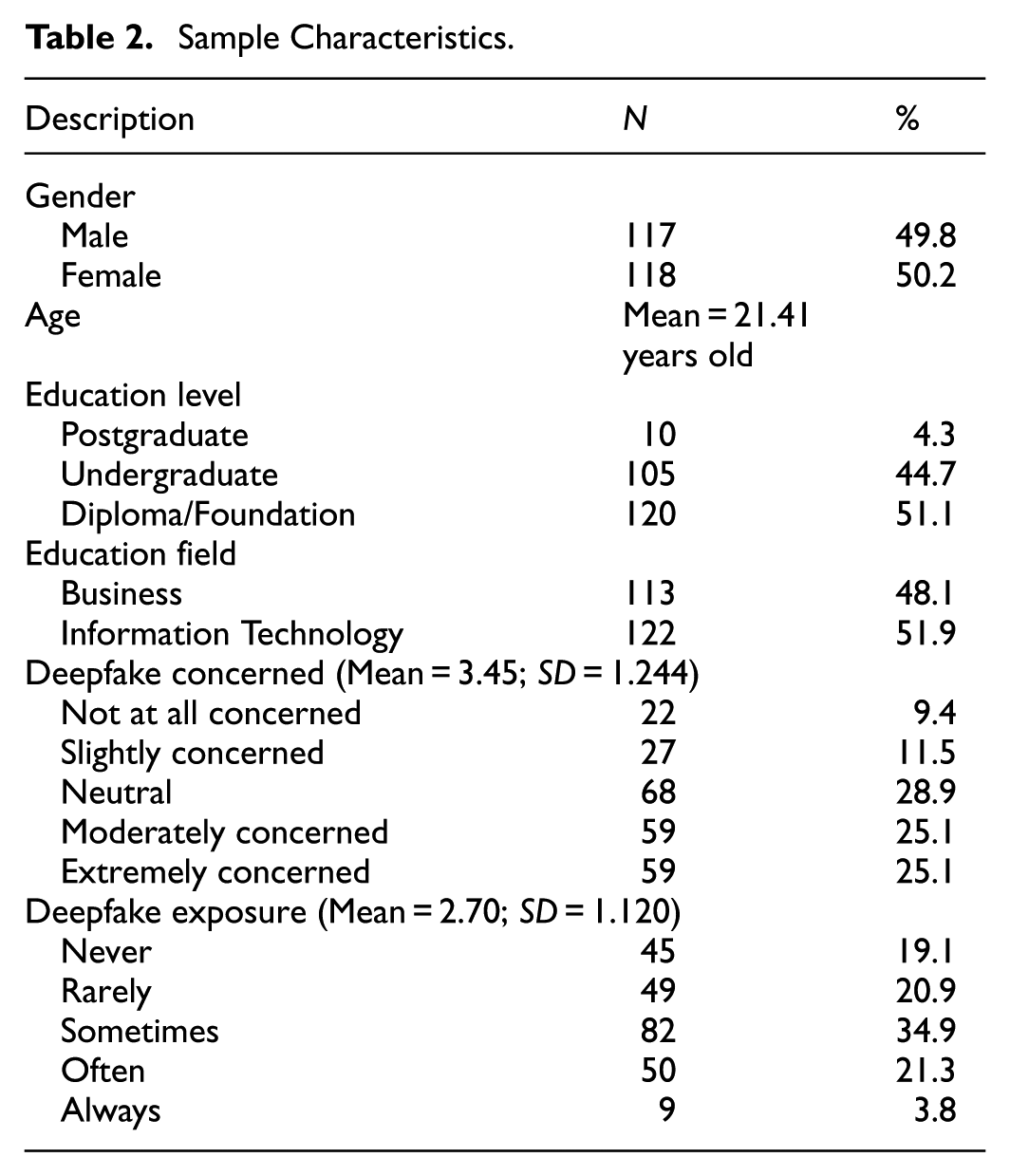
To ensure data authenticity and minimize response bias, participants were informed of the study’s purpose, background, and confidentiality. Participation was voluntary, anonymous, and without incentives, and a brief explanation of deepfake technology was provided to ensure understanding. Ethical approval was obtained, and all procedures adhered to institutional guidelines. Table 2 shows the demographic profile: 117 males and 118 females (mean age 21.41), including 120 diploma, 105 undergraduate, and 10 postgraduate students; 122 from IT and 113 from Business programs. While 50.2% expressed concern about deepfake, only 25.1% reported frequent exposure.
Sample Characteristics.
Measures
The survey used a five-point Likert scale (“1 = strongly disagree” to “5 = strongly agree”) for all items, with detailed items and sources provided in Table A1 (see Appendix A). Operational definitions of the nine constructs are outlined in Table 3. All items were adapted from validated scales and reviewed by academicians in information systems and educational technology to ensure clarity, relevance, and contextual appropriateness.
Operational Definition.

Data Screening
Data were collected via Google Forms and screened in SPSS to ensure quality. The form prevented missing responses, and no missing data were found. Seven cases exhibiting straight-lining were removed following Hair et al. (2017). Mahalanobis distance values were calculated to detect multivariate outliers (Tabachnick & Fidell, 2013), and none were identified. Consequently, all 235 remaining responses were retained for analysis.
A priori power analysis was conducted using GPower (Faul et al., 2009), following Hair et al. (2010), to assess sample adequacy. The measurement model included three arrowheads per endogenous construct and six interaction effects from two moderators. With α = .05, medium effect size (f2 = 0.15; Singh, 2006), and power = 0.80, a minimum of 123 responses was required. As structural equation modeling typically requires at least 200 cases (Kline, 2011), the final sample of 235 responses exceeds both thresholds, supporting the dataset’s adequacy for analysis.
Common Method Bias
This study used a single-source, self-reported questionnaire, which could introduce common method bias (CMB; Podsakoff et al., 2003). A full collinearity test regressing latent variables on a common random variable showed variance inflation factor (VIF) values below 3.3 (Kock, 2015) for all constructs: ATT (1.455), AW (1.600), CS (1.251), EA (2.118), FOMO (1.138), HE (2.923), KTD (1.769), PE (2.776), and SA (2.147), indicating CMB is not a concern. Harman’s single-factor test revealed the first factor accounted for 22.387% of variance, below the 50% threshold (Podsakoff et al., 2003), further confirming minimal CMB risk.
Normality Assumption
Normality was assessed using latent variable scores, revealing Mardia’s multivariate skewness (β = 14.192, p < .05) and kurtosis (β = 125.606, p < .05), exceeding the ±3 skewness and ±20 kurtosis thresholds (M. K. Cain et al., 2017), indicating a violation of multivariate normality. Accordingly, a non-parametric approach was adopted, and bootstrapping was conducted using SmartPLS (Hair et al., 2021).
Result and Analysis
Partial least squares structural equation modeling (PLS-SEM) was employed using SmartPLS 4.1.1.2 to test the proposed model. PLS-SEM is suitable for complex, prediction-oriented models with moderation effects and performs well with relatively small samples (Hair et al., 2021). Given the study’s exploratory (Hair et al., 2019) focus on cognitive, normative, and hedonic factors influencing deepfake social acceptance, a two-step approach was adopted (Hair et al., 2022): first, assessing the reliability and validity of the outer model, and second, testing hypotheses with the inner model using bootstrapping with 5,000 resamples.
Assessment of the Measurement Model
The measurement model was assessed to establish construct reliability and validity (Table 4). Two items from the fear of missing out construct and two from conscientiousness were removed due to low outer loadings to improve average variance extracted (AVE). Specifically, the conscientiousness items “I am not someone who is careless” and “I have no difficulty getting started on tasks” were deleted. Although the Big Five traits were developed in Western contexts (Soto & John, 2017a), their expression varies across cultures. In this study, Malaysian students’ conscientiousness primarily reflected thorough and responsible task completion (mean = 3.550) and fulfilling task responsibilities (mean = 3.630), rather than task initiation (mean = 3.260) or avoiding carelessness (mean = 3.200), consistent with Muhamad et al. (2018).
Constructs Measurement.

Two items from the FOMO scale, “I fear my friends have more rewarding experiences than me” and “When I have a good time, it is important for me to share the details online (e.g., updating status),” were removed due to low outer loadings. This deletion aligns with evidence that FOMO expression varies across cultures. In collectivist societies such as Malaysia, younger individuals experience FOMO primarily through social comparison and staying informed about peers’ activities, rather than actively sharing personal experiences online (Ma’rof & Abdullah, 2024).
The remaining indicators’ outer loadings ranged from 0.655 to 0.933, exceeding the 0.50 threshold (Hair et al., 2017). Composite reliability values surpassed .70, and AVE values exceeded 0.50 for all constructs, confirming reliability and convergent validity. Cronbach’s Alpha values ranged from .749 to .945, meeting the .70 minimum for internal consistency (Hair et al., 2010). Discriminant validity was supported by HTMT values below 0.85 (Franke & Sarstedt, 2019) and the square roots of AVE exceeding inter-construct correlations (Fornell & Larcker, 1981), indicating all constructs were distinct (Table 5).
Discriminant Validity.
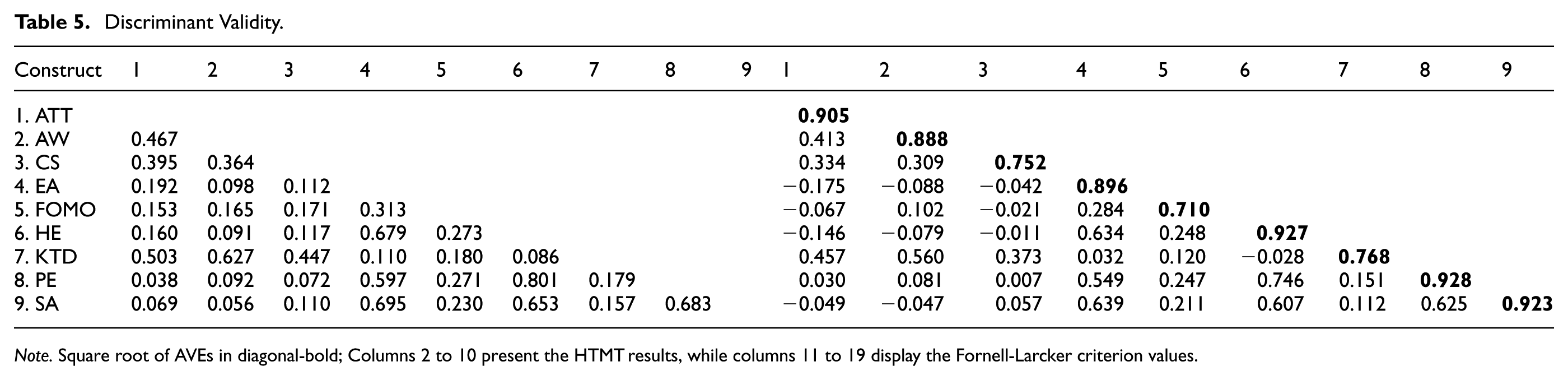
Note. Square root of AVEs in diagonal-bold; Columns 2 to 10 present the HTMT results, while columns 11 to 19 display the Fornell-Larcker criterion values.
Assessment of the Structural Model
Table 6 presents the structural model results, including path coefficients, standard errors, t-values, p-values, effect sizes, and inner VIF. Inner VIF values ranged from 1.150 to 2.932, below the 3.3 threshold, indicating no multicollinearity (Hair et al., 2019). Effect sizes (f2) indicate small to medium impacts (Cohen, 1988).
Summary of Hypotheses.

Note. ns = not significant; Cohen’s (1988) effect size threshold: Small (0.02), Medium (0.15), Large (0.35).
p < .05. **p < .01. ***p < .001.
In this model, knowledge shows a significant positive relationship with both awareness (β = .443, p < .001) and attitude (β = .423, p < .001). Attitude is positively associated with awareness (β = .172, p < .001) and negatively associated with ethical acceptability (β = –.172, p < .01). Ethical acceptability (β = .395, p < .001) and perceived enjoyment (β = .341, p < .001) are both significantly and positively associated with social acceptance. However, hedonic enjoyment does not significantly relate to social acceptance (β = .108, p > .05).
Attitude significantly mediates the relationship between knowledge and awareness. The indirect path yielded a t-value of 2.322 (p < .05). The direct effect of knowledge on awareness remains significant, indicating partial mediation (Hair et al., 2017).
The interaction between knowledge and FOMO on attitude is positive and significant (β = .140, p < .05), indicating that FOMO strengthens the effect of knowledge on attitude. Similarly, the interaction between attitude and FOMO on ethical acceptability is positive and significant (β = .169, p < .05), showing that FOMO moderates the negative effect of attitude on ethical acceptability.
Simple slope analyses (Figure 2) show that at high FOMO, greater deepfake knowledge predicts more positive verification attitude. At low FOMO, stronger verification attitude correspond to lower ethical acceptability, a relationship that diminishes at high FOMO. These results indicate that FOMO strengthens the positive effect of knowledge on attitude and attenuates the negative effect of verification attitude on ethical acceptability.
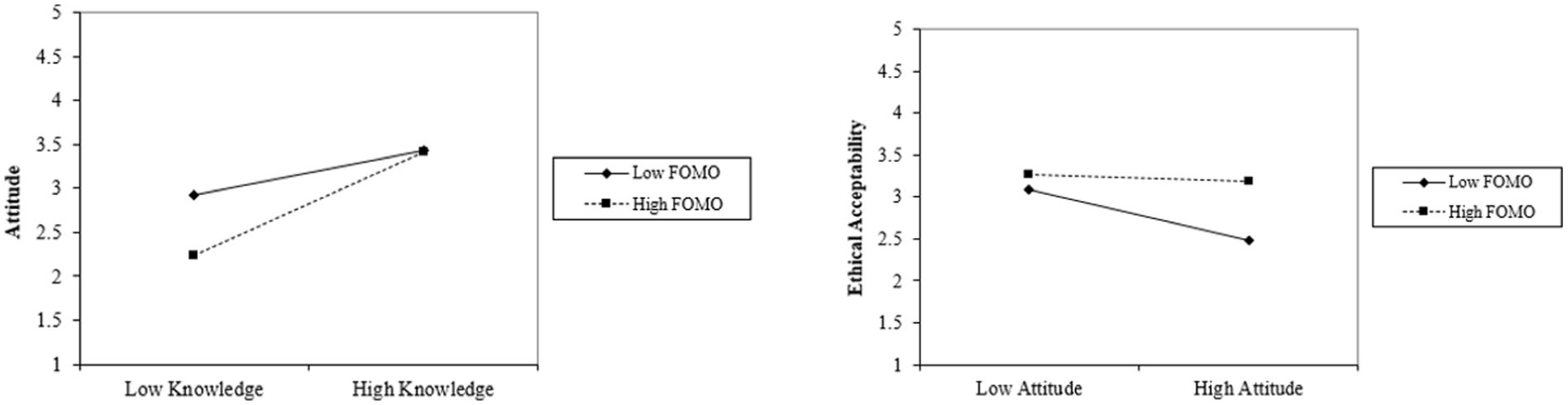
The moderating effects of FOMO.
The structural model explains 54.1% of the variance in social acceptance (R2 = .541), indicating moderate explanatory power (Hair et al., 2019). Cognitive, normative, hedonic, social-emotional, and personality factors collectively account for over half of students’ social acceptance of deepfake in educational contexts. Model fit indices yielded SRMR = 0.113, χ2 = 1561.161, and NFI = 0.766. Although SRMR slightly exceeds 0.10 and NFI is below 0.90, variance-based PLS-SEM guidelines place greater emphasis on explanatory power over exact fit (Hair et al., 2022). Accordingly, the model can be regarded as adequate based on the R2.
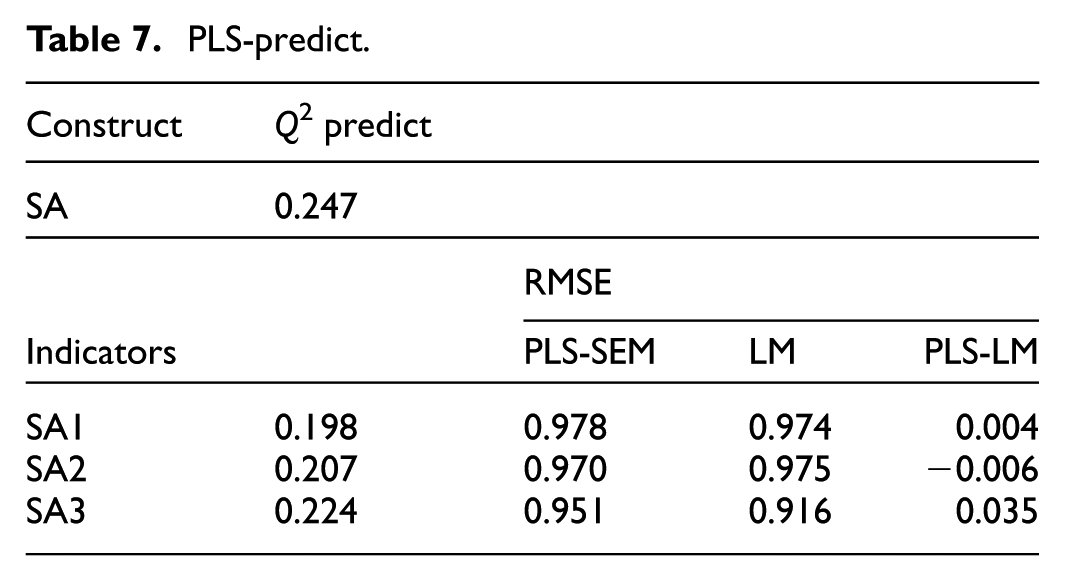
PLS-Predict assessed the model’s predictive ability for holdout samples (Shmueli et al., 2019). Social acceptance showed Q2 = 0.247 (>0), and all indicators had Q2 predict > 0, confirming predictive relevance (Table 7). RMSE comparisons with the linear model revealed minor deviations for some indicators (e.g., SA3 = +0.035; SA1 = +0.004; SA2 = −0.005), consistent with expectations in complex models. These small to moderate deviations do not compromise the evaluation of theoretical relationships (Shmueli et al., 2019). This is typical in the present study’s complex models integrating cognitive, normative, and hedonic constructs with moderating effects.
PLS-predict.
Additional Moderation Analyses
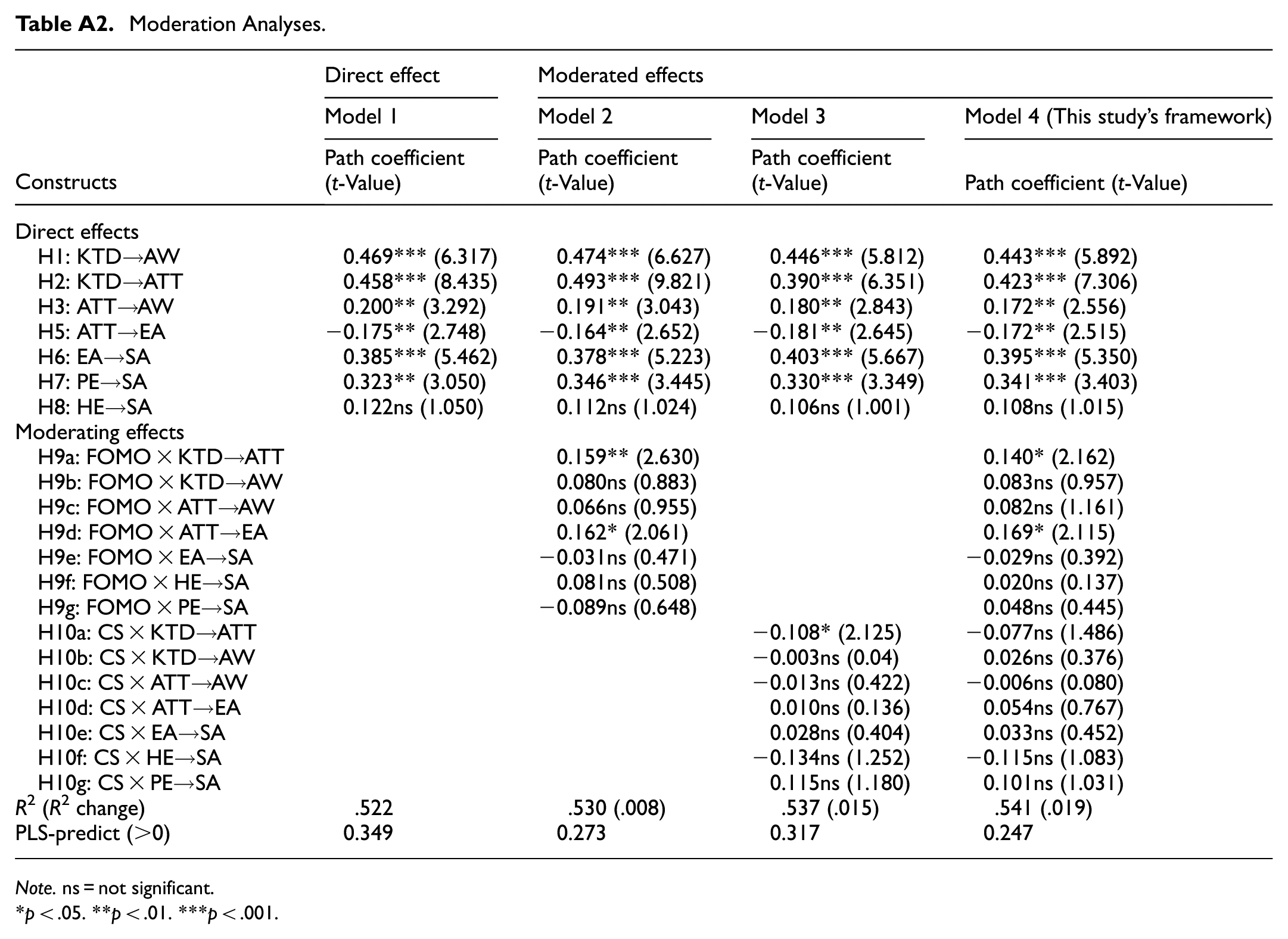
To assess robustness (Table A2), the study examined each moderator’s explanatory power (Jiang et al., 2021). Model 1 served as a baseline with seven direct relationships; Model 2 added FOMO, and Model 3 added conscientiousness. Bootstrapping in Model 3 showed that conscientiousness significantly and negatively moderated the knowledge–attitude relationship (β = −.108*, Bias-Corrected CI: −0.191, −0.024). Simple slope analyses (Figure 3) indicate the knowledge–attitude link is stronger at low and weaker at high conscientiousness. Including FOMO and conscientiousness as moderators increased explained variance in social acceptance by 3.64% (ΔR2 = .019).
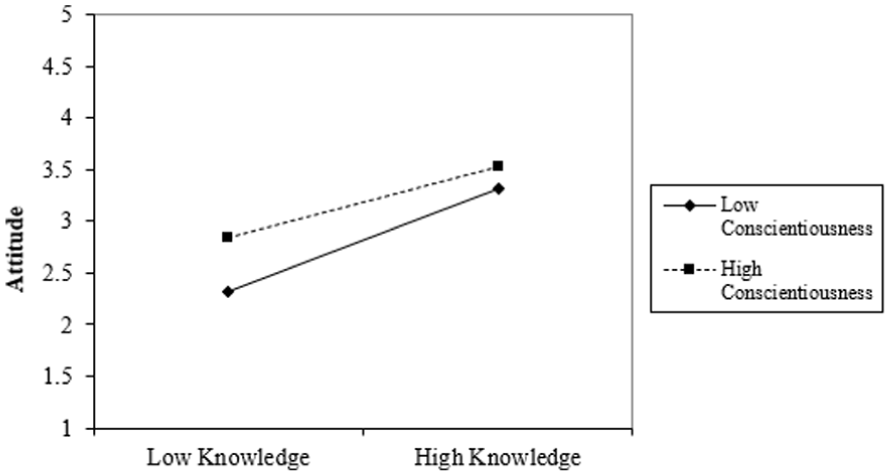
Moderating effect of conscientiousness.
Discussions
Cognitive (KAB Model), Normative Pathways, and FOMO
Recent cybersecurity research shows that the Knowledge-Attitude-Behavior (KAB) model effectively explains awareness and behavioral responses (Ahamed et al., 2024; Butavicius et al., 2020). Consistent with these findings, this study finds that deepfake knowledge (M = 3.691, SD = 0.652) significantly enhances both security awareness (M = 3.729, SD = 0.692, p < .001) and verification attitude (M = 3.888, SD = 0.907, p < .001). These results confirm that greater knowledge fosters critical verification attitude and heightens awareness of deepfake-related risks.
Among university students with high FOMO, greater deepfake knowledge significantly increases verification attitude, indicating that FOMO strengthens the knowledge–attitude link. This extends the KAB framework by showing that social-emotional factors moderate this relationship, with FOMO acting as a motivational force that enhances cognitive engagement with complex digital content (Kong et al., 2024). In the context of deepfake, students with higher FOMO demonstrate stronger verification attitude even when controlling for knowledge. These findings highlight the role of affective social pressures in amplifying knowledge effects, supporting calls to integrate emotional moderators into the KAB model (Hong et al., 2023) and aligning with evidence that social-emotional responses can drive decision making under high uncertainty (Loewenstein et al., 2001). Overall, KAB processes interact dynamically with individual social-emotional states in technology-mediated environments.
The study found a positive and significant relationship between attitude and awareness, consistent with Shahbaznezhad et al. (2021) and M. Alanazi et al. (2022). University students with stronger verification attitude demonstrate greater awareness of deepfake. Attitude mediates the relationship between knowledge and awareness, aligning with Ahamed et al. (2024), indicating that while knowledge enhances understanding, verification attitude determines how effectively it translates into heightened awareness of deepfake-related security risks.
The study found that attitude negatively associates with ethical acceptability, consistent with Ramachandran et al. (2023). University students with stronger verification attitude perceive deepfake as less ethically acceptable, indicating that critical evaluation heightens ethical scrutiny, especially regarding authenticity and manipulation. Similar patterns appear in emerging technologies like ChatGPT, where frequent use raises concerns about reduced cognitive engagement, influencing ethical judgments (Acosta-Enriquez et al., 2024).
The study found that FOMO positively moderated the relationship between verification attitude and ethical acceptability of deepfake. Among students with low FOMO, stronger verification attitude corresponded to lower ethical acceptability, but this negative relationship weakened as FOMO increased. From the KAB perspective, high FOMO heightens attentional vigilance, strengthening the translation of knowledge into verification attitude (Hai & Xiong, 2025; Przybylski et al., 2013). From GFT, ethical acceptability reflects a normative goal, and high-FOMO individuals adjust moral judgments to align with social consensus, weakening the effect of verification attitude on ethical evaluations (McKee et al., 2024). Thus, FOMO operates dually: enhancing cognitive alignment with verification knowledge while attenuating normative application to moral judgment, highlighting how social-emotional pressures shape knowledge–attitude–judgment processes in deepfake contexts.
Normative and Hedonic Pathways (Goal Framing Theories), Social Acceptance, and FOMO
The study found a positive relationship between normative goal frame (ethical acceptability) and social acceptance, consistent with Ari et al. (2024) and Taebi (2017). University students who perceived deepfake as ethically acceptable were more likely to express social acceptance, including supporting its use in coursework, applying it in studies, and engaging with deepfake-generated learning content.
However, unexpectedly, not all hedonic goals significantly influenced university students’ acceptance of deepfake. Perceived enjoyment (i.e., finding deepfake content fun) positively and significantly predicted social acceptance, whereas hedonic enjoyment (e.g., thrill, sense of adventure, or excitement) did not. This aligns with Ruiz et al. (2024) but contrasts with Marjerison et al. (2022). The difference may reflect contextual factors: deepfake is technically complex and ethically ambiguous (M. Li & Wan, 2023), which may reduce thrill-oriented hedonic responses. Hedonic motivations encompass multiple dimensions, including enjoyment, passing time, and behavioral intention (Brandtzaeg & Følstad, 2018), yet the novelty and ethical concerns of deepfake may dampen hedonic excitement, while perceived enjoyment represents an immediate psychological reaction (Cyr et al., 2009), making it a stronger predictor of educational acceptance (f2 = 0.102 vs. f2 = 0.009).
In summary, social acceptance depends more on accessible and relevant enjoyment than on thrill alone. Previous studies indicate that hedonic motives are less influential when ethical or functional factors are salient (Cyr et al., 2009; van der Heijden, 2004), consistent with this study’s finding that perceived enjoyment predicted acceptance, whereas thrill-oriented hedonic enjoyment did not. According to GFT, normative goals can override hedonic goals when ethical responsibility and social appropriateness are emphasized (Lindenberg & Steg, 2007). In educational contexts, university students may therefore prioritize ethical acceptability and responsible use of deepfake (f2 = 0.171) over adventure or excitement associated with hedonic enjoyment.
Moderating Roles of FOMO and Conscientiousness in Cognitive, Normative, and Hedonic Pathways
In this study, conscientiousness and FOMO significantly moderated the knowledge–attitude relationship but not the knowledge–awareness or attitude–awareness links. Attitude is shaped by both cognitive and motivational–emotional processes (Ajzen, 2001). FOMO, as an emotional–motivational factor, influences evaluations through heightened sensitivity to social belonging and exclusion (Przybylski et al., 2013), explaining its effect on the knowledge–attitude link. By contrast, awareness reflects cognitive recognition of an issue (Hong et al., 2023) and is less dependent on affective or motivational states.
Conscientiousness, characterized by self-discipline, organization, and goal directed behavior (Costa & McCrae, 1992), relates more strongly to effortful behaviors and evaluative judgments than to perceptual or reflective processes. It predicts task performance and the translation of knowledge into deliberate action (Komarraju et al., 2011) and is more consistently linked to behavioral outcomes than to awareness or perception (McCrae & Costa, 2008). In contrast, awareness involves reflection, salience detection, and memory retrieval (Hong et al., 2023), which depend on cognitive internalization (Aikins, 2004) rather than goal directed effort (Petty & Cacioppo, 1986), and moral evaluations are shaped primarily by contextual and normative cues (Graham et al., 2009).
These findings are consistent with the present results. Both FOMO and conscientiousness moderated the knowledge–attitude relationship, highlighting their role in shaping evaluative processes. However, only FOMO influenced the attitude–ethical acceptability relationship, reflecting its affective and motivational basis, while conscientiousness did not significantly moderate awareness or ethical acceptability.
Conscientiousness emphasizes responsibility, persistence, and future-oriented planning (Bogg & Roberts, 2013; Wilmot & Ones, 2019), affecting behaviors that require sustained effort, whereas FOMO reflects sensitivity to social belonging and fear of exclusion (Przybylski et al., 2013), making it more relevant to evaluative judgments or decisions under social comparison. Trait activation theory suggests traits influence behavior only when situations align with their motivational relevance (Tett & Burnett, 2003). Because hedonic and normative motivations are immediate or socially guided, the effects of conscientiousness and FOMO are limited: hedonic motives involve spontaneous affective responses (Kawabata & Mallett, 2022), and normative motives are shaped by social norms and collective expectations. This aligns with evidence that conscientiousness predicts long-term planning and self-regulation (Chakraborty et al., 2023), while FOMO primarily shapes evaluative judgments rather than immediate or norm-driven responses (Elhai et al., 2020).
Both FOMO and conscientiousness were tested as potential moderators; however, conscientiousness did not show a significant effect when analyzed alongside FOMO. When examined independently, conscientiousness negatively moderated the positive relationship between deepfake knowledge and verification attitude, contrary to the hypothesized positive effect. Specifically, the association between knowledge and verification attitude was stronger for students with lower conscientiousness and weaker for those with higher conscientiousness, indicating that while knowledge generally enhances verification attitude, its impact diminishes as conscientiousness increases.
A possible explanation is that highly conscientious individuals approach complex or controversial information, such as deepfake, with caution and analytical rigor (Komarraju et al., 2011). Rather than directly translating knowledge into strong verification attitude, they may adopt a more measured or skeptical stance, especially when ethical guidelines or established procedures are ambiguous. Research indicates that conscientious individuals often avoid uncertain environments without structured frameworks (Soto & John, 2017b). In the context of deepfake, where technological and ethical boundaries remain fluid (M. Li & Wan, 2023), conscientious students may hesitate to convert knowledge into confident verification attitude.
Conscientiousness involves diligence, accuracy, and adherence to rules (Soto & John, 2017a). Research indicates that highly conscientious individuals are careful, avoid risks, and aim to maintain life satisfaction (Aumeboonsuke & Caplanova, 2021; Boyce et al., 2016). While these traits are advantageous in structured settings, they may prompt caution in ambiguous contexts. University students reported moderate concern about deepfake (Mean = 3.45) but low exposure (Mean = 2.70). Thus, even with substantial deepfake knowledge, conscientious students’ cautious and rule-oriented tendencies may limit the translation of knowledge into stronger verification attitude.
Implications
Theoretical Implications
As deepfake technology becomes increasingly prevalent in education and entertainment (Chadha et al., 2021; Gilbert & Gilbert, 2024; Roe et al., 2024), understanding university students’ perceptions and responses is crucial. This study applies the Knowledge-Attitude-Behavior (KAB) model and Goal Framing Theory (GFT) to examine students’ awareness and acceptance of deepfake in academic contexts. While the KAB model effectively explains behavior change in health education (Rimpeekool et al., 2016) and information security (Ahamed et al., 2024), prior research shows that knowledge alone rarely alters attitude or behavior, highlighting the role of additional motivational factors (B. H. Nguyen & Le, 2024). In the context of deepfake, this challenge is amplified by the technical complexity of creating and detecting manipulated media (Verdoliva, 2020) and ethical ambiguities regarding consent and misinformation (Chesney & Citron, 2019; Vaccari & Chadwick, 2020). Findings reveal that students’ verification attitude shapes their ethical acceptability judgments, which in turn influence social acceptance, thereby extending the KAB model and demonstrating the relevance of GFT in explaining how cognitive attitude and normative perceptions jointly determine acceptance of emerging technologies.
Drawing on GFT, this study highlights that behavior is guided by multiple simultaneously active goals, particularly normative and hedonic orientations. A normative goal frame emphasizes societal implications, with individuals feeling responsible for the ethical and social consequences of deepfake use (M. Li & Wan, 2023). In contrast, a hedonic goal frame prioritizes immediate enjoyment, leading to favorable attitude toward deepfake for amusement or creativity, even when risks are recognized (Gestoso & Bakayeva, 2024; W. Li & Zhao, 2024). Findings indicate that these motivational orientations strongly shape whether university students perceive deepfake as entertainment or an ethical concern, which in turn influences their social acceptance of the technology.
The results indicate that social pressures, specifically FOMO, moderate the relationship between university students’ deepfake knowledge and verification attitude. Higher FOMO strengthens this relationship, suggesting that social factors heighten critical engagement (Przybylski et al., 2013) with emerging deepfake technology (F. Y. Lee et al., 2025). Additionally, FOMO moderates the negative relationship between verification attitude and ethical acceptability: at low FOMO, stronger verification attitude leads students to view deepfake as less ethically acceptable, whereas at high FOMO this effect weakens. Theoretically, these findings extend the KAB model by showing that attitude does not uniformly translate into ethical evaluations but depend on social pressures. From the perspective of GFT, normative goals are more influential under low FOMO, while higher FOMO conditions dilute the weight of ethical considerations.
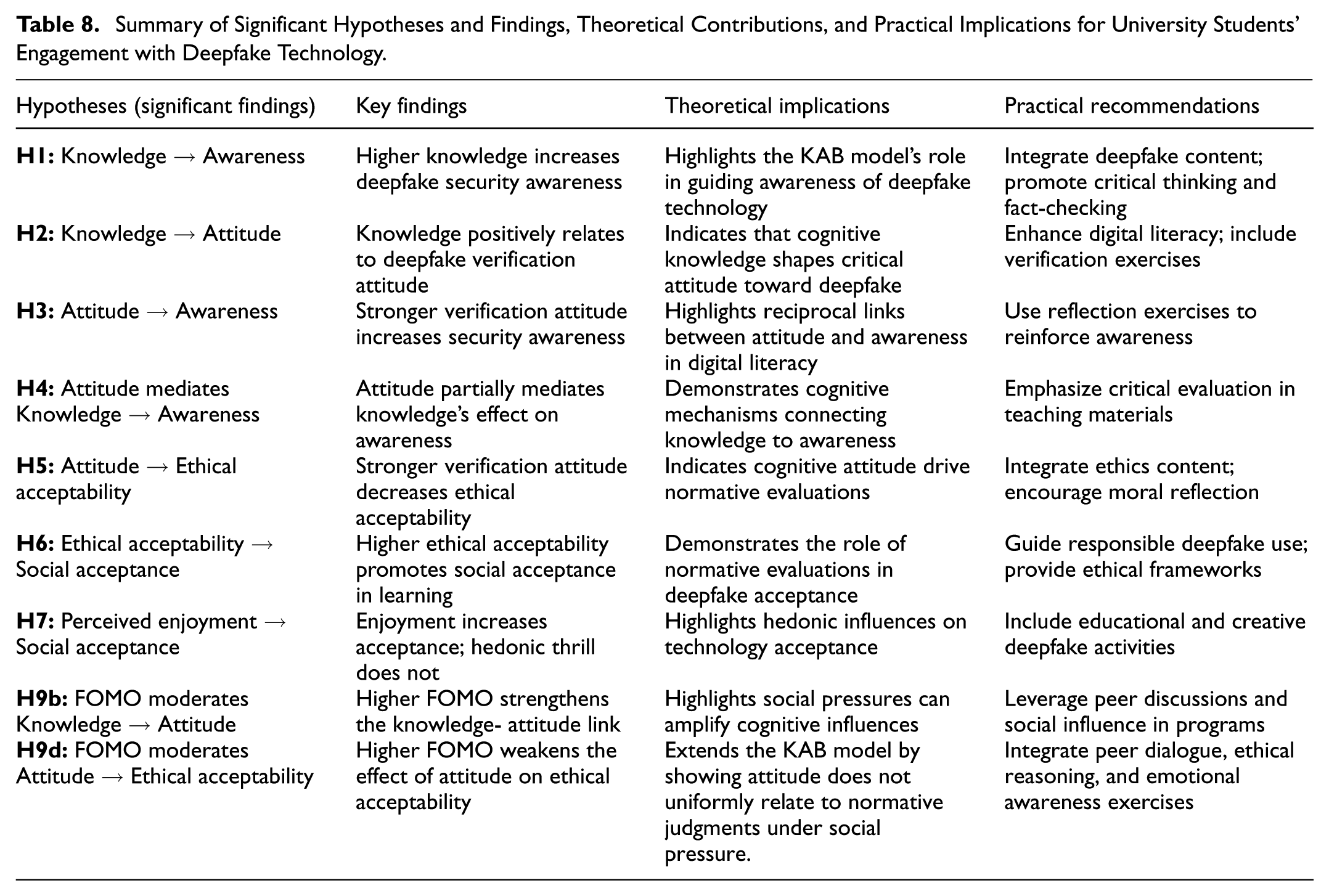
The findings extend existing models by showing that socially embedded motivations, such as FOMO, can recalibrate the influence of attitude on ethical acceptability, enhancing the explanatory power of both KAB and GFT perspectives. They highlight the importance of incorporating social factors into models of knowledge, attitude, and technology acceptance, as these factors shape how individuals interpret information and assess ethical implications in deepfake contexts (Table 8).
Summary of Significant Hypotheses and Findings, Theoretical Contributions, and Practical Implications for University Students’ Engagement with Deepfake Technology.
Practical Implications
Deepfake technology presents both opportunities and challenges. It offers university students avenues for entertainment, social connection, and potential educational applications. However, despite awareness of associated risks, particularly misinformation, some students may still share deepfake content due to limited verification behaviors (Sharma et al., 2023). This underscores the importance of understanding how deepfake knowledge, verification attitude, and security awareness interact among university students, who are active social media users and future societal influencers.
This study demonstrates that deepfake knowledge positively relates to verification attitude and awareness, with verification attitude acting as a mediator. This has clear implications for education and media literacy. Enhancing students’ understanding of deepfake can improve their awareness of both its benefits and risks. Universities could implement strategies such as integrating deepfake case studies into media literacy curricula, designing exercises to reinforce verification behaviors, and providing opportunities for critical evaluation of manipulated content. These initiatives capitalize on the link between knowledge and verification attitude, equipping students to engage responsibly with digital content and navigate emerging technological challenges.
The study shows that among university students with higher FOMO, greater deepfake knowledge enhances verification attitude, indicating that social-emotional pressures can be leveraged positively when students are well-informed. Educational programs could incorporate collaborative exercises, peer discussions, or simulated social scenarios to mimic FOMO while emphasizing critical evaluation. Conscientiousness was found to negatively moderate the knowledge–attitude relationship, with students low in conscientiousness benefiting more from knowledge in forming positive verification attitude. This suggests personality influences how effectively knowledge translates into proactive behavior. To support all students, universities could provide clear ethical guidelines, step-by-step verification procedures, checklists for assessing credibility, and practical workshops to build verification skills. Combining knowledge-building, structured training, and consideration of social-emotional and personality factors can enhance digital literacy, critical evaluation, and responsible engagement with deepfake technology.
The study finds that verification attitude negatively associates with ethical acceptability of deepfake, indicating that students who critically evaluate digital content are less likely to view deepfake as ethically acceptable, especially in manipulative or deceptive contexts. This highlights the importance of promoting both technical literacy and ethical reflection in university education (Kumar, 2024). Integrating ethics-focused content into media and communication courses can help students assess the moral implications of deepfake and foster responsible, informed digital citizenship.
The study further shows that students with strong verification attitude and low FOMO are more likely to perceive deepfake as ethically unacceptable. This underscores the need for media literacy initiatives addressing both cognitive and social-emotional factors. Educational programs could combine critical verification training with strategies to manage FOMO, such as guided reflection on digital habits and prioritizing credible information sources. Peer discussion groups evaluating deepfake examples and scenario-based exercises simulating real-world exposure can enhance ethical decision-making. Policymakers and curriculum designers might also integrate digital ethics modules to foster responsible engagement with emerging technologies.
Given that ethical acceptability positively associates with social acceptance of deepfake in educational contexts, universities can implement targeted strategies to enhance ethical judgment and promote responsible use. Institutions may integrate structured ethical frameworks into coursework, helping students assess the potential impacts, risks, and benefits of deepfake technology. Framing deepfake as a tool for creative and academic applications, such as digital storytelling, media production, or historical simulations (Hendrickson, 2025; Lundberg & Mozelius, 2025), can foster both ethical awareness and responsible engagement. Additionally, providing clear ethical guidelines, facilitating peer discussions, and using scenario-based exercises that illustrate responsible use and potential misuse can strengthen students’ ethical reasoning. Linking ethical considerations to practical activities encourages thoughtful and constructive adoption of deepfake technology in academic work.
The positive association between perceived enjoyment and social acceptance indicates that students are more likely to embrace deepfake in academic contexts when the experience is engaging. Universities can capitalize on this by designing learning activities that highlight the educational and creative potential of deepfake, such as interactive projects, simulations, or digital storytelling exercises. To ensure enjoyment does not lead to mere entertainment or misuse, instructors should embed clear learning objectives, ethical guidelines, and reflective discussions. Framing activities around skill development, critical thinking, and creative application links enjoyment to purposeful learning, fostering acceptance grounded in both engagement and educational value.
Limitations and Further Research
This study acknowledges several limitations. Data were collected from 235 IT and business students in Malaysian universities, chosen because educational background influences responses to emerging technologies such as deepfake (Watson et al., 2021). While this enhances contextual relevance, the narrow sample may limit representativeness and generalizability (Creswell & Creswell, 2022). Future research could target larger and more diverse student populations to provide broader insights, strengthen Q2 predict values (Shmueli et al., 2019), and allow more rigorous assessment of the model’s predictive power. Additionally, incorporating variables such as prior deepfake exposure (Ahmed et al., 2024), digital literacy (Verma, 2025), and contextual factors like peer influence (W. Li & Zhao, 2024) could improve the model’s explanatory and predictive accuracy, offering a more comprehensive understanding of the determinants of deepfake perception and social acceptance in educational contexts.
Second, the cross-sectional survey design and non-probability convenience sampling limit causal inference and the generalizability of findings beyond the sampled population (Creswell & Creswell, 2022). This approach, however, ensured voluntary participation and allowed respondents to complete the survey at their convenience, reducing potential response bias. Future research could adopt longitudinal or experimental designs to better capture the evolution of perceptions and attitude toward deepfake over time.
Third, while this study examined FOMO and conscientiousness as moderators, future research could investigate additional factors, such as media trust (Vaccari & Chadwick, 2020) and cultural influences (X. Zhang et al., 2025), to deepen understanding of deepfake perception and acceptance. Moreover, research has largely focused on normative and hedonic motivations (M. Li & Wan, 2023), whereas gain related goals, centered on acquiring or preserving personal resources, have received limited empirical attention. According to GFT, gain motivation is weaker than hedonic goals but stronger than normative goals (Lindenberg, 2022), reflecting pursuits of efficiency, performance, or cost savings (Lindenberg & Steg, 2007). Given deepfake’s potential for low cost, efficient content creation (W. Li & Zhao, 2024; Sivathanu et al., 2024), future studies could explore how social acceptance in educational contexts may influence gain related outcomes, such as improved efficiency or academic performance.
Footnotes
Appendix A
Moderation Analyses.
| Constructs | Direct effect | Moderated effects | ||
|---|---|---|---|---|
| Model 1 | Model 2 | Model 3 | Model 4 (This study’s framework) | |
| Path coefficient (t-Value) | Path coefficient (t-Value) | Path coefficient (t-Value) | Path coefficient (t-Value) | |
| Direct effects | ||||
| H1: KTD→AW | 0.469*** (6.317) | 0.474*** (6.627) | 0.446*** (5.812) | 0.443*** (5.892) |
| H2: KTD→ATT | 0.458*** (8.435) | 0.493*** (9.821) | 0.390*** (6.351) | 0.423*** (7.306) |
| H3: ATT→AW | 0.200** (3.292) | 0.191** (3.043) | 0.180** (2.843) | 0.172** (2.556) |
| H5: ATT→EA | −0.175** (2.748) | −0.164** (2.652) | −0.181** (2.645) | −0.172** (2.515) |
| H6: EA→SA | 0.385*** (5.462) | 0.378*** (5.223) | 0.403*** (5.667) | 0.395*** (5.350) |
| H7: PE→SA | 0.323** (3.050) | 0.346*** (3.445) | 0.330*** (3.349) | 0.341*** (3.403) |
| H8: HE→SA | 0.122ns (1.050) | 0.112ns (1.024) | 0.106ns (1.001) | 0.108ns (1.015) |
| Moderating effects | ||||
| H9a: FOMO × KTD→ATT | 0.159** (2.630) | 0.140* (2.162) | ||
| H9b: FOMO × KTD→AW | 0.080ns (0.883) | 0.083ns (0.957) | ||
| H9c: FOMO × ATT→AW | 0.066ns (0.955) | 0.082ns (1.161) | ||
| H9d: FOMO × ATT→EA | 0.162* (2.061) | 0.169* (2.115) | ||
| H9e: FOMO × EA→SA | −0.031ns (0.471) | −0.029ns (0.392) | ||
| H9f: FOMO × HE→SA | 0.081ns (0.508) | 0.020ns (0.137) | ||
| H9g: FOMO × PE→SA | −0.089ns (0.648) | 0.048ns (0.445) | ||
| H10a: CS × KTD→ATT | −0.108* (2.125) | −0.077ns (1.486) | ||
| H10b: CS × KTD→AW | −0.003ns (0.04) | 0.026ns (0.376) | ||
| H10c: CS × ATT→AW | −0.013ns (0.422) | −0.006ns (0.080) | ||
| H10d: CS × ATT→EA | 0.010ns (0.136) | 0.054ns (0.767) | ||
| H10e: CS × EA→SA | 0.028ns (0.404) | 0.033ns (0.452) | ||
| H10f: CS × HE→SA | −0.134ns (1.252) | −0.115ns (1.083) | ||
| H10g: CS × PE→SA | 0.115ns (1.180) | 0.101ns (1.031) | ||
| R2 (R2 change) | .522 | .530 (.008) | .537 (.015) | .541 (.019) |
| PLS-predict (>0) | 0.349 | 0.273 | 0.317 | 0.247 |
Note. ns = not significant.
p < .05. **p < .01. ***p < .001.

Ethical Considerations
This study was approved by the Research Ethics Committee of Multimedia University (Approval number: EA0152025).
Consent to Participate
Informed consent was obtained from all individual participants included in the study.
Author Contributions
Funding
The authors disclosed receipt of the following financial support for the research, authorship, and/or publication of this article: This work was supported by Multimedia University Malaysia under the MMU Postdoctoral Research Fellow Grant (Grant No. MMUI/250029).
Declaration of Conflicting Interests
The authors declared no potential conflicts of interest with respect to the research, authorship, and/or publication of this article.
Data Availability Statement
The datasets used and analyzed during the current study are available from the corresponding author on reasonable request.