







Abstract
This study focuses on non-permanent employees in higher education institutions and develops a theoretical model incorporating psychological empowerment, perceived organizational status, organizational identification, work engagement, and innovative behavior. It investigates the mechanism through which psychological empowerment influences the work behavior of non-permanent employees, with psychological safety introduced as a moderating variable. The findings reveal that: (a) psychological empowerment significantly enhances non-permanent employees’ perceived organizational status and organizational identification, thereby promoting their work engagement and innovative behavior; (b) the mediating role of psychological contract in the relationship between psychological empowerment and perceived organizational status and organizational identification is not significant; and (c) psychological safety plays a complex moderating role in the effects of perceived organizational status and organizational identification on work engagement and innovative behavior. This study provides theoretical support and practical guidance for effectively motivating non-permanent employees, enriching organizational behavior research on this group, and refining the formation mechanisms of work behavior. Based on these findings, this study suggests that higher education institutions adopt dual management strategies that integrate psychological empowerment and psychological safety to effectively motivate non-permanent employees.
Keywords
Introduction
In recent years, higher education institutions (HEIs) have undergone profound structural and workforce transformations. Across many countries, the proportion of non-permanent employees—including contract lecturers, research assistants, and administrative staff—has increased markedly, reflecting a global trend toward employment flexibility in academia (Avenali et al., 2023). In China, this trend has become particularly pronounced, with non-permanent staff playing an increasingly vital role in sustaining teaching, research, and administrative operations. Despite their contribution, this group often faces distinctive challenges such as job insecurity, unequal access to resources, and weaker organizational attachment, all of which may influence their motivation, engagement, and innovative potential (Baltaru, 2019).
Existing research on employee motivation and innovation has predominantly focused on permanent or full-time employees in corporate and public-sector contexts (Yu et al., 2018). Studies targeting non-permanent employees in HEIs remain relatively limited and fragmented. Some scholars have examined how non-academic or support professionals contribute to institutional performance; for instance, Baltaru (2019) found that the expansion of non-academic staff in UK universities correlated with improved organizational outcomes. Nevertheless, few studies have investigated how disparities in job security and professional recognition translate into differences in psychological empowerment, organizational identification, and innovative behavior within higher education employment contexts. Consequently, the mechanisms through which empowerment and organizational experience affect innovation among non-permanent staff remain underexplored—particularly in the context of Chinese higher education, where contract-based employment has expanded rapidly over the past decade (Avenali et al., 2023).
From a theoretical perspective, prior studies have often relied on single frameworks, such as Psychological Contract Theory (PCT) or the Job Demands–Resources model, without integrating the exchange-based and identity-based mechanisms underlying employee innovation. However, understanding the innovative behavior of non-permanent employees requires a more comprehensive approach that combines PCT, Social Exchange Theory (SET), and Social Identity Theory (SIT).
PCT explains how employees’ perceptions of the organization’s fulfillment of implicit obligations influence their attitudes and work outcomes (Rogozińska-Pawełczyk & Gadomska-Lila, 2022). SET provides an exchange logic: when employees perceive fairness and empowerment, they reciprocate with engagement and innovative efforts (Blau, 2017; Yu et al., 2018). SIT offers an identity-based explanation, describing how perceived organizational status and identification strengthen intrinsic motivation and innovation willingness (Schuster et al., 2022; Tajfel & Turner, 2004).
Building upon these theoretical foundations, this study proposes and empirically tests a structural model linking psychological empowerment, perceived organizational status, organizational identification, work engagement, and innovative behavior among non-permanent employees in Chinese HEIs. Specifically, it examines (a) how psychological empowerment promotes innovative behavior through sequential mediating mechanisms involving perceived status, identification, and engagement, and (b) how these relationships can be interpreted through the integrated lenses of PCT, SET, and SIT.
This research contributes to both theory and practice. Theoretically, it extends empowerment, exchange, and identity frameworks to a non-traditional workforce in higher education, an area that has received limited empirical attention. It deepens understanding of how psychological contracts and social identities jointly drive innovation under flexible employment conditions. Practically, it offers insights for university administrators and policymakers seeking to enhance engagement and innovation among non-permanent staff through targeted empowerment and recognition initiatives. By addressing the theoretical and empirical gap concerning non-permanent employees, this study provides a fresh perspective on how higher education institutions can balance flexibility, inclusion, and innovation in an evolving academic landscape.
Theory Basis and Hypothesis Development
Theoretical Framework
This study is grounded in an integrated theoretical foundation that combines Psychological Contract Theory (PCT), Social Exchange Theory (SET), and Social Identity Theory (SIT). These frameworks jointly explain how psychological empowerment influences non-permanent employees’ innovative behavior through perceived organizational status, organizational identification, and work engagement.
According to Psychological Contract Theory, employees and employers maintain a set of implicit, unwritten expectations about mutual obligations and benefits (Herrera & De Las Heras-Rosas, 2021). When non-permanent employees perceive that their organizations fulfill these psychological obligations—such as providing empowerment, respect, and growth opportunities—they tend to reciprocate with higher engagement and creative performance (Hoye & Kappelides, 2021; Karatepe et al., 2021). However, breaches of this contract can lead to disengagement or reduced innovation motivation.
To extend this reasoning, Social Exchange Theory (Blau, 2017) posits that relationships between employees and organizations are governed by the principle of reciprocity. Organizational actions such as empowerment or recognition represent valuable social resources that foster trust and obligation (Cropanzano et al., 2017; Eisenberger et al., 2016). Employees who experience empowerment feel supported and valued, which motivates them to reciprocate through proactive engagement and innovative behavior (Ali et al., 2022; Ng, 2024). This theoretical lens provides a behavioral explanation for how empowerment promotes innovation through reciprocal exchange processes.
Meanwhile, Social Identity Theory (Tajfel & Turner, 2004) explains how individuals derive part of their self-concept from their membership in an organization. When employees perceive themselves as important members of the organization and identify with its goals and values, they exhibit stronger engagement and are more likely to engage in creative actions (Yue et al., 2021; G. Zhang & Wang, 2022). Organizational identification thus serves as a psychological bridge linking empowerment and innovation, transforming social belonging into behavioral motivation.
Integrating these three perspectives, this study proposes that psychological empowerment acts as a catalyst in the exchange and identity processes within higher education institutions. Empowered employees perceive higher organizational status (exchange-based recognition) and stronger identification (identity-based connection), which together enhance work engagement and ultimately stimulate innovative behavior. This theoretical integration provides a comprehensive explanation of how empowerment influences innovation among non-permanent employees.
Hypothesis Development
Psychological Empowerment
Psychological empowerment is a concept widely studied in organizational and industrial psychology. It refers to employees’ positive perceptions and attitudes toward their work, encompassing dimensions such as work meaning, self-efficacy, impact on work outcomes, and autonomy (Malik et al., 2021). Paul et al. (2000) first proposed a theoretical model suggesting that psychological empowerment directly influences employees’ psychological contracts, which in turn affect their behaviors. In the context of higher education institutions, psychological empowerment enhances employees’ sense of autonomy and competence, directly influencing the psychological contract between employees and employers—an implicit, informal mutual expectation (Huang et al., 2021). When employees feel empowered to participate in decision-making, have control over their work, and perceive their work as meaningful and impactful, they are more likely to believe that the employer is fulfilling a psychological contract that provides opportunities for growth, development, and value realization (Huang et al., 2021). This perception positively influences employees’ organizational status perception. When employees feel that their work is meaningful, trust their ability to accomplish tasks, experience autonomy in their work, and believe they can make a tangible impact within the organization, these factors collectively enhance their recognition of their importance and status. Such recognition fosters a strong sense of belonging and identification with the organization (Bose et al., 2021). This sense of identification encourages employees to be more engaged and loyal to the organization, as they not only recognize their own value and role but also perceive alignment between their personal goals and the organization’s values and objectives (Huang et al., 2021). In summary, psychological empowerment strengthens employees’ positive perceptions of the psychological contract, thereby enhancing their organizational status perception. Based on this, the following hypotheses are proposed:
Employees’ Perception of Organizational Status
Employees’ perception of organizational status refers to their subjective judgment of their relative status and importance within the organization (Chen et al., 2021). This perception encompasses employees’ beliefs about their value to the organization, the degree of respect they receive, and the likelihood that their opinions and suggestions will be considered. There is a strong connection between employees’ perception of organizational status and organizational identification (Younis & Hammad, 2021). When employees feel they hold a higher status in the organization, are respected, and believe their contributions are valued, they are more likely to develop a strong sense of belonging and identification with the organization (Xu & Wang, 2019). This identification stems from employees’ positive evaluation of their roles within the organization and their perceived alignment with the organization’s values and goals (Wang et al., 2019). In short, when employees perceive themselves as holding an important position in the organization, they are more inclined to view themselves as integral to the organization, thereby deepening their sense of organizational identification. Furthermore, this sense of being valued enhances employees’ perception that their work is meaningful, driving them to invest greater enthusiasm and energy into their tasks (Chen et al., 2021). Such high levels of work engagement manifest not only in increased effort but also in greater creativity, improved teamwork, and more positive attitudes. Therefore, employees’ perception of organizational status is a critical factor in fostering active participation, improving work performance, and enhancing organizational loyalty (Chen et al., 2021). Similarly, when employees believe they are sufficiently valued within the organization and that their contributions are meaningful, they are more likely to take risks, try new approaches, and share innovative ideas. This confidence in the potential acceptance and implementation of their ideas by the organization can stimulate employees’ innovative thinking and behavior, thereby promoting organizational innovation and continuous improvement (Sun et al., 2023). In summary, employees’ perception of organizational status provides a safe and supportive environment, encouraging them to challenge the status quo and explore new possibilities, which ultimately fosters innovative behavior. Based on the above analysis, this study proposes the following hypotheses:
Organizational Identification
Organizational identification refers to employees’ strong sense of belonging and identification with their organization, wherein they feel deeply connected to the organization’s values, goals, and culture, and are willing to work diligently for its benefit (Yue et al., 2021). This sense of identification fosters a profound emotional bond between employees and the organization, leading employees to work not merely for personal gain but out of genuine concern for the organization’s success and well-being (Weisman et al., 2023). When employees have a strong sense of belonging and identification with their organization, they are more likely to fully engage in their work, perceiving the organization’s success as their own. This deep emotional connection motivates employees to exert extra effort beyond their job requirements, resulting in enhanced performance (Jung & Choi, 2025). Such heightened work engagement is reflected not only in greater efficiency but also in improved teamwork, higher willingness to innovate, and reduced turnover rates. Overall, organizational identification ignites employees’ passion and loyalty, thereby increasing their level of work engagement (Trzebiatowski et al., 2024). When employees strongly identify with and feel connected to their organization, they are also more likely to contribute innovative ideas for the organization’s long-term success. This powerful sense of identification motivates employees to take risks, explore new approaches, and exhibit innovative behavior in their daily work. Employees believe that creating new value or improvements for the organization further strengthens their bond with it. In summary, organizational identification creates a secure and supportive environment that encourages employees to surpass the status quo, experiment with novel methods, and enhance organizational innovation through their behavior (Alshumrani et al., 2024). Therefore, this study posits the following hypotheses:
Work Engagement and Employee Innovative Behavior
Work engagement refers to employees’ intense emotional, cognitive, and behavioral involvement in their work, characterized by a high level of enthusiasm, focus, and commitment (Alluhaybi et al., 2023). This engagement goes beyond merely fulfilling task requirements; it involves actively and wholeheartedly participating in work, demonstrating a deep interest in the tasks at hand, and a strong dedication to achieving meaningful outcomes (Sadeghi & Terum, 2023). Employee innovative behavior, on the other hand, refers to a series of activities or actions undertaken by individuals or teams to create, introduce, or apply new and beneficial ideas, products, processes, or procedures (Y. Zhang & Yang, 2021). This behavior encompasses the entire process from generating initial novel ideas to their eventual implementation. It not only involves creativity in idea generation but also requires efforts to promote these ideas, ensuring their acceptance and application within the organization. When employees are fully engaged in their work, exhibiting enthusiasm and commitment, they are more likely to explore new approaches, embrace and implement fresh ideas, and proactively seek opportunities to improve existing processes or products (Akbari et al., 2021). This high level of engagement fosters creative thinking, encouraging employees to take risks and experiment with innovative solutions, thereby directly contributing to the generation and realization of innovations. In summary, work engagement provides employees with the drive and motivation to transcend routine practices, enabling the organization to achieve superior performance in innovation (Tugay & Pekerşen, 2022).
In this research framework, work engagement is not only an outcome variable but also functions as a mediating mechanism linking psychological empowerment and innovative behavior through employees’ perception of organizational status and organizational identification. Specifically, psychological empowerment enhances employees’ perceived organizational status and organizational identification, which in turn foster higher levels of work engagement, thereby stimulating innovative behavior. This sequential mediating process suggests that work engagement represents an essential psychological pathway through which empowered employees transform positive organizational perceptions into innovative actions.
The Moderating Role of Psychological Safety
Psychological safety refers to an individual’s belief that they can express their opinions, ask questions, raise concerns, or admit mistakes without the risk of punishment, ridicule, or embarrassment within a team or organizational environment (Edmondson & Bransby, 2023). In environments with high psychological safety, employees are more likely to engage in risky behaviors, such as innovating, providing feedback, or publicly acknowledging errors, as they believe that their team or organization will support them rather than reprimand them (Y. Yang et al., 2021). When employees perceive themselves as having a higher organizational status, the presence of strong psychological safety increases their likelihood of fully engaging in their work (Dar et al., 2022). This is because they trust that they will not face punishment or criticism when trying new things or expressing differing opinions. As a result, they are more willing to take risks and engage in innovative actions (Bani-Melhem et al., 2021). In other words, psychological safety provides employees with a “safety net,” giving them the courage and confidence to actively participate, offer suggestions, and take risks, while simultaneously feeling secure in their perceived higher status within the organization (Sherf et al., 2021). Conversely, in the absence of psychological safety, even employees who perceive themselves as holding a higher position within the organization may choose to play it safe, avoiding full engagement due to concerns about potential negative consequences (Sherf et al., 2021). Psychological safety thus creates an encouraging environment that empowers employees, fostering deeper emotional bonds with the organization while enhancing their confidence and willingness to explore, take risks, and engage proactively (Zhu et al., 2019). On the other hand, even if employees strongly identify with the organization, the lack of psychological safety can cause them to withdraw, fearing potential negative outcomes, leading to a reluctance to fully express themselves or commit to their work.
In summary, this study constructs the theoretical model shown in Figure 1.
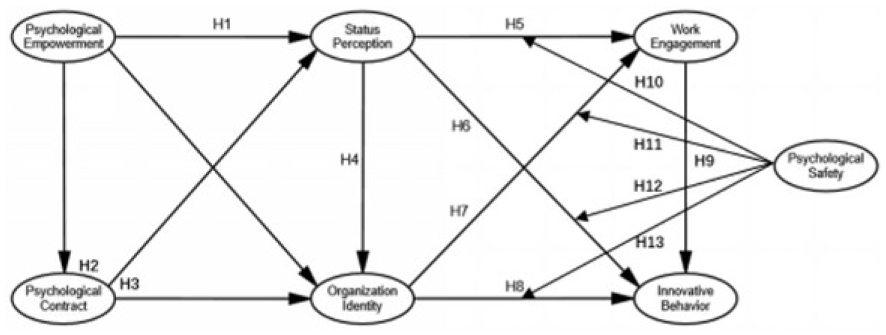
Research model.
Research Methodology
Research Design
This study adopts a positivist research philosophy, which assumes that social phenomena can be objectively measured and analyzed using empirical data. Positivism is appropriate because the study seeks to test hypothesized relationships among psychological constructs such as empowerment, perceived organizational status, organizational identification, work engagement, and innovative behavior through quantitative measurement and statistical modeling (Creswell & Creswell, 2017). By employing numerical data and hypothesis testing, this philosophy ensures objectivity, replicability, and generalizability of findings.
In line with the positivist stance, the study follows a deductive research approach. The conceptual model and hypotheses were developed from established theories—specifically Psychological Contract Theory, Social Exchange Theory, and Social Identity Theory—and were empirically tested through data collection and analysis. The deductive approach is suitable for examining causal relationships among theoretically defined variables, which is consistent with the purpose of validating a structural model (Saunders et al., 2009).
Regarding the research design, this study employs a quantitative, cross-sectional survey design. Data were collected from non-permanent employees in higher education institutions across four provinces in southeastern China using a structured questionnaire. The cross-sectional design enables the examination of relationships between variables at a single point in time, while the quantitative method allows for precise measurement and hypothesis testing using statistical tools such as SPSS and AMOS. This design is appropriate for the study’s objective of identifying the mechanisms through which psychological empowerment influences innovative behavior in academic contexts.
Questionnaire Design
This study utilized a self-reported questionnaire to collect data from respondents. The questionnaire consisted of two parts. The first part included scales for various variables: psychological contract, adapted from Thompson and Bunderson (2003), comprising three sub-dimensions—career and development, performance-reward, and work-life balance—totaling nine items; psychological empowerment, adapted from Spreitzer (1995), consisting of four sub-dimensions—meaningfulness, self-efficacy, autonomy, and work impact—totaling 12 items; employees’ perceived organizational status, adapted from Tangirala and Ramanujam (2008), consisting of four items; organizational identification, adapted from Smidts et al. (2001), consisting of five items; work engagement, adapted from Schaufeli et al. (2002), comprising three sub-dimensions—vigor, dedication, and absorption—totaling 17 items; innovative behavior, adapted from Yang and Zhang (2012), consisting of six items; and psychological safety, adapted from He (2010), consisting of five items. All scales were measured using a 7-point Likert scale. The second part gathered demographic information about the respondents, including gender, age, years of work experience, monthly income, and workplace location.
Data Collection
This study employed a non-probability purposive sampling strategy, which allows the selection of respondents who possess specific characteristics relevant to the research objectives (Etikan et al., 2016). The purposive approach was suitable because non-permanent employees are a specific subgroup within higher education institutions and are not evenly distributed across all universities. Respondents were identified through institutional administrative offices and educational departments, ensuring that they met the inclusion criteria (i.e., currently employed on a non-permanent contract basis).The study targeted informal staff members at higher education institutions in four economically developed provinces in southeastern China: Guangdong, Fujian, Zhejiang, and Jiangsu. These provinces were selected due to their relatively strong economies and substantial budgets for higher education, which may provide better material support for informal employees.
The data collection was conducted during the summer vacation of 2024, from July 15 to August 15, using an electronic questionnaire distributed through local education authorities. A total of 700 questionnaires were distributed, and 578 valid responses were received. Among the respondents, 292 were male (50.5%) and 286 were female (49.5%). In terms of age distribution: 199 respondents (34.43%) were aged 25 to 34 years, 165 respondents (28.55%) were aged 35 to 44 years, 143 respondents (24.74%) were aged 45 to 54 years, and 71 respondents (12.28%) were aged 55 years or older. Regarding educational background: 45 respondents (7.79%) held an associate degree, 343 respondents (59.34%) held a bachelor’s degree, 182 respondents (31.49%) held a master’s degree, and 8 respondents (1.38%) held a doctoral degree. In terms of monthly income: 121 respondents (20.93%) earned 5,000 yuan or less, 297 respondents (51.38%) earned 5,001 to 7,000 yuan, 106 respondents (18.34%) earned 7,001 to 9,000 yuan, and 54 respondents (9.34%) earned more than 9,001 yuan.
Results
Before conducting data analysis, the study employed SPSS 26.0 to perform an initial quality assessment of the dataset. The absolute values of kurtosis for all items were below 7, and the absolute values of skewness were below 3, indicating that all items conformed to a normal distribution and were suitable for further analysis.
Common Method Bias
To examine the potential common method bias caused by collecting data using a single method, the study applied the Harman (1976) single-factor test. The analysis revealed a result of 37.249%, which is well below the 50% reference threshold suggested by scholars. This indicates that common method bias was not a significant issue in this study, and the data quality is acceptable.
Reliability Analysis
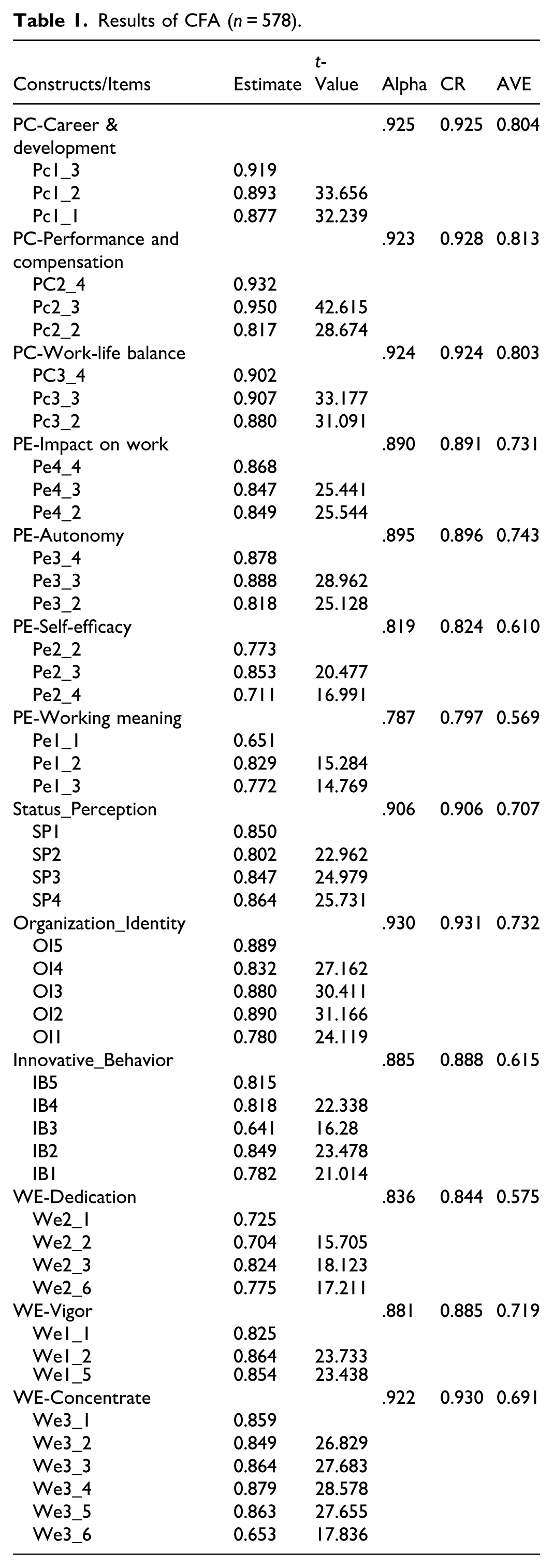
The reliability of each variable was tested using SPSS 26.0. The reliability coefficients (Cronbach’s alpha) for all variables ranged from .787 to .930, exceeding the recommended threshold of 0.7. Additionally, corrected item-total correlation (CITC) values were all greater than 0.5. These indicators meet the recommended standards by scholars (Hair et al., 2010), confirming the data is reliable for subsequent analysis. Detailed results are shown in Table 1 under the “Alpha” column.
Results of CFA (n = 578).
Validity Analysis
The results of the confirmatory factor analysis (CFA) model indicate good model fit, with the following indices: Chi-square/df = 2.082, GFI = 0.867, AGFI = 0.844, CFI = 0.951, and RMSEA = 0.043 (Hair et al., 2010). The composite reliability (CR) values for all variables ranged from 0.797 to 0.931, exceeding the recommended threshold of 0.7. The factor loadings for individual items ranged from 0.641 to 0.950, with most values above 0.8. The average variance extracted (AVE) values were between 0.519 and 0.813, all exceeding the recommended reference value of 0.5 (Fornell & Larcker, 1981). These results indicate that the data is of high quality and meets the recommended standards for structural equation modeling.
This study employed the verification method proposed by Fornell and Larcker (1981) to analyze the discriminant validity of the latent variables in the model. Specifically, the square root of the AVE for each variable should be greater than the Pearson correlation coefficients between that variable and others. According to the analysis results, all variables in this study demonstrated good discriminant validity (see Table 2). Therefore, this dataset is suitable for structural equation model verification.
Discriminative Validity.

Note. The bold font are the root of AVE.
Structural Equation Model Analysis
This study utilized the maximum likelihood method in Amos 24.0 to validate the model. Regarding model fit indices, the results were as follows: chi-square/degree of freedom = 2.539, GFI = 0.831, AGFI = 0.813, CFI = 0.927, and RMSEA = 0.052 (Hair et al., 2010), all meeting the standards recommended by scholars. Based on the results of the path analysis, six out of the seven hypotheses were supported, with the exception of H4, which indicated that employees’ perceived organizational status did not significantly affect organizational identification. Detailed results are provided in Table 3.
Results of Hypothesis.

Note. ***p < 0.001.
Mediation Effects
This study employed the Bollen-Stine Bootstrap method (bootstrap = 2,000) in Amos 24.0 to test for mediation effects. The results indicated that neither mediation hypothesis was supported. Specifically, H2—psychological empowerment → psychological contract → employees’ perceived organizational status—did not hold, and H3—psychological empowerment → psychological contract → organizational identification—was also not supported. Detailed results are shown in Table 4. Furthermore, as H4 (the effect of employees’ perceived organizational status on organizational identification) was not significant, this study did not further examine the mediating role of psychological empowerment → employees’ perceived organizational status → organizational identification.
The Meditation Effect.
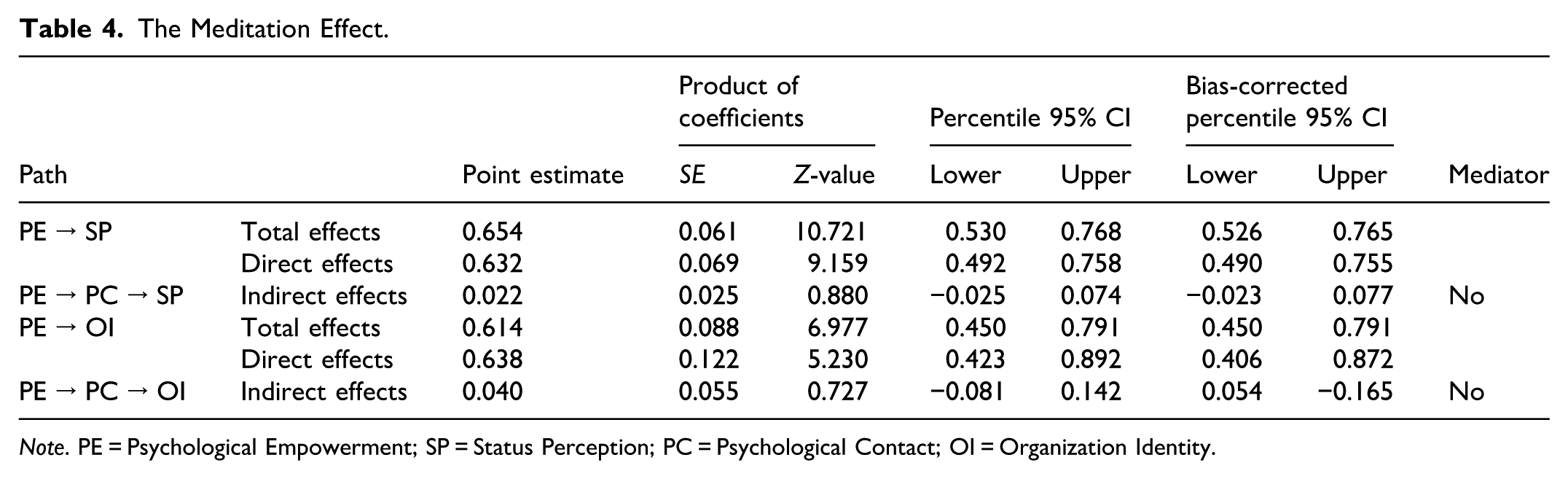
Note. PE = Psychological Empowerment; SP = Status Perception; PC = Psychological Contact; OI = Organization Identity.
Moderating Effects
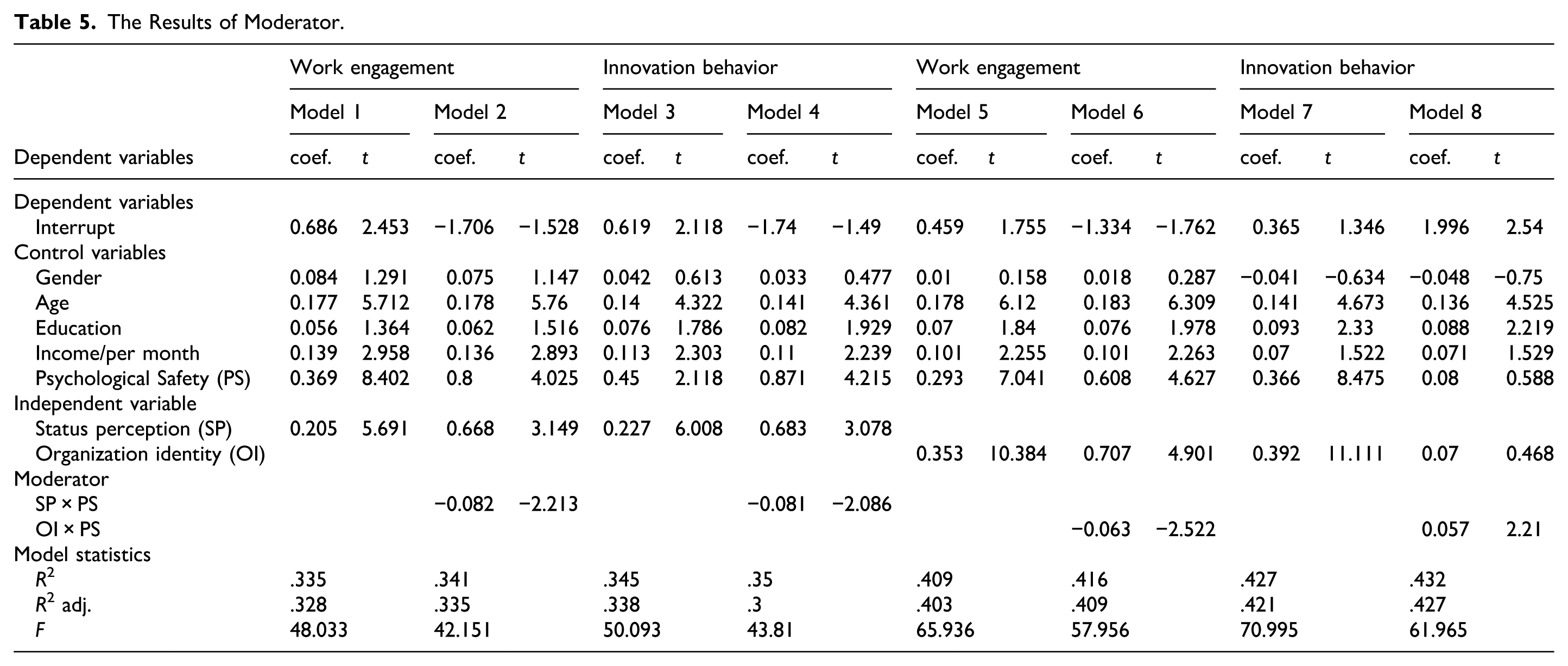
This study utilized Process 34.0 to test the moderating effects in the model. As shown in Table 5, all four moderating effects were supported. Specifically: H10: Psychological safety moderates the relationship between perceived organizational status and work engagement (see Figure 2). H11: Psychological safety moderates the relationship between perceived organizational status and employee innovative behavior (see Figure 3). H12: Psychological safety moderates the relationship between organizational identification and work engagement (see Figure 4). H13: Psychological safety moderates the relationship between organizational identification and employee innovative behavior performance (see Figure 5).
The Results of Moderator.

The moderating role of psychological safety on the effect of organizational status perception on work engagement.
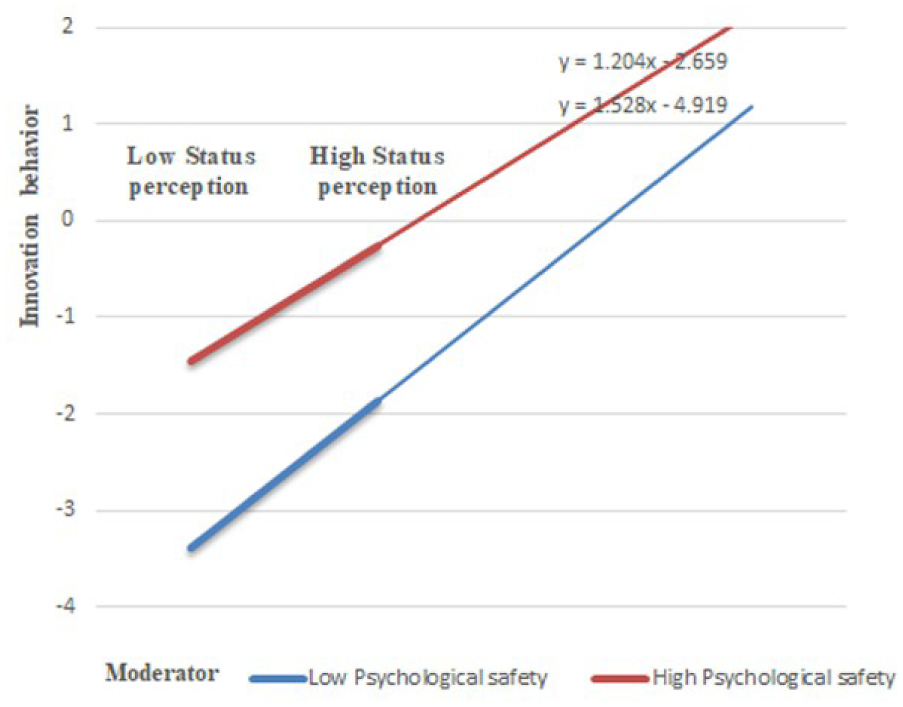
The moderating effect of psychological safety on the relationship between organizational status perception and innovative behavior.

The moderating effect of psychological safety on the relationship between organizational identification and work engagement.
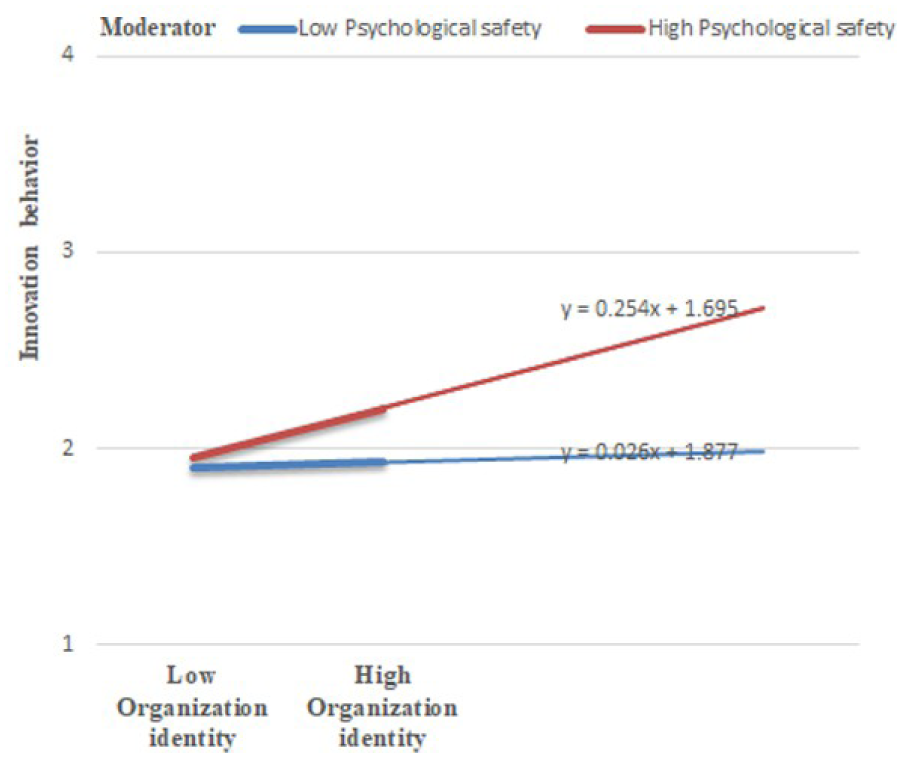
The moderating effect of psychological safety on the relationship between organizational identification and innovative behavior performance.
Discussion and Conclusion
Discussion
The findings of this study provide important insights into how psychological empowerment influences innovative behavior among non-permanent employees in higher education institutions (HEIs). Consistent with the literature, psychological empowerment significantly enhances perceived organizational status, work engagement, and innovative behavior. Moreover, work engagement plays a critical mediating role in translating empowerment into innovation. These results support the assumptions of Social Exchange Theory (Blau, 2017) and the Job Demands–Resources model (Bakker & Demerouti, 2017), which suggest that when employees perceive autonomy, competence, and influence as organizational resources, they are more likely to reciprocate with engagement and creative behavior. As Spreitzer (1995) conceptualized, empowerment represents an intrinsic motivational state that fosters meaning and self-efficacy. Recent studies have also confirmed that engagement transforms empowerment into creative outcomes, particularly in knowledge-intensive contexts such as higher education (Bakker & Albrecht, 2018; Montani et al., 2020). In Chinese HEIs, empowerment signals recognition of professional contribution and participation in decision-making, both of which strengthen employees’ perceived status and stimulate their initiative to explore new methods and ideas (X. Zhang & Bartol, 2010).
The non-significant mediating role of the psychological contract indicates the boundary conditions of Psychological Contract Theory (Rousseau, 1995) in flexible employment systems. Psychological contracts are typically grounded in mutual obligation and long-term relational exchange (Guest, 2004). However, for non-permanent employees, empowerment and trust are often perceived as short-term, transactional signals rather than enduring commitments. This finding aligns with evidence that temporary academic staff tend to value fairness, inclusion, and development opportunities more than implicit or long-term promises (Conway & Briner, 2005). Hence, within the increasingly contract-based employment structure of Chinese HEIs, psychological empowerment may act as a functional substitute for the traditional psychological contract by directly enhancing work engagement and innovation without relying on relational reciprocity.
The insignificant effect of perceived organizational status on organizational identification further extends the application of Social Identity Theory (Tajfel & Turner, 2004). Previous studies have generally demonstrated a positive association between organizational prestige and identification (van Dick, 2016). However, the current findings suggest that for non-permanent employees, recognition of competence and status alone does not necessarily translate into identification. Identity internalization appears to depend not only on cognitive evaluation of one’s role but also on the affective sense of belonging and continuity within the organization (Ashforth et al., 2008). Given the hierarchical and segmented employment structures prevalent in Chinese academia, temporary staff may experience professional acknowledgment without genuine inclusion in institutional communities. This result implies that relational and emotional acceptance is a prerequisite for transforming recognition into organizational identification.
The moderating effect of psychological safety provides additional understanding of the mechanism linking empowerment, identification, and innovation. Consistent with Edmondson (1999) conceptualization, psychological safety fosters interpersonal trust, open communication, and a willingness to take risks, all of which are conducive to innovative behavior. The present study shows that psychological safety amplifies the positive relationship between organizational identification and innovation while diminishing the dependence of innovation on perceived status. This dual pattern resonates with meta-analytic evidence showing that psychological safety can simultaneously substitute for structural recognition and reinforce identity-based engagement (Frazier et al., 2017; Newman et al., 2017). For non-permanent employees, a safe and supportive environment reduces their reliance on hierarchical approval and enables them to translate identification into innovative initiatives more confidently.
Theoretical Contributions
First, the study advances theoretical integration by combining Psychological Contract Theory (PCT), Social Exchange Theory (SET), and Social Identity Theory (SIT) into a unified explanatory framework. Prior research has typically examined these perspectives in isolation—focusing on mutual obligation (Rousseau, 1995), reciprocity and fairness (Blau, 2017), or group-based identification (Tajfel & Turner, 2004). By integrating them, this study clarifies how empowerment simultaneously acts as a contractual cue, an exchange signal, and an identity trigger for non-permanent employees. The results indicate that empowerment primarily drives innovation through engagement and identification, while psychological safety determines whether these mechanisms are activated. This cross-framework integration extends the explanatory power of SET, PCT, and SIT in explaining innovative behavior in flexible employment systems (Bakker & Demerouti, 2017; X. Zhang & Bartol, 2010).
Second, this study enriches the contextual understanding of existing theories by applying them to non-permanent employees in Chinese HEIs, a group that has been largely overlooked in previous organizational and psychological research. Most prior studies have focused on stable, full-time employees in corporate or public organizations, where job security and long-term reciprocity underpin motivation and identification (Guest, 2004). By contrast, this study demonstrates that under short-term, contract-based employment, the psychological contract becomes fragile, and empowerment functions as a substitute mechanism for trust and inclusion (Conway & Briner, 2005). This extends the contextual boundaries of PCT and SET by showing that empowerment and psychological safety can compensate for the absence of stable employment relationships, thereby maintaining motivation and innovation among temporary staff. In doing so, this research contributes to the growing literature on flexible employment and organizational commitment in the higher education sector.
Third, this study deepens the understanding of the mechanisms linking empowerment and innovation by empirically verifying a dual-path model driven by engagement and identification. While earlier studies have emphasized the motivational effect of empowerment on creativity (Spreitzer, 1995), this research identifies how work engagement and organizational identification sequentially translate empowerment into innovative behavior. The inclusion of psychological safety as a moderator further refines this relationship by explaining when and why empowerment leads to innovation. Specifically, a supportive climate of trust and openness magnifies the positive effects of identification and engagement on innovation, consistent with recent empirical evidence on the role of safety in promoting creativity (Frazier et al., 2017; Newman et al., 2017). Thus, this study moves beyond linear cause–effect explanations to propose a more dynamic and conditional understanding of how empowerment drives innovation in academic organizations.
Managerial Implications
First, at the managerial level, the results underscore the importance of empowerment-based management as a key driver of innovation in flexible employment contexts. Non-permanent employees often experience limited control and marginalization in academic organizations. Empowering practices—such as participative decision-making, transparent communication, and recognition of professional expertise—can strengthen employees’ sense of competence and inclusion. Previous research has demonstrated that empowerment not only improves task performance but also stimulates creative self-efficacy and proactive innovation. Therefore, university managers should cultivate structures that grant temporary staff real decision latitude rather than symbolic participation, ensuring that empowerment is both meaningful and sustainable.
Second, at the institutional and policy level, the study highlights the need to reform employment and evaluation systems to promote fairness, trust, and long-term engagement. The non-significant role of the psychological contract suggests that relational expectations among non-permanent employees remain fragile. To address this, HEIs should establish clear, transparent promotion and renewal criteria, introduce mentoring mechanisms, and provide equal access to professional development resources. These practices can reinforce employees’ perceived organizational support and psychological security, thereby strengthening their commitment and innovative output. Policy initiatives should also encourage universities to balance flexibility with inclusion—moving from a transactional approach to a relational employment model that values the contribution of contract staff to teaching, research, and student services.
Third, at the individual and team level, the moderating effect of psychological safety points to the necessity of building a climate of trust and open communication. Supervisors and team leaders play a crucial role in shaping this climate. When employees feel safe to express ideas, challenge existing practices, and experiment without fear of punishment, their engagement and innovation flourish. In this regard, leadership development programs should incorporate psychological safety and inclusive leadership principles to equip academic leaders with the interpersonal competencies required to manage diverse, flexible teams effectively. By fostering such environments, universities can transform non-permanent positions from peripheral support roles into dynamic sources of creativity and institutional renewal.
Research Limitations and Future Directions
The limitations of this study lie in the focus on informal employees within higher education institutions, which may constrain the representativeness of the sample. Furthermore, as the study relies on cross-sectional data, it cannot fully capture causal relationships. Although the variables investigated include psychological empowerment, organizational status perception, and organizational identification, the study does not explore other potential factors influencing informal employees’ behavior. Future research could broaden the scope to informal employees in other organizational types and employ longitudinal research designs to better understand the long-term effects of psychological empowerment and psychological safety on employee behavior in diverse contexts. Such efforts would further refine the theoretical model and enhance its applicability across various organizational settings.
Footnotes

Funding
The authors disclosed receipt of the following financial support for the research, authorship, and/or publication of this article: This work was supported by grants from Liming Vocational University foundation: LMPT202105.
Declaration of Conflicting Interests
The authors declared no potential conflicts of interest with respect to the research, authorship, and/or publication of this article.
Declaration of Generative AI and AI-Assisted Technologies in the Manuscript Preparation Process
During the preparation of this work the authors used ChatGPT in order to correct typographical errors, check grammar, and polish the language to ensure clearer and more standardized expression. After using this service, the authors reviewed and edited the content as needed and take full responsibility for the content of the published article.