







Abstract
Using social learning theory and psychological contract theory, this study unearths the influence of team dynamics on organizational learning strategies to ensure organizational innovativeness. The authors also consider employees’ hierarchical position as a moderator to examine the association between learning strategies and innovativeness. Data collection involved a time-lagged survey administered in two phases among 164 telecom employees in Bangladesh. The results of hypothesis testing conducted through Structural Equation Modeling (SEM) confirm that team dynamics positively influence organizational innovativeness. The outcome also underlines that the learning strategy predicts organizational innovativeness. Moreover, the employee position was found to strengthen the relationship between learning strategy and innovativeness, confirming its moderating effect. This study’s findings offer unique and essential insights for organizations to understand team dynamics to ensure a learning strategy with employee positions for organizational innovativeness. Furthermore, this study paves the way for future research to expand on the study findings with larger samples in diverse countries to reach a general conclusion for the organizations.
Introduction
Innovation enables organizations to make changes according to market demand. In the dynamic corporate landscape, continuous innovation in products and services is vital to sustaining a competitive edge (Aggarwal et al., 2025). Scholars have sought to determine the key factors that influence an organization’s capacity to innovate. However, the process of innovation is inherently expensive, complex, and often characterized by significant unpredictability. While it can offer substantial advantages to organizations, it also poses significant risks that could threaten their survival. Therefore, identifying and understanding the elements that facilitate effective innovation is of vital importance (Domínguez-Escrig et al., 2019).
According to Hasan et al. (2020), developing learning strategies is the most effective way for enhancing organizational innovativeness and, in essence, overall organizational performance. Innovation through new product development often relies on the performance of teams in the workplace (Amaya et al., 2022; Hughes et al., 2018). Successful organizations embrace the team approach to ensure organizational innovation and, in essence, profitability (Durmusoglu & Calantone, 2023; Rodriguez, 2025; Schultz et al., 2021). Team dynamics is crucial in facilitating organizational learning strategies, influencing innovativeness (Aggarwal et al., 2025; Soomro et al., 2021). Teams and team-based work have become prevalent organizational practices, with the innovative capacity of teams playing a crucial role in organizational success. However, limitations in team innovation can incur substantial organizational costs. Despite this, as Chatzi et al. (2023) highlight, there remains a notable gap in the literature regarding effective strategies for the placement and configuration of teams to enhance innovation outcomes. In order to address this gap, the present study develops a comprehensive model based on social learning theory (SLT) that focuses on the influence of team dynamics and organizational learning strategies in enhancing organizational innovativeness. Moreover, this study also utilizes psychological contract theory (PCT) to investigate the moderating effect of employees’ hierarchical positions on the relationship between organizational learning strategy and organizational innovativeness.
This study focuses on telecom companies operating in Bangladesh. The telecommunications industry was selected as the study’s context, considering the industry’s substantial contribution to the country’s GDP and overall economic growth. According to the Association of Mobile Telecom Operators of Bangladesh (AMTOB) report, as of the end of May 2025, the total number of mobile phone subscribers reached 187.61 million, while internet subscribers totaled 132 million. Among the 132 million internet subscribers, 117.68 million use mobile internet (Association of Mobile Telecom Operators of Bangladesh [AMTOB], 2025). Nowadays, mobile phones are used for both personal and professional activities, such as online classes, online banking, and mobile financing systems. Furthermore, Bangladesh’s telecom industry stands as one of the primary recipients of foreign direct investments (FDI). Since its inception, this industry has attracted approximately BDT 150,000 crore in investment as of 2023. The industry has also generated around 900,000 employment opportunities, emphasizing the crucial role of the industry in Bangladesh’s economic progress (Mohammad, 2025). Regardless of Bangladesh’s economic and social conditions, the country’s telecom industry remains fiercely competitive. The telecom industry in Bangladesh has an oligopolistic structure, with a few companies significantly influencing market prices and services. Therefore, it would be interesting to observe how telecom organizations remain sustainable and innovative in serving their subscribers. The study aims to investigate how team dynamics, organizational learning strategies, and employee job positions (designations) can nurture the innovativeness of telecom companies in Bangladesh. To achieve the study objectives, the study aims to address the following questions:
Literature Review and Hypotheses Development
Theoretical Background
Using SLT and PCT as theoretical lenses, this study proposed a model (Figure 1). More specifically, in the lens of SLT, the present study highlighted the relationships between team dynamics and organizational innovativeness, team dynamics and organizational learning strategy, organizational learning strategy and organizational innovativeness. Moreover, in the lens of PCT, the present study highlighted the moderating effect of employee position in the relationship between organizational learning strategy and organizational innovativeness in the context of the telecom industry in Bangladesh.
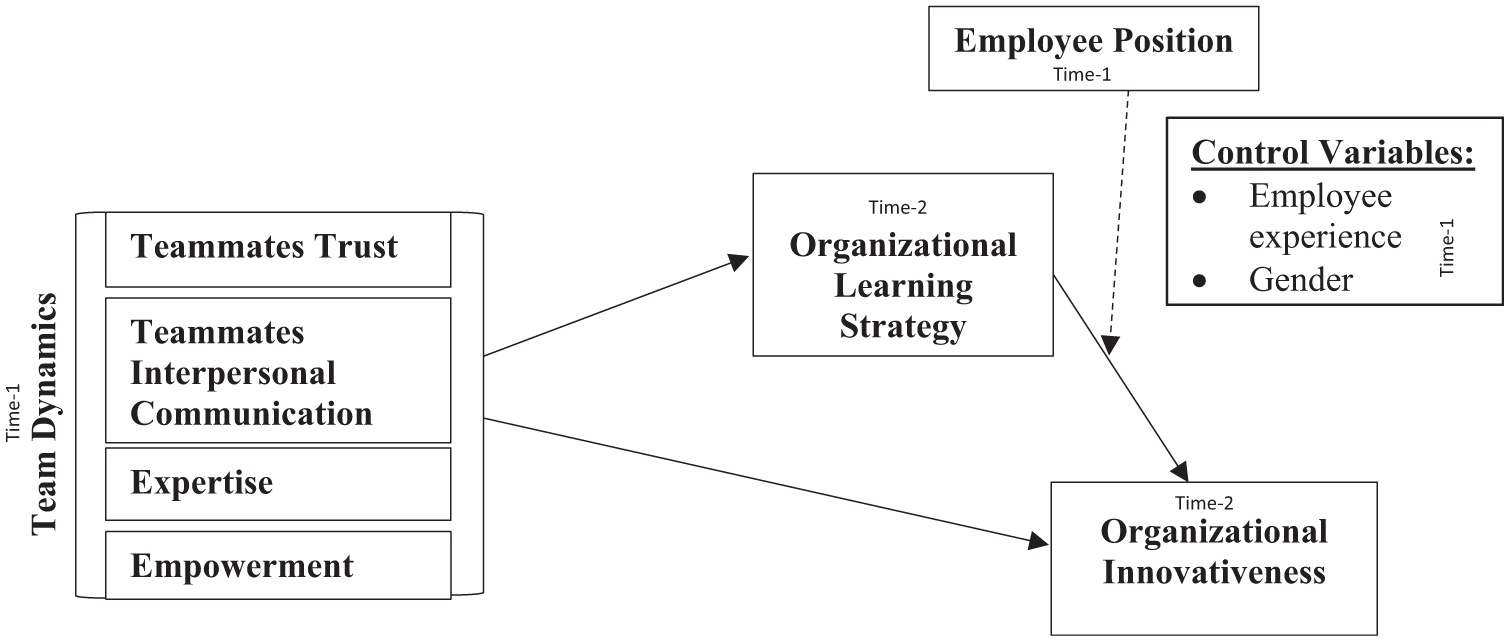
Research model.
SLT posits that by observing others, individuals acquire knowledge and behavior. The theory also suggests that individual learning occurs through direct interaction with the surroundings (Bandura, 1997). Hence, the authors imply that team dynamics can affect organizational learning strategies, which in turn can enhance organizational innovation. More specifically, the relationship between team dynamics, organizational learning strategy, and organizational innovativeness indicates a potential mediational effect of team dynamics in the relationship between team dynamics and organizational innovativeness. This study also utilizes PCT to examine the moderating effect of employees’ hierarchical positions on the relationship between organizational learning strategy and organizational innovativeness. Scholars widely acknowledge that the concept of the psychological contract holds significant potential for enhancing the understanding of increasingly individualized employment relationships in the context of changing work environments (Seeck & Parzefall, 2008). According to Rousseau (2011), a psychological contract refers to an individual’s belief system regarding their exchange partner’s responsibilities. Such responsibilities influence current decisions and actions by anticipating the exchange’s future. Furthermore, diversity in position may influence the association between organizational learning strategy and organizational innovativeness.
More specifically, in the context of Bangladesh’s telecom industry, team dynamics guarantees and improves the effectiveness of organizational learning strategies. As a result, organizational innovativeness is enhanced, and the association between organizational innovativeness and learning strategies becomes profound by employee position. Below is a comprehensive overview of the study’s proposed hypotheses.
Organizational Innovativeness (OI)
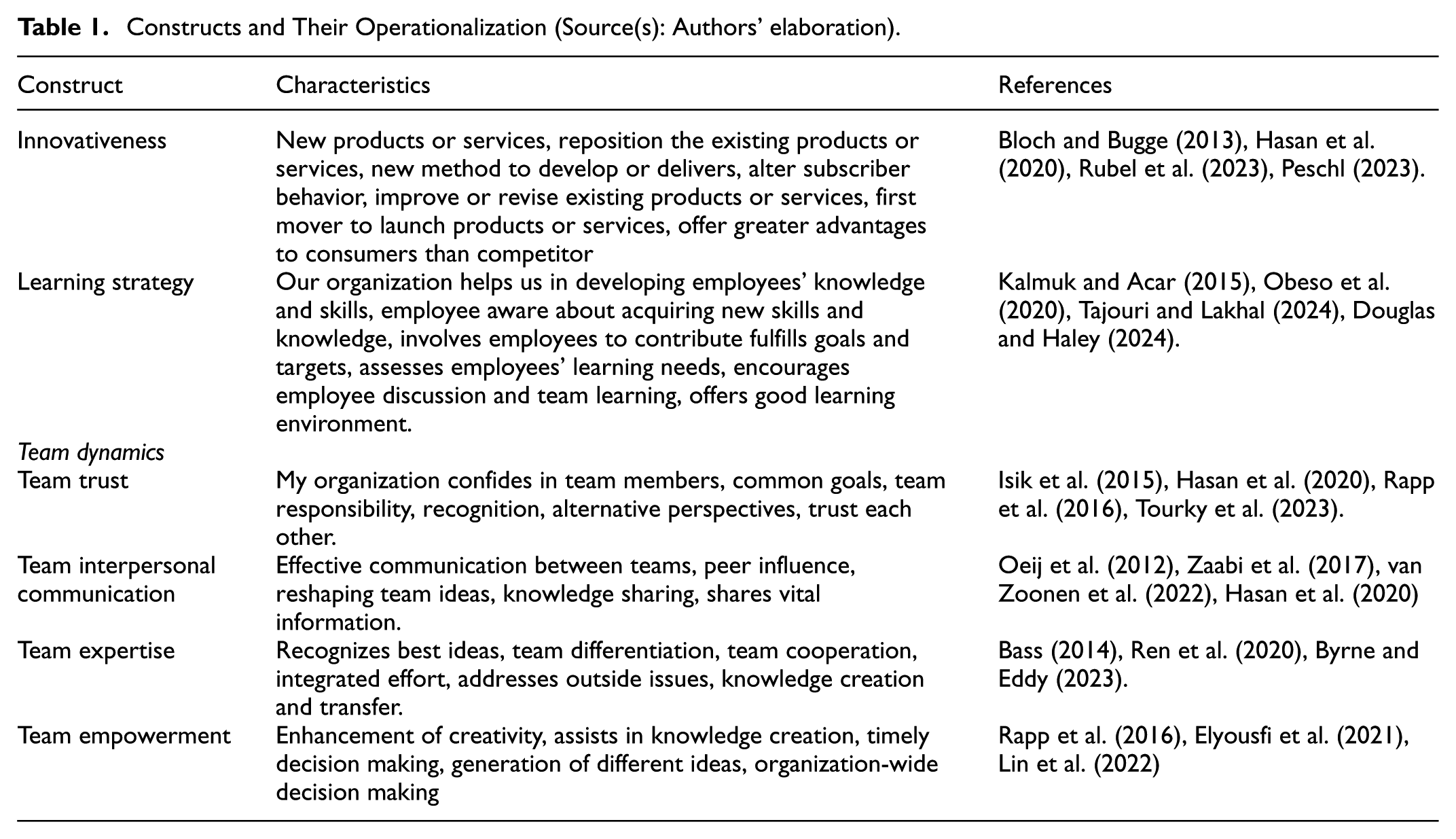
The concept of organizational innovativeness is acknowledged as being “new to the specific organization” (Rubel et al., 2023). Acquiring or embracing new ideas or information, which may be the organization’s newest technology, product, system, service, or operational method, is referred to as organizational innovativeness (Hasan et al., 2020). Bloch and Bugge (2013) defined organizational innovativeness as a new or specific method or prototype of organizational change set up for the organization to ensure its progress. More specifically, organizational innovativeness denotes an organizational climate (Ruvio et al., 2014) that includes the mindset, culture, capabilities, and processes associated with innovation (Sun et al., 2023). This denotes an organization’s ability to consistently innovate its products, services, and processes (Yoshikuni & Dwivedi, 2023). Depending on the type of business, an organization’s level of innovation can change. Furthermore, the process of organizational innovation is directly affected by both internal and external organizational elements (Peschl, 2023). The present study highlighted organizational innovation (See Table 1 for operational definition) as a generic term or condition, not on any specific types (radical and incremental innovation) of innovation, where the organization in general focuses on the innovative new product, service, or process to enhance organizational efficiency, effectiveness, achieve organizational goals and objectives, as well as to meet customers’ expectations.
Constructs and Their Operationalization (Source(s): Authors’ elaboration).
Organizational Learning Strategy
Organizational learning strategy is popularly known as the process of detecting errors and learning how to correct mistakes or errors that have been discovered (Sima et al., 2024). Organizational learning strategy is a multi-level process that begins with individual learning, goes on to group learning at the next stage, and eventually transitions to organizational learning (Hasan et al., 2020). Organizational learning strategies comprise three fundamental sub-processes: generating, retaining, and sharing knowledge (Argote, 2011). Effective organizational learning strategies ensure organizational competitive advantage. Through the generation of new ideas and information, organizational learning strategies are directly connected with improving organizational innovation, productivity, and sustainability (Douglas & Haley, 2024).
Team Dynamics
The forces that regulate a team’s behavior and attitude are known as team dynamics (Dimotakis et al., 2012). It often refers to patterns and processes through which team members interact and communicate with each other (Roma & Bedwell, 2017). Team dynamics significantly influence an organization’s overall performance through their impact on team effectiveness (Elyousfi et al., 2021; Hasan et al., 2020; Mohanty & Mohanty, 2018). Team expertise, team empowerment, as well as trust and balance among the team members, are integral components of team dynamics, each contributing to the overall cohesion of team members and team performance. These collectively substantially impact key organizational outcomes, including productivity, realization of learning strategies, and organizational innovation (Hasan et al., 2020; Santoro et al., 2015). Considering the preceding debate, this study is also interested in examining teammates’ trust, their interpersonal communication, team empowerment, and team expertise as crucial elements of team dynamics. The factors of team dynamics will be discussed in the following section.
Team Trust
Trust among the team members is critical in modern workplace dynamics. At the team level, trust is a multidimensional and multilayered construct (Castaldo et al., 2010; Feitosa et al., 2020). Trust among employees is established when they align in terms of values, beliefs, and goals (Tourky et al., 2023). Two types of trust exist in organizations: interpersonal and organizational (Isik et al., 2015). Trust plays a vital role in team dynamics and success (Kim & Ko, 2021; Yang, 2014). A trustworthy organizational environment supports attitudes, spontaneous interaction, the sharing of knowledge, and organizational learning (Kähkönen et al., 2023).
Team Interpersonal Communication
Team interpersonal contact is crucial in organizations, enabling personnel to share knowledge, skills, and expertise. Interpersonal communication allows employees to exchange knowledge and ideas, understand each other’s beliefs, values, and thinking, and build stronger relationships. It has been found that team interpersonal communication plays a vital role in increasing employee engagement and productivity, leading to improved team dynamics and organizational innovativeness. According to studies by van Zoonen et al. (2022) and Hasan et al. (2020), interpersonal communication is essential for achieving organizational innovativeness.
Team Expertise
Team expertise is widely recognized as a performance predictor that reflects the sum of the skills and expertise of the team members (Ren et al., 2020). It is important to note that individual performance and team performance are not the same (Bass, 2014). Experts from around the world, including academics, practitioners, and professionals, have emphasized the importance of team expertise in ensuring improved team performance (Byrne & Eddy, 2023). Additionally, Ren et al. (2020) concluded that team expertise is crucial for completing a project.
Team Empowerment
Team Empowerment is a term used to describe the increased job satisfaction that arises when team members view their organization’s activities positively. According to Lin et al. (2022), team empowerment is made up of four dimensions: potency, meaningfulness, autonomy, and impact. When these dimensions are present in an organization, they create a sense of empowerment among team members. Research has shown that team empowerment positively impacts a company’s performance (Hasan et al., 2020). In fact, empowered groups are more successful, show higher job satisfaction, and participate more actively in team activities. Additionally, Rapp et al. (2016) have further emphasized that teamwork is crucial for the success of creative projects.
Team Dynamics and Organizational Innovativeness
Team dynamics are multifaceted, with fundamental elements including trust among team members, effective communication strategies, conflict resolution, commitment, team empowerment, and team expertise (Buvik & Tvedt, 2017). Team trust enhances organizational innovation. People are often more inclined to be innovative by coming up with ideas and contributing to their implementation when they receive encouraging reactions and support from their team members (Clegg et al., 2002). This is connected to employee trust. A key cultural norm that fosters innovation is trust, as it encourages effective and open communication and collaboration among team members (Ellonen et al., 2008; Subrahmanyam, 2025). Moreover, different studies highlighted that leaders’ communication significantly and positively impacts organizational innovativeness (Alblooshi et al., 2021; Hsu et al., 2008). However, the role of team interpersonal communication in enhancing organizational innovativeness is rarely explored. But team interpersonal communication is important for organizational success. Interpersonal communication enhances organizational commitment, and organizational commitment is considered a precursor of organizational innovation (Morrow, 2011; Oeij et al., 2012; Zaabi et al., 2017). Team expertise is also another important component that enhances organizational innovativeness. Organizational innovation is something that brings uniqueness into the organization, and this uniqueness is known as a source of sustainable competitive advantage for the organization. Different researchers claimed that the organization’s human resources expertise is closely linked with organizational innovation (Salehi & Sadeq Alanbari, 2024). Similarly, numerous researchers also argued that team empowerment enhances organizational innovativeness (Grass et al., 2020). The relationship between team dynamics and organizational innovativeness can be explained further in the lessons of SLT (Hasan et al., 2020). According to SLT (Bandura, 1997), individuals learn from each other, and dynamic team members are eager to learn new, valuable, and unique knowledge from each other, which influences the organizational innovativeness. Hence, the present study proposes:
Team Dynamics and Organizational Learning Strategies
Team trust, interpersonal communication, team empowerment, and team expertise are the essential components of team dynamics that jointly explain it (Hasan et al., 2020). Past studies have found a significant and positive association between trust and organizational learning strategy (Guinot et al., 2013; Kähkönen et al., 2023). Trust among team members is crucial for involvement in organizational learning strategy (Swift & Hwang, 2013). Effective interpersonal communication is also vital for improving organizational learning strategies. Collective engagement and effective communication among team members enhance opportunities for developing a range of skills, including creative, technical, social, and project management (Hasan et al., 2020; Rapp et al., 2016). Communication supports better learning, and there is a strong connection between interpersonal communication and organizational learning strategies (Scharp et al., 2019; Zeng et al., 2019). Another important factor in speeding up team learning and organizational learning strategies is team expertise. Team expertise enables members of the team to share specialized knowledge and develop an organization’s learning culture. Organizational learning requires a connection between different expertise (Byrne & Eddy, 2023; Ren et al., 2020). Team empowerment is also closely linked to the implementation of organizational learning strategies (Hasan et al., 2020). Team empowerment creates a culture or atmosphere in which team members have the autonomy to ask questions, share their thoughts, and participate spontaneously. This culture promotes the effective exchange of information and organizational learning strategies (Lin et al., 2022; Rapp et al., 2016). In the lens of SLT, this relationship can be explained further. According to SLT (Bandura, 1997), individuals acquire knowledge from one another, and dynamic team members tend to have an intense motivation for learning, which shapes overall organizational learning strategy. Hence, the present study proposes:
Organizational Learning Strategy and Organizational Innovativeness
Existing literature (e.g., Murphy et al., 2018; Sima et al., 2024) indicates a strong relationship between organizational learning strategies and organizational innovativeness. Hasan et al. (2020) found that creating new knowledge is crucial for enhancing a company’s innovativeness and efficiency, and that organizational learning is related to creating new knowledge. Argote (2011) emphasized that learning is essential for improving an organization’s processes and practices, as well as developing new products and driving more organizational innovativeness. Hasan et al. (2020) also stated that learning approaches can improve organizational efficiency, and organizational success is related to organizational innovativeness. The present study highlights the relationship between organizational learning strategies and organizational innovativeness using social learning theory (Bandura, 1997), which suggests that employee learning influences organizational learning strategies, thereby enhancing overall organizational innovativeness. Nonetheless, the understanding of how organizational learning and innovativeness function within the context of teamwork remains limited. Hence, the present study proposes:
Mediating Effect of Organizational Learning Strategy
Team dynamics influence organizational learning strategy, which leads to organizational innovativeness. Moreover, associations discussed above between the team dynamics and organizational innovativeness, team dynamics and organizational learning strategy, and organizational learning strategy and organizational innovativeness are rational to propose the mediating role of organizational learning strategy since team dynamics influence organizational learning strategy, which in turn influences organizational innovativeness. Precisely, organizational learning strategy level may differ, and team dynamics have the capacity to enhance organizational learning strategy, which ultimately enhances organizational innovativeness. It can be proposed that organizational learning strategy can act as a potential mediator in the relationship between team dynamics and organizational innovativeness. Different research studies highlighted the mediating effect of organizational learning (Kalmuk & Acar, 2015; Obeso et al., 2020; Tajouri & Lakhal, 2024). Considering the SLT, this paper introduces the mediational role of organizational learning strategy between the team dynamics and organizational innovation. Since team dynamics influences organizational learning mechanisms, learning turns influence organizational innovativeness. In other words, when team dynamics enhances the level of organizational learning strategy, such a learning culture enhances organizational innovativeness.
Moderating Effect of Employee Position
The employee position level within the organization represents a profound dimension of personnel diversity (Wen et al., 2022). An employee position has an inherent connection with the individual job responsibilities, authority, and empowerment. More specifically, the employee position has a strong link to the organizational hierarchy (Horton et al., 2014). A previous study by Jung and Yoon (2014) indicates that individuals tend to be more efficient and effective if she or he holds a higher position in the organization. In other words, an individual employee in a higher position within the organization is expected to have more access to and autonomy in organizational decision-making. Therefore, the employee position may play a significant role in ensuring organizational efficiency and effectiveness. Previous studies highlighted the moderating effect of employee position in the relationship between employee satisfaction and employee engagement and turnover intentions (Wen et al., 2022), HRM impact and employee commitment (Ahmed & Top, 2021), corporate social responsibility and internal consequences (Wong & Kim, 2023), compensation practice and organizational citizenship behavior (Khan & Rubel, 2024), and organization-employee relationships and employee communication behaviors (Wang, 2023). However, none of the studies have examined the moderating effect of employee position on the relationship between organizational learning strategies and organizational innovativeness. Moreover, to the best of the knowledge, this is the initial study that addressed the role of employee position in the relationship between organizational learning strategies and organizational innovativeness in the context of the telecom industry in Bangladesh. This moderating relationship can be further explained in the lens of PCT. According to Rousseau (2011), PCT explains the unspoken, shared attitudes, expectations, and duties that exist between an employee and employer that affect their relationship in ways that go beyond the formal, legal contract. In line with PCT, the present study proposes that employee position has a psychological effect on performance and may play a crucial role in managing organizational learning strategy to enhance organizational innovativeness. In other words, organizational learning strategies enhance organizational innovativeness, and employee position can play an important role in enhancing the relationship between organizational learning strategies. Hence, the present study proposes:
Methodology
In this study, tentative theories were derived first to develop the literature, and hypotheses were tested using a questionnaire survey. A total of 164 respondents from different telecom organizations participated in the study. The structured questionnaire comprises 46 questions divided into sections 1, team trust, team interpersonal communication, team expertise, team empowerment, and section 2, demographics. The questionnaires were emailed to the targeted respondents to collect the data. The questionnaire was validated using a pilot study.
Data was collected from full-time employees from various hierarchical levels working in the telecom sector in Bangladesh. Because the telecom industry is very competitive, incremental and radical innovation is an ordinary matter in the Bangladesh telecom industry, and employees are the key source of knowledge creation here (Yuan & Woodman, 2010). Therefore, we distributed 300 questionnaires to Bangladesh’s three largest telecom service providers, Grameenphone, Robi, and Banglalink. At time 1, 231 employees gave responses on their demographic characteristics and team dynamics, which resulted in a response rate of 77%. After the temporal gap of 3 weeks, the same number of employees who responded at time 1 were contacted again at time 2 to give responses on the organizational learning strategies and organizational innovativeness. Of 231 employees, 179 responded (response rate = 77.5%) at time 2. Of the 300 questionnaires distributed, 179 responses were obtained (response rate = 60%). Also, an effect size of 0.15 and a probability error of .05 were used in a power analysis to determine that a sample size of 164 was enough for structural equation modeling (SEM) analysis, prior studies of Hasan et al. (2022, 2021) and Kock (2015) also support the sampling technique.
Measurement Techniques
This study utilized the survey respondents’ perceptions to measure the study variables. Inferential studies have been under scrutiny for employing perception-based variables as they may lead to systematic measurement bias, undermining the validity of the findings (Hasan et al., 2022). Structural Equation Modeling (SEM), which measures each variable based on multiple indicators, is an effective technique to overcome the above-mentioned limitations related to perception-based variables. Latent variable measurement is determined with validity and reliability tests to be carried out in relation to the measurement model used (Hasan et al., 2022; Kock, 2015). To avoid ambiguity in measuring the latent variables, it was ensured that indicators for one latent variable were not used interchangeably with those intended for other latent variables (Hasan et al., 2022).
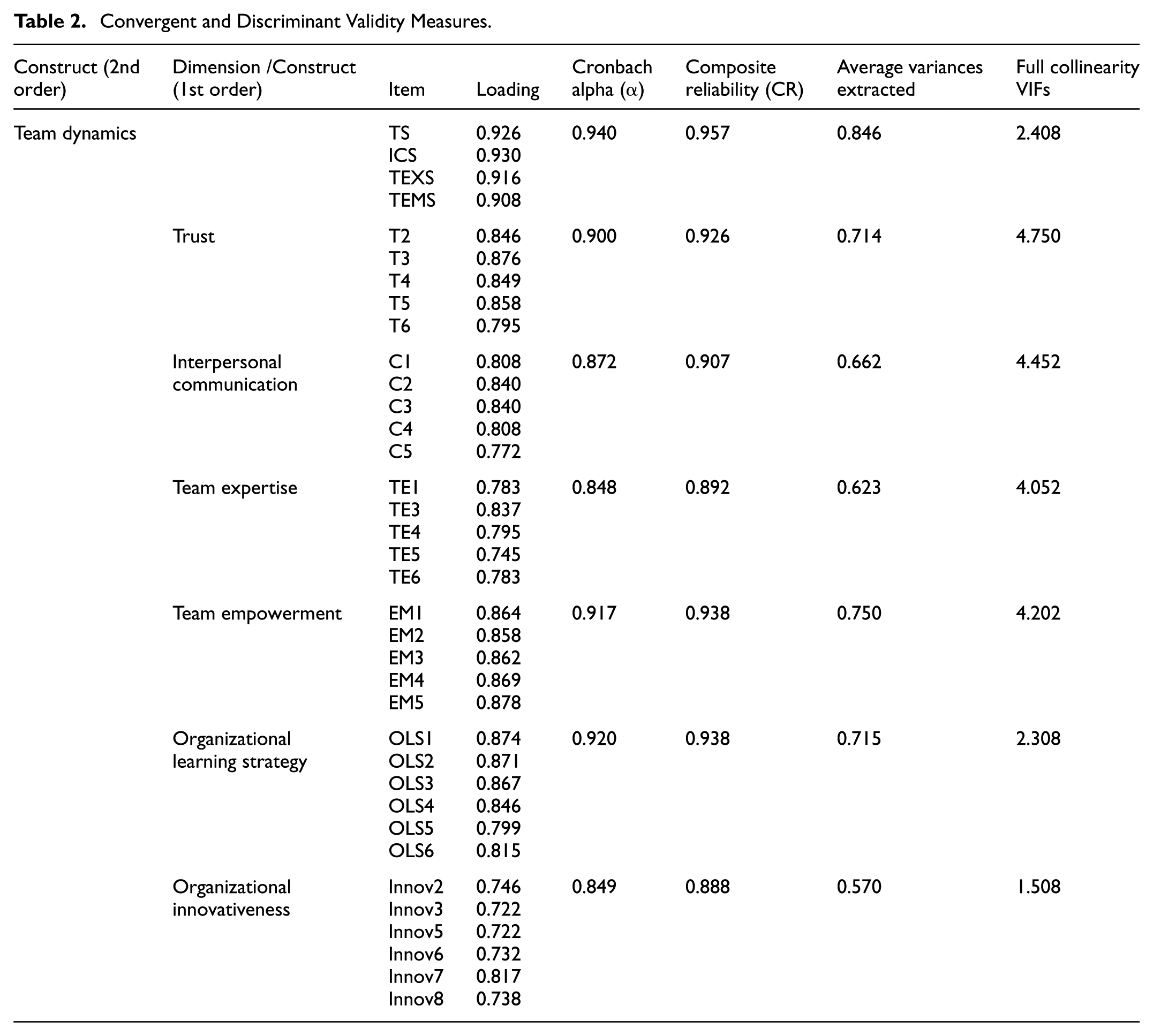
This study’s measurement model comprised six latent variables: team dynamics, organizational learning strategy, and organizational innovativeness. Team dynamics is a higher-order construct (reflective) and is measured with a 22-item team dynamics scale, measuring team trust with 6 items, team interpersonal communication with 5 items, team expertise with 6 items, and team empowerment with 5 items. The study utilized a five-point Likert scale, and the measurement items were derived from Prugsamatz (2010), Rhodes et al. (2008). Convergent validity was measured using non-confirmatory factor analysis, and loadings of 0.5 or higher indicated acceptable validity. The factor loadings in Table 2 ranged from 0.732 to 0.930, indicating sufficient convergent validity. Respondents’ job positions were assessed using the following options: top-level manager, mid-level manager, executive-level manager, and others (senior officer, executive officer, and officer, etc.).
Convergent and Discriminant Validity Measures.
This study also examined two control variables: experience (less than 2 years, 2–4 years, 5–7 years, 8–10 years, and above 10 years) and gender (male and female) to measure whether experience and gender influence the outcome of this study.
Validation and Measurement Model
The factor loadings in Table 3 ranged from 0.732 to 0.930, indicating sufficient convergent validity. To ensure the reliability of the underlying factors used in SEM, two coefficients are commonly used: Cronbach’s alpha (above .50) and composite reliability (at least .7). In this study, both coefficients fall within the acceptable range (Cronbach’s alpha ranging from .848 to .920 and composite reliability ranging from .888 to .957). The study also confirms the absence of any common method bias, as all Full collinearity VIFs values presented in Table 2 are below 5 (Kock, 2015).
Correlations and Square Roots of AVE’s.
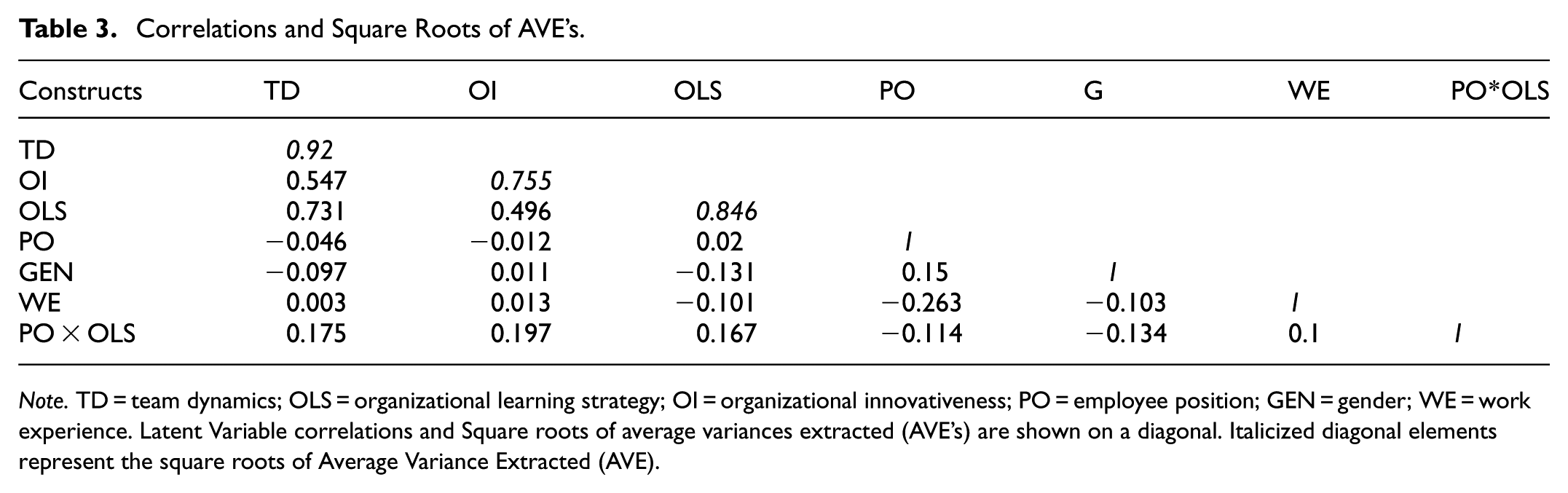
Note. TD = team dynamics; OLS = organizational learning strategy; OI = organizational innovativeness; PO = employee position; GEN = gender; WE = work experience. Latent Variable correlations and Square roots of average variances extracted (AVE's) are shown on a diagonal. Italicized diagonal elements represent the square roots of Average Variance Extracted (AVE).
To determine if a measurement model has sufficient discriminating validity, its square root of the average variance extracted must be greater than its correlations with other latent variables. Table 4 confirms that all square roots of average variances meet this criterion for discriminant validity.
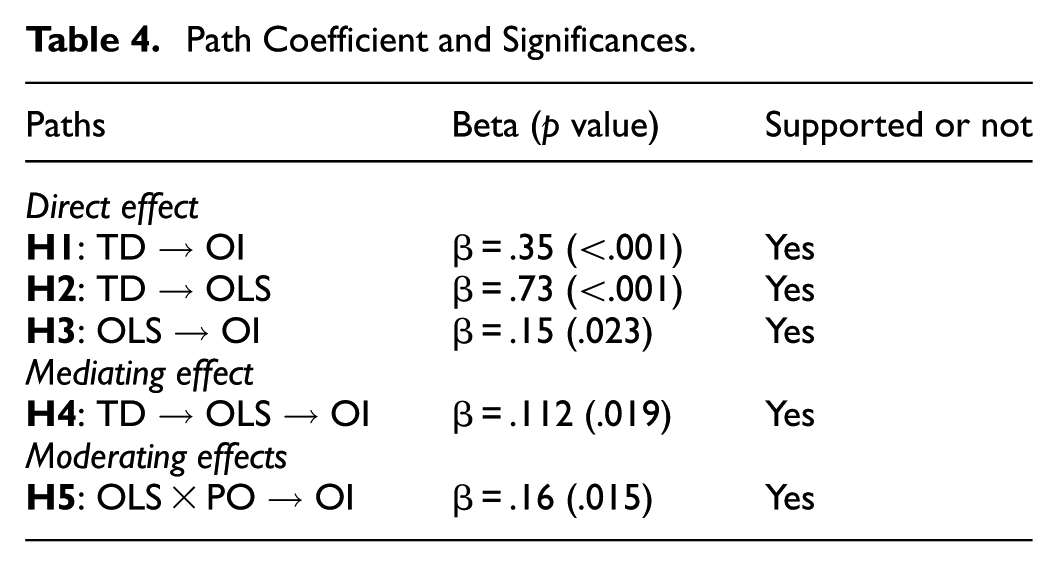
Path Coefficient and Significances.
Results
Analysis of the survey respondents’ demographic information reveals that the majority of respondents (54.9%) hold a Master’s degree or MBA,42.9% of respondents hold a Bachelor’s degree, while only 0.8% have a Ph.D. In terms of gender, 69.9% of respondents identified as male, while 30.1% identified as female. In terms of age, 76.7% of respondents were aged between 25 and 35, with 11.3% aged less than 25 and 11.3% aged 36 to 45. Only 0.8% of respondents were aged 46 to 50. In terms of their position, 1.5% of respondents were top-level managers, 37.6% were mid-level managers, 51.1% were executives, and the remaining 9.8% were in other positions. Regarding experience, 27.8% of respondents had less than 2 years of experience, 31.6% had 2 to 4 years of experience, 24.8% had 5 to 7 years of experience, 12.0% had 8 to 10 years of experience, and only 3.8% had more than 10 years of experience.
Figure 2 presents the SEM analysis, where the effects are represented by arrows with β coefficients. The R2 explains the percentage of variance in connection with each endogenous latent variable. The software calculates three fit indices for variance-based SEM or PLS-SEM: average path coefficient (APC), average R2 (ARS), and average variance inflation factor (VIF). Values are: APC = 0.260, p < .001; ARS = 0.463, p < .001; and AVIF = 1.957. Results suggest a strong model (APC and ARS are statistically relevant) with low overall collinearity (AVIF < 5).
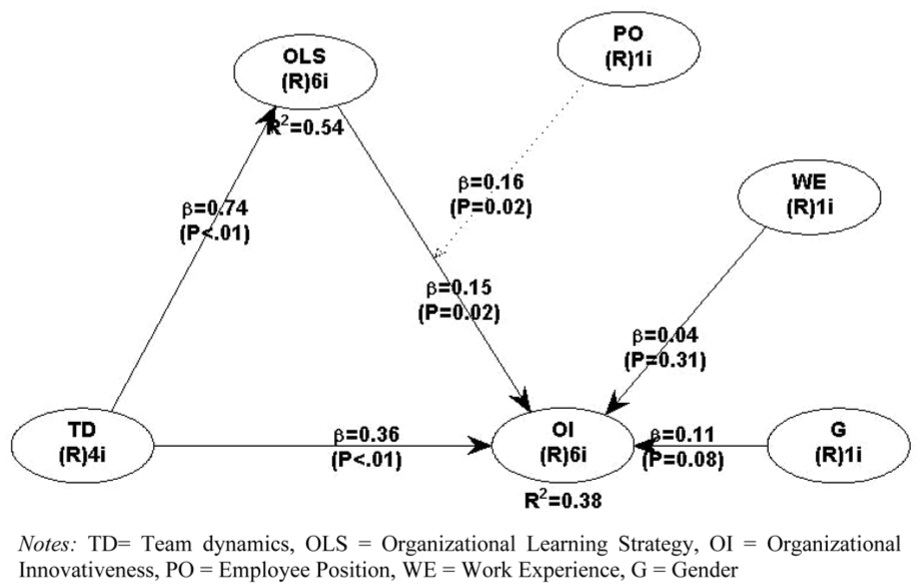
Structural equation model with estimated parameters.
Figure 2 explains predicted relationships based on the
This study aimed to evaluate the influence of team dynamics on organizational learning strategy and organizational learning strategy on organizational innovativeness. In addition, this study also examined the moderating role of employee position in the relationship between organizational learning strategies on organizational innovativeness. To fulfill the objective of the research, this study proposed and examined three hypotheses (
The analysis found the control variables’ insignificant impacts: gender (p = .08) and work experience (p = .31). This revealed that this study’s results were not influenced by demographic factors of employees, such as gender and work experience.
Discussion
The framework of this research was developed to explore the role of team dynamics efforts on organizational learning strategy to confirm organizational innovativeness. In addition, the research examined the moderating role of employee position in the relationship between organizational learning strategy and organizational innovativeness. This study tested proposed hypotheses and found that all of which predicted that team dynamics would be positively associated with organizational learning strategy, with employee position toward innovativeness. However, when we observed the impact of team dynamics on organizational innovativeness, we found that teammates’ trust has a positive relationship with organizational innovativeness. The study result complies with Mohiya and Caputo’s (2023) and Kähkönen et al.’s (2023) findings and guarantees compatibility among the individuals based on trust that is consistent with common principles, beliefs, and objectives for telecom organizations. Team trust enables faith among the members based on experience, confidence, and goodwill to have reciprocity from each other to learn, which ultimately develops the team strategy. Thus, exhibiting trust on the part of team dynamics can promote organizational innovativeness.
Teammates’ interpersonal communication connects individuals in various aspects to achieve objectives and goals for the organization. It is a practice or a bridge that brings knowledge, skills, and expertise within the organization when individuals pursue a common goal. This study also complements the previous work where literature (e.g., Scharp et al., 2019; Zeng et al., 2019) finds a strong tie between team interpersonal communication and OI. This study’s finding indicates people’s beliefs, values, and thinking as a necessary psychological input for OI. Therefore, an effective strategy within an organization must ensure employee engagement through interpersonal communication to share knowledge and thoughts to improve team dynamism toward organizational innovativeness.
Kayes and Burnett (2006) found that team expertise confers organizational innovativeness. Individual performance always matters in team performance, and the expertise of teammates is an impeccable source for innovating new ideas. The study’s results put a similar emphasis on the studies of Ren et al. (2020) and Byrne and Eddy (2023) on OI, and found it significant to make the organization innovative.
Individuals feel meaningfulness, autonomy, and importance if they are empowered in their organization. On the other hand, if the organization’s different teams are empowered, the organization may enjoy its success through various initiatives. In this study, team empowerment was also successfully associated with OI and is consistent with the previous work of Lin et al. (2022) and Rapp et al. (2016). Team empowerment confers success for organizational learning strategy as it confirms job satisfaction and employee participation in an organizational environment. Therefore, organizations that are more inclined to employee voice, curious to know their thoughts, and interested in new ideas will work more spontaneously to generate innovation.
This research illustrates the importance of organizational learning strategy in fostering organizational innovativeness. The model proposed in this study represents organizational learning strategy as a mediator for organizational innovativeness. The study also finds a significant relationship between organizational learning strategy and organizational innovativeness, but it works as a partial mediator while connecting the team dynamics. Moreover, organizational innovation is influenced by organizational efficiency, productivity, and sustainability by generating or implementing new ideas and knowledge (Murphy et al., 2018). Thus, organizational learning strategy perceived effectiveness should influence team dynamics (trust, interpersonal communication, team expertise, and team empowerment) to generate the organization’s innovativeness.
The organizational learning strategy confirms organizational innovation (OI) in telecom organizations. The team construction depends on different age groups and experience, especially the position of the employees, to confirm innovation. The employees’ position in teams pursuing different positions may produce different outcomes, for example, the role of a coach and mentor within the team members makes the composition perfect, while we consider the overall learning of the organization toward innovativeness. This study’s result portrays these facts and found employee position as a moderator to strengthen the relationship between OLS and OI (Figure 3).
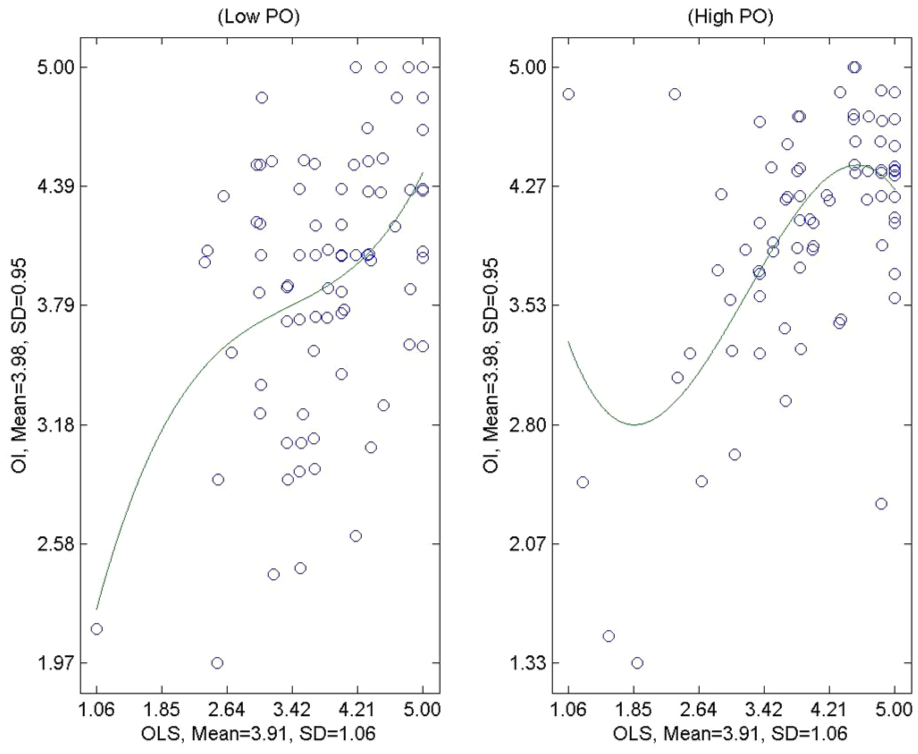
Moderation effect of PO.
The current research results on the impact of control variables are consistent with those of Prugsamatz (2010) and Rhodes et al. (2008) in innovativeness studies, who reported a lack of influence of these variables.
Implications of the Study
The dynamics of a team can enhance an organization’s learning strategy, promoting innovation. Managers in the telecommunications industry can benefit from a team-dynamic approach to foster innovation. The findings of this study are essential for managers to understand the innovation process and are relevant to practitioners involved in innovative activities and the telecommunications industry in general. Trust between team members is a precondition for innovation, and reciprocity is essential in a work environment supported by the SBT. The study confirms that team trust is necessary for employees to create a learning strategy to achieve desired innovation. Therefore, managers and practitioners must create an environment where people can trust each other and freely share their knowledge to promote innovation. Communication is the most effective form of socialization, and telecom organizations need to reflect on their team’s interpersonal communication to ensure learning toward innovativeness. Team interpersonal communication advocates knowledge exchange and skills to reflect expertise at the personnel level. Managers should encourage employees to exchange knowledge, understand each other’s beliefs, values, and thinking, and build stronger relationships to anticipate future market changes and promote innovation. Expertise determines the unique capacities that team members show while working in a team structure to complete their assignments. Sharing team expertise opens learning opportunities for others through knowledge-sharing and develops members’ skills to think innovatively to enhance competitiveness for the organization. Empowering individuals can lead to better outcomes for a team. This psychological principle motivates people to think creatively and produce innovative solutions for an organization. This study has uncovered new insights for practitioners in the telecom industry, suggesting that they should encourage employees to ask questions, share ideas, and participate in decision-making. By doing so, employees can become more efficient, confident, and accountable while working in a team. Organizations should create a culture that fosters teamwork, encourages learning, and values innovation.
In addition, the study outcome also confers strategic implications for managers and other associated groups. First, talent management confers not only the readiness of the employee for the next-level challenge but also the succession planning of the organization. The team dynamic not only endorses the fact but also confirms efficiencies based on the learning they received working with diverse people by proving and developing their leadership skills. Second, the results of the study confer the firm culture, especially considering the new individuals who learn and observe values within the team to develop their moral and overall working process of the organization. Third, innovation demands new ideas; therefore, forming teams not only allows employees to share their knowledge but also creates or converts their contemporary ideas to ensure competitiveness for the firms. Lastly, the employee position as a moderator endorses the fact that team composition works in the best interest to affirm innovation in the company since different levels of employees complete the group with their ideas based on experience to confer innovativeness of the firm.
Moreover, it is understood that based on the findings of this study, team dynamics are clearly essential in conferring organizational innovativeness in Bangladeshi telecoms. Team dynamics confirm the contributory role to both organizational learning strategy and innovativeness. Learning strategy instills innovation for the organization with team dynamics, where employee position moderates the maximum efforts while accounting for the organization’s innovative capacity. PCT also supports these facts and offers this new theoretical underpinning to practitioners in developing learning strategies to foster innovativeness in organizations.
The model developed in this study also confirms its contribution to the literature through the composition of activities to render the innovation process. This combines SLT and PCT theories and uniquely contributes to the literature by including team dynamics, organizational learning strategy, employee position, and organizational innovativeness in the study model. To the best of our knowledge, this is the first study in Bangladesh that explores the association of these variables to infer innovations for telecom organizations. Therefore, to understand innovative activities, current literature gives an idea and confirms a plea for constructing a future empirical model to discover similar economic contexts to generalize understanding.
Conclusion, Limitations and Future Research Directions
The team dynamics of the firm propose that the learning strategy facilitates innovative ideas within the organization. Based on market demand and the emergence of global competition, companies need to make innovations in their product and services to meet customers’ or subscribers’ expectations. Hence, the ability to work in a team-based structure to foster learning strategies to ensure innovativeness is understood as a prerequisite for the organization’s success. This research also represents the unique context of the Bangladesh telecom organizations. This research’s findings underline the value of existing and future telecom organizations, considering teams’ complexities with learning to innovate in organizations. Telecom organizations could be more intuitive in confirming organizational innovativeness to serve the subscribers better. Applying the findings produced from this study, it is recommended that telecom organizations exhibit more team dynamism to attain greater innovation.
However, as with other studies, this research also has limitations in its attempts. Firstly, this study represents the telecom companies in Bangladesh; therefore, the findings cannot be generalized to other emerging economies or countries. The model developed in this research can be investigated further in other emerging economies to address this limitation, which might provide different insights and interesting results. Secondly, this is a cross-sectional study, and various research methods limit cross-sectional data over longitudinal data, making it inappropriate to test hypotheses that involve causality. However, we rationalize using cross-sectional data based on prior studies (such as Prugsamatz, 2010) in organizational innovation analysis. Thus, the use of such data seems justified in this study. Finally, future researchers may consider organizational culture and organizational leadership as potential moderators.
Footnotes
Acknowledgements
No specific acknowledgment to mention.
Author Note
I, the author hereby declare that this manuscript has neither been published nor under concurrent consideration for publication in any other journal.

Ethical Considerations
The study was conducted in accordance with procedures governing research involving human participants. Participation in the study was entirely voluntary and did not result in any form of harm to participants. No information that could potentially identify any participant was collected.
Consent to Participate
Informed consent was obtained from all individual participants included in the study.
Funding
The authors received no financial support for the research, authorship, and/or publication of this article.
Declaration of Conflicting Interests
The authors declared no potential conflicts of interest with respect to the research, authorship, and/or publication of this article.
Data Availability Statement
The data that support the findings of this study are available from the corresponding author upon reasonable request.*