






Abstract
This study investigates the factors influencing consumers’ purchase intentions for fast-moving consumer goods (FMCGs) on Douyin (TikTok), one of China’s leading and short-video platforms. Utilizing 454 valid survey responses, we employ A Tree-Augmented Naïve Bayesian (TAN) network model to explore how customized recommendations, discount strategies, emotions, and virality of content influence consumer behavior. simultaneously. It is suggested that algorithmic personalization has a significant impact on purchase intention, followed by discount strategies and emotional perception. Viral marketing demonstrates a weaker but still positive association. The model can reveal hidden relationships between variables and perform well in prediction. Implications of this study are that algorithmic targeting, promotional strategies, and emotionally engaging content that can effectively enhance user purchase intention. Marketing practitioners aiming to enhance user engagement on similar platforms may benefit from tailoring their strategies accordingly. Future work could incorporate behavior tracking and extending the model to other platforms for broader validation.
Keywords
Introduction
With the continuous advancement of society, social networking platforms and short video platforms have become essential channels for daily communication and information dissemination. These platforms not only support the sharing of personal life moments but also facilitate the widespread exchange of information and creation of trending topics (T. Zhang, 2020). Douyin, a short video social media platform launched by ByteDance in 2016, successfully integrated short videos with social networking, opening up a new track for content consumption. Its international version, TikTok, was introduced in 2017 (Fung & Hu, 2022). With its powerful algorithm-driven recommendation features and viral potential, Douyin played a crucial role during the COVID-19 pandemic in 2020, becoming a primary tool for the Chinese government to disseminate policies and pandemic-related information (Zhou et al., 2022). As China’s leading short-video platform, according to Chinese Douyin statistics (The global statistics, 2025), Douyin (the Chinese version of TikTok) had approximately 766.5 million monthly active users in 2025, covering over 75% of China’s internet users, making it one of the most influential mobile applications in China’s digital ecosystem. Douyin integrates short-form video content, social interaction, and real-time algorithmic recommendations to create a dynamic platform that seamlessly blends entertainment and commerce. Today, short video platforms are not only vehicles for viral phenomena (Wallsten, 2010) but also key platforms for advertising and brand promotion (Yuan et al., 2022). These characteristics have prompted researchers and marketers to focus on how to leverage platforms like Douyin for product promotion (Bao & Ran, 2022).
In recent years, as big data technology developed quickly, the algorithmic mechanism got increasing attention from researchers due to its importance in digital consumer behavior. Algorithmic personalization, in particular, plays a critical role in shaping user purchase decisions on short video platforms (Yang & Yu, 2024). Not only does this allow researchers to understand how platforms use Algorithmic Personalization to reach targeted audiences (Su, 2023), but also sheds light on broader social impacts, the dynamics of user-algorithm interactions, and the role of Algorithmic Personalization in shaping user behavior (B. Wei & Chenxi, 2020; Yu, 2023). As revealed from previous study results, single-factor impacts such as user experience, word-of-mouth communication, and Algorithmic Personalization recommendations (Artanti et al., 2019; Z. Zhang et al., 2022). Another stream of research has investigated marketing strategies. These include the use of celebrity endorsements, advertising, and price cuts (J. Liu & Khong-khai, 2024; X. Wang, 2021). However, these studies often tend to view the variables in isolation, neglecting how algorithmic mechanisms interact with other persuasive techniques in a platform-mediated ecosystem. In addition to algorithmic personalization, other platform-driven mechanisms such as discount strategies, emotional perception, and viral marketing also play crucial roles in shaping consumer behavior on Douyin. Discount strategies such as flash sales and real-time price reductions generate impulse buying by creating a sense of urgency and perceived value (Chandon et al., 2000). Emotional perception, often triggered through audiovisual storytelling and expressive content, enhances user-brand trust and identification (Bagozzi et al., 1999). Viral marketing, amplified by social interactions and influencer reach, leverages peer-based persuasion to broaden content exposure and consumer acceptance (Kaplan & Haenlein, 2011). Together, these mechanisms dynamically interact with algorithmic personalization to shape real-time consumer decision-making on short video platforms.
To address the limitations of existing research, this study employs Bayesian Network (BN) Analysis to predict the interactive impact of factors such as Algorithmic Personalization recommendations, Discount Strategies, emotional perception, and viral marketing on users’ purchase decisions on Douyin. Bayesian Networks combine probabilistic reasoning with graph theory to model uncertainty and causal relationships in complex systems (Pearl, 1986). By uncovering latent patterns in user behavior and platform features, this study aims to identify key factors influencing users’ purchase decisions and provide empirical evidence for optimizing marketing strategies.
In delineating the scope of this research, we place explicit emphasis on tangible consumer products, particularly fast-moving consumer goods (FMCGs), that are extensively promoted through platform-subsidized short-form video advertisements on Douyin. These include product categories such as cosmetics and skincare, packaged snacks and beverages, fashion accessories, personal hygiene products, and household cleaning items. These categories dominate Douyin’s Algorithmic Personalization recommendation streams and influencer-driven content, and are especially responsive to real-time promotions and emotionally engaging storytelling (Y. Chen, 2022; H. Liu & Liang, 2025). Social media platforms such as Douyin are particularly effective in promoting FMCGs, as these products are highly susceptible to influencer-driven recommendations and Algorithmic Personalization visibility, especially among younger consumer segments (P. Liu, 2022). These categories consistently rank at the top of Douyin’s e-commerce sales and serve as the primary focus of the platform’s subsidy mechanisms, including flash sales, algorithm-driven exposure, influencer amplification, and emotionally persuasive advertising. These mechanisms correspond directly to the key variables examined in this study, namely discount sensitivity, emotional perception, Algorithmic Personalization, viral marketing effects, and ultimately, Purchase Intention.
This focus is supported by both theoretical and empirical rationale. From a behavioral science perspective, FMCGs are typically low-involvement, price-sensitive, and prone to impulse purchasing. These characteristics make them particularly suitable for examining how Algorithmic Personalization, limited-time Discount Strategies, emotionally resonant content, and social influence interact to shape consumer behavior (Chandon et al., 2000; N. Zhang et al., 2021). From a methodological perspective, narrowing the scope to platform-subsidized FMCGs provides a more homogeneous and theory-consistent decision-making context, which enhances internal validity, model interpretability, and the robustness of causal inferences. Furthermore, this focus ensures strong alignment between the questionnaire constructs (particularly purchase intention) and the specific types of products considered by respondents. During the distribution of the questionnaire, respondents were explicitly informed that the study concerns platform-subsidized fast-moving consumer goods, in order to ensure consistent interpretation of the survey items and reduce variability in product reference frames. This study is guided by the following research questions:
(1) How do algorithmic personalization, discount strategies, emotional perception, and viral marketing individually and interactively influence consumer purchase intention on Douyin? (2) To what extent can a Tree-Augmented Naïve Bayesian (TAN) network effectively capture the probabilistic dependencies and predictive structure among these influencing factors? (3) Based on empirical modeling, which factors exert the most significant influence on purchase intention, and how can these insights be translated into actionable marketing strategies for short-video platforms? The primary objectives of this study are threefold. First, it seeks to construct a conceptual framework grounded in Douyin’s platform ecosystem to examine how algorithmic personalization, discount strategies, emotional perception, and viral marketing individually and interactively influence users’ purchase intentions. Second, the study applies a Tree-Augmented Naïve Bayesian (TAN) network model to uncover the conditional dependencies and causal pathways among these factors, thereby assessing the model’s effectiveness in capturing complex behavioral relationships. Third, it aims to translate the empirical findings into actionable, data-driven marketing strategies to enhance the commercialization and advertising effectiveness of short video platforms. The remainder of this paper is organized as follows: Section 2 provides a literature review, examining the relationship between Algorithmic Personalization recommendations, user behavior, and purchase decisions, and introduces the theoretical foundations and applications of Bayesian Network models. Section 3 details the research methodology, including data sources, questionnaire design, model construction, and analytical procedures. Section 4 presents the study results, highlighting Bayesian Network analysis outcomes and key findings. Section 5 discusses the results and offers actionable recommendations for optimizing marketing strategies on short video platforms. Section 6 concludes the study, summarizing its contributions and limitations, and proposes directions for future research.
Literature Review
Related Theoretical Research
To understand how digital platforms like Douyin shape user purchase behavior, this study draws upon four interrelated psychological frameworks: Theory of Reasoned Action (TRA), Theory of Planned Behavior (TPB), Stimulus-Organism-Response (S-O-R) model, and Dual-Process Theory. Each of these theories informs the conceptualization of one or more of the study’s four core variables: algorithmic personalization, emotional perception, discount strategies, and viral marketing. Collectively, these frameworks provide a robust foundation for exploring how these variables influence purchase intention on short-video platforms.
The Theory of Reasoned Action (Fishbein & Ajzen, 1975) posits that an individual’s behavioral intention is shaped by their attitude toward the behavior and the influence of subjective norms. On Douyin, subjective norms are often reinforced by social cues, such as influencer endorsements, peer sharing, and user engagement metrics (likes, comments, shares), which serve as social proof validating the appeal of products or content (J. Liu & Khong-khai, 2024). The Theory of Planned Behavior (Ajzen, 1991) extends TRA by incorporating perceived behavioral control, the belief in one’s ability to perform a behavior. In the Douyin context, algorithmic personalization increases perceived control by simplifying content discovery and enhancing relevance, thus encouraging transactional behavior (Ding et al., 2025; Ko, 2023).
The Stimulus-Organism-Response (S-O-R) model provides a foundational lens for understanding user behavior on algorithm-driven platforms like Douyin. In this context, external stimuli (S) namely algorithmic content recommendations, emotionally evocative video narratives, discount visuals, and viral propagation mechanisms affect users’ internal states (O), such as attention, emotional arousal, and engagement, which in turn elicit a behavioral response (R), particularly purchase intention (Mehrabian & Russell, 1974). Dual-Process Theory complements this perspective by explaining that short-video environments predominantly trigger System 1 processing, which is fast, affective, and heuristic in nature, as opposed to the more deliberate and analytical System 2 (Watson & Kahneman, 2011). This aligns well with Douyin’s rapid content exposure, where emotional cues and time-sensitive promotions prompt impulsive reactions. To maintain conceptual clarity and empirical tractability, this study strictly focuses on four independent variables: algorithmic personalization, emotional perception, discount strategies, and viral marketing. Constructs such as trust, urgency, or perceived value are not treated as standalone variables, but rather understood as potential mechanisms embedded within the measured core constructs. By doing so, the model avoids conflating theoretically distinct dimensions and ensures that all included variables are explicitly defined and empirically tested.
Conceptual Framework and Hypothesis Development
This study proposes a conceptual framework that examines the interplay of four primary factors: Algorithmic Personalization, viral marketing, emotional perception, and Discount Strategies, and their collective influence on Purchase Intention (Figure 1). By leveraging Bayesian network analysis, the study aims to uncover the conditional probabilities among these factors and how they interconnect to shape consumer purchase intentions. The framework addresses gaps in the literature by integrating these factors into a cohesive model, offering a comprehensive understanding of user decision-making on Douyin.
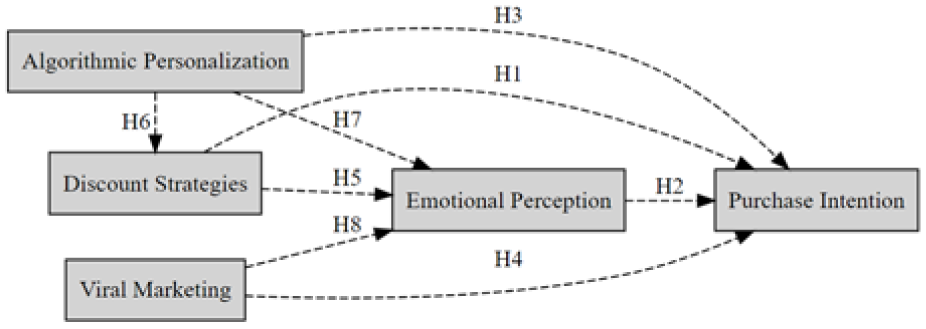
Hypothetical conceptual framework diagram.
Discount Strategies and TPB/S-O-R
Grounded in the Theory of Planned Behavior (TPB), discount strategies affect consumer attitudes toward purchase and enhance perceived behavioral control. By reducing perceived financial burden and simplifying the decision process, time-sensitive or algorithm-driven discounts make purchasing behavior more accessible and attractive. Research has found that personalized discount strategies can significantly increase consumers’ purchase intent, especially on social commerce platforms (Azad et al., 2023; Priyadharshini & Rajesh, 2025).
From the Stimulus-Organism-Response (S-O-R) perspective, discount strategies function as external stimuli (S) that trigger internal responses (O) such as attention and affective engagement, which subsequently lead to purchase behavior (R). Grewal et al. (1998) found that promotional framing and brand reputation shape consumer evaluations, while Thaler’s (1985) mental accounting theory suggests that consumers assign psychological value to perceived gains from promotions. Empirical findings further demonstrate that visually prominent or algorithmically tailored discounts increase the salience and appeal of the offer, especially among price-sensitive users (Y. Chen, 2022). Discount strategies can elicit favorable emotional responses by increasing perceived promotional appeal, thereby enhancing users’ emotional engagement with the platform (Chandon et al., 2000; J. Wang et al., 2025).
Emotional Perception and S-O-R/Dual-Process Theory
Within the Stimulus-Organism-Response (S-O-R) framework, emotional perception functions as a core internal state (Organism) elicited by external stimuli such as audiovisual narratives and discount visuals, ultimately shaping user behavior (Response). On Douyin, emotionally rich content frequently triggers immediate affective engagement, mediating the link between digital stimuli and behavioral outcomes (Eroglu et al., 2001). Complementarily, Dual-Process Theory emphasizes that System 1: fast, intuitive, and emotion-driven, is predominantly activated in short-video settings, reinforcing the role of emotional perception in driving impulsive purchasing decisions (Samson & Voyer, 2012).
Gefen (2000) emphasized the importance of emotionally engaging digital environments in fostering user involvement and behavioral intention. N. Chen and Yang (2023) highlighted how emotional triggers, particularly impulsiveness, influence digital consumer behavior. Positive emotional experiences are further amplified by discount strategies and viral marketing, which create a sense of trust and community (Bagozzi et al., 1999; Yue et al., 2023). Emotional perception reflects the affective component of TPB and captures users’ psychological responses to short-form video content. Empirical findings suggest that emotional triggers significantly influence online impulse buying and brand affinity (Bagozzi et al., 1999; N. Chen & Yang, 2023; Gefen, 2000; Yue et al., 2023).
Algorithmic Personalization and TPB
In the Theory of Planned Behavior (TPB), perceived behavioral control denotes the ease or difficulty an individual perceives in performing a specific action. Within the Douyin context, algorithmic personalization contributes to this perception by streamlining content exposure based on users’ prior interactions, thus reducing cognitive load and enhancing decision-making efficiency related to purchases (Ko, 2023; N. Zhang et al., 2021).
Algorithmic personalization refers to the platform’s use of AI to tailor content feeds based on user preferences, behaviors, and engagement history. This mechanism minimizes information overload, improves content relevance, and supports decision-making efficiency (Adomavicius & Tuzhilin, 2005). Features like Douyin’s “For You” page exemplify how algorithmic models curate dynamic content streams, influencing user engagement and exposure to relevant promotions (Ko, 2023). Research has shown that such personalization enhances both content interaction and targeted ad delivery (Pappas, 2016; N. Zhang et al., 2021), and also improves discount visibility for price-sensitive users (Y. Chen, 2022).
Furthermore, personalization affects content visibility through engagement metrics like likes, shares, and comments, which feed into platform algorithms (Wuebben, 2016), creating a feedback loop that amplifies exposure (Guinaudeau et al., 2022). While Douyin represents the rapidly growing Chinese short-video market, similar dynamics have been studied on global platforms such as YouTube. Covington et al. (2016) documented how deep learning-based recommendation systems on YouTube shape user exposure and retention, which parallels the algorithmic personalization mechanisms seen on Douyin.
Viral Marketing and TRA
The Theory of Reasoned Action (TRA) emphasizes the role of subjective norms social expectations perceived by individuals in shaping behavioral intentions. On Douyin, viral marketing features such as influencer endorsements, peer sharing, and interactive engagement metrics (e.g., likes and comments) act as indicators of collective user behavior, influencing users’ intention formation through perceived popularity.
Empirical studies support the significance of social dynamics in online purchasing. J. Liu and Khong-khai (2024) observed that viral features on Douyin directly correlate with user intention to engage in commerce. Klug et al. (2021) demonstrated that user interactions improve advertisement reception by increasing content exposure. Pappas (2016) similarly found that socially endorsed content boosts users’ alignment with perceived group behavior. Thus, viral marketing operationalizes subjective norms by making peer influence visible and immediate, aligning user decisions with observable trends (Klug et al., 2021).
Bayesian Networks in Decision-Making
Bayesian networks offer a robust framework for understanding complex causal relationships in uncertain environments, making them ideal for analyzing factors influencing consumer behavior. Early applications of Bayesian networks in artificial intelligence faced challenges due to computational limitations (Cooper, 1990). However, advances in Algorithmic Personalization and computational power have expanded their applicability, enabling effective modeling of decision-making processes in diverse fields, including genetics (M. Wang et al., 2007), education (How & Hung, 2019), and social sciences (van de Schoot et al., 2014).
Bayesian networks excel in analyzing multifaceted relationships by visually representing variables as nodes and their dependencies as directed edges. This intuitive structure facilitates the incorporation of prior knowledge into analyses and accommodates complex interdependencies without the need for repeated hypothesis testing (Muthén & Asparouhov, 2012). In the context of consumer behavior, Bayesian networks have been used to model online shopping probabilities, revealing nuanced insights to better capture the nuances of customer behavior (Li et al., 2025). Furthermore, Bayesian networks have demonstrated superior classification efficiency compared to traditional methods, providing a powerful tool for studying user behavior on platforms like Douyin (Aji et al., 2023), and have been recently applied to model short-video consumption and algorithmic influence with Bayesian frameworks (Aylin Tokuç & Dag, 2025; Deng et al., 2021; Iyer et al., 2022). Given the advantages of Bayesian networks in handling uncertainty and complexity, this study employs this methodology to examine the interactions among Discount Strategies, emotional perception, Algorithmic Personalization, viral marketing, and their collective impact on Purchase Intention. This approach enables a deeper understanding of how these factors interact and identifies the most influential drivers of consumer behavior.
Methodology
Data Sources
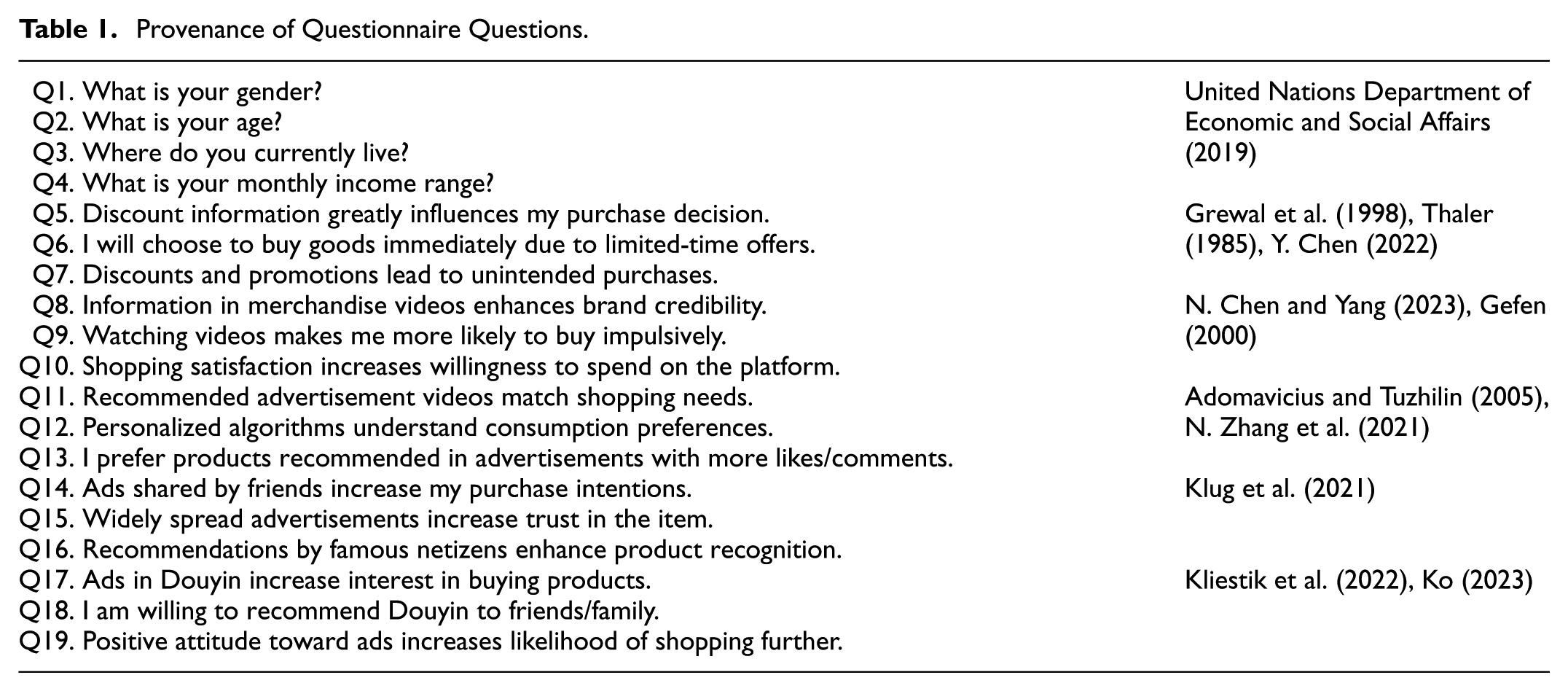
This study’s questionnaire was developed using the Wenjuanxing platform and was distributed in October 2024 to users in mainland China with prior experience using Douyin. A combination of convenience sampling and snowball sampling was adopted. We initially disseminated the questionnaire through their personal networks and invited participants to further circulate it among their contacts. This method facilitated efficient access to a digitally active population suitable for examining consumer behavior on social media platforms (Pinki, 2014). The questionnaire items were adapted from established literature, with detailed references provided in Table 1. The collected responses were analyzed using R Studio to examine the probabilistic relationships among the core variables, including discount strategies, emotional perception, algorithmic personalization, and viral marketing.
Provenance of Questionnaire Questions.
The sampling strategy was designed in accordance with the scope of this study, which focuses on fast-moving consumer goods (FMCGs) promoted through platform-subsidized short-form video advertisements on Douyin. These products, including cosmetics, packaged snacks, personal care items, and household goods, are frequently presented through algorithmic recommendations and real-time promotional content. Previous research has emphasized the role of platform-specific dynamics, such as the alignment between streamer characteristics and product categories, in influencing consumer engagement and purchase behavior on Douyin (Yang et al., 2023). These FMCG items are especially attractive to young and price-sensitive consumers, who represent a substantial segment of the Douyin user base (P. Liu, 2022). To maintain consistency in understanding, all respondents were clearly informed that the survey pertained specifically to platform-subsidized FMCGs.
The summarized demographic characteristics are presented in Table 2. We are total of 460 questionnaires were distributed during a 2-week period, out of which 454 were completed, with 6 deemed invalid, resulting in an effective response rate of 98.7%. Among the respondents, 46.04% (n = 209) were male, and 53.96% (n = 245) were female. The majority of participants fell into the 18 to 34 age range, comprising 63.44% (n = 288) of the total sample. Notably, 11.45% (n = 52) were under 18 years old, and 6.17% (n = 28) were 45 years or older. Geographically, the respondents were distributed across different regions of China, with slightly higher representation in the Central (28.85%, n = 131) and Northeastern (27.09%, n = 123) regions, followed by the West (22.47%, n = 102) and Eastern (21.59%, n = 98) regions. Regarding income, more than half of the participants reported earnings below 5,000 yuan per month (51.32%, n = 233), while 33.26% (n = 151) earned between 5,000 and 9,999 yuan. A smaller percentage of participants earned between 10,000 and 14,999 yuan (9.69%, n = 44), 15,000 and 19,999 yuan (3.96%, n = 18), or more than 20,000 yuan (1.76%, n = 8). These demographic characteristics suggest a younger user base, with modest income levels and diverse regional representation.
Descriptive Statistics of the Population Participating in the Questionnaire.
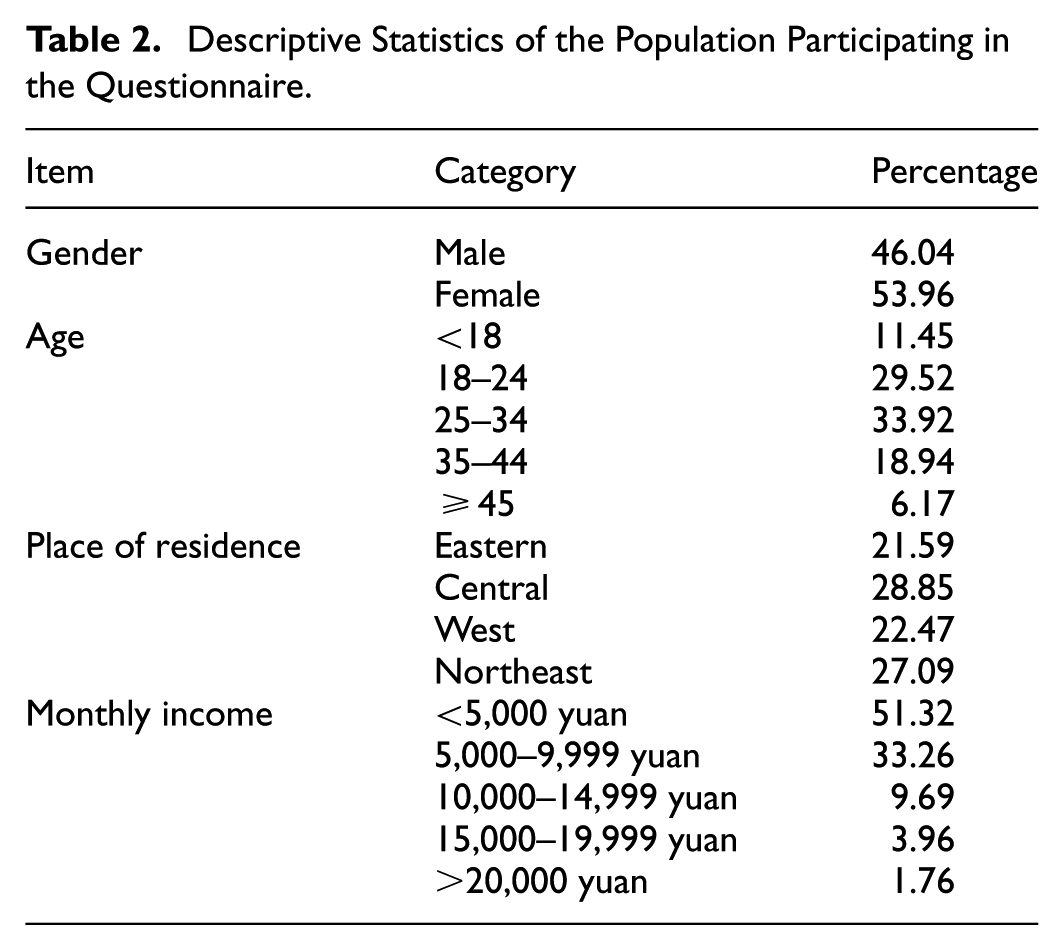
This demographic profile indicates a predominantly young, lower- to middle-income audience with diverse regional representation (Yang et al., 2023). All procedures adhered to the principles of the Declaration of Helsinki. Participants were informed of the potential risks associated with the study before providing written informed consent. This study also obtained necessary approvals from relevant departments and ensured data confidentiality and anonymity throughout the research process.
Research Models
The Bayesian Network (BN) is a graphical model for probabilistic reasoning under uncertainty, combining probability theory and graph theory to describe the probabilistic dependencies between independent and dependent variables. It effectively addresses the limitations of linear regression techniques in handling stochastic variable data in complex environments (Pearl, 2022; van de Schoot et al., 2014).
The Naïve Bayesian classifier is a simplified yet effective probabilistic classification method under the Bayesian network framework. It operates under key assumptions, primarily that predictor variables are conditionally independent of each other within the model, and all features exert equal influence on the outcome. Despite the unrealistic nature of these assumptions, the classifier simplifies the computation by requiring only individual probabilities for each variable, making the model computationally efficient. These assumptions, though often violated in real-world scenarios, enable the Naïve Bayesian classifier to perform well, especially with smaller sample sizes (Rish, 2001). Similar to Bayesian theorem, the model leverages prior and conditional probabilities, with the posterior probability calculated as per Equation 1:

which is used to compute the posterior probability
Despite its rigid independence assumption, the Naïve Bayesian classifier performs remarkably well, prompting researchers to enhance its realism and performance. One direction of improvement focuses on relaxing the “independence assumption,” resulting in advanced models such as the Tree-Augmented Naïve Bayesian classifier (TAN). Friedman and Goldszmidt proposed a TAN classifier with a tree structure, introducing a computational method for conditional probability distribution for continuous parent and discrete child nodes (Friedman et al., 1997). This avoids the need for soft thresholding or neural network-based approximations, reduces computational overhead, and improves accuracy. TAN employs parametric methods to simulate continuous attribute variables, eliminating the need for pre-discretization, enabling the handling of mixed variables. Experimental results demonstrate that TAN achieves a balance between classification accuracy and computational efficiency by allowing each attribute node to have at most one non-class parent node (V. W. Zheng et al., 2010).
To discretize latent variables, this study applies the K-Means clustering algorithm (MacQueen, 1967), grouping continuous variables into three levels: High (H), Medium (M), and Low (L). The process involves clustering latent variables and assigning cluster labels to each sample. Based on the sorted cluster centers, cluster labels for each sample are reassigned as H, M, or L. The clustering results serve as the discrete input for constructing the Bayesian network.

The Tree-Augmented Naïve Bayesian (TAN) network extends the assumptions of the Naïve Bayesian model by capturing causal relationships more effectively, allowing dependencies between variables. The construction of the TAN model begins with network structure learning, using the K2 algorithm, a greedy search strategy. The objective of the K2 algorithm is to maximize the network’s overall probability by finding the optimal structure G, as defined by Equation 3:

Here,
Once the structure is established, conditional probabilities are estimated for each node

Here,
Building upon the aforementioned methodology, the Bayesian Network framework, with its enhancements through the Tree-Augmented Naïve Bayesian (TAN) model, provides a robust and computationally efficient approach to probabilistic reasoning and classification (S. Chen et al., 2021). By integrating advanced techniques such as K-Means clustering for variable discretization and the K2 algorithm for optimizing network structure, the TAN model effectively captures the causal relationships and interdependencies among variables (Heckerman et al., 1995). These methodological refinements allow for the accurate modeling of complex systems involving mixed variables and continuous attributes, bridging the gap between theoretical assumptions and real-world data complexities. As a result, the framework offers a powerful tool for decision-making and predictive analysis, particularly in scenarios where computational efficiency and classification accuracy are paramount.
Modeling Procedure
This study employed the Tree Augmented Naïve Bayes (TAN) model to investigate the probabilistic dependencies among latent variables influencing consumer purchase intention. TAN was selected because it preserves the simplicity and computational efficiency of the Naïve Bayes classifier while allowing for conditional dependencies between predictor variables, which enhances model accuracy and interpretability. Recent research has demonstrated that TAN significantly improves classification performance in domains requiring the modeling of feature interactions and structural dependencies, making it well suited for analyzing complex decision-making behaviors in short-video commerce environments (S. Chen et al., 2021).
The analysis was conducted using RStudio (version 4.3.0), with implementation based on the bnlearn package. This package was chosen due to its robust functionality for structure learning, parameter estimation, probabilistic inference, and model validation in Bayesian network analysis. It also supports transparent, reproducible workflows and offers flexible options for visualizing network structures and exploring causal relationships (Bnlearn Documentation, 2025). The combined use of TAN modeling and the R-based analytical environment ensures methodological rigor and adaptability to the probabilistic structure of consumer behavior data.
Prior to model construction, a structured data cleaning and sorting process was conducted. The original dataset comprised 460 responses, from which 6 invalid questionnaires were removed due to missing entries in the core measurement items (Q5–Q19), resulting in a final sample of 454 valid cases. Descriptive statistics were then applied to examine the presence of outliers or irregular response patterns. No extreme anomalies were detected. Duplicate responses were screened and excluded based on identical IP addresses, time stamps, or recurring answer sequences. Subsequently, individual item responses were aggregated at the construct level by computing the average of each corresponding item group. The resulting composite variables were organized into a structured dataset with standardized variable names. Each variable was consistently labeled and sorted, including those reflecting discretized levels obtained through clustering procedures, such as Q5(HML)or Discount (HML), to facilitate subsequent input into the TAN modeling process.
This study adopted a multi-method approach to examine the influence of four independent variables on purchase intention. First, reliability analysis using Cronbach’s Alpha was conducted to assess the internal consistency of the constructs. Second, Structural Equation Modeling (SEM) was employed to validate the measurement model and estimate structural path relationships (Hair, 2014). Third, analysis of variance (ANOVA), along with post hoc tests (e.g., Tukey’s HSD), was used to evaluate mean differences across clusters. Fourth, K-means clustering was applied to transform continuous-scale responses into three ordinal levels High (H), Medium (M), and Low (L) for probabilistic modeling. Fifth, a Tree-Augmented Naïve Bayes (TAN) model was constructed to examine conditional dependencies and directional influences among the variables (Deng et al., 2021).
Following clustering, three survey items corresponding to each construct were grouped and discretized using a K-means algorithm with three centers. Based on centroid distances, cluster membership was assigned to H/M/L categories, enabling categorical input for the Bayesian network model and improving interpretability of conditional probabilities.
The TAN structure was then generated using the tree.bayes() function from the bnlearn R package (Scutari, 2010). Several root nodes were tested to compare how different hierarchical structures affected the conditional dependencies between variables. Conditional probability tables (CPTs) were learned using maximum likelihood estimation via the bn.fit() function.
Next, the cpquery() function was used to compute the posterior probability of high purchase intention under various combinations of parent variable states (e.g., Discount = H and Emotion = M). These conditional probabilities were examined for all nine H/M/L pairwise permutations.
The TAN structure was visualized using graphviz.plot(), where directional arcs illustrated both direct and indirect probabilistic dependencies. CPTs were printed to show the probability distribution of each node given its parent(s).
Lastly, sensitivity analyses were conducted by testing multiple TAN root node configurations. This provided comparative insight into the probabilistic influence of each latent factor on purchase intention, yielding a more nuanced understanding of consumer behavior on short-video platforms.
Results
Table 3 summarizes the reliability analysis of questionnaire items across five constructs: Discount, Emotional Perception, Algorithmic Personalization, Viral Marketing, and Purchase Intention. Each construct demonstrated high internal consistency, with Cronbach’s Alpha values above the accepted .7 threshold, supporting the reliability of the questionnaire items (Nunnally, 1978). Notably, the Viral Marketing construct exhibited the highest Cronbach’s Alpha (.842), indicating excellent internal consistency (George & Mallery, 2003), while the other constructs also showed robust reliability (ranging from .81 to .833). The corrected item-total correlations for each item further confirmed their adequate contributions to the constructs, particularly within the Emotional Perception construct, where Q9 showed a strong association (0.693) with the overall score (Gliem & Gliem, 2003). Overall, these results affirm that the questionnaire items reliably measure the intended constructs.
Reliability Analysis of Questionnaire Items Across Different Constructs.
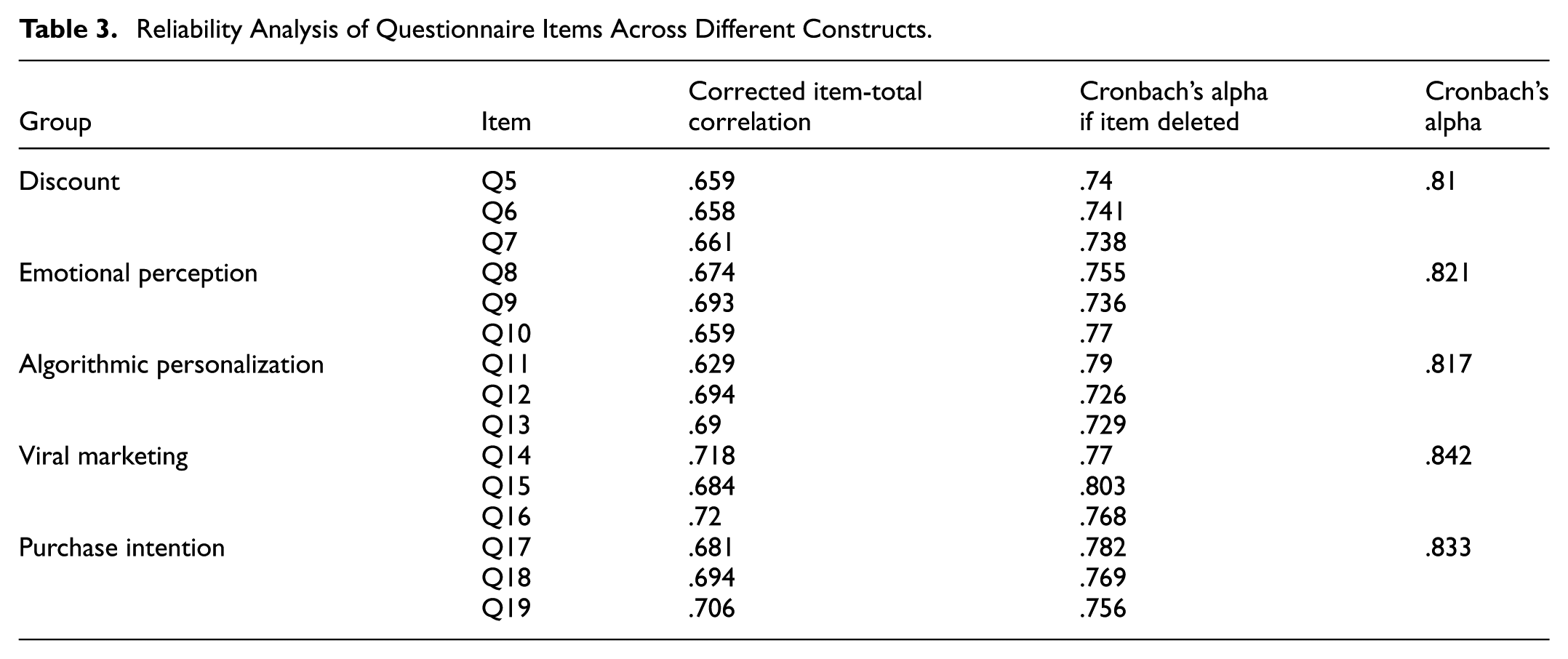
Table 4 presents the factor loadings and item–total correlations for five latent constructs: Discount Strategies, Emotional Perception, Algorithmic Personalization, Viral Marketing, and Purchase Intention. All factor loadings exceed 0.83, and item–total correlations are above .62, indicating strong construct validity and internal consistency. Notably, the constructs of Viral Marketing and Purchase Intention demonstrate particularly high reliability, with Cronbach’s alpha values of .842 and .849, respectively. These results confirm that each item contributes meaningfully to its corresponding construct and that the measurement model is robust. Overall, the scale exhibits solid psychometric properties, meeting established standards for reliability and validity in behavioral research (Gliem & Gliem, 2003; Nunnally, 1978).
Factor Loadings and Reliability of Measurement Constructs.
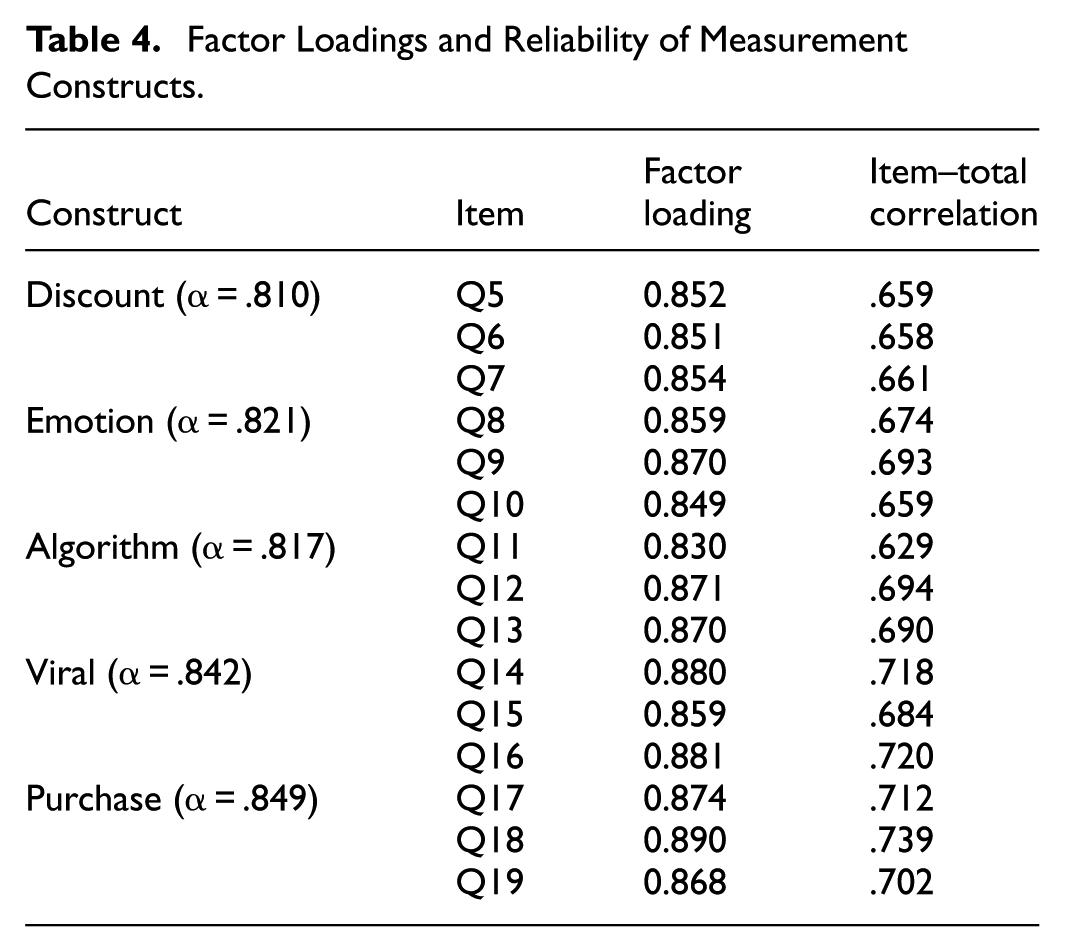
Figure 2 explores the impact of Discount Strategies, Emotional Perception, Algorithmic Personalization, and Viral Marketing on consumer Purchase Intention, evaluating eight hypotheses through path coefficients and survey data.
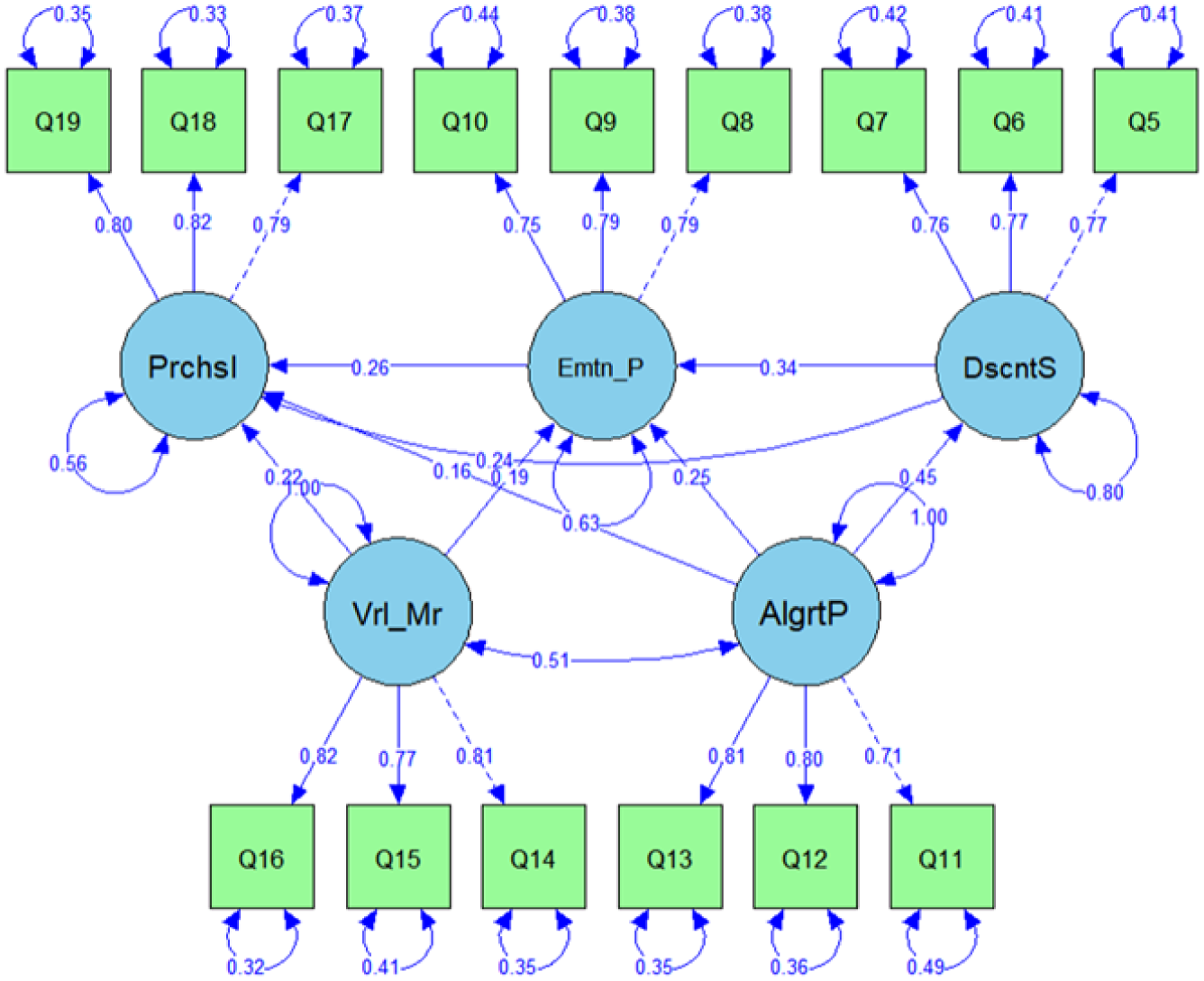
The structural equation modeling (SEM) analysis.
The analysis also explores indirect relationships, revealing that Discount Strategies positively affect Emotional Perception, as demonstrated by
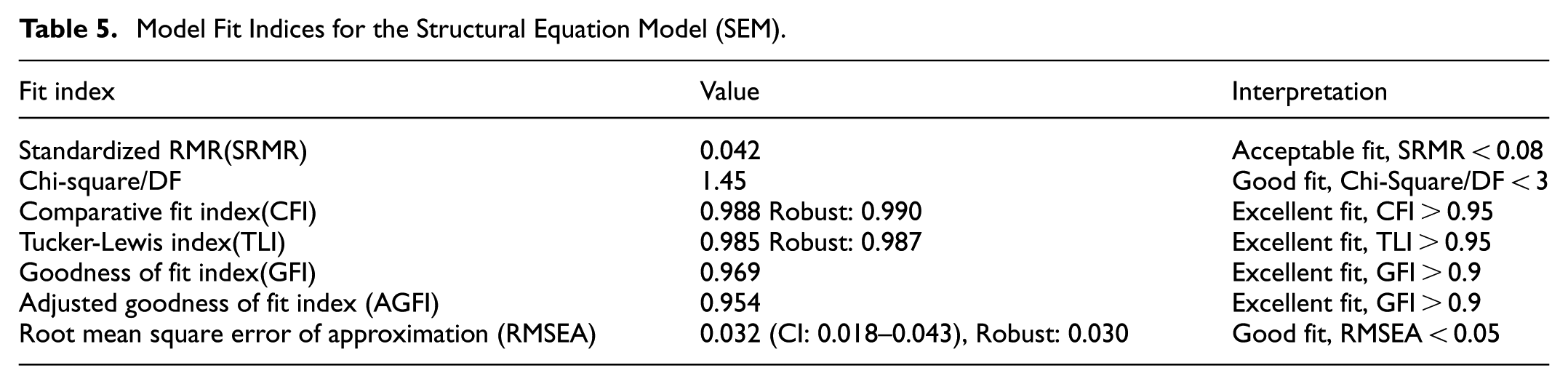
Table 5 presents various model fit indices that assess the goodness of fit of the structural equation model (SEM), SRMR (0.042) and chi-square/DF (1.45) fall within accepted thresholds, while CFI (0.988), TLI (0.985), GFI (0.969), and AGFI (0.954) all exceed 0.95 or 0.90, indicating excellent model fit. RMSEA values (0.032; robust = 0.030) also confirm good fit with minimal error. These results suggest the model is well-specified, parsimonious, and accurately reflects the observed data structure. According to the results of Harman’s one-factor test (common method bias), the first principal component explains 39% of the variance (<50%), indicating that there is no single dominant factor. That is, there is no serious common method bias issue (Podsakoff et al., 2003). Furthermore, this study found (Table 6) that gender, age, and income did not show significant differences in consumer purchase intent, indicating that this intent has strong consistency and universality across different demographic groups. Notably, residence (Residence) was statistically significant (p = .0177), suggesting that there are differences in the purchase decision-making mechanisms between urban and rural users.
Model Fit Indices for the Structural Equation Model (SEM).
Post Hoc Tests.

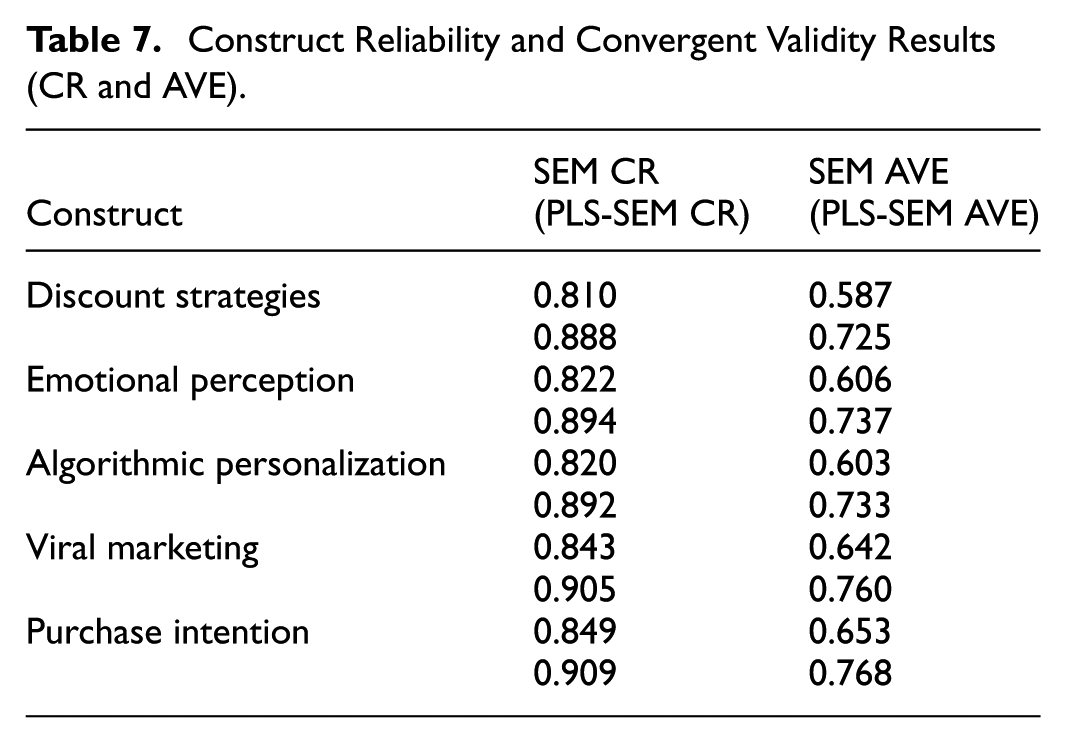
Table 7 presents the Composite Reliability (CR) and Average Variance Extracted (AVE) values for the five core constructs examined in this study: Discount Strategies, Emotional Perception, Algorithmic Personalization, Viral Marketing, and Purchase Intention. In the SEM model, all CR values exceed the recommended threshold of 0.70, ranging from 0.81 to 0.849, and all AVE values surpass the 0.50 benchmark, indicating good internal consistency and convergent validity. The corresponding PLS-SEM results show even higher CR values (ranging from 0.888 to 0.909) and AVE values (ranging from 0.725 to 0.768), further supporting the reliability and validity of the constructs (Hair, 2017). These findings demonstrate that the measurement model is robust across both SEM and PLS-SEM approaches, ensuring that the constructs are suitable for subsequent structural and Bayesian network analyzes. Compared to logistic regression or machine learning models such as ANN, the SEM/PLS-SEM framework allows simultaneous testing of measurement and structural models, enabling a more theory-driven interpretation of latent constructs. PLS-SEM, in particular, is suitable for exploratory models with smaller sample sizes and non-normal data, complementing the robustness of CB-SEM (Sarstedt et al., 2021).
Construct Reliability and Convergent Validity Results (CR and AVE).
To assess model robustness, Partial Least Squares SEM (PLS-SEM) was conducted alongside Covariance-Based SEM (CB-SEM). As shown in Table 8, all hypothesized paths were significant at the .001 level across both methods, confirming consistent directional relationships (Hair et al., 2011). Algorithmic Personalization exerted indirect effects via Discount Strategies (β = .35) and Emotional Perception (β = .22), both of which significantly influenced Purchase Intention, underscoring the psychological mechanisms behind personalization strategies (Venkatesh et al., 2003).
SEM and PLS-SEM Path Coefficients.
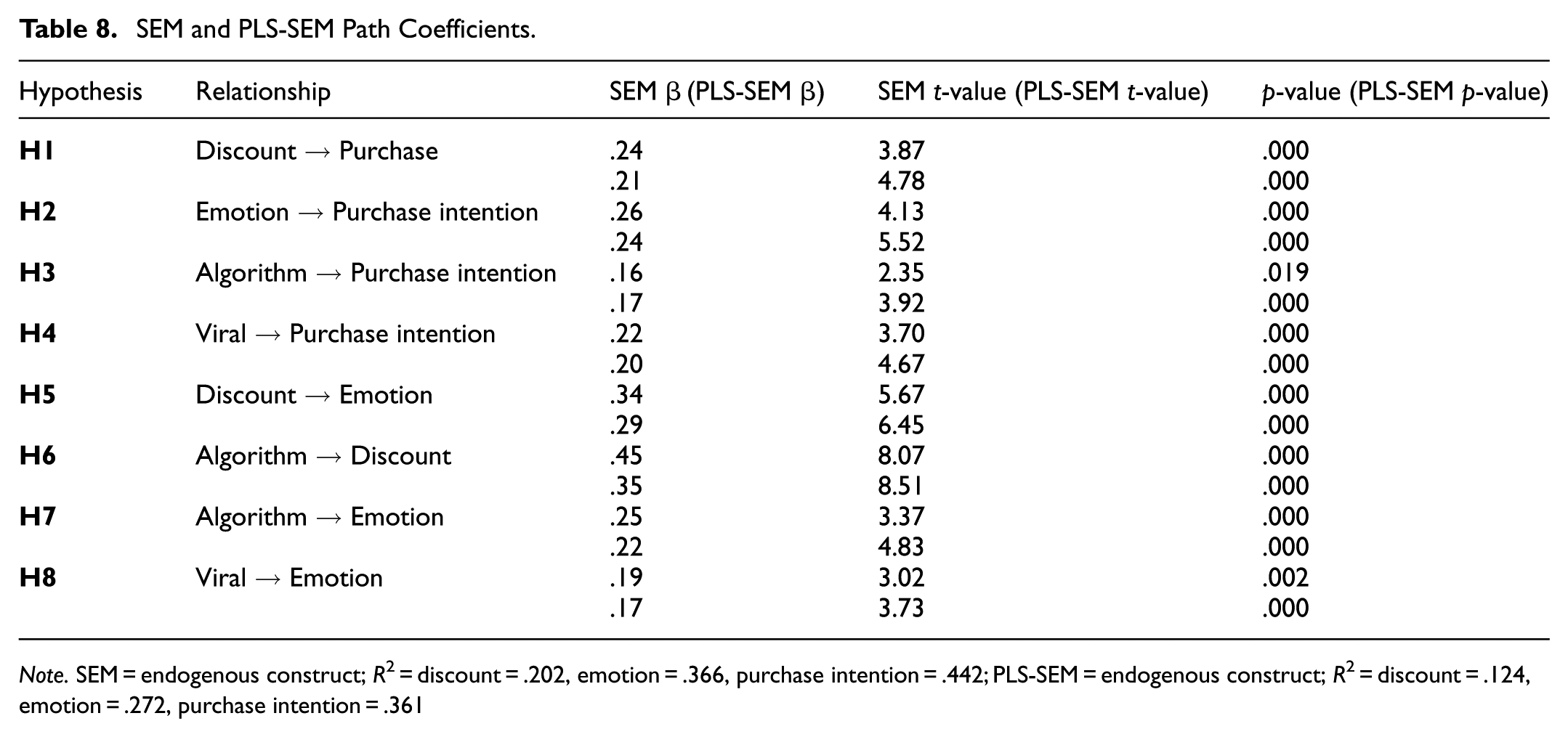
Note. SEM = endogenous construct; R2 = discount = .202, emotion = .366, purchase intention = .442; PLS-SEM = endogenous construct; R2 = discount = .124, emotion = .272, purchase intention = .361
The SEM model explained 44.2% of variance in Purchase Intention (R2 = .442), with slightly lower but acceptable values in PLS-SEM (R2 = .361). These results align with prior research on emotional mediation in consumer behavior (Bagozzi et al., 1999). The consistency across models supports the empirical validity of the framework and reinforces the logic of applying the Tree-Augmented Naïve Bayes (TAN) model. Finally, K-means clustering was performed to further explore segmentation patterns, with results presented in Figure 3.
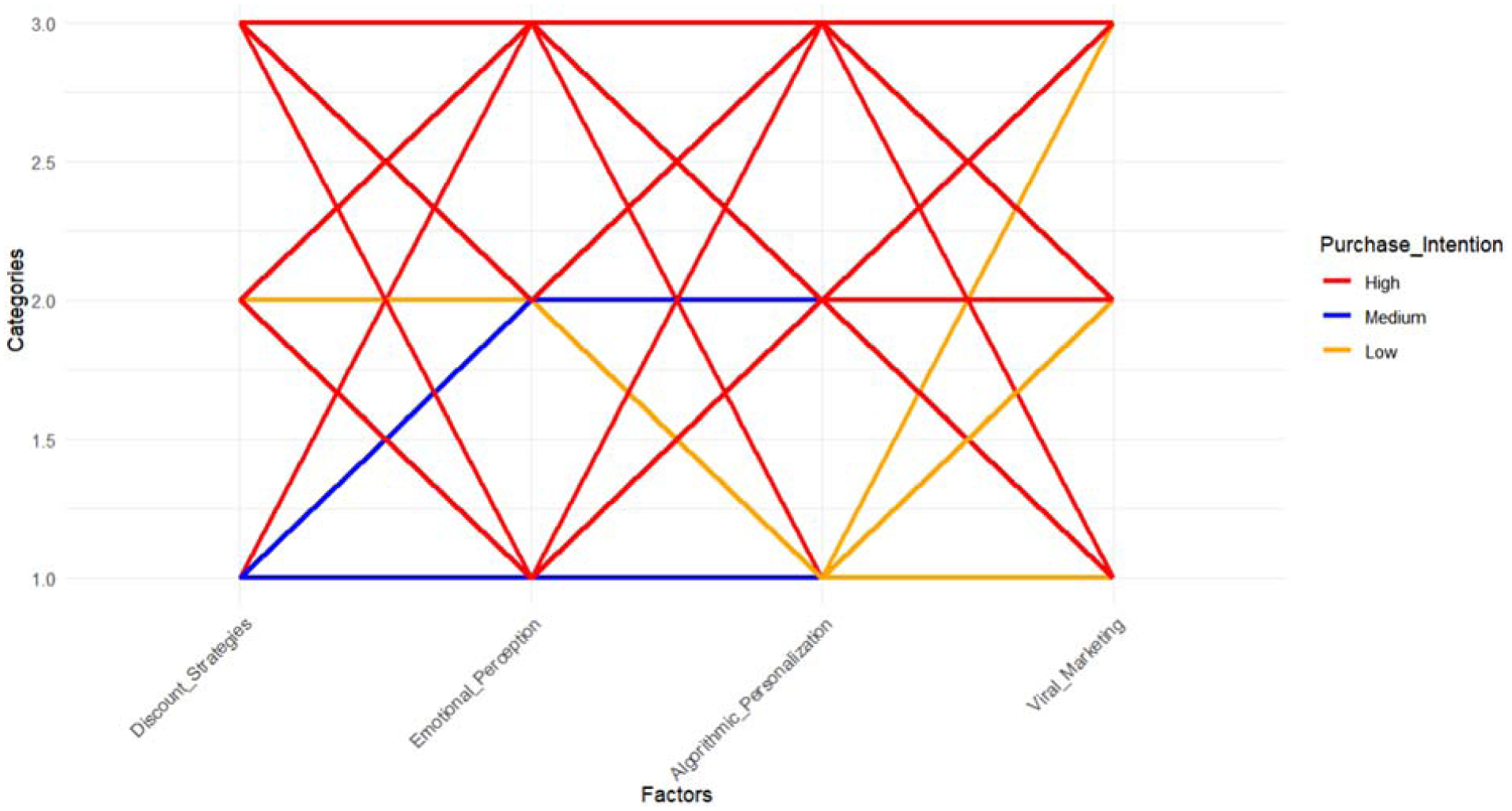
K-means clustering analysis of latent variables (high-medium-low).
Figure 3 illustrates the results of K-means clustering applied to the average scores of latent variables, segmented into three levels (High, Medium, Low) to simplify interpretation (Deng et al., 2021). The dependent variable, “ Purchase Intention,” is influenced by four independent latent variables: “Discount Strategies,”“Emotional Perception,”“ Algorithmic Personalization,” and “Viral Marketing.” Each line in the plot represents an observation, with color-coded paths indicating the level of Purchase Intention: red for High, blue for Medium, and orange for Low. The dominance of red lines in the plot suggests a strong inclination toward purchasing among many observations. High Purchase Intention levels (red) display consistent patterns across certain factor categories, such as higher levels in “ Discount Strategies ” or “Viral Marketing,” suggesting that these attributes positively influence buying intent (H. Liu & Setiono, 1997). In contrast, blue lines representing medium Purchase Intention display varied paths, indicating that moderate interest may result from a combination of factor levels, and minor adjustments in these factors could potentially elevate customers to higher Purchase Intention levels.
The K-means clustering method offers several advantages for this analysis. It is computationally efficient, making it well-suited for large datasets with multiple variables (Jain, 2010), as in this study. K-means effectively groups similar data points, enhancing interpretability by categorizing each factor into three distinct states (high, medium, and low). This segmentation makes it easier to identify patterns and trends within the data. Moreover, K-means clustering is flexible and can be applied to various types of data, including mixed or categorical variables. This approach generates actionable insights for targeted marketing (Wu et al., 2008), enabling businesses to focus on high-impact factors for customers with high Purchase Intention (red lines) and to make strategic adjustments for those with medium Purchase Intention (blue lines).
Table 9 presents the ANOVA test outcomes for the clustering analysis of various latent factors, including “Discount Strategies,”“Emotional Perception,”“Algorithmic Personalization,”“Viral Marketing,” and the dependent variable “ Purchase Intention.” The specific results are shown in Table 4. Each factor exhibits highly significant F-values (p < .001), indicating strong differentiation across clusters and supporting the rationale for clustering sample data into high, medium, and low dimensions. “Discount Strategies,”“Emotional Perception,”“Algorithmic Personalization,” and “Viral Marketing” all demonstrate substantial F-values and mean square differences, suggesting these variables effectively distinguish between levels of Purchase Intention within the clusters.
Analysis of ANOVA.
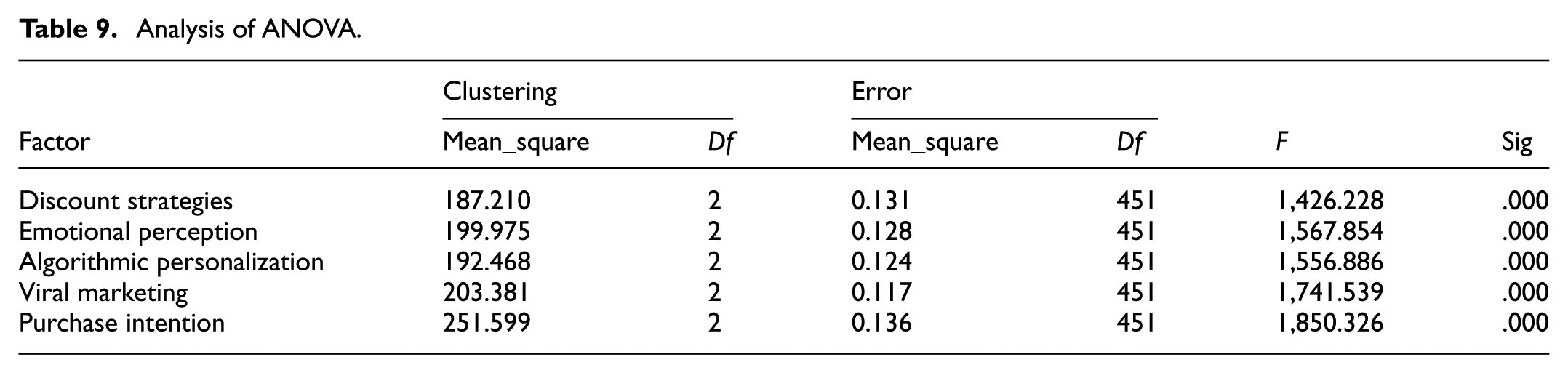
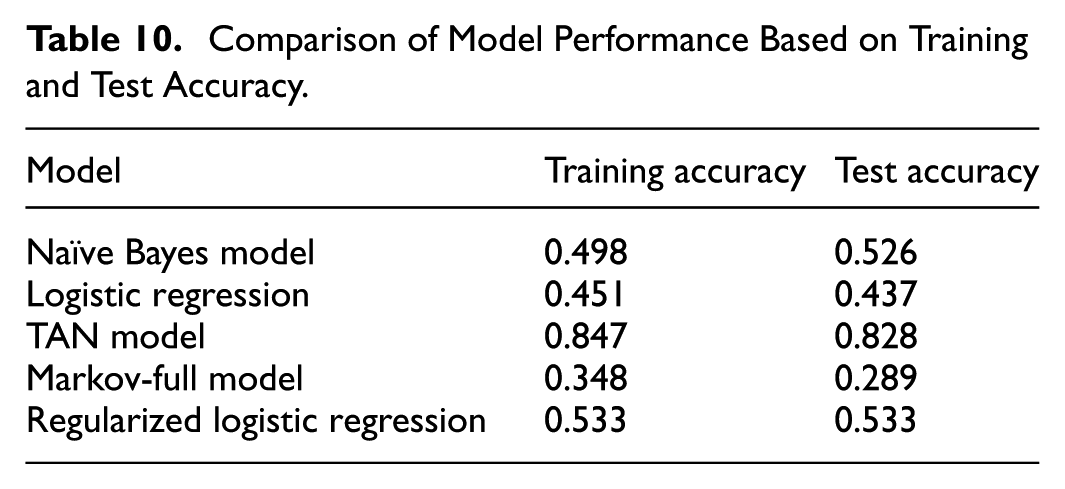
Table 10 compares the performance of five models: Naïve Bayes, Logistic Regression, Regularized Logistic Regression, TAN (Tree-Augmented Naïve Bayes), and Markov-Full. TAN achieved the highest accuracy (training: 0.847; test: 0.828), indicating strong predictive performance and generalizability. In contrast, Markov-Full performed worst (training: 0.348; test: 0.289), suggesting poor fit for this dataset. Naïve Bayes and Logistic Regression showed lower and relatively similar accuracies (test: 0.526 and 0.437, respectively), while Regularized Logistic Regression offered modest improvements (0.533) by reducing overfitting. As accuracy above 0.80 is considered strong in consumer behavior modeling (Li et al., 2025), TAN was selected as the final model for its robustness and suitability in capturing complex probabilistic relationships (Aji et al., 2023). This justifies our choice of TAN as the final modeling approach and supports the validity of our findings. Consequently, we chose to construct the TAN Bayesian network as our final model.
Comparison of Model Performance Based on Training and Test Accuracy.
The TAN Bayesian networks in Figure 4 illustrate various configurations, each with a different variable as the root node, influencing other factors and ultimately impacting “Purchase Intention.” In diagram (a), “Discount” serves as the root, influencing “Emotional,”“Algorithmic Personalization,” and “Viral” factors, which then cascade down to affect “Purchase Intention.” This setup implies that discount-related decisions play a primary role, indirectly shaping purchasing intent through their influence on other factors. Diagram (b) assigns “Emotional” as the root node, suggesting that emotional perception may be foundational, shaping both customer views of other factors and their buying intentions. Diagram (c) positions “Algorithmic Personalization” factors as the root, indicating that data-driven recommendations or personalization strategies might be the key influence, affecting perceptions of “Discount,”“Emotional,” and “Viral” factors.

TAN Bayesian networks with different root nodes.
In diagram (d), “Viral” factors are placed at the root, impacting all other variables, with “Purchase Intention” as the final node. This structure underscores the importance of social influence and viral marketing in shaping purchasing decisions. Lastly, diagram (e) presents “Purchase Intention” as the root node, directly connected to each latent variable without intermediate dependencies, suggesting that each factor independently influences purchasing intent. Together, these TAN configurations provide alternative perspectives on how each variable could serve as a primary influence in the decision-making process. By testing these structures, we can identify the configuration that best aligns with real-world data, offering insights into the most impactful factors in determining customer Purchase Intention.
While the TAN Bayesian Network indicates potential mediation paths (such as from Discount Strategies to Emotional Perception to Purchase Intention) it does not provide direct estimates of indirect effects. To validate these relationships, a regression-based mediation analysis with bootstrap resampling was conducted (Table 11). Results confirm that Emotional Perception significantly mediates the effects of Discount Strategies (indirect effect = 0.1448), Algorithmic Personalization (0.1384), and Viral Marketing (0.1287), all with p < .001. The corresponding direct effects remained significant, highlighting Emotional Perception as a central mechanism linking platform stimuli to purchase behavior (Bagozzi et al., 1999).
Mediation Analysis Results of Emotion.

Table 12 Panel A shows that high Discount Strategies elicit the strongest consumer responses across all variables—emotional perception (70%), Algorithmic Personalization (59.3%), viral marketing (59.1%), and Purchase Intention (65.4%). These findings suggest that substantial discounts enhance trust, perceived value, and shareability, effectively boosting engagement and purchase motivation. Medium discounts lead to more moderate responses, with medium-level engagement dominating across variables (e.g., emotional perception: 44.7%). In contrast, low Discount Strategies sharply reduce high responses (e.g., Purchase Intention: 14.8%) and increase low engagement (e.g., 50.8% low Purchase Intention), indicating limited effectiveness. Overall, high or moderate discount levels are more effective in driving consumer intent (Chandon et al., 2000).
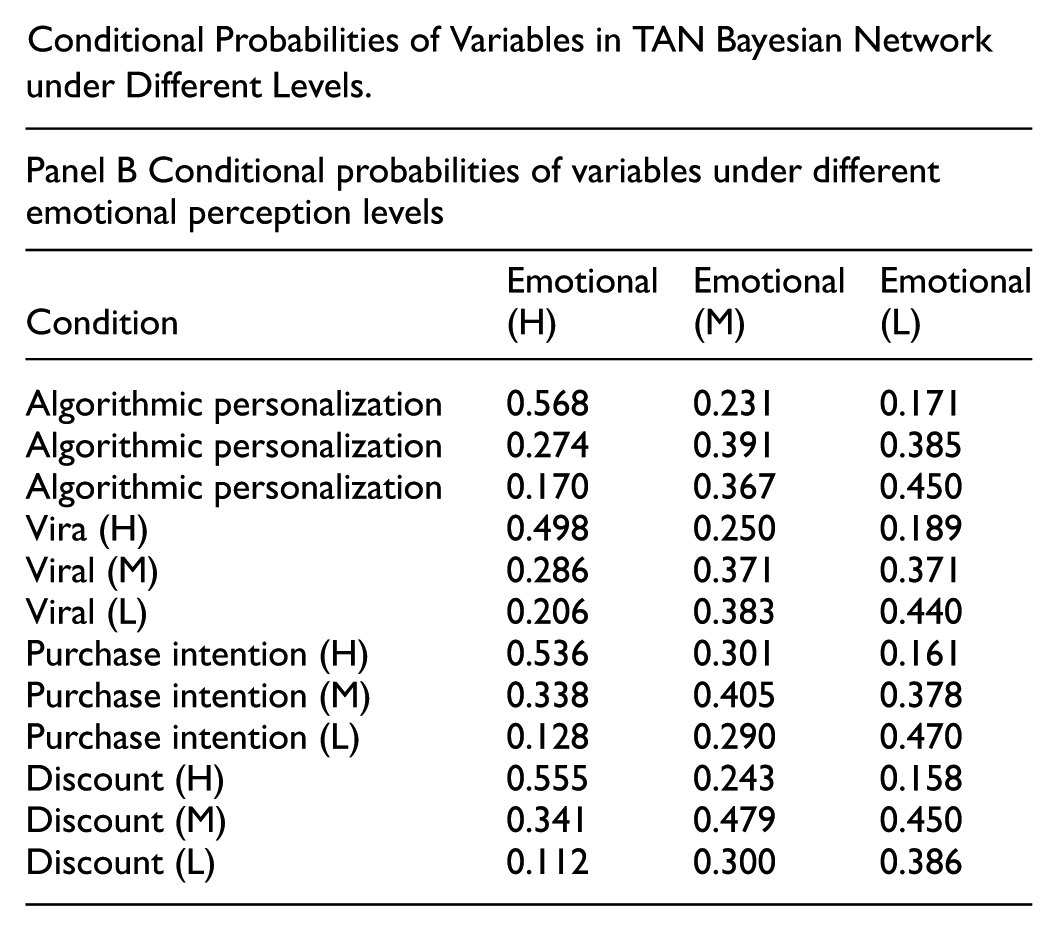
Conditional Probabilities of Variables in TAN Bayesian Network under Different Levels.

Panel B reveals that high emotional perception substantially increases high responses across all variables: Algorithmic Personalization (56.8%), viral marketing (49.8%), Purchase Intention (53.6%), and Discount Strategies (55.5%). These results indicate that positive emotions enhance engagement, perceived value, and purchasing motivation. Under medium emotional perception, responses become more evenly distributed, with medium responses dominating most variables (e.g., Purchase Intention: 40.5%). In contrast, low emotional perception sharply reduces high responses (e.g., Purchase Intention: 16.1%) and raises low engagement (e.g., 47.0%), emphasizing the pivotal role of emotional engagement in shaping consumer intent (Yue et al., 2023).
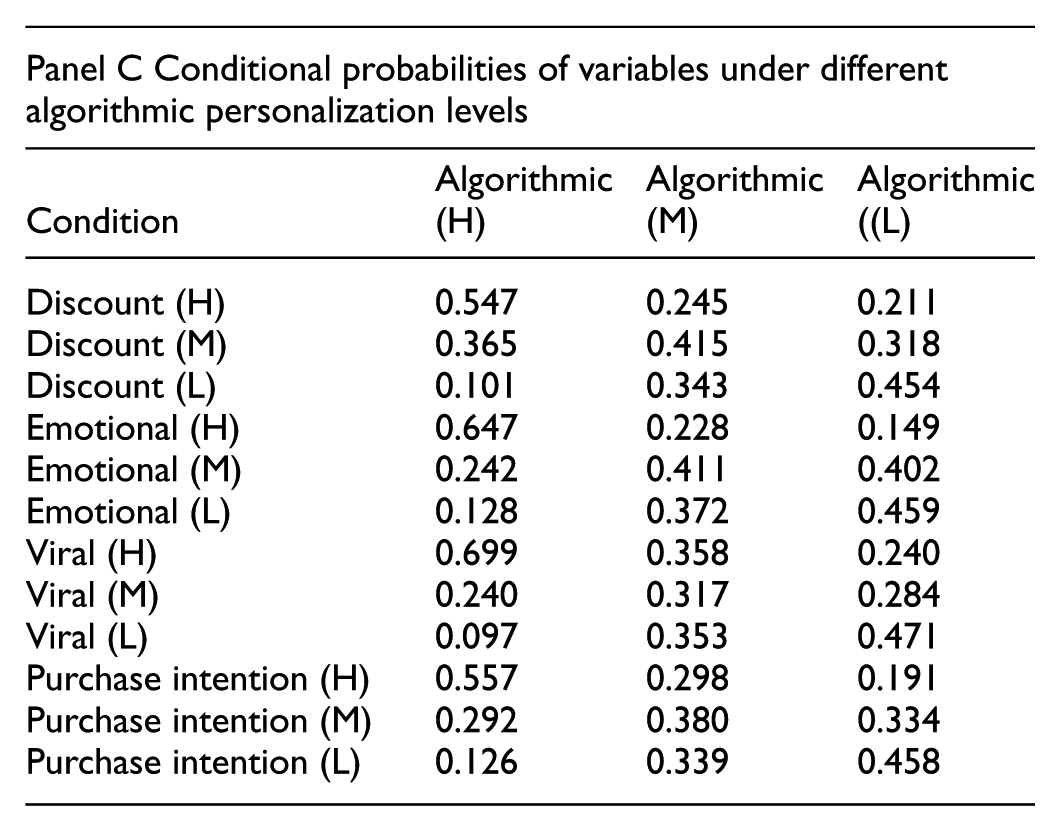
Conditional Probabilities of Variables in TAN Bayesian Network under Different Levels.
Panel C shows that high Algorithmic Personalization significantly increases high responses across all variables: Discount Strategies (54.7%), emotional perception (64.7%), viral marketing (69.9%), and Purchase Intention (55.7%). This indicates a strong alignment between personalization, perceived value, and engagement. At medium levels, responses become more balanced (e.g., Purchase Intention: 29.8% high, 38.0% medium), while at low personalization, high responses drop sharply (e.g., Purchase Intention: 12.6%; viral marketing: 9.7%), and low responses dominate. These patterns highlight the essential role of Algorithmic Personalization in sustaining consumer motivation and engagement (Pappas, 2016).
Panel D shows that high viral marketing influence leads to strong high responses across all variables—Discount Strategies (54.7%), emotional perception (44.6%), Algorithmic Personalization (53.2%), and Purchase Intention (48.0%)—demonstrating its effectiveness in enhancing trust, perceived value, and engagement. Medium viral influence yields more balanced responses, while low influence substantially reduces high engagement (e.g., Purchase Intention: 22.4%) and increases low responses (e.g., 51.7% for Purchase Intention). These results underscore the pivotal role of viral marketing in sustaining consumer motivation and driving purchase decisions (Kaplan & Haenlein, 2011).
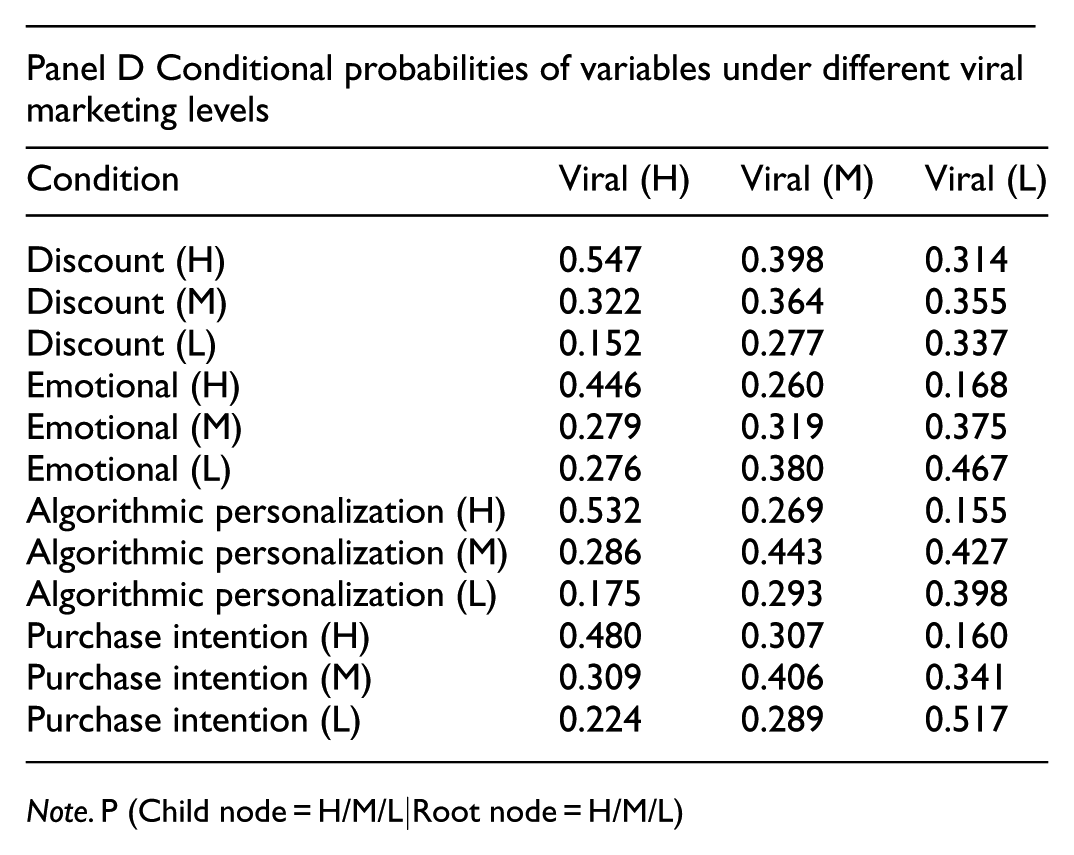
Note. P (Child node = H/M/L∣Root node = H/M/L)
Table 13 the Bayesian diagnostic analysis further confirms the impact of Discount Strategies, emotional perception, Algorithmic Personalization, and viral marketing on Purchase Intention across H/M/L levels. High Discount Strategies lead to the highest purchase intention (54.4%), while low discounts shift responses toward low intent (46.3%; Dodds et al., 1991). Emotional perception shows a similar pattern: high emotional engagement yields 56.4% high Purchase Intention, whereas low emotional perception increases low responses to 47.6% (Gefen, 2000). Algorithmic Personalization demonstrates the strongest effect, with high levels resulting in 60.1% high Purchase Intention (Adomavicius & Tuzhilin, 2005). Medium personalization produces balanced responses, while low personalization reduces high intent to 10.8% and increases low intent to 37.5%. Viral marketing shows the highest high-response rate (62.4%) when strong, but drops to 15.0% under low influence, with low intent rising to 48.9% (Brown & Reingen, 1987).
Bayesian Diagnostic Analysis (Robustness Test).
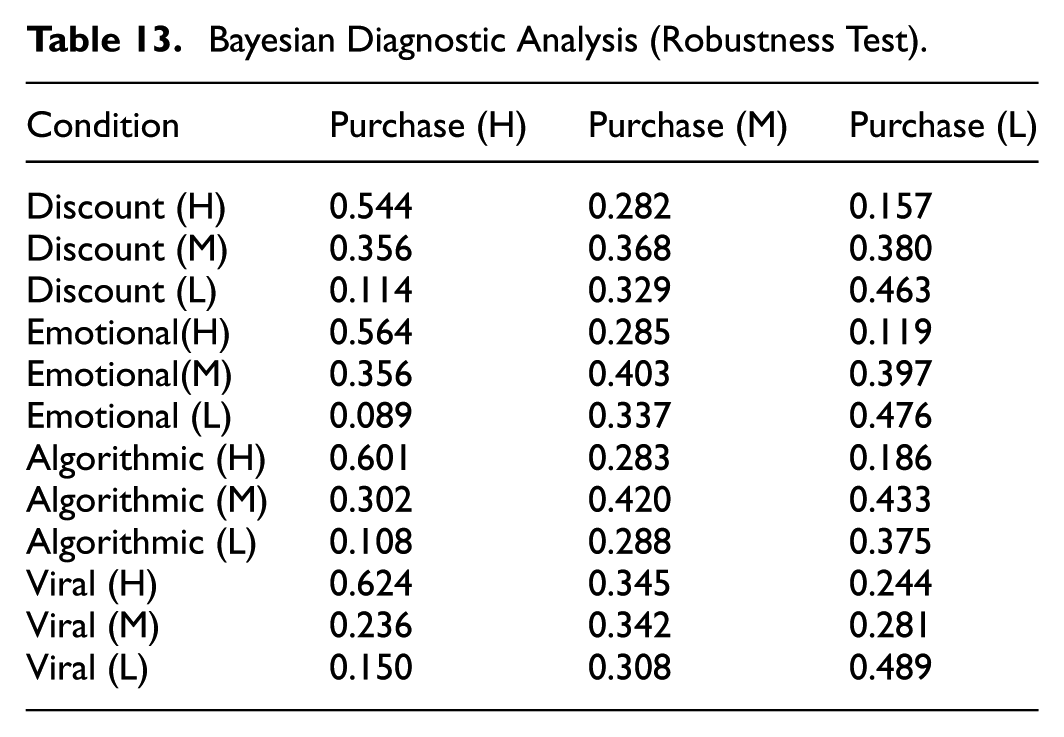
These findings highlight that Algorithmic Personalization and viral marketing are the most influential drivers, supported by emotional engagement and discount strategies. An integrated approach combining all four elements is essential to maximize consumer engagement and purchase motivation.
Discussion and Recommendations
Leveraging Key Drivers to Enhance Consumer Purchase Intentions
To maximize consumer purchase intentions on platforms like Douyin, businesses should focus on the core drivers identified in this study: Discount Strategies, emotional engagement, algorithmic personalization, and viral marketing.
Among them, discount strategies showed the strongest direct impact (SEM coefficient = .77), suggesting that a well-designed promotion pricing would significantly beef up consumers’ perceived value and purchase motivation. This finding is supported by prior research as price promotions can create urgency and increase perceived savings in a mobile and short-video commerce setting (Do et al., 2023).
Bayesian analysis provides additional evidence of it, indicating that when discount levels are high, the probability of high purchase intention increases to 65.4%, and that of low discount leads to a significant reduction to 14.8%, which implies that the framing of discount plays a significant role in the manner consumer decisions are shaped in the digital environment. In this regard, robust discount strategies positively contribute not only in terms of increasing the perceived attractiveness of offers but also in terms of positively influencing emotional responses (
Emotional perception followed closely (0.79), as emotionally engaging content significantly enhances consumer responsiveness. Empirical findings from the live streaming e-commerce context suggest that interactive features, such as emotional cues from hosts, can significantly elevate consumers’ positive emotional responses and strengthen purchase intentions (Sun & Kim, 2024). Under high emotional conditions, purchase intention reaches 53.6%, but falls sharply to 16.1% when emotional engagement is low, providing support for
Although algorithmic personalization shows only a moderate direct effect (SEM = 0.25), it exhibits the strongest indirect influence in the Bayesian model (p = .601). This pattern aligns with research indicating that personalized recommendations enhance consumer trust and satisfaction in AI-driven e-commerce environments (Hassan et al., 2025). When algorithmic personalization is high, purchase intention increases to 55.7%, compared to only 12.6% under low algorithmic personalization. These results support
Viral marketing had the weakest direct effect (SEM = 0.22), yet it plays a significant supporting role. Empirical evidence shows that social proof, reflected through peer recommendations, influencer endorsements, and visible user engagement, can enhance consumer trust and stimulate purchase decisions. In this study, strong viral influence increased purchase intention to 48.0%, whereas low exposure reduced it to just 15.0%, providing support for hypothesis
Furthermore, viral content strengthens emotional engagement. Under high viral exposure, 44.6% of consumers demonstrated high emotional perception, compared to only 16.8% under low exposure, confirming hypothesis
Influencer-driven campaigns, referral programs, and interactive content such as live streams and challenges can amplify reach and engagement, further strengthening consumer intent to buy (Petty & Cacioppo, 2012). A combined strategy leveraging strong discounts and emotionally appealing content amplified through personalization and social diffusion is most effective for driving purchases on short-video platforms. The Role of Personalization and Integrated Marketing Strategies.
Personalized recommendations enabled by robust Algorithmic Personalization systems emerge as the most effective driver of Purchase Intention, with high Algorithmic Personalization influence yielding the strongest responses across all variables. Platforms should optimize their algorithms to deliver relevant content based on user preferences, behaviors, and real-time feedback (Hassan et al., 2025). Businesses must collaborate with platforms to fine-tune their targeting strategies and ensure that personalized recommendations align with consumer needs. Beyond individual drivers, an integrated approach is essential. Combining Discount Strategies, emotional engagement, viral marketing, and algorithmic personalization can amplify consumer engagement and purchase intent (Chu et al., 2024). For instance, campaigns featuring substantial Discount Strategies, emotionally resonant storytelling, and influencer-driven viral content backed by personalized recommendations can generate synergistic effects. A holistic marketing strategy ensures that no opportunity to engage consumers is overlooked.
Tailoring Campaigns to Demographics and Regional Preferences
Among the demographic variables analyzed, only residence showed a statistically significant effect on purchase intention (p = .0177; see Table 5), which provides the empirical basis for the regional customization recommendations presented below.
Although our current dataset does not pinpoint which specific regions drive these differences, the finding suggests that regionally adapted campaigns such as promotions leveraging local influencers, dialectal or cultural references, and region-specific timing may enhance engagement and conversion. For businesses, this opens the opportunity to align their short-video marketing more closely with localized consumer behaviors, improving message relevance and campaign efficiency without requiring large-scale platform-level changes (Okonkwo et al., 2023).
In addition, given Douyin’s predominantly young and middle-income user base, businesses should design campaigns tailored to this demographic. Affordable pricing, culturally relevant content, and trend-driven products resonate strongly with younger audiences. To further boost performance, businesses should utilize real-time analytics to optimize their strategies during campaign lifecycles. Adjusting discount levels, refining viral marketing efforts, and incorporating user feedback in near real-time can improve campaign performance and responsiveness (Okonkwo et al., 2023). By adopting a dynamic, data-driven approach, brands can better align their content and promotional tactics with evolving consumer preferences and platform behaviors, maximizing their impact in competitive short-video environments (Deng et al., 2021).
Conclusion
In academic theoretically, this study enriches existing research on consumer behavior in short video commerce by extending two foundational models: the Theory of Planned Behavior (TPB) and the Stimulus-Organism-Response (S-O-R) framework. It refines the TPB by highlighting that perceived behavioral control is shaped not only by individual self-efficacy but also by algorithmic personalization, which reduces users’ cognitive load and facilitates purchase behavior. At the same time, the study broadens the S-O-R model by identifying emotional perception as a mediating factor through which personalized recommendations and promotional cues influence consumer responses. Methodologically, the use of the Tree Augmented Naïve Bayes (TAN) model provides a structured approach for capturing conditional relationships among key variables, offering greater explanatory power than traditional linear models. This framework complements prior studies that rely on structural modeling or regression techniques (H. Liu & Liang, 2025; Yang et al., 2023), and helps to explain how cognitive, emotional, and contextual factors interact in shaping decision-making on algorithm-driven platforms.
Empirically, the study identifies algorithmic personalization, discount strategies, and emotional perception as the primary drivers of consumer purchase intention on Douyin, while viral marketing serves a secondary but complementary function. Among these factors, algorithmic personalization has the most substantial impact by aligning content with user preferences, followed by discount strategies that enhance perceived value and create urgency. Emotional perception acts as a key mediator, amplifying the influence of both discount strategies and viral content on decision-making. These findings offer clear implications for marketers operating in short video commerce. In particular, the interaction between emotional engagement and price sensitivity suggests that targeting emotionally responsive users with timely discounts can improve conversion rates. Moreover, the results support content strategies that incorporate emotionally resonant material into personalized recommendation flows, especially when promoting fast-moving consumer goods. Such approaches can increase both user engagement and promotional effectiveness (J. Liu & Khong-khai, 2024; L. Wei, 2023).
These conclusions are supported by a TAN Bayesian model, which outperformed alternative methods (e.g., logistic regression) in predictive accuracy (training: 84.7%, test: 82.8%). High levels of algorithmic personalization and discount strategies were found to yield the highest conditional probabilities of purchase intention (60.1% and 54.4% respectively), followed by emotional perception (56.4%) and viral marketing (62.4%) demonstrating that while viral content alone has modest direct effects, its synergy with emotional perception enhances consumer receptivity and brand visibility. These findings also align with prior research emphasizing the role of algorithmic targeting in consumer engagement (Adomavicius & Tuzhilin, 2005) and emotional responses in purchase intention (Bagozzi et al., 1999).
The analysis reveals a complex web of interdependencies among core marketing variables, each contributing cumulatively to consumer decision-making. Specifically, discount strategies stimulate positive emotional responses, which enhance consumers’ perceived value of personalized algorithmic recommendations (Chu et al., 2024). Although viral marketing exerts a more indirect influence, it plays a significant role in amplifying emotional engagement and increasing brand visibility through peer-based interactions such as sharing and endorsements. Findings from the Bayesian network analysis further substantiate these dynamics, indicating that algorithmic personalization and discount strategies exert the most substantial upstream influence on emotional perception, viral diffusion, and ultimately, purchase intention (Teepapal, 2025; Obiegbu & Larsen, 2024). The integration of these mechanisms produces a synergistic outcome that significantly enhances consumer engagement.
While this study offers valuable insights into the factors influencing consumer behavior on Douyin, several limitations warrant consideration. Focusing the study on Douyin users may limit generalizability, so future research could be conducted on different platforms to broaden applicability (e.g., YouTube or Instagram; Liang & Sun, 2024). Not only that, but with consumer behavior and platform algorithms evolving rapidly, longitudinal studies are essential to capture dynamic trends over time. Future research could also explore other factors such as product quality, competitive pricing and external influences to gain a more comprehensive understanding of purchasing behavior (Do Thuy & Truong, 2025; W. Kim & Chang, 2024).
Footnotes

Ethical Considerations
This study did not involve experiments on animals or clinical interventions with human participants. The research procedures complied with the ethical standards of the American Psychological Association (APA) and the principles of the Declaration of Helsinki. As the study relied on anonymous, nonidentifiable survey data, it was exempt from formal review by the Institutional Review Board in accordance with the University Research Ethics Regulations (2022.10.7).
Consent to Participate
All participants were informed about the purpose of the study, the confidentiality of their responses, and their right to withdraw at any time. Participation in the survey was voluntary, and proceeding with the questionnaire was considered as providing informed consent in accordance with APA Ethics Code Section 8.05(c).
Funding
The authors received no financial support for the research, authorship, and/or publication of this article.
Declaration of Conflicting Interests
The authors declared no potential conflicts of interest with respect to the research, authorship, and/or publication of this article.
Data Availability Statement
The data supporting the findings of this study are available upon reasonable request from the corresponding author.*