







Abstract
Climate change adaptation finance is central to global climate discussions; however, its allocation process is less researched. Using the actor-oriented theory, this paper examines actors, decision-making processes and factors used in allocating adaptation finance in Tanzania. Purposive sampling was used to obtain respondents based on climate financing experience. Mixed methods were used that included document review, key informant interviews, and focus group discussions. Quantitative data was analyzed for descriptive statistics using an Excel spreadsheet to find R2. Qualitative data was thematically analyzed using NVivo version 13. Results show that Tanzania has defined actors composed of members from developed countries and the national and district councils and supported by a decision-making process. Results show that the vulnerability factor had strong relationships with developed countries, where R2 = .5353, the national budget, where R2 = .4644, and a moderate relationship with Karatu, where R2 = .3071. The economic factor had a strong relationship with developed countries, where R2 = .5669, and national budget, where R2 = .4183. Institutional capacity and political factors had strong relationships with the national budget, where R2 = .4850 and R2 = .6825, respectively, and also in Karatu, where R2 = .5754. Historical factors had a very strong relationship with the national budget, where R2 = .6825. This paper concludes that financial allocation for adaptation is increasing, while factors used in allocating finance are transforming toward social economic development. This study recommends a balanced allocation of finance between adaptation and a broad development goal to prevent maladaptation.
Introduction
The global allocation and flow of adaptation finance have remained uneven and uncertain (Huque, 2010; M. R. Khan & Roberts, 2013; Khatibu et al., 2022; Naess et al., 2015). Studies such as Betzold and Weiler (2017) reported that the global allocation of adaptation finance is fragmented, and Savvidou et al. (2021) reported there is insufficient information on factors used to allocate finance for adaptation. Climate finance distributive justice emphasizes recipient countries’ vulnerability as an important consideration in funding adaptation (Haque et al., 2015; Islam, 2022). In accordance with the principle of “common but differentiated responsibility and respective capabilities” set out in the Paris Convention (UNFCCC, 2015), developed countries allocate finance to vulnerable, mostly identified as developing, countries to adapt to the impacts of climate change (Naess et al., 2015). Thus, the global climate finance policy set rules, priorities, and criteria for funding, which determine who receives resources, for what types of projects, and under what conditions.
The extent to which vulnerability is pursued in practice has been of widespread and ongoing concern (Islam, 2022). Studies such as GCA (2022), IPCC (2022), and GCA (2024) highlighted that there is limited information on vulnerability as the main factor in allocating finance for adaptation. Doshi and Garschagen (2020) reported that countries’ vulnerability did not seem to be the prime factor explaining the allocation of adaptation finance. This gap is evidenced in Persson and Remling (2014), who reported that the Adaptation Fund (AF) used not only vulnerability as a criterion in allocating finance for adaptation, but also there is no evidence that this situation has changed. This challenge is reported because the Adaptation Fund’s operational policies, guidelines, and project review criteria (Adaptation Fund, 2017, 2025) do not provide measurable indicators of the vulnerability term. Similarly, the GCF’s project proposal review criteria do not show guidance on how vulnerability is assessed; this ambiguity strategically raises tension between environment and development factors (GCF, 2025).
Empirical evidence from developed countries shows that financing adaptation is influenced by non-vulnerability factors. The factors include institutional capacity and co-financing ability (Timilsina, 2021), as well as historical factors of the recipient countries (M. Khan et al., 2020). Also, the developmental status of recipients is widely considered in adaptation financing; a commonly used variable is GDP per capita, which is used as a proxy indicator of poverty (Betzold & Weiler, 2017). In addition, donor interests and geopolitical factors are the case (Weiler et al., 2018), that is, political narratives in the emerging climate finance architecture are reported to influence financial allocation (Doshi & Garschagen, 2020). Moreover, historical factors were considered whereby former donor colonies were likely to be allocated significantly more adaptation funding (Weiler et al., 2018). Barrett (2014) claims that the aforementioned factors are provider-oriented and are unclear in recipients’ perspectives, resulting in inconsistency in amounts in finance tracking.
In developing countries, Kibona et al. (2021) reported that adaptation finance was allocated to most vulnerable countries, supported by Weiler et al. (2018), who reported that the regional location of recipient countries was based on physical vulnerability. For example, countries within Sub-Saharan Africa are considered to be more vulnerable to climatic changes (Savvidou et al., 2021), complemented by a study at a sub-national level in Malawi by Barrett (2014), who reported that districts with high physical vulnerability receive more adaptation aid. GCA (2022) reported a lack of clear, detailed, and accessible vulnerability assessments, which affected decisions for financial allocation in Ghana, Egypt, Rwanda, and Kenya.
However, Savvidou et al. (2021) reported that funders have not strategically targeted only vulnerability needs in financing adaptation. Studies such as Grasso (2010), Khatibu et al. (2022), and Islam (2022) reported that allocating finance for adaptation is locked into struggles between environment and development. This is because in developing countries, such as Malawi (Pardoe et al. 2020), Zambia (Shawoo et al., 2022), Mozambique (Naess et al. 2015), and Kenya (Barrett, 2015), climate change does not only affect the environment but also a range of development stresses (Doshi & Garschagen 2020).
Islam (2022) demonstrated that in Bangladesh, finance was allocated to restore degraded mangrove forests, which could not only reduce climate-driven sea level rise but also reduce floods and salinity intrusions and improve livelihoods. Fankhauser (2017), Doshi and Garschagen (2020), and Savvidou et al. (2021) reported other factors, including the institutional capacity of a recipient country. For example, low financial allocation in Uganda is influenced by institutional planning and bureaucratic and technical factors. Also, Funder et al. (2020) reported that in Zambia and Kenya, finance was allocated using social economic factors. Venkatramani and Hillier (2021) reported finance was allocated in Ethiopia and Nigeria using the same factor.
This allocation is because there is a strong interlinkage between adaptation and economic development initiatives (Fankhauser, 2017), benefiting Sustainable Development Goal (SDG) number 13. Schelling (1997), Ma and Jalil (2008), and Potts (2021) reported that economic development was the best form of adaptation. Betzold (2015) found that political and economic interests matter more than vulnerability, while Shawoo et al. (2022) found that political factors play a strong role in shaping how actors interact within the adaptation finance landscape in Zambia. However, there is insufficient information on how decisions were made and the amount of finance under each reported factor.
In Tanzania, the allocation for adaptation is increasing; it involves finance from developed countries (GCA, 2024; D. Murphy & Donaldson 2023; Omukuti, 2020; Scoville-Simonds et al., 2020) and from national sources. DESA (2021), Yanda et al. (2013), Tidemand et al. (2022), and Cherry-Virdee et al. (2024) reported that large sums of finance were dedicated to adaptation in projects with cross-sectoral impacts. At the national level, studies by Ndaki (2014) in Kilimanjaro and by D’haen and Nielsen (2017) in Iringa found that finance was allocated based on vulnerability. Hepelwa and Selejio (2017) reported that the factors used in allocation involved adaptation costs and economic recovery from extremes. On the other hand, Hernández et al. (2025) reported donor interests and technical capacity of the institutions, and Pauline et al. (2023) added that political classes tend to prioritize more expedient solutions. On the other hand, studies such as Msangi et al. (2014), Schaer et al. (2018), and Potts (2021) found a lack of a clear boundary between adaptation and development. Also, there is insufficient evidence on the extent to which each factor was considered (Barrett, 2014).
Available studies such as Scoville-Simonds et al. (2020), Omukuti (2020), D. Murphy and Donaldson (2023), GCA (2024), Yanda et al. (2013), Tidemand et al. (2022), and Cherry-Virdee et al. (2024) focused on tracking financial allocations for adaptation while leaving gaps on allocation factors in Tanzania. A few studies, such as Ndaki (2014), D’haen and Nielsen (2017), Hepelwa and Selejio (2017), Pauline et al. (2023), and Hernández et al. (2025), have shown a limited number of factors considered in allocating finance, while there is unclear demarcation between international and national factors. Also, there is insufficient information on the decision-making process and the amount of finance allocated under each factor. Failure to examine the decision-making process, the factors shaping the allocation, and the amount of finance allocated under each factor could result in maladaptation and hinder the implementation of SDG 13 (Aron, 2020; Omukuti, 2020).
Therefore, this paper investigates two research questions, which include (a) how do the actors in the decision-making process allocate finance for climate change adaptation? and (b) what allocation factors were considered, and how much financing was assigned to each of these factors? Using the interpretivism paradigm and an actor-oriented theory of power, this paper aims to fill this research gap, hence contributing to the body of knowledge and SDG 13 (climate action). In addition, this paper contributes to the working paper by Pauline et al. (2023) that reported on the allocation of adaptation finance in Tanzania from 2014 to 2022.
Theoretical Framework
This study was guided by the actor-oriented theory of power by Fredrik Engelstad (Fredrik, 1999). The theory provides that actors are seen to exercise power in a strong sense through actions to achieve particular intentions (intentionality), that the actions take place between two or more actors (relationality), and that the actions produce an intended result (causality; Fredrik, 1999). Intentionality emphasizes that actors (international and national sources) engage in actions that are explicitly designed to allocate adaptation finance (Fredrik, 1999). The relationality shows that actions are not random or incidental but are purpose-driven with environmental and socio-economic factors to achieve a financial allocation (causality; Bourdieu, 1986).
This paper focuses on actors with power in the decision-making process who use factors to allocate finance in climate change adaptation. Power dynamics and tensions between actors (donors and recipients) play a key role in influencing legitimate decisions in allocation (Shawoo et al., 2022). This dynamic interplay between resources and power allows actors to pursue their intentions effectively (Kizos et al., 2014). Actors entail a discursive mandate to create, legitimize, and disseminate resources for intended intentions (Igoe & Croucher, 2007; Neumann, 1998). Dominant actors often define what is considered legitimate or a valuable criterion (Kizos et al., 2014). Actors strategically select and emphasize certain factors over others to maximize their ability to allocate resources. For example, vulnerability assessments, economic returns, or political factors are strategically selected as they provide government benefits.
In the context of climate change adaptation financing in Tanzania, actors such as government ministries, agencies, private sector entities, and NGOs engage intentionally in decision-making processes to allocate financial resources (Brockington, 2002). Structures (legal frameworks, institutional mandates, and international agreements) set boundaries within which actors operate but do not rigidly determine outcomes (Dowding, 2008). Moreover, the agency remains crucial in influencing the allocation of adaptation finance (Neumann, 1998). Adaptation finance has been applied mainly to infrastructure, agriculture, and community resilience projects. The key assumption is that actors placed in legitimate institutions use environmental and social economic factors in allocating finance for adaptation.
The theory offers a valuable analytical lens for this study by identifying actors in the decision-making process and factors in the allocation of adaptation finance. It is shaped not only by formal structures but also by interactions of multiple actors involved across climate finance. By viewing actors’ power as negotiated rather than fixed, the theory helps to uncover how different actors’ interests are in decision-making. This perspective makes it possible to explain why certain factors dominate the allocation decisions and why others receive limited attention. This theory guides the interpretation of findings by showing the final factors, which reflect negotiated power relations among actors.
Thus, the actor-oriented theory offers conceptual distinctions that serve as useful theoretical elements for application in climate adaptation finance discourse. The theory helps to classify the factors by revealing that they are not merely technical criteria but the strategic choices of actors who use their power and knowledge. Figure 1 shows a theoretical framework modified by Fredrik (1999); the modification was done in all tabs to suit adaptation financing.

Theoretical Framework.
Thus, Figure 1 demonstrates that actors include decision-makers from developed countries and central and district governments who have motives toward adaptation (Kizos et al. 2014). They make decisions to allocate financial resources in their institutions using factors such as vulnerability to enhance increased allocation for adaptation (Berrang-Ford, 2014; Golfam et al., 2019). The outcomes (increased allocation) emerge from negotiated processes and reflect the dynamic interplay between power, resources, and legitimacy (de Brito & Evers, 2016). This theory has been applied to a wide range of adaptation studies, including Hiep and Tram (2020) from Vietnam, Zondi (2022) in South Africa, and Scown (2024) from Colombia.
Methodology
This study was conducted in Tanzania, with a particular emphasis on drawing insights from the Karatu and Monduli districts in the Arusha region. The two districts were selected because they are severely affected by the impacts of climate change in Tanzania, particularly prolonged droughts and recurrent floods (Chang’a et al., 2021), and their representativeness was sufficient to demonstrate actors, decision-making processes, and factors for allocation in sub-nations. Purposive sampling was used to obtain respondents based on their involvement and experience in allocating finance to climate change adaptation projects and participation in Country of Party (COP) meetings. Quantitative data was drawn from 1497 adaptation projects of the OECD-DAC database, 370 adaptation projects from the national budget, and 22 projects from the Karatu and Monduli budgets. Since the OECD, national, and district budgets had different forms of allocations, the study classified projects in eight steps modified from Yanda et al. (2013), who tracked adaptation finance in Tanzania.
Step 1: The study identified and classified climate change adaptation projects from 2014 to 2022; this duration captures the duration of the Paris Agreement. Manual identification of climate change-relevant allocations was used especially in national and district budgets, which lack climate tags (Tidemand et al., 2022; Yanda et al., 2013). To minimize biases in project classification, all projects that aimed to adjust natural or human systems in response to actual or expected climatic changes and their effects, with the aim of minimizing harm or exploiting beneficial opportunities, were termed as adaptation (IPCC, 2014).
Step 2: Identifying the allocation from international and national sources and the donor’s name (Tidemand et al., 2022). Step 3: Determining whether the allocation was relevant to adaptation was done by reading the project documents in appraisals, objectives, goals, project financial reports, and achievement sections. In this regard, only climate change adaptation-relevant projects were recorded. Under this step, it is important to acknowledge that attributing financial allocation to climate adaptation objectives is subjective (Savvidou et al., 2021).
Step 4: Assigning allocations grades, that is, high, medium, or low, using the principles of the joint methodology for tracking adaptation finance by the European Investment Bank (EIB, 2022). This included projects stating their primary objective of the allocation was to deliver adaptation outcomes, projects with a secondary objective of adaptation, and projects that indirectly resulted in adaptation, which were graded high, medium, and low relevance, respectively. Step 5: Weighting projects, whereby high relevance equated to 75% and above, medium relevance between 26% and 74%, and low relevance between 10% and 25%.
Step 6: The study identified the factors used in allocating finance; since a single project can have multiple purposes for allocated finance (Tierney et al., 2011), the study applied manual corrections to capture all the factors. This was especially true in cases where the available information was insufficient to determine whether the projects aligned with the identified purpose codes. Step 7: Obtaining further information on the projects when available information was insufficient. Yanda et al. (2013) recommended triangulating information to avoid assumptions. Step 8: Recording the projects that had passed all seven steps in a single Excel sheet for further analysis. To ensure comparability, all allocations were converted to US$, considering an exchange rate for each year based on World Bank rates (World Bank, 2023a) and were adjusted for inflation (World Bank, 2023b) as indicated in Table 1.
Exchange rate USfdethinsp;= TZS.

Source. World Bank (2023a).
This method was initially developed by the OECD in 2015 and approved during COP24 (UNFCCC, 2019). This method was used in tracking climate finance allocated to developing countries in the 1992 to 2012 period (Donner, 2016). Also, in 2013 to 2014 (OECD, 2015), 2013 to 2017 (OECD, 2019), and 2013 to 2018 (OECD, 2020). Subsequently, the International Institute for Environment and Development (IIED) adopted this method to track financial allocation to climate change in Tanzania from 2009 to 2013 (Yanda et al., 2013) and Bangladesh in 2012 (Government of the People’s Republic of Bangladesh, 2012; Figure 2).

Methodological Framework.
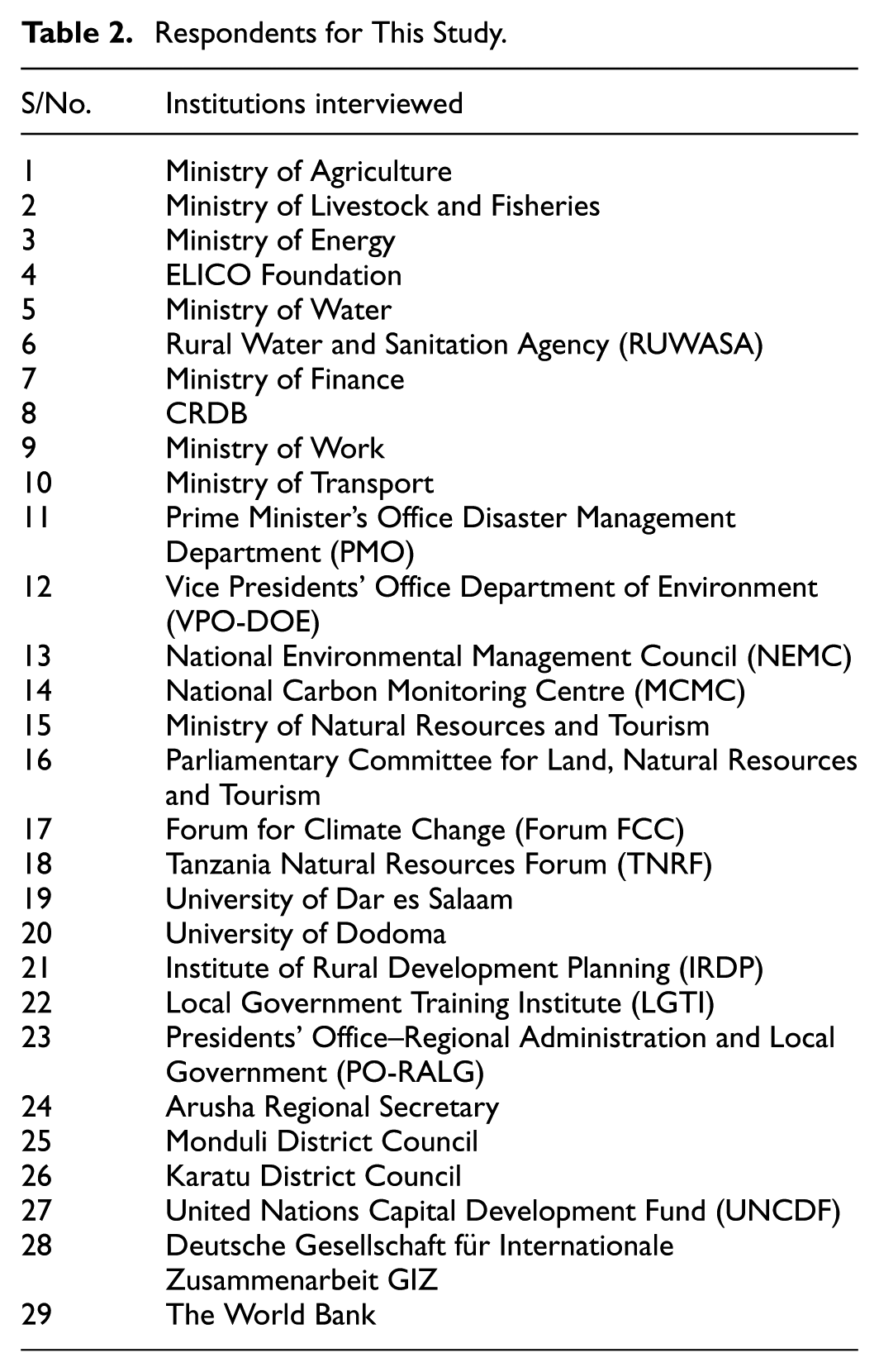
This study conducted key informant interviews to understand the actors, decision-making process, and factors used in allocation. Respondents were drawn from central and local governments, donors, NGOs, and the private sector, as shown in Table 2. An interview guide was used, and probing and follow-up questions were allowed to provide a broad scope of responses, extract additional information, and triangulate the obtained information (Kothari & Garg, 2019). The interviews were conducted in three phases from 2022 to 2024 in 29 institutions. In each institution, several interviews were conducted until the saturation point, whereby a total of 83 interviews were conducted.
Respondents for This Study.
Focus group discussions (FGDs) were conducted to gather supplementary information and provide greater clarity about the data obtained through other methods. These FGDs brought together local government representatives in Karatu and Monduli districts, comprising environmental officers, financial planners, and community leaders. Each focus group discussion involved 10 to 15 participants, lasted 1 to 2 hr, and was facilitated by a trained moderator who guided the sessions by setting an agenda, posing open-ended questions, and encouraging participation from all attendees. The facilitator ensured that the discussions remained focused on key themes, including actors and decision-making processes in financial allocation, while allowing for the exploration of participants’ experiences and viewpoints. In all districts, four FGDs were conducted between 2022 and 2024, two in each district, which enabled detailed notes and recordings to be made of each session to ensure that all the perspectives were accurately captured. The interviews and focus group discussions were written down and digitally recorded for analysis.
In analysis, all datasets (OECD-DAC, national budget, and local budgets) were imported into Excel for advanced cleaning. Multi-label classification was used to accommodate projects with more than one factor, whereby each factor was coded independently. Data was analyzed for descriptive statistics using an Excel spreadsheet. Regression analysis was conducted by organizing cleaned finance data against years in Excel, generating a linear trendline to obtain the regression equation and R2 value, which measured how well time explained variations in adaptation finance. In simple linear regression, R2 indicates the strength of the relationship between the independent and dependent variables (Creswell, 2014; Johnson & Christensen, 2017). Dependent variables were financial allocations, while independent variables were years (time) from 2014 to 2022. R2 quantifies the proportion of variance in the dependent variable that is explained by the independent variable, providing a clear measure of how well the model fits the data. A high R2 value indicates a strong relationship, suggesting that the variable significantly influences financial allocation trends, while a low R2 suggests other factors may be more relevant. This analysis method was used by Matewos (2019) to analyze the relationship between rainfall and time (1983–2014) in three drought-prone districts in the Sidama Administrative Zone in Ethiopia.
Whereby,

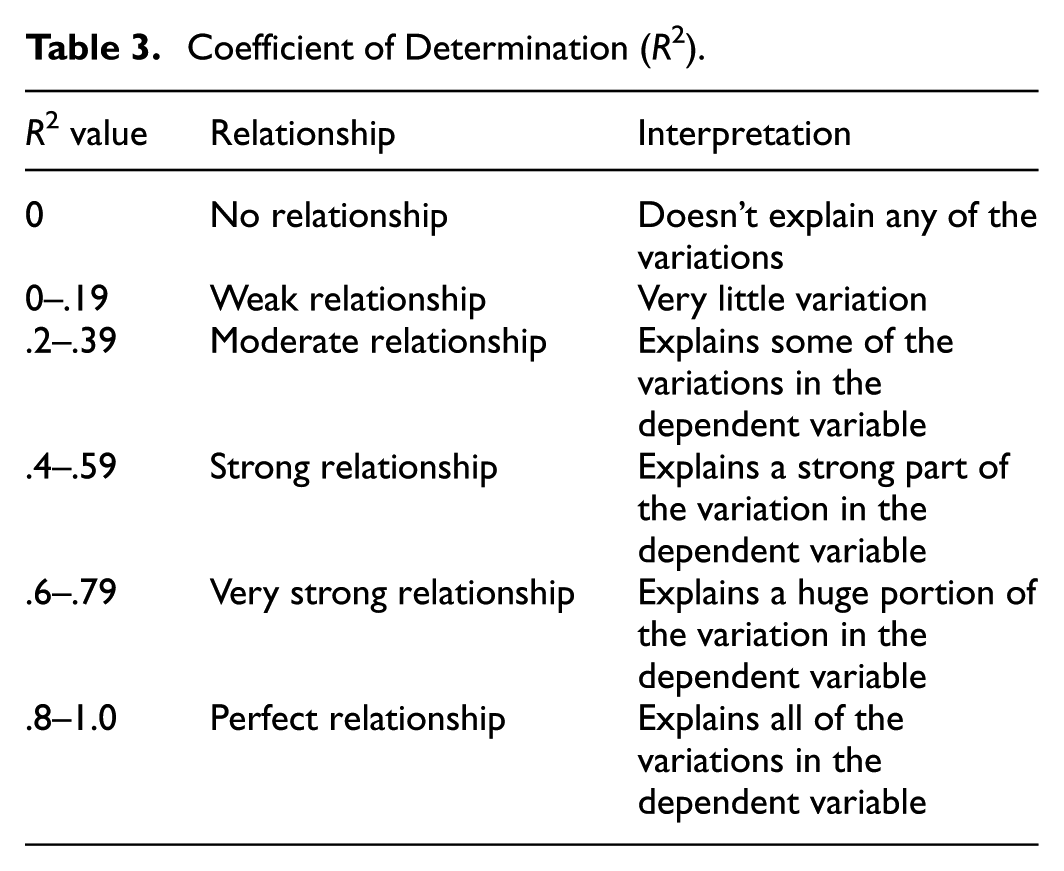
Table 3 shows and interpretation of the results such that the higher the R2 value, the stronger the relationship between the independent and dependent variables
Coefficient of Determination (R2).
Data from key informant interviews and focus group discussions were thematically analyzed (AlYahmady & Alabri, 2013) using QSR NVivo software version 13. A structured codebook was developed to guide thematic coding of the transcripts, ensuring consistency and analytical rigor. This codebook included both deductive codes of themes derived from the theoretical framework and research questions and inductive themes that emerged from the data. The themes included actors, the decision-making process, factors used in allocation, and financial allocation. Data were synthesized using query functions in NVivo to identify patterns, frequency of themes, and co-occurrence across interviews and focus groups. Matrix coding queries were run to compare perceptions across institutional types and governance levels. The analysis also involved generating memo summaries and narrative synthesis to connect empirical evidence to theoretical constructs. Finally, triangulation was conducted between qualitative findings and quantitative data (e.g., budget allocations, adaptation project databases) to validate trends and identify consistencies or discrepancies between stated intentions and financial flows. This mixed-methods approach provided a robust basis for drawing conclusions about the factors influencing adaptation finance allocation in Tanzania.
Results
Actors and Decision-Making Process in Allocating Finance for Climate Change Adaptation
Results show that the decision-making in the allocation of finance for climate change adaptation from international sources involves multi-layered institutions, processes, and power structures. At the global level, the United Nations Framework Convention on Climate Change (UNFCCC) Country of Parties (COP), which is the UNFCCC’s highest decision-making body, largely controls the allocations using environmental and development factors. It is supported by the Executive Board, which oversees the financial mechanisms and their implementation. The Executive Board, the UNFCCC secretariat, and their mechanisms allocate financial resources in line with the priorities and policies that have been set. The financial resources are from public and private sources, that is, multilateral and bilateral sources.
Also, the UNFCCC secretariat offers technical assessments for the allocations, while the UNFCCC Standing Committee on Finance (SCF) enhances coherence in the delivery of finance, reporting, and verification (MRV) of support provided to developing countries. After being involved in the allocation, the UNFCCC financial mechanisms, such as the Green Climate Fund (GCF) and the Global Environment Facility (GEF), deliver finance to Tanzania. This finding commends the actor-oriented theory by Fredrik (1999) that intentionality is captured through the deliberate actions of global actors who purposefully allocate finance to adaptation. This finding is in line with D’haen and Nielsen (2017) and Aron (2020), who found that the allocation of finance reflects the complex interplay of actors’ interests in multilayered decision-making processes that shape climate finance flows.
In order for Tanzania to be delivered with finance, the country starts the process by discussing adaptation needs and priorities with its National Designated Authorities (NDAs), which is the UNFCCC’s Focal Point. The country works with Accredited Entities (AEs) to create project proposals that meet GCF investment requirements and national adaptation plans. The country receives support for developing proposals. For example, the GCF provides Readiness and Preparatory Support to enhance countries’ capacities in project preparation, including up to US$ 3 million for National Adaptation Plans (NAPs).
When evaluating and approving proposals, the GCF Board makes sure that finance for adaptation and mitigation is balanced, with at least 50% of adaptation finance going to vulnerable nations. After approval, finance is released, and the project is put into action. Progress and impact are continuously monitored and evaluated. Also, finance is also allocated by multilateral and bilateral institutions using almost the same processes. This finding shows that the actor-oriented theory by Fredrik (1999) demonstrates the power of climate structure when the authority of global financial institutions approves Tanzania projects stage by stage. This finding is in line with Savvidou et al. (2021), who found that international public finance is provided either bilaterally from OECD countries and some non-OECD countries or multilaterally by MDBs, climate funds, or other international institutions.
It was also revealed that the decision-making process of allocating finance for climate change adaptation is based on different principles. The key is “Common but Differentiated Responsibilities and Respective Capabilities, or CBDR-RC.” This element recognizes that international sources, as primary contributors to historical emissions, bear greater responsibility in providing financial and technical support to developing nations. During these meetings, parties engage in negotiations, often involving voting or consensus-building processes, to determine other factors such as financial targets, allocation criteria, and governance structures. For example, project proposals are submitted to the GCF Secretariat, which conducts a thorough review based on impact potential, paradigm shift, and co-financing potential. It was found that most of this adaptation finance is channeled through development finance institutions and is reported as development finance to the OECD.
…“Allocating finance for climate change adaptation in Tanzania involves institutional negotiations determined by allocation criteria and structures for climate adaptation finance.”… (A respondent from the Ministry of Finance, 2023).
This finding indicates that international climate finance allocation for adaptation to Tanzania does not occur in isolation or through unilateral decisions. Instead, it is shaped through institutions and negotiations while taking into account favorable factors, including development factors, to guide the allocation process. The result contributes to SDG 13 by demonstrating how intentional finance allocations strengthen Tanzania’s adaptive capacity and support the implementation of national climate action commitments. This finding is in line with actor-oriented theory by Fredrik (1999) that allocation decisions (relationality) are guided by clearly defined actors and factors.
At the national level, the VPO revealed that decision-making for allocating climate change adaptation starts at the Vice President’s Office–Division of Environment (VPO-DoE), as the National Designated Authority (NDA) for climate adaptation financing. It works with international climate finance mechanisms to match finance with Tanzania’s adaptation needs and makes sure that adaptation priorities are incorporated into national development planning. The National Adaptation Plan (NAP), National Climate Change Strategy (NCCS), and Nationally Determined Contributions (NDCs) all enumerate these priorities. To ensure that adaptation measures are integrated across multiple sectors, relevant ministries mainstream these national adaptation priorities into sectoral policies and plans.
The Ministry of Finance instructs ministries through budget guidelines to include adaptation activities in their budget submissions. The Ministry of Finance scrutinizes adaptation priorities for technical viability, environmental soundness, and adherence to international financial requirements. Also, the Ministry of Finance manages external finance from international donors and climate finance to support adaptation projects. In addition, it coordinates with sector ministries to ensure finance is in line with adaptation goals and distributes and allocates financial resources to adaptation initiatives through the Medium-Term Expenditure Framework (MTEF). This finding captures the relationality element from actor-oriented theory by Fredrik (1999) through the interconnectedness among institutions whose continuous interactions shape financial allocation.
…“At the national level, climate adaptation finance begins with the VPO-DoE setting priorities, while the Ministry of Finance ensures finances align with national goals and international climate finance standards.”… (A respondent from the VPO-DOE, 2023).
This finding advances SDG 13 by showing how coordinated national decision-making strengthens Tanzania’s ability to integrate adaptation priorities into planning and financing, thereby improving climate resilience. It resonates with Sumari et al. (2025), who found that central institutions lead allocation processes by maintaining centralized budgetary control and aligning with donor priorities, often at the expense of local autonomy and responsiveness. This result shows that the actor-oriented theory of power by Fredrik (1999) places a strong emphasis on comprehending the goals (causality) and viewpoints of the actors who make decisions.
Results show that at the local government level, Karatu and Monduli districts are increasingly recognized as critical actors in allocating finance for climate adaptation, given their proximity to affected populations and ecosystems. The allocation process encompasses local government planning sessions. Also, community prioritization meetings consider factors such as economic vulnerability and the amount of finance transferred from the national government and that from the district’s own sources. In addition, the district’s governance structures, such as the district departments, hold meetings and discussions, such as the Ward Development Committee (WDC), to identify context-specific vulnerabilities and implement tailored adaptation measures and pass the allocation for the district finance department to disburse.
…“The budget planning conducted by district departments identifies vulnerabilities prior to allocating funds for tailored adaptation measures.”… (A respondent from Karatu District Council, 2023).
This finding indicates that the district departments and Ward Development Committees are examples of local governance organizations that actively discuss and set priorities based on local and economic needs. It contributes to SDG 13 by demonstrating how locally driven planning and vulnerability-based prioritization strengthen community-level resilience and ensure adaptation finance responds to real climate risks on the ground. However, the districts have low financial flow and lack discretion, hindering the allocation. This finding gap opens an opportunity for further research. Rasul and Sharma (2015) and Sumari et al. (2025) found that, despite LGAs’ proximity to affected communities, they remain subordinated to the national government. We urge that the districts be given full discretion and increase the flow of finance to realize their full potential in allocating finance using reduced vulnerability.
Factors for Allocation of Climate Change Adaptation Finance
Results show that Tanzania was allocated US$ 2.9 billion from developed countries, US$ 1.7 billion from the national budget, US$ 8.9 million from Karatu, and US$ 8.3 million from Monduli from 2014 to 2022. The following factors were considered during financial allocation:
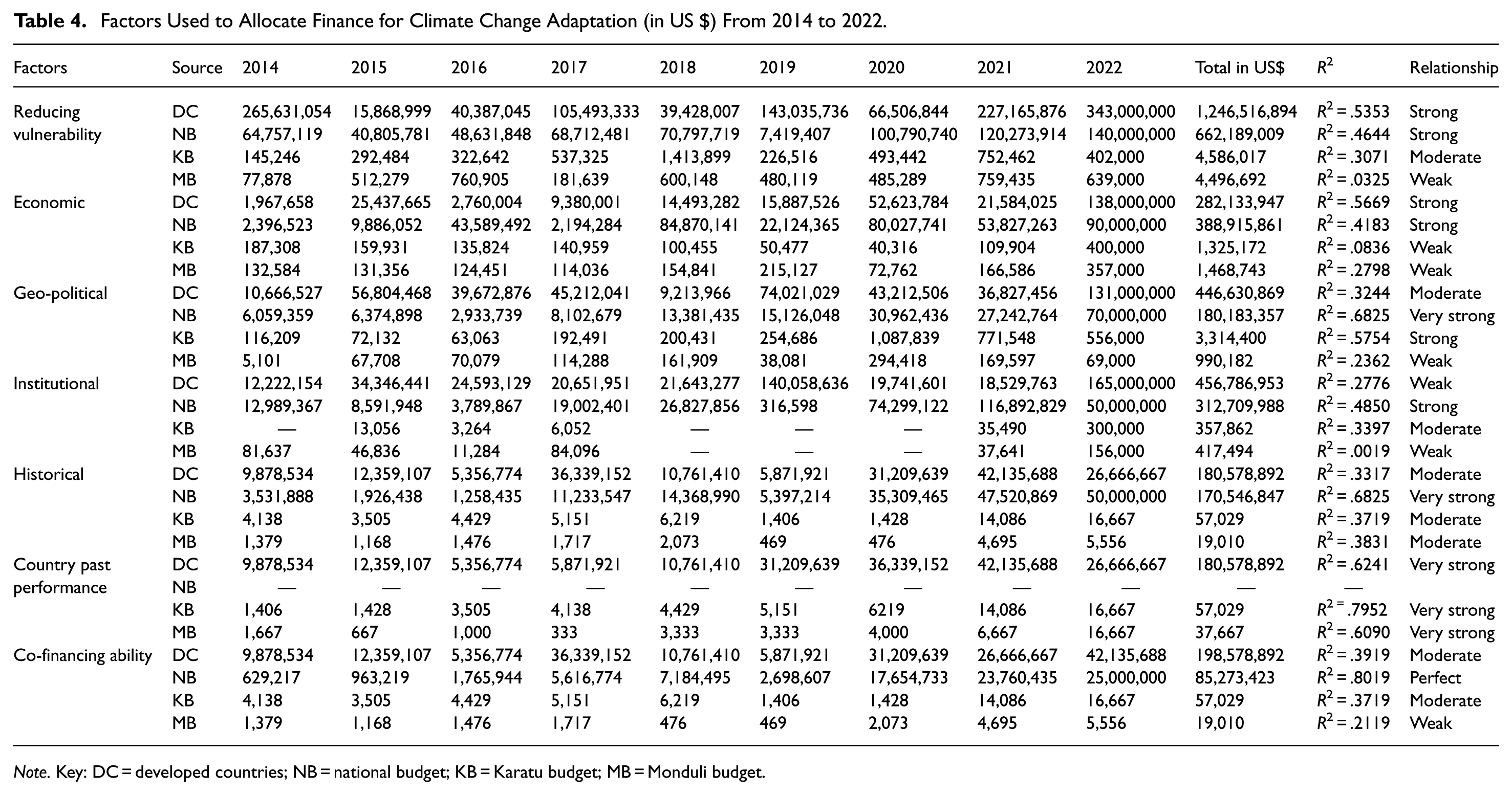
Results show that reducing vulnerability refers to efforts and conditions aimed at lowering exposure and sensitivity to climate risks by strengthening resilience and ability to cope with climate-related shocks. Developed countries used the reducing vulnerability factor to allocate US$ 1.2 billion, with the highest allocations in 2022 of US$ 343 million, where R2 = .5353. Also, it was allocated in the national budget. The Karatu allocated US$ 4.5 million with the highest allocation in 2022, where R2 = .3071, while Monduli allocated US$ 4.4 million, where R2 = .0325, as shown in Table 4. The highest increase was in the last 3 years, that is, 2018 to 2022. It has shown that the majority of finance was from developed countries. The strong and moderate relationships indicate more finance will be allocated based on the vulnerability factor.
Factors Used to Allocate Finance for Climate Change Adaptation (in US $) From 2014 to 2022.
Note. Key: DC = developed countries; NB = national budget; KB = Karatu budget; MB = Monduli budget.
Key informants from the World Bank revealed that at the international level, finance was for projects that had the potential to build resilience from extremes. Interviewed officials from GIZ revealed that developed countries have categorized the global south as highly vulnerable, influencing financial allocation for adaptation. It frames countries in this region, including Tanzania, as priority recipients, thereby influencing allocation decisions. Interviewed officials from VPO-DOE revealed that in the national budget, finance was allocated to projects that enhanced coping mechanisms, disaster recovery, and building adaptive capacity.
…“Increased droughts, floods, and rising sea levels are a clear sign of a hotspot for climate risks in Tanzania, attracting adaptation support from international sources.”… (A respondent from GIZ, Tanzania, 2023).
This finding indicates that vulnerability remains a factor in allocating finance. It contributes to SDG 13 by showing that prioritizing vulnerability in financial allocations strengthens evidence-based action to protect high-risk communities. This finding resonates with the actor-oriented theory of power by Fredrik (1999) that actors deliberately frame vulnerability needs to justify financial allocation. This finding resonates with Chang’a et al. (2021) and D’haen and Nielsen (2017), who found that the increase in climate extremes in Tanzania increased the need for adaptation finance.
However, despite the increased extremes, the internal ability to verify the threat is questionable. This inability is because there is a shift in conducting vulnerability assessments from every 2 to 5 years associated with increased costs. This finding gap opens an opportunity for further research. Interviewed officials from the UDOM revealed that challenges in vulnerability assessments have led to the construction of boreholes, wells, charcoal dams, water tankers, and forage farming by using only historical experiences, which affected their sustainability.
Also, interviewed officials from Karatu and Monduli revealed that a lack of vulnerability assessments has increased non-climate-responsive directives from the central government, affecting allocation for adaptation. For example, the district was directed to pay teachers and health workers and build schools, health centers, and markets from their sources. This finding resonates with Omukuti (2020) and Aron (2020), who found that lack of defined allocation factors may result in maladaptation. We urge the decision makers to strengthen evidence-based allocation systems, grounding their decisions in vulnerability assessments and other transparent criteria.
The focus group discussions in Karatu and Monduli revealed that the increased extremes were linked to faith. Droughts and floods were associated with punishment as “gods getting angry from human deeds,” thus resources were directed to elders to perform rituals rather than adaptation projects. As extremes continue, more rituals are expected and might interfere with vulnerability information. This finding is in line with findings by Savvidou et al. (2021), GCA (2022, 2024), and IPCC (2022), who found that lack of clear and accessible vulnerability data limits allocation decisions. We urge for open access vulnerability data to provide evidence-based information to improve financial allocation.
Results show economic factors represent a country’s strength to create fiscal capacity and opportunities. Results further showed US$ 282 million was allocated by developed countries using economic factors, with the highest allocations in 2014, 2021, and 2022, where R2 = .5669, which aimed to uplift the economy, which consequently suffered extremes. Also, US$ 388 million was allocated in the national budget with increased allocation in 2018, 2021, and 2022, where R2 = .4183. Karatu allocated US$ 1.3 million with a weak relationship, where R2 = .0836, and Monduli allocated US$ 1.4 million, where R2 = .2798. The increased allocation resulted from increased mobilization from international and national sources, while the strong relationships indicate that finance will continue to be allocated based on economic factors shown in Table 4.
Key informants from the World Bank, UNCDF, and GIZ revealed that despite the potential objective of adaptation, allocation considered long-term economic concerns. It included allocating finance to open up new markets for green technologies and services for donor countries to benefit. The economic factor accelerated a shift from the traditional meaning of adaptation (Grasso, 2010) to adaptation that considers economic development (Fankhauser, 2017; Venkatramani & Hillier, 2021). This finding is also consistent with Venner et al. (2024), that adaptation investments by developed countries are marketed as de facto win-win solutions for both adaptation and development.
Interviewed officials from the Ministry of Finance revealed that at the national level, finance was allocated to safeguard key country’s economic sectors, such as agriculture, tourism, and fisheries. Financing these sectors stimulates national economies while promoting resilience.
…“We have allocated funds to improve fishing methods in Tanzanian lakes to increase fish production for food security and income generation.”… (A respondent from the Ministry of Fisheries).
This finding indicates that national adaptation decisions are driven by a strategic prioritization of sectors that simultaneously strengthen economic growth and enhance climate resilience. This finding is in line with Barrett (2014), who found that districts in Malawi are receiving intrastate allocations for adaptation, which provide opportunities for economic growth. It is also in line with R. Murphy (2024), Steinbach et al. (2022), and Diyammi and Mkude (2022), who found that the building of the new hydropower plants, roads, standard gauge railways, and land-use planning in Tanzania aimed to reduce climate vulnerability and improve economic development.
Key informants from Karatu and Monduli revealed that allocation was for projects that focused on boosting local economic resilience, such as the construction of roads, agricultural processing factories, and improvement in the tourism sector. This finding indicated that economic factors promoted an interdisciplinary approach to enhance innovative solutions to address climate adaptation. It contributes to SDG 13 by showing that integrating economic priorities into adaptation finance strengthens long-term climate resilience. This finding is consistent with Voss (2013), Kyusilu (2019), URT (2016), and Kimaro et al. (2018), the new livestock market at Nanja-Monduli that aimed for destocking and income generation in Monduli. Kyusilu (2019) found that allocation for renewable energy, ecotourism, and green technologies in Karatu aimed to bolster climate resilience and stimulate economic growth.
However, the focus group discussion in Karatu and Monduli revealed that the planning system of the district’s own source was dictated by central government priorities, not necessarily by economic initiatives. For example, the 10% of the district collection that was channeled to climate-vulnerable groups, that is, women and youth, with insufficient evidence of being allocated every year. This finding gap opens an opportunity for further research.
Results show that the geopolitical stability factor is the degree of political security, peace, and international relations stability that enables predictable policy environments that encourage allocation of adaptation finance. US$ 446 million was allocated by developing countries using the political factor, with the highest allocations in 2019 and 2022, where R2 = .3244. The national budget allocated US$ 180 million, with the highest increase in 2022, where R2 = .6825. Karatu allocated US$ 3 million, where R2 = .5754, while Monduli allocated US$ 1 million, where R2 = .2362, as shown in Table 4. The strong and moderate relationships indicate decision makers will continue allocating finance using this factor.
Key informants from the World Bank revealed that developed countries allocated finance to build political stability and democracy in Tanzania and the whole region of East Africa. The country’s strategic significance, stability, and potential for closer diplomatic and economic ties were all taken into account in the allocation. Also, the country supports donor strategies of regional integration and cross-border climate responses such as the East African Community Climate Change Policy.
…“Financial allocation is considered strategically important in Tanzania based on the foreign policies of developed countries in maintaining peace and security worldwide.”… (A respondent from the PO-RALG).
This finding indicates that apart from vulnerability, finance is allocated using strategic regional-political and diplomatic priorities. This finding resonates with Shawoo et al. (2022), who found that political factors were used to ensure peace and security while protecting the political interests of developed countries and their allies. We assert that political factors play an unequivocal role in setting up the ground for allocating adaptation.
Interviewed officials from PO-RALG revealed that finance at the national level was allocated to projects that were promised for political gain during the presidential election rallies. For example, the increase in allocation in 2021 and 2022 was due to the change of government regime and fulfilling promises from election rallies. Moreover, constituencies where political leaders originated were prioritized for political gain in the elections, constraining allocations to areas of high need.
…“Lifting Burigi Game Reserve into Burigi Chato National Park was for political gain”… (A respondent from the Ministry of Natural Resources and Tourism, 2023).
It indicates that political patronage and electoral incentives strongly influence national adaptation financial allocations. This finding is consistent with Doshi and Garschagen (2020) and Green (2021), who found that governments allocate finance to adaptation to fulfill political and development interests. We argue that adaptation has fallen in the political arena, creating an imbalance between the need to adapt and political gain.
Informants from Karatu and Monduli revealed councilors preferred the allocation of finance to meet political objectives alongside climate adaptation. In areas that voted for the ruling party, more finance was allocated compared to opposition-dominated areas. In addition, political leaders preferred to engage with politically active community members for political gain, including votes. For example, an MP in Karatu preferred that TASAF money be allocated to youth rather than old people because youth are active voters.
Focus group discussions in Karatu and Monduli revealed that due to political contestation, the technical viability of projects in the districts has been delaying the allocation, disbursement, and implementation of projects. This finding implies that adaptation governance in Tanzania operates within a landscape where geopolitical incentives and socio-economic interests significantly shape funding decisions. This interplay can strengthen support for priority sectors but also risks distorting allocations away from the most climate-vulnerable areas. This finding is in line with Shawoo et al. (2022), who found that political factors shape coordination, with the agendas and preferences of more powerful actors shaping the extent to which allocation is prioritized.
The strengthening institutional capacity factor enhances the ability of institutions to effectively plan and implement adaptation initiatives. Results show that developed countries used the institutional capacity factor to allocate US$ 456 million, with the highest increase in 2019 and 2022, where R2 = .2776. The national budget allocated US$ 312 million, with the highest allocation in 2020 and 2021, where R2 = .485. Karatu allocated US$ 357 thousand, where R2 = .3397, while Monduli allocated US$ 417 thousand, where R2 = .00198, as shown in Table 4. The strong relationships in the national budget and Karatu indicate finance will continue to be allocated based on the strengthening institutional capacity factor.
Key informants from VPO-DOE revealed that Tanzania has comprehensive institutional capacity in managing adaptation, evidenced by the UNFCCC’s evaluation of the institutions responsible for climate change. Also, finance is allocated to projects that improve technical skills in planning, executing, and monitoring climate adaptation initiatives. This finding is consistent with Doshi and Garschagen (2020) and GCA (2024), who found that by supporting adaptation projects, donors build stronger institutions and partnerships, gaining strategic footholds in key areas of adaptation. We assert that building institutional capacity improves the quality of public services, coordination, and the quality of the civil service and fastens financial allocation.
Interviewed officials from Karatu and Monduli revealed that building robust institutions was fundamental in allocating finance, aimed to transform institutions to effectively manage and implement adaptation from the district to the sub-village level. This finding is consistent with Bosch et al. (2024), who insisted that UNDP in Sri Lanka is enhancing the ability of the central government to support local government authorities. This finding resonates with Barnett (2020), who found that local governments in Indonesia, Ethiopia, and East Timor allocated finance for adaptation to improve the capacity of engaging with the public. We urge that allocating finance to capacitate the institutions was necessary for attracting more finance and implementing adaptation.
However, the focus group discussions in Karatu and Monduli revealed that general unawareness of adaptation by the councilors and insufficient finance in the districts affected financial allocations. This finding gap opens an opportunity for further research. This is in line with Green (2021), who suggested that to improve local allocation, there is a need for decentralization of climate finance to strengthen local institutions.
Results show that historical factors involve past and cultural experiences, policies, and funding patterns on current decisions and priorities in allocating finance for adaptation. US$ 201 million was allocated by developed countries using historical factors, with the highest allocation in 2017 and 2021, where R2 = .3317. Also, US$ 170 million was allocated by the national budget, with the highest allocation in 2022, where R2 = .6825. Karatu allocated US$ 56 thousand with the highest increase in 2022, where R2 = .3719. Monduli allocated US$ 19 thousand, with the highest allocation in 2022, where R2 = 0.3831, as shown in Table 4. The strong and moderate relationships provide opportunity for more allocations using this factor.
Interviewed officials from GIZ and UNCDF revealed that developed countries disproportionately contributed to global greenhouse gas emissions through colonial exploitation and industrialization.
…“Historically, global greenhouse gas emission was a function of industrialization and colonial exploitation, while the burden falls on those who contributed the least.”… (A respondent from GIZ, 2024).
This finding embodies the notion that climate finance is a duty grounded in historical harm rather than mere acts of kindness. This finding aligns with IPCC (2021) and Venner et al. (2024), who found that adaptation finance served as a way for developed countries to address their historic responsibility given their disproportionate contribution to causing climate change, coined as “climate debt.” Informants from the Ministry of Natural Resources and Tourism revealed at the national budget finance allocated to preserve historic and cultural heritage have historically contributed to environmental stewardship and sustainability. For example, Pawanka was an IIED adaptation fund based on solidarity and partnership, providing a unique lens for understanding climate justice adaptation.
Focus group discussions in Karatu and Monduli revealed that this justice-based rationale is evident in the flows of adaptation finance from developed countries. For instance, Germany’s bilateral aid and aid through the GCF have been presented as both development aid and restitution for past emissions and resource exploitation during the colonial era. This finding aligns with Okereke (2010), who argued that this framing marks a shift in the global climate finance discourse from charity to duty.
Results show that the country’s past performance indicator is a measure of the country’s historical track record in utilizing allocated adaptation finance, which informs donor confidence and future funding decisions. Developed countries allocated US$ 180 million using the country’s past performance, where R2 = .6241. The national budget did not include this factor, while Karatu allocated US$ 56 thousand, where R2 = .7952, and Monduli allocated US$ 37 thousand, where R2 = .609. The strong relationships indicate finance will continue to be allocated using this factor shown in Table 4.
Key informants from UNCDF Tanzania disclosed that when allocating finance for adaptation, a nation’s prior performance in carrying out donor-funded projects is also taken into account. Donor confidence may be increased by Tanzania’s capacity to successfully carry out and report on past adaptation initiatives. Timely financial and technical reporting, project goal accomplishment, independent assessments, audit findings, and favorable donor agency feedback are all indicators of this.
…“Despite looking at the needs, they also consider track records to manage and deliver results on adaptation finance. This practice builds trust and opens doors for more financing.”… (A respondent from UNCDF, 2024).
This finding indicates Tanzania has demonstrated strong performance, including efficient financial management, timely reporting, and achievement of project goals. However, informants from the Ministry of Finance revealed that the national budget did not consider past performance as a factor. This is because national allocations are shaped primarily by sectoral demands and institutional procedures rather than performance-based criteria, whereas developed countries and district governments rely more on measurable results. This finding gap opens an opportunity for further research.
Interviews with officials from Karatu and Monduli revealed that the districts had a recognizable record on performance because the local governments incorporate communities’ viable traditional knowledge and practices to address local climate challenges. This design resulted in a reduction of project implementation costs. This approach often results in greater local buy-in and more sustainable outcomes. Finance was allocated to projects that promoted traditional agricultural knowledge practices, which have been proven sustainable and resilient to climate variations over centuries. For example, Karatu provided 150 beehives in five villages, establishing two modern bee apiaries in Hadzabe and establishing photographic tourism at Matala Game Controlled Area. This finding extends the conversation on actor-oriented theory that not only formal knowledge but also informal knowledge be used in decision-making to improve project performance.
…“Integrating adaptation with local and traditional knowledge ensures that projects address actual community needs, cut costs, and improve sustainability.”… (A respondent from Karatu, 2023).
This finding indicated that when good people’s lived experiences during implementation of adaptation projects underscore the good past performance to attract more allocation. This finding resonates with IIED (2022), which states that local governments in the drylands of Kenya, Mali, and Senegal established local-level climate adaptation funds to incorporate cultural priorities, providing good testimony for good performance.
Results show co-financing ability is a country’s capacity to contribute its own resources alongside external funds. Developed countries allocated US$ 198 million using co-financing ability, where R2 = .3919. The national budget allocated US$ 85 million, where R2 = .8019. Karatu allocated US$ 57 thousand, where R2 = .3719, and Monduli allocated US$ 19 thousand, where R2 = .2119. The strong and moderate relationships indicate finance will continue to be allocated using this factor shown in Table 4.
Interviewed officials from the World Bank revealed that developed counties prefer domestic commitments by showing capacity to allocate finance from national sources. Also, demonstrate stable macroeconomic conditions and strong public financial management systems. This shared responsibility indicates national ownership and strengthens donor confidence in the sustainability of initiatives. The district councils have provided funds, land, personnel, and logistical support to complement donor-funded programs.
…“Donors want to see that Tanzania is not just waiting for help but is also putting its own resources on the table, whether through budget allocations, land, or staff.”… (A respondent from VPO, 2023).
Tanzania has demonstrated commitment by allocating finance through the national budget. This finding concurs with Savvidou et al. (2021), who found that co-financing influenced the allocation of adaptation-related finance in Rwanda and Ghana to implement adaptation. This finding aligns with Omala et al. (2024), who found that over the years, Kenya has enhanced efforts to mobilize climate finance internally and externally to address increasing climate finance needs.
Interviewed officials from PO-RALG revealed that at the national level, the Five-Year Development Plan (FYDP III) 2021 to 2027 and Tanzania’s Vision 2050 demonstrate the co-financing ability. In Vision 2050, the ability is shown in prioritizing adaptation, green growth, and sustainable infrastructure as key drivers of long-term environmental and socio-economic development. Interviewed officials from Karatu and Monduli revealed that local governments are matching their priorities to comprehensive national plans and international priorities. This finding contributes to SDG 13 by highlighting that Tanzania’s co-financing efforts and national-local alignment in climate adaptation planning support allocation for adaptation. It extends the discussion that the actor-oriented theory should promote co-financing as a way toward adaptation.
However, focus group participants noted that co-financing in the district councils was promoted on paper but, in reality, was treated as a secondary concern in planning. Participants from Karatu and Monduli noted that adaptation was sidelined and narrowly interpreted with a focus on service delivery targets such as road maintenance, education, and healthcare. Also, local officers lacked the financial capacity and the proper technical guidance necessary to successfully implement climate priorities. This finding provides a gap for future studies to understand adaptation from local collection.
In general, despite the financing goal toward adaptation, the actors used formal institutions and processes in allocating finance. This study confirms that adaptation priorities involve social economic development benefits enhancing the increase in financial allocation. The representativeness of Tanzania and the two districts is sufficient enough to demonstrate what is happening in climate adaptation finance in developed and developing countries. Also, this study indicates that achieving SDG 13 depends on fair, risk-informed, and capacity-responsive climate finance decisions that prioritize vulnerable countries while strengthening institutions for effective adaptation in developing countries. On the other hand, the limitations of the study included that key informants were mostly occupied with duties out of the office, manual project classification risked misclassification, and restricted access to internal documents increased the time and effort required to complete the study.
Conclusion
This paper concludes that financial allocation is increasing and implemented by defined actors in a process that considers environmental vulnerability and social economic factors. Climate change adaptation is transforming from solely environmental-based to diverse development benefits. This of This study also concludes that the majority of finance is allocated from developed countries, while domestic contribution is low, and it provides signals that external dependence on finance accelerates climate debts and under prioritization of local priorities, hence a contribution to sustainable development goal 13 and a contribution to the body of study. This study provides policy recommendations that the VPO-DoE can institutionalize not only environmental-based vulnerability assessments but also social-economic vulnerabilities by mandating each ministry and district council to increase financial allocation. The ministries and districts may balance adaptation and development spending and also integrate local and indigenous knowledge into adaptation planning to reduce adaptation costs and increase domestic financing.
Footnotes
Acknowledgements
I acknowledge Danish Institute of International Studies and REPOA for providing office space during the writing of this paper.

Author Contributions
All authors contributed to the paper’s conception and design. Material preparation, data collection, analysis, and first draft were done by Peter Rogers, Noah Pauline, and Edmund Mabhuye. All authors read, commented on drafts, and approved the final draft.
Ethical Considerations
The study was conducted in accordance with the ethical guidelines established by the University of Dar es Salaam Research Ethics Board.
Consent to Participate
Informed consent was obtained from all interview and focus group participants prior to data collection, and participation was voluntary and anonymous. Data were handled confidentially and used solely for academic research purposes.
Funding
The authors disclosed receipt of the following financial support for the research, authorship, and/or publication of this article: The funding for this research was provided by DANIDA [Project code: 20-03-DIIS].
Declaration of Conflicting Interests
The authors declared no potential conflicts of interest with respect to the research, authorship, and/or publication of this article.
Data Availability Statement
The data used in this study are available from publicly accessible sources and from the corresponding author upon reasonable request, subject to ethical and confidentiality considerations.