






Abstract
This research examines the relationship between intrapreneurship and job burnout, with a focus on the moderating role of leadership, leader-member relationship quality (LMX), and organizational culture. Validated scales were applied to a sample of 406 employees from different sectors, and the analysis was conducted using hierarchical multiple regression. Findings indicate a significant negative correlation between intrapreneurship and job burnout, with the protective effect of intrapreneurial behavior intensifying in contexts characterized by high power distance, transformational and ethical leadership, and high-quality LMX relationships. In particular, it was observed that ethically oriented leadership, leadership loyalty and focus on people further mitigate burnout in proactive employees. In contrast, the punitive behavior of leaders, an emphasis on performance orientation, and a hierarchical culture reduce the protective effect of intrapreneurship, increasing the risk of burnout. The control variable in the form of the organization’s activities also proved to be a significant predictor of the level of employee burnout. The obtained results highlight the importance of the organizational context in shaping the influence of intrapreneurial behavior on the well-being of employees. The findings offer practical implications for developing leadership styles and organizational norms that simultaneously encourage innovation and reduce psychological stress, thereby contributing to a sustainable work environment.
Plain Language Summary
This study looks at how employees’ proactive and innovative behavior inside organizations, known as intrapreneurship, relates to job burnout, and how leadership and organizational culture influence this relationship. Burnout is a state of emotional and physical exhaustion caused by long-term stress at work. While intrapreneurship can help protect employees from burnout, its effectiveness depends on the workplace environment. We surveyed 406 middle managers from different industries in Serbia. The results show that intrapreneurial employees are generally less likely to experience burnout. However, the impact of intrapreneurship is strongly shaped by leadership style, leader-member relationships, and cultural values in the organization. Positive influences: Ethical leadership, human-oriented culture, strong loyalty between leaders and employees (LMX), and performance-oriented values strengthen the protective role of intrapreneurship. In these conditions, proactive employees feel supported, valued, and less emotionally exhausted. Negative influences: Punitive leadership and high power distance weaken the benefits of intrapreneurship and increase the risk of burnout. In such environments, employees may see proactive behavior as risky or unsafe. These findings suggest that organizations cannot rely on employee initiative alone to prevent burnout. Instead, they need supportive leaders who act fairly, foster trust, and build cultures that balance innovation with care for employees’ well-being. For practice, this means training leaders in ethical decision-making, strengthening leader-employee relationships, encouraging teamwork and mutual support, and reducing overly strict hierarchies. Such strategies help organizations become more innovative, as well as sustainable, protecting employees’ mental health while fostering creativity and adaptability.
Introduction
Modern organizations face accelerated market changes, digitization and increasing demands for innovation, which significantly increases the psychological pressure on employees, especially at the middle management level (Acar et al., 2024; Juchnowicz & Kinowska, 2021). Job burnout, as a key indicator of impaired employee well-being, represents a serious threat to organizational success and sustainability (Guan, 2021). Job burnout is commonly conceptualized as a psychological syndrome emerging as a prolonged response to chronic interpersonal and emotional stressors at work, and it consists of three core dimensions: emotional exhaustion, cynicism (or depersonalization) and reduced personal accomplishment (Maslach et al., 2001; W. Schaufeli & Enzmann, 1998). Burnout has been increasingly documented across a wide range of professions, particularly in high-stress and emotionally demanding fields, where prolonged exposure to work-related pressure contributes to elevated burnout levels (Kooktapeh et al., 2023; Moscu et al., 2023). Burnout syndrome is associated with workplace stress, but often with negative mental health symptoms, anxiety and depression (Kainalainen et al., 2024). According to Maslach et al., job burnout is a response to chronic emotional and interpersonal stressors at work, and it is defined by three dimensions: exhaustion, cynicism and ineffectiveness (Maslach et al., 2001).
In this context, intrapreneurship, that is, proactive and innovative behavior of employees within the organization, is increasingly recognized as a potential protective mechanism against burnout and an important factor of organizational agility (Pandey et al., 2021; Ravina-Ripoll et al., 2023). Intrapreneurship shares similar features with traditional entrepreneurship, but instead of working independently in one’s own conditions, it takes place within an existing company, using its resources. The intrapreneur seeks to direct his creativity and entrepreneurship toward innovations that can contribute to the development of the company and its direction toward new opportunities (Scott Zimmer, 2021). However, the effects of intrapreneurship are not universal, but their strength and direction depend on the wider organizational context, including leadership style and organizational culture characteristics (Zhang et al., 2023).
Intrapreneurship is significantly related to the principles of ethical leadership, work engagement and innovative behavior, and these organizational aspects shape the professional environment of employees in companies by synergistic action (Iqbal et al., 2020; Özsungur, 2020; J. P. C. Rigtering & Weitzel, 2013). Previous research indicates that leadership styles, especially transformational, transactional and ethical leadership, shape the psychological safety and motivation of employees (Hildenbrand et al., 2018; J. Y. Kim & Yoon, 2025; Ramlawati et al., 2023; Ran et al., 2024). Also, the quality of the leader-member relationship (LMX), as well as cultural dimensions such as power distance, collectivism and performance orientation can significantly influence the perception of stress and the effectiveness of intrapreneurial initiatives (Malik & Huo, 2023; Modliba et al., 2024).
Although research on intrapreneurship and employee well-being has expanded in recent years, four important limitations remain. First, empirical findings on the direct relationship between intrapreneurial behavior and job burnout are still limited and often inconsistent (Chouchane & St-Jean, 2023; Gawke et al., 2018), making it difficult to determine whether intrapreneurship functions as a protective resource or an additional job demand. Second, most studies do not simultaneously examine multiple contextual moderators, leaving the roles of leadership, LMX quality, and organizational culture insufficiently clarified within this relationship (Ensour & Al Maaitah, 2024; Iqbal et al., 2020). Third, existing evidence comes almost exclusively from stable Western economies, while empirical insights from transition economies, where managerial practices, power distance, and resource availability (Ćosić, 2020) may substantially shape psychological processes, remain largely absent (Gorgievski et al., 2023). Fourth, middle managers, despite being central to innovation implementation, are rarely examined as a distinct group in studies on intrapreneurship and its psychological outcomes. These limitations point to a clear research gap that the present study seeks to address. Bearing this in mind, the present study explores how intrapreneurship relates to job burnout within complex organizational systems, while also considering the broader organizational context shaped by leadership, LMX and culture.
Figure 1 presents the conceptual model of this study. The model proposes that intrapreneurship is negatively associated with job burnout, while three contextual factors, leadership style, LMX quality, and organizational culture, moderate this relationship. This simplified conceptual framework highlights the key variables examined in the study and provides an overview of the logic guiding the subsequent theoretical development and hypotheses.
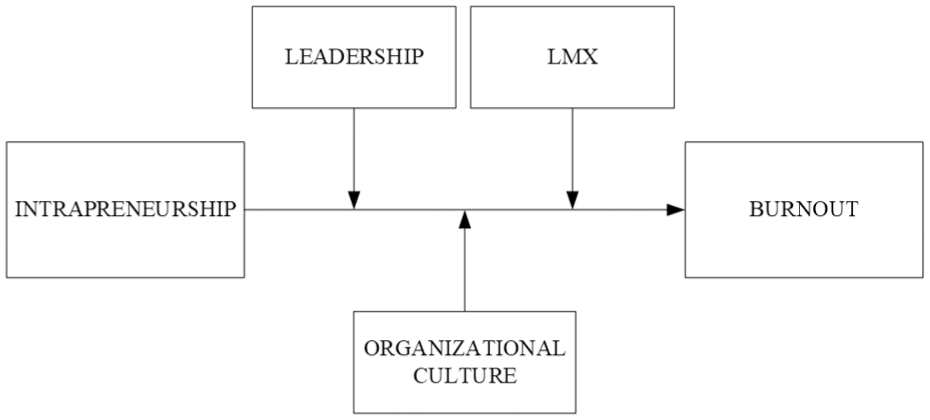
Conceptual model.
To provide conceptual grounding for the proposed relationships, this study relies on three complementary theoretical frameworks. First, the Job Demands-Resources (JD-R) model explains burnout through the relationship between job demands and resources, whereby leadership, LMX, and culture are viewed as key psychological and social resources that can moderate the negative effects of demands (Bakker et al., 2023; Y. Li et al., 2025; Lopez-Martin & Topa, 2019; Petrilli et al., 2024; Tummers & Bakker, 2021). Second, Proactive Motivation Theory provides a basis for understanding intrapreneurship as a form of proactive behavior that depends on the motivational drivers and psychological resources of employees (Dahlawi et al., 2025; Ouyang et al., 2019; Parker et al., 2010; Shi & Cao, 2022; Xu et al., 2024). Third, Social Exchange Theory explains how the quality of leader-member exchange (LMX), as well as ethical leadership, shape perceptions of support and safety, which influence whether intrapreneurship will act as a protective or risk factor for burnout (Aggarwal et al., 2020; Azhar et al., 2025; Cropanzano & Mitchell, 2005; Escrig-Tena et al., 2025; Santiago-Torner et al., 2024). By combining these theoretical perspectives, the research develops an integrated framework that explains why and under what conditions intrapreneurship affects burnout, as well as the role of contextual moderating factors.
In the following sections of the paper, the theoretical background and review of the relevant literature will be presented, then the research methodology will be explained, including instruments, sample and procedures. This is followed by the results of descriptive, correlation and regression analysis, along with graphical representations of significant interactions. The discussion will present the main findings, theoretical and practical implications, as well as limitations and recommendations for future research.
Theoretical Background
Theoretical Framework
This study draws on three complementary theoretical foundations. First, the Job Demands-Resources (JD-R) model conceptualizes burnout as a response to ongoing job demands that exceed available resources. Within this perspective, leadership, the quality of LMX, and the broader organizational culture are understood as important social and relational resources that can either mitigate or intensify the impact of intrapreneurial demands on employees’ well-being (Bakker et al., 2023; Demerouti et al., 2001; Mao & Tian, 2022; C. Rigtering et al., 2024; Tummers & Bakker, 2021). Second, intrapreneurship is examined through Proactive Motivation Theory, which describes proactive behavior as shaped by the “reason to,”“can do,” and “energized to” motivational states (Ouyang et al., 2019; Parker et al., 2010). Depending on how much support and resources employees have, intrapreneurial activity may function as a source of protection against strain or become an additional job demand (Gawke et al., 2018; C. Rigtering et al., 2024). Third, the moderating roles of leadership and LMX are interpreted through Social Exchange Theory, which emphasizes how perceptions of reciprocity, trust, and support influence employees’ responses to proactive roles (Cropanzano & Mitchell, 2005; Qian et al., 2017; Yang et al., 2023). In addition, cultural dimensions identified in the GLOBE and Hofstede frameworks provide a contextual foundation for understanding how organizational norms shape the meaning and outcomes of intrapreneurial behavior (House et al., 1999, 2002, 2004; Zheng et al., 2025).
Taken together, these perspectives offer an integrated view of the conditions under which intrapreneurship relates to burnout.
Theoretical Perspectives on Job Burnout
Job burnout is a psychological syndrome characterized by emotional exhaustion, cynicism and a reduced sense of professional efficacy, representing a long-term response to chronic job-related stress (Maslach et al., 2001; W. Schaufeli & Enzmann, 1998). In the absence of resources such as social support, autonomy and diversity of skills, work begins to lose its meaning and prevents the fulfillment of innate psychological needs (Salvagioni et al., 2017). When the work environment negatively affects individuals, it can cause emotional disturbances, behavioral problems, chronic stress conditions and diseases such as burnout syndrome (Dike et al., 2021; Soares et al., 2023). The burnout syndrome at work includes the three mentioned components (Maslach et al., 2001), where exhaustion represents intense physical and emotional exhaustion that weakens the employee’s ability to work effectively. Cynicism or depersonalization refers to a skeptical and cold attitude toward customers and the loss of the personal element in dealing with individuals, while professional ineffectiveness or disengagement refers to a deep sense of ineffectiveness in work and interaction with others (Yao et al., 2015). This understanding of burnout aligns with the Job Demands-Resources (JD-R) model, which proposes that burnout emerges when job demands outweigh the resources available to meet them (Bakker et al., 2023; Demerouti et al., 2001). In this view, insufficient support, limited autonomy, and an unmanageable workload create conditions in which emotional exhaustion, cynicism, and professional inefficiency are most likely to develop (Bakker & Demerouti, 2007; W. B. Schaufeli et al., 2009).
Previous research on job burnout has focused on professions that provide services to people such as medical services and teaching, however burnout is not limited to social service professions, but extends to other work professions in various sectors (Arora & Hastings, 2024; Lubbadeh, 2020; Trinkenreich et al., 2023). Job burnout is primarily related to the factors of the employees’ work, as well as to the factors of their personalities (Bianchi, 2018). It is a syndrome that is the result of chronic stress at work, with significant consequences for the well-being and health of workers. The causes of job burnout are often high job demands such as continuous physical, cognitive or emotional effort, role ambiguity and conflict, as well as work pressure (Bakker & de Vries, 2021). Job dissatisfaction, absenteeism, job demands, job resources, and presenteeism have been identified as occupational consequences of this syndrome (Salvagioni et al., 2017).
Job burnout can significantly affect employees’ work values, which reflect the priorities of individuals, indicating what is important to them and what they want to achieve in the professional environment (Dahiya & Raghuvanshi, 2023), and one of the negative consequences of burnout is employee resentment, which is strongly related to the dimensions of emotional exhaustion and cynicism (Michailidis, 2023). This is a significant challenge for organizations because of the great consequences that burnout has on employees and the organization itself. Burnout is a key factor influencing employees’ decision to leave an organization, and the risk of burnout is significantly related to employee turnover intention, even when other organizational factors are taken into account (Haar, 2023).
Theoretical Perspectives on Intrapreneurship
In contemporary organizational theory, there is a growing interest in understanding how proactive employee behaviors, such as intrapreneurship, affect their well-being and professional outcomes (Gorgievski et al., 2023; Klein & Ben-Hador, 2025; Mumtaz & Faisal, 2024). Intrapreneurship represents the behavior of employees that contributes to the creation of new projects and strategic renewal of the company, which positively affects its success and overall results (Ashal et al., 2023). Numerous improvements and innovations in business arise thanks to intrapreneurs, who turn their ideas into widely applied business practices. In his study, Frazier (2022) analyzed the factors influencing intrapreneurship, including individual characteristics, corporate strategies and leadership, and concluded that intrapreneurs use an entrepreneurial mindset within their organizational roles and responsibilities, most often within innovative companies. That is why they are often called corporate entrepreneurs.
The intrapreneurial behavior of employees has become a strategic prerequisite for the successful functioning of organizations. The key dimensions and factors of this phenomenon that have been identified are innovation, proactivity, willingness to take risks, the ability to recognize and exploit opportunities, as well as internal and external networking (Kang et al., 2021; Neessen et al., 2019). In addition, the entrepreneurial activities carried out by employees within the organization are becoming more and more important and can be treated as the main driver of innovation and improvement of the quality of the organization. Thus, the study that investigated the phenomenon of intrapreneurship from the perspective of proactive motivation identified factors that precede the intrapreneurial behavior of employees. Those factors are classified into categories of proactive motivation: reason for action (prosocial influence, job responsibility), opportunities for action (job autonomy, sense of self-efficacy, optimism) and stimuli (work engagement) (Gorgievski et al., 2023). Employees show a higher degree of intrapreneurial behavior when they have expressed reasons and when they are encouraged to be proactive. Proactive Motivation Theory offers a framework for understanding why employees choose to engage in intrapreneurial activities, namely, when they possess the motives, capabilities, and psychological resources required to initiate and sustain such behavior (Hirschi et al., 2013; Parker et al., 2010). Appropriate human resource management practices can encourage different types of proactive motivation among employees (Gawke et al., 2018; Gorgievski et al., 2023).
Intrapreneurship as a concept can also be linked to talent development within the company (Almeida & Oliveira, 2023; Zhixiang et al., 2023). For example, a study conducted in small and medium-sized enterprises in the territory of France by Abid and Polo (2025), which starts from the theory of human capital, determined that one of the three key approaches to talent development is intrapreneurship, and the newer concept of intrapreneurship, agile intrapreneurship, represents the ability of employees within the organization to react quickly, flexibly and innovatively to changes (Grebić et al., 2025; Nieto-Aleman et al., 2023). In this regard, although digital transformation often creates a number of challenges for employees, it enables more effective human resource management focused on the empowerment and development of intrapreneurship and its impact on the innovative performance of companies. Combining big data, human resource management and employee intrapreneurship increases organizational agility and success in the digital era (Cheng et al., 2024; Wan & Liu, 2021). However, the mentioned positive effects are not universal, especially when it comes to the mental health of employees, and they largely depend on the wider organizational and interpersonal context (Ensour & Al Maaitah, 2024; Zhang et al., 2023).
The Link Between Job Burnout and Intrapreneurship
Contemporary research shows that intrapreneurship is related to the psychological well-being of employees, but also that its effects depend on the way it is managed (Barbosa et al., 2024; Gorgievski et al., 2023; Lajçi et al., 2025). These findings indicate that intrapreneurial behavior can function as a psychological resource that increases engagement and reduces emotional exhaustion, which is consistent with the hypothesized negative relationship between intrapreneurship and job burnout stated in H1. In conditions of a positive communication climate and regular meetings, internal communication additionally increases the happiness of employees, which mediates and encourages their intrapreneurial initiatives and reduces the risk of burnout (Nguyen & Ha, 2023; Ravina-Ripoll et al., 2023; Romero-Rodríguez & Castillo-Abdul, 2024). Additionally, organizational empowerment through delegation of authority, alignment of values and strengthening of affective commitment strengthens individual sense of competence, reduces emotional exhaustion and encourages entrepreneurship within the organization (Moghaddas et al., 2020). These patterns are consistent with the JD-R framework, which suggests that intrapreneurship functions as a resource only when job demands are reduced or adequately supported (Bakker et al., 2023; Y. Li et al., 2025). At the same time, Proactive Motivation Theory highlights that proactive behavior contributes to well-being only when employees have sufficient motivational and psychological support (Gorgievski et al., 2023; Ouyang et al., 2019).
However, intrapreneurship is not a one-size-fits-all solution to burnout. For employees highly sensitive to punishment, intra-business demands can increase exhaustion, leading to task avoidance and performance decline (Gawke et al., 2018). A similar fact was also observed in small and medium-sized enterprises, in which, although perceived organizational support as a rule encourages intrapreneurial behavior, high work anxiety reduces this effect, thereby losing the potential protective effect of intrapreneurship on burnout (Chouchane & St-Jean, 2023). Therefore, proactive HR strategies aimed at early recognition and mitigation of anxiety are critical to the balance between innovation and well-being.
Individual resources also influence the dynamics of these relationships. Psychological capital forms a reciprocal cycle with work engagement and job resources, that is, the greater the personal resources, the stronger the engagement and intrapreneurship, and the weaker the burnout (Kuhlmann & Süß, 2024; Shaheen et al., 2024). As higher levels of personal resources and proactive motivation reduce the risk of emotional exhaustion, these studies further support the theoretical basis of H1. Entrepreneurial motivation and career adaptability have a similar protective effect. A high level of these traits is associated with a lower tendency to burnout due to a person’s better fit in a demanding but creative work environment (Cillo, 2016; Zhao et al., 2023).
Contextual factors such as gender roles and age differences can turn intrapreneurship into a stressor. Women in leadership positions, forced to adopt “male” entrepreneurial patterns, often experience intense emotional work, which increases exposure to stress and burnout (Biju & Pathak, 2021). Older workers contribute to innovation through experience, but often encounter barriers in accessing intra-enterprise networks, which can limit their engagement and increase feelings of professional isolation (Hador & Klein, 2019). Therefore, organizations must develop gender-sensitive mentoring programs and diversity management strategies in order to reduce the risk of burnout and take advantage of intrapreneurial potential.
Although intrapreneurial behaviors can be considered psychological resources that help alleviate burnout symptoms, their protective role is not equally pronounced in all organizational contexts (Acar et al., 2024; Gawke et al., 2018). Precisely because of this, researchers are increasingly pointing to the importance of leadership and organizational culture in shaping the perception and support of proactive employee behavior (Chouchane & St-Jean, 2023; Moghaddas et al., 2020).
Leadership and Organizational Culture as Moderators of the Relationship Between Job Burnout and Intrapreneurship
Transformational and ethical leadership represent key styles that contribute to the creation of an organizational climate based on psychological safety, innovation and employee well-being (Jia et al., 2022; Marquardt et al., 2022). Transformational leaders, through intellectual stimulation and individualized appreciation, legitimize initiatives that come “from below” and thus enhance the effects of intrapreneurship (Díaz-Fúnez et al., 2021; Huynh, 2021). This creates an environment in which intrapreneurial initiatives are perceived as supported and safe, which increases their protective effect on employee well-being, and theoretically justifies the hypothesized moderating effect stated in H2. On the other hand, ethical leadership focuses on integrity, fairness, and caring for employees, which fosters trust and reduces the risk of negative consequences of proactive behavior (Brown et al., 2005; Mozie & Mahadi, 2024). Given that ethical leaders reduce uncertainty and emotional pressure through fair and transparent communication, it is possible to expect that ethical leadership additionally strengthens the negative relationship between intrapreneurship and burnout, which is consistent with H3. Punitive or authoritarian leadership is characterized by strict control, punishment for mistakes, and reliance on fear-based authority rather than support or developmental guidance (B. Liu et al., 2024; S. Liu & Ling, 2025). Such leaders tend to suppress risk-taking, discourage upward communication, and create a climate in which employees avoid initiatives that could expose them to criticism or sanctions (Ma & Yang, 2022). Intrapreneurial behavior in these conditions becomes psychologically costly, as employees perceive proactive actions as risky and potentially punishable (Du et al., 2022; S. Liu & Ling, 2025; Ma & Yang, 2022). Such an environment increases the psychological risk of intrapreneurial behavior, and can neutralize its potentially protective effects, thereby theoretically supporting the assumption from H4. The quality of the relationship between the leader and team members (LMX) also plays an important role in this process. High-quality LMX relationships, which imply mutual respect, trust and loyalty, enhance the psychological and motivational benefits that employees experience through proactive engagement (Latifoglu et al., 2023; Mulligan et al., 2021; Yikilmaz et al., 2024). This explains why high-quality LMX can strengthen the protective role of intrapreneurial activities and moderate the relationship between intrapreneurship and job burnout, in accordance with H5. These effects correspond with Social Exchange Theory, which holds that employees are more willing to invest additional effort and engage in proactive behavior when they perceive support, fairness, and reciprocity in their relationships with supervisors (Cropanzano & Mitchell, 2005; Qian et al., 2017). Within the JD-R model, leadership styles and the quality of LMX relationships serve as crucial social resources that can moderate the demands associated with proactive behavior and prevent intrapreneurship from becoming an added source of strain (Gawke et al., 2018; C. Rigtering et al., 2024; Tummers & Bakker, 2021).
In parallel, organizational culture shapes norms and expectations regarding desirable behaviors in the work environment. Cultural dimensions such as power distance, collectivism and human orientation play a key role in how intrapreneurial behaviors are perceived and valued by peers and superiors (House et al., 2004; Zheng et al., 2025). In cultures with higher power distance, intrapreneurial behavior is often viewed as a privilege granted through the support of superiors, which can enhance its positive effect on employee well-being (M. Li & Rasiah, 2025; Klein & Ben-Hador, 2025), consistent with H6. Collectivistic values strengthen the sense of community and mutual support, thereby reducing emotional exhaustion and enhancing the positive role of intrapreneurship (Jaakson & Ashyrov, 2022; Ocak et al., 2025), which theoretically supports H7. However, in cultures with a strong performance orientation, intrapreneurial activities may increase employee demands or lead to overload (Escandon-Barbosa et al., 2022; Kundu et al., 2025; Smollan & Mooney, 2024), which explains the hypothesized positive moderating effect in H8. An environment characterized by strong human orientation provides support, psychological safety, and an altruistic climate (Edmondson & Bransby, 2023; Lašáková et al., 2025; Ollier-Malaterre et al., 2020), thereby strengthening the protective effect of intrapreneurship and theoretically supporting H9. These cultural dimensions are consistent with insights from the GLOBE and Hofstede frameworks, both of which emphasize how organizational norms shape the acceptability and value of proactive behavior (House et al., 1999, 2002, 2004; Zheng et al., 2025). In JD-R terms, culture can expand or restrict employees’ access to social and psychological resources, thereby influencing whether intrapreneurship acts as a protective factor against burnout or increases overall job demands (Lopez-Martin & Topa, 2019).
In addition to organizational and leadership factors, it is important to take into account the characteristics of the employees themselves and the company. Demographic variables such as gender, age, education and level of position in the hierarchy can influence the experience of stress and resistance to burnout, as well as the tendency to proactive behavior. Also, company characteristics, including ownership structure (public and private), activity (manufacturing and service) and organizational size, can significantly shape the organizational context in which intrapreneurship takes place, as well as the availability of resources for burnout prevention.
Methodology
Research Problem
In the modern business environment, characterized by dynamic changes, accelerated digitization, and increasing competitive pressures, organizations face growing psychological risks among employees, particularly in the form of emotional exhaustion and job burnout (Salvagioni et al., 2017; Soares et al., 2023). A key challenge involves identifying organizational factors that can mitigate the negative effects of job stressors and support employee well-being. Although previous studies suggest that intrapreneurial behavior may act as a resilience factor (Moghaddas et al., 2020; Ravina-Ripoll et al., 2023), empirical evidence on its direct protective effect against job burnout remains limited and often inconsistent (Acar et al., 2024; Chouchane & St-Jean, 2023; Gawke et al., 2018). Furthermore, little is known about the organizational conditions under which intrapreneurship brings the most beneficial outcomes, particularly regarding the moderating roles of leadership, LMX, and organizational culture (Ensour & Al Maaitah, 2024; Gorgievski et al., 2023). This research gap is especially evident in transition economies, where organizational systems and HR practices are still evolving, and where empirical evidence on the relationship between proactive behavior or intrapreneurship and employee well-being remains largely absent.
Research Focus
The subject of this research is the analysis of the impact of intrapreneurship on the level of employee burnout, while considering the moderating role of different leadership styles (transformational, transactional, ethical and punitive) and dimensions of organizational culture (power distance, collectivism, performance orientation and human orientation), as well as the quality of the leader-member relationship (LMX).
A special focus is placed on middle management, which in organizations has a key role in the implementation of innovations, balancing between strategic and operational requirements, and at the same time is highly exposed to organizational pressures and stress. Examining this target group contributes to a better understanding of the conditions under which intrapreneurial behavior can be an effective protection against job burnout.
Research Objective
The aim of this research is to examine the direct effect of intrapreneurship on the level of employee burnout, as well as to determine whether and to what extent this relationship depends on the moderating influence of leadership styles (transformational, transactional, ethical and punitive), the quality of the leader-member relationship (LMX) and dimensions of organizational culture (power distance, collectivism, performance orientation and human orientation). Also, based on the obtained results, the aim of the research is to form a model for reducing employee burnout, as well as providing specific guidelines and recommendations for practice and further research.
Research Hypotheses
Based on the objective of the research and the previously discussed theoretical background, the following hypotheses were formulated.
Prior studies indicate that intrapreneurial behavior can reduce emotional exhaustion and enhance employee well-being (Kuhlmann & Süß, 2024; Shaheen et al., 2024), providing the theoretical basis for H1.
Main hypothesis (H1):
Empirical research shows that leadership styles significantly shape the outcomes of proactive behaviors such as intrapreneurship (Brown et al., 2005; Díaz-Fúnez et al., 2021; Huynh, 2021; Mozie & Mahadi, 2024). These findings support the development of hypotheses related to the moderating role of leadership (H2-H5).
Hypotheses on the moderating effects of leadership:
Organizational culture has been shown to influence how intrapreneurial behavior is expressed and how its psychological consequences unfold (Ahmetoglu et al., 2018; Da Cunha De Elias et al., 2024; House et al., 2004). These theoretical insights provide justification for the culture-related hypotheses (H6–H9).
Hypotheses on the moderating effects of organizational culture:
Sample
The study was conducted on a sample of N = 406 middle-level managers employed in small, medium, and large enterprises in the Republic of Serbia. The sample includes organizations from various sectors, manufacturing, services, trade, and the IT industry, with differences in company size and years of operation.
A purposive sampling strategy was used to select participants, meaning that respondents were chosen based on their professional relevance to the research objectives rather than through random selection. This approach made it possible to include managers with direct experience in leading teams and participating in organizational processes, which was essential for testing the proposed hypotheses (Etikan, 2016). Data were collected through an online questionnaire in June 2025, distributed via email and professional networks (LinkedIn, business associations). The research team invited approximately 600 potential participants, of whom 406 completed the survey, resulting in a response rate of 68%. Only respondents holding middle-level managerial positions were included in the analysis. The questionnaire was designed to prevent partial responses, ensuring high data quality.
The sample size in this study was determined based on a combination of theoretical recommendations and statistical criteria for multiple regression analysis. According to the guidelines provided by Hair et al. (2010) and Tabachnick and Fidell (2019), the minimum number of participants required for a stable and reliable estimation of a regression model can be calculated using the formula: N ≥ 50 + 8 m, where m represents the number of independent variables included in the model.
In this study, the model includes four main independent variables (LMX quality, leadership behavior, organizational culture, and intrapreneurship), which means that the minimum required sample size would be N = 82. Therefore, the sample of 406 respondents greatly exceeds the recommended threshold, ensuring high statistical power and stability of the regression estimates.
In addition, the sample size was evaluated based on recommendations for factor analysis, which suggest using at least 5 to 10 participants per item or more than 300 participants in total to ensure adequate factor stability (Comrey & Lee, 1992). Since the questionnaire used in this study contains more than 40 items, the sample of 406 respondents fully meets these requirements as well.
Although the sample includes organizations of different sizes, a larger number of respondents come from large companies. This disproportion stems from their greater availability and more active presence on professional networks (e.g., LinkedIn). Consequently, the sample is not statistically representative of the population of managers in Serbia. However, it is theoretically adequate, as it contains sufficient variation in organizational characteristics and managerial positions to reliably examine the theoretical relationships between the constructs (Calder et al., 1981; Hair et al., 2010).
Instruments
For the purposes of the research, structured questionnaires were used, consisting of validated scales for measuring all relevant constructs. The scales were translated and adapted based on previous research, using a seven-point Likert scale (1—strongly disagree, 7—strongly agree). A seven-point Likert scale was used in this study, as it provides a higher level of response discrimination and thus increases variability and measurement sensitivity compared to scales with fewer categories (Krosnick & Fabrigar, 1997). Seven-point scales are particularly suitable for quantitative research in management, psychology, and organizational behavior because they allow respondents to express more nuanced attitudes while remaining simple and easy to understand (Preston & Colman, 2000). Moreover, empirical research shows that seven-point scales offer an optimal balance between reliability and respondents’ cognitive load, whereas increasing the number of categories further (e.g., to 9 or 11) does not substantially improve precision (Finstad, 2010). For clarity regarding the total number of variables included in the study, a complete list of all constructs and their corresponding measurement items is provided in Supplemental Appendix A.
Independent Variable
Intrapreneurship was measured by the scale developed by Antoncic and Hisrich (2004), Antoncic (2007), and Auer Antoncic and Antoncic (2011). The scale is used to assess the proactive and innovative behavior of employees within the organization.
Dependent Variable
Job burnout was assessed using the subscale of burnout at work, that is, emotional exhaustion from the Copenhagen Burnout Inventory (CBI) by Kristensen et al. (2005), which represents one of the most relevant indicators of burnout syndrome.
Moderator Variables
When it comes to leadership styles as moderator variables, transformational and transactional leadership were assessed using scales developed by Podsakoff et al. (1984, 1990), Podsakoff and Organ (1986), and MacKenzie et al. (2001). Ethical leadership was assessed using the scale developed by Brown et al. (2005). Punitive leader behavior was assessed using a dimension adapted from the scale developed by Podsakoff et al. (1984) and MacKenzie et al. (2001).
The quality of the leader-member relationship (LMX) was measured using the LMX instrument developed by Liden and Maslyn (1998).
Organizational culture dimensions as moderator variables included following dimensions that were adopted from the GLOBE study (House et al., 1999, 2002, 2004): power distance, human orientation, collectivism and performance orientation.
Control Variables
Control variables included gender of respondents, gender of supervisors, ownership structure of the company (state and private) and activity of the company (production and service).
Operationalization and Conceptual Treatment of Multidimensional Constructs
This study examined conceptually complex phenomena, namely intrapreneurship, job burnout, LMX, and leadership, which are theoretically defined as multidimensional constructs. However, in line with the results of the exploratory factor analysis (EFA) and recommendations from relevant methodological literature, they were treated as unidimensional composite indices (Hair et al., 2010; Preston & Colman, 2000). The EFA results showed that the items for each scale clustered predominantly around a single latent factor, with satisfactory factor loadings (λ > 0.60) and total explained variance exceeding 70%. These findings indicate construct homogeneity and justify aggregating the items into a single index, which preserves theoretical coherence while simplifying the statistical modeling of relationships among variables.
The only exception is organizational culture, which was operationalized through four dimensions identified within the GLOBE project. These dimensions were treated as separate predictors in the regression analysis, allowing for a more precise examination of the differentiated effects of various cultural aspects on employee burnout. This approach is consistent with the theoretical foundations and prior empirical findings on the influence of organizational culture dimensions on employees’ psychological outcomes (House et al., 1999, 2002, 2004).
In this way, although the constructs are nominally multidimensional, modeling the scales as composite indices (with the exception of organizational culture) enabled clear statistical testing of the proposed theoretical model while avoiding issues of multicollinearity and unnecessary model complexity.
Reliability and Validity of the Instruments
This section of the paper presents the validation of the measurement instruments used in the study, as well as the rationale for selecting the statistical methods applied in the subsequent data analysis. The validation process includes assessing reliability using Cronbach’s alpha, establishing construct validity through exploratory factor analysis (EFA), and conducting checks for multicollinearity and common method bias (Harman’s test). This approach ensures that the measurement instruments are appropriate and provides a solid foundation for conducting the hierarchical regression analysis.
Reliability of the Scales (Cronbach’s Alpha Coefficient)
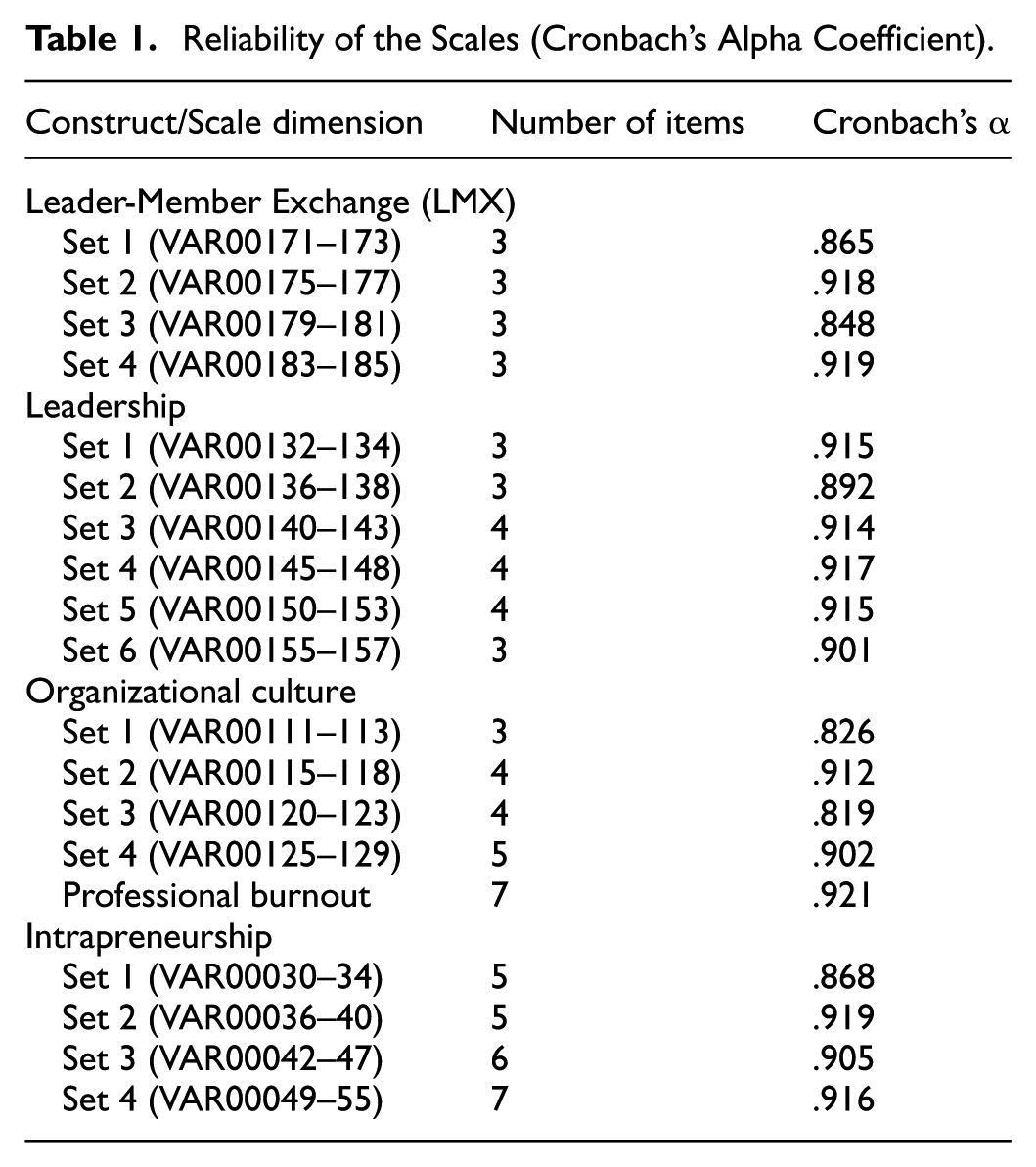
The reliability of all measurement scales used in this study was assessed using Cronbach’s alpha, which evaluates the degree of internal consistency among items within each construct. According to Nunnally’s (1978) criteria, values of α≥.70 indicate acceptable reliability, while values above 0.90 reflect exceptionally high internal consistency (which is expected when constructs are homogeneous and consist of a smaller number of items). The results presented in Table 1 show that all applied scales achieve reliability coefficients ranging from 0.819 to 0.921, demonstrating that the instruments used in the study reliably measure the examined constructs.
Reliability of the Scales (Cronbach’s Alpha Coefficient).
Construct Validity of the Instruments (EFA)
To assess construct validity, an exploratory factor analysis (EFA) was conducted for all scales used in the study. The analysis was performed using Principal Component Analysis (PCA) with Varimax rotation and Kaiser normalization. The results showed that the KMO values exceeded the recommended threshold of 0.70, and Bartlett’s test of sphericity was statistically significant (p < .001), indicating that the data were suitable for factor analysis.
All item factor loadings exceeded 0.60, indicating satisfactory convergent validity, while items were clearly grouped according to their respective dimensions, confirming discriminant validity. Following the recommendations of Hair et al. (2010), only factors with eigenvalues greater than 1 were retained, and the total explained variance for each scale exceeded 50%, providing additional evidence for the adequacy of the factor solution.
Detailed results of the exploratory factor analysis for all applied scales are presented in Supplemental Appendix B (Tables 1–5). The obtained reliability and construct validity indicators confirm that the instruments used in the study adequately measure the examined constructs, ensuring their reliable application in the subsequent analyses.
Assessment of Multicollinearity
Multicollinearity was assessed using regression analysis in SPSS and is presented in Table 2. In this procedure, job burnout was used as the dependent variable, while the following constructs served as predictors: LMX quality, leadership behavior, organizational culture, and intrapreneurship.
Results of Regression Analysis and Multicollinearity Diagnostics.
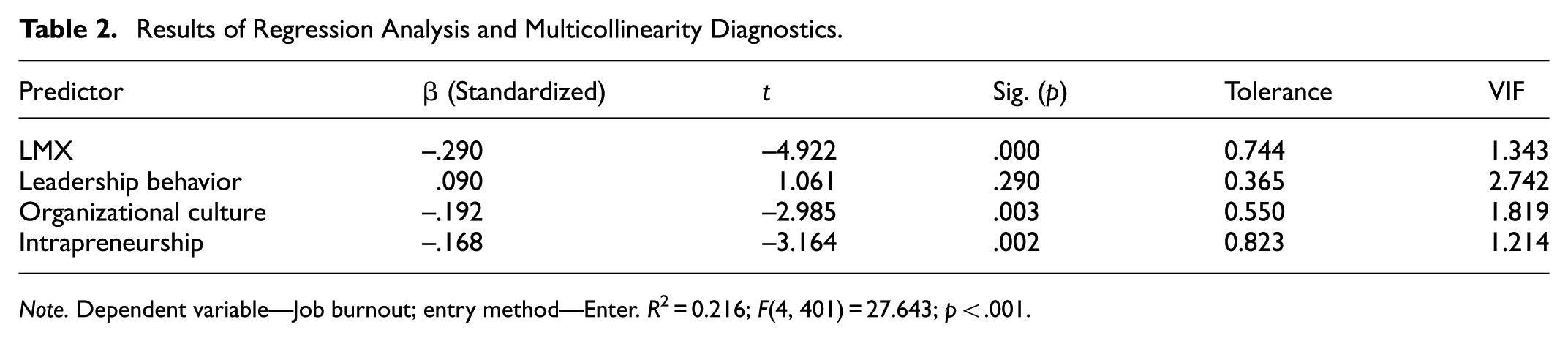
Note. Dependent variable—Job burnout; entry method—Enter. R2 = 0.216; F(4, 401) = 27.643; p < .001.
The analysis was conducted using the Enter method. The model was statistically significant and explained 21.6% of the variance in the dependent variable (R2 = .216; F(4, 401) = 27.643; p < .001). Three predictors had a significant negative effect on burnout: LMX quality (β = –0.290; p < .001), organizational culture (β = –0.192; p = .003), and intrapreneurship (β = –0.168; p = .002), while leadership behavior did not show a significant influence (β = .090; p = .290).
To assess multicollinearity, the values of the Variance Inflation Factor (VIF), tolerance, and Condition Index were examined. All VIF values were below the recommended threshold of 5, and tolerance scores were higher than 0.20. The highest Condition Index was 21.599, which is well below the critical value of 30 (Hair et al., 2010). These results indicate that there is no multicollinearity among the predictors that would compromise the stability of the regression model.
Assessment of Common Method Bias (Harman’s Single-Factor Test)
Common method bias was assessed using Harman’s single-factor test. An exploratory factor analysis was conducted using Principal Component Analysis without rotation, and all standardized items from the applied scales were included in the analysis: intrapreneurship, job burnout, LMX, leadership, and organizational culture.
The results of the analysis (Table 3) show that the first factor accounts for 39.66% of the total variance, which is below the recommended threshold of 40%. This indicates that common method bias is not substantially present, suggesting that the variance in the items primarily reflects true differences between constructs rather than being influenced by a shared measurement source.
Results of Harman’s Single-Factor Test.
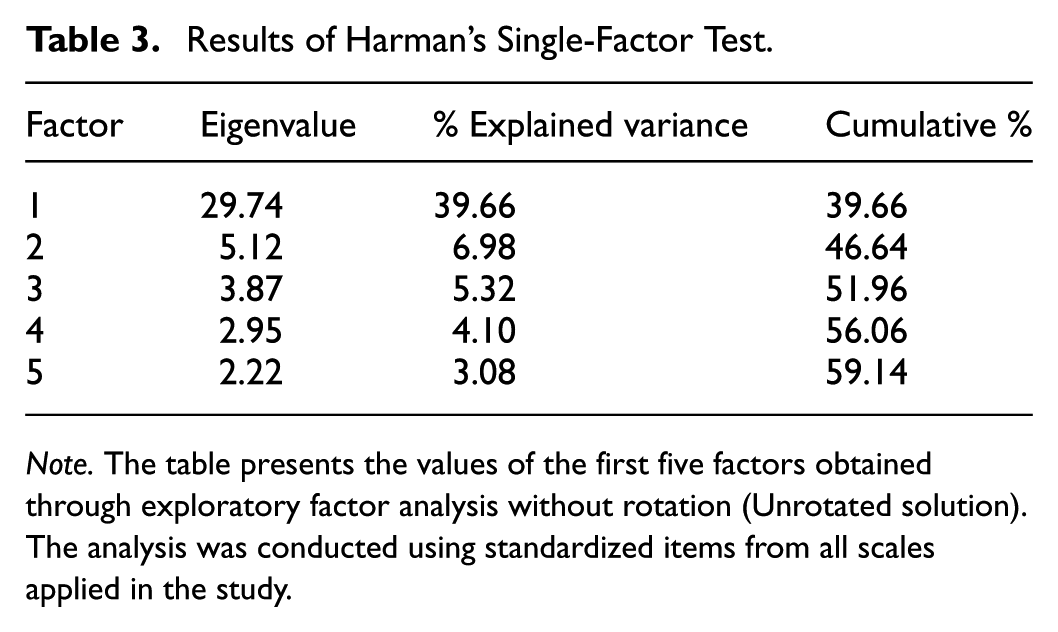
Note. The table presents the values of the first five factors obtained through exploratory factor analysis without rotation (Unrotated solution). The analysis was conducted using standardized items from all scales applied in the study.
Based on these results, it can be concluded that common method bias did not meaningfully compromise measurement validity, and that the observed relationships between constructs can be considered reliable and independent of the measurement source.
Procedure
To test the hypotheses regarding the effects of intrapreneurship and organizational factors on employee burnout, hierarchical multiple regression analysis was used. This method allows for examining both direct and moderating effects of predictor variables on the dependent variable by sequentially adding blocks of predictors (Aiken & West, 1991; Hair et al., 2010; Hayes, 2022). The selection of this technique is aligned with the aim of the study, namely, identifying conditional (interaction) relationships within the organizational context that influence managerial burnout.
The analysis was conducted across three models:
Model 1 – included control variables and the dimensions of intrapreneurship;
Model 2 – added the main organizational variables (leadership, LMX, and the dimensions of organizational culture);
Model 3 – introduced the interaction terms (Intrapreneurship x moderators) to test moderation effects.
All continuous predictors were standardized (Z-scores) to reduce collinearity prior to forming the interaction terms. Changes in explained variance (ΔR2) and the F-test were used to evaluate the contribution of each model, along with the interpretation of standardized coefficients (β).
Assessment of Regression Model Assumptions
Multicollinearity was evaluated using Tolerance (>0.20) and VIF (<5), in line with established recommendations (Hair et al., 2010). The obtained values indicated that collinearity among predictors was not problematic.
Common method bias was assessed using Harman’s single-factor test (Podsakoff et al., 2003). The first factor did not account for more than 40% of the variance, suggesting that measurement source bias did not substantially influence the results.
The reliability of the instruments was assessed using Cronbach’s alpha, with all scales achieving values of ≥.819, indicating satisfactory internal consistency (Nunnally, 1978). Construct validity was examined through exploratory factor analysis (Principal Component Analysis with Varimax rotation). The KMO values were above 0.70, and Bartlett’s test was statistically significant, confirming that the data were appropriate for factor analysis. All items demonstrated adequate factor loadings (>0.60), and the total explained variance exceeded 50% for each construct.
Based on these findings, it can be concluded that the instruments are reliable and valid, providing an appropriate foundation for conducting the hierarchical regression analysis.
Before presenting the descriptive statistics and correlation tables, it is important to clarify the analytical approach used. In the descriptive analysis, the full composite scales were examined in order to provide a general overview of the central tendencies and variability of the key constructs. However, in the correlation analysis, the constructs were disaggregated into their underlying dimensions, as our aim was to explore the specific associations between each dimension and job burnout.
Results
Descriptive Statistics
Table 4 shows descriptive statistics for the main variables in the research related to the connection between intrapreneurship and job burnout, with the role of dimensions of organizational culture, leadership and the quality of the relationship with the leader (LMX relationship).
Descriptive statistics for research variables.
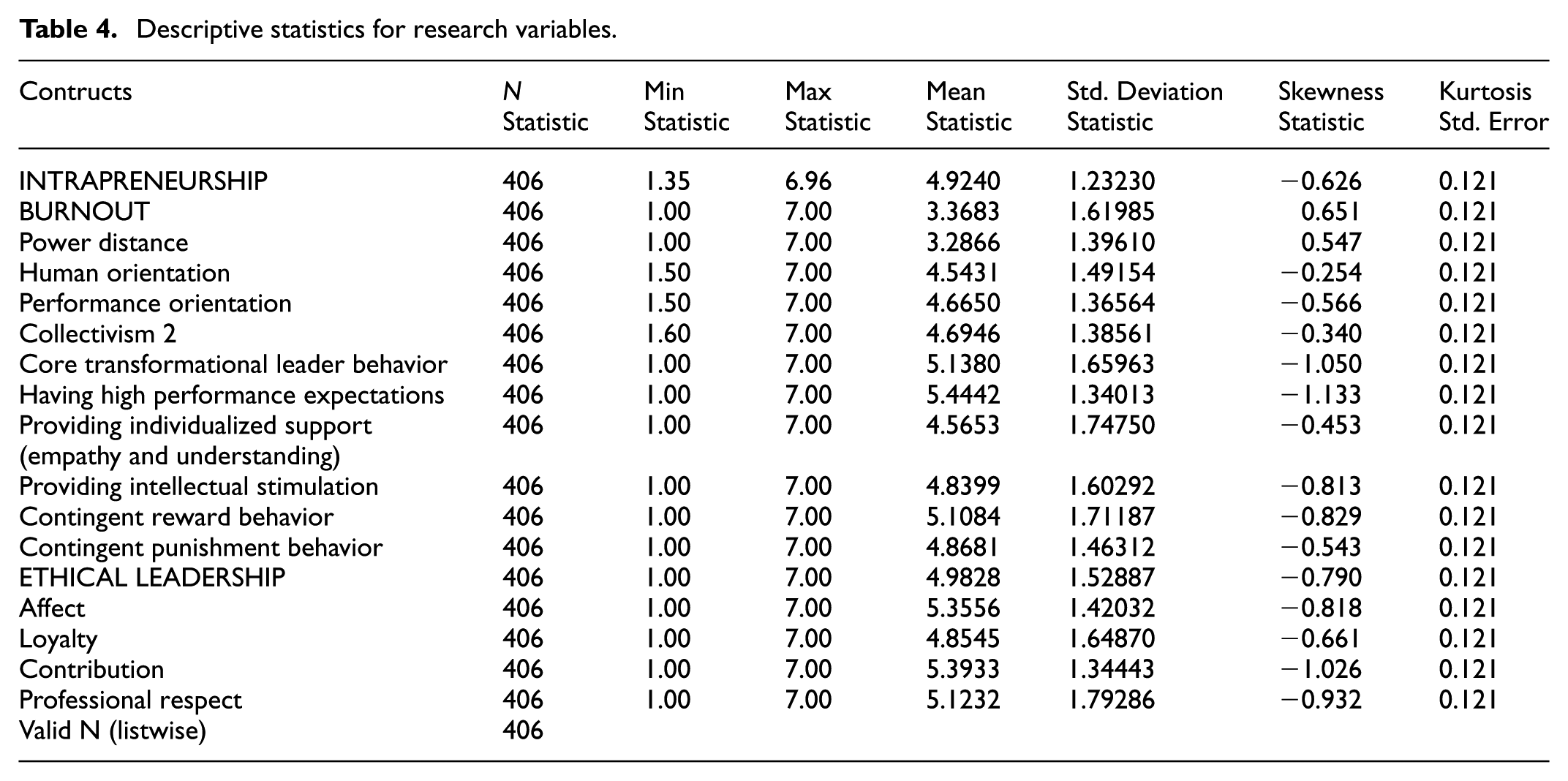
Each variable shown in Table 4 is covered by basic statistical indicators, that is, the number of respondents, minimum and maximum values, mean value, standard deviation, as well as indicators of the shape of the distribution (asymmetry and roundness).
Based on the descriptive statistics analysis, it was observed that the dimension “Contribution,” which reflects employee’s willingness to work for the superior, has the highest average value with a mean value of 5.39, which indicates that the respondents are loyal employees dedicated to the manager. The lowest average value is observed for the burnout construct, which may mean a lower degree of emotional exhaustion among employees, although the standard deviation shows pronounced differences among respondents. The coefficients of asymmetry are negative for most variables, which means that there is a slight asymmetry toward the higher values of the scale, that is, the tendency of the respondents to rate most of them above the average. The most pronounced negative asymmetry is observed in the dimensions “Professional respect” and “Contribution.” Roundness coefficients are mostly within normal limits, except for a few dimensions such as “Having high performance expectations ” and “Contribution,” which indicates a slightly higher concentration of results around the mean value, that is, lower dispersion. According to the obtained values, it can be concluded that most variables have a satisfactory distribution for further statistical analyses.
Correlation Analysis
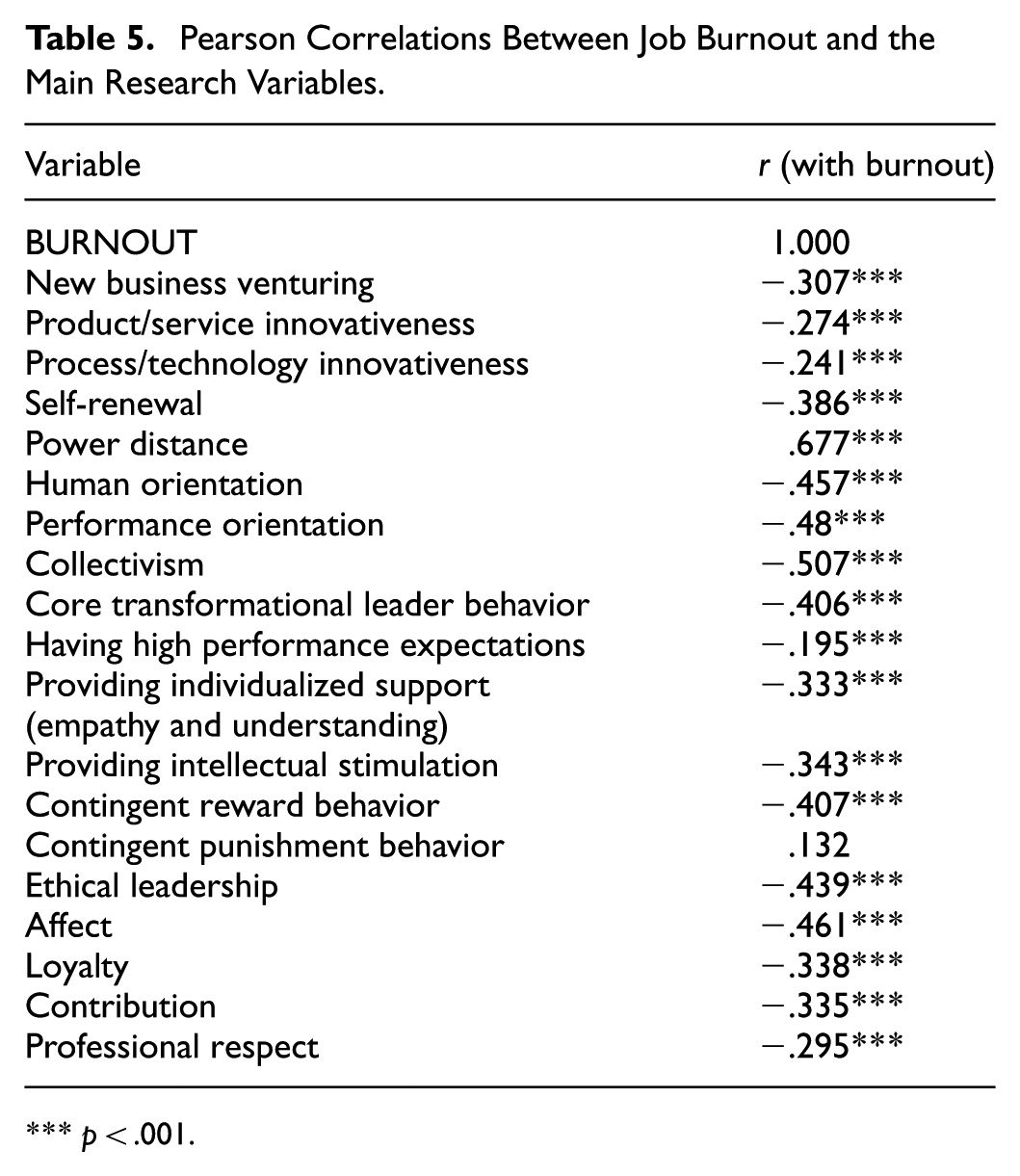
Table 5 shows Pearson’s correlation coefficients between the level of job burnout and the main theoretical constructs included in the analysis. The aim of this review is a preliminary assessment of the direction and strength of the relationship before conducting a multiple regression analysis, in order to identify potentially significant predictors and moderators in further statistical processing.
Pearson Correlations Between Job Burnout and the Main Research Variables.
p < .001.
A correlational analysis was conducted to examine the relationship between employee burnout and key theoretical constructs, including dimensions of intrapreneurship, leadership styles, leader-member relationship quality (LMX), and organizational culture characteristics. The results indicate several statistically significant and theoretically relevant connections.
The strongest positive correlation was observed between job burnout and the perception of power distance in the organization (r = .677, p < .001), which suggests that pronounced hierarchical differences may contribute to a higher level of emotional exhaustion of employees. In contrast, several constructive factors show a strong negative association with burnout, indicating their potential protective role.
Collectivism (r = –0.507, p < .001), performance orientation (r = –0.480, p < .001), human orientation (r = –0.457, p < .001) and ethical leadership behavior (r = –0.439, p < .001) show significant negative correlations with employee burnout. Core transformational leader behavior (r = –0.406), providing intellectual stimulation (r = –0.343), providing individualized support (r = –0.333), was also significantly negatively related to emotional exhaustion. Rewards, as part of incentive behavior, show an additional negative association with employee burnout (r = –0.407, p < .001).
Aspects of the leader-member relationship (LMX) such as professional respect (r = –0.461), loyalty (r = –0.338) and contribution (r = –0.335) are negatively related to employee burnout, thus confirming the importance of interpersonal relationships in preserving the psychological well-being of employees. Professional respect shows a slightly weaker, but still negative correlation (r = –0.295).
When it comes to intrapreneurship dimensions, all components show negative correlations with employee burnout: self-renewal (r = –0.386), new business venturing (r = –0.307), product/service innovativeness (r = –0.274) and process/technology innovativeness (r = –0.241). These findings indicate that proactive and innovative employee behavior can contribute to reducing job burnout.
Contingent punishment behavior shows a positive but weak correlation with employee burnout (r = .132), which is not statistically significant. Although this result does not confirm the direct association of punitive leadership with emotional exhaustion of employees, the variable is still included in further analysis due to its theoretical importance and the set moderator hypothesis.
All correlations significant at the p < .01 level (except for the contingent punishment behavior) support the theoretical assumptions about the role of intrapreneurship, leadership, organizational culture and quality relations with superiors in the prevention of burnout syndrome at work.
Regression Analysis
Table 6 shows a summary of the hierarchical regression analysis conducted in three steps, with the aim of examining the contribution of intrapreneurship in the prediction of job burnout, as well as the additional effects of leadership styles, organizational culture and their mutual interactions.
Summary of Hierarchical Regression Analysis.
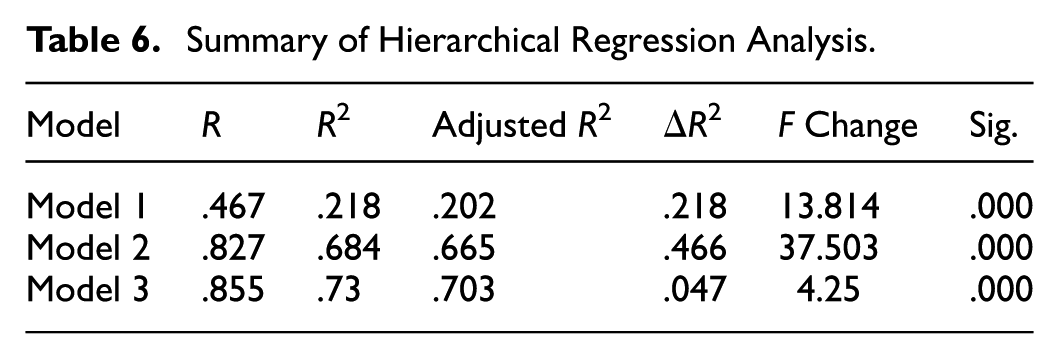
In Model 1, which includes control variables and intrapreneurial dimensions, 21.8% of the variance in job burnout is explained (R2 = .218, F(8, 397) = 13.81, p < .001). By introducing leadership styles and dimensions of organizational culture in Model 2, the explained variance increases significantly to 68.4% (ΔR2 = 0.466, p < .001). Finally, by including interaction (moderator) terms in Model 3, the total explained variance of burnout reaches 73.0% (ΔR2 = .047, F(15, 367) = 4.25, p < .001), indicating a significant contribution of moderating effects.
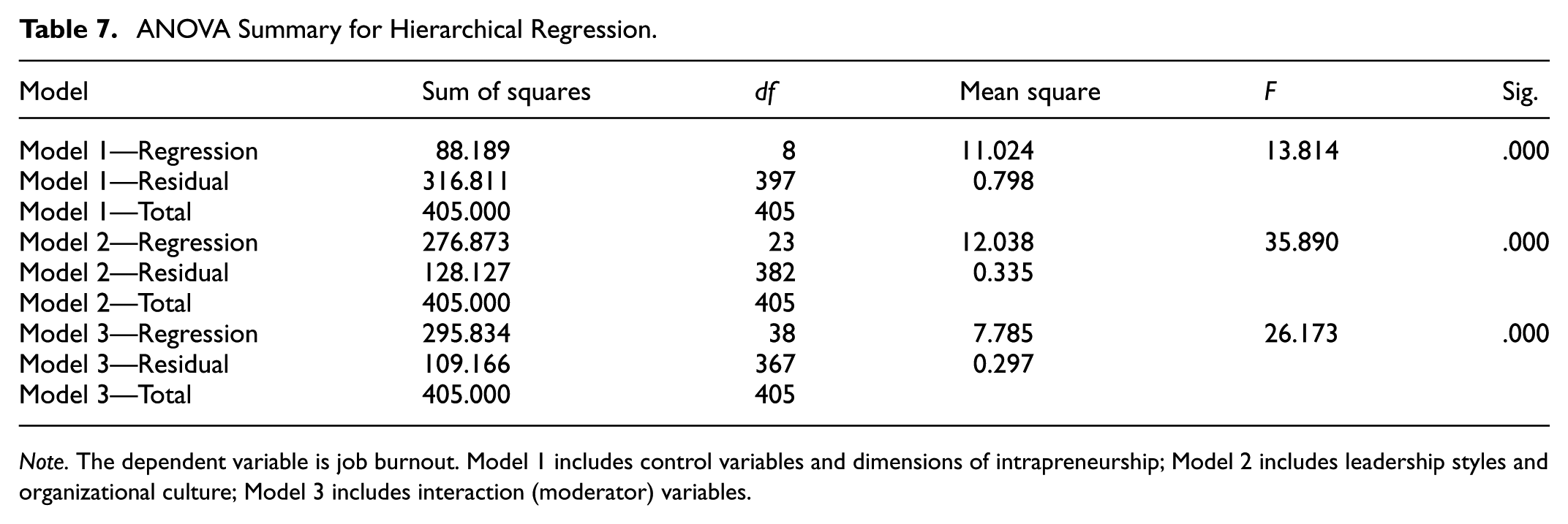
Table 7 shows the results of the ANOVA test for all three regression hierarchical stages, which evaluates the statistical significance of the overall model in predicting employee burnout.
ANOVA Summary for Hierarchical Regression.
Note. The dependent variable is job burnout. Model 1 includes control variables and dimensions of intrapreneurship; Model 2 includes leadership styles and organizational culture; Model 3 includes interaction (moderator) variables.
The results of ANOVA tests in Table 7 show that all models are statistically significant. The basic model including only control variables and intrapreneurial dimensions was significant (F(8, 397) = 13.81, p < .001), while the extended model with leadership and cultural dimensions showed additional predictive power (F(23, 382) = 35.89, p < .001). In the final model that includes interaction (moderator) variables, the predictive ability of the model remains high and statistically significant (F(38, 367) = 26.17, p < .001), confirming the importance of including moderator effects in explaining job burnout.
Table 8 shows the results of the hierarchical regression analysis, where the direct and moderated effects of intrapreneurship, different dimensions of leadership and organizational culture on the level of employee burnout were analyzed.
Hierarchical Regression Coefficients.
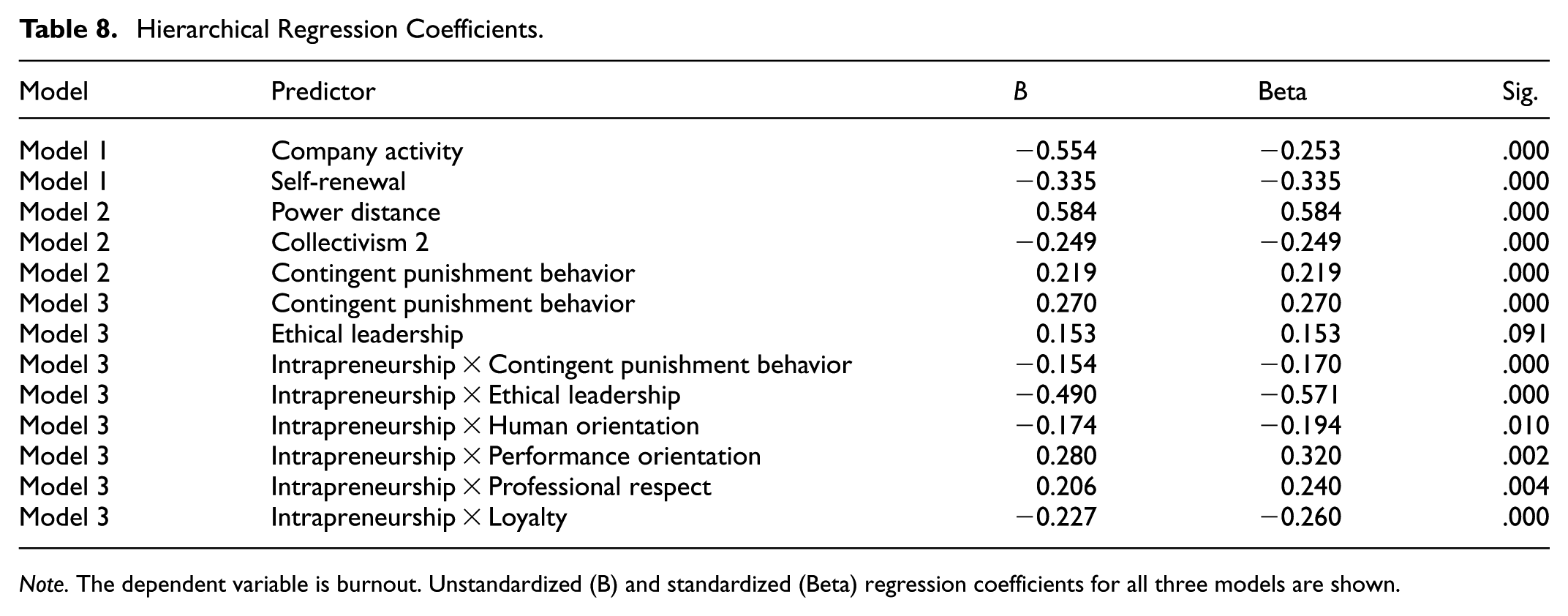
Note. The dependent variable is burnout. Unstandardized (B) and standardized (Beta) regression coefficients for all three models are shown.
The results of the regression analysis in Table 8 show that only the dimension “Self-renewal” within intrapreneurship significantly reduces the level of burnout (β = –.335, p < .001). By adding leadership styles and organizational culture (Model 2), it was found that power distance and punitive leadership behavior significantly contribute to greater employee burnout, while collectivism and ethical leadership have a protective effect. Finally, in Model 3, it was shown that the effect of intrapreneurship on employee burnout depends on the level of ethical leadership, punitive leadership, human orientation and LMX relationship, with the interaction with ethical leadership being the most pronounced (β = –.571, p < .001), confirming its key moderating role.
The Influence of Control Variables on Job Burnout
In order to understand the relationship between intrapreneurship and employee burnout more precisely, as well as the effects of moderator variables, relevant control variables were also included in the analysis: gender of respondents, gender of supervisor, ownership structure and company activity. Their role was to identify potential sources of variance that are not part of the theoretical framework but that may affect the dependent variable.
Gender of respondents and gender of supervisor: In all three regression models, respondent’s gender and supervisor’s gender did not show a statistically significant effect on the level of job burnout. The coefficients were small and statistically non-relevant (e.g., Model 1—respondent’s gender: β = –.044, p = .653; superior’s gender: β = –.156, p = .136), which indicates that these characteristics do not contribute to the explanation of emotional exhaustion within the analyzed sample of middle management.
Ownership structure of the company: The variable is coded so that 1 indicates state-owned and 2 private companies. In Model 1, a negative but statistically insignificant effect was recorded (β = –.156, p = .186), which would suggest a lower level of burnout among employees in private firms. This pattern remains present in Models 2 and 3 (β = –.088, p = .280; β = .004, p = .957), and ownership structure cannot be considered a reliable predictor.
Company activity: Unlike the previous variables, the activity of the company, coded as 1 = service, 2 = production, proved to be a consistent and significant predictor of job burnout in all models (Model 1: β = –.554, p < .001; Model 2: β = –.248, p = .001; Model 3: β = –.233, p = .002). These findings indicate that employees in production sectors have a lower level of emotional exhaustion compared to their colleagues in service industries. The difference may be due to the greater exposure to interpersonal demands, emotional regulation and interaction with users in service sectors, as opposed to tasks of a technical nature that prevail in production environments.
The results indicate that, although gender and ownership structure do not have a significant contribution in explaining job burnout, company activity has proven to be an important control variable, which illuminates structural differences in working conditions and provides a context for more effective implementation of intrapreneurial initiatives in different sectors.
Discussion
The aim of this research was to examine the protective role of intrapreneurship in preventing job burnout and to test the moderating effects of leadership styles, leader-member relationships (LMX) and organizational culture. The discussion focuses on interpreting these results and explaining the mechanisms through which intrapreneurship operates within different organizational contexts. By integrating intrapreneurship with leadership behavior, relational dynamics and cultural dimensions, this section provides a deeper theoretical explanation of when and how proactive behavior protects employees from emotional exhaustion. The obtained results offer substantial support for the proposed hypotheses and create a foundation for theoretical and practical insights presented below. This section goes beyond reporting empirical links by explaining the theoretical mechanisms that shape the protective role of intrapreneurship and its boundary conditions.
H1 was confirmed, indicating that the dimension of self-renewal, as a form of intrapreneurship, is negatively associated with job burnout. This finding suggests that self-renewal functions as a key psychological resource that enables employees to actively shape their work environment and experience of work demands. Within the JD-R model, self-renewal can be viewed as a job resource that enables reinterpretation of job demands, increases the sense of control, and fosters autonomy. This explains why employees who practice self-renewal manage to amortize emotional demands and avoid exhaustion, not because they have fewer demands, but because they cognitively and organizationally transform them into manageable challenges. This mechanism explains and extends the theoretical contribution. Intrapreneurship actively changes the dynamic between demands and resources, which positions it as a protective factor in the prevention of burnout. This result is consistent with previous research showing that proactive employees more often perceive control over work and have higher levels of internal motivation, which makes them more resistant to emotional exhaustion (Escrig-Tena et al., 2025; Gawke et al., 2018; Moghaddas et al., 2020; Ravina-Ripoll et al., 2023). Theoretically, this finding extends the JD-R framework by showing that intrapreneurship functions as a dynamic mechanism that actively reshapes how job demands are cognitively interpreted. This positions self-renewal as a form of adaptive self-regulation that expands the conceptual boundaries of intrapreneurship theory.
H2 was not confirmed, indicating that core transformational leadership did not demonstrate a significant moderating role in the relationship between intrapreneurship and job burnout. This finding suggests that transformational style, although conceptually strongly related to motivation and innovation, does not function as an immediate protective mechanism in the context of emotional exhaustion. One of the possible explanations is that transformational leadership primarily affects the aspirations and development of employees, but not necessarily psychological security, which is crucial to turn proactive behavior into a protective factor against job burnout. If employees do not experience clear moral and relational signals from leaders, transformational elements such as vision, inspiration, and individualized attention may remain insufficient to alleviate stressful demands. In this sense, the results indicate that intrapreneurship relies on resources that provide a sense of security, fairness and stability, which are dimensions more characteristic of ethical leadership. This raises the theoretical question of whether transformational leadership, in the absence of an ethical basis, actually lacks a sufficient protective component to reduce employee emotional exhaustion. This result may be explained by the overlap with ethical leadership, which showed a stronger effect, as well as potential variations in how transformational behavior is perceived across industries (Ehrnrooth et al., 2024; Harish & Prabha, 2022; Loureiro et al., 2022). Similar findings indicate that transformational leadership may have limited impact when not supported by a clearly articulated ethical foundation (Ciulla, 2020; Doan et al., 2024; Martinez-Leon et al., 2020). From a theoretical standpoint, this result challenges common assumptions in leadership theory by suggesting that inspirational and developmental components of transformational leadership are insufficient for reducing strain unless accompanied by moral clarity and psychological safety. This nuance refines existing models by differentiating between motivational and protective functions of leadership.
H3 was confirmed, indicating that ethical leadership significantly strengthens the negative relationship between intrapreneurship and job burnout, which aligns with social learning theory (X. Liu et al., 2023). This finding indicates that ethical leadership provides a psychological framework that allows intrapreneurship to manifest as a protective resource rather than an additional source of risk. In accordance with social learning theory, employees view the leader’s behavior as a benchmark for assessing safety and the permissible level of initiative. When a leader consistently demonstrates fairness, integrity, and concern for employees, a climate is created in which proactivity does not carry the latent threat of negative consequences in case of failure. This changes the perception of work requirements, that is, they are no longer treated as a potential burden, but as a space for autonomy and learning. The leader’s ethics, therefore, function as a signal of psychological safety that allows intrapreneurial behavior to become a stress buffer instead of a trigger of insecurity. This finding theoretically reinforces the idea that intrapreneurship cannot have a full protective effect without institutional “moral stabilizers” coming from superiors. This finding is consistent with Brown et al. (2005) and Hildenbrand et al. (2018), who show that ethical leadership fosters psychological safety and engagement. Employees guided by leaders with strong moral standards show greater initiative, creativity and responsibility, knowing they will be supported rather than punished in case of failure, thus reducing stress and insecurity that often trigger burnout. This finding advances social learning theory by illustrating how ethical signs shape the psychological meaning of proactive behavior. It also contributes to intrapreneurship theory by demonstrating that moral leadership provides a supportive climate in which proactive behavior becomes a source of protection from emotional exhaustion.
H4 was confirmed, indicating that contingent punishment behavior diminishes the protective effect of intrapreneurship, suggesting that authoritarian and repressive leadership styles create a climate in which proactive behavior becomes psychologically costly (Acar et al., 2024; Asim et al., 2021; Elsaied, 2024).
This finding indicates that intrapreneurship may lose its resource function when leadership is based on punishment, as employees then assess the risks of being proactive as greater than the potential benefits. Within the JD-R model, punitive leadership introduces additional psychological demands, such as fear of error, uncertainty, and unpredictability of superiors’ reactions, which directly impair employees’ ability to use intrapreneurial behavior as a protection against stress. In such an environment, proactivity ceases to be an expression of autonomy and creativity and becomes an activity that can trigger sanctions. Employees therefore resort to self-protective strategies, such as withdrawal, concealment of initiative and avoidance of responsibility, which leads to feelings of frustration and emotional exhaustion. From a theoretical point of view, the results show that intrapreneurship is not an inherently protective mechanism, but its function depends on whether leadership provides psychological security or generates additional stress. Similar effects were observed by Gawke et al. (2018), who emphasized that punitive leadership practices lead to demotivation and a higher risk of job burnout, primarily because employees lack the psychological safety needed for intrapreneurial behavior to thrive. This result highlight that intrapreneurship is not universally protective but context-sensitive. Within the JD-R perspective, punitive leadership introduces additional demands that neutralize the resource value of proactive behavior. This contributes to leadership theory by demonstrating that leadership based on control and punishment reduces the conditions under which employees can make use of intrapreneurial behavior.
H5 was confirmed, indicating that loyalty within LMX relationships significantly moderates the link between intrapreneurship and job burnout. This is consistent with previous findings showing that high-quality leader-member relationships strengthen psychological safety and engagement (Wallace & Coughlan, 2023; Yikilmaz et al., 2024; Zorić et al., 2023). This finding suggests that loyalty in LMX relationships functions as a specific interpersonal resource that allows employees to use intrapreneurship as a protective mechanism. In terms of the JD-R model, loyalty from a leader reduces psychological demands by providing stability, predictability, and emotional security. Employees who perceive relationships with their superiors as reliable and supportive more easily reinterpret stressful situations, and being proactive in such a context does not carry the risk of sanctions, but rather signals trust and the possibility of development. This turns intrapreneurial behavior into a resource that amortizes emotional demands, because the initiative is not perceived as a threat to existing relationships but as a form of legitimate contribution. Theoretically speaking, loyalty in LMX relationships is a key link that allows intrapreneurship to be sustainable and under stress, thereby confirming the importance of the interpersonal dimension of leadership in the processes of innovative behavior. Employees who perceive LMX relationships as loyal, supportive and stable report higher psychological safety, which helps them maintain proactive behavior despite stressors, remain engaged and mitigate emotional exhaustion. This finding adds to LMX theory by identifying loyalty as a relational resource that strengthens the adaptive value of intrapreneurship. It emphasizes that proactive behavior becomes sustainable only when embedded in high-quality interpersonal exchanges that provide emotional stability and predictability.
H6 and H7 were confirmed through direct effects, indicating that power distance is positively associated with employee burnout, while collectivism is negatively associated with it. Although these cultural dimensions did not act as moderators, their direct effects indicate that vertically rigid and individualistic organizational environments increase emotional exhaustion (Korkmazyurek & Ocak, 2024; Malik & Huo, 2023), whereas collectivist values foster mutual support and reduce psychological strain (Chen et al., 2024). These findings suggest that organizational cultural values function as contextual factors that shape how employees experience job demands. Within the JD-R model, high power distance can be seen as a source of additional psychological demands, as it limits autonomy, reduces two-way communication, and increases the unpredictability of interactions with superiors. This environment generates a sense of powerlessness, which reduces the capacity of employees to use their own resources and thus increases the likelihood of chronic stress and emotional exhaustion. In contrast, collectivism functions as a social resource, as it encourages cooperation, informal support, and shared responsibility. In such cultures, stressors are distributed through the social network, which reduces individual pressure and increases employee resilience. These results confirm that cultures focused on hierarchy and individualism increase psychological demands, while cultures focused on community increase the availability of psychological and social resources, which directly affects the likelihood of job burnout. When power distance is high, communication is restricted and initiative discouraged, causing employees to feel powerless and more vulnerable to emotional exhaustion. Conversely, collectivist values promote mutual support, reduce perceived overload and foster resilience to burnout. Theoretically, these results refine organizational culture theory by demonstrating that cultural value systems function as background conditions that shape how employees interpret job demands. High power distance intensifies strain by reducing perceived control, whereas collectivism supplies social resources that help employees absorb emotional demands. This highlights the role of cultural context in enabling or constraining the protective function of intrapreneurship.
H8 was confirmed, indicating that the interaction between intrapreneurship and performance orientation is significant. This indicates that in cultures that value and reward results, employee proactivity receives additional institutional support, which reduces the risk of job burnout (Fastje et al., 2023; Modliba et al., 2024; Zhang et al., 2023). This finding indicates that a performance-oriented culture functions as an institutional resource that increases the psychological payoff of intrapreneurial behavior. In terms of the JD-R model, performance orientation reduces psychological demands by providing clear evaluation criteria, transparent reward mechanisms, and predictable outcomes. When employees know that proactivity will not be ignored or punished, but rewarded, intrapreneurship becomes a strategy with reduced perceived risk and greater psychological benefits. In such an environment, innovative behavior is a means of achieving professional progress, which increases the internal motivation and emotional resilience of employees. Theoretically speaking, these findings suggest that intrapreneurship acquires a protective function only when it is consistent with cultural norms that value initiative and recognize individual contributions. Without this alignment, its effect may remain limited. An organizational culture that clearly rewards results helps employees perceive their intrapreneurial efforts as meaningful and recognized, increasing their willingness to innovate and reducing the psychological burden associated with proactive behavior. This finding contributes to organizational culture theory by showing that performance-oriented environments provide institutional clarity that transforms proactive behavior into a low-risk, high-reward strategy. It expands intrapreneurship theory by demonstrating that the resource value of proactivity increases when organizational norms explicitly reinforce initiative.
H9 was confirmed, indicating that human orientation strengthens the negative relationship between intrapreneurship and job burnout. Organizations that foster interpersonal respect and appreciation enable proactive behavior to be accepted and encouraged rather than perceived as burdensome (J. H. Kim et al., 2024; Ramlawati et al., 2023). This finding indicates that human orientation functions as an important cultural resource that allows intrapreneurship to become a protective mechanism. Within the JD-R model, a human-oriented environment reduces psychological demands because it eliminates the fear of negative consequences of initiative and creates an emotionally safe space for expressing ideas. When the well-being of employees and their individual contributions are consistently valued, proactive behavior ceases to be perceived as a deviation or a potential challenge to authority, but as a desirable way of participation in work. In this way, intrapreneurial activities are transferred from the domain of psychological risk to the domain of psychological meaning, which reduces emotional exhaustion and increases resistance to stress. Human orientation enables intrapreneurship to develop its full protective function because it provides an emotional context in which proactivity is legitimate, supported and safe. Human-oriented climates provide emotional safety and meaning at work, allowing employees to act proactively without fear of rejection or punishment, thereby reducing the risk of burnout. Theoretically, this result advances the understanding of human-oriented cultures by showing that interpersonal care and appreciation create an emotional foundation that allows intrapreneurship to function as a meaning-enhancing resource. This strengthens the argument that cultural values determine whether proactive behavior reduces or increases psychological strain.
Integrative Theoretical Synthesis
Across all tested hypotheses, the findings collectively demonstrate that intrapreneurship operates as a context-dependent psychological resource. While the JD-R framework typically explains burnout through the balance of demands and resources, the present study extends this model by showing that intrapreneurship can shift this balance only when specific leadership and cultural conditions signal safety, fairness and support. Ethical leadership and LMX loyalty emerge as relational mechanisms that activate the protective potential of proactive behavior, whereas punitive leadership and high power distance suppress it by increasing psychological demands. Cultural dimensions such as collectivism, human orientation and performance orientation create institutional environments in which intrapreneurship becomes psychologically sustainable. Taken together, these findings integrate resource-based, relational and cultural perspectives, offering a more comprehensive understanding of when and how proactive behavior reduces emotional exhaustion. This synthesis positions intrapreneurship as a relationally and culturally embedded mechanism of psychological resilience.
Based on research results and confirmed hypotheses, a model of the influence of intrapreneurship and moderating variables on job burnout was developed and presented in Figure 2.
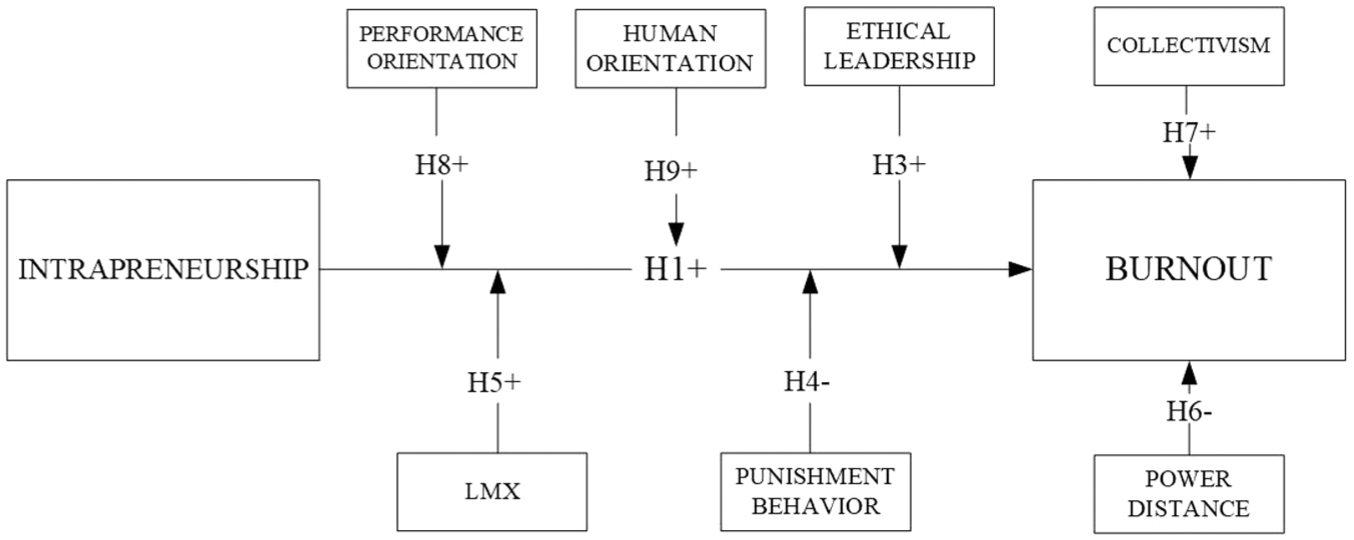
A model of the influence of intrapreneurship and moderating variables on job burnout.
The presented model shows the influence of intrapreneurship on job burnout, as well as the positive and negative relationships of the analyzed moderators on job burnout.
The findings confirm that intrapreneurship functions as a significant psychological resource, but its effectiveness depends on the quality of leadership, organizational climate and interpersonal relationships. The research contributes to the literature on proactive behavior and organizational health, emphasizing that intrapreneurship does not operate in a vacuum, but in dynamic conjunction with the organization’s value system. The findings are in accordance with existing research (Adel & Messallam, 2021; Alghamdi & Badawi, 2023; Chouchane et al., 2023).
Practical implications include the need to develop leaders who foster ethical values, strengthen LMX relationships based on trust and shape a culture that encourages innovation while protecting employees’ mental health. The findings of this work can serve as a basis for designing integrated HR strategies that balance productivity and psychological sustainability of the work environment.
Research Implications, Limitations and Recommendations for Organizations
Theoretical Implications
This study offers several important theoretical contributions to the literature on intrapreneurship, leadership and employee well-being. First, the findings position intrapreneurship as a meaningful job resource within the JD–R framework, showing that proactive behavior does not simply reduce burnout through individual motivation, but through mechanisms of cognitive reframing, increased autonomy and self-directed adaptation to job demands. This expands existing intrapreneurship theory by highlighting its protective function.
Second, the results demonstrate that the effectiveness of intrapreneurship depends strongly on the interpersonal and cultural context, suggesting that intrapreneurial behavior cannot be isolated from leadership dynamics and organizational values. Ethical leadership and LMX loyalty emerged as key relational mechanisms that enhance the resource value of intrapreneurship, providing theoretical grounding for the importance of psychological safety in enabling proactive behavior to function as a buffer against emotional exhaustion.
Third, the study contributes to leadership theory by showing that not all leadership styles are equally relevant for employee well-being. Transformational leadership did not play a significant moderating role, whereas ethical leadership and punitive styles had strong opposite effects. This finding advances theory by clarifying that moral and relational components of leadership, rather than inspirational components, are central to the effectiveness of intrapreneurship in reducing job burnout.
Finally, the results add to organizational culture theory by demonstrating that value systems such as collectivism, human orientation and performance orientation create conditions under which intrapreneurship becomes psychologically sustainable. Conversely, high power distance increases job demands and weakens the protective role of proactive behavior. These findings highlight the contextual nature of intrapreneurship and emphasize that cultural norms shape the mechanisms through which proactive behavior affects employee well-being.
Practical Implications
The findings of this study offer several important implications for organizational practice. First, the confirmation of ethical leadership as a key moderator suggests that organizations should prioritize the development of leadership styles grounded in moral decision-making, fairness and transparency. Investing in leadership training that emphasizes ethical behavior, as well as mentoring programs in which experienced managers model these values, can contribute to the creation of a psychologically safe environment in which proactive employee behavior is encouraged rather than perceived as risky. Regular evaluation of leadership practices may also help identify styles that support a healthier organizational climate.
Second, the significant role of loyalty in LMX relationships highlights the importance of building strong, trust-based interactions between leaders and employees. Leaders should cultivate open communication, an individualized approach and a deeper understanding of employees’ personal and professional needs. Regular one-on-one meetings and supportive dialog can enhance psychological security, enabling employees to sustain proactive behavior even in demanding work environments.
Third, cultural values such as collectivism, human orientation and performance orientation demonstrated strong potential in reducing burnout and increasing the positive effects of intrapreneurship. Organizations should therefore work on developing a culture of mutual support and cooperation, particularly in teams exposed to emotional pressures. At the same time, performance-oriented values should be applied in a balanced and transparent manner, ensuring that proactive behavior is clearly recognized and rewarded without generating unnecessary pressure.
Fourth, the negative effects of contingent punishment and high power distance indicate that authoritarian and overly hierarchical leadership styles can suppress the protective role of intrapreneurship. Organizations should reduce rigid formal barriers, encourage open communication and provide employees with greater autonomy. Training programs that promote democratic and participative leadership styles may be especially valuable in companies that traditionally rely on strong hierarchical structures.
Finally, the findings emphasize the critical role of middle management, particularly in transition economies. Strengthening the competencies of middle managers through specialized training and decision-making support can enhance their ability to balance innovation demands with employee well-being. It is also important that organizations regularly assess the alignment between their levels of intrapreneurship, cultural practices and employee well-being indicators in order to adjust HR strategies and ensure sustainable organizational functioning.
Research Limitations and Future Research
This study has several limitations that should be taken into account when interpreting the findings. First, the research was conducted at a single point in time using cross-sectional self-report data, which prevents drawing conclusions about causal relationships between intrapreneurship and job burnout. In addition, the exclusive reliance on self-report questionnaires may introduce subjective biases related to individual perceptions and response tendencies. The sample was obtained through purposive sampling and included only employees from Serbia, which limits the generalizability of the results to other national and cultural contexts. Furthermore, the study did not include objective indicators of burnout, such as absenteeism, turnover intentions or physiological stress markers, which may offer a more comprehensive assessment of employees’ well-being.
Another noteworthy limitation concerns the organizational structure of the sample. A substantial proportion of the respondents came from medium-sized and large enterprises, which may influence the external validity of the findings. The observed relationships primarily reflect dynamics characteristic of more complex organizational systems, where patterns of leadership, communication structures, and intrapreneurial behavior differ from those found in micro and small enterprises. As a result, the generalizability of the findings to smaller organizations may be limited, and the results should be interpreted with caution in this regard.
These limitations open several directions for future research. Longitudinal studies would allow researchers to examine how intrapreneurship and job burnout unfold over time and whether proactive behavior has a cumulative protective effect. Future studies should also incorporate objective measures of well-being and performance, including behavioral or physiological indicators, in order to validate the perceptual data. Qualitative methods, such as interviews or focus groups, may further demonstrate how employees interpret leadership behavior, organizational support and cultural norms when engaging in intrapreneurial activities. In addition, future research would benefit from using stratified or targeted sampling strategies that ensure greater representation of micro and small enterprises, enabling a more comprehensive understanding of whether the identified effects hold across different organizational sizes. Finally, comparative studies across different countries and organizational contexts could help determine whether the moderating effects observed in this research, especially those related to leadership style, LMX loyalty and cultural values, are universal or context-specific.
Conclusion
This study contributes to a deeper understanding of how intrapreneurship influences employees’ psychological well-being, particularly in reducing job burnout. The findings demonstrate that proactive behavior alone is not a sufficient protective mechanism. Its effectiveness depends on the broader organizational environment. Ethical leadership, high-quality LMX relationships and human-oriented cultural values strengthen the protective role of intrapreneurship, while punitive leadership styles and high power distance can minimize or reverse this effect. These results highlight the importance of psychological safety, trust and supportive cultural norms in shaping how employees experience and sustain proactive behavior in the workplace. Overall, the study emphasizes that intrapreneurship can contribute both to innovation and to employee well-being when embedded within leadership and cultural practices that enable risk-taking, autonomy and interpersonal support.
Supplemental Material
sj-docx-1-sgo-10.1177_21582440261429366 – Supplemental material for Beyond Proactivity: How LMX, Leadership and Organizational Culture Shape the Link Between Intrapreneurship and Burnout
Supplemental material, sj-docx-1-sgo-10.1177_21582440261429366 for Beyond Proactivity: How LMX, Leadership and Organizational Culture Shape the Link Between Intrapreneurship and Burnout by Verica Gluvakov, Mila Kavalić, Milan Nikolić, Dragan Ćoćkalo, Mihalj Bakator, Sanja Stanisavljev and Snežana Mirković in SAGE Open
Footnotes
Acknowledgements
This paper has been supported by the Provincial Secretariat for Higher Education and Scientific Research of the Autonomous Province of Vojvodina, number: 003897158 2025 09418 003 000 000 001 04 004.

Ethical Considerations
The study received ethical clearance from the Ethics Committee of the Technical Faculty “Mihajlo Pupin,” University of Novi Sad (decision no. 01-1330, issued on 12 February 2025). This confirmation verifies that the anonymous survey conducted among middle-management employees in the Republic of Serbia complies with the University of Novi Sad’s Code of Academic Integrity and established professional standards. Participants were informed about the aims of the study, assured of complete anonymity and confidentiality, and informed that participation was entirely voluntary. No personally identifiable information was gathered, and prior to completing the questionnaire, respondents indicated their informed consent by ticking a box confirming their understanding and agreement that the collected data would be used solely for scientific research purposes.
Consent to Participate
Informed consent was obtained from all subjects involved in the study.
Author Contributions
Conceptualization, V.G., M.K. and M.N.; methodology, V.G. and M.K.; software, M.K.; validation, M.K., M.N. and D.Ć.; formal analysis, S.S., M.B. and S.M.; investigation, V.G.; resources, V.G. and M.K.; data curation, M.K.; writing-original draft preparation, V.G., M.K., S.S., M.B. and S.M.; writing-review and editing, V.G. and M.K.; visualization, V.G.; supervision, M.N. and D.Ć.; project administration, M.K.
Funding
The authors received no financial support for the research, authorship, and/or publication of this article.
Declaration of Conflicting Interests
The authors declared no potential conflicts of interest with respect to the research, authorship, and/or publication of this article.
Data Availability Statement
The original contributions presented in this study are included in the article. Further inquiries can be directed to the corresponding author.*
Supplemental Material
Supplemental material for this article is available online.
Statements and Declarations
This manuscript is original, has not been published, and is not under consideration elsewhere. All authors have approved the manuscript and have no conflicts of interest to disclose. The research was conducted in accordance with ethical principles, and all participants in the research were informed and agreed to the use of data for research purposes. There was no funding received for this study.
References
Supplementary Material
Please find the following supplemental material available below.
For Open Access articles published under a Creative Commons License, all supplemental material carries the same license as the article it is associated with.
For non-Open Access articles published, all supplemental material carries a non-exclusive license, and permission requests for re-use of supplemental material or any part of supplemental material shall be sent directly to the copyright owner as specified in the copyright notice associated with the article.
