







Abstract
The demand for skilled labor has increased globally, reinforcing the strategic role of Technical and Vocational Education and Training (TVET) institutions. In Colombia, however, textile workshops within TVET centers often face operational inefficiencies related to resource optimization, production planning, and process improvement, which undermine training quality and productivity in the garment sector. This study addresses the question of how to model Operations Management (OM) for technical training activities (TTA) in Colombian TVET institutions. It presents the design and validation of an Operations Management Model (OMM) for a textile training center (TC) of the Colombian Institute for Vocational Education (SENA). It integrates pedagogical and productive dimensions within a TVET institution, representing a novel approach for an OMM. The model was developed in three stages: component description, design, and validation. It adopts a systemic approach including three subsystems: SENA, the TC, and the garment workshop. Within the workshop, the model emphasizes process-based management—mission-oriented, supporting, and strategic processes—aligned with continuous improvement and institutional guidelines, directly informing resource management decision-making in training contexts. Statistical validation confirmed the classification of processes and the model’s representativeness (over 66.7% agreement). Strong positive correlations were identified between key components (e.g., academic coordination and production control: r = .85). Expert validation confirmed the model’s structure and its positive impact on workshop operations and training development. The results provide a practical framework to improve operational efficiency in TVET textile workshops and offer a candidate reference for OM practices in TVET institutions in the apparel manufacturing until external testing is provided.
Plain Language Summary
The global need for skilled workers is growing, highlighting the vital role of technical and vocational education and training (TVET) centers. Yet, here in Colombia, many textile workshops within these institutions face operational challenges: inefficient resource use, poor production planning, and processes needing improvement. These issues hurt both training quality and the garment industry’s productivity. This study aimed to answer a key question: How can we create a model for technical training activities (TTA) in Colombian TVET institutions to improve efficiency and effectiveness? We designed and validated a custom Model for a textile training center at the National Training Service (SENA). We built this model in three steps: identifying components, designing, and validating. We used a systemic approach, connecting SENA, the training center, and the garment workshop. Within the workshop, our model emphasizes process-based management. This means organizing activities into mission-oriented, supporting, and strategic processes, all aligned with continuous improvement and institutional guidelines. This directly helps make better decisions in training. Statistical validation confirmed correct process classification and model representativeness (over 66.7% agreement). We found strong positive links between key areas, like academic coordination and production control (r=0.85). Expert validation further confirmed the model’s structure and positive impact on workshop operations and training development. The results offer a practical framework for improving operational efficiency in TVET textile workshops. They also serve as a useful guide for operational practices across the wider apparel manufacturing sector.
Keywords
Introduction
Globally, the service sector has experienced substantial growth within national economic structures, exerting significant influence on demographic, social, and political dynamics through the creation of diverse employment opportunities (López, 2002). In Colombia, this phenomenon is reflected in the marked increase in the sector’s contribution to the Gross Domestic Product (GDP) in recent years (Navia & Giral, 2021). Accompanying this growth is a rising demand for skilled labor, underscoring the importance of professional education.
Against this backdrop, Technical and Vocational Education and Training (TVET) institutions play a pivotal role in preparing the workforce for the labor market (Restrepo Pimienta et al., 2021; Velásquez et al., 2020). Such institutions maintain a close relationship with the country’s productive sector in order to respond dynamically to emerging training needs (Velásquez et al., 2020). The link between industry and TVET is direct: the capacity to provide timely and relevant training is intrinsically connected to the productive potential of a country or region (Bogota Chamber of Commerce of, PNUD, & Bogotá City Hall, 2018).
One of the sectors supported by TVET institutions is the textile industry, which in Colombia accounts for 8.2% of industrial GDP, 21% of industrial employment, and 9% of manufacturing exports. In 2018 alone, this industry generated USD 5 billion in sales, USD 4.5 billion in production, and over 550,000 formal jobs (National Business Association of Colombia, 2019). The sector comprises approximately 6,500 companies and provides around 1 million direct and indirect jobs. Bogotá and Medellín are the cities with the highest levels of activity in this sector, which has gained considerable relevance in recent years and demonstrated resilience during periods of crisis, such as the COVID-19 pandemic (Estrada-Rudas, 2022).
However, to maintain their competitiveness, textile companies require a highly skilled workforce, which poses new challenges for TVET institutions. Despite the sector’s economic importance, garment production workshops often deal with issues related to resource optimization, production planning, and process improvement. These shortcomings diminish resource efficiency, extend training timelines, and compromise the quality of final products. In other words, effective Operations Management (OM) directly affects both the quality of training and the productivity of Colombia’s textile sector.
Although TVET environments have been recognized as key domains for improving productive capacities in emerging economies, particularly through innovative teaching and competency-based approaches (Varma & Malik, 2024), the existing OM literature has scarcely addressed the operational complexities inherent in these hybrid environments that integrate pedagogical and productive objectives. Recent work by Ramirez-Gutierrez and Gómez-Marin (2024) begins to fill this gap by proposing a diagnostic methodology for assessing OM elements in garment industry training context. However, comprehensive models that aligns educational and operational goals remains underdeveloped, leaving a critical need for frameworks that can simultaneously support training quality and production performance.
Traditionally, OM research has focused on industrial context, emphasizing standardized processes and efficiency metrics in manufacturing and service operations (Peinado et al., 2018; Wolniak, 2020). Swaminathan (2025) highlights the relevance and impact of OM research in high-tech and globalized environments, yet these frameworks often assume resource abundance and technological sophistication. Such assumptions contrast sharply with TVET context, where multiple objectives—training, production, employability— must coexist under resource constrains and institutional policies. This divergence underscores the need for adapted OM models capable of reconciling pedagogical imperatives with operational efficiency, particularly in traditional sectors such as textiles within countries of Global South. Consequently, this study addresses the following research question:
How can operations management be effectively modeled to support the development of technical training activities in technical and vocational education and training institutions?
To answer this question, this paper proposes an Operations Management Model (OMM) designed specifically for TVET workshops in the textile sector in Colombia. In contrast to previous OMM integrates pedagogical, productive, and organizational dimensions. It has been validated internally through a participatory approach in a real-world setting (case study), thereby contributing to the development of OM theory and practice in the field of TVET.
This OMM sets out three specific objectives. Firstly, the components of an Operations Management Model (OMM) for the implementation of technical training activities (TTA) will be described, using a case study of a training center (TC) that specializes in design, garment production, and fashion. Secondly, an OMM was designed, tailoring the characteristics and needs of this TC. Thirdly, the proposed OMM was validated in the context of a center’s TTA using a cross-impact matrix, supported by surveys and focus group discussions.
The case study focused on the garment workshop in the Design, Garment, and Fashion Vocational Center (CFDCM) of the Colombian Institute for Vocational Education (SENA). As the only public TVET institution in Colombia offering nationwide training programs (Vásquez-Chaux et al., 2025) and recognized as a regional and international benchmark (Hanni, 2019), SENA provides a theoretically robust context for exploring the intersection between technical training and OM. The integration of social (employability training), economic (financial sustainability), and operational (production efficiency) objectives creates a multi-criteria decision-making environment that challenges conventional OM frameworks. This complexity require models capable of balancing throughput optimization with pedagogical quality, ensuring that resources allocations strategies support both production targets and competency development. By situating the research within this environment, the study contributes to expanding OM theory into non-traditional context characterized by high complexity and resource constraints.
The rest of this article is structured as follows: Section 2 presents a review of the literature on OMMs in the services and education sectors. Section 3 details the methodology employed in developing the proposed conceptual model. Section 4 discusses the results and implementation considerations. Finally, Section 5 presents the conclusions and recommendations for future research.
Literature Review
An OMM is defined as a consistent pattern of decisions regarding the transformation system and the associated supply chain, which are linked to the business strategy and other functional strategies (Goldstein et al., 2011). OM encompasses selecting, acquiring, and managing resources to efficiently create value by aligning operational capabilities with business and functional strategies (Slack et al., 2022). Recently, several companies have succeeded by innovating their business models through OM—redefining their value propositions and optimizing resource use. These innovations have translated into competitive advantages in service agility, product quality, distribution channels, pricing, production processes, warehousing, recruitment policies, and the adoption of operational technologies (Cachon et al., 2020).
The theoretical foundation of OMMs lies in their capacity to integrate process design, resource allocation, and performance measurement into the business operational strategies. These models are relevant for all kinds of organizations, manufacturing, services, and even education, because in all of them there is a need to manage the resources to accomplish organizational objectives. However, recent literature reveals a gap in the application of OMMs to TVET settings, especially those involving real or simulated production environments.
Multiple studies have demonstrated the diversity of OMMs applied across organizations operating in varied contexts and facing distinct challenges (Flores & Gómez, 2008; Huertas et al., 2020). In this regard, Katok (2011) employed laboratory experiments to explore human behavior dynamics in OM decision-making, addressing challenges in distribution, procurement, and supply chain coordination. Nunlee and Bones (2014) developed an inventory-based OMM to improve medication adherence, applying classical OM principles to chronic disease management. Quiroz-Flores et al. (2023) proposed a Lean-based OMM to reduce delays in projects, validating their model through the Last Planner System in Peru. Osco et al. (2023) designed an OMM applying 5S, Total Productive Maintenance (TPM), and Single-Minute Exchange of Die (SMED) to improve efficiency in plastic manufacturing. Molladavoodi et al. (2020) introduced a mathematical OMM for disaster relief, optimizing cost, service coverage, and damage severity, for humanitarian logistics.
In Education, OM has been applied in several studies. Badiee et al. (2024) studied, through a systematic review, the use of operations research and management sciences techniques for decision making in higher education institutions. The authors highlighted the need to integrate those techniques into management models to face institutional challenges. Marchioni et al. (2022) and Pedraja-Rejas et al. (2023) adapted OM performance indicators—such as Overall Equipment Effectiveness (OEE)—to assess institutional efficiency in higher education, focusing on achievement, graduation, and retention. Torabi et al. (2022) explored how concepts from service OM could be applied to classroom teaching, demonstrating improvements in student engagement and satisfaction. Mazhazhate and Mudondo (2019) proposed an OMM for the African TVET system, integrating industrial engineering and OM principles with knowledge management and organizational variables.
Despite these contributions, literature remains fragmented and lacks a unified framework for applying OMMs in the TVET context, integrating vocational education and production principles. Most existing models are either sector-specific or focus on traditional industrial settings, leaving a theoretical and empirical gap in understanding how OM principles can be applied in simulated or real production settings at technical workshops within vocational education institutions.
This study addresses that gap by proposing an OMM tailored to a Colombian textile workshop within the biggest and most important national TVET institution, integrating pedagogical and operational dimensions. It contributes to literature by offering a model grounded in systems thinking and process management, validated through participatory methods, and aligned with institutional structures. The model’s relevance lies in its practical utility and theoretical potential to adapt OM in a hybrid educational-production environment.
Methodology
This study was conducted in three phases to provide a structured framework for modeling OM in the context of TTA within TVET institutions in the textile sector. The first phase focused on describing the essential components of an OMM. The second phase involved designing the OMM, including the relationships and interactions among the components identified in the previous phase. The third phase comprised statistical and empirical validation of the model. Figure 1 summarizes the methodology, outlining the phases and their associated activities.

Methodology for designing the OMM for TVET institutions.
Description Phase
Two stages were developed in this phase to describe supporting operations for the TTA inner the CFDCM and its garment workshop using documentary analysis and focus group. (1) Characterize the operation of the workshop through documentation—including documentation about CFDCM their processes, staff, training programs, infrastructure, and the garment workshop organizational chart—and qualitative data from the focus group, and (2) identify stakeholders’ perceptions and expectations of an OMM by a questionnaire to an intended sample.
The focus group participants were intentionally selected by their expertise in operational and academic processes in the garment workshop. The sample included instructors (n = 4) and administrative staff (n = 5), who had between 5 and 20 years of experience. Informed consent was obtained verbally before participation to guarantee anonymity and confidentiality. The consent was audio-recorded in the presence of all focus group participants. Our institution does not require ethical approval for reporting individual cases or case series.
Through structured interviews and surveys, information from the focus group was gathered. We followed a two-phase procedure (Bonilla-Jimenez & Escobar, 2017). Initially, the transcription of discussions underwent coding and classification. Subsequently, the analysis compared the documentation data with conceptual information to get the group consensus.
A Likert questionnaire was formulated in a joint way with the focus group to identify the components that must be questioned at workshops’ stakeholders. It was constructed based on institutional information about CFDCM and SENA and contextual adaptation from OM activities presented by Heizer et al. (2017). The focus group was also used to validate the questionnaire using a content validity ratio (CVR) developed by Lawshe (1975) (Equation 1), where

The CVR was at least 0.86 for each question. According to Lawshe’s table, the questionnaire is valid considering the number of panelists and the ratio.
Then, the questionnaire was subsequently applied to an intended sample of 30 key workshop users, including trainers (n = 21), managers (n = 3), academic coordinators (n = 4), and technicians (n = 2). The Cronbach alpha coefficient (Cronbach, 1951) was employed as a reliability instrument (Equation 2), and a Kaiser-Meyer–Olkin (KMO) factor analysis (Kaiser, 1974) was used to assess the data suitability (Equation 3).

Where, α is the alpha de Cronbach, K is the number de questions,

Where
Design Phase
In this phase, the OMM was developed by defining its components and interrelationships. It was divided into two parts. (1) Identify the most influential components for the OMM and (2) Integrate these components into the OMM.
The first part was guided by the center’s specific requirements and by the focus group’s recommendations, conducted in two sessions to highlight key OM components within the training workshop context. In initial sessions, components drawn from literature, operational description, and questionary results were presented. The second session focused on selecting the most influential components for the OMM design. This discussion consolidated all findings—including survey feedback and operational strengths and weaknesses—specific to the garment workshop. The focus group proposed and reached consensus on a list of components.
The second part was intended for design and was based on systems theory, process management, and OM decision areas, integrating theoretical concepts with empirical data gathered in the preceding phase. The model considers OM as a system articulating mission, support, and strategic processes aligned with institutional objectives. It also positions OM as the manager of the workshop’s process and resources, ensuring efficient achievement of objectives.
Validation Phase
The validation phase is divided into two parts. The first part is a statistical validation, and the second part is an empirical validation.
Statistical Validation
After designing the OMM for the TVET, for statistical validation, we use an intended Likert survey to key workshop users: academic coordinators (n = 5), managers (n = 3), trainers (n = 20)s and workshop technicians (n = 2). To validate the categorization of workshop processes in the OMM, a survey was conducted to evaluate the relationship between these processes (from variable V1 to V18) and the development of TTA (from variable I1 to impact I3). At the conclusion of the survey, respondents were asked to assess the model’s perceived impact on the management and performance of the TC.
The final version of the questionnaire was prepared using a web Form. Responses were tabulated in Excel. The internal consistency of the instrument was confirmed by calculating Cronbach’s alpha, which yielded a reliability coefficient of α = .87, indicating strong reliability.
Two correlation analyses were carried out. The initial analysis involved the implementation of Pearson’s Correlation. However, due to the nature of the survey data being comprised of integer values representing categorical perceptions, a polychoric correlation matrix and a McDonald′s Omega were calculated. This methodological approach was undertaken to achieve a more precise estimation of latent correlation in heterogeneous factorial models and internal consistency (Gadermann et al., 2012).
Empirical Validation
Finally, an empirical evaluation was conducted using a focus group. They were asked about the influence and dependence of each workshop process on the others. To this end, an influence–dependence asymmetric matrix was built. In organizational and process systems, these relationships are inherently asymmetric because influence does not imply reciprocity or proportionality, the structure follows the same principle of structural analysis of design matrix (Eppinger & Browning, 2012; Steward, 1981).
The categorization of the influence and dependence of each process using a three-level scale, 0 indicating non-influence, 1 slight influence, and 3 strong influence. Each member of the focus group characterized the influence of each variable on the others. This was done to represent how much one process impacts another. They also characterized the dependency of the processes. This was done to reflect how much one process is needed for another to function.
The answers were collected, and the mode was calculated to consolidate the results into the final matrix. The use of this metric responds to the categorical nature of data (incidence and dependency scale) and the need to reflect the most frequent category among the experts, warranting the representative without missing the group perception.
Additionally, a semi-structured group interview with the focus group was conducted to gain a deeper, consensus-based understanding of the model’s relevance and potential impact. This qualitative approach provided insights into stakeholder perceptions regarding the model’s accuracy in representing workshop operations, its potential to improve efficiency, and its influence on the effectiveness of TTA.
Results
Characterization of the TVET Institution
A characterization form was developed to analyze TVET operations, incorporating three key components: (1) workshop details, (2) performance management, and (3) strengths and weaknesses. It was reviewed in focus group sessions, with each section completed through structured discussions based on the form’s items. Table 1 presents the garment workshop’s technical data sheet.
Garment Workshop Details.

To describe the processes that support training activities, the focus group was convened and provided with an overview of the CFDCM’s operations and a description of the workshop. As result of these sessions, the main operations for TTA in the garment workshop were defined as follow: (1) Planning, (2) Production scheduling and control, (3) Purchasing, (4) Warehousing, (5) Product design and development, (6) Pattern-marking and cutting, (7) Sewing, (8) Quality control, (9) Packing and shipping, (10) Maintenance, and (11) continuous improving (PDCA cycle).
Considering these operations, a 25-item Likert questionnaire was applied to the intended sample in order to evaluate the perception of its performance inner the workshop. The result of the questionnaire indicated that the overall workshop process scored a medium level (3/5). This rating revealed deficiencies in production and scheduling, layout design, and continuous improvement. Five areas—planning, preparation, warehouse management, product design, and integration—achieved higher ratings (4/5), indicating effective OM applications. Conversely, purchasing, quality management, and outbound logistics received the lowest rating (2/5), highlighting inadequacies in logistics and quality systems. These findings underscore both the progress and the critical gaps in the implementation of OM within vocational training, offering insights for enhancing operational performance through the use of an OMM.
The Cronbach′s alpha was calculated using Equation 2. The coefficient result was 0.78, which is higher than 0.7. This indicates that the instrument is consistent. The KMO value was calculated for the entire dataset, yielding a result of 0.35. The questionnaire’s incorporation of two different internal scenarios is indicative of its low value. Consequently, an appropriate interpretation is tied to each separate group of questions. Specifically, this indicator equals 0.67 for the first cluster and 0.46 for the second cluster. It is therefore suggested to re-evaluate the inclusion of items for which the associated KMO results fall below 0.40. For a comprehensive overview of the outcomes of this phase for each operation activity, refer to Ramirez-Gutierrez and Gómez-Marin (2024).
In a follow-up session, the group discussed and identified the most relevant components for designing the OMM. This was based on insights from surveys and interviews, institutional needs, and a detailed analysis of the workshop’s strengths and weaknesses.
Design of the OMM for the CFDCM
Focus group participants proposed and justified components to be included in the model. These were discussed and refined through group consensus, leading to an initial list. The components were then prioritized according to their expected impact on workshop operations and training performance. The final set of high-impact components selected for inclusion in the OMM is summarized in Table 2.
High-Impact Components for the Operations Management Model (OMM).

The proposed model is a conceptual framework based on the SENA current structure, representing an ideal scenario for the CFDCM garment workshop. It features a systemic, process-based, improvement-driven, and strategic process with a focus on OM decision-making.
Figure 2 presents the conceptual model’s components, detailing their roles and interrelationships. The explanation illustrates how each component supports process improvement, decision-making, resource management, service quality, and technical training delivery. The model is presented deductively, moving from the outer subsystems inward, with special focus on the garment workshop subsystem—defined as a pluritechnological technical environment where OM is directly implemented.
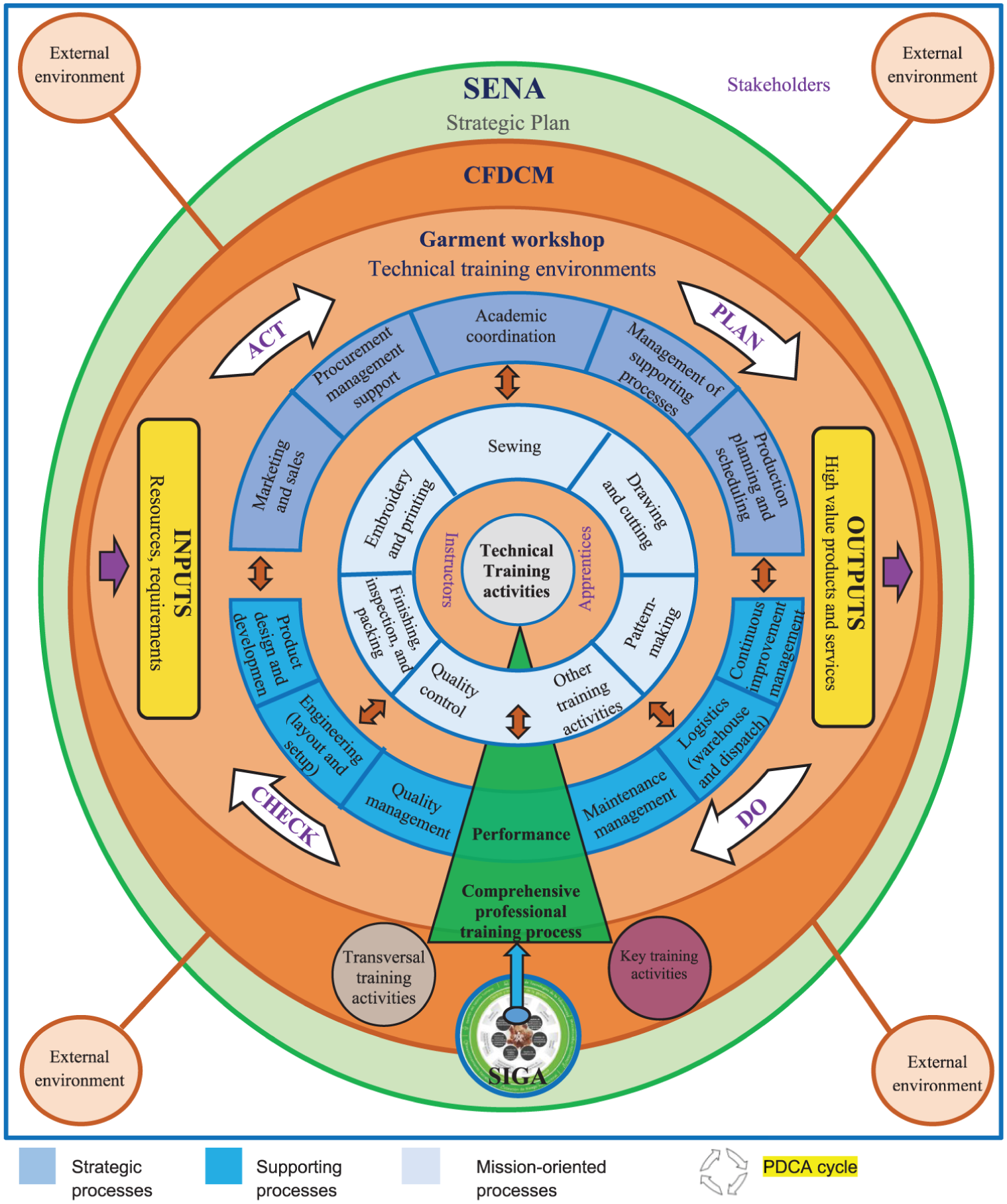
Conceptual OMM for the CFDCM garment workshop.
SENA Subsystem (Green Oval)
SENA’s strategic planning framework—applied across all TCs—prioritizes training quality, employment generation, business development, social inclusion, and differentiated approaches (SENA, 2023). The Integrated Management and Self-Control System (abbreviated SIGA in Spanish) serves as SENA’s institutional operations model, aimed at maximizing public value, addressing stakeholder needs, and strengthening performance. SIGA integrates business consulting, labor competence certification, vocational training, employment services, and research and innovation. All TCs follow SENA’s national policies to ensure apprentices acquire the targeted competencies through instructors and integrated learning environments, which combine technology, collaboration, and real-world context. The aforementioned context serves as the foundation for the OMM, and it is imperative to note that it will undergo modifications for any other institutions.
Garment Workshop Subsystem – Pluritechnological Technical Environment (Light Orange Oval)
The CFDCM features a pluritechnological training environment, configured as a garment manufacturing facility that simulates industrial production conditions. This space integrates specialized processes, resources, machinery, and technology. The external environments shown in Figure 2 are supported by the CFDCM’s main garment workshop.
The proposed OMM seeks to optimize OM in the CFDCM garment workshop by supporting the proper execution of training activities aligned with SENA’s comprehensive training model. This is achieved through a process-based management system structured around the Plan-Do-Check-Act cycle (represented by four white arrows), ensuring flexibility and goal achievement. The subsystem also aligns with institutional strategies, government priorities, and industry demands.
The Garment workshop subsystem includes three components:
■ Inputs (Yellow rectangle, left side): Technical training needs, machinery, materials, and supplies, technical data sheets, learning guides, training projects, curriculum designs, industry requirements, institutional information, national policies, academic initiatives, government plans, SENA strategy, and customers’ requests. These inputs are managed by the academic coordinator.
■ Outputs (Yellow rectangle, right side): Outcomes of process execution reflecting operational performance and support for TTA. Performance is measured through service and process indicators.
■ Processes (Blue circle and semicircles at the center). Activities carried out by apprentices, instructors, and staff, mainly training and operation tasks, complemented by management and administrative support. Some processes directly influence decision-making in OM. The academic coordinator initiates the flow of tasks and requests toward the personnel in charge of strategic processes and support processes. These staff members deliver services to apprentices and instructors. Such services are categorized as operational or training processes (light blue inner circle).
The OMM identifies processes into three types:
■ Strategic processes (Upper blue semicircle). Define management actions and decision-making guidelines. The communication of the expected strategic processes results in the support processes, ensures the articulation between the other processes, and defines the objectives. Key strategic processes include:
- Marketing and sales: Promotes and sells products and services, contributes to production planning, and supports product development. - Procurement management support: Manages the acquisition of goods and services critical to workshop operations (e.g., materials, supplies, spare parts, machinery, and outsourced services). - Academic coordination: Oversees resource allocation, strategic articulation, delegation of responsibilities, and monitoring and control of operations. - Management of other supporting processes: Ensures the integration of broader institutional support services affecting the workshop, such as corporate relations, apprentice well-being programs, occupational health and safety, competency certification, and library services.
■ Support processes (Lower blue semicircle). Facilitate strategic and mission-oriented activities by ensuring operational readiness, coordination, and alignment with institutional objectives. Main support processes include:
- Product design and development. - Engineering (layout and setup). - Quality management. - Maintenance management. - Logistics (warehouse and dispatch). - Continuous improvement management.
■ Mission-oriented processes (Light blue circle at the center). Practical training activities related to garment production, fostering skills aligned with program goals and industry needs. These processes will not have an accepted performance if the supporting and strategic ones are not integrated.
- Design and pattern-making. - Marking, spreading, and cutting. - Sewing. - Special processes (printing, embroidery, laundering). - Finishing, inspection, and packing. - Production control. - Other training activities.
■ Continuous improvement cycle (White circular arrows). All model processes follow the Plan-Do-Check-Act cycle to ensure ongoing improvement and flexibility.
Integration of the OMM Components
The model achieves integration through structured information flows and hierarchical decision-making protocols embedded in SENA’s SIGA system, which is standardized across all 117 TCs nationwide. These mechanisms enable visibility of resource allocation and process performance supporting proactive adjustments. The model focuses on comprehensive professional training (represented by the green triangle), which includes technical, key, and transversal training across CFDCM’s learning environments to support holistic apprentice development. Once enrolled, apprentices progress through training phases guided by instructors who design activities in classrooms, labs, and outdoor spaces. However, TTAs primarily occur in the garment workshop, which simulates real-world production conditions and provides operational support external sites in Aburra Valley.
The effectiveness of the OMM is driven by the interaction of strategic, support, and mission-oriented processes through continuous information flow and feedback loops. Strategic processes establish governance structures and resource allocation, enabling support processes to ensure operational readiness in areas such as quality, logistics, and maintenance. These conditions allow mission-oriented processes—practical TTA—to replicate industrial standards efficiently, thereby improving decision-making by reducing variability and enhancing responsiveness to operational contingencies. Training outcomes are strengthened by real-world production scenarios that foster apprentices’ technical and transversal competencies aligned with industry requirements.
The model operates under institutional environments characterized by standardized procedures (e.g., SENA’s SIGA system) and access to pluritechnological resources that emulate industrial conditions. Its success depends on is alignment between training objectives and sectoral demands, supported by clear communication channels and performance indicators that sustain decision-making cycles. Conversely, scalability may be constrained in contexts lacking integrated support services (e.g., automated cutting systems), or governance mechanism that harmonize institutional priorities with industry benchmarks. These structural conditions are essential for maintaining the feedback loops and resource allocation strategies that underpin the model’s effectiveness. This alignment between operational protocols and pedagogical objectives demonstrates how OM principles can be adapted to hybrid educational-production systems, extending their applicability beyond traditional industrial settings.
Validation of the OMM for the CFDCM
The model was validated through two complementary activities: statistical and empirical validation. The statistical validation assessed how users categorized workshop processes by surveying internal users. A Likert scale (1–5) measured the perceived relevance of each item to the workshop’s training activities. A score of 1 indicated a lack of relationship between the item and the workshop’s training activities, while a score of 5 indicated a very strong relationship.
The empirical validation used pre-established criteria and custom instruments to evaluate the model’s impact. These were reviewed by the focus group of experts, resulting in an impact matrix that assessed the influence and interdependence of model components on the garment workshop’s overall performance.
Statistical Validation of the OMM
The statistical validation of the model was based on descriptive statistical analysis of the Likert survey responses provided by internal users of the garment workshop. Table 3 shows the percentage of answers for the same value of the Likert scale as results for the validation of the OMM for the CFDCM. In addition, a correlation analysis was performed to assess the relationship between the model’s components and their perceived importance (Table 4).
Survey Results for the Validation of the OMM for the CFDCM.
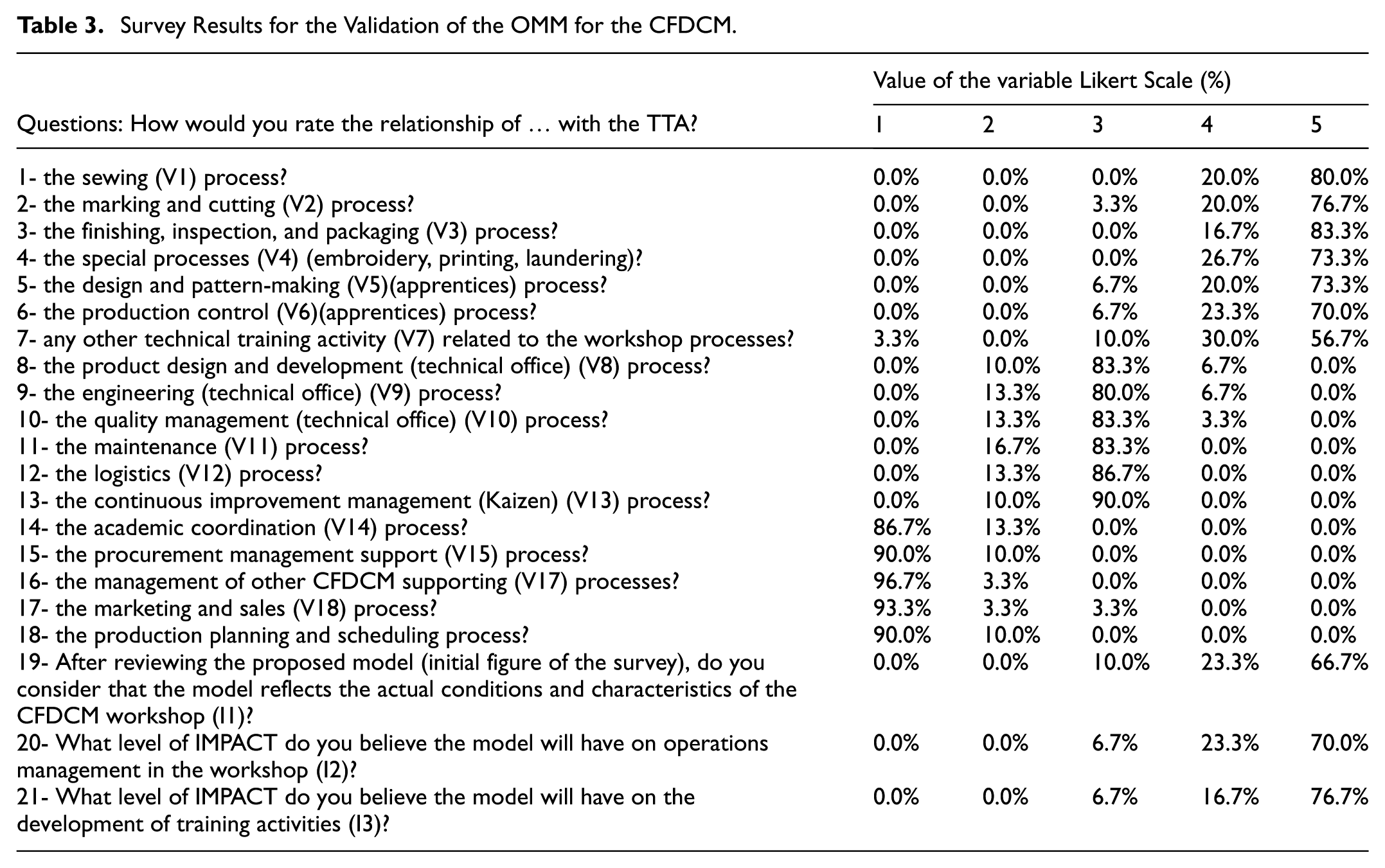
Correlation Matrix of Survey Variables.
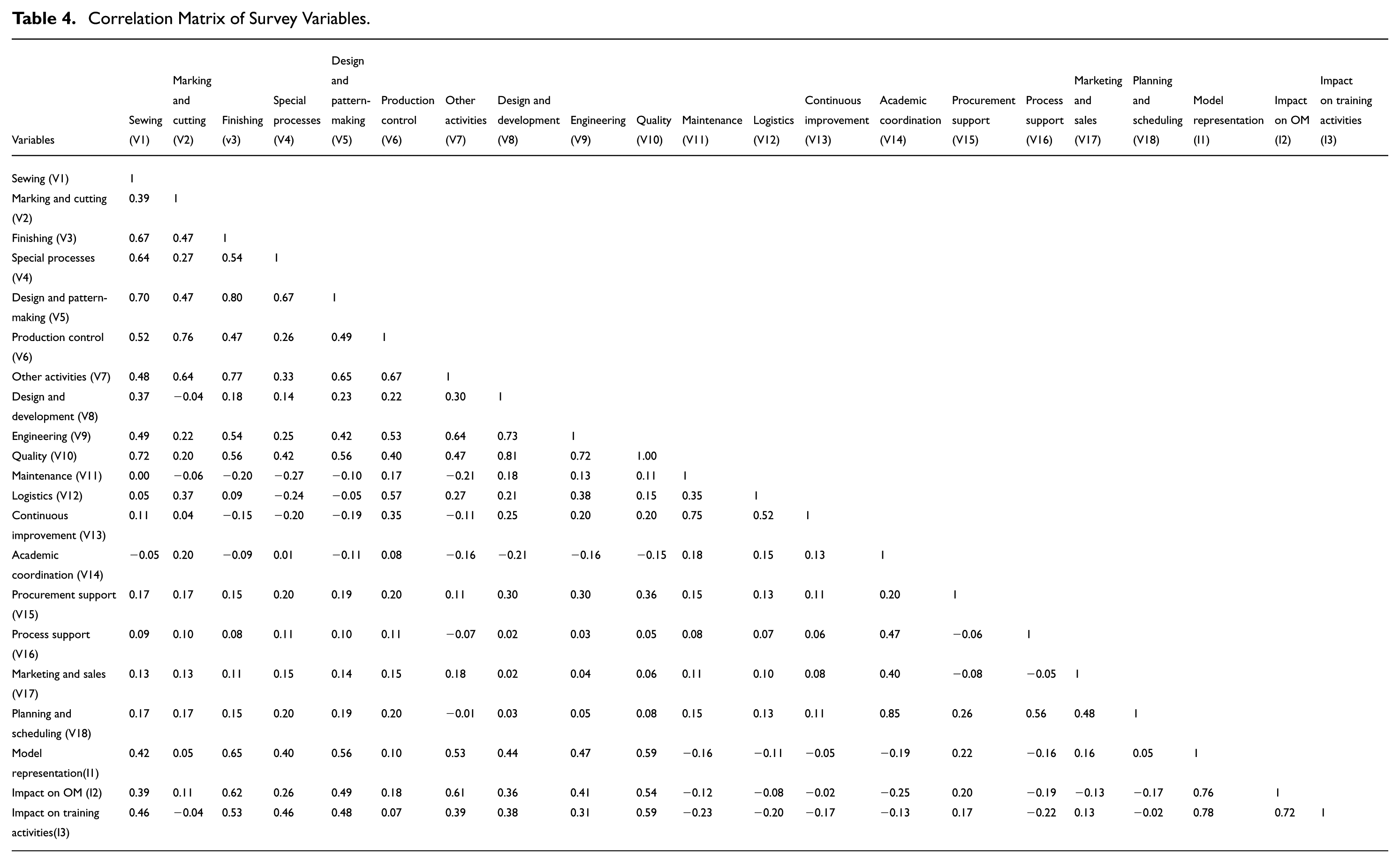
An analysis of Table 3 reveals key insights into the CFDCM model’s applicability and impact, highlighting alignment between theory and practice. However, the observed ceiling effects for some questions suggest that while responders strongly agree with the model relevance, future research should consider alternative scale anchoring to capture more nuanced perceptions.
The results underscore the relevance of certain processes identified by respondents as crucial for the efficient operation of the workshop. These perceptions provide a solid empirical foundation for assessing the effectiveness of the model and its potential to enhance management and productivity in garment production environments.
Specifically, processes such as sewing, marking and cutting, finishing, inspection, and packaging, embroidery, printing, and laundering, design and pattern-making, and production control received ratings of 5 from over 70% of respondents. This indicates a strong perceived relationship with TTA and supports their categorization as mission-oriented processes within the model.
In contrast, processes such as product design and development, engineering, quality management, maintenance, logistics, and continuous improvement management were rated 3 (moderate relationship) by over 80% of respondents, identifying them as support processes that reinforce core activities.
Furthermore, processes including academic coordination, procurement management support, management of other CFDCM supporting processes, marketing and sales, and production planning and scheduling received ratings of 1 (indirect relationship) from over 86.7% of respondents. These findings confirm their classification as strategic processes, which, while not directly linked to technical training, play a pivotal role in guiding and supporting overall workshop operations.
Lastly, survey items 19, 20, and 21—which evaluated whether the model accurately represents the workshop, and its anticipated impact on operations management and training—received ratings of 5 from 66.7%, 70%, and 76.7% of participants, respectively. These responses reflect a broad consensus on the model’s relevance and applicability.
The Pearson correlation presented in Table 4 reveals the interrelationships among the components of the proposed model. The Pearson correlation matrix shows notable patterns in the perceptions of focus group participants, particularly regarding the interdependence of key workshop processes.
Strong positive correlations (r values approaching +1) were observed between the sewing, marking and cutting, and finishing processes. This indicates that respondents perceive these processes as highly interconnected, which supports their classification as mission-oriented components within the model. These correlations also highlight their collective influence on the outcomes of the training and production processes.
Conversely, weak correlations (r values near 0) were found between the marketing and sales, and maintenance processes. This suggests that these processes are perceived as relatively independent from the others, potentially indicating limited integration within the workshop’s operational framework. Such findings may warrant a reassessment of their role and relevance in the model.
Overall, the matrix demonstrates a consistent pattern of positive correlations among the three process categories—mission-oriented (green), support (pink), and strategic (blue). Additionally, the final three survey items—concerning the model’s representativeness and its impact on workshop operations and training activities—also show strong positive correlations, with coefficients exceeding 0.72.
For the Polychoric correlation matrix—presented in Figure 3—we used the process variables (from V1 to V18) and excluded the impact variables (I1 to I3). It shows in dark blue a strong positive correlation, in dark red a strong negative correlation, and white or light indicates a weak or null correlation. It is possible to identify a positive upper left block, suggesting a strong correlation with notable dark blues for pairs with positive association above .6, such as finishing (V3)—special process(V4), finishing (V3)—design and development (V8), quality (V10)—planning and scheduling (V18). A mild dark blue correlation for pairs with values over .4 such as marking and cutting (V2)—logistics (V12), finishing (V3)—logistics (V12), finishing (V3)—other activities (V7), special processes (V4)—production control (V6), special processes (V4)—design and development (V8), design and pattern-making (V5)—marking and cutting (V2), design and pattern-making (V5)—other activities (V7). The negative correlations (red) are comparatively fewer but prominent. The darkest red in the map, with values lower than −0.6, is just between marking and cutting (V2)—continuous improvement (V13). A second group of negative associations with values lower than −0.4 are sewing (V1)—design and development (V8), production control (V6)—academic coordination (V14), logistics(V12)—continuous improvement (V13). Other cells are white/light with near-zero values, indicating weak correlations.
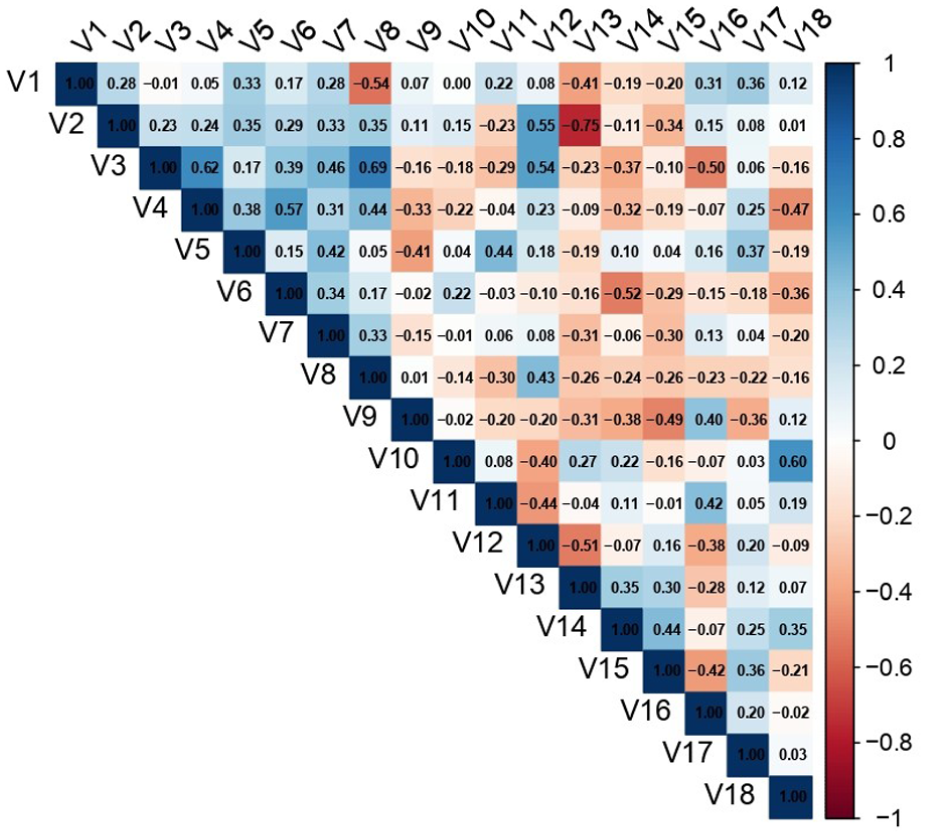
Polychoric matrix correlation.
From the polychoric matrix, we calculate the McDonald’s Omega (ω) to define the variables that attribute or contribute to different factors. Figure 4 represents a hierarchical factor structure derived from correlations and reliability estimation using McDonald’s Omega. At the left, the latent factor (g) connects to several observed variables (e.g., finishing (V3), special processes (V4), design and development (V8), quality (V10), logistics (V12), planning and scheduling (V18)) with mild level loadings (0.2–0.3), suggesting a common underlying dimension influencing all items. This general factor accounts for shared variance across clusters but does not dominate the structure.
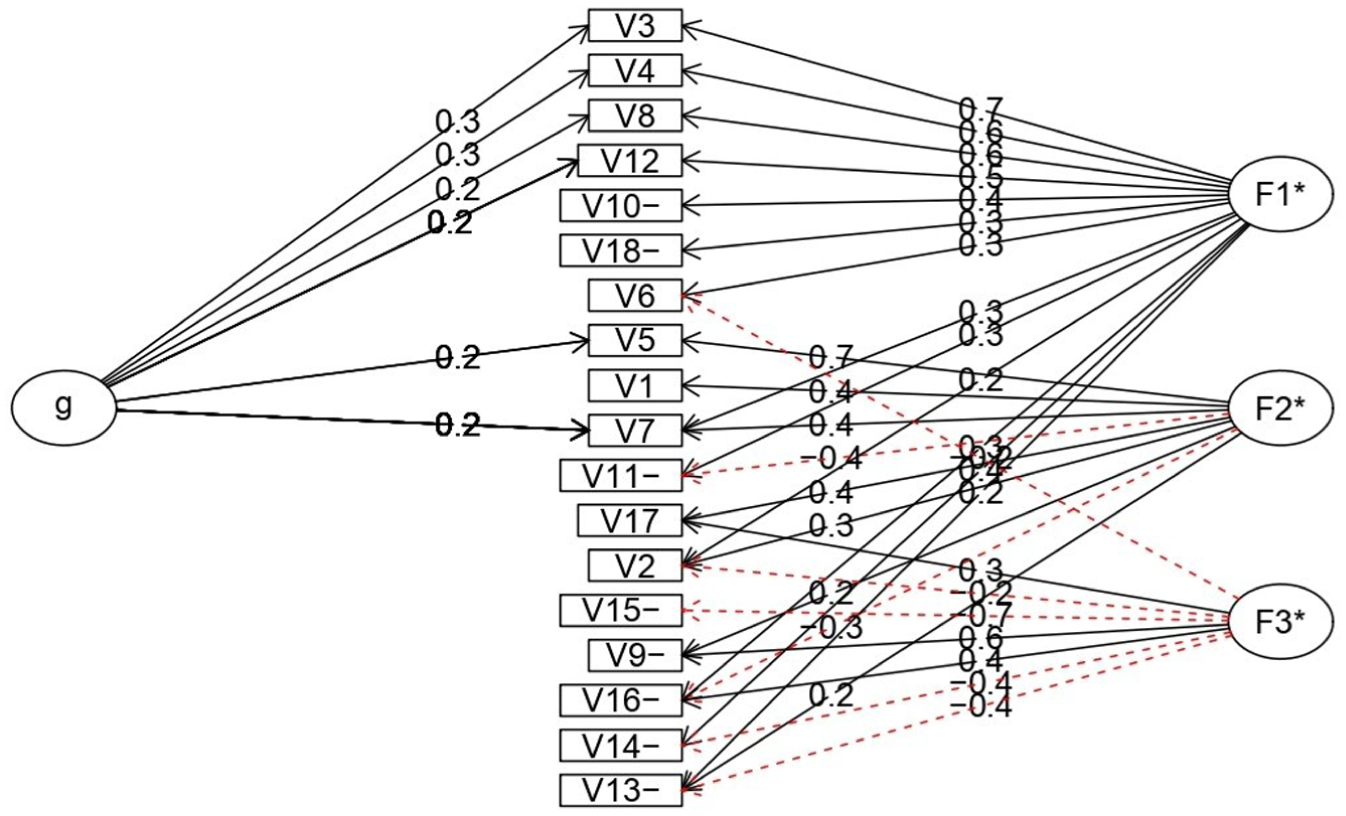
McDonald’s Omega and factor network.
On the right, there are three first-order factors (F1*, F2*, F3*), each one linked to subsets of items with stronger loadings (e.g., F1* shows loadings up to 0.7 on finishing(V3), special processes (V4), design and development (V8). F2* connects to design and pattern making (V5), sewing (V1), other activities (V7) with loadings around 0.4. F3* links to academic coordination (V14), continuous improvement (V13), process support (V16) with moderate loadings). These clusters indicate multidimensionality, where items group into coherence subdomains rather than forming a single homogeneous construct.
The red dashed lines represent cross-loadings or residual correlations, highlighting items that share variance beyond their primary factors (e.g., production control (V6) and design and pattern-making (V5) across F1* and F2*). Such patterns suggest partial overlap between dimensions, which is common on complex structures.
McDonald′s ω estimates reliability for each factor, as it accommodates heterogeneous loadings and provides a more accurate measure than Cronbach’s α. High ω values for F1* and F2* would confirm internal consistency, while lower ω values for F3* might indicate the need for review.
Empirical Validation of the OMM
An empirical validation of the proposed OMM was conducted with the focus group, considering the specific garment workshop processes that constitute the model. This validation was implemented in two distinct phases.
In the first phase, each focus group participant individually assessed an impact matrix, followed by the graphical consolidation of influence and dependence values. The impact matrix—presented in Table 5—includes 18 garment workshop processes from the CFDCM model, with influence values organized in the columns and dependence values in the rows. Based on participants’ responses, a graphical representation was then generated, and each process was categorized according to its influence and dependence levels.
Impact Matrix—Focus Group Results.
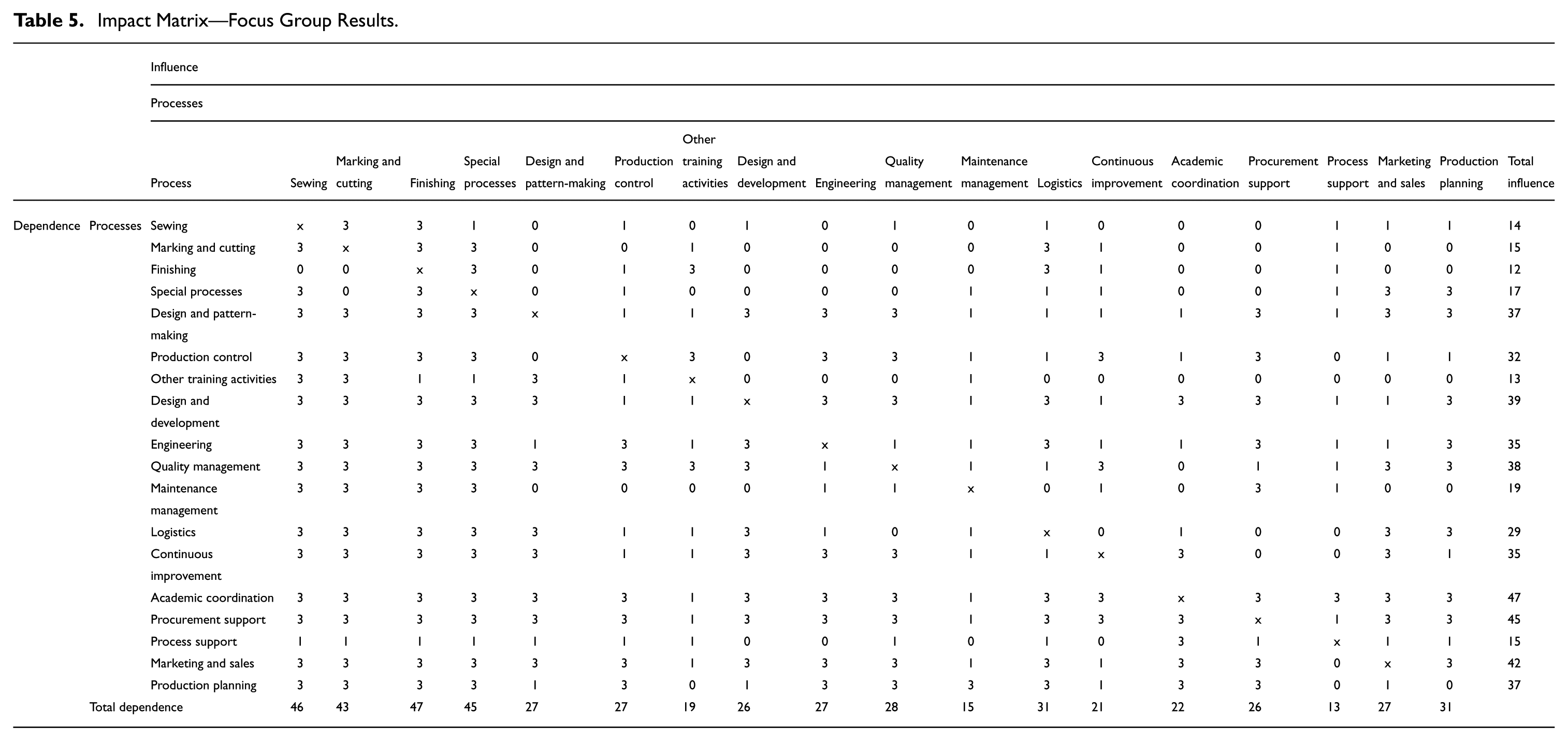
Figure 5 is a graphic representation of the impact matrix. The x-axis represents influence, and the y-axis the dependence. The averages for each axis were calculated—33.83 for influence and 32.35 for dependence—and used as thresholds to divide the graph into four quadrants. Each process (i.e., each variable from the OMM) was then plotted on the graph according to its corresponding scores.
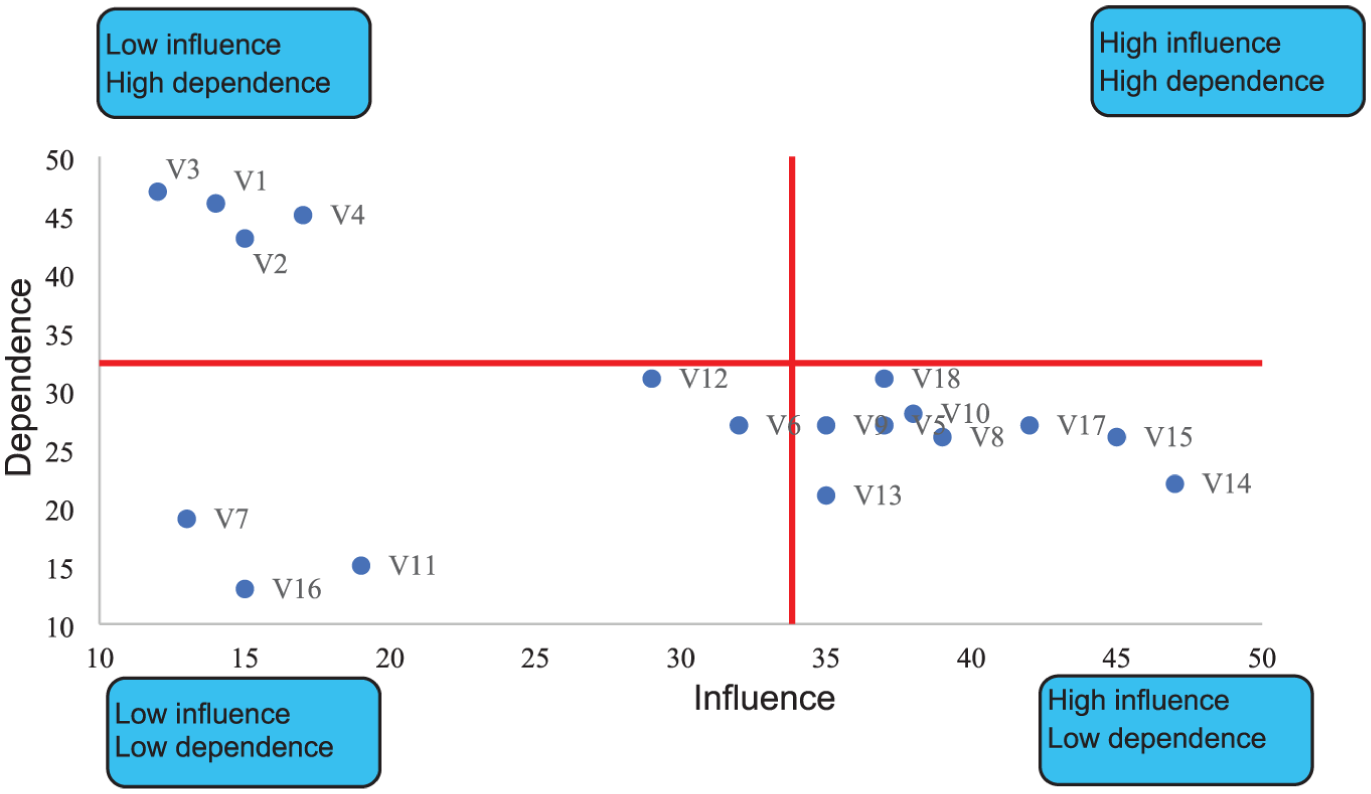
Impact matrix graph—Influence versus Dependence.
In the low influence–high dependence quadrant are the mission-oriented processes, which are primarily executed by apprentices as part of their technical training and constitute the operational core of the workshop.
The high influence–low dependence quadrant contains two distinct clusters. The upper-left section features the supporting processes, which tend to exhibit lower influence scores. These are generally managed by support staff under academic coordination and play a key role in linking the mission-oriented processes with the strategic components of the model. In the upper-right section, the strategic processes are positioned, reflecting higher influence scores.
In the low influence–low dependence quadrant are processes that, although present in the workshop for specific functions, neither exert substantial influence on other processes nor rely heavily on them. Despite their limited interaction within the system, these processes contribute to the broader service offering of the garment workshop and remain relevant to its overall operation.
Notably, no processes were classified within the high influence–high dependence quadrant.
The second phase of the empirical validation was conducted through a focus group interview. During this session, the proposed OMM was presented and discussed, and participants were invited to reflect and respond to a series of guiding questions. The interview was designed to foster in-depth discussion and group consensus on key aspects of the model. Moderated neutrally, the session encouraged equitable participation and the collaborative construction of responses.
The guiding questions centered on the model’s representativeness, its potential impact on operations management and training activities, and its ability to address previously identified weaknesses in the workshop. Below are the guiding questions, the focus group’s agreed responses, and an analysis of their significance in the qualitative validation of the OMM:
Question 1: Do you consider that this model reflects the conditions and characteristics of the CFDCM garment workshop with regard to OM?
Agreed response: The model reflects the workshop’s conditions and characteristics in terms of OM. It identifies three highly relevant process types that respond to the workshop’s needs and incorporates institutional elements and administrative frameworks such as systems theory, continuous improvement, strategy, and process management.
Analysis: This consensus response provides strong initial evidence for the model’s construct validity. The recognition that the model captures the operational reality of the workshop—by identifying key process types and integrating core management theories—confirms its conceptual soundness. The explicit reference to the three categories of processes (mission-oriented, supporting, and strategic) further aligns the qualitative assessment with findings from the quantitative phase, reinforcing the model’s internal coherence.
Question 2: In what aspects do you believe the model will have an impact on OM in the garment workshop?
Agreed response: The model will have a positive impact, as it will contribute to improving OM. It will clearly define the components of OM in the CFDCM garment workshop, making them easier to monitor and improve.
Analysis: This response highlights the perceived predictive validity of the OMM. The focus group anticipates that implementing the model will lead to more efficient and effective operations management. By clarifying key management components, the model is expected to enable control mechanisms and facilitate the implementation of continuous improvement strategies. This anticipated positive impact is an important indicator of the model’s potential practical usefulness.
Question 3: In what ways do you believe the model will impact the development of training activities?
Agreed response: The model will have a positive impact on the development of training activities by enhancing their value. Apprentices will experience less downtime caused by low service levels in workshop processes (e.g., lack of maintenance, poor scheduling, and logistical failures). As a result, they will be better prepared for the roles they will undertake in industry. They will also be able to complete their training activities in full and within the expected timeframe.
Analysis: This response emphasizes the OMM’s anticipated impact on the quality and efficiency of training activities. The identification of specific operational issues (e.g., maintenance shortcomings, scheduling gaps, logistical failures) as causes of “lost time” for apprentices underscores the model’s relevance to the workshop’s core mission. The expectation that the model will enhance skill development and enable more efficient execution of training activities reinforces its pedagogical value and its potential to improve the relevance of the training offered.
The focus group interview provided valuable qualitative validation of the proposed OMM. The group’s consensus on the model’s representativeness, its anticipated positive impact on OM and training activities, and its capacity to address identified weaknesses supports the model’s relevance and perceived utility.
The confirmation of the typology and classification of processes (mission-oriented, supporting, and strategic), which was evident in both the quantitative phase and implicitly during the qualitative discussion, indicates a shared understanding of the workshop’s operational structure. The perceptions that the OMM “does represent the workshop” and will have a “positive impact” are key findings that reinforce the overall validity of the model.
The observation that the addressed weaknesses are “within the scope of what could be covered during the model’s implementation phase” introduces an important consideration regarding the feasibility of the OMM. This suggests that the model is not only relevant and potentially impactful but also realistically implementable in the specific context of the CFDCM garment workshop.
Together, the results of this qualitative phase complement the quantitative findings, offering a broader and deeper understanding of the OMM’s validity and potential from the perspective of the workshop’s key stakeholders. This comprehensive validation strengthens the case for adopting the model as a tool for improving OM in the CFDCM garment workshop.
Conclusions
The implementation of the proposed model is expected to directly enhance OM at the CFDCM by enabling the identification and control of its core components. Additionally, it serves as a reference framework for OM practices applicable to companies within the garment sector. Grounded in the existing organizational structure and functioning of SENA, the OMM focuses specifically on the CFDCM garment workshop as the unit of analysis and accurately represents its operational dynamics. Moreover, its development was conducted in three stages: (1) description of the model’s components; (2) model design; and (3) model validation.
This OMM is characterized by a systemic approach that integrates multiple interrelated components within three primary subsystems: SENA, the CFDCM, and the garment workshop. The latter, as the main subsystem, is the central focus of the model. Within the workshop, OM is implemented through three types of processes—mission-oriented, supporting, and strategic—most of which align with OM decision-making. These processes are embedded within a continuous improvement cycle and are guided by institutional principles of organization and management. This integrated structure reinforces the model’s relevance and demonstrates its contribution to improving OM practices that support technical training in TVET institutions.
The design phase of the conceptual OMM involved two main phases. The first phase focused on defining the model components through multiple sessions with the focus group using various participatory strategies. This process resulted in a list of components and variables that served as input for the next phase. The second phase focused on component integration—namely, the model design itself. It included an explicit account of the origins of the components and a comprehensive explanation of the model’s physical structure, its components, and their interrelations. A narrative was also developed to explain the model’s functioning: where it begins, what its components are, how they are articulated, how information flows, and where the model concludes.
The statistical validation of the model yielded favorable results, confirming the classification of processes into mission-oriented, supporting, and strategic categories. More than 66.7% of respondents agreed that the model accurately represents the operational reality of the garment workshop and anticipated a positive impact on both CFDCM operations and the execution of training activities. Correlation analysis revealed significant interrelationships among the model’s components. The strongest positive correlations included academic coordination with production planning and control (r = .85), and product design and development with quality management (r = .81). The most negative correlations were between special processes and maintenance management (r = –0.27), and between academic coordination and the model’s perceived impact (r = –0.25). Notably, a strong correlation was observed between the model’s perceived representativeness and its expected impact on OM (r = .76).
The empirical validation, conducted with the focus group, confirmed the internal logic of the model. Mission-oriented processes were identified as having high dependence but low influence, whereas supporting and strategic processes were characterized by high influence and low dependence. Furthermore, certain workshop processes, while supportive of training activities, were found to have limited influence and interdependence, such as maintenance and management of other supporting processes. The focus group concluded that the OMM features an appropriate structure, generating balance and synergy among its components and fostering both integration and functionality. They also agreed that the model accurately represents the operational conditions of the CFDCM garment workshop, positively influences OM practices, and significantly supports the development and implementation of TTA.
This study contributes to theoretical expansion of Operations Management by adapting its principles to hybrid educational-production environments within TVET institutions. By integrating pedagogical, operational, and organizational dimensions under resource-constrained conditions, the proposed OMM challenges traditional OM frameworks that assume purely industrial o service contexts.
Despite the strengths of this study, it is important to acknowledge its limitations. Initially, the model was validated in a single garment workshop at the CFDCM. While this may be a potentially representative sample of the regional sector, it limits the generalizability of the findings to other institutional or geographic contexts. Secondly, the validation process relied on expert perceptions, which introduced the possibility of common method bias and subjectivity in the assessment. In order to address these limitations, future research should consider replicating the study across multiple TVET centers to enhance external validity. Furthermore, the use of quasi-experimental designs, incorporating pre- and post-intervention comparisons, and the integration of objective key performance indexes would serve to enhance the empirical robustness of the model. These steps would contribute to refining the model’s structure and expanding its applicability across diverse TVET environments.
Footnotes
Acknowledgements
The authors want to thank the reviewers for their valuable feedback and thoughtful recommendations, which have significantly contributed to strengthening this work. We would like to thank ITM Translation Agency (

Ethical Considerations
These considerations were not relevant for this study type. This study employed anonymous questionnaires. No personally identifiable information was collected, and participants’ confidentiality was fully safeguarded. The authors state that ethical approval was not necessary for this study since no experiments involving humans or animals were conducted.
Consent to Participate
The participant consent information was oral before the focus group began.
Consent for Publication
The focus group participant consent the publication of discussions results.
Author Contributions
The contributions of the authors to this work are as follows: Gómez-Marín C.G: conceptualized and designed the study; Ramírez-Gutíerrez, H.L performed data collection and conducted the analysis. Booth authors contribute to writing the manuscript and review and approved the final version.
Funding
The authors received no financial support for the research, authorship, and/or publication of this article.
Declaration of Conflicting Interests
The authors declared no potential conflicts of interest with respect to the research, authorship, and/or publication of this article.
Data Availability Statement
The dataset used in this study is available from the corresponding author upon reasonable request.*