






Abstract
Fragmentation and shallow participation hinder the sustainability of community public services, especially within complex multi-actor systems. To address this, this study develops a structured design methodology by integrating the WSR (Wuli-Shili-Renli) systems approach, Social Network Analysis (SNA), and Actor-Network Theory (ANT). This interdisciplinary framework is applied to an in-depth case study of a residential community in central China. Through SNA, we identified five distinct user types and three cohesive subgroups. This structural analysis was combined with a Kano model-based survey, which distilled 26 micro-level user needs and 12 core emotional motivations. The ANT framework was then employed to synthesize these findings, aligning user roles and motivations to identify critical Obligatory Passage Points for intervention. This process enabled the coupling of micro-level needs with macro-systemic goals, forming a coherent actor-network. Based on this integrated analysis, we propose three targeted design strategies: fostering mental and physical engagement, integrating commercial interests, and building social reciprocity. This study offers a validated, systematic approach for acquiring user demands and constructing platforms in complex public service contexts. It provides both theoretical and practical contributions for designing community-based services that promote long-term engagement and social sustainability.
Keywords
Introduction
Digitization and Diversification of Community Public Service Initiatives
The internet and digital technologies have driven community public service toward digitalization, boosting public engagement through diversified issues and communication channels. Beyond traditional areas like medical aid, emerging topics such as intangible cultural heritage (ICH) preservation have expanded participation—for example, Shuidichou (medical crowdfunding) and Taoyuan Deep in the Mountains (ICH promotion). Short videos on platforms like Douyin amplify charitable campaigns via interactivity. Data shows mainland China’s charitable donations rose from 81.7 billion RMB (2012) to 208.6 billion RMB (2020) (Zhao, 2023), with over 51 billion online participations generating 35 billion RMB. Registered social organizations grew from 700,000 (2016) to 900,000 (2021) (Shu, 2023), reflecting how digital innovation lowers barriers and reshapes public service into a participatory ecosystem.
The Fragmentation of Emerging Community Public Service Products
Internet platforms enable resource integration among community public service actors, forming a multilateral ecosystem (Eriksson & Hellström, 2021). However, growing operational complexity and participant diversity have led to fragmentation (Gupta et al., 2016): the China Third Sector Observation Report notes weakened coherence in the nonprofit sector, restricting deep engagement. A 2022 Liaowang Institute report indicates 70% of participants are low-frequency or potential, making shallow participation a bottleneck. Building stable, sustainable community public service networks—encompassing multi-directional resource flows—has become increasingly challenging (Fan et al., 2022).
Insufficient Structuring in the Design Research of Community Public Service Products
Sustainable community public service requires system-level innovation, but structured design practices lag academic discourse (Nie et al., 2019), due to: (1) limited quantification of user interaction networks; (2) lack of tools for mapping structural features; (3) shortage of scenario-transcendent frameworks. Addressing these demands a structured approach: in-depth user research, systematic methodologies, and adaptable frameworks to overcome fragmentation.
Literature Review
This study integrates design knowledge with management and sociology, combining “Wuli–Shili–Renli” (WSR), Social Network Analysis (SNA), and Actor-Network Theory (ANT) to construct a WSR-SNA-driven model for community public services. It analyzes participant relationships via SNA (focusing on relational structures and resource flows) and applies behavioral motivation theories to derive design strategies.
Current Status of Community Public Service Products
Community Public Service Product Practice
Community public service plays a vital role in maintaining social stability, especially during crises such as the COVID-19 pandemic. In China, community volunteerism and coproduction became essential strategies to address pandemic-related challenges, with residents actively assisting vulnerable populations (Miao et al., 2021). Technological tools also improved service efficiency; for instance, the e-court system in Malang District Court simplified judicial access and enhanced the accessibility of legal services (Nuh et al., 2022). Similarly, in the United States, community pharmacists expanded their roles as vaccinators, screeners, and testers, reinforcing public health capacity during the pandemic (Hess et al., 2022). These examples illustrate how mobilizing community resources can significantly strengthen service delivery in emergencies.
Beyond crisis response, community public service aims to enhance citizen participation and optimize regional governance. Technological innovation continues to drive this progress. E-commerce platforms now support services such as motor vehicle tax payments, promoting administrative efficiency (Zou, 2012). Smart psychological service systems in universities integrate counseling resources for both students and local residents (Yanan, 2021), while deep learning models enable collaborative governance of community service information. In smart cities, big data and intelligent algorithms optimize public service allocation, and targeted evaluation methods improve the spatial planning of elderly care facilities (Li et al., 2023).
Overall, effective community public service depends on the integration of local resources, technology, and data-driven management. By emphasizing resident engagement and adaptive innovation, such systems can better meet diverse social needs, improve well-being, and support sustainable community development.
Theoretical Research on Community Public Service Products
Research on “community public service” in CNKI has steadily increased since 2006. Most studies focus on social public services, institutions, and platforms, while fewer explore the structural characteristics of the services themselves.
Within design research, certain works have explored public service design from collaborative, empowering, and business-environment perspectives (Alita & Oosterveer, 2025; Farr, 2018; Trischler et al., 2019), shedding light on participant roles and actions. Complementary studies have taken a product-focused approach: one employs the Fogg Behavior Model to devise nudging tactics (Meekers et al., 2020); another analyses value chains in mobile public services (Peppard & Rylander, 2006); and a further investigation integrates emotional design into prosocial consumption (Van Kleef & Lelieveld, 2022).
Network structures are a key theme in management research, as shown by a social-network-analysis study of online community public service information (Rethemeyer & Hatmaker, 2007). Design research has likewise addressed relational dynamics, notably in the context of weak ties within public-interest social networks (H. Chen et al., 2022).
International studies focus on social innovation and relational thinking: Blaasvlaer and Gulden (2023) highlighted relational differences in user groups; Amorim Lopes and Alves (2020) stressed stakeholder interactions as co-creation foundations; Kvelland and Høiseth (2016) advocated user participation in service processes.
Recent scholarship reflects a growing interest in digital governance and service integration. L. Chen (2023) emphasizes the role of e-governance in reshaping community service supply, promoting efficiency and user-centered accessibility. Y. Luo et al. (2025) highlight how the coordination of community facilities and social capital enhances cohesion and trust, yet their framework often overlooks the heterogeneity of digital participation. Meanwhile, R. Scott and Hughes (2023) and Yu and Zhang (2023) underscore motivational and cultural factors—linking public service spirit and social support to subjective well-being. Collectively, these studies advance understanding of digital and social dimensions of community governance but remain limited by fragmented perspectives, lacking a unified approach that bridges technological, structural, and psychological factors in community public service systems.
Although current design methods—such as service, emotional, and system design—improve user experience, they remain limited in addressing complex social networks and multi-stakeholder structures. Future research should integrate system structure theory to clarify inter-component relationships and social relationship theory to illuminate user–stakeholder interactions, thereby strengthening the theoretical foundation for design practice.
Community-Based Community Public Service Development
Communities, as fundamental spaces for living and working, play a vital role in addressing pressing public welfare issues such as low-carbon development and climate action. Today, community-based public welfare initiatives are evolving toward greater diversification, innovation, and personalization.
Government support has steadily increased, with recent policies emphasizing the roles of social organizations, volunteer services, and philanthropy in community governance. The revised Charity Laws further provide a standardized legal foundation for such initiatives. Participation models are also transforming—from government- and enterprise-led structures to multi-stakeholder collaboration—where social organizations and volunteers jointly deliver diverse community services. Technological innovation, including the adoption of smart devices, artificial intelligence, and big data, has improved management efficiency and expanded service delivery modes, promoting smarter and more responsive practices. Meanwhile, the growing demand for personalized services—particularly for the elderly and people with disabilities—has encouraged the development of more refined and targeted programs.
Nevertheless, challenges persist. Top-down governance mechanisms continue to constrain resident participation and threaten long-term sustainability. Addressing these challenges requires stronger cross-sector collaboration, institutional refinement, and improved governance frameworks to foster a vibrant and sustainable model of community-based public welfare.
Research Status of the WSR System Methodology
The WSR methodology provides a systemic approach to addressing complex and unstructured problems by integrating material, logical, and human dimensions (Zhu, 2000). Originally developed for social governance, risk management, and military strategy, it has recently been applied in fields such as architecture, product design, and education. Illustrative cases include: the development of a community rehabilitation platform that harmonizes physical facilities, service workflows, and user needs (Kamenov et al., 2019); the optimization of tower crane cab layouts based on spatial organization and ergonomics (S. Lin & Li, 2023); and the design of reading products for visually impaired children.
Recent research highlights the adaptability of the Wuli-Shili-Renli (WSR) framework in addressing systemic complexity. W. Luo et al. (2023) apply it to urban resilience in Henan Province, revealing how physical infrastructure, institutional coordination, and human agency jointly drive stability and adaptive capacity. Similarly, Baek et al. (2024) extend WSR to federated digital twin systems, emphasizing the integration of data, organization, and human factors. While these studies demonstrate WSR’s versatility across domains, they often focus on technical coherence rather than cross-domain transferability. Thus, WSR’s true potential lies in bridging engineering rationality and social dynamics, offering a unified lens for sustainable and resilient system design.
These studies highlight WSR’s strength in decomposing complex design processes. However, its “Renli” (human logic) dimension remains underexplored, often limited to individual behavior analysis rather than broader social dynamics. Integrating WSR with complementary frameworks for multi-user and social product design could enhance its capacity to model interpersonal relationships and diverse user needs, providing a more holistic foundation for contemporary design innovation.
Research on Social Network Analysis (SNA)
Social Network Analysis (SNA), rooted in classical sociology, examines relationships among social actors (nodes) and their connections (edges) to describe network forms, structures, and characteristics. Over time, it has expanded beyond sociology to disciplines such as geography and environmental studies. For example, J. Lin et al. (2023) integrated SNA with GIS to map intergovernmental collaboration in water pollution governance in the Yangtze River Delta.
In community public welfare research, SNA helps reveal mechanisms of information dissemination and participation. Xiao et al. (2023) categorized social support on Sina/Weibo into supply and demand, highlighting the dissemination challenges faced by marginalized groups. Wang and Li (2022) analyzed MOOC interaction networks, identified non-linear communication patterns, and proposed optimization strategies.
Recent advancements in Social Network Analysis (SNA) highlight its growing analytical sophistication. Logan et al. (2023) model Twitter interactions as weighted multilayer networks, integrating topic modeling to reveal patterns of engagement and information diffusion. Complementarily, Singh et al. (2024) provide a comprehensive review of SNA tools and methods, encompassing viral marketing, link prediction, and clustering. While these works expand SNA’s methodological scope, they remain primarily descriptive; future research should further connect computational insights with deeper social and behavioral interpretations.
SNA’s strength lies in uncovering relational structures within complex systems, making it well-suited for analyzing interactions and dependencies. When applied to large-scale product or service design, it supports data-driven insights into user behavior and system architecture, thereby improving the precision and effectiveness of design strategies.
Methodology
WSR System Methodology
Key Concepts of the WSR System Methodology
By the 1980s, the limitations of traditional system methodologies based solely on mathematical modeling became evident in addressing complex social problems. Checkland (1989) introduced the “soft systems methodology,” yet it failed to gain broad adoption due to weak integration of social science perspectives.
Through reflection on traditional theories and practical research in regional development and water resource management, Gu recognized the importance of the “Renli” (human logic) dimension. In 1994, Gu and Zhu co-proposed the WSR (Wuli-Shili-Renli) system methodology, rooted in Eastern philosophy, which emphasizes the unity of material, organizational, and human factors. It examines issues through three dimensions—Wuli (physical), Shili (logical), and Renli (human)—forming a comprehensive cognitive system for complex problems (Chao, 2008; Gu & Zhu, 2000; Zhu, 2023).
Renli, the most challenging dimension to apply, initially lacked practical tools. Since 2000, Professor Gu Jifa refined its framework, identifying six core elements: relationships, emotions, habits, knowledge, interests, and coordination. For design practice, “habits” are redefined as “behavior,” resulting in six design-oriented factors: relationships, emotions, behavior, knowledge, interests, and coordination.
The WSR methodology follows seven iterative stages: understanding intentions, investigation, goal setting, strategy construction, relationship coordination, scheme selection, and implementation. Guided by four principles—comprehensiveness (multidimensional analysis), participation (stakeholder collaboration), operability (clear pathways), and iterativity (continuous improvement)—the model ensures theory can effectively translate into practical and feasible design outcomes (Gu & Zhu, 2007).
The Proposal of the WSR System Design Method
The WSR system methodology and product design processes differ: product design involves defined research scopes and specific functional requirements. Thus, this study proposes a WSR-based system design method tailored to product design, integrating Wuli, Shili, Renli dimensions, and WSR principles, while deconstructing key design nodes and summarizing stages into two phases and six modules.
Phase 1: W-S-R Integration through Research (Wuli → Shili → Renli sequence):
✓ Wuli layer: Analyze background to identify design trends. ✓ Shili layer: Conduct market research to pinpoint industry bottlenecks and clarify design directions. ✓ Renli layer: Perform in-depth user analysis to uncover pain points, define needs, and set design objectives.
Phase 2: R′-S′-W′ Development and Implementation (Renli → Shili → Wuli sequence):
✓ Renli dimension: Coordinate stakeholder interests and address industry constraints to develop design strategies. ✓ Shili dimension: Translate strategies into diverse design methods and paths, defining system solutions. ✓ Wuli dimension: Operationalize user behavior, finalize designs, and evaluate feasibility.
This phase loops back to the first, forming an iterative cycle that refines both concept and execution.
SNA Methodology
Overview of Social Network Analysis
Broadly, a “network” refers to a set of discrete elements and the relationships among them. Across disciplines, researchers adopt a network perspective to examine structural interconnections (Radcliffe-Brown, 1940). A “social network” specifically denotes a system of social actors—individuals, organizations, or communities—and the ties linking them (Durland & Fredericks, 2005). As an interdisciplinary approach integrating anthropology, psychology, sociology, and statistics, Social Network Analysis (SNA) investigates how social relationships influence group behavior and structural patterns, emphasizing network attributes and quantitative methods. It has been widely applied to studies of occupational mobility, urban well-being, and international trade.
In social networks, nodes represent actors and edges represent relationships such as evaluation, resource exchange, or interaction. These relationships may form uniplex or multiplex networks, visualized through sociograms or matrices (e.g., adjacency, incidence, or affiliation). Graphs may be directed or undirected, binary, signed, weighted, or complete, depending on relational characteristics. While graphs provide intuitive relational insights, matrices are more effective for analyzing large-scale networks and identifying core relationships computationally.
The Unique Perspective of Social Network Analysis
SNA differs from traditional individual- or group-centric approaches by emphasizing relationships and network structures, deepening understanding of social phenomena and their evolution. It is grounded in three principles: the world is network-based, social structure shapes interpersonal functions, and actor behavior stems from network position. For example, in complex product-service systems, SNA reveals resource flow dynamics through user interactions, whereas traditional design research often overlooks such structural relationships.
In data processing, SNA focuses on relational data (connections between actors) rather than attribute data (actor characteristics) or ideational data (subjective meanings) (J. Scott, 2017). These data types are often combined to comprehensively depict social relationships.
Measurement Indicators in Social Network Analysis
Node measurement relies on degree (number of connections, including in-degree/out-degree in directed networks) and centrality (degree centrality for information exchange, betweenness centrality as a network bridge, closeness centrality for independence from others).
Relationships are measured via geodesic distance (shortest path), tie strength (interaction frequency), stability (duration), diversity (multiplex connections), and reciprocity (symmetry).
Network-level metrics include size (total nodes), density (connection intensity), centralization (concentration of centrality), and connectivity (reachability). Cohesive subgroup analysis identifies dense subnetworks (e.g., cliques, k-cores) by examining reciprocity, reachability, and internal/external ties, revealing network cohesion and hierarchy.
ANT Methodology
Actor-Network Theory and Its Related Applications
Actor-Network Theory (ANT), developed in the 1980s (Callon, 1980; Latour et al., 2013), challenges the nature-society dichotomy by emphasizing equal status for human and non-human actors. Social phenomena arise from dynamic interactions within heterogeneous networks, with three core concepts: Actor (any entity influencing network structure), Heterogeneous Network (co-evolution of social and technical elements), and Translation (aligning others’ goals with one’s own to coordinate participation; Collin, 2011; Kirk & Prisacari, 2011).
Comber et al. (2003) introduced Obligatory Points of Passage (OPP)—critical nodes where actors converge around shared goals, essential for successful translation—and a four-stage translation model: Problematization, Interestment, Enrollment, and Mobilization. Latour noted translation can be active or passive, driving network expansion.
ANT has been applied across fields: Muriel and Crawford (2020) analyzed video game networks to show how digital media reshapes social issue cognition; Marcon Nora et al. (2023) integrated ANT with stakeholder theory for energy transition models. In design, Yuan (2023) restructured smart elderly care systems via ANT; Satriyani Komariyah et al. (2025) analyzed actor engagement in digital communication media through the ANT. At the community level, research has connected family networks to collective responsibility, and additional work has focused on resource mobilization at OPP nodes in philanthropic organizations.
These applications demonstrate ANT’s value for public service design: deconstructing socio-technical entanglements, coordinating stakeholder interests via OPPs, and building dynamic architectures balancing design elements and user motivations—ideal for integrating IoT, community participation, and regulation into sustainable ecosystems.
Censydiam Theory and Its Applicability
The Censydiam motivational model integrates Freud’s instinct theory, Jung’s collective unconscious, and Adler’s “inferiority-superiority” doctrine, refined by Synovate into a framework analyzing deep drivers of user behavior (Ipsos Comcon et al., 2021).
Its core structure—“two dimensions, four strategies, eight motivations”—includes:
Social dimension (individual to collective) and personal dimension (introverted to extroverted), defining four strategic endpoints: the pursuit of power and status, the search for belonging and connection, the desire for pleasure and liberation, and the aspiration for rationality and self-control.
Eight core motivations: pleasure/liberation, belonging/connection, comfort/safety, rationality/control, individuality/uniqueness, power/status, bravery/exploration.
This model bridges individual-societal and virtue-desire dimensions, making it suitable for identifying user interests, pinpointing shared OPPs, and supporting design translation.
Theoretical Framework
Building on the background analysis of community public service products, it is evident that these systems, embedded within complex social contexts, involve multiple stakeholder relationships. However, current design practices often overlook quantitative analysis of such relationships, leading to one-directional value delivery and weak structural integrity—issues that hinder innovation and sustainability. In China, while community public service products increasingly emphasize community dissemination and online-offline integration, design processes still neglect in-depth exploration of resident relationships. Effective innovation thus requires a holistic approach that considers both software and hardware systems, supported by systematic and structured design methodologies.
To address these limitations, this study introduces and adapts the WSR (Wuli-Shili-Renli) system methodology for community public service product design. The optimized model aligns WSR with design phases—research–integration and ideation–implementation—preserving its strengths in multi-party coordination while enhancing applicability to practical design scenarios.
The method further integrates Social Network Analysis (SNA), Actor-Network Theory (ANT), and the Censydiam motivational model to operationalize the WSR framework. In the research and integration phase, SNA and the Kano model quantitatively assess community user relationships, refining user profiling and need identification. During ideation, the Censydiam model explores emotional motivations driving participation. Finally, applying ANT’s concept of Obligatory Points of Passage (OPP), diverse motivations are synthesized into coherent design goals through translation mechanisms, forming systematic design strategies. Consequently, this study constructs a “WSR–SNA–Driven Design Model for Community-Based Public Service Products,” integrating structural, relational, and motivational dimensions within a unified framework.
The specific application process of the method is as follows:
W, Current State of Community Public Services: Through desktop research and literature review, the development status of community public service products is examined. This includes categorizing existing products, summarizing domestic and international research focuses, identifying development trends, and selecting the target project;
S, Analysis of Community-Based Community Public Service Products: Representative products are analyzed on two levels: (a) User experience—via competitive analysis at the strategic, structural, and interface levels; and (b) Operational model—via business layout evaluation. These analyses identify market strengths, weaknesses, and design opportunities to guide design direction;
R, Analysis of Community Public Service User Needs: Based on contextual user research, data on user attributes and relationships are processed using Social Network Analysis (SNA). Network-, individual-, and subgroup-level metrics help identify key user clusters and define design objectives;
R′, Analysis of User Motivations and Interests in Community Public Service: The Censydiam model explores the emotional drivers of core users, integrating them into Obligatory Points of Passage (OPP) under Actor-Network Theory (ANT). Through the translation process, shared problems are defined and corresponding design strategies developed;
S′, Definition of the Community Public Service System: Based on the above strategies, a service system map and blueprint are established using service design tools to clarify interaction flows and service logic;
W′, Community-Based Community Public Service Product: Software and hardware prototypes are developed and tested to assess the feasibility and effectiveness of the proposed design methodology.
This chapter refines the theoretical framework by integrating the WSR system methodology with the Double Diamond design model and related theories—SNA, ANT, and the Censydiam model. It establishes a WSR-SNA-driven design methodology for community public service products, providing both the theoretical foundation and practical roadmap for subsequent research.
The integration of WSR, SNA, ANT, and Censydiam forms a unified framework that connects structural, systemic, and psychological dimensions of community public service participation. WSR-SNA-ANT reveal organizational and relational mechanisms, while Censydiam uncover user needs and emotional motivations, together providing a comprehensive and complementary perspective on behavior, interaction, and design strategy.
A single theoretical framework alone could not simultaneously reveal the structural, systemic, and psychological dimensions of community public service participation. For example, using SNA alone would only expose connection patterns without interpreting participants’ emotional or motivational diversity; conversely, relying solely on the Kano or Censydiam model would fail to account for inter-node dependencies and social diffusion mechanisms. Thus, the integrated framework ensures both breadth and depth, allowing the study to connect social structure, actor relations, and user experience within a unified interpretive system.
Figure 1 illustrates the integrated WSR-SNA-ANT theoretical framework guiding the research process. Phase 1 follows a Wuli → Shili → Renli sequence for research and integration, employing SNA for structural analysis and the Kano model for needs categorization. Phase 2 follows a Renli → Shili → Wuli sequence for development and implementation, utilizing the Censydiam model for motivational analysis and ANT for network translation and alignment. The final output consists of three targeted design strategies derived from this comprehensive analytical process.
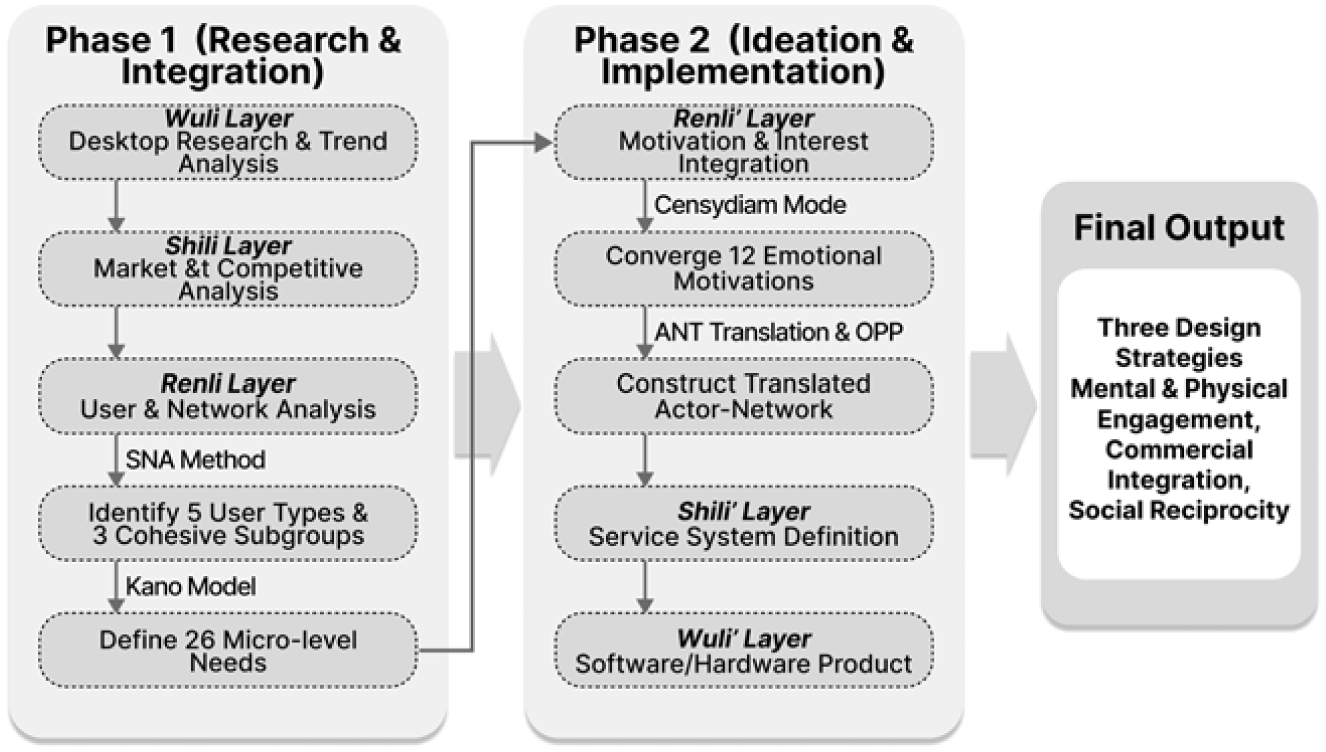
Theoretical integration framework: a WSR-SNA-ANT driven research process.
Results
Questionnaire Survey and Data Collection
This study prioritized participant well-being and privacy by adhering to strict ethical protocols. Risks were mitigated through data anonymization, controlled access, and the implementation of neutral, streamlined procedures. Informed consent served as the foundation: all participants received a detailed explanation of the study’s purpose, procedures, and their rights prior to volunteering, with specific consent re-confirmed for the use of sensitive data such as photographs. We maintain that these measures minimized potential harm. The study received approval from the Institutional Review Board (Approval No: YSID-2024-058), and written informed consent, which explicitly covered data anonymization and academic use, was obtained from all individuals. Furthermore, a Data Lifecycle Compliance Framework has been introduced to illustrate the robust data governance process—spanning from anonymized collection and encrypted storage to strictly limited use and scheduled deletion—that underpins the proposed platform strategy, ensuring alignment with ethical research standards and data protection regulations.
Survey Location
The study was conducted in Community S, located in southern D Street, Huangshi City, Hubei Province, with a population of approximately 5,000 residents. The diverse community includes individuals of all ages and families with children due to its proximity to a school district. Residents frequently use public service facilities, such as fitness areas and garbage stations, though clothing recycling boxes see less usage. Informal public service practices, like exchanging goods and vegetables, are also common.
Despite existing infrastructure and offline activities, the community lacks measures to encourage broader participation. Spontaneous community public service efforts often go unrecognized, and no platform supports or records public service interactions. Given these circumstances, convenience sampling was employed to identify participants based on their contributions. Preliminary observations highlighted Building 1, a 22-floor structure with 88 households, as a hub of community public service activities like cardboard recycling, stray animal feeding, and art class teaching. Building 1 was thus selected for detailed network analysis.
Questionnaire Design
The questionnaire gathered data on each household in Building 1, including the representative member’s name, age, occupation, daily activities, family members, and interactions with neighbors. Basic details, such as name, age, occupation, and willingness to contribute, were collected through a standard survey. To capture social interactions and acquaintance levels, more complex methods were employed. With residents’ consent, a visual household information chart was created, displaying each representative’s photo and surname by floor. Residents identified acquaintances and rated relationship strength on a Likert scale from 0 to 5. For mutual selections, the average score (rounded to the nearest whole number) was used; if only one party selected the other, the score was set to 1, and if neither did, the score was set to 0. This study constructs a community public service activity network model based primarily on two elements: “resident nodes” and “relational links.” The process consists of three main steps: collecting data through questionnaires, transforming the data into matrices, and visualizing the network. See Figure 2a, and the overall research process is illustrated in Figure 2b.
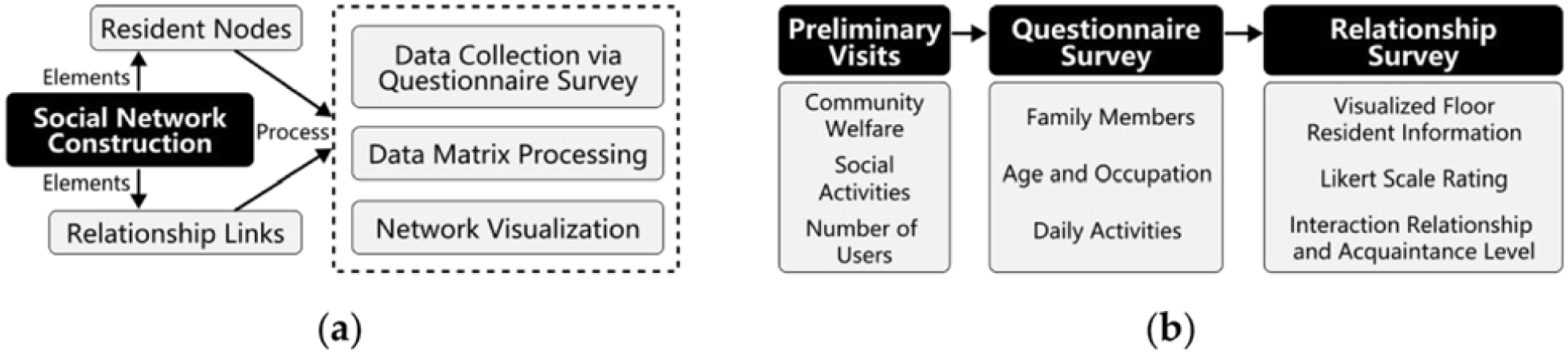
(a) Network model construction process; (b) Building 1 overall network relationship research process.
Data Processing and Visualization
The survey yielded usable data from 78 households, while 10 households provided no relationship data. “Resident nodes” and “relationship lines” were coded into a matrix, with nodes assigned horizontal and vertical codes and relationship scores entered into corresponding cells. Missing data for the 10 households were recorded, ensuring a complete 1-mode network matrix for analysis. The matrix data were imported into Ucinet to generate ##h format files, visualized in Netdraw. Relationship line thickness reflected connection strength in Figure 3.
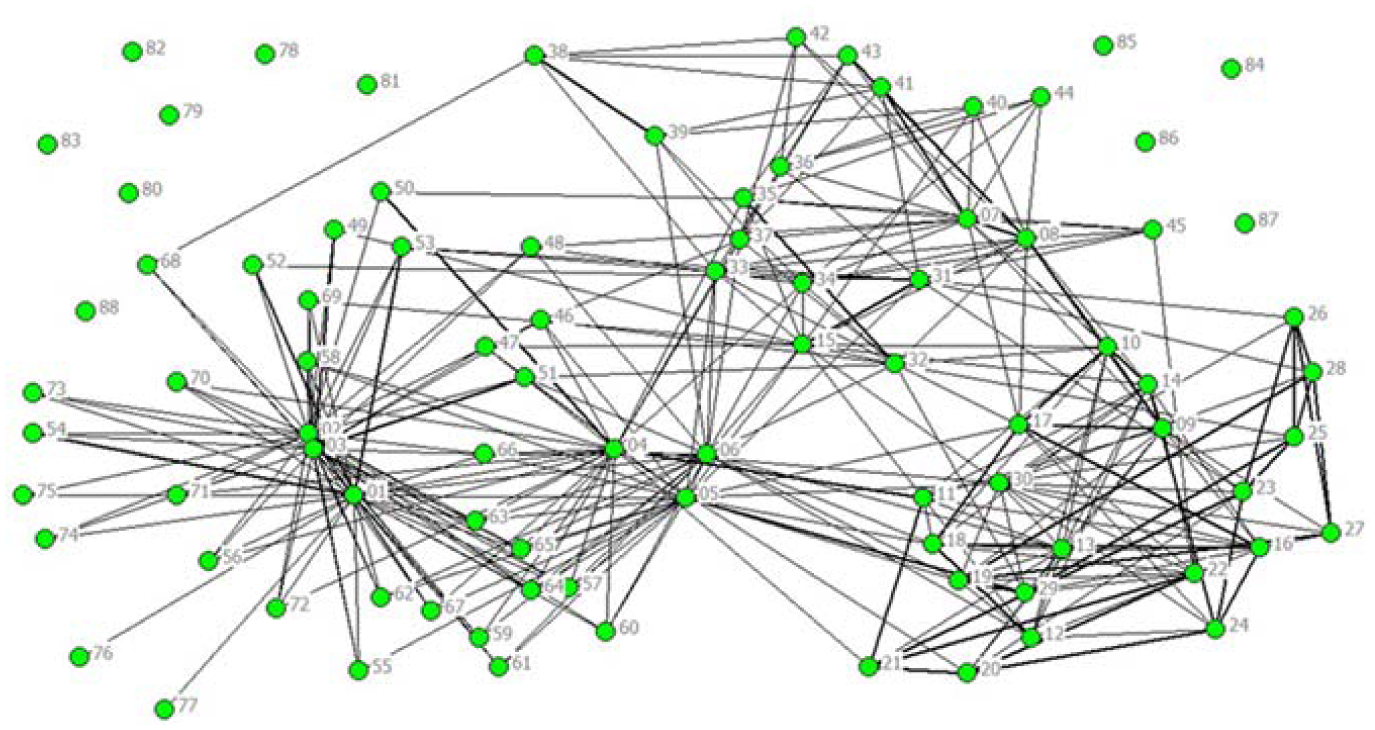
Network diagram of community public service activities.
Initial observations revealed that most of the 88 nodes were interconnected, forming a medium-to-high connectivity network with diverse structures, including radial and cohesive patterns as well as isolated points. Nodes 01, 02, 03, and 04 displayed extensive connections, while nodes 75, 76, and 77 had weaker links, highlighting significant differences in connectivity. Further structural analysis is needed to explore these relationships in depth.
Network Feature Analysis
Degree Centrality of Individual Node Analysis
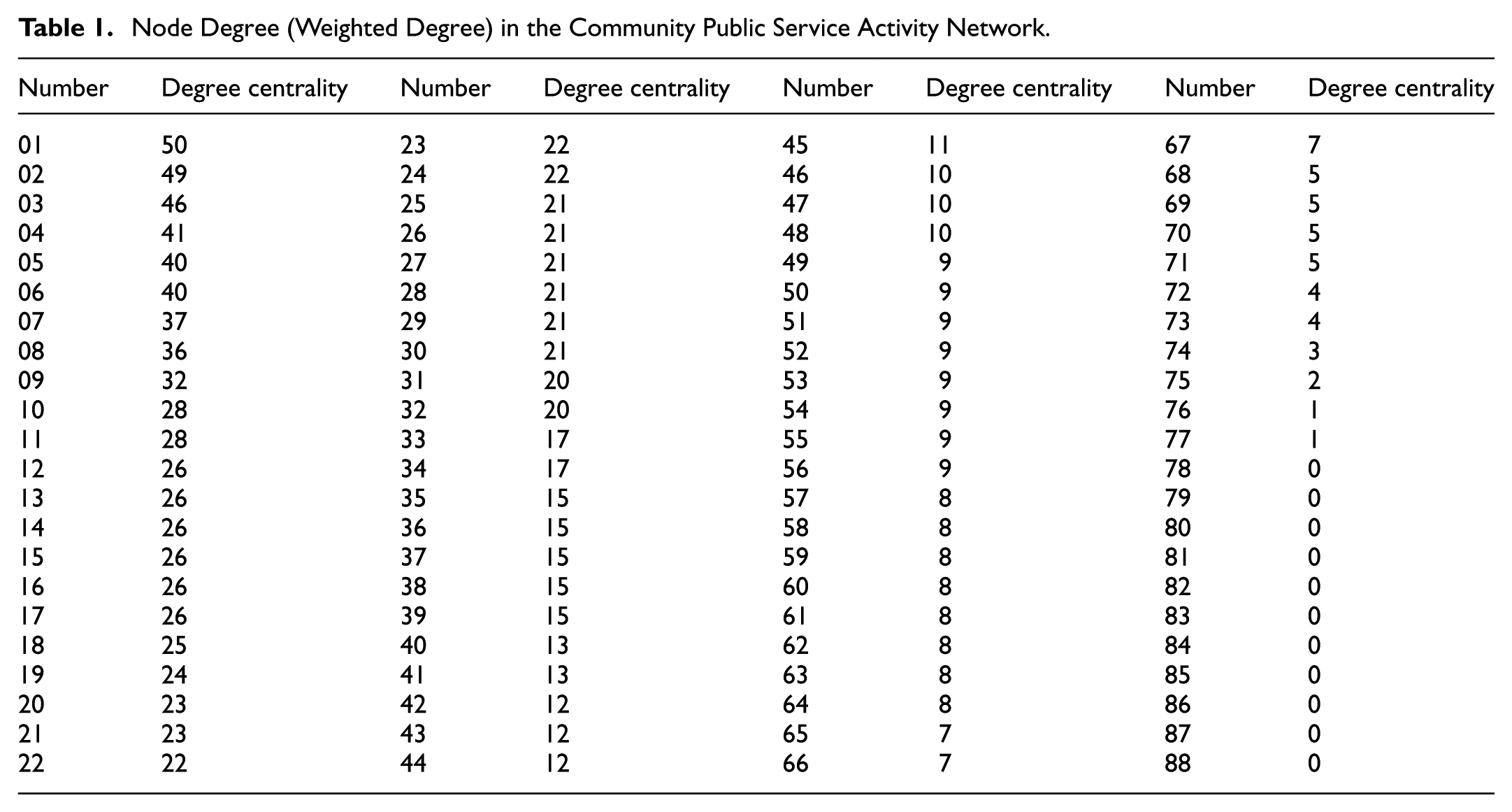
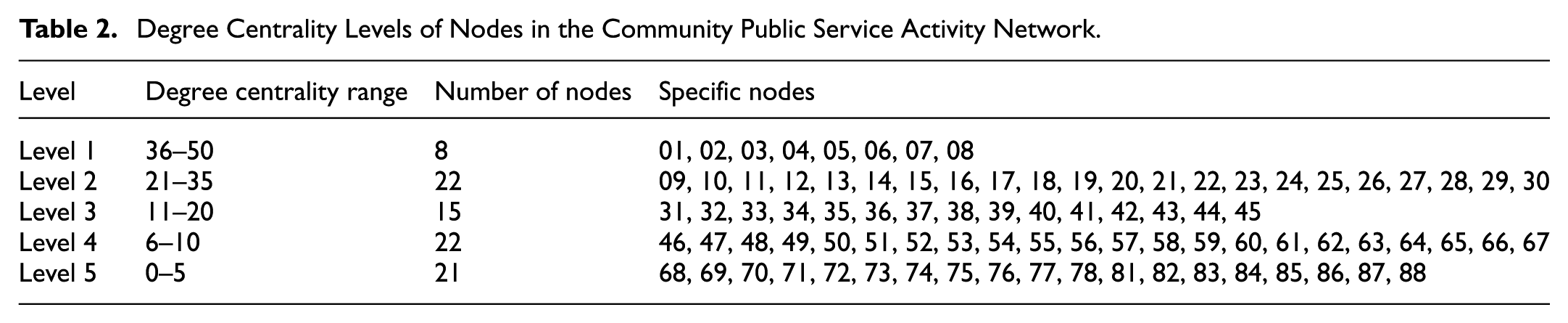
Using Ucinet, the degree centrality of each node in the community public service network was calculated in Table 1. Weighted relationships in the adjacency matrix determined each node’s total degree, with values ranging from a maximum of 50 to a minimum of 0. Nodes were grouped into five levels based on degree centrality: 0 to 5, 6 to 10, 11 to 20, 21 to 35, and 36 to 50 in Table 2. The degree centrality visualization in Netdraw used color coding—red for the highest-degree nodes and gray for the lowest—to illustrate connectivity in Figure 4.
Node Degree (Weighted Degree) in the Community Public Service Activity Network.
Degree Centrality Levels of Nodes in the Community Public Service Activity Network.
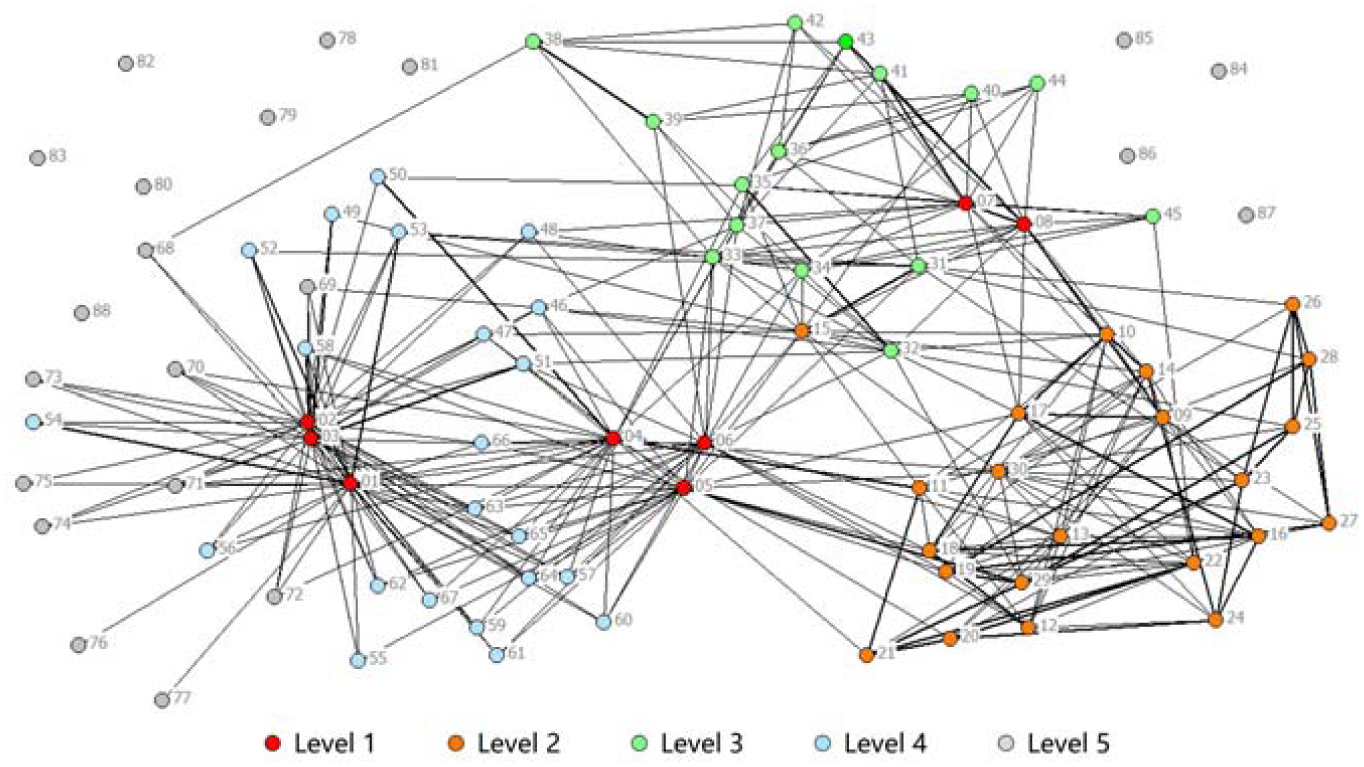
Degree centrality visualization.
Nodes with the highest degree centrality include four retirees (nodes 01–04), two sanitation workers (nodes 05, 06), a software engineer (node 07), and a designer (node 08). Retirees frequently participate in recycling and community events, while sanitation workers focus on garbage collection and furniture recycling. The software engineer and designer lead a small animal protection group, feeding stray cats regularly. These low-barrier activities explain their prominent network roles.
Second-level nodes primarily consist of parents (nodes 09–14, 16–29) and community workers (nodes 15, 30). Their moderate degree centrality reflects participation in mutual aid, book donations, and community events, which foster diverse interactions.
Third-level nodes, mainly unmarried residents (nodes 32–45), engage less frequently in community public service activities, such as occasional recycling or book donations. Fourth and fifth-level nodes, including younger tenants (nodes 46–67) and isolated residents (nodes 68–77), demonstrate minimal participation and weaker connections within the network. There is still a remaining portion (nodes 78–88) for which no community public service-related information has been collected. In summary, degree centrality analysis highlights varying levels of engagement and relationship strength, with highly connected nodes serving critical roles in the community public service network.
Betweenness Centrality
Betweenness centrality, calculated using Ucinet, measures a node’s role as an intermediary within the network, reflecting its presence on the shortest paths between other nodes. The formula calculates the sum of shortest-path contributions for each node in Table 3.
Betweenness of Nodes in the Community Public Service Activity Network.
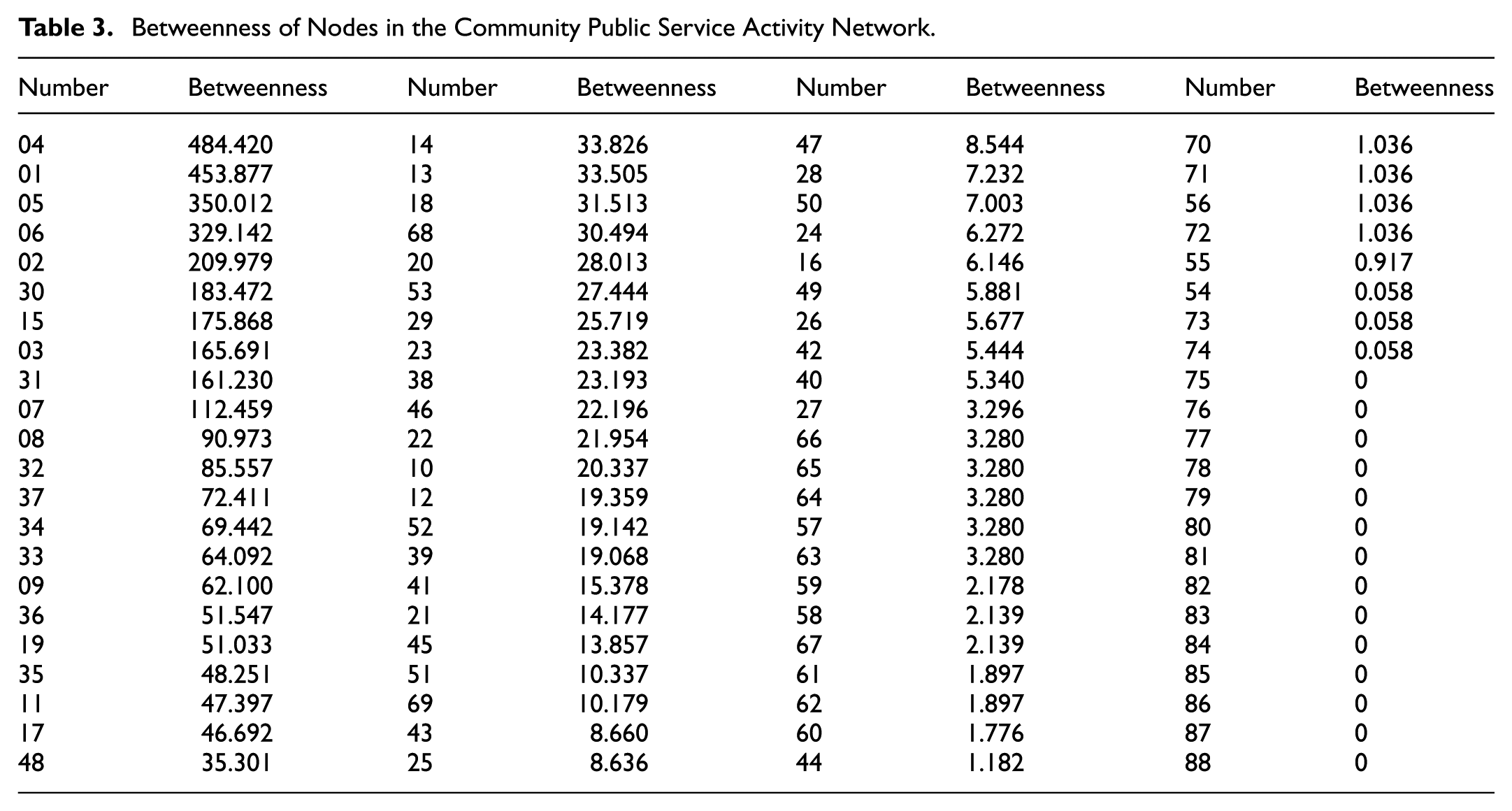
Nodes were categorized into four levels of betweenness centrality in Table 4. First-level nodes, highlighted in red in Figure 5, include retirees and sanitation workers, who act as key intermediaries within the network.
Betweenness Range of Nodes in the Community Public Service Activity Network.
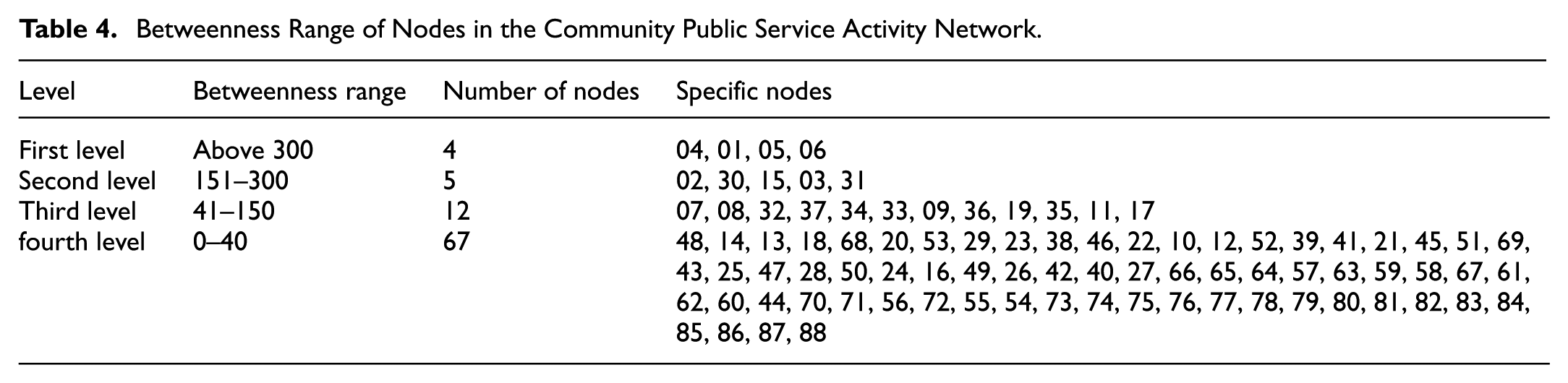
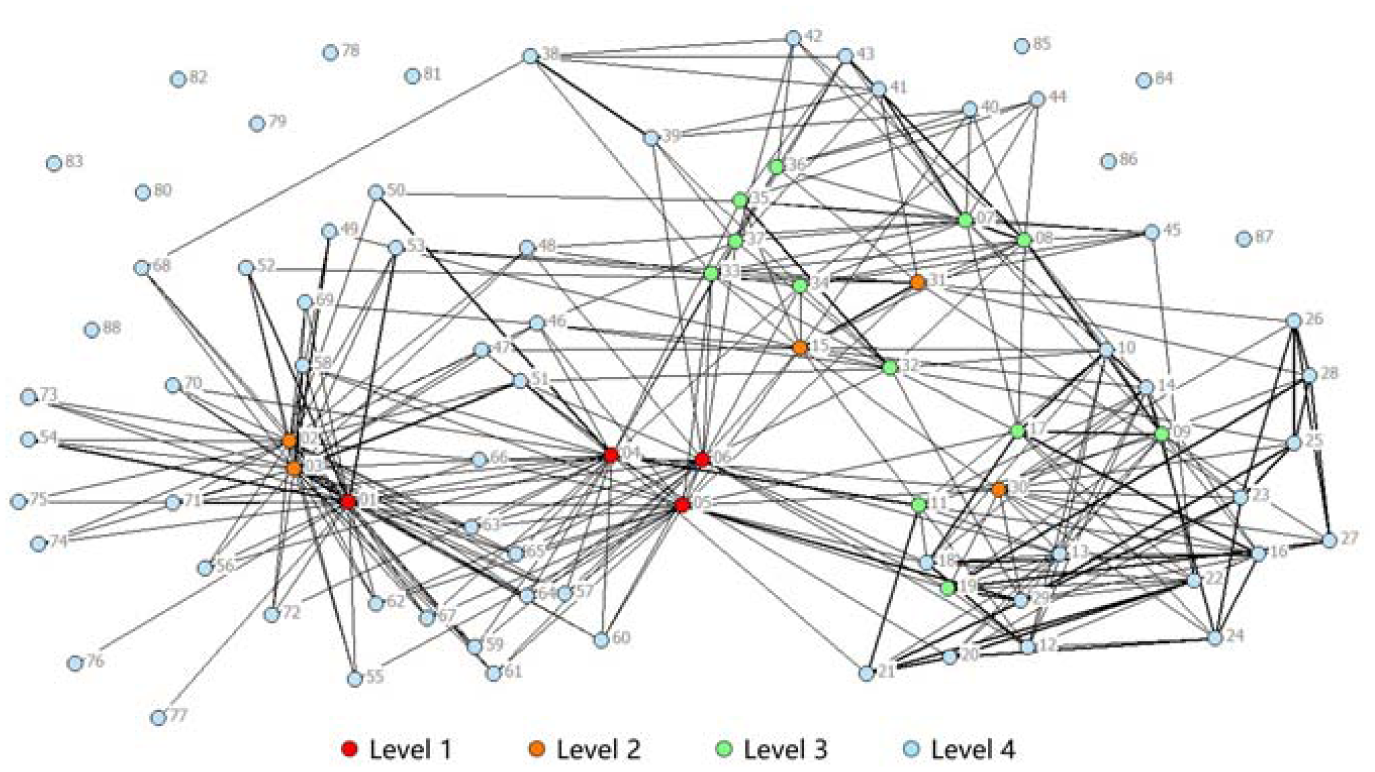
Betweenness centrality visualization.
Retirees and sanitation workers, with high betweenness centrality, not only maintain extensive connections but also bridge diverse network segments, facilitating broader interactions. Their involvement in activities such as recycling links them with a wide range of residents. Conversely, nodes with low betweenness centrality are often isolated or minimally connected, contributing little to overall network cohesion.
Cohesive Subgroup Analysis
Subgroup Partitioning
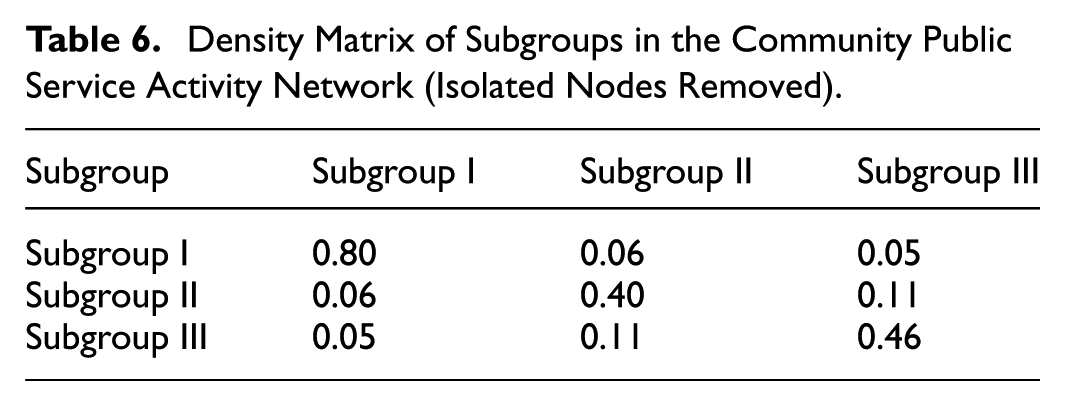
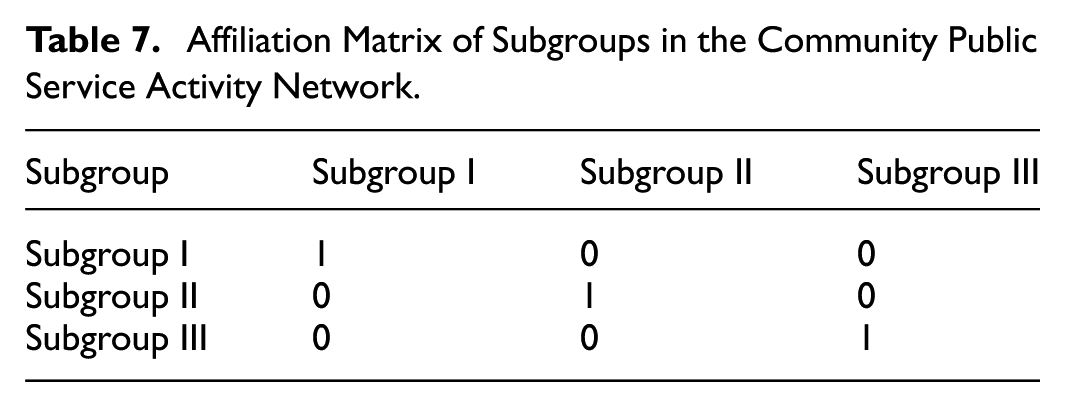
To enhance subgroup analysis accuracy, nodes 78–88, which lacked connections, were excluded. The revised adjacency matrix was imported into Ucinet, where the Factions function identified three subgroups in Table 5. The density matrix in Table 6 revealed significant differences between subgroup densities and the overall network density, recalculated at 0.2245 after removing isolated nodes. A block matrix in Table 7 confirmed the validity of the subgroup partitioning.
Subgroups in the Community Public Service Activity Network (Isolated Nodes Removed).

Density Matrix of Subgroups in the Community Public Service Activity Network (Isolated Nodes Removed).
Affiliation Matrix of Subgroups in the Community Public Service Activity Network.
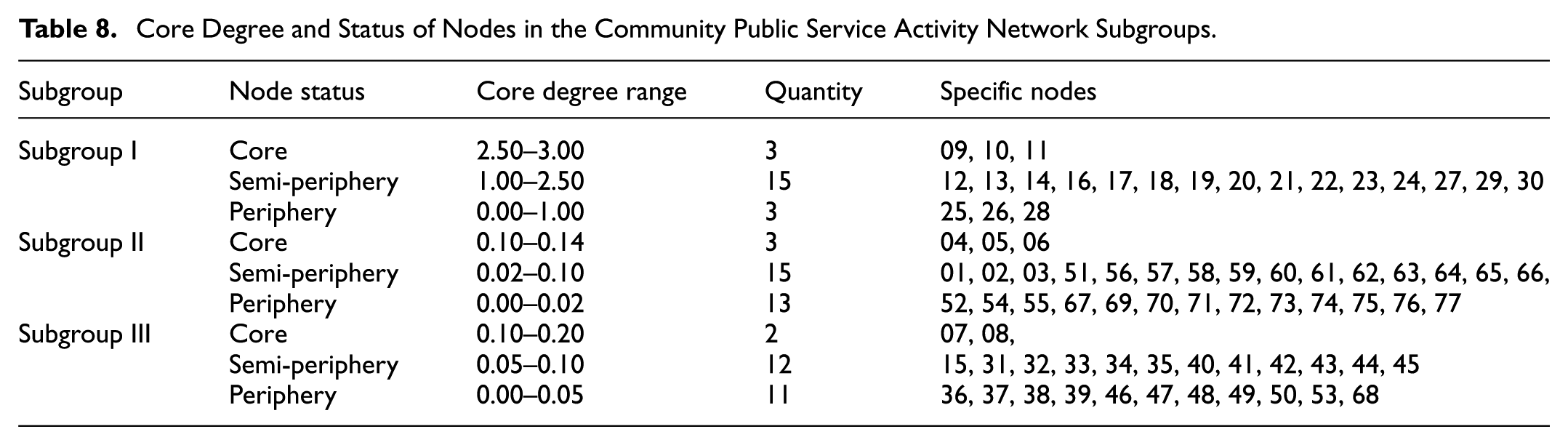
Based on the cohesive subgroup partitioning, the core degree of subgroup nodes was calculated using the Core/Periphery model. The node positions of the core-periphery structure were defined based on subgroup density in Table 8. After importing the defined structural attributes into Netdraw, the three subgroups were visualized, resulting in the community public service activity network’s subgroup node position diagram, as shown in Figure 6.
Core Degree and Status of Nodes in the Community Public Service Activity Network Subgroups.
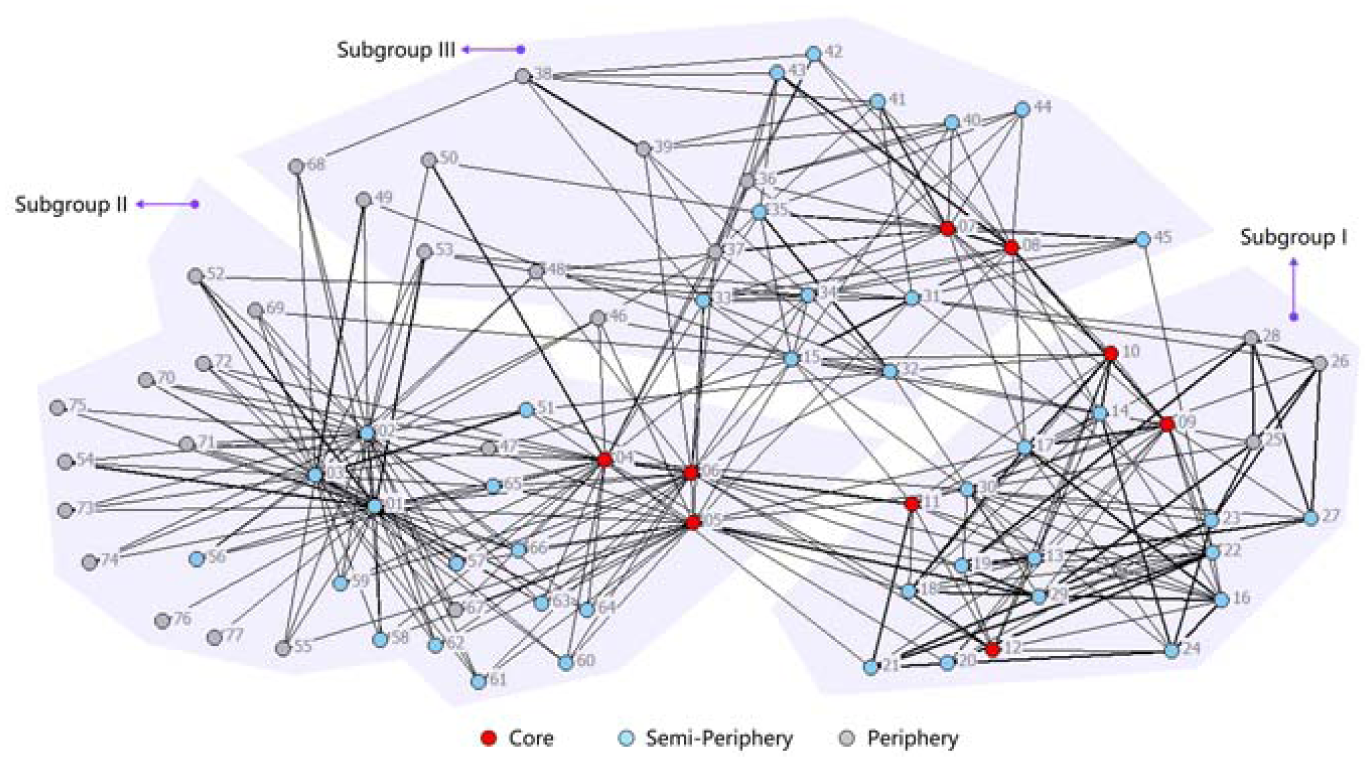
Subgroup node position diagram of the community public service activity network.
Subgroup Feature Analysis
Subgroup I Characteristics: Subgroup I comprises 21 members (nodes 09–14, 16–30), with a well-connected core of 3 nodes, 15 semi-periphery nodes, and 3 peripheral nodes. This dense network (density: 0.80) demonstrates strong trust-based relationships, far exceeding the overall network density of 0.2245. Members, primarily parents from diverse professions, regularly engage in activities such as parenting discussions, economic planning, and health topics. Core nodes (09, 10, 11) participate in community festivals, planting, and book donations, while semi-periphery nodes focus on furniture exchanges and neighborhood interactions;
Subgroup II Characteristics: Subgroup II consists of 31 members (nodes 01–06, 51–52, 54–77), featuring 3 core nodes, 15 semi-periphery nodes, and 13 peripheral nodes. This subgroup has a radial structure, with central nodes connecting peripheral members who have limited interactions among themselves. Younger residents dominate this group, often engaging in single-purpose activities like recycling. Its density (0.40) surpasses the overall network but is notably lower than Subgroup I, indicating weaker cohesion and limited deeper interactions;
Subgroup III Characteristics: Subgroup III, with 25 members (nodes 07, 08, 15, 31–50, 53, 68), includes 2 core nodes, 12 semi-periphery nodes, and 11 peripheral nodes. Unlike Subgroup II, it exhibits stronger interconnectivity among semi-periphery members, improving mutual reachability despite weaker overall ties. Members are mainly creative professionals like designers and illustrators. Core nodes (07, 08) lead animal protection and community teaching initiatives, offering flexible entry points for participation. Subgroup III’s density (0.46) reflects its intermediary nature—more cohesive than Subgroup II but less so than Subgroup I. Its activities span environmental protection and animal care, attracting diverse participants.
Participant Needs Identification
Network Layers and Need Recognition
Network analysis reveals two levels within the community public service activity network: individual nodes and the overall network. Individual nodes are classified as key, intermediary, stable, ordinary, or isolated, while the overall network consists of subgroups and the broader community structure in Figure 7.
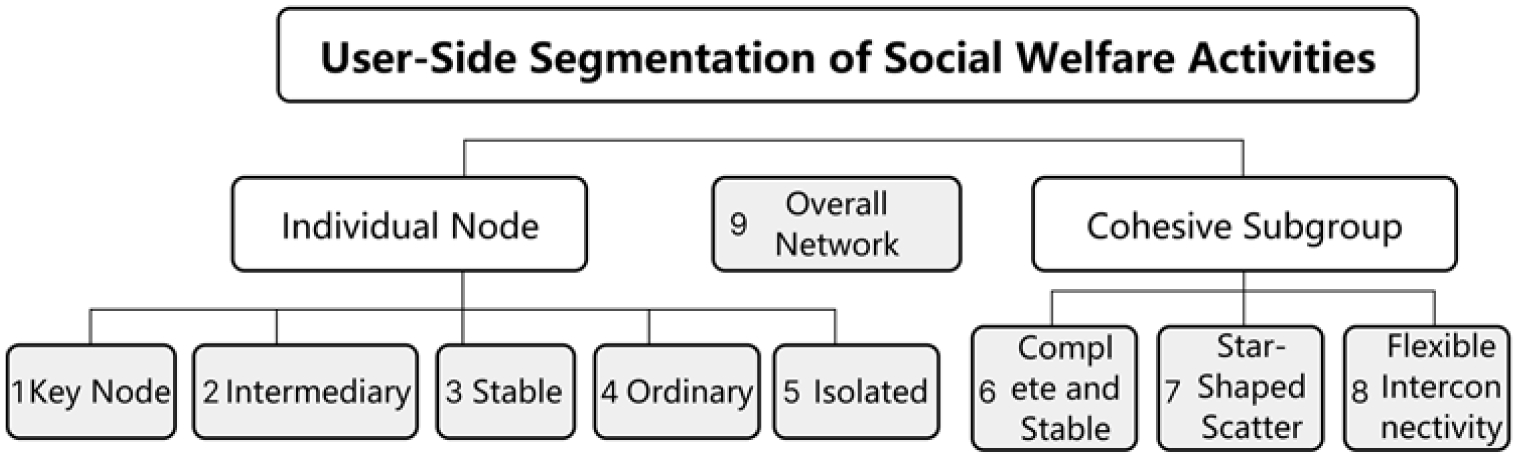
Network observation layers in community public service activities.
By analyzing these levels, specific needs were identified for various nodes. Interviews with typical participants provided insights into individual needs, while the network structure highlighted group-level requirements. The results are summarized in Appendix A.
Key Nodes: These nodes, with many but shallow connections, need tools to initiate activities efficiently, gain trust, and attract broader participation. Suitable facilities (e.g., recycling bins) and material rewards could further support their efforts;
Intermediary Nodes: Engaged in diverse community public service activities with moderate connectivity, they require better dissemination tools, sufficient funding, and performance evaluation mechanisms to sustain and expand their initiatives;
Stable Nodes: With deep but moderate connections, they need flexible participation options for families, offline interaction opportunities, and ways to align community public service activities with personal responsibilities. Maintaining detailed records is also important;
Ordinary Nodes: With limited engagement and shallow connections, they benefit from diverse community public service topics, recognition systems, and platforms for collaboration and knowledge sharing;
Isolated Nodes: These individuals, with minimal participation, seek convenient online access, privacy protection, and activities matching their interests to encourage involvement.
This needs-based analysis informs strategies to enhance engagement and participation across the community public service network.
Need Analysis
Questionnaire Design and Analysis: To classify micro-needs, a questionnaire based on the Kano model was designed. It included two sections: demographic details and an importance assessment of specific needs;
User Attributes and Survey Structure: The questionnaire aligned with network layers and respondent attributes. In the first section, respondents described their community public service involvement based on activity diversity (A: none, B: limited, C: moderate, D: high), number of connections (A: very few, B: few, C: moderate, D: many), and relationship depth (A: yes, B: no). Their responses directed them to relevant need-based questions, and its flow is depicted in Figure 8;
Survey Question Design: Following the Kano methodology, each need was paired with positive and negative questions, rated on a five-point Likert scale. For example, respondents were asked, “How would you feel if the product allows convenient initiation of community public service activities?” and “How would you feel if it does not?” Responses ranged from “dissatisfied” to “satisfied”;
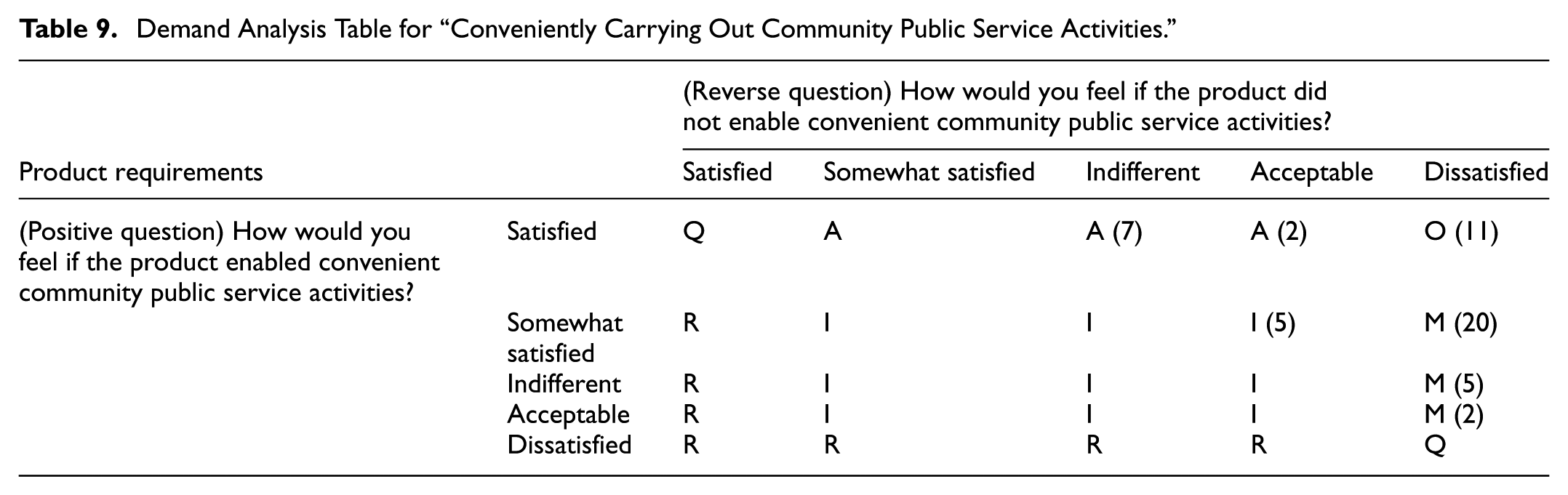
Data Collection and Classification: Of 239 distributed questionnaires, 215 were valid (90% validity rate). Respondents included 24 key nodes, 13 intermediary nodes, 28 stable nodes, 86 ordinary nodes, and 64 isolated nodes. Each need was classified into Attractive (A), One-dimensional (O), Must-be (M), Indifferent (I), or Reverse (R). (Q) represents questionable needs, which typically do not appear unless there is a contradiction between positive and negative responses in Table 9. Categories using the Kano evaluation matrix. For instance, “convenient initiation of community public service activities” was identified as a must-be need (M) with the following breakdown: A = 9, O = 11, M = 27, I = 5, R = 0, Q = 0;
Micro-needs fall into three categories in Table 10: Must-be Needs: Essential requirements, such as trust-building and efficient initiation, critical for user satisfaction (e.g., IDs 1–2, 4, 6, 9–11). One-dimensional Needs: Needs directly proportional to satisfaction, such as collaboration efficiency and detailed activity descriptions (e.g., IDs 5, 7–8, 12, 14). Attractive Needs: Features that significantly enhance satisfaction when implemented, such as material rewards and creative opportunities (e.g., IDs 3, 15, 20);
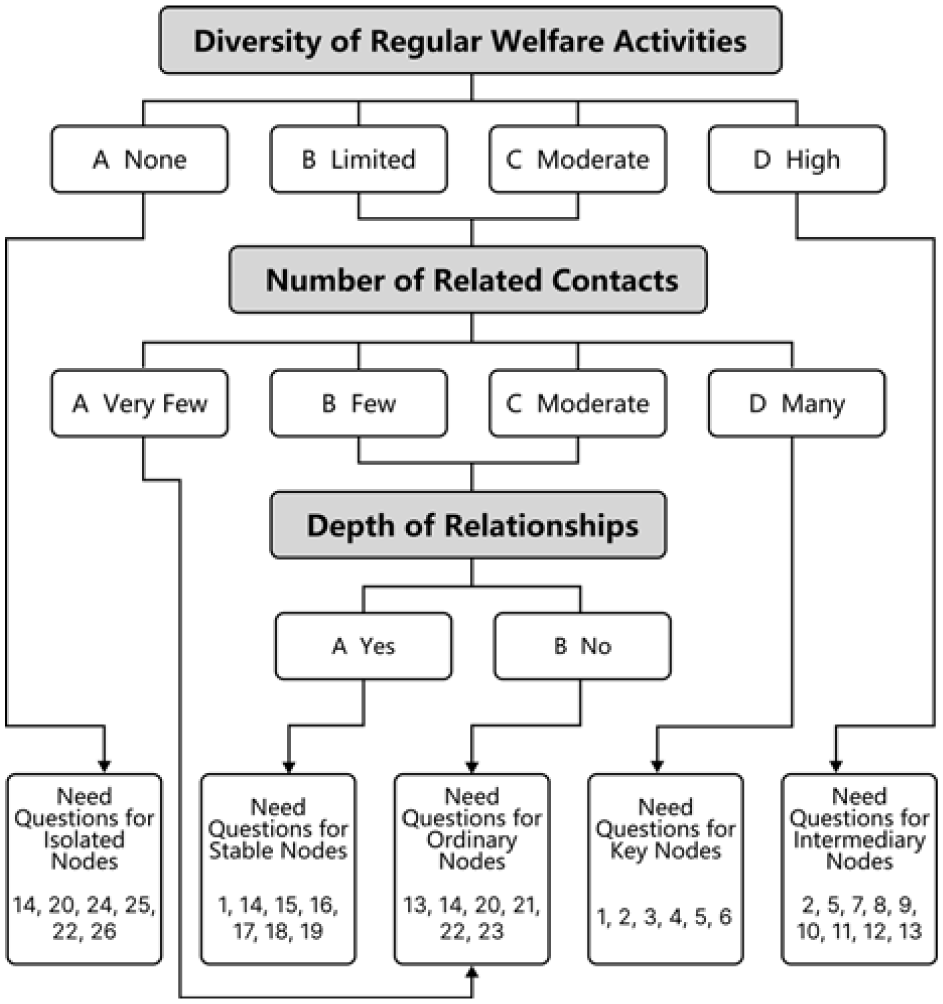
Survey flow mechanism.
Demand Analysis Table for “Conveniently Carrying Out Community Public Service Activities.”
Analysis Results of Micro-Level Needs for Community Public Service Products.
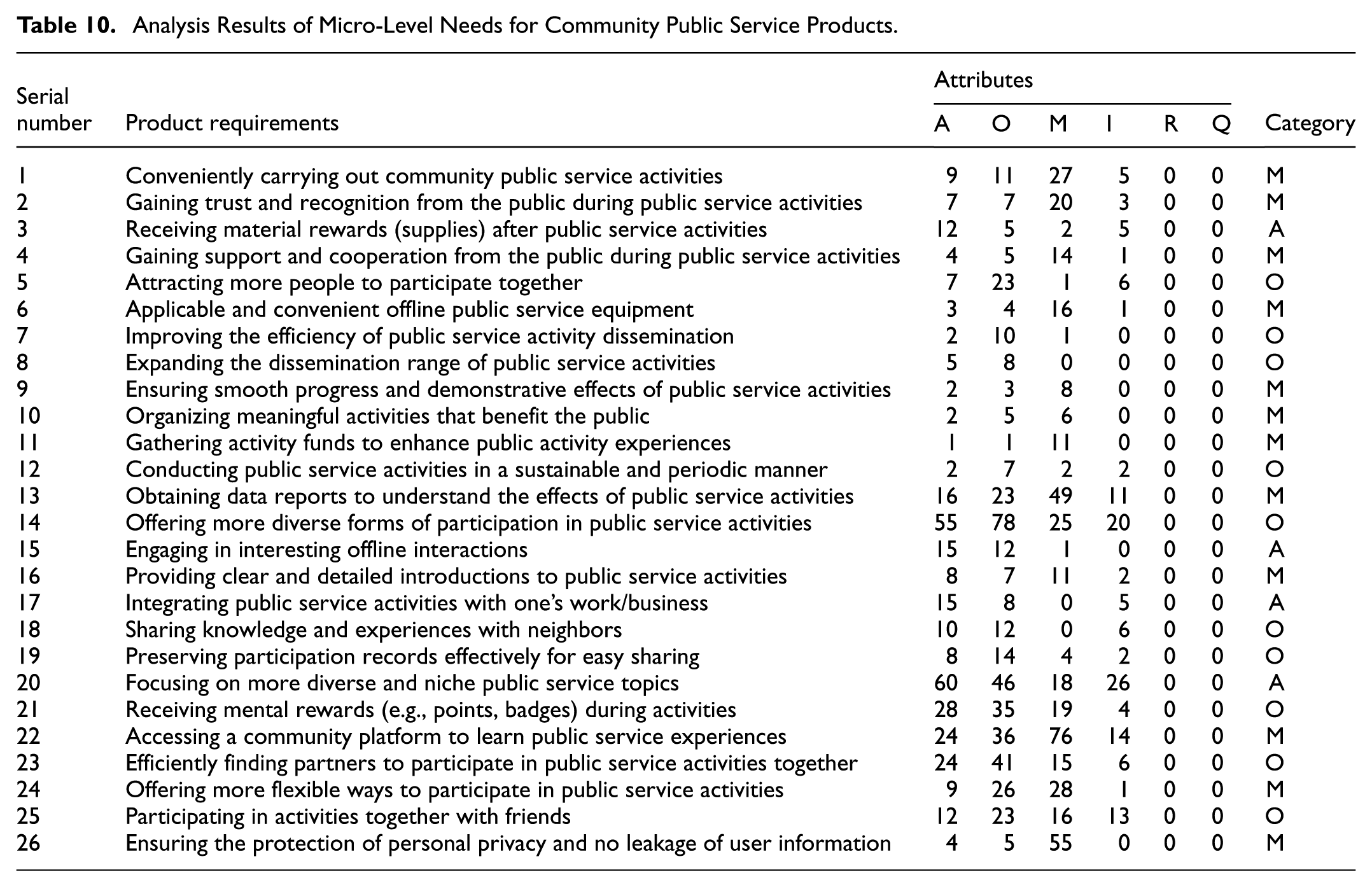
The study identified 26 micro-needs and 11 macro-needs (Appendix A, IDs 27–37), categorized into 3 Kano-defined types. Must-be needs take precedence in design, while one-dimensional and attractive needs enhance competitiveness and user satisfaction. The community selected as the sample in this study is one that the researchers are familiar with and is considered highly representative, chosen for its strong volunteer activities and positive community atmosphere. However, it should be noted that due to limitations in the research team’s resources and capabilities, as well as the inherent constraints of the sample size and convenience sampling method, the conclusions drawn cannot be generalized to all communities. Future studies should address these limitations by expanding the sample size and scope, conducting cross-regional validation to enhance generalizability, and strengthening the credibility and rigor of the research.
Conclusions and Future Research
The community public service platform aims to enhance user experience, promote sustainable system development, and optimize activity feedback. Its strategy focuses on three interrelated components: fostering active participation by addressing user needs and improving accessibility, integrating community initiatives with business interests to secure sustainable resources, and reinforcing social reciprocity through emotional and material rewards to encourage ongoing involvement. Each component contributes to a cohesive framework that supports both user engagement and the long-term viability of community services.
This study establishes a rigorous logical pathway from the micro-community structures that Social Network Analysis (SNA) reveals to macro-level platform design strategies, a connection vital for translating theory into practice. SNA not only identifies three cohesive subgroups but, more importantly, empirically diagnoses the “fragmentation” and “shallow participation” problems we introduced. It achieves this by revealing how these subgroups significantly differ in interaction patterns and connection strengths. For instance, some subgroups, while highly cohesive internally, remain isolated from others, while some congregate around single interests. These characteristics create structural barriers and participation gaps within the community network.
Accordingly, our three design strategies directly respond to these structural symptoms. First, the “fostering mental and physical engagement” strategy addresses the wide gap in participation depth by providing differentiated online and offline pathways to activate both core and peripheral members. Second, the “integrating commercial interests” strategy targets key network nodes identified by WSR-SNA; it introduces external resources to activate their latent social capital, thereby linking service sustainability to the network’s intrinsic value and solving the fundamental problem of resource supply. Finally, “building social reciprocity” acts as the core mechanism to dismantle group barriers. It creates cross-group value exchanges and emotional connections to weave the loose, isolated sub-networks into a resilient whole, thus dissolving the community’s fragmented state. In summary, these strategies are not isolated concepts but are rooted in SNA’s empirical insights into the community’s network structure. Together, they form a complete logical loop from diagnosis to intervention that ensures the platform design is both targeted and effective.
Mental and Physical Engagement
Different user types in community public services exhibit distinct priorities. Isolated and ordinary nodes emphasize online security, expecting privacy protection, transparent procedures, authoritative guidance, and mental preparation before participation. Key and stable nodes prioritize offline convenience, seeking user-friendly functions and efficient operations to enhance engagement. Intermediary nodes, such as community staff, focus on fulfilling responsibilities and facilitating coordination between online and offline activities. Accordingly, an effective design strategy should integrate online guidance, offline comfort, and coordinated implementation to promote both physical and mental engagement in community services, as illustrated in Figure 9.
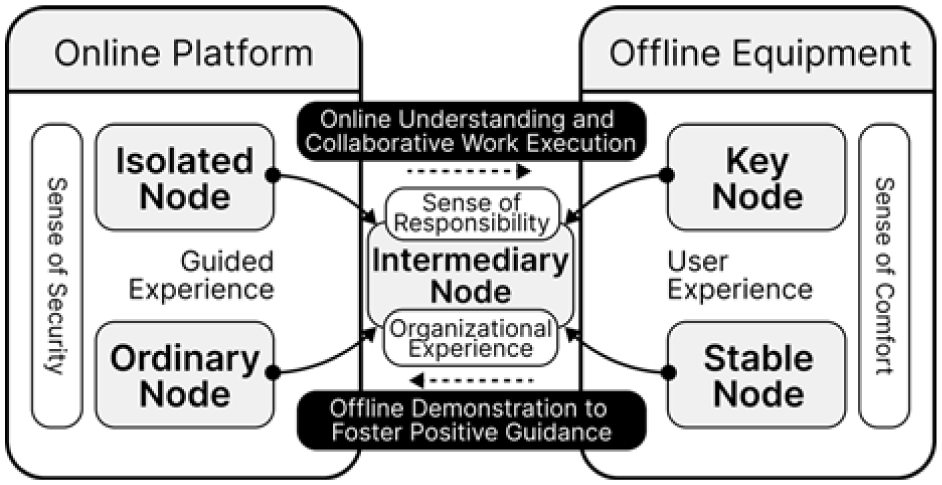
Multi-faceted strategy for mental and physical engagement.
Online and Offline Engagement
The online guidance experience emphasizes privacy protection and effective public service support. To safeguard privacy, the platform should provide transparent policies, user-controlled settings, data encryption, and security education to enhance trust. For guidance, interfaces must be intuitive and concise, while tutorials, instructional videos, real-time feedback, and online consultation channels ensure users understand key processes and participation requirements throughout their engagement.
The offline experience focuses on convenience and usability. Devices should enable quick startup and seamless connectivity, with intuitive operation and clear feedback to minimize user effort. Placement should be practical to encourage participation, while promotion and maintenance require coordinated efforts from community staff and organizations to ensure consistent service quality and thematic continuity.
Demonstration and Coordination
Key and stable nodes act as role models through positive offline experiences, fostering broader participation. Simultaneously, isolated and ordinary nodes, after increased online exposure to community public service activities, become more cooperative. This combined effect of demonstration and engagement enhances intermediary nodes’ organizational experience, reinforcing their responsibility in managing community public services.
Commercial Interest Integration
During community public service participation, stable nodes seek to align public service activities with their work or business, public service organizations expect funding support, and ordinary nodes desire more diverse and engaging participation methods. Aligning these demands can shape a commercially integrated design strategy, promoting internal resource flow, external personalized issues, and sustainable symbiotic operations within the community public service system, as illustrated in Figure 10.
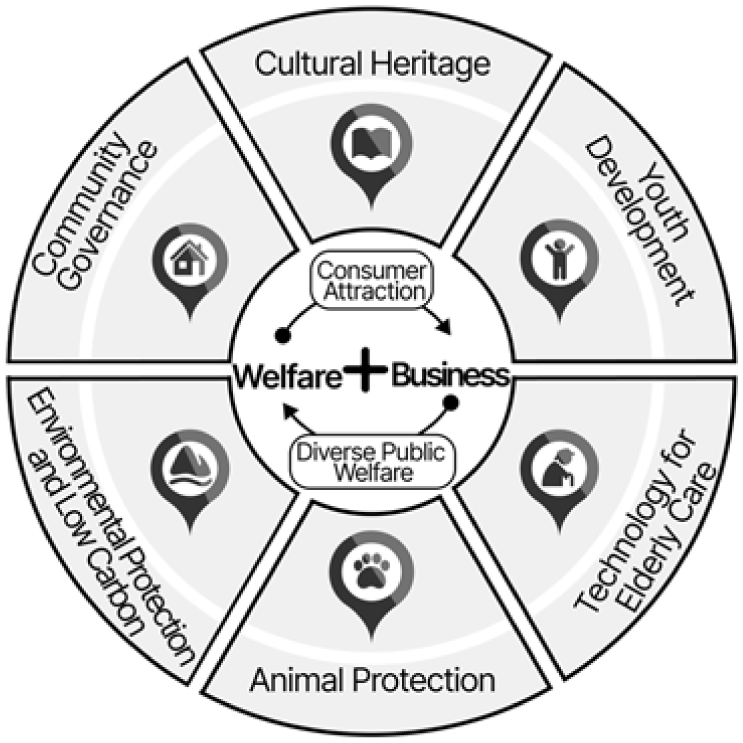
Community public service product strategy for commercial interest integration.
Internal Resource Movement and External Personalized Issues
Internal resource flow occurs between intermediary nodes (community staff and public service organizations) and stable nodes (business owners and residents). When community public service activities align with business interests, enterprises can contribute products, knowledge, or services, lowering financial costs and enriching activity diversity. In return, the engagement promoted by public service organizations attracts consumer participation, creating mutual benefits between public services and commerce.
Externally, personalized community public service topics—such as low-carbon living, cultural heritage, youth development, animal protection, and technology for elderly care—reflect the diversified interests of community members.
Sustainable Operations
Digitalization has further lowered participation thresholds, enabling flexible engagement and sustaining community vitality. Collaborations between community public service organizations and local businesses can thus combine funding and participation opportunities, meeting diverse user needs while achieving commercial–social synergy. For example, Alibaba’s “Dream Sign Language Café Campaign” integrated sign language learning into café experiences, promoting inclusivity and volunteerism while simultaneously boosting consumer traffic.
Social Reciprocity Based on One-Dimensional Needs
Feedback plays a pivotal role in product design, directly improving user experience. This section classifies feedback into emotional and material forms, both integral to community public service activities and social interactions. The social reciprocity strategy integrates emotional recognition, tangible rewards, and a self-reinforcing positive social cycle, as illustrated in Figure 11.
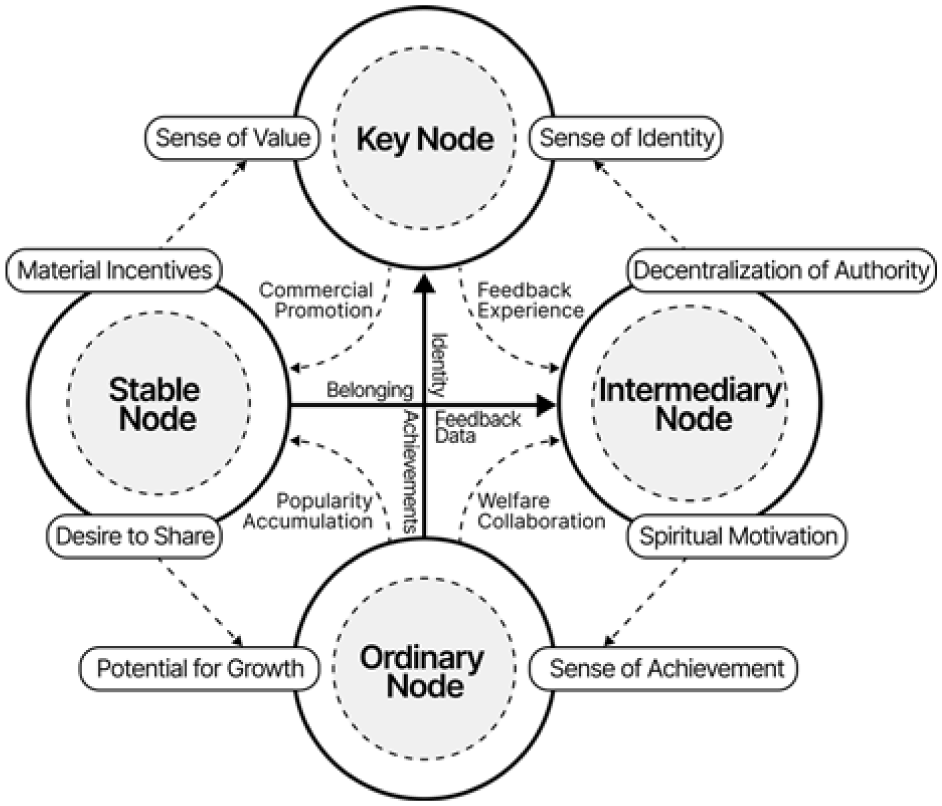
Community public service product response strategy for social reciprocity.
Emotional Recognition
The psychological achievement response targets ordinary and stable nodes, addressing their distinct psychological needs. For stable nodes, platforms can provide content creation channels and one-click sharing to enhance visibility and sharing satisfaction. For ordinary nodes, recommending high-quality content from stable nodes improves participation skills while boosting the latter’s engagement. Challenge and achievement systems, with rewards and public acknowledgment, validate contributions and sustain motivation, complemented by official announcements and rankings to reinforce a sense of accomplishment.
Tangible Rewards
The real-world value focus on key nodes, including full-time staff and retired volunteers, who contribute significant time and effort. Top-down management models often limit their sense of ownership, so delegating organizational roles, enabling co-leadership in activities, and offering monetary compensation can strengthen belonging and motivation. Involving key nodes in service feedback further optimizes quality and promotes a sustainable, responsive system.
Positive Social Cycle
A positive social cycle arises through collaboration among key, ordinary, stable, and intermediary nodes. Key nodes can organize ordinary nodes into teams to pursue collective goals, fulfilling social needs and fostering shared achievement. Simultaneously, stable and intermediary nodes coordinate activities to enhance overall community impact, reinforcing engagement and reciprocity.
Contributions, Limitations, and Future Prospects
This research integrates WSR, SNA, ANT, Kano, and Censydiam models into a unified analytical framework bridging macro structural logic and micro motivational dynamics. WSR-SNA-ANT explain how community relations are organized; Kano-Censydiam elucidate why individuals participate. Their complementarity reveals hidden interactions among commerce, altruism, and digital mediation, offering a multidimensional lens for both theoretical exploration and practical design. This integrated framework thus extends design methodology and provides a transferable model for analyzing complex social systems.
Network analysis reveals three subgroups with distinct behavioral patterns. Integrating these subgroup insights supports customized platform design. Future systems should evolve toward a dual online-offline model: a digital participation platform for cross-group interaction, and recycling-based public terminals as physical nodes for offline engagement. Together, these enable sustainable collaboration among residents, public organizations, and local enterprises.
The proposed framework is most applicable to urban residential communities with developed digital infrastructure and active participation. Implementation entails management and governance costs—such as administrative coordination, motivational crowding-out, funding uncertainty, and data privacy risks. Addressing these challenges requires multi-level governance and standardized evaluation systems to ensure transparency and trust. Regarding this framework’s validity and applicability, it most directly applies to urban residential communities that possess a foundation of social capital but exhibit network fragmentation due to insufficient interaction. Its effectiveness is likely moderated by key contextual factors; for instance, the “social reciprocity” incentive, rooted in collectivism, may require adaptation in individualistic cultures. A community’s demographics, stability, and its initial network state—whether connections exist or it is completely “atomized”—also serve as decisive preconditions. Therefore, future research should test and refine this framework in more diverse community types (e.g., rural or virtual) and cross-cultural contexts to delineate its boundaries of applicability more clearly.
Due to time and resource constraints, this study employed convenience sampling, limiting generalizability. Future work should apply rigorous sampling, expand stakeholder inclusion, and refine evaluation mechanisms to enhance the robustness of design strategies. Further exploration of cost–benefit assessment, governance mechanisms, and long-term user behavior will strengthen the theoretical and practical contributions of community public service design.
Footnotes
Appendix A
Summary of Community Public Service Product Demand.
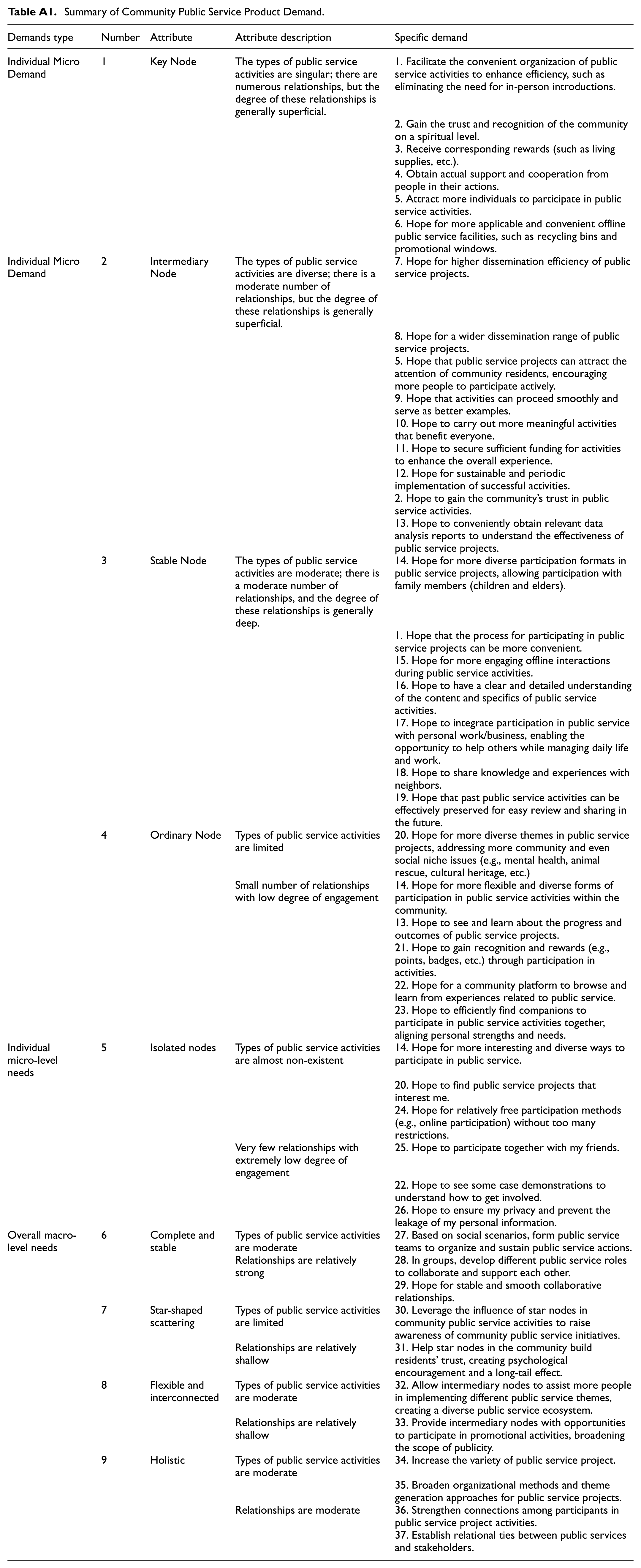
| Demands type | Number | Attribute | Attribute description | Specific demand |
|---|---|---|---|---|
| Individual Micro Demand | 1 | Key Node | The types of public service activities are singular; there are numerous relationships, but the degree of these relationships is generally superficial. | 1. Facilitate the convenient organization of public service activities to enhance efficiency, such as eliminating the need for in-person introductions. |
| 2. Gain the trust and recognition of the community on a spiritual level. | ||||
| 3. Receive corresponding rewards (such as living supplies, etc.). | ||||
| 4. Obtain actual support and cooperation from people in their actions. | ||||
| 5. Attract more individuals to participate in public service activities. | ||||
| 6. Hope for more applicable and convenient offline public service facilities, such as recycling bins and promotional windows. | ||||
| Individual Micro Demand | 2 | Intermediary Node | The types of public service activities are diverse; there is a moderate number of relationships, but the degree of these relationships is generally superficial. | 7. Hope for higher dissemination efficiency of public service projects. |
| 8. Hope for a wider dissemination range of public service projects. | ||||
| 5. Hope that public service projects can attract the attention of community residents, encouraging more people to participate actively. | ||||
| 9. Hope that activities can proceed smoothly and serve as better examples. | ||||
| 10. Hope to carry out more meaningful activities that benefit everyone. | ||||
| 11. Hope to secure sufficient funding for activities to enhance the overall experience. | ||||
| 12. Hope for sustainable and periodic implementation of successful activities. | ||||
| 2. Hope to gain the community’s trust in public service activities. | ||||
| 13. Hope to conveniently obtain relevant data analysis reports to understand the effectiveness of public service projects. | ||||
| 3 | Stable Node | The types of public service activities are moderate; there is a moderate number of relationships, and the degree of these relationships is generally deep. | 14. Hope for more diverse participation formats in public service projects, allowing participation with family members (children and elders). | |
| 1. Hope that the process for participating in public service projects can be more convenient. | ||||
| 15. Hope for more engaging offline interactions during public service activities. | ||||
| 16. Hope to have a clear and detailed understanding of the content and specifics of public service activities. | ||||
| 17. Hope to integrate participation in public service with personal work/business, enabling the opportunity to help others while managing daily life and work. | ||||
| 18. Hope to share knowledge and experiences with neighbors. | ||||
| 19. Hope that past public service activities can be effectively preserved for easy review and sharing in the future. | ||||
| 4 | Ordinary Node | Types of public service activities are limited | 20. Hope for more diverse themes in public service projects, addressing more community and even social niche issues (e.g., mental health, animal rescue, cultural heritage, etc.) | |
| Small number of relationships with low degree of engagement | 14. Hope for more flexible and diverse forms of participation in public service activities within the community. | |||
| 13. Hope to see and learn about the progress and outcomes of public service projects. | ||||
| 21. Hope to gain recognition and rewards (e.g., points, badges, etc.) through participation in activities. | ||||
| 22. Hope for a community platform to browse and learn from experiences related to public service. | ||||
| 23. Hope to efficiently find companions to participate in public service activities together, aligning personal strengths and needs. | ||||
| Individual micro-level needs | 5 | Isolated nodes | Types of public service activities are almost non-existent | 14. Hope for more interesting and diverse ways to participate in public service. |
| 20. Hope to find public service projects that interest me. | ||||
| 24. Hope for relatively free participation methods (e.g., online participation) without too many restrictions. | ||||
| Very few relationships with extremely low degree of engagement | 25. Hope to participate together with my friends. | |||
| 22. Hope to see some case demonstrations to understand how to get involved. | ||||
| 26. Hope to ensure my privacy and prevent the leakage of my personal information. | ||||
| Overall macro-level needs | 6 | Complete and stable | Types of public service activities are moderate | 27. Based on social scenarios, form public service teams to organize and sustain public service actions. |
| Relationships are relatively strong | 28. In groups, develop different public service roles to collaborate and support each other. | |||
| 29. Hope for stable and smooth collaborative relationships. | ||||
| 7 | Star-shaped scattering | Types of public service activities are limited | 30. Leverage the influence of star nodes in community public service activities to raise awareness of community public service initiatives. | |
| Relationships are relatively shallow | 31. Help star nodes in the community build residents’ trust, creating psychological encouragement and a long-tail effect. | |||
| 8 | Flexible and interconnected | Types of public service activities are moderate | 32. Allow intermediary nodes to assist more people in implementing different public service themes, creating a diverse public service ecosystem. | |
| Relationships are relatively shallow | 33. Provide intermediary nodes with opportunities to participate in promotional activities, broadening the scope of publicity. | |||
| 9 | Holistic | Types of public service activities are moderate | 34. Increase the variety of public service project. | |
| 35. Broaden organizational methods and theme generation approaches for public service projects. | ||||
| Relationships are moderate | 36. Strengthen connections among participants in public service project activities. | |||
| 37. Establish relational ties between public services and stakeholders. |
Acknowledgements
We gratefully acknowledge the community and all participating residents for their valuable contribution in providing the survey data that supported the academic research presented in this study. The authors have reviewed and edited the output and take full responsibility for the content of this publication.
Abbreviations
The following abbreviations are used in this manuscript:
WSR Wuli–Shili–Renli (physical, logical, and human factors)
SNASocial Network Analysis
ANT Actor-Network Theory
CNKI China National Knowledge Infrastructure

Ethical Considerations
This study adhered strictly to the ethical principles governing scientific research involving human subjects. The research protocol was approved by the Review Board of the School of Arts and Design, Yanshan University (Approval No: YSID-2024-058). Prior to their participation, all individuals received detailed written information regarding the study's aims, procedures, potential risks, and benefits, and provided written informed consent. We affirm that all collected data were anonymized and managed according to a Data Lifecycle Compliance Framework, encompassing encrypted storage, strictly limited use, and scheduled secure deletion post-study.
Funding
The authors disclosed receipt of the following financial support for the research, authorship, and/or publication of this article: This research was funded by National Social Science Fund Art Studies Program of China, grant number 24BG122.
Declaration of Conflicting Interests
The authors declared no potential conflicts of interest with respect to the research, authorship, and/or publication of this article.
Data Availability Statement
The data presented in this study are available upon request from the corresponding author*.