






Abstract
This systematic review aims to explore the ethical implications of ChatGPT use in higher education, evaluate stakeholder perceptions, and offer practical recommendations to address the emerging ethical dilemmas. The study employed the PRISMA-based Systematic Literature Review (SLR) methodology. Peer-reviewed articles published in English from 2022 to 2025 were sourced, and a total of 26 studies were identified, screened, and analyzed based on defined inclusion and exclusion criteria. The review identified key ethical concerns, including academic dishonesty, data security, unequal access, diminished teacher-student engagement, and overreliance on AI. Findings indicate divergent perceptions among students, educators, and researchers regarding ChatGPT’s ethical use, with many highlighting both benefits and risks. The review underscores the need for regulatory frameworks and ethical policies in educational institutions. While ChatGPT presents opportunities for pedagogical innovation, its ethical challenges must be addressed through comprehensive guidelines, awareness programs, and responsible use policies. The findings support the need for continuous evaluation to ensure AI tools contribute constructively to educational outcomes.
Keywords
Introduction
Recently, the use of technology in education settings, especially the advent of artificial intelligence (AI), has drawn attention on a global scale (P. Zhang & Tur, 2024). Major breakthroughs in the field of AI have contributed to fast growth in its use and availability (Whalen & Mouza, 2023). One of the most important developments is the introduction of content-generation tools, which enable users to generate various digital outputs and written content through simple text prompts (Cao et al., 2023). Consequently, this increased interest in newly developing AI tools like ChatGPT, which was created by OpenAI and became the quickest commercially developed application ever, with approximately 100 million active users in a month since it was launched in November 2022 (Rudolph et al., 2023; Zhou et al., 2024), and (Wang et al., 2023).
One of the major problems with the introduction of ChatGPT into classroom practices is limited direct contact between teachers and students (Neumann et al., 2023).This results in a lower chance of meaningful dialog, personalized guidance, and emotional support, which are necessary for a personalized learning experience. Also, ChatGPT integration within the present technological setup is challenging due to inequalities when it comes to access to education, especially in poor infrastructure settings (Herft, 2023). Ethical issues also arise, particularly within the context of academic integrity in assignments and assessments. In addition, the list of drawbacks of teachers’ use of ChatGPT may include their excessive reliance on the tool, which might prevent the development of their critical thinking, problem-solving, and interpersonal skills (Qadir, 2023). Moreover, language models like ChatGPT revolutionized old teaching practices. However, it limits creativity, critical thinking, collaboration, problem-solving skills, understanding of social values, perspectives, academic integrity, and collaboration in an educational setting (Qawqzeh, 2024). Nonetheless, like all other emerging technologies, it is important to overcome the challenges and shortcomings it creates (Cheng, 2023). However, because of the relatively new development of ChatGPT, there are still limited solid empirical studies and evidence about its usefulness in educational environments (Hwang & Tu, 2021; Kiryakova & Angelova, 2023). Therefore, this review aims to understand the potential ethical implications of ChatGPT in educational settings.
Problem Statement and Purpose of Review
ChatGPT has been extensively used by learners, teachers, and scholars in writing support, assessment writing, the creation of feedback, and academic research since it was released in 2022 (Adiguzel et al., 2023). Although previous studies have reported the potential of generative AI, including the personalized learning support feature and efficiency solution. However, its diffusion also increased serious ethical issues regarding data privacy, academic integrity, equity, and the transformation of teaching and learning (Fyfe, 2023; Rane et al., 2024). Despite some concerns, a few professionals believe it is better for teachers to use ChatGPT to enhance the process of teaching and learning (J. K. M. Ali et al., 2023; Eager & Brunton, 2023).
A number of systematic and narrative reviews have investigated ChatGPT or generative AI in education in general (Adiguzel et al., 2023; Qadir, 2023). R. Zhang et al. (2024) review focused on pedagogically effective, Celik et al. (2024) review focused on affordance in the application of AI to chatbots in general, as opposed to offering a particular synthesis of the ethical dilemma of ChatGPT as it applies to higher education. In addition, past use reviews focused ethics as a secondary issue and emphasized debate regarding innovation and efficiency. Following the rate of adoption and the advent of novel types of academic cheating, monitoring issues, and reliance on AI-generated results, an updated and ethically-oriented review is necessary (Mienye & Swart, 2025; Ziprebo & Obi, 2024). Therefore, this review is significant to understand the ethical dilemmas related to the use of ChatGPT in educational settings.
This investigation is important as it is important to understand students’ and teachers’ views on ChatGPT use, understand the ethical aspects, support academic honesty, and encourage technology-based learning. It is mainly because students, educators, and researchers have the most basic and significant interactions with ChatGPT. The experiences that students go through influence the way AI technology is applied to learning, assessment, and communication of academic information, whereas the views of educators define the way AI technology is implemented in classroom practice, feedback, and evaluation. On the other hand, researchers turn to ChatGPT to synthesize the literature, provide methodological assistance, and generate knowledge. Therefore, the awareness of such different perspectives is essential to comprehending the ethical issues that arise in contexts, such as fairness, authenticity, responsible use, and ensuring that the institutional policies and pedagogical approaches are based on real-life experiences and not on theoretical presumptions only.
Research Questions
The following questions guide the systematic review to understand the ethical implications of ChatGPT use in education, challenges, and recommendations:
Theoretical Frameworks
Ethical implementation of ChatGPT in higher education is pegged on the proven theories of learning and technology that describe how AI restructures academic behavior and decision making. The status of ethical integration of ChatGPT at higher education can be informed by the available theories of learning and technology explaining how AI can change such aspects of academic behavior and decision making. Technological Determinism considers ChatGPT as an actor with the power to restructure the educational process, testing criteria, and student agency and raises ethical concerns of excessive dependence and diminishes the skills to think and be creative (Yu, 2024).
Social Cognitive Theory supports this view because the adoption is influenced by the effect of observation, reinforcement, and institutional cues when students and educators are inclined toward normalizing AI dependency in case of the benefits that are socially acceptable (Firmansyah & Saepuloh, 2022). The Constructivist Learning Theory, viewed through the Pedagogical lens, presupposes the active knowledge-construction by reflection and interaction, which is ethically dangerous when generative AI encourages certain superficial learning over deep thinking (Jayasinghe, 2024). These theories together give the explanation of how instructional convenience, social influence and structural pressures may unknowingly transform learning into an interactive investigation into an automatic production, and generates tensions between efficiency, authenticity, and responsibility.
This framework is also expanded upon by ethical theory, which puts the role of moral responsibility, relational trust, and the role of data governance in the context of AI mediated education. The Ethics of Care is about maintaining human centered relationships, and states that learning integrity involves attentiveness, responsibility, and mutual trust between educators and students when AI systems mediate academic processes (Heyder et al., 2023). In this respect, Virtue Ethics advocates this view by stating that the use of AI in an ethical context can be regarded as a question of scholarly nature, integrity, and judgment rather than a question of procedural compliance itself. Simultaneously with these attitudes, the Privacy Paradox encapsulates the ethical paradox in which individuals enjoy personalized AI guidance and at the same time, are concerned about the risks of data monitoring, consent, and data security (Tsai et al., 2020). Together, these frameworks justify why institutional governance, moral literacy, and proportionate AI use are needed, as ChatGPT can be used as a pretend learning tool and not substitute human agency, responsibility, and reflective learning practises globally.
Method
Research Design
The study used a systematic literature review approach to thoroughly review the literature to understand the ethical issues involved when ChatGPT is introduced in higher education. It examined issues and consequences covered in education within the past 5 years. To ensure high standards, the review was carried out according to the PRISMA guidelines. This is mainly because PRISMA guidelines, referred to as Preferred Reporting Items for Systematic Reviews and Meta-Analyses, provide an effective process to identify, screen, and choose studies that address the research questions (Calderon Martinez et al., 2023).
Data Sources and Search Strategy
The study accessed several recognized electronic databases, such as Web of Science, Scopus, ResearchGate, and Google Scholar, to collect comprehensive information. The use of Google Scholar and ResearchGate was as a secondary source to find the gray literature or pre-publication academic articles, but was not used in determining the study eligibility. Multiple search terms were included with Boolean operators on 12 November 2024, such as (“ChatGPT” OR “generative AI” OR “large language model” OR “AI”) AND (“higher education” OR “university” OR “tertiary education”) AND (“ethics” OR “academic integrity” OR “privacy” OR “bias” OR “risk”). The research only considered publications that focused on education in the period between 2022 and 2025. The use of Boolean operators helps to limit or expand search outcomes (Munasinghe & Ranasinghe, 2023). The Boolean operator AND made it possible to limit search results, while using OR widened the number of results. This way, the search found most of the relevant work on the ethical and educational aspects of ChatGPT.
Identification, Screening, Eligibility, and Inclusion
Only articles that appeared in English and ran through the peer-review process were focused on for the systematic literature review. Research blogs, news stories, websites, and documents from universities or organizations were not included in the review. Research on education was included in the review. The studies were chosen regardless of teaching level and specifically focused on higher education. Besides, studies that did not give clear insights into ChatGPT’s impact on education were not included.
Initially, a total of 455 articles were found using the given keywords and were screened based on inclusion criteria, including Web of Science (n = 100), Scopus (n = 50), ResearchGate (n = 27), and Google Scholar (n = 278). Afterward, titles and abstracts were examined to assess if the articles were appropriate for the study. With the guidance of the first author, the co-authors agreed on the list of inclusion criteria. Research that focused on ChatGPT education in management, publication, and higher education students was included in this review. During the screening, any duplicates were removed, and then all the selected articles were reviewed and accepted by the two independent reviewers.
Although the main aim of this review is the ethical consequences of ChatGPT in higher learning, a number of the studies included in this review have been on the wider application of AI or large language models (LLMs). These studies were selected only in case their results directly contributed to ethical issues in the context of using ChatGPT, including academic honesty, privacy, bias, and pedagogical disturbance. Since the number of empirical studies devoted to ChatGPT is small because it is a new phenomenon, and many studies lack focus on it, such a method ensured a thorough and conceptually consistent synthesis. However, the review is explicitly focused on ChatGPT in the context of higher education, and any insights that were based on the general AI literature are explicitly defined as background or corroborating information instead of presenting main outcomes.
PRISMA Flow Diagram of the Selection Process
Figure 1 shows the studies selected that considered the ethical implications of ChatGPT in education. A total of 455 records were reviewed that were found in databases such as Web of Science, Scopus, and Google Scholar. Three hundred and fifty articles were excluded because they were duplicates, not in the English language, or not related to the topic. One hundred five records were reviewed; of these, 70 were not included because of their date or lack of discussion of ethics. About four articles were eliminated after abstract screening and eligibility checks that were general AI or chatbots, and another five were excluded due to inaccessibility. Overall, the review was based on 26 studies that were relevant, peer-reviewed, mentioned ChatGPT, considered ethics and education, and were all written in English.
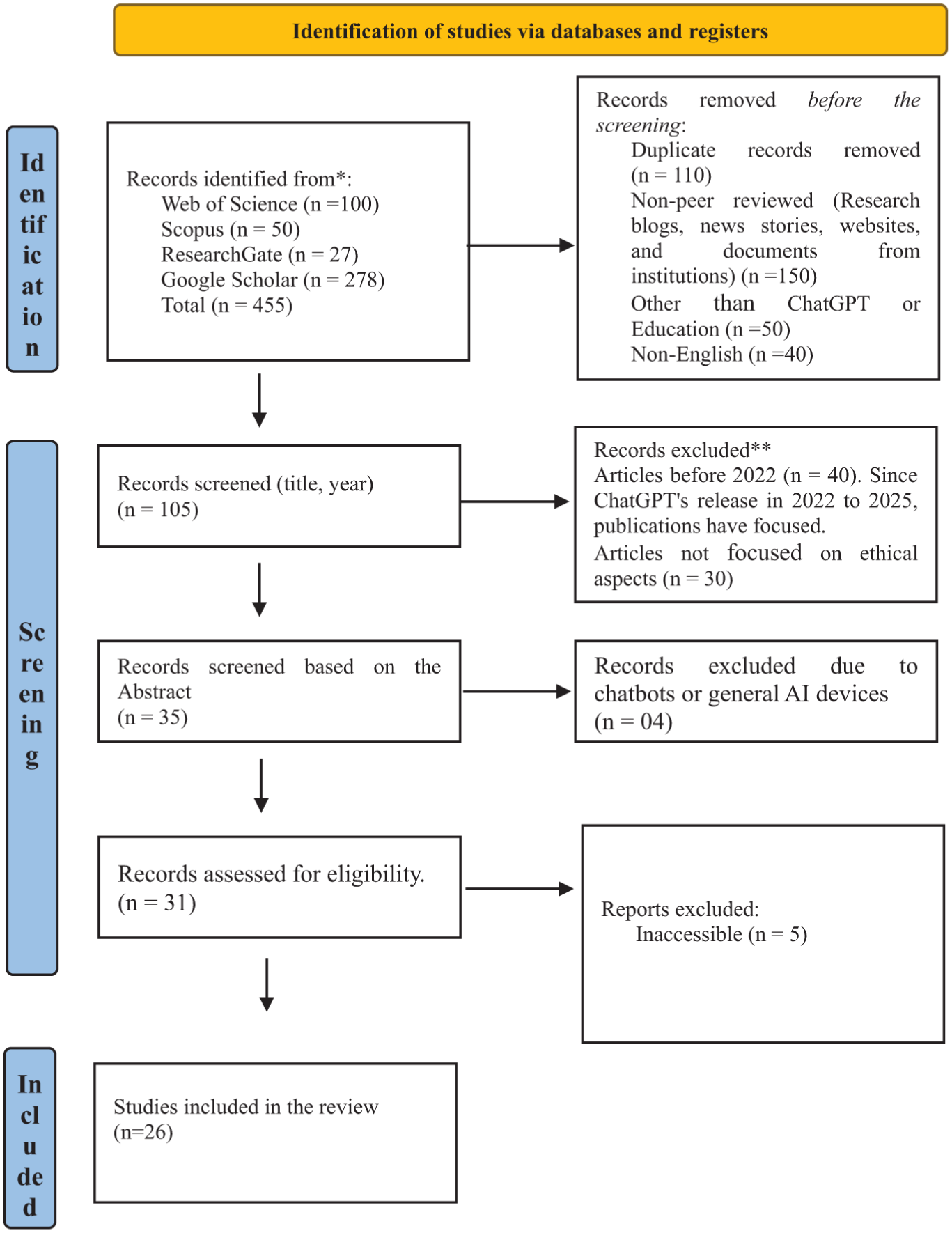
A PRISMA flowchart of included articles in the scoping review.
Methodological Quality Assessment
Two independent reviewers examined the selected studies to assess accuracy. CRAAP (Currency, Relevance, Authority, Accuracy, and Purpose
Data Extraction
The studies selected based on the inclusion and exclusion criteria were structured in an Excel sheet. Authors, years, study title, the ways the studies were done (method), countries involved, findings, recommendations, and ethical dilemmas of ChatGPT integration in higher education were all used to synthesize the findings.
Coding Scheme and Process
Two individual reviewers coded the information without knowing each other’s coding to minimize bias. Disagreements were managed by discussing the issue, inclusion, and exclusion criteria, and reaching an agreement. A Kappa coefficient analysis was carried out, which helps to remove bias, and it shows that two coders agreed 82% of the time, which is classified as excellent.
Data Synthesis
The review used thematic analysis to study the selected papers. Thematic analysis helps to regulate the order and interpretation of patterns in the data (Braun & Clarke, 2022). The approach worked well for the review, since it allowed to look into the regular ethical problems, issues, and recommendations in using ChatGPT in higher education. Thematic analysis helped in better understanding the main trends, teachers’ and students’ perceptions. The main research question
Frameworks Used in the Review
The theoretical frameworks that were identified were not adopted as exclusion criteria but rather as analytical lenses when synthesizing and interpreting the data. After conducting a thematic analysis, the emerging themes, including threats to academic integrity, risks of privacy, pedagogical disruptive experience, and equity considerations, were discussed in context of the chosen frameworks to develop a better conceptual perception. As an illustration, the results regarding excessive dependence on ChatGPT were explained using Technological Determinism and Constructivist Learning Theory. The stance of the stakeholders on surveillance and the use of their data was discussed with the help of the Ethics of Care and the Privacy Paradox. This theoretically based method reinforced the cohesiveness of the synthesis and made it possible to explanation of the reasons that ethical issues differ in situations and groups of stakeholders.
Mind map Analysis
The above mind map outlines the ethical implications and challenges of integrating ChatGPT in higher education. Key concerns include academic integrity, data privacy, misinformation, and over-reliance on AI, which may affect critical thinking and creativity. However, ChatGPT offers benefits like enhanced flexibility, personalized learning, and peer feedback. It also supports interactive practice and fosters motivation. The map emphasizes the need for teacher training, clear guidelines, and addressing barriers such as internet access and resistance to AI adoption for effective implementation (Figures 2 and 3).
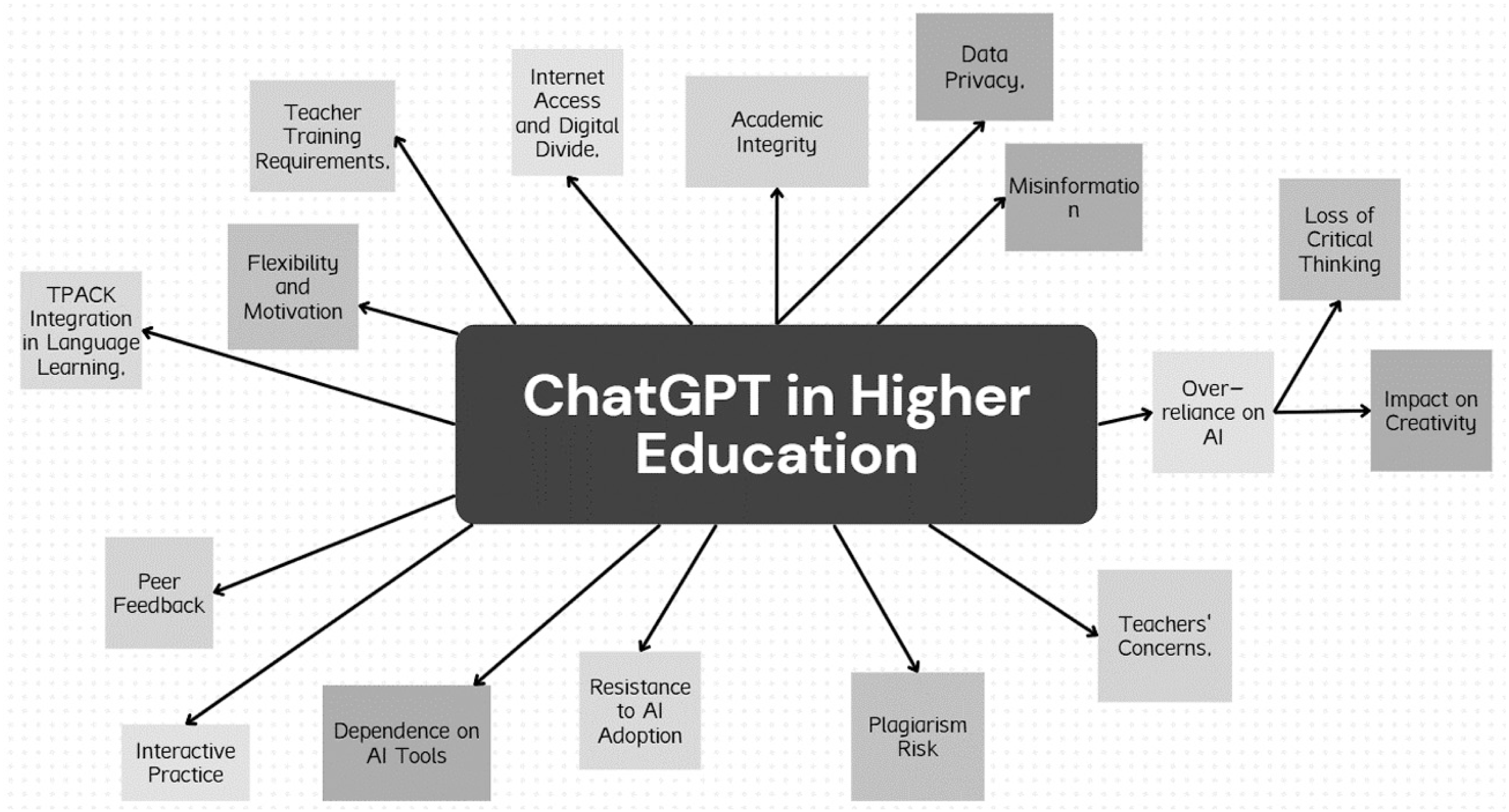
The mind map of ChatGPT in higher education.
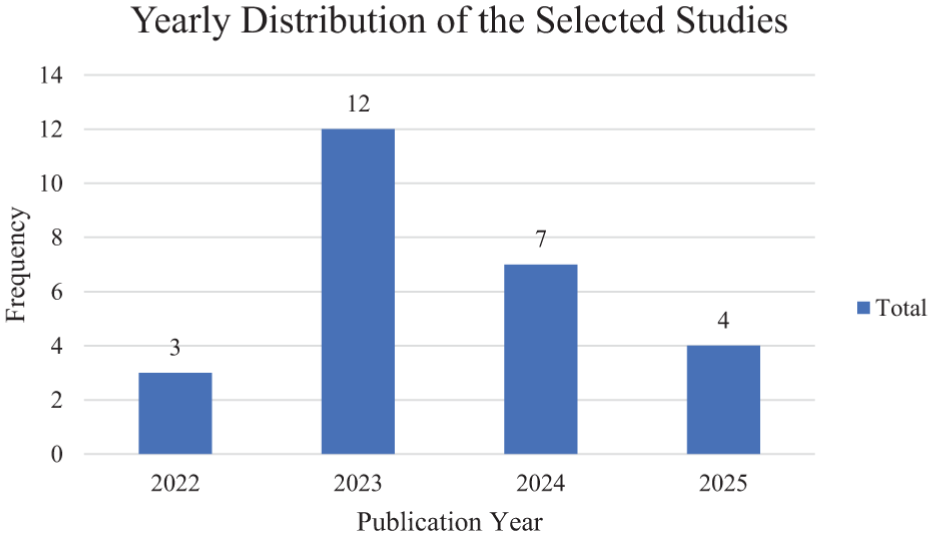
Yearly distribution of the selected studies.
Findings and Synthesis
This section explores the ethical matters, beliefs of stakeholders, and recommended steps to include ChatGPT in the college sector. The results from these 26 studies, using a range of methods, have been synthesized in Table 1. Thematic synthesis of all the studies incorporated indicates that there are four broad patterns, namely: (1) integrity threats, whereby AI-generated content undermines authenticity in assessments; (2) data and privacy risks, especially in systems that capture behavioral analytics; (3) pedagogical dilemma, as teachers are not sure how to balance efficiency and human-centered learning; and (4) equity risks, where digital literacy and access discrepancies make a difference in student interaction with AI. These themes point out conflicts between innovation and ethical accountability; contradictions were apparent in different parts of the world and different fields. As an illustration, although the research indicates that others have found greater motivation and personalized learning advantages, others have reported cognitive offloading, reduced innovativeness, and a normalization of addiction to ChatGPT tools.
Overview of the Included Studies.
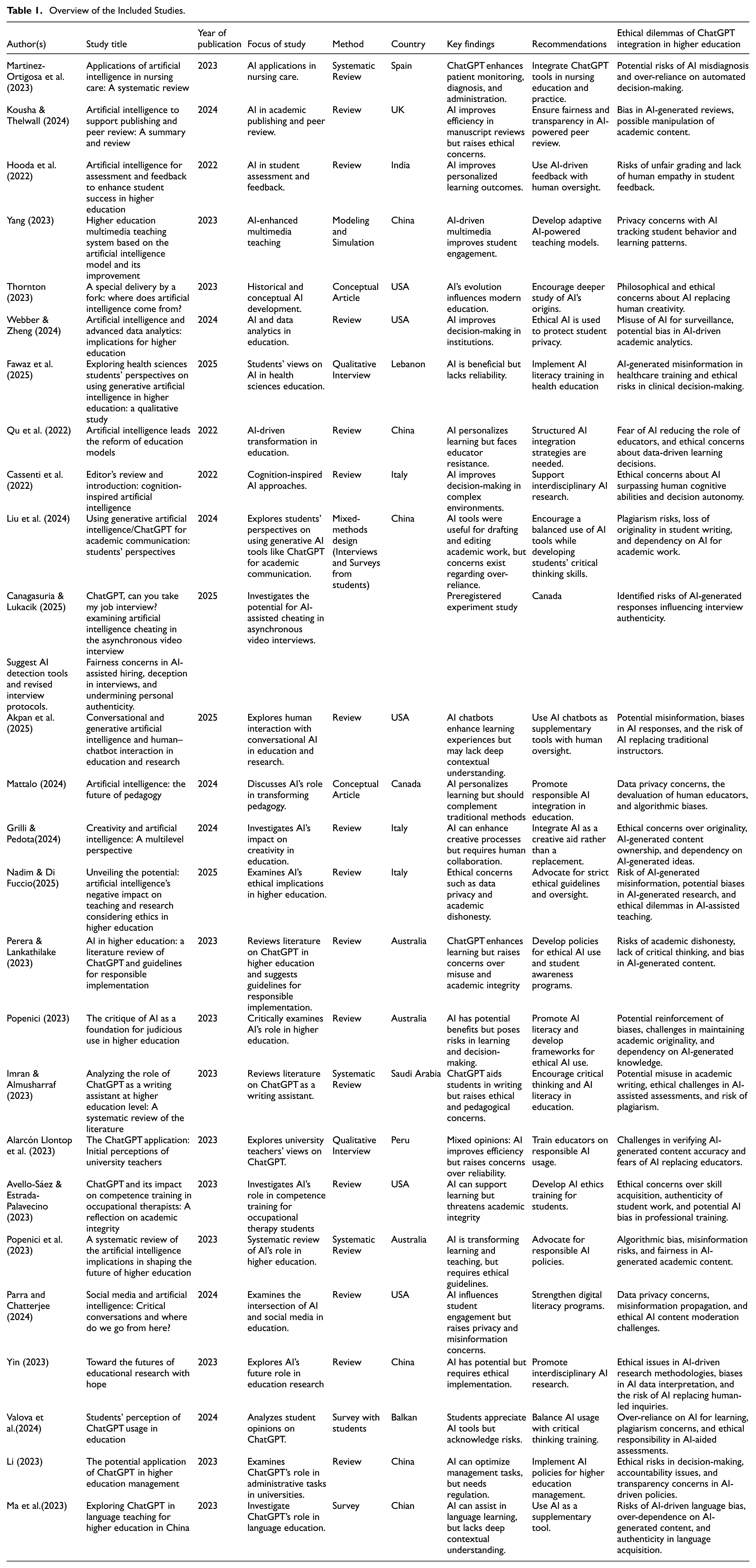
According to the results, there is an inconsistent and even contradictory body of evidence instead of a homogeneous opinion about the ethical effects of ChatGPT. Although numerous studies have suggested similar issues like the threats to academic integrity, privacy risks, and newer equity gaps, the scope and the character of these problems differ in various situations, subjects, and the level of institutional readiness. There are those areas that show high rates of integration that are backed by policies and training, and those areas show high levels of uncertainty, resistance, or lack of resources. In the same vein, there is a variance in the perception of stakeholders; students are likely to report positive academic support, whereas educators have more profound reservations regarding critical thinking and authenticity. The synthesis does not, thus, involve generalizations, but rather highlights the variation and complexity of the ChatGPT adoption in higher education.
Table 1 shows the overview of the selected studies.
Theme 1: Ethical Concerns and Risks Associated With ChatGPT in Higher Education
The ethical issues raised in the analyzed articles demonstrate a general agreement on the potentially dangerous nature of the integration of ChatGPT into the university environment, especially with references to academic honesty, privacy violations, and the risk of excessive dependence on artificial intelligence. These issues hence directly answer the research question that What are the ethical concerns with the use of ChatGPT in the higher education sector? Research by Martinez-Ortigosa et al. observe that in clinical contexts, excessive reliance on AI may lead to misdiagnoses and compromised patient safety, particularly when AI outputs are accepted uncritically (Martinez-Ortigosa et al., 2023). Hooda et al. (2022) report that algorithmic grading introduces risks of unfair outcomes and a decline in empathetic engagement in assessment practices, while Yang argues that AI-driven learning analytics may intrude upon student privacy through extensive behavioral surveillance (Yang, 2023).
In vocational training settings, Avello-Sáez and Estrada-Palavecino (2023) note that AI-assisted competence development can appear inauthentic and insufficiently reflective of real-world demands. Broader empirical surveys conducted by Nadim and Di Fuccio (2025) and Popenici et al. (2023) consistently identify algorithmic bias, the propagation of misinformation, and threats to academic integrity as systemic hazards.
In language education, while the efficiency potential of AI is acknowledged, these studies collectively demonstrate that without stringent human oversight and ethical governance, the integration of ChatGPT risks undermining fairness, privacy, authenticity, and the foundational values upon which higher education rests.
The results of the studies that have been included do not indicate a consistent agreement but rather a significant level of heterogeneity determined by different disciplinary, regional, and institutional characteristics. As an illustration, students in technologically advanced settings like China are reported to have generally positive experiences using ChatGPT, in terms of enhanced academic communication and efficiency (Liu et al., 2024; Ma et al., 2023). However, teachers in Peru and Australia are more concerned with issues relating to reliability, academic honesty, and loss of pedagogical relationship (Alarcon Llontop et al., 2023; Popenici, 2023).
On the same note, privacy and data surveillance issues are particularly high in US-based analyses in which learning analytics are more widespread (Webber & Zheng, 2024; Yang, 2023). However, challenges related to equity are of a larger scale in resource-restricted environments, where a lack of access to AI tools can further contribute to learning disparities (Nadim & Di Fuccio, 2025; Ziprebo & Obi, 2024). The definitions of it vary even in the same type of integrity, for example, academic integrity: some scholars refer to AI use as a direct threat that should be strictly regulated by the institution (Avello-Sáez & Estrada-Palavecino, 2023; Rane et al., 2024). However, other studies indicate that, with proper guidance and transparency, ChatGPT can be used without significantly affecting assessment authenticity (Eager & Brunton, 2023; Imran & Almusharraf, 2023). The results of these opposing studies also serve to highlight the fact that there are no universal ethical implications, but that these differences are strongly shaped by cultural norms, institutional effectiveness, maturity of policies, and pedagogical culture among various higher education systems.
Theme 2: Stakeholder Perceptions of ChatGPT’s Ethical Use in Assessment, Education, and Research Setting
The perceptions of students, faculty, and scholarly investigators concerning the ethical use of ChatGPT are highly heterogeneous, thus highlighting a spectrum of concerns related to the application of the tool in assessment, educational practice, and research processes. This theme answers the research question that. How do students, teachers, and researchers perceive the ethical use of ChatGPT for assessment, education, and research work? In particular, Alarcón Llontop et al. (2023) and Ma et al. (2023) demonstrated that some instructors see potential for enhancing lesson planning efficiency and creativity, others, such as Qu et al. (2022) and Mattalo (2024), emphasize the risks posed by unverifiable AI-generated content and the irreplaceable value of human pedagogical engagement. Researchers, too, express mixed views: Webber and Zheng (2024), along with Popenici et al. (2023), recognize AI’s utility in streamlining literature reviews and data analytics, yet Popenici (2023) and Yin (2023) caution against the erosion of methodological integrity when AI supplants human judgment. However, views diverge regarding the adequacy of current policies. Li (2023) and Cassenti et al. (2022) contend that existing institutional frameworks may suffice if rigorously enforced, whereas Parra and Chatterjee (2024) and Avello-Sáez and Estrada-Palavecino (2023) advocate for more comprehensive and interdisciplinary standards to safeguard academic values.
Theme 3: Strategies and Policy Recommendations for Ethical Integration of ChatGPT in Higher Education
One of the key themes of the academic literature is the development of the ethically sound methodologies of implementing ChatGPT in the context of higher education. This theme addresses What are the recommendations to address ethical challenges to integrating ChatGPT in the higher education sector? One of the most common approaches that have been demonstrated through the studies reviewed is the process of developing and implementing institutional policies that specify what is allowed in the use of AI, alongside the implementation of detection tools to track the occurrence of cases of academic misconduct. A prevailing recommendation involves the implementation of institutional policies that clearly define acceptable AI usage, employ detection tools for academic misconduct, and mandate disclosure of AI-generated content, as supported by Perera and Lankathilake (2023), Nadim and Di Fuccio (2025), and Li (2023). In assessment design, Hooda et al. (2022) and Akpan et al. (2025) recommend hybrid approach wherein AI-generated feedback is supplemented by human evaluation to ensure both fairness and empathy.
To counteract the risks of plagiarism and loss of originality, Liu et al. (2024), as well as Imran and Almusharraf (2023), propose embedding AI ethics instruction into writing programs and requiring reflective disclosure of AI usage in assignments. Mattalo (2024) and Alarcón Llontop et al. (2023) stress the necessity of training educators in best practices for pedagogical integration, ensuring that AI complements rather than replaces instructor-led learning.
In the domain of research and publishing, Popenici et al. (2023) recommend establishing transparent AI review processes supported by mechanisms to enhance accountability and reduce bias. Cassenti et al. (2022) and Parra and Chatterjee (2024) further call for the development of national and international ethical frameworks that balance technological innovation with the protection of human autonomy and scholarly rigor. On the other hand, technical safeguards such as algorithmic audits, privacy-respecting data protocols, and self-regulating AI mechanisms that can indicate uncertainty are proposed by Yang (2023), Popenici (2023), and Ma et al. (2023) to address the challenges of misinformation, surveillance, and bias. Collectively, these strategies articulate a comprehensive roadmap for the responsible integration of ChatGPT in higher education, one that seeks to align efficiency and innovation with enduring academic values.
Disparities in digital literacy, device access, and institutional readiness can also be viewed through the Ethics of Care, which can address equity issues. It is a framework that stresses sensitivity to the differences in the needs and contexts of students. It takes place when AI tools serve the already advantaged learners more than others, which leads to the loss of fairness and relational responsibility. Equity thus turns into an institutionalized ethical problem based on the obligation of the institution to make sure that the integration of AI does not contribute to the further extension of existing inequalities.
Discussion
This review provides a holistic concept of the ethical issues surrounding the use of ChatGPT within the higher-education sphere, identifying the major theme areas of academic integrity, data privacy, bias in the algorithm, and organizational inclination toward excessive dependence on artificial intelligence. Although the challenges have been recognized by the purely existing literature beyond reasonable doubt, the future task is now to transform such issues into practical policy principles, educational approaches, and responsible integration plans of AI. The review highlights the important ethical implications that are to be negotiated in the use of AI tools like ChatGPT but also indicates that the current body of knowledge outlines a way to the responsible application as well, despite the fact that more empirical research is still necessary.
This discussion section explores the ethical matters, beliefs of stakeholders, and recommended steps to include ChatGPT in the college sector. The results from these 26 studies, using a range of methods, have been synthesized in Table 1 and Figure 4. The findings suggest the main ethical topics, including academic honesty, privacy of information, and trusting AI systems. This comprehensive approach aims to support the responsible and effective use of ChatGPT in higher education.
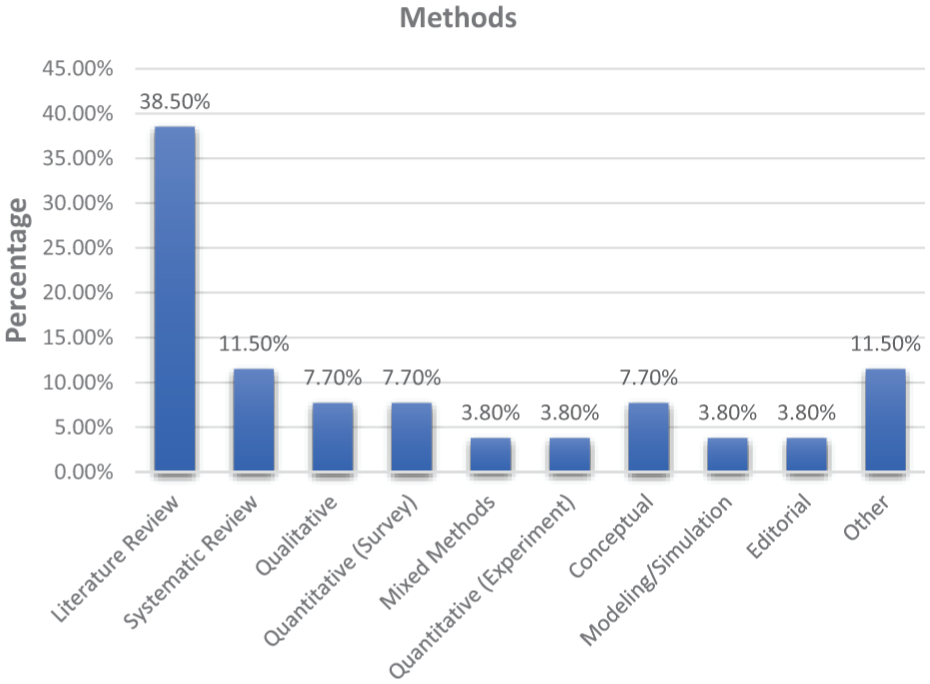
Types of studies and their percentages.
Ethical Concerns Surrounding ChatGPT in Higher Education
The initial result suggests that AI systems like ChatGPT have brought about many ethical issues in the university, especially when it comes to academic dishonesty, data privacy, bias, and overreliance on technology. The findings are aligned with those made by Karthikeyan (2023), who states that educators struggle to identify AI-created plagiarism, and it makes it challenging to assess and grade plagiarism. Similarly, Yang (2023) and Webber and Zheng (2024) point out that AI systems frequently handle personal and sensitive data without a clearly defined procedure to guarantee data safety, so a stronger information handling policy is needed. The consistency of these findings indicates that the literature is always aware of the possibility of ethical compromise in case of AI implementation in the absence of appropriate monitoring. Similarly, Care Ethics predicts the existence of relational responsibility trust, and the well-being of learners (Heyder et al., 2023). Privacy issues, which have been reported in research, are indicative of a failure in these relational tasks, especially where AI systems access or analyze student data in a manner perceived to be opaque or intrusive (Tsai et al., 2020). In this light, data surveillance practices jeopardize the trust that should be present in the caring school atmosphere, and it points out that privacy is not merely a legal issue, but a moral one, with the need to ensure considerate and protective relationships with the students.
Nevertheless, a different observation arises with regard to prejudice and falsehood. However, Akpan et al. (2025) and Kiryakova and Angelova (2023) suggest that minority students, due to the prejudiced data set used to train the AI models, can be misinformed and that these models might also reinforce the inequality in education. Not only on a technical level but also on a systemic level, this issue represents a concern that either previous research, like that conducted by Martinez-Ortigosa et al. (2023), has not completely involved in clinical or educational terms. Thus, although current studies identify ethical issues, they tend to play down the complex social or social outcomes of AI implementation, especially those of vulnerable populations.
The next important finding is the excess use of AI in learning institutions. Alarcon Llontop et al. (2023) and Lan et al. (2024) document that students and educators occasionally have too much faith in the results produced by AI, which leads to a lack of creativity and independent thought. This observation complies with the literature, which highlights the need to work together with AI and not to replace. According to the Theory of Planned Behavior, attitudes, perceived norms, and perceived behavioral control influence intentions of students to adopt a behavior (Ahadzadeh et al., 2024). When applied to ChatGPT, this can be used to explain why the risk of academic misconduct increases: students can feel positive about AI-assisted shortcuts (attitude), believe that other students are using AI (subjective norms), and they know that ChatGPT can bring them high-quality text easily (behavioral control). This model gives the answer as to why integrity breaches are not just technical problems but a behavioral reaction to social and academic pressure.
Stakeholder Perceptions of ChatGPT Use
The second important observation is related to the perception held by stakeholders who vary greatly among students, faculty, and researchers. ChatGPT, as it is mostly accepted by students, is useful in writing, editing, and understanding academic information, which is aligned with Alarcon Llontop et al. (2023) and Avello-Sáez and Estrada-Palavecino (2023), who observe that grammar, flow, and conceptual comprehension are also improved. These tools are the ones that students see as the individualized academic support, which is supported by the findings of the research by Liu et al. (2024), where the authors reference the benefits of efficiency and personalized learning. This correspondence proves the concept that AI can aid in the individualized learning and complement the traditional means of instruction. According to the concepts of Technological Determinism, the popularity of ChatGPT is the evidence of the ability of technology to transform the process of learning and academic life. This theory can be used to understand why AI assistance is becoming normalized among students as a natural part of modern education (Yu, 2024).
Nevertheless, opposing views indicate possible disadvantages. According to Avello-Sáez and Estrada-Palavecino (2023) and Alshater (2022), long-term use of ChatGPT can suppress genuine learning and intellectual growth, which is a cause of concern about future cognitive abilities and critical thinking. In addition, the threat of plagiarism as a critical challenge also arises because of the possibility of human error and intentional interest in obtaining AI-generated content. This is contrasted with Imran and Almusharraf (2023) who stated that students can end up submitting it as their original work, which can degrade the academic integrity. This opposition highlights a gap in previous research, which usually involves immediate advantages of using AI without a systematic assessment of its impact on further learning outcomes and moral reasoning. The Constructivist Learning Theory is aligned, as it focuses on active construction of knowledge based on critical interaction, but not passive information consumption. Overreliance on generative AI can undermine this process by favoring shallow learning and decreasing meaningful cognitive effort (Jayasinghe, 2024).
The perceptions of the educators are also diverged. This shows similar points discussed by Liu et al. (2024) which has been reported that ChatGPT is known to make work processes like grading, creating assessment rubrics, and modifying instructional resources to suit different learners more efficient. These results are also aligned with the existing research by Malinka et al. (2023) that highlights the possibilities of AI to decrease the number of administrators and improve the efficiency of teaching. Conversely, uncertainties about the AI failure to imitate human judgment and other subtle learning behaviors are widespread. This fear is in contrast to the overall positive attitudes expressed in Qu et al. (2022) and Mattalo (2024), which reveals a significant gap: there is a lack of literature on educator preparedness and the need to organize training on AI implementation. Social Cognitive Theory helps understand these inconsistent responses by emphasizing the role of the perceived consequences, observable practices, and institutional norms influencing adoption. With the help of training, modeling, and common professional experiences, educators will be more likely to integrate ChatGPT effectively (Firmansyah & Saepuloh, 2022).
The mixed views are also evidenced by researchers. The research concludes that ChatGPT has the potential to automate the initial phases of research, including literature summarizing, writing abstracts, and preliminary data analysis, which is also in line with Parra and Chatterjee (2024) and Yin (2023). The efficiency will be able to speed up the research process and facilitate prompt knowledge synthesis. On the other hand, the problem of authorship attribution, transparency, and methodological integrity poses a challenge to the idea of an AI in the role of an unqualified research assistant. This is contrasted with Malinka et al. (2023) who suggested that research on the issue of AI being credited as a co-author or treated merely as an assistive device is still debated, which indicates the deficiencies in the current literature. These oppositions demonstrate the necessity of careful studies of the attitude of stakeholders and the alignment of institutional policy.
Ethical Recommendations of ChatGPT Integration
Another important finding is on ethical integration strategies. The research demonstrates that there needs to be unequivocal institutional rules to establish what the use of AI should be, and Mohammadkarimi (2023) and Mondal et al. (2023) agree with this idea. The interaction of educators and technologists in the formation of these policies makes them relevant to the context and practically applicable. Moreover, Li (2023) and Ma et al. (2023) suggest the use of AI literacy training among students and staff members, including algorithmic bias, data privacy, and misinformation. This suggestion is aligned with Joseph (2024) who points out that this requires stakeholders to learn the restrictions and ethical aspects AI has in order to foster responsible use. The Virtue Ethics is aligned here because of focusing on the aspects of scholarly integrity, accountability, and intellectual honesty in the research practices. This model highlights the ethical duty of researchers to make sure that AI application is not applied in a way that weakens the academic values but enhances them (Heyder et al., 2023).
Conversely, other strategies are found in the literature that are mainly conceptual and not empirically validated. For example, although Sabry Abdel-Messih and Kamel Boulos (2023) proposes the inclusion of AI ethics in assessment design, not many studies consider the effectiveness of the mentioned interventions in practical academic contexts. This opposition gives the impression of a gap in methodology because most of the proposed recommendations are theoretical and need to be tested practically in order to determine their effectiveness in student learning outcomes and academic honesty. As Kartal (2024) also emphasizes, institutions and developers have a collective responsibility to monitor the use of AI and act in accordance with ethical violations. The existence of these gaps demonstrates the need to institute evidence-based, context-sensitive practices of AI governance in institutions of higher learning. The core of this argument is the Privacy Paradox because it represents the conflict between the advantages of personalized AI assistance and the dangers of misusing the data and surveillance. This model describes why the efficiency provided by AI can be appreciated by people, at the same time being concerned about privacy and security (Tsai et al., 2020).
Moreover, a human based approach of integration is essential. The results indicate that AI ought not to substitute human educators and their role but supplement them, in favor of collaborative learning environments. This vision corresponds to those conducted in the UK Kousha and Thelwall (2024), Canada Mattalo (2024), Italy Grilli and Pedota (2024), and the Balkans Valova et al. (2024), which state that to reduce bias, over-reliance, and the problem of fairness, it is important to maintain human control. On the other hand, other literature, such as Mogavi et al. (2023), is more technology focused and has a vision that revolves around efficiency gains to the detriment of ethical and pedagogical deliberations. This opposition helps to emphasize an ongoing tension: there is a trend when the literature cannot find an answer to the question of whether AI can transform education and retain the most fundamental values of education, including creativity, critical thinking, and equity. Technological Determinism can be useful in contextualizing this tension in order to understand how unfettered technological progress may put human agency in the education sector at a periphery. The challenge of balancing between technological innovation with pedagogical and ethical factors is still a pressing issue of concern by institutions (Yu, 2024).
Lastly, the study determines a universal agreement on the potential advantages and threats of integration of ChatGPT. Although AI enhances the efficiency of learning and academic support, the issue of data privacy, academic dishonesty, and dependency remains valid, in line with Murgia et al. (2023). Further, the risk of reduced originality and critical thinking highlights the necessity of continuous assessment and formation of policy changes. In contrast, the literature usually revolves around the immediate benefits of AI, while longitudinal evaluation of the effects of AI on student growth, equity, and institutional ethics is overlooked. This demonstrates that there is a necessity to conduct a research study that would assess the immediate and the long-term outcomes of AI implementation in various educational and cultural settings.
In the future, this review can be used to shape institutional policies and educational practises in higher-education institutions. Against the background of the active introduction of ChatGPT, schools are invited to implement clear rules that clearly define what AI can do and provide tough measures regarding the identification and elimination of academic dishonesty (Nwozor, 2025). The publication of AI-created work in the assessment setting is a practise that needs to be implemented, so that academic honesty is ensured due to increased transparency. Therefore, schools should develop structures that explicitly outline the acceptable edges of AI application, and technology should complement human discernment and communication as opposed to replacing it.
Existing literature also highlights the need to develop AI literacy courses among students and faculty members, which also throws light on the ethical aspects of AI application. These curricula must challenge fundamental problems of academic integrity, power of algorithms, privacy, and dangers of overreliance on technology, thus enabling stakeholders to critically evaluate not just the functionality and advantages of the use of technologies such as ChatGPT but also the risks associated with them, thus promoting more responsible use (Kumar & Sangwan, 2024). In this regard, it is essential that the institutions should focus on educator training and professional development so that they can implement AI in teaching without affecting critical thinking, creativity, and genuine interaction with the students.
The current literature focuses on theoretical structures and conceptual frameworks, creating a strong gap in empirical support about the effectiveness of suggested strategies in practise. The resulting gap highlights the importance of future studies that will help assess the feasibility of AI policies and pedagogical practises implementation in institutions of higher learning. Investigations that would determine the long-term effectiveness of ChatGPT in terms of student learning outcomes, cognitive growth, and academic integrity are especially applicable (K. Ali, 2025). Through a longitudinal study of how AI tools affect academic outcomes and ethical conduct, scientists can provide more specific suggestions on how AI can be integrated into the educational system.
Potential future studies must also challenge cultural/contextual differences in the use/adoption of ChatGPT in different regions and institutions. The review shows that the perception of ChatGPT can differ significantly across stakeholders, and the technological accessibility, institutional preparedness, and cultural customs moderate the ethical issues of ChatGPT. The inclusion of ChatGPT in educational settings, in turn, will only be discernible through cross-cultural and cross-institutional studies to be able to understand how the integration can be adjusted to satisfy the unique needs and challenges of the diverse educational settings (Abbasnejad et al., 2026). Studies within resource-constrained settings, such as, can provide information on how the digital divide can be mitigated so that people could obtain equal access to AI technologies and prevent the further amplification of educational disparities.
Besides, one should take the collaboration of AI with pedagogy in terms of making it more convenient further. Even though the opportunities of AI to facilitate personalized learning are mentioned as existing literature, there is an urgent need to explore how ChatGPT and similar tools can be integrated into the learning process to complement existing approaches and not to replace them. Designs that promote active, reflective and deep learning should be prioritized in research so that the learners can be provided with the opportunity to learn and acquire vital skills like problem-solving, collaboration, and creativity (Albakry et al., 2025).
Another essential field of future research is the ethical management of AI tools. It is necessary to draught the policies which will go beyond the short-term issues, including plagiarism and privacy of the data. The researchers ought to consider aspects of governance that can be used to guarantee the responsible use of AI in education (Camilleri, 2024), as well as investigate how data privacy policies, institutional transparency, and establishing universal ethical guidelines to apply AI in education can interrelate. These frameworks should provide teachers with the principle to use AI with the right balance between the preservation of authenticity and integrity in the student-teacher interaction.
Lastly, although the recent literature essentially focuses on ethical issues, there is a gap in the number of studies that discuss the possible beneficial effects of AI in education. It may be necessary to examine the modalities in which AI can be ethically deployed to achieve inclusivity, equity, and customized learning outcomes in future research (Gupta et al., 2025). The analysis of how AI can be used to assist vulnerable student groups, including those with lower-income backgrounds or students with learning disabilities, will facilitate the creation of a more inclusive educational system that will use technology to augment, but not to preclude, learning opportunities.
Overall, further studies should attempt to fill the existing gaps, particularly those related to the practical implementation of AI ethics in education. The use of longitudinal research on the effects of AI on learning, cognition, and academic performance will play a central role in determining the future of AI in higher education. At the same time, cross-cultural studies will enlighten the way AI is viewed and applied in divergent settings, especially in the areas that lack resources. These gaps will also be filled to make AI applications like ChatGPT be used in a manner that does not undermine academic values or ethical principles.
Limitations
There are several limitations in this study that can impact the results and their relevance. Many of the studies include rely on concepts or reviews, giving only a small amount of evidence about how ChatGPT influences actual education (Popenici, 2023). Similarly, studies tend to come from China, Australia, and the USA, regions that have access to better resources, so their findings might not be useful for institutions with fewer resources (Cassenti et al., 2022). The issues of ethics are mentioned, yet practical ways to handle problems such as cheating, biased algorithms, and data privacy are rarely discussed (Alarcón Llontop et al., 2023). Finally, topics such as digital gaps, relying heavily on AI, and decreased face-to-face communication, require more research focused on mixed-methods or following up on data in the long run.
Conclusion
The existing literature review highlights the growing popularity of ChatGPT in higher education, with no less than 11 ethical issues, such as, but not limited to, academic integrity, privacy, bias, and over-reliance on artificial intelligence tools. Despite the fact that artificial intelligence presents significant potentials in enhancing the educational experiences, it is at the same time accompanied by high levels of risks that should be considered carefully. As an illustration, academic dishonesty will be more difficult to eliminate, as students can easily use AI-generated content to accomplish tasks, which will create some worries about the legitimacy of academic output. Besides, AI implementation in the educational setting can reduce the possibilities of the students to develop the necessary skills, that is, critical thinking, communication, and problem-solving, which, again, cannot be ignored as each of the three is the critical part of the balanced educational process.
Dependency on the technological solutions can also undermine the necessary human interaction in the learning procedure, and therefore deny the students interpersonal and pedagogical understanding and support required to promote higher learning and personal development. These concerns are further exacerbated by the reality that much of the current body of research on AI in education is located in high-resource settings, where technology and infrastructural access is not a major issue of concern. Therefore, the results of these contexts might not be generalizable to systems with limited resources in education, and hence, the need to have an inclusive research that encompasses the experiences of various educational environments.
Moreover, the dynamic nature of AI technology makes it difficult to create long-term and broad institutional policies. Even though students and educators are aware of the possibilities of ChatGPT, with references to efficiency and individual learning, these views are not unanimous, especially among teachers who raise some doubts about decreased skills of critical thinking and academic integrity. This deviation highlights the importance of more inclusive empirical studies that can reflect the experiences of all stakeholders in different regions and in different educational systems. Nevertheless, in spite of these issues, the review argues that ChatGPT and similar AI-based tools can be used to their advantage in the context of ethical considerations, where the concepts of transparency, fairness, and academic integrity take priority. To curb the ethical issues that come hand in hand with AI, colleges and universities are required to implement clearly detailed policies on how AI can be used, and emphasize the need to act responsibly and ethically.
Ethical guidelines to be used in the application of ChatGPT include institutional policies that clearly define how AI can be used in education, hence keeping it transparent and accountable. Both students and educators must have training programs focused on AI literacy that would help them feel knowledgeable to engage with AI-generated content and other materials in a responsible manner and reduce the risks of misuse. The grading process needs to be fair and empathetic, which should be achieved with the help of a hybrid method of assessment, meaning the combination of AI-generated feedback and human judgment. To ensure that AI algorithms are bias-free and to protect the confidentiality of student data, regular audit of the algorithms must be carried out. Moreover, further studies are justified to investigate the impact of generative AI like ChatGPT on student learning over time, the role of teachers, and the academic culture in general in the institutions. Interdisciplinary and cross-cultural studies must also be prioritized to shed light on the particular issues experienced in the different educational contexts, and, thus, the implementation of AI will be fair and reasonably backed by the specifics of a given situation.
Finally, policymakers, teachers, and technology experts need to join forces to come up with global ethics on the use of AI in education. These guidelines should strike the right balance between innovation and the protection of the core values of education as AI should not negatively affect integrity, fairness, and inclusiveness. The culture of critical reflection of AI in the academic environment should be promoted because it helps students and professors to approach technology critically and responsibly. With the help of such measures, it is possible to make sure that AI tools, for example, ChatGPT, complement education and at the same time the fundamental principles of academic integrity, creativity, and human-centered learning are maintained.
Recommendations and Future Directions
Ethical use of ChatGPT in higher education calls for a thoughtful and comprehensive plan. It would benefit universities to implement clear rules outlining how AI is permitted for use, making key points of transparency, accountability, and academic integrity. Teachers and students should learn about AI to handle information coming from AI and minimize false assumptions or overuse of such content. Applying a mixture of AI and human analysis can support fairness and consider the needs of students in the classroom. Educator training should teach about ethical AI so that technology enhances, not removes, professional skills. Algorithm audits should be regularly carried out during the use of AI in admissions, grading, and communication to ensure there is no bias and that data is protected. More research should be done to find out how generative AI may influence student learning over time, teachers’ tasks, and the culture within institutions. Examining ethics from a cross-disciplinary and multicultural view would uncover unique problems in various educational settings. Policymakers, educators, technologists, and ethicists must collaborate to create international ethical rules. Overall, supporting a culture that encourages critical thinking about AI is necessary for education technology to remain faithful to basic education values.
Footnotes
Acknowledgements
All authors agree with the submission and the authorship. Author Contributions: This work was carried out in collaboration among all authors
ORCID iDs

Ethical Considerations
This study is a systematic literature review based exclusively on published and publicly available sources. As the research did not involve human participants, animals, personal data, or any form of direct data collection, formal ethical approval was not required in accordance with institutional and international research ethics guidelines. The review was conducted in accordance with principles of academic integrity, transparency, and responsible scholarship. All sources were appropriately cited and acknowledged, and efforts were made to minimize bias through the systematic identification, screening, selection, and synthesis of the literature.
Author Contributions
This work was carried out in collaboration among all authors. Bushra Jamil, Mirajur Rhaman Shaoan designed the study, performed the statistical analysis, wrote the protocol, and wrote the first draft of the manuscript. Sadia Irfan, Muhammad Arif and Golam Ali Azgar Hossain Maruf managed the comments of the study. Yu Zeyuan managed the literature searches and supervised the study. All authors read and approved the final manuscript.
Funding
The authors received no financial support for the research, authorship, and/or publication of this article.
Declaration of Conflicting Interests
The authors declared no potential conflicts of interest with respect to the research, authorship, and/or publication of this article.
Data Availability Statement
Yes. Data were available on request from the corresponding author.*