







Abstract
Research on technology-integrated translation education has garnered significant attention from scholars, resulting in a growing body of literature. To identify current trends, key themes, leading contributors, and emerging areas in this field, we used CiteSpace to analyze 670 publications from the Scopus database between 2014 and 2025. The findings reveal that: (1) Publications on technology-integrated translation education have steadily increased over recent decades, with significant growth in recent years. (2) The research themes can be categorized into four main areas: translation technology and tools, translation teaching practices, information literacy in translation education, and ethical issues related to translation technology. (3) There is a noticeable lack of collaboration both across academic institutions and among authors within the field. (4) Research hotspots and frontiers in translation education are increasingly focusing on human-centeredness in translator training. Future research should prioritize training translators to maintain agency in AI-assisted workflows, especially for high-cognitive tasks such as legal, medical, and literary translation, with an emphasis on developing skills for accuracy, ethical responsibility, cultural sensitivity, and empathy in these areas. Such an overview is essential for clarifying current research trajectories in technology-enhanced translation education and for providing a modest scholarly reference to support pedagogical practice.
Plain Language Summary
Research on technology-integrated translation education has grown significantly in recent years. This study analyzed 670 publications from 2014 to 2025 to identify trends, key themes, leading contributors, and emerging areas in the field. The findings show that the number of publications has steadily increased, with notable growth in recent years. The research focuses on four main topics: the use of translation technology and tools, teaching practices in translation, information literacy in translation education, and ethical issues related to translation technology. There is also a noticeable lack of collaboration between academic institutions and among authors. A major trend in translation education research is the shift toward human-centered approaches, with an emphasis on training translators to maintain control in AI-assisted workflows, particularly for complex tasks like legal, medical, and literary translation. Future research should focus on developing skills in accuracy, ethical responsibility, cultural sensitivity, and empathy in these areas. This summary provides a clear picture of current trends in technology-enhanced translation education and offers useful insights for improving teaching practices.
Keywords
Introduction
The discipline of translation studies has witnessed a series of influential “turns,” from the cultural turn (Bassnett & Johnston, 2024), the power turn (Tymoczko & Gentzler, 2002), and the sociological turn (Wolf, 2010), to the more recent technological turn (Jiménez-Crespo, 2020). In this broader perspective, technology is understood as the wide-ranging impact of digital tools and infrastructures on translation, including technology-dependent practices and their implications for both translators and translation processes. Scholarly interest in technology within translation studies has developed from descriptive, product-oriented research on translation quality to empirical process-oriented studies on translators’ competence. Within this trajectory, a major area of sustained attention concerns the role of technology in translation education.
Existing studies on technology-integrated translation education can be broadly grouped into four major themes. One concerns the use of technologies in translation education, including teachers’ and students’ acceptance of tools ranging from computer-assisted translation systems to generative AI such as ChatGPT. A second theme examines changes in teaching practices, with new pedagogical models such as human–AI collaboration framework (Jiménez-Crespo, 2025a). A third theme focuses on information literacy, assessing knowledge foundation, evaluative competence, ethical awareness, and risk management (Lee et al., 2025; J. Zhang & Doherty, 2025). The fourth explores ethical considerations in specialized contexts such as legal and medical translation, highlighting challenges related to accuracy, cultural sensitivity, and professional integrity (Q. Li, 2022; Taivalkoski-Shilov, 2019). Collectively, previous research has demonstrated the transformative impact of technological turn on translation education.
Yet despite the significance of this technological turn, a comprehensive review of the field remains absent. To address this gap, this study aims to conduct a thorough bibliometric review of technology-integrated translation education. Bibliometric studies use quantitative analysis of existing literature to objectively and systematically uncover a discipline’s structure, research trends, and key topics. Its strengths include being data-driven, revealing academic influence and collaboration networks, supporting decision-making, and offering scientific evidence for academic research and policy-making (Ninkov et al., 2022).
Specifically, we aim to map the research landscape, identify leading scholars, key organizations, and major publications, and uncover emerging research fronts while projecting future directions. Such an overview is essential for clarifying current research trajectories in technology-enhanced translation education and for providing a modest scholarly reference to support pedagogical practice. The following research questions guide our study:
Research Design
Data Collection Procedure
The dataset for our study was exclusively sourced from the Scopus from 2014 to December 2025, guided by a set of deliberate choices. Scopus has long been acknowledged as one of the foremost authoritative indexing tools for scientific and technical literature, offering a comprehensive coverage of critical areas in science and technology research (Singh et al., 2020). In this study, Scopus was chosen as the data source to build the dataset based on a topic search of “technology items” and “translation education items.”Table 1 presents the search queries used.
Keywords Searches.
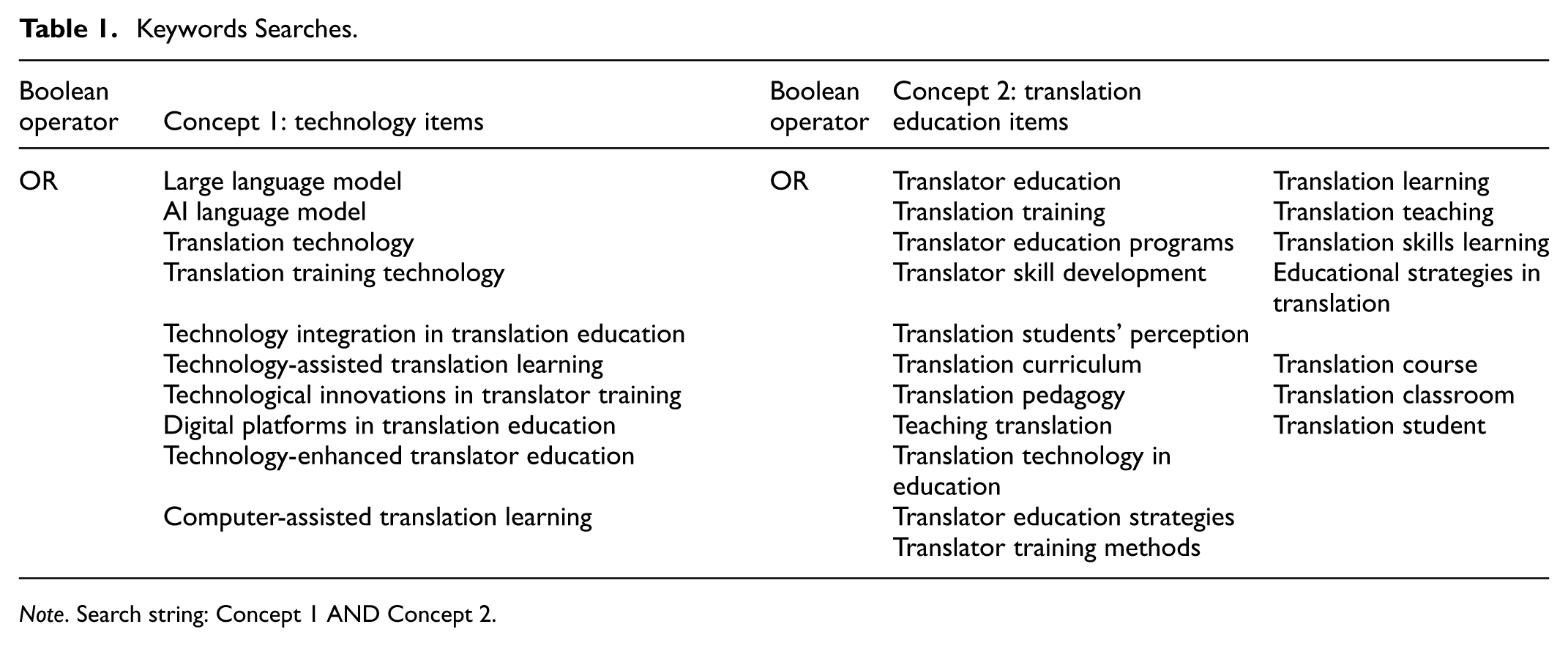
Note. Search string: Concept 1 AND Concept 2.
Our data collection process was structured around four key criteria: (1) The search strategy is based on two main concepts: Concept 1 (“technology items”) and Concept 2 (“translation education items”). Within each concept, the OR operator is used to combine a range of related keywords, allowing for a broad search within each topic. The AND operator is then employed to combine both concepts, ensuring the search results include studies that focus on both technology in translation and translation education (see Table 1 for the list of keywords). (2) Document type: articles; (3) language: English; (4) publication year: 2014–2025.
This initial search yielded 1,240 records published between 2014 and 2025. We then screened the results using two exclusion criteria: (1) duplicate records (likely caused by database indexing and retrieval issues) and (2) studies unrelated to technology-integrated translation education. For instance, we excluded work on how machine translation affects second-language writing quality because it focuses on L2 learning rather than translator education. We reviewed the abstracts of all 1,240 records and removed those that did not meet our inclusion criteria. After screening, 670 relevant articles published between 2014 and 2025 remained for analysis (see Figure 1). This dataset size is generally considered adequate for bibliometric analysis in comparable studies (Kuhn et al., 2024; H. Li & Wu, 2025).
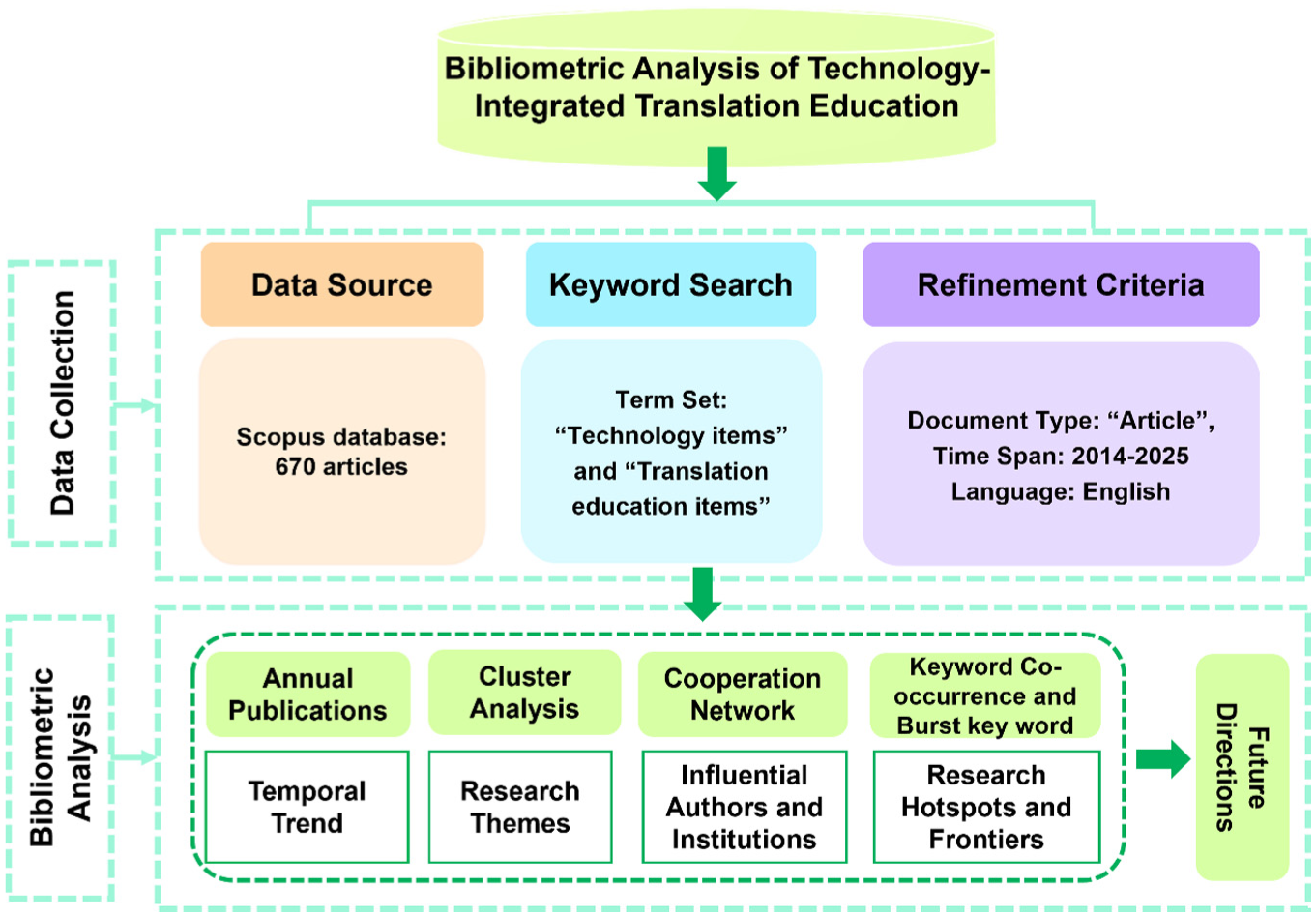
The flowchart of this study.
Instrument
In our study, we use CiteSpace to create visual graphs that track key variables such as number of publications, keyword clusters, and citation burst of keywords. CiteSpace is a freely available Java application for visualizing and analyzing progressive trends and patterns in scientific literature (Gao et al., 2024). It specializes in finding critical points in the development of a field or a domain, especially intellectual turning points and pivotal moments, and represents them through various types of networks. Its functionalities include mapping fast-growing topics, analyzing citation hotspots and their evolution, clustering networks, and highlighting geospatial collaboration trends and international cooperation areas (H. Li & Wu, 2025), enabling a comprehensive and intuitive understanding of complex academic landscapes.
Review papers based on CiteSpace have been conducted in many fields ranging from psychology (Han et al., 2022); computer sciences (X. Chen et al., 2018); educational research (H. Li & Wu, 2025) to translation studies (F. Sun et al., 2023). In this sense, CiteSpace is suitable for reviewing technology integration in translation education.
Data Analysis
In our bibliometric analysis using CiteSpace, we followed a systematic and structured process. First, we imported 670 records into CiteSpace in plain text format. We then utilized CiteSpace’s built-in functionality to extract keywords from these texts, with the time slice set to 1. In detail, to answer RQ1, we analyzed the trend curve using Excel 2023. For RQ2, we began with a keyword clustering analysis. Next, we examined author and institutional collaboration to address RQ3. Lastly, for RQ4, we conducted keyword co-occurrence analysis and burst keyword analysis. These steps are illustrated in our Figure 1.
Results
The Temporal Trend of Publications on Technology-Integrated Translation Education Studies
According to Figure 2, the number of publications on technology-integrated translation education shows a steady upward trend from 2014 to 2025. This pattern is well captured by the fitted curve, with an R2 of 0.964, indicating that the model explains approximately 96.4% of the variance in annual publication counts and thus provides a strong fit. Overall, these results suggest that the field has attracted increasing scholarly attention over time.
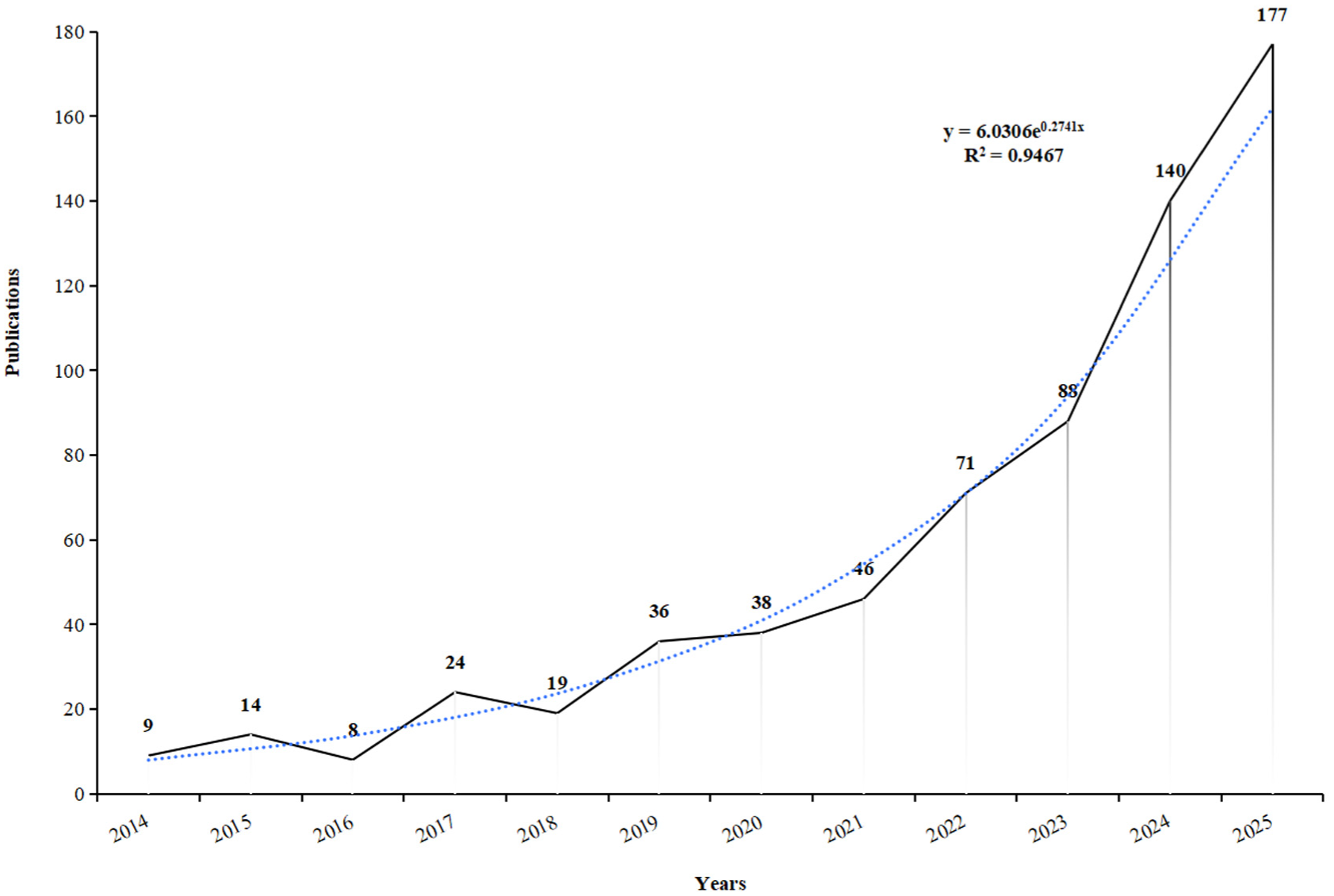
Temporal trend of publications on technology-integrated translation education studies from 2014 to 2025.
To quantify the long-term increase, we calculated the compound annual growth rate (CAGR), which captures the average yearly growth rate over a period assuming a constant compounding pattern (Abdeljaoued et al., 2020). The CAGR is computed as:

where

In practical terms, this means that if the growth observed from 2014 to 2025 is expressed as a single constant annual rate, publication output increased by about 31.1% per year on average, compounding annually, from 9 papers to 177 papers over the same period. Overall, the field demonstrates strong long-term growth and can be divided into three phases: an emergent but volatile stage (2014–2018), a steady accumulation stage (2019–2022), and a rapid expansion stage (2023–2025).
Based on the annual counts, the first phase (2014–2018) shows relatively low output (8–24 papers) and pronounced year-to-year fluctuations, indicating that research agendas and educational frameworks were still emerging. Translator education during this period often treated CAT and translation memory primarily as stand-alone skills, with instruction centered on software operation and workflow demonstration rather than program-level, competence-based sequencing that integrates tool literacy, project management, quality assessment, and human–computer collaboration (Kenny & Doherty, 2014). Progress was also constrained by institutional factors such as limited infrastructure, the cost and availability of commercial licenses, and uneven access to corpora and authentic project resources, which could produce uneven course provision and fragmented research samples (X. Zhang & Vieira, 2021). Together, these transitional pedagogical and structural conditions may help explain the lower and more volatile publication output in the early stage.
The second phase (2019–2022) shows a steadier period of consolidation, with publications increasing gradually from 36 to 71. Growth becomes more stable as research shifts from scattered, tool-focused reports to more program-level and replicable discussions of curriculum design (Q. Li, 2022). This interpretation is consistent with stronger curricular alignment around competence frameworks, especially the European Master’s in Translation (EMT) framework, which defines translation technology competence as a core learning outcome and supports program evaluation and comparability across institutions (Krause & Froeliger, 2023).
In the third phase (2023–2025), the field enters a period of rapid expansion. Publication output rises to 88 in 2023, then increases sharply to 140 in 2024 and 177 in 2025, indicating heightened scholarly attention and a marked surge in research productivity. This acceleration likely reflects the combined effects of rapid technological disruption and stronger institutional steering. First, the public release of ChatGPT in November 2022 broadened the visibility and accessibility of generative AI (Goto & Katanoda, 2023), raising new pedagogical concerns, including AI literacy, assessment validity, ethics, and human–AI collaboration, that quickly extended to translation technology education research (Abdelhalim et al., 2025; Jiménez-Crespo, 2025a). Second, curriculum reforms were reinforced by the updated EMT Competence Framework (2022), which highlights technology-related learning outcomes, such as effective use of computer-assisted translation (CAT) and quality assurance (QA) tools and corpus-based resources, as well as the ability to integrate machine translation (MT) into translation workflows, making technology integration a clearer program-level expectation (Krause & Froeliger, 2023). Finally, professional organizations reinforced this shift. For example, the American Translators Association (ATA) has increasingly treated machine translation post-editing (MTPE) as a standard industry skill (DASSE, 2025). Together, these developments likely accelerated curricular adoption and, in turn, research output.
Taken together, these stage-based patterns and the CAGR estimate suggest that translation technology education has progressed from an early exploratory phase into consolidation and, most recently, into a period of accelerated expansion, indicating a robust and rapidly developing research area.
Research Themes
Literature cluster analysis is an exploratory technique that helps identify salient terms and themes in specific research fields. It involves transforming literature data into structured clusters to reveal the distribution of themes and organizational structure within a research area (Sood et al., 2022).
According to Figure 3, we can see that there are nine clusters in the technology-integrated translation education studies, namely post-editing, cat tools, translation memory, teachers, neural machine translation, corpus linguistics, human, translation process, and ethics.
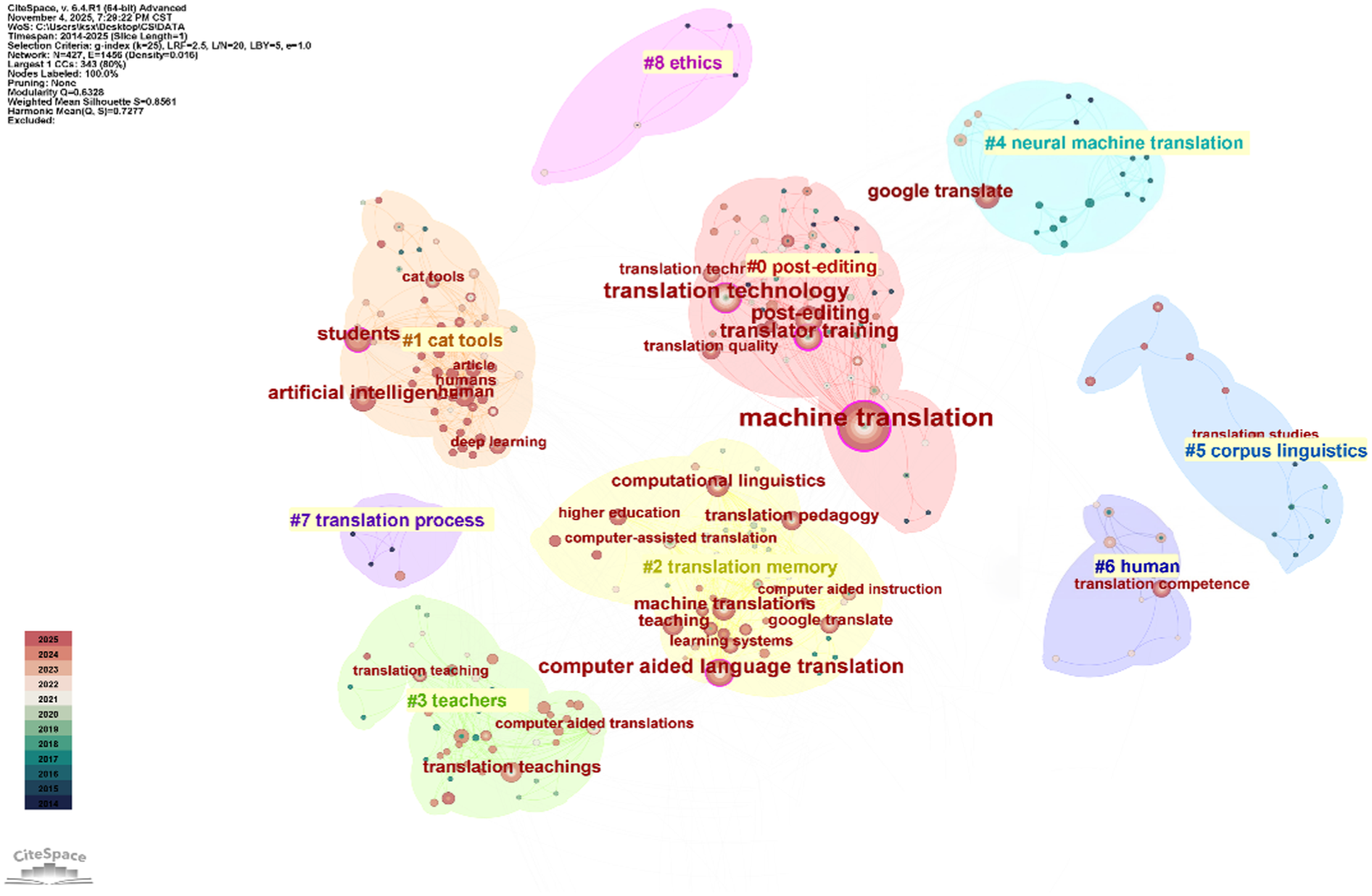
Main clusters of technology-integrated translation education studies (2014–2025).
However, some clusters show the repetitive and similar content among them. In this sense, we integrated the nine clusters into four research themes: translation technology and tools, translation teaching practices and strategies, information literacy in translation education, and ethical issues of translation technology (see Figure 4).
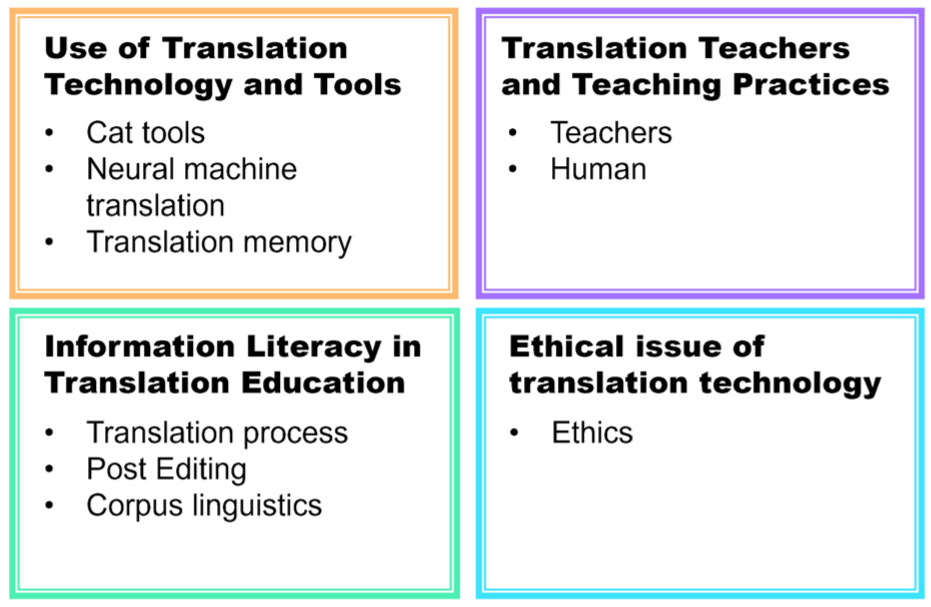
Main research themes of technology-integrated translation education studies.
Use of Translation Technology and Tools
The technologies used in translator training have evolved from earlier tools such as Trados Studio, MemoQ, and Phrase to newer generative AI models like ChatGPT, which have gained widespread popularity (Sánchez-Castany, 2023) and are reshaping translation education (K. Liu et al., 2022). Research on this shift has largely taken two perspectives: those of trainers and trainees.
On the one hand, researchers have been keen to understand translation students’ perceptions of translation tools and their overall reception and awareness of translation technology courses. Studies such as those by J. Zhang and Doherty (2025) and Yang and Wang (2019) explored students’ use of translation tools, with students generally expressing positive attitudes toward digital tools and high confidence in their digital skills, though they showed limited understanding of the technological mechanisms and ethical risks involved. Further research by Leva et al. (2025) revealed a persistent gap between learners’ self-perceptions of their use of digital tools and their actual application in translation technology training. Although students recognized the importance of translation technology, they remained at an early stage in mastering these tools.
On the other hand, researchers have focused on the trainer’s perspective, exploring the use of technology in translation courses. Studies by Khasawneh and Shawaqfeh (2024), Rico and González Pastor (2022), and Sánchez-Castany (2023) highlighted that translator trainers faced challenges related to their own training and skills in translation technology. Additionally, factors such as limited funding, infrastructure, and curriculum design prevented the full integration of technology in translation teaching. There was a gap between the content of translation courses and the demands of the market.
Overall, these studies collectively emphasized the disruptive impact of technological innovations on the language and translation industries. These changes have significantly affected the roles, status, work processes, and daily activities of all stakeholders in the industry (Pym & Torres-Simón, 2021). Both students and trainers highlighted issues such as the lack of technical skills, the gap between classroom technologies and industry practices, and the limited resources in humanities departments.
Translation Teachers and Teaching Practices
Translation teachers and teaching practices have also become a key focus in research on technology-integrated translation education. Recent scholarship highlights two closely related lines of inquiry. First, researchers examine how digital learning environments reshape translation instructors’ professional identity. As pedagogy becomes increasingly technology mediated, expectations for teachers’ roles and competencies have expanded within and beyond academia (Massey et al., 2023). Consistent with learner-centered constructivist approaches, instructors are no longer positioned as the sole source of knowledge. Instead, they work with students to build understanding and develop new skills through shared inquiry (S. Chen & Liu, 2023). In this context, translation trainers are increasingly described as facilitators and collaborators. This shift also requires a broader competence profile that connects pedagogical expertise with technological literacy and industry awareness so that training remains aligned with contemporary professional practice (J. Zhang & Doherty, 2025).
Second, a growing body of work focuses on course design and classroom practices, reflecting a competency-based shift from language-centered instruction to technology-oriented skills. Models such as human–machine collaboration frameworks (Jiménez-Crespo, 2025a) and the computer-assisted translation didactic model (Zappatore, 2024) grounded in collaborative learning have been proposed to embed technology into instruction and to strengthen students’ technological literacy and overall translator competence. Students are expected not only to produce accurate translations but also to use translation memory tools, carry out machine translation post-editing, and critically evaluate AI-generated output. As a result, translation competence is increasingly framed to include digital literacy, ethical awareness, and reflective decision making. At the same time, this transition can create tensions between humanistic traditions that emphasize interpretive and cultural dimensions of translation and technology-oriented paradigms that prioritize efficiency, data literacy, and tool management (J. Chen et al., 2022). These tensions are compounded by uneven technological infrastructure, which continues to shape access, training opportunities, and digital inclusion across contexts.
Taken together, these studies point to a broader shift in teaching from teacher-centered, text-based approaches toward technology-integrated, learner-centered, and collaborative models (Leva et al., 2025). Sustained professional development and equitable access to resources are therefore essential, along with ongoing clarification of pedagogical goals, to ensure that technology enhances rather than diminishes the human dimensions of translation education.
Information Literacy in Translation Education
Information literacy has become a pivotal, yet unevenly defined, component of translator education (Krüger, 2023). Broadly speaking, it refers to the ability to locate, evaluate, manage, and apply information effectively in task-specific contexts, including technology-mediated translation work (Sales, 2024). While recent studies widely recognize its importance for the effective use of CAT, machine translation, and AI tools, they differ substantially in focus, scope, and methodological rigor. Overall, this scholarship tends to fall into two strands: process-oriented work that examines how learners engage with information during translation tasks, and outcome-oriented work that evaluates the products or competencies associated with information-literate performance.
Process-oriented studies provide behavioral evidence of how translation students’ information literacy unfolds through real-time decision-making and cognitive control. Using eye-tracking (Huang & Wang, 2023), key-logging (Dong & Chen, 2025), and screen-recording (Whyatt et al., 2021), researchers trace how translators locate, verify, and integrate information during tasks. Although these studies offer valuable insights into the behavioral dimensions of information use, they are often limited by small, controlled samples and rarely correlate process data with product-level indicators such as multidimensional quality metrics (MQM) error typology, terminology consistency, or ethical compliance (Lommel, 2018).
Outcome-oriented studies mainly rely on questionnaires (J. Zhang & Doherty, 2025), scales (Lee et al., 2025), and interviews (Abdelhalim et al., 2025) to examine students’ perceived competence and attitudes toward translation technologies. Collectively, these studies evaluate students’ translation-technology literacy and self-efficacy across multiple dimensions, including knowledge base, tool use, evaluative ability, ethical awareness, and risk management (Lee et al., 2025; J. Zhang & Doherty, 2025). Although such research helps clarify the conceptual structure of technology-mediated competence, its dependence on self-reported data and the lack of triangulation with task-based or behavioral evidence limit both validity and generalizability.
In summary, research on information literacy in translator education remains methodologically fragmented. Process-oriented studies shed light on how translators search for, evaluate, and manage information, whereas outcome-oriented studies tend to assess perceived competence and attitudes. Yet few studies combine behavioral evidence with product-based measures to establish verifiable links between core information-literacy components and translation performance.
Ethical Issue of Translation Technology
Ethical debates in translation and interpreting are commonly traced to three major philosophical traditions, deontology, consequentialism, and virtue ethics, which continue to inform ethical decision-making in professional practice. Foundational scholarship in translation ethics is often associated with Andrew Chesterman and Anthony Pym, whose work helped establish key ethical concerns such as equivalence, fidelity, and value in translation (Chesterman, 1997; Ramírez-Polo & Vargas-Sierra, 2023). With the rise of AI and data-driven tools, ethical questions have expanded from general professional conduct to the governance and consequences of translation technologies, prompting growing attention to the ethics of technology use in translation (Drugan & Tipton, 2017).
In translator education, ethical issues are increasingly discussed within specialized instructional contexts. For example, Ramírez-Polo and Vargas-Sierra (2023) compared translation curricula and identified a limited emphasis on developing students’ ethical competence. They argued that pedagogy should explicitly incorporate ethical reasoning, especially by addressing the consequences of technology use and its effects on translation quality, professional responsibility, and intercultural communication. Related work in legal (Martín Ruano, 2015), medical (Song, 2025), and refugee translation settings (Martín-Ruel, 2020) further underscored the urgency of ethics education, highlighting the need to safeguard accuracy, cultural sensitivity, and professional integrity when translation technologies are used in high-stakes environments.
To translate these concerns into classroom practice, scholars have proposed instructional approaches such as contextualized case-based teaching, structured classroom debates, and scenario-based simulations (Martín-Ruel, 2020). Even so, much of the literature remains primarily conceptual. Empirical research that test how ethical frameworks or specific teaching interventions shape learners’ reasoning, decision-making, and professional judgment are still relatively limited. Strengthening the evidence base for ethics-focused translation pedagogy therefore remains an important direction for future work.
Main Contributors to Technology-Integrated Translation Education Studies
Influential Author Cooperation Network Analysis
An author collaboration network analysis was conducted to identify influential researchers and map scholarly interconnections in the field of technology-integrated translation education research. The resulting author collaboration network map, illustrated in Figure 5, comprises nodes and connecting lines. The nodes represent individual researchers, while the lines depict their collaborative relationships. The size of each node, determined by the author’s publication count, indicates their significance and potential influence within the research domain. Additionally, the thickness of the lines between nodes correlates with the intensity of their collaborative interactions.
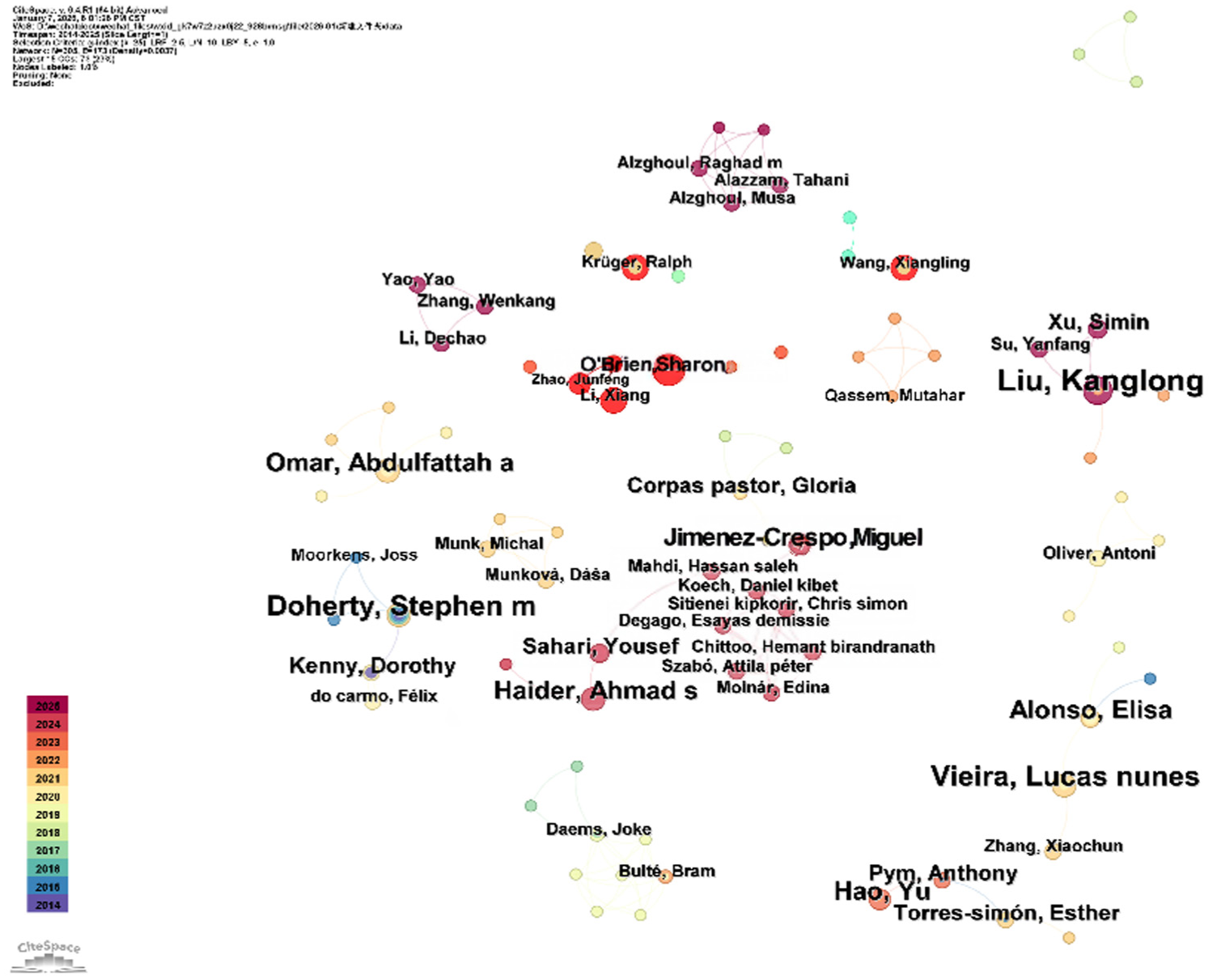
Influential author’s collaboration network map for the field of technology-integrated translation education.
Figure 5 consisted of 305 authors (nodes) and 173 collaborative relationships (connections). The network map density was 0.0037, indicating that only 0.37% of the potential relationships in the network have been realized. This revealed that strong partnerships among authors have not yet been established in the field of technology-integrated translation education research. However, as shown in Table 2, the top 10 influential authors can be organized into 4 relatively coherent research clusters.
Top 10 Prolific Authors and Their Main Research Fields.
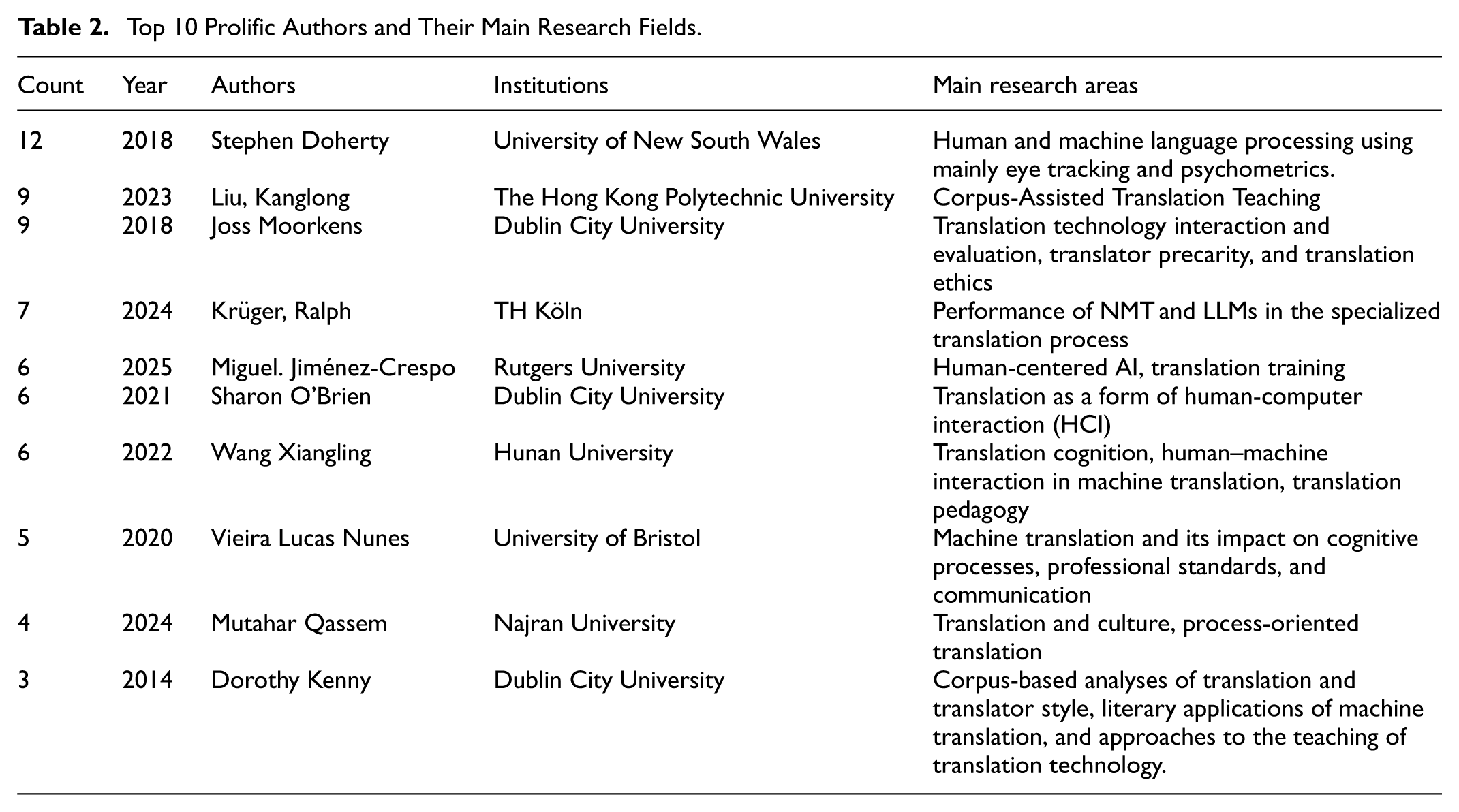
One cluster foregrounds translator cognition and process through psycholinguistic and behavioral methods: Doherty’s eye-tracking and psychometrics (Doherty et al., 2022), Vieira’s work on how machine translation reshapes cognitive processing (Nunes Vieira et al., 2021), and Wang’s focus on translation cognition in human–machine settings (X. Wang et al., 2021) collectively define a mainstream process evidence that seeks measurable accounts of translator effort, attention, and decision-making.
A second cluster frames translation as human-centered evaluation, where O’Brien’s (2012) conceptualization of translation as human-computer interaction (HCI) provides a theoretical bridge to interaction-oriented research, and Moorkens’ (2025) work on technology interaction and evaluation adds a critical dimension by tying evaluation practices to professional realities such as ethics and precarity.
A third cluster is explicitly training- and curriculum-facing, represented by Liu’s corpus-assisted translation teaching (Kwok et al., 2025) and Jimenez-Crespo’s emphasis on human-centered AI and translation training (Jiménez-Crespo, 2025a); Kenny also aligns with this cluster through corpus-based perspectives on translator style alongside sustained engagement with the teaching of translation technology (Kenny & Doherty, 2014). A fourth, more technology-forward cluster focuses on NMT/LLM performance in specialized workflows, with Krüger exemplifying research that evaluates how NMT and LLMs function in specialized translation processes and what that implies for professional practice(Krüger & Hackenbuchner, 2024).
Overall, the clusters suggest thematic convergence. Despite different methods, most work targets technology mediated translation through cognitive process, interaction quality and human computer interaction, and pedagogical transfer. Human computer interaction is increasingly functioning as a shared direction. Structurally, however, the cooperation network remains fragmented. Cross institutional and cross national ties are relatively sparse, and there is limited evidence of sustained co authorship with computer science or software engineering.
If fragmentation persists, it may hinder knowledge standardization by sustaining parallel constructs and metrics. For translation training, the likely consequence is curricular unevenness (X. Zhang & Vieira, 2021). Programs may adopt cluster specific emphases rather than converging on shared learning outcomes and assessment standards, which can slow the development of transferable, evidence based curricula.
Influential Institutions: Analysis of Institution Cooperation Network
To investigate cooperative relationships among institutions and identify influential institutions, we utilized CiteSpace to generate institutional collaboration. Table 3 shows the top 10 global institutions in technology-integrated translation education studies based on publication frequency. Among them, Dublin City University ranks first with 30 publications, followed closely by the Hong Kong Polytechnic University with 10 publications, highlighting their significant international influence in this research field. Other prominent institutions include University of Bristol, Ghent University, University College London, Kent State University, Aarhus University, Hunan University, University of Surrey, and University of Portsmouth. Collectively, these institutions represent key academic hubs across Europe, East Asia, and North America, These institutions, with their research areas reflecting a strong interest in AI in translation, and human-centered translation, have established themselves as leaders in advancing both the theoretical and technological aspects of translation studies.
Top 10 Research Institutions and Their Main Research Fields.
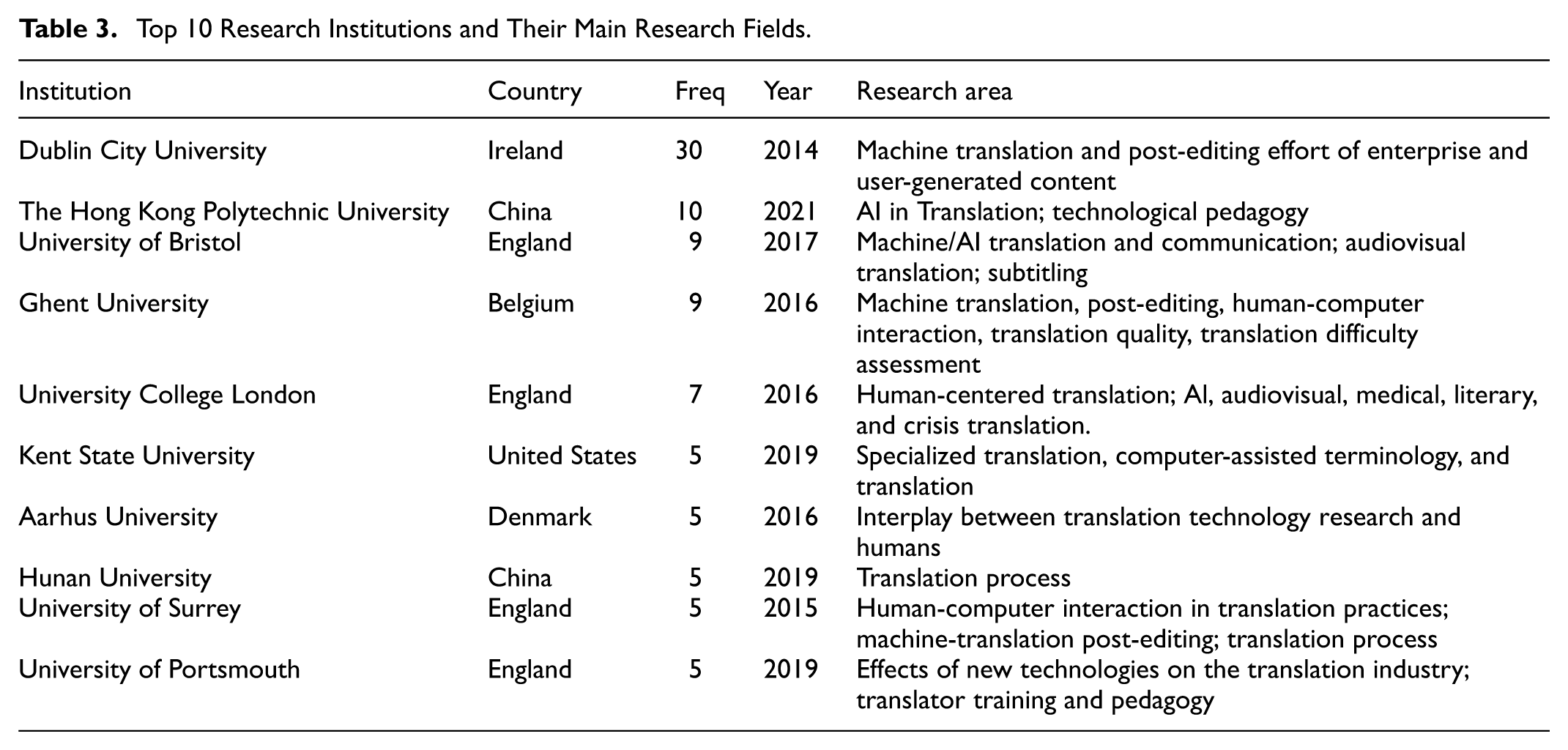
Figure 6 displays the institutional collaboration network, where nodes represent institutions and lines indicate collaborative relationships. The density of the network map was calculated to be 0.0042, indicating that only 0.42% of institutions within the technology-integrated translation education research network formed partnerships. This low density suggests weak collaboration among institutions. The research network among these institutions appears sparse, suggesting that, despite their academic strength, many have yet to form extensive collaborative networks. Geographical imbalance plays a significant role, as regions with better access to funding, advanced technology, and strong infrastructure tend to dominate global research trends. This is particularly evident in European institutions, which benefit from supportive environments like the European Master’s in Translation (EMT) network and EU funding. The EMT network, by setting high standards for translator competence and integrating advanced training with research, strengthens Europe’s academic influence in translation studies. As a result, European institutions lead in shaping translation studies theories, while research from other regions may struggle to gain visibility, limiting the diversity of perspectives and hindering the representation of regional differences and cultural diversity in global research.
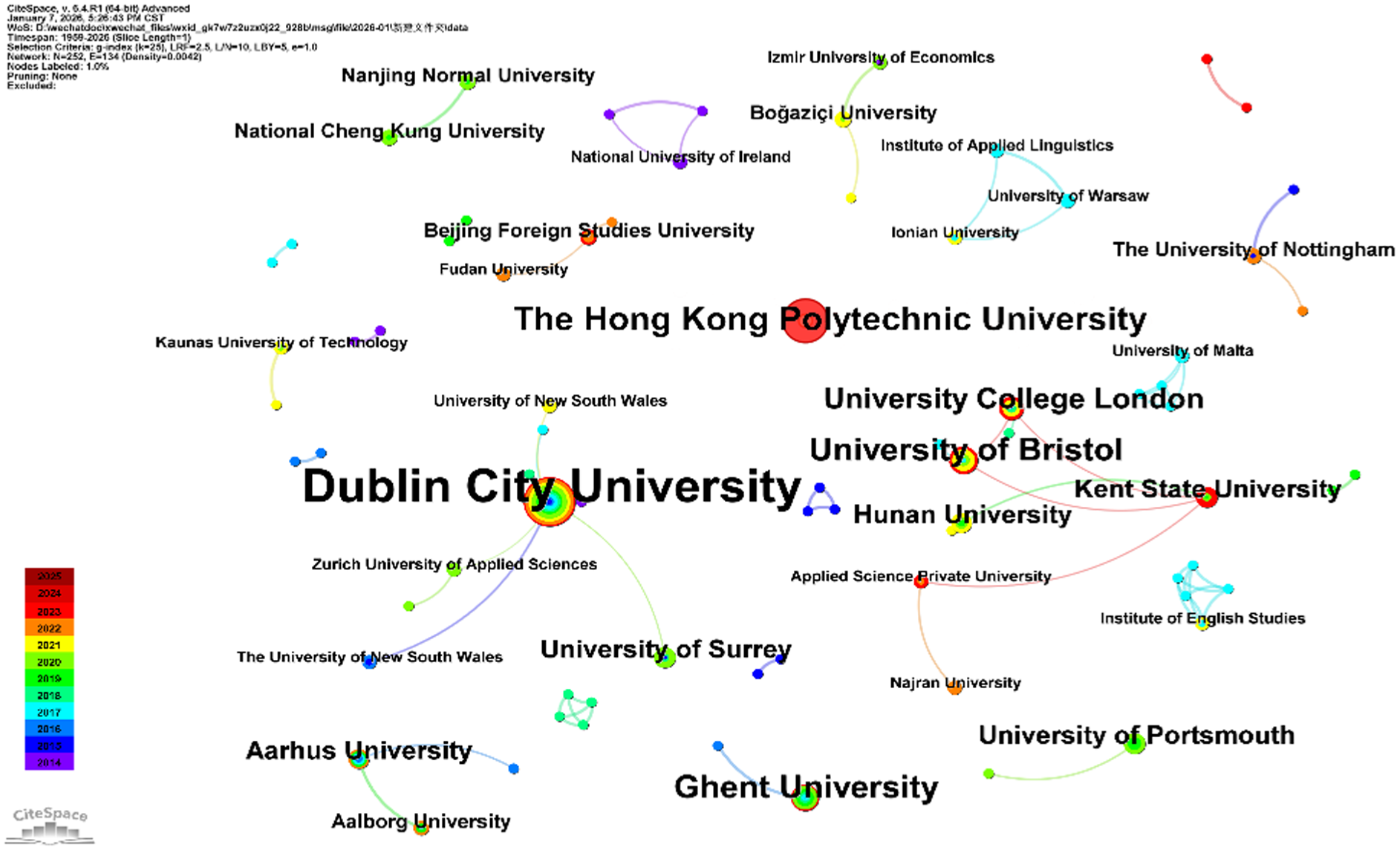
Institutional collaboration network map for the field of technology-integrated translation education.
Research Hotspots and Frontiers in Technology-Integrated Translation Education Studies
Research Hotspots: Keyword Co-Occurrence Analysis
To identify the hotspots in studies of technology-integrated translation education, we used CiteSpace to conduct a keyword co-occurrence analysis. Keywords provide concise summaries of a study’s topic and content, and they can reveal how a research field has developed over time as well as where current hotspots lie (J. Liu et al., 2025; Z. Zhang & Zou, 2022). Specifically, we generated a keyword co-occurrence network, compiled a table of the top 10 keywords, and examined their temporal evolution.
The keyword co-occurrence network provides a concise view of how core topics are connected and how their prominence shifts over time (F. Sun et al., 2023). In the network, links indicate keyword co-occurrence, and thicker links represent stronger co-occurrence. We imported Scopus records into CiteSpace and generated the keyword co-occurrence map shown in Figure 7. To better identify research hotspots, we extracted keyword frequency and centrality from CiteSpace and report the top 10 keywords in Table 4.
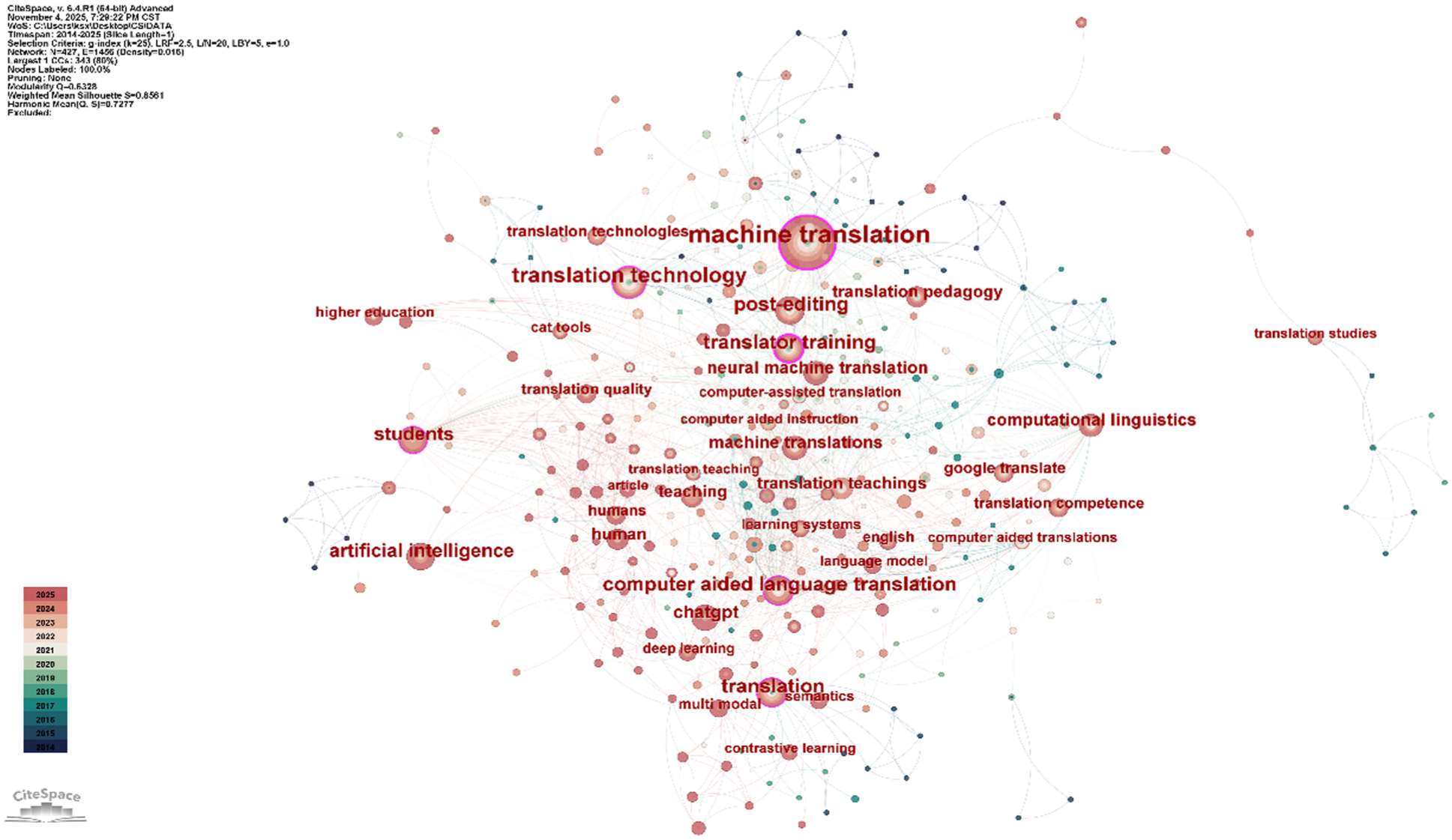
Keyword co-occurrence network of technology-integrated translation education.
Top 10 Keywords in the Field of Technology-integrated Translation Education.
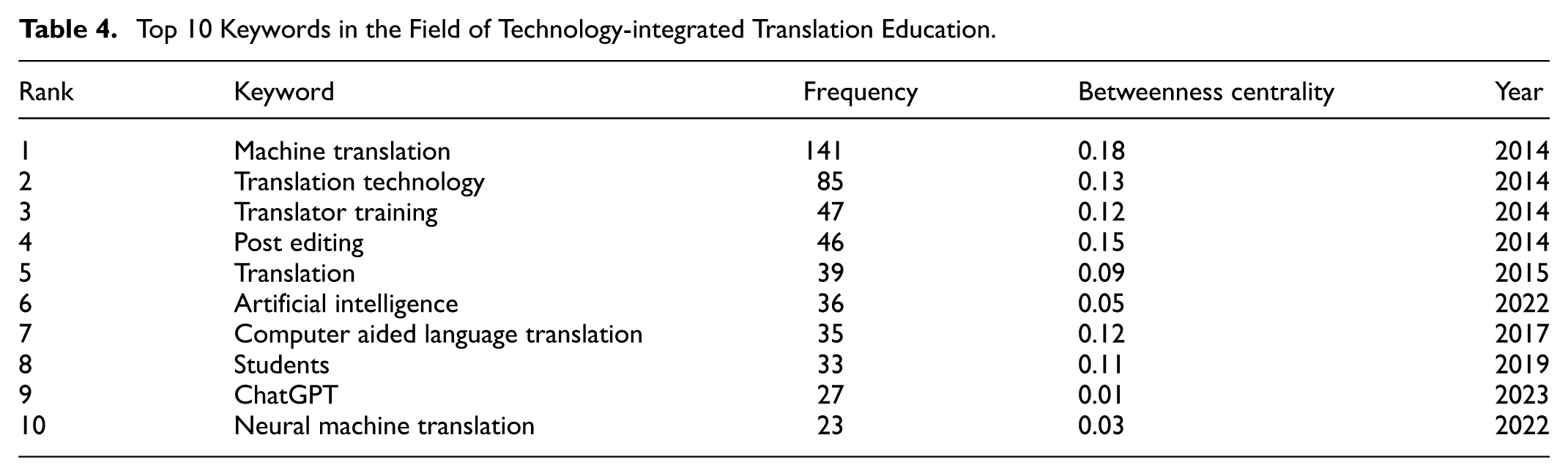
Based on the keyword co-occurrence network (Figure 7) and the betweenness centrality results (Table 4), machine translation (141 occurrences, BC = 0.18) and translation technology (85 occurrences, BC = 0.13) occupy the most central positions in the network. Keywords with high frequency and centrality values above 0.10 are generally considered pivotal to a research domain (X. Wang et al., 2024). These two terms therefore represent the core of technology-driven translation education, around which closely related topics cluster, such as translation training (47 occurrences, BC = 0.12) and post-editing (46 occurrences, BC = 0.15). These keywords outline a foundational structure for technology-integrated translation education and highlight strong links between pedagogical concerns, tool use, and technological applications.
Figure 8 presents the timeline view of keyword evolution, showing a shift from early research focused on basic tools and process-oriented training to more recent themes centered on AI-driven, intelligent translation systems.
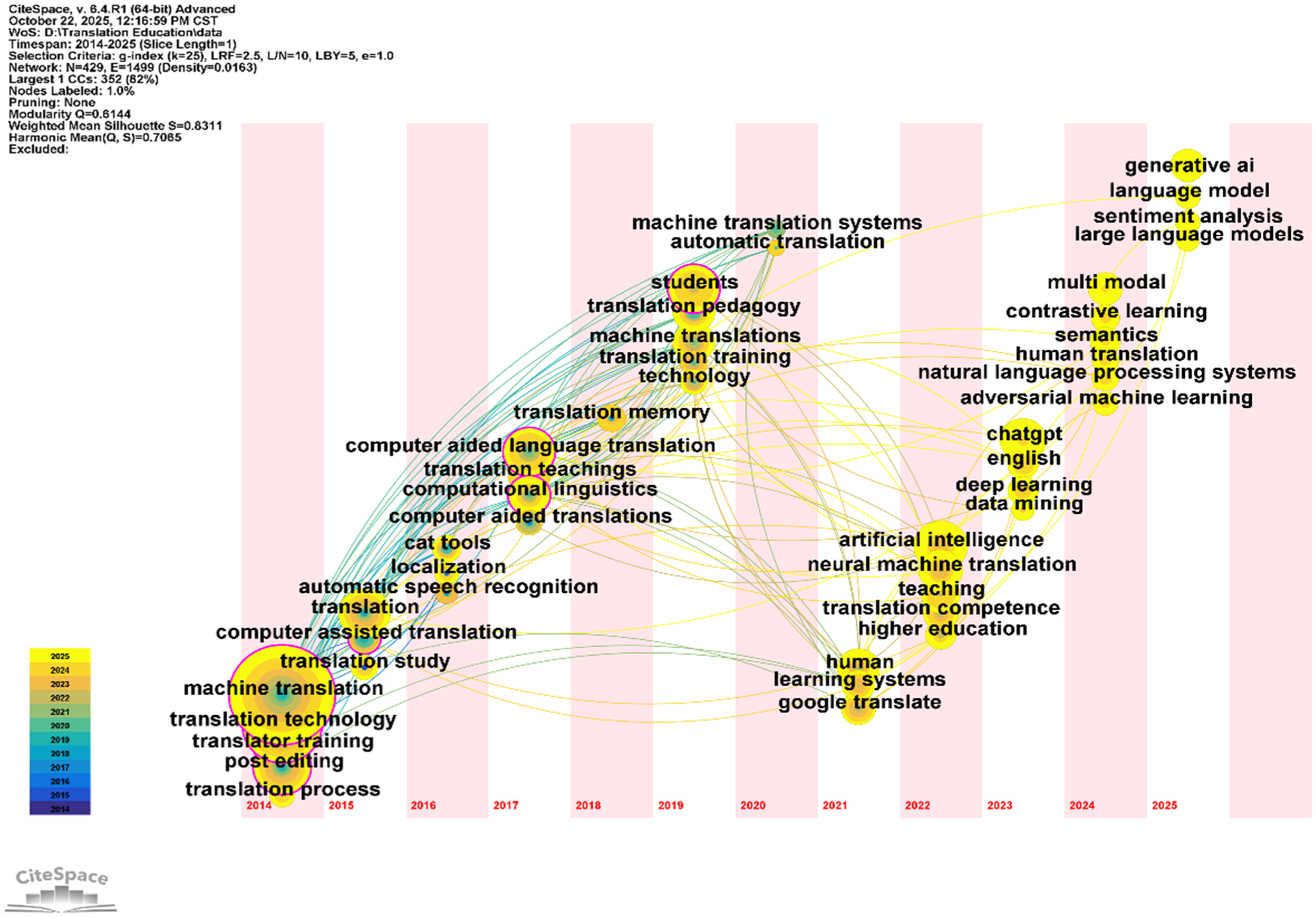
Timeline of keywords in the field of technology-integrated translation education.
Based on the keyword timeline, research on translation technology education from 2014 to 2025 can be described in several major phases. In the early stage (2014–2015), the most prominent keywords center on foundational topics, especially machine translation and translator training, reflecting growing interest in how core technologies could be incorporated into translation pedagogy (Kenny & Doherty, 2014). During this period, post-editing and the translation process also began to emerge as sustained hotspots, signaling a shift from tool adoption toward process training.
Post-editing is the human revision of machine-translated output to improve accuracy, fluency, and cultural appropriateness (Robert et al., 2024). Over the past 5 years, research on post-editing in translator training has increasingly compared post-edited MT output with human translation, especially in terms of quality (Daems et al., 2017; Türkmen & Can, 2019). These studies cluster around three themes: (1) comparisons between students’ post-editing and human translation in efficiency and quality (Yang et al., 2023); (2) learners’ machine translation post-editing performance such as self-regulation, critical thinking, and motivation (Robert et al., 2024; Yao et al., 2025); and (3) curricular integration and students’ perceptions of post-editing as both a learning activity and a professional practice (García-Escribano & Díaz-Cintas, 2023).
Between 2016 and 2020, research hotspots increasingly reflected a clear trend toward integrating translation pedagogy with translation technology. This shift was largely driven by the transformative impact of neural machine translation (NMT) (Yamada, 2019). NMT is a machine-translation approach that uses neural networks to model translation end-to-end (H. Wang et al., 2022). Following early large-scale deployments such as google neural machine translation in 2016, NMT substantially improved both MT quality and efficiency. These advances reshaped translation workflows and prompted educators to reconsider how to prepare students to work effectively with automated tools, pushing training toward a more deliberate balance between technological competence and foundational translation skills (Moorkens, 2018).
Research during this period also increasingly focused on how emerging technologies could be effectively integrated into translator education and training. The frequent appearance of keywords such as translation pedagogy, translation training, and students suggests that, alongside technical progress, scholars increasingly foregrounded human-centered concerns and the pedagogical implications of tool use. Much of this work examined human–machine interaction in educational settings and explored how technology can be integrated without diminishing translator agency. For example, Moorkens (2018) captured the pedagogical turn in response to NMT by designing an in-class evaluation exercise for student translators. Students compared neural and statistical machine translation outputs using basic translation quality criteria and post-editing effort indicators, then reflect on when MT helps or fails, thereby strengthening critical, human-centered tool use in training. Similarly, using an extended technology acceptance model (TAM), Yang and Wang (2019) showed that perceived usefulness most strongly predicted student translators’ behavioral intention to use MT, and that usefulness is significantly shaped by experience. Experience is then influenced by motivation, which is itself affected by perceived ease of use, forming a quasi-circular adoption pathway with clear classroom implications.
From 2021 to 2025, burst keywords such as ChatGPT, large language model, and human highlight the growing impact of the AI-driven era on translator education. Large language models (LLMs), exemplified by ChatGPT, are reshaping translation practice and, by extension, redefining translator training (Muftah, 2025). Although AI can substantially improve speed and efficiency, its rapidly evolving nature means that the implications for translator education remain uncertain and continue to be a central research focus. Accordingly, studies in this period increasingly explore how programs can prepare students to exercise creativity, critical thinking, and cultural adaptation in AI-assisted environments in order to meet changing market demands. For example, Jiménez-Crespo (2025a) proposed instructional models that align Human-Centered AI (HCAI) and intelligence-augmentation approaches with existing competence-development frameworks, arguing that training should critically cultivate distinctly human capacities beyond MT output, including creative intervention, judgment, common sense, cultural mediation, and empathy.
This line of inquiry is especially visible in specialized translation such as legal and literary domains, where trainees are expected to maintain professional judgment and agency while working with AI tools. For instance, Preciado et al. (2025) examined strategies used by advanced students translating legal, medical, and scientific texts with AI assistance. The study suggested that while AI may offer relatively strong terminological accuracy, human translators tended to retain advantages in managing cultural appropriateness through post-editing processes and techniques. Similarly, Abdelhalim et al. (2025) investigated the use of ChatGPT as an intervention in literary translation, focusing on student translators’ tool proficiency and self-efficacy.
Overall, the time-based keyword patterns point to an ongoing technological turn in translator education, moving from MT toward an AI-driven landscape. With the introduction of NMT and, more recently, LLMs, translation technology has developed rapidly and catalyzed substantial changes in educational approaches. These developments bring both opportunities and challenges. While researchers continue to promote deeper integration of technology and pedagogy, there is also a renewed emphasis on the central role of human translators (Jiménez-Crespo, 2025a). In particular, contemporary work increasingly highlights how to train trainee translators to maintain agency in AI-assisted workflows and to develop the capacities needed to ensure accuracy, ethical responsibility, cultural appropriateness, and affective or nuanced expression, thereby supporting the broader sociocultural adequacy of translation outcomes.
Research Frontiers: Burst Keyword Analysis
Research frontiers mark the cutting edge of a field, where new advances are emerging (Tian et al., 2023). Burst keywords often signal new or underexplored topics and can inform research agendas, funding priorities, and policy discussions (Gao et al., 2024; Z. Zhang & Zou, 2022). To map frontiers in translation technology education, we conducted a burst keyword analysis, which identified keywords whose frequencies surge within a short time.
We ran the analysis in CiteSpace using Kleinberg’s (2003) burst detection algorithm. In the visualization, each burst is defined by two elements: burst strength (how intense the surge is) and timing (when it occurs). Keywords with higher burst strength typically indicate stronger frontier signals.
Our CiteSpace analysis identified 25 keywords with significant burst strength (see Figure 9). In the figure, “Year” marks when a keyword first begins to rise, while “Begin–End” shows the main burst interval. These two values may differ. For example, “post-editing” has Year = 2014, indicating an early increase, but its burst interval is 2018–2021, meaning it became most prominent during that later period before attention declined.
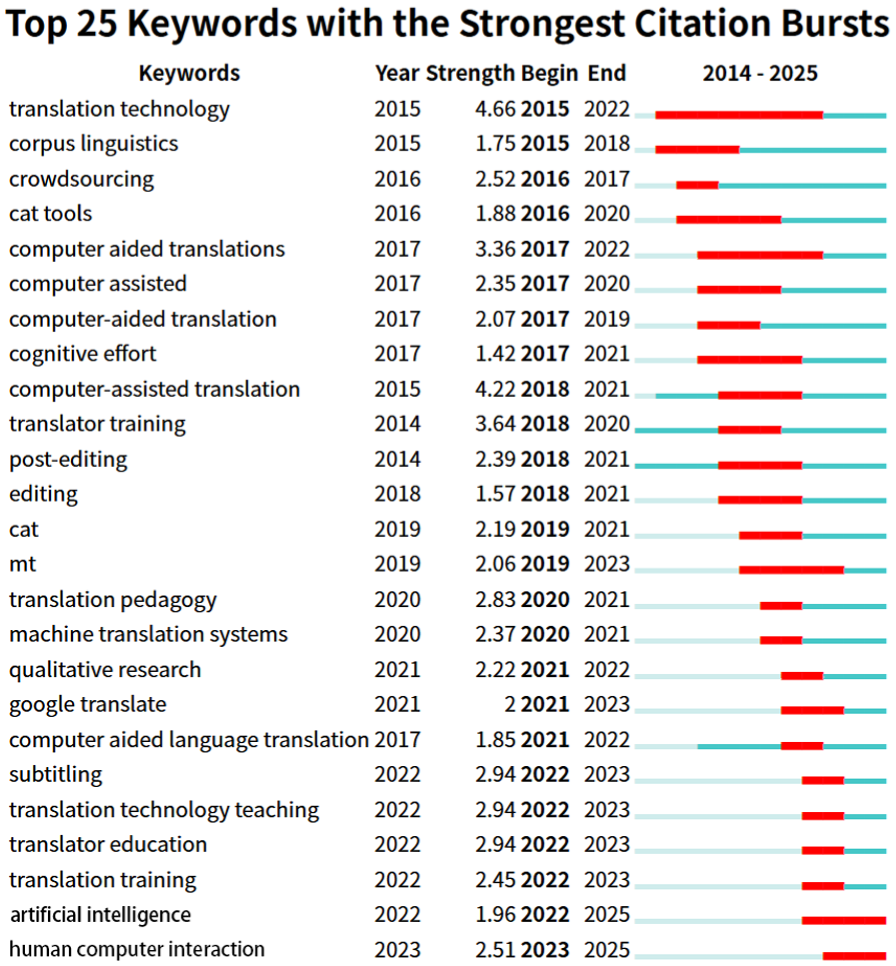
Top 25 keywords with the strongest citation bursts in technology-integrated translation education studies.
Figure 9 shows that all burst keywords have strengths above 1.0, with the highest reaching 4.66. Overall, the burst patterns indicate an evolution in research focus from tools, to workflows, and subsequently to pedagogy and system-level integration. In the early phase (2015–2018), translation technology emerged as the dominant burst term (strength = 4.66; 2015–2022) and co-occurred with method and resource-oriented keywords such as “corpus linguistics” and “crowdsourcing,” suggesting an initial concentration on translation technology as a broad agenda and on data-driven, collaborative production models.
As translation activities increasingly shifted to platform-based and networked environments, the concept of “translation technology” in scholarly discourse evolved from standalone software to data-driven work settings and collaborative mechanisms. This shift also influenced early pedagogical experiments in translation education. Mei (2017), for instance, implemented a flipped-classroom simulation of a crowdsourced translation model to examine how networked technologies and collective collaboration might support market-oriented translator training. Nevertheless, such innovations were not yet systematically institutionalized; in many programs, instruction remained centered on tool operation and workflow demonstration (Zhang & Vieira, 2021), thereby foregrounding the later impetus for more integrated and curriculum-based approaches.
Subsequent hotspots shifted toward specific technologies and workflows (2016–2022). Keywords such as CAT tools and computer-assisted translation appeared repeatedly during 2016–2022 with relatively high burst strength (e.g., computer aided translations, strength = 3.36). These bursts also extended to themes related to translators’ workload and quality control. For instance, keywords such as cognitive effort and post-editing (2018–2021) suggest a move beyond simply using tools toward examining the processes and costs of human–machine collaboration (Stasimioti et al., 2021; S. Sun et al., 2020).
In the mid-to-late period (2021–2023), bursts in machine translation systems and platform terms such as Google Translate indicate that machine translation and its platform-based applications became central concerns. With technological shifts such as neural machine translation and the emergence of generative AI, research in translator education began to address not only how these tools might improve translation quality, but also how they reshape the translator’s role. For example, while AI-generated translations can increase efficiency, they may also introduce instability in output quality, making the management of human–AI collaboration a new pedagogical challenge (K. Liu & Afzaal, 2021).
In the most recent stage (2023–2025), a clear cluster of bursts related to teaching and competence development emerged, including translation technology teaching, translator education, and translation training. This pattern indicates that technology has shifted from being primarily a research object and production tool to becoming embedded in curriculum design and competence development (Sánchez-Castany, 2023; X. Wang & Wang, 2023). This shift is especially evident in capacities that foreground translator agency, including cultural sensitivity (Muftah, 2025), ethical competence (Zhang & Doherty, 2025), and critical thinking (Venkatesan, 2023).
Notably, artificial intelligence and human–computer interaction continued to burst during 2023–2025, suggesting that the frontier of translator education is moving toward more human-centered, intelligent pedagogical models (Ren & Wang, 2025). The rise of large language models has further intensified these discussions: professional translation and interpreting have been categorized as occupations facing relatively high exposure to potential negative impacts (Felten et al., 2023).
In response, scholars have called for renewed emphasis on human agency within the translation ecosystem, often framed as the “human added value” of translation (Massey et al., 2023). In this sense, sustained attention to the “human factor” may be becoming a foundational concern in contemporary translation studies. In particular, under the framework of Human-Centered AI (HCAI) (Jiménez-Crespo, 2025a), translator education is increasingly oriented toward how technology can augment rather than replace human translation competence (Gao et al., 2025). The goal is no longer merely to have AI complete translation tasks, but to enable effective human–AI collaboration that jointly improves translation quality and efficiency.
Conclusion
This bibliometric survey examined 670 Scopus-indexed publications on technology-integrated translation education from 2014 to 2025 to identify publication trend, key themes, leading contributors, and research hotspots and frontiers within the field. Regarding RQ1, the publication trend analysis demonstrates sustained and rapid growth in research output (CAGR = 31.12%), indicating that technology-integrated translation education has emerged as a growing focus of research. Regarding RQ2, keyword clustering yields four core themes: translation technology and tools, translation teaching practices, information literacy in translation education, and ethical issues related to translation technology. These findings indicate a shift beyond tool-focused discussions toward broader pedagogical and human-centered concerns. In response to RQ3, the analysis identifies major contributing authors and institutions, yet collaboration remains comparatively fragmented, pointing to the need for stronger cross-institutional and cross-author research networks. With respect to RQ4, co-occurrence and burst keyword analyses indicate an ongoing transition from machine translation to AI-driven workflows, alongside emerging hotspots that emphasize translator agency in training.
Building on these findings, future research could further examine human-centered competencies in AI-mediated translation. The rapid adoption of generative AI has intensified concerns about the displacement of human roles in translation, reinforcing calls to articulate the “added value of human translation” (Felten et al., 2023; Jiménez-Crespo, 2025a). At the same time, current AI systems remain limited in handling high-cognitive tasks, such as literary, legal, crisis, and medical translation, and they lack capacities central to professional practice, including empathy, ethical awareness, and cultural sensitivity (Jiménez-Crespo, 2025b). Accordingly, translator education research could prioritize how training can cultivate these competencies through both curriculum-level design and process-oriented studies of decision-making in AI-assisted workflows (e.g., post-editing).
Additionally, future research could also investigate how translation programs can better align with evolving industry demands and technological trajectories. A key question concerns the balance between technology-intensive professional skills and core professional translation competence (Jiménez-Crespo, 2025b; Pym & Hao, 2024), alongside preparation for emerging roles such as language engineering and machine literacy consultants (Ehrensberger-Dow et al., 2023). In parallel, although AI ethics is widely discussed, actionable and widely shared guidelines for responsible AI use in translation education remain underdeveloped (Zhang & Doherty, 2025). As students have increasingly become AI users, the need for such discussions is more urgent than ever to ensure they use AI applications responsibly.
There are several limitations with the present study that should be addressed in future research. First, sole reliance on the Scopus databases might exclude pertinent insights from other sources. Moreover, the strict focus on specific keywords could bypass valuable literature that does not encompass these terms. It is recommended that future research consider expanding data sources and increasing the range of keywords used.
Footnotes
Acknowledgements
The authors thank the editor and reviewers for their constructive comments, which helped improve this manuscript.

Ethical Considerations
This article does not contain any studies with human or animal participants.
Consent to Participate
Not applicable; no human participants were involved and no informed consent was required.
Author Contributions
Baicen Jin (first author): Conceptualization, data curation, formal analysis, visualization, and writing—original draft.
Zhonggang Sang (corresponding author): Methodology, supervision, and writing—review & editing.
Both authors approved the final manuscript and agree to be accountable for all aspects of the work.
Funding
The authors disclosed receipt of the following financial support for the research, authorship, and/or publication of this article: This research was supported by the National Social Science Foundation of China (Grant No. 20AZD129).
Declaration of Conflicting Interests
The authors declared no potential conflicts of interest with respect to the research, authorship, and/or publication of this article.
Data Availability Statement
The datasets generated and analyzed during the current study are available from the authors upon reasonable request.