






Abstract
When it comes to fostering development and addressing challenges within local communities, community leadership is a crucial contributing factor. Community leadership plays a pivotal role in promoting growth and addressing challenges within local contexts. This systematic literature review examines the key concepts, practices, and challenges associated with community leadership as presented in contemporary academic studies. Guided by the PRISMA 2020 protocol, the review employed a structured search across Scopus, Web of Science, and Google Scholar, focusing on studies published between 2004 and 2023. After a rigorous screening process, seven empirical articles were identified and synthesized thematically. The findings reveal that effective community leadership is characterized by strategic collaboration, participatory decision-making, and visionary guidance that align with Transformational Leadership, Social Capital, and Collaborative Governance frameworks. Significant challenges identified include sustainability, resilience, and inter-organizational collaboration. This review contributes to a deeper understanding of how community leadership operates within the English context and highlights key implications for policymakers, practitioners, and researchers in promoting inclusive and adaptive leadership for sustainable community development.
Keywords
Introduction
In recent decades, local governance and leadership dynamics have experienced significant transformations, reflecting evolving paradigms in governmental approaches, community development initiatives, and leadership theories. One of the key factors contributing to these transformations is the increasing recognition of the importance of community leadership in shaping local governance and driving sustainable development (Martiskainen, 2017). As such, it has become a focal point in contemporary discussions on effective governance and community development. Therefore, this evolution has also given rise to intricate interactions between leaders and the local community, generating complex dynamics wherein community leaders negotiate their roles as change catalysts and representatives of marginalized sectors of society (Rami et al., 2025). This tension underscores the nuanced nature of community leadership, a concept essential to comprehending the intricate dynamics within communities.
Community leadership, as defined by Lind and Ekwerike (2022), refers to collaborative efforts among members toward an inclusive, determined common good through experimentation and adoption. It has emerged as a primary agenda in community empowerment (Sullivan, 2007), prompting a deeper examination of its conceptualization, practice, and challenges within communities across England. The importance of understanding and exploring community leadership cannot be overstated. Strong community leadership is not only desirable but also essential for the sustainable development and well-being of local communities.
Research has consistently shown that communities led by effective leaders experience greater cohesion, resilience, and adaptability in the face of challenges (Ricketts & Ladewig, 2008). Furthermore, community leaders play a crucial role in fostering social capital, mobilizing resources, and advocating for the needs of their constituents (Putnam et al., 2004). This is because community leadership is a multifaceted concept that encompasses various dimensions, including participatory decision-making, collaboration among diverse stakeholders, and the ability to mobilize resources for collective action (Lamm et al., 2017).
Thus, understanding the dynamics of community leadership is paramount for policymakers, practitioners, and scholars alike to gain a comprehensive understanding of its significance in fostering positive change and sustainable development within communities. Community leadership is not only about holding a position of authority within a community, but it also involves the ability to inspire, motivate, and mobilize individuals toward a common goal. A critical component of community leadership is understanding the diverse needs and perspectives within a community and finding inclusive and equitable ways to address them.
Amidst the ongoing flux, the concept of community leadership demands flexibility and diversity, reflecting its adaptability to changing circumstances and the diverse needs of communities (Lind & Ekwerike, 2022). Strong community leadership, characterized by its ability to embrace and navigate such diversity, is indispensable for fostering growth and tackling community issues effectively (Sullivan, 2007). Research highlights its pivotal role in facilitating connections (Pigg, 1999), improving communication channels, and guiding community development initiatives (Ricketts & Ladewig, 2008). Thus, comprehending the defining facets of community leadership within the context of community development becomes imperative, particularly in recognizing and harnessing the power dynamics inherent in fostering flexibility and diversity within leadership approaches.
To strengthen the conceptual foundation of this review, the study draws upon three key theoretical perspectives; Transformational Leadership Theory, which emphasizes vision, motivation, and change-oriented leadership (Bass & Avolio, 1994); Social Capital Theory, which highlights the importance of trust, relationships, and networks in enabling collective action (Putnam et al., 2004); and Collaborative Governance Theory, which underlines the necessity of partnership and shared decision-making between government and community actors (Ansell & Gash, 2008). These frameworks collectively inform the analysis of community leadership as both a process and an outcome of cooperative interaction within local governance structures. By integrating these theoretical perspectives, this study seeks to move beyond descriptive accounts of community leadership and instead provide a critical, analytical interpretation of how leadership manifests within community-based and institutional settings. This theoretical grounding allows the review to contribute to a deeper understanding of leadership as a relational and systemic process rather than a positional or individual attribute.
While previous systematic reviews have explored different aspects of leadership across various contexts, a notable gap remains in the literature regarding systematic reviews that specifically address community leadership, including its concepts, practices, and challenges. In response to this gap, the present study aims to comprehensively analyze published studies pertaining to community leadership, providing a nuanced understanding of its complexities within the English context. Specifically, this review seeks to answer three guiding questions:
How has community leadership been conceptualized and defined in the literature?
What practices and strategies have been identified as effective in supporting community leadership?
What challenges and structural barriers influence the effectiveness of community leadership in local governance?
Through a comprehensive examination of the literature and empirical findings, this introduction aims to elucidate the complexities inherent in community leadership within the English context, its intersections with broader governance structures, and the evolving roles and challenges faced by community leaders as they navigate the changing landscapes of local governance and development. By conducting a systematic literature review guided by the PRISMA 2020 framework, this study aims to provide clear insights into how community leadership is understood, practised, and addressed in the context of challenges across England. This analysis ultimately advances scholarly understanding and contributes to leadership education, policy design, and community development practices.
Literature and Studies
Understanding Community Leadership Dynamics
Understanding community leadership dynamics involves a nuanced exploration of the various elements that shape leadership practices within communities. The interplay between leadership styles, communication strategies, contextual influences, and organizational culture has a significant impact on how community leaders operate and engage with their constituents (Hallinger, 2018). Effective community leadership is not just about individual actions but also about the ability to navigate complex social environments and foster collaboration among diverse stakeholders (Lamm et al., 2017). Effective community leaders understand that their role goes beyond wielding authority and making decisions; it involves building relationships, fostering trust, and promoting inclusivity. As it delves further into the dynamics of community leadership, it becomes apparent that successful leaders are adept at adapting their leadership style to suit the unique needs and challenges of their communities (Mohd Ariffin et al., 2024).
Research has highlighted the importance of examining leadership in context to understand the intricacies of leadership dynamics (Faraj et al., 2011). Scholars advocate for a holistic understanding of community leadership, drawing on interpretivist frameworks and empirical evidence to illuminate its multifaceted nature. Key studies by Craig (2002) and Madden (2010) shed light on the complex relationship between community development and local governance, highlighting challenges faced by leaders in navigating governmental paradigms. Context plays a crucial role in shaping leadership behaviors and outcomes, emphasizing the need to consider the broader environmental factors that influence leadership practices. Moreover, the concept of leadership as social influence underscores the significance of communication processes in shaping leadership theories and practices (Ruben & Gigliotti, 2016). Effective community leaders leverage social influence to inspire and mobilize community members toward common goals (Rami et al., 2025).
Community leadership dynamics are further influenced by factors such as knowledge collaboration, emotional capital, and the moderating effects of stakeholders (Berkovich, 2023; Larson & DeChurch, 2020; Liu & Han, 2023). For example, in the realm of urban regeneration, collaborative governance models, as observed in initiatives such as the Single Regeneration Budget, analyzed by Stewart (2004), hold transformative potential. Such models emphasize inter-organizational collaboration and stakeholder engagement, bridging the gap between community development efforts and local governance structures. This highlights the centrality of community leadership in facilitating effective collaboration and coordination among diverse stakeholders, ensuring that community development initiatives align with broader governance objectives. Thus, understanding how knowledge sharing, emotional intelligence, and stakeholder engagement impact leadership effectiveness provides valuable insights into the complexities of community leadership.
However, despite advancements in leadership research, gaps persist in understanding how community leadership interacts with shifting governance paradigms and socio-political contexts, necessitating further research (Moher et al., 2009). This involves understanding the intricate relationship between communication, context, and leadership outcomes. Additional research is needed to explore how leaders’ communication approaches influence knowledge sharing, shared leadership practices, and overall leadership effectiveness within community settings. Bridging these gaps can enhance our understanding of effective community leadership practices and their impact on community development and well-being. Furthermore, exploring these dynamics is crucial for clarifying the evolving role of community leaders as mediators between community interests and governmental policies, thereby deepening our understanding of the complexities inherent in community leadership within the context of local governance.
Community and Leadership Practices
Community leadership has been a longstanding aspect of English local government, dating back to the mid-19th century. However, its significance has been subject to changes corresponding to shifts in the relationship between central and local authorities. Following the election of “New Labour” in 1997, there was a renewed focus on community leadership, which became a central pillar of the “local government modernisation agenda” (LGMA). This revitalization of community leadership signified a broader transformation within local governance, marking a transition from traditional approaches to newer, more participatory models. Sullivan (2007) highlights this shift as a pivotal moment, where local authorities were tasked with embracing a redefined role that emphasized greater engagement with communities and stakeholders.
Community leadership serves as a cornerstone in both local governance and community development endeavors, representing a dynamic and multifaceted practice geared toward instigating positive transformations within communities. It is also essential for fostering engagement, empowerment, and development within communities. These practices are informed by various studies and research that emphasize the significance of effective communication, leadership styles, and community engagement strategies (Martiskainen, 2017; Smith et al., 2019; Vera Vera & Romero Chavez, 2022). This literature review is dedicated to exploring the intricate landscape of community leadership practices, focusing on pivotal dimensions such as public engagement, strategic vision, collaboration, policy responsiveness, resource mobilization, stakeholder engagement, partnership, capacity building, and navigating challenges. Through an in-depth exploration of existing literature on these dimensions, this review aims to shed light on the diverse strategies and approaches adopted by community leaders to address the intricate needs and dynamics inherent within their communities.
Engaging the public forms a foundational aspect of effective community leadership, as it involves integrating community members into decision-making processes and fostering a sense of ownership and involvement among them. Scholars, exemplified by Jones (2014), emphasize the importance of inclusive public engagement strategies that enable community members to share their perspectives and ideas. Additionally, community leaders are tasked with providing strategic vision by articulating long-term objectives and marshaling resources toward achieving community goals (Harrison et al., 2019). Furthermore, effective communication is a cornerstone of community leadership, as highlighted by Madlock (2008). The relationship between leadership style, communication competence, and employee satisfaction highlights the importance of effective communication in leadership effectiveness. Similarly, Fairhurst and Connaughton (2014) and Vries et al. (2009) emphasize the impact of communication on leadership styles and outcomes within communities. By effectively communicating a compelling vision for the future, community leaders inspire and rally community members to actively participate in collective endeavors aimed at fostering positive change.
At the core of effective community leadership lies collaboration, as leaders work hand in hand with a diverse array of stakeholders to tackle complex challenges and realize shared objectives. This collaborative ethos, as elucidated by Ansell and Gash (2008), necessitates the cultivation of trusting relationships and the facilitation of dialog among stakeholders. Furthermore, adept responsiveness to the evolving policy landscape is imperative for community leaders, who must align community initiatives with broader policy objectives and leverage policy frameworks to advance community interests (Lasker et al., 2001). Research by Heikkinen et al. (2022) emphasizes the value of building flexible leadership structures and supporting multi-professional cooperation within communities, underlining collaboration as a cornerstone of effective community leadership.
Moreover, Smith et al. (2019) discuss the development of a program community of practice for leadership development, emphasizing the role of collaborative learning communities in transforming management practices and identities. This illustrates how collaboration within a community setting can foster leadership development and cultivate a supportive environment for growth and learning. Therefore, collaboration in community leadership is essential for building strong, resilient communities that thrive on shared decision-making, collective action, and inclusive practices. By fostering cooperation within community settings, leaders can empower community members, drive innovation, and create a sense of belonging and ownership that contributes to sustainable community development. By strategically maneuvering within the policy arena, community leaders can optimize opportunities for resource allocation and policy support to propel community development efforts forward.
Community leaders are also tasked with the vital roles of resource mobilization and advocacy, advocating tirelessly for the needs and aspirations of their communities. This encompasses leveraging diverse funding sources, cultivating partnerships with external entities, and advocating for policy reforms to address community priorities. Additionally, resource mobilization entails the strategic acquisition and allocation of resources to support community initiatives and projects. Studies by Lippman et al. (2016) and Gulliver et al. (2023) emphasize the importance of resource mobilization in enhancing organizational performance and sustaining community projects. By effectively mobilizing resources, community leaders can ensure the successful implementation of programs that address community needs and promote well-being. Besides that, advocacy plays a crucial role in community leadership by giving voice to community concerns, influencing policy decisions, and driving social change. Research by Reinschmidt et al. (2015) and Nomm et al. (2020) highlights the significance of systemic advocacy and community-level advocacy training in empowering community members to advocate for their rights and access essential services. Through advocacy efforts, community leaders can raise awareness, mobilize support, and effect meaningful change within their communities. Thus, integrating resource mobilization and advocacy in community leadership is essential for promoting sustainable development and addressing social inequalities. Studies by Wennerstrom et al. (2022) and Stead et al. (2021) demonstrate how leadership and advocacy training can empower community residents to address social determinants of health and drive positive outcomes at various levels of the social ecological model. By equipping community members with the necessary skills and resources to advocate for change, community leaders can cultivate a culture of empowerment, collaboration, and social justice within their communities. Fostering resource mobilization and advocacy are integral components of effective community leadership, enabling leaders to mobilize resources, drive advocacy efforts, and empower community members to address pressing issues and drive positive change. By combining strategic resource mobilization with advocacy initiatives, community leaders can create sustainable impact, promote social justice, and enhance the well-being of their communities.
Additionally, effective community leadership requires robust engagement with a variety of stakeholders to drive positive change, foster collaboration, and address community needs. Effective community leadership requires robust engagement with a diverse range of stakeholders, including governmental bodies, businesses, non-profit organizations, and community groups, to foster collaborative coalitions and harness collective resources and expertise (Bryson et al., 2017). By incorporating diverse perspectives and involving stakeholders from different sectors, community leaders can develop inclusive and sustainable initiatives that benefit the entire community. Additionally, Spencer et al. (2021) offer insights into tools for stakeholder and community engagement in quality improvement initiatives, emphasizing the importance of leveraging available resources to enhance engagement approaches tailored to specific community needs. In short, effective community leadership necessitates robust engagement with a variety of stakeholders to drive collaboration, foster inclusive practices, and address community needs. By embracing sustainable leadership practices, leveraging stakeholder engagement tools, providing practical guidance for involving stakeholders, and promoting responsible leadership, community leaders can empower stakeholders, build social capital, and drive positive change within their communities.
A study by Md Rami et al. (2023) found that community leadership embodies a spectrum of strategies and approaches aimed at fostering positive change within communities. Lind and Ekwerike (2022) reviewed the literature, engaging the public and providing a strategic vision to foster collaboration, navigate policy contexts, mobilize resources, advocate for community needs, and engage with diverse stakeholders. Community leaders play a vital role in guiding community development efforts. Engaging the public and providing strategic vision are fundamental components of effective community leadership. By involving community members in decision-making processes and articulating a clear vision for the future, leaders can inspire collective action and foster a sense of ownership among community stakeholders (Mayfield et al., 2015). Strategic communication of vision and values is essential for aligning community members toward common goals and improving organizational performance.
Moreover, fostering collaboration is another key aspect of community leadership. Collaboration theory emphasizes the importance of interorganizational relations and constructs in promoting effective partnerships for community development (Brown et al., 2019). Navigating policy contexts and advocating for community needs requires community leaders to understand the complexities of governance structures and effectively communicate the needs of their communities to policymakers (Donaldson et al., 2012). By advocating for policies that address community needs and align with strategic goals, leaders can drive meaningful change and promote community well-being. In addition, engaging with diverse stakeholders is a critical aspect of community leadership, as it involves building relationships, fostering inclusivity, and ensuring that the voices of all community members are heard. Strategic collaboration models in education emphasize the importance of engaging with various stakeholders to enhance educational standards and service quality (Tahili et al., 2022). By synthesizing insights from the existing literature on community leadership practices, this review enhances our understanding of the complex and dynamic nature of community leadership and its implications for effective community engagement and sustainable development.
Methodology
Research Method
This study employed the Systematic Literature Review (SLR) as its research methodology, specifically utilizing a review protocol to delineate the topic under investigation and a customized approach during subsequent review procedures. The SLR is a methodical and transparent approach employed for identifying, selecting, critically assessing, gathering, and analyzing data from relevant past research (Moher et al., 2009). This methodology was chosen because it facilitates a comprehensive synthesis of all pertinent academic literature. Additionally, the SLR serves as a foundational process for identifying significant literature studies and scrutinizing data acquisition methods from major studies (Mohd Fuzi & Baki, 2025). Figure 1 illustrates the article selection process, adapted according to PRISMA 2020 guidelines. Throughout this review, all articles were identified using the keywords “Community Leadership” and “Community Development.” The process followed the PRISMA 2020 protocol (Preferred Reporting Items for Systematic Reviews and Meta-Analyses), which provides a robust framework for reporting systematic reviews with transparency and replicability. The difference between full-text articles assessed for eligibility and studies included reflects exclusions based on predefined inclusion criteria, including relevance, empirical focus, context, and methodological suitability.

The flow diagram of the study using PRISMA 2020.
Data Gathering Procedure
Article Search Strategy
This phase involved developing an article search strategy utilizing a search database focused on three prominent scientific databases: Scopus, the Web of Science (WoS), and Google Scholar. WoS was opted for due to its evolution into one of the world’s foremost platforms for scientific citation, discovery, and analytical information retrieval (Li et al., 2017). It serves as both a tool for academic library research and an extensive dataset encompassing a broad spectrum of academic disciplines. Meanwhile, Scopus was also considered due to its increasing use in academic literature (slightly trailing its WoS competitors) and its ability to challenge the division method of WoS externally (Zhu & Liu, 2020). The search was expanded to include ERIC (Education Resources Information Center) and PsycINFO to strengthen the breadth of coverage across education, psychology, and social sciences and Google Scholar was utilized to access valuable resources within publicly accessible archives, covering diverse disciplines and languages, and providing efficient and effective access to online scientific documents (Gusenbauer, 2019).
In this phase, the terms (“Community Leadership” or “Local Leadership”) and (“Community Development” or “Local Governance”) were utilized, chosen in accordance with the search process objectives. The researchers utilized the phrase search function and the Boolean OR/AND operators to combine keywords during the initial search process. The manual search involved three fundamental techniques: handpicking, backward tracking, and forward tracking (Mohamed Shaffril et al., 2021). Following this, a search strategy was executed to retrieve the most recent articles. Subsequently, relevant articles were selected by limiting the publication year to the period between January 2004 and December 2023, spanning 20 years. This timeframe was chosen due to the limited ongoing research in leadership and community-related studies on community development (Md Rami et al., 2022). Database Search Strategy and Boolean Operators as Table 1 below;
Database Search.

Article Selection Criteria
To ensure the acquisition of precise and relevant articles, various stages were implemented during the screening of the original articles within the Systematic Literature Review (SLR) framework. The primary screening process relied on the specified inclusion and exclusion criteria outlined in Table 2.
Screening Criteria Setting.

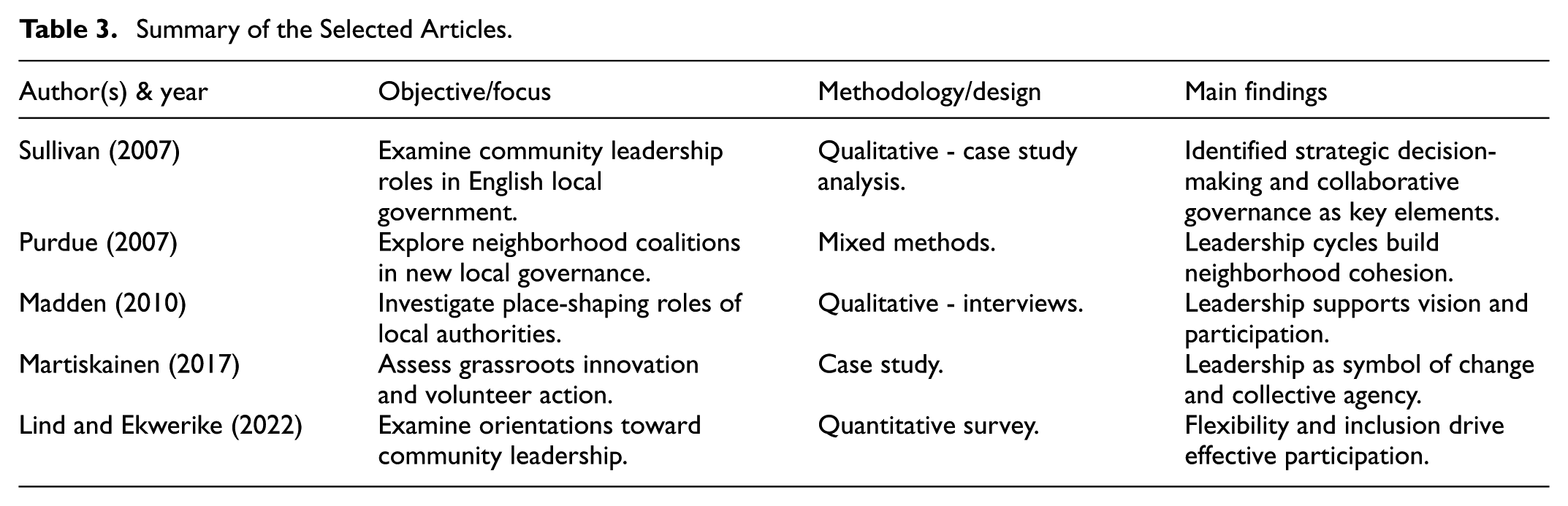
The two inclusion criteria were (1) articles published between January 2004 and December 2023, and (2) empirical studies written in English. Conversely, the two exclusion criteria were (1) studies falling outside the specified timeframe, and (2) non-empirical studies not written in English. Following this, a strategy was implemented to eliminate duplicate articles and studies through a thorough review of titles and abstracts. Subsequently, a comprehensive analysis was conducted by thoroughly reading the remaining articles to ensure relevance to the study’s requirements. In total, the search initially identified 486 records. After removing duplicates (n = 127), 359 studies were screened for eligibility. A further 45 studies underwent a full-text review, resulting in 7 eligible studies being included for synthesis in this review, all of which were written in English. The remaining 38 full-text articles were excluded due to lack of empirical focus, limited relevance to community leadership practices, non-English context, or methodological limitations. A total of seven articles were selected through the search, screening, and analysis processes, as detailed in Table 3.
Summary of the Selected Articles.
Data Analysis
To fulfil the requirements of conducting a comprehensive literature review, it is imperative to gather pertinent insights and data from prior research endeavors. This process serves as the foundation for addressing the core research inquiries. Our review was meticulously tailored toward assimilating and synthesizing findings across a multitude of scholarly works, aiming to propel the existing body of knowledge forward. An essential aspect of this endeavor involved assessing the consistency and accuracy of the coding process applied to the reviewed papers, thereby bolstering the credibility of this systematic literature review (SLR). Furthermore, we employed thematic analysis as a methodological approach to identify recurrent patterns or themes within the qualitative data, thereby delving deeper into the underlying nuances of the literature (Nowell et al., 2017). Thematic analysis involves the identification of patterns or recurring themes within data, providing valuable insights into the perspectives and experiences of participants in research endeavors (Nowell et al., 2017; Thomas & Harden, 2008). This analytical process typically encompasses several pivotal stages, including familiarization with the data, initial code generation, theme exploration, theme review, theme definition and labeling, and final report compilation (Bennett et al., 2019; Filia et al., 2018; Fisher & Ziv, 2022). Moreover, thematic analysis proves versatile in its applicability across various forms of qualitative data, spanning interview transcripts, survey responses, and observational notes (Askola et al., 2019; Worsley et al., 2017). Once again, to ensure the credibility of the current study, two independent authors undertook the task of identifying and categorizing themes. This was achieved through the systematic classification of data based on their shared characteristics or significance. This rigorous approach not only enhances the reliability of the findings but also provides a robust framework for accurately interpreting the data. The application of the PRISMA 2020 framework, combined with a systematic search strategy, an inclusion/exclusion protocol, and a CASP quality appraisal, ensures a transparent and replicable review process. This rigorous methodology enhances the credibility of the findings and provides a solid foundation for the subsequent analysis of community leadership concepts, practices, and challenges.
Ethical Consideration
As this review is based on secondary data from previously published studies, no ethical approval was required. Nevertheless, ethical principles were observed by acknowledging original authors and maintaining accurate representation of all cited work.
Results
This review undertakes a comprehensive examination of the concepts, practices, and challenges inherent in community leadership, drawing insights from seven scholarly articles. Through an interpretivist lens, it seeks to elucidate the multifaceted nature of community leadership within the contexts of governance, community development, and leadership studies. Emphasizing the adaptable nature of community leadership, the review synthesizes findings from empirical studies that explore its practical applications in local governance and community development initiatives across England. These investigations include examinations of the relationships between community development and local communities, as well as leadership models within the third sector.
Furthermore, the review delves into the challenges faced by community leaders as they navigate complex socio-political landscapes and evolving governance structures. By analyzing the experiences of community leaders involved in endeavors such as urban regeneration initiatives, it sheds light on the tensions, dilemmas, and opportunities inherent in community leadership roles. Through this exploration, the review aims to contribute to a nuanced understanding of community leadership within the specific context of England, offering actionable recommendations tailored for practitioners, policymakers, and scholars. The review identifies a notable gap in the existing literature concerning the role of community leadership in driving community development initiatives. While the seven articles provide valuable insights into various facets of community leadership, they also underscore the scarcity of research in this specific area. This reflection underscores the need for additional empirical studies to investigate the intersection of community leadership and community development, suggesting a promising avenue for future scholarly inquiry.
In addition to synthesizing insights from the seven scholarly articles, this review employed a comprehensive approach by utilizing various databases. This extensive search strategy was crucial for ensuring a thorough examination of the fundamental concepts, practices, and challenges of community leadership within the English context. By casting a wide net across these diverse sources, the review was able to capture a comprehensive range of perspectives and findings, enriching its analysis and contributing to a more holistic understanding of community leadership dynamics. This broader scope not only facilitated the identification of key themes and trends but also provided valuable context for interpreting and contextualizing the findings of the reviewed literature. The literature review, particularly in examining the concept and practices of community leadership, has consistently posed challenges for researchers worldwide. A recent study conducted in England highlights the need for a more thorough explanation of community leadership as a concept. This analysis could offer valuable insights for researchers seeking to understand the complexities of community leadership and evaluate the effectiveness of various leadership practices employed by community leaders. Madden (2010) suggests that such an analysis could shed light on both effective and ineffective practices utilized by community leaders, aiding in the evaluation of their performance. Furthermore, it could provide valuable insights into the common challenges faced by community leaders across England. The findings of this review center on identifying patterns of interest to researchers within the realms of “community leadership” and “community development.” The concepts, practices, and challenges measured in this study are detailed in Table 4.
Measured Concept, Practices, and Challenges.
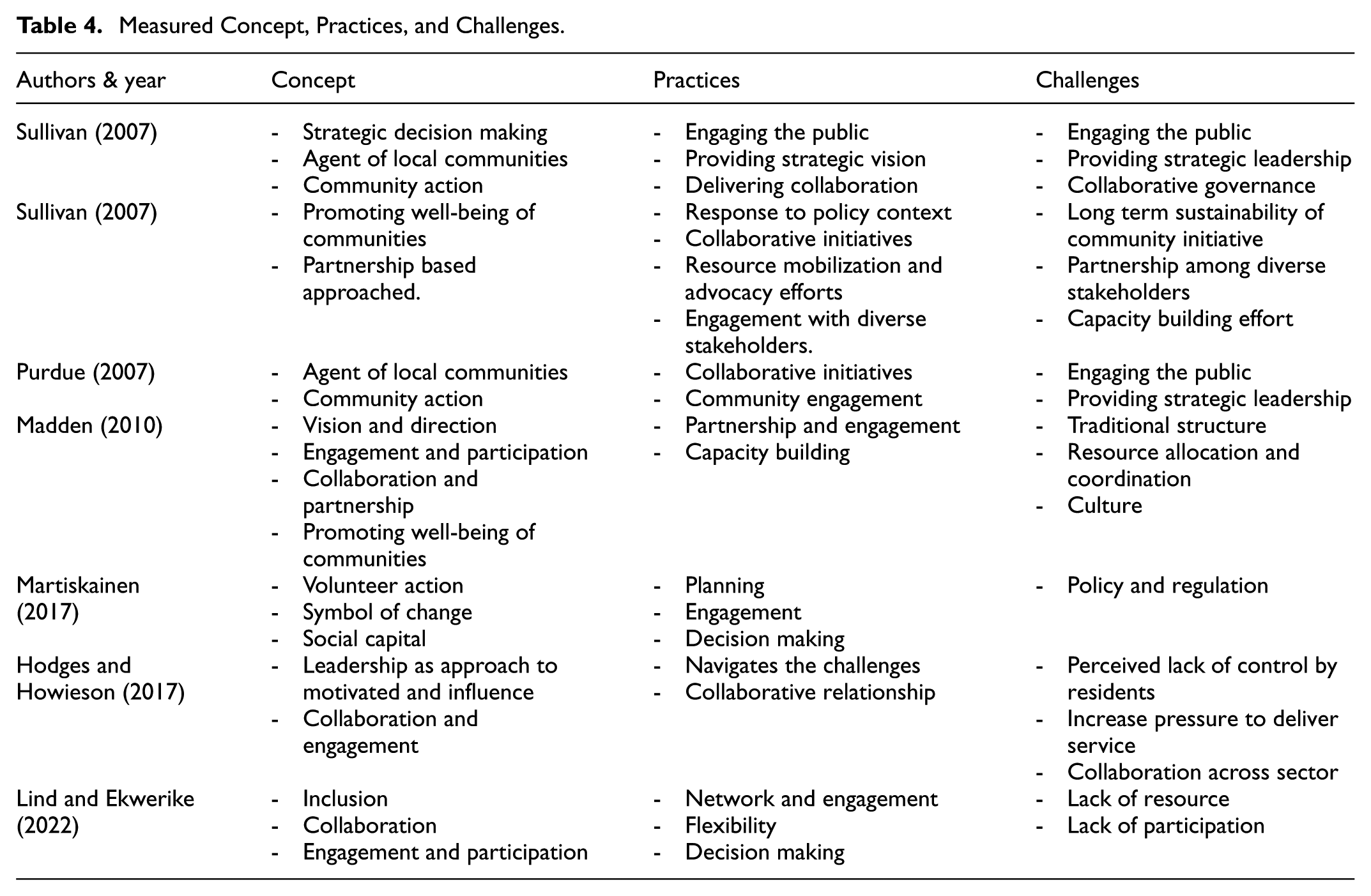
Table 4 presents an overview of the measured concepts, practices, and challenges identified in previous research. Seven studies have explored these dimensions, authored by Sullivan (2007), Derrick and Elson (2018), Madden (2010), Hodges and Howieson (2017), and Lind and Ekwerike (2022). A solitary study, conducted by Martiskainen (2017), stands out for its comprehensive examination of both conceptual frameworks and challenges. Notably, however, Martiskainen (2017) research does not address community leadership in practical contexts.
Discussion
Concept Community Leadership
Community leadership has been integral to English local government since the mid-19th century, although its importance has fluctuated in tandem with shifts in central–local government dynamics (Sullivan, 2007). The concept of leadership here emphasizes leading within communities, which differs from traditional top-down leadership. It involves making decisions together with the community, being open to others’ input, and having a vision for the community’s future Martiskainen (2017). Table 5 presents a summary of the findings of the previous studies that measured the concept of community leadership.
Summary of the Findings on Concept Community Leadership.
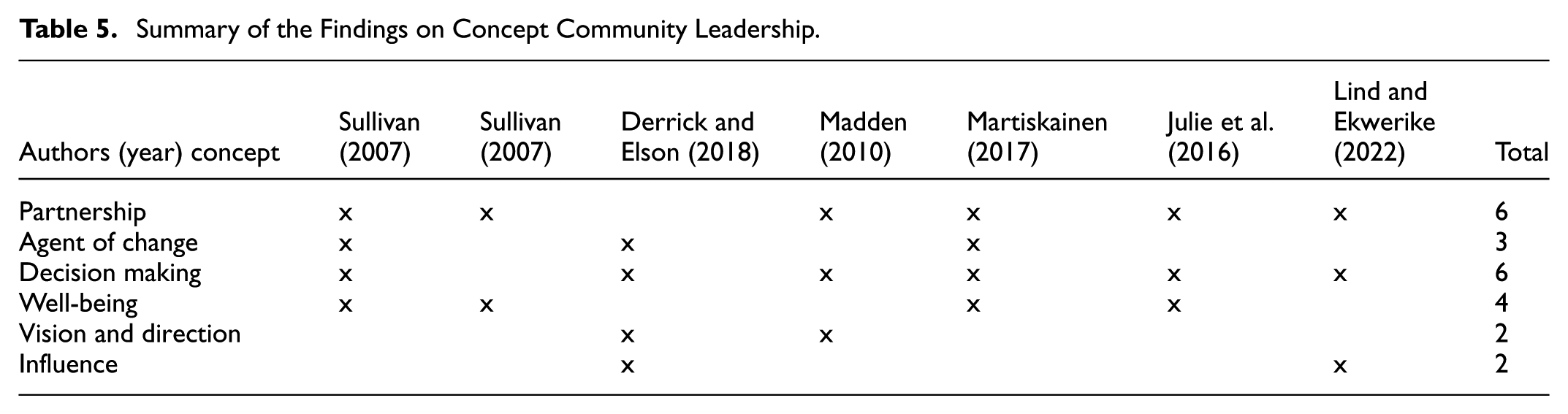
Table 5 outlines six key concepts essential to understanding community leadership partnership, agent of change, decision-making, vision, direction, and influence derived from six primary studies. These dimensions form the foundation of community leadership. Partnership emphasizes collaboration among stakeholders to achieve shared goals. Being an agent of change highlights the leader’s capacity to initiate and sustain positive transformation. Decision-making refers to the leader’s ability to guide collective choices that reflect community needs. Vision and direction provide a sense of purpose and strategic orientation for future development. Influence, as a cornerstone of leadership, inspires motivation and collective engagement. The integration of these six elements mirrors the Transformational Leadership Theory (Bass et al., 1987), which centers on inspiring followers through vision, motivation, and influence. Community leaders act as transformational figures who motivate others to transcend individual interests for communal benefit. These dimensions also align with Social Capital Theory (Putnam et al., 2004), as they strengthen trust, reciprocity, and shared identity within communities.
The studies by Sullivan (2007) and Derrick and Elson (2018) particularly emphasized well-being, vision, and influence reflecting the role of leadership in enhancing organizational and collective capacity. This conceptualization demonstrates that community leadership functions as both a relational and structural mechanism: relational, in its focus on networks and trust; and structural, in guiding governance and policy implementation. This duality supports the Collaborative Governance Theory (Ansell & Gash, 2008), where leaders coordinate across sectors to align local action with public value creation. In essence, these findings affirm that community leadership is multi-dimensional linking personal inspiration (transformational), social connectedness (social capital), and institutional collaboration (governance).
Practices
The current literature lacks in-depth exploration of the fundamental practices of community leadership, resulting in notable gaps in our understanding of these practices. Existing reviews primarily focus on leadership within formal organizations, neglecting to shed sufficient light on the unique nuances of community leadership and its interconnectedness with other aspects. Sullivan (2007) defined community leadership practice as engaging the public, clear strategic planning, and collaboration across stakeholders. This statement was also supported by Derrick and Elson (2018). Table 6 presents a summary of the findings from past studies that have measured the concept of community leadership.
Summary of the Findings on Practices.

The result from Table 6 indicates that strategic planning and collaboration are consistently highlighted as key practices in community leadership across six previous studies conducted by Sullivan et al. (2006), Sullivan (2007), Derrick and Elson (2018), Madden (2010), Julie et al. (2016). This consistency suggests that engaging in strategic planning and fostering collaboration among stakeholders are essential components of effective community leadership practices. These practices enable community leaders to develop clear goals, mobilize resources, build social capital, and enhance the capacity of the community to address its needs and challenges. These findings support the Collaborative Governance Theory (Ansell & Gash, 2008), which posits that leadership effectiveness emerges from shared decision-making, inter-organizational partnerships, and co-production of public goods. In community contexts, this means that leadership is not concentrated within formal authority but diffused across networks of actors working toward mutual goals. Moreover, these practices align with Social Capital Theory, as collaboration builds trust and reciprocal relationships key ingredients for sustainable community action. The engagement of diverse actors fosters bonding capital (within groups) and bridging capital (between groups), both of which are essential in maintaining social cohesion.
Challenges
Review from seven selected article found several challenges that currently face by community leader. Community leaders currently face challenges that require them to be resilient, ethical, and collaborative. These challenges include dealing with funding cuts or changes in government policies that affect their community projects. Leaders must adapt to these obstacles and find innovative ways to ensure the success of their projects. They also need to adhere to ethical principles, such as honesty, responsibility, and fairness, in their decisions and interactions with others. Collaborating effectively with diverse groups, including government agencies, non-profits, businesses, and community members, is essential for overcoming challenges and making progress with community initiatives. Table 7 presents a summary of the findings from past studies that have measured challenges.
Summary of the Findings on Challenges.
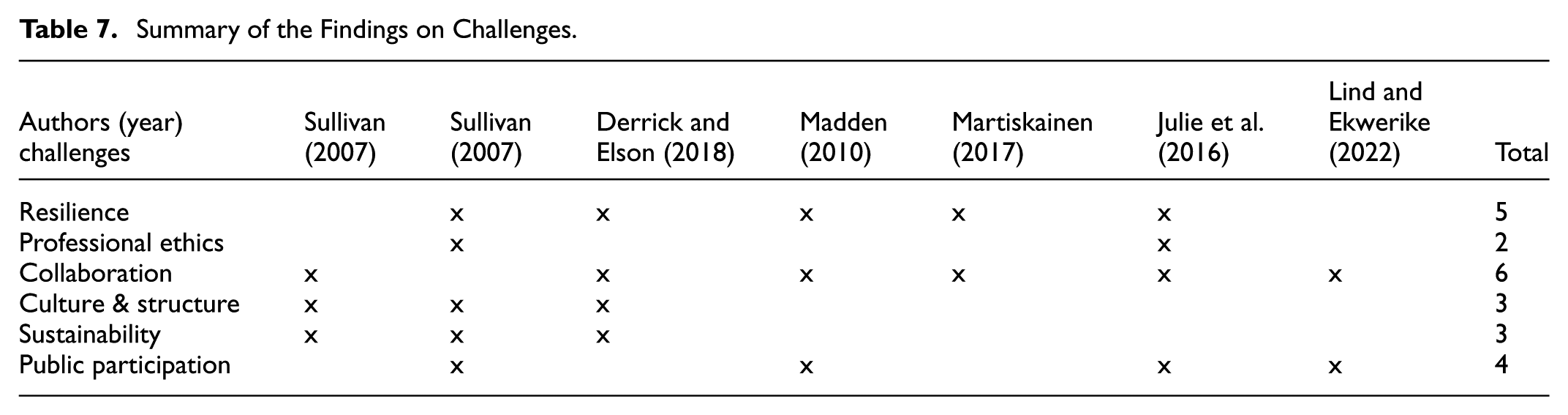
The Table 7, indicates that six challenges are consistently identified across multiple studies on reviewed community leadership. Among these challenges, collaboration emerges as the most critical, as it is highlighted by all authors across different years (Derrick and Elson, 2018; Julie et al., 2016; Madden, 2010; Martiskainen, 2017; Sullivan, 2007). Resilience emerges as a prominent hurdle, acknowledged by all authors except one. Furthermore, sustainability and public participation are underscored by three authors each, underscoring their significance in community leadership endeavors. While fewer authors identify professional ethics, cultural, and structural challenges, these aspects remain pivotal for fostering effective community development. These insights underscore the imperative for community leaders to prioritize resilience and collaboration. Concurrently, they must address sustainability, public engagement, professional ethics, and cultural and structural concerns to bolster community development endeavors. These persistent challenges underscore that effective community leadership depends on balancing transformational resilience (the ability to adapt and inspire during adversity) with collaborative agility (the ability to coordinate among diverse actors). This reinforces Transformational Leadership Theory, where resilience and adaptive motivation are central to sustaining morale and vision under external pressures.
Fewer studies identified professional ethics, cultural, and structural barriers, yet these remain vital for ensuring legitimacy and inclusivity in community development initiatives. These findings collectively suggest that community leadership effectiveness depends not only on individual capacity or vision but also on the systemic enabling environment policy support, financial stability, and institutional trust. Strengthening this ecosystem should be a central policy priority to sustain leadership capacity in local governance.
Implication
The implications drawn from the research findings shed light on the relationship between the concept and practice of community leadership and suggest pathways for theory-driven approaches and local policy interventions to address existing challenges and foster positive change. Regarding the concept of community leadership, the research highlights the discrepancy between the idealized notion of citizen engagement and the practical challenges faced by local authorities in involving citizens in strategic decision-making processes. This underlines the need for a more nuanced understanding of community leadership that emphasizes not only the facilitation of citizen participation but also the development of effective strategies to overcome barriers to engagement. Theory-driven approaches can contribute to this understanding by providing frameworks and models that guide the design and implementation of more inclusive and impactful citizen engagement initiatives.
In terms of practice, the research underscores the importance of collaborative governance in effective community leadership. However, it also reveals significant challenges related to the complexity and fragmentation of local governance structures, which hinder effective collaboration among stakeholders. Moving forward, local policy interventions should focus on streamlining governance processes, enhancing accountability mechanisms, and fostering a culture of collaboration and cooperation among local actors. This may involve developing clearer guidelines and frameworks for collaborative decision-making, establishing platforms for ongoing dialog and information-sharing, and investing in capacity-building initiatives to empower local stakeholders to engage meaningfully in governance processes.
Overall, the way forward in advancing theory-driven and local policy interventions in community leadership lies in bridging the gap between theory and practice and aligning policy priorities with the realities and needs of local communities. By integrating theoretical insights with empirical evidence and stakeholder perspectives, local authorities can develop more effective and responsive approaches to community leadership that promote inclusive governance, foster collaboration, and drive positive social change.
Conclusion
In conclusion, this review provides a comprehensive exploration of the fundamental concepts, practices, and challenges inherent in community leadership, particularly within the context of local governance and community development. Through an interpretivist lens, insights from seven scholarly articles were synthesized, offering a nuanced understanding of the dynamic nature of community leadership. Key concepts such as partnership, decision-making, and influence were highlighted, emphasizing their pivotal role in driving effective governance and facilitating sustainable community development initiatives. Moreover, by delineating critical challenges faced by community leaders, including the necessity for resilience, professional ethics, and collaboration, the review underscores the importance of effective leadership in navigating complex socio-political landscapes and fostering community progress. Importantly, this analysis underscores the vital role of community leadership in advancing community development goals, highlighting its significance in driving inclusive governance, fostering collaboration, and catalyzing positive social change. Thus, by addressing these challenges and leveraging effective community leadership, stakeholders can contribute significantly to the holistic development and well-being of communities across and beyond.
Limitation and Future Direction
The systematic review encountered limitations stemming from specific contexts, which posed challenges to researchers in data collection, potentially influencing the outcomes. Access barriers arose, with certain articles inaccessible without subscription or payment, raising concerns that valuable insights from these sources, including pertinent books or chapters, may have been overlooked, thus potentially compromising the comprehensiveness of our findings. Upon reflection, it becomes apparent that despite the abundance of available community leadership literature, access restrictions inhibited our ability to fully encompass the breadth and depth of relevant knowledge. While there is a substantial body of community leadership books, the exclusion of certain materials due to access constraints underscores the necessity for enhanced accessibility and inclusivity within academic publishing. This limitation underscores the importance of researchers exploring alternative avenues for accessing literature and advocating for open access initiatives to foster equitable dissemination of knowledge.
Another limitation concerns the focus of this review, which is specifically centered on investigating the concepts, practices, and challenges of community leadership within a 10-year period and exclusively within England. By narrowing down the study to this specific timeframe and geographical location, certain nuances, and variations in community leadership across diverse international contexts are left unexplored. Expanding on this constraint, it’s essential to acknowledge that the dynamics of community leadership can vary significantly across different regions and historical periods. By confining the review to England and a particular decade, potential insights stemming from diverse cultural, social, and political backgrounds are potentially overlooked. Research conducted in other countries may offer alternative perspectives and methodologies to understanding community leadership that were not included in this review. Recognizing this limitation underscores the need for future research to adopt a broader approach, encompassing a wider geographical and temporal scope. By doing so, a more holistic understanding of community leadership practices and challenges can be achieved, facilitating cross-cultural comparisons and providing enriched insights into effective leadership strategies across various contexts.
The search process faced challenges due to limited filtering options within the databases, resulting in an overwhelming volume of search results. As a result, only seven articles met the inclusion criteria, causing delays in identifying suitable literature. Furthermore, the review was confined to three databases Scopus, Web of Science, and Google Scholar heightening the difficulty of managing the extensive search outcomes. Despite the potential wealth of information from various sources, emphasis remained on these three prominent databases, particularly within the educational sphere. Expanding on this issue, the absence of robust filtering mechanisms within the databases hampered the efficient identification of relevant articles, prolonging the search process. Although utilizing multiple databases enhanced the chances of capturing diverse viewpoints, the selection of these three databases was intentional, prioritizing their credibility and relevance to the educational field. Looking ahead, efforts to streamline the search process may involve refining search strategies and utilizing additional search filters where feasible. Additionally, consideration could be given to broadening the search to include supplementary databases or alternative sources to ensure a more comprehensive coverage of pertinent literature. Despite these challenges, the meticulous approach to selecting reputable databases underscores the commitment to upholding the quality and relevance of the reviewed literature within the educational context.
Footnotes

Funding
The authors disclosed receipt of the following financial support for the research, authorship, and/or publication of this article: This publication is fully funded by Universiti Putra Malaysia.
Declaration of Conflicting Interests
The authors declared no potential conflicts of interest with respect to the research, authorship, and/or publication of this article.
Data Availability Statement
Data sharing not applicable to this article as no datasets were generated or analyzed during the current study.