






Abstract
This research investigates the dynamic interplay among branded hashtag adoption, social media ties, and user interest. Hashtags have become an important tool for helping marketers build a virtual community around a brand and encourage user-generated content (UGC), enhancing value for community members. We propose a novel conceptual framework grounded in identity signaling and optimal distinctiveness theory that captures the bidirectional, co-evolutionary mechanisms underlying the development of new brand communities. Using large-scale longitudinal observation data based on users’ tweets on X, we apply the Bayesian vector autoregressive method to test our hypotheses. The results reveal a negative feedback loop between user topical interest and branded hashtag adoption, where high interest increases hashtag posting propensity but subsequently reduces that same interest—potentially decreasing motivation to participate in competing brand communities. Conversely, we find a positive feedback loop between user topical interest and new social media ties that reinforces identity-consistent behavior. The study establishes dual-nature variables in brand community research, extends optimal distinctiveness theory to consumer brand-signaling behavior, and develops novel metrics based on user-generated content for predicting brand community membership decisions. Our results also offer strategic insights for managing brand communities on social media.
Plain Language Summary
This research investigates the dynamic interplay among branded hashtag adoption, social media ties, and user interest. Hashtags have become an important tool for helping marketers build a virtual community around a brand and encourage user-generated content, enhancing value for community members. We propose a novel conceptual framework that describes mechanisms underlying the development of new brand communities. Using large-scale longitudinal observation data based on users’tweets on X, we apply an advanced method to test our hypotheses. The results reveal a negative feedback loop between user topical interest and branded hashtag adoption, where high interest increases hashtag posting propensity but subsequently reduces that same interest—potentially decreasing motivation to participate in competing brand communities. Conversely, we find a positive feedback loop between user topical interest and new social media ties that reinforces identity-consistent behavior. Our results offer strategic insights for managing brand communities on social media.
Introduction
Branded hashtags are an integral part of social media marketing campaigns. Hashtags enable social media users to connect with those with similar interests and identify communities in which to participate. Marketers can use hashtags to build a community around a brand and encourage user-generated content (UGC), enhancing value for community members. For new product launches, a designated hashtag can generate awareness, spread word of mouth, and boost UGC and early adopter sharing. As branded hashtags become an important tool for product launches, it is imperative for marketers to understand the mechanisms of consumer adoption of new branded hashtags.
A brand community is a specialized, non-geographically bound community built on a structured set of social relations among brand admirers (Muniz & O’Guinn, 2001). Characteristics of online brand communities include shared social identity (Wong, 2021), interactivity (Duong et al., 2020; Huang et al., 2022), and member participation (Liao et al., 2017). Research provides valuable insights into how personal and social motivations drive consumer participation in brand communities (e.g., Akdevelioglu et al., 2024; Fernandes & Castro, 2020; Li et al., 2014; McLaughlin et al., 2022), as well as the benefits that members derive from participating in brand communities (e.g., Confente & Kucharska, 2021). Most research in this area adopts a static lens and uses survey data to examine unidirectional relationships between consumer behavior in brand communities and their antecedents and consequences (Veloutsou & Liao, 2023). While these studies provide important insights into brand communities, there has been limited understanding of the dynamic mechanisms that drive their evolution and influence member behavior.
Brand communities on social media are fluid entities, easily formed and dissolved. Social platforms empower consumers as active co-creators of brand identity and meaning that transform these communities into dynamic, recursive systems where value for both brands and members is collaboratively generated and evolves over time (Hajli et al., 2017; Ind et al., 2020). Social media algorithms further shape these community structures by engineering connections and promoting content based on user behavior, which can create echo chambers in relationship formation (Cinelli et al., 2021). Within this ecosystem, relationships among brand communities, individual consumers, and fellow members undergo continuous reconstruction, as participants simultaneously shape and are shaped by the brand community itself (Black & Veloutsou, 2017). Confente and Kucharska (2021), for example, found that strong identification with a brand community helps consumers build their personal brands. There are dual-nature factors that operate simultaneously as both causes and effects, creating feedback loops in a brand community. For instance, strong brand loyalty can drive community engagement, which in turn reinforces and intensifies that very loyalty. Scholars have acknowledged that certain variables investigated in the brand community literature are dual nature and called for more research to better understand the roles of such variables in brand communities (Hook et al., 2018).
Research has explored the motivational factors driving users to create brand-related content (Nikolinakou et al., 2021) and the positive effects of UGC on various performance dimensions, including brand perception, awareness, loyalty, engagement, word-of-mouth, and purchase intentions (Kim & Johnson, 2016; Mayrhofer et al., 2020; Tyrväinen et al., 2023). The brand benefits derived from UGC stem from its distinct characteristics, such as authenticity, trustworthiness, engagingness, relatability, credibility, and advocacy (Chu et al., 2024; Davcik et al., 2022; Ferreira et al., 2021; Goh et al., 2013; Hajli, 2014; Kim & Johnson, 2016). While these studies provide valuable insights, there is a void in research on the potential associations between brand and broader categories of UGC. Existing studies have mostly focused on direct brand-related content, overlooking the potential implications of related or seemingly unrelated content created by users for branding purpose.
In this paper, we focus on the dynamic interplay among user topical interest, social media ties, and the adoption of new branded hashtags. Drawing on social identity and optimal distinctiveness perspectives, we propose and test a research model encompassing the three factors. The empirical setting involves consumer adoption behavior of a designated hashtag for two new entertainment products during 2016 to 2017. A large-scale observational dataset was collected based on users’ historical and streaming tweets on the social platform X (formerly Twitter). For the empirical analysis, we constructed novel UGC measures using topic modeling and social network analysis. A co-evolution model, Bayesian vector autoregressive (BVAR), was developed to test the hypotheses on the dataset.
This study makes several important theoretical contributions. First, by highlighting perspectives from optimal distinctiveness theory, we develop and test a novel framework that considers the dynamic interactions among branded hashtag adoption, user topical interest, and new social media ties. This study advances the brand community literature by demonstrating mechanisms that drive the development of a brand community and its effects on individuals, while documenting the bidirectional relationships between them. To the best of our knowledge, this is the first study that conceptualizes and documents dual-nature variables within the brand community framework. Our co-evolution model addresses the methodological challenge posed by such dual-nature variables in causal inference. Additionally, this research bridges gaps in UGC research by illustrating how seemingly disparate content types interconnect and potentially influence brand strategies. In particular, it contributes to the UGC literature by introducing two theory-grounded UGC metrics specifically constructed to understand and manage emerging brand communities. Furthermore, we contribute to literature on the effects of newly formed social media ties on product adoption behavior. While diffusion research has established how existing social connections drive product adoption through contagion effects (e.g., Iyengar et al., 2011), we extend this literature by focusing on new social ties. Finally, this research broadens optimal distinctiveness theory by exploring how individuals communicate their personal and social identities via social media postings over time and across categories.
The remainder of the paper is organized as follows. The next section presents the literature review, followed by the conceptual model and hypotheses. We then describe the research methodology, empirical model, and estimation results. The final section discusses the theoretical and managerial implications, outlines the study’s limitations, and offers directions for future research and concluding remarks.
Literature Review
Media Effects and Attitude Change
Research on media effects has extensively examined how mediated messages shape individuals’ attitudes, beliefs, and behaviors. Foundational frameworks including agenda-setting (McCombs & Shaw, 1972; McCombs & Shaw, 1993), framing (Entman, 1993; Entman et al., 2009), and social cognitive theory of mass communication (Bandura, 2001) demonstrate that repeated media exposure not only informs audiences but fundamentally shapes perceptions of social reality and public opinion. In digital environments, these processes intensify through algorithmic personalization and peer-to-peer amplification, creating selective exposure patterns and attitudinal reinforcement effects (Cinelli et al., 2021). Within brand communities, exposure to user-generated content (UGC) similarly influences brand-related attitudes by enhancing perceived authenticity, credibility, and engagement (Davcik et al., 2022; Kim & Johnson, 2016).
The participatory nature of social media transforms users into simultaneous message producers and receivers. This bidirectionality generates reciprocal feedback loops that accelerate both attitude formation and change (Berger, 2008). When users post, share, or engage with branded hashtags, they participate in continuous attitudinal reinforcement through public expression and social validation. These interactions strengthen users’ self-perceptions of brand and community alignment (Grewal et al., 2019), increasingly blurring boundaries between personal identity and mediated influence.
Uses and Gratifications Theory
Uses and Gratifications Theory (UGT; Katz et al., 1973) complements media effects research by reframing audiences as active participants rather than passive recipients. UGT proposes that individuals strategically select and use media to fulfill cognitive, affective, personal integrative, and social integrative needs. On social media platforms, users engage with branded content to satisfy needs for entertainment, information seeking, social interaction, and self-expression (Shao, 2009; Whiting & Williams, 2013). Within brand communities, branded hashtags function as instruments for achieving these gratifications: they enable users to express affiliations, participate in collective experiences, and gain peer recognition (López et al., 2017).
Posting or sharing branded hashtags thus serves dual purposes, both self-expressive and socially functional. Individuals employ hashtags to construct digital identities, signal group membership, and derive psychological gratification from feedback mechanisms including likes, retweets, and mentions. These social gratifications reinforce sustained engagement and support ongoing community participation (Hajli, 2014).
The Identity Perspectives
While media effects and Uses and Gratifications Theory (UGT) offer valuable insights into social media engagement, both frameworks remain limited in their explanatory power at the micro level. Media effects theories elucidate how repeated exposure influences brand attitudes over time, and UGT clarifies users’ initial motivations for engaging with brand-related content. However, neither framework sufficiently explains the psychological and social mechanisms through which casual engagement evolves into sustained community participation. Addressing this transition requires identity-based perspectives that account for how individuals manage the tension between assimilation and differentiation within brand communities.
Identities refer to the sets of meanings a person holds about their roles, group memberships, or unique characteristics (Burke, 2020). In the process of identity development, users attempt to satisfy and balance their needs for self-continuity, self-distinctiveness, and self-enhancement (Bhattacharya & Sen, 2003; Sihvonen, 2019). While the individual self operates as a stable source of self-definition (Sim et al., 2014), a person’s identity also encompasses social facets, including the relational self, the group-based self, and the collective self (Brewer, 2001; Brewer & Gardner, 1996). Sim et al. (2014) indicate that “people can hold varied representations of themselves in the working self-concept—they can define themselves in terms of unique traits, dyadic relationships, or social group memberships.” Therefore, identity has both personal and social dimensions. In addition, identity theory acknowledges that some identities are more meaningful and vital than others, and contends that identities are likely organized hierarchically in the self-concept. Salient identities may play out frequently across situations (Stets & Burke, 2000) and are likely to influence affective and behavioral outcomes. Some identities can be chronically salient across situations, while others may be more transitory.
Social identity is a crucial aspect of identity derived from one’s social group memberships (Tajfel & Turner, 1979). A group is defined as a collection of people who perceive themselves as members of the same social category and share a social identity (Tajfel & Turner, 1979). Group memberships may be ascribed (e.g., race, age, gender) or acquired (e.g., beliefs, attitudes, behaviors). People do not need to interact or have strong interpersonal ties to perceive themselves as members of a group. While most people belong to many different social groups, some are more meaningful or relevant than others. Social identity theory asserts that social identity results from three cognitive processes through which individuals progress: social categorization, social identification, and social comparison (Tajfel & Turner, 1979). Rooted in social identity theory, optimal distinctiveness theory addresses the balance individuals seek between assimilation (belonging to a group) and differentiation (feeling distinct from others) within social groups (Brewer, 2012; Leonardelli et al., 2010). Based on this view, social identity is activated to reconcile the two opposing needs. Optimal distinctiveness theory posits that competing drives can be satisfied by membership in moderately inclusive groups (Brewer, 2012).
Identity Signaling
Consumers use product choices to communicate their values, beliefs, and personality traits to others (Berger, 2008; Berger & Heath, 2007). Since brands convey meanings, values, and cultures, people use them as symbols of group identity (Escalas & Bettman, 2005). Social media posts can also act as signals of identity. On social media platforms, users engage in identity signaling to curate their desired self-image to the self and others (Grewal et al., 2019). When individuals post about social causes, political perspectives, or ethical positions, they’re communicating their core values. Group affiliations are signaled through specialized language and symbols that demonstrate membership in specific communities (Black & Veloutsou, 2017). This includes using particular hashtags, sharing content from certain influencers, or participating in group-specific trends. Users can have conflicting identity motives that require them to use different signals to navigate the balance between uniqueness and conformity. That is, they have to simultaneously signal distinctiveness while maintaining enough similarity to remain accepted within their reference groups (Chan et al., 2012).
Theoretical Framework and Hypotheses
Conceptual Framework
We integrate the identity-related perspectives and propose a research model that depicts how branded hashtag adoption propensity, new social media ties, and user topical interest are interconnected. The proposed framework is presented in Figure 1. Details on the conceptualization of the three factors are provided below.

Conceptual model.
The variable of user topical interest represents the comparative strength of an individual’s social media posting activity in specific subject categories. This factor is related to personal identity associated with particular interest domains (such as entertainment, sports, or politics). Each distinct interest area constitutes a unique dimension of one’s self-concept. Individuals with strong interest in specific categories typically express themselves by generating more content in those areas compared to others. The subject matter of a user’s social media posts represents identity-relevant categories into which they self-classify. As Hogg et al. (1995) note, the significance of category membership varies in its overall importance to one’s self-concept. Given that time is a finite resource, attention to specific topics may shift as circumstances change (Vander Shee et al., 2020). Available time resources inherently affect how frequently individuals express their topical interests across categories. While some subject interests remain relatively stable over time, others experience changes in centrality and salience. New brands or products trigger shifts in the salience of particular identities within corresponding categories. The new brands and their communities may affect how individuals signal personal and social identities in other domains, a process that reflects the dynamic nature of identity expression in response to market stimuli and social influences.
New social ties refer to the one-way dyadic connections established after the formation of a hashtag community. These connections signal a social identity rooted in interpersonal relationships. When individuals forge new dyadic ties on social media, they engage in a self-categorization process by positioning themselves within specific social groups. These new connections provide users with a sense of affiliation that resonates with their relational self-concept. Through these ties, individuals can project a distinctive social identity to themselves and others. As these dyadic relationships deepen and gain significance, they can evolve into more cohesive group identification. In this progression, individuals may develop strong emotional commitments to, identification with, involvement in, and attachment to their network of new connections. This process often leads consumers to adopt the preferences of their group, aligning with its norms, attitudes, and values. The establishment of these ties represents not just connection formation but identity integration within emergent brand communities.
The adoption propensity of branded hashtags signals the emergence of a collective identity between users and brand communities. Social media platforms enable companies to cultivate brand community identification, which influences consumer behavior and enhances online marketing initiatives (Valmohammadi et al., 2023). Brand community identity encompasses “the norms, values, and beliefs held by individuals who, through self-categorization, align their behaviors with a brand community’s culture, rituals, theme, image, and goals” (Wong, 2021). Black and Veloutsou (2017) describe it as “the shared social identity at the group level that individual members internalize, depersonalizing their individual identity.” Virtual brand communities facilitate meaningful experiences through fan-contributed content, foster brand solidarity, and create spaces where consumers share characteristics with both the brand and fellow community members. These communities satisfy users’ needs for communal brand affiliation (López et al., 2017) while nurturing a collective identity. Branded hashtags function as community gateways, allowing individuals to discover, join, and participate in brand communities. When consumers post or share branded hashtags on social media with others, it can be viewed as adopting symbols that signal their collective identity with the brand community.
Hypotheses
The need for inclusion and differentiation influences individuals’ adoption of new products (Timmor & Katz-Navon, 2008). When attributes of a new brand, such as its personality and promise, are attractive and match personal traits or values, consumers may develop a strong identification with the brand (Sihvonen, 2019). As their commitment to the new brand strengthens, their need for assimilation may be activated. Researchers on social media networks have found that topical homophily, or the tendency to form social connections with others based on topical interests, plays an important role in the formation of social media ties (Dey et al., 2019; Kang & Lerman, 2012). The desire for affiliation may drive individuals to seek out similar social ties and selectively affiliate with those who mirror their personal characteristics. Because new brands carry new meanings and values for consumers, they may also activate consumers’ need for distinctiveness, motivating them to form new connections with brand enthusiasts to signal a new social identity. We argue that individuals with high topical interest will have a strong need for assimilation and/or differentiation, and be more motivated to form more new connections to socially communicate their identity associated with the new brand.
Bagozzi and Dholakia (2002, p. 5) indicate that “most virtual communities are organized around some distinct interest, which to a lesser or greater extent provides its raison d’etre.” When individuals share a strong interest in a particular category, they are likely to form communities around the subjects they have already invested in. Consuming relevant content or discussing these emotions with other community members can be an outlet for expressing and relating to others’ experiences. We posit that consumers with high topical interest are more likely to accelerate their assimilation toward the brand community and signal their identity through their adoption of the new brand’s hashtag. We postulate that users with higher topical interest have a greater likelihood of adopting the branded hashtag.
Identity symbols could lose value or significance due to a lack of uniqueness. We argue that consumers with high brand community identification attach more value to the branded hashtag. In turn, this can suppress their need to post about other similar products in the same domain. This is because membership in the new brand community can fulfill users’ need for assimilation and offer high signaling value to others externally. To achieve an optimal level of distinctiveness, consumers with high brand community identification may diverge and make more posts in dissimilar domains. Thus, consumers with a higher propensity to adopt the branded hashtag may have less interest in posting content in a similar domain.
New dyadic connections and the new brand community satisfy individuals’ needs for inclusion. However, we contend that their mechanisms operate through distinct processes. Consumers with greater social ties have a higher likelihood of balancing their need for assimilation and differentiation when their group of new connections maintains a moderate amount of diversity (Brewer, 2012). Such a group of new ties may have the diversity needed to simultaneously satisfy individuals’ need for uniqueness. The social identity expressed through these new connections satisfies the need for both assimilation and differentiation, obviating an individual’s need to further express their identity through the branded hashtag.
Individuals with high hashtag-adoption propensity have a strong identification with the new brand, which may lead to increased salience and dominance of a collective identity in their self-concept. This, in turn, could influence whether they take on other social identities. A strong collective identity could heighten individuals’ need for inclusion and override their need for distinctiveness in the same domain, given that collective identity can enhance one’s “we intentions,” redefine one’s self-concept through depersonalization, and motivate active participation in online interactions (Bagozzi & Dholakia, 2002). As the collective identity becomes central and salient to an individual’s working self-concept, they become motivated to seek out new connections in the same domain to reinforce this collective identity. In this manner, the collective identity motivates individuals to develop a shared language and meaning toward the new brand, and facilitates the development of new social connections in the community (Meek et al., 2019)
According to self-categorization theory (Turner & Reynolds, 2012), the self-concept is dynamic and adaptive to immediate contextual factors, such as interactants and situations. Thus, new social ties may influence a person’s self-concept. When people identify with new ties’ opinions and emotions about the new brand, they consume more content and obtain more gratification. Interactive experiences can be highly diagnostic for a person’s social identity, accentuating their existing personal identity and satisfying their need for self-verification. When an individual shares a relational identity with new ties, interactions with those ties will help sustain and strengthen their interest in the same category. Connections with more new ties can resonate with consumers’ topical interests and evoke strong emotions relevant to the brand and its corresponding category. Therefore, we argue that individuals with a greater number of new ties develop stronger topical interest.
Methodology
We examine the formation of branded hashtag communities for two new TV shows on the social media platform X. Producers of TV shows often use hashtags to cultivate social media communities where fans can interact, share content, and engage in online discussions. New TV shows allow us to observe and measure the growth of their fan base over time. Hence, the chosen empirical setting is appropriate for the research questions at hand.
In our empirical application, the adoption event is defined as a user’s first posting of the designated hashtag for a focal new TV show during the observation period. Data collection started with TV shows that premiered their first episode in the fall of 2016. Due to the large amount of data involved, we focused our data-collection efforts on the two most popular TV shows of that time: The Good Place and This is Us. The observation window included the entire first season of each TV show. Specifically, the observation period for The Good Place, which has 13 episodes, started in September 2016 and ended in January 2017. For This is Us, which has 18 episodes, the data was collected between September 2016 and March 2017.
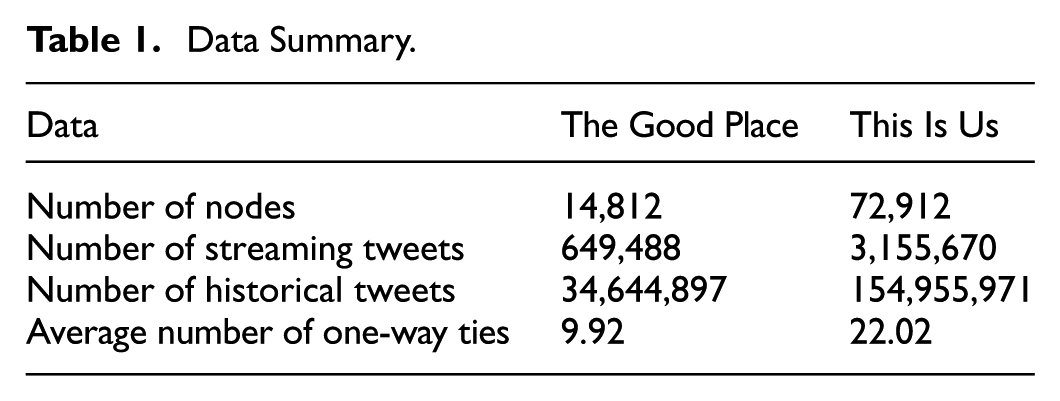
Using X’s streaming application programming interface (API), we used the tweets to construct the emergence of a new brand community consisting of adopted branded hashtag users over time. Specifically, we collected the time when a sampled user first posted the designated hashtag of a new TV show during the observation period. In our sample, we excluded two types of nodes whose posting behavior is not identity-driven: news media channels and information hubs (defined as individuals with both in- and out-degrees larger than three standard deviations above the mean; Goldenberg et al., 2009). For each new adopter included in our sample, we then used the search APIs to collect their historical tweets to classify their interest areas. We used the historical tweets posted by each user to extract their topical interests and their pre-existing social ties. In particular, historical tweets were used to construct a retweet network or hypergraph that represents the written communications or ties established among users prior to the beginning of the observation period. This approach could account for the endogenous creation of social ties that may exist only after adoption. Interactions between the users indicate the connection between them through one or more of the following actions: (a) retweeting, (b) quoting, (c) mentioning, or (d) replying. Such communication patterns capture the temporal aspects of social ties. We applied the Latent Dirichlet Allocation (LDA) method (Blei et al., 2003) to classify user interest topics using historical tweet data. Based on these results, we then extracted an individual’s interest score in the Entertainment topic to measure the level of this specific topical interest relative to other categories. Additionally, we measured the contagion effect of the new social ties by tracking the number of new ties that adopted the hashtag in the previous periods. The definitions of key variables and the descriptive statistics are provided in Tables 1 and 2. Detailed explanations and considerations are presented below.
Data Summary.
Summary of Key Variables and Descriptive Statistics.

Our model considers four endogenous variables. The first one, Branded Hashtag Posting Utility (U), is a latent variable inferred based on the observed adoption behavior. The second variable, New Ties (NT1), represents the cumulative new, one-way social ties a user established since the beginning of the TV show. The third variable, topical interest (INT), represents a user’s intrinsic interest in the entertainment category (relative to other topics). It is important to control for the instantaneous, direct behavioral effect on a user’s adoption behavior due to contagion as opposed to changes in identity. Therefore, as an additional endogenous variable, we include the number of new ties who have adopted the designated hashtag at each time period (ANT1).
The following variables are used as control variables. Network centrality measures of in- and out-degree for each user are included as covariates. In-degree is the number of followers, whereas out-degree is the number of followings. In-degree reflects a user’s popularity or social status, while out-degree indicates openness and information gathering (Verweij, 2015). Measures of these individual characteristics were collected at the start of the observation window, and their values remain constant over time. In addition, we created episode dummies to capture the episode-specific effects. As the first and final episodes typically generated more tweets than the others, we chose the middle episode of the two shows (ep. 7 and ep. 10), respectively, as our reference.
Because the study analyzed publicly available archival data and did not involve direct human participation or the collection of private or identifiable information, informed consent was not required.
Model and Results
Model
To test the hypotheses, we choose the vector autoregression (VAR) method. The VAR is a multivariate time series model that accounts for endogeneity, autocorrelation, reverse causality, and feedback loops (Luo et al., 2013). The VAR method can help capture dynamic relationships between variables over time. For estimation, we choose the Bayesian approach because it offers the flexibility needed to accommodate the main discrete hazard variable corresponding with the hashtag adoption decision. The Markov Chain Monte Carlo (MCMC) estimation algorithm is provided in the Appendix A.
For each user-time period, we create a binary variable of the adoption indicator

Using a system of equations, Uit is jointly determined by lagged values of other endogenous variables and its own lagged value. The VAR model is specified in levels with one period lag using daily data intervals. Equation (2) presents the VAR model:

where Yit is the vector of the four endogenous variables; Ci is the vector that contains the control variables of in-degree, out-degree, and episode dummies; B is the coefficient matrix; and the error matrix is denoted as Eit∼N(0, Σ).
Estimation Results
The estimation results for the two TV shows are presented in Tables 3 and 4. The results support H1. The coefficient of lagged user topical interest on new tie formation is positive and significant in both cases. This suggests that high topical interest motivates consumers to establish new social ties, consistent with two complementary mechanisms: homophily-driven affiliation with like-minded others and distinctiveness-motivated differentiation through association with brand enthusiasts. Social tie formation thus serves dual needs for belonging and uniqueness within a brand community.
Estimation Results (I).
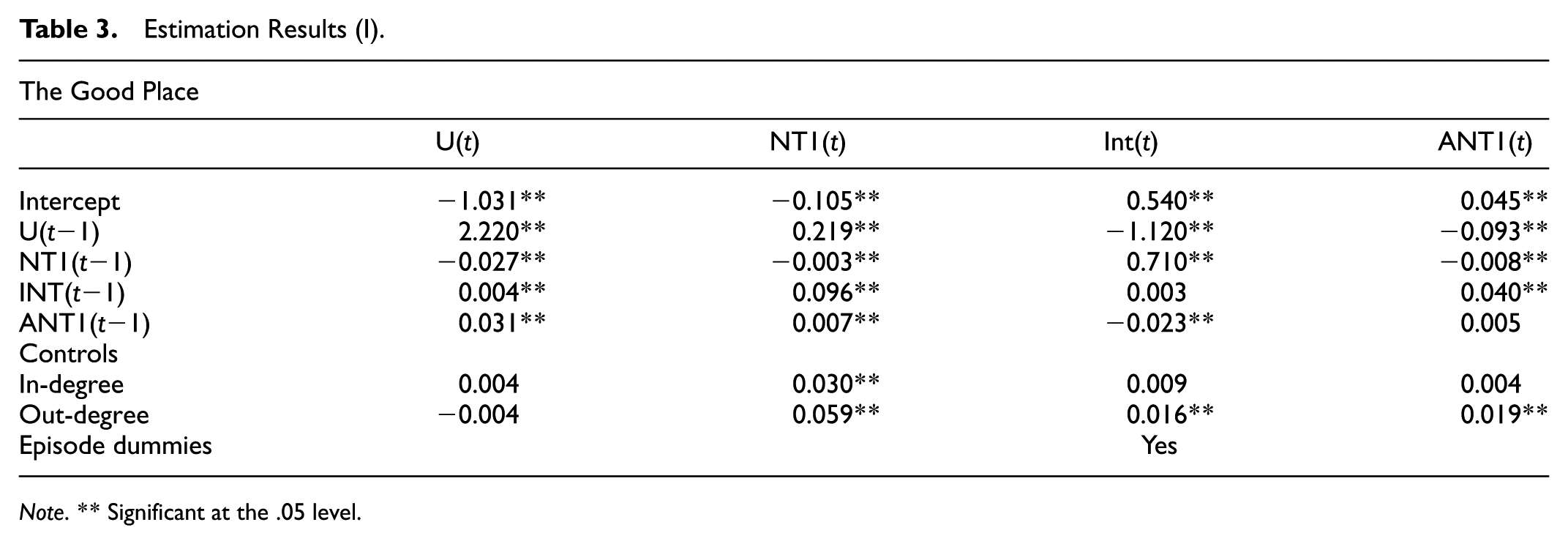
Note. ** Significant at the .05 level.
Estimation Results (II).
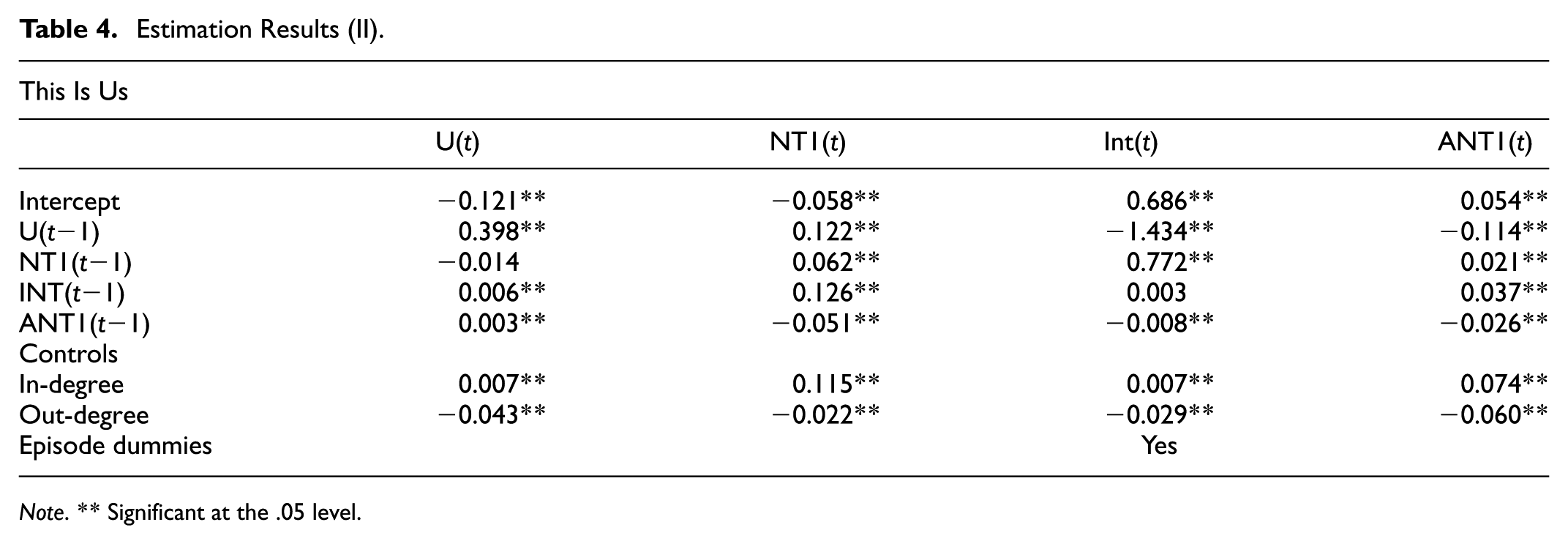
Note. ** Significant at the .05 level.
H2 is also supported. Lagged topical interest has a positive and significant effect on hashtag adoption propensity. As brand identity becomes more salient in a user’s self-concept, individuals are increasingly motivated to publicly signal this identity through branded hashtags. This finding aligns with the assimilative role of identity signaling, through which users communicate affiliation with the brand community.
Conversely, H3 is supported by a negative and significant coefficient for lagged hashtag adoption on topical interest. This finding is indicative of a potential signal-saturation effect. Once users publicly signal their identity, the need for identity expression is satisfied, and distinctiveness motives subsequently drive them to explore and engage in other domains. Combined with H2, these results demonstrate that temporal effects between topical interest and hashtag adoption operate in opposite directions, highlighting the importance of capturing dynamic effects over time.
H4 receives partial support. For The Good Place, lagged new ties have a negative and statistically significant effect on hashtag adoption, whereas for This Is Us the effect is insignificant. These mixed findings suggest a potential boundary condition related to product appeal and the social functions of consumption. Drawing on optimal distinctiveness theory, niche products such as The Good Place enable social ties to simultaneously fulfill needs for affiliation and differentiation. In smaller, identity-relevant communities, newly formed ties may be more identity-reinforcing, thereby reducing the instrumental value of public hashtag signaling. In contrast, for mass-appeal products like This Is Us, social ties primarily serve an assimilative function. Because widespread popularity already confers a sense of belonging, new ties do not meaningfully substitute for public identity signaling, resulting in a null effect on hashtag adoption. Taken together, these results suggest that social ties substitute for hashtag adoption only under contingency conditions related to product appeal.
The effects of lagged posting propensity on new tie formation are positive and significant for both cases, supporting H5. Consumers with higher posting propensity are more likely to form new social ties in subsequent periods, consistent with the notion that collective identity motivates active social engagement.
These findings suggest that collective identity operates not only as an outcome of social interaction but also as a motivational mechanism that drives social network expansion, fostering the formation of new social ties and deepening community embeddedness within brand-centered networks.
Finally, H6 is supported. The results reveal a significant positive effect of new social ties on subsequent topical interest in both shows. Importantly, whereas new ties may substitute for public identity signaling behaviors such as hashtag adoption, they simultaneously reinforce internal identity salience through ongoing interactions. Through repeated exchanges, new social connections increase the salience of the focal domain within individuals’ self-concepts, affirming personal identity and satisfying self-verification needs. This finding highlights a dynamic shift in identity processes: while collective identity motivates network expansion (H5), the resulting network growth feeds back into personal identity reinforcement. Consequently, social network expansion not only reflects increased community embeddedness but also intensifies consumers’ sustained topical interest within the domain.
For control variables, the effects of in-degree on the main endogenous variables are all positive and significant for This Is Us, whereas most coefficients are insignificant for The Good Place. The positive effects imply that users with higher popularity or social status on average have a greater level of topical interest, establish more new ties, and have a greater propensity to post a branded hashtag. While the effects of out-degree on the main endogenous variables are all negative and significant for This Is Us, the coefficients are mostly positive and significant (for each of the four endogenous variables) for The Good Place. One possible explanation for the mixed results could be the unique characteristics of the two TV shows. Finally, we observed significant effects of episode dummies.
General Discussion
This research examines the co-evolution processes of branded hashtag adoption, social media ties, and user topical interest. Integrating perspectives from identity-signaling and optimal distinctiveness theory, our research proposes a novel model that allows the variables to influence each other. Using large-scale longitudinal observation data based on users’ tweets, we find empirical evidence supporting a two-way relationships among the variables. The results indicate a negative feedback loop between user topical interest and branded hashtag adoption: high topical interest increases hashtag posting propensity, which subsequently reduces that same topical interest. The negative feedback loop implies a competitive benefit that has not been explored in the brand community literature. That is, brand posts functioning as an identity signal may potentially decrease users’ motivation to participate in other communities within similar identity domains. This research adds to the body of work on consequences of brand communities (Hook et al., 2018) by documenting a new strategic benefit of brand community participation. Importantly, our findings show that the negative feedback loop between branded hashtag adoption and topical interest serves as a counterbalancing mechanism to echo chamber effects. Since individuals are motivated to post about diverse topics to achieve optimal distinctiveness, echo chamber effects may be partially mitigated by this negative feedback relationship between user interest and branded hashtag-posting behavior. Furthermore, we observe a positive feedback loop between users’ topical interests and their formation of new social media connections: heightened interest increases the number of new social ties, which subsequently intensifies that interest. This finding supports the concept of identity reinforcement, which suggests consumers are motivated to participate in identity-consistent activities, and complements research on social media echo chambers (Cinelli et al., 2021).
Dual Nature Variables in Brand Community Research
Previous research has often taken a one-sided view when interpreting variables, overlooking alternative conceptualizations (Hook et al., 2018). A significant gap exists in the brand community literature regarding the dual nature of variables that simultaneously function as both causes and effects, depending on one’s perspective. To the best of our knowledge, this is the first research attempt to conceptualize and document the dual role of user topical interest and social connections as both antecedents and consequences within the brand community framework. The co-evolution model we employ addresses the methodological challenges associated with identifying such dual-nature variables. Using user-generated content data, we develop two novel metrics relevant to brand management: user topical interest and new social ties. These metrics can enhance predictive models for branded hashtag campaign engagement. Our methodology demonstrates how UGC data can advance brand research and emphasizes the value of longitudinal data and network analysis in capturing the temporal interdependence of dual-nature variables.
Identity-Signaling Role of New Social Ties
The diffusion literature has established the contagion effects of social connections on new product adoption behavior (e.g., Iyengar et al., 2011). This study extends research on word of mouth and UGC by focusing on the interplay of new social media ties and hashtag adoption behavior. Different from previous studies, we propose new influence mechanisms for social ties. That is, the new connections function as signals of social identity that fulfill both inclusion and differentiation needs. We distinguish between social identity signaling that occurs through new connections and the collective identity expressed through the branded hashtag. Beyond the established contagion effect of peer influence (e.g., Iyengar et al., 2011), our empirical results reveal a negative feedback loop between new social connections and hashtag adoption in one of the two cases, providing preliminary evidence of the dynamic relationship between social media ties and brand community participation.
Application of Optimal Distinctiveness Theory
Our research extends the body of knowledge applying optimal distinctiveness theory. We provide empirical evidence for a new dynamic equilibrium strategy that individuals employ in their posting behavior. This strategy operates both temporally and across content categories as users strive to achieve optimal distinctiveness. Additionally, our work adds a novel context by examining these dynamics within new brand communities. We explicate a signaling mechanism through which consumers use cross-categorical postings to satisfy their need for distinctiveness. In doing so, we highlight the value of incorporating the theoretical notion of optimal distinctiveness into identity-signaling and social media research (e.g., Grewal et al., 2019).
Managerial Implications
Our conceptual model and empirical findings have practical implications for brand management on social media, particularly regarding the use of hashtags to promote new products and create designated online communities. Managers can leverage the identity-signaling mechanisms to help members satisfy their need for distinctiveness and inclusion. For instance, brand managers can monitor the growth and diversity of content in a brand community. When the community becomes too large, the manager can create and promote subgroups by working with micro-level influencers to try to afford members a greater sense of distinctiveness. Brand managers might also benefit from using community-detection algorithms provided by platform owners to identify the emergence of temporal micro-groups along the dimension of a particular topic over time. These small groups can serve as transmitters for marketers to seed messages to increase the virality of their new products and offer opportunities for connections for brand members seeking a high level of distinctiveness. For social media platform owners, they can improve their algorithms by considering the joint relationships between product characteristics, users’ topical interests, and their social connections. In particular, it may be beneficial for them to randomly recommend divergent topics or content over time to meet users’ need for distinctiveness.
Limitations and Future Directions
Our research is not without limitations. First, we focused on entertainment products in our investigation. Because user interest and brand preference in cultural products may be subject to strong social influence, future research may wish to include different contexts and user characteristics to verify the robustness of the results. One future research avenue would be to study how product characteristics (e.g., durable, experiential, service) moderate the dynamic relationships between community membership decisions, user characteristics, and social connections. Future research on identity signaling in social media might address the possible role of individualistic and collectivist cultures in influencing the balance between inclusion and distinctiveness needs. Moreover, we focus on the UGCs based on one social media platform. There could be interactive effects between UGC behavior and social platforms. For instance, some users may be active participants in communities hosted on Instagram while being lurkers in communities hosted on X. Future research may wish to investigate the UGC behavior for cross-platform hashtag campaigns where the social dynamics might differ based on consumer panel data. In terms of empirical research, another possibility would be to explore methodological approaches beyond longitudinal observation data to further explore the complex dynamics in brand community formation.
Conclusion
This research advances understanding of brand community formation and user engagement on social media by developing a co-evolutionary framework that integrates identity signaling with optimal distinctiveness theory. The framework explains how branded hashtag adoption, social media ties, and user topical interests dynamically interact over time. Analyzing large-scale longitudinal data from X (formerly Twitter), we uncover reciprocal feedback loops among users’ topical interests, social connections, and branded hashtag behavior. These findings reveal how key variables operate simultaneously as both drivers and outcomes within brand community dynamics.
The study makes several important contributions. Theoretically, it is the first to conceptualize and empirically demonstrate the dual role of user topical interests and social media connections as both antecedents and consequences in brand community formation. It also extends optimal distinctiveness theory to digital consumer behavior, illuminating the attitudinal and social implications of branded hashtag adoption. Empirically, the research provides evidence of dynamic, bidirectional relationships among social media ties, user interests, and brand community participation. Methodologically, it advances techniques for modeling identity-based interactions in networked environments.
Collectively, this research reframes user-generated content not as static expressions of brand engagement but as evolving identity performances that both shape and are shaped by social media ecosystems.
Footnotes
Appendix A

Consent to Participate
There are no human participants in this article, and informed consent is not required.
Funding
The authors disclosed receipt of the following financial support for the research, authorship, and/or publication of this article: The authors acknowledge financial support from the Lam Family College of Business Competitive Inter-Departmental Research Grant (2016–2017) and the Office of Research and Sponsored Programs (ORSP) Small Grants Award at San Francisco State University (June 2015).
Declaration of Conflicting Interests
The authors declared no potential conflicts of interest with respect to the research, authorship, and/or publication of this article.
Data Availability Statement
The datasets generated during and/or analyzed during the current study are available from the corresponding author on reasonable request.*