






Abstract
This paper investigates the risk factors associated with EU in-work poverty, with a focus on gender measurement biases and a critical assessment of the EUROSTAT indicator’s capacity to reflect female economic vulnerability. Using EU-SILC panel data from 2005 to 2021 across 23 countries, the study identifies inconsistencies in women’s in-work poverty outcomes stemming from household-level income pooling of incomes and the constraints of equivalence scales. These methodological challenges contribute to the so-called gender paradox, whereby women appear statistically less affected by in-work poverty despite enduring persistent disadvantages in labour market participation, job quality, and living conditions. Employing a fixed effects methodology, the research analyses the differential impact of various factors on in-work poverty between men and women. The findings reveal that financial dependence and household composition significantly distort poverty estimates for women. To address these issues, the study calls for a reconsideration of aggregation methods and equivalence scales, encouraging approaches that better reflect intra-household dynamics and support more gender-sensitive policy responses.
Introduction
Traditionally, employment has been considered a key mechanism for alleviating poverty. However, empirical evidence proves that having a job does not necessarily protect individuals from poverty (Arpi et al., 2024; Bardone & Guio, 2005; Cueva et al., 2025; Seikel & Spannagel, 2018). The phenomenon of working poverty affects millions of workers whose earnings are insufficient to meet basic living standards. Contrary to common assumptions (Galbraith, 1958; Sánchez-Bayón, 2021, 2025), this issue is not confined to countries with lower socio-economic development but is also prevalent in advanced economies, including those with consolidated welfare systems and robust worker protection systems (García-Vaquero et al., 2021, 2024; Kalleberg, 2011).
Since 2003, Eurostat’s EU Income and Living Conditions (EU-SILC) survey includes an in-work poverty risk indicator (IWAPR), which measures the share of employed individuals living in households below the poverty threshold (Andreß & Lohmann, 2008). In 2024, the EU recorded an IWAPR of 8.2%, meaning nearly one in ten workers lived below the poverty line. While policies aimed at reactivating employment and production, have sought to address this issue, they have often led to deteriorating working conditions (Nieuwenhuis & Maldonado, 2018; Spannagel, 2013), an increase in precarious contracts, higher temporality and self-employment (McBride & Smith, 2021; Weinkopf, 2009; Yerrabati, 2023), and a reduction in real average wages (Crettaz, 2011; Danziger & Gottschalk, 1986; Klein & Rones, 1989; Lohmann & Marx, 2018; Nandal, 2011).
Understanding and addressing in-work poverty requires a distinct analytical approach, as its causes differ from those of unemployment-related poverty. Key studies by Danziger and Gottschalk (1986), Klein and Rones (1989), Lohmann and Marx (2018), and Polizzi et al. (2022) highlight the need for different approaches to identify the core of the problem and the most vulnerable populations.
Recent literature has emphasised that in-work poverty is not merely a labour market outcome, but a complex socio-institutional phenomenon shaped by welfare regimes, labour market structures, and household dynamics (Kahne & Mabel, 2010; Lohmann, 2009).
The literature identifies macro and micro-level risk factors that elucidate higher in-work poverty rates. Although gender is a significant variable in poverty and labour market inequality studies, statistical data do not reveal a gender bias. In line with the literature (i.e. Ponthieux, 2018), we use the term ‘gender paradox’ to denote the measurement inconsistency relevant to in-work poverty by sex (underlying mechanism and its implications for analysis are discussed in Section “Core Constructs and Analytical Propositions”).
The ‘gender paradox’ (Ponthieux, 2018) is a statistical inconsistency whereby women appear less affected by IWP, despite facing disadvantages in other labour market and living condition indicators, as poorer labour market conditions, lower earnings, and greater economic dependence within households.
The central research questions guiding this study are: (1) To what extent do individual, familial, and institutional factors influence the risk of in-work poverty differently for men and women? (2) How does the IWAPR methodology conceal these gendered dynamics?
We hypothesise that current household-based indicators underestimate women’s economic vulnerability due to their reliance on income pooling, equivalence scales, and methodological aggregation. To test this, the paper critically examines the methodological shortcomings of the EU’s official indicator of in-work poverty (IWAPR), focusing on its reliance on these elements and their conceptual limitations. These measurement assumptions may obscure individual-level vulnerabilities, especially among women, and contribute to the mentioned gender paradox.
To operationalise this approach, the study draws on EU-SILC panel data from 2005 to 2021 across 23 EU countries, the paper employs fixed-effects models to analyse gender-specific risk factors. Complementary indicators from the Labour Force Survey (LFS) and the European Institute for Gender Equality (EIGE) are also incorporated to expose the limitations of IWAPR and to propose a more nuanced, gender-sensitive approach to measuring working poverty.
This study does not seek to replicate or benchmark prior EU-SILC analyses; rather, we challenge the measurement practice of pooling household income and then disaggregating by sex to infer gendered in-work poverty. That practice systematically understates women’s vulnerability—once income is pooled, women’s lower individual earnings and care-related time intensity become statistically invisible. The contribution of the analysis is threefold: (i) IWARP is triangulated with other EU-SILC variables and established gender gaps in labour markets and living conditions to show where the household measure misstates risk; (ii) it estimates sex-specific fixed-effects with year dummies, revealing gender-differentiated country intercepts and the distinct behaviour of key risk factors when analyses are conducted by gender; and (iii) it offers a theory-informed analytical route—care, intrahousehold dependence, and employment quality—to recover the hidden vulnerability of working women. This methodological positioning both challenges the prevailing aggregation practice, extends the empirical basis through triangulation, and reframes the measurement debate towards gender sensitive, individual level indicators.
The paper is structured as follows: After this introduction, section “Theoretical and Conceptual Framework” provides a review of the conceptual and theoretical framework. Section “Unveiling the Gender Paradox: Statistical Evidence and Measurement Limitation” presents an analysis of gender differences in the labour market and time use, utilising statistical data. Section “Analysis of Risk Factors for In-Work Poverty” offers a comprehensive examination of the risk factors associated with in-work poverty, including an empirical analysis of these factors, disaggregated by gender. Section “Results and Discussion” includes results and discussion, and the last section offers conclusions and policy recommendations for addressing in-work poverty.
Theoretical and Conceptual Framework
Core Constructs and Analytical Propositions
This section introduces the conceptual foundations that guide our analysis. While previous studies have described the in-work-poverty gender paradox, they have rarely connected this inconsistency to the specific measurement architecture of EU-SILC nor articulated a unified framework of the mechanisms through which it arises. Our contribution is to systematise these mechanisms—income pooling, intra-household allocation, equivalence scales, care-related time constraints, and employment quality—and to clarify how they shape gendered patterns in measured poverty. These mechanisms provide the conceptual basis for the empirical expectations developed in this section and subsequently tested in our fixed-effects estimation.
The literature often refers to this inconsistency as the gender paradox: a statistical inconsistency whereby women appear less affected by IWP, despite facing disadvantages in other labour market and living conditions indicators (including poorer employment conditions, lower earnings, and greater financial dependence within households). The paradox is not interpreted here as an empirical advantage for women, because it is a distortion produced by the construction of the indicator.
The mechanisms behind this distortion are rooted in the EU SILC measurement design, specifically in two concepts: (i) Household income pooling: EU SILC relies on equivalised household disposable income. When individual labour earnings are pooled at the household level and the outcome is subsequently reported by sex, women’s lower individual earnings and their care related time burdens are statistically attenuated. The pooling assumption implicitly treats intra household resources as equally shared, while individual appropriation, bargaining power, and dependency remain unobserved. In the literature, this unobserved internal allocation has been described as the ‘household black box’: the intra-household processes of bargaining, command over resources, and appropriation that equivalised pooling implicitly treats as neutral or equally shared (ii) Equivalence scales: The transformation of income via equivalence factors (to reflect household size and economies of scale) further dilutes individual deprivation. Economies of scale within the household reduce per capita needs on paper, but they do not reveal who forgoes consumption or whose autonomy is constrained (issues that are gender structured in practice).
These measurement choices systematically obscure intrahousehold economic dependence among women. Dependence affects intra household negotiation (task allocation, consumption, and investment decisions) and personal autonomy, and it carries long term consequences through lower contributions to social insurance, leading to reduced future entitlements (i.e. pensions). In this sense, we use latent poverty to denote vulnerability not captured by household level indicators (a condition that manifests in long run outcomes such as the pension gap and constrained lifetime earning trajectories).
A second mechanism is care time constraints. Women’s dual engagement in paid work and unpaid care, documented in Time Use Statistics, limits available hours for market work, pulling many into part time and lower quality jobs. This time poverty is not directly visible in income pooled indicators, yet it shapes exposure to IWP via reduced work intensity and weakened bargaining power. Closely related is employment quality (i.e. contract stability, working time, and wages): a structure of precarious employment (often gendered by sectorial segregation and care compatibility), it increase the probability of low disposable income and IWP.
According to this framework and mainstream literature on the topic (see section “Related Literature”), we articulate the following theory guided expectations to orient interpretation of the estimates by gender:
E1 (Household composition, dependence, and economies of scale). Living alone (without dependants) typically reduces economies of scale and may raise IWP risk for both sexes; living alone with dependants is expected to increase IWP risk—and more so among women—given asymmetric time–income burdens and concentrated caregiving.
E2 (Care time constraint and part time). Lower paid hours (notably part time) are expected to be positively associated with IWP. As women more often adjust hours due to caregiving, we anticipate a stronger association for women, consistent with time poverty and reduced bargaining power under pooled incomes.
E3 (Human capital and employment quality). Lower educational attainment is expected to be positively associated with IWP through sorting into low wage/low stability niches. While evidence on the gender gradient is mixed across contexts, we remain agnostic ex ante; the estimates will indicate whether the association is similar or differential by sex.
E4 (Migration and origin). Being born outside the EU (or foreign nationality) is expected to show a positive association with IWP for both sexes, potentially stronger for women when care constraints compound integration barriers and sectoral channelling into care/cleaning.
E5 (Time shocks: crisis and recovery). Crisis years may raise IWP risk differentially by gender (women’s care burden and adjustment of hours), while recoveries can reduce IWP more for men if male employment rebounds faster. These are contextual signals rather than structural claims.
These expectations do not predetermine outcomes; they align the empirical interpretation with the measurement mechanisms (pooling, equivalence scales), intrahousehold dependence, care time constraints, and employment quality that underpin the theoretical stance.
Related Literature
Beyond the European context, the measurement of in-work poverty varies across countries. In the United States of America, the Bureau of Labor Statistics defines working poor as individuals employed for at least 27 weeks per year whose income falls below the official poverty threshold. The Supplemental Poverty Measure (SPM) further adjusts for regional cost-of-living differences, taxes, and non-cash benefits. Recent studies in the United States, such as Fisher et al. (2024), provide quantitative evidence on the structural determinants of working poverty, reinforcing the need for individual-level analysis and highlighting the limitations of household-based indicators. In OECD countries, poverty is typically assessed using relative thresholds, such as 50% or 60% of the median equivalised household income, although some analyses also use anchored poverty lines to track changes over time. Brady et al. (2010) offer a comparative perspective that highlights how in-work poverty rates vary significantly across countries, even among those with similar levels of economic development. The United States stands out for having the highest proportion of overall poverty that is composed of working poverty (Figure 1).
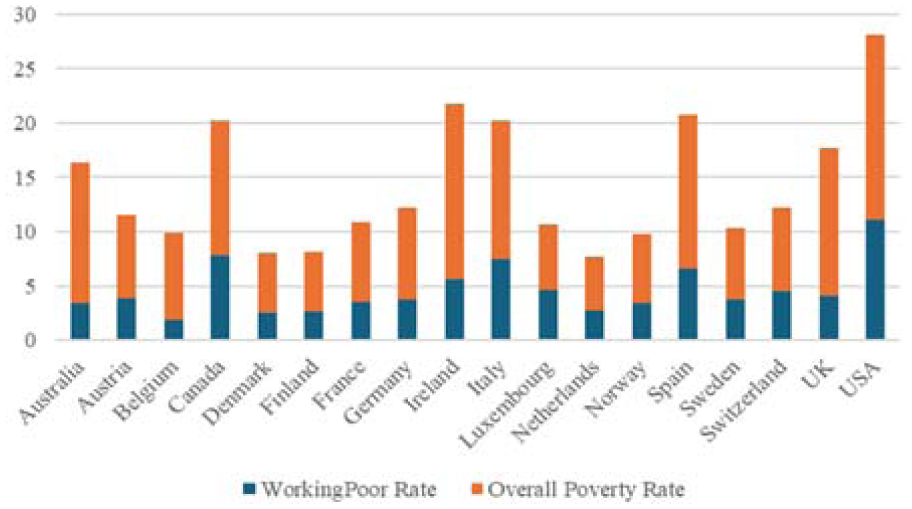
In-work poverty rate across selected countries.
Since its inclusion in EU-SILC, the IWAPR has become a central reference in both academic and policy debates on working poverty in Europe. This phenomenon is complex to measure as it encompasses two levels of analysis: the condition of being a worker, an individual characteristic, and the condition of poverty, which considers the income of the entire household in which the worker resides (Andreß & Lohmann, 2008; Lohmann & Marx, 2018). This distinguishes in-work poverty from concepts such as decent work or low-wage work (Crettaz, 2013). Indeed, some low-wage workers may not experience in-work poverty, and vice versa. The integration of an individual trait within a group statistic, through income distribution, has raised concerns about how statistics may obscure individual labour market issues, particularly those affecting vulnerable groups such as young people or women (Collado et al., 2019; Ponthieux, 2018; Schwarz, 2023), as will be discussed below.
Works such as those by Crettaz (2013), Kalugina (2013), and Polizzi et al. (2022) conduct comprehensive reviews of the existing literature. Similarly, the volumes edited by Andreß and Lohmann (2009), Fraser et al. (2011), and Lohmann and Marx (2018) serve as compendia of chapters that encompass many of the existing analytical perspectives on in-work poverty.
Several studies have identified multiple factors at both the micro and macro levels. Among the micro factors, it is generally recognised that lower educational attainment implies greater sensitivity to changes in the macroeconomic situation and higher vulnerability during recessionary periods (Barrera, 2017; Kenworthy & Marx, 2017). Changes in production and labour markets primarily affect the less qualified population due to globalisation and the consequent deindustrialisation of Western countries, which are associated with the relocation of production processes to areas with lower labour costs (Calvo, 2017; Hellier & Chusseau, 2015). In the Swedish context, Broström and Jansson (2023) examine income mobility among the in-work poor, revealing persistent vulnerabilities and limited upward transitions despite employment.
Certain demographic groups face higher risks. Young people often hold precarious jobs (Barrera, 2017; González, 2013; Horemans et al., 2016; Lohmann & Crettaz, 2018). Wolf (2025) links non-standard employment in Germany to increased poverty risks, with gendered implications. In the U.S., African Americans and Latinos are more likely to experience working poverty than whites and Asians (Barrera, 2017; Kenworthy & Marx, 2017). In Europe, immigrants frequently encounter greater challenges and working poverty (Branyiczki, 2015; Crettaz, 2018).
By household type, having children, especially in single-parent households, increases expenditures and limits working hours, increasing poverty risks (Barrera, 2017; Horemans et al., 2016; Kenworthy & Marx, 2017; Spannagel, 2013). Social transfers for children and maternity are essential to maintain an acceptable income level. As Terlap (2023) argues, targeted legal and policy interventions are crucial to alleviate working poverty among women, particularly through improved access to social support and family-related benefits. Single-earner households are also more vulnerable than those with multiple earners due to economies of scale, particularly under stagnating or declining real minimum wages (Barrera, 2017; Crettaz, 2013; Thiede et al., 2018). Among all household types, female-headed single-parent households emerge as the most vulnerable. In Latin America, Castro Lugo et al. (2023) analyse working poverty in women-headed households in Mexico, identifying demographic and structural factors that exacerbate gendered vulnerabilities and Poy and Dichiera (2025) document similar patterns in Argentina. Similarly, Sharma (2023) examines poverty determinants in female- and male-headed households with children in the United States, highlighting gendered patterns of vulnerability and the role of household composition.
At the macroeconomic level, labour market regulation, institutional factors and socio-economic policies influence poverty status (Eurofound, 2017). Thus, Andreß and Lohmann (2008), Crettaz (2011), Casas and Ghailani (2011), Salverda (2018), and Unt et al. (2022) associate in-work poverty intensity with welfare state consolidation, labour market, and benefit policies and institutional relevance (Eurofound, 2017). Giuliani and De Luigi (2023) explore the evolution of family policies in Italy and their impact on in-work poverty, illustrating how institutional frameworks can mitigate or reinforce gender disparities.
Regarding gender, international statistics do not show significant differences between men and women in experiencing in-work poverty; in many cases, men appear to be more at risk. This discrepancy with other labour market indicators raises questions about the validity of the data or the methodology used, which may mask the vulnerability of certain groups. In fact, taking into consideration different factors that affect job quality, it has been found that the quality of men’s jobs is higher compared to women’s employment in most countries of the EU (Pérez et al., 2020). Historically, a labour market gender gap has been exposed in several areas: lower labour market participation (Bishu & Alkadry, 2017; Carrasco, 1999; Eurofound, 2020; Torns & Recio, 2012); less representation in high-paid jobs and greater in lower paid ones (Bosch et al., 2007; Mosthaf et al., 2014); a greater share of precarious contracts, such as temporary or part-time work (EIGE, 2023b; Torns, 2011); and more hours of unpaid work (European Parliament, 2021).
Additionally, women are over-represented in the care, domestic services, education, and health sectors (UGT, 2018). Ehab and Mosaad (2025) analyse gender disparities in informal employment within the health sector, highlighting its contribution to in-work poverty. The Global Gender Gap Index (World Economic Forum, 2023) and the Gender Equality Index (EIGE, 2023b) annually monitor the labour market gender gap, with the former covering over 140 countries and the latter focusing on the EU. Data show a persistent gender disparity in political positions and STEM career training, as stated in the literature (Dos Santos et al., 2022; Kahn & Ginther, 2017).
Lastly, women are generally disadvantaged in various living condition indicators, as shown in the EU-SILC. The feminisation of poverty is recognised, and women are more prevalent in vulnerable groups like single-parent families. Despite this, in-work poverty rates can be gender-neutral or higher for men. The gender paradox has been studied by Casas and Ghailani (2011), Ponthieux (2018), and Schwarz (2023). Other works, such as Filandri and Struffolino (2018), Struffolino and Van Winkle (2021), and Nandal (2011), also corroborate women’s higher risk. This paradox is mainly attributed to measurement methodologies that obscure labour market inequalities (Miquel-Burgos & Estrada-Estrada, 2025; Ponthieux, 2018; Schwarz, 2023)
Criticisms of the in-work poverty methodology assert that pooling household incomes and using equivalence scales mask individual income differences, impeding further analysis of work and individual poverty (Ponthieux, 2018). Moreover, it often overestimates women’s income, concealing their economic dependence on partners (Meulders et al., 2010).
Capesciotti and Paoletti (2023) advocate for a gender-sensitive approach to analysing in-work poverty, aligning with the present study’s critique of gender-neutral indicators and reinforcing the need for methodological reform.
It is essential to underscore the need for public policies that address women’s structural vulnerability. The IDOS (2023) Policy Brief warns that household-level poverty indicators often fail to capture intra-household inequalities, particularly affecting women in economically dependent roles. This methodological limitation has direct consequences for policy design: gender-neutral or male-biased metrics may result in the under-identification of vulnerable groups and the misallocation of resources. As demonstrated in this study, IWAPR tends to underestimate women’s latent poverty, which manifests through income dependence, reduced autonomy, and long-term disadvantages. This is particularly evident in contexts such as single motherhood, separation, or widowhood, where income sharing is absent. Without reforming poverty measurement frameworks to incorporate individual-level and gender-sensitive indicators, policies risk perpetuating the very inequalities they aim to reduce. Recognising and addressing these hidden vulnerabilities is therefore crucial for designing effective and equitable interventions.
Unveiling the Gender Paradox: Statistical Evidence and Measurement Limitation
Building on the conceptual mechanism outlined in Section “Core Constructs and Analytical Propositions,” we document how EU-SILC’s dual-level construction (household pooling with equivalence scales) shapes the observed gender patterns in IWP. Although IWAPR figures report higher poverty rates among men, this contrasts with the overall at-risk-of-poverty rate from the same survey. Moreover, broader labour market indicators reveal persistent disadvantages for women, raising concerns about the validity of household-based poverty measures and their ability to capture gendered economic vulnerabilities.
This section explores gendered patterns in labour market participation, employment conditions, income distribution and care responsibilities, drawing on data from EU-SILC, LFS and EIGE. The objective is to highlight the mismatch between official in-work poverty indicators and broader evidence on gender inequalities in labour market and living conditions. This analysis further illustrates the limitations of IWAPR in representing the complexity of gendered poverty risks.
When examining IWAPR data, a notable pattern emerges: men, on average, face higher levels of in-work poverty than women across the EU (Figure 2). This trend is evident in most EU countries, particularly in Mediterranean and Eastern European contexts, where men are more frequently the primary earners. At first glance, this may seem counterintuitive, given that men also have higher employment rates and lower overall at-risk-of-poverty rates.
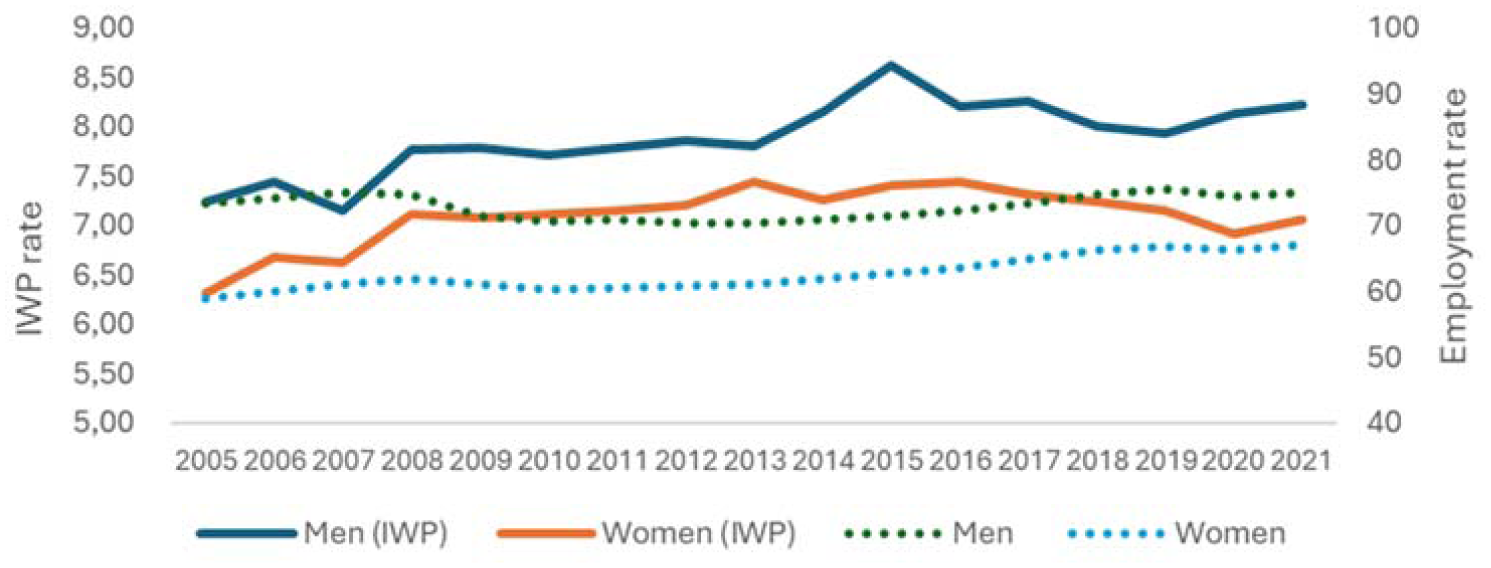
In-work poverty rate and full employment rate by gender in the European Union (average of Finland, Czech Republic, Belgium, Ireland, Slovenia, Netherlands, Denmark, Sweden, France, Malta, Switzerland, Austria, Lithuania, Cyprus, Germany, Latvia, Estonia, Greece, Portugal, Italy, Spain, Luxembourg and Norway).
Despite these data, the overall at-risk-of-poverty rate, from the same EU-SILC survey, consistently shows higher poverty levels among women, reinforcing the paradox. The feminisation of poverty is present in both the poorest and wealthiest nations within the European Union. This apparent contradiction underscores the need to analyse poverty through a lens that accounts for intra-household dynamics and gendered labour market structures (Figure 3).
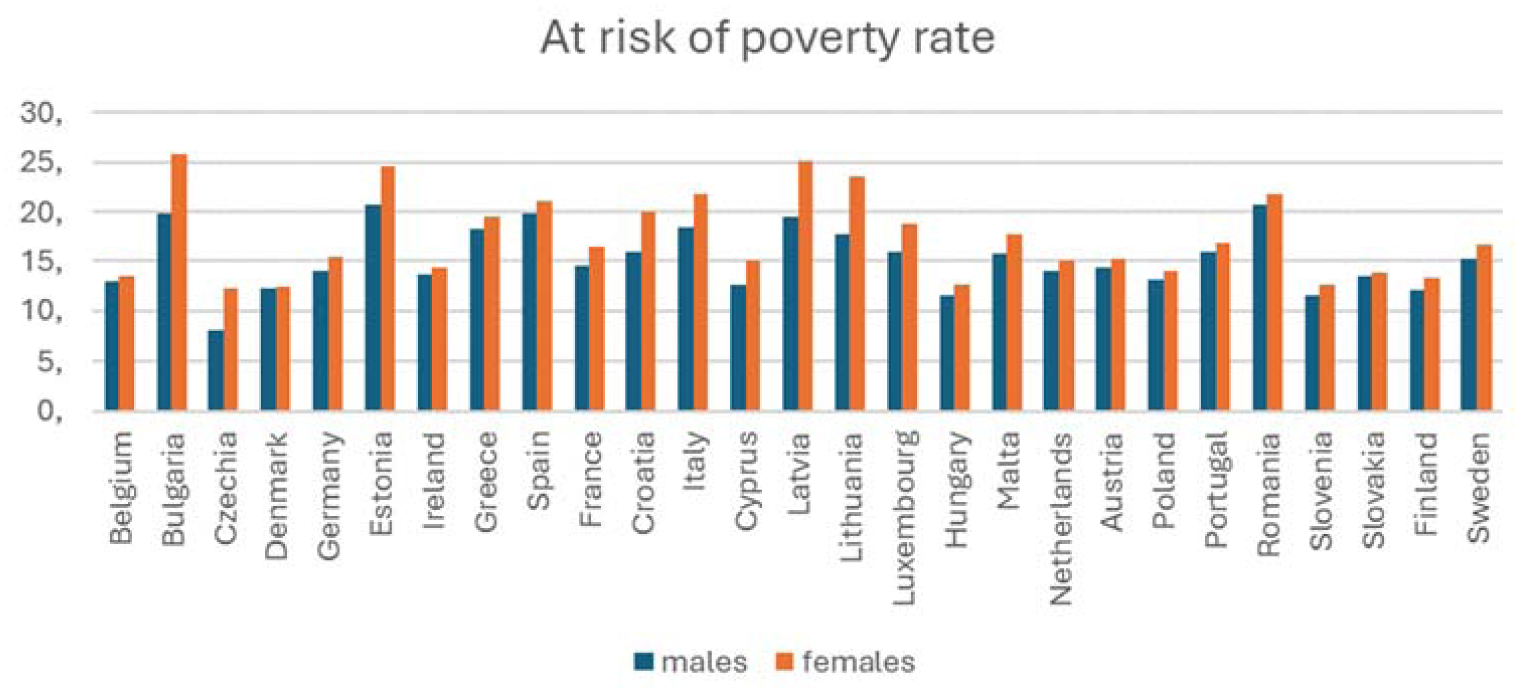
Overall at risk of poverty rate in EU by gender, 2022.
Notwithstanding the persistent limitations of the EU-SILC indicators, gender bias manifests differently across them. This divergence may be explained by the fact that when women’s labour income is pooled to their partners’, the household often drops out of the poverty statistics, becoming ‘non-poor’ (Meulders et al., 2010). Such aggregation masks women’s economic dependence on their partners, as they often experience lower work earnings, which has important implications in the event of separation and for their long-term financial security. Accordingly, working women face what we have called a ‘latent risk of poverty’, which is not visible in surveys, but has enduring consequences, such as lower social security contributions that translate into reduced entitlements to public benefits, such as pensions. The pension gap, representing the percentage difference between the pensions of men and women over the age of 65, averaged 26% in 2022. Although this gap is narrowing, it remains significant and exhibits considerable variation across EU Member States (Figure 4).
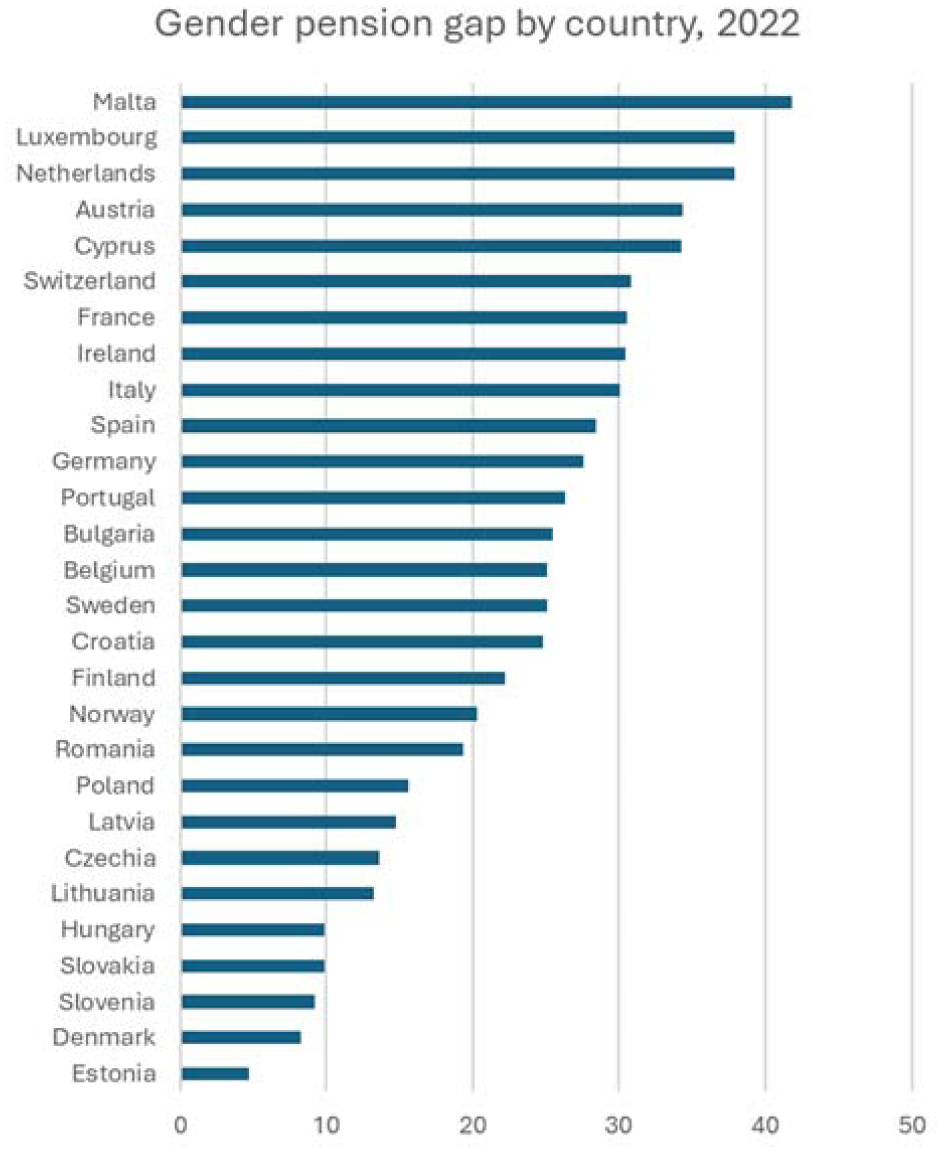
Gender pension gap in the EU, 2022.
Moreover, gender gaps persist across multiple dimensions of the labour market (Petrongolo & Ronchi, 2020), ranging from career access to progression. These disparities are reflected in unequal earnings, employment, and activity rates, as well as in limited promotion opportunities, poorer job quality, and the persistence of the glass ceiling. The gender pay gap remains a critical labour market indicator. Although it has decreased by 3 percentage points over the past decade, it still stood at 12.7% in the EU by 2022, underscoring the need to intensify efforts to reduce it and to foster equitable working environments (Figure 5).
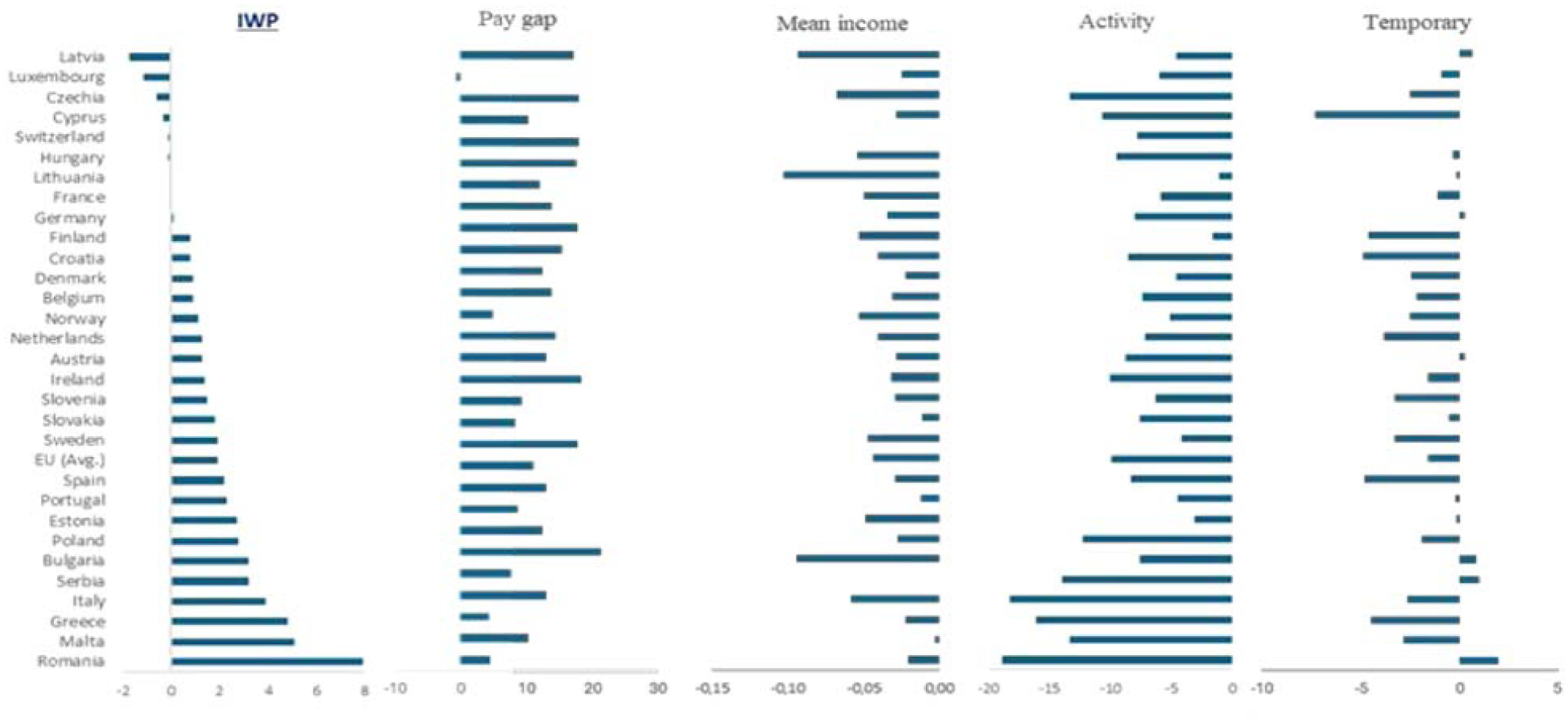
Gender gaps in labour market by country, 2022.
The previous figure reinforces findings already established in the literature regarding gendered labour market inequalities, and also reflects the paradox discussed earlier. While women face persistent disadvantages across multiple labour market dimensions, their in-work poverty rates are often lower than men’s.
A closer examination of employment and activity patterns by educational level reveals that these structural inequalities persist across all strata, with particularly pronounced differences at lower levels. As illustrated in the figure below, women experience higher unemployment rates and lower economic activity rates at all educational levels. These findings suggest that educational attainment alone does not eliminate gendered barriers to labour market access (Figure 6).
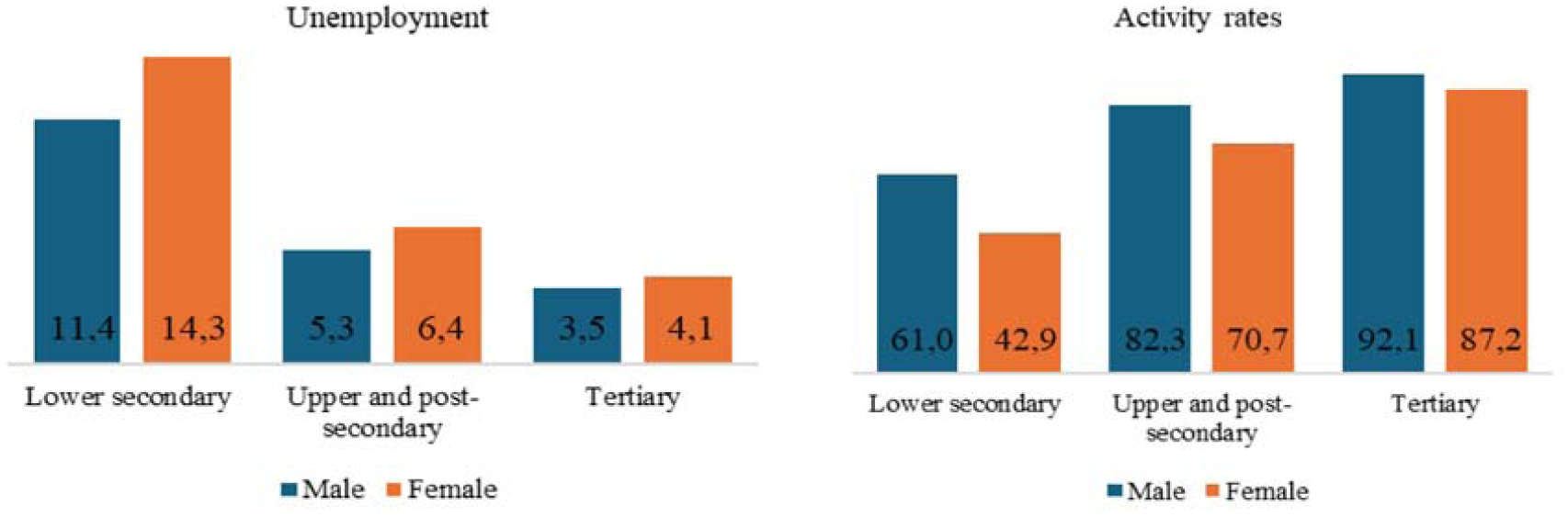
Gender gaps in labour market access, 2022.
In addition to disparities in participation, income gaps remain substantial. Men consistently earn higher average incomes than women across all educational levels. This indicates that even higher education does not fully protect women from labour market disadvantages (Figure 7).
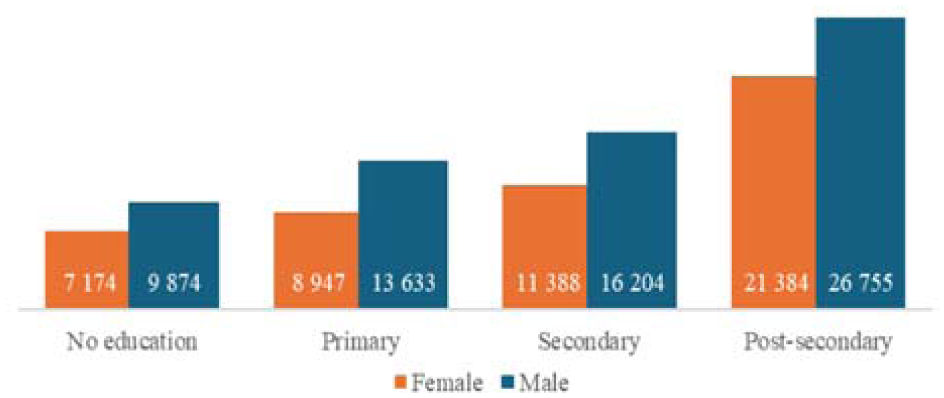
Annual Gross Individual Income by gender and education, 2022.
Building on the evidence of persistent gender gaps in unemployment and economic activity, it is also essential to consider employment quality and stability. European women are disproportionately represented in precarious employment, such as temporary and part-time contracts. The part-time employment gap, defined as the difference in the share of part-time employment between women and men aged 20 to 64, is positive in nearly all EU countries, with particularly pronounced differences in the Netherlands, Germany, Austria, and Belgium (Figure 8).
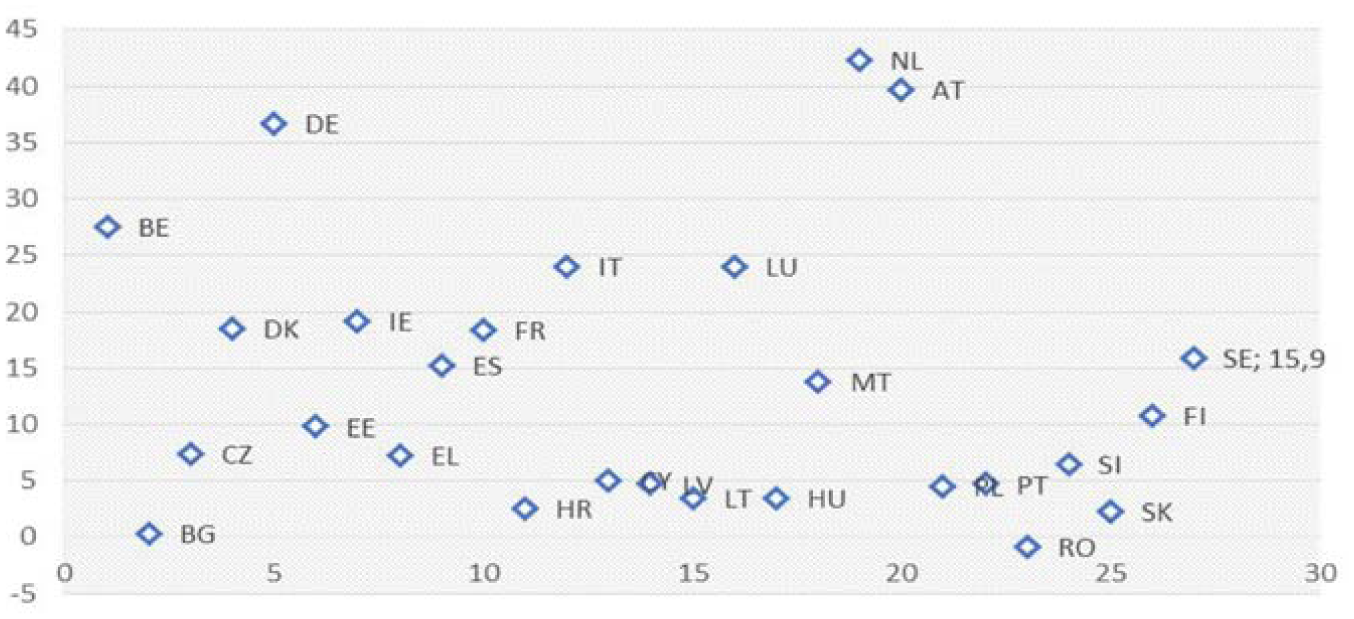
Gender gap in part-time employment, 2022.
Importantly, the reasons for part-time work differ by gender, as shown in the involuntary part-time employment rate. Eurostat’s Labour Force Survey (LFS) along with most national labour statistics, follows the guidelines of the 13th International Conference of Labour Statisticians (ICLS). The 19th ICLS introduced a refinement by incorporating underemployment (involuntary part-time work) into the definition of employment, recognising its impact on decent work, and in-work poverty. This refinement builds on the ILO’s Resolution concerning labour statistics (Figures 9 and 10).
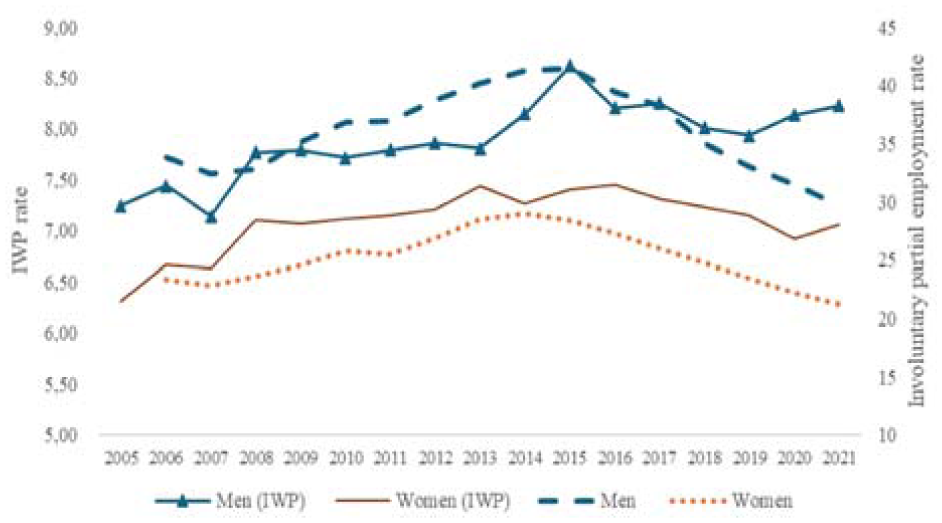
In-work poverty rate and involuntary part-time employment rates by gender in the European Union.
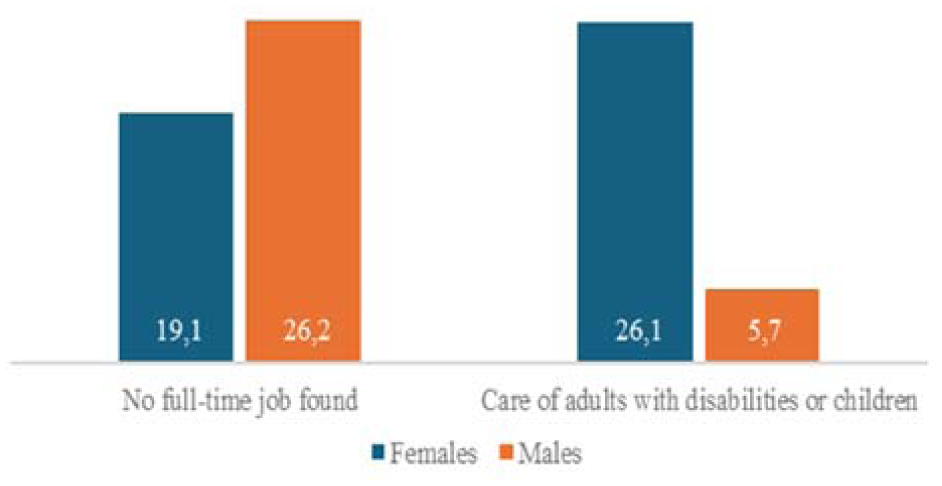
Reasons for part-time working by gender, 2022.
This indicator is particularly relevant in the context of gender analysis. Although more women are employed part-time, 21.2% do so involuntarily, while 29% of men working part time report a desire to work more hours. As illustrate in the accompanying figure, men tend to engage in part-time work primarily due to the scarcity of full-time employment opportunities, whereas women predominantly do so due to caregiving responsibilities. This gendered divergence in the reasons for part-time employment highlights the intersection between labour market structures and social roles, and its implications for income, autonomy, and long-term economic security.
The unequal distribution of unpaid care and domestic work continues to shape women’s labour market trajectories. The reduction of working hours and professional dedication among women is often linked to their role in caregiving and household responsibilities. Women choose jobs that allow for work-life balance, prioritising flexible schedules and proximity to home, which frequently results in lower earnings and limited career progression opportunities (Lohmann, 2009; Petrongolo & Ronchi, 2020). This reconciliation of paid and unpaid work entails a double workload, largely invisible in labour market statistics, despite the emphasis placed by the ILO’s 19th ICLS on the need to properly proper measure unpaid work.
Data from EIGE’s CARE survey confirm that women are more likely than men to reduce or interrupt their working lives due to caregiving responsibilities (EIGE, 2023a). Across all EU Member States, a significantly higher proportion of women reported reducing their working hours for care-related reasons (9.5 million women took parental leave, compared to 0.5 million men). In 2022, 17.1% of women compared to 12.2% of men had to reduce their working hours due to care and 15.2% of women versus 12.7% of men were unable to devote sufficient time to their careers or studies. These figures reflect the persistence of gendered social roles and the unequal distribution of care responsibilities (Figures 11 and 12).
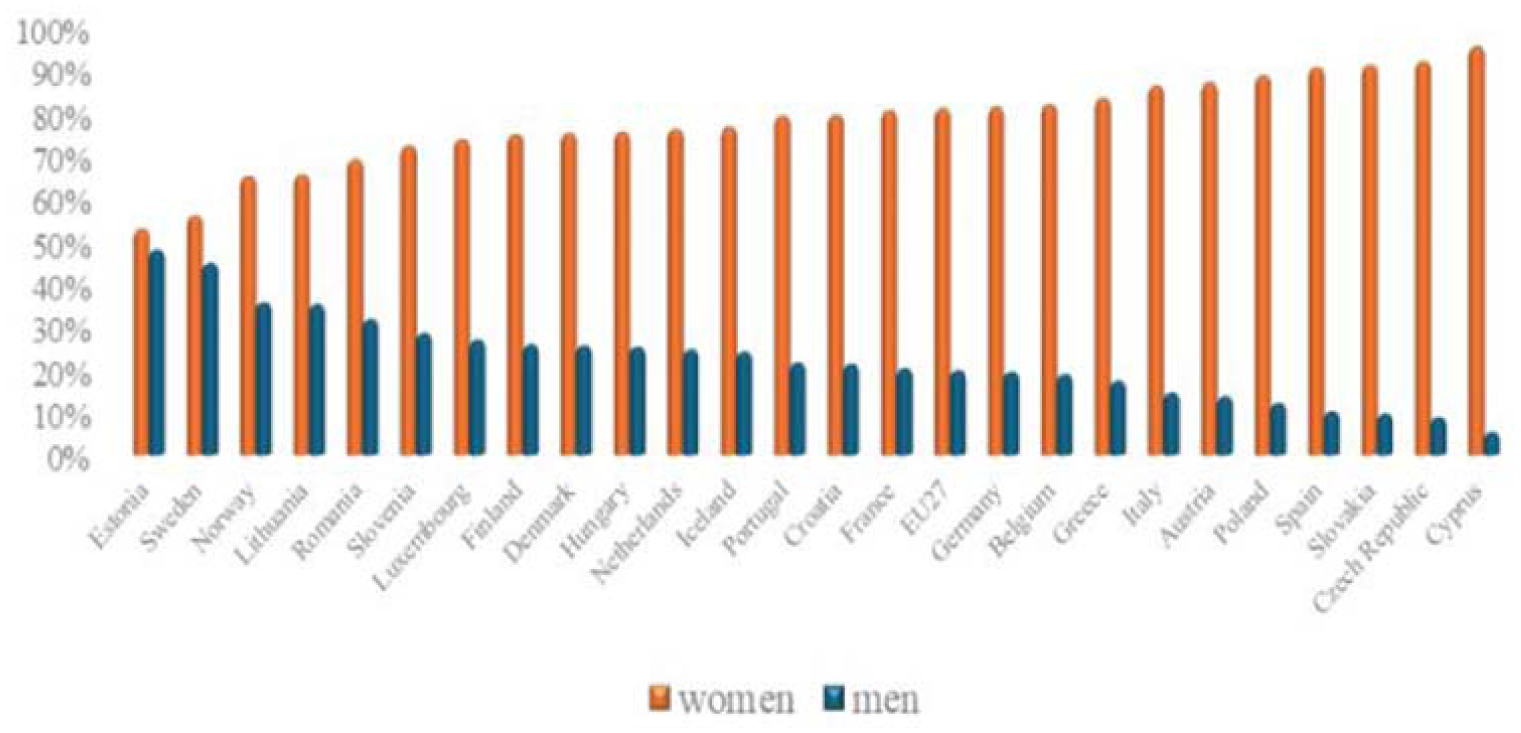
Reduction of working hours for care of a child under 8 years of age (%), 2022.
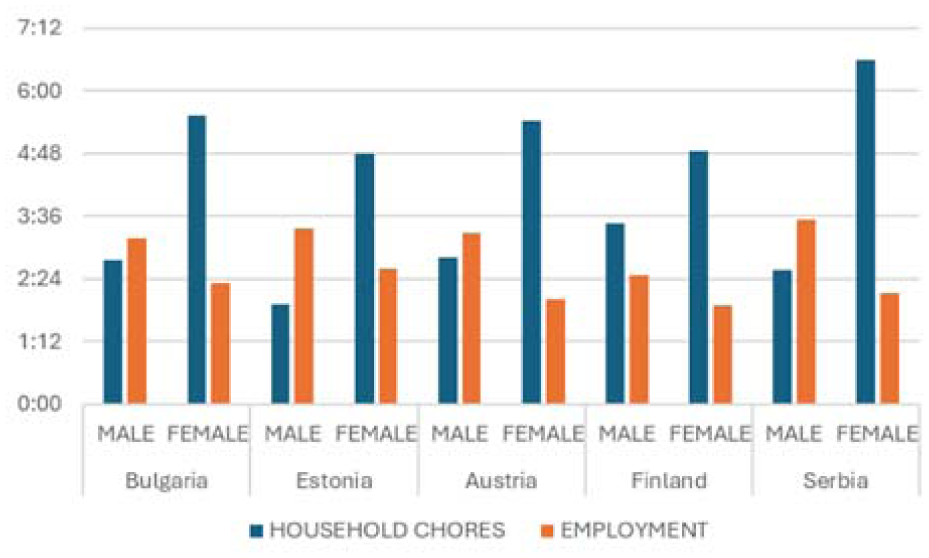
Gendered distribution of time spent on paid work and unpaid domestic tasks in European countries (Time Use Survey, 2020).
Time use surveys (TUS) offer further insight into this imbalance. According to the EIGE’s TUS (2016), 78.5% of women engage in cooking and household chores daily, compared to 33.7% of men. Moreover, 35.6% of women report spending between 11 and 20 hr per week on these tasks, versus 18.3% of men, with women outnumbering men across all time categories (EIGE, 2023b).
These patterns are consistent with findings from the Harmonised European Time Use Surveys (HETUS), which show that women devote significantly more time to unpaid domestic and caregiving work than men, even in dual-earner households. Although the HETUS data collection is significantly delayed across Europe, despite the expectation that countries would report by 2018, only five countries (Bulgaria, Estonia, Austria, Finland, and Serbia) have submitted updated time use data. The available figures confirm persistent gender disparities: in all five countries, men consistently spend more time on paid employment and less on household tasks such as cleaning, cooking, and caregiving. Even in countries like Finland and Serbia, where time use appears more balanced, the gendered division of labour remains evident. Recent literature conceptualises this imbalance as ‘time poverty’, a form of deprivation that disproportionately affects women. Artazcoz et al. (2024) show that time poverty is associated with poorer mental health and reduced physical activity among women in Southern Europe, while Rodgers (2024) argues that addressing time poverty requires integrated policy responses to gendered inequalities in both paid and unpaid work.
This dynamic is further reflected in intra-household financial arrangements. EIGE’s survey data show that a significantly higher proportion of women report having partners who contribute more financially, while a notable share of men report that their partners do not contribute financially at all is significantly higher than that of men (11.7% vs. 3.9% of women). These patterns are consistent with the traditional male breadwinner–female caregiver model, where women’s financial contributions are constrained by their dual role. Such configurations are not adequately captured by conventional in-work poverty (IWP) indicators. Hence, time use data provide essential insights into gendered labour dynamics that remain concealed in standard income-based poverty measures.
Thus, on the one hand, there is evidence of a discrepancy between the IWP indicator and a set of statistics on labour market participation, time use, living conditions, and financial autonomy. On the other hand, due to patriarchal social roles and different approaches to parenthood, women often remain economically dependent on their partners and are ‘latent working poor’, a condition not reflected in the IWP rates.
This paradox arises from this methodological aggregation, the use of absolute monetary indicators and income pooling within households, which obscure the lived realities of women, young adults, and other vulnerable groups. Intra-household bargaining and pre-established gender roles often result in women forgoing career advancement, working long hours, fewer opportunities for promotion, lower social contributions (hence fewer rights in retirement pension schemes), and experiencing an imbalance between working hours and income, along with a reduced access to leisure (European Parliament, 2021; García, 2019).
These findings illustrate how the IWAPR fails to capture the latent poverty risks faced by women in specific household configurations, particularly those with economic dependence or caregiving responsibilities. These elements, while statistically invisible, are socially significant. The intersection of labour market structures and household dynamics demands a re-evaluation of poverty measurement frameworks to ensure that gendered vulnerabilities are adequately recognised and addressed.
Analysis of Risk Factors for In-Work Poverty
This section presents an analysis of the main risk factors associated with in-work poverty, based on EU-SILC data for 2005 and 2021. The selection of these factors is grounded in the literature review presented in Section “Theoretical and Conceptual Framework,” and the availability of harmonised and comparable data in EU-SILC. This initial analysis aims to identify patterns and trends prior to the development of the empirical model.
Firstly, educational attainment is a frequently considered factor. It is widely recognised that individuals with lower educational levels tend to secure lower-skilled jobs and earn lower wages, which directly links education to income disparities (Martins & Pereira, 2004; Ordaz, 2007; Psacharopoulos & Patrinos, 2018).
Secondly household composition plays a significant role. The presence of children or being single increases poverty incidence, with the highest rates observed in single-parent families with dependent children.
Thirdly, employment conditions are closely associated with in-work poverty. Individuals with precarious, temporary, or part-time contracts tend to exhibit higher vulnerability, as these forms of employment often entail lower wages and reduced social protection.
Another relevant factor is the worker’s country of birth. Immigrants are more affected than native-born individuals, regardless of whether they originate from European countries. However, when nationality is considered, workers without European nationality exhibit a higher incidence of in-work poverty, suggesting that legal status and access to rights may also play a role.
Table 1 presents average in-work poverty rates disaggregated by key demographic and labour market characteristics, based on Eurostat EU-SILC data for 2005 and 2021. The indicator used—IWAPR—is defined by Eurostat as the percentage of employed individuals living in households with an equivalised disposable income below 60% of the national median. The variables have been constructed following standard classifications: education levels are grouped according to ISCED (levels 1–2, 3–4, and 5–8); employment status distinguishes between full-time and part-time work; contract type refers to temporary versus permanent employment; and labour intensity is calculated as the ratio of total hours worked by household members to the potential working hours. Household composition categories reflect the presence of dependent children and the number of adults in the household.
In-work Poverty Rates by Individual Characteristics in the European Uniona, 2005 and 2021.

Data source. Eurostat-EU-SILC (aAverage calculated from 23 countries: Finland, Czech Republic, Belgium, Ireland, Slovenia, Netherlands, Denmark, Sweden, France, Malta, Switzerland, Austria, Lithuania, Cyprus, Germany, Latvia, Estonia, Greece, Portugal, Italy, Spain, Luxembourg, and Norway.).
Finally, it is noteworthy that all analysed categories experienced an increase in in-work poverty between 2005 and 2021. Paradoxically, the most significant increase occurred among individuals with the highest educational attainment, with a 56.64% increase, equating to an absolute variation of 1.47 pp. Conversely, the smallest change was observed in households with two or more adults and dependent children, showing a 2% increase. This upward trend may be driven by economic policies that prioritise production over social protection, as suggested by previous studies (Crettaz, 2013; Horemans & Marx, 2013; Lohmann, 2018). Understanding the factors influencing in-work poverty and the impact of public policies on its fluctuation (Lohmann, 2009; Seikel & Spannagel, 2018) is crucial for its reduction.
Database Description and Indicator Construction
To conduct the econometric analysis of the factors associated with an increased risk of in-work poverty in Europe, we have selected data from the Eurostat’s EU-SILC database, a survey that gathers harmonised information on both objective and subjective aspects of households’ and individuals’ quality of life.
The EU-SILC provides cross-sectional and longitudinal data on the ‘at-risk-of-working-poverty rate (IWARP)’ since 2003. The target population includes individuals living in private household, whether single or multi-person. These statistics are the primary reference for studies on income distribution and social inclusion in the region. Most data are collected directly from respondents through interviews or web surveys.
Eurostat defines the IWARP as the percentage of persons who reported to be in employment (employed or self-employed) whose equivalised disposable household income falls below 60% of the national median
This rate denoted as ‘IWARPTat_k’ is calculated for each analytical dimension (k) as the percentage of employed individuals who are at risk of poverty during the estimated period, over the total population in that dimension.
The aggregation of individual-level data collected in the EU-SILC is carried out as follows:

Where:
k represents the dimensions in which in-work poverty is measured (sex, age, nationality).
j denotes the statistical population at risk of poverty (below the threshold of 60% of median equivalised disposable income).
That is,
Sample Construction and Variable Selection
This section describes the construction of the sample and the selection of explanatory variables used in the econometric model. The sample comprises aggregated country-level data on in-work poverty for males and females aged 18 to 64, covering the period 2005 to 2021. The initial EU-SILC waves (2003 and 2004) are excluded to ensure harmonised country coverage from 2005 onward and to avoid early-wave instability associated with sample completion and expansion. The analysis focuses on the 23 countries for which harmonised and reliable data are available throughout the selected period: Finland, Czech Republic, Belgium, Ireland, Slovenia, Netherlands, Denmark, Sweden, France, Malta, Switzerland, Austria, Lithuania, Cyprus, Germany, Latvia, Estonia, Greece, Portugal, Italy, Spain, Luxembourg, and Norway. Countries such as Bulgaria, Hungary, Poland, and Slovakia were excluded due to low reliability in the reported data for the variables analysed.
The variables incorporated into the models are selected ex ante, in line with established risk factors across three domains—individual, family and institutional—so as to align estimation with the theory-guided expectations (E1–E5) outlined in section “Theoretical and Conceptual Framework.” These factors are commonly analysed in studies on in-work poverty: individual (Branyiczki, 2015; Crettaz, 2018), familial (Barrera, 2017; Horemans et al., 2016; Kenworthy & Marx, 2017), and institutional (Lohmann & Crettaz, 2018; Spannagel, 2013).
At the individual level, educational attainment, place of birth, hours worked, and type of employment contract are considered. From the family perspective, household composition is included, specifically whether they are responsible for dependent children or not. Institutional variables are related to social spending on unemployment and family support, as these are features of welfare systems that can lead to variations in working poverty. Likewise, from a macroeconomic perspective, GDP per capita is another variable commonly considered when analysing in-work poverty (Brady et al., 2013; Crettaz, 2015).
Belsley-Kuh-Welsch collinearity diagnostics were applied to discard the linear dependence of the model’s regressors. The condition indices of the variables are all below 30, which is the threshold at which the relationship between two variables is considered problematic. Correlations between the dependent variables (IWP_female, IWP_male) and most covariates exceed 0.5, while pairwise correlations among covariates are generally below 0.5—except for the expected overlap between low education (levels 1–2), part-time work, and single-parent status.
Methodological Design and Model Specification
These methodological choices directly follow from the research question. EU-SILC provides the only harmonised longitudinal dataset that allows cross-country gender comparisons of in-work poverty. Fixed-effects models are selected because they isolate within-country changes and remove time-invariant national heterogeneity, which is essential when analysing gendered dynamics under shared institutional contexts. The covariates are chosen ex ante to match the mechanisms identified in the theoretical framework and to ensure consistency between theory and empirical specification.
To estimate the relationship between the selected variables and in-work poverty, a fixed effects model is applied, which accounts for both cross-sectional and temporal dimensions of the data. Fixed-effects are appropriate for analysing socio-economic phenomena and have been widely applied to in-work poverty. This specification is preferred here because it absorbs time-invariant country heterogeneity and identifies effects from within-country variation over time, which is central when examining gender-specific dynamics in IWARP under shared national institutions. This choice is consistent with prior applications in the literature (Brady et al., 2013; Crettaz, 2018; Vaalavuo & Sirniö, 2022):

Note that
Where:
Countries
Explanatory variables
Periods
The fixed effects approach eliminates a i , considering it as a separate intercept for each cross-cutting unit (country). The unobservable effect is country-specific and captures differences arising from region-specific conditions, which may be related to geographical, institutional, or historical factors.
Time dummy variables are included to capture temporal effects. Results remain stable when contrasted with random-effects and pooled OLS benchmarks, and HAC-robust errors address heteroscedasticity and autocorrelation; the substantive conclusions are unchanged. Further details on model, diagnostic test, and significance are provided in Appendix A.
Several assumptions and interpretive boundaries apply: IWARP is constructed on equivalised household income; individual earnings and intra-household allocation are unobserved, limiting direct inference on personal deprivation. The panel is country-aggregated by sex, so micro-level heterogeneity (e.g. sector, cohort) is not explicitly estimated. Fixed-effects capture time-invariant country traits but do not identify structural change; coefficients are interpreted as conditional associations within the pooled-income framework. Cross-country contrasts are relative, as poverty is defined against national medians.
Country-Level Heterogeneity in Fixed Effects
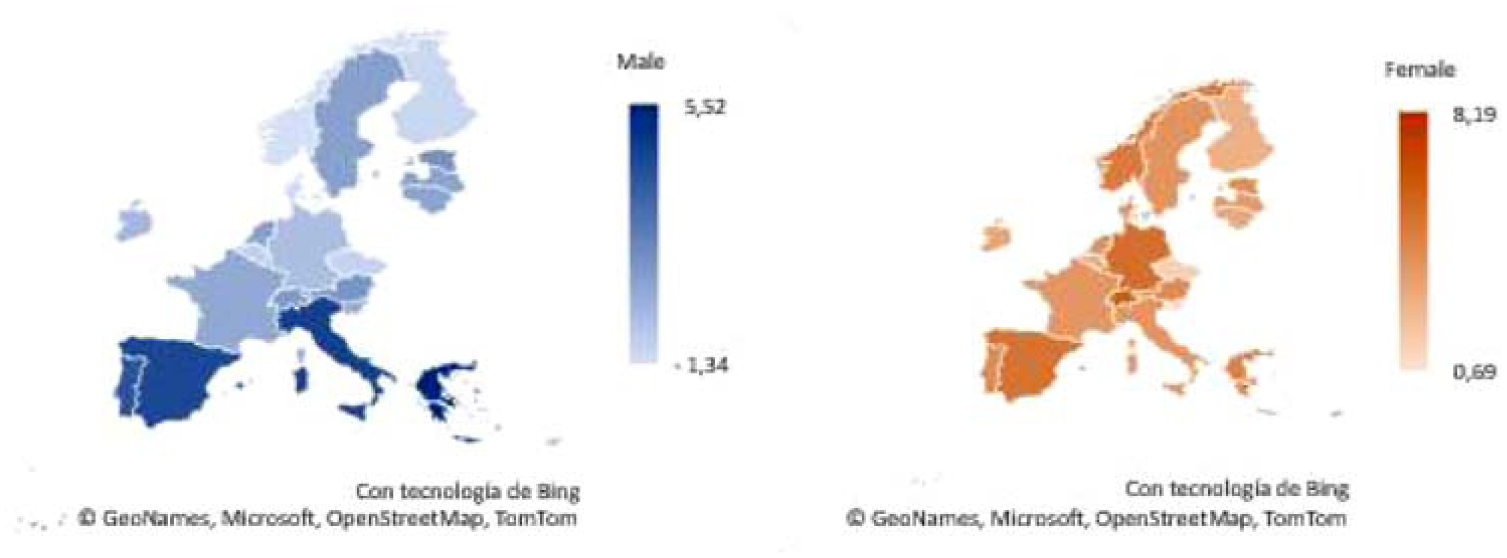
Fixed effects estimations allow for the identification of country-specific intercepts, which capture unobservable heterogeneity in the incidence of in-work poverty. These intercepts reflect structural, institutional, and cultural factors that vary across countries (Figure 13).
Heterogeneous effects by country and gender, 2021.
This fix effects map illustrates the estimated fixed effects by gender and country for the year 2021. The values for women tend to be higher, with notable gender differences in several countries. For instance, in Germany and Ireland, the values for men are close to zero, while for women, the coefficients are 5.20 and 3.14, respectively.
Geographical patterns also reveal gender disparities in the incidence of in-work poverty. Men face a higher prevalence of in-work poverty in Mediterranean countries, while lower rates are evident in Northern European countries. For women, high incidence is also widespread in Mediterranean countries, but notable values appear in Northern Europe as well.
These findings suggest that country-specific factors, such as welfare regimes, labour market structures, and cultural norms, may shape gendered poverty risks. Further country-level research is warranted to explore how these idiosyncratic elements influence behavioural patterns and the distribution of in-work poverty across Europe. In this context, the use of Adjusted Disposable Income (ADI), which includes in-kind benefits provided by the public sector, such as education, healthcare, and housing, may offer a more accurate picture of economic vulnerability. This approach enables a clearer distinction between individuals who have access to these essential public goods and those who do not, thus refining the assessment of poverty beyond monetary thresholds.
Results and Discussion
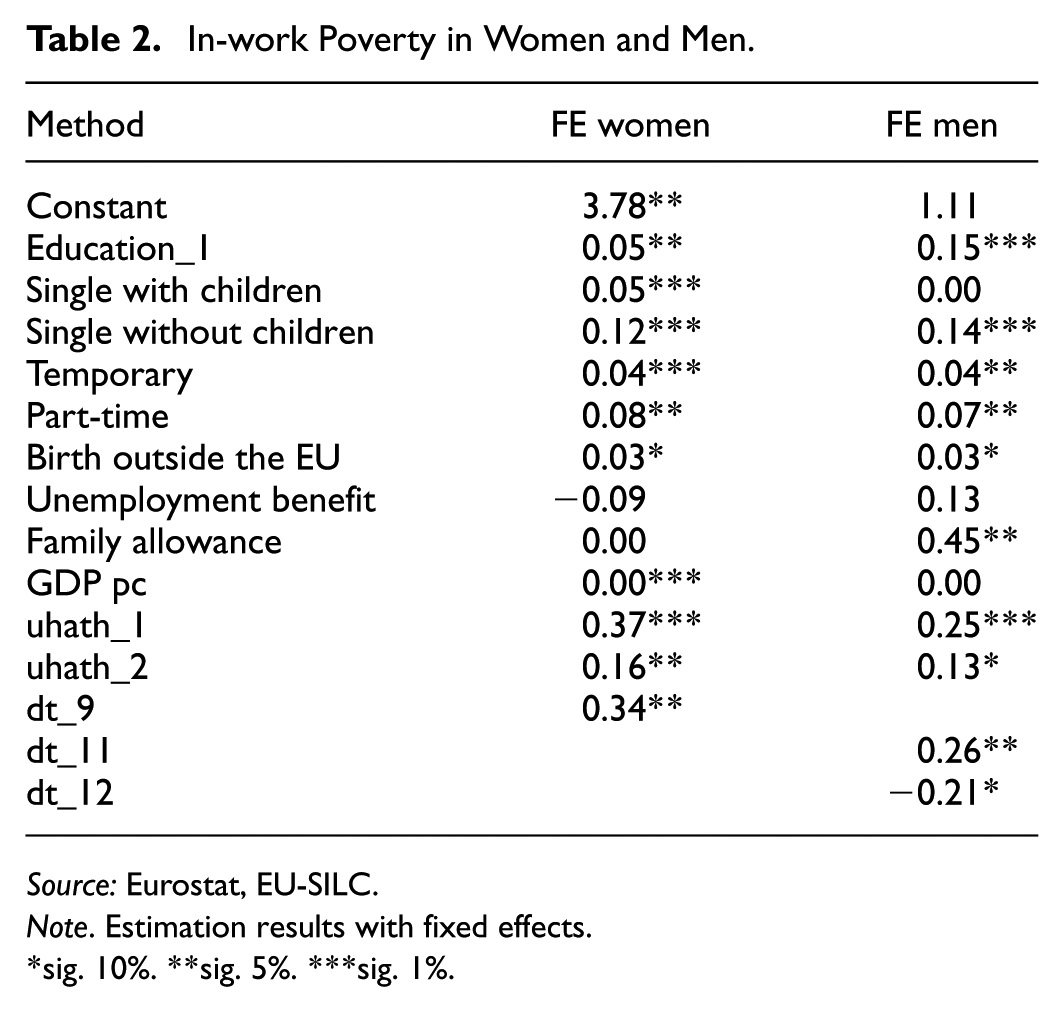
The results of the analysis indicate that the risk of being IWARP is significantly influenced by personal, familial, and institutional factors. While the descriptive statistics presented earlier highlight persistent gender gaps in employment, income, and living conditions, the fixed-effects model allows for a more nuanced understanding of how specific risk factors affect men and women differently. Moreover, the impact of these factors varies in magnitude depending on the individual’s gender. This approach allows us the identification of each variable’s impact over time, while controlling for country-specific heterogeneity. The coefficients derived from the estimation of the models for women and men, using the fixed effects method, are presented in Table 2. We interpret the key coefficients against the theory-guided expectations (E1–E5) stated in section “Core Constructs and Analytical Propositions.” Accordingly, estimated associations are read as signals of the mechanisms specified, thereby linking coefficients to theorised pathways rather than treating them in isolation.
In-work Poverty in Women and Men.
Source: Eurostat, EU-SILC.
Note. Estimation results with fixed effects.
sig. 10%. **sig. 5%. ***sig. 1%.
While all estimated coefficients are reported in Table 2, the discussion below focuses on those that are statistically significant.
Among the individual-level variables included in the model, educational attainment stands out as a key determinant of in-work poverty. Primary and secondary education levels are associated with a higher likelihood of experiencing poverty. This finding aligns with existing literature explored in section “Theoretical and Conceptual Framework,” linking lower education to precarious employment and reduced earnings and it is consistent with the third expectation (E3). The effect is more pronounced for men, which may reflect occupational segregation or intra-household dynamics that obscure women’s economic vulnerability. It seems necessary to explore whether this differential effect is related to the type of work accessed by men with low levels of education or whether it is due to intra-household dynamics.
Demographic characteristics such as country of birth also influence poverty outcomes. All other factors being equal, a worker born outside the EU is more likely to be poor than one born within the region. This may be due to immigrants facing integration difficulties, leading to vulnerability. In this regard, it is worth noting that many of those who decide to migrate tend to have fewer job opportunities in their own country, which is consistent with the fourth expectation (E4). Concerning gender, the effects are similar for both groups, though slightly higher for non-EU women than men.
Household composition also plays a critical role. Living in a household with an adult and dependent children affects genders differently. For men, this variable is not significant, whereas single women with children are more likely to experience working poverty. In 2021, Eurostat statistics indicated that 83% of EU households with an adult and children are headed by women, reinforcing the gendered nature of caregiving responsibilities. This demonstrates that when parents do not cohabit, mothers predominantly assume child-rearing responsibilities. The presence of children entails higher expenses and may limit work availability, complicating the balance between employment and home duties. This result also supports literature on maternal poverty and its intergenerational consequences. The disparity in gender outcomes between two-adult families and single-parent families with children warrants further research, as it may reveal paradoxical outcomes when both parents are employed and cohabiting and it is also consistent with expectation 1 (E1).
In households without children, the effect of being single is also noteworthy. Being single significantly increases the risk of poverty. This outcome may be explained by the absence of economies of scale and the dilution of fix household expenses. In this context, the gender results are similar, although men are slightly more affected by being single than women.
Employment conditions are strongly associated with poverty risk. Regarding the type of work and contract, the results for both men and women align with existing literature (Crettaz, 2013; European Commission, 2019; Eurostat, 2010; Filandri & Struffolino, 2018; Lohmann, 2018). Precarious jobs adversely affect workers’ quality of life, preventing them from achieving the minimum income level required for an acceptable lifestyle according to regional standards. This analysis focuses on two characteristics of precarious work: temporary contracts and part-time employment. Economic crises have prompted changes at political and business levels, influencing company recruitment practices. Consequently, temporary or involuntary part-time jobs have become prevalent, with workers accepting them to maintain employment; by 2021, 30% of part-time jobs in the EU were involuntary. The incidence of in-work poverty increases under these conditions, with the effect of temporary contracts being approximately 4pp for both genders, while part-time work has an effect close to 8pp, which is consistent with expectation two (E2). As shown in the descriptive analysis, women are disproportionately represented in part-time employment across the EU, which reinforces the gendered nature of this vulnerability.
Institutional variables show mixed effects. Unemployment benefits received during periods of non-employment are not significant in explaining in-work poverty. This may be due to the EU-SILC definition of worker status, which requires at least 7 months of employment within the reference year. As a result, individuals receiving unemployment support may not be classified as workers under the indicator, and such benefits may primarily support those outside the labour force. Alternatively, these benefits may fail to mitigate vulnerability upon re-entry into employment, particularly in contexts of precarious or short-term work.
Public assistance for children and families is not significant for women, but shows a positive association with in-work poverty among men. The results indicate a positive relationship between family benefits and in-work poverty for men. While family benefits are intended to increase household income, this result may reflect a reverse causality, whereby higher levels of in-work poverty lead to increased social spending.
GDP per capita does not exhibit significant explanatory power for in-work poverty. For women, the coefficient is statistically significant but positive and nearly negligible. This suggests that the average income level, as indicated by this metric, does not ensure equitable distribution. Given that poverty is a relative measure, defined by the threshold of 60% of the country’s median disposable income, the indicator reflects disparities within each country rather than absolute income levels
Temporal effects reveal gendered patterns in vulnerability as expected in E5. In 2013 the risk of in-work poverty increased significantly among women, coinciding with the aftermath of the global financial crisis and the Eurozone recession. Recovery policies focused on production and cost competitiveness which may have contributed to the deterioration of working conditions, particularly for women. This interpretation is consistent with previous mentioned studies that link post-crisis labour market reforms to increased precariousness and reduced job quality. This recession affected all EU countries, impacting multiple sectors, including the labour market, and specifically undermining the socio-economic stability of women. During the crisis period, female labour market participation increased as a strategy to compensate for household income losses, which may have contributed to the rise in poverty risk. Notably, this period did not significantly affect men, indicating a gender gap in vulnerability, with women being more adversely impacted by the economic and employment-related consequences of the downturn.
Subsequent periods, specifically 2015 and 2016, had significant impacts on men. In 2015, the involuntary part-time employment rate peaked, coinciding with an increase in in-work poverty. Conversely, in 2016 hiring conditions improved, with a slight rise in employment rates, contributing to a reduction in poverty risk among men. These findings suggest that men benefited more from the economic recovery, while women remained more vulnerable to socio-economic deterioration.
The findings on temporal effects in this study reveal gender-based differences in labour market participation and dynamics. In terms of in-work poverty outcomes, the 2016 economic recovery benefited men more than women, whereas the 2013 recession adversely affected women more than men, highlighting the gender gap exacerbated by economic crises and recoveries (Gálvez & Rodríguez, 2011). The 2015 period had a significant impact on men, particularly through increased part-time and temporary employment, but this trend reversed in 2016. These results suggest that women are more susceptible to deteriorations in socio-economic stability, while men tend to benefit more from economic recoveries.
Finally, it is important to note that empirical analysis of in-work poverty using EU-SILC data does not show substantial gender differences in overall in-work poverty rates. This finding contradicts evidence presented earlier and established literature, which highlights women’s limited career advancement (vertical segregation, glass ceilings), lower earnings for equivalent jobs (wage gap), and weaker access to the labour market. However, the fixed-effects model reveals significant disparities in how some specific risk factors affect men and women. For instance, single parenthood and part-time employment have a stronger impact on women, whereas low educational attainment and living alone affect men more severely. These findings contrast with the apparent gender neutrality of official statistics and highlight the limitations of household-level aggregation methods, which obscure intra-household inequalities. The gender paradox does not reflect actual economic advantage among women, but rather statistical artefacts that mask individual vulnerabilities. When household income is pooled, women’s lower earnings and economic dependence are concealed, leading to misleading conclusions about their poverty risk.
Conclusions
Existing evidence indicates that employment does not necessarily ensure an adequate standard of living, particularly for vulnerable groups such as single mothers and individuals in precarious employment.
Eradicating poverty and promoting decent work are core objectives of Sustainable Development Goals (SDGs 1 and 8) and remain central to European policy agendas. The challenges faced by employed individuals in avoiding poverty must be addressed differently from those faced by populations outside the labour force. Analysing this phenomenon allows for the identification of at-risk groups and the structural factors involved, thereby informing more targeted and effective interventions and aligning with the relational view of poverty developed earlier in the paper, which emphasises economic autonomy, intra-household bargaining, and care-related constraints.
Additionally, gender equality (SDG 5) is also a key dimension of this analysis. Gender bias in labour market structures and poverty measurement remains a subject of considerable academic concern. What is not adequately measured tends to be overlooked in policy design. This paper emphasises the need to analyse in-work poverty with a gender perspective and to identify the factors that increase vulnerability, so that public policies can be directed towards those who are most affected and whose risks remain hidden under current measurement frameworks.
In operational terms, EU monitoring would benefit from co-reporting household indicators with complementary gender-sensitive metrics, that is, individual disposable income, proxies for intra-household allocation from time-use/household-finance modules, and revised equivalence assumptions- so that financial dependency, bargaining position and hidden vulnerabilities are identified. Policy design should recognise these dynamics through accessible childcare and long-term care, safeguards for quality part-time, targeted support to single-parent households, and pension credits for care, ensuring that measurement does not inadvertently entrench dependency. The paper has examined factors associated with a higher risk of in-work poverty in the European Union, with a particular focus on gender differences. The analysis has identified gendered patterns in its impact, revealing methodological limitations in the IWAPR indicator and empirically substantiating the paper’s theoretical claim that individual command over resources cannot be inferred from pooled household income.
The so-called gender paradox reveals significant methodological limitations in the IWAPR indicator. These limitations stem from the pooling of household incomes and the use of equivalence scales, which obscure individual vulnerabilities and economic dependencies (Casas & Ghailani, 2011; Meulders et al., 2010). This paradox conceals structural issues such as intra-household bargaining asymmetries rooted in patriarchal norms, career interruptions due to caregiving responsibilities, and limited access to stable, full-time employment (Lohmann, 2009; Petrongolo & Ronchi, 2020). These factors disproportionately affect women in contexts such as separation, widowhood, and single parenthood, where income sharing is absent, and caregiving responsibilities are concentrated. Given that labour market challenges differ for men and women, distinct policy responses are required to reduce inequalities and combat the feminisation of poverty. These responses should also aim to reform poverty measurement frameworks to better capture individual-level vulnerabilities and inform equitable interventions (Capesciotti & Paoletti, 2023; Crettaz, 2013). In addition to these measurement issues, alternative explanations may contribute to the paradox: household buffering strategies, gendered financial arrangements, or delayed labour-market withdrawal can keep measured household income above the poverty threshold while leaving women with limited exit options and lower effective control over resources. This tension clarifies why official figures can diverge from lived economic risk documented in qualitative and longitudinal research.
Evidence from the empirical analysis of Eurostat’s EUSILC data show differential effects between men and women, with the risk varying depending on the factor analysed. For instance, men are more at risk of poverty when considering factors such as educational attainment or living alone, whereas women in single-parent households or during economic recessions face heightened vulnerability to in-work poverty, and are more likely to face poverty if employment conditions change. Some of the results are striking given that women have lower average earnings and employment rates across all educational levels. The literature demonstrates persistent gender inequalities in the labour market, including the glass ceiling, occupational segregation, and the prevalence of precarious contracts among women (EIGE, 2023b; Filandri & Struffolino, 2018; Petrongolo & Ronchi, 2020). However, the fact that women’s in-work poverty rates appear lower than men’s in official statistics challenges the assumption that they are less economically vulnerable. Instead, it lends support to critiques of the IWAPR methodology (Ponthieux, 2018; Schwarz, 2023), which argue that household-level income pooling and equivalence scales mask individual poverty risks, particularly for women who are economically dependent on their partners or who reduce working hours due to caregiving responsibilities (Casas & Ghailani, 2011; Meulders et al., 2010).
Our findings empirically demonstrate—consistent with the paper’s theoretical framework and methodological critiques—that household-level measures can misstate individual vulnerability, with women’s risks becoming most visible where income is not shared—such as single motherhood or widowhood— thereby underscoring the need for individual-level poverty indicators and gender-sensitive measurement frameworks (Capesciotti & Paoletti, 2023; Crettaz, 2013). This measurement slippage may also extend to young adults, whose living arrangements and delayed residential autonomy can hide hardship within pooled-income households.
It has been observed that women often reduce their working hours to manage household and family responsibilities. However, their income loss appears to be offset by intra-household economies of scale. This paper presents data from EIGE surveys and HETUS on these issues, highlighting women’s roles and decision-making processes. Notably, in the absence of shared resources, women’s vulnerability becomes more pronounced, particularly during child-rearing periods. Our analysis confirms that households where women assume sole responsibility for dependants are among the most economically vulnerable, with the highest incidence of in-work poverty among all household types (Nieuwenhuis & Maldonado, 2018). This pattern is consistent with relational theories of poverty that link resource command to decision-making power and intertemporal security.
Protecting single mothers is crucial for balancing work and home life, and it is also vital due to its connection to child poverty, which must be eradicated. This supports the literature that links maternal poverty with intergenerational disadvantages and highlights the need for targeted social policies (Castro Lugo et al., 2023; Polizzi et al., 2022). These efforts are relevant for both women with low work intensity and those working full-time. In both scenarios, an income that allows mothers and their children to live decently during the child-rearing period is essential. These findings are consistent with international literature beyond the EU. Studies from the United States (Barrera, 2017; Kenworthy & Marx, 2017) and Latin America (Castro Lugo et al., 2023; Poy & Dichiera, 2025) demonstrate that households in which women assume sole responsibility for dependants face heightened poverty risks due to demographic and institutional factors.
Among the factors analysed, it is evident that individuals living alone, both men and women, face a higher risk of in-work poverty. This underscores the issue of diminished purchasing power of earned income, necessitating the sharing of expenses, such as rent or the purchase of long-term assets (houses, cars, household appliances), among two or more people to maintain a decent lifestyle. This situation also affects young people who often postpone leaving the parental home due to insufficient income and unstable employment. The loss of workers’ purchasing power directly impacts their living standards. Efforts must address not only income poverty but also capability deprivation, limiting individuals’ autonomy and long-term wellbeing. Many workers are constrained in their ability to become independent or acquire long-term assets due to insufficient income and unstable contract conditions.
It also emphasises the necessity of enhancing working conditions, particularly in roles occupied by individuals with lower educational attainment. Mitigating precarious employment and fostering decent work are crucial for alleviating in-work poverty. This requires an increase in permanent, full-time positions and policy interventions aimed at promoting sustainable and stable growth models. These models should prioritise value creation, training, and R&D&I over price-based productivity or low-cost competitiveness, thereby reducing economic and social uncertainty.
The incidence of in-work poverty is a multifaceted phenomenon, with country-specific idiosyncrasies influencing labour market outcomes for men and women differently. These ‘mixed’ gender effect findings highlight the importance of thoroughly examining intra-household economies, the concept of pooled income, women’s economic dependence, and their relationship to in-work poverty. They also underscore the need to consider institutional configurations and welfare-regime differences when interpreting gendered poverty risks across countries.
Overall, the study shows that IWARP can mask gendered vulnerabilities (especially in single parent households), confirming the limitations of household level poverty measures and motivating individual level approaches that account for intra household dynamics and economic dependence. These findings also have direct implications for poverty measurement and policy design. As highlighted by comparative research (Marchal et al., 2018; Van Lancker & Horemans, 2018) and recent policy briefs (IDOS, 2023), gender-neutral metrics may lead to under-targeting of economically dependent women. To address this, poverty frameworks must incorporate individual-level, gender-sensitive indicators and promote coordinated wage bargaining, inclusive childcare systems, and adequate social transfers. Without such reforms, public policies may inadvertently reinforce the structural inequalities they aim to reduce.
Policy responses should prioritise conditional transfers, universal access to childcare, and robust protections against precarious employment. These measures must be grounded in evidence and tailored to address the specific mechanisms of vulnerability identified in this work (i.e. economic dependence, single-parenthood constraints, and insufficient individual command over resources under pooled-income settings). At the policy level, the results directly inform ongoing EU debates (including the European Pillar of Social Rights, the EU Gender Equality Strategy, and the European Child Guarantee) by showing that household-level indicators can under-identify economically dependent women and single-parent households, and therefore should be complemented with individual-resource measures in routine social reporting.
Theoretically, these findings challenge the adequacy of aggregated poverty indicators and call for a re-conceptualisation of poverty frameworks that incorporate economic autonomy, intra-household negotiation, and care responsibilities. This perspective contributes to a broader understanding of poverty as a relational and gendered phenomenon, rather than a purely income-based condition.
In this sense, the findings speak to a methodological gap: household-level poverty measures can misstate gendered risks, a point we substantiate using triangulation and sex-specific fixed-effects. Taken together, the evidence supports reframing the measurement of in-work poverty towards gender-sensitive, individual-level indicators For theory, these findings strengthen relational accounts of poverty by foregrounding economic autonomy and bargaining within households: command over resources confers decision-making power, exit options and intertemporal security, none of which can be inferred from pooled income alone. Treating the household as a black box and presuming equal sharing risks mischaracterising gendered deprivation in the present (financial dependence, constrained choices, asymmetric care burdens) and in the future (lower contributions and pension entitlements). Conceptually, household-level indicators should be complemented by gender-sensitive, individual-level measures that make intra-household allocation visible and that align with the lived dynamics documented in the literature.
Methodologically, the study outlines a future research agenda focused on developing and testing gender-sensitive, individual-level indicators using EU-SILC microdata. These indicators may incorporate variables such as Adjusted Disposable Income (ADI), which includes in-kind services provided by the welfare state. Cross-country fixed effects and country-level heterogeneity in in-work poverty risks suggest that national welfare regimes and public policy configurations may significantly shape vulnerability. This supports the consideration of these essential services (often referred to as merit goods) as part of poverty measurement, capturing access beyond monetary income and enabling cross-country comparability in assessing economic wellbeing (García-Vaquero et al., 2021). In parallel, equivalence scales should be re-estimated, based on household consumption surveys to better reflect real needs and economies of scale. These innovations aim to improve poverty measurement and inform more effective and gender-sensitive policy responses.
Footnotes
Appendix A. Technical Notes on Model Estimation and Robustness
Acknowledgements
This research was supported by the following research project: Project PID2024-158340OA-I00 funded by MCIN/AEI/10.13039/501100011033/FEDER, EU. This paper is based on data from Eurostat, EU-SILC, 2023. The responsibility for all conclusions drawn from the data lies entirely with the authors.

Ethical Considerations
His research did not involve human participants or animals. This study uses anonymised secondary data from EU-SILC. No direct interaction with human participants occurred and no identifiable personal information was accessed.
Consent to Participate
As the analysis relies exclusively on anonymised public microdata, formal ethics approval and informed consent were not required.
Author Contributions
Conceptualisation, ABM and LEF; methodology, ABM and LEF; formal analysis, ABM and LEF; investigation, ABM, LEF, and ASB; resources, ABM and ASB; data curation, ABM and LEF; writing—original draft preparation, ABM and LEF; writing—review and editing, ABM, LEF, and ASB; visualisation, ABM, LEF, and ASB; supervision, ABM, LEF, and ASB; project administration, ABM; funding acquisition, ABM, LEF, and ASB. All authors have read and agreed to the published version of the manuscript.
Funding
The authors disclosed receipt of the following financial support for the research, authorship, and/or publication of this article: This research was supported by the following research project: In-work Poverty and the Hidden Gender Bias in Spain and in the EU: The Black Box of Household Bargaining, Economic Dependency and the Welfare State, PID2024-158340OA-I00 funded by MCIN/AEI/10.13039/501100011033/FEDER, EU.
Declaration of Conflicting Interests
The authors declared no potential conflicts of interest with respect to the research, authorship, and/or publication of this article.
Data Availability Statement
This paper is based on data from Eurostat, EU-SILC, 2023. The responsibility for all conclusions drawn from the data lies entirely with the authors. The data used in this study are publicly available from Eurostat (EU-SILC, 2003-2023).