






Abstract
This study examines the impact of leader–member exchange (LMXQ) quality on key employee outcomes in the service sector, focusing on job involvement, employee empowerment, and employee retention. This work also explores the moderating role of service climate in the relationships between employee empowerment and retention and between job involvement and retention, particularly within the service context. Grounded in leader–member exchange theory, which emphasizes the quality of leader–subordinate relationships as a critical determinant of organizational effectiveness, this research adopts a quantitative approach. Data were collected from employees in Pakistan’s health care sector and analyzed using structural equation modeling (SEM). The results reveal that high-quality LMX significantly enhances employee empowerment and job involvement, which in turn positively influence employee retention. However, the moderating effect of service climate on these relationships was found to be nonsignificant. The findings offer valuable insights for human resource and organizational leaders in developing economies, highlighting the importance of fostering supportive leadership relationships to enhance employee engagement and retention. This study contributes to the literature by providing empirical evidence from a developing country perspective and clarifying the limited moderating role of service climate in the LMX–employee outcomes framework.
Keywords
Introduction
The health care sector in developing countries such as Pakistan faces persistent human resource challenges marked by staff shortages, high turnover, disengagement, and weak leadership structures. With more than 500,000 professionals employed in this sector—including doctors and nurses—Pakistan’s health infrastructure is under constant pressure, particularly due to a mismatch between service demand and workforce retention (Hussain et al., 2019). This situation is worsened by a prevailing high-power-distance culture, which discourages participative leadership and limits opportunities for employee empowerment and engagement (M. N. Khan & Malik, 2017; Raecke & Proyer, 2024). Consequently, the ability of health care institutions to deliver sustainable, high-quality care is highly compromised by poor organizational climate and ineffective leadership models.
To address these workforce issues, researchers and practitioners have increasingly turned to leader–member exchange (LMX) theory. Originating from the vertical dyad linkage model, LMX provides a relational lens to understand how leader–subordinate interactions influence employee attitudes and outcomes. High-quality LMX relationships are characterized by mutual trust, support, and reciprocal respect, which have been shown to enhance employee motivation, engagement, and retention across various sectors (Gu et al., 2024; Martin et al., 2016).
Despite its prominence in the organizational behavior literature, LMX theory remains underexplored in high-context, collectivist environments such as Pakistan. Most existing studies are grounded in Western settings (Yang et al., 2025), where democratic structures and participative norms shape leader–member interactions differently from those in hierarchical cultures (Kariuki et al., 2022). This lack of contextual diversity limits the theory’s explanatory range, particularly regarding how relational leadership mechanisms operate when institutional constraints restrict autonomy and communication. The Pakistani health care sector presents a relevant empirical context for extending LMX theory, combining structural rigidity, resource scarcity, and strong hierarchical norms, all of which can alter the dynamics of leader–subordinate relations. Investigating LMX within this environment provides insight into whether relational quality can compensate for structural barriers to empowerment and retention.
Furthermore, the mechanisms through which LMX affects key employee outcomes such as job involvement, empowerment, and retention have not been widely studied in health care settings (Saygili et al., 2025). Existing research tends to focus on direct effects and often overlooks the role of psychological and contextual mediators (Awawdeh et al., 2024; Mitchell et al., 2024). A recent study suggested that employee empowerment and job involvement may serve as essential pathways linking leadership quality to retention outcomes (Yanty et al., 2024). Moreover, environmental moderators such as service climate—defined as employees’ perceptions of organizational support and rewards for service excellence—may condition these relationships but are rarely incorporated into LMX frameworks in empirical studies (Alqhaiwi & Luu, 2024; Jacobsson et al., 2024).
Despite the increased interest in leadership relations and employee retention, there is a crucial gap concerning how leader–member exchange (LMX) and employee empowerment interact with contextual organizational factors to form retention outcomes—particularly in service-intensive and hierarchical settings such as health care in South Asia. Furthermore, the majority of the existing research is Western-based and may not capture the cultural, structural, and institutional distinctions in developing nations.
Given this background, the present study addresses two key gaps. First, this work investigates the mediating role of employee empowerment and job involvement in the relationship between LMX quality and employee retention within Pakistan’s health care sector. Second, this study examines the moderating effect of service climate on these mediated pathways, offering a more nuanced understanding of the leadership–retention nexus. This dual focus provides both theoretical and practical contributions by (a) contextualizing LMX theory within a South Asian health care setting, (b) integrating recent conceptual developments on empowerment and engagement (Al Draj & Al Saed, 2023), and (c) offering actionable insights for HRM professionals in emerging economies. By empirically examining these complex relationships, this study helps to design better leadership, policy, and HR measures that sustain employee well-being and system stability.
Literature Evolution of LMX Theory
Leader–member exchange (LMX) theory was originally proposed in the mid-1970s under the title vertical dyad linkage (VDL) to describe individual relationships between a leader and his or her subordinates (Alkathiri, 2016). Initially, the VDL model stressed the hierarchical character of leadership. Over the years, however, this emphasis shifted toward LMX theory, which refocused the lens from viewing leadership as a position-based function to viewing it as a relational approach, emphasizing unique relationships between leaders and each subordinate (Thrasher et al., 2020). At the heart of LMX theory lies the quality of the reciprocal relationships that develop between leaders and subordinates. In high-quality LMX relationships, both parties demonstrate mutual respect and collaborative influence. Although they may initially be seen as formal and impersonal, closer personal connections tend to develop over time.
In fact, LMX theory has undergone tremendous empirical and theoretical development over the years. In the early years, focus was placed on high- or low-quality relationships and was focused on outcome measures, such as job satisfaction, performance ratings, and workplace attitudes (Schneider et al., 1998). Virginia and Satria (2022) reported that high-quality LMX relationships are positively associated with job involvement, performance, and organizational commitment. With the advancement of this theory, its applicability has expanded across various cultural and industry contexts, often in conjunction with other leadership philosophies such as transformational leadership and organizational justice. Mollah et al. (2022) stated the impact of virtual communication in establishing LMX in a remote working environment, asserting that the quality of these exchanges largely depends on the frequency and openness of communication.
Leader–Member Exchange Quality and Employee Empowerment
It is known that empowerment theory contributes to psychology and management disciplines and addresses motivation, organizational justice, and leadership. In psychological terms, empowerment reflects intrinsic motivation, that is, people do things that they enjoy but not for any outside reward (Al Harbi et al., 2019). In management, compared with traditional hierarchical methods, empowerment involves broader delegation of authority, taking participative approaches, and using democratic leadership (De Vries et al., 2023). However, empowerment is successful only if management maintains its trust, support, and active involvement (Ciulla, 2020).
High-quality leader–member exchange (LMXQ) relationships are important for enhancing employee empowerment through access to the available resources and assistance needed to motivate and engage employees (Nasim, 2021; Ratna & Maharani, 2021). Strong LMX relationships promote increased opportunities for professional growth and thus greater empowerment (Emery et al., 2019). As a result, employees show greater job involvement and performance (Santalla-Banderali & Alvarado, 2022). Employees who have strong LMX ties tend to adapt to change easily and usually contribute positively to the culture of their organizations (Gu et al., 2024). These employees are more likely to find it easy to communicate well, be aware of what they are doing, and approach problems creatively and positively (Yanty et al., 2024).
Employee Empowerment and Retention
Employee empowerment refers to the degree of freedom and support an organization provides to employees to use technology in ways that are meaningful to their work. Employee empowerment helps retain employees. An employee who is empowered to make decisions, is granted freedom, and is given a sense of control over his or her work is likely to remain loyal to the organization and be less inclined to switch jobs.
Previous studies highlight that organizational efficiency among employees is enhanced through a range of methods, including training sessions, motivational programs, and promotions (Aruoren & Erhuen, 2023). Organizational commitment and job involvement theories have suggested that empowerment means creating stronger ties between employees and their handwork, thus enhancing loyalty and retention. Empowered employees perceive themselves as assets to the organization, thereby increasing their loyalty and reducing turnover. Employee retention pertains to the organized efforts whereby organizations try to attract employees and foster their long-term commitment to the organization (Sheikh et al., 2019). Organizations today face difficulties in retaining highly skilled human capital due to the mismanagement between employee empowerment and engagement, ultimately leading to high turnover rates (Awawdeh et al., 2024).
Leader–Member Exchange Quality and Job Involvement
Leader–member exchange (LMX) theory is a tool that explains how trust-based relations between leaders and employees can be enhanced to increase job involvement (Willie, 2025). Job involvement is related to an expression of psychological identification with one’s job; hence, one believes that job performance plays an important role in determining one’s self-image (Hngoi et al., 2024). The findings demonstrate that employees with strong LMX relations draw greater job involvement because of recognition, approval, and loyalty from their leaders (Martin et al., 2016). Radstaak and Hennes (2017) reported that employees with strong, high-quality LMX relationships demonstrated approximately 60% greater job involvement than did those with weaker relationships.
Leaders who encourage accountability and active participation tend to foster greater job involvement among employees (Yanty et al., 2024). Consequently, supervisors must promote employees’ perception of alignment with organizational goals through bonding themselves; doing so will position their employees to drive the organization’s bottom line. This sense of connection motivates employees to perform at their best and contributes to organizational success, which supports the need to examine the link between LMX and job involvement (Magdy Ibrahim Ahmed et al., 2023).
Job Involvement and Employee Retention
Job involvement plays a significant role in employee retention. Employees who are highly engaged in their work tend to demonstrate stronger organizational commitment and are therefore less likely to leave. Dong et al. (2020) reported that job involvement is fostered through stronger leader–member exchange (LMX) relationships, which are built on empowerment, resource provision, and recognition. Similarly, Mantik et al. (2022) reported that high levels of job involvement nurtured by strong LMX relationships can increase employee retention by up to 40%. When employees see their managers as supportive partners who genuinely care about their growth and development, the LMX relationship strengthens, enhancing both job involvement and retention.
Employee retention includes all the actions taken by an organization to encourage employees to stay committed and remain with the organization. Employee retention can be strengthened through the three R—rewarding employees, recognizing their contributions, and treating them with respect (Petrilli, et al., 2024). These three elements foster a positive work environment and enhance effectiveness by giving employees the opportunity to align with the organizations’ values and goals (Kalia et al., 2024).
Role of Employee Empowerment in Job Involvement
Increased job involvement results from employees being empowered through delegation and greater responsibility (Shaikh et al., 2019). Intrinsic motivation theory states that autonomy is a key component of empowerment that drives job involvement. Al Harbi et al. (2019) reported that empowerment provides employees with greater feelings of accomplishment, competence, and autonomy, further motivating them to be involved in their work.
Employee empowerment is an organizational strategy aimed at enhancing the ability of individual employees to make decisions and take responsibility for their daily tasks (Bao & Li, 2019). Employees create an atmosphere of trust and cooperation in this empowerment culture, which recognizes personal initiatives and innovation. For employees, empowerment refers to being granted a certain degree of autonomy and responsibility in decision-making, allowing them to approach organizational problems from unique perspectives. From an organizational perspective, however, empowerment functions as a strategic approach that equips employees with the necessary skills, resources, and authority to make informed decisions in the workplace (M. H. Khan & Muktar, 2024).
Service Climate as a Moderating Variable
The service climate reflects employees’ shared perceptions about the organization’s support for customer service excellence, including rewards, recognition, and policy implementation that prioritize service-oriented behavior (Schneider et al., 1998). In high-service climate settings, employees perceive their efforts as valued and aligned with organizational goals, which can amplify the effects of leadership quality on employee attitudes (Alqhaiwi & Luu, 2024).
Theoretically, this moderation is grounded in social exchange theory and the job demands-resources (JD-R) model, both of which suggest that contextual resources (such as the service climate) can strengthen the impact of psychological and relational drivers on work outcomes. A positive service climate fosters trust and clarifies organizational expectations, increasing the likelihood that empowered and highly involved employees will remain with the organization (Almeida, 2025; Garg & Dhar, 2016). Conversely, in a weak service climate, even empowered employees may feel disconnected from institutional support, reducing their retention intentions.
Recent studies confirm that service climate buffers against burnout and turnover and fosters alignment between personal and organizational values (Jung et al., 2021; Obeng & Eshun, 2020). Therefore, service climate is expected to play a moderating role in strengthening the relationships between employee empowerment and retention (H6) and between job involvement and retention (H7).
Mediating Role of Job Involvement and Employee Empowerment
The mediating roles of job involvement and employee empowerment reflect key mechanisms through which leadership quality translates into retention. Job involvement, defined as the psychological identification with one’s job, fosters deeper commitment and reduces turnover intentions when employees view their work as meaningful (Bos-Nehles & Audenaert, 2019). LMX theory suggests that high-quality exchanges promote such identification by fulfilling autonomy, recognition, and competence needs (Magdy Ibrahim Ahmed et al., 2023). Several recent studies have demonstrated that job involvement mediates the link between transformational or relational leadership and employee retention (Dong et al., 2020; Mendoza, 2019; Ndiango et al., 2024).
Similarly, employee empowerment, rooted in psychological empowerment theory, emphasizes competence, autonomy, impact, and meaning. Leaders who cultivate empowerment through support and resource access foster a sense of ownership among employees, which has been empirically linked to higher retention across sectors (Al Draj & Al Saed, 2023; Awawdeh et al., 2024). Empowered employees are also more likely to determine adaptive performance and organizational loyalty than are other employees (Alshemmari & Al Monawer, 2024; Yanty et al., 2024).
Together, these mediating pathways—empowerment and involvement—offer a more complete understanding of how leadership drives employee outcomes. Therefore, this study hypothesizes the following:
Theoretical Framework
Theoretical frameworks address different aspects, with specific models explaining how LMX quality, employee empowerment, job involvement, and retention are linked, along with the moderating role of service climate. According to LMX theory, quality in the leader–subordinate relationship is an avenue through which some key employee outcomes can be deployed (Kariuki et al., 2022; Petrilli et al., 2024). This high-quality LMX is marked by mutual trust, respect, and obligation, increasing employee empowerment through increased autonomy and support. This result is in line with empowerment theory, which states that empowered employees perceive their work to be meaningful. Hence, empowered employees show a greater degree of intrinsic motivation and involvement than do other employees (Kim & Drumwright, 2016).
According to the job characteristics model, job involvement is derived from worthwhile work, responsibility, and knowing the outcomes associated with that work (Maslyn et al., 2017). This finding implies that an empowered employee whose work is meaningful will experience greater job involvement. The same theory concludes that positive exchanges in high-quality LMX relationships facilitate job involvement and retention (Madden et al., 2015; Martin et al., 2016; Figure 1).
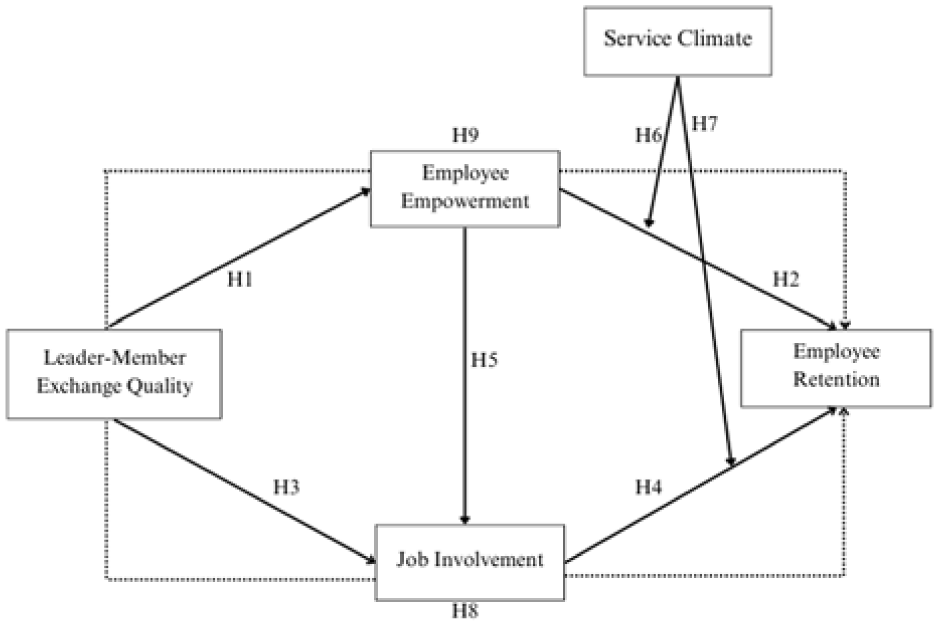
Theoretical framework.
Study Methodology
The present study took a quantitative research approach, in which statistical tools were used to collect and analyze the data. A cross-sectional research design was used to collect data only once to determine how leader–member exchange (LMX) quality is related to employee empowerment, job involvement, and retention in the health care sector of Pakistan. Data were collected from major hospitals and clinics in Punjab, Pakistan. This design was considered highly suited for the statistical testing of the theoretical model and hypotheses (Gazzola et al., 2020).
Quantitative data were collected through structured questionnaires specifically developed to measure the variables of the investigation. These questionnaires include validated measures taken from the literature to determine their reliability and validity. Overall, cross-sectional surveys that were considered empirical in the use of quantitative studies are convenient and robust frameworks that are used to answer questions concerning LMX and employee retention in the health care sector.
Research Design
The research design was online survey-based and focused specifically on frontline health care professionals in Pakistan. Given the complexity and human-resource intensity of the health care sector, this study focused on doctors and nurses—two frontline groups central to patient care and representing the most retention-sensitive segment of the workforce. A pilot study was conducted with 35 participants to assess the reliability, clarity, and understanding of the survey items. On the basis of participant feedback, minor revisions were made to streamline technical language in the job involvement scale and rephrase two empowerment-related items to reduce uncertainty.
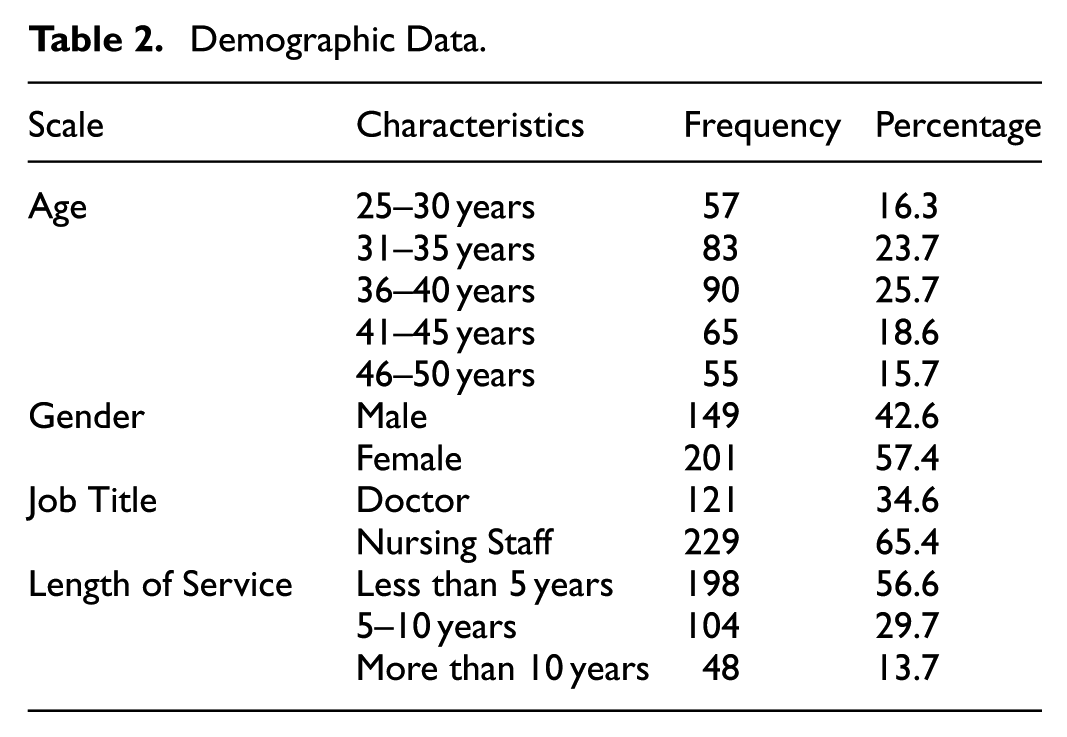
The final sample comprised 350 participants selected through purposive sampling from both public and private hospitals across three major cities in Punjab Province—Lahore, Faisalabad, and Multan—ensuring institutional diversity. Inclusion criteria required participants to be employed in clinical roles with a minimum of 1 year of work experience. The sample distribution of 34.6% doctors and 65.4% nurses reflects the actual role of the hospital-based workforce in Pakistan (Hussain et al., 2019). A significant portion of the hospital personnel in Pakistan are early-career professionals (Hussain et al., 2019), which accounts for their domination in the sample.
While the study does not claim to generalize to all health care professions (e.g., paramedics and technicians), it does provide a robust representation of the most critical, retention-sensitive segments within the sector. Thus, the use of a 350-person sample drawn from diverse hospital settings allows for meaningful inferences regarding the workforce dynamics emphasized in the study title. Questionnaire items were adapted from existing validated scales in the literature, including Graen and Uhl-Bien’s (1995) LMX-7 scale for LMX quality, Hayes’s (1994) for employee empowerment, and Kanungo’s (1982) job involvement scale. Employee retention was measured using items adapted from Seashore et al. (1982), and service climate was assessed using scales from Schneider et al. (1998) and He et al. (2010).
Data Analysis and Results
The initial approach to analyzing the collected research data and examining the relationships between variables involved univariate and bivariate analyses. This study employed partial least squares structural equation modeling (PLS-SEM), implemented through Smart PLS 4, using the bootstrapping method with 5,000 samples (Basias & Pollalis, 2018). This approach was chosen for two key reasons. First, the primary objective of the study was to explore key predictors of employee retention rather than test a well-established theory, and second, the dataset did not meet the assumption of multivariate normality—a common issue in organizational research (Basias & Pollalis, 2018; Bruce et al., 2018). To address issues associated with common method bias (CMB), both procedural and statistical solutions were implemented. In terms of the procedure, item ambiguity was kept to a minimum, and the constructs were arranged differently from each other. Harman’s single-factor test was conducted using exploratory factor analysis. The results revealed that a single factor accounted for less than 40% of the total variance, indicating that CMB was unlikely to be a problem (Podsakoff et al., 2003). Furthermore, full collinearity variance inflation factors (VIFs) were examined, and all values were below the threshold of 3.0 (Table 1), which further indicated the absence of substantial method bias (Kock, 2015).
Variance Inflation Factor (VIF).

Note. LMXQ = Leader Member Exchange Quality; JI = Job Involvement; EE = Employee Empowerment; ER = Employee Retention and SC = Service Climate.
Descriptive Statistics
The demographic information of respondents was obtained and analyzed using SPSS. Table 2 presents the frequencies and percentiles of respondents across variables such as age, gender, job title, and length of service. Out of a total sample size of 350, 42.6% of respondents were male, while 57.4% were female.
Demographic Data.
Measurement Model
A measurement model was used to evaluate construct reliability and validity, which were measured using Cronbach’s alpha and AVE, and factor loading and composite reliability. Additionally, the measurement model also evaluates discriminant reliability, which is measured using two methods. The first is the HTMT method, while the other is the Fornell–Larcker method (Figure 2).
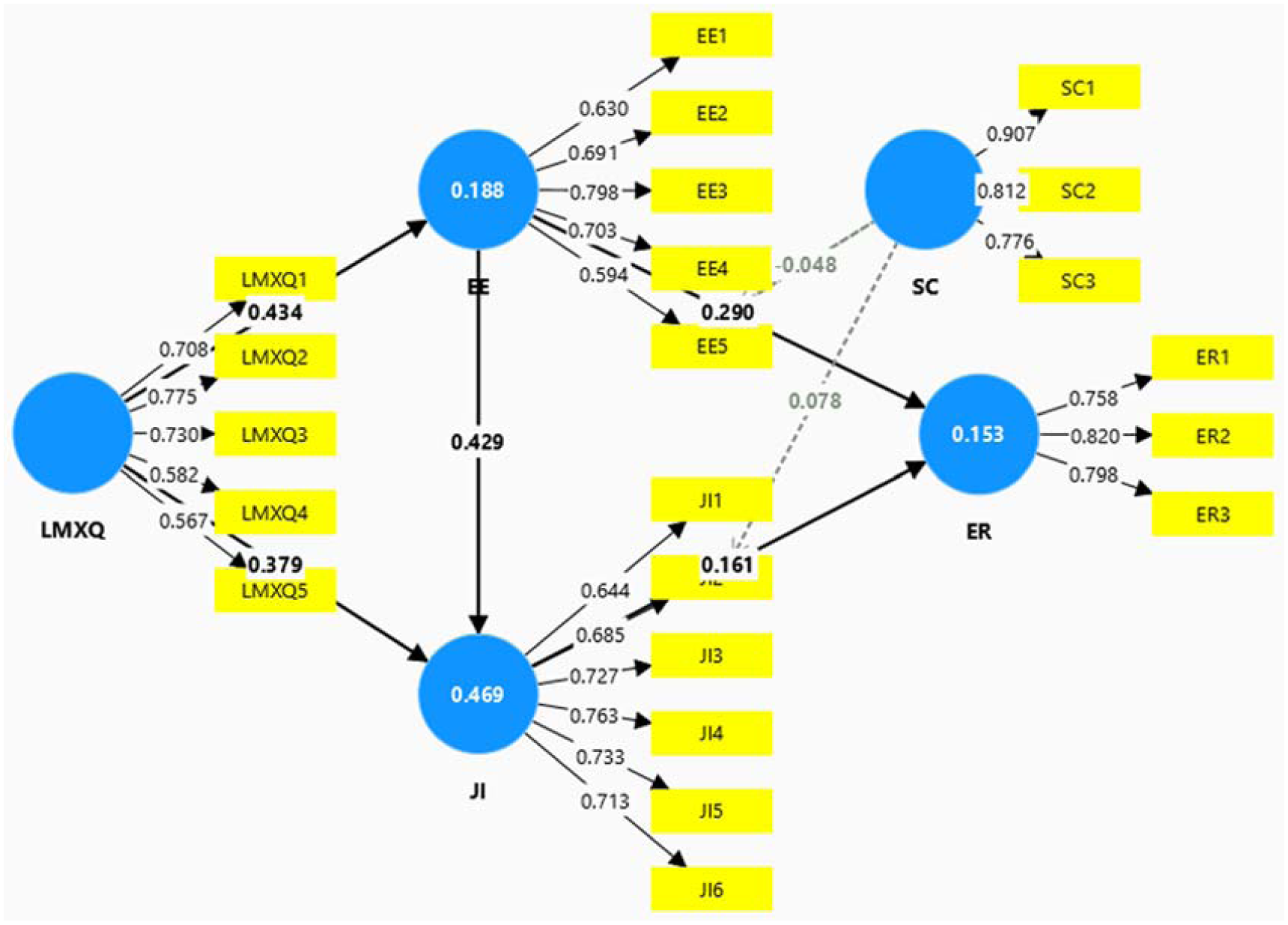
Measurement model analysis.
Construct Reliability and Validity
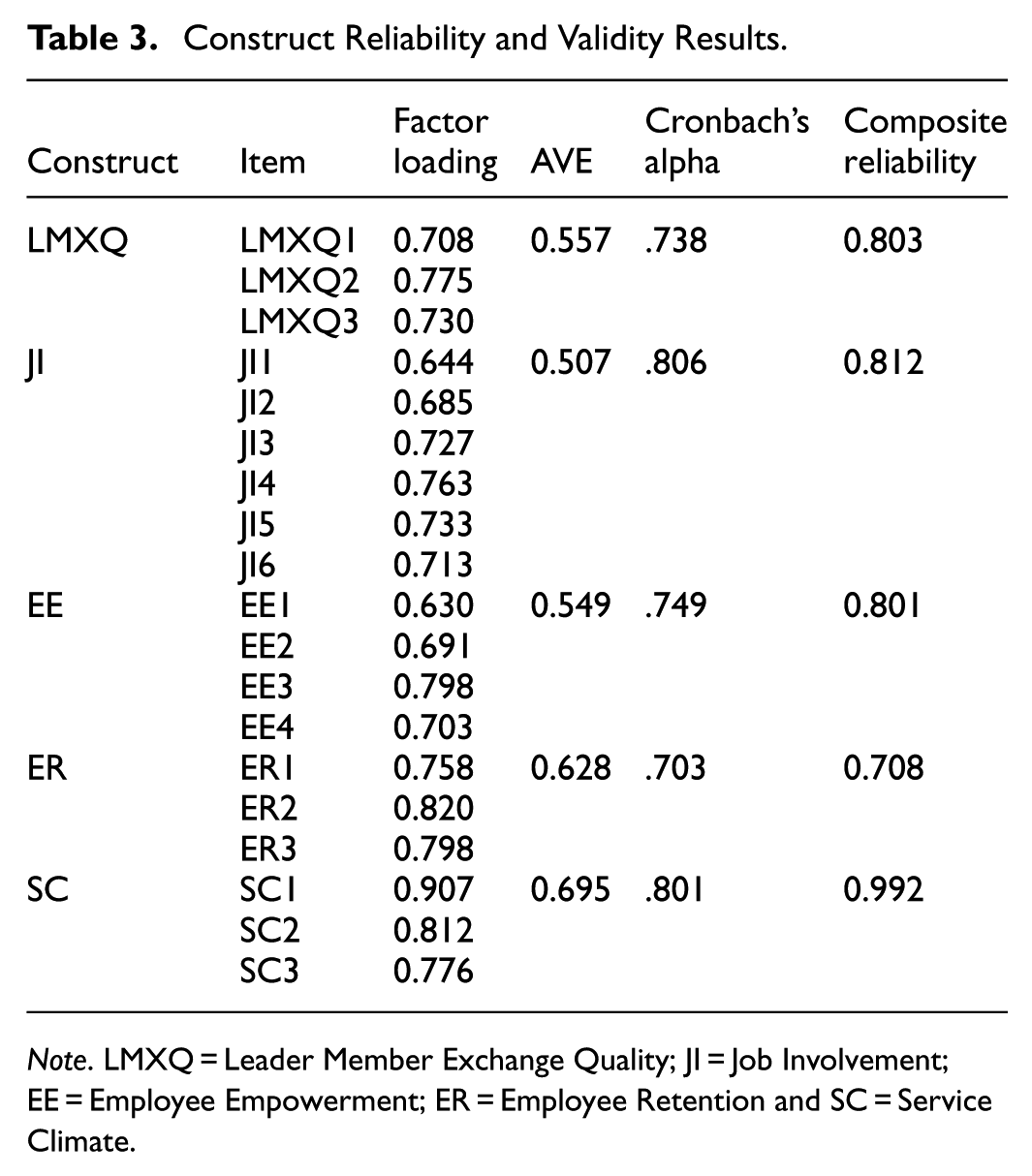
The measurement model was employed to assess the reliability and validity of the questionnaire, and its effectiveness was evaluated using reliability and validity tests. To measure construct reliability, Cronbach’s alpha and composite reliability were considered. In our study, the Cronbach’s alpha values for all the variables ranged from .701 to .806, indicating that all the constructs exceeded the minimum threshold value of 0.7, as suggested by Taber (2018). Similarly, the composite reliability values ranged from 0.708 to 0.992, all of which surpassed the minimum threshold of 0.7. These results confirm that the construct reliability of all the variables is significant and falls within the required ranges.
In terms of construct validity, the factor loadings of all the variable constructs should exceed the minimum threshold value of 0.7 (see Table 3). Two measurement items were removed from the LMXQ construct, and one was removed from the EE construct because their values fell below the acceptable threshold. After removal, the average variance extracted (AVE) values for the variables met the minimum threshold of 0.5, as shown in Table 3.
Construct Reliability and Validity Results.
Note. LMXQ = Leader Member Exchange Quality; JI = Job Involvement; EE = Employee Empowerment; ER = Employee Retention and SC = Service Climate.
Discriminant Validity
Discriminant validity was measured by using the HTMT ratio and Fornell–Larcker criterion. According to the HTMT criterion, the constructs are said to be distinct if their value is less than the threshold value of 0.85. According to the study results, as mentioned in Table 4, all the values are less than 0.85, which means that the results are valid according to this criterion. According to Table 5, all the diagonal values are greater than the nondiagonal values, which means that all the constructs are distinct and valid.
Discriminant Validity-Heterotrait–Monotrait Ratio (HTMT)–Matrix.

Note. LMXQ = Leader Member Exchange Quality; JI = Job Involvement; EE = Employee Empowerment; ER = Employee Retention and SC = Service Climate.
Discriminant Validity-Fornell–Larcker Criterion.

Note. LMXQ = Leader Member Exchange Quality; JI = Job Involvement; EE = Employee Empowerment; ER = Employee Retention and SC = Service Climate.
Bold diagonal values represent the square root of the Average Variance Extracted (AVE); off-diagonal values are the inter-construct correlations. Discriminant validity is established as the square root of AVE for each construct exceeds its correlations with all other constructs.
Structural Model
Structural model analysis was conducted to test and validate the hypothesized relationships in the study. The analysis involves several steps. First, multicollinearity was checked to identify any potential collinearity issues. Next, model fitness was evaluated by analyzing path coefficients and hypothesis results. Afterward, the coefficient of determination (R2), coefficient of redundancy (Q2), and effect size (f2) were calculated to assess the model’s overall strength and predictive relevance (Figure 3).
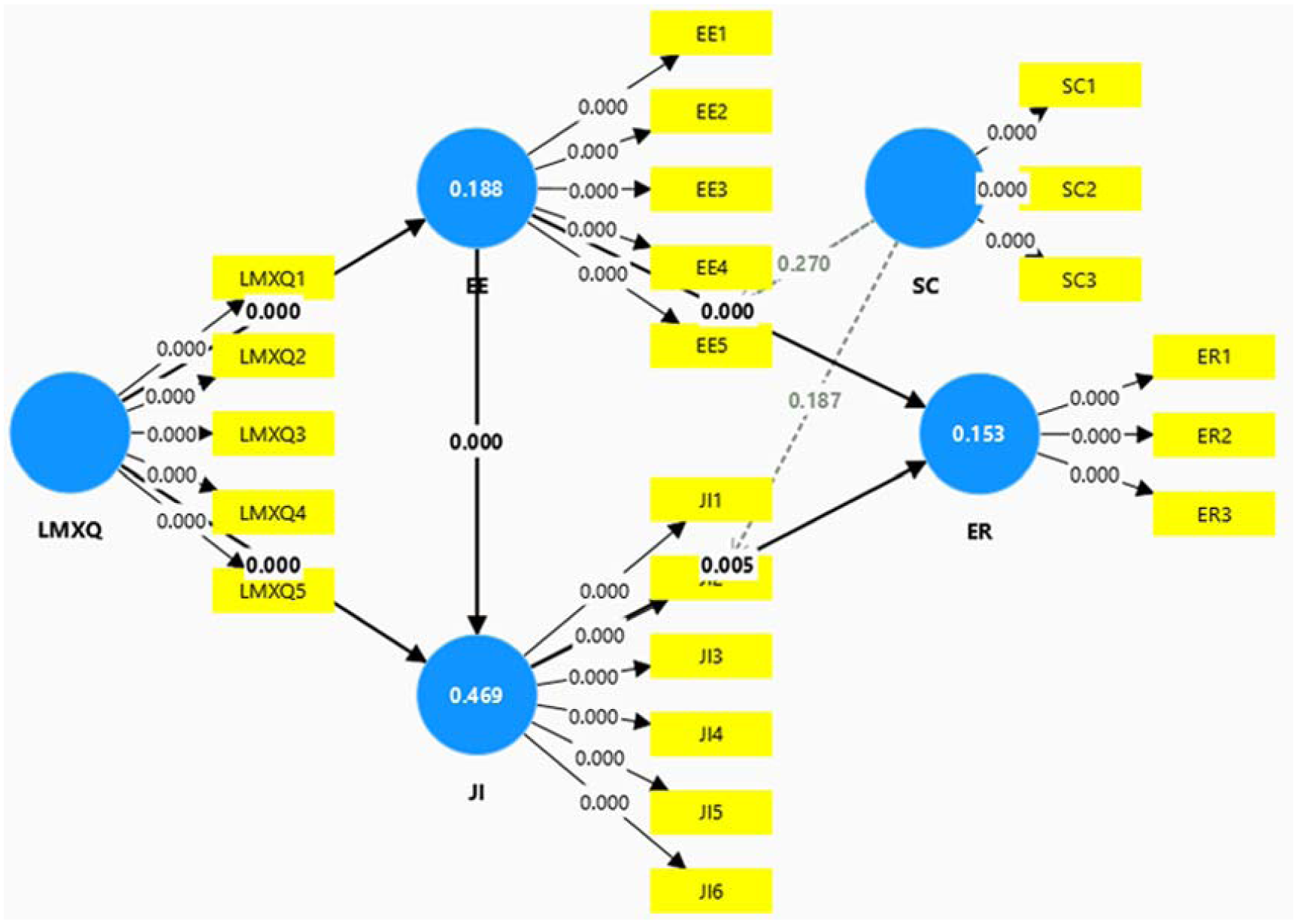
Structural model analysis.
Evaluating Path Coefficient and Hypotheses Results
The path coefficient (β) is a measure of the hypothesized relationships of the variables and is measured using 5,000 bootstrap samples. According to the PLS–SEM results mentioned in Table 6, the hypothesized moderation relationships were rejected, whereas the others were supported by p values and t values. According to our results, EE is significantly positively related to ER, with a β value of .28, which is positive, and a t value of 4.257, which is greater than the minimum threshold value of +1, and the p value is .000, which is significant and less than the threshold value of .05. Similarly, Table 6 shows that EE is positively significantly related to β = .430, t value = 11.345, and p value = .000. JI has a positive and significant relationship, with ER β = .157, t value = 2.597, and p value = .005. LMXQ has a positive and significant relationship, with EE β = .438, t value = 10.250, and p value = .000. LMXQ has a positive and significant relationship, with JI β = .381, t value = 8.622, and p value = .000. However, the moderation is nonsignificant when SC is negatively nonsignificant, with EE and ER β = −.031, t value = 0.614, and p value = .270, as β is negative and t value is less than 1 and p value is greater than0.05. SC has a positively nonsignificant moderation effect, with JI and ER β = .068, t value = 0.887, and p value = .187, as β is positive but the t value is less than 1 and the p value is greater than 0.05. With respect to the mediating results, both mediations are observed to be significant. LMXQ positively mediates the relationship between JI and ER, β = .060, t value = 2.375, p value = .009. However, LMXQ positively mediates the relationship between EE and ER, β = .125, t value = 3.870, p value = .000.
Model Fit.

Note. LMXQ = Leader Member Exchange Quality; JI = Job Involvement; EE = Employee Empowerment; ER = Employee Retention and SC = Service Climate.
Evaluating the Coefficient of Determination R2
Once the hypothesis results were validated, the coefficient of determination was evaluated to measure the variation in the dependent variable due to the independent variable. According to the results mentioned in Table 7, the R2 of EE indicates that 18.8% (weak) of the variation in EE is caused by its independent variable. However, 15.3% (weak) of the variation in ER and 46.9% (strong) of the variation in JI are due to their independent variables.
Coefficient of Determination R2.

Note. JI = Job Involvement; EE = Employee Empowerment; ER = Employee Retention.
Discussion
The model in this study was designed to examine the relationship between leader–member exchange quality (LMXQ) and key employee outcomes, specifically employee empowerment, job involvement, and employee retention. In addition, the moderating effect of service climate on the relationships between employee empowerment and retention, as well as between job involvement and retention, was explored. Nine hypotheses were formulated on the basis of the theoretical framework, and the below findings were derived from the analysis.
Hypothesis 1 (H1) proposed a positive and significant relationship between LMXQ and employee empowerment. The findings align with theoretical foundations and prior empirical research supporting this relationship (Nasim, 2021). Thus, the results confirm that LMXQ plays an essential role in creating an enabling environment for employee empowerment. Such an environment is strengthened through high-quality leader–employee relationships that foster trust, open communication, and mutual respect, ultimately improving employee outcomes.
Hypothesis 2 (H2), which proposed that employee empowerment positively influences employee retention in the health care sector, was supported. This finding aligns with earlier studies suggesting that empowered employees—those who have a voice in their work and feel capable of influencing their environment—tend to be more committed and less attracted to alternative job opportunities than do other employees (Bao & Li, 2019). This finding also reinforces empirical evidence indicating that employee empowerment plays a significant role in enhancing retention (Wells & Rose, 2019).
Hypothesis 3 (H3) proposed a relationship between LMXQ and job involvement. This relationship is grounded in social exchange theory, which emphasizes reciprocity between leaders and employees. These findings correspond with those of previous studies (Petrilli, et al., 2024) showing that strong, trust-based leader–member relationships enhance job involvement. Similarly, Hypothesis 4 (H4) regarding the effect of job involvement on retention was also supported. The results confirm that employees who are highly involved in their work exhibit greater commitment and are less likely to leave the organization. This outcome aligns with prior research indicating that job involvement, shaped by positive leader–member interactions, enhances employees’ identification with their roles and fosters long-term retention.
For Hypothesis 5, the results show that employee empowerment has a positive effect on job involvement. These results are consistent with those of previous studies showing that job involvement derives from positions that allow them to think independently, make decisions on the basis of their input, and feel that whatever they are working on is important (Shaikh et al., 2019). In contrast, Hypothesis 6, which posited a moderating effect of service climate on the relationship between employee empowerment and retention, was not supported. Several possible reasons may account for this unexpected finding. In high-stress and resource-limited environments such as Pakistan’s health care sector, the service climate may not serve as a sufficient contextual factor to affect retention behavior. Systemic challenges, such as limited job security and heavy workloads, may surpass the influence of perceived service-oriented culture.
Moreover, the nonsignificant moderating impact of service climate stimulates a theoretical review of the boundary conditions of relational leadership effects. In the context of social exchange theory, service climate functions as an institutionalized resource that influences employees’ views of reciprocity. In environments characterized by systemic constraints, controlled autonomy, and hierarchical norms, employees may rely more on the immediacy of leader–member relationships than on broader organizational climate cues. According to the job demands–resources (JD-R) model, in situations with finite resources, the service climate serves as a remote resource with minimal relevance to daily work experiences. Employees can view empowerment and involvement as being personally negotiated with their superiors rather than as being supported by the institution, which lessens the moderating effect of climate-level variables.
Theoretically, these findings improve LMX theory by showing when contextual moderators do not help relational outcomes. Instead of assuming universal amplification through positive climates, the findings indicate that in highly hierarchical and resource-limited systems, LMX functions predominantly through direct leader–subordinate interactions. This situation adds to theory by showing the limits of LMX’s ability to explain things in certain situations and stressing the necessity of including structural and cultural constraints in future LMX models.
Beyond statistical significance, the effect size estimates explain the practical significance of the relationships under investigation. Similarly, the path coefficients for LMX → empowerment (β = .438) and LMX → job involvement (β = .381) indicate medium-to-strong effects, highlighting the basic contribution of high-quality leader–member exchanges in influencing important employee outcomes. Conversely, the nonsignificant moderation impacts of service climate on the empowerment–retention and involvement–retention relationships imply that contextual controls can perform a weaker function in strongly resource-scarce health care settings.
Next, it is likely that employee empowerment in itself is a strong predictor of retention intention, leaving little additional change to be explained by interaction with the service climate. In other words, empowerment may have a direct effect on retention, but its interaction with climate does not significantly amplify or weaken that effect in this specific context. This study investigated the moderating role of service climate on the triad of employee empowerment, job involvement, and employee retention (H7). In particular, He et al. (2010), with respect to the Chinese hospitality sector, demonstrated a positive effect of the service climate on customer satisfaction and retention. However, the findings of the present study fail to support the moderating effect of service climate on employee retention in the relationship between job involvement in the health care sector in Pakistan.
The finding that employee empowerment significantly increases retention is in line with the propositions of previous studies (Park & Kim, 2025), who emphasize that employees show more devotion to a firm when they are given freedom and the ability to make decisions. Interestingly, the nonsignificant moderating effect of service climate (H6) contradicts previous assertions by Salanova et al. (2005) that service climate positively enhances performance results universally. This finding may reflect contextual factors such as rigid hierarchies or resource shortages that inhibit the development of supportive climates.
Finally, Hypothesis 8 (H8) confirmed the mediating role of job involvement in the relationship between LMX and employee retention. Job involvement encourages employees to identify more strongly with their roles, leading to increased commitment and lower turnover intentions (Chen et al., 2015). Hypothesis 9 (H9) also revealed a positive mediating effect of employee empowerment on the LMX–retention relationship, which is consistent with prior studies (Ismail et al., 2009). Together, these findings highlight that empowerment and job involvement are key psychological mechanisms through which leadership quality enhances retention outcomes.
Study Implications
The findings of this study have several important implications for both practitioners and academics. First, the positive influence of leader–member exchange quality (LMXQ) on employee engagement and service climate emphasizes the need for health care managers to invest in building trust-based, supportive relationships with staff. Leadership development programs in hospitals should emphasize interpersonal sensitivity, active listening, and individualized consideration to enhance relational quality. Second, the significant role of job insecurity in shaping employee engagement and emotional regulation highlights the urgency of addressing job stability concerns, especially in resource-constrained health care settings such as Pakistan. Third, the moderating effect of service climate indicates that cultivating a positive organizational climate can amplify the benefits of leadership practices. Hospitals should institutionalize service-oriented norms through recognition systems, performance feedback, and teamwork enhancement strategies. From a policy standpoint, the findings support the design of holistic workforce management frameworks that integrate the emotional, relational, and structural dimensions of employee experience.
From a managerial perspective, the results imply a number of practical recommendations for health care leaders in Pakistan and other such settings. First, hospital administrators should establish structured leadership development programs emphasizing interpersonal competency, active listening, and personalized support. Training modules in mentorship, conflict resolution, and communication can assist supervisors in fostering high-quality relationships with subordinates. In addition, performance appraisal systems should integrate relational indicators into human resource policies. Assessing the quality of leader–member interactions and perceived empowerment in combination with conventional performance metrics would assist in identifying departments that lack relational support.
Next, policymakers should acknowledge that empowerment initiatives are more effective when they are accompanied by structural reforms. Enhancing employees’ confidence in the system and maintaining their loyalty to the organization can be achieved by addressing employment shortages, ensuring fair workload allocation, and establishing transparent promotion pathways. Finally, at the policy level, national health authorities might include relational leadership skills in training programs for hospital administration and accreditation. Integrating the principles of high-quality leader–member exchange into leadership certification and performance standards can promote the establishment of supportive supervisory practices in both public and private hospitals.
Conclusion
This research aimed to create a theoretical model and collect data from health care employees using a self-administered questionnaire. The resulting data were analyzed using structural model analysis to confirm the hypotheses proposed between different variables. Path coefficients, t values, and p values were considered to assess model fit after the resolution of multicollinearity problems. Of the nine hypotheses, seven were supported, including five direct relationships and two mediation relationships, whereas both moderation hypotheses were rejected. The significant findings revealed positive relationships, such as employee empowerment with retention and leader–member exchange (LMXQ) quality, with employee empowerment and job involvement. Moreover, job involvement and employee empowerment emerged as significant mediators between LMX quality and retention, whereas service climate was found to be a nonsignificant moderator in this study.
Advancing the understanding of LMX theory and its impact on employee behavior is especially important in emphasizing the value of strong leader–subordinate relationships. This study identifies employee empowerment and LMX quality as key factors in improving job involvement and retention, particularly in Pakistan’s health care sector, where high turnover rates and employee management challenges are common. Improving LMX quality, empowerment, and involvement might reduce destruction while enhancing organizational performance.
Limitations and Future Research Directions
One notable limitation of this study is its reliance on a single-country, single-sector sample, specifically health care professionals in Pakistan. While this context offers valuable insights into leadership dynamics, employee engagement, and service climate in an emerging economy, it may limit the generalizability of the findings to other countries or sectors. Cultural dimensions, such as high power distance, collectivism, and uncertainty avoidance—common in South Asian settings—may shape perceptions of leadership and organizational support differently than they do in Western contexts. Additionally, the health care sector in Pakistan operates under unique stressors, such as resource constraints, regulatory ambiguity, and high patient-to-staff ratios, which may intensify the effects of leadership and job insecurity.
Second, the demographic profile of respondents indicated a relatively high percentage of early-career professionals. This situation could introduce generation bias, given that younger workers tend to express differing expectations, career mobility orientations, and sensitivities to leadership practices than do senior personnel. Future studies could implement stratified sampling or longitudinal methods to more adequately represent career levels and investigate whether the effects of leader–member exchange, empowerment, and work involvement differ across tenure groups. Moreover, future studies on LMX quality and employee retention should examine how LMX quality varies across different organizational contexts and cultures, providing a broader understanding of its influence on employee outcomes. Finally, exploring this subject in relation to modern workplace issues, such as remote work and digital communication, would offer valuable insights, particularly into how technology affects leader–member relationships and employee retention.
Footnotes
Acknowledgements
We would like to express our sincere gratitude to Professor Chunhui Huo for his invaluable guidance and support throughout the research process. Dr Arslan Sarwar and Motasim Billah have played pivotal roles in shaping the direction of our study.

Ethical Considerations
This study involved human participants and was conducted in accordance with the ethical principles outlined in University ethics policy. Ethical approval was obtained prior from COMSATS University. The study design minimized risk to participants by using anonymous surveys, excluding sensitive questions, etc. Informed consent was obtained prior to participation, either in written or digital form. Participants were assured of confidentiality and anonymity throughout the research process. The potential benefits of this study—such as improving leader-member relationships, enhancing job involvement and employee retention through increased employee empowerment and service climate—were deemed to outweigh any minimal risks posed to participants, which were lessened through anonymity and voluntary participation.
Declaration of Conflicting Interests
The authors declared no potential conflicts of interest with respect to the research, authorship, and/or publication of this article.
Data Availability Statement
The data sharing policy does not apply to this article. The dataset associated with this research is not publicly available due to commitments of privacy and confidentiality made to the study participants. As such, the raw data cannot be made openly accessible, although it can be requested from the first author upon a reasonable request.