






Abstract
We examine the impact of China’s Joint Prevention and Control (JPC) policy for air pollution, implemented in the Beijing-Tianjin-Hebei region in 2013, on corporate green innovation. Using panel data of listed manufacturing firms from 2007 to 2019, we construct a Differences-in-Differences (DID) model to identify the policy effect. The baseline regression results show that the JPC policy significantly promotes green innovation, particularly green invention patents. The results are robust to parallel trend test, placebo test, and other robustness tests. Mechanism analysis reveals that the policy enhances vertical environmental supervision and cross-regional coordination, curbing rent-seeking and inter-regional regulatory arbitrage. Further heterogeneity analysis shows stronger effects among state-owned enterprises, heavily polluting industries, and regions with higher political constraints. This paper contributes to understanding the environmental governance mechanisms of regional coordination policies and offers insights into more effective air pollution control strategies.
Keywords
Introduction
Green innovation serves not only as a core driver for nations to achieve sustainable development and environmental goals (X. Liu et al., 2024; Tang et al., 2018; Yi et al., 2021), but also as a key strategy for enterprises to pursue long-term profitability and maintain competitiveness (Aamir et al., 2023; F. Li et al., 2021; R. Liu et al., 2023). According to the Porter Hypothesis, government environmental regulations can stimulate corporate green innovation. Existing literature predominantly focuses on single-jurisdiction governance defined by administrative boundaries, examining how traditional command-and-control, market-based, or voluntary environmental policies implemented within a jurisdiction affect corporate green innovation (Blackman et al., 2018; Bu et al., 2020; Kneller & Manderson, 2012; S. Lim & Prakash, 2014). However, environmental pollution, particularly air pollution, is inherently transboundary (J. Wei et al., 2025). Governance mechanisms confined to administrative divisions often lead to difficulties in allocating responsibility and costs among local governments, frequently resulting in a “race to the bottom” and free-riding behaviors, which undermine the effectiveness of air pollution control (T. Feng et al., 2025; Xiao et al., 2024). Studies show that regional collaborative governance under central supervision is an effective means to coordinate central-local and inter-local governance relations and enhance air pollution control efficiency (H. Du et al., 2021; Y. Feng et al., 2019; M. Xu & Wu, 2020). Under centralized coordination and oversight, such collaborative governance promotes environmental cooperation through unified access rules and joint enforcement (T. Feng et al., 2025; S. Liu et al., 2025; Song et al., 2020), strengthens deterrence against corporate environmental misconduct, and thus constitutes a potential driver of corporate green innovation. Therefore, investigating the impact of regional collaborative governance on corporate green innovation is of critical importance.
This study examines the impact of central-supervised interregional collaborative governance on corporate green innovation by leveraging the “Implementation Rules for the Air Pollution Prevention and Control Action Plan in the Beijing-Tianjin-Hebei and Surrounding Regions” (hereafter referred to as JPC), enacted on September 17, 2013, as an exogenous shock. On one hand, the JPC policy implements cross-regional uniform regulatory standards and enforcement intensity, promoting information sharing for air pollution prevention and control across regions. On the other hand, it establishes a nationally coordinated air quality monitoring network, improves environmental information disclosure systems for environmental protection departments at all levels and for enterprises, and sets up an information management platform linked to the central environmental authority. Following the policy’s implementation, the proportion of sales revenue from high-energy-consumption and high-emission industries to total manufacturing sales revenue in the Beijing-Tianjin-Hebei region decreased from 40.6% in 2021 to 34.4% thereafter. To date, Beijing has shut down over 3,200 polluting enterprises in general manufacturing sectors such as printing, casting, and furniture, and has completed the suspension and remediation of more than 163,000 heavily polluting enterprises. Tianjin has accomplished environmental improvements in 314 industrial parks. These outcomes indicate that the JPC policy has exerted substantial deterrence on corporate behavior at the micro level.
This study utilizes data from Chinese manufacturing listed companies and their respective regions spanning 2007 to 2019 and treats the 2013 JPC policy on air pollution in the Beijing-Tianjin-Hebei region as a quasi-natural experiment. Employing a Difference-in-Differences (DID) design, we find that the implementation of the JPC policy significantly improves corporate green innovation capability. The baseline result holds after a series of robustness checks, including parallel-trend tests, placebo tests and other sensitivity analyses. Mechanism tests suggest that the JPC policy operates through two channels: a vertical supervision effect that reduces corporate rent-seeking, and a regional coordination effect that discourages corporate relocation. Heterogeneity analysis further reveals that the policy impact is stronger for state-owned enterprises, firms in pollution-intensive industries, and companies located in regions with tighter political constraints. Moreover, the innovation-inducing effect of the JPC policy is primarily concentrated in green invention patents.
The contributions of this paper are threefold: (1) This study extends the Porter Hypothesis to the context of regionally coordinated air pollution governance under central supervision. Existing research on the Porter Hypothesis has largely examined the impact of environmental regulations based on the principle of territoriality—focusing on how governance confined to single administrative jurisdictions influences corporate behavior (M. Li et al., 2021; J. Wei et al., 2025; K. Zhang & Li, 2025)—while paying less attention to the complementary role of interregional coordinated governance in incentivizing green innovation. In practice, territorial-based environmental governance often suffers from issues such as collusion between local governments and enterprises in the absence of effective oversight, inter-governmental “race-to-the-bottom” competition, and buck-passing of responsibilities (Chu et al., 2021), which undermine the effectiveness of single-jurisdiction environmental policies—especially for problems like air pollution that exhibit spatial spillovers. By investigating how centrally supervised regional coordination policies incentivize corporate green innovation and through which mechanisms they operate, this study complements the understanding of how environmental regulation spurs green innovation and expands the theoretical scope of the Porter Hypothesis.
(2) This study advances the understanding of the mechanisms underlying air pollution prevention and control policies from the dual perspectives of vertical supervision and horizontal coordination. Existing literature often treats air pollution policies as a monolithic institutional arrangement, focusing on their macro-level effects such as emission-reduction efficiency and air quality improvement (Ge et al., 2023; W. Lin et al., 2023; S. Liu et al., 2025), or their micro-level impacts on corporate emission reduction and relocation behavior (M. Li et al., 2021; J. Wei et al., 2025; K. Zhang & Li, 2025). Departing from prior work, this paper delves into the institutional design of air pollution policies, unpacking the “black box” of policy effects by examining how central-to-local vertical oversight and inter-local governmental coordination jointly shape outcomes. (3) This research systematically reveals the heterogeneous effects of air pollution policies through a multidimensional lens encompassing firm-, industry-, and region-level characteristics. While prior studies have primarily emphasized differences related to firm ownership and industry attributes (Chu et al., 2021; Song et al., 2020; Wu et al., 2015), this paper additionally introduces a regional dimension, investigating how variations in administrative hierarchy and policy-signal transmission efficiency led to differential policy impacts. This broader perspective deepens the understanding of the contextual conditions under which air pollution policies are most effective.
The paper is organized as follows. Section 2 presents the practical and background. Section 3 reviews the literature and develops the theoretical framework. Section 4 explains the research design and data sources. Section 5 reports the empirical results, along with endogeneity and robustness checks. Section 6 conducts mechanism tests, heterogeneity analyses, and discusses further policy implications. Section 7 discusses the findings. The final section concludes by summarizing the study, acknowledging its limitations, and outlining directions for future research.
Background
In the early stages of reform and opening-up, China’s economy entered a period of rapid growth, but the extensive combustion of fossil fuels, primarily coal and oil, released large volumes of harmful gases such as sulfur dioxide and nitrogen oxides, leading to severe haze and other air pollution issues. This imposed significant health risks and caused substantial economic and social losses over an extended period. In 2013, the China Environmental Quality Bulletin reported that among the 74 cities where fine particulate matter (PM2.5) monitoring was conducted, 71 failed to meet China’s National Ambient Air Quality Standard (NAAQS) of 35 µg per cubic meter (Ministry of Environmental Protection of China, 2016). The annual average PM2.5 concentration across these 74 cities reached 72 μg/m3, seven times higher than the World Health Organization’s air quality guideline. The Beijing-Tianjin-Hebei region recorded an annual average PM2.5 concentration of 106 μg/m3, making it one of the most heavily polluted areas in the country. The Global Burden of Disease Study indicated that air pollution in China was estimated to cause approximately 1.2 million premature deaths annually (S. S. Lim et al., 2012; Richard, 2012), along with substantial economic losses equivalent to 1% to 7% of China’s annual GDP (Y. Feng et al., 2019).
However, due to its transboundary nature, air pollution often spreads across administrative borders, significantly undermining the effectiveness of single-jurisdiction governance. Against this backdrop, in 2010, nine departments including the former Ministry of Environmental Protection jointly issued the Guidelines on Promoting the Joint Prevention and Control of Air Pollution to Improve Regional Air Quality (2010 Guidelines), which initiated an early exploration of a collaborative air pollution governance model. While the 2010 Guidelines outlined the guiding principles and basic framework for JPC, they did not establish stringent provisions on how the central government should assess local pollution control outcomes or specify inter-regional coordination and cooperation mechanisms, thus failing to provide operable institutional constraints for the JPC policy (H. Du et al., 2021; Xue et al., 2019).
To enhance the enforceability and binding force of the JPC policy, the State Council issued the Notice on the Action Plan for Air Pollution Prevention and Control on September 13, 2013, which provided a programmatic framework for interregional coordination and collaborative mechanisms in air pollution governance, marking the actual implementation of nationwide JPC efforts. As one of the regions most severely affected by transboundary air pollution in China, the Beijing-Tianjin-Hebei (BTH) region and its surrounding areas, taking into account local pollution characteristics, introduced the Implementation Rules for the Air Pollution Prevention and Control Action Plan in the Beijing-Tianjin-Hebei and Surrounding Regions (2013 Implementation) on September 17, 2013. Building upon the 2013 Implementation, the BTH and surrounding regions released the 2017 Work Plan for Air Pollution Prevention and Control in the Beijing-Tianjin-Hebei and Surrounding Regions in 2017 (2017 Work Plan), focusing JPC efforts on the cities within the BTH air pollution transmission corridor, known as the “2+26” cities. The JPC policy for air pollution combines both command-based and market-based policy instruments while, under the vertical oversight of the central government, improving horizontal collaboration mechanisms for interregional coordinated governance (Song et al., 2020).
In terms of vertical supervision, the JPC policy in the BTH region and surrounding areas has been implemented through three key measures: (1) Enterprises in the BTH region and surrounding areas are required to install automated environmental monitoring systems and establish an information management platform directly linked to the central environmental authority. (2) The central environmental department is granted the authority to directly review and assess the progress of various regions and departments on a monthly basis, ensuring comprehensive oversight of local corporate emissions and governmental environmental governance performance. (3) The former Beijing-led Air Pollution Prevention and Control Coordination Group was elevated to a State Council-led Leading Group on Air Pollution Prevention and Control, endowed with direct accountability powers over local officials.
In terms of horizontal coordination, the JPC policy in the BTH region and surrounding areas has been implemented through three key measures: (1) Unifying air quality standards, emission limits, monitoring protocols, pollution alerts, and environmental market access across prefecture-level and above cities, supported by coordinated legislation to establish binding regional regulations; (2) Establishing a regional information-sharing platform that uses smart monitoring and big data to ensure transparent environmental disclosure; and (3) Institutionalizing regular intergovernmental meetings to oversee implementation while launching a coordinated enforcement mechanism that enables unified actions in high-violation areas and ensures consistent regulatory intensity across the region.
Following the implementation of the policy, the proportion of sales revenue from high-energy-consumption and high-emission industries to total manufacturing sales revenue in the BTH region decreased from 40.6% in 2021 to 34.4% thereafter. To date, Beijing has shut down over 3,200 polluting general manufacturing enterprises in sectors such as printing, casting, and furniture, and has completed the suspension or remediation of more than 163,000 heavily polluting enterprises. Tianjin, meanwhile, has carried out environmental improvements in 314 industrial parks. These outcomes indicate that in the later stages of policy implementation, beyond traditional measures such as shutting down or rectifying specific enterprises, the central government has also focused on upgrading the industrial and energy consumption structures, thereby further consolidating the achievements of regional environmental governance. Thus, the JPC policy has exerted substantial deterrence on corporate behavior at the micro level.
Literature Review and Theoretical Mechanisms
Literature Review
To examine the impact of the joint prevention and control policy on corporate green innovation, we reviewed existing research on both the internal and external drivers of corporate green innovation, as well as the macro- and micro-level effects of regional collaborative governance.
The Drivers of Corporate Green Innovation
On the one hand, key internal factors, such as the nature of property rights, asset structure, and digital transformation capability, significantly shape a firm’s ability to drive green innovation. First, the ownership type affects access to policy support and resources (Y. Li et al., 2023; Cheng & Yu, 2023; H. Zhang et al., 2023). Second, a stronger equity base provides financial capacity for long-term green investment (Gu & Pan, 2025; Y. Li et al., 2025). Third, digital transformation improves resource efficiency and supports the implementation of green technologies through smart management systems (X. Feng et al., 2023; Xie & Wang, 2025).
On the other hand, external factors such as knowledge supply, financing conditions, and environmental regulations are key drivers of corporate green innovation. In terms of knowledge supply, existing research focuses on the role of external knowledge networks. Green network embedding establishes platforms for knowledge exchange and R&D collaboration among firms, extending vertical channels for acquiring green knowledge (X. Feng et al., 2023). Concurrently, green strategic alliances provide a platform for commercial cooperation on green projects, facilitating horizontal knowledge diffusion through external experience sharing and collaborative learning (Wang et al., 2025). Regarding financing conditions, studies indicate that green financial instruments such as green bonds and green credit expand market-based financing channels and encourage green innovation (Guo et al., 2025; Lian et al., 2024). Meanwhile, fiscal incentives like green R&D subsidies and accelerated depreciation policies for fixed assets further alleviate the financial pressure on firms pursuing green innovation from the government side (An et al., 2025; Y. Li et al., 2025; Z. Zhang et al., 2024).
In terms of regulatory policies, existing research has primarily focused on how command-and-control, market-based, and voluntary environmental regulations under jurisdictional governance drive green innovation: command-and-control tools such as central environmental inspections, environmental impact assessments, and air quality standards increase compliance pressure and compel firms to innovate (Y. Li et al., 2023; Kneller & Manderson, 2012; Zeng et al., 2023; H. Zhang et al., 2023); market-based instruments like emission trading, taxes, and subsidies internalize environmental costs and raise firms’ willingness to pursue green innovation (Y. Li et al., 2025; Blackman et al., 2018; Guo et al., 2025); and voluntary approaches including information disclosure and public participation leverage information and reputation mechanisms to incentivize green innovation (Bu et al., 2020; S. Lim & Prakash, 2014; X. Wei et al., 2023; Yuan & Cao, 2022).
Unlike traditional jurisdiction-based environmental regulations, the JPC policy examined in this study transcends the single-region governance model confined by administrative boundaries. By strengthening central oversight over local governments while continuously enhancing horizontal coordination among them, it not only increases regulatory pressure and compliance requirements but also raises firms’ expected returns from compliance. This provides effective incentives for corporate green innovation (M. Xu & Wu, 2020) and offers a complementary driver for green innovation from the perspective of centrally supervised regional cooperation.
The Effects of Joint Prevention and Control Policies
Research on the effects of the JPC policy can be divided into macro-level and micro-level impacts. At the macro level, studies focus on its influence on regional air pollution using city- or county-level data. Some findings show that the policy significantly reduces overall regional air pollution, with effects that exhibit spatial spillovers to nearby areas (W. Lin et al., 2023) and are sustained over the long term (Ge et al., 2023; S. Liu et al., 2025), while the governance effect strengthens as the collaborative alliance expands (Chu et al., 2021; Song et al., 2020; Wu et al., 2015). However, other scholars argue that such spatial spillovers may encourage free-riding, reducing governance incentives and long-term effectiveness, and could even worsen air pollution along regional boundaries (Hong & Huang, 2025; Xiao et al., 2024).
At the micro level, existing literature has primarily focused on the impact of JPC policies on corporate land use for pollution, pollution relocation, and emissions. Using data on industrial land acquisition by Chinese firms, studies have examined how such policies affect the procurement of industrial land by polluting enterprises. Research indicates that regional pollution coordination significantly curbs industrial land acquisition by air-polluting firms in border areas, generating positive spillover effects on other polluting enterprises (K. Zhang & Li, 2025). Other studies draw on Chinese industrial firm relocation data to assess the policy’s influence on pollution transfer. Findings show that the likelihood of firm relocation increases with stricter environmental regulation, while inter-regional collaborative governance reduces relocation probability, curbs pollution shifting to neighboring areas, and enhances environmental governance efficiency (M. Li et al., 2021). Closely related to this paper is research on the effect of JPC policies on corporate emissions. Using panel data from Chinese A-share listed firms in the Yangtze River Delta region and a Difference-in-Differences model, studies at the micro level find that regionally coordinated environmental governance effectively reduces corporate pollutant emissions. However, part of this effect stems from the relocation of highly polluting firms outside the coordinated governance area.
Theoretical Mechanisms
The Joint Prevention and Control (JPC) policy in the Beijing-Tianjin-Hebei (BTH) region and surrounding areas strengthens the central government’s accountability over local governments and environmental departments (vertical supervision), while also emphasizing inter-local cooperation through joint legislation, emergency coordination, and joint enforcement (horizontal collaboration). This dual approach has significantly improved the implementation efficiency of environmental governance measures and produced two main policy effects: vertical supervision by the central government and horizontal coordination among local governments. Therefore, under the framework of the Porter Hypothesis, the “forcing effect” of environmental regulation on corporate green innovation is achieved through effective constraints on strategic collusion between government and enterprises (via vertical supervision) and the suppression of polluting firm relocation (via horizontal coordination). Based on this, we propose two core mechanisms of the JPC policy: the “vertical supervision effect” and the “regional coordination effect.”
Vertical Supervision Effect—Reducing Rent-Seeking Behavior
The JPC policy in the BTH region improves information transmission efficiency and strengthens the central government’s accountability mechanism over local governments, thereby significantly increasing the cost of rent-seeking for enterprises and reducing collusion between local governments and firms.
First, by enhancing vertical supervision, the policy reduces information asymmetry between central and local governments. It streamlines hierarchical reporting systems and improves the efficiency of vertical information flow, addressing inefficiencies caused by the traditional decentralized fiscal system and principal-agent problems between the central and local governments (C. Xu, 2011; M. Xu & Wu, 2020). For instance, the policy mandates that firms install automatic environmental monitoring and reporting systems, and grants central agencies direct access to local environmental data. This reduces the central government’s supervision costs and curbs local governments’ incentives to shield polluting firms in exchange for fiscal benefits or political gain, thereby limiting collusive behavior.
Second, the JPC policy elevates the regulatory authority of the air pollution control leadership group, enabling more effective central accountability over local governments. By granting the leadership group direct authority to discipline local officials, the policy significantly increases the likelihood of local governments being held accountable for environmental violations. This top-down pressure sends a strong political signal: inadequate environmental governance can negatively affect the career advancement of local officials (Huang et al., 2017; M. Xu & Wu, 2020). As a result, local governments are less motivated to relax environmental enforcement, and the space for rent-seeking and collusion narrows.
In summary, strengthened vertical supervision under the JPC policy raises the cost of rent-seeking and reduces collusion between local governments and firms, thereby enhancing the effectiveness of environmental regulatory tools and compelling firms to engage in green innovation. Specifically, the policy requires enterprises to upgrade pollution control facilities, adopt clean energy and environmentally friendly technologies, and face shutdowns if they fail to meet environmental standards. To reduce long-term compliance costs, firms are incentivized to innovate in production processes, management systems, and product design. Furthermore, as non-productive rent-seeking activities decline, more resources become available for green technology R&D, enhancing firms’ green innovation capacity. Economic policies such as subsidies, investment support, and green credit provided by the central government further strengthen these effects. Based on this analysis, the paper proposes Hypothesis 1.
Regional Coordination Effect—Pollution Migration
The JPC policy’s unified standards, joint legislation, and joint enforcement effectively restrict the relocation of polluting enterprises, thereby mitigating the “pollution haven” and “gray zone” effects and pressuring firms to adopt green innovation strategies.
First, unified environmental standards under the JPC policy restrict the relocation of polluting firms and alleviate the “pollution haven” effect. By requiring the BTH region to adopt consistent monitoring, legal, and warning systems, the policy prevents firms from exploiting differences in regulatory intensity to relocate from stricter to laxer regions in pursuit of lower production costs. Under traditional territorial governance, less-developed regions often lower environmental standards to attract investment (Konisky, 2007; Wheeler, 2001). The JPC policy curbs such “race-to-the-bottom” behavior by harmonizing standards across jurisdictions. Although firms may still relocate outside the JPC region to evade regulation, barriers such as geography, market size, cultural factors, and labor costs increase relocation difficulty and cost, reducing the likelihood of cross-regional migration.
Second, joint enforcement under the JPC policy mitigates the “gray zone” effect at administrative boundaries. Although local governments may enforce uniform standards within their own jurisdictions, environmental governance at regional borders often suffers from unclear responsibilities, allowing polluting firms to relocate to boundary areas with weaker enforcement. This results in the clustering of high-emission firms along borders (Marcus & Volker, 2006). The JPC policy mandates emergency coordination and joint enforcement across administrative regions, preventing local governments from shirking responsibility at borders. As a result, both central and boundary areas face consistent regulatory intensity, increasing the cost and reducing the incentive for relocation, thus alleviating the “gray zone” effect.
In sum, by addressing the “pollution haven” and “gray zone” problems, the JPC policy enhances the effectiveness of regulatory enforcement and compels firms to innovate. With stricter environmental and industrial access standards in place and fewer opportunities for relocation, firms must adopt green technologies to comply with regulations. Additionally, reduced relocation pressure frees up financial resources that would have been allocated to relocation, allowing firms to invest more in green R&D and transformation. Based on this analysis, the paper proposes Hypothesis 2.
Heterogeneous Effects: Influences From Innovation Types, Firm-, Industry-, and Region-Level Characteristics
The 2013 Implementation explicitly required governments at all levels to strengthen environmental monitoring capacity, leverage the demonstrative and leading role of state-owned enterprises, intensify governance in heavily polluting industries, and enhance supervision in key regions. These focal points suggest that the policy may exhibit significant heterogeneity in its effects across types of innovation, firm ownership, industry characteristics, and the intensity of regional political constraints.
1. The JPC policy not only directly improves the government’s supervision ability over enterprises by requiring enterprises to install automatic monitoring and transmission equipment for pollution control information, but also reduces the space for enterprises to evade supervision by making use of non-productive profit-seeking and regional control differences through vertical supervision and horizontal coordination mechanism. However, strategic green innovation not only fails to enhance competitiveness in a short period of time, but also fails to fundamentally solve enterprise pollution problems and improve compliance capabilities (Hou et al., 2022; J. Hu et al., 2020). As a result, companies will choose to undertake substantial green innovation, prioritizing efforts to reduce energy consumption and waste emissions in production processes or recycling processes, and responding more effectively to regulatory requirements (Yuan & Cao, 2022). Based on this analysis, the paper proposes Hypothesis 3.
2. Differences between state-owned and non-state-owned enterprises. State-owned enterprises (SOEs) typically bear strategic responsibilities in national ecological conservation and green development, which endows them with stronger motivation to respond to environmental regulations and elevates the priority of green innovation within their strategic agenda. Moreover, benefiting from close ties with the government (Qian, 1996), SOEs possess systematic resource advantages in accessing government subsidies, policy-oriented credit, research project support, and high-level technical talent, providing solid financial and intellectual foundations for pursuing green technological innovation. Consequently, when facing environmental regulations, SOEs are not only more motivated to comply but also better equipped with resources to actively promote green innovation. In contrast, non-state-owned enterprises (non-SOEs) rely primarily on market mechanisms for resource acquisition and commonly face structural constraints such as financing difficulties, credit discrimination, insufficient research support, and challenges in attracting high-level talent. Under environmental regulatory pressure, non-SOEs tend to adopt short-term compliance strategies or cost-control measures, focusing more on sustaining current operations, and thus exhibit relatively limited willingness and capacity to engage in green innovation. Based on the above analysis, this paper proposes Hypothesis 4.
3. For heavily polluting enterprises, the JPC policy not only establishes mandatory compliance constraints—such as strict emission limits, regular monitoring, and severe penalties—forcing firms to adopt green technological innovation to maintain their legal operating status, but also provides supporting incentives like special funds and green credit, encouraging enterprises to proactively pursue green innovation to obtain policy support (van Dijk & Pellenbarg, 2000). In contrast, non-heavily polluting firms are not key targets of policy control and face relatively stable and lenient environmental constraints, reducing the urgency for green innovation. Moreover, due to their low baseline pollution emissions, the marginal benefits of green innovation often fail to offset the costs. In the absence of targeted incentives, such enterprises tend to allocate resources toward traditional competitive domains such as market expansion and brand building, resulting in a relatively insignificant policy impact on their green innovation behavior. Based on this analysis, the paper proposes Hypothesis 5.
4. According to signaling theory, policy signals face risks of attenuation, lag, and distortion during vertical transmission, causing regulatory credibility to weaken as administrative hierarchy differences increase (J. Li, 2024). The JPC policy authorizes the central environmental authority to monitor the progress of local environmental governance work, mitigates information asymmetry, and strengthens the vertical oversight of provincial governments by the central government. As the administrative centers of their respective provinces, provincial governments receive the most direct and clear policy signals and are subject to direct supervision and constraints from provincial departments and even the central government. In contrast, the credibility of provincial oversight over other prefecture level governments diminishes as policy signals attenuate during transmission, which weakens the central government’s regulatory deterrence over these lower tier governments. Based on this analysis, the paper proposes Hypothesis 6.
Research Design
Model Specification
We use the formal establishment of the air pollution Joint Prevention and Control (JPC) mechanism in the Beijing-Tianjin-Hebei (BTH) region and surrounding areas in 2013 as an exogenous shock, and construct a Difference-in-Differences (DID) model to estimate the impact of the JPC policy on firms’ green innovation capacity. The first difference captures the difference between enterprises in the BTH and surrounding regions (treatment group) and those in other provinces unaffected by the policy (control group). The second difference captures the before-and-after effect of the policy implementation. The baseline model is specified as follows:
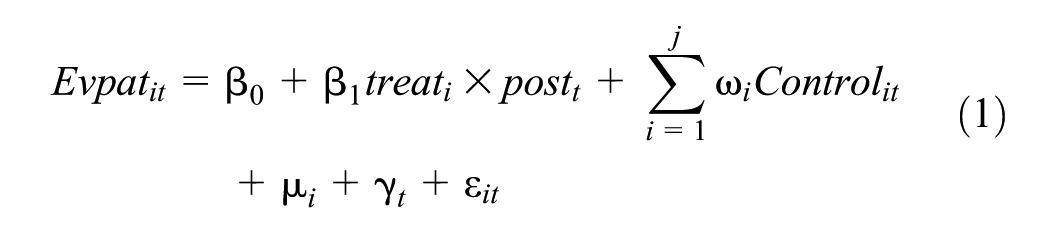
In Equation 1,
Variable Definitions
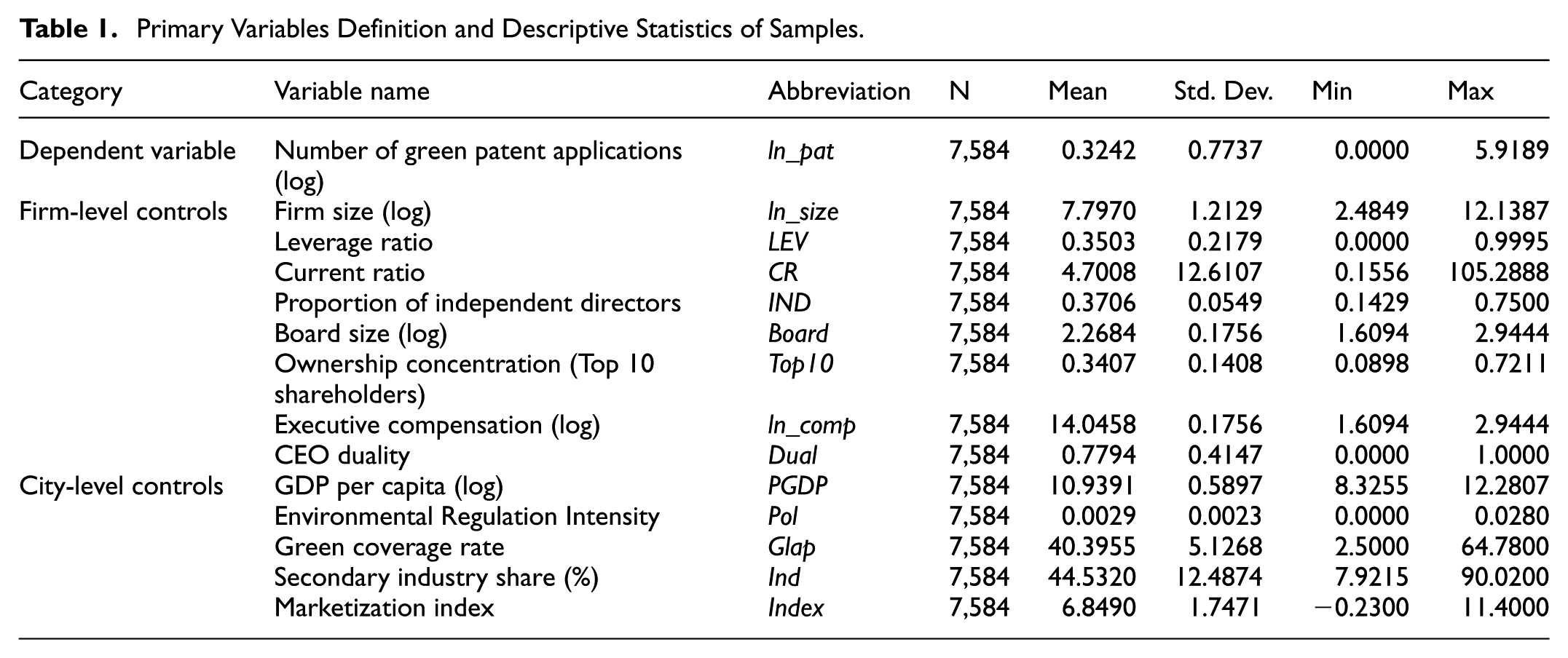
The dependent variable is the green innovation level of listed manufacturing firms. Existing literature often uses the number of green patent applications or authorizations as proxies for green innovation (Hall & Helmers, 2013). Compared to granted patents, applications better reflect real-time innovation activities because green patents often have a 1 to 2 year approval delay and are subject to administrative discretion (Harhoff & Reitzig, 2004; Sterlacchini, 2016). Therefore, we use the total number of green patent applications (including invention, utility models, and designs) to measure green innovation (variable: patent). The natural logarithm of (patent count + 1) is used to mitigate right skewness. In robustness checks, we also use lagged values of green patent grants. In heterogeneity analysis, we distinguish green invention patents (inpat) as a proxy for high-quality green innovation, given their higher originality and R&D intensity.
To reduce endogeneity from omitted variables, we include firm-level controls: firm size (ln_size), leverage (LEV), current ratio (CR), board independence (IND), board size (Board), ownership concentration (Top10), executive compensation (ln_comp), and CEO duality (Dual). City-level controls include: per capita GDP (PGDP), environmental regulation intensity (Pol), green coverage rate (Glap), industrial structure (Ind), and marketization index (Index).
Data Description
This study selects Chinese manufacturing listed companies from 2007 to 2019 as the initial sample. The following steps were then applied to refine the sample: first, firms registered in the Pearl River Delta and Yangtze River Delta regions were excluded, along with firms with substantial missing data; second, firm-level data were merged with prefecture-level data based on firm identifier, location, and year; third, to mitigate the influence of outliers and extreme values, ST and *ST firms were removed, and key continuous variables were winsorized at the 1st and 99th percentiles and logarithmically transformed where appropriate. These procedures resulted in a final sample of 889 firms with 7,584 firm-year observations.
This study focuses on listed manufacturing companies for the following reasons: first, manufacturing firms in China account for approximately 70% of total corporate pollution emissions, making them more directly constrained by the stringent environmental requirements and standards of the JPC policy. At the same time, transforming their extensive production patterns requires endogenous motivation driven by green technological innovation. The sample period 2007 to 2019 was selected for two main reasons: on one hand, to avoid the potential influence of changes in accounting standards for R&D expenses introduced in 2006 on model estimation, the starting year was set to 2007. On the other hand, to prevent the systematic impact of the COVID-19 pandemic—which began in 2019—on the macro-environment and corporate behavior from interfering with an accurate assessment of policy effects, the ending year was set to 2019.
The green patent data in this study are sourced from the China National Intellectual Property Administration (SIPO). Based on the patent IPC codes listed in the World Intellectual Property Organization (WIPO) International Patent Classification Green Inventory, we extracted green patent information for listed manufacturing companies in China. Firm-level control variables were primarily obtained from the China Stock Market & Accounting Research Database (CSMAR), with missing values supplemented using relevant corporate financial reports. Regional-level variables such as GDP per capita, proportion of secondary industry, investment in industrial pollution control as a percentage of industrial value-added, and urban green coverage rate were collected from the China City Statistical Yearbooks (2008–2020); partial missing data were supplemented by referring to the annual statistical bulletins on national economic and social development of the respective cities. After data collection, the following tools were used for data cleaning and analysis: Python and its related libraries were primarily employed for data processing and analysis, while Stata was used for data cleaning, preprocessing, and regression analysis.
The main variables and their descriptive statistics are presented in Table 1.
Primary Variables Definition and Descriptive Statistics of Samples.
Empirical Results and Analysis
Baseline Regression Results
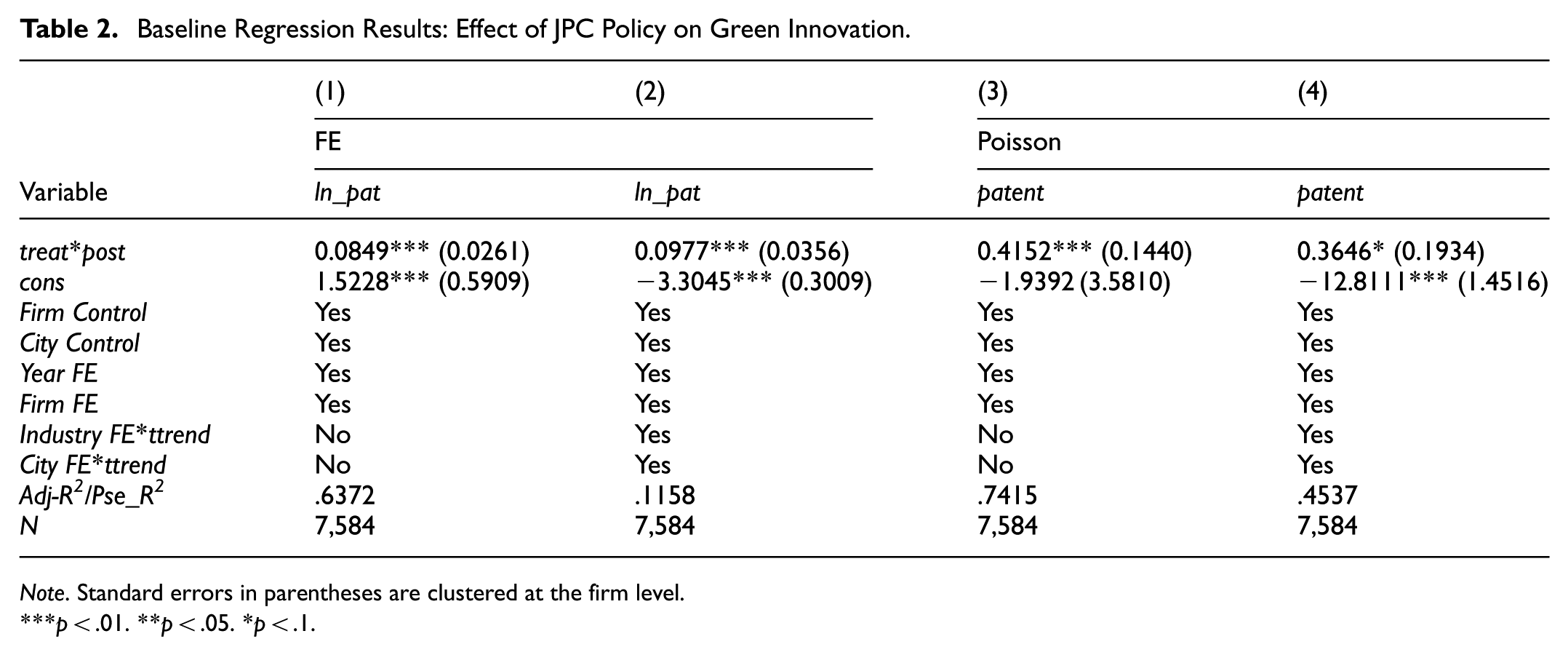
The regression results for the impact of the Joint Prevention and Control (JPC) policy on corporate green innovation are presented in Table 2. Column (1) includes firm- and city-level control variables, along with firm and year fixed effects. The results show that the interaction term
Baseline Regression Results: Effect of JPC Policy on Green Innovation.
Note. Standard errors in parentheses are clustered at the firm level.
p < .01. **p < .05. *p < .1.
To address potential biases caused by unobservable factors across cities and industries, following Lu et al. (2019) and M. Xu and Wu (2020), Column (2) additionally controls for interactions between industry/city fixed effects and time trends. The interaction term remains significantly positive at the 1% level, with a coefficient of 0.0956, implying that the JPC policy increased green patent applications by approximately 9.56% among listed manufacturing firms in the BTH region.
Given that patent counts are non-negative integers, we also use Poisson regression to re-estimate the model. Columns (3) and (4) present Poisson results, both with and without extended fixed effects interactions. In both cases, the interaction term has a significantly positive effect on green patent applications, further confirming the robustness of the baseline findings.
Parallel Trend Test and Dynamic Effect Analysis
The difference-in-differences (DID) method requires the treatment and control groups to satisfy the parallel trend assumption—that is, prior to the implementation of the JPC policy, the trend in green patent applications between treated and control firms should be consistent. Following the approach of Xu and Wu (2020), we adopt an event study method to conduct the parallel trend test. The model is specified as follows:
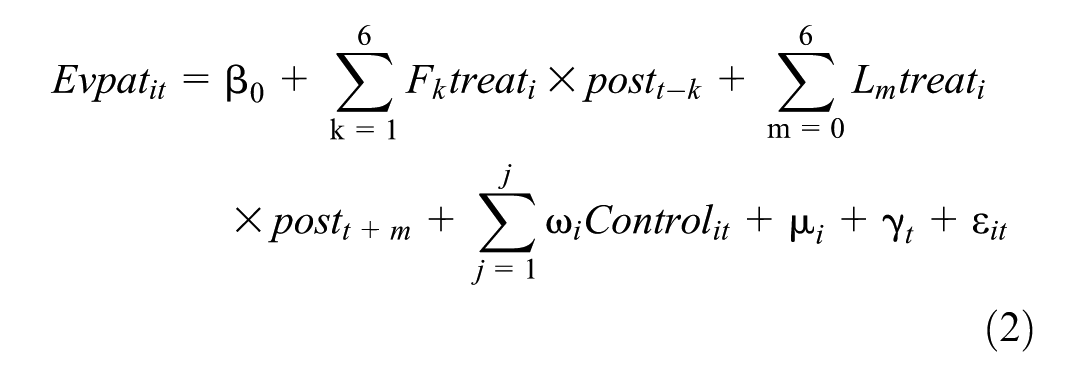
In Equation 2,
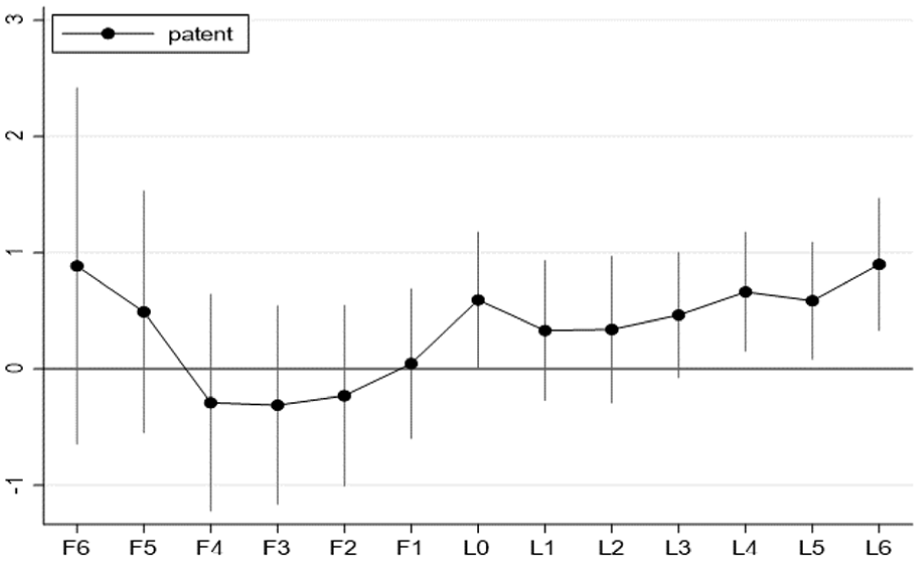
Parallel trend test.
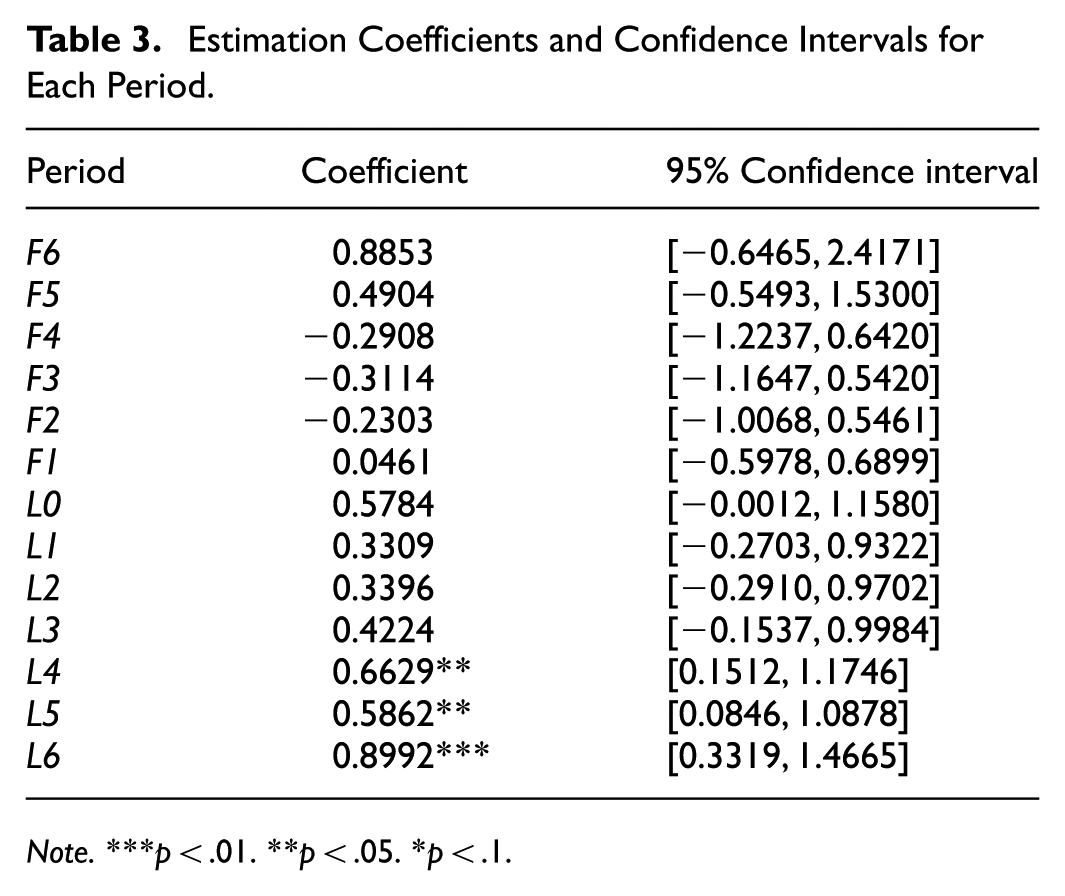
Estimation Coefficients and Confidence Intervals for Each Period.
Note.***p < .01. **p < .05. *p < .1.
In Figure 1, the ordinate is the estimation coefficient, and the abscissa F1, F2, F3…, L0, L1, L2, L3…represent the period 1, 2, 3…before the policy implementation and the current period (period 0), 1, 2, 3…of the policy implementation respectively. The points represent the magnitude of the estimated coefficient, and the ranges contained by the lines extending upward and downward from the points represent confidence intervals at the 95% level for the estimated coefficient. If 0 is included in this range, it means that there is no significant difference between the treatment group and the control group in
As observed in Figure 1, prior to the formal implementation of the JPC policy (L0 and F1-F6), the interaction terms have no significant effect on the number of green patent applications, indicating no pre-existing trend differences between the treatment and control groups—thus validating the parallel trend assumption.
Further examining the regression coefficients for each post-treatment period, we observe that in the year of policy implementation (L0) and the following 3 years (L1, L2, L3), the positive effects are statistically insignificant. However, in the fourth year after implementation (L4), the JPC policy begins to show a statistically significant positive effect on firms’ green innovation. This effect grows stronger over time, with the coefficient increasing from 0.5784 (L0) to 0.8992 (L6).
Further Discussion on Endogeneity Issues
Placebo Test
Although the previous regressions controlled for observable systemic differences across cities—such as environmental regulation intensity, institutional environment, and economic development, it is still worth considering whether unobservable factors may be affecting the results. To address this concern, we conduct a series of placebo tests based on counterfactual frameworks to validate the robustness of the baseline regression results. If firms exhibit similar improvements under a fictitious policy treatment, it would suggest that the observed effect may not be attributable to the actual JPC policy.
First, we use the Bootstrap method to randomly assign firms into treatment and control groups and repeat the regression specified in Equation 1 for 1,000 times. The regression results confirm that the t-statistics of the interaction term’s coefficients are approximately normally distributed, mostly concentrated around 0, and rarely around 2 or 3 (shown in Figure 2). This indicates that the probability of observing a significantly positive or negative effect from a randomly generated fake policy is very low. Therefore, the observed positive and significant effect of the JPC policy on green innovation in Table 2 is unlikely to be driven by unobservable factors.
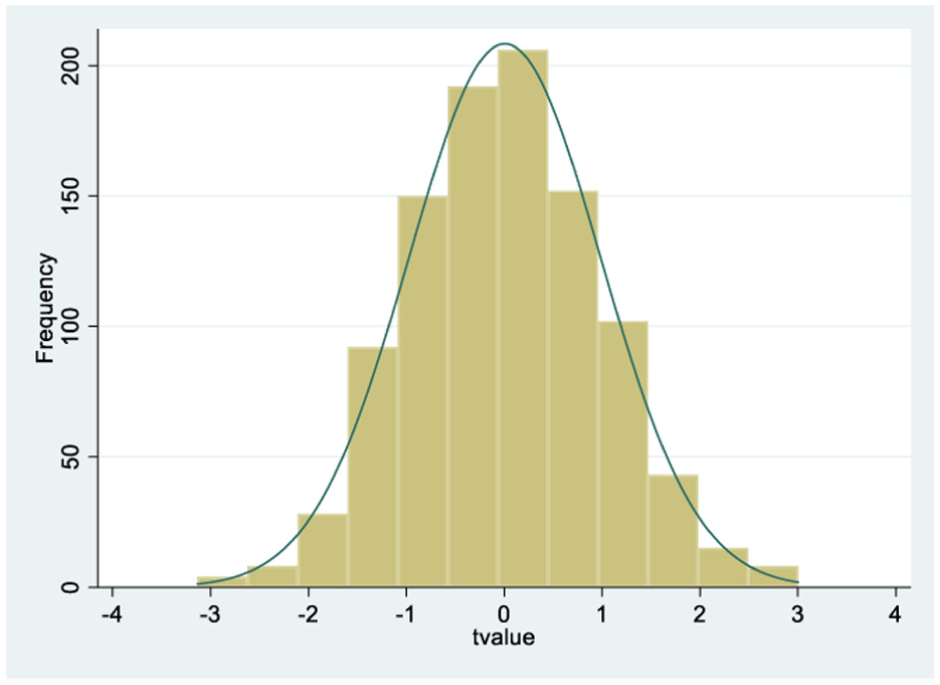
Placebo test results (randomization treatment group).
Second, to rule out potential interference from time trends or other unobservable factors, we further conduct a placebo test based on randomizing the policy timing. Specifically, we artificially shift the policy implementation date forward by 1 to 10 periods and re-estimate the model using each counterfactual timing. As shown in the Figure 3, the estimated coefficients for all artificial policy timings are close to zero and statistically insignificant, with their confidence intervals including zero. This indicates that no significant policy effect is observed before the actual implementation date, thereby confirming the absence of anticipatory effects or time-trend biases related to the JPC policy.
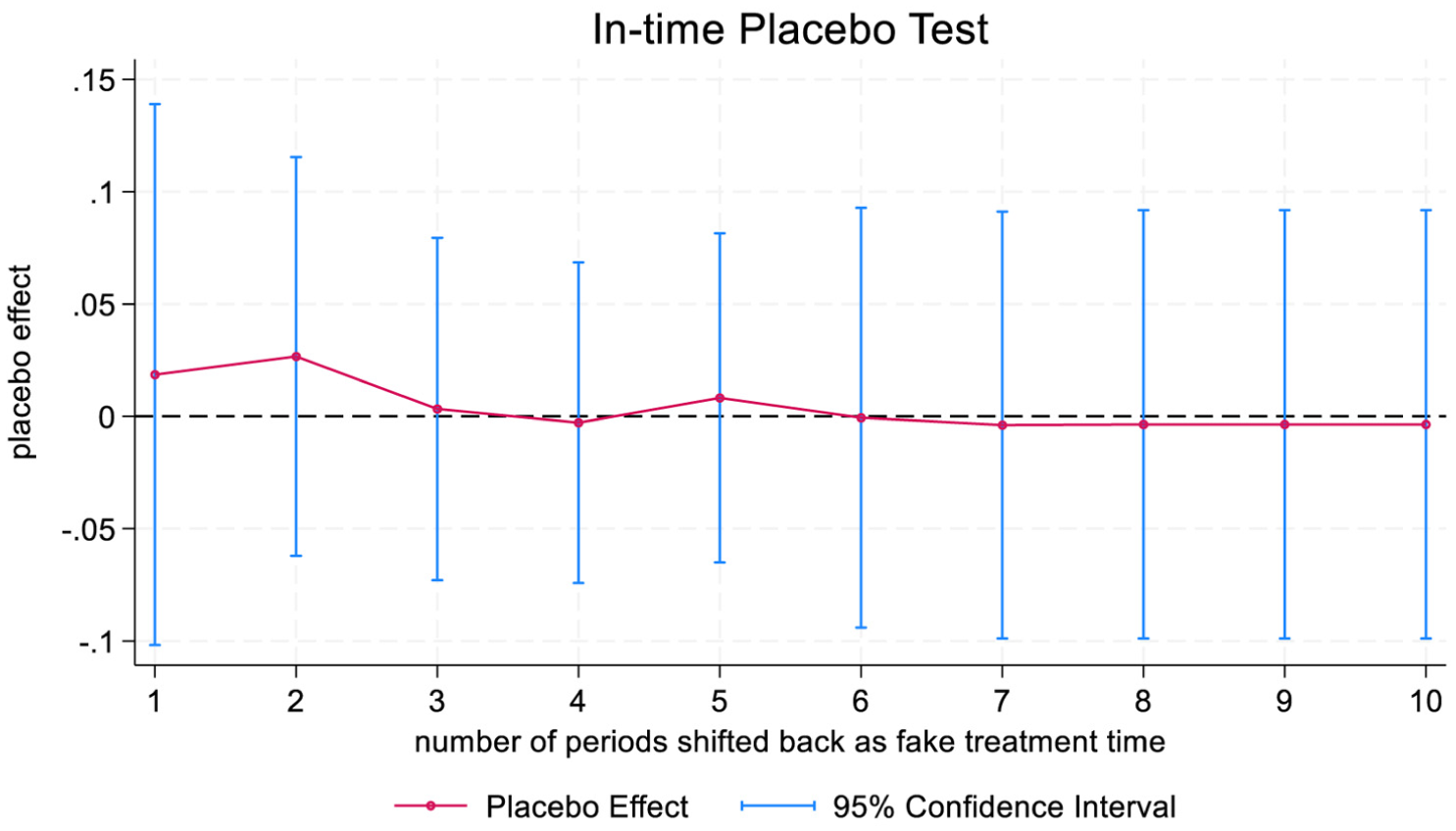
Placebo test results (randomization treatment time).
Finally, to further rule out potential interference from unobservable time-varying confounders, this study conducts a placebo test that simultaneously randomizes both the policy timing and the treatment group assignment. Specifically, we use a bootstrap approach to randomly assign hypothetical policy implementation times and fictitious treatment cities, thereby constructing a randomized experiment across both the temporal and city dimensions. If a significant increase in corporate green patent activity were still observed under such falsified policy conditions, it would suggest that the rise in green innovation might stem from other unobservable systematic factors rather than the actual policy. As shown in the Figure 4, in 500 randomization runs, the placebo coefficients for the effect of the JPC policy on corporate green innovation follow an approximately normal distribution centered near zero. Moreover, these randomized placebo coefficients are clearly distinguishable from the true estimated coefficient represented by the vertical line. This indicates that no spurious treatment effect exists and that the observed increase in corporate green innovation is indeed attributable to the implementation of the JPC policy, thereby confirming the high credibility of the baseline regression results.
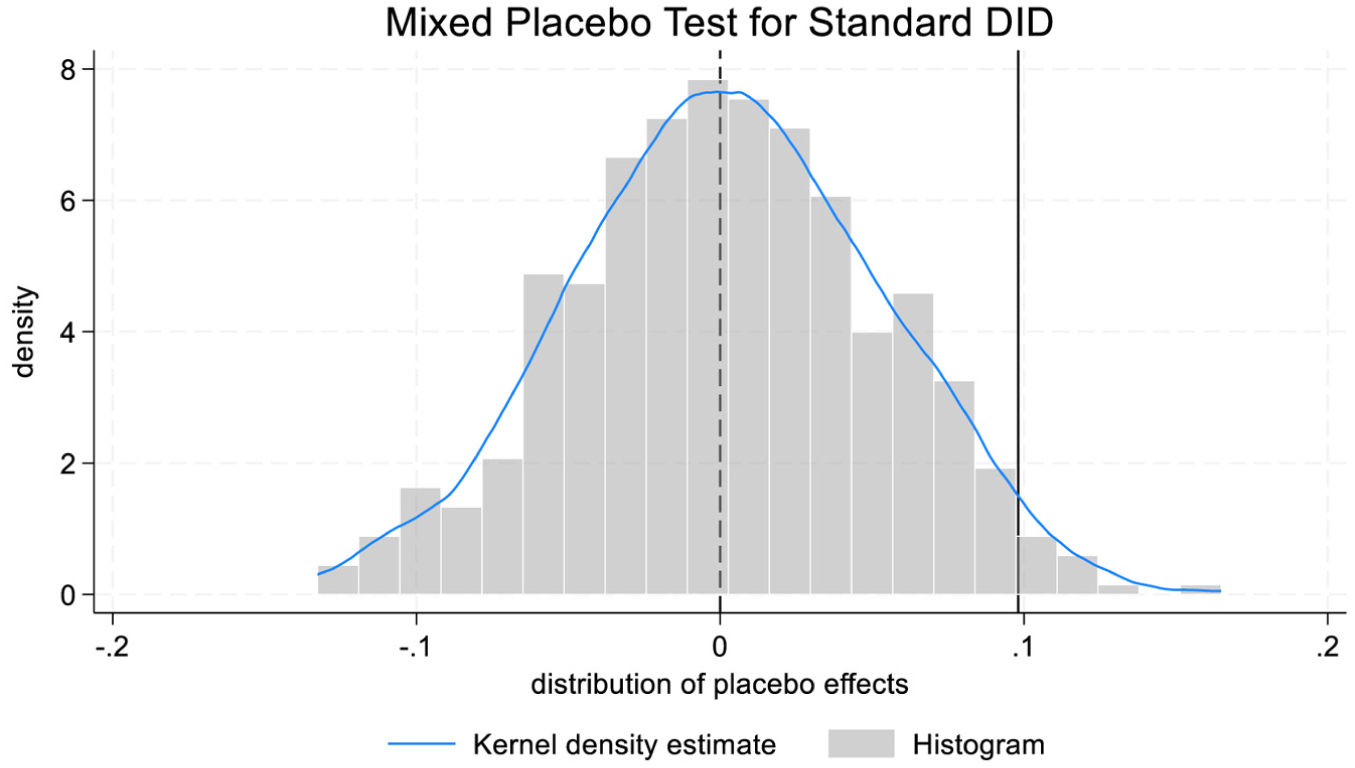
Placebo test results (both randomized treatment group and treatment time).
Policy Contamination Effects: The Supplementary Credit Incentives in the 2017 Work Plan
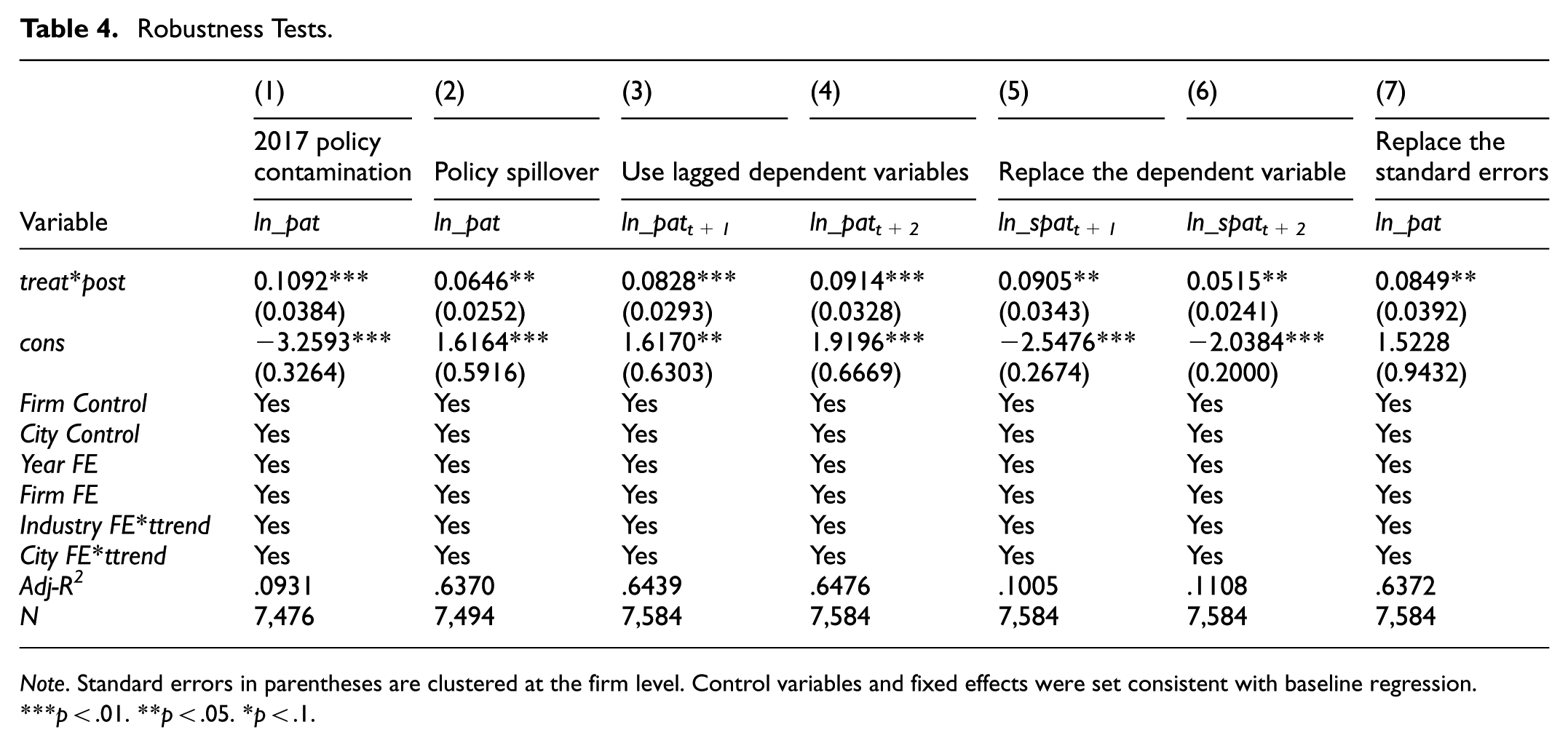
The 2017 Work Plan further strengthened financial support and incentive measures for firms under the framework established by the 2013 Implementation Rules. To rule out potential interference from the additional financial incentives introduced during the 2017 policy deepening phase, we added the interaction term “2017 Policy Dummy × Government Subsidies to Firms” (did2017*subsidies) to the model. The regression results are presented in Column (1) of Table 4. After controlling for this interaction term, the estimated coefficient of the 2013 JPC policy remains positive and statistically significant at the 5% level. This indicates that the promoting effect of the JPC policy on corporate green innovation remains robust even after accounting for potential additive effects from the 2017 policy.
Robustness Tests.
Note. Standard errors in parentheses are clustered at the firm level. Control variables and fixed effects were set consistent with baseline regression.
p < .01. **p < .05. *p < .1.
Policy Spillover Effects: Adjacent Areas in the YRD and PRD
To further verify the robustness of the baseline regression results, following common practice in the literature, we constructed the variable
Other Robustness Tests
We further verify the robustness of the baseline regression results from three perspectives: alternative measures of key variables, replacement of standard errors, and sample adjustments.
First, we test the model using lagged dependent variables. Since green patent R&D requires substantial time and investment, firms’ green innovation behaviors may respond to the JPC policy with a delay. We therefore regress the model with the dependent variable lagged by one and two periods. The regression results are shown in Columns (1) and (2) of Table 4. The interaction term
Second, we replace the dependent variable. While the number of green patents granted can also serve as a proxy for green innovation, it is more delayed than applications. Hence, we replace the dependent variable with the lagged values of green patent grants (L1ln_spat and L2ln_spat). The regression results are shown in Columns (3) and (4) of Table 4. The interaction term
Third, regarding the standard error specification, we replace the firm-level clustered robust standard errors with higher-dimensional “city-firm” clustered robust standard errors and conduct high-dimensional fixed effects regressions. Column (5) of Table 4 reports the results, showing that the interaction term
Further Analysis
Mechanism Tests
Vertical Supervision Effect
The JPC policy strengthens the vertical supervision of local governments by the central authorities, effectively curbing collusion between firms and local governments, reducing corporate rent-seeking, and thereby enhancing local enforcement capacity. This creates vertical institutional pressure that encourages corporate green innovation. Therefore, we examine the vertical supervision effect of the JPC policy from two perspectives: regional environmental enforcement intensity and corporate rent-seeking behavior.
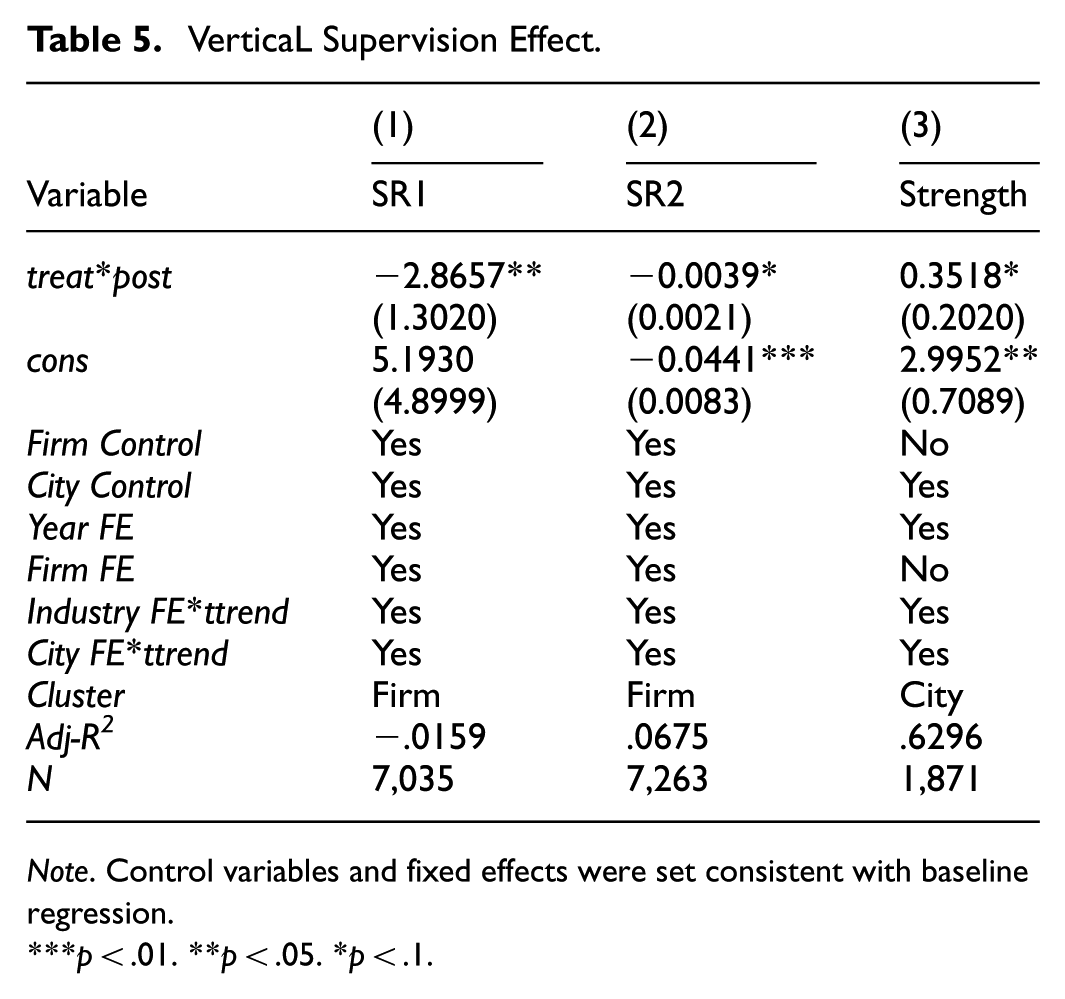
On one hand, following the existing literature, this study uses the ratio of business entertainment expenses to operating revenue (SR1) and excessive management expenses (SR2) as proxies for corporate rent-seeking (H. Cai et al., 2011; X. Du et al., 2010). Business entertainment expenses are widely employed by firms to conceal expenditures related to bribing government officials, maintaining government-business relationships, and cultivating clients and suppliers; thus, their ratio to operating revenue is used to examine the impact of policy implementation on strategic firm-government interactions. Additionally, excessive management expenses are calculated as the difference between actual and expected management expenses, reflecting outlays incurred by listed companies to seek government protection or establish political connections in the context of environmental regulation. As shown in columns 1 to 2 of Table 5, the interaction term
VerticaL Supervision Effect.
Note. Control variables and fixed effects were set consistent with baseline regression.
p < .01. **p < .05. *p < .1.
On the other hand, this study selects the number of environmental penalty cases at the prefecture-city level as a proxy for regional regulatory intensity (Strength). As shown in column 3 of Table 5, the interaction term
Regional Coordination Effect
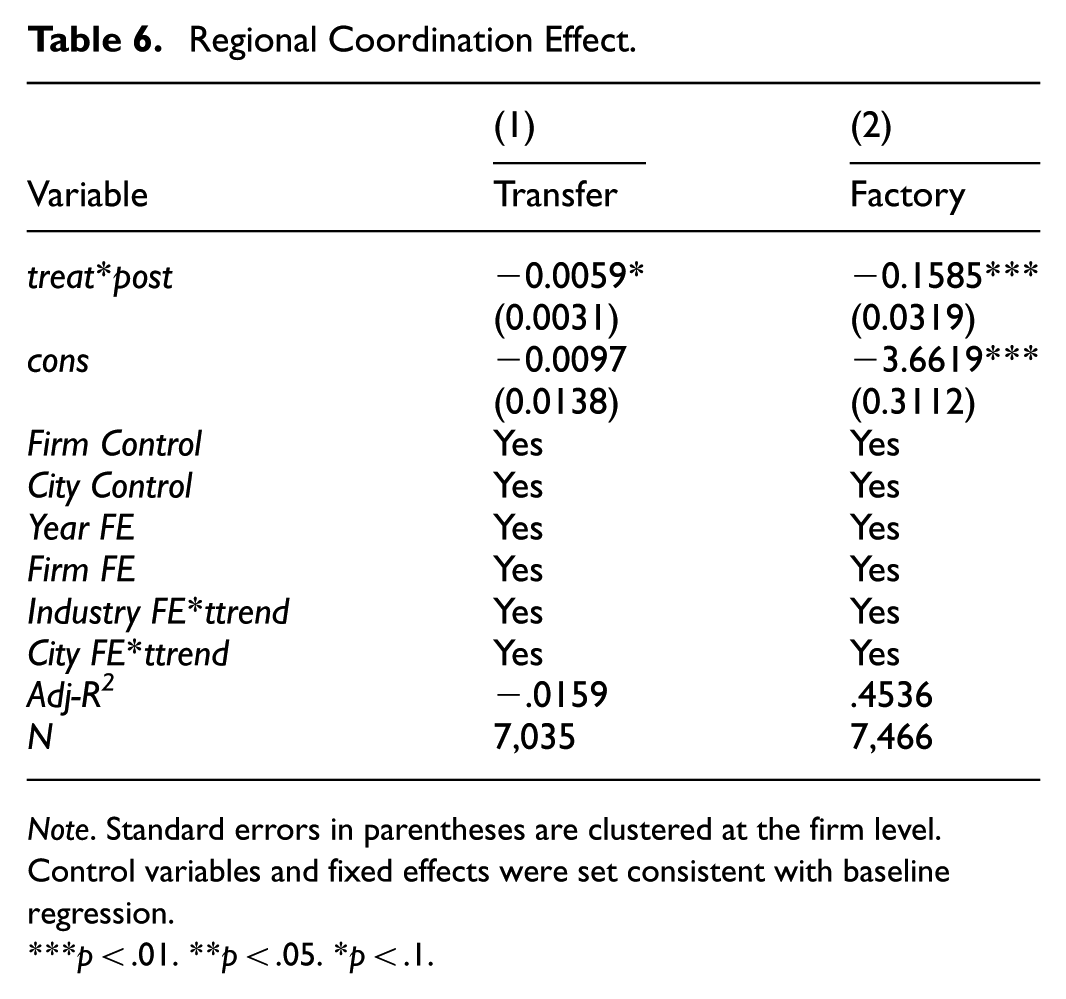
The JPC policy enhances inter-local collaborative governance capacity, thereby effectively curbing firms’ attempts to evade regulation by relocating to regions with weaker enforcement. Since firms mainly relocate through changes in registered address or by establishing new factories, we first follow existing literature (M. Li et al., 2021) and use whether a firm’s registered address changes as a proxy for pollution transfer (Transfer). Specifically, if the city of a firm’s registered address differs from that in the previous year, it is considered a relocation event and assigned a value of 1; otherwise, it is 0. As shown in column 1 of Table 6, the interaction term
Regional Coordination Effect.
Note. Standard errors in parentheses are clustered at the firm level. Control variables and fixed effects were set consistent with baseline regression.
p < .01. **p < .05. *p < .1.
Second, we further use the number of newly added factories by listed companies as an alternative proxy for pollution transfer (Factory). We systematically crawled and manually verified information on factory construction and operation disclosed in sections such as “Company Business Overview” and “Management Discussion and Analysis” in the annual financial reports of listed companies to obtain data on newly established factories. As shown in column 2 of Table 6, the interaction term
Heterogeneity Analysis
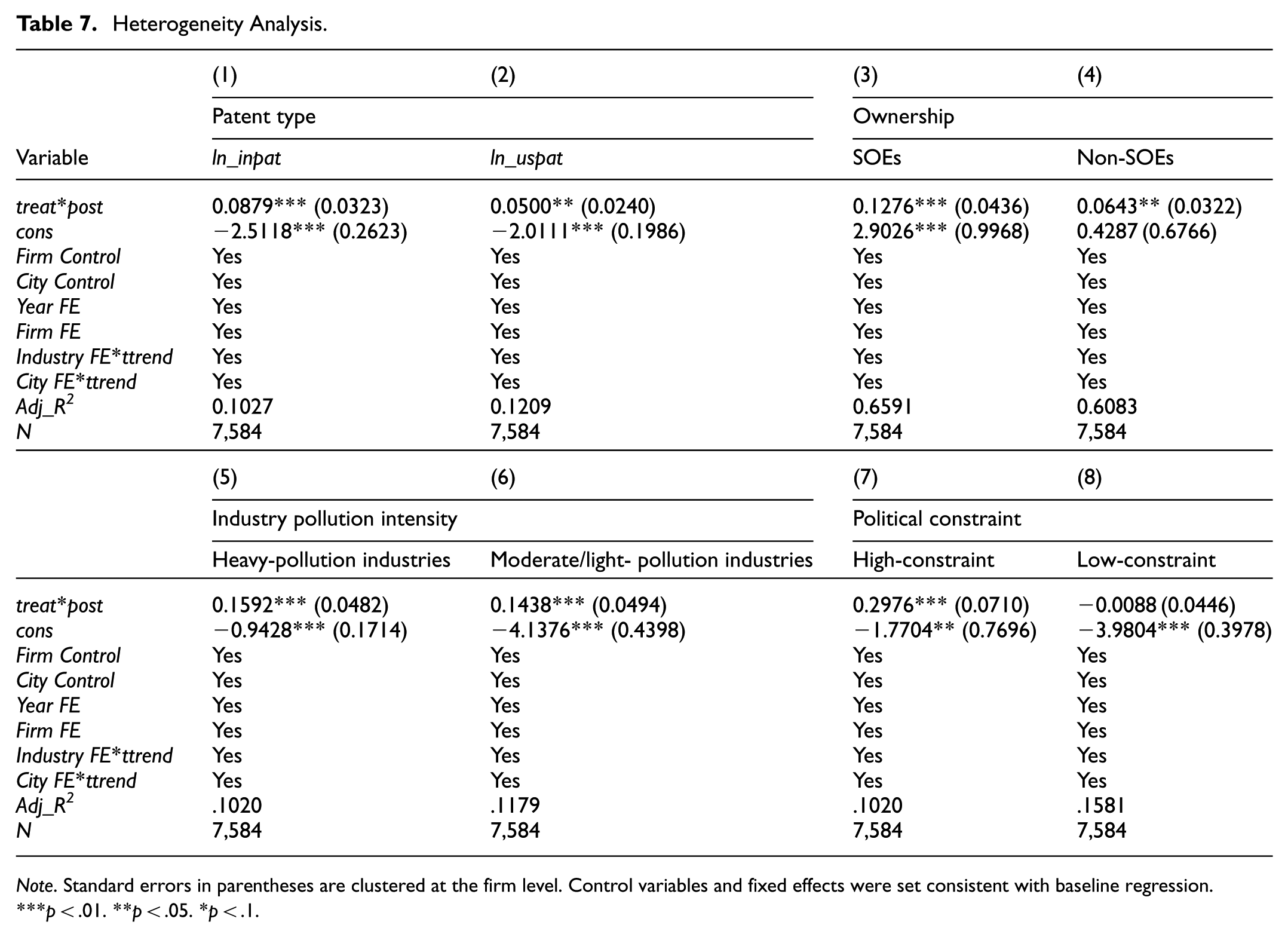
Although the above results confirm the average effect of the JPC policy on firms’ green innovation, differences in patent types, firm ownership, industry pollution intensity, and political constraint levels may lead to heterogeneous policy impacts. Therefore, this section conducts subgroup regressions to explore the heterogeneous effects of the JPC policy on corporate green innovation (see Table 7).
Heterogeneity Analysis.
Note. Standard errors in parentheses are clustered at the firm level. Control variables and fixed effects were set consistent with baseline regression.
p < .01. **p < .05. *p < .1.
Patent type: Under China’s patent system, green patents can be further classified into green invention patents and green utility model patents. Invention patents have higher technical content and stricter application standards, requiring greater R&D input and time investment. As such, they more accurately reflect a firm’s core green technological capabilities. More importantly, due to their higher technical value, invention patents contribute more to pollution reduction and green production efficiency. Hence, high-intensity regulations like the JPC policy may have a stronger incentive effect on green invention patents than on utility models. Regression results (Columns 1–2 of Table 7) show that the interaction term
Ownership: The JPC policy mandates stricter supervision of corporate pollution and clearer environmental responsibility. State-owned enterprises (SOEs) are more likely to face stringent environmental inspections (Su et al., 2019). They also enjoy closer ties with government, preferential access to financing, subsidies, and public services (F. Hu & Leung, 2012), which enhances their capacity and incentives for green innovation. By contrast, non-SOEs often face higher green innovation costs and may prioritize economic over environmental performance. Thus, we expect the JPC policy to have a stronger effect on SOEs. Regression results (Columns 3–4) show that the interaction term
Industry pollution intensity: Under the JPC policy, heavily polluting industries are more likely to become the focus of regulatory scrutiny. These industries face higher compliance costs due to limited opportunities for rent-seeking or relocation and thus are more motivated to improve green production efficiency via innovation (Ederington et al., 2005). In contrast, moderate- and low-pollution industries are less scrutinized and have weaker incentives for green innovation. Industries such as chemicals, non-ferrous metals, leather, petrochemicals, textiles, paper, non-metallic minerals, and steel are classified as heavily polluting, while others are grouped as moderate/light polluting. Regression results (Columns 5–6) show that the interaction term
Political constraint: Regions with strong political constraints (e.g., provincial capitals and municipalities) are more likely to receive attention from central environmental authorities and have better economic, technological, and social resources. Hence, firms in these areas face stronger vertical and horizontal regulatory effects and have lower costs for green innovation, making them more responsive to policy pressures. Following Jia and Nie (2017), we classify provincial capitals and municipalities as high-constraint regions, and all others as low-constraint. Regression results (Columns 7–8) show that the interaction term
Other Consequences of Policy Implementation
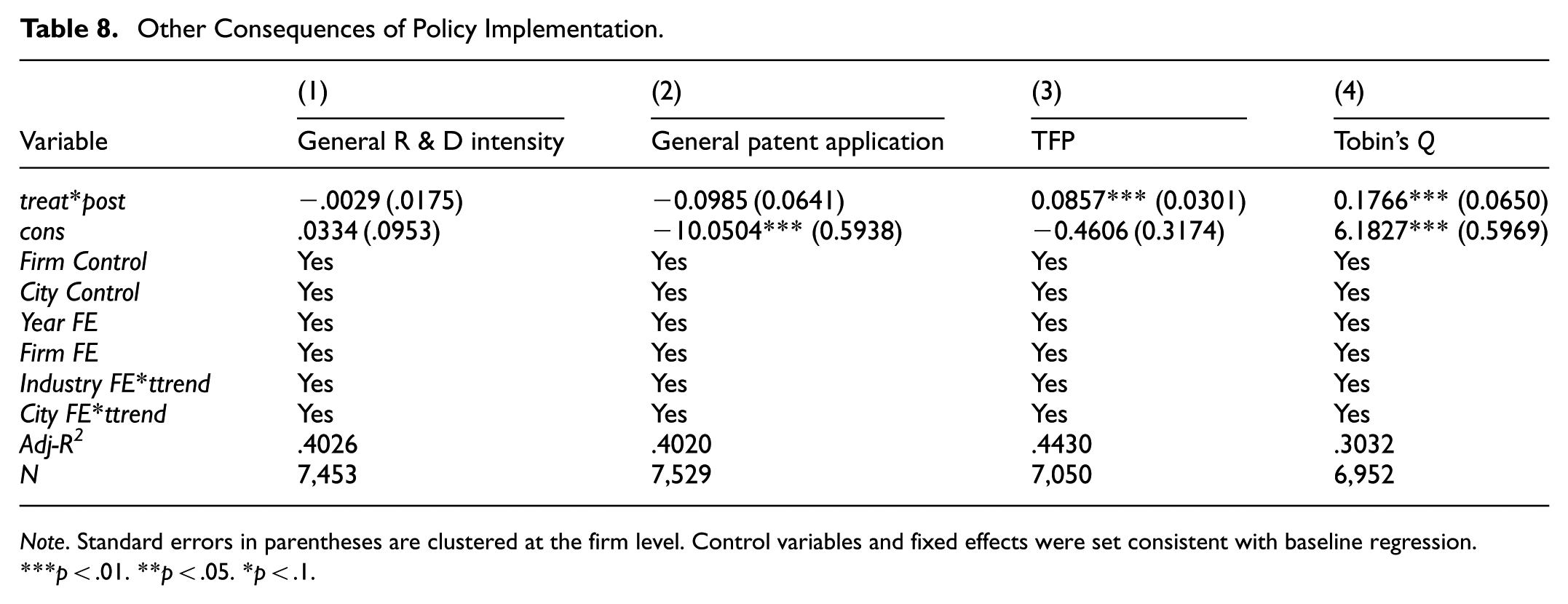
Under the dual regulatory mechanisms of the JPC policy—vertical supervision and horizontal coordination —firms may face excessive regulatory pressure, leading them to over-allocate resources toward compliance-driven green innovation at the expense of investments in general technological upgrading. This could weaken their competitiveness in other important areas and ultimately affect their long-term development and market position. To examine this possibility, we first test whether the implementation of the JPC policy crowds out firms’ general technological innovation. We then investigate whether the policy negatively affects firms’ production capacity and firm value. The regression results are presented in Table 8.
General Technological Innovation. We use the firm’s R&D intensity (R&D expenses over revenue) and the number of general patents to measure its R&D effort and output in general innovation. As shown in columns (1) and (2) of Table 8, the implementation of the JPC policy has no statistically significant effect on either of these two indicators. This suggests that the policy does not adversely affect firms’ investments in general innovation, and thus the “crowding-out of general innovation” does not hold in this context.
Total Factor Productivity (TFP) and Firm Value. We measure production capacity using firm-level TFP and firm value using Tobin’s Q. The results in columns (3) and (4) of Table 8 show that the implementation of the JPC policy has a statistically significant positive effect on both dimensions of firm competitiveness at the 1% level. This indicates that the policy not only fails to harm corporate competitiveness and market value but actually promotes overall technological upgrading, expands production, and enhances firms’ market value and competitiveness.
Other Consequences of Policy Implementation.
Note. Standard errors in parentheses are clustered at the firm level. Control variables and fixed effects were set consistent with baseline regression.
p < .01. **p < .05. *p < .1.
Discussion
The baseline regression results show that after the implementation of the JPC policy, the number of corporate green patents increased by 0.126 standard deviations. In the existing literature, incentive-based environmental regulations such as green bonds, green credit, and tax reductions have been found to raise the number of corporate green patents by 0.522 to 0.595 standard deviations (An et al., 2025; Guo et al., 2025; Q. Li et al., 2025; Lian et al., 2024; Z. Zhang et al., 2024). Compared to these findings, the effect size in this paper corresponds to about 21% to 24% of their reported innovation-inducing magnitude. In line with prior research, the implementation of the 2013 JPC policy reduced the annual PM2.5 concentration in 2017 by 28.3% relative to 2012 (Ge et al., 2023; S. Cai et al., 2017), thereby improving regional air quality. These findings collectively indicate that the JPC policy not only effectively mitigates regional air pollution but also enhances firms’ green technological capabilities and operational quality, providing strong empirical support for the policy’s effectiveness at the micro-economic level.
The dynamic effects analysis shows that the JPC policy’s promoting effect on green patent applications became statistically significant only in the fourth year after implementation. This can be explained as follows: first, when stringent environmental regulation imposes binding requirements on firms, they need time to reconfigure investment plans, adopt compliance technologies, and arrange cross-period R&D activities, making patent outputs difficult to observe in the short run. Second, green invention patents themselves often involve complex processes such as process substitution, equipment renewal, and governance technology innovation, which typically entail lengthy cycles of research, testing, and organizational adjustment.
Moreover, international experience broadly indicates that green innovation tends to respond to regulatory policies with a lag. For instance, the European Union Emission Trading System (EU ETS), launched in 2005, was found in most studies to stimulate low-carbon technologies only after 3 to 5 years. Similarly, the tightening of Title IV and the National Ambient Air Quality Standards (NAAQS) under the U.S. Clean Air Act (CAA) commonly exhibited a technology-response lag of around 3 years or more. These findings suggest that the 4-year lag observed in this study does not significantly deviate from patterns in other established governance systems, and instead corroborates the “structural-response” nature of green innovation to institutional pressure.
The mechanism tests indicate that the green innovation effect of the JPC policy operates primarily through two channels: reducing corporate rent-seeking (vertical supervision effect) and lowering the probability of cross-regional relocation (regional coordination effect). On the vertical dimension, the reduction in rent-seeking aligns with findings from related policies such as the Central Environmental Inspection, which has been shown to cut corporate travel and entertainment expenses by 32.9% (H. Zhang et al., 2023), reduce excessive management expenses by 6.2% (B. Lin & Xie, 2023), and raise green patent grants by about 22.85% (H. Zhang et al., 2023). On the horizontal dimension, the decrease in relocation is consistent with evidence that the JPC policy reduced border land acquisitions by polluting firms by 13.1%, increased industrial land for cleaner firms by 7.6% (K. Zhang & Li, 2025), and lowered PM2.5 concentrations in border areas by 3.5% (W. Lin et al., 2023). These results enrich the understanding of how environmental regulation reshapes firm behavior through governance restructuring, showing that comprehensive policies can spur green transformation via institutional reform rather than mere regulatory tightening, offering new empirical insights into the drivers of green innovation under collaborative governance models.
The heterogeneity analysis reveals that the green innovation effect of the JPC policy exhibits systematic variation across different firm types and contexts. First, the policy increases the number of green invention patents but has no significant effect on utility model patents. This suggests that comprehensive environmental regulation encourages firms to adopt genuine environmental actions to avoid accusations of “greenwashing,” thereby promoting high-quality, original green technological innovation. This finding aligns with existing studies showing that well-defined enforcement standards and predictable penalties can effectively penetrate innovation bubbles (Q. Li et al., 2025), increasing substantive green patent applications by 2.5% while leaving symbolic green innovation unchanged (Y. Li et al., 2023). Second, the JPC policy raises the total number of green patent applications among state-owned enterprises (SOEs), firms in regions with strong political constraints, and firms in heavily polluting industries, but has no significant effect on non-SOEs, firms in regions with weak political constraints, or firms in non-heavily polluting industries. These results indicate that firms’ responsiveness to the JPC policy varies depending on the strength of political constraints in their region, the pollution intensity of their industry, and their ownership type, which collectively shape their political connections or regulatory relationships with the central government.
Conclusion and Limitations
Conclusion and Policy Recommendations
Using the implementation of China’s “Joint Prevention and Control” (JPC) policy for air pollution in 2013 as a quasi-natural experiment, we construct a difference-in-differences (DID) model based on panel data of A-share listed manufacturing firms from 2008 to 2021 to examine the green innovation effects of the JPC policy. The results show that: The JPC policy significantly promotes green innovation in enterprises, and this finding holds under various robustness checks such as triple-difference models, placebo tests, instrumental variable regressions, and alternative variable specifications. The policy has a lagged effect on green innovation. Due to the long cycle and high investment required for green R&D, the incentive effect of environmental regulation takes several years to manifest, with green patent applications beginning to increase significantly in the fourth year after the policy’s implementation. The mechanism tests reveal that the JPC policy affects green innovation primarily through two paths: First, enhanced vertical supervision by the central government significantly suppresses corporate rent-seeking behavior, encouraging firms to shift focus toward long-term innovation; Second, horizontal coordination among local governments reduces the risk of regulatory arbitrage through relocation, which in turn enhances policy credibility by signaling regulatory consistency and commitment. Next, heterogeneity analyses further demonstrate that: The policy has a stronger effect on invention-type green patents than utility models. Moreover, state-owned enterprises, heavily polluting industries, and firms in politically constrained regions show greater green innovation responses to the policy. These findings indicate that high-intensity, coordinated environmental regulation—such as the JPC policy—can effectively overcome the regulatory dilemmas posed by local protectionism, thereby promoting green innovation in the manufacturing sector.
Based on the above conclusions, we propose the following policy recommendations: First, efforts should continue to improve the long-term implementation mechanism of the JPC policy. The central government should enhance cross-regional coordination through tools such as regional joint legislation, performance assessments, and special inspections, ensuring consistency and credibility in environmental regulation. This will incentivize firms to make long-term investments in green technology innovation. Second, differentiated regulatory and support mechanisms should be adopted based on firm characteristics. Special support policies for private enterprises and lightly polluting industries should be implemented, such as financial incentives and public service provision, to mitigate their higher innovation costs and limited external resources. Third, green technology innovation should be integrated into local governments’ political performance assessments, especially in regions with weak political constraints. By incorporating green innovation indicators into official evaluation systems, local governments will be encouraged to take an active role in promoting corporate green development, rather than engaging in low-efficiency regulatory enforcement or greenwashing.
Limitation
Although this study has conducted multiple robustness checks to verify the reliability of its conclusions, several limitations remain that warrant further discussion. First, measurement limitations regarding the dependent variable. The analysis adopts an output-oriented perspective by focusing on patent counts, while overlooking the input side of corporate green innovation. Future research could incorporate broader indicators such as survey data, green certification records, environmental technology project applications, and green R&D expenditures to obtain a more comprehensive measure of green innovation. Second, external validity of the sample. This study uses A-share listed manufacturing firms as the sample. Listed companies typically have larger scale, better access to financing, and more developed governance structures, and their green innovation behavior may differ significantly from that of small and medium-sized enterprises (SMEs) or service-sector firms. Future studies could expand the sample to include non-listed firms using databases such as the Industrial Enterprise Database, tax records, or credit registry data to further examine the generalizability of the results to a broader range of enterprises. Third, potential omitted-variable bias may still exist. Although the model includes multi-level control variables, industry/city time trends, and has undergone parallel-trend tests, placebo tests, and other robustness analyses, it cannot fully rule out interference from unobserved factors such as internal green culture or managerial environmental preferences. Future research could employ stricter identification strategies—for example, using instrumental variables (IV) to construct exogenous shocks—to further mitigate endogeneity concerns arising from omitted variables.
Footnotes
Author Note
I have not submitted my manuscript to a preprint server before submitting it to Sage Open. I would like to declare on behalf of my co-authors that the work described was original research that has not been published previously, and is not under consideration for publication elsewhere, in whole or in part. All the authors listed have approved the manuscript that is enclosed.

Funding
The authors received no financial support for the research, authorship, and/or publication of this article.
Declaration of Conflicting Interests
The authors declared no potential conflicts of interest with respect to the research, authorship, and/or publication of this article.
Data Availability Statement
Data sharing not applicable to this article as no datasets were generated or analyzed during the current study.