






Abstract
This study examines the relationships among school climate factors, psychological capital (PsyCap), and work engagement among high school teachers in southern Vietnam. Data were collected from 1,071 teachers and analyzed using covariance-based structural equation modeling (CB-SEM) to test a model in which PsyCap serves as a mediator between school climate factors and teachers’ work engagement. Results indicate that student engagement, teacher-home communication, and staff relations positively influence teachers’ PsyCap, which in turn significantly predicts teachers’ work engagement. The comparison of two models shows that the main model demonstrated adequate fit, supporting the full mediating role of PsyCap, while a competing model testing the direct effects of school climate on work engagement did not provide a superior fit. Teacher-student relations, teacher-student closeness, and student-student relationships had no significant impact on their PsyCap. This study highlights the importance of supportive partnerships and job resources in boosting teachers’ psychological resources and work commitment, aligning with the Job Resources-Demands model of work engagement, positive organizational behaviour, and conservation of resources. In the Vietnamese context, the findings challenge traditional Confucian hierarchies that often hinder open dialogue and collaboration, pointing instead toward a more collaborative model among stakeholders. By shifting away from bureaucratic emphases on compliance and administrative tasks toward genuine teamwork among teachers, staff, and leadership, schools can cultivate supportive environments that prioritize teacher engagement. The absence of significant influence from teacher-student relations, teacher-student closeness, and student-student relationships (apart from student engagement) may limit teachers’ opportunities to innovate classroom practices.
Keywords
Introduction
School climate, psychological capital, and work engagement are all critical constructs in educational psychology and school effectiveness research. School climate, defined as the quality of interactions among teachers, students, parents, and leadership, plays an important role in shaping not only student outcomes but also teachers’ psychological states and professional outcomes (Tubbs & Garner, 2008). Psychological capital (PsyCap) has emerged as a key construct linking organizational environments to employee attitudes and behaviours (Luthans et al., 2007). In educational settings, teachers’ work engagement is increasingly recognized as a vital factor influencing educational outcomes and teacher well-being. As such, fostering high levels of teacher engagement is essential for effective teaching and positive student outcomes (Schaufeli et al., 2002).
This study is grounded in several theoretical frameworks. Bronfenbrenner’s (1979) bio-ecological model that emphasizes how environments like school affect individual development, including beliefs and engagement. Positive organizational behaviour (POB) considers PsyCap as a core positive psychological source that enhances workplace performance (Luthans et al., 2007). Complementing these frameworks, the Job Demands-Resources (JD-R) theory proposes that job resources and personal resources foster work engagement by creating motivational pathways that lead to improved job performance (Bakker & Demerouti, 2007). These theoretical foundations have been empirically tested and supported in different work settings, including education.
These frameworks collectively explain how Vietnamese school environments, shaped by Confucian cultural values, provide job resources that build teachers’ PsyCap and, in turn, influence work engagement. The bio-ecological perspective situates teachers within a multilayered system: the microsystem reflected in daily classroom interactions; the mesosystem represented by connections between home and school; the exosystem, encompassing school policies and structures; and the macrosystem, shaped by cultural values and beliefs (Bronfenbrenner & Morris, 2006). In Vietnam, the macrosystem is culturally shaped by Confucian values, which are characterized by hierarchical relationships, collective harmony, and role obligations (Hallinger & Truong, 2016; Figure 1). Within this environment, POB views psychological capital as a malleable resource that organizations can systematically develop (Luthans & Youssef-Morgan, 2017). In collectivist cultures such as Vietnam, however, the expression of PsyCap may differ from that in individualist contexts. While self-efficacy in Western countries emphasizes individual agency and personal control, Vietnamese teachers may derive confidence more from collective accomplishment and role fulfillment within hierarchical structures (Phan & Locke, 2016). Similarly, the pathway component of hope may prioritize collaborative problem-solving with colleagues and harmony-preserving strategies rather than individual goal pursuit, reflecting collectivist values of interdependence and group harmony (Bernardo, 2010; Hofstede, 2001; Truong & Hallinger, 2017). Research in Confucian contexts suggests that collegial support and organizational embeddedness contribute more strongly to the development of psychological resources than individual autonomy (Rockstuhl et al., 2020).
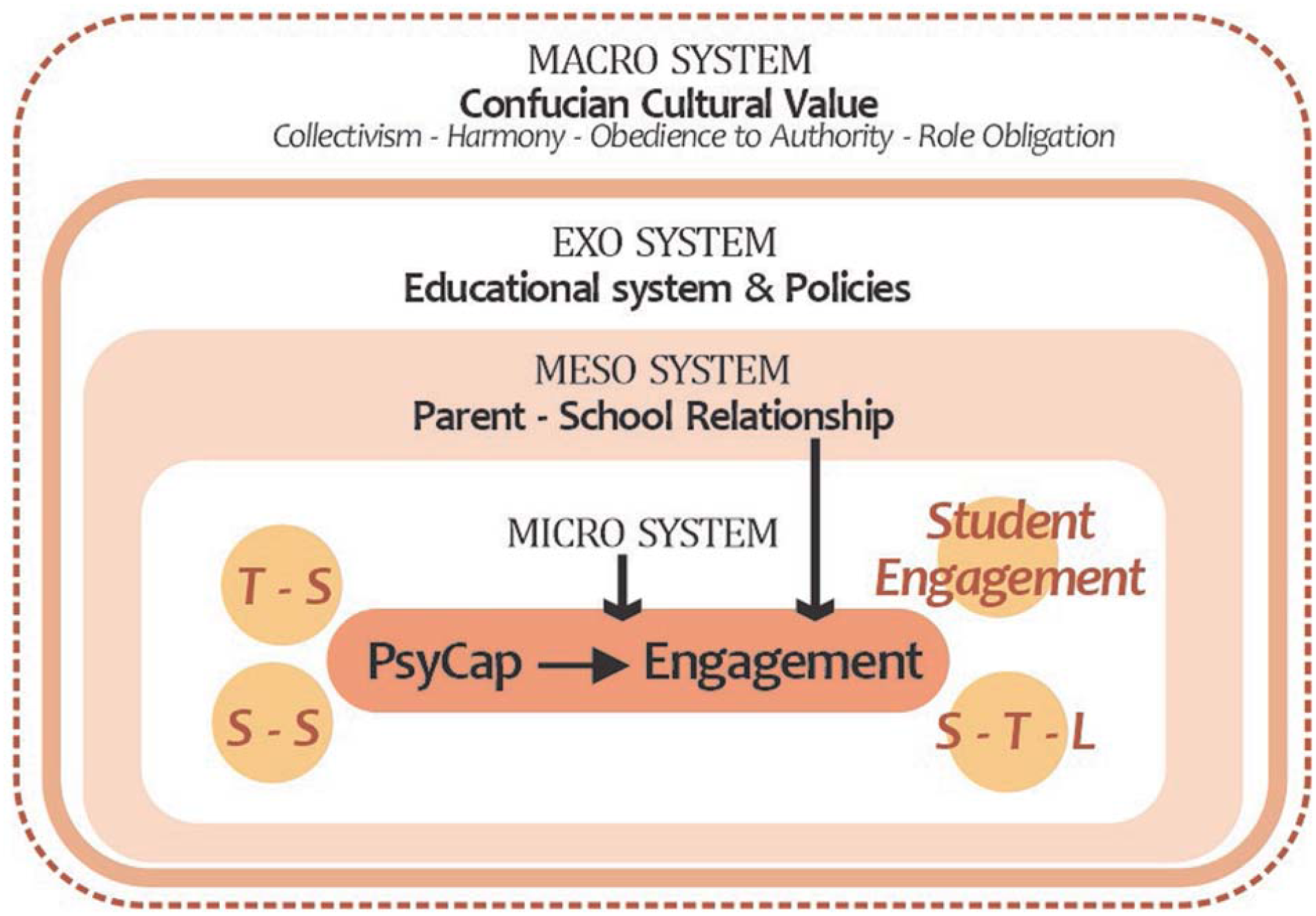
Bio-ecological framework linking school climate, psychological capital, and teacher engagement in Vietnamese high schools.
The JD-R model proposes that motivation is activated through positive job resources, leading to work engagement (Bakker & Demerouti, 2017). JD-R studies in the West emphasize autonomy, individual feedback, and personal development opportunities as key resources. However, in hierarchical Vietnamese schools, where teachers typically defer to administrative authority and value collective harmony over individual initiative (Truong et al., 2017), the motivational pathway may operate differently. Strong hierarchical expectations and obedience to authority may constrain JD-R’s motivational mechanism by limiting autonomy and open feedback (Lau et al., 2024).
Literature highlights the critical role of the environment in enhancing work and psychological outcomes. Studies have shown that various positive environmental dimensions contribute to teachers’ job satisfaction (Collie et al., 2012; Fang & Qi, 2023; Zhang et al., 2023), teaching enjoyment and innovative behaviour (Fang & Qi, 2023; Zhang et al., 2023), and well-being (Collie et al., 2012; Grayson & Alvarez, 2008; Y. Yang & Zhou, 2025). Other studies have also found correlations between different school climate dimensions and each component of PsyCap, such as self-efficacy (Alshuhumi et al., 2025), resilience (Grayson & Alvarez, 2008), hope, and optimism (Zare & Nastiezaie, 2019). Another line of research has examined the relationship between school climate and psychological capital (Tang, 2024), since Luthans and Youssef (2004) suggested PsyCap as a new composite construct. POB suggests that PsyCap acts as a mediator between the school environment and outcomes for students and teachers. For students, a review by H. T. Pham, Nguyen, et al. (2025) found that PsyCap has consistently demonstrated its mediating role in the relationship between school climate factors and academic outcomes. For teachers, PsyCap mediates the relationship between school climate and teachers’ innovative behavior (Zhou & Ismail, 2025), as well as teachers’ informal learning (X. Huang & Wang, 2021). However, the mediating role of PsyCap in the relationship between school climate and teachers’ work engagement remains underexplored. The study of these constructs is also underrepresented in non-Western countries such as Vietnam. This study examines how school climate dimensions influence work engagement through PsyCap among high school teachers in a province in Southern Vietnam.
The research addresses the following questions:
1. Which school climate factors (teacher-student interactions, student-student relationships, student involvement, teacher-home communication, staff relations) affect Vietnamese high school teachers’ PsyCap?
2. Does PsyCap mediate the relationship between school climate and work engagement?
Research Context
In Vietnamese education, Confucianism remains one of the most enduring cultural influences, shaping the way teaching, learning, and leadership are organized and enacted. At its core, Confucianism emphasizes hierarchy, respect for authority, moral exemplarity, and collective harmony (Ho, 2024; Truong et al., 2017). These cultural patterns define how job resources and demands manifest in schools, particularly amid ongoing educational reforms that make teaching an increasingly demanding profession. The Confucian emphasis on respect for educators has elevated teachers’ social status but also reinforced rigid hierarchies in classrooms. Formal address patterns and one-way authority structures, particularly in public schools, limit reciprocal, emotionally supportive relationships, which are critical to individual development (Bui & Nguyen, 2025). Thus, school environment dimensions in Vietnamese schools function within a culturally shaped context that determines which relationships generate psychological resources and which constrain them.
Vietnamese school leadership reflects a top-down power structure, where principals often hold dual roles as both administrative heads and political representatives of the Party Committee. Their legitimacy is not only from formal authority but also from “có uy” (prestige-based authority), a Confucian notion emphasizing moral virtue and personal integrity (Hallinger & Truong, 2016; Truong & Hallinger, 2017). In this model, principals are expected to act as moral exemplars rather than collaborative facilitators, while teachers are expected to comply with directives with little room for negotiation or dissent (Walker & Truong, 2017). In classrooms, teachers are regarded as moral guides and intellectual authorities, and questioning their authority can be interpreted as disrespectful (Dang, 2023; T. N. M. Pham, 2024). Behaviors such as openly questioning a teacher’s instruction or judgment, interrupting during lessons, or publicly expressing disagreement or criticism are often seen as violations of Confucian ideals of social harmony (hòa khí), respect for teachers and moral authority (tôn sư trọng đạo), and the preservation of face (giữ thể diện; Phan & Locke, 2016; Truong et al., 2017; Vu, 2025).
Although Confucian values provide stability and social cohesion, they also create tensions with contemporary reforms that emphasize teacher autonomy, student-centered learning, and participatory governance. As Hallinger and Truong (2016) describe, leadership is often enacted through the principle of “above must be above, and below must be below,” which reinforces hierarchy and order but can suppress open dialogue and innovation.
Vietnam’s 2018 general education reform (Circular No. 32/2018/TT-BGDT) sought to modernize K–12 education by granting more curricular autonomy to teachers and schools (National Assembly, 2014; K. T. Pham, Ha, et al., 2025). However, this increased autonomy has also produced heavier administrative demands. Teachers face heavier workloads and pressure from documentation, exam preparation, professional reporting, and student behavior (T. H. Pham et al., 2021; Trang, 2020), often leading to chronic stress and burnout (Dung et al., 2024). Moreover, the shift toward competency-based teaching demands substantial pedagogical adaptation, yet training and support remain limited (Ho, 2024; H. T. D. Nguyen, 2024; T. A. Nguyen et al., 2023; Yen & Thao, 2024).
Within this system, teachers must navigate the tension between hierarchical cultural expectations and the demands of modern educational reform. Vietnam scores high on power distance and collectivism, suggesting strong vertical relationships that limit autonomy but encourage interdependence (Hofstede et al., 2010). Collectivism may enhance PsyCap’s mediating role through supportive, cooperative relationships (Liu & Hallinger, 2026; Qu, 2024). At the same time, rigid hierarchies and exam-oriented accountability can dampen PsyCap components such as resilience and optimism by constraining teacher voice and innovation (Y.-S. Huang & Asghar, 2018; Lau et al., 2024).
Conceptual Frameworks
School Climate
School climate is broadly defined as the quality and character of school life, shaped by affective and cognitive perceptions of social interactions, interpersonal relationships, organizational structures, and shared values and beliefs within a school (Cohen et al., 2009; Rudasill et al., 2018; Thapa et al., 2013; M.T. Wang & Degol, 2016). It reflects the culture, norms, and environment shaped by formal and informal school structures, participant personalities, and management. Thus, school climate includes multiple aspects of school life embedded in a school’s physical and organizational structures. It shapes the context in which social and academic relationships among students, educators, parents, and the wider community take place. These relationships are guided by shared norms, values, and expectations. Together, they support the development of students’ character, skills, and knowledge, ultimately contributing to the formation of self-reliant, dedicated, competent, and responsible citizens.
Whether definitions are broad or narrow, school climate is also approached by researchers as a multidirectional concept, with common dimensions including safety, relationships, academic climate, institutional environment, and community (Ascorra et al., 2019; Lewno-Dumdie et al., 2020; M. T. Wang & Degol, 2016). Safety encompasses physical safety, emotional safety, and discipline and order. Academic climate focuses on the quality of education, including leadership, instruction, and professional development. Community emphasizes relationships among school members and stakeholders, covering partnerships, quality of relationships, attachment, and respect for diversity. The institutional environment shapes the overall school experience through the physical environment, structural organization, and available resources. Together, these dimensions create a holistic framework for understanding the impact of school climate on stakeholders’ experiences.
In this study, school climate includes six dimensions: teacher–home communication, teacher–student relations, teacher–student closeness, student–student relations, staff relations (including teacher–staff–leadership), and student engagement, adapted from the Delaware School Climate Survey for Teachers (Bear et al., 2021). Teacher–student relations measure the degree of care, fairness, respect, and emotional support teachers provide to students. Warm, supportive teacher–student interactions are linked to teachers’ psychological outcomes, such as well-being (Spilt et al., 2011), optimism and resilience (Frenzel et al., 2009), and teachers’ PsyCap through emotional processes(Erden, 2025). Teacher–student closeness or connectedness is commonly defined as students’ perception that adults in the school care about both their academic learning and them as individuals (Wingspread Declaration on School Connections, 2004). This reflects trust-based attachment and affective connection between teachers and students (A. Peng et al., 2024; Vatou et al., 2025). Student–student relations assess the quality of peer relationships within the school, encompassing harmony, mutual care and respect, friendliness, willingness to collaborate and help one another, tolerance of individual differences, active participation in shared activities, and a collective sense of safety and belonging. For teachers, research supports the positive impacts of student–student interactions on teachers’ PsyCap components. The effects are often indirect, through reduced classroom disruptions, improved classroom management, and enhanced overall well-being (Aldridge et al., 1999; Thapa et al., 2013). Teacher–home communication measures the frequency, quality, and tone of teacher–parent collaboration. Effective teacher–parent collaboration acts as a relational job resource, reinforcing teachers’ professional identity, reducing isolation, and buffering demands, leading to better psychological outcomes for teachers (H. Yang et al., 2025). Schoolwide student engagement, based on Fredricks et al. (2004), assesses students’ cognitive, behavioral, and emotional engagement with learning and school activities. Highly engaged students demonstrate stronger academic performance, social-emotional adjustment, and fewer behavioral issues (Brand et al., 2008; Lei et al., 2018; C. Yang et al., 2018). Teacher–staff-leadership relations assess collegiality, teamwork, and mutual support among teachers, administrators, and staff. Positive professional relations contribute to a constructive school climate and then enhance teacher well-being (Cohen et al., 2009; Thapa et al., 2013).
School climate influences stakeholders’ experiences by fostering or constraining their motivation and engagement (Tubbs & Garner, 2008). A positive school climate significantly enhances teacher job satisfaction across diverse educational contexts, including elementary, secondary, and vocational settings (Collie et al., 2012; Fang & Qi, 2023; Zhang et al., 2023). Moreover, positive school climates mitigate teacher stress and burnout, thereby promoting teacher well-being (Collie et al., 2012; Grayson & Alvarez, 2008; Y. Yang & Zhou, 2025). Environments with strong parent-community relations and collaborative administrative support reduce emotional exhaustion and depersonalization, enabling teachers to maintain enthusiasm and resilience in demanding school contexts (Grayson & Alvarez, 2008).
School climate also exerts both direct and indirect effects on teacher outcomes through psychological mechanisms such as self-efficacy. Studies indicate that a positive school climate directly enhances teachers’ self-efficacy, which in turn positively influences teaching enjoyment, job satisfaction, and innovative behaviour (Fang & Qi, 2023; Zhang et al., 2023). For example, in Omani primary schools, self-efficacy mediated the relationship between school climate and innovative teaching practices, suggesting that supportive environments empower teachers to experiment with creative instructional methods (Alshuhumi et al., 2025). These findings align with socioecological perspectives, which emphasize the interplay between school environments and individual psychological resources.
In the Vietnamese context, where cultural factors like collectivism shape school dynamics, a positive school climate likely amplifies teachers’ psychological capital, further driving engagement and professional effectiveness (Han et al., 2023). School climate dimensions such as teacher–home communication and staff relations are particularly relevant due to cultural emphases on collectivism. These dimensions shape teachers’ perceptions of their work environment, which may influence their PsyCap and, subsequently, their work engagement.
Psychological Capital
PsyCap is a higher–order construct comprising four components: hope, self–efficacy, resilience, and optimism (Luthans et al., 2007, 2015). These components, grounded in positive psychology, represent state-like psychological resources that can be developed and leveraged to enhance individual and organizational outcomes. Hope refers to the ability to set realistic goals, develop pathways to achieve them, and maintain the motivation to pursue those goals (Luthans & Youssef, 2004). It involves agency (willpower) and pathways (waypower) to navigate challenges (Kun & Gadanecz, 2022). Self-efficacy indicates an individual’s confidence in their ability to perform specific tasks successfully. It drives teachers’ belief in their capacity to manage classroom demands and achieve professional success. Resilience refers to the capacity to bounce back from adversity, adapt to stress, and maintain performance under pressure. Optimism refers to a positive outlook that attributes successes to internal, stable factors and views setbacks as temporary and surmountable. Optimism fosters a proactive attitude toward work challenges and enhances well-being (Y. Li, 2018).
PsyCap is widely considered an antecedent to positive organizational outcomes, including job satisfaction and engagement (Wu & Nguyen, 2019). In educational contexts, PsyCap acts as a dynamic, developable asset that enhances teachers’ well-being, engagement, and performance while reducing stress, burnout, and turnover intention (Freire et al., 2020). Research increasingly confirms PsyCap as a mediator linking supportive environments to motivation and performance (Luthans et al., 2008; Rego et al., 2016; Shah et al., 2023). However, most of these studies have been conducted in workplace settings other than educational ones (Cheng et al., 2018; J.-C. Peng & Chen, 2023).
Within education, existing studies have extensively focused on the impacts of PsyCap on students’ academic outcomes (R. Li et al., 2023) or its mediating effects on students’ academic burnout (Tang, 2024; Yu et al., 2023). Studies on teachers’ PsyCap have received increasing attention, with research examining PsyCap’s protective role against burnout (Freire et al., 2020) and its support for well-being (Bertieaux et al., 2024) and informal professional learning (X. Huang & Wang, 2021). Nevertheless, few studies have further explored PsyCap’s association with various school climate dimensions and teachers’ work engagement, while this line of scholarship is common in other organizational settings(Cheng et al., 2018; J.-C. Peng & Chen, 2023).
Moreover, cross-cultural research remains limited. Evidence from East Asian contexts indicates that Confucian values may change how individuals interpret and use environmental resources (Johnson et al., 2024; Su & Lee, 2023; Y. Yang et al., 2024). In contrast to Western settings that emphasize autonomy and individual initiative, the deference to authority characteristic of Confucian cultures may reduce efficacy and optimism, thereby weakening PsyCap’s motivational leverage. These contextual variations highlight the need for cross-cultural studies to gain deeper insights into the mechanisms shaping these relationships.
Work Engagement
Work engagement, initially conceptualized by Kahn (1990), involves physical, cognitive, and emotional investment in work roles, driven by meaning, psychological safety, and resource availability. Saks (2019) distinguished between job and organizational engagement, while Maslach and Leiter (1997) viewed engagement as the opposite of burnout. However, Schaufeli et al. (2002) argued that engagement is a distinct construct characterized by vigour, dedication, and absorption. Cole et al. (2012) challenged this, finding high correlations between engagement and burnout and questioning their distinctiveness. Despite debates over its definition, measurement, and overlap with other job attitudes, Schaufeli et al.’s perspective remains dominant, with 94 studies on work engagement reviewed between 2011 and 2018 (Mazzetti et al., 2023).
The JD-R model underpins this view, positing that job and personal resources foster engagement and then enhance well-being and performance (Bakker et al., 2014; Mazzetti et al., 2023), while high demands and low resources lead to burnout and poor outcomes (Bakker et al., 2014). Supported by extensive research, the model highlights four mechanisms underlying engagement: the broaden-and-build process, better health, job crafting, and emotional contagion, which collectively create a positive spiral of engagement over time (Bakker, 2011; Bakker & Demerouti, 2007).
Organizational factors, including a positive school climate, leadership practices (Shao et al., 2025; Zhang & Fathi, 2025), social support (Y. Wang et al., 2025; Yolanda & Said, 2022), emotional intelligence, organizational trust, and teaching enjoyment (L. Wang, 2022), significantly enhance work engagement. In turn, engaged teachers demonstrate greater commitment, effectiveness, and performance, benefiting both themselves and students (L. Wang, 2022; Yolanda & Said, 2022).
Mediating Role of Psychological Capital
The reviewed literature shows that research on teachers’ PsyCap is substantial, but its role as a mediator between school environment and work engagement remains underexplored. Research highlights PsyCap’s mediating role in various contexts. Han et al. (2023) investigated the influence of school atmosphere on Chinese teachers’ job satisfaction, finding that PsyCap and professional identity serially mediated this relationship. A review by Vilarino del Castillo and Lopez-Zafra (2022) found that supportive work environments foster PsyCap, which then mediates relationships with outcomes, including job satisfaction, commitment, and performance. While their review highlights PsyCap’s mediating role in general organizational contexts, it does not specifically focus on work engagement in educational settings or explicitly link school climate dimensions to engagement via PsyCap. Tang (2024) also demonstrated PsyCap’s mediation between school climate and Chinese students’ burnout. However, these studies focus on students rather than teachers, and on burnout rather than teachers’ work engagement, limiting direct applicability.
This gap indicates a need for targeted studies to clarify PsyCap’s mediating role in the school climate–work engagement relationship, particularly in non-Western contexts like Vietnam. The Conservation of Resources (COR) theory suggests that individuals tend to seek, protect, and accumulate resources, with favorable conditions fostering a spiral of resource gain (Hobfoll, 1989). In high-pressure occupations, such as finance, health care, and nursing, PsyCap has repeatedly been shown to buffer stressors, mediate links to engagement, burnout, and well-being (X. Li et al., 2015; Y. Ren et al., 2024; S. Yang et al., 2020; Ye et al., 2025), and channels job resources into motivation. Applied to education, a positive school environment provides contextual resources that build teachers’ PsyCap (Qu, 2024), enabling them to invest energy, persist in goals, and recover from setbacks, thereby enhancing work engagement (Y. Ren et al., 2024).
In Vietnam’s contemporary high school context, characterized by heavy workloads, frequent reforms, and high accountability, teachers face demands akin to those in which PsyCap’s mediating effects are strongest (Ma, 2023). COR, therefore, predicts PsyCap as a mechanism through which the influence of school climate is translated into greater teacher work engagement.
The Conceptual Framework of This Study
COR theory provides a robust framework for justifying PsyCap as a mediator between school climate and work engagement, linking the JD-R model’s classification of work resources with POB’s explanation of PsyCap pathways. As argued in the previous section, COR suggests that a positive school climate provides valuable contextual resources that foster the accumulation of teachers’ PsyCap, which in turn serves as a mediator by enabling a resource gain spiral that enhances motivation, persistence, and energy investment, ultimately promoting greater work engagement (Hobfoll, 1989; Qu, 2024; Y. Ren et al., 2024). Based on the literature, we propose:
Two models were developed to test the mediating role of PsyCap between school climate and work engagement (Figures 2 and 3).

Main model—Model A.
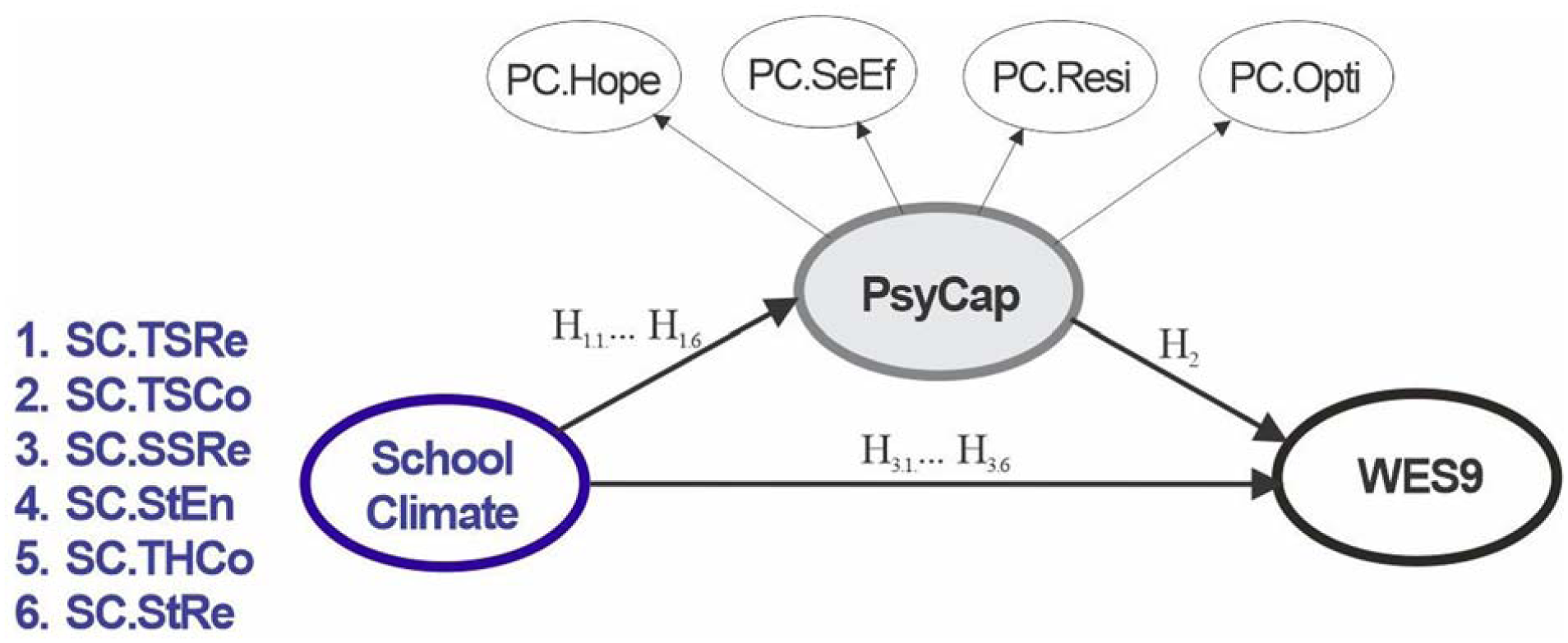
Competing model—Model B.
Figure 2 presents the main model (Model A) of the study, proposing full mediation of PsyCap between school climate and teacher work engagement. School climate is measured as a latent construct with six factors (TSRe = Teacher–Student Relations; TSCo = Teacher-Student Closeness; SSRe = Student–Student Relations; StEn = Student Engagement; THCo = Teacher-Home Communication; StRe = Staff Relations). School climate predicts PsyCap (H1.1–H1.5), a higher-order construct of hope (PC.Hope), self-efficacy (PC.SeEf), resilience (PC.Resi), and optimism (PC.Opti). PsyCap then influences work engagement (WES9; H2). No direct school climate–engagement path exists. Figure 3 shows the competing model (Model B), testing mediation by adding direct paths from school climate factors to work engagement (WES9; H3.1–H3.5), alongside the indirect paths via PsyCap.
Methods
Sample
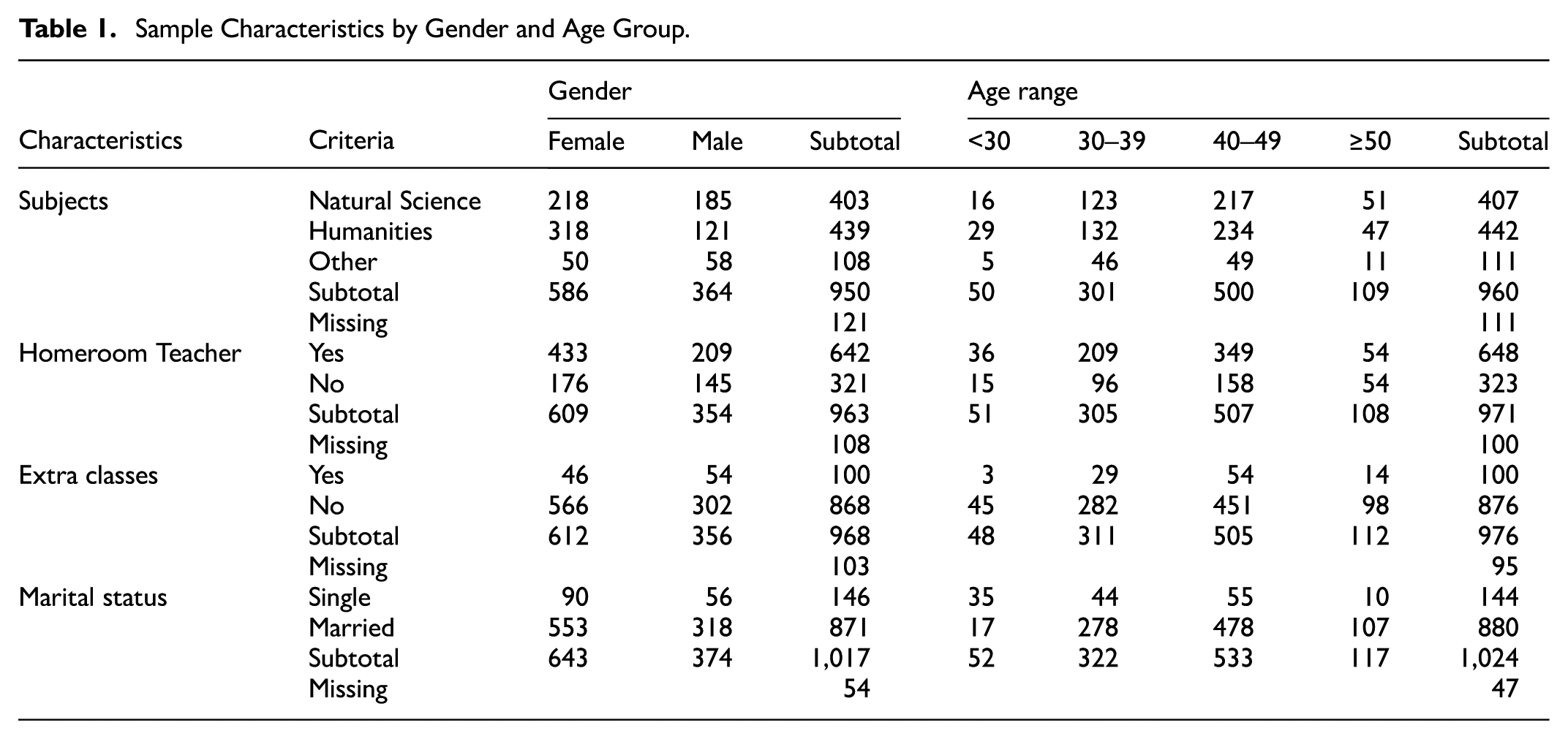
Data were collected from 1,071 high school teachers in one province in Vietnam, using a questionnaire. The sample included 586 female (54.7%) and 364 male (34.0%) teachers, with 121 missing gender data. Age distribution was: <30 years (5.2%), 30 to 39 years (31.8%), 40 to 49 years (51.8%), and ≥50 years (11.2%). Teachers taught various subjects, with 403 in natural science (including mathematics, physics, chemistry, and biology), 439 in humanities (including foreign languages, literature, history, and geology), and 108 in other subjects (Table 1).
Sample Characteristics by Gender and Age Group.
Measures
School Climate
School climate in this study was operationalized through school climate dimensions adapted from Bear et al. (2021) to assess teachers’ perceptions of school climate across six dimensions: teacher–student relations, teacher–student closeness, student–student relations, student engagement, teacher–home communication, and staff relations. For teacher–student relations, example items were “Giáo viên quan tâm đến việc học tập của học sinh” (Teachers care about students’ learning) and “Giáo viên công bằng trong xử lý các hành vi sai trái của học sinh” (Teachers are fair when dealing with students’ misbehavior). For teacher–student closeness, the questions asked were “Teachers are fond of their students,” “Students are fond of their teachers,” and “Teachers are the first people students think of when they need advice on learning and life.” For student–student relations, example items include “Học sinh tôn trọng lẫn nhau” (Students respect one another) and “Học sinh sẵn sàng giúp đỡ lẫn nhau” (Students are willing to help each other). For teacher–parent communication, representative items include “Giáo viên phản hồi đầy đủ các ý kiến của cha mẹ học sinh” (Teachers respond fully to parents’ feedback) and “Giáo viên phối hợp chặt chẽ với gia đình giải quyết các vấn đề của học sinh” (Teachers work closely with parents to address student problems). Student engagement captures cognitive, behavioral, and emotional engagement through items like “Hầu hết học sinh đều học tập chăm chỉ để đạt được điểm cao” (Most students study hard to achieve high grades), “Hầu hết học sinh hoàn thành bài tập về nhà đúng thời hạn” (Most students complete homework on time), and “Hầu hết học sinh đều thích ngôi trường này” (Most students like this school). For staff relations (including teacher–staff–leadership), example items were “Giáo viên, nhân viên và lãnh đạo nhà trường là một đội” (Teachers, staff, and school leaders form one team) and “Lãnh đạo và giáo viên hỗ trợ lẫn nhau” (Leaders and teachers support each other). Respondents rated each item on a five-point Likert scale, with 1 meaning “totally disagree” and 5 meaning “totally agree” with each statement.
Psychological Capital
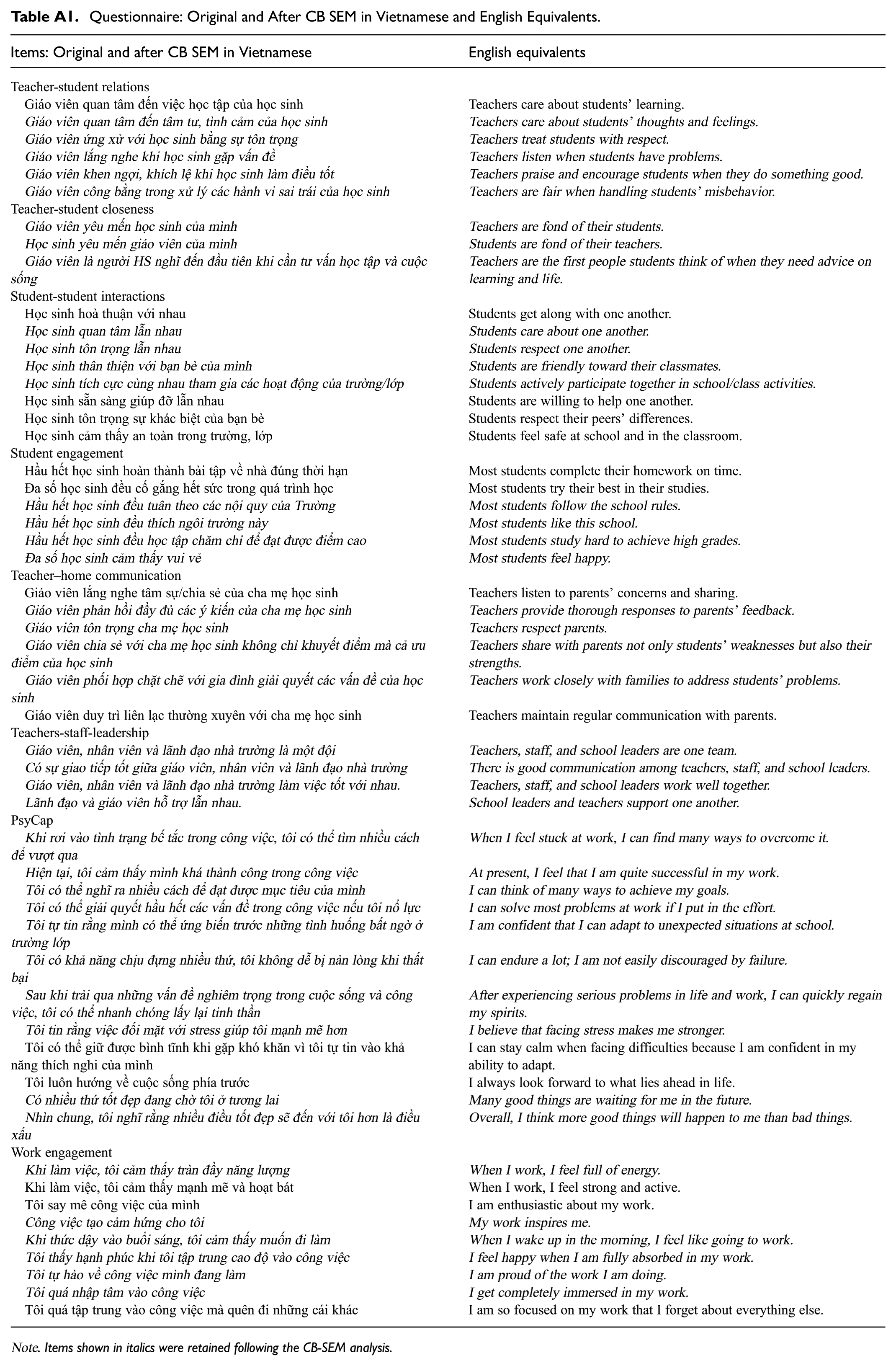
The study employed the Compound Psychological Capital Scale–Revised (CPC-12R), originally developed and validated by Lorenz et al. (2022), to evaluate an individual’s overall psychological capital. CPC-12R was used to measure teachers’ PsyCap with four key psychological components: hope, efficacy, resilience, and optimism. The scale includes 12 items, with three items representing each of the four dimensions. Hope is evaluated through statements that reflect one’s perceived ability to create pathways toward goals and maintain the motivation to achieve them, such as “I can think of many ways to reach my current goals.” Efficacy is measured through statements indicating confidence in handling difficulties, like “I am confident in my ability to solve problems effectively.” Responses were collected using a 5-point Likert scale (1 = strongly disagree to 5 = strongly agree), capturing the degree of agreement with each statement. Items were adapted to reflect the teaching environment, such as “Tôi tự tin rằng mình có thể ứng biến trước những tình huống bất ngờ ở trường lớp” (I am confident in handling unexpected situations in the classroom) for self-efficacy (see Table A1 for the full scale in Vietnamese and English equivalents).
Work Engagement
Work engagement was measured using the Utrecht Work Engagement Scale (UWES-9), a validated instrument developed by Schaufeli et al. (2002). The UWES-9 consists of nine items assessing three dimensions of work engagement: vigour (three items, e.g., “When I work, I feel bursting with energy”), dedication (three items, e.g., “I am enthusiastic about my job”), and absorption (three items, e.g., “I am immersed in my work”). In this study, a Vietnamese version of the UWES-9, translated and validated by Tran et al. (2020), was used to ensure cultural and linguistic relevance for Vietnamese high school teachers. All items were measured on a 7-point Likert scale, ranging from 0 (never) to 6 (every day), allowing respondents to indicate the frequency of their engagement experiences.
Data Collection
Data were collected during the summer of 2024, coinciding with annual professional development courses for high school teachers in a province in southern Vietnam. Teachers were convened at three designated locations within the province, facilitating access to a diverse sample. Questionnaires were distributed in person during these sessions, ensuring efficient data collection. Before participation, teachers were informed about the study’s purpose, which was to investigate the relationships among school climate, psychological capital, and work engagement. They were assured that their identities would remain anonymous and their responses confidential, in accordance with ethical research guidelines. Participation was entirely voluntary, and teachers were given the option to opt out without consequence. Completed questionnaires were collected on-site, and a total of 1,071 teachers completed the survey. This approach ensured a robust response rate while maintaining ethical standards, including informed consent and confidentiality.
Data Analysis
The data analysis was conducted in two stages to ensure robust validation of the measurement and structural models. First, Exploratory Factor Analysis (EFA), using principal components extraction with Promax rotation, was performed to identify the factor structure of the adapted school climate questionnaire, the Compound Psychological Capital Scale–Revised, and the Utrecht Work Engagement Scale. Constructs were retained based on stringent criteria: Cronbach’s α ≥ .70, factor loadings ≥ 0.50, and cumulative variance explained ≥ 50%. Subsequently, Covariance-Based Structural Equation Modeling (CB-SEM) was conducted in AMOS (Hair et al., 2018). Confirmatory factor analysis (CFA) was conducted for each unidimensional construct and the four first-order components of PsyCap. Model fit was assessed through normed chi-square (χ2/df < 5.0, preferably < 3.0), RMSEA < 0.08, TLI > 0.90, and CFI > 0.90 (Byrne, 2010; Hair et al., 2018; Kline, 2006). Convergent validity required standardized loadings ≥ 0.50, AVE ≥ 0.50, and composite reliability ≥ 0.60. For the higher-order PsyCap construct, the same criteria were applied. Parameters were estimated using Maximum Likelihood, with skewness and kurtosis values below |2| (Curran et al., 1996). All constructs were modeled simultaneously with freely correlated latent variables, and were required to meet standard fit and discriminant validity criteria (Fornell–Larcker). Finally, the structural model was estimated. Hypotheses were tested via path significance (p < .05), and mediation was examined by comparing models (χ2 difference tests, fit indices, and AIC and BIC).
Results
EFA Results
EFA results show that all constructs met the required criteria for further analysis (Table 2).
EFA Results.
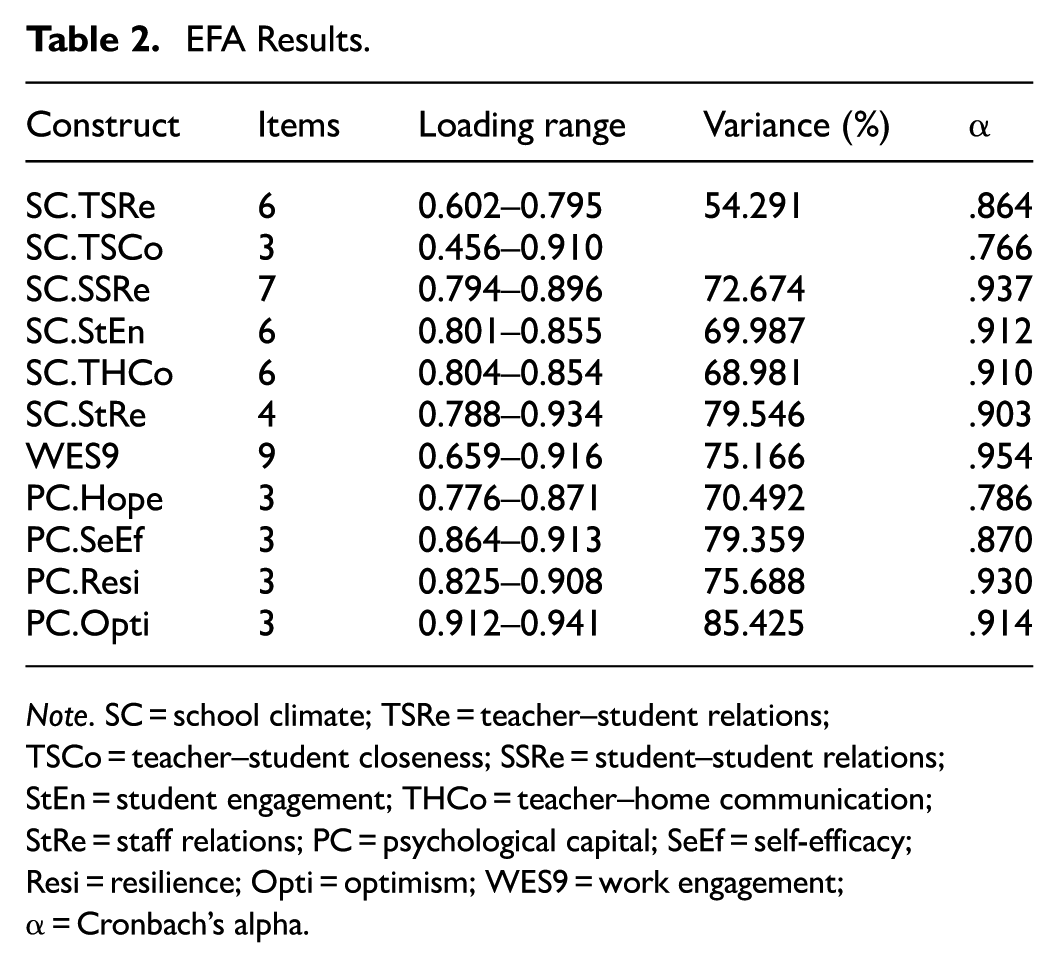
Note. SC = school climate; TSRe = teacher–student relations; TSCo = teacher–student closeness; SSRe = student–student relations; StEn = student engagement; THCo = teacher–home communication; StRe = staff relations; PC = psychological capital; SeEf = self-efficacy; Resi = resilience; Opti = optimism; WES9 = work engagement; α = Cronbach’s alpha.
Measurement Model
Initial CFAs conducted for each unidimensional construct (school climate factors and work engagement) and the second-order construct (PsyCap) indicated satisfactory model fit and acceptable factor loadings. All measurement scales met the recommended reliability and validity criteria before testing the overall measurement model.
CFA results show that the overall measurement model demonstrated a good fit (Table 3; CMIN/df = 2.791, CFI = 0.958, TLI = 0.985, and RMSEA = 0.041). All variables satisfied normality assumptions. Unidimensionality was confirmed, as no cross-loadings were observed among constructs. Convergent validity was supported, and discriminant validity was confirmed (
CFA Results for the Overall Measurement Model and Correlations.
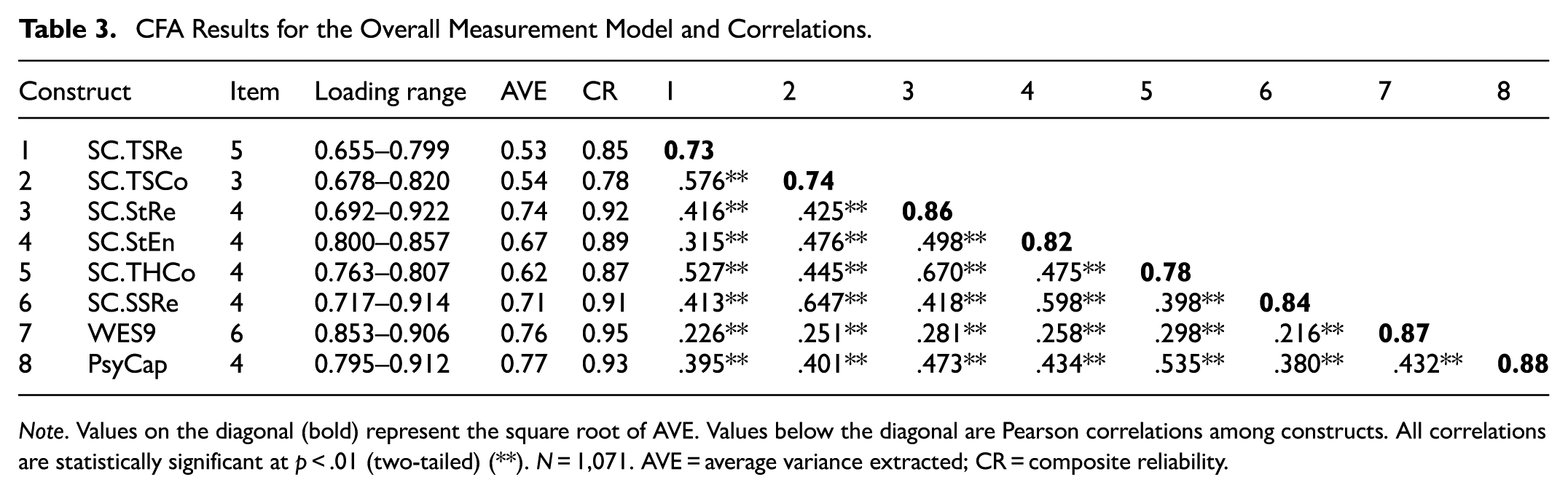
Note. Values on the diagonal (bold) represent the square root of AVE. Values below the diagonal are Pearson correlations among constructs. All correlations are statistically significant at p < .01 (two-tailed) (**). N = 1,071. AVE = average variance extracted; CR = composite reliability.
Structural Equation Model
The results show that the main structural model fits well (CMIN/df = 2.399, CFI = 0.967, TLI = 0.964, RMSEA = 0.036; Figure 4).
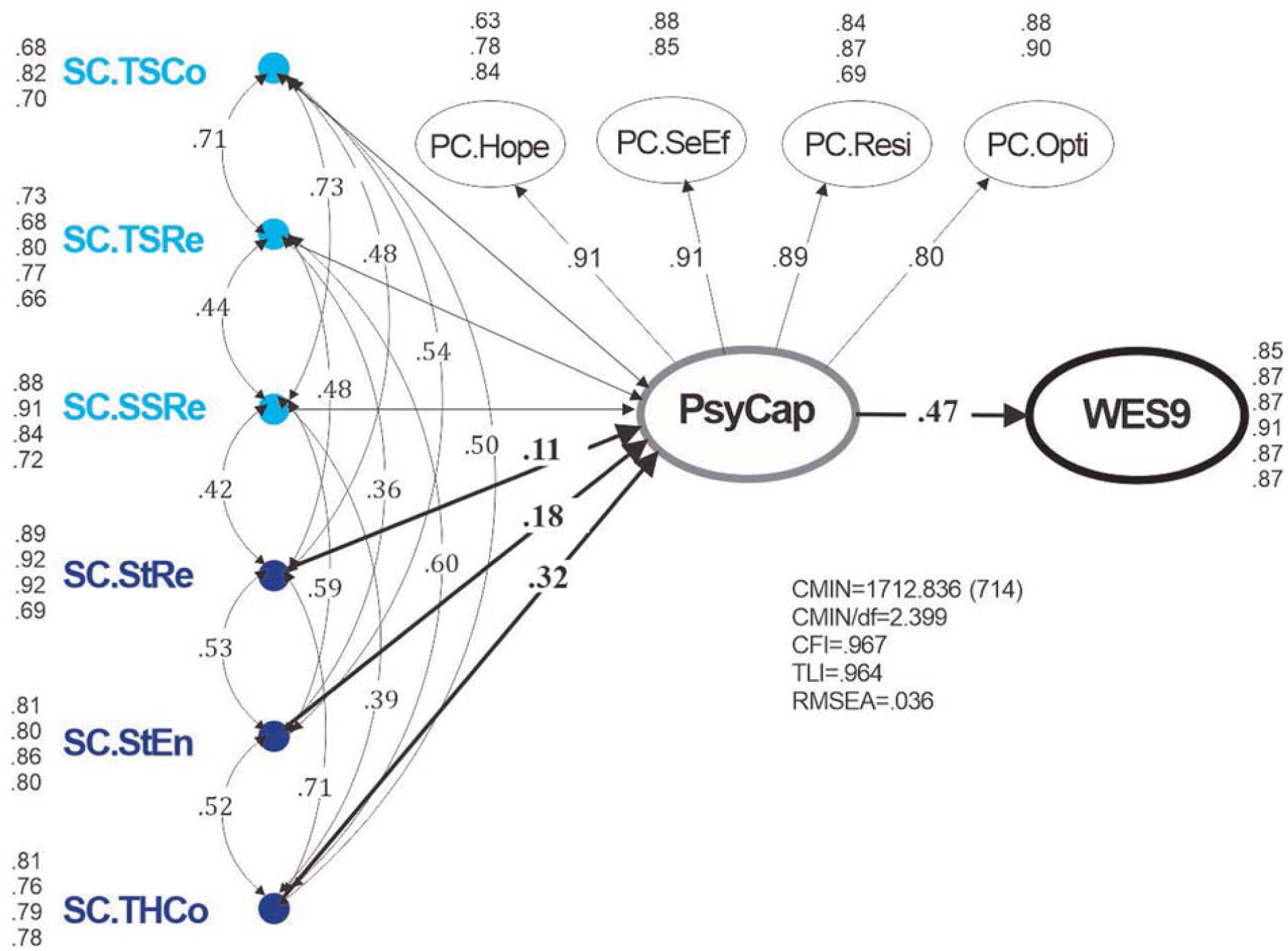
Structural equation model—Model A.
Table 4 displays the results of hypothesis testing for both models.
Structural Path Estimates for Model A and Model B.
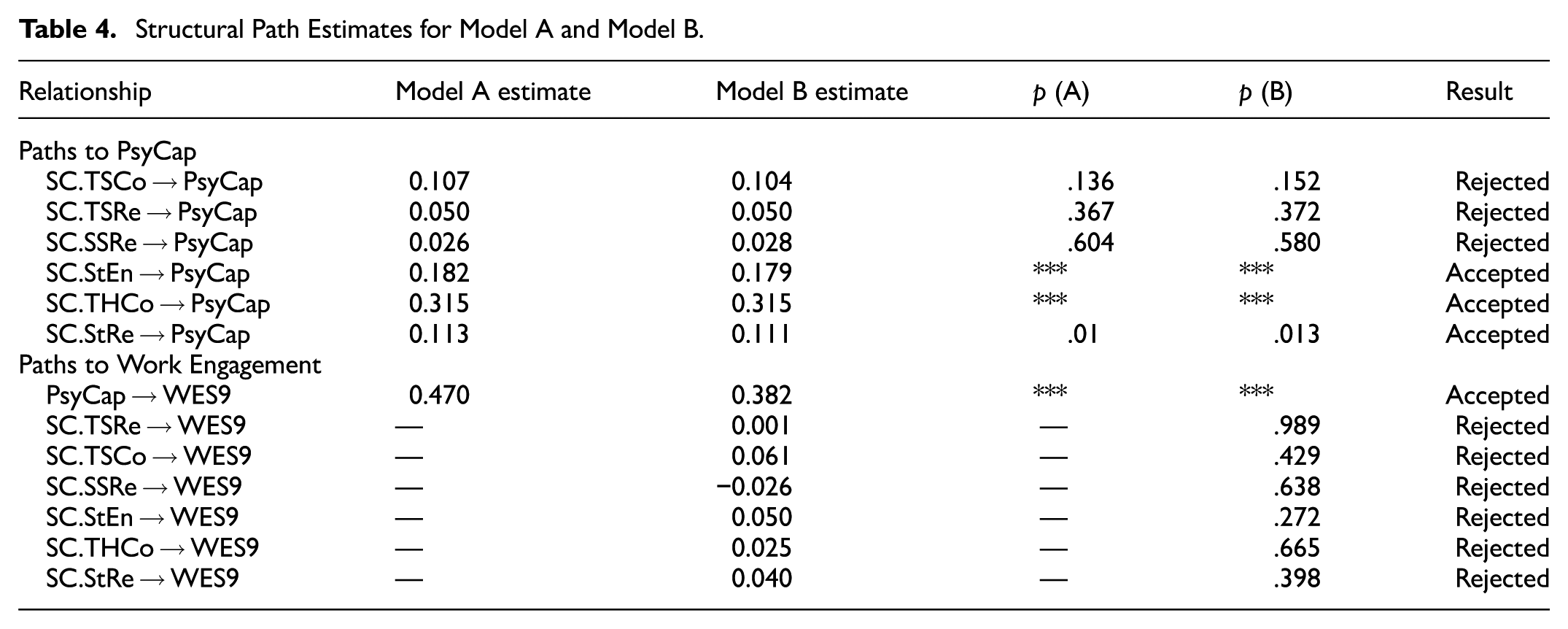
The SEM results revealed consistent relationships among school environment dimensions, psychological capital, and work engagement among high school teachers in a province in southern Vietnam. Specifically, teacher–home communication, staff relations, and student engagement significantly influenced PsyCap, confirming their role in fostering teachers’ PsyCap. In contrast, teacher–student relations, teacher–student closeness, and student–student relations showed no significant effects on teachers’ psychological capital. PsyCap, in turn, demonstrated a significant positive impact on work engagement, highlighting its critical role in driving teachers’ vigour, dedication, and absorption (Table 4).
Given that the χ2 difference test is not significant (Δχ2(6) = 10.467, p = .106), Model B does not provide a statistically meaningful improvement in fit over Model A. Therefore, we retain Model A as the more parsimonious specification, further supported by its lower AIC (1,924.836 vs. 1,926.396) and BIC (2,452.329 vs. 2,483.747; Table 5).
Comparison of Fit Indices Between Model A and Model B.
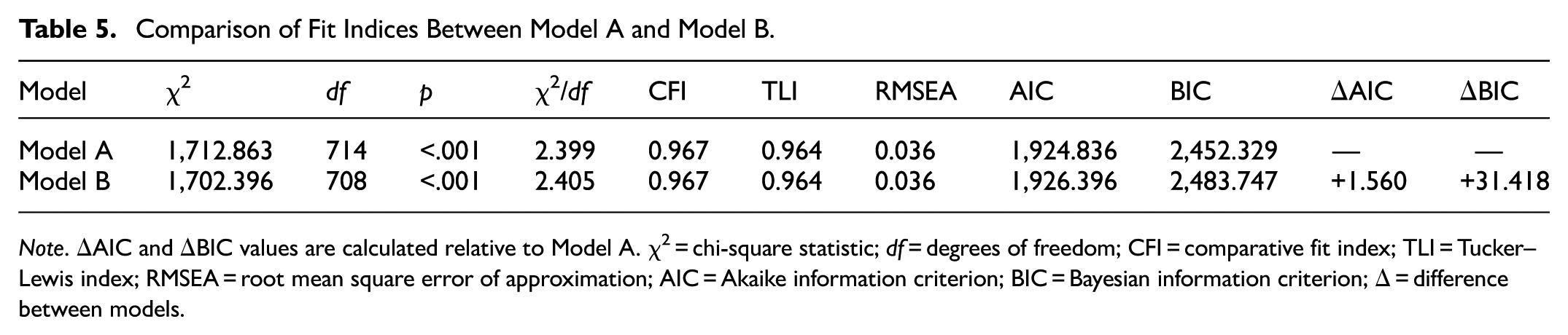
Note. ΔAIC and ΔBIC values are calculated relative to Model A. χ2 = chi-square statistic; df = degrees of freedom; CFI = comparative fit index; TLI = Tucker–Lewis index; RMSEA = root mean square error of approximation; AIC = Akaike information criterion; BIC = Bayesian information criterion; Δ = difference between models.
Discussion
The findings of this study offer insights into the relationships among school climate, PsyCap, and work engagement among high school teachers in Vietnam.
School Climate and Psychological Capital
In this study, it is hypothesized that school climate dimensions positively affect PsyCap. The results partially support this hypothesis, with student engagement, teacher–home communication, and staff relations showing significant positive effects on teachers’ PsyCap. These findings align with prior research suggesting that supportive school environments enhance teachers’ hope, self-efficacy, resilience, and optimism (Vilarino del Castillo & Lopez-Zafra, 2022).
Teacher–home communication in this study exhibited the strongest effect on PsyCap (β = .315, p < .001), supporting Epstein’s (2018) framework on school–family partnerships, which emphasizes that collaborative relationships with parents enhance teacher morale and reduce stress (Epstein, 2018). This is corroborated by empirical studies connecting high family engagement to lower teacher burnout, greater job satisfaction, and elevated PsyCap components (Hoover-Dempsey et al., 2005; Pedditzi et al., 2021). In the current Vietnamese context of K–12 education, where teachers face heavy workloads and ongoing educational reforms (L. T. Nguyen et al., 2023; Tran Huy et al., 2025), such communication, particularly via digital platforms like Zalo and VNEdu, provides a vital support network that enhances resilience and optimism, especially in resource-limited provinces (T. K. T. Nguyen, 2020; Tuổi Trẻ Newspaper, 2025). Recent research highlights how social media affords teachers ongoing, unmediated contact with parents, and that this extended engagement functions as a significant site where teachers shape how they understand and present themselves professionally (H. Huang & Zhang, 2025) and seek to continuously reinforce their sense of efficacy and purpose (Hien Kim, 2024). Such interactions, however, sometimes create additional stress and demands (Sài Gòn Giải Phóng, 2023; H. Yang et al., 2025), suggesting a dual role as both a resource and a challenge. Overall, this finding underscores the importance of teacher–home communication, not only for sharing reform information with families and communities but also for sustaining teachers’ PsyCap amid persistent workload pressures. Future research should expand the conceptualization of teacher-home communication to include these digital relational spaces and explore their ambivalent effects on PsyCap and related outcomes.
Another key finding is that student engagement significantly predicted teachers’ PsyCap, highlighting how positive classroom interactions contribute to teachers’ personal resource development. Drawing on the JD-R model, student engagement can be understood as a critical job resource that reduces emotional strain and fosters motivation, thereby fueling teachers’ work engagement. In turn, consistent exposure to engaged learners strengthens teachers’ confidence, optimism, hope, and resilience. This also aligns with POB, which conceptualizes PsyCap as a state-like capacity that can be cultivated through positive experiences. Together, these frameworks explain how student engagement acts as both a resource and reinforcer of teachers’ PsyCap. This result aligns with M. T. Wang and Degol (2016), who found that student engagement reduces teacher burnout and enhances motivation by reinforcing their sense of effectiveness. In Vietnam’s exam-oriented educational context, deeply influenced by a Confucian heritage that emphasizes academic achievement and high-stakes testing, teachers’ professional efficacy and resilience are closely tied to students’ performance outcomes (Huynh, 2024; Luong, 2015). Engaged students provide tangible evidence of effective teaching, affirming teachers’ sense of accomplishment amid intense pressure from national exams and curriculum demands, thereby enhancing optimism and buffering burnout (M. T. Wang & Degol, 2016). A study of Vietnamese teachers’ reflective practices indicates that teachers perceive student learning results as pivotal to their own sense of teaching efficacy and professional growth (T. T. Pham et al., 2023). This dimension highlights the value of promoting student involvement not only for learning gains but also for sustaining teachers’ PsyCap in a culturally competitive education context.
This study also found that staff relations significantly influenced PsyCap. Collaborative environments, where teachers, staff, and leaders work cohesively, foster a sense of belonging and value, strengthening teachers’ resilience and optimism. Jingwa (2019) found that schools with strong professional learning communities, characterized by collaborative teacher-leadership interactions, enhance teacher efficacy and commitment. X. Huang and Wang (2021) also contributed to research on the antecedents of PsyCap by examining how various dimensions of school climate are related to teachers’ PsyCap. This study provides further evidence on the importance of teamwork for teachers’ PsyCap. This result reinforces both the JD-R model and POB. Within the JD-R framework, collaborative teamwork operates as a crucial job resource, providing social support, shared responsibility, and constructive feedback that buffer against job demands and strengthen work engagement. From the perspective of POB, such supportive relationships nurture teachers’ hope, efficacy, resilience, and optimism by affirming their contributions and creating a psychologically safe environment for growth. However, this finding is also at odds with Vietnam’s Confucian heritage culture, which emphasizes hierarchy, deference to authority, and high power distance (Truong & Hallinger, 2017). In traditional settings, principals are seen as unquestioned authority figures, and teachers often comply rather than collaborate. The positive role of teamwork here suggests that even within hierarchical systems, relational and collaborative practices can act as powerful enablers of PsyCap, challenging the limits of top-down leadership models and showing that a shift may be taking place in high schools in Vietnam. This may indicate that Vietnamese high schools are gradually moving toward a more collaborative, resource-based model of leadership.
Interestingly, neither teacher–student relations, teacher–student closeness, nor student–student relationships had a significant effect on PsyCap. This does not undermine their importance, but rather suggests that these relational dynamics may primarily shape other outcomes. Culturally, this may reflect the Confucian hierarchical nature of Vietnamese education, in which relationships between teachers and students remain formal and authority–driven rather than reciprocal. In such contexts, teachers are traditionally positioned as moral exemplars and disciplinarians, not as partners in emotional exchange (Truong et al., 2017; Vu, 2025). Similarly, in high schools, student–student interactions are often structured within frameworks of discipline and exam preparation under close teacher supervision, limiting teachers’ perception of them as sustained job resources. This cultural emphasis on reverence and order may constrain open dialogue and mutual emotional support, which are key conditions for nurturing the positive states underlying PsyCap, such as self-efficacy and optimism. Within the JD-R model, these relationships likely function as transient emotional resources that facilitate classroom management and daily satisfaction but lack the consistency needed to build enduring psychological capacities like PsyCap (Bakker & Demerouti, 2017). Thus, teachers may not frame interactions with students as a primary resource for their psychological growth, unlike findings reported in other contexts (Corbin et al., 2019; Purwaniningtyas et al., 2023).
Similarly, student–student relations, though crucial for social cohesion (Kim, 2021), may be peripheral to teachers’ emotional and psychological resources in this context. In a Confucian-influenced country like Vietnam, student–student relations are often structurally and culturally somewhat removed from teachers’ psychological resources (Hofstede et al., 2010), which helps explain why they did not predict teachers’ PsyCap in this study. In Vietnamese classrooms, strong hierarchical norms and high power distance mean teachers are expected to maintain order, direct learning, and remain the central authority. At the same time, students’ relationships with one another are primarily understood as something to be managed, not a source of support or feedback for teachers themselves (Đào, 2014; Vu, 2025). When student–student relations are good, teachers may experience this as a sign of classroom control, but not necessarily as an interpersonal resource that enhances PsyCap. Conversely, when peer relations are difficult, these are often framed as problems to be handled rather than opportunities for relational nourishment or shared agency (Xu et al., 2023).
From a methodological standpoint, these null effects might also stem from restricted response variability and cultural desirability bias. Items measuring teacher–student relations, teacher–student closeness, and student–student relations are often rated highly in collectivist societies (Chen et al., 2019; Hofstede, 2001). Furthermore, PsyCap captures internal psychological resources rather than interpersonal or relational ones; therefore, it may be more sensitive to institutional and leadership factors than to dyadic or peer relationships. This pattern aligns with findings from East Asian teacher samples, where organizational climate and leadership support most strongly predicted PsyCap and engagement (Z. Ren et al., 2025; Zhu et al., 2025).
Psychological Capital and Work Engagement (H2)
The second hypothesis, which proposed that PsyCap positively affects work engagement, was strongly supported. This finding highlights PsyCap’s pivotal role in enhancing teachers’ vigour, dedication, and absorption in their work, consistent with previous studies (Luthans et al., 2007, 2015), which identified PsyCap as a key driver of positive organizational outcomes. Teachers with high levels of PsyCap are better equipped to navigate the demands of teaching, resulting in greater engagement. In the Vietnamese context, where teachers face heavy workloads and societal expectations, PsyCap appears to serve as a critical psychological resource, enabling them to maintain enthusiasm and commitment (Wu & Nguyen, 2019). This result suggests that interventions targeting PsyCap components—such as goal-setting workshops for hope or resilience-building programs—could significantly enhance teachers’ engagement. The strong effect size also indicates that PsyCap is a robust predictor of work engagement across cultural settings, reinforcing its universal applicability in educational research. These findings highlight the need for professional development programs that cultivate psychological strengths to sustain teacher motivation to engage in their profession. Literature has shown that PsyCap and work engagement often work together, either in parallel or sequentially, to amplify positive outcomes. In this study, PsyCap is an antecedent to engagement.
Psychological Capital as a Mediator (H3)
The third hypothesis, positing that PsyCap mediates the relationship between school climate and work engagement, was fully supported. The main model, with PsyCap as a mediator, demonstrated good fit, and the competing model, which included direct paths from school climate to work engagement, showed no significant direct effects and no improvement in fit. This confirms that PsyCap fully mediates the influence of school climate dimensions on work engagement, aligning with prior studies that position PsyCap as a bridge between organizational contexts and employee outcomes (Luthans et al., 2007; Vilarino del Castillo & Lopez-Zafra, 2022). In the Vietnamese educational context, supportive school environments, particularly through student engagement, teacher–home communication, and staff relations, enhance teachers’ psychological resources, which in turn drive their engagement. The absence of direct effects suggests that school climate influences engagement indirectly by fostering teachers’ psychological strengths (Y. Ren et al., 2024). This finding is particularly important in the current Vietnamese educational landscape, marked by heavy workloads, frequent policy reforms, and accountability pressures. In such a demanding context, similar to those examined by Ma (2023), the mediating role of PsyCap tends to be most pronounced. Consistent with COR theory, PsyCap serves as a key mediator, channeling the positive influence of school climate into enhanced teacher work engagement.
Conclusion
This study found that PsyCap, encompassing hope, self-efficacy, resilience, and optimism, fully mediates the relationship between school climate dimensions and teachers’ work engagement among high school teachers in Vietnam. Student engagement, teacher-home communication, and staff relations emerged as key drivers of PsyCap, which then predicts higher levels of vigour, dedication, and absorption in teaching.
These findings align with the JD-R model, POB, and COR theory, emphasizing PsyCap’s role as a developmental resource that supports the transformation of supportive organizational and relational dimensions into sustained professional commitment (Bakker & Demerouti, 2008; Luthans, 2002). The limited effects of teacher-student and student-student relations on teachers’ PsyCap likely reflect Vietnam’s Confucian-influenced high-power-distance culture, where hierarchical norms and exam-oriented accountability prioritize vertical support over horizontal classroom reciprocity.
This pattern reveals a potential tension. While teachers recognize student engagement as beneficial for their own PsyCap, entrenched preferences for maintaining authority may overlook the advantages of peer interactions and shared agency. In the context of Vietnam’s ongoing reforms toward competency-based education, which demand greater teacher innovation and adaptability, fostering collaborative school atmospheres could build essential PsyCap, yet persistent bureaucratic traditions and power distance may limit the use of classroom-level relational resources.
Overall, these results advance understanding of school climate as a multidimensional driver of teachers’ psychological resources and effectiveness, highlighting the culturally contingent nature of these psychological resources in education.
This study is significant because it makes a meaningful contribution by addressing an important geographic and theoretical gap in the PsyCap literature. While existing research has been concentrated in Western and East Asian (primarily Chinese) contexts, this study provides the first rigorous evidence that PsyCap antecedents are culturally contingent rather than universally applicable. Most importantly, the study’s counterintuitive finding that teacher–student and student–student relations do not significantly influence teacher PsyCap challenges dominant assumptions in the literature and suggests that in a Confucian country, horizontal collaboration among teachers, staff, and school leaders and partnerships with parents generate psychological resources more effectively than vertical relationships with students. This discovery reframes PsyCap theory by revealing that the pathway from environmental support to psychological capital depends on cultural values, power dynamics, and stakeholders’ perceptions of resource-generating interactions.
Theoretically, this study advances the JD-R model by identifying a hierarchical model of educational resources where collegial collaboration and parent partnerships take precedence over student relationships in shaping teacher PsyCap. PsyCap’s full mediation between school climate and work engagement provides empirical clarity regarding the theoretical mechanism proposed by COR by demonstrating how supportive environmental resources are conserved and amplified through personal psychological strengths to mitigate stress and burnout and foster motivational outcomes in a challenging work environment, such as the teaching profession.
Implications
The study’s findings have several implications for educational policy and practice in Vietnam, as well as the future directions of PsyCap. Schools and leadership within their granted autonomy, which can develop appropriate interventions to foster partnerships and student engagement.
First, to strengthen student engagement, it may be beneficial to provide teachers with ongoing training, support, and coaching aimed at fostering more participatory instructional practices. Such efforts could help teachers reflect on and adopt approaches that position students as active partners and encourage them to participate in classroom interactions. In turn, when teachers actively engage students in classroom activities, this may be associated with higher levels of teachers’ psychological capital, as students’ active participation and diligence can reinforce teachers’ sense of efficacy, optimism, and motivation. Second, strengthening communication with families through regular forums or diverse channels of communication may help provide teachers with broader external support networks that are associated with greater professional sustainability. Such school-family partnerships can also reinforce the shared nature of educational responsibility. This highlights that students’ development is a shared effort between schools and families rather than resting solely on teachers. Third, promoting staff relations through collaborative training and leadership support programs may help foster a more cohesive work environment that is associated with a higher level of teachers’ PsyCap. Strengthening teamwork among teachers, staff, and leaders can enable teachers to draw on relational resources, which may support teachers’ sense of PsyCap. Importantly, such collaborative practices need not conflict with cultural norms emphasizing respect for authority. Rather, teamwork could be framed as consistent with Confucian values of harmony and collective responsibility, thereby aligning cultural tradition with modern resource-based models of teacher well-being. In practical terms, this suggests that school leaders could consider strategies such as reducing unnecessary administrative demands and creating structured opportunities for collaboration. For example, recent research on Vietnamese professional learning communities shows that when schools formally allocate time for lesson study, joint planning, and reflective dialogue within subject groups, teachers report stronger collegial ties, shared responsibility, and better support in interpreting curriculum reforms (Dinh et al., 2023, 2024).
All these suggestions may not be straightforward to implement, particularly when cultural factors are taken into account. Nonetheless, strategies informed by the JD-R model and positive organizational behaviour may help address aspects of teaching demands, such as heavy workloads or societal expectations, while supporting the development of a more motivated teaching workforce. This study’s findings appear to reflect the broader challenge of balancing Confucian values rooted in Vietnam with ongoing national attempts to reform general education from teachers’ perspectives. For example, the results indicate that when teachers did not perceive teacher-student or student-student relational climate as directly associated with their PsyCap, student engagement showed a stronger association. This suggests that teachers may still find it difficult to view students as collaborative partners in instructional processes.
Furthermore, the findings imply that teachers may place greater emphasis on external structural support, such as assistance from administrative staff, or lower hierarchical pressure when coping with professional demands. Although causal interpretations cannot be drawn, the results suggest that the potential value of integrating PsyCap development into teacher professional development initiatives could be associated with improved job satisfaction and retention over time. In the Vietnamese context, leveraging collectivist cultural values to strengthen community-based support systems may further complement such efforts. Overall, the findings suggest that educational reforms may benefit from not only introducing new curricular expectations but also fostering supportive leadership practices, trust-based collaboration, and organisational conditions conducive to teachers’ PsyCap.
Limitations and Future Research
Despite its contributions, this study has limitations that should be considered. First, the cross-sectional design limits causal inferences, as the data were collected at a single point in time during summer 2024 professional development courses. Although this arrangement facilitated efficient data collection, the sample may not fully represent the broader population of teachers. Second, this study was conducted in a single province, which also limits the generalizability of these findings to other provinces or nationwide. Future research applying longitudinal and intervention designs and using more diverse and geographically representative samples would be valuable for examining the relationships among school climate factors, PsyCap, and work engagement. Third, the study relied on self-reported measures, which may introduce response bias. Future research could incorporate observational data or multi-source assessments for validation. Another limitation relates to measurement adaptation. This study did not conduct the necessary steps to validate the established scales in a new context for the local educational setting. This may have affected their conceptual equivalence and construct validity. Future studies should employ more rigorous validation procedures, such as mixed-methods approaches, back–translation, and pilot testing the scales, to enhance confidence in the measurement of these constructs across contexts.
Additionally, factors with insignificant effects, including teacher–student relations, teacher–student closeness, and student–student relations, were not fully explored, possibly due to contextual factors, such as hierarchical classroom dynamics. Future research should explore these mechanisms further by integrating cultural dimensions and social exchange theory. For instance, future models could examine whether hierarchical norms moderate the PsyCap pathway, or whether interventions promoting teacher–student co-agency could activate PsyCap’s motivational potential in collectivist contexts. Comparative studies across Confucian and Western systems would clarify whether relational warmth exerts weaker effects in cultures where power distance and exam–driven schooling dominate. Qualitative studies could further explore how teachers perceive their relationships with students or student–student relations. Such studies could also explore different types of relationships that might help understand any cultural moderation. Future studies could also examine other school climate dimensions (such as teacher–teacher relations and leadership styles) and may also apply certain PsyCap-based interventions for a clearer impact on teachers’ engagement. Exploring additional mediators could also enrich the model, providing a more comprehensive understanding of teacher motivation in diverse educational contexts. The model could also be expanded to examine how school climate influences teachers’ performance through PsyCap, work engagement, or other mediators.
Theoretically, this study offers some implications for future PsyCap research, particularly within educational systems undergoing ongoing reforms while maintaining cultural traditions. This study provides evidence-informed insights for Vietnamese schools seeking to gradually shift from a hierarchical, compliance-focused culture toward more collaborative professional communities. More broadly, this study suggests that PsyCap interventions may benefit from moving beyond one-size-fits-all models toward culturally adapted approaches that consider how different relationships and organizational structures shape the development of psychological resources (Katsantonis, 2020) as well as the potential roles of Confucian values in influencing these processes, either directly or as contextual moderators (Y. Huang, 2025).
Footnotes
Appendix A
Questionnaire: Original and After CB SEM in Vietnamese and English Equivalents.
| Items: Original and after CB SEM in Vietnamese | English equivalents |
|---|---|
|
|
|
|
|
|
|
|
|
|
|
|
|
|
|
|
|
|
|
|
|
|
|
|
|
|
|
|
|
|
|
|
|
|
|
|
|
|
|
|
|
|
|
|
|
|
|
|
|
|
|
|
|
|
|
|
|
|
|
|
|
|
|
|
|
|
|
|
|
|
|
|
|
|
|
|
|
|
|
|
|
|
|
|
|
|
|
|
|
|
|
|
|
|
|
|
|
|
|
|
|
|
|
|
|
|
|
|
|
|
|
|
|
|
|
|
|
|
|
|
|
|
|
|
|
|
|
|
|
|
|
|
|
|
|
|
|
|
|
|
|
|
|
|
|
|
|
|
|
|
|
|
|
|
|
|
|
|
|
|
|
|
|
|
|
|
|
|
|
|
|
|
|
|
|
|
|
|
|
|
|
|
|
|
|
|

Ethical Considerations
The authors declare that all participants in this study were informed about its purpose, their voluntary participation, and the confidentiality of their data.
Author Contributions
Huong Thi Pham: Funding acquisition; Conceptualization; Investigation; Methodology; Analysis; Writing—original draft; Writing—review and editing. Hang Thi-Thuy Vu: Conceptualization; Writing—original draft; Writing—review and editing. All authors reviewed and approved the final manuscript.
Funding
The authors disclosed receipt of the following financial support for the research, authorship, and/or publication of this article: This research is funded by Vietnam National Foundation for Science and Technology Development (NAFOSTED) under grant number 503.01-2021.29.
Declaration of Conflicting Interests
The authors declared no potential conflicts of interest with respect to the research, authorship, and/or publication of this article.
Data Availability Statement
The authors declare that the data supporting this study will be made available upon request.
Declaration of Generative AI and AI-Assisted Technologies in the Writing Process
During the preparation of this work, the authors used Grok to edit the language and improve the readability of the manuscript. After using this tool, the authors reviewed and edited the content as needed and took full responsibility for the content of the published article.