






Abstract
This study examines how data-driven dynamic capabilities (DDDC) influence innovation performance through the mediating role of organizational resilience. Grounded in hierarchy of capabilities perspective, it investigates how DDDC enhance firms’ organizational resilience and translate digital potential into measurable innovation outcomes. Based on survey data from 259 SMEs in China’s Yangtze River Delta, the study employs Structural Equation Modeling (SEM) and Necessary Condition Analysis (NCA) to capture both sufficiency and necessity logics. Results reveal that DDDC significantly enhance organizational resilience and innovation performance, with organizational resilience partially mediating this relationship. An inverted U-shaped link between organizational resilience and innovation performance indicates that moderate organizational resilience boosts innovation, while excessive organizational resilience constrains it. NCA confirms both DDDC and organizational resilience as necessary conditions for high innovation performance. The findings enrich the theory of dynamic capabilities, illustrating the dual nature of organizational resilience and providing empirical insights into how firms can achieve sustainable innovation under digital complexity.
Keywords
Introduction
Despite a growing number of enterprises investing heavily in digital transformation to enhance dynamic capabilities and organizational resilience, many still underperform on innovation performance. With digital transformation has fundamental reconfigure organization capability architecture, data-driven dynamic capabilities (DDDC) have been defined as a critical antecedent of innovation permeance (Akhtar et al., 2025). DDDC refers to the firms’ capability to sense, seize and reconfigure resources based on data intelligent systems, data platforms and digital technologies (Y. Chen et al., 2024). These data-driven dynamic capabilities enable rapid responses to market changes and enhance innovation by supporting real-time decision-making and agile operations (Cappa et al., 2021). For instance, AI-driven analytics allow manufacturers to adapt product designs and optimize supply chains. Yet, the academic and practical fields still lack a clear understanding of how DDDC specifically enhance innovation performance. Hence, investigating whether and how DDDC improve innovation performance is an urgent need.
There have been several attempts to explain the role of digital transformation in improving innovation performance. For example, some scholars (e.g. Du et al., 2025; Magistretti et al., 2025) have suggested that the use of digital technologies improve innovation performance by deepening enterprises understanding of early experimentation. However, merely focusing he role of digital technologies seems snuffiest in explain the complicated effect of digital transformation on innovation performance as innovation capabilities lie on capabilities of utilizing various resources (Xiao et al., 2020). Y. Chen et al. (2024) stated that data-driven dynamic capabilities (DDDC)—digital sensing, digital sensing and digital transforming—can help enterprises to effectively utilize digital resources and improve efficiency of innovation process. Furthermore, Wang et al. (2023) demonstrated that data-driven capabilities facilitate open innovation by enabling firms to systematically transform digital resources into actionable knowledge. While the literature has conceptually acknowledged the linkage between DDDC and innovation performance, there is still lacking empirical research that exploring how DDDC affect innovation performance.
To address the above research gap, this paper aims to investigate the role of DDDC on innovation performance from a hierarchy of dynamic capabilities perspective. Dynamic capability theory explains that competitive advantages arise from enterprises’ abilities to sense, seize, and reconfigure resources under uncertainty (Teece, 2007). Winter (2003) further distinguishes zero-order capabilities that support operations from higher-order capabilities that enable strategic change and suggest that both zero-order capabilities and higher-order capabilities are important for enterprises’ performance. Recent studies found that organizational resilience positively influence service innovation performance (Y. Chen et al., 2024). Organizational resilience refers to the ability to recover, adapt, and sustain growth amid disruptions (Hillmann & Guenther, 2021; Linnenluecke, 2017). Iftikhar et al. (2021) also argued that organizational resilience can be considered as higher-order dynamic capabilities. Enterprises with higher organizational resilience cope better with technological shocks and exploit uncertainty to strengthen innovation (Lin & Fan, 2024; Robertson et al., 2022). He et al. (2023) also suggests that organizational resilience can facilitate innovation through knowledge transferring within the enterprises. While the linkages between digital-related capabilities and organizational resilience as well as the organizational resilience and innovation performance have been proved, whether organizational resilience serves as the mediating role between DDDC and innovation performance. Therefore, we propose that the impact of DDDC on innovation performance might be mediated by organizational resilience.
Hence, this study aimed to empirically explore if DDDC affect innovation performance and, in turn, whether the relationship between DDDC and innovation performance is mediated through organizational resilience. In addition, although some scholars suggest that organizational resilience strengthens innovation performance, some argue that excessive organizational resilience lead to strategic inertia, which has adverse effect on innovation (Liang & Li, 2023). Thus, we also analyzed whether there is a nonlinear relationship between organizational resilience and innovation performance.
This study makes three contributions. First, we conceptualize organizational resilience as a second-order capability, which extend the hierarchy model of dynamic capabilities to the context of crisis. Second, we unpack the mechanism through which data-driven dynamic capabilities translate into innovation outcomes via organizational resilience. Third, we reveal a nonlinear (inverted U-shaped) relationship between resilience and innovation performance, highlighting its potential dark side. The remainder of this paper proceeds as follows: Theoretical Foundation and Hypothese Development presents the theoretical framework and hypotheses, Research Design describes data and methods, Empirical Analysis and Results reports empirical findings, Discussion and Conclusion discusses implications, Limitations and Future Scope concludes with limitations and future directions.
Theoretical Foundation and Hypotheses Development
Theoretical Foundation
In the rapidly evolving digital economy, firms’ ability to continuously adapt and innovate has become a central determinant of sustainable competitive advantage. Traditional resource-based views emphasize the possession of valuable and rare resources, yet they offer limited explanatory power in highly volatile, uncertain, complex, and ambiguous (VUCA) environments. To address this limitation, Dynamic Capabilities Theory (DCT) provides a foundational framework for understanding how firms systematically renew, integrate, and reconfigure resources in response to environmental change (Teece et al., 1997). DCT conceptualizes dynamic capabilities as higher-order organizational processes through which firms sense opportunities and threats, seize strategic options, and reconfigure resource bases to sustain competitiveness over time (Teece, 2007). Rather than focusing on static asset stocks, DCT emphasizes capability formation, learning mechanisms, and path-dependent organizational routines as the core drivers of long-term performance.
Building on this perspective, recent scholarship highlights the emergence of data-driven dynamic capabilities (DDDC) as a distinct and increasingly critical form of dynamic capability in the digital era. DDDC refer to firms’ ability to leverage data, analytics, and digital technologies to support continuous sensing, evidence-based decision making, and flexible reconfiguration of organizational processes (Y. Chen et al., 2024). Compared with traditional dynamic capabilities, DDDC are characterized by stronger real-time information processing, algorithmic learning, and cross-boundary knowledge integration, enabling firms to adapt at higher speed and lower cost under uncertainty (Mele et al., 2024; Pundziene & Geryba, 2023; Santoro et al., 2019). Furthermore, at the intersection of DDDC and organizational outcomes lies organizational resilience, which reflects firms’ capacity to anticipate disruptions, absorb shocks, and adapt by redeploying resources and renewing routines (Duchek, 2020; Hillmann & Guenther, 2021). From a hierarcy of dynamic capability perspective, organizational resilience is not merely a passive defensive trait, but an endogenous capability generated through continuous sensing, learning, and reconfiguration processes embedded in DDDC.
Integrating insights from DCT, DDDC, and organizational resilience, this study conceptualizes firms’ innovation performance as the outcome of a multi-stage adaptive mechanism. Hence, we argue that data-driven dynamic capabilities shape organizational resilience, which in turn conditions firms’ ability to sustain innovation under digital disruption. This theoretical foundation provides the basis for the subsequent hypothesis development.
Data-Driven Dynamic Capabilities and Innovation Performance
Dynamic capabilities refer to a firm’s ability to sense, seize, and reconfigure internal and external resources in response to environmental changes (Teece, 2007). Innovation performance—reflecting firms’ product and service innovation capabilities—is essential for sustaining competitive advantage. Firms that convert big data into actionable knowledge can continuously strengthen their competitiveness by enhancing dynamic capabilities (Y. Chen et al., 2022), and prior studies show that dynamic capabilities improve performance through resource integration and innovation-oriented strategic actions (L. Y. Wu, 2007). However, existing research has paid limited attention to how data-driven dynamic capabilities translate into concrete innovation outcomes through identifiable organizational mechanisms.
Recent studies indicate that the performance effects of dynamic capabilities are indirect and mechanism-driven. Pundziene et al. (2022) show that dynamic capabilities enhance competitive performance primarily through open innovation, while Wang et al. (2023) demonstrate that digital platform capabilities improve sustainable innovation via inbound and outbound open innovation. These findings suggest that dynamic capabilities influence innovation by enabling firms to access external knowledge, coordinate internal learning, and orchestrate cross-boundary innovation activities under uncertainty.
Mechanistically, data-driven dynamic capabilities (DDDC) enhance innovation performance by reshaping firms’ decision and coordination routines in three ways. Data-driven sensing improves environmental scanning and opportunity recognition (ZareRavasan, 2023). Data-driven seizing supports evidence-based experimentation and accelerates resource commitment, facilitating both exploitative and explorative innovation (Akhtar et al., 2025). Data-driven reconfiguration enables flexible recombination of knowledge assets and organizational structures, allowing firms to integrate external ideas and redeploy internal resources for new product and business model innovation (Mele et al., 2024). Consistent with this logic, digital transformation has been recognized as a critical dynamic capability that promotes innovation performance (Mishra et al., 2022; Plantec et al., 2023), particularly within digital ecosystems where firms coordinate innovation across organizational and supply chain boundaries (Jiang et al., 2019). Therefore, we propose:
Data-Driven Dynamic Capabilities and Organizational Resilience
Organizational resilience refers to a firm’s capacity to anticipate environmental disturbances, respond effectively to shocks, and adapt by restoring and even improving organizational functioning over time (Hillmann & Guenther, 2021; Shao & An, 2022). Rather than being a static outcome, resilience is increasingly conceptualized as an endogenous organizational capability that emerges from higher-order processes of resource integration, learning, and routine reconfiguration (Zhang et al., 2023).
Empirical studies consistently support this capability-based view. Dynamic capabilities mediate the relationship between social capital and organizational resilience, indicating that sensing, seizing, and reconfiguration processes transform relational resources into adaptive capacity (Ozanne et al., 2022). Information technology capabilities enhance organizational ambidexterity, which in turn strengthens organizational resilience and firm performance (Trieu et al., 2023). Digital orientation further improves organizational resilience by fostering predictive, defensive, and growth-oriented responses, particularly when supported by adequate human resource slack (Liu et al., 2024).
At the network level, firms’ structural embeddedness in supply chain networks enhances organizational resilience, and this effect is positively moderated by AI data analytics and application capabilities that strengthen firms’ ability to diagnose vulnerabilities, coordinate responses, and adapt within interconnected systems (Xu et al., 2026). Taken together, these findings suggest that organizational resilience is generated through a diagnosis, coordination, and adaptation mechanism rooted in data-driven dynamic capabilities. Data-driven sensing improves situational awareness under uncertainty (Haase & Eberl, 2019), data-driven seizing facilitates collective response, and data-driven reconfiguration enables flexible adjustment of assets and routines via digital technologies (L. Chen et al., 2023; Vial, 2021). Therefore, we propose:
Organizational Resilience and Innovation Performance
In the digital transformation era, firms face expanding innovation opportunities alongside heightened uncertainty, and the strategic focus has shifted from growth to adaptation and survival (Essuman et al., 2022; Lin & Fan, 2024). Organizational resilience reflects a firm’s capacity to detect environmental changes, respond effectively to disruptions, and proactively seize emerging opportunities. From a capability perspective, resilience enhances innovation performance by enabling firms to absorb risks, sustain operations under turbulence, and learn from adverse events through risk management and adaptive learning mechanisms (Bogodistov & Wohlgemuth, 2017; Carugati et al., 2020). As a result, resilient firms are better able to sense environmental shifts and support new product development and market exploration (Rehman et al., 2024).
Recent studies further indicate that resilience promotes innovation by strengthening firms’ technological and learning capacities. Prior digital technology investment improves firms’ resistance to external shocks and supports the transformation of R&D inputs into performance outcomes (Guan et al., 2023), while information technology capabilities foster organizational ambidexterity and firm performance (Trieu et al., 2023). Organizational resilience capacity also supports green innovation (Khan et al., 2023) and is closely linked to absorptive capacity, organizational creativity, and agility in disruptive environments (Musa & Enggarsyah, 2025).
However, resilience does not always generate positive innovation outcomes. Excessive resilience may lead to over-stabilized routines and conservative decision-making, reducing sensitivity to emerging opportunities (Williams et al., 2017). Empirical evidence suggests a double-edged sword effect in which resilience simultaneously stimulates innovation input while also promoting strategic inertia and rigidity (Liang & Li, 2023). For resource-constrained SMEs, over-investment in resilience can crowd out scarce resources and constrain strategic renewal (Lopez et al., 2024). Taken together, these arguments suggest a nonlinear relationship between organizational resilience and innovation performance, such that moderate levels of resilience are most conducive to innovation. Therefore, we propose:
Mediating Role of Organizational Resilience
In the digital era, data-driven dynamic capabilities (DDDC) enable firms to sense environmental changes, process information, and reconfigure organizational resources, thereby strengthening their adaptive capacity under uncertainty. By cultivating digital perception, acquisition, and transformation capabilities, firms reinforce key components of organizational resilience, including anticipation, response, and adaptability (Haase & Eberl, 2019). Empirical evidence shows that digital orientation and IT capabilities significantly enhance organizational resilience by fostering predictive, defensive, and growth-oriented responses, particularly when supported by strategic flexibility and human resource slack (Liu et al., 2024; Trieu et al., 2023).
At the network level, firms’ structural embeddedness further contributes to resilience, and this effect is strengthened by AI data analytics and application capabilities that improve firms’ ability to diagnose vulnerabilities and coordinate responses (Xu et al., 2026). Firms that integrate new information with existing knowledge are better able to exploit opportunities and deliver innovative solutions (Dong et al., 2016), while resilience as an endogenous capability enhances experimentation, learning, and stable value creation (Jiang et al., 2019).
Empirical studies further indicate that resilience amplifies the positive effects of DDDC on innovation by enabling firms to absorb shocks and persist in experimentation (Carugati et al., 2020; Linnenluecke, 2017; Musa & Enggarsyah, 2025). Digital technology also mediates the relationship between R&D investment and firm performance during crises (Guan et al., 2023), and resilience capacity supports green innovation through entrepreneurial orientation and collaboration (Khan et al., 2023). Taken together, organizational resilience functions as a key transmission mechanism through which DDDC are converted into superior innovation outcomes. Accordingly, we propose:
In summary, the theoretical model and hypothesis of this paper are shown in Figure 1.
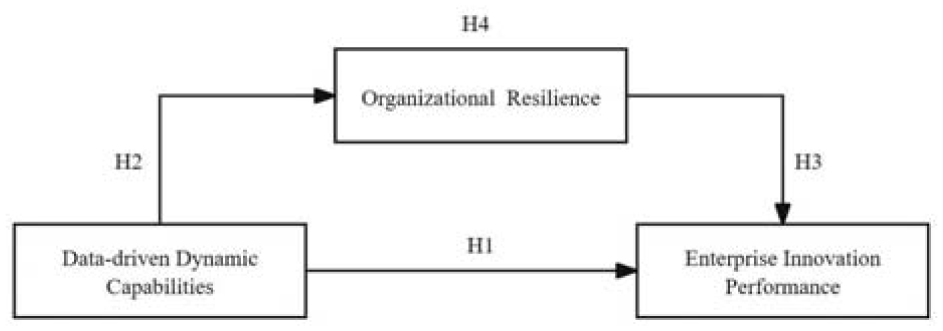
Theoretical model.
Research Design
Sample Selection and Data Collection
The objective of this study is to examine how data-driven dynamic capabilities influence organizational resilience and innovation performance in a digital context. Accordingly, the survey targeted managerial-level respondents from data-intensive firms, as managers are key informants who possess comprehensive knowledge of firms’ digital strategies, data utilization practices, and innovation activities. Prior research suggests that senior and middle managers are appropriate respondents for studies on dynamic capabilities and organizational-level innovation because they are directly involved in strategic decision-making and resource orchestration.
Data were collected using a mixed survey approach. First, an online questionnaire was distributed through Wenjuanxing, a widely used professional survey platform in China. Second, offline surveys were administered through face-to-face interviews with firms that matched the research focus on digitalization and data-driven operations. This combined approach helped increase sample diversity and reduce single-channel sampling bias.
To ensure data quality and internal consistency, several procedural controls were implemented during data collection. These included the use of screening questions and reverse-coded items to detect inattentive or inconsistent responses. Questionnaires with incomplete answers, patterned responses, or logical inconsistencies were excluded from the final dataset. These procedures helped mitigate potential response bias and enhance the reliability of the data.
The survey was conducted over a 3-month period from July to September 2024. A total of 402 questionnaires were collected (315 online and 87 offline). After data screening, 259 valid questionnaires remained, yielding an effective response rate of 64.43%, which is comparable to prior survey-based studies in organizational and innovation research.
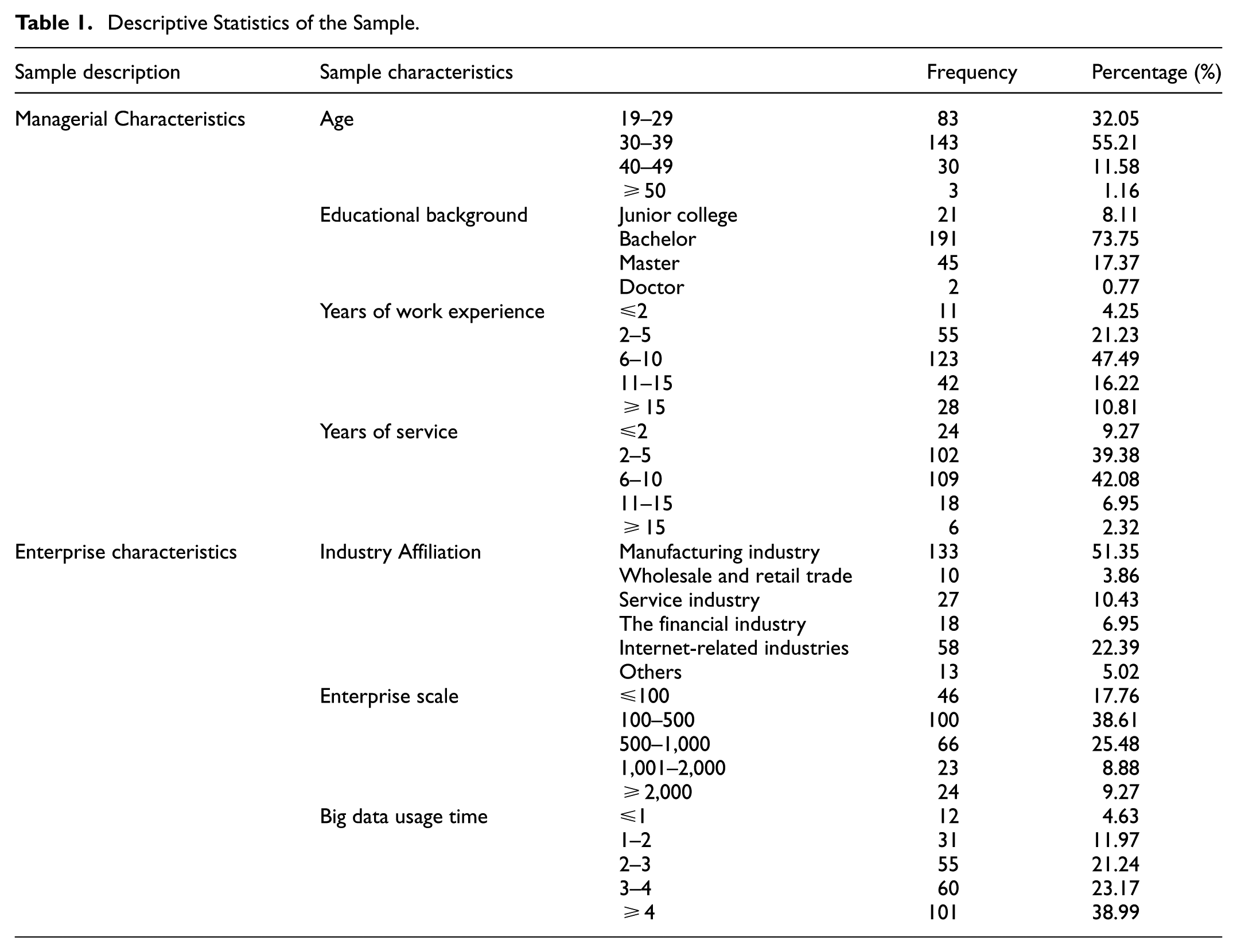
Table 1 reports the descriptive statistics of the final sample, including managerial demographics, firm size, industry affiliation, and duration of big data usage. Overall, the sample exhibits substantial variation across industries and firm characteristics, making it suitable for examining the proposed relationships between data-driven dynamic capabilities, organizational resilience, and innovation performance.
Descriptive Statistics of the Sample.
Variable Measurement
The scales for the main variables in this study have developed relatively maturely, mainly including enterprise innovation performance, data-driven dynamic capabilities and organizational resilience. The content of the scales is all borrowed from the scales that have been used in domestic literature. The Likert 7-point scale is adopted to measure the questions, where 1 indicates “strongly disagree” and 7 indicates “strongly agree.”
Dependent Variable
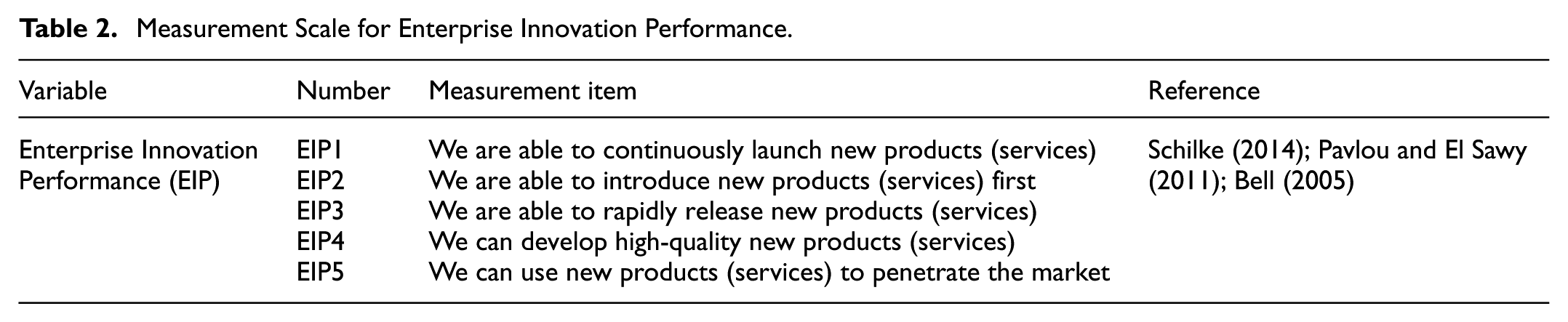
Enterprise Innovation Performance (EIP). Enterprise innovation performance reflects a firm’s ability to transform its resources and capabilities into new products, processes, and services that can be successfully introduced to the market. Following prior studies (Bell, 2005; Pavlou & El Sawy, 2011; Schilke, 2014), innovation performance was operationalized as a perceptual construct capturing product and service innovation outcomes, rather than objective counts, to ensure comparability across industries and firm sizes. Accordingly, five items were used to measure EIP, focusing on firms’ abilities to continuously introduce new products or services, act as early movers, accelerate time-to-market, develop high-quality offerings, and use innovation to penetrate markets. The detailed measurement items and their theoretical sources are reported in Table 2, ensuring transparency and traceability of the construct operationalization.
Measurement Scale for Enterprise Innovation Performance.
Independent Variable
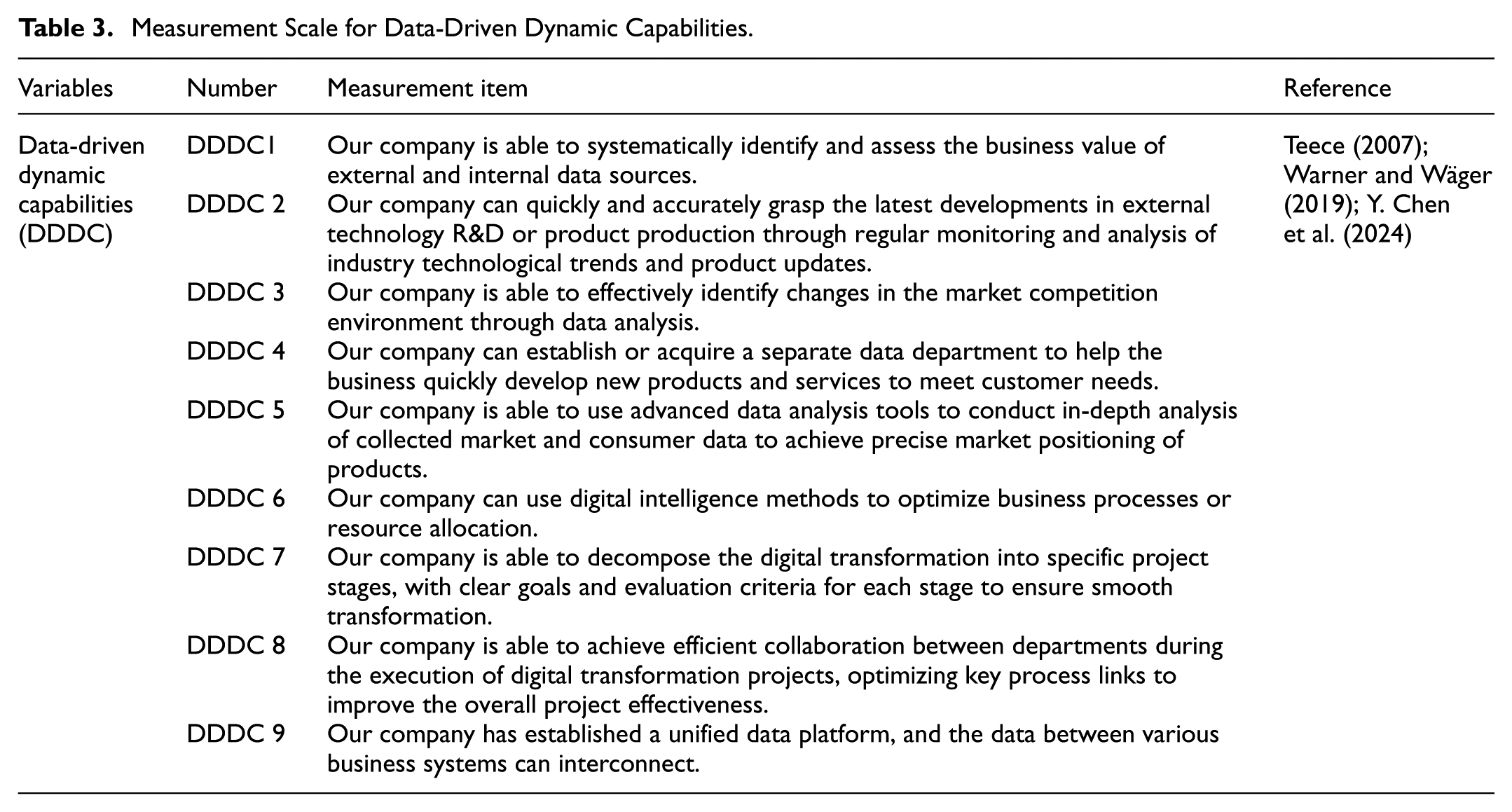
Data-driven dynamic capabilities (DDDC). Data-driven dynamic capabilities refer to a firm’s ability to leverage big data technologies to sense opportunities, seize value-creating actions, and reconfigure organizational resources in a data-informed manner. The measurement of this construct builds on the micro-foundations of dynamic capabilities (Teece, 2007), digital transformation research (Warner & Wäger, 2019), and recent scale development in the Chinese context (Y. Chen et al., 2024). Consistent with the dynamic capability framework, DDDC was modeled as a three-dimensional construct, comprising digital sensing, digital seizing, and digital transforming. A total of nine items were adapted from Y. Chen et al. (2024) with minor wording adjustments to fit the survey context. All items capture firms’ abilities to identify valuable data, analyze market and technological changes, support evidence-based decision-making, and coordinate digital transformation processes. The full set of items, dimensions, and source references is presented in Table 3.
Measurement Scale for Data-Driven Dynamic Capabilities.
Mediating Variable
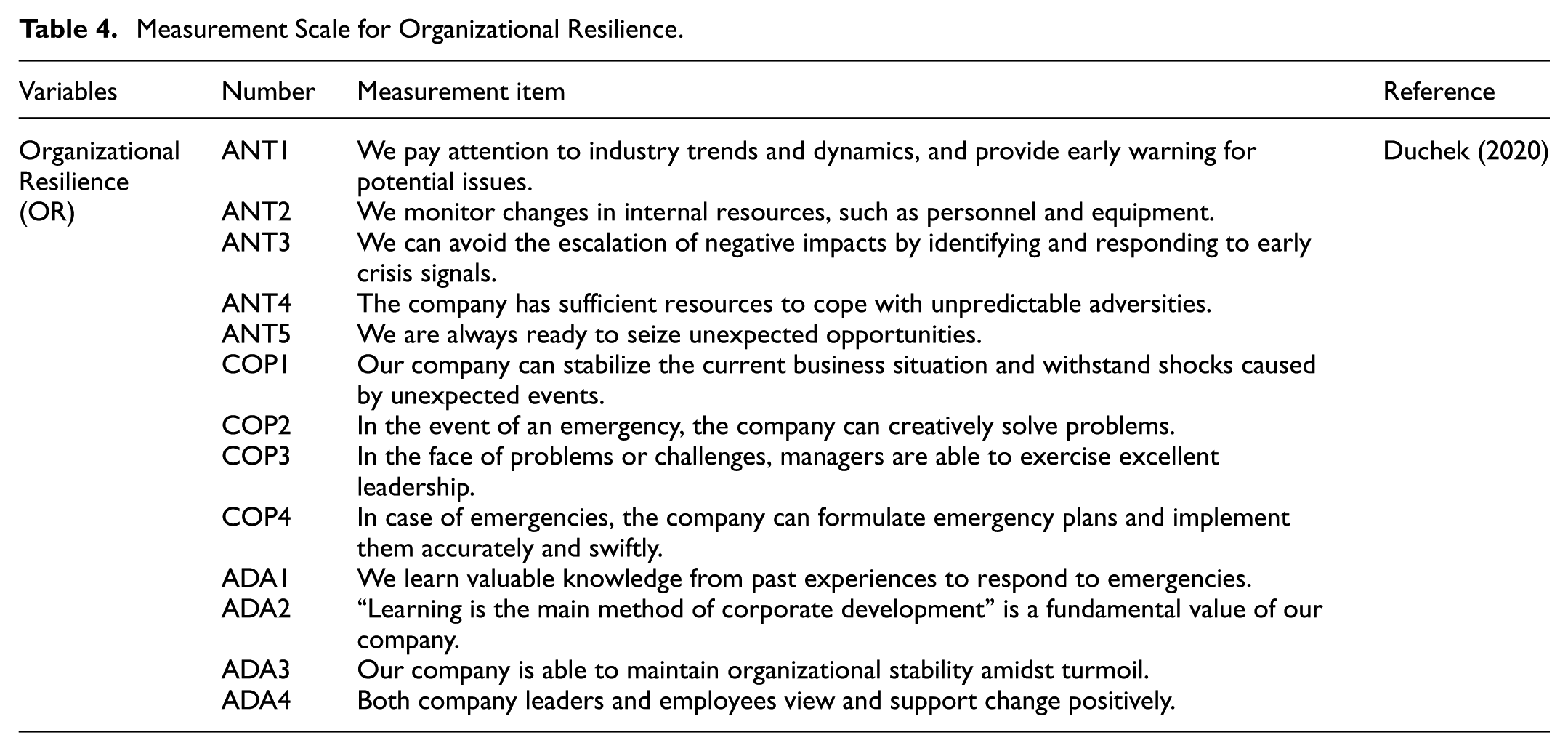
Organizational Resilience (OR). Organizational resilience represents a firm’s capability to anticipate disruptions, respond effectively to shocks, and adapt by restoring or improving organizational functioning over time. Drawing on Duchek’s (2020) capability-based conceptualization, organizational resilience was operationalized as a multidimensional construct encompassing anticipation, coping, and adaptation. Thirteen items were adopted to capture these dimensions, reflecting firms’ early warning awareness, crisis response capacity, leadership effectiveness, learning from past experience, and openness to change. All items were measured using a 7-point Likert scale. The detailed measurement items and their theoretical origins are reported in Table 4, allowing for clear alignment between conceptual definitions and empirical indicators.
Measurement Scale for Organizational Resilience.
Control Variables
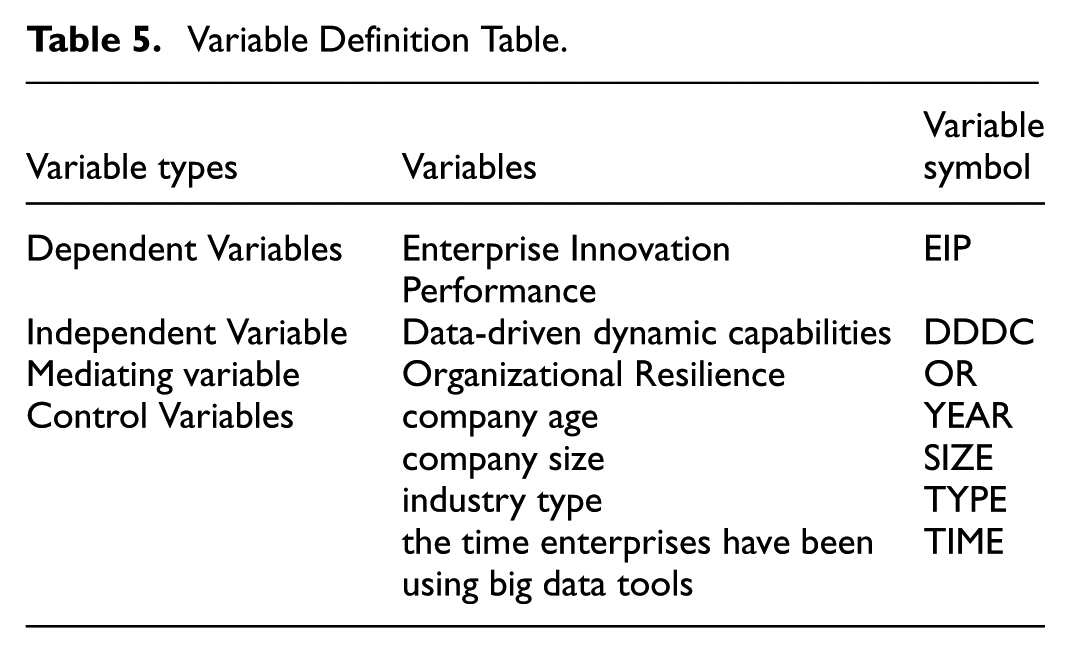
To minimize the impact of differences between enterprises and their industries on the measurement of organizational resilience, this study draws on relevant domestic and international research and selects company age (YEAR), size (SIZE), industry type (TYPE), and the time enterprises have been using big data tools (TIME) as control variables. Previous studies have generally confirmed that these four types of variables have significant effects on innovation performance, and enterprise innovation is the result of multiple factors. Therefore, it is necessary for this study to control the influence of the above variables in the model (Duchek, 2020).
Definitions of all variables are summarized in Table 5.
Variable Definition Table.
Common Method Variance
The data collection of this study was conducted through a questionnaire survey, which may have led to a certain degree of common method variance (CMV) problem. To prevent such issues, this study controlled for common method variance through both questionnaire design and statistical testing. Firstly, when distributing the questionnaires, each academic term was explained in a non-specialized manner, and respondents were informed that there was no right or wrong answer for each scoring option; they only needed to make the correct choice based on their own understanding and feelings. Secondly, in terms of statistical testing, this study used Harman’s single-factor test to conduct factor analysis on all the scale items related to data-driven dynamic capabilities, organizational resilience, and enterprise innovation performance in the questionnaire. The contribution rate of the first factor was 33.21%, which was less than 40%. Therefore, the data obtained in this study did not have a serious common method variance problem.
Reliability and Validity Test
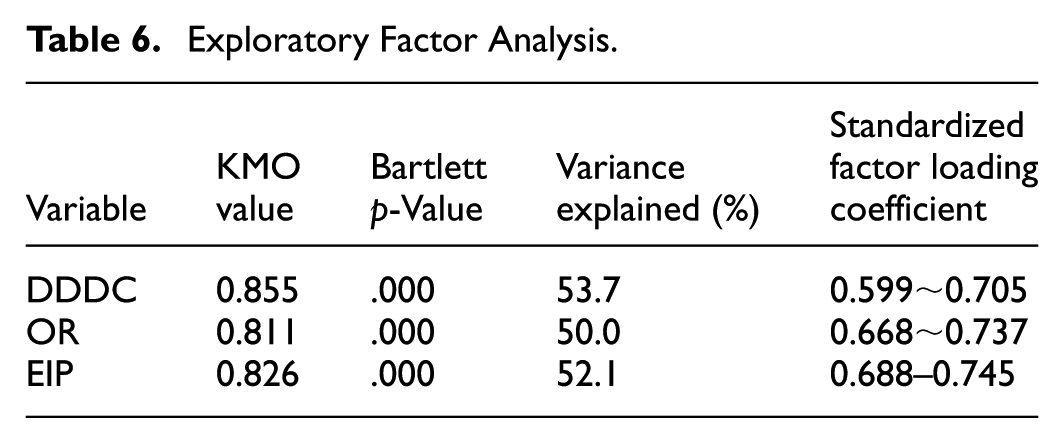
This study conducted exploratory factor analysis on the data using SPSS 28.0, and the results are presented in Table 6. The KMO values, Bartlett’s sphericity test, variance explanation rate, and standardized factor loading coefficients of all variables met the statistical requirements, indicating that the variables have good convergent validity.
Exploratory Factor Analysis.
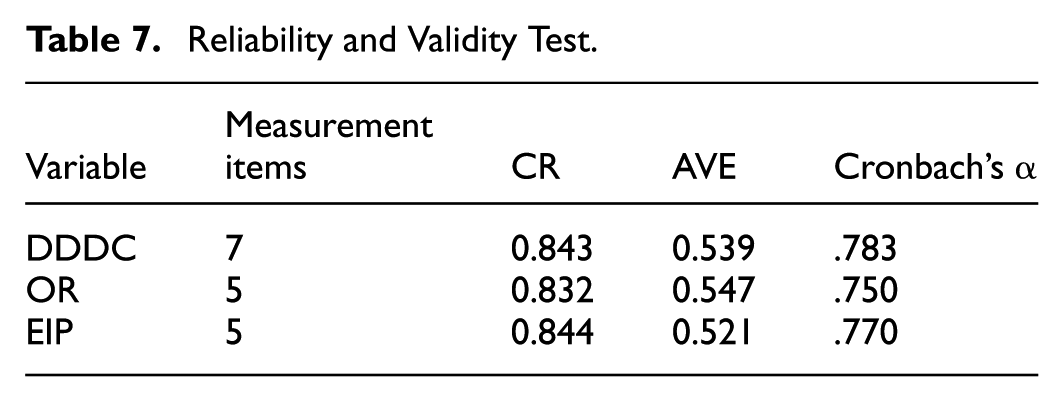
Next, the reliability and validity of the data were tested, and the results are shown in Table 7. The items used in this study were all from relatively mature scales in related fields at home and abroad and were moderately modified. During the pre-survey, the questions and the overall questionnaire were further improved based on the suggestions of experts in related fields and senior executives within enterprises. Therefore, the questionnaire has a certain degree of content validity. The Cronbach’s α coefficient of all variable items is greater than .7, the composite reliability (CR) is above .8, and the average variance extracted (AVE) is greater than 0.5, indicating that the scale used in this study has good internal consistency.
Reliability and Validity Test.
Confirmatory factor analysis (CFA) was conducted on the measurement items through AMOS 23 software and the results are shown in Table 8. The test results showed that χ2/df = 2.183 < 3, TLI = 0.917, CFI = 0.904, both greater than the threshold of 0.9, RMSEA = 0.048 < 0.1, and RMR = 0.047 < 0.05, indicating that the questionnaire of this study has good structural validity. Therefore, the composite reliability and convergent validity of the questionnaire are good.
Overall Fitting Result of Scale.

Analytical Strategy (SEM and NCA)
This study adopts a two-stage analytical strategy. First, structural equation modeling (SEM) is employed to test the hypothesized relationships and mediation effects. Second, necessary condition analysis (NCA) is applied to examine the necessity logic among the variables (Richter et al., 2020).
Empirical Analysis and Results
Descriptive Statistics and Correlation Analysis
Before conducting hypothesis testing, this study performed descriptive statistics and correlation analysis on the core research variables (see Table 1). Table 9 shows that the square root of the AVE of any variable in this study is greater than the correlation coefficient between it and other variables, proving that the variables have a good discriminant effect. From this, the correlation relationships between some research variables can be initially obtained: enterprise innovation performance is significantly positively correlated with data-driven dynamic capabilities and OR, and the correlation coefficient values are below the threshold of 0.7, preliminarily verifying some research hypotheses. This study will conduct hypothesis testing based on the correlation analysis to further explore the relationships among the main core variables.
Descriptive Statistics of Related Variables and Pearson Correlation Coefficient.
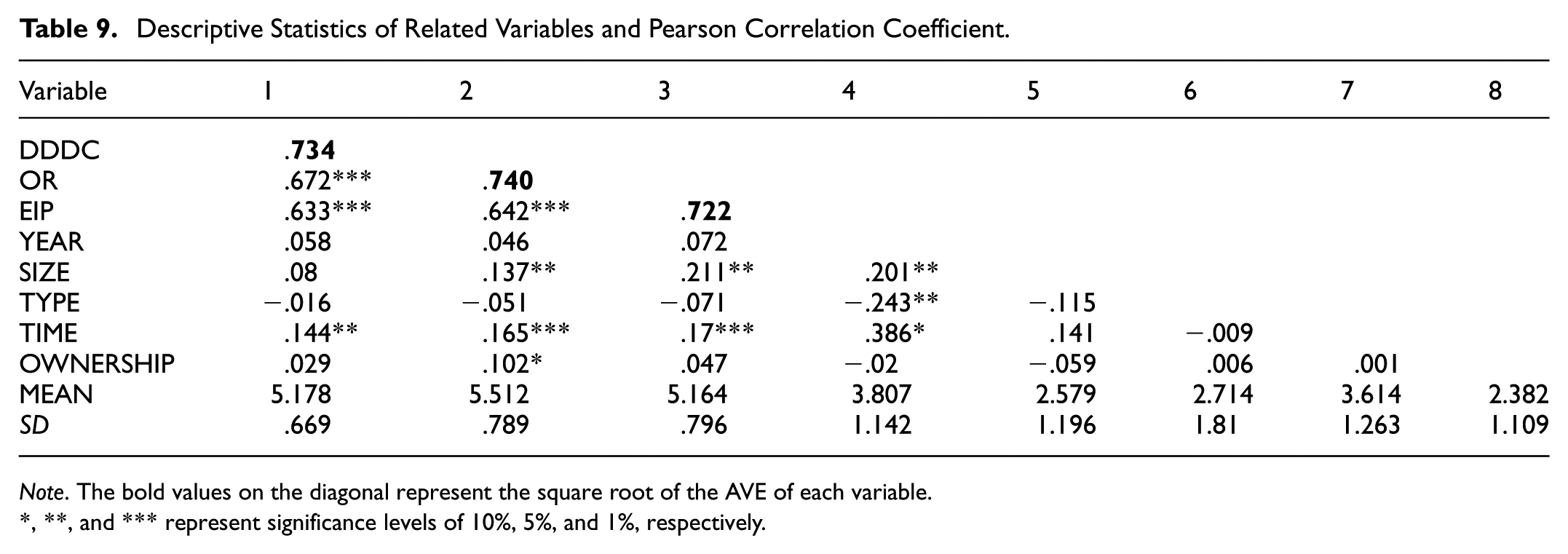
Note. The bold values on the diagonal represent the square root of the AVE of each variable.
, **, and *** represent significance levels of 10%, 5%, and 1%, respectively.
Necessary Condition Analysis
Necessary Conditions Analysis (NCA), initially introduced by Dul in 2016, represents a novel approach and data analysis methodology. It not only determines whether a specific factor is essential for achieving an outcome but also evaluates the significance of this necessary condition. To denote necessity, scholars often use phrases like “X is indispensable for Y,”“X is a prerequisite for Y,” or “Y depends on X” (Dul, 2016). Consequently, a necessary condition functions as a limiting factor, bottleneck, or critical element that must be fulfilled to attain a desired result. If this condition is unmet, no other factors can compensate; in other words, if X is essential for outcome Y, Y cannot occur without X being present. NCA has been applied in various fields, including Marketing (Dul, 2016), Supply Chain Management (Bokrantz & Dul, 2023), and International Business (Richter & Hauff, 2022).
This study uses the Rstudio software to install the NCA package and conduct a necessary condition analysis on the relationship between data-driven dynamic capabilities, organizational resilience, and enterprise innovation performance (Dul, 2016).
Scatter Plot
The upper envelope line can be obtained through the upper bound line provided by NCA: upper bound envelope—free disposal hull (CE-FDH) and upper bound regression—free disposal hull (CR-FDH), and the scatter plot can be drawn. As shown in Figure 2, the upper envelope line is located above and to the left of each observation point in each scatter plot, and there are some blank areas, indicating that there may be necessary conditions.
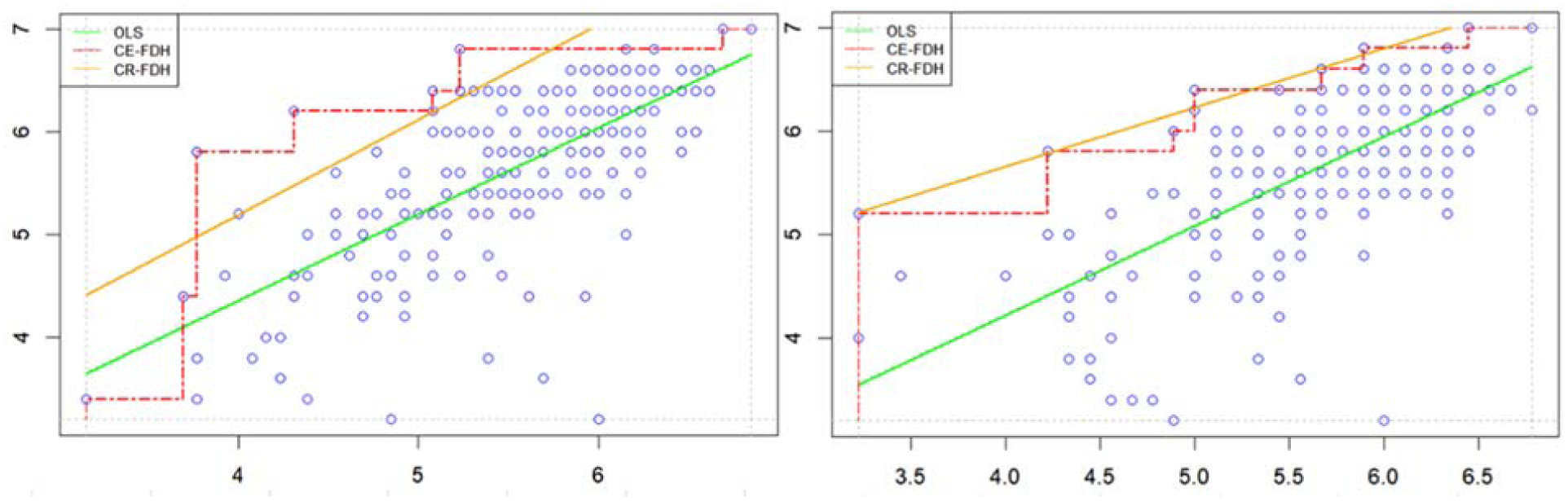
NCA scatter plots.
Quantification of NCA Parameters and Analysis
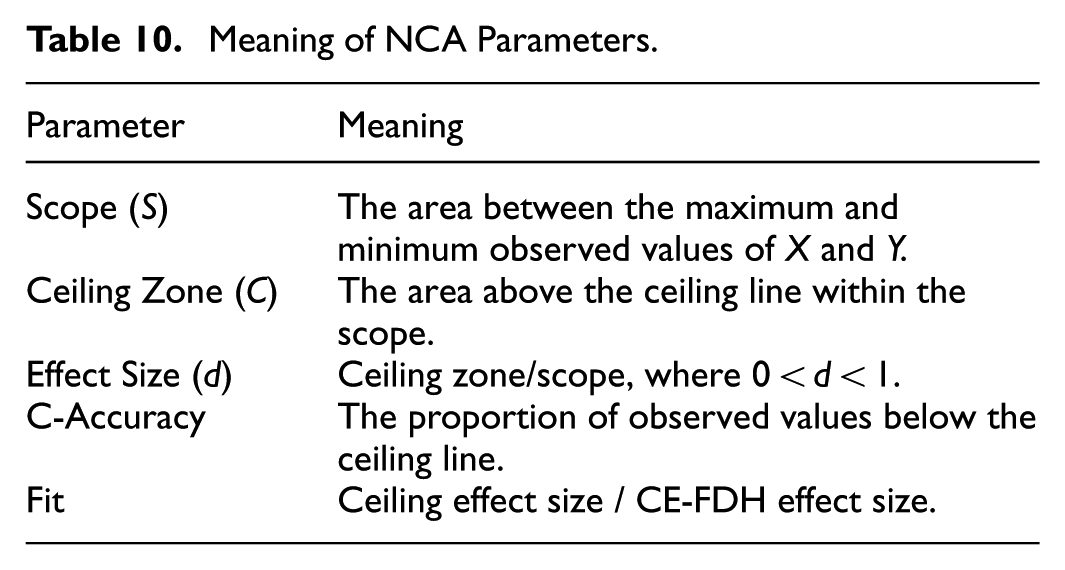
This study first explains the key parameters and then conducts NCA analysis, as detailed in the Table 10. Subsequently, through NCA significance and effect size analysis, the results are organized into Figure 3 and Table 11. According to Dul’s (2016) reference standards, data-driven dynamic capabilities can be the antecedent of organizational resilience, with upper bound envelope and upper bound regression effect values of 0.372 and 0.345 respectively, indicating a high effect and significance. Similarly, data-driven dynamic capabilities can also be the antecedent of enterprise innovation performance, with upper bound envelope and upper bound regression effect values of 0.245 and 0.207 respectively, indicating a medium effect and significance (See Table 11).
Meaning of NCA Parameters.
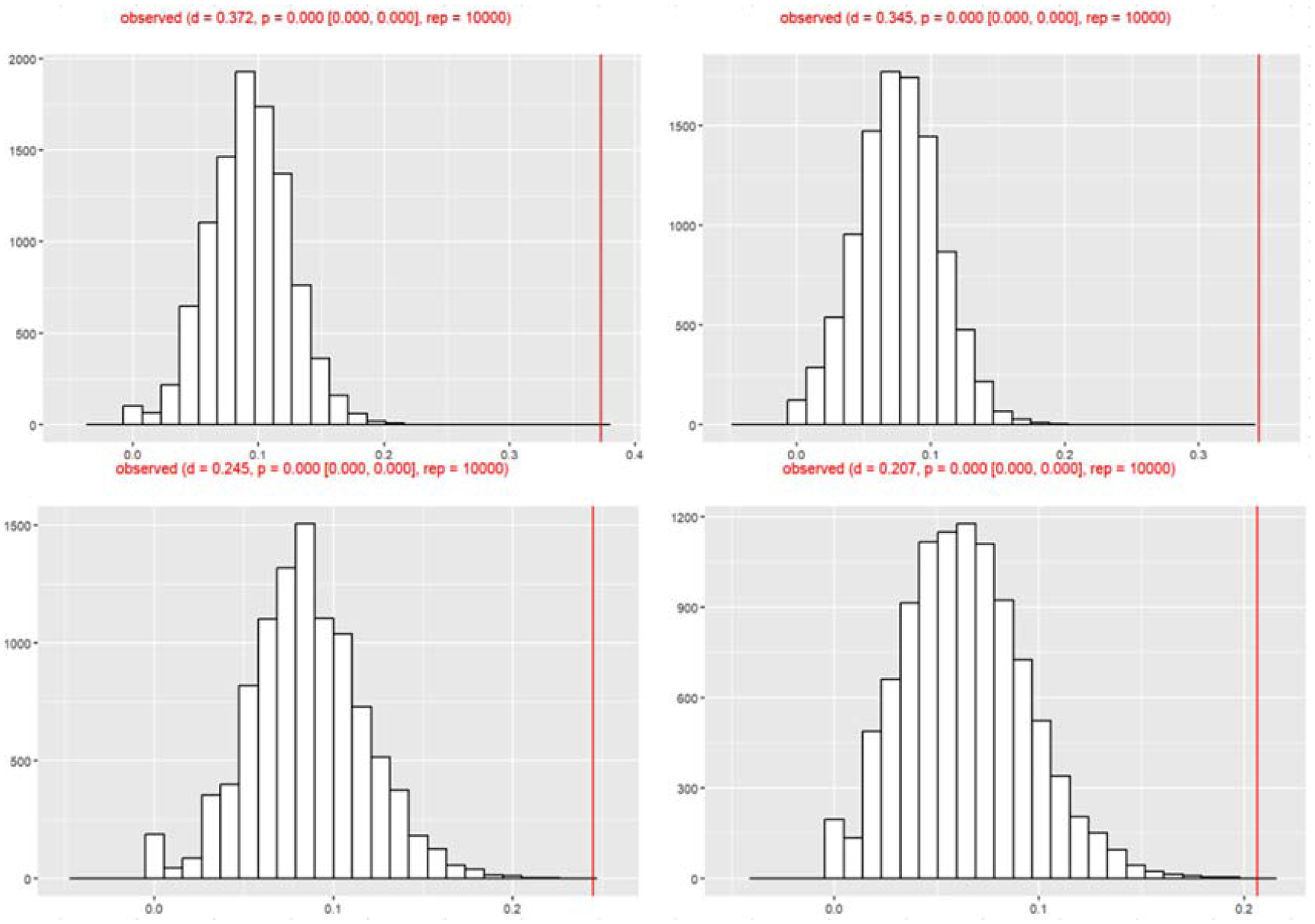
Significance test of NCA.
NCA Parameter Evaluation.
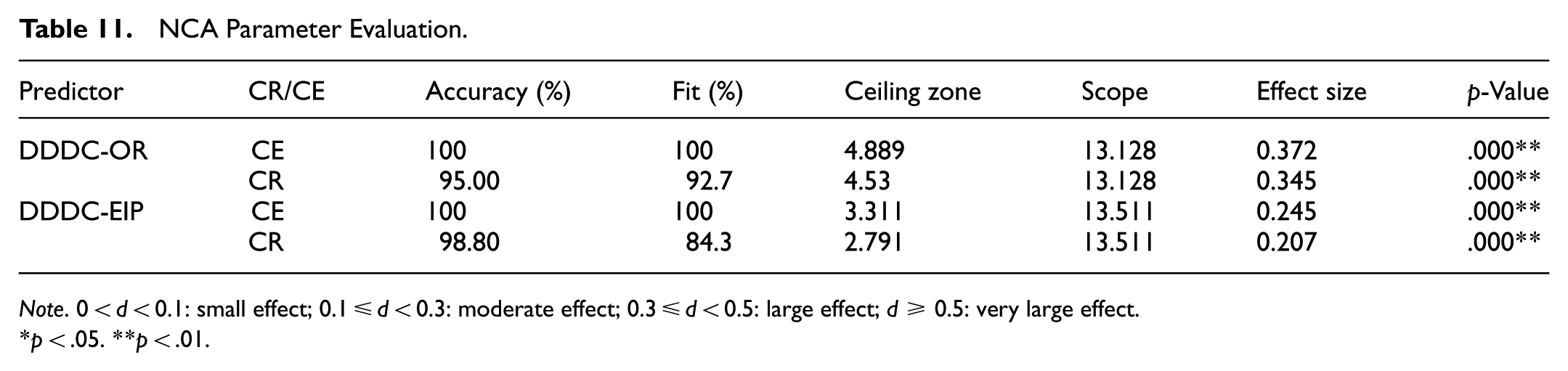
Note. 0 < d < 0.1: small effect; 0.1 ≤ d < 0.3: moderate effect; 0.3 ≤ d < 0.5: large effect; d ≥ 0.5: very large effect.
p < .05. **p < .01.
Bottleneck Level Analysis
The bottleneck level (%) refers to a certain level within the maximum observable range of the target result, and the level value (%) that the antecedent conditions need to meet within the maximum observable range. The results of the bottleneck level analysis of enterprise innovation performance in this study are shown in the Table 12. To achieve an enterprise innovation performance level of 30% or less, an organizational resilience level of 14.6% is required, but data-driven dynamic capabilities are not a necessary condition at this time; to achieve an enterprise innovation performance level of 30% to 50%, an organizational resilience level of 14.7% is required, but data-driven dynamic capabilities are still not a necessary condition at this time; to achieve an enterprise innovation performance level of 60%, a data-driven dynamic capability level of 28.1% and an organizational resilience level of 14.7% are required; to achieve an enterprise innovation performance level of 70%, a data-driven dynamic capability level of 46.9% and an organizational resilience level of 31.3% are required; to achieve an enterprise innovation performance level of 80%, a data-driven dynamic capability level of 50% and an organizational resilience level of 52.1% are required; to achieve an enterprise innovation performance level of 90%, a data-driven dynamic capability level of 75% and an organizational resilience level of 56.3% are required; to achieve an enterprise innovation performance level of 100%, a data-driven dynamic capability level of 90.6% and an organizational resilience level of 95.8% are required.
Necessary Condition Combination Analysis Bottleneck.

Note. NN = Not necessary.
Hypothesis Testing
Before conducting the formal tests of the hypotheses, this study used SPSS 28.0 to de-center the independent variables and control variables. Variance inflation factor (VIF) diagnostics were performed on all the hypothesized models, and the results showed that all VIF values were less than 3.0, indicating that there was no multicollinearity problem in the regression models.
This study used SPSS 28.0 software to set up the models and employed hierarchical regression analysis to test and analyze the hypotheses regarding the relationships among data-driven dynamic capabilities, organizational resilience, and enterprise innovation performance. The regression results is presented in Table 13.
Hierarchical Regression Analysis Results.
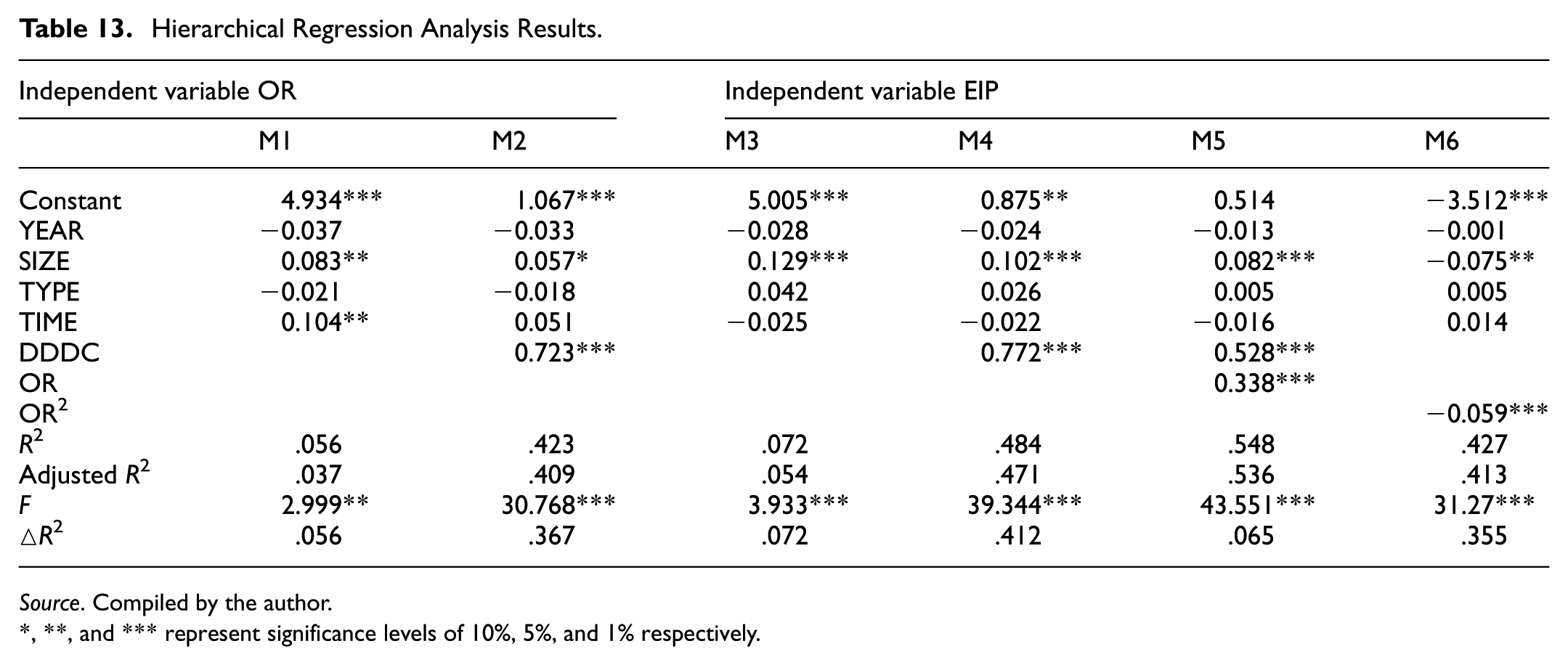
Source. Compiled by the author.
, **, and *** represent significance levels of 10%, 5%, and 1% respectively.
In Models 1 and 3, five control variables, namely, enterprise type, enterprise scale, enterprise age, duration of big data operation, and ownership type, were included after processing to examine whether they would have a significant impact on organizational resilience. In Model 2, the independent variable of data-driven dynamic capabilities was added on the basis of Model 1, and the F value changed significantly (p < .001). The regression coefficient of data-driven dynamic capabilities was significant (β = .723, p < .001), indicating that data-driven dynamic capabilities would have a significant positive impact on organizational resilience. Thus, Hypothesis H2 was supported.
Similarly, in Models 4 and 5, the F value changed significantly (p < .001), and the regression coefficients of data-driven dynamic capabilities and organizational resilience on innovation performance were significant (β = .772, p < .001; β = .338, p < .001), respectively. This suggests that both data-driven dynamic capabilities and organizational resilience would have a significant positive impact on enterprise innovation performance. Therefore, H1 was supported.
Next, this study added the standardized squared term of organizational resilience to the above models. The F value changed significantly (p < .001), and the regression coefficient of the squared term on innovation performance was significantly negative (β = −.059, p < .001), indicating an inverted U-shaped relationship between organizational resilience and innovation performance. Thus, H4 was supported. That is, compared with moderate organizational resilience, both too low and too high levels of organizational resilience would result in relatively lower innovation performance, demonstrating the phenomenon of “excess is as bad as deficiency”.
This study further examined the mediating effect of organizational resilience using SPSS 28.0 software along with its Process and mediate plugins and the product coefficient method. The Bootstrap sampling method has relatively high test power and imposes no restrictions on the sampling distribution of the mediating effect, making it more suitable for the relatively small sample size of this study. Therefore, 5,000 Bootstrap samplings were conducted with a confidence interval level of 95%. The test results are shown in the Table 14. The confidence interval of the effect of data-driven dynamic capabilities on enterprise innovation performance through organizational resilience is [0.147, 0.368], and H3 is once again verified. Moreover, both the direct effect and the values of a and b are significant, indicating that organizational resilience plays a partial mediating role.
Mesomeric Effect Test Results.

, **, and *** represent significance levels at 10%, 5%, and 1%, respectively.
Robustness and Endogeneity Tests
To examine the sensitivity of the obtained conclusions to different samples, robustness tests are conducted through sub-sample regressions. Three methods are adopted for the tests: selecting sub-samples, replacing explanatory variables, and adding control variables. Given that Zhejiang Province is at the forefront of domestic digital reform and has a relatively high level of digitalization, the sample enterprises in Model 7 are restricted to those located in Zhejiang. Additionally, considering that big data analysis capabilities have a positive impact on enterprise performance, Model 8 uses big data analysis capabilities as a substitute variable for data-driven dynamic capabilities. This variable is measured through eight items and two sub-variables: big data technical capabilities (BDTC) and big data application capabilities (BDMC). In Model 9, to address potential endogeneity issues caused by other relevant explanatory variables, the company’s annual revenue (REVE) is added as a control variable. The test results are shown in Table 15. The influence relationships of the relevant variables are consistent with the regression analysis and are significant, indicating that the empirical analysis part of this study has good robustness.
Robustness Test Results.
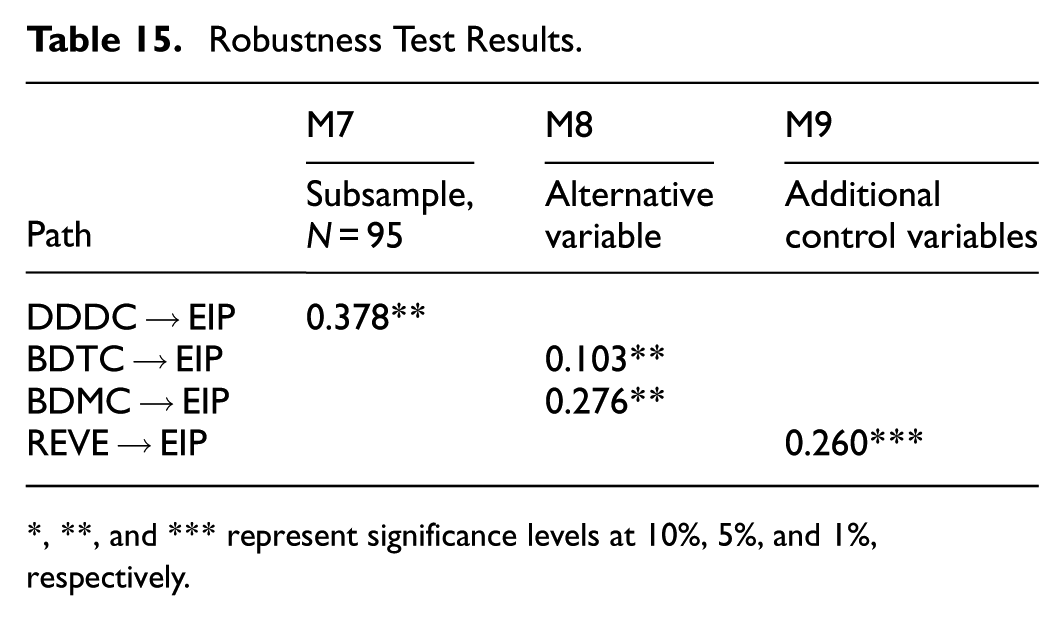
, **, and *** represent significance levels at 10%, 5%, and 1%, respectively.
Discussion and Conclusion
Theoretical Contributions
First, this study extends the application of hierarchy dynamic capability theory in the digital context as well as in the crisis context. Many scholars remain skeptical about the hierarchy model of capabilities (Tian et al., 2025; Zhong et al., 2023). Although Winter (2003) provide the definition of first-order capabilities from second-order capabilities, not all second-order capabilities can exist in various situations. In this paper, we treat organizational resilience as second-order capabilities and data-driven resources sensing capability, data-driven resources seizing capability, and data-driven resources reconfiguration capability as three first-order capabilities. Moreover, by empirically validating the hierarchical model of capabilities, we provide empirical support for the theory of hierarchical dynamic capabilities in predicting desired outcomes in the crisis context. Hence, this paper enriches the understanding of the mechanisms by which SEMs gradually develop dynamic capabilities in the context of crisis.
Second, this study deepens the research on the outcome of data-driven dynamic capabilities. Under the background of digital technology application such as big data, cloud technology and artificial intelligence, data-driven dynamic capabilities are regarded as crucial for copying with the changing environments and achieve competitive advantages (Pundziene et al., 2022; Zhong et al., 2023). However, there have been limited empirical studies investigating the impact of data-driven dynamic capabilities on enterprises’ performance. Although some leading attempts have explored the influence of data-driven dynamic capabilities on responsible innovation (Y. Chen et al., 2024), their work does not mention the distinction of utilizing data-driven dynamic capabilities in the context of crisis. In this study, we highlight the mechanisms regarding how data-driven dynamic capabilities helps SEMs build organizational resilience, thereby enriching the understanding of the role of data-driven dynamic capabilities in crisis management. Through necessary condition analysis, it is demonstrated that data-driven dynamic capabilities consistently coexist with organizational resilience, serving as a foundational element for firms to navigate market turbulence, competitive pressure, and adversity. This study unveils the internal mechanism between data-driven dynamic capabilities on firm innovation performance, which responds to the call for investigating the outcome of data-driven dynamic capabilities (Y. Chen et al., 2024).
Finally, this study enriches the research on the relationship between organizational resilience and innovation performance. Unlike previous studies that predominantly focused on short-term outcomes (Gao et al., 2017), this research uncovers the potential long-term impact of organizational resilience on innovation performance. Given its path-dependent nature, organizational resilience requires time to manifest its benefits, thereby extending the work of Ortiz-de-Mandojana and Bansal (2016) on organizational resilience and sustainable business practices. The findings indicate that moderate levels of organizational resilience can significantly enhance innovation performance, while excessive organizational resilience may lead to resource inefficiencies or decision-making rigidity, potentially suppressing innovation motivation. Furthermore, the “dark side” of organizational resilience was explored. This study analyzed the negative impacts of excessive development of organizational resilience by combining the “Cobra Effect.” Excessive emphasis on organizational resilience may lead to problems such as imbalance in resource allocation and rigid decision-making, thereby generating unexpected negative consequences (Williams & Shepherd, 2016). Therefore, organizational resilience is not a “panacea”; its effect on innovation performance has certain boundary conditions. When firms pursue organizational resilience, they should be vigilant about the limitations and negative effects it may bring and rationally plan resource investment to achieve more effective improvement of innovation performance.
Implications to Practice
Our research findings provide several guidance for managers about how to enhance innovation performance in the digital context. First, managers in SMEs should prioritize the development of data-driven dynamic capabilities. These capabilities are essential for enhancing innovation performance in the digital age. Specifically, they enable enterprises to extract valuable knowledge resources from big data and optimize their utilization to support internal innovation activities. Consequently, managers should place significant emphasis on data mining and utilization, integrate the development of digital capabilities into corporate strategy, and institutionalize these practices as part of daily operations, thereby enhancing the enterprise’s adaptability to market changes. Moreover, enterprises should improve employees’ digital literacy by providing training and recutting talent such as data scientists to enhance enterprise-level data-driven dynamic capabilities.
Second, cultivating organizational resilience is crucial for firms to achieve higher innovation perfomance in uncertain environments. Managers in SEMs should focus on cultivating the organization’s forward-looking vision, responsiveness, and adaptability in the VUCA environment. Specifically, managers should leverage digital sensing capabilities to anticipate unpredictable events, develop comprehensive contingency plans, and monitor early warning signals of emergencies. Furthermore, it is essential to rationally plan the level of organizational resilience to avoid excessive investment. The results of this study suggest that moderate levels of organizational resilience are most conducive to enhancing innovation performance, while excessive organizational resilience may lead to resource waste or the “cobra effect.” Specifically, when organizational resilience is at an optimal level, firms can fully leverage data-driven dynamic capabilities to promote innovation outcomes such as new product development and patent applications. Therefore, managers should focus on balancing organizational resilience with innovation performance in practice, avoiding the pursuit of excessively high organizational resilience levels.
Finally, governments should formulate measures to promote enterprises, especially SMEs, in investing the construction of digital platforms to improve data-driven dynamic capabilities. For instance, the government could establish a “Risk Sharing Fund for SME Data Capability” with public funds, eliminating the psychological barriers that SMEs have in investing in data collection and analyzing capabilities development. Meantime, governments should encourage universities to offer interdisciplinary courses, cultivate talents who processes both professional knowledge and digital literacy. Furthermore, industry associations can regularly publish case studies of enterprises that performed better in data-drive dynamic capabilities, organizational resilience and innovation, providing actionable benchmarks for SMEs.
Limitations and Future Scope
To explore how data-driven dynamic capabilities incorporates organizational resilience to improve innovation performance of SMEs in China, we anchor our theoretical framework in the hierarchy model of capabilities. Through survey-based quantitative data analysis, we identify the distinct mechanism through which data-driven dynamic capabilities fosters innovation performance. Specifically, we demonstrate that organizational resilience mediates the influence of data-driven dynamic capabilities on innovation performance. More importantly, organizational resilience is a second-order capability that allows enterprises to survive during the crisis and data-driven dynamic capabilities serve as first-order capabilities that positively influence organizational resilience and innovation performance. Furthermore, we find an inverted U-shaped relationship between organizational resilience and innovation performance. Our explanation for this is that excessive organizational resilience might lead to conservative decision-making, which reduce the speed of innovation.
This study has several limitations that offer valuable opportunities for future research. Firstly, we only consider the mediating effect of organizational resilience from hierarchical dynamic capabilities theory, future research can explore other mediating factors, such as organizational learning and capability reconfiguration from other perspectives. Second, although this study showed the inverted U-shape relationship between organizational resilience and innovation performance, we do not consider and test moderating factors that might influence this relationship. Future research is very interested in investing moderating factors such as government policies, managerial attention and environmental turbulence. Moreover, considering the convenience of data collection, this study only collected survey data from the management levels of some firms in the Yangtze River Delta region in China. Additionally, this study lacks follow-up investigations on the respondents, lacks diversity in the time dimension, and has a small sample size, which reduces the generalizability of the research conclusions. Therefore, future research can collect data from other industries, regions, and countries to further support the results of this study. Finally, this study tested the theoretical model using cross-sectional data, which fails to examine how firms utilize data-driven capabilities overtime to help improve innovation performance. Future research could employ qualitative methods or use panel data to address the limitations of cross-sectional survey research and to explore additional influencing factors of organizational resilience. Such approaches would provide deeper insights into the dynamic processes involved and enhance the robustness of findings.
Footnotes
Acknowledgements
The authors would like to express their sincere gratitude to all colleagues and reviewers whose constructive comments greatly improved this manuscript. The authors also thank the participating organizations and respondents for their valuable time and insights during the data collection process.

Ethical Considerations
Ethical approval was not required for this study as it did not involve human or animal experiments. Participation in the survey was voluntary and anonymous.
Consent to Participate
All participants provided informed consent prior to participating in the study.
Author Contributions
All authors contributed to the study conception and design. Data collection and analysis were performed by Haibei Luo. The first draft of the manuscript was written by Haibei Luo, and all authors commented on previous versions. All authors approved the final version.
Funding
The authors disclosed receipt of the following financial support for the research, authorship, and/or publication of this article: This work was supported by the Humanities and Social Sciences Project of the Ministry of Education of China (Grant No. 24JYC630151), the Major Humanities and Social Sciences Research Projects in Zhejiang higher education institutions (Grant No. 2024QN177), Zhejiang Provincial Philosophy and Social Sciences Planning Project (Grant No. 23NDJC405YBM), “the Fundamental Research Funds for the Provincial Universities,” Zhejiang Institute of Economics and Trade (Grant No. 23SBYB03).
Declaration of Conflicting Interests
The authors declared no potential conflicts of interest with respect to the research, authorship, and/or publication of this article.
Data Availability Statement
The data supporting the findings are available from the corresponding author upon reasonable request.*