






Abstract
Childhood experiences, encompassing both positive and negative aspects, constitute an important relational context associated with individuals’ later relational and social functioning. Nevertheless, how specific sub-dimensions of retrospectively recalled childhood experiences are cognitively and emotionally organized through attachment orientations and the structural organization of the social atom remains insufficiently explored. This study examines the interpretive mediating role of attachment-informed childhood experiences in the association between attachment style and social atoms among university students. Data were collected from 401 university students (212 female, 189 male) using the Three-Dimensional Attachment Styles Scale, the Childhood Experiences Scale, and the Social Atom Scale. Data were analyzed using Pearson and Spearman correlation analyses, followed by single mediation analyses with bootstrapping procedures to estimate 95% confidence intervals for indirect associations. The findings revealed that childhood experiences, particularly the sub-dimensions of Worthlessness, Subjugating, and Threatening, were indirectly associated with the relationship between attachment styles (Avoidant, Anxious-Ambivalent, Secure) and social atom structures. The results suggested that childhood experiences function not as objective developmental antecedents but as attachment-related interpretive memories that are indirectly associated with the relationship between attachment styles and the structural organization of the social atom, highlighting how early relational experiences as retrospectively reconstructed through attachment-based internal working models are associated with adult social relational configurations in young adulthood.
Introduction
Early relational experiences are considered an important relational context associated with how individuals begin to interpret emotional safety, proximity, and interpersonal expectations. Across development, these experiences are psychologically represented and retrospectively interpreted through attachment-related internal working models, and are often associated with the perceived structure and organization of their broader social networks, including the social atom. Building on this framework, attachment theory proposes that early relational interactions are cognitively and emotionally organized into internal working models that are linked to individuals’ expectations of relationships across the lifespan (Bowlby, 1988; Hazan & Shaver, 1994). Accordingly, although direct causality cannot be established within a cross-sectional design, childhood experiences, attachment orientations, and adult relational structures -such as the social atom- are more appropriately considered as theoretically interconnected components within a broader relational and interpretive framework. This study examines how childhood experiences as attachment-informed representations may represent an interpretive link in the association between attachment styles and social atom configurations may help clarify how early relational contexts continue to be psychologically represented within adult relational functioning.
Attachment Style
Early relational environments are not deterministic, but they provide an important developmental context for emotional and relational organization. The environment in which a child first encounters the world functions not only as a geographical birthplace but also as a critical determinant in shaping their emotional growth, fostering trust, and establishing patterns of interpersonal relationships. Attachment is defined as a strong emotional bond that an individual feels toward another person who holds significant importance in their life, and it originates in infancy with the attachment figure, typically the mother (Fraley & Shaver, 2000; Meredith et al., 2007).
Contemporary attachment theory suggests that early interactions with caregivers establish foundational templates -internal working models- that shape individuals’ expectations regarding emotional availability, relational safety, and proximity in later life. These models are not rigid determinants of fate but rather dynamic cognitive–affective structures that influence how adults manage closeness and interpret their partners’ behaviors (Bowlby, 1988; Collins & Read, 1990; Mikulincer & Shaver, 2019; Siegel, 1999). Consequently, individuals who receive warm, consistent caregiving are likely to develop secure attachment orientations, while those who experience neglect, emotional inconsistency, or maltreatment are more prone to adopt avoidant or anxious patterns. These attachment orientations are understood as relatively stable but modifiable relational schemas that continue to organize how individuals interpret and position significant others within their broader interpersonal networks, including those within their social atom (Sbarra & Hazan, 2008). In this study, attachment style is conceptualized as an internal relational orientation that informs how individuals organize, evaluate, and emotionally position significant figures within their social atom. This approach enables a more comprehensive exploration of adults’ internal working models across various relational domains.
Childhood Experiences
An individual’s childhood experiences constitute an important developmental context associated with later emotional and relational functioning. Exposure to physical or emotional maltreatment within the family has been consistently associated with long-term psychological, emotional, and relational vulnerabilities in adulthood (Blanchflower & Bryson, 2024; Hughes et al., 2016). Moreover, patterns of neglect, maltreatment, and adverse experiences may be transmitted across generations as intergenerational legacies, contributing to negative childhood experiences and being associated with adult life (León et al., 2022; Nakazawa, 2022; Van Wert et al., 2019). Research shows that negative childhood experiences associate with long-term psychological problems in adulthood, such as depression, anxiety, and impaired social functioning (Dobson et al., 2021; Uy & Gotlib, 2024), as well as many physical illnesses, such as chronic pain, obesity, and diabetes (Herzog & Schmahl, 2018). In fact, it shows that parents who experienced abuse or neglect in childhood are at increased risk of neglecting or mistreating their own children in similar ways (Greene et al., 2020). This transmission can occur both through direct parenting behaviors and through the parent’s mental health, emotional regulation skills, and biological mechanisms (Greene et al., 2020; Van Wert et al., 2019).
From a developmental perspective, childhood experiences are considered an important contextual factor associated with the formation of adult attachment orientations and relational expectations (Fuchshuber et al., 2019; Kim et al., 2021). Empirical evidence suggests that childhood traumas, parent–child relationships, and early attachment experiences are associated with adult attachment styles and broader relational orientations in adulthood (Arfeen & Dangwal, 2024). Taken together, childhood experiences contribute to the development of relational expectations and emotional safety schemas that are later reflected in broader social relational configurations. Extending this theoretical line, childhood experiences are conceptualized as the first context in which relational expectations, emotional safety perceptions, and proximity-seeking strategies are developed. These early experiences contribute to the construction of internal working models -cognitive-affective schemas- that organize how individuals interpret closeness, dependency, and relational threat. Importantly, in adulthood, childhood experiences are not accessed as objective records but are retrospectively reconstructed through attachment-based internal working models. As these internal models are carried into adulthood, they influence not only attachment orientations but also how individuals position significant others within their broader interpersonal networks, such as the social atom. Thus, rather than assuming strict causality, this study conceptualizes childhood experiences as attachment-informed, retrospectively reconstructed relational representations that help explain variations in adult attachment patterns and the configuration of social relational structures. Accordingly, the present study focuses on the relationship between adults’ childhood experiences, their attachment orientations, and the structural characteristics of their social atom, emphasizing how early relational contexts may be reflected in broader social relational configurations rather than specific dyadic partnerships.
Social Atom
The concept of the social atom pertains to a microsociological framework that facilitates the evaluation of an individual’s social functioning, both at a personal level and within broader group and societal contexts (Orkibi & Feniger-Schaal, 2019). Moreno (1967), the progenitor of psychodrama group theory, characterized the social atom as the most fundamental social unit within society, describing it as the mechanism through which an individual engages with another’s life through work, love, or other relational dynamics (Hollender, 1974; Moreno, 2013).
The social atom embodies a network of relationships that occupies approximately two-thirds of an individual’s waking life (Reis & Rusbult, 2004) and serves as a representation of the emotional bonds formed with the most significant individuals in one’s life. This structure reflects both the intensity and quality of these relationships. Empirical evidence suggests that childhood experiences significantly influence the development of individuals’ attachment styles in adulthood (Kim et al., 2021). Furthermore, Moreno’s biosocial interaction theory posits that an individual’s social atom is shaped not only by current relationships but also by past experiences and future expectations. This theoretical framework serves as a critical foundation for comprehending how adult attachment patterns influence the retrospective interpretation of childhood relational experiences. Furthermore, it elucidates how these attachment-based reconstructions manifest in the configuration of the social atom (Altinay, 2020; Moreno, 2013).
Consequently, the social atom can be regarded as a dynamic structure that reflects both past experiences and current attachment patterns. By examining the relational map within the social atom, individuals can gain insight into their self-concept, attachment-related expectations, and recurring relational patterns (Altınay, 1994; Schreiber & Giacomucci, 2021). Each individual’s unique attachment pattern influences their relational behaviors and social connections (Hollender, 1974; Little, 2013). As a result, these orientations have an impact on how people arrange their relationships, deciding which relationships are strengthened or weakened, who is positioned at the emotional center of the social atom, and how much intimacy or distance is permitted (Waqas et al., 2024). Childhood experiences, attachment orientations, and social atom configurations can be conceptualized as theoretically interconnected relational constructs, even in the absence of demonstrable causal directionality. Rather than suggesting a developmental sequence, this perspective highlights how attachment-related internal working models influence the emotional interpretation of early relational experiences and are manifested in the organization of adult social networks. In this context, the present study seeks to investigate the associations among attachment orientations, attachment-informed representations of childhood experiences, and the structural characteristics of the social atom. Clarifying these associations may contribute to theoretical clarification and conceptual understanding of adult relational functioning and the relational patterns through which interpersonal well-being is organized.
A comprehensive review of the national and international literature reveals a paucity of research on the concept of social atoms within the Turkish context. In a comparative analysis of the social atoms of psychotic, neurotic, and normaative individuals, Altınay (1994) identified that psychotic individuals tended to avoid socialization, whereas neurotic individuals demonstrated more regressive behaviors compared to their normative counterparts. Furthermore, the concept of the social atom has been investigated in relation to variables such as attachment patterns, academic achievement, learned helplessness, and adverse childhood experiences (Gelir, 2009; Kaya et al., 2014).
Recent studies conducted in Turkey have also explored attachment styles in connection with various psychological and behavioral outcomes, including alexithymia, depression, anger, life satisfaction, mental health, jealousy, stress-coping strategies, conflict resolution styles, distractibility and hyperactivity, death anxiety, narcissism, social phobia, gaming addiction, alcohol use, and social media addiction (Akalın, 2023; Ayanoğlu Yüksel, 2016; Bayram, 2022; Ede, 2021; Erözkan, 2016; Güntay, 2021; Gürçam, 2017; Kara & Saydam, 2023). Similarly, international research has examined attachment styles in relation to fertility pressure, psychological and social adjustment, school quality of life, emotional intelligence, genetic and environmental influences, mobile phone addiction, self-esteem, online infidelity, and post-traumatic growth (Dugan et al., 2025; Gleeson et al., 2021; Qu et al., 2024; Rudafshani et al., 2024; Sechi & Vismara, 2023; Sun & Miller, 2023).
Although there is a substantial body of literature on attachment and childhood experiences, relatively few studies have explored childhood experiences, attachment orientations, and social atom structures within a unified integrative and interpretive framework. This gap is particularly evident in the Turkish context, where the relational dynamics among these constructs have received limited empirical investigation. The present study seeks to address this gap by investigating whether childhood experiences represent an interpretive intermediary variable in association between adult attachment orientations and social atom configurations.
Theoretical and Empirical Background
The literature underscores that adverse childhood experiences (ACEs) and trauma exert a profound influence on individuals’ psychological, physical, and social well-being in adulthood (Akalın, 2023; Cinbir Filik, 2021; Feeney & Collins, 2001; Felitti et al., 2019; Şahin, 2019; Şenkal, 2013; Sofuoğlu et al., 2014). Childhood experiences have been identified as critical determinants of the propensity to develop various physical and mental health conditions in later life (Felitti et al., 2019). To mitigate the detrimental impact of ACEs on close relationships, early identification and intervention, alongside the promotion of psychological resilience and protective factors, are imperative (Boullier & Blair, 2018; Ross et al., 2020). Research indicates that ACEs can influence not only disease development but also family dynamics (Liang et al., 2021), and that students with ACEs may experience depression mediated by attachment styles and emotion-regulation strategies (Ye et al., 2024).
Relational experiences across the lifespan establish interconnected patterns through which individuals understand emotional security, belonging, and continuity within their social environments (Hazan & Shaver, 1994; Merz & Jak, 2013). The need for security and emotional proximity, initially developed within early caregiving contexts, is subsequently mirrored in how individuals organize and interpret their broader social relational environments in adulthood. From an attachment-informed perspective, variations in early attachment experiences are linked to differences in individuals’ perceptions, recollections, and emotional evaluations of relational interactions in later life (Read et al., 2018). In this context, emotionally supportive interactions are not perceived as isolated relationship outcomes but rather as relational representations that contribute to individuals’ subjective sense of well-being and social connectedness (Bethell et al., 2019; Henderson, 1977).
By integrating these perspectives, attachment orientations are conceptualized as interpretive frameworks linked to the retrospective understanding of childhood relational experiences. These attachment-based interpretations of childhood experiences do not function as objective records of early life; instead, they reflect how early relational contexts are cognitively and emotionally processed through existing internal working models. Accordingly, these attachment-informed reconstructions appear to be associated with patterns of emotional positioning, perceived relational distance, and structural organization of the social atom. Thus, childhood experiences are examined not as direct causal antecedents, but as attachment-informed interpretive relational narratives that are associated with how attachment orientations relate to adult social relational structures.
Given these considerations, the present study aims to examine the indirect association of childhood experiences in the relationship between adult attachment orientations and the structural configuration of the social atom. Specifically, the study addresses the following research questions:
To what extent does childhood experience mediate the relationship between university students’ attachment styles (avoidant, anxious-ambivalent, secure) and their social atoms?
To what extent do the subdimensions of childhood experiences (memories of worthlessness, subjugating memories, and threatening memories) mediate the relationship between university students’ attacment styles (avioding, anxious-undecided, secure) and their social atoms?
Methodology
This study employed a cros- sectional correlation survey design to examine the indirect association between attachment styles and social atoms structures among university students. The objective of this research is to determine the variation and the degree of association between two or more variables using a cross-sectional correlational survey design (Karasar, 2023). In the literature, the correlation survey designs are recognized cross-sectional approaches used to determine whether relationships exist between two or more variables and to assess he strength and direction of these relationships (Büyüköztürk, 2007).
Participants
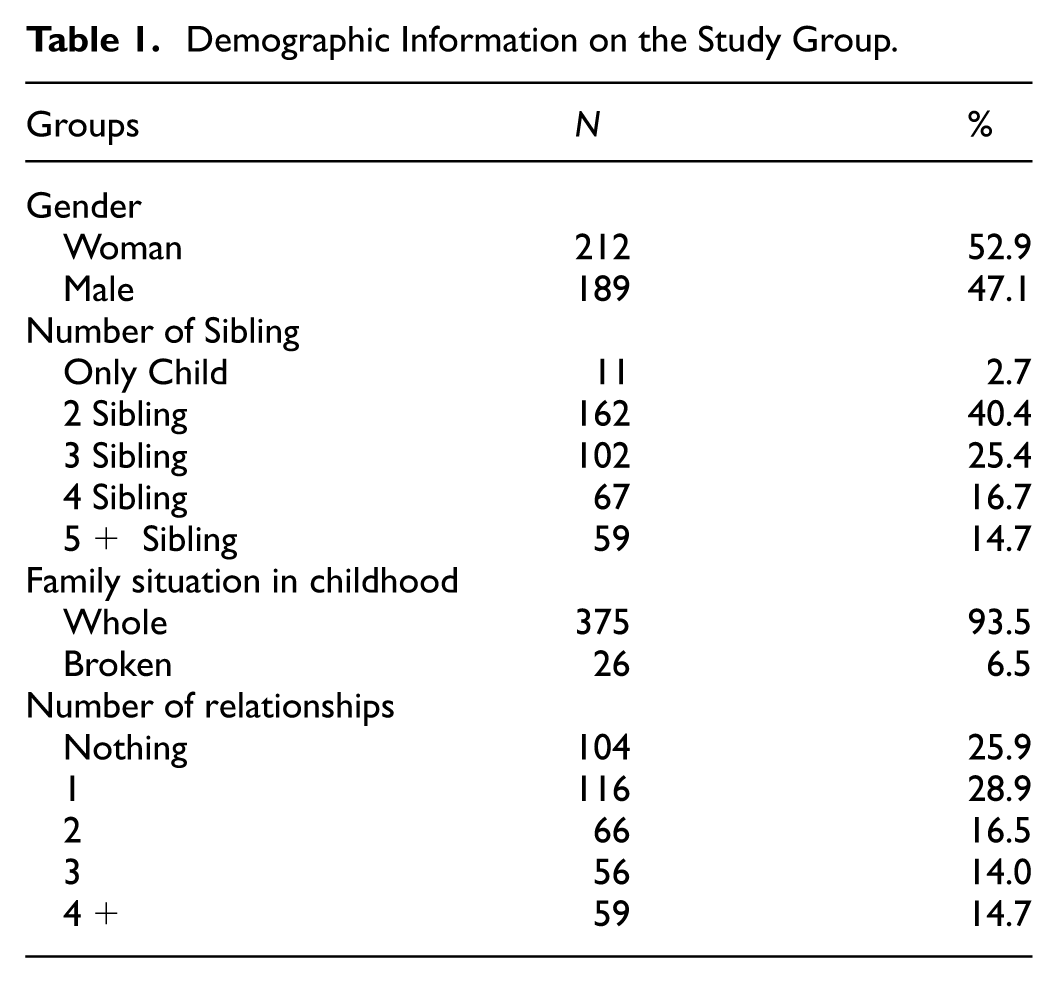
The research sample comprised university students aged 18 to 24 years who were enrolled at a university. Using a convenience sampling method, data were initially collected from N = 439 students enrolled in the Faculty of Education. During the data screening process, questionnaires that were completed incorrectly or contained substantial missing information were excluded (n = 13), resulting in 426 valid responses. The remaining dataset was then examined for normality, and 25 cases identified as outliers were removed from the analyses. Consequently, the final analytic sample consisted of N = 401 participants, including 212 female and 189 male students. Ethical approval for the data collection process was obtained from the relevant university ethics committee. The sociodemographic characteristics of the participants are presented in Table 1.
Demographic Information on the Study Group.
Data Collection Tools
Socio-Demographic Information Form
In order to investigate the interrelationships among the primary variables in the study, the researcher devised a questionnaire that included items related to age, gender, and the number of siblings.
Three Dimensional Attachment Styles Scale (TDASS)
The Three Dimensional Attachment Styles Scale (TDASS) was originally developed by Erzen (2016), within the Turkish cultural context to ensure cultural appropriateness and validity. The scale comprises 18 items and three sub-dimensions, whose language and construct validity were rigorously established. Spesifically, items 4, 7, 10, 13, and 16 measure the secure attachment dimension, items 1, 3, 5, 9, 12, 15, and 18 assess avoidant attachment; and items 2, 6, 8, 11, 14, and 17 evaluate the anxious-ambivalent attachment sub-dimension. Reliability of the scale was tested using Cronbach’s alpha and internal consistency coefficients, which were reported in the original study as .69 for secure attachment style, .80 for avoidant attachment style and .71 for anxious-ambivalent attachment style. In the present study, Cronbach’s alpha coefficients were calculated as .85 for secure attachment, .68, for the avoidant and .77 for anxious-ambivalent attachment, indicating acceptable levels of internal consistency.
Childhood Experiences Scale (CES)
The Childhood Experiences Scale (CES) was originally developed by Gilbert et al. (2003) to assess adverse experiences in childhood. The scale was subsequently adapted into Turkish by Akın et al. (2013) through translation, back-translation, and validation procedures to ensure its linguistic and cultural appropriateness.. The CES consists of 25 items items rated on a five-point Likert scale and encompasses three sub-dimensions: threatening, subjugating, and worthless memories. Items 6, 7, and 9 were reverse-coded. The total score reflected the overall level of negative childhood experiences, with higher scores indicating a greater prevalence of adverse experiences.
The psychometric analyses conducted by Akın et al. (2013) demonstrated acceptable validity and reliability of the scale. Factor loadings ranged from 0.36 to 0.68, and item-total correlation varied between .33 and .60. Cronbach’s alpha coefficients were reported as .57 for the Worthlessness Memories sub-dimension, .71 for the Subjugating Memories sub-dimension, .78 for the Threatening Memories sub-dimension, and .85 for the overall scale.
In the present study, internal consistency coefficients (Cronbach’s alpha) were .85 for the Threatening Memories sub-dimension and .81 for the Subjugating Memories sub-dimension, indicating acceptable reliability within the current sample. The Worthlessness Memories sub-dimension demonstrated relatively low internal consistency (α = .57), and therefore findings related to this subscale should be interpreted with caution.
Social Atom Scale (SAS)
The Social Atom Scale (SAS) was developed in Turkey by Altınay (1994) to evaluate the structure and composition of an individual’s social network. Designed specifically for the Turkish cultural context, the scale requires no further linguistic or cultural adaptation. The scale consisted of two sections. The first section collected demographic information and presented a list of 26 possible social connections, with an additional option for other relationship, therebyallowing for the assessment of the composition of an individual’s social atoms. The second section employs a sociogram with concentric circles surrounding a central “I,” where participants place individuals according to their perceived emotional closeness; those with the highest emotional significance are positioned in the innermost circles, while more distant relationships are placed in the outer circles (Altınay, 1994).
The SAS is evaluated across seven main criteria: (a) the overall score, which is calculated by assigning point values to concentric rings (with scores of 6, 5, 4, 3, 2, and 1 from the innermost to outermost ring, respectively); (b) the total number of individuals placed within the rings; (c) the total score derived from female connections; (d) the total score derived from male connections; (e) the total score for relatives; (f) the total score for friends; and (g) the priority order of the placed individuals (Altınay, 1994).
Reliability analyses were conducted using split-half and test–retest methods. Among students the test–retest reliability coefficients indicated strong correlations for the overall Social Atom score (r = .98, p < .001), relative score (r = .94, p < .001), friend score (r = .90, p < .001), female score (r = .92, p < .001), and male score (r = .85, p < .001). A second reliability study conducted with adolescents yielded similarly high test-retest correlations: overall Social Atom score (r = .99, p < .001), relative score (r = .90, p < .001), friend score (r = .89, p < .001), female score (r = .88, p < .001), and male score (r = .84, p < .001; Altınay, 1994).
Data Collection
Following ethical approval obtained from an ethics committee (details blinded for review), a demographic form and three scales were combined into a single questionnaire and administered to participants in a face-to-face format. The study targeted students enrolled in the Faculty of Education at the selected university. Data were collected from students across seven teaching programs: Primary Education, Special Education, English, Arabic, Turkish, Mathematics, and Early Childhood Education. To facilitate the data collection process, faculty members were contacted prior to their classes, and students who were voluntarily present in the classrooms were invited to complete the questionnaire at the beginning of the lecture.
Using a convenience sampling method, N = 439 students participated in the study. During the initial data screening process, 13 questionnaires containing substantial missing data were excluded, resulting in 426 valid responses, which were retained for the subsequent analyses.
Analyzing the Data
The statistical software program SPSS (version 25) was employed for data analysis. Skewness and kurtosis coefficients were utilized to assess the normal distributions of scores from the Childhood Experiences, Close Relationships, and Social Atom Scales and 25 identified outliers were excluded from further analyses. Following the evaluation of the findings, parametric tests were conducted for data analysis. Single mediation models were examined and the analyses were performed using PROCESS Model 4 (Hayes, 2017). In the mediation models, the a path represented the association between attachment styles and childhood experiences; the b path represented the association between childhood experiences and social atom scores; and the c′ path represented the direct association between attachment styles and social atom scores, after accounting for the intervening variable. Indirect associations were evaluated using bootstrapping procedures with 5,000 resamples (95% CI), and statistical significance was determined based on whether the bootstrapped confidence intervals for indirect associations excluded zero. Single mediation models were evaluated to examine whether childhood experiences and their subdimensions were statistically associated with the relationship between attachment styles and social atom structure.
Findings
Following established guidelines for reporting mediation analyses, the results presented in this section are based on regression-based mediation models estimated using PROCESS Model 4. The analyses examined whether childhood experiences were indirectly associated with the relationship between attachment styles and the structural characteristics of individuals’ social atoms. Overall, direct, and indirect associations were estimated using participant data. Indirect associations were assessed via bootstrapped 95% confidence intervals generated from 5,000 resamples, with mediation considered statistically significant when the confidence interval did not include zero. Standardized regression coefficients (β) are reported for all estimated associations to facilitate interpretation and comparability.
Figure 1 illustrates the schematic model developed to examine the indirect association role of childhood experiences, specifically the scores on the threatening subscale, in the association between attachment styles and the social atom scores among university students. Table 2 presents the results of regression analysis, detailing the total, direct, and indirect associations of mediation.
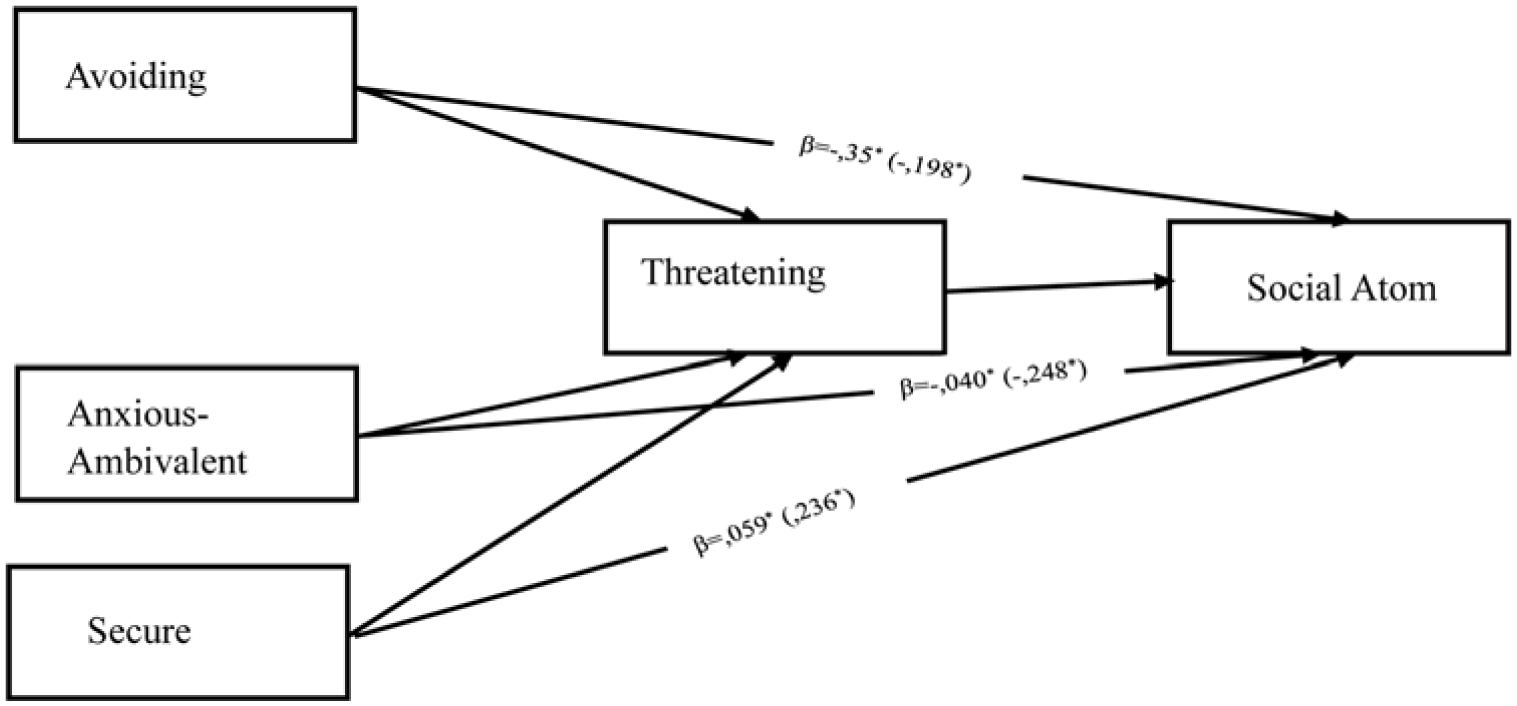
Model for the mediation analysis of childhood experiences threatening subscale scores in the relationship between three dimensional attachment styles scale scores and social atom scale scores.
Regression Analysis Results Regarding the Mediation Analysis of Childhood Experiences Threatening Subscale Scores in the Relationship Between Three Dimensional Attachment Styles Scale Scores and Social Atom Scale Scores.
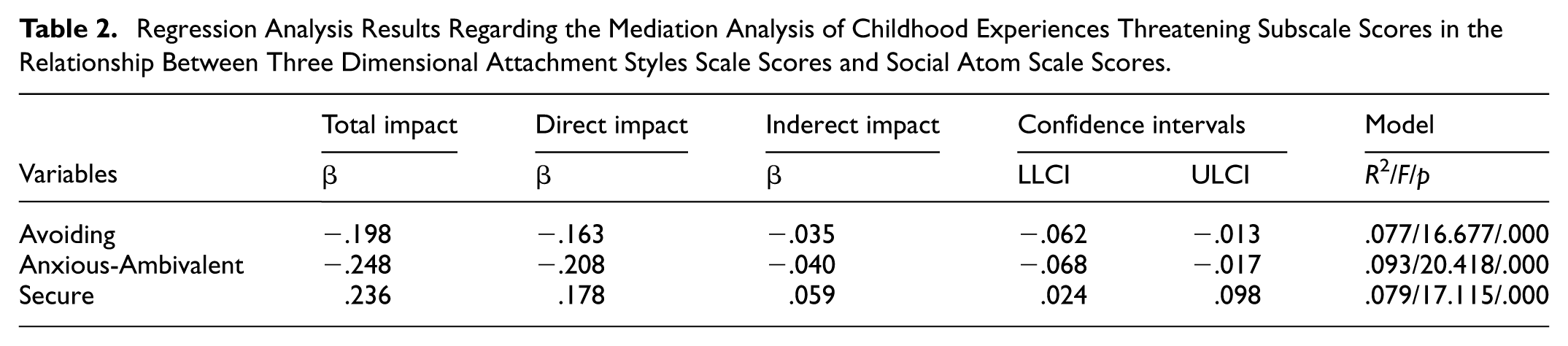
As indicated in Table 2, the Childhood Experiences Threatening Subscale scores were found to be indirectly associated with the relationship between of the Avoidant subscale (β = −.035; [−.198, −.163], p = .000, R2 = .077), the Anxious-Ambivalent subscale (β = −.040; [−.248, −.208], p = .000, R2 = .093) and the Secure subscale (β = .059; [.236, .178], p = .000, R2 = .079) on the Social Atom Scale scores.
Figure 2 presents the schematic model designed to investigate the indirect association of Childhood Experiences Subjugation Subscale scores in the association between attachment styles and Social Atom Scale scores among university students. Table 3 provides the results of the regression analysis, detailing the total, direct, and indirect associations of mediation.
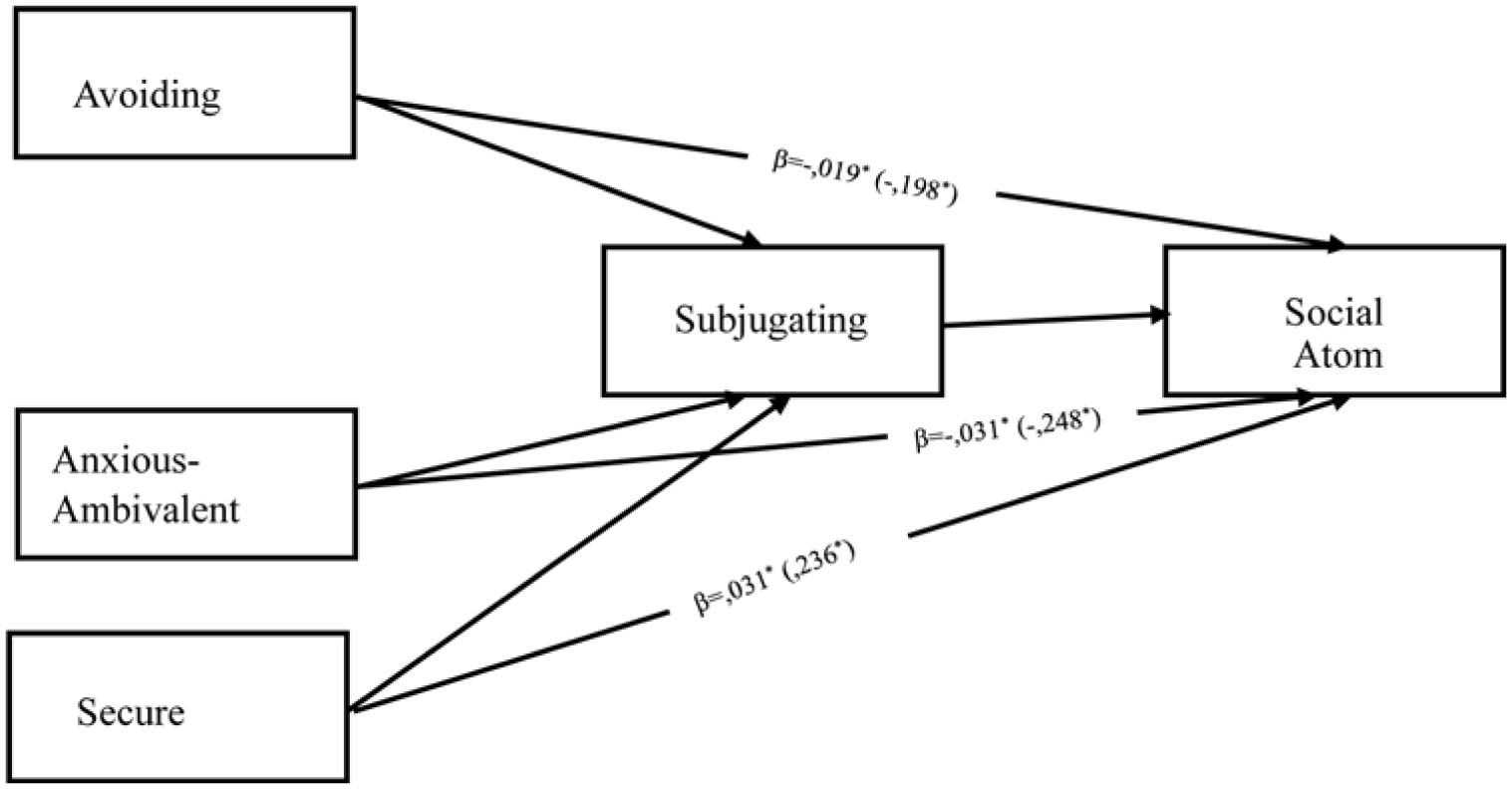
Model for the mediation analysis of childhood experiences subjugating subscale scores in the relationship between three dimensional attachment styles scale scores and social atom scale scores.
Regression Analysis Results Regarding the Mediation Analysis of Childhood Experiences Subjugating Subscale Scores in the Relationship Between Three Dimensional Attachment Styles Scale Scores and Social Atom Scale Scores.
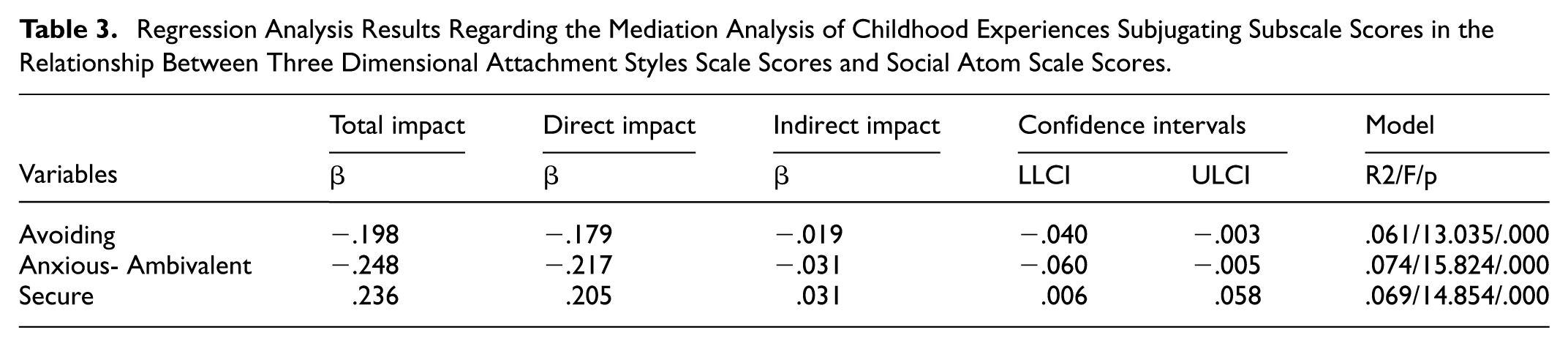
According to Table 3, the Childhood Experiences subjugating subscale scores were found to be indirectly associated with the relationship between the Avoidant (β = −.019; [−.198, −.179], p = .000, R2 = .061), Anxious-Ambivalent (β = −.031; [−.248, −.217], p = .000, R2 = .074) and Secure (β = .031; [.236, .205], p = .000, R2 = .058) subscales of the Three Dimensional Attachment Styles Scale on Social Atom Scale scores.
In Figure 3, the indirect association of childhood experiences of worthlessness in the relationship between attachment styles and social atoms of university students is modeled. Table 4 presents the regression analysis results for total, direct and indirect associations of mediation.
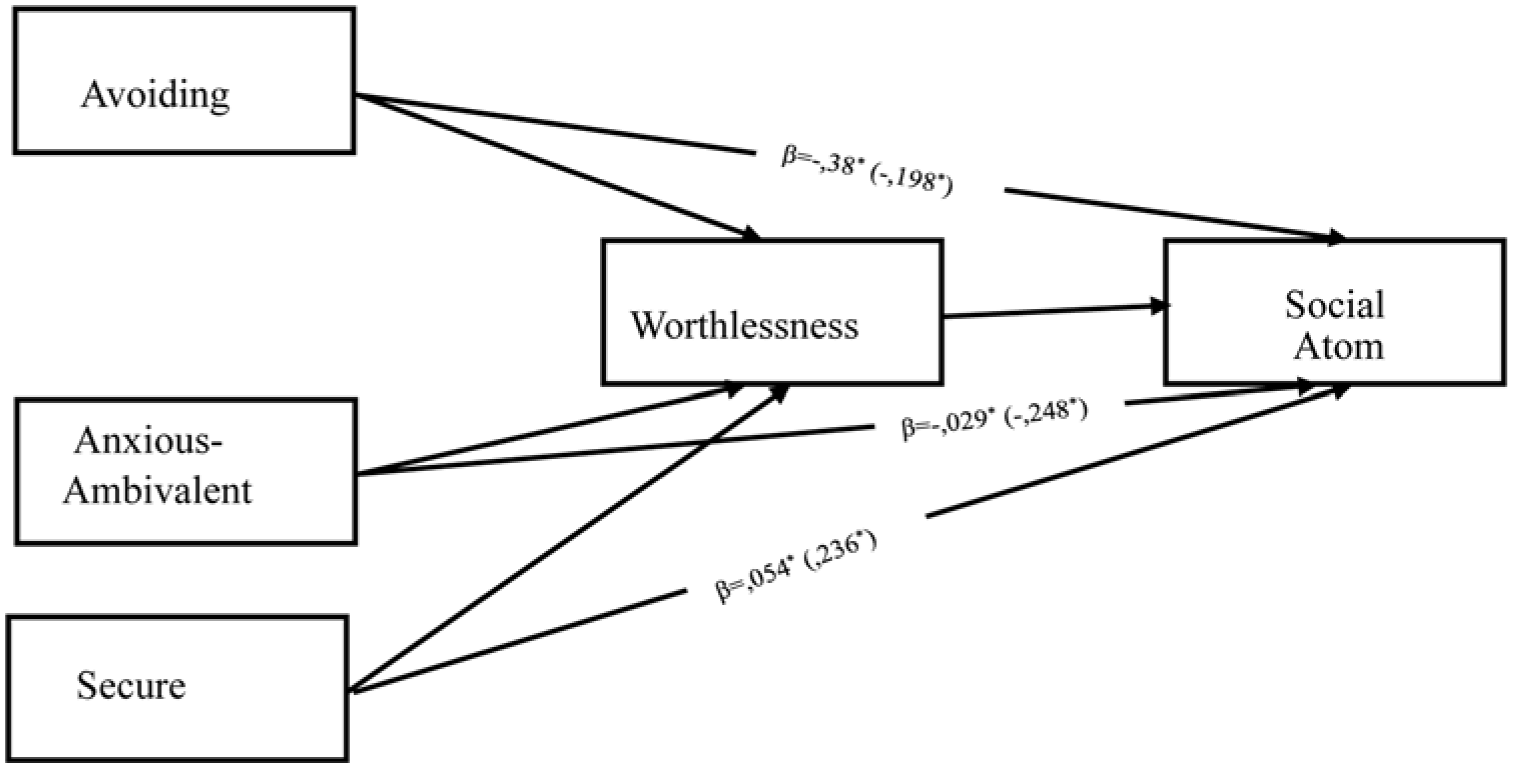
Mode of mediation analysis of childhood experiences invaluability subscale scores in the relationship between three dimensional attachment styles scale scores and social atom scores.
Regression Analysis Results Regarding the Mediation Analysis of Childhood Experiences of Worthlessness Subscale Scores in the Relationship Between Three Dimensional Attachment Styles Scale Scores and Social Atom Scale Scores.
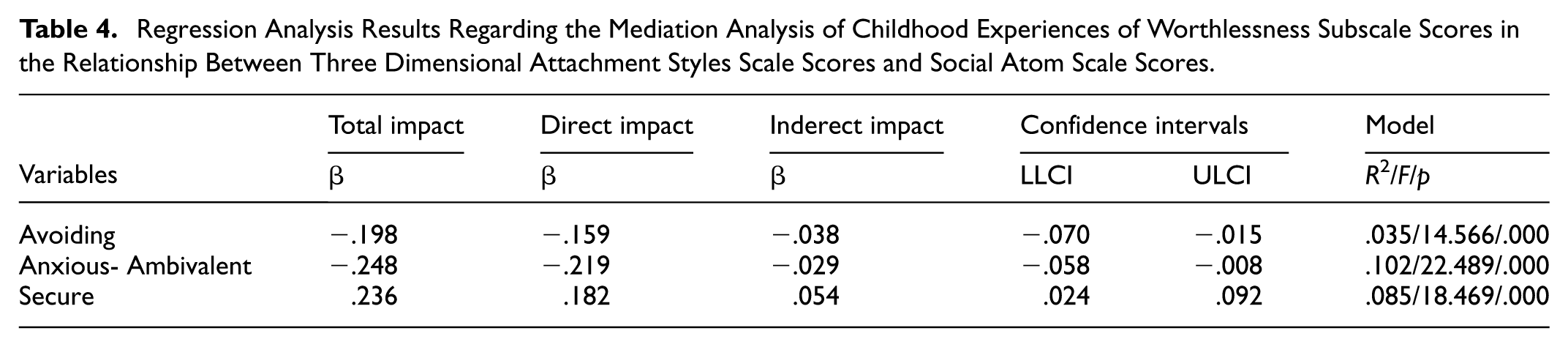
According to Table 4, Childhood Experiences Worthlessness Subscale scores were found to be indirectly associated with the relationship between the Avoidant subscale (β = −.038; [−.198, −.159], p = .000, R2 = .035), Anxious-Ambivalent subscale (β = −.029; [−.248, −.219], p = .000, R2 = .102) and Secure subscale (β = .054; [.236, .182], p = .000, R2 = .085) of the Three Dimensional Attachment Styles Scale and Social Atom Scale scores. However, the internal consistency of the Worthlessness subscale was relatively low (α = .57; ω = .58), therefore the indirect associations involving this dimension should be interpreted with caution.
Figure 4 presents the model illustrating the indirect association of childhood experiences in the relationship between attachment styles and social atoms of university students. Table 5 displays the regression analysis results for total, direct and indirect associations of mediation.
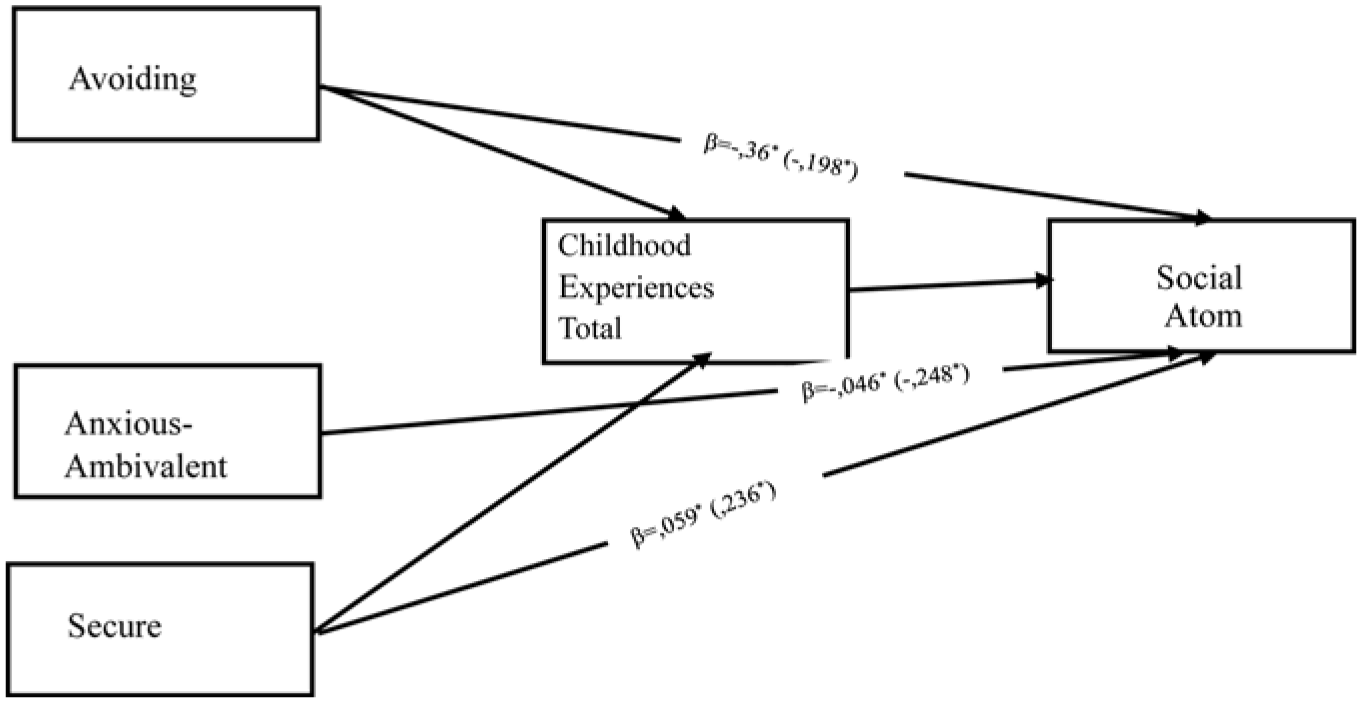
Model for the mediation analysis of childhood experiences scale total scores in the relationship between three dimensional attachment styles scale scores and social atom scale scores.
Regression Analysis Results Regarding the Mediation Analysis of Total Childhood Experiences Scores in the Relationship Between Three-Dimensional Attachment Styles Scale Scores and Social Atom Scale Scores.
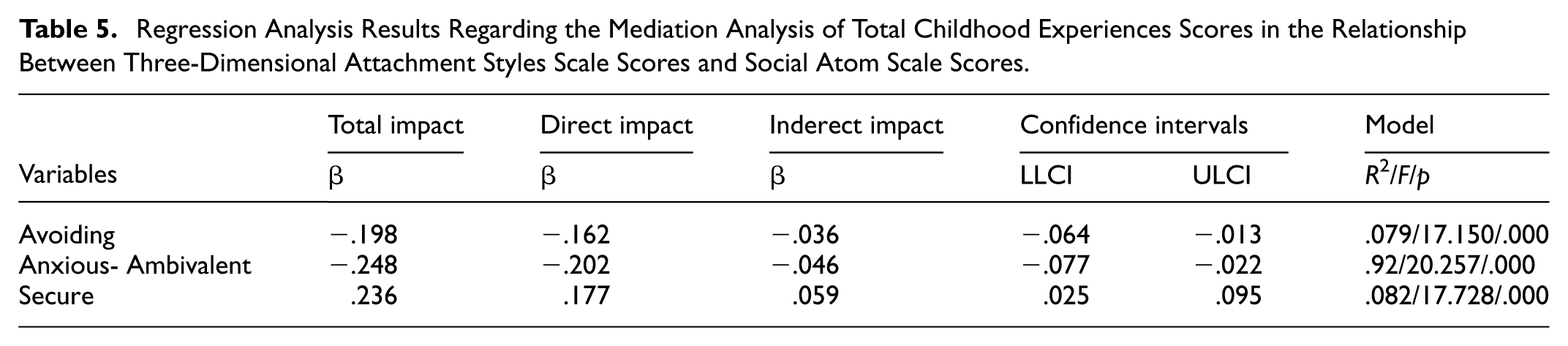
According to Table 5, the total scores of the Childhood Experiences Scale were found to be indirectly associated with the relationship between the Avoidant sub-dimension (β = −.036; [−.198, −.162], p = . 000, R2 = .079), the Anxious-Ambivalent sub-dimension (β = −.046; [−.248, −.202], p = .000, R2 = .092) and the Secure sub-dimension (β = .059; [.236, .177], p = .000, R2 = .095) of the Three Dimensional Attachment Styles Scale and the Social Atom Scale scores.
Overall, the findings indicate that the sub-dimensions of childhood experiences -Threatening, Subjugating, and Worthlessness memories- were indirectly associated with the associations between attachment styles and social atom scores. Notably, the indirect associations were statistically significant across models, as their confidence intervals did not include zero, underscoring the relevance of childhood experiences in relation to relational patterns reflected in individuals’ social atom structures.
Discussion
This study employed a cross- sectional correlation survey design to examine the indirect association of childhood experiences in the relationship between ttachment styles and social atom structures among university students. These evaluations, in turn, are associated with the perceived structure and relational configuration of individuals’ social atoms. The findings align with Bowlby’s (1982) attachment theory and Moreno’s (1967) biosocial interaction framework, both of which underscore the cognitive and emotional organization of early relational experiences through internal working models that are meaningfully associated with adult relational functioning. By integrating attachment theory with Moreno’s concept of the social atom, this study offers empirical evidence that childhood relational experiences, when retrospectively interpreted through attachment orientations, are reflected interpretive framework within which attachment styles are associated with, rather than causally determine, the structural configuration of adult social networks.
Threatening Memories
The indirect association of threatening childhood memories in the relationship between attachment and social atom is associated with patterns of loneliness and social withdrawal that may be interpreted as defense mechanisms (Türk, 2023). Importantly, within the present mediation framework, threatening childhood memories are conceptualized not as objective records of past events, but as attachment-informed reconstructions that reflect individuals’ current relational orientations. Threatening childhood memories should be conceptualized not as isolated outcomes but as attachment-informed strategies of relational regulation. In this framework, emotional distance may be maintained as a means to manage perceived interpersonal threat. From this viewpoint, memories of early threat -interpreted and organized through attachment orientations- are associated not only with attachment-related expectations but also with the described organization of the social atom, and are associated with more limited and distanced social atom configurations. Consequently, threatening childhood memories may be reflected in social atoms with fewer emotionally central figures and increased interpersonal distance, reflecting the internalization of defensive relational patterns into the individual’s adult social framework (Altınay, 1994; Orkibi & Feniger-Schaal, 2019; Ringer & Brandell, 2012).
Subjugating Memories
In the proposed mediation model, subjugating memories are conceptualized as attachment-related interpretations of early power imbalances rather than as direct factors associated with attachment styles. As conceptualized in the Threatening Memories section, perceptions of powerlessness and threat are better understood as attachment-informed interpretations of early relational experiences, rather than objective indicators of childhood events themselves.
Consistent with the interpretive framework outlined in the discussion of threatening memories, subjugating experiences are understood as attachment-informed meaning-making processes embedded within broader relational contexts of power imbalance. From this perspective, subjugating experiences do not function as isolated developmental mechanisms but are embedded within a broader framework of power imbalance, being associated with expectations of intimacy, safety, and autonomy as they are filtered through attachment-based internal working models and subsequently associated with the structural organization of the social atom (An & Kochanska, 2022; Fossataro et al., 2023).
Consistent with power-based relational frameworks, interpretations of relational submission related to attachment are linked to increased sensitivity to control, dependency, and asymmetry in subsequent relational structures (Erözkan, 2016; Sokar, 2024). In accordance with a biosocial interaction perspective, early relational contexts characterized by control and emotional suppression are emotionally weighted and retrospectively interpreted through insecure attachment orientations in adulthood, and are associated with attachment-related expectations and the structural configuration of the social atom (Harris & McDade, 2018). Within the social atom, these attachment-linked interpretations may manifest as persistent power asymmetries, and emotionally distant configurations, suggesting that perceived early power inequalities are associated with relational patterns rather than direct outcomes.
Worthlessness Memories
The current research suggests that insecure attachment styles (avoidant and anxious-ambivalent) are associated with a greater tendency to recall and organize childhood memories around themes of worthlessness, which are subsequently associated with more fragile and less supportive social atom structures. This pattern is consistent with accumulating evidence that insecure attachment -especially preoccupied and fearful types- is strongly associated with negative self-perceptions associated with early relational challenges. Santodoro et al. (2025) found that insecure attachment, in interaction with adverse childhood experiences (ACEs), is significantly related to self-hatred, excessive guilt, and a persistent sense of inner emptiness, with self-hatred and guilt being indirectly associated with how early adversity is emotionally processed. Their model supports the idea that internal narratives such as “I am worthless,”“I am a burden,” or “I am fundamentally flawed” are structured within an insecure attachment framework rather than appearing as isolated memories. Similarly, Ritz et al. (2025) highlight that preoccupied and fearful attachment styles are characterized by a negative self-perception (an “unworthy self”), which is associated with how experiences of childhood neglect and abuse are integrated into insecure attachment patterns and subsequent emotional difficulties in later life.
Feelings of self-worthlessness and inner emptiness can be understood as cognitive–emotional schemas associated with insecure attachment orientations, through which adverse childhood experiences are emotionally interpreted, and which are linked to social withdrawal, diminished perceived social support, and impaired interpersonal functioning (Riggs et al., 2011; Ritz et al., 2025; Santodoro et al., 2025). Consistent with the attachment-informed account outlined above, memories of worthlessness do not merely correspond to past experiences but are manifested as attachment-related interpretive schemas that are associated with how individuals position themselves within their current social networks. Ramamurthy and Chen (2025) further note that Defectiveness/Shame and Social Isolation schemas are associated with withdrawal from social interaction and difficulty sustaining intimacy, being associated with marked impairments in social functioning.
Consistent with this interpretation, neurobiological and social research suggests that early adversity -when filtered through attachment-related processing- is linked not only to altered brain connectivity but also to reduced perceived social support and more fragile social networks (Winter et al., 2023). Scoping reviews further confirm that ACEs are robustly associated with long-term disruptions in social functioning and relationship quality, forming a consistent ACE–mental health–social functioning triad (Tzouvara et al., 2023). Taken together, these findings support the present mediation model by demonstrating that insecure attachment styles are associated with worthlessness-themed childhood narratives, which in turn are linked to less cohesive, less resilient, and more vulnerable social atom structures in adulthood. Nevertheless, it should be noted that the internal consistency of the Worthlessness subscales was relatively low (α = .57; ω = .58), which may have attenuated the observed associations. Therefore, findings related to this dimension should be interpreted cautiously and replicated in future studies using measures with stronger reliability.
Total Childhood Experiences
This study contributes to the literature by clarifying the indirect association of childhood experiences in the relationship between attachment styles and social atom structure. The findings suggest that attachment styles are systematically linked to the manner in which adverse childhood experiences are retrospectively recalled and emotionally integrated within individuals’ broader social contexts (Dube et al., 2002; Xiang & Han, 2020). While the sub-dimensions of childhood experiences highlight distinct relational mechanisms (e.g., threat, subjugation, and worthlessness), the present findings indicate that these experiences function as attachment-related interpretive memories that are indirectly associated with the association between attachment styles and the structure of the social atom. Collectively, the cumulative burden of adverse relational experiences appears to provide an interpretive context through which attachment orientations are associated with adult social atom configurations.
Accordingly, the present interpretive mediation model does not assume a causal reversal of developmental processes, but rather focuses on how attachment orientations are associated with the retrospective emotional organization of childhood relational experiences during adulthood. Instead of proposing developmental causal claims, this conceptual account prioritizes interpretive processes operating with current relational frameworks.
Consistent with attachment theory, internal working models are associated with not only relational expectations but also the recollection and emotional tone of childhood memories. Consequently, individuals with insecure attachment styles (avoidant, anxious-ambivalent attachment) might be more prone to recalling memories of feeling worthless, threatened, or dominated, which align with attachment-based reconstructions rather than objective accounts of early experiences (Lau-Zhu et al., 2023). This viewpoint offers a theoretical basis for the observed link between attachment styles and dimensions of childhood experiences within the mediation model.
Systematic reviews indicate that social adversity and insecure attachment experienced during childhood have enduring detrimental effects on social cognition, emotional regulation, and psychological well-being in adulthood (Rokita et al., 2018). From this interpretive perspective, these findings help clarify how adult attachment patterns are associated with the retrospective interpretation of childhood experiences. Furthermore, it elucidates how these attachment-based reconstructions are associated with in the configuration of the social atom.
Moreover, it is asserted that adverse childhood experiences are associated with reduced the perception of trust and support within relationships at the core of the social atom (e.g., family, close friends), consequently being associated with lower the individual’s overall social functioning (Gosselin et al., 2024; Rokita et al., 2018). From a biosocial interaction perspective, early relational disruptions may be associated with reduced individuals’ expectations of reciprocity and emotional safety, thereby being associated with more fragile and less cohesive social atom structures in adulthood.
Overall, these findings indicate that attachment styles are centrally associated with the organization of childhood relational memories, which are observed interpersonal functioning through their association with the structure of the social atom, underscoring the critical role of early relational environments as they are cognitively and emotionally processed through attachment-related frameworks in adulthood.
Limitations
While this research offers valuable insights, it is not without limitations. Firstly, the cross-sectional design of the study restricts the ability to establish causal relationships between variables. Additionally, the reliance on retrospective self-reports for collecting childhood experiences introduces the potential for recall bias, as participants’ current psychological states may be associated with their recollection of past experiences. Furthermore, the exclusive focus on university students in the sample limits the generalizability of the findings to other age and cultural groups (Henrich et al., 2010; Podsakoff et al., 2003). Another limitation concerns the relatively low internal consistency of the Worthlessness subscale (α = .57). Low reliability may attenuate observed associations and affect the stability of mediation estimates. Therefore, findings related to this dimension should be interpreted cautiously. Future studies may benefit from reporting additional reliability indicators such as McDonald’s ω and employing measures with stronger internal consistency.
Future research should employ longitudinal designs, utilize diverse data collection methods, and engage with varied cultural samples to enhance the validity and inclusivity of the findings. Additionally, conducting intergenerational comparisons may facilitate a deeper understanding of the evolution of attachment and social atom patterns over time. Furthermore, even though mediation analyses were performed, the cross-sectional design restricts conclusions about the chronological order of childhood experiences, attachment styles, and social atom structures.
Conclusion
This study investigated the relationships between attachment styles and social atom structures, emphasizing the mediating role of childhood experiences as attachment-informed relational memories. The results demonstrate that attachment styles are systematically linked to the retrospective recall, emotional organization, and integration of childhood experiences into current relational representations.
In the dimensions of threat, subjugation, and worthlessness, childhood experiences were found to be conceptualized not as objective records or direct developmental determinants, but as interpretive relational narratives associated with attachment-based internal working models. These attachment-informed meanings were subsequently associated with in the perceived structure, emotional proximity, and organization of individuals’ social atoms.
Crucially, the mediation framework employed in this study does not suggest causal or developmental reversal. Instead, it underscores how attachment orientations may provide an interpretive context through which childhood relational experiences are emotionally organized in adulthood and associated with contemporary social relational structures. By integrating attachment theory with Moreno’s concept of the social atom, the present findings highlight the importance of understanding adult relational functioning through interpretive and relational processes rather than deterministic pathways.
Recommendations
Given the retrospective nature of the present study, longitudinal research tracking relational representations from childhood into adulthood may help clarify how attachment-related interpretations of early experiences are associated with attachment orientations and social atom structures over time.
In light of the study’s focus on attachment-informed interpretations of relational experiences, future research could investigate the potential benefits of psycho-educational and reflective programs designed to enhance relational awareness among young adults within educational and community contexts.
Future research employing multigenerational designs involving parents and offspring may help futher explore how attachment orientations and social atom patterns are represented across generations, extending the interpretive framework proposed in the present study.
Consistent with the study’s conceptual emphasis on the social atom as a relational representation, future research could explore the application of psychodrama-based experiential group formats as investigative contexts for examining how individuals reflect on the connections between childhood memories and current relational patterns.
Footnotes
Acknowledgements
I would like to acknowledge the use of ChatGPT for assistance in the English translation of this manuscript.

Ethical Considerations
All procedures performed in studies involving human participants comply with the ethical standards of the institutional and/or national research committee and the 1964 Helsinki declaration and subsequent amendments or comparable ethical standards.
Consent to Participate
Informed consent was obtained from all participants for inclusion in the study.
Funding
The authors received no financial support for the research, authorship, and/or publication of this article.
Declaration of Conflicting Interests
The authors declared no potential conflicts of interest with respect to the research, authorship, and/or publication of this article.
Data Availability Statement
Datasets analyzed during the current study are available from the corresponding author upon reasonable request.*