






Abstract
While international hotel companies have dominated the upscale market in China, the number of domestic Chinese hotel companies have sprung up to seize the economic lodging sector, offering affordable rates to the price-conscious guests. This study proposes a theoretical framework via the application of an extended Theory of Planned Behavior (TPB) model to ascertain the factors influencing Chinese consumers’ hotel purchase intention. More specifically, this study aims to ascertain the inter-relationships among Chinese hotel customers’ loyalty, hotel e-WOM reviews, hotel image evaluations, and consumers’ hotel purchase intentions. Questionnaires were designed and collected through 313 responses online. Through the PLS-SEM analysis, the study results found that e-WOM reviews could influence hotel consumers’ attitude, perceived behavioral control, and subjective norm. Additionally, hotel e-WOM reviews positively influenced hotel consumers’ purchase intentions. Hotel consumers’ level of loyalty contributed to different attitudes and hotel image evaluations. Practitioners in the hotel industry need to enhance hotel image and understand the significance of hotel e-WOM reviews on consumers’ behaviors and attitudes.
Introduction
Since China’s open-door policy in 1978, the Chinese domestic hotel industry has transitioned from state-owned business operation to private hotel companies, and eventually, transformed to chained hotel management (Gross et al., 2017; Qui & Ren, 2019). Through years of development, the Chinese hotel market has gained much maturity, which is on par with the market in the US (Lin et al., 2024). The Chinese hotel market is also highly digitalized, with platforms such as Ctrip, Meituan, and little red note, making e-WOM reviews essential to hotel guests’ decision-making, particularly in the post-pandemic era when safety and transparency became critical. As of 2022, the total number of hotels in China, including both domestic and international hotels, accounted for 310,000 properties (Su, 2024). The domestic hotel chains are primarily managed by the three Chinese hospitality giants: Jin Jiang Hotels (873,177 rooms), China Lodge (536,876 rooms), and Home Inns Hotels (414,952 rooms; China Travel News, 2020). While international hotel groups have dominated the luxury and upper-scale segments in mainland China, domestic Chinese hotel companies have taken the lion’s share of the budget hotel sector, offering affordable rates at around 100 to 300 RMB per night to target the price sensitive consumers in mass tourism market (Qui & Ren, 2019). The momentum of hotel development in China will likely continue for another 10 to 20 years (H. Q. Zhang et al., 2013; F. Zhang, 2020); hence, hoteliers and lodging industry practitioners must understand Chinese consumers’ behaviors when selecting their hotel choices.
The electronic word-of-mouth (e-WOM) reviews can occur on various platforms such as discussion forums, product reviews, social networking sites, and emails (Dwyer et al., 2007). Online reviews that document consumers’ satisfaction and hotel service quality are paramount for promoting budget hotels (Luo et al., 2021). From consumers’ point of view, three quarters of travelers regarded online reviews as an important source for travel planning (Cline, 2018). Moreover, e-WOM reviews play an important role for the hotel industry practitioners (Jalilvand et al., 2017). Consumers’ purchase intention usually reflects their desire to book hotels (Lien et al., 2015). However, consumers’ evaluations and attitudes toward a hotel and purchase intentions are usually varied, as different individuals could possess distinctive decision-making styles (Casalo et al., 2015). Moreover, hotel consumers’ different levels of loyalty may come into play to their decision-making.
Customer loyalty is an important factor compared with customer satisfaction, as the latter alone cannot guarantee a repeat purchase (Kandampully & Suhartanto, 2000). Hotel companies tend to have more than ten million loyalty program members. As such, it is essential to retain loyal customers, since serving a current customer is usually cheaper and cost-effective (Anabila et al., 2022; Reichheld, 1996). Additionally, loyal customers usually maintain a positive attitude toward a service provider and will be most likely to have a desire to frequently re-purchase the service (Jani & Han, 2014; Kandampully & Suhartanto, 2003). As such, loyal hotel customers tend to maintain a higher score rating than non-loyal customers (Heung et al., 1996; Kandampully & Suhartanto, 2003).
To better understand the relationship between customers’ evaluations of e-WOM reviews and the level of loyalty on hotel purchase intentions, this study is theoretically underpinned by the theory of planned behavior (TPB) as the research framework. The TPB model is widely adopted in social science, and it assists researchers in probing how changes can occur in people’s behavior patterns (Wangzhou et al., 2023; Wei et al., 2010). Nevertheless, the TPB model is considered as a parsimonious model, which lacks sufficiency in predicting intentions (Lam & Hsu, 2004). Prior studies have suggested that the incorporation of additional variables to extend the TPB model can predict consumers’ intended behavior better (Liu et al., 2021; Nysveen et al., 2005).
Prior studies have integrated additional variables such as destination image, brand reputation, and environmental concern to the TPB model (Pai et al., 2024; Park et al., 2017; Paul et al., 2016). Moreover, e-WOM can be integrated into the TPB model along with other variables of interest (i.e., destination image, destination familiarity, and perceived risk) to understand tourists’ destination revisit formation and intention (Bouarar et al., 2025; Soliman, 2021). In the same token, e-WOM can probably also be integrated into the TPB model to understand hotel consumers’ behaviors and image evaluations. Hotel image is critical to build consumers’ commitment and loyalty (Lai, 2019). For instance, Han and Kim (2010) demonstrated that extending the TPB with the overall image of a hospitality firm significantly enhanced the model’s explanatory power for customers’ revisit intentions, suggesting the value of incorporating image-related variables into TPB.
To date, the authors of this research believe that limited studies have integrated e-WOM and hotel image into the TPB model concurrently. Loyal customers may engage with e-WOM differently, since they tend to share positive reviews rather than being influenced by negative ones (Abuhjeeleh et al., 2023). As such, by adding the constructs of e-WOM and hotel image into TPB model is paramount to enrich the TPB model, since characteristics of hotel consumers along with their levels of loyalty may dictate their hotel image evaluations and purchase intention. This is particularly true in the Chinese hotel market where there is a unique and highly active social media ecosystem, and e-WOM reviews play a pivotal role in shaping Chinese hotel guests’ information acquisition behaviors.
Moreover, in the extant literature, there seems to be a dearth of research examining whether consumers’ levels of loyalty could affect their hotel evaluations and purchase intention. Previous research has confirmed the role of customer loyalty in extended TPB framework, which constructs such as attitude and behavioral intention could affect hotel and Airbnb customers’ loyalty (Tajeddini et al., 2021). Moreover, evidence has also shown that TPB could be extended by integrating customer loyalty to explain customer internet switching behavior (Naimi & Khasawneh, 2017). However, whether online reviews can have the same effects on loyal or non-loyal customers is still unknown (Cantallops & Salvi, 2014). As such, adding customer loyalty as a moderating factor may further enhance TPB model’s predictability.
To unravel the above-mentioned unknowns, this study aims to ascertain the inter-relationships among customers’ levels of loyalty, e-WOM of hotel reviews, hotel image evaluations, and hotel purchase intentions. To this end, this study addresses the following two research questions: (1) To what extent do electronic word-of-mouth reviews influence Chinese customers’ evaluations and booking intentions toward hotels? (2) Will loyal customers and non-loyal customers exhibit distinct patterns in attitude and behaviors toward hotel evaluations and purchase intention? This study contributes to the current literature by shedding light on hotel customers’ attitudes and behaviors toward their hotel purchase intentions. Moreover, it provides managerial implications for hotel industry practitioners to understand the importance of e-WOM and hotel image to enhance consumers’ perceived ease of purchasing hospitality products.
The following sections provide the literature review and hypotheses development. Then, the article presents methodology, research findings, discussion of implications, limitations, and future studies. In the last part, the paper provides a conclusion of the study.
Literature Review
Theoretical Frameworks (TPB Model)
Theory of Planned Behavior (TPB) was proposed by Fishbein and Ajzen (1975) to predict human behavior. The theory suggested that intentions to perform behaviors can be predicted on attitudes, subjective norms, and perceived behavioral control (Ajzen, 1991; Fishbein & Ajzen, 1975). Attitude is judged based on emotion, which has a tendency of favorable and unfavorable character (Moutinho, 1987). Attitude is a predisposition, created by learning and experience that reflect consistently toward a product (Lam & Hsu, 2006). On the other hand, subjective norm consists of an individual’s perception of what specific groups think they should do and the motivation to comply with these referents (Ajzen & Fishbein, 1980). As such, subject norm can determine whether other people will exert influences on an individual’s behavior (Ajzen, 1991). Lastly, perceived behavioral control is the perceived convenience and inconvenience of performing the desired behavior based on past experiences (Ajzen, 1991; Wangzhou et al., 2023). Individuals’ intention to act out a given behavior is the central component in the TPB model (Ajzen & Driver, 1992). Intentions only partially predict behavior; however, the availability of resources and opportunities to individuals is requisite to predict behavior achievement (Ajzen, 1991; Ajzen & Driver, 1992). In business and management research, purchase intention reflects the likelihood that a customer will purchase a particular product or service (Dodds et al., 1991).
The e-WOM (Word of Mouth)
The e-WOM (word of mouth) refers to either a positive or negative statement that is posted by customers to report and interact with consumption-related comments over the internet (Hennig-Thurau et al., 2004; Z. Zhang et al., 2010). In the hospitality industry, e-WOM reviews contain various information related to feedback and comments provided on social network sites (H. Lee et al., 2021). Generally, consumers consult e-WOM information to understand the product popularity before the actual consumption (Z. Zhang et al., 2010). The e-WOM does not involve tangible aspects of the product, so consumers must make decisions based on product attributes gleaned from imperfect information sources (Pan et al., 2007). Therefore, online reviews serve as essential references for consumers to seek information to reduce risk and uncertainty before making their decisions (Yadav et al., 2024).
Hotel Image
The impact of hotel image on consumers’ behavior is well-recognized (Christou, 2003; Chen & Chen, 2014). A hotel’s success is hinged on its image and reputation (Jalilvand et al., 2017). Hotel image can be categorized into functional and emotional attributes (Lai, 2019). The functional component is related to physical and tangible characteristics offered by a hotel in aspects of housekeeping, reception, food, and beverage, as well as price that are positively related to customer loyalty, whereas the emotional aspect is associated with psychological dimensions, such as attitudes and feelings (Kandampully & Suhartanto, 2000; Kandampully & Hu, 2007; Zhang & Mao, 2012). A hotel with good quality of service can improve its image evaluations from hotel guests (Chen & Chen, 2014). Hotel guests naturally expect better accommodation from a five-star rated hotel than from an ordinary hotel (Chen & Chen, 2014). As such, hotel image is an amalgam of hotel guests’ pre-conceived perceptions created by marketing media and external informational sources, containing a set of attributes that reflect hotels’ core values (Lai, 2019).
The e-WOM and TPB Constructs
Hotel online reviews can affect consumers’ evaluations and attitudes. For instance, Chiou and Cheng (2003) indicated that internet forum messages could influence consumers’ brand evaluation and attitude toward web owners. Negative messages significantly reduced consumers’ evaluation of a brand (Chiou & Cheng, 2003). Positive reviews can enhance attitude toward a brand, while negative online reviews tend to lower consumers’ attitudes and hotel considerations (M. Lee et al., 2009; Vermeulen & Seegers, 2009). Consumers’ attitudes toward a product will be unfavorable if negative reviews increase (Herr et al., 1991). In the past decade or so, researchers also found e-WOM reviews could influence tourists’ attitudes toward tourist destinations (Doosti et al., 2016; Jalilvand & Samiei, 2012a; Jalilvand et al., 2012).
Based on prior research, when consumers are from collectivist cultural backgrounds, word-of-mouth information can exert influences on subjective norm (Guo et al., 2010). As such, e-WOM reviews can change consumers’ perceptions toward referent opinions. If the WOM communication behavior is socially accepted, consumers will likely comply with what others think (Cheng et al., 2006). Therefore, e-WOM reviews can serve as a means for people to maintain social relationships and build personal image within given social networks (H. Lee et al., 2021). Travelers acquire information from WOM messages from reference groups when making decisions (Hsu et al., 2006). Soliman (2021) revealed that e-WOM reviews could influence tourists’ subjective norm. Moreover, in a study analyzing luxury hotel booking intention, H. Lee at al. (2021) also found e-WOM reviews could affect hotel guests’ subjective norm.
Furthermore, evidence has shown that WOM communication is positively related to perceived behavioral control (Cheng et al., 2006). When WOM is positive, consumers can have a better capacity to ease their act to perform such behavior (Soliman, 2021). Similarly, empirical research has shown that e-WOM reviews can exert significant influence on perceived behavioral control (H. Lee et al., 2021). Based on the above-mentioned evidence, this study proposed the following hypotheses:
The Relationships of Subjective Norm and Perceived Behavioral Control on Attitude
Consumers’ hotel evaluations can be affected by referent opinions from others. For instance, Wang et al. (2019) revealed that subjective norm could positively influence consumer’s attitude toward their intentions to purchase green hotels. Moreover, in a study examining tourists’ travel intention, Han et al. (2011) found that subjective norm can contribute to the formation of tourists’ attitudes toward South Korea. Recent studies in hospitality and tourism research have also found that subjective norm can influence attitudes (Shen & Shen, 2021; L. Wang et al., 2019). However, there is contradictory finding in the extant literature. For instance, Shen et al. (2009) found no significant linkage between subjective norm and attitude. This implies that more research is warranted to investigate the relationship between subjective norm and attitude. Moreover, perceived behavioral control could directly shape people’s attitudes. For instance, Susanto et al. (2024) revealed that when tourists have higher perceived capabilities, they will have higher visit intentions. In the same vein, we argue that when hotel guests have confidence to regulate their hotel booking behavior, they will likely have a better attitude toward such behavior. Accordingly, we proposed:
The e-WOM and Hotel Image
WOM communication can enhance consumers’ awareness toward a hotel (Ladhari & Michaud, 2015). Positive e-WOM reviews can influence a company’s image and reputation and subsequently reduce consumers’ risks associated with purchasing (Serra-Cantallops et al., 2020). For instance, a study on Iran’s automobile industry confirmed that e-WOM reviews had a positive impact on brand image, and brand image can indirectly influence purchase intention (Jalilvand & Samiei, 2012a). Moreover, studies have found e-WOM reviews can positively influence destination image (Jalivand & Samiei, 2012b; Jalivand et al., 2012). The same applies to hotel images. Positive e-WOM reviews can have a positive influence on hotel brand image, whereas negative e-WOM reviews tend to have negative influence on hotel brand image (Wang & McCarthy, 2023). Furthermore, Y. F. Chen et al. (2022) revealed that consumers’ WOM could affect hotel companies’ brand image and revenue generation. Accordingly, we proposed:
TPB Constructs and Hotel Image
The relationships among three TPB constructs and images have been substantiated in current research (S. H. Park et al., 2017). For instance, positive attitude leads to favorable city destination image evaluations (Doosti et al., 2016). Lita et al. (2014) and Han et al. (2009) discovered that hotel consumers’ attitudes toward green behaviors could positively influence their overall hotel image. In tourism research, S. H. Park et al. (2017) and Susanto et al. (2024) found that destination image could positively influence perceived behavioral control. However, when consumers believe they are in control or have the capacity to book, they will likely have a better evaluation of the hotel. In a recent study, Pai et al. (2024) also found that subjective norm and perceived behavioral control can influence consumers’ hotel evaluations. Based on this evidence, it can be postulated that core variables within TPB model also exert the same effect on hotel image. Accordingly, we proposed:
The e-WOM Reviews and Consumers’ Hotel Purchase Intention
A hotel’s image is critical for hotel consumers to make purchase decisions (Wang & McCarthy, 2023). The presence of hotel online reviews can improve the probability of consumers’ consideration of booking a hotel (Vermeulen & Seegers, 2009). Mauri and Minazzi (2013) studied the significance of web reviews on hotel customers’ purchase intentions, indicating hotel purchase intention had a high correlation with the valence of reviews (i.e., positive and negative reviews). According to Ladhari and Michaud (2015), positive e-WOM reviews can result in a significantly higher booking intention. Furthermore, Memarzadeh et al. (2015) also revealed that business travelers are more inclined to purchase hotels based on positive online reviews. Consumers’ positive WOM can increase their probability of purchase, while unfavorable WOM does the contrary (Litvin et al., 2008; Zhao et al., 2015). Nevertheless, negative WOM may be more useful than positive information, as negative information serves as a diagnostic tool for consumers’ decision-making (J. Lee et al., 2008). Moreover, when making purchase decisions, consumers perceived negative messages more pronounced than the positive messages (D. H. Park et al., 2007). Accordingly, we proposed:
Hotel Image and Purchase Intention
Consumers’ hotel decision-making is dependent on a hotel’s perceived image and reputation (Ekiz et al., 2012). Brand image perceptions are reflected by the brand associations of attributes, benefits, and attitudes held in consumers’ memory (Keller, 1993). Prior research indicated hotel image plays an important role in determining customers’ repurchase intention (Kandampully & Hu, 2007; Kandampully & Suhartanto, 2000). Furthermore, Lien et al. (2015) found that a hotel’s brand image can directly influence travelers’ hotel purchase intention. Accordingly, the following hypothesis was proposed:
TPB Constructs and Purchase Intention
Behavioral intention is attributed to the attitude toward performing the behavior attributed by the feeling of favorable or unfavorable of that behavior (Fishbein & Ajzen, 1975). Consumers’ attitudes toward a product can have a significant influence on purchase intentions (Ajzen, 1991; Ajzen & Fishbein, 1980). In a study investigating customers’ attitude and hotel booking intentions, Ladhari and Michaud (2015) pointed out that positive attitudes from customers’ comments can yield a significantly higher booking intention. Another study conducted by Kudeshia and Kumar (2017) concluded that there was a direct and positive relationship between positive e-WOM reviews, consumers’ brand attitude, and purchase intention. A positive attitude toward a brand can result in continuous preference and purchase intention towards the brand (Wu & Wang, 2011).
Moreover, reference group exerts key influences on people’s beliefs, attitudes, and choices (Moutinho, 1987). Sparks (2007) indicated that WOM from reference groups played a role in influencing tourists’ decisions to visit a wine region. Hsu et al. (2006)’s study about Taiwanese travelers’ intention to visit Hong Kong further demonstrated that WOM from reference groups can influence one’s decision-making. Consumers’ behavior is influenced by a certain group, and opinions from others can be critical to decision making (Granovetter & Soong, 1988; Lee & Back, 2008). In another study, Tsao et al. (2015) found that consumers’ hotel booking intentions are strengthened as the number of reviews increases. However, some studies revealed a higher level of subjective norm can lead to a lower level of purchase intention (Paul et al., 2016; L. Wang et al., 2019). As such, more research is warranted to examine this relationship.
Furthermore, the non-volitional dimension, perceived behavioral control, is critical to predict behavioral intentions if such behaviors are perceived as difficult to perform (Han et al., 2011; Jalilvand & Samiei, 2012c). Researchers have found that perceived behavaioral control can positively influence travel intention (Han et al., 2019; Wangzhou et al., 2023). If tourists have control over resources and opportunities, they will likely have a higher travel intention (Han et al., 2019). Moreover, prior studies have found that perceived behavioral control can influence consumers’ hotel purchase intention (H. Lee et al., 2021; Han & Yoon, 2015; L. Wang et al., 2019). Hence, we postulate that if hotel guests are more likely to exhibit a strong purchase intention if they have comprehensive knowledge about a hotel and demonstrate confidence in their choice. Accordingly, we proposed:
The Moderating Role of Customer Loyalty
The moderating role of consumers’ loyalty has been substantiated in the current literature (Kim et al., 2009). Customer loyalty is a customer’s sense of belonging to patronizing a company’s products, which can have a direct and positive impact on purchase intention and recommending the products and services to others (Khan et al., 2015; Lam et al., 2004). Hotel guests tend to hold multiple hotel memberships to snag deals without remaining loyal to any specific hotels (Xie & Chen, 2013). Based on Kotler’s (1991) brand loyalty status, in the context of the lodging industry, hard-core loyalty is someone who always stays at one particular hotel chain; soft-core loyalty is someone who consistently uses two or three hotel chains; and shifting loyalty is someone who periodically switches from one hotel chain to another. Switchers are those who have no loyalty at all regarding the decisions of their hotel choices (Heung et al., 1996).
In addition to repeat purchases, loyal customers tend to hold a favorable attitude toward a particular hotel chain (Heung et al., 1996). Moreover, loyal customers’ attitude toward e-WOM reviews may always stay positive, for customer loyalty stresses the emotional commitment to a hotel brand (J. J. Zhang & Mao, 2012). Petrick (2004) investigated the purchase intention of loyal visitors of cruise ships indicating that loyal visitors were found to be more likely to re-visit and spread positive messages than first-time visitors. Similarly, it can be extrapolated that loyal hotel guests would have a better attitude, image evaluations, and purchase intention than those hotel guests who are less loyal. Accordingly, we proposed:
Methodology
Data Collection Procedures
For this research, online surveys are used as the data collection tool, targeting potential respondents who have recently booked hotels online. The questionnaire is designed via wjx.com, a well-known survey company in China. The survey items were translated from English to Chinese to facilitate the data collection process. To ensure the validity of the questionnaire, a back translation method was used (Behling & Law, 2000). The questionnaire consists of several parts. The first part of the questionnaire asks respondents to select Chinese hotel chains that they have frequently stayed. The second part asks about respondents’ evaluation of e-WOM reviews regarding their evaluations of attitude, subjective norm, and perceived behavioral control of the choice of their hotels. The third part contains consumers’ evaluations of the hotel image and their intention to purchase the hotels, as well as their loyalty level (high vs. low). Lastly, participants were asked for their demographic information.
For this study, respondents were screened based on the following three criteria: (1) above 18 years of age; (2) who have experienced consulting online reviews before booking hotels online; (3) who have experience staying in a Chinese hotel chain within 1 year. To recruit potential respondents, the authors distributed the survey link generated by wjx.com on various Chinese social media platforms (e.g., Wechat, Douban, and little red note). Upon finishing the survey, the respondent entered a drawing to win financial rewards (i.e., 1–2 RMB e-currency). A 30-sample pilot test was first conducted to ensure the validity of the survey items. The full-scale data collection was conducted between January 6 and February 12, 2025, by the authors both in Macau and Australia. Respondents were presented with a consent form before proceeding to fill out the survey. After eliminating invalid responses (i.e., straight-lining responses), a total of 313 valid responses were used for final data analysis.
Measurement Items
The constructs used in this research were measured using a 5-point Likert scale ranging from “strongly disagree = 1” to “strongly agree = 5.” All the measurement items were adopted from previous research (see Appendix for details). Items measuring e-WOM reviews contained six items adopted from H. Lee et al. (2021) and Jalilvand and Samiei (2012a). Items measuring attitudes contained four items adapted from Doosti et al. (2016) and Jalivand et al. (2012). Items measuring subjective norm contained four items adopted from H. Lee et al. (2021) and Jalivand and Samiei (2012b). Four items measuring perceived behavioral control were adopted from H. Lee et al. (2021). Items measuring hotel image contained four items adopted from Lai (2019). Three items measuring purchase intention were adapted from Jalivand and Samiei (2012a) and Lien et al. (2015). Furthermore, three items measuring customer loyalty were adopted from Lai (2019). Lastly, demographic and general questions were asked toward the end of the questionnaire. Figure 1 displays this study’s conceptual framework.

Proposed conceptual framework.
Findings
Respondents’ Profile
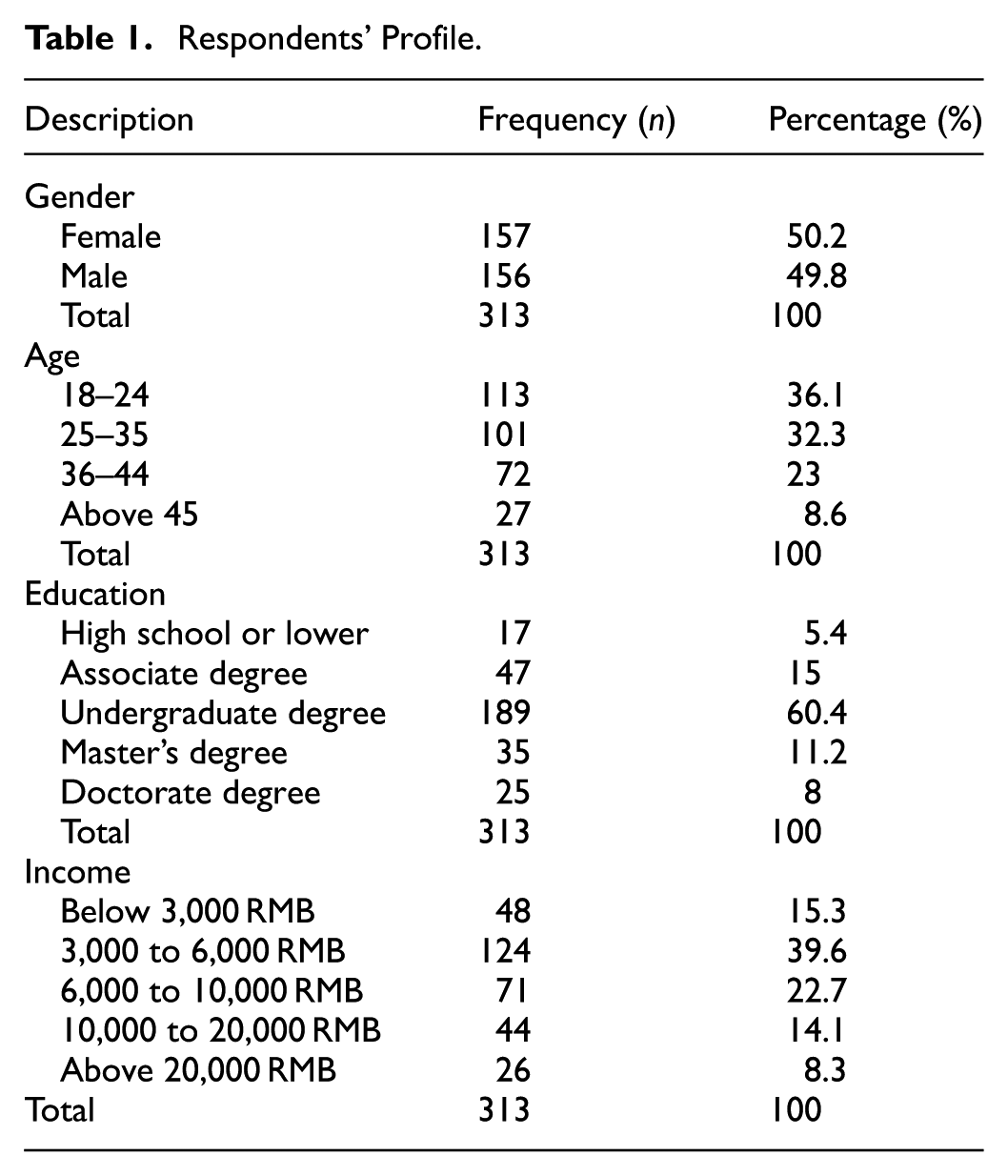
This study’s respondents consist of 157 female and 156 male participants (Table 1). About 36.1% of the participants were in the age bracket of 18 to 24 years old (n = 113); 32.2% were in the age 25 to 35 years old (n = 101); 23% were in the age of 36 to 44 (n = 72); and rest of the 8.6% respondents were in the age of above 45 years old (n = 27). The majority of the participants completed undergraduate education (60.4%, n = 189); however, there were a few participants who only had high school education (5.4%, n = 17). Regarding monthly income, about 39.6% of the respondents (124) earned between 3,000 and 6,000 RMB; 22.7% (n = 71) received 6,000 to 10,000 RMB monthly income; 14.1% of the respondents earned income between 10,000 and 20,000 RMB.
Respondents’ Profile.
PLS-SEM Results
PLS-SEM is a composite-based SEM in contrast to CB-SEM, which is known as factor-based SEM (Rasoolimanesh & Ali, 2018). PLS-SEM can be used both for explanatory and predictive research, focusing on maximizing explained variance in the dependent variables, whereas CB-SEM focuses on minimizing the discrepancy between the model-implied covariance matrix and the empirical covariance matrix (Henseler et al., 2016; Rigdon, 2016; Rasoolimanesh & Ali., 2018). The model assessment of PLS-SEM consists of measurement model and structural model (Hair et al., 2020) and does not follow the conventional two-step approach (EFA and CFA; Anderson & Gerbing, 1998). Instead, PLS employs bootstrapping to indicate whether the data is coherent with a factor (Henseler et al., 2016). Bootstrap-based tests in PLS assess the significance of factor loadings and structural paths, and the measurement model is supported through reliability and validity assessments (Manley et al., 2021).
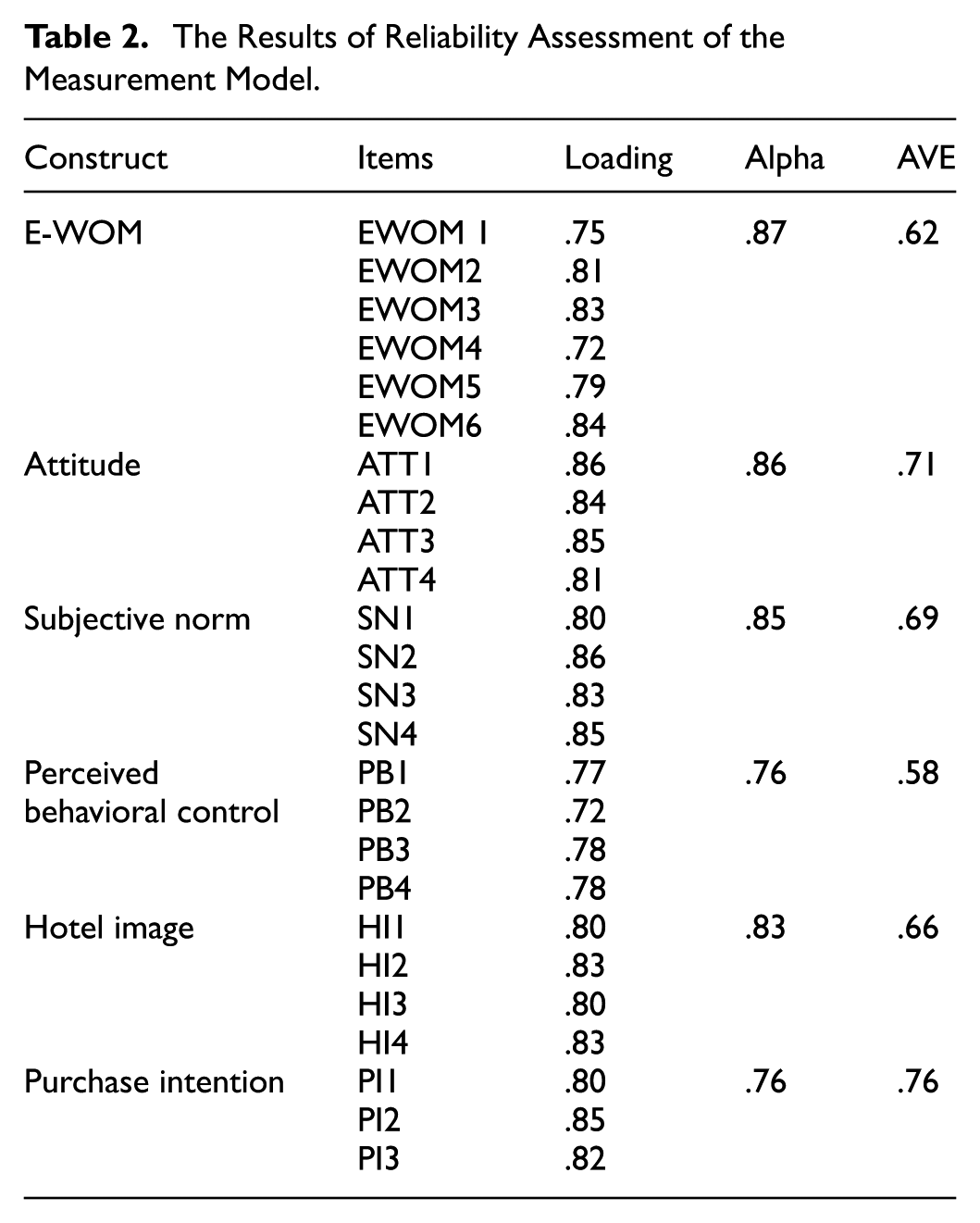
SmartPLS 3 software was used to assess the measurement model. Firstly, Cronbach’s α for all the constructs were greater than 0.7 (Nunnally, 1978), ranging from .76 to .88, demonstrating internal reliability of constructs. Secondly, composite reliability (CR) for all the values were greater than .7, ranging from .85 to .91, further demonstrating internal consistency of the constructs. Moreover, the average variance extracted (AVE) ranged from .58 to .70, demonstrating good convergent validity. Table 2 displays the results of assessment of the measurement model. Lastly, this study is also absent from the discriminant validity issue, as square root of AVE for each construct was greater than the correlation among the variables (Fornell & Larcker, 1981). Table 3 displays the Fornell–Larcker Criteria.
The Results of Reliability Assessment of the Measurement Model.
Construct Correlation and Discriminant Validity: Fornell–Larcker Criteria.

Note. The values in italics are square root of AVE.
Structural Model and Hypotheses Testing
R-square values and path coefficients for each hypothesized path were measured (Hair et al., 2010). Based on the numbers of independent variables, the R2 values for attitude (.44), hotel image (.69), perceived behavioral control (.57), subjective norm (.60), and purchase intention (.69) were all acceptable, demonstrating a meaningful predictive power of the structural model (Chin, 1998). By using bootstrapping technique via SmartPLS 3.0, with 1,000 subsamples, each causal link’s path coefficient and p-value was calculated. A t-value greater than 1.96 for each hypothesized link was determined to be significant at p < .05 (Hair et al., 2020). Table 4 shows the results of hypotheses testing for the proposed links. Based on the analysis, the results indicated that E-WOM can significantly influence attitude (H1: β = .49, p < .001), subjective norm (H2: β = .77, p < .001), perceived behavioral control (H3: β = .75, p < .001), and hotel image (H6: β = .18, p < .01). Moreover, e-WOM reviews can also significantly influence hotel consumers’ purchase intention (H10: β = .15, p < .05). Subjective norm did not significantly influence attitude (β = .129, p = .108), hence H4 was supported. Perceived behavioral control can directly influence attitude (β = .28, p < .01), hence H5 was supported. Attitude, perceived behavioral control, and subjective norm all positively influenced hotel image (H7: β = .47, p < .001; H9: β = .12, p < .05; H8: β = .19; p < .001), hence these hypotheses were supported. Furthermore, the analysis revealed that attitude, hotel image, and perceived behavioral control all positively influenced hotel guests’ purchase intention (H12: β = .26, p < .001; H11: β = .42, p < .001; H14: β = .12, p < .05), hence these proposed relationships were all supported by this study. However, the analysis found a non-significant relationship between subjective norm and purchase intention (H13: β = −.03, p = .62), hence H13 was not supported. Figure 2 shows the results of the PLS-SEM analysis.
Results of PLS-SEM Analysis and Hypothesis Testing.


Results of PLS-SEM analysis including standardized path coefficients (Full model; N = 313).
Multiple Group Analysis
A multiple group analysis (MGA) was carried out to examine the moderating effect of hotel customer loyalty and showed how loyalty can influence hotel guests’ attitude and hotel purchase intention. The grouping was determined according to the median split method (Ha & Jang, 2010; Iacobucci et al., 2015). Before splitting into two groups, the score of customer loyalty in the sample was calculated by averaging the means of three measurement items. Subsequently, a median score (5.3; based on the seven-point Likert scale) was used to split participants into low and high loyalty groups. Participants who scored below 5.3 were categorized as the low loyalty group (n = 158), whereas participants who scored above 5.3 were classified as the high loyalty group (n = 155). The MGA was conducted to measure the conceptual framework’s configural differences by contrasting proposed variables’ path coefficients and hypothesized paths.
Based on the MGA result, there is a divergence of significant paths for the two groups. For the low loyalty group, only 3 out of 14 paths were significant. On the other hand, for the high loyalty group, 9 out of 14 hypothesized paths were significant (see the comparison between Figures 3 and 4). By contrast, it was obvious that the parameter estimates and the number of hypothesized paths vary for these two groups. The path coefficients varied from −.07 to .31 in the low loyalty group and from −.15 to .85 in the high loyalty group. The differences in the path coefficients are largely due to the different levels of guests’ loyalty toward their selected hotels. The results showed guests with high loyalty had stronger effects with more significant paths on the proposed relationships in the conceptual model than guests with lower loyalty. The contrast of parameter estimates for multiple groups can be regarded as a special case of moderating effects (Henseler & Fassot, 2010). Therefore, it can be concluded that H15 was supported.
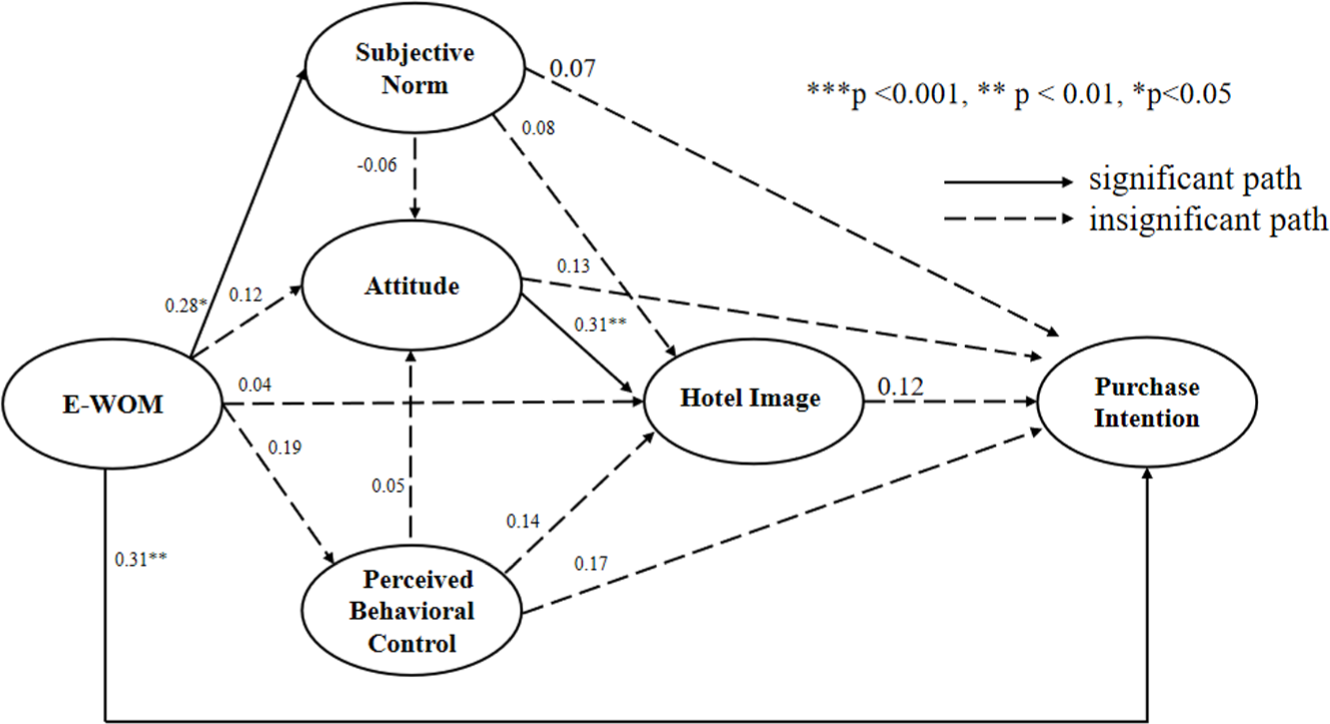
Results of structural model for the low loyalty group including standardized path coefficients (n = 158).
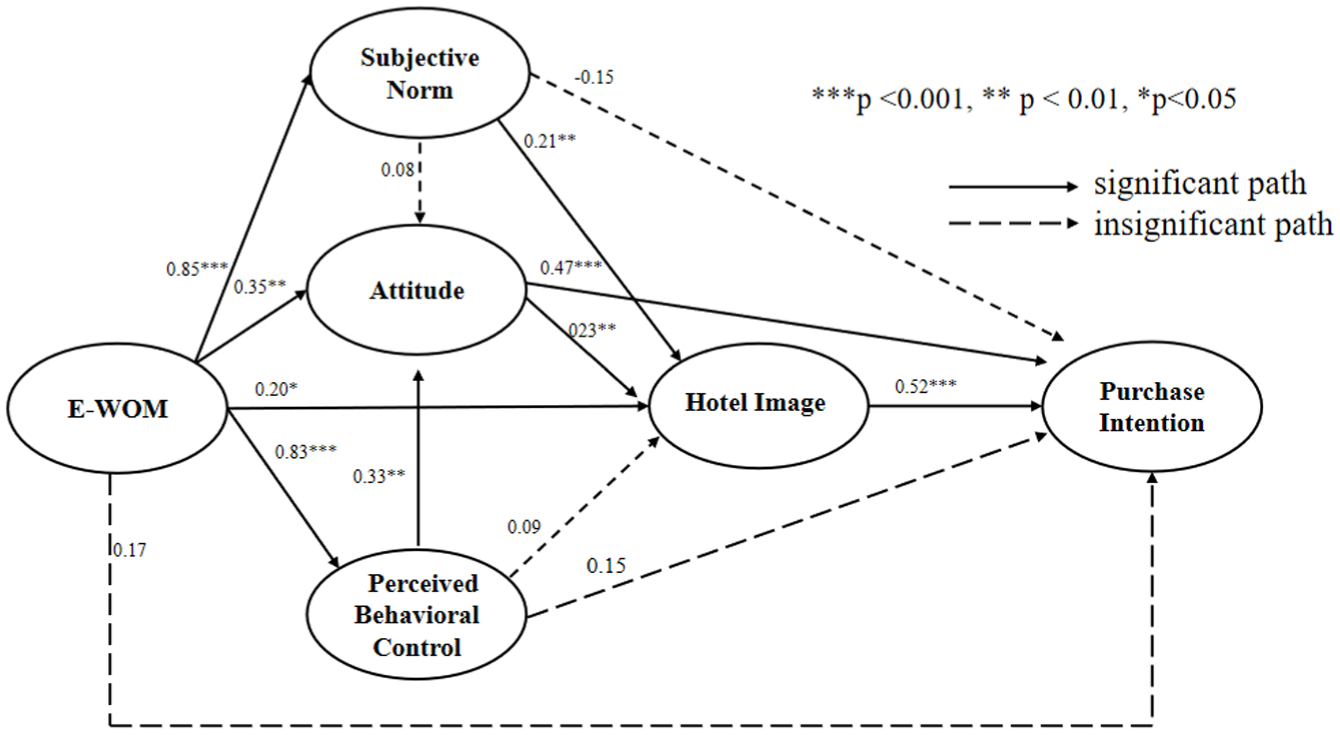
Results of structural model for the high loyalty group including standardized path coefficients (n = 155).
Discussion
This study enriches the current hospitality and tourism literature by exploring the inter-relationships among e-WOM reviews, customer loyalty, hotel image, and hotel purchase intention. The research model was examined among Chinese hotel consumers who had stayed at a Chinese hotel chain within the past year. This research confirmed the TPB model’s efficacy in underpinning a conceptual framework to explain consumers’ hotel evaluations and purchase intentions (Paul et al., 2016). Given the parsimonious nature of the TPB model (Teng et al., 2015), this research contributes to the literature by successfully integrating e-WOM and hotel image into the TPB model, proving the efficacy of the TPB model to be expanded to other variables of interests.
Based on the PLS-SEM analysis, the study confirmed that e-WOM reviews played a significant role in influencing consumers’ attitude, hotel image evaluation, and purchase intention toward a hotel, aligning the proposition that e-WOM reviews can alter consumers’ hotel considerations (Memarzadeh et al., 2015; Vermeulen & Seegers, 2009). Moreover, in line with prior research (H. Lee et al., 2021; Soliman, 2021; Zhao et al., 2015), the current study validated that e-WOM reviews could influence people’s perceptions of referent opinions as well as soothing people’s capacity to book the hotel of their choice. Consistent with prior studies (Han et al., 2009; Lita et al., 2014), this study also corroborated the fact that consumers’ positive attitudes toward their hotel choices could influence their hotel image evaluations, and consequently, affecting their purchase intentions. Furthermore, this study confirmed that the variables within the TPB model (i.e., attitude, subjective norm, and perceived behavioral control) all influenced hotel consumers’ hotel image evaluations, demonstrating the linkage between TPB and images (Pai et al., 2024; S. H. Park et al., 2017).
In line with previous research (Chen & Tung, 2014; Ladhari & Michaud, 2015; Han & Yoon, 2015), consumers’ attitudes and perceived behavioral control could also dictate their hotel purchase intentions. However, contrary to previous findings (Tsao et al., 2015), this study revealed a non-significant relationship between purchase intention and subjective norm. Moreover, inconsistent with prior research (Han et al., 2011), the study results also did not establish a significant relationship between subjective norm and hotel guests’ attitude. One potential reason is that consumers may not necessarily feel the need to consult “significant others” when making their hotel choices, as Chinese consumers have become more individualistic (Wang & Lee, 2022). Another possible reason is that the majority of the sample in this study consists of individuals aged between 18 and 35 years of old. Consumers in this age group tend to place greater emphasis on their own attitudes and values when forming personal intentions, while subjective norm has relatively limited influence on their intentions (Wu et al., 2024). Our research consists with prior research, in a survey of the green hotel industry in Shenzhen, Gao (2020) found that younger consumers place a stronger emphasis on personal values, which weakens the influence of subjective norm on their intentions and attitudes. Hence, it could be inferred that young Chinese consumers’ attitudes cannot be easily swayed by others’ opinions. Other research also discovered that there is a non-significant relationship between subjective norm and purchase intention (Paul et al., 2016). However, this research is calling more research needs to further investigate these intricate relationships.
Lastly, the multiple group analysis discovered that consumers with higher loyalty toward their choice of hotels had stronger effects than consumers with lower levels of loyalty. However, e-WOM (β = .31) exerted significant effects on hotel purchase intention for customers with lower loyalty than for those with higher loyalty. This difference explains that customers with lower loyalty may rely on external information when making booking decisions. As such, information-related factors such as consumer reviews and review scores may be more influential for consumers with loyalty to make decisions (S. Park et al., 2019). Moreover, for the high loyalty group, the hotel image exerts a stronger effect (β = .52) on hotel purchase intention than the low loyalty group, implying customer loyalty can enhance guests’ evaluations of hotel image. This result aligns with research conducted by Bujisic et al. (2025), which revealed that loyalty was not merely the result of repeated behaviors or purchase frequency, but also encompassed emotional loyalty and attachment. Loyal customers would have the propensity to rationalize negative e-WOM, making them less susceptible compared to non-loyal customers. This further explains that consumers with high loyalty tend to develop an emotional attachment with brands, making them less susceptible to being swayed by external negative reviews or electronic e-WOM. Therefore, the current research findings provide a unique perspective for future research to dig deeper into how e-WOM reviews interact with customers’ loyalty.
Theoretical Implications
This current study has provided several theoretical contributions. Firstly, this study demonstrates that the TPB model is parsimonious and extendable (Juschten et al., 2019). Through the extended TPB model, this study is able to construct a comprehensive theoretical framework to investigate whether e-WOM reviews can significantly influence hotel image evaluations and purchase intention. Secondly, through multiple-group analysis, this study corroborates that customer loyalty can moderate hotel guests’ attitudes and behaviors, as high-loyalty customers are less likely to use e-WOM information when making evaluations and purchase decisions.
Unlike previous TPB extensions that often focus on affective, moral norm, or environmental attitude constructs (Chen & Tung, 2014), this study emphasizes hotel image as a comprehensive cognitive evaluation construct. Instead of validating TPB in the Chinese context, this study integrates Chinese hotel consumers’ overall assessments of both functional and emotional attributes, thereby expanding the TPB model to better explain consumer decision-making processes. Furthermore, the study finds that loyalty alters the way consumers process information. Departing from the conventional usage of loyalty as an outcome variable or a consumer segmentation tool, this research has verified consumer loyalty as an effective moderating variable to dictate their attitudes and purchase intentions. While previous research has largely examined loyalty as an outcome or antecedent variable, a paucity of research has investigated the moderating role in customer consumer decision-making (El-Adly, 2019). As such, this research has provided a reference point for future studies to examine further the concept of customer loyalty in various consumer research, especially its moderating role.
Managerial Implications
This study has also provided several managerial implications. First of all, with the widespread use of hotel rating websites, consumers have been increasingly relying on online reviews as an important reference point when booking hotels (Memarzadeh et al., 2015; Vermeulen & Seegers, 2009); therefore, hotel marketers should place great emphasis on using e-WOM platforms to and enhance the hotel’s image to dispel consumers’ doubts before booking. Specifically, hotel managers can take certain steps to improve e-WOM reviews, such as providing detailed hotel information, including specifics about room facilities, the surrounding environment, and dining services, to help consumers gain a comprehensive view of the hotel. They can also display genuine customer reviews, showcasing positive feedback to boost consumer confidence, while actively responding to negative reviews to demonstrate the hotel’s willingness to improve its services based on customer feedback (Belarmino & Koh, 2018). For practitioners in the hotel industry, it is also critical to understand how positive e-WOM reviews can be associated with hotel purchase intention.
Secondly, since consumers’ attitudes and perceived behavioral control can determine their intention to purchase a hotel, hotel management and marketing teams should adjust hotel services from the consumers’ perspective to enhance the hotel’s image. For example, they can focus on the entire customer experience, ensuring the perfection of service details, and provide personalized services for loyal customers to increase consumer satisfaction and maintain customer loyalty. They can also regularly collect consumer feedback through e-WOM reviews, analyze issues in the booking process and customer service, and continuously improve the hotel’s operations and management.
Thirdly, because consumers’ levels of loyalty to a hotel could affect their decision-making, hotel managers should segment their customer base and regularly analyze important factors (i.e., emotional attachment) that contribute to customers’ loyalty. Since loyal customers are more likely to purchase the same hotels, hotel companies should periodically examine the characteristics and behavior patterns of customers with different levels of loyalty. Hotel companies need to understand customers’ needs and preferences, increase their emotional attachment, and convert low-loyalty customers into high-loyalty ones. Moreover, when it comes to enhancing customers’ hotel purchase intentions, hotel practitioners need to monitor e-WOM reviews more often, since low loyalty customers rely more heavily on reviews than high loyalty customers. Lastly, it is critical for hotel marketers to enhance customers’ hotel image evaluations, as it is relevant to customers’ purchase intention. Hotels can convey positive messages about the hotel’s facilities and services via various advertisements and promotions to make the hotel stand out from the competition (Lai, 2019).
Limitations and Future Research
Although this study offered valuable insights, there are a few limitations that need to be acknowledged. First, the majority of the respondents were below the age of 35 years old since the main users of Chinese social media sites (e.g., little red note) usually consist of young people. Hence, the sample of this study cannot represent the entire Chinese hotel consumer base, which limits this study’s generalizability. Future studies could recruit respondents with a more diversified age group, especially for working people between the ages of 35 to 60 years old, which may yield different results. Secondly, the study only tested consumers’ attitudes toward Chinese hotel chains in general without any specifications. As such, this study result may also lack representation. Therefore, future studies could narrow down the scope of investigation to only two or three specific hotel segments, which may generate different results. Thirdly, this study is cross-sectional in nature, and cross-sectional studies have the limitation to describe developmental process (Little, 2013). As such, future studies can employ a longitudinal approach to validate Chinese consumers’ attitudes and behaviors toward the current Chinese lodging industry. Lastly, the study did not examine the valence of e-WOM, which shows the online review in the form of positive or negative or mixed-neutral ratings (Roy et al., 2017). This study only examined whether e-WOM in general can affect hotel guests’ behaviors and attitudes. Therefore, future studies could delve into the specifics to compare whether positive or negative e-WOM reviews have differing or similar effects on consumers’ hotel evaluations and intentions.
Conclusion
This research examined Chinese hotel customers’ image evaluations and hotel purchase intention by integrating e-WOM and customer loyalty via an extended TPB model. This study verified that the inclusion of additional variables (E-WOM, hotel image, and customer loyalty) increased the predictive strength of Chinese consumers’ hotel purchase intention against the original TPB model. As such, this study verified that e-WOM could significantly influence hotel guests’ image evaluations and their purchase intention. Customer loyalty was used as a moderator. Through the multiple group analysis, this study revealed that loyal customers exhibited stronger effects on the proposed hypothesized paths; in particular, hotel guests with high loyalty also had higher effects on the relationship between hotel image and purchase intention. However, guests with high hotel loyalty did not rely on external information such as e-WOM compared with guests with lower loyalty. As such, guests with lower loyalty may need to rely on external information to infer the quality of hotels. Drawing from the study results, practitioners in the Chinese hotel industry need to ensure good e-WOM reviews for their hotels, since it will affect hotel image and purchase intention. This is particularly applicable when targeting hotel guests with less loyalty, as they tend to use external information for their decision-making. Moreover, hotel practitioners need to maintain customers’ loyalty as it is critical to increase customers' repeat purchases (El-Adly, 2019).
Footnotes
Appendix
Measurement Items.

| Construct | Number of items | Measurement Items |
|---|---|---|
| E-WOM | 6 | I read E-WOM comments to know a good impression of the hotel I read other E-WOM comments to make a good decision when booking the hotel I gathered information from E-WOM comments before I book the hotel I am hesitant to book the hotel if I do not read E-WOM comments E-WOM makes me confident in booking the hotel I often consult E-WOM to help to book hotel |
| Attitude | 4 | What do you think about staying in the hotel (participants’ choice of hotels) Very bad, very good Very worthless, very valuable Very unpleasant, very pleasant Very boring, very attractive |
| Subjective norm | 4 | My peers confirm me to read E-WOM before making a reservation My peers confirm me to prefer that I book the hotel after I read E-WOM My peers confirm me to think it is valuable to read E-WOM before I book the hotel My peers confirm me that it is important to read E-WOM when booking the hotel |
| Perceived behavioral control | 4 | I feel confident that I can read E-WOM before I book the hotel Whether or not I read E-WOM is completely up to me before I book the hotel Reading E-WOM is entirely within my control before I book the hotel If I wanted to, I could easily read E-WOM before I book the hotel |
| Hotel image | 4 | From external information sources (E-WOM messages), this hotel is innovative and pioneering From external information sources, this hotel is successful and self-confident From external information sources, this hotel is persuasive and shrewd From external information sources, this hotel does business in an ethical way |
| Purchase intention | 4 | I would purchase this hotel rather than any other hotels available I am willing to recommend others to purchase this hotel After reviewing the hotel website, the likelihood of booking this hotel is high |
| Customer loyalty | 3 | In the future, I will speak favorably about this hotel to others In the future, I will recommend this hotel to my relatives and friends I will come back to this hotel in my next visit |

Ethical Considerations
This study involved a non-interventional survey with no sensitive personal data collection and no risk of harm to participants. In accordance with local guidelines, formal ethics committee approval was not required for this type of research. However, the study was conducted in accordance with the ethical standards of the Declaration of Helsinki. All participants were informed about the purpose of the research, participation was voluntary, and anonymity was guaranteed. Informed consent was obtained from all subjects prior to participation.
Funding
The authors received no financial support for the research, authorship, and/or publication of this article.
Declaration of Conflicting Interests
The authors declared no potential conflicts of interest with respect to the research, authorship, and/or publication of this article.
Data Availability Statement
The dataset used and analyzed during the current study will be available upon reasonable request.