






Abstract
Despite the oil and gas sector being at the core of the global economy, it faces considerable criticism for its environmental and social impact, raising questions about its legitimacy and sustainability. Corporate Social Responsibility is one of the major strategies in mitigating these concerns, though there is not a dearth of studies regarding the matter. This research aims to bridge this gap by utilizing the bibliometric approach to map the knowledge base of CSR in the Oil and Gas industry. It examined 1,035 articles published in the Scopus Database from 1977 to 2023. The results revealed that the Journal of Cleaner Production and the Journal of Business Ethics were the most prominent. The United States and the United Kingdom were the most influential, while Joseph Ikechukwu Uduji and Frank Vanclay were deemed the most prominent authors. Themes that stood out were CSR, sustainability, governance, extractive industries, and the oil and gas (O&G) sector. Examination of the publication activity revealed a consistent upward trend, with the highest peak in 2021. There was a notable gap in contributions from developing and emerging nations, indicative of the necessity for more diverse and inclusive research. Scholars and practitioners can also utilize this research to enhance their current comprehension of the O&G CSR corpus. It provides insights that can influence research agendas through its identification of research gaps, publishing patterns, and academic collaborations. Policy and industry leaders can also utilize this study’s findings to enhance their governance frameworks and CSR practices.
Plain Language Summary
This study looks at how researchers around the world have studied Corporate Social Responsibility (CSR) in the oil and gas industry over the past four decades. The researchers reviewed over 1,000 academic articles published between 1977 and 2023, using a method called bibliometric analysis to understand patterns in the research. They used tools like Excel and VOSviewer to find common keywords, leading authors, top journals, and the countries contributing the most to this area of study. The findings show that most research has come from the United States and the United Kingdom, and top journals publishing this work include the Journal of Cleaner Production and the Journal of Business Ethics. Influential researchers such as Joseph Ikechukwu Uduji and Frank Vanclay have played a major role in shaping the field. Popular research themes include CSR, sustainability, governance, and the extractive industries (like oil, gas, and mining). Research on CSR in oil and gas has steadily increased, especially after 2010, peaking in 2021. However, the study also found a lack of contributions from developing countries, suggesting that more voices from these regions are needed. This work is one of the first to give a complete picture of how CSR in the oil and gas sector has been studied globally, and it can help future researchers, companies, and policymakers better understand the field and identify gaps for further exploration.
Introduction
The oil and gas (O&G) sector has a vast and profound effect throughout the world (Kovacs et al., 2024), as petroleum is a critical primary resource (Sahebi et al., 2024). This industry supports the global logistic system (Maurya et al., 2023), as it impacts global energy systems and greenhouse emissions. Thus the O&G sector affects climate change and the environment as it is one of the most prominent polluting (Abubakar, 2014), industries globally due to its carbon emissions (Maurya et al., 2023). Environmental concerns continue to grow, as it is predicted that demand from this industry is set to be the dominant source of energy through 2030 (International Energy Agency, 2023), with a notable surge in demand into the year 2050 as the population size is predicted to surpass the 9 billion mark (World Bank Group & United Nations, 2017).
The surge in demand for oil and gas has been accompanied by calls for greater social responsibility from the industry and its behemoth entities (Williams et al., 2015). These demands might have been brought about due to the heightened awareness regarding the environment (Gilani et al., 2023; Meseguer-Sánchez et al., 2021) and the stakeholders’ increased worldview of social responsibility (Carroll & Brown, 2021; Mbalisi & Okorie, 2020). Given the increasing global awareness (Carroll, 2021), trade, climate, and relations, paradigms globally have shifted (Carroll, 2021), inviting change from those in the O&G sector to be more responsible with their operations (Mohabir & Joshi, 2026).
This also comes at a time when these entities have been labeled “controversial,” affecting their legitimacy in society (Pizzi et al., 2021). To enhance perceptions and legitimacy, social responsibility can be incorporated into their strategies (Ma et al., 2017). Corporate social responsibility is defined by Matten and Moon (2008), as the wider societal good that the business is responsible for. Though the term itself does not have a definitive definition Carroll (2021) indicated that more studies should be executed to identify what “good” means using the business context. Though companies in the sector have executed CSR, according to Uldam and Hansen (2017), there is the promotion of monitoring critics and executing overt CSR initiatives. Authors further divulged that overt acts such as sports and cultural sponsorships can be perceived as greenwashing, as these entities include these forms of CSR to divert attention from their operations and their effects on the environment. Moreover, Uldam and Hansen (2017) called for more studies relating to O&G CSR to obtain legitimacy since studies in this area were limited.
Granted their vast impact globally and environmentally, particularly in the future, these entities must adapt and implement effective CSR strategies to maintain their legitimacy and contribute to their environmental stewardship. Though this may be the case, the majority of the existing research is based primarily on case-specific research and insights regarding CSR initiatives, thereby creating a deficit in the literature (Amaeshi et al., 2016; Frynas & Stephens, 2015; Mohabir & Joshi, 2024) for studies that systematically analyze the thematic and intellectual development of the field (Uduji et al., 2019).
Furthermore, Sahebi et al. (2024) emphasized the lack thereof of bibliometric research in the domain, as they purported that the approach can render insights that would otherwise not have been comprehended or appraised through mapping of the O&G knowledgebase. This is even more so supported by Quezado et al. (2022), as they indicated that there is also a scarcity of bibliometric studies, resulting in a methodological gap. Addressing the gap should result in academicians and practitioners being able to identify the trends, structure, and underexplored areas of the field, thereby advancing the O&G CSR knowledge base. Additionally, readers can gain a more comprehensive understanding of the O&G CSR knowledge base by applying these techniques as the study offers an in-depth assessment of the field (Vagner et al., 2021).
This method incorporates using articles, books, book chapters and the like. It engages different techniques to identify leading authors, publishers, themes and countries. It unravels the development and evolution of the themes of a study over the specified research period systematically and quantitatively (Ji et al., 2020). Through these findings, those in the field should be able to identify opportunities for publication in appropriate and reputable journals, in addition to potential collaborators who are at the top of the field. The data for this research was procured in an unbiased, systematic and transparent manner using the PRISMA technique (Fernández, 2023), on data obtained from the well renowned Scopus database. Authors such as Sahebi et al. (2024), also incorporated the bibliometric review approach, as they focused on sustainable supply chain management in the O&G industry using the Web of Science database.
It is acknowledged that there are a diverse number of studies in the O&G CSR field. This research endeavors to further contribute to this diversity with its bibliometric approach, thereby facilitating more discourse and cross-pollination across different fields (Morehouse et al., 2018). Its findings offer broader academic perspectives and trends in the field over the span of this study’s research period (Duhoon & Singh, 2024). Findings should supplement existing research granted its shift in approach, techniques and source of data (De Bakker et al., 2005). Furthermore, it will uncover general frameworks for research and connections enabling readers to have a deeper understanding of global O&G CSR as a theme, along with its trends and gaps.
Thus, the primary goal of this bibliometric research was to contribute to the field by identifying gaps for future research. In addition, it aimed to identify the top authors and to map out the trends and development in the field. To achieve this, the following research questions were framed:
The dataset which was collected initially from Scopus was 12,577. Post the PRISMA selection process however, there were only 1,035 articles that were examined using bibliometric techniques. Bibliometric techniques such as co-citation, co-authorship, citation, and co-occurrences were used to assess the O&G CSR field, which led to outputs regarding top citations, articles, authors, countries and sources (Hallinger & Nguyen, 2020). In doing so, there can be assessments of the conceptual framework of the O&G CSR corpus (Benziane et al., 2022). Since 1977 was the first year that CSR-related papers in the oil and gas industry were added to Scopus, and 2023 is the most current full year of data available, the study spans the years 1977 to 2023, guaranteeing a thorough examination.
The first year of related publication dates back to 1977. Prominent terms in the field throughout the 46 years (1977–2023) were CSR, O&G industry, sustainable development, governance and extractive industries. It was observed that the developed nations dominated the publications in the field while research from the developing nations was lacking. In addition, it was concluded that the number of citations obtained is not directly affected by the number of field related publications per author. Through using the study’s findings, gaps for more O&G CSR future research have been provided.
In the sections to come, there will be a discussion of the methodology that was used to execute this study. Subsequent to which, a results and discussions section will display and describe the output of the various bibliometric techniques employed. In the final section, there will be a presentation of the conclusion, gaps, and limitations of the study.
Methodology
The data for this study was obtained through the widely used and accepted source in bibliometric studies (Sarto et al., 2014). Selection and inclusion of data was executed on 15th August 2023 using the Preferred Reporting Items for Systematic Reviews and Meta-Analyses (PRISMA) protocol (Moher et al., 2009; Nyabakora & Mohabir, 2024) to obtain 1,035 relevant articles for the present study. PRISMA was selected due to how explicit it is in the screening process (Hallinger & Nguyen, 2020).
The PRISMA framework rendered replicability and transparency in the process of procuring the final dataset (Moher et al., 2009). Its utility also led to the minimization of bias and the enhancement of rigor in the selection process, thereby leading to it being systematic and consistent. The process was comprised of four key elements, namely: Identification, Screening, Eligibility, and Inclusion. In the identification phase, the BOOLEAN search string was carefully constructed to procure the relevant articles from the Scopus database. During the screening phase, duplicate and irrelevant articles were removed. This was followed by the Eligibility phase, which utilized criteria such as language (English), publication (completed articles), and keywords. In the final phase “inclusion” revealed that there were 1,035 articles that met the requirements necessary to move forward with this bibliometric analysis.
VOSviewer offers bibliometric tools such as co-occurrences to link trending scientific terminologies and co-citations to create links between publications, sources, and dominant researchers, thereby rendering detailed graphical representations (Van Eck & Waltman, 2017). Microsoft Excel was also used to depict the results in tabular formats and graphical representations of prolific documents, authors, countries, sources, themes, and trends of keywords in this study as it is a reliable method for descriptive analyses (Martín-del-Río et al., 2021).
Data Source
As previously mentioned, data was extrapolated from the Scopus database which was chosen due to its relevance and expansive usage in bibliometric studies (Sarto et al., 2014). It is also a well-renowned database in the research field, as it contains top journals in the world (Mongeon & Paul-Hus, 2016). The same can be said for the Web of Science database, however further studies have been executed which indicated that Scopus and Web of Science databases have a great many similar citations (Archambault et al., 2009). Furthermore, the Scopus index was specifically chosen because it has extensive coverage of contributions in the social sciences field (Mongeon & Paul-Hus, 2016).
Data Search Criteria
The search query was executed using a predetermined search string on August 15th 2023 to procure data from the beginning of Scopus publication to the date of initial search. The predetermined string was comprised of BOOLEANS “AND” and “OR” which were used to either enhance or restrict the search. Parentheses were also used to customize the outcomes, while “?” and “*” were used for inclusion of what might be a variation of the term due to conjugations etc. Parentheses were also included in the search query to enhance the precision of the search. Accordingly, the following terms searched were run: ( csr OR “corporate social responsibilit*” OR “social responsibilit*” ) AND ( “oil and gas” OR “oil and gas industr*” OR “O & G” OR “petroleum industr*” ). The results identified 12,577 articles based on the “Title-ABS-KEY” operator of the Scopus database which performed a search operation for the full text in the titles, abstracts, and keywords of the relevant articles.
After identifying the initial set of articles, the PRISMA technique was employed to obtain a sufficient sample set based on screening on eligibility factors such as subject area, keywords, completed articles, and language as parameters. This was done to specify the characteristics of the subset of the population that would be studied in a transparent, consistent, and impartial manner to effectively address the research issues (Meline, 2006) through inclusion or exclusion parameters as demonstrated in Figure 1. Through using the PRISMA approach, 11,542 articles were excluded and 1,035 articles were deemed suitable (see Figure 1).
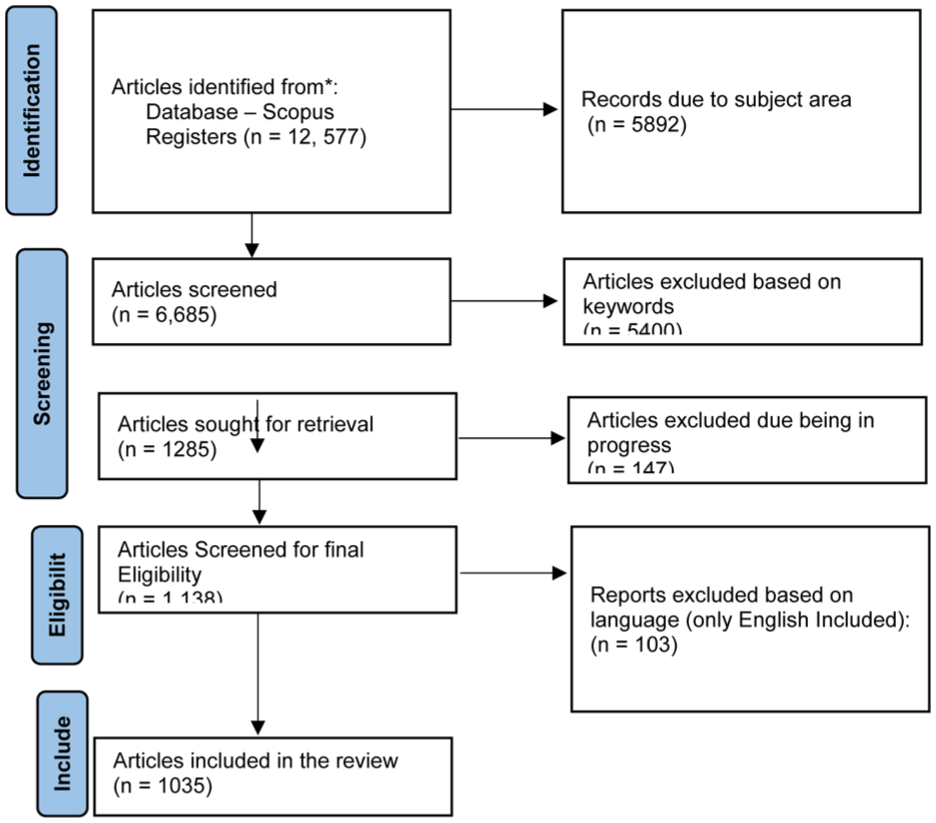
Data sampling using PRISMA approach.
The study period spans from 1977 to 2023, and it was subdivided equally into the three distinct subperiods in bibliometric studies, namely: the beginning (1977–1999), take-off (2000–2010), and recent phase (2011–2023) (Mohabir et al., 2025a). This is a common practice in bibliometric studies to evaluate the natural evolution of a field from its formation to its development, and recent consolidations.
Results and Discussion
The 1035 documents’ bibliographic data comprised of details regarding authors, titles, abstracts, keywords, and citations were retained and analyzed to answer the four posited research questions, as can be seen in the section following. Analysis tools such as Excel and VOSviewer were used to execute analyses and visualizations of co-citation, citation analysis, keyword co-occurrences (Mohabir et al., 2023; Van Eck & Waltman, 2017). Through these findings, readers would have a better understanding of the O&G CSR knowledge base’s dynamics and evolution since 1977.
Descriptive Analysis of O&G CSR Knowledge Base
The study of trends existing in the CSR O&G sector will enable stakeholders to understand the terminologies and their trends better, empowering them to identify how to regulate CSR within these high-impacting industries. Figure 2 presents the trends in publications per annum spanning across 46 years: 1977 to 2023.
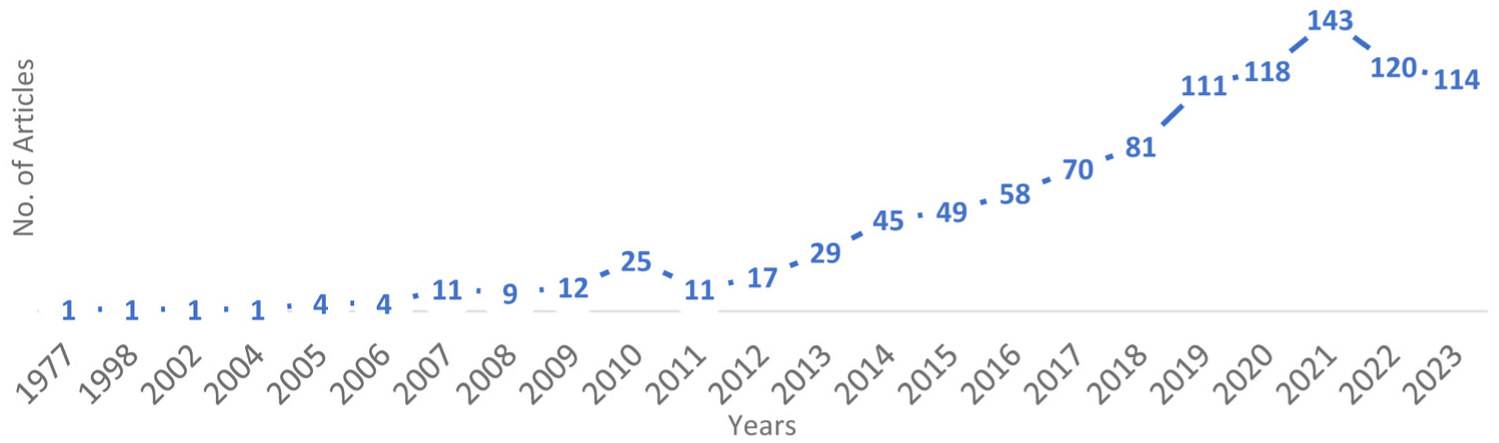
Growth trend of O&G CSR literature, 1977 to 2023 (n = 1,035).
In the initial period, the first related article was published in 1977. From then onwards, there was a slow trickle of publications with an upward peak in 2010, and in 2013. This upward growth was consistent and quickly developing up to the year 2021, with 143 publications. To delve more deeply into the trends of CSR O&G knowledgebase, Figure 2 offers more insights. The time frame has been divided into three subperiods where the top keywords are then presented by their total frequency of occurrence in that specific subperiod. Furthermore, each subperiod has been segregated based on the total number of years based on publication in the specific year (Table 1). Thus, each subperiod contains an equal number of years by publication. The division of the time period allows for the enhanced visualization of the paradigms and shifts of literature to identify trending themes and the intensity of publication. Through analyzing each distinct phase, reflections regarding the evolution of CSR discourse in the O&G sector should be identified (Agramunt et al., 2020; Priyan et al., 2023).
Growth Trends of Keywords From O&G CSR Literature by Rank (1977–2023).
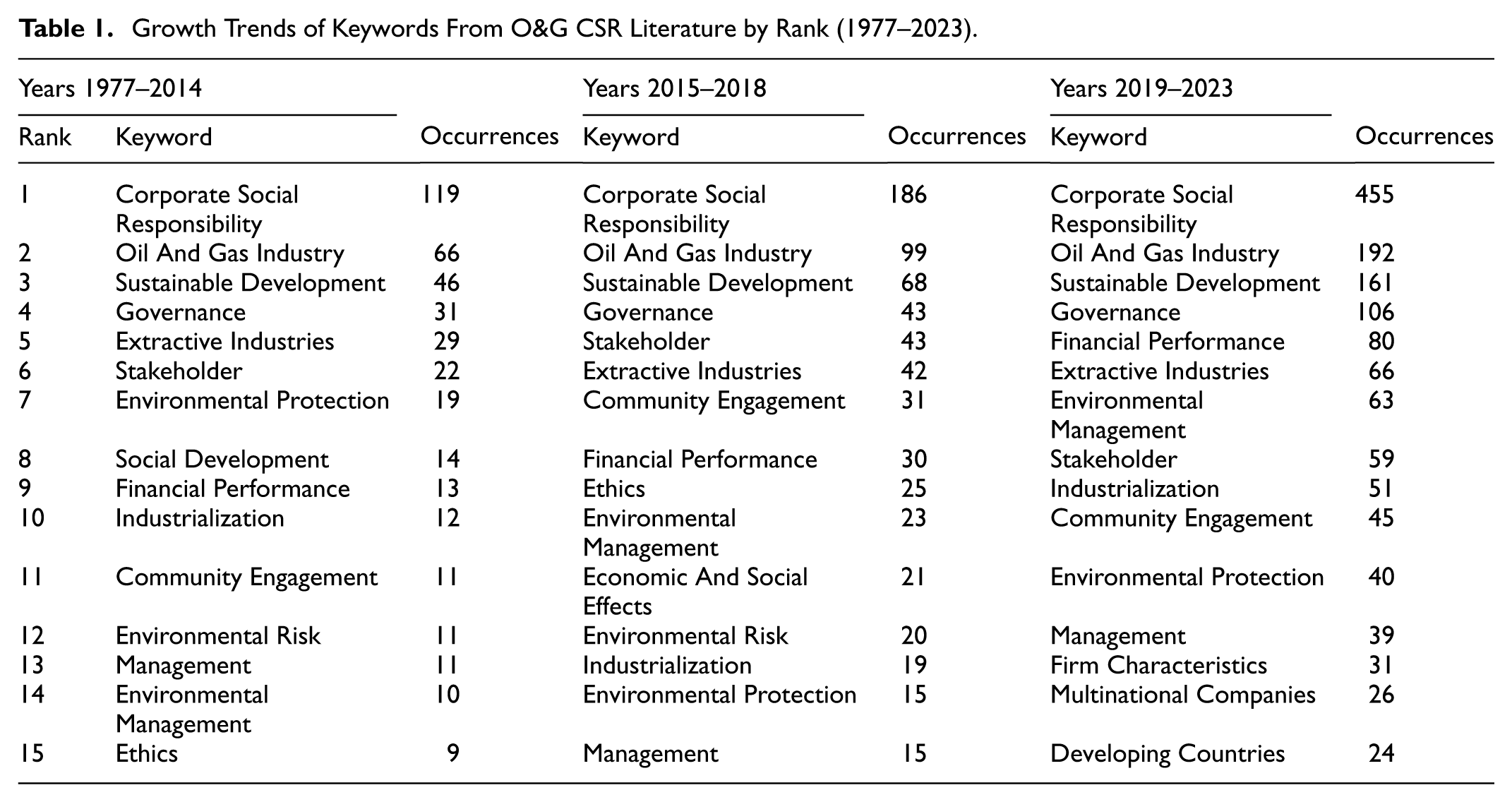
The first subperiod runs from 1977 to 2014 and is deemed the initial phases of the publications’ stage. The outstanding terms for the period were: corporate social responsibility, oil and gas industry, sustainable development, governance and extractive industries. There were an average of 12 publications per annum in this subperiod.
The second subperiod spans from 2015 to 2018 and this period demarks what is deemed as the “take off” stage. Often in this phase, it is expected that the publications would gradually increase, as is indeed the case with an average number of 64 publications for the subperiod, showing an exponential leap of 50.9% from the previous subperiod. This period demonstrated growth in the keyword corporate social responsibility with a 56.3% increase, indicating consistency and relevance of the theme in accordance with this study. Similar to the previous period, corporate social responsibility, oil and gas industry, sustainable development, and governance were the top terms in this period, in addition to the term stakeholder which appeared in the top five, after being sixth in the previous period.
The third subperiod runs from 2019 to 2023 and it had an average of 121 publications per annum with a 134% growth rate from the previous subperiod. As per the previous two subperiods, the top reoccurring and driving themes of this period are corporate social responsibility, oil and gas industry, sustainable development, and governance, which repeatedly reoccurred in the top five terms. The exception was financial performance though it still remained present in the top 15 throughout the subperiods. Corporate social responsibility was one of the most cited keyword, which reoccurred consistently as the highest rank throughout all the periods. Additional highly ranked terms that reoccurred consistently throughout the subperiods were: oil and gas industry, sustainable development, governance, extractive industries, stakeholder, and financial performance. Researchers can continue to execute studies relating to the O&G CSR in tandem with these additional themes as variables for more valuable insights.
Corporate social responsibility exhibited promise, as it consistently appeared as the top most reoccurring term throughout all the subperiods, with 29.9% of the total sum of terms and the highest score rank across the subperiods. In the first, second, and third subperiods, it consistently ranked in the first position. During the first subperiod, it had 28% of the total sum of cooccurrences. During the second subperiod, its growth increased by 56.3%, and in the final subperiod, the growth increased exponentially with a 144.6% increase. It is evidentiary that the term is hot and that there can be more research executed in the field to expand the body of knowledge due to its consistent and reliable performance.
O&G industry was ranked second for the total number of occurrences throughout the three subperiods and maintained this position overall with 14%. In its first subperiod, O&G industry was 15.6% of the total during that period. The occurrences in the second subperiod increased by 50% from the first subperiod, and this increase almost doubled in the final subperiod with a 93.9% increase. This shows that the term is developing at a reasonable rate, and continues to be of interest to researchers.
In the first, second and third subperiods, the term sustainable development continued to rank as third, leading to the overall number of occurrences being ranked third with 10.8%. The first subperiod was 10.8% of total occurrences. The second subperiod almost doubled with 47.8. In the final subperiod, the percentage increase was 136.7% of the subperiod. Through its performance, it is clear that the term is still of interest in the field and can thus be deemed as “hot.”
Similar to the previous terms, the term governance was considerably consistent throughout all the subperiods, as it had the same rank throughout. In addition, it was the top fourth term due to its total occurrences of 7.1%. During the first subperiod, the term was 7.3% of the occurrences.
The second subperiod was 6.3% of the total occurrences, leading to a 2.7 increase from the previous subperiod. During the third subperiod, the term grew tremendously with an increase of 146.5%. As can be seen, the term has remained relevant throughout the subperiods and thus presents potential for more research.
The fifth highest-occurring term is extractive industries with 5.3% of the total occurrences throughout the periods. In its first subperiod, it ranked fifth, with 6.8% of the occurrences though in the second subperiod, it ranked sixth with an increase of 44.85. During the third subperiod, the term ranked sixth once more, with a growth rate of 57.14%. Based on its consistency and performance, the term still shows great promise for research.
Social development became redundant in the first subperiod and might have been replaced by terms such as community engagement. In the second subperiod, environmental risk and economic and social effects did not reoccur in the third subperiod. These terms might have since become redundant and replaced by more encapsulating terms such as environmental management, management, and governance.
Terms that introduced themselves in the third subperiod and placed in the top 15 list were: firm characteristics, multinational companies, and developing countries. Based on these occurrences and the placements of their time, these terms exude a great deal of promise due to their recency and occurrences. Some terms had the highest total levels of combined changes over the subperiods, with consistent appearances throughout the periods such as environmental management, which had the highest levels of growth. Financial performance and community engagement showed similar levels of promise in the field as they placed second and third respectively.
Analysis of Prolific Authors, Countries, Sources, and Documents
To answer the second research question regarding the identification of top contributors, documents, sources, countries, and authors to the CSR O&G corpus, it is necessary to investigate each of these aspects more comprehensively. Thus, in the preceding sections, each question will be analyzed and discussed thoroughly to ensure more insights and comprehension in the field.
Prolific Authors
Table 2 depicts the most influential contributors by citations and documents in the CSR O&G domain by investigating 2,514 contributors. In doing so, this research relays insights into the contributors’ impact in the area. The H-index was excluded as a measure since it considers the entirety of the author’s contribution. Instead, this study solely focuses on the contributor’s direct contribution to the O&G CSR field based on citations and documents (Priyan et al., 2023).
Top Contributing Authors.
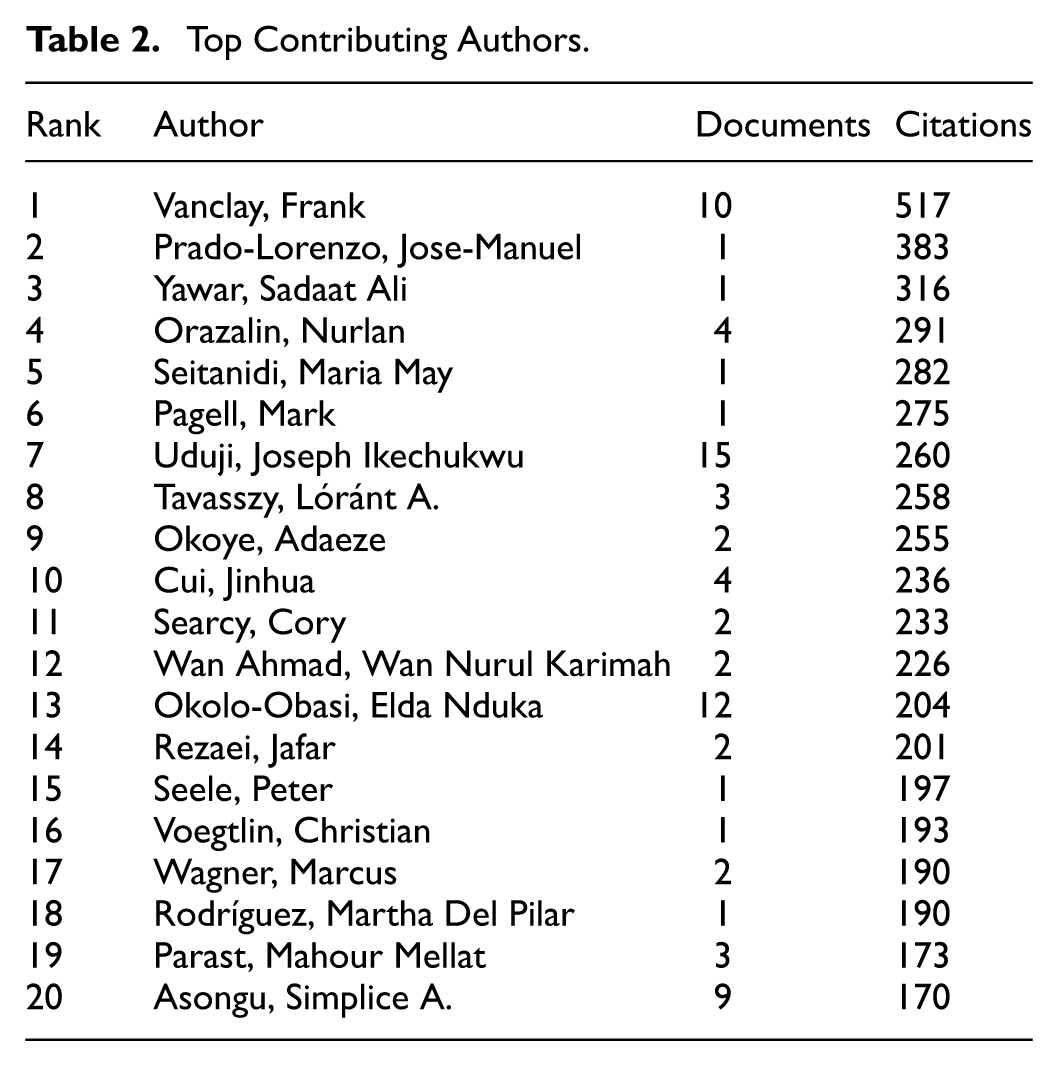
Table 2 illustrates that Frank Vanclay authored 10 documents, with 517 total citations earning him the first rank. The second rank was earned by Jose-Manuel Prado Lorenze, who produced one document, which garnered 383 citations. In third was Sadaat Ali, who similarly produced one article with 316 citations. The author Joseph Ikechukwu produced the most documents (15), with 260 citations which lead to the ranking being 7th. It is clear that based on the presented documents and citations, there is no linkage between the quantity of citations and documents (Priyan et al., 2022).
Prolific Countries
To investigate the top countries in the O&G CSR field, affiliations were procured from the topmost authors to identify where the concentration of the highest levels of citations were derived from. This has been done with due consideration for the past 46 years. Therefore, the top 10 countries have been presented in Figure 3 to gain more perspective on where the top studies are emanating from. This will allow for a better understanding of the perspectives of these studies.
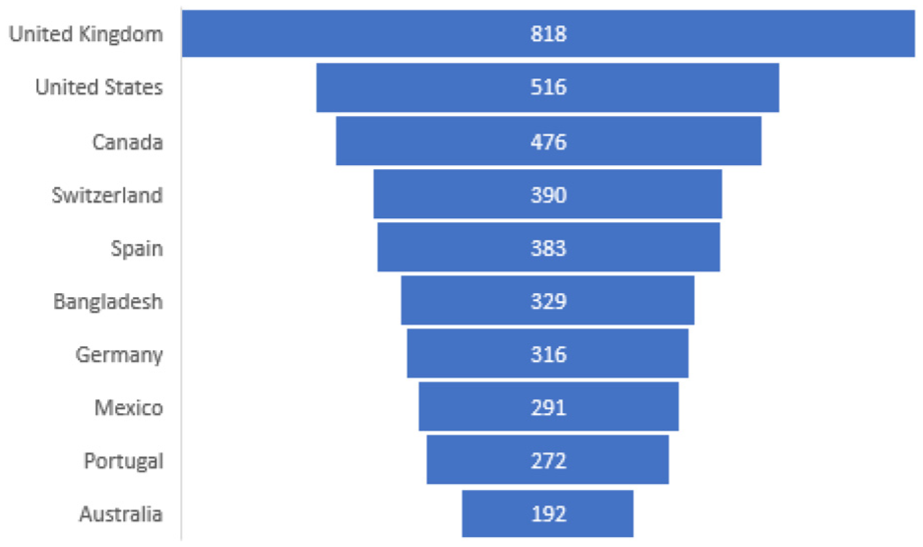
Top 10 countries distribution of O&G CSR, 1977 to 2023.
The results indicate that the leading country is the United Kingdom, followed by the United States and Canada respectively. The countries that were similarly placed in high ranking but were last were: Mexico, Portugal, and Australia. This indicates that perspectives of the O&G CSR field were dominant in developed nations, while it was still relatively nascent in developing economies and remains unclear. This presents a gap for consideration by future research.
Prominent Sources
In this investigation, 431 sources were analyzed over 46 years to identify leading journals in the O&G CSR domain. Through these findings, those in the field should be able to keep up with the nuances and advancements in the field. They would also be able to identify the top journals that would be more inclined to publish their articles. This was done by highlighting the more impactful sources based on the number of documents produced in the fields, in addition to citations to gauge their influence (Munodei & Sibindi, 2023).
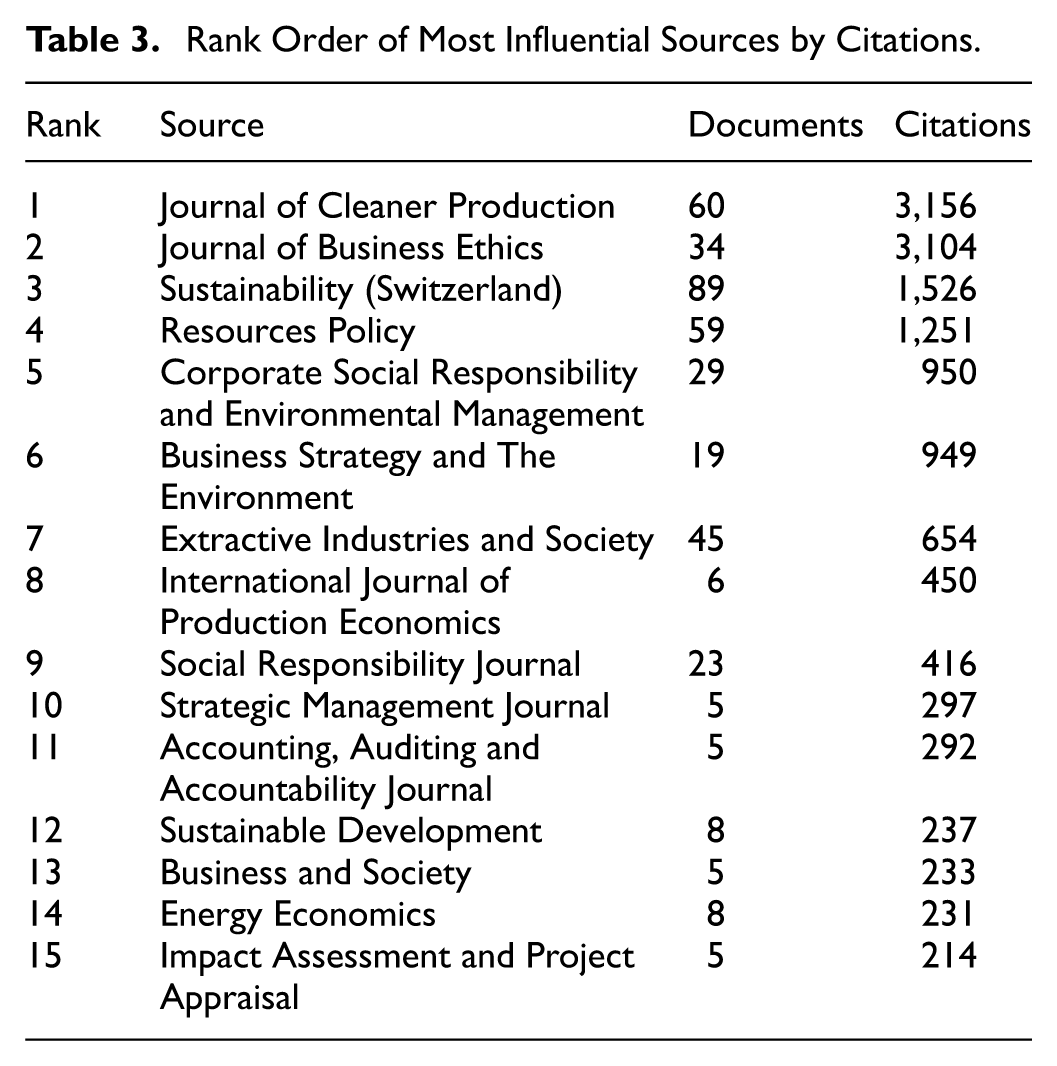
The highest cited sources as per Table 3 by rank are: the Journal of Cleaner Production (3,156), Journal of Business Ethics (3,104), and Sustainability Switzerland (1,526). With consideration to the highest number of documents per source as per Figure 4 are: Sustainability Switzerland (89), Journal of Cleaner Production (60), and Resource Policy (59). It can then be seen that Figure 3 and Table 4 contain the key sources of the O&G CSR domain.
Rank Order of Most Influential Sources by Citations.
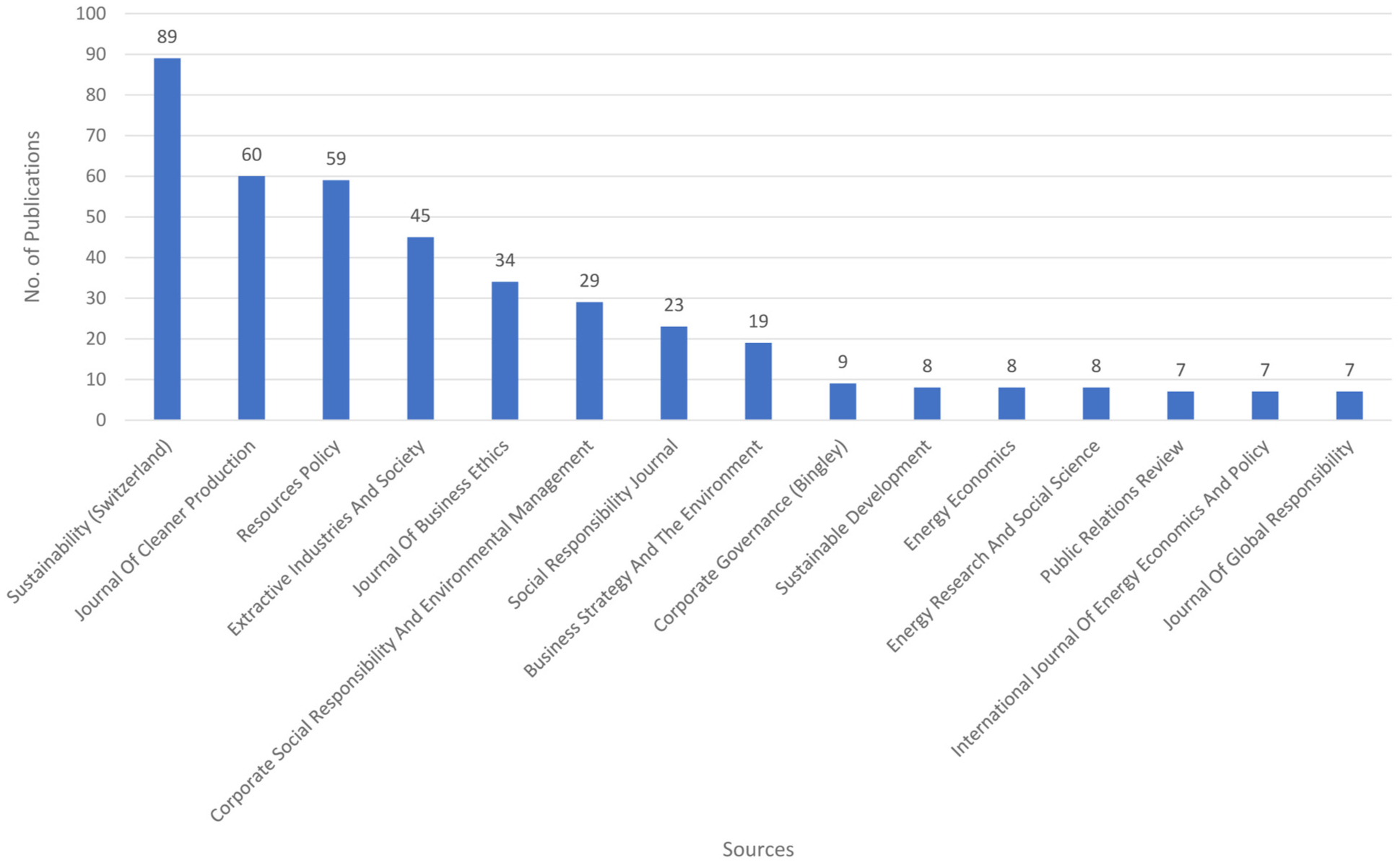
Top 15 productive sources for O&G CSR literature CSR, 1977 to 2023.
Prolific Documents by Highest Citations.
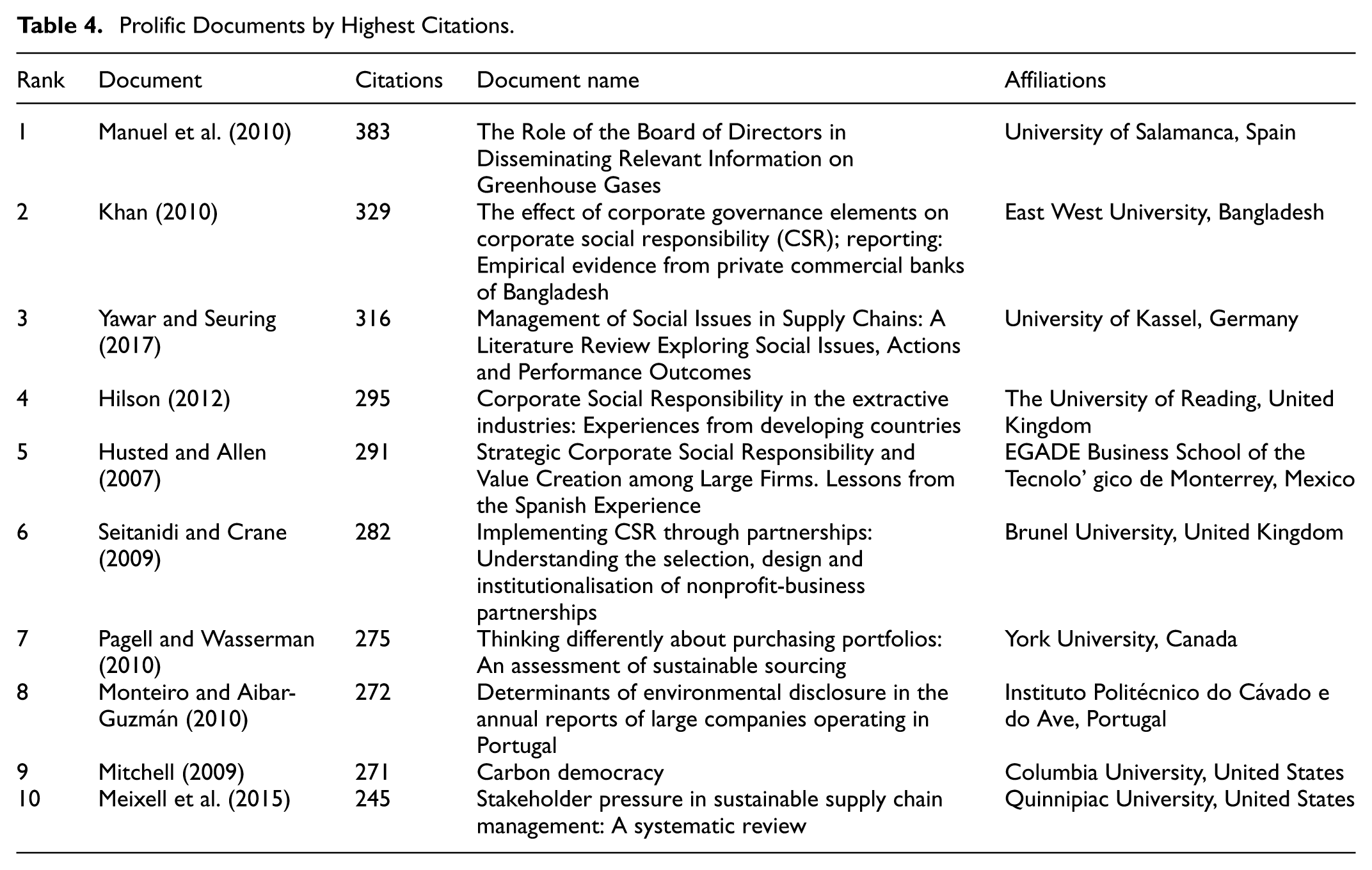
Top Contributing Documents in O&G CSR
To identify the influence researchers have in the field, the topmost cited documents was analyzed as depicted in Table 4. Furthermore, a discussion regarding the prominent documents in the field by the Scopus publications during the research period was conducted.
Manuel et al. (2010) investigated how the board of directors might influence the dissemination of information regarding Greenhouse gases (GHG). Authors posited that an entity’s disclosure of CSR by the board of directors (BoD) is linked to its image. Research revealed that the BoD might be held accountable by stakeholders and thus would be inclined to answer for issues including greenhouse emissions. Findings indicate that disclosures were more inclusive of traditional responsibilities to gain economic benefits. Furthermore, the authors found that CSR disclosure has been used strategically by entities to gain legitimacy or economically, as opposed to simply transparently declaring an objective fact to different stakeholders. The stakeholder’s financial interests were prioritized over environmental reporting, except if there would be risk involved for investors. Authors emphasized the need for there to be codes of “good governance” for CSR to include stakeholders’ interests that would otherwise not have been considered by BoDs though the effectiveness is questionable for male board members who are traditionally not as sensitive.
Similar to the previously presented research, the second highest-ranking document authored by Khan (2010), contributes to CSR reporting and the BoD. Research provides insights into a developing country’s CSR as it examines Bangladesh Banks’ CSR reporting and the impact of its BoD. Findings indicated that the presence of CSR in these voluntary reports was moderate but impressively diverse, spanning support for natural disasters to education and health contributions. In addition, while there was a significant relationship between BoDs and foreigners’ influence, bank size and profitability on CSR reporting, there was no significant relationship between female BoDs and CSR reporting. The author called for more CSR reporting studies in different countries to study the motives of management’s disclosures.
Yawar and Seuring (2017) executed a literature review research that explored CSR and Supply chain management (SCM) by looking at the existing literature on social issues (SI) in SCM. Through the culmination of different arguments in this literature, a conceptual model of the role of stakeholders in tackling SIs, through strategies across the supply chain, would lead to it being more socially sustainable as it contributes theoretically and practically. The model applies the supply chain perspective, engaging insights from other disciplines by incorporating the management of SI with financial performance. In doing so, this article contributes to the theoretical knowledgebase by showing how CSR practices can positively impact financial outcomes. The author called for more attention from researchers and practitioners based on the complex dynamics of SCM and SI.
Hilson’s (2012) article was ranked the fourth most cited and is the first paper to fully contribute to both of the themes of this study directly as it discusses the impact of CSR on extractive industries in Africa, Asia, and Latin America using a case study approach. In addition, it does what most studies have not done as it provides clarity regarding extractive industries’ CSR of companies in developing nations. There is some dissonance since many criticisms from stakeholders are emanating from these regions, though these entities are seemingly proponents of CSR. Results indicate that the CSR efforts are weak, and the CSR expectations in these countries are high. They proposed that there be strict regulations and enforcement of CSR, however, this is something that is all too often in deficit in these countries. The author called for more research on the effectiveness of the industry’s CSR as it would contribute to the understanding and policy-making process.
In the fifth highest cited article, Husted and Allen (2007) discussed CSR’s effectiveness as perceived by managers from the Spanish context. They found that though managers indicated that CSR positively affected the entity publicly, and privately they did not perceive this to be the case. Thus, they recommended that there be more stringent policies regarding CSR. Furthermore, they suggested that managers be edified on how CSR might positively affect the business, in addition to how it is different from other promotional activities. They went on to explain that managers should be advised on how to also strategically incorporate CSR to obtain these positive effects, while simultaneously offering substantial CSR to the public.
Collectively, these studies reveal that there is ongoing discourse surrounding CSR implementation and its purpose across different industries through dimensions such as the strategic, ethical, and regulatory. Manuel et al. (2010) and Khan (2010) demonstrated this through their research regarding CSR’s utility for corporate legitimacy and reputation. On the other hand, Hilson (2012) and Husted and Allen (2007) debated whether initiatives were effectively meeting the stakeholders’ expectations, or if they were economically motivated. Yarwar and Seuring (2017) contributed to the discourse by linking CSR to supply chain governance and performance, thereby bridging the social and financial outcomes, resulting in the introduction of new notions of compliance.
These arguments bring into question whether CSR is voluntary, profit-driven, or the ethical responsibility of the entity to be enacted through sustainability governance. Comparatively, these literatures indicate that the O&G CSR corpus remains under-theorized, with limited empirical emphasis and minimal integration of governance, community-related perspectives, and sustainability.
Through the previously discussed studies, it is clear that the O&G industry is not being focused on in CSR studies, as the majority of these top articles mainly discussed BoDs and their entity’s financial performance. These studies bring to question whether CSR is beneficial to the entity, and whether the stakeholders’ interests are being met. There were many different calls regarding more studies relating to the field and from a lack thereof studies of O&G CSR, it can be seen that this is a gap for more studies to be executed in the O&G CSR sector. Granted the industry’s impact on the environment, more particularly GHGs, gaps present themselves to identify the effectiveness and scope of O&G SCR to ensure that there is a balanced approach between both the economic and environmental interests.
Intellectual Structure of the O&G CSR Knowledge Base
This section will answer the third question regarding the overall intellectual structure of O&G CSR. Through investigating the intellectual structure, researchers should be able to identify areas that are uncharted in the field in addition to the most commonly researched topics. This has been done to theoretically and empirically to identify paths through scientific mapping of the field which should lead to the characterization of the O&G CSR field as was done by Nerur et al. (2008)Nyabakora (2024) and Mohabir et al. (2025b).
The network map created using VOSviewer demonstrated the conceptual organization of O&G CSR literature by co-citation analysis. In doing so, the minimum number of citations of an author was set at 20 and of 69,763, 758 met the threshold and were subsequently imported as can be seen in Figure 5. It is through this that common scholarly philosophies were identified based on the authors who were commonly cited by other authors (Munodei & Sibindi, 2023).
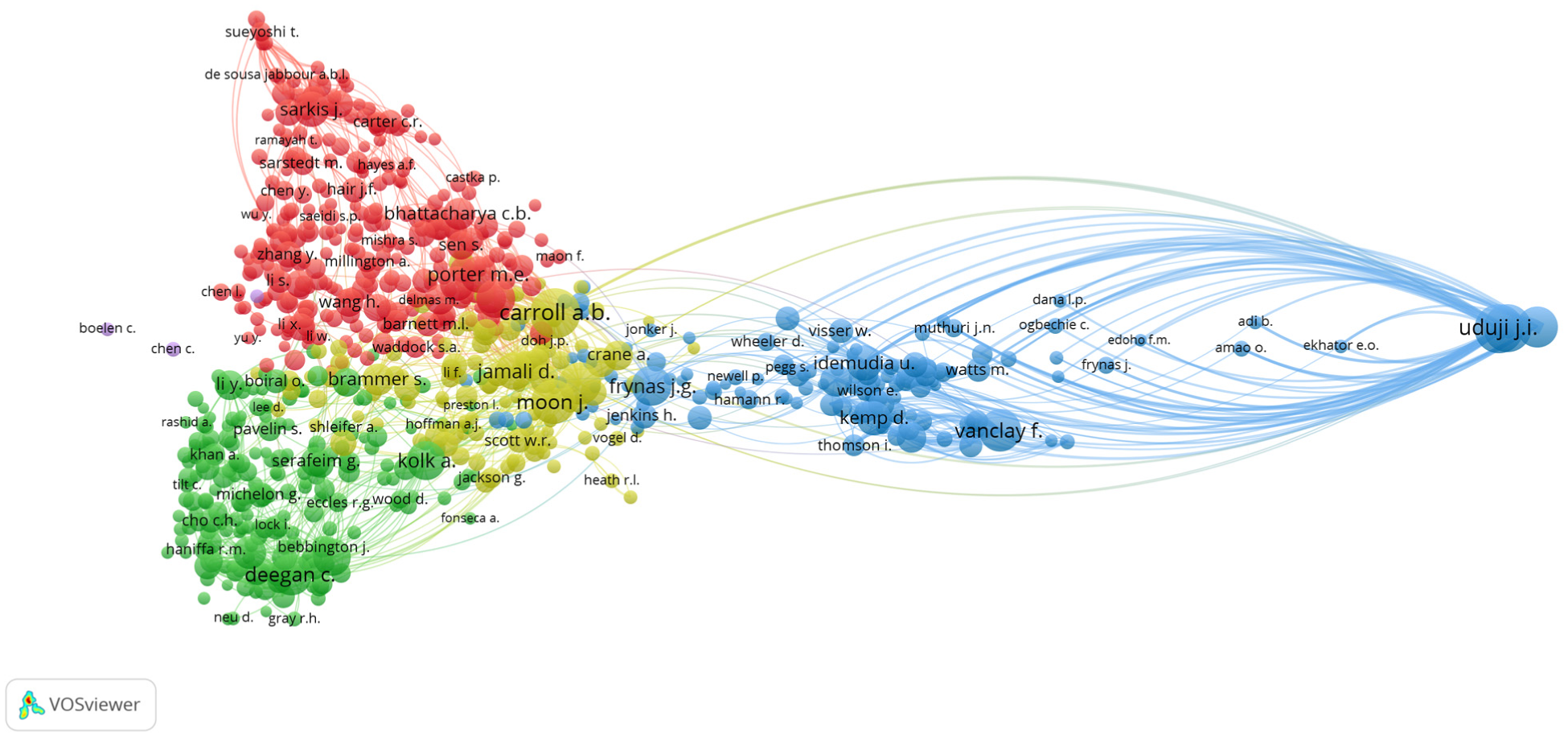
Author co-citation map of the O&G CSR literature (threshold 20, display 758).
The 10 leading coauthors, Archie B. Carroll with 330 co-citations, followed by Joseph Uduji and Elda Okolo-Aba with 318 and 311 co-citations respectively. Jeremy Moon was found to have the fourth highest co-citation with 265 followed by Frank Vanclay with 235 co-citations and Dirk Matten with 232 co-citations. Simplice Asongu ranked in the eight position with 223 co-citations, followed by Craig Deegan and George Frynas with 222 and 219 co-citations respectively.
Figure 5 depicts four dominant intellectual clusters within the O&G CSR literature based on the four colors. The foundational CSR theoretical framework was represented by the red cluster, with dominating authors such as Carroll, Moon, Matten and Deegan. These authors shaped the conceptual foundation of CSR literature through stakeholder, legitimacy and institutional perspectives. The green cluster is comprised of authors such as Brammer, Porter, and Kolk. These authors emphasized ethical and transparent reporting. Authors such as Jamali, Sarkis and Bhattacharya were grouped in the yellow cluster, which signified integrative management and sustainability. These authors’ works contributed to the advancement of CSR and performance linkages to environmental management and organizational responsibility. The blue cluster represented the developmental CSR as it was led by Uduji, Okolo-Obasi, and Vanclay. These authors’ works orbited around CSR implementation and their societal and economic implications in emerging and extractive economies.
These clusters demonstrate that the field’s theoretical evolution from CSR that was once classically theoretical and conceptualized, has shifted to contemporary CSR as it is discussed regionally, and practically. This shows that there is intellectual development and growth of CSR in the O&G context.
Topical Concentrations of O&G CSR Knowledge Base
This section aims to answer the final posited question regarding gaps and themes for future research in the field. This will be done by focusing on the topical concentrations of keywords dispersed across a scientific co-word map. It will illustrate keywords throughout the study period and based on their impact over the study period using the Scopus database. Visualization was then done using VOSviewer and can be seen in Figure 6 to study the field to determine where the focus of CSR O&G literature are concentrated (Hallinger & Chatpinyakoop, 2019).
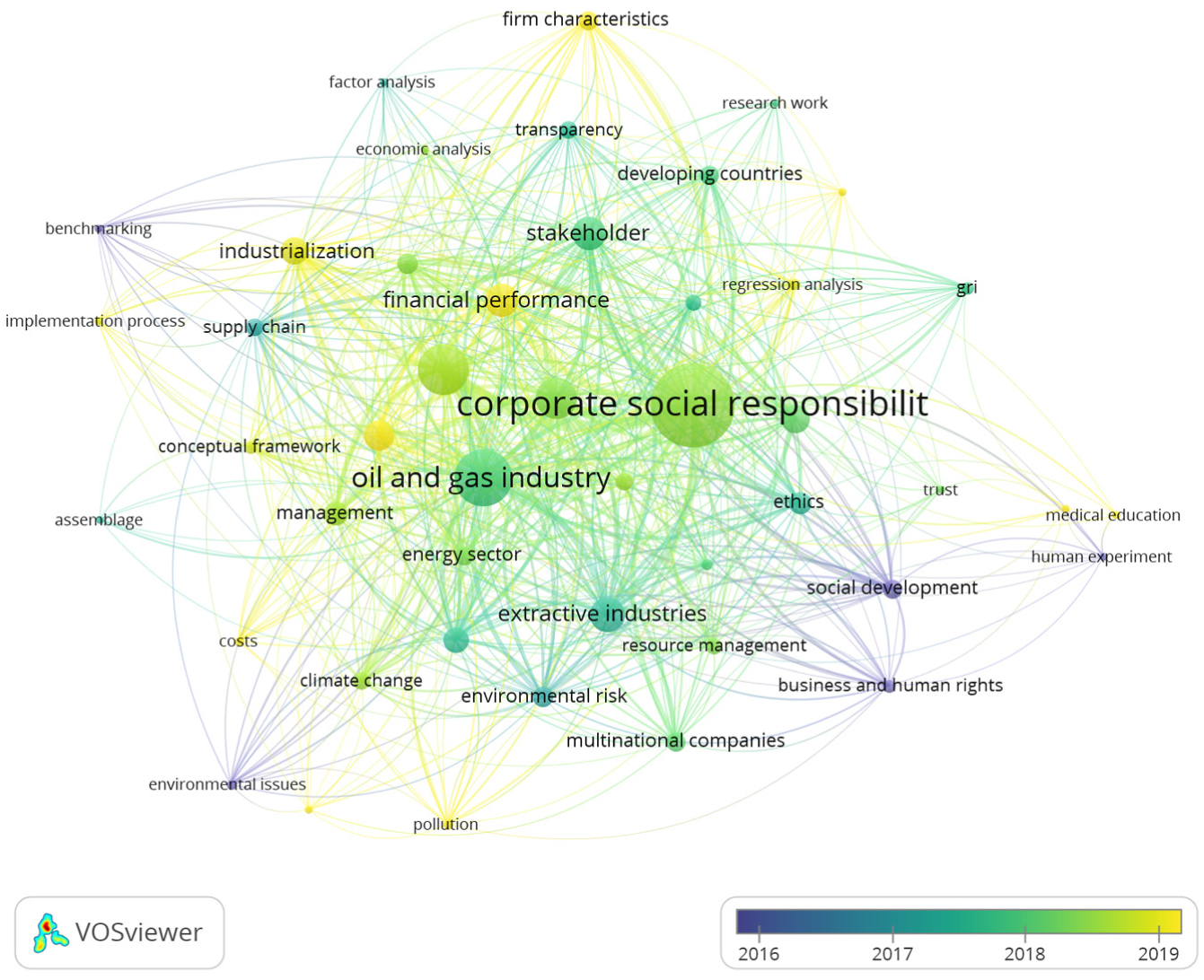
Temporal keyword map.
The Keyword’s network map for the O&G CSR literature spanned from 1977 to 2023. When the threshold was set at 5 occurrences, of the 4186 keywords, only 101 met the threshold. The highest occurring term was CSR with 760 occurrences. This is a fairly good number of occurrences, but could still be much higher. Nevertheless, its performance throughout the subperiods was consistent and unwavering as can be seen in Table 1.
The lack of high levels of occurrences may in part be because there are not as many studies being executed for CSR in the O&G industry. To further supplement this, terms such as O&G industry, sustainable development, governance, and extractive industries all have the highest number of occurrences as can be seen in Figure 6. These terms, though highly occurring, can also be studied more based on their popularity in the field. Terms that were not highly occurring but that had higher levels in link strength were environmental management, industrialization and, environmental engagement. This shows that these terms can also be used alongside the theme of the study as they exhibit promise. Due to their low occurrence, it is clear that these terms are still relatively nuanced and understudied in the O&G CSR field. Additionally, all the words from this particular map can be studied more, since they were not as frequently occurring but still offered promise in the field.
Conclusions, Future Research Directions and Research Gaps, and Limitations
Conclusions
This study examined the current body O&G CSR knowledgebase through the quantitative bibliometric approach using the VOSviewer software. This study’s database was procured from the Scopus database from 1977 to 2023. This assessment enabled the provision of findings relating to projections of future research, in addition to the study of trends throughout the study period to obtain gaps and popular themes in the O&G CSR.
It addressed four key research questions regarding the development and intellectual structure of literature related to CSR in the O&G industry. To answer the first question, the publication trends were examined, revealing that there was a clear trajectory of growth from 1977 to 2023, with marked accelerated growth after 2010.
In response to the second research question, the most prolific contributors were identified as Joseph Ikechukwu Uduji and Frank Vanclay. In addition, the leading journals were Journal of Cleaner Production and Journal of Business Ethics. Geographically, the most dominant contributions emanated from the United Kingdom, with 818 of the leading contributions emanating from this country. Through these results, academic leadership and intellectual influence concentrations within the field were identified.
Addressing the third question on the intellectual structure of O&G CSR research, the co-citations results uncovered that the leading coauthors in the field were Archie Carroll, Joseph Uduji and Elda Okolo-Aba. These authors’ co-citations are posited to allow one to decipher where the concentration of author philosophies is.
With respect to the fourth question, the keyword co-occurrence analysis was employed to procure emerging and established themes in the field. Themes such as environmental management, industrialization, and environmental engagement were identified as industries point toward new directions in the corpus themes, whereas O&G industry, sustainable development, governance, and extractive industries are established themes in the field.
Findings demonstrate that, though the field has matured in conceptual scope, it is still not distributed evenly across regions, thereby suggesting that there is more room for research, particularly in the developing context and in linking CSR to practices that are measurable to socio-economic outcomes. This study enhances researchers’ understanding of the O&G CSR knowledge base through its comprehensive bibliometric analyses.
This study goes beyond identifying trends as it contributes to the CSR O&G literature through demonstrating how the knowledge base has evolved and where there are gaps for more research. Academicians and researchers should be able to advance theories and empirical inquiries through exploration of underexplored themes such as stakeholder dynamics, environmental management, and governance by using the social structures, intellectual and conceptual mappings investigated in this study.
Policymakers and governments should also be able to utilize the patterns revealed in this study for insights into the evolution of CSR in resource-dependent economies and its role in shaping sustainable resource management. It also benefits companies in the O&G sector, as it highlights the reputational and operational benefits of including CSR in their strategies. Furthermore, NGOs and civil society organizations can also draw insights from this research for their advocacy actions and hold firms accountable. Through linking this study’s bibliometric findings with stakeholders, it not only fills gaps in current research but also demonstrates how knowledge mapping can act as a guide to inform the practical and societal relevance of CSR in the O&G sector.
Future Research and Research Gaps
In the final subperiod, the freshly emerging terms were firm characteristics, multinational companies” and “developing countries.” Granted their recency, it is fair to say that these terms should be investigated further based on the interest being placed in them. There is also more scope for further research since these terms are relatively new. It is also important to determine whether O&G CSR is affected by these presented terms.
The term which demonstrated the fastest levels of development throughout the three subperiods was environmental management. This topic emerged in the second term and continued to grow in the third subperiod, thus leading to it having room for more research granted its recency. The popularity of this theme may have been because the O&G field impacts the environment making environmental management a concern that could be addressed through CSR. Thus, a gap for more research presents itself to investigate the relationship between environmental management and O&G CSR.
The second and third most highly developing terms were financial performance and community engagement. These terms were consistently present throughout all three of the subperiods, making up only a combined estimate of 8% of all the occurrences. Thus, these terms show promise in the field granted both their consistency and their continuous growth. Notably, the levels of occurrences of these terms are still relatively low, indicating that there is still room for more research to be done in the field. Community engagement is necessary to obtain the legitimacy of these stakeholders in the entity. Furthermore, firms often choose to invest in CSR that contributes to the enhancement of the firm’s performance thus hence the relevance and interest of these terms in the field.
Additionally, the dearth of studies in the O&G CSR field emanates from developed nations as presented in Figure 3. This renders research representing the developing and emerging nations in the dark. This may be the case because the implementation of CSR regulations and policies in developing and emerging nations proves to be difficult due to the deficit in CSR knowledge, which may lead to different outcomes for these nations. Thus, the O&G CSR knowledge base in developing and emerging nations is still relatively untouched. Studies to come can fill this existing gap since these nations do have a global impact.
Areas that have seen limited research in the O&G CSR field were multinational companies, developing countries, economic and social effects and, social development. These terms have all had little to no growth throughout the subperiods indicating that there were low levels of interest and motivation from researchers as these terms’ amalgamated total was 3.3% of the total occurrences throughout the subperiods. This creates a gap in the field for more research. Finally, these gaps demonstrate that there are promising prospects for future research to expand and refine the comprehension of CSR dynamics in the O&G sector.
Limitations
A limitation of this research is that while it incorporated analyses such as co-citations, keyword analysis, and co-occurrences as was done by Tiberius et al. (2021), other bibliometric techniques such as bibliographic coupling were excluded. This may have impacted the comprehensiveness of the study. Another constraint of this article is that the dataset was comprised solely of journal articles, leaving out potentially important scholarly contributions (Agramunt et al., 2020) such as research theses, workshop proceedings, editorial content, and national journals. These exclusions may have constrained the findings.
While this study sheds light on the intellectual development of CSR research in the O&G industry, it did not delve into identifying and analyzing specific research designs of the literature investigated in this study. Through the adaptation of methodological reviews, these dimensions could thus be identified to supplement this study’s findings (Donthu et al., 2021) in future studies, which could combine the bibliometric mapping with systematic or meta-analytical methodologies.
Lastly, the source used to obtain the data was the Scopus database. Though it is a well-renowned database, there are still drawbacks since content from other sources (ProQuest, Google Scholar, or Web of Science) could changed the outcomes of the study, were not included. This is a common occurrence in bibliometric studies (Jacso, 2008). With these considerations in mind, researchers and those in academia can build upon the knowledge base by integrating the preceding suggestions in their future research.
Footnotes
Acknowledgements
First and foremost, we take the opportunity to thank God for all that He has done. We wouldn’t have been able to accomplish these works without the contributions of many. A special thanks to the Post-Graduate Department of Business Management at Sardar Patel University (India) and the Indian Commission for Cultural Relations. We are wholeheartedly grateful for their moral, material, and academic support. We would also like to thank our Tanzanian colleague Dr. Wakara I. Nyabakora for all his support and guidance. We hereby accept the responsibility for any errors found in our research (Sarah Elizabeth Mohabir, Dr. Yogesh C. Joshi, Dr. Darshana Dave).

Ethical Considerations
This article does not contain any studies with human or animal participants. Ethical approval was therefore not required.
Consent to Participate
This article does not contain any studies with human or animal participants. Therefore consent was not required.
Consent for Publication
The authors approved the manuscript for publication.
Author Contributions
All authors contributed to the study’s conception and design. Material preparation, data collection, and analysis were performed by Sarah Elizabeth Mohabir, Prof. (Dr.) Darshana R. Dave and Prof. (Dr.) Yogesh C. Joshi. The first draft of the manuscript was written by Sarah Elizabeth Mohabir. Editing of the manuscript was done by Prof. (Dr.) Yogesh C. Joshi and Prof. (Dr.) Darshana R. Dave. All authors commented on the versions of the manuscript, read and approved the final manuscript for publication.
Funding
The authors received no financial support for the research, authorship, and/or publication of this article.
Declaration of Conflicting Interests
The authors declared no potential conflicts of interest with respect to the research, authorship, and/or publication of this article.
Data Availability Statement
The datasets generated and analyzed during the current study can be found in the Scopus database. Consequently, they can be available from the co-author on request.