






Abstract
Although anti-corruption has received considerable attention in the scholarly literature, limited research has examined the relationship between perceptions of anti-corruption efforts and entrepreneurial intentions. This study addresses this gap by analyzing survey data from 937 Generation Z students in Vietnam. The findings indicate that perceptions of anti-corruption, subjective norms, and perceived behavioral control are positively associated with entrepreneurial intentions. These results offer important insights into how students perceive anti-corruption efforts and how such perceptions shape their entrepreneurial intentions. The study also highlights several policy implications. Policymakers should strengthen anti-corruption initiatives to foster a more supportive environment for youth entrepreneurship. In addition, universities and public institutions should implement activities such as training programs, workshops, and seminars to raise students’ awareness of the role of anti-corruption in sustainable economic development and to encourage entrepreneurial engagement among young people.
Keywords
Introduction
Entrepreneurship is widely recognized as a key driver of economic growth, innovation, and job creation. In emerging economies, fostering entrepreneurial activity among young people has become a critical policy priority for achieving sustainable economic development. Among the various contextual factors influencing entrepreneurial behavior, the institutional environment—particularly the level of corruption and the effectiveness of anti-corruption efforts—plays a significant role in shaping individuals’ entrepreneurial intentions (Allini et al., 2017; Song et al., 2021).
Corruption reflects the functioning of a country’s legal, economic, cultural, and political institutions and can manifest as either enabling or constraining informal practices (Svensson, 2005). On the one hand, some studies suggest that corruption may facilitate economic activity by reducing bureaucratic obstacles, thereby enhancing firm performance, lowering business risks, and promoting innovation (Gründler & Potrafke, 2019; Martins et al., 2020; Song et al., 2021). On the other hand, a substantial body of research highlights the detrimental effects of corruption, showing that it undermines economic growth, weakens firm profitability, and inhibits innovation (Bai et al., 2017; Martins et al., 2020; Zakharov, 2019).
At the individual level, perceptions of corruption can influence entrepreneurial intentions and behavior in both positive and negative ways. Some studies report a positive association between corruption perception and entrepreneurial intentions (Ceresia & Mendola, 2019; Traikova et al., 2017), while others find a negative relationship (Allini et al., 2017). Entrepreneurial intention is commonly grounded in the Theory of Planned Behavior (TPB) framework (Krueger & Carsrud, 1993), which posits that a stronger intention to start a business increases the likelihood of engaging in entrepreneurial activity (Ajzen, 1991; Ajzen & Fishbein, 1980). Prior research has consistently demonstrated that the TPB-based entrepreneurial model is a robust framework for explaining the likelihood of entrepreneurial behavior (Maheshwari & Kha, 2022; Maheshwari et al., 2023; Tiwari et al., 2022).
Although prior studies have examined youth perceptions of corruption in countries such as Bulgaria (Traikova et al., 2017) and Italy (Allini et al., 2017; Ceresia & Mendola, 2019), evidence from Vietnam remains limited. More importantly, research on perceptions of anti-corruption efforts is still scarce at both national and international levels. In addition, few studies have explored how young people’s perceptions of anti-corruption initiatives influence their entrepreneurial intentions. This gap is particularly relevant for Generation Z, a cohort that is increasingly entering the workforce and is expected to play a pivotal role in future entrepreneurial development. Their perceptions of institutional integrity and governance may significantly shape their willingness to engage in entrepreneurial activities. Therefore, this study addresses this gap by examining Vietnamese Generation Z students’ perceptions of anti-corruption and their influence on entrepreneurial intentions.
Vietnam Context
Vietnam is classified as a lower-middle-income country and operates under a centralized political system led by the Communist Party of Vietnam. In recent decades, the country has experienced sustained economic growth. According to the World Bank (2024), GDP per capita increased steadily, reaching USD 4,163 in 2023. Despite this progress, Vietnam’s income level remains relatively low compared to other East Asian economies, such as Singapore, Thailand, Malaysia, and Indonesia.
From a demographic perspective, Vietnam has a relatively young labor force. Approximately 56% of its population—out of nearly 100 million people—is under the age of 35, and about 9% are currently enrolled in higher education institutions (Phung et al., 2022). This demographic structure has contributed to the expansion of entrepreneurial activity in the country. By 2022, Vietnam had approximately 3,800 startups (Statista, 2022), and younger generations, particularly university students, have demonstrated increasing interest in entrepreneurial pursuits (Q. N. Tran et al., 2023).
With regard to governance and transparency, the Corruption Perceptions Index (CPI) serves as a widely used indicator of perceived corruption levels. As shown in Figure 1, Vietnam’s CPI score has gradually improved over the period from 2015 to 2025, suggesting incremental progress in anti-corruption efforts. Specifically, the CPI score increased from 40 points in 2024 to 41 points in 2025 (Transparency International, 2025). Although this improvement indicates a positive trend, the overall level remains modest, implying that corruption continues to pose challenges. This context underscores the importance of further research on anti-corruption perceptions and their potential influence on entrepreneurial behavior.
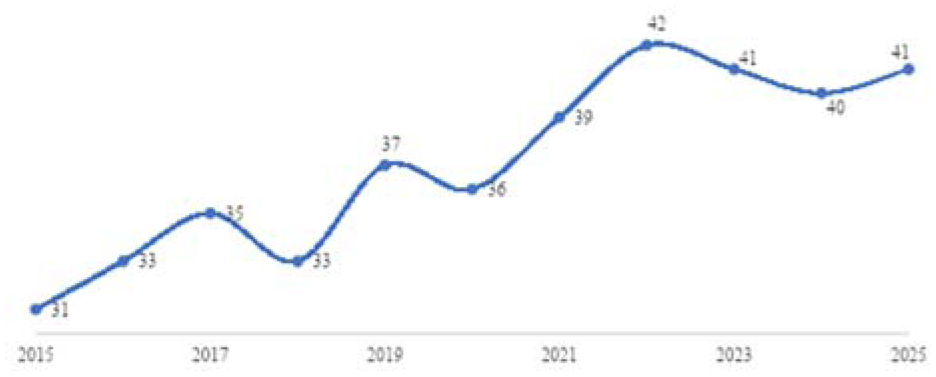
Corruption perceptions index (CPI) in Vietnam, 2015–2025.
Vietnam, therefore, provides a compelling context for examining how young people’s perceptions of anti-corruption efforts influence their entrepreneurial intentions. As a rapidly developing economy, Vietnam has experienced substantial growth in recent decades while simultaneously implementing various anti-corruption policies and reforms to enhance governance and transparency. At the same time, promoting youth entrepreneurship has become an important national priority. University students, many of whom belong to Generation Z, represent a critical group of potential entrepreneurs whose perceptions of the institutional environment may shape their entrepreneurial aspirations.
This study makes three primary contributions to the literature. First, it develops a research model that focuses on perceptions of anti-corruption and their relationship with entrepreneurial intention. Existing studies have largely emphasized perceived corruption rather than perceptions of anti-corruption efforts (Allini et al., 2017; Haddoud et al., 2024). By shifting the focus to anti-corruption perceptions, this study offers a novel perspective on how institutional integrity may influence entrepreneurial behavior.
Second, the study examines the relationships between key components of the Theory of Planned Behavior—namely attitudes toward entrepreneurship, subjective norms, and perceived behavioral control—and perceptions of anti-corruption. Our results show that people with a more positive attitude toward entrepreneurship and better behavioral control in entrepreneurial activities have higher levels of anti-corruption perception. This represents a novel contribution, as empirical research exploring the link between entrepreneurial cognition and anti-corruption perceptions remains limited (Park & Blenkinsopp, 2009; Wated & Sanchez, 2005).
Third, the study demonstrates that perceptions of anti-corruption play a mediating role in the relationship between the antecedents of entrepreneurial intention and entrepreneurial intention itself. This finding extends prior research, which has primarily identified a moderating role of perceived corruption in entrepreneurial processes (Haddoud et al., 2024).
The remainder of this paper is organized as follows. The next section reviews the relevant literature and develops the research hypotheses. The methods section describes the research methodology and measurement of variables. The results section presents the findings and discussions. Finally, the conclusion summarizes the study by highlighting its implications, limitations, and directions for future research.
Literature Review
Concepts of Corruption and Anti-Corruption Perception
The concept of corruption is complex and highly contested, making it difficult to define and measure accurately (Shacklock & Galtung, 2016). Its meaning varies across societies and institutional contexts, reflecting differences in cultural norms, governance structures, and social expectations. Although corruption is widely recognized as a global phenomenon and is generally viewed as detrimental, certain forms of corrupt practices may persist due to their perceived inevitability or the high costs associated with their elimination (Shacklock & Galtung, 2016).
Corruption is commonly defined as the misuse of public office for private gain (Svensson, 2005; Williams & Kedir, 2016). Similarly, Transparency International defines corruption as the abuse of entrusted power for personal benefit. Given the inherently concealed nature of corrupt activities, corruption cannot be directly observed or measured with precision. As a result, perceptions of corruption are frequently used as proxy indicators in empirical research (Lambsdorff, 2006; Shacklock & Galtung, 2016).
Corruption perception refers to individuals’ subjective assessments of the prevalence and severity of corruption within a given context (Shacklock & Galtung, 2016). Building on this perspective, perceived anti-corruption can be conceptualized as the extent to which individuals oppose corrupt practices and support efforts aimed at preventing or reducing corruption.
Institutional Theory Perspectives
The existence of corruption can be explained through the lens of institutional theory as developed by North (1991). From this perspective, institutions are defined as “the humanly devised constraints that structure political, economic, and social interaction.” These constraints include both informal elements—such as sanctions, taboos, customs, traditions, and codes of conduct—and formal rules, including constitutions, laws, and property rights (North, 1991, p. 1). Accordingly, institutions function as the “rules of the game” that shape behavior and interactions within society (North, 1991; Webb et al., 2009; Williams & Kedir, 2016).
Within this framework, social norms and acceptable behaviors are not determined by any single actor but emerge from the interactions among diverse social groups with differing values and interests. These institutional structures, in turn, shape how individuals perceive and respond to issues such as corruption and governance quality.
Existing literature has also demonstrated the influence of perceived corruption on individuals’ behavioral intentions (Costa & Mainardes, 2016; Park & Blenkinsopp, 2009; Wated & Sanchez, 2005). These findings suggest a conceptual linkage between institutional theory and the Theory of Planned Behavior (TPB), indicating that institutional environments—reflected in perceptions of corruption and anti-corruption—can shape behavioral intentions by influencing attitudes, subjective norms, and perceived behavioral control.
Theory of Planned Behavior Entrepreneurial Model
The Theory of Planned Behavior Entrepreneurial Model (TPBEM), proposed by Krueger and Carsrud (1993), extends the Theory of Planned Behavior (TPB) originally developed by Ajzen (1991) and grounded in the Theory of Reasoned Action (Ajzen & Fishbein, 1980; Fishbein & Ajzen, 1977). TPB adopts a cognitive approach to explaining human behavior by focusing on the psychological determinants that shape behavioral intentions.
According to this framework, three key antecedents determine an individual’s intention to perform a given behavior. Attitude toward the behavior refers to the degree to which an individual evaluates the behavior positively or negatively. Subjective norms capture perceived social pressure from important referents to perform or not perform the behavior. Perceived behavioral control reflects an individual’s perceived ease or difficulty in performing the behavior, typically shaped by access to resources, opportunities, and personal capabilities.
Because behavioral intention is widely recognized as the most immediate predictor of actual behavior (Ajzen, 1991; Fishbein & Ajzen, 1977), entrepreneurial intention has been extensively used as a reliable proxy for entrepreneurial behavior. Building on these theoretical foundations, this study integrates the TPB framework with institutional theory to examine how perceived anti-corruption influences entrepreneurial intention among Generation Z youth in Vietnam.
Corruption and its Impact
The literature on corruption presents mixed and sometimes contradictory findings regarding its effects on economic growth and firm performance. On one hand, a substantial body of research shows that corruption undermines economic development. Empirical studies find that corruption reduces economic growth (Cieślik & Goczek, 2018; Gründler & Potrafke, 2019; Song et al., 2021) and negatively affects firm-level outcomes such as profitability and innovation (Bai et al., 2017; Martins et al., 2020; Zakharov, 2019). From this perspective, corruption increases transaction costs, distorts resource allocation, and weakens institutional efficiency, thereby constraining economic activity.
On the other hand, some studies suggest that corruption may, under certain conditions, facilitate economic activity by enabling firms to bypass inefficient regulations and bureaucratic constraints. This “grease the wheels” perspective argues that corruption can improve firm performance and, in some cases, support economic growth (Imran et al., 2020; Martins et al., 2020; Williams & Kedir, 2016). It has also been associated with reduced business uncertainty and, in specific contexts, increased innovation (D’Este et al., 2012; Krammer, 2019). However, evidence also supports the opposite “sands the wheels” effect, with Martins et al. (2020) showing that corruption facilitates business operations in some regions (e.g., Africa) while hindering them in others (e.g., Latin America, Eastern Europe, Central Asia, and South Asia). These contrasting findings highlight the context-dependent nature of corruption’s economic consequences.
At the organizational level, corruption can occur across multiple hierarchical positions rather than being confined to senior leadership. Evidence from state-owned enterprises (SOEs), particularly in China, shows that corrupt behavior may involve employees at different levels, including accountants, sales personnel, and operational staff, although general managers are most frequently implicated (Cheng, 2004; Svensson, 2005). Importantly, Cheng (2004) emphasizes that even a single corrupt actor can generate substantial organizational damage, despite the collective effort required for firm development.
Evidence from developed economies further illustrates the persistence of corruption in organizational settings. For example, corruption-related offenses among retail managers in Sweden and case evidence from the Swedish Alcohol Retailing Monopoly demonstrate how institutional reforms and marketization can create informal networks that facilitate corrupt exchanges between public managers and private suppliers (Castillo, 2018). Similarly, Fisman and Miguel (2007) show that corruption norms are deeply embedded in national culture and institutional environments. Their study of diplomatic parking violations in New York City reveals that individuals from more corrupt countries commit significantly more violations, while stronger enforcement mechanisms substantially reduce such behavior.
Within the Vietnamese context, existing research highlights both firm-level and macro-level consequences of corruption. T. T. Nguyen and van Dijk (2012) find that corruption constrains the growth of private firms but has no significant effect on state-owned enterprises, suggesting unequal institutional advantages. They further show that corruption varies across provinces and affects business entry costs, land access, and regulatory conditions. Consistent with these findings, other studies confirm that corruption negatively affects economic growth in Vietnam, supporting the “sands the wheels” hypothesis (Anh et al., 2016; Ha & Frömmel, 2023).
At the firm and community level, Rand and Tarp (2012) show that bribery among Vietnamese SMEs is influenced by firm visibility, sunk costs, and financial capacity. Firms are more likely to engage in bribery when interacting with officials providing administrative services or government support. Beyond economic outcomes, corruption also has broader social consequences. Sharma et al. (2021) find that exposure to petty corruption is associated with increased psychological distress, while anti-corruption efforts improve mental health outcomes. In addition, Q. T. Tran (2021) shows that higher local corruption is linked to increased corporate dividend payouts, with effects varying by ownership structure and financial constraints.
Collectively, these studies demonstrate that corruption has multifaceted and context-dependent effects on economic, organizational, and social outcomes. This body of literature underscores the importance of examining not only corruption itself but also perceptions of institutional integrity and anti-corruption efforts, particularly in emerging economies such as Vietnam.
Hypothesis Formation
Existing studies have examined the influence of corruption perceptions on individuals’ intentions to engage in specific behaviors (Costa & Mainardes, 2016; Park & Blenkinsopp, 2009; Wated & Sanchez, 2005). In the context of entrepreneurship, corruption perceptions may either facilitate or hinder entrepreneurial intentions depending on institutional and cultural conditions (Ceresia & Mendola, 2019; Traikova et al., 2017).
For instance, Traikova et al. (2017) find that among Bulgarian students, greater acceptance of corruption is associated with a higher likelihood of pursuing entrepreneurship. This suggests that in contexts where corruption is perceived as a mechanism for bypassing bureaucratic constraints, individuals may view entrepreneurship as more feasible. In contrast, studies conducted among Italian students report the opposite relationship, where higher tolerance of corruption is associated with lower entrepreneurial intentions (Allini et al., 2017; Ceresia & Mendola, 2019). These findings indicate that when corruption is perceived as undermining fairness, trust, and institutional legitimacy, it may discourage entrepreneurial engagement.
Extending this evidence, Costa and Mainardes (2016), using data from 76,203 individuals across 53 countries, examine the effects of corruption perception and risk aversion on entrepreneurial intention. Their results show that both corruption perception and risk aversion negatively influence entrepreneurial intentions. Specifically, risk aversion reduces the likelihood of entrepreneurial intention by 6.67 percentage points, while corruption perception reduces it by 0.96 percentage points.
Taken together, these mixed findings suggest that the relationship between corruption perceptions and entrepreneurial intentions is context-dependent and theoretically ambiguous. However, in line with institutional theory and the expectation that stronger perceptions of institutional integrity reduce uncertainty and enhance perceived feasibility of entrepreneurship, this study focuses on perceptions of anti-corruption efforts rather than corruption tolerance. Accordingly, the following hypothesis is proposed:
Little is known about the predictors of anti-corruption perceptions, although a substantial body of research has examined the determinants of corruption perception. For example, Maeda and Ziegfeld (2015) find that socioeconomic status significantly influences corruption perceptions, with individuals of lower income and education reporting higher perceived levels of corruption than their wealthier and more educated counterparts. In addition, social trust has been shown to negatively influence corruption perceptions, suggesting that individuals with higher levels of trust in society are less likely to perceive corruption as widespread (Ariely & Uslaner, 2017).
Evidence from developing country contexts further highlights the role of socioeconomic and contextual factors. P. A. Nguyen and Le (2022) report that individuals with higher education, as well as those who are poor or unemployed, are less likely to engage in bribery. Similarly, Thomas et al. (2024) find that rural residents in Guyana tend to perceive lower levels of corruption than their urban counterparts. Collectively, these studies suggest that socioeconomic characteristics, social trust, and contextual environments play important roles in shaping individuals’ perceptions of corruption.
With regard to the Theory of Planned Behavior (TPB), prior research has examined its components in relation to corruption-related attitudes and behavioral intentions. For instance, Wated and Sanchez (2005), using data from 354 Ecuadorian managers, find that attitudes toward bribery, subjective norms, and cultural values significantly influence managers’ intentions to discipline corrupt employees, with attitudes playing a particularly important role. Similarly, Park and Blenkinsopp (2009), in a study of 296 South Korean police officers, show that attitudes, subjective norms, and perceived behavioral control significantly explain internal whistleblowing intentions, while subjective norms are particularly important for external whistleblowing intentions. These findings underscore the relevance of TPB constructs in shaping responses to corruption-related behaviors. However, less attention has been paid to how these psychological factors shape individuals’ perceptions of anti-corruption itself.
Empirical research further suggests that corruption perceptions are shaped by both indirect and direct experiences. Exposure to corruption through indirect channels such as media coverage significantly influences individuals’ perceptions of corruption (Yu et al., 2013; Zhu et al., 2013). For example, in China, increased media reporting on corruption has been found to reduce tolerance of corruption and shape public awareness (Zhu et al., 2013). In contrast, direct personal experience with corruption tends to increase perceived corruption, as individuals who encounter corrupt practices firsthand report higher levels of perceived corruption (Li & Meng, 2020).
Building on these insights, individuals’ entrepreneurial cognition and perceived control over their environment may shape how they interpret and respond to corruption-related information. Individuals with more positive attitudes toward entrepreneurship, stronger perceived social support, and higher perceived behavioral control are likely to interact more frequently with institutional environments (e.g., business registration, financing, public services). Through both direct experiences and indirect exposure (e.g., media and social networks), these interactions may shape their evaluations of institutional integrity and anti-corruption efforts.
Accordingly, this study proposes that TPB constructs are positively associated with perceived anti-corruption, as individuals with more favorable entrepreneurial cognition are more likely to recognize, interpret, and value institutional efforts aimed at reducing corruption. Based on this reasoning, the following hypotheses are proposed:
Recent research has increasingly examined the mediating role of the three core components of the Theory of Planned Behavior (TPB)—personal attitude (PA), subjective norm (SN), and perceived behavioral control (PBC)—in explaining entrepreneurial intention (EI). For example, Caputo et al. (2025) show that PA, SN, and entrepreneurial self-efficacy mediate the relationships between risk-taking, entrepreneurial knowledge, entrepreneurial mindset, and EI. Similarly, Silesky-Gonzalez et al. (2025) find that the three TPB components significantly mediate the effect of entrepreneurship education on EI. Q. N. Tran et al. (2023) further report that PA and PBC act as significant mediators between financial knowledge and entrepreneurial intentions.
In the context of corruption-related research, however, empirical evidence remains limited. Haddoud et al. (2024) provide initial evidence that perceived corruption moderates the relationships between TPB constructs (PA, SN, and PBC) and entrepreneurial intention. Nevertheless, the potential mediating role of perceived anti-corruption has not yet been empirically examined. This represents an important gap in the literature.
Addressing this gap, this study proposes that perceived anti-corruption may function as a psychological and institutional mechanism linking TPB antecedents to entrepreneurial intention. Specifically, TPB constructs shape individuals’ cognitive evaluations and interactions with their institutional environment, which in turn influence how they perceive anti-corruption efforts. Individuals with more favorable attitudes toward entrepreneurship, stronger subjective norms, and higher perceived behavioral control are more likely to engage with formal institutions (e.g., markets, regulatory systems, public services), thereby shaping their exposure to both direct and indirect signals of governance quality (Li & Meng, 2020; Yu et al., 2013; Zhu et al., 2013). These experiences contribute to the formation of anti-corruption perceptions, which have been shown to influence entrepreneurial intention (Ceresia & Mendola, 2019; Traikova et al., 2017).
Building on this reasoning, perceived anti-corruption is expected to act as a mediating mechanism through which TPB components influence entrepreneurial intention. Accordingly, the following hypotheses are proposed:
Figure 2 illustrates this study’s conceptual framework.
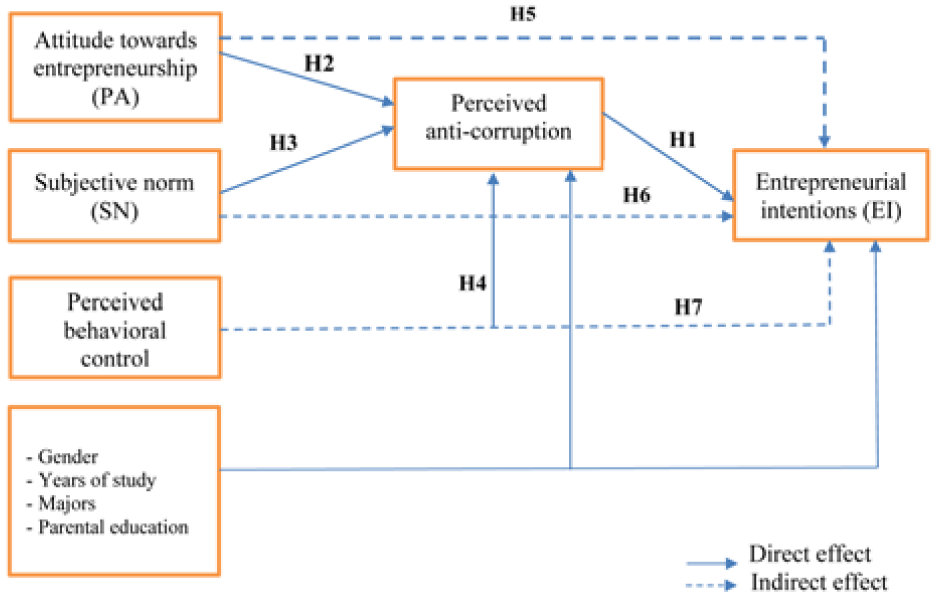
Conceptual framework.
Methods
Survey Process and Methods
This study was conducted in Vietnam using a mixed-methods approach that integrated qualitative and quantitative techniques. The primary participants were university students, and the research was carried out in three sequential stages.
In the first stage, in-depth interviews were conducted with 15 final-year university students to explore their perceptions of anti-corruption and to evaluate the clarity and cultural appropriateness of the questionnaire items in the Vietnamese context. The interviews included guiding questions such as “What are your views on corruption?” and “To what extent do you accept this phenomenon?” The results indicated that most participants rejected corruption, and the qualitative insights were used to inform the development and refinement of the survey instrument.
In the second stage, a pilot study was conducted with 50 respondents (N = 50) to assess the reliability of the measurement scales, including perceived anti-corruption, attitudes toward entrepreneurship, subjective norms, perceived behavioral control, and entrepreneurial intention. The results indicated that all constructs demonstrated acceptable to high internal consistency, with Cronbach’s alpha coefficients exceeding the recommended threshold of 0.70 (Hair et al., 2014).
In the third stage, the final questionnaire was developed using Google Forms and distributed to university students across Vietnam. The survey was disseminated through multiple online channels, including Facebook, Zalo, and university email groups, to enhance reach and accessibility. The questionnaire included an informed consent statement specifying that participation was voluntary and that responses would remain confidential and used solely for academic research purposes. The ethics statement in the questionnaire clearly stated: “This questionnaire is for scientific research purposes only; your participation is entirely voluntary, and your answers will be kept confidential.”
Data collection was conducted over a 6-month period from May to October 2024, resulting in 935 valid responses (N = 935). The questionnaire required respondents to complete all items before submission, ensuring a dataset with no missing values.
To test the proposed hypotheses and ensure robustness of results, multiple analytical techniques were employed. These included reliability analysis, correlation analysis, exploratory factor analysis (EFA), confirmatory factor analysis (CFA), multiple linear regression (MLR), binary logistic regression (logit), and structural equation modeling (SEM). The use of multiple complementary methods enhances the robustness and validity of the findings.
Measures
Perceived anti-corruption: Because the definition of corruption is shaped by social and cultural contexts, individuals’ perceptions of corruption are also context-dependent (Melgar et al., 2010, p. 120). Although several validated scales have been developed to measure corruption perceptions (Haddoud et al., 2024; Li & Meng, 2020), relatively fewer studies have specifically operationalized perceptions of anti-corruption (Li et al., 2016).
Accordingly, and drawing on insights from the qualitative interviews as well as prior literature (Allini et al., 2017; Haddoud et al., 2024; Li et al., 2016), this study developed a measurement scale for perceived anti-corruption. All items were assessed using a 5-point Likert scale ranging from 1 (strongly disagree) to 5 (strongly agree) as follows: I am aware that i) I don’t like corruption; ii) I am against corruption; iii) I avoid bribery in any form; iv) In general, I am a person who says no to corruption.
Attitudes towards entrepreneurship, subjective norms, perceived behavioral control and entrepreneurial intention: We used well-established scales originated from Liñán and Chen (2009).
Reliability Tests
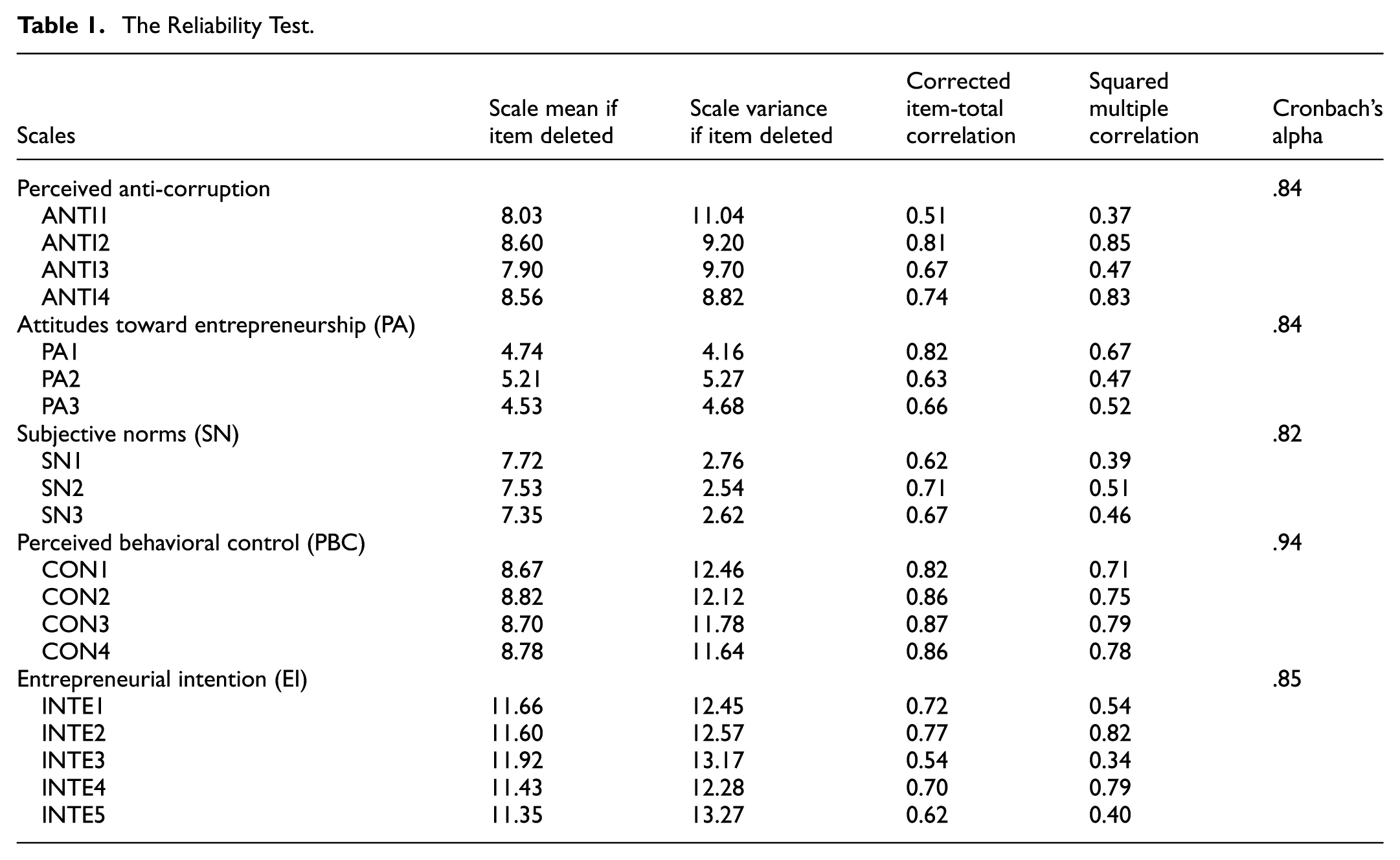
This study assessed the internal consistency reliability of the key constructs—perceived anti-corruption (ANTI), personal attitude (PA), subjective norms (SN), perceived behavioral control (PBC), and entrepreneurial intention (EI)—using Cronbach’s alpha. As shown in Table 1, all constructs demonstrated strong internal consistency, with Cronbach’s alpha values exceeding the recommended threshold of 0.70: ANTI (0.84), PA (0.84), SN (0.82), PBC (0.94), and EI (0.85). These results indicate that the measurement scales are reliable and suitable for subsequent factor analysis and further empirical analysis.
The Reliability Test.
Exploratory Factor Analyses (EFA)
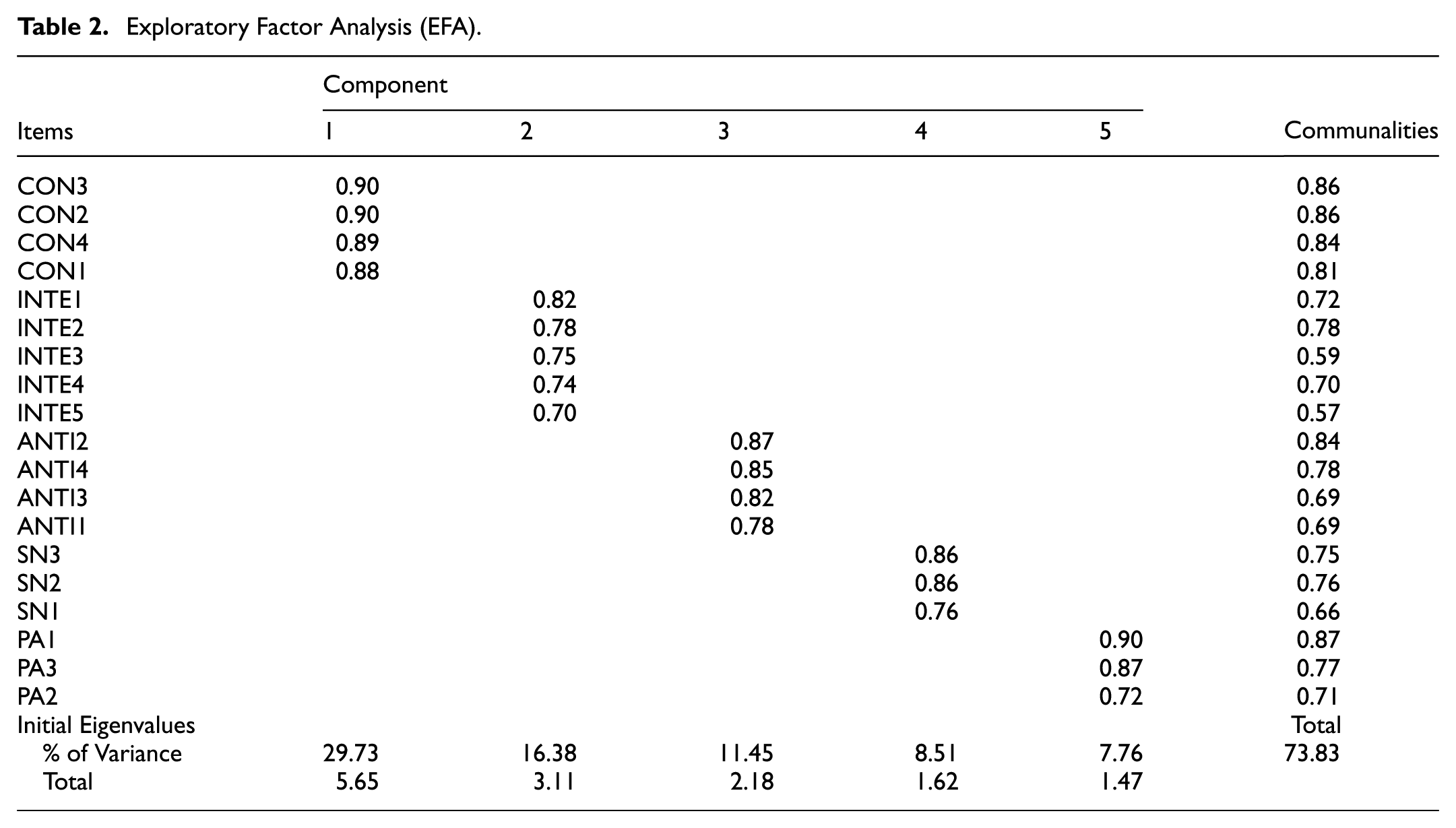
The results of the exploratory factor analysis (EFA) are presented in Table 2. All items loaded clearly onto five distinct factors, with factor loadings exceeding the recommended threshold of 0.50. For example, perceived anti-corruption is represented by Component 3 and comprises four items (ANTI1–ANTI4). In addition, all communalities exceeded 0.50, indicating that each item shared a substantial proportion of variance with its respective construct. The five-factor solution explains 73.83% of the total variance, suggesting a strong underlying factor structure and providing evidence of construct validity consistent with established guidelines (Hair et al., 2014).
Exploratory Factor Analysis (EFA).
Confirmatory Factor Analysis (CFA)
The study further conducted confirmatory factor analysis (CFA), with results reported in Table 3 and Figure 3. All five constructs—perceived anti-corruption (ANTI), perceived behavioral control (PBC), entrepreneurial intention (EI), subjective norms (SN), and personal attitude (PA)—demonstrated satisfactory measurement properties. Composite reliability (CR) values exceeded the recommended threshold of 0.70, and average variance extracted (AVE) values were above 0.50, indicating good internal consistency and convergent validity.
Confirmatory Factor Analysis—CFA.

Note. CR = Composite Reliability; AVE = Average Variance Extracted; MSV = Maximum Shared Variance.
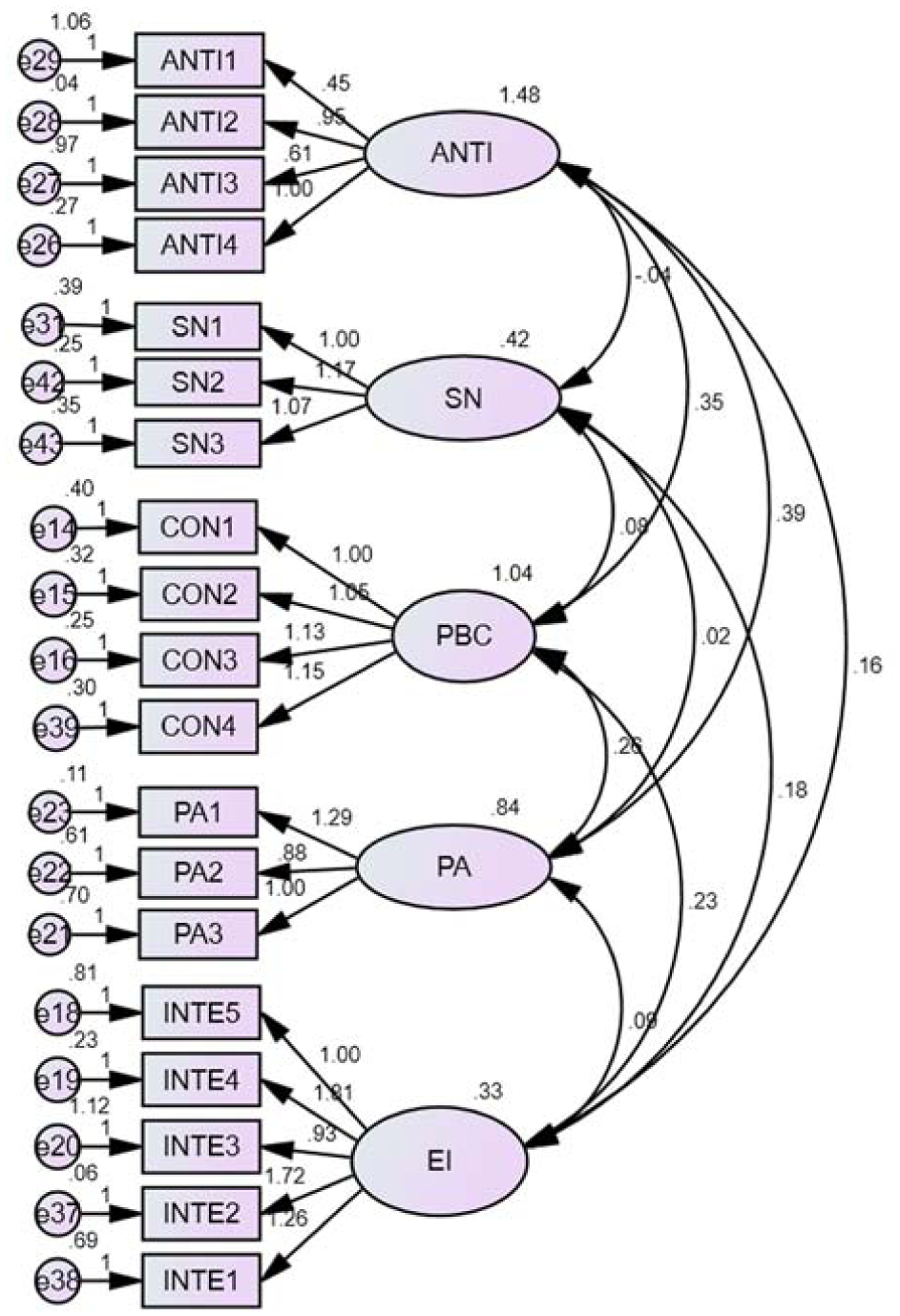
Confirmatory factor analysis (CFA model).
In addition, discriminant validity was assessed by comparing inter-construct correlations. The results show that each construct exhibited stronger associations with its own indicators than with other constructs. For instance, ANTI showed a stronger association with its own construct (0.77) than with PBC (0.28), EI (0.23), SN (−0.05), and PA (0.35). These results support the discriminant validity of the measurement model.
Overall, the CFA results confirm that the measurement model demonstrates adequate reliability, convergent validity, and discriminant validity, providing a solid foundation for testing the structural relationships (Hair et al., 2014).
Correlation Tests
The results of the correlation analysis are presented in Table 4. Most variables are significantly correlated at the 1% and 5% levels, while the majority of correlation coefficients remain relatively low, suggesting a low risk of multicollinearity among the variables (Hair et al., 2014).
Correlation Test.

p < .05. **p < .01.
Specifically, perceived anti-corruption (ANTI) is positively correlated with perceived behavioral control (PBC; β = .25, p < .01), personal attitude (PA; β = .35, p < .01), and entrepreneurial intention (EI; β = .19, p < .01). In addition, parental education (PAEDU) and academic major (coded as Business = 1) are significantly correlated with ANTI, with coefficients of 0.17 (p < .01) and 0.1 (p < .01), respectively.
Overall, these positive correlations suggest that higher levels of perceived anti-corruption are associated with stronger perceived behavioral control, more favorable entrepreneurial attitudes, and higher entrepreneurial intentions.
Results
Data Description
The descriptive statistics of the sample are presented in Table 5. The respondents comprised 48% male and 52% female students. The majority were third-year students or above, and most were majoring in economics. Regarding parental education, most respondents reported that their parents had attained a high school diploma or higher.
Data Description.

With regard to perceived anti-corruption (see Table 5 and Figure 4), the mean score was 2.76 on a 5-point Likert scale (1 = strongly disagree; 5 = strongly agree), with responses ranging from 1 to 5. This indicates a relatively low level of perceived anti-corruption among the surveyed students, as the mean falls below the neutral midpoint (3). Specifically, 37% of respondents agreed with statements reflecting anti-corruption perceptions, while 56% disagreed and 7% expressed neutral views. This pattern suggests that perceptions of anti-corruption efforts among Vietnamese students remain limited, highlighting the relevance of examining their behavioral implications.
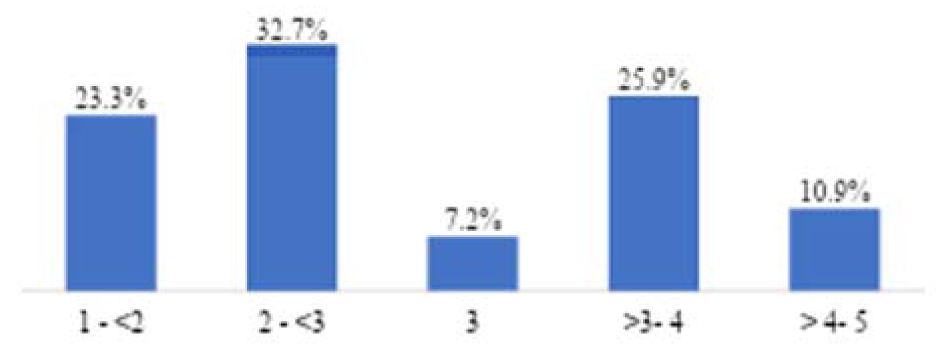
Perceived anti-corruption levels.
Determinants of Perceived Anti-Corruption
This study examines the factors influencing perceived anti-corruption using four models and three analytical approaches: structural equation modeling (SEM), multiple linear regression (MLR), and binary logistic regression (Logit; see Table 6, Figures 5 and 6).
Determinants of Perceived Anti-Corruption.
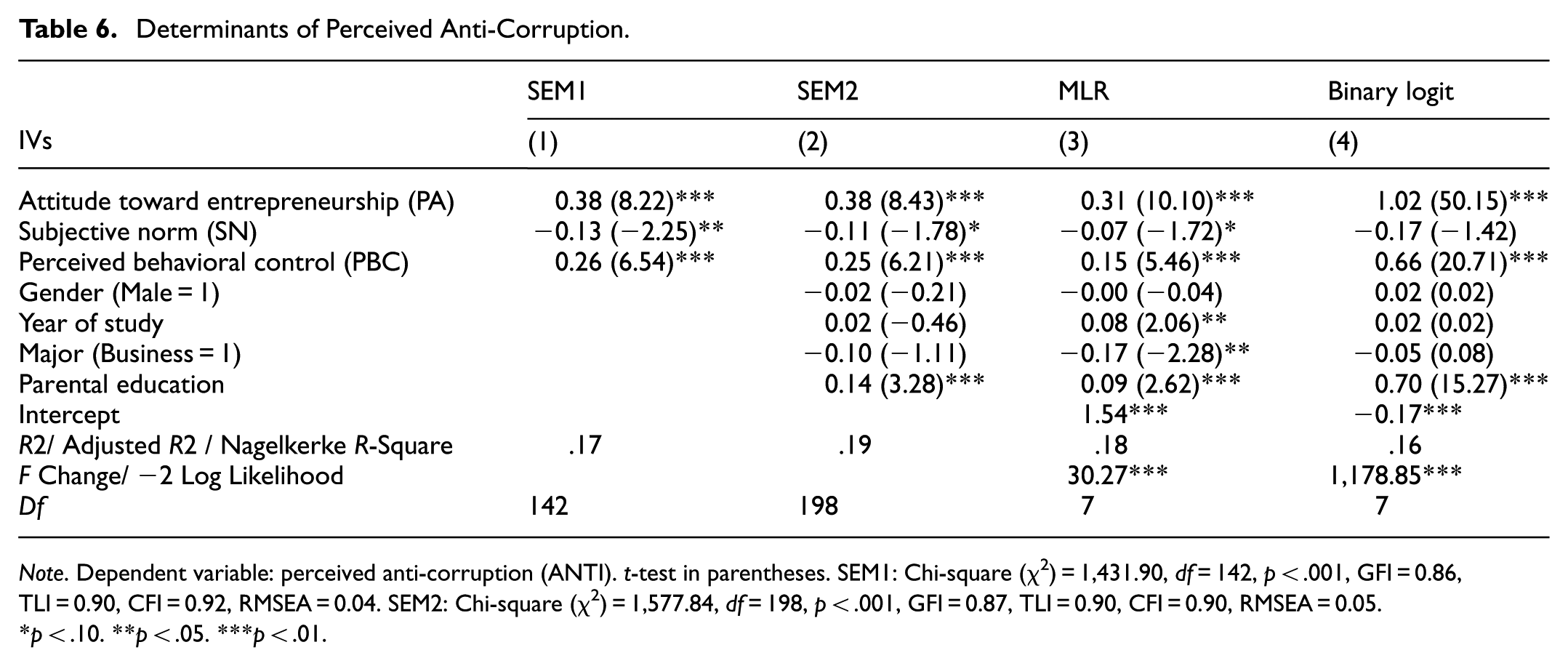
Note. Dependent variable: perceived anti-corruption (ANTI). t-test in parentheses. SEM1: Chi-square (χ2) = 1,431.90, df = 142, p < .001, GFI = 0.86, TLI = 0.90, CFI = 0.92, RMSEA = 0.04. SEM2: Chi-square (χ2) = 1,577.84, df = 198, p < .001, GFI = 0.87, TLI = 0.90, CFI = 0.90, RMSEA = 0.05.
p < .10. **p < .05. ***p < .01.
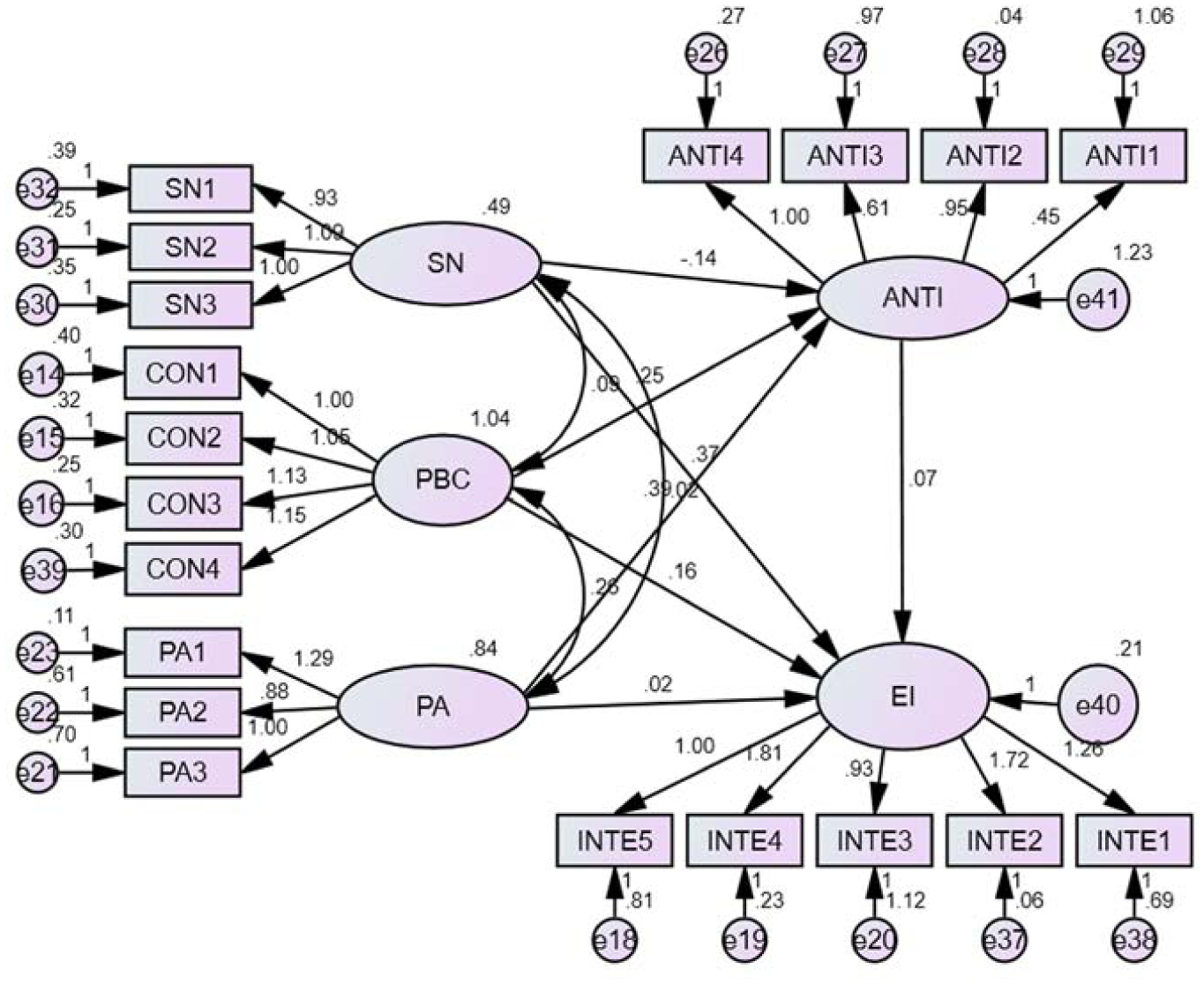
Motivational factors, anti-corruption and EI (SEM1 model).
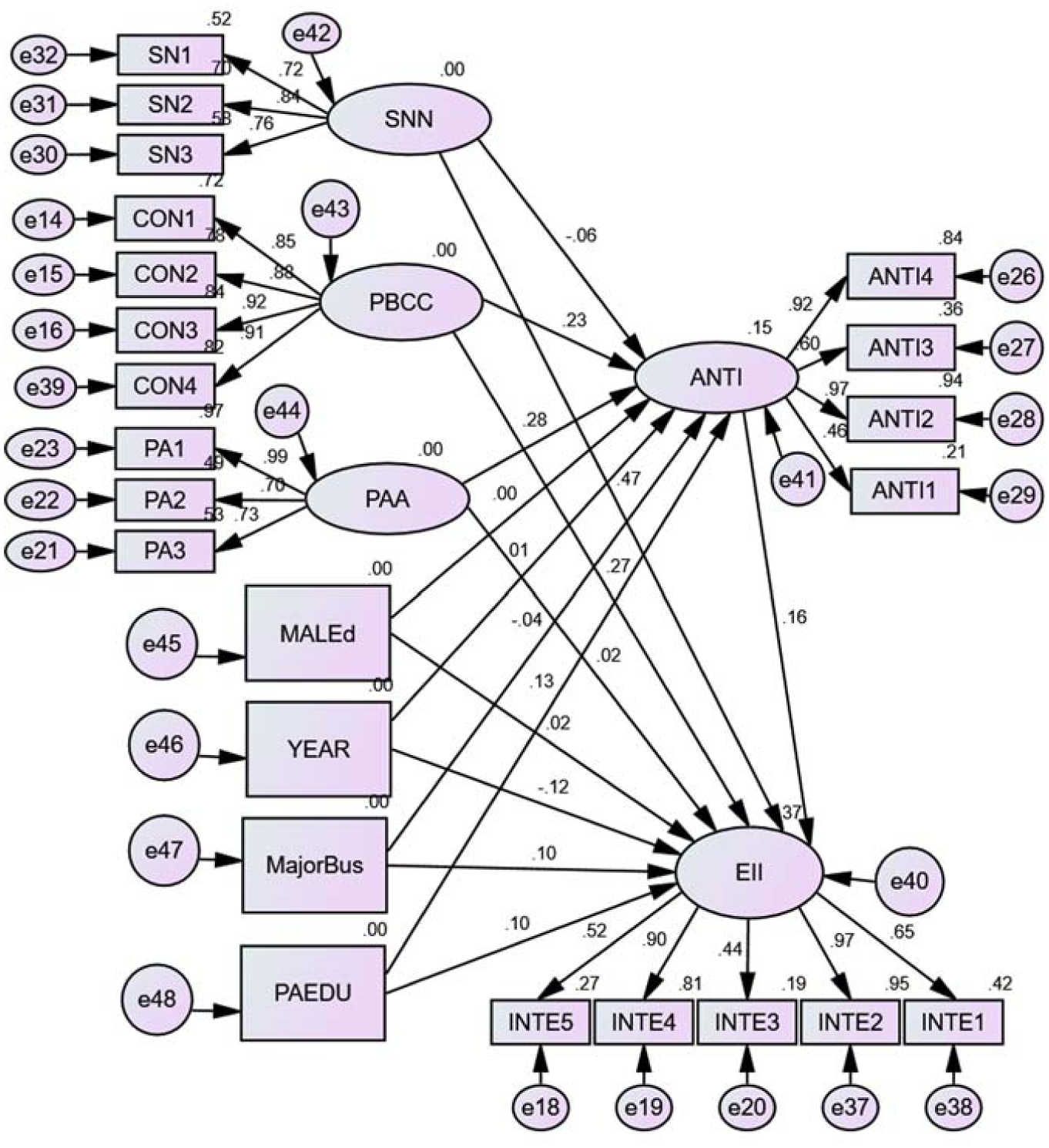
Motivational factors, demographics, anti-corruption and EI (SEM2 model).
Model SEM1 includes the three core Theory of Planned Behavior (TPB) constructs: personal attitude (PA), subjective norms (SN), and perceived behavioral control (PBC). Model SEM2 extends SEM1 by incorporating four control variables—gender, year of study, major, and parental education.
For the binary logit method, the Log-odds equation is presented as follows (Hair et al., 2014):

Where P: probability
β0, β1: coefficient
X 1, X2: independent variables
As shown in Table 6, all variables are coded as binary indicators (0/1), where 0 represents values below the sample mean and 1 represents values equal to or above the mean. For example, perceived anti-corruption has a mean value of 2.76 (see Table 5), and responses below 2.76 are coded as 0, while values equal to or above 2.76 are coded as 1. A similar procedure is applied to all variables.
The empirical results across SEM, MLR, and logit models indicate that PA, SN, and PBC significantly influence perceived anti-corruption (ANTI), although the direction and significance vary across specifications.
First, personal attitude (PA) is positively associated with ANTI. In Model SEM1, the coefficient is 0.38 (p < .05), indicating that higher entrepreneurial attitude is associated with higher perceived anti-corruption. This finding is also supported by the logit model, where PA is positively significant (β = 1.02, p < .05).
Second, subjective norm (SN) shows a negative association with ANTI. In Model SEM2, the coefficient is −0.11 (β = −.11, p < .05), suggesting that stronger perceived social support is associated with lower perceived anti-corruption.
Third, perceived behavioral control (PBC) is positively associated with ANTI. In Model SEM2, the coefficient is 0.25 (β = .25, p < .05), and the logit model similarly shows a positive and significant effect (β = .66, p < .01).
Finally, control variables show mixed effects. Year of study is positively associated with ANTI (β = .08), indicating that students in higher academic years report higher perceived anti-corruption. Academic major is negatively associated with ANTI (β = −.17), suggesting that business students report lower perceived anti-corruption compared to other majors. Parental education is consistently positive across models (e.g., β = .14, p < .01 in SEM1 and β = .70, p < .01 in Logit), indicating that higher parental education is associated with stronger perceived anti-corruption.
Overall, the results suggest that personal attitude, perceived behavioral control, and parental education are significant predictors of perceived anti-corruption among Vietnamese university students, while subjective norms and academic major exhibit more limited or context-dependent effects.
Determinants of Entrepreneurial Intention
The findings indicate that perceived anti-corruption (ANTI) has a significant positive effect on entrepreneurial intention (EI). In Model 1, the coefficient is 0.07 (p < .01), suggesting that higher levels of perceived anti-corruption are associated with stronger entrepreneurial intentions. Similarly, in Model 4 (binary logit), the coefficient is 0.34 (p < .01), confirming that individuals with higher anti-corruption perceptions are more likely to exhibit stronger entrepreneurial intentions than those with lower perceptions.
In addition, the three core Theory of Planned Behavior (TPB) constructs—personal attitude (PA), subjective norms (SN), and perceived behavioral control (PBC)—are significantly associated with entrepreneurial intention. Specifically, Model 3 shows that PA (β = .05, p < .05), SN (β = .41, p < .01), and PBC (β = .19, p < .01) all have positive effects on EI. These results are further supported by the logit model (Model 4), which similarly confirms the positive influence of all three TPB constructs, indicating that higher levels of PA, SN, and PBC are associated with stronger entrepreneurial intentions.
Regarding control variables, the results show that year of study is positively associated with entrepreneurial intention (β = .08, p < .01), suggesting that students in higher academic years are more likely to intend to start a business. Academic major also has a significant effect, with business students reporting higher entrepreneurial intentions compared to students in other disciplines (β = .11, p < .01). Finally, parental education is positively associated with entrepreneurial intention (β = .06, p < .01), indicating that students whose parents have higher educational attainment are more likely to pursue entrepreneurial intentions.
Overall, the results demonstrate that perceived anti-corruption, TPB constructs, and key demographic characteristics are significant predictors of entrepreneurial intention among Vietnamese university students (Table 7).
Determinants of Entrepreneurial Intention.

Note. m Dependent variable: entrepreneurial intention (INTENT). t-test and wald-test in parentheses.
p < .05. ***p < .01.
Indirect Effects
This study examines the mediating role of perceived anti-corruption (ANTI), with results summarized in Table 8. Model 3 indicates that ANTI significantly mediates the relationships between personal attitude (PA), subjective norms (SN), perceived behavioral control (PBC), parental education, and entrepreneurial intention (INTENT) at p < .05, suggesting that perceived anti-corruption plays an important mediating role in linking these predictors to entrepreneurial intention.
Direct, Indirect, and Total Effects.
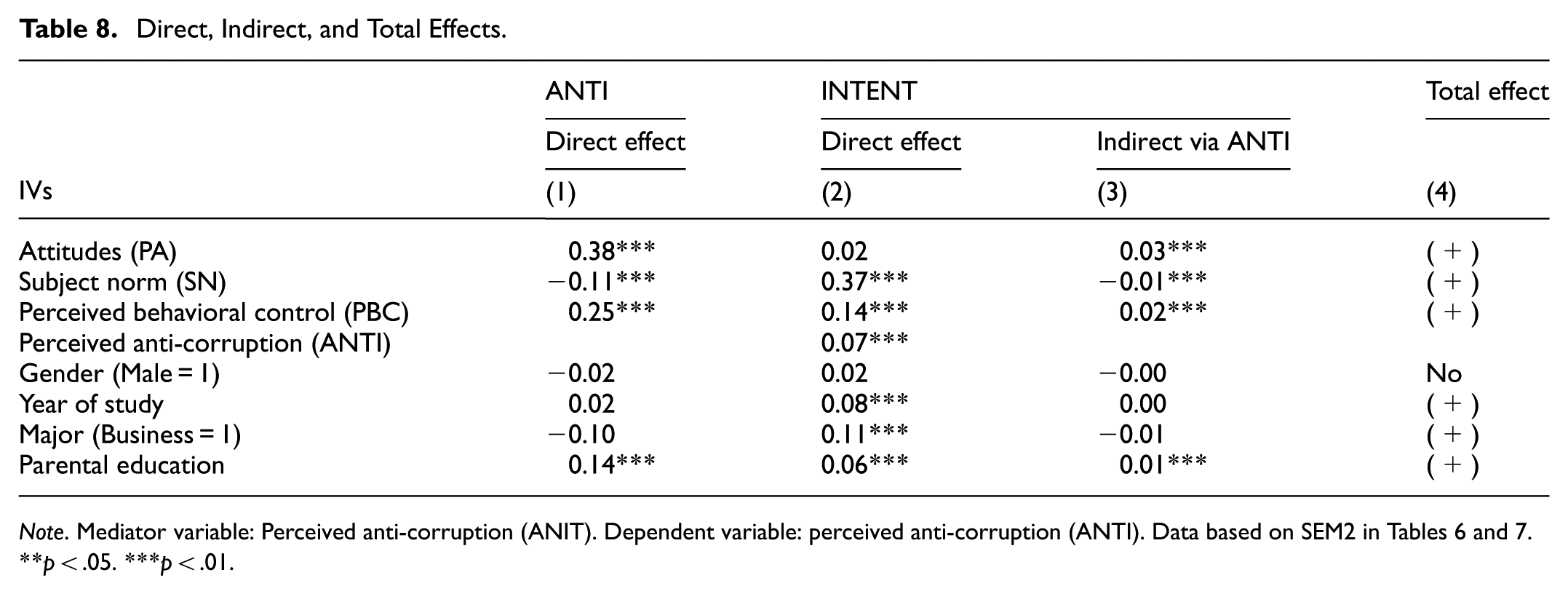
Note. Mediator variable: Perceived anti-corruption (ANIT). Dependent variable: perceived anti-corruption (ANTI). Data based on SEM2 in Tables 6 and 7.
p < .05. ***p < .01.
First, personal attitude (PA) does not exhibit a significant direct effect on entrepreneurial intention (see Model 2), but it shows a significant indirect effect through ANTI (β = .03, p < .01). This indicates that higher entrepreneurial attitudes are associated with stronger perceived anti-corruption, which in turn is associated with higher entrepreneurial intention. Thus, ANTI functions as a full mediating mechanism between PA and INTENT.
Second, subjective norm (SN) exhibits both direct and indirect effects on entrepreneurial intention. The indirect effect through ANTI is negative (β = −.01, p < .01), suggesting that stronger perceived social support is associated with slightly lower perceived anti-corruption, which in turn is associated with lower entrepreneurial intention. However, the direct effect of SN on INTENT remains positive (Model 2: β = .37, p < .01), resulting in an overall positive total effect of SN on entrepreneurial intention. These results are explained in the discussion section.
Third, perceived behavioral control (PBC) shows both direct and indirect effects on entrepreneurial intention. The indirect effect via ANTI is positive (β = .02, p < .01), indicating that higher perceived behavioral control is associated with stronger perceived anti-corruption, which subsequently increases entrepreneurial intention. This finding highlights the mediating role of ANTI in the relationship between PBC and entrepreneurial intention.
Finally, parental education also demonstrates significant direct and indirect effects on entrepreneurial intention. The indirect effect through ANTI is positive (β = .01, p < .01), suggesting that higher parental education is associated with stronger perceived anti-corruption, which in turn is associated with higher entrepreneurial intention.
Overall, the results indicate that perceived anti-corruption serves as a significant mediating mechanism linking key psychological factors and socio-demographic characteristics to entrepreneurial intention among Vietnamese university students.
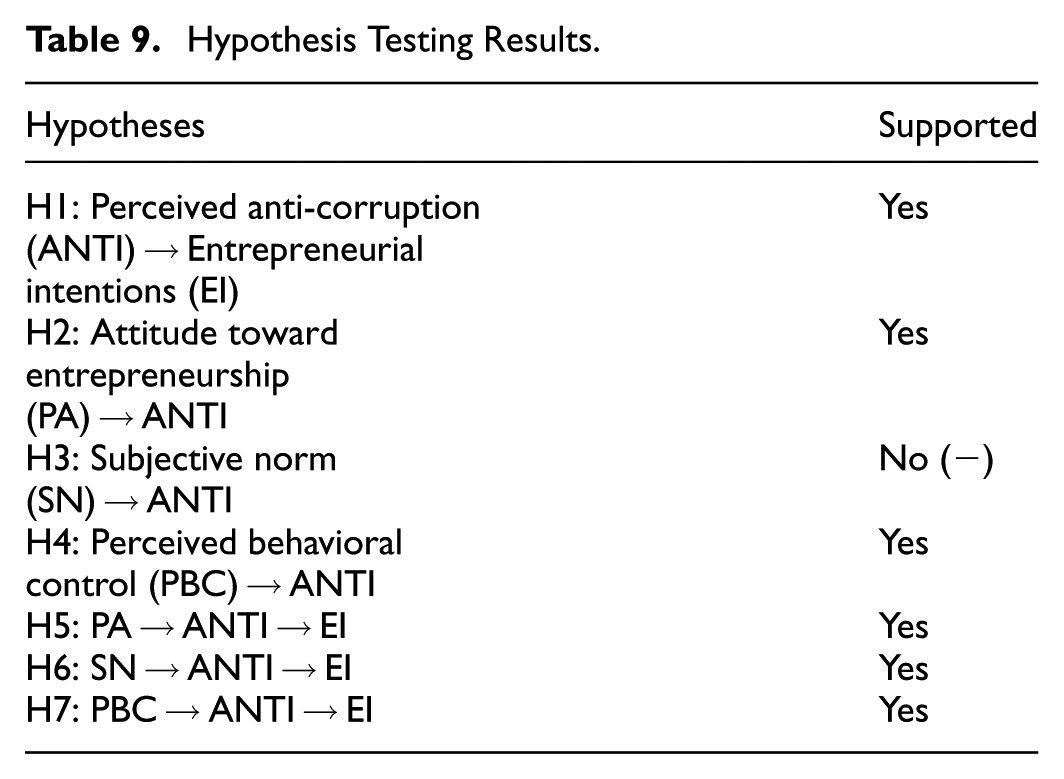
The results of the hypothesis testing are summarized in Table 9. Most hypotheses were supported except H3. Specifically, the directly significant relationships included perceived anti-corruption and entrepreneurial intentions (H1); attitudes (H2), perceived behavioral control (H4) and perceived anti-corruption. In addition, perceived anti-corruption acts as a mediator between attitudes (H5), subjective norm (H6) and perceived behavioral control (H7) and entrepreneurial intentions.
Hypothesis Testing Results.
Discussions
First, perceived anti-corruption (ANTI) is positively associated with entrepreneurial intentions (EI; H1). This relationship can be interpreted from both business and individual perspectives. At the firm level, higher entrepreneurial intentions are likely to translate into entrepreneurial behavior, which contributes to economic growth and firm performance by fostering innovation, new business formation, and competitive market activity (Munyo & Veiga, 2024). Our results suggest that perceptions of anti-corruption may play a modest role in promoting economic development, which is consistent with previous studies (Cieślik & Goczek, 2018; Gründler & Potrafke, 2019; Song et al., 2021) that corruption reduces economic growth. At the individual level, our findings align with previous studies (Allini et al., 2017; Ceresia & Mendola, 2019), indicating that students with stronger anti-corruption perceptions tend to exhibit lower entrepreneurial intentions. However, this result contrasts with Traikova et al. (2017), who found that students more tolerant of corruption were more likely to pursue entrepreneurial activities. These divergent findings can be explained by differences in social acceptability, often summarized as “you say illegal, I say legitimate” (Webb et al., 2009). Here, “legal” is determined by formal laws and regulations, whereas “legitimate” is defined by social norms, values, and beliefs (Dowling & Pfeffer, 1975; Webb et al., 2009; Williams & Kedir, 2016). When an activity is broadly socially accepted beyond what is legally permitted, individuals may perceive it as legitimate even if it is technically illegal (Webb et al., 2009; Williams & Kedir, 2016). In other words, an act considered corrupt in one society may be tolerated or even seen as appropriate in another (Ferrell et al., 2016). Consequently, although corruption is formally illegal, it may still be informally accepted in certain social contexts.
Second, the results reveal significant relationships between the Theory of Planned Behavior (TPB) components—attitudes toward entrepreneurship (PA), subjective norm (SN), and perceived behavioral control (PBC)—and perceived anti-corruption (ANTI; H2–H4). Specifically, PA and PBC positively influence anti-corruption perceptions, whereas SN exhibits a negative effect. Based on the results, we assert that individuals with a positive attitude toward entrepreneurship and better behavioral control in entrepreneurial activities have higher levels of anti-corruption perception, which is consistent with previous studies on the influence of direct and indirect experiences on corruption perceptions (Li & Meng, 2020; Yu et al., 2013; Zhu et al., 2013). Regarding H3, although SN significantly affects anti-corruption perceptions (p < .01), the negative direction of the relationship means that H3 is not supported. This pattern may be explained by contextual factors such as social trust or residential environment (rural vs. urban), which can shape individuals’ responses to social pressure and norms (Ariely & Uslaner, 2017; Thomas et al., 2024). Specifically, individuals with low social trust tend to exhibit higher perceptions of corruption (Ariely & Uslaner, 2017). This pattern is also reflected in Vietnam’s Corruption Perception Index (CPI), where the country is ranked 81 out of 182 countries (Transparency International, 2025). Although the CPI has shown gradual improvement over recent years, the rate of progress remains modest, indicating the need for further interventions and policy measures to strengthen anti-corruption efforts. Socioeconomic status (the wealthy or the poor) can also explain their anti-corruption perception (Maeda & Ziegfeld, 2015; P. A. Nguyen & Le, 2022). Maeda and Ziegfeld (2015) find that poor and less educated people are more likely to perceive higher levels of corruption than wealthy and well-educated people, which is consistent with our results that parental education level has a positive influence on students’ anti-corruption perceptions. Altogether, our findings contribute to the literature on corruption and anti-corruption, complementing previous studies by providing empirical evidence on the role of perceived anti-corruption in shaping entrepreneurial intentions and the mediating effects of psychological and contextual factors (Park & Blenkinsopp, 2009; Wated & Sanchez, 2005).
The hypotheses regarding the mediating role of perceived anti-corruption (ANTI; H5–H7) are supported. Specifically, ANTI serve as a link between SN, PA, and PBC and entrepreneurial intention (EI), highlighting their role as a mediating mechanism. While prior research has identified SN, PA, and PBC themselves as mediators of entrepreneurial intentions (Caputo et al., 2025; Silesky-Gonzalez et al., 2025), the mediating function of anti-corruption perceptions remains largely unexplored (Haddoud et al., 2024). Thus, our findings provide a novel contribution to the literature on corruption, anti-corruption perceptions, and entrepreneurship.
Furthermore, the results demonstrate that parental education exerts a strong influence on both anti-corruption perceptions and entrepreneurial intentions. Specifically, (a) parental education positively impacts anti-corruption perception, suggesting that higher parental education helps foster stronger anti-corruption awareness among students; (b) parental education directly enhances entrepreneurial intention, indicating that parental education can encourage students to pursue entrepreneurial activities.
These findings extend the literature on the role of parental influence in shaping student behavior, complementing prior studies (Phung, 2022, 2025) that show parental education improves students’ budgeting habits and reduces risk-taking behavior.
Conclusions, Implications, and Further Research
This study develops and tests a research model examining the direct and indirect relationships among perceived anti-corruption, Theory of Planned Behavior (TPB) constructs (personal attitude, subjective norms, and perceived behavioral control), demographic characteristics (gender, year of study, major, and parental education), and entrepreneurial intention. The key findings are as follows: (a) personal attitude, perceived behavioral control, and parental education positively influence perceived anti-corruption, whereas subjective norms exhibit a significant negative relationship; (b) perceived anti-corruption has a significant positive effect on entrepreneurial intention; and (c) perceived anti-corruption mediates the relationships between TPB constructs, parental education, and entrepreneurial intention. Overall, most hypotheses (H1–H7) are supported, except H3, which predicted a positive effect of subjective norms on perceived anti-corruption.
This study offers several theoretical and practical implications. First, perceived anti-corruption plays an important role in shaping entrepreneurial intention, highlighting the relevance of institutional perceptions in entrepreneurial decision-making. Second, the findings suggest that anti-corruption awareness among Vietnamese university students is moderately developed, consistent with the gradual improvement reflected in Vietnam’s Corruption Perceptions Index trend (see Figure 1). However, the overall level remains limited, indicating the need for continued efforts to strengthen institutional awareness among young people, particularly university students who represent a key segment of the future workforce (Phung et al., 2022).
The study also contributes to the ongoing debate on the relationship between corruption and economic outcomes. Prior research presents mixed evidence, with some studies supporting the “sands-the-wheels” hypothesis, suggesting that corruption hinders economic growth (Cieślik & Goczek, 2018; Gründler & Potrafke, 2019; Song et al., 2021), while others support the “greases-the-wheels” hypothesis, arguing that corruption may facilitate economic activity under certain conditions (Jiang & Nie, 2014; Martins et al., 2020; Williams & Kedir, 2016). As noted by Shacklock and Galtung (2016), although corruption is generally perceived negatively, it may persist due to structural and contextual constraints. In this regard, this study emphasizes that fostering anti-corruption perceptions is more important than focusing solely on the ambiguous economic effects of corruption.
We argue that promoting anti-corruption perception among young people is essential for two main reasons. First, perceived anti-corruption is a significant predictor of entrepreneurial intention, suggesting that students with stronger anti-corruption awareness are more likely to develop entrepreneurial intentions. Second, perceived anti-corruption functions as a mediating mechanism linking entrepreneurial attitudes and perceived behavioral control to entrepreneurial intention. Based on these findings, policymakers, educators, and families are encouraged to implement targeted initiatives—such as workshops, seminars, and interactive discussions—to strengthen anti-corruption awareness as a foundation for entrepreneurship and sustainable economic development.
This study has several limitations. First, some hypothesized relationships were not statistically significant. For example, gender did not significantly affect either perceived anti-corruption or entrepreneurial intention, and academic year and major did not significantly influence perceived anti-corruption. Future research should re-examine these relationships using larger and more diverse samples or alternative measurement approaches. Second, although perceived anti-corruption significantly affects entrepreneurial intention, the effect size is relatively modest, consistent with prior studies (Ceresia & Mendola, 2019; Traikova et al., 2017). Future research should explore additional mediating or moderating variables that may strengthen or better explain this relationship. Finally, the study is limited to Vietnamese university students, which may constrain the generalizability of the findings. Future studies should therefore extend the analysis to broader populations across different educational, occupational, and cultural contexts.
Footnotes
Acknowledgements
The authors would like to express their sincere gratitude to all participants involved in this study. We also acknowledge the constructive comments provided by anonymous reviewers, which significantly improved the clarity and rigor of this manuscript.

Ethical Considerations
Ethical approval for this study was not required in accordance with local legislation and institutional requirements. However, this study was conducted in accordance with established ethical guidelines for research involving human participants as follows: First, our study design minimized the risk of harm to participants. The questionnaire included questions on a 5-point Likert scale ranging from strongly disagree to strongly agree. Therefore, respondents evaluated their choices based on their specific circumstances. Secondly, the potential benefits of the research to society and the research participants outweigh the risks to them. This is because their feedback will help the research provide implications for policymakers regarding youth entrepreneurial intentions.
Consent to Participate
All individual participants provided informed consent prior to taking the questionnaires. They were informed of the purpose of research, study procedures, and their right to withdraw at any time without penalty. Participants were also assured that their participation is completely voluntary and that all data would be kept confidential and reported anonymously.
Author Contributions
Vo, Thuy N. T.: Wrote Chapter 1 and 2. Phung, Trang M. T.: Wrote Chapter 3 and 4. Nguyen, Lam D.: Wrote Chapter 5, reference list and edited the entire paper.
Funding
The authors disclosed receipt of the following financial support for the research, authorship, and/or publication of this article: This study is partly funded by the University of Economics Ho Chi Minh City (UEH).
Declaration of Conflicting Interests
The authors declared no potential conflicts of interest with respect to the research, authorship, and/or publication of this article.
Data Availability Statement
The data that support the findings of this study are available from the corresponding author upon reasonable request.*