






Abstract
Professional identity is an important factor influencing pre-service English teachers’ life satisfaction and career development; however, its underlying mechanisms and moderating conditions remain insufficiently explored. Drawing on career construction theory, this study examines the relationship between professional identity and life satisfaction, with a particular focus on the mediating role of career adaptability and the moderating role of proactive personality. Using a cross-sectional online survey of 668 Chinese pre-service English teachers, this study measured professional identity, career adaptability, proactive personality, and life satisfaction with validated scales. Moderated mediation was examined in SPSS using PROCESS macro (bootstrapping, 5,000 resamples). Professional identity was positively associated with life satisfaction (p < .001). Career adaptability partially mediated this relationship, accounting for 79.41% of the total effect. Moreover, proactive personality moderated the association between professional identity and life satisfaction; however, it did not moderate the relationships between professional identity and career adaptability or between career adaptability and life satisfaction. The findings suggest that career adaptability partially mediates the relationship between professional identity and life satisfaction, and that proactive personality moderates this relationship. These results clarify the psychological mechanisms through which professional identity relates to pre-service teachers’ life satisfaction and provide empirical evidence to support the development of both universal and personalized training systems for teacher education programs.
Keywords
Introduction
Life satisfaction is an individual’s total cognitive judgment of their living situations and life circumstances, indicating the amount to which they are pleased with their lives and believe their own goals have been met (X. Chen et al., 2021). For university students, life satisfaction is particularly salient and is closely associated with their academic functioning, mental health, interpersonal relationships, and future career development (Ding et al., 2024; S. Liu et al., 2023; Xu et al., 2023; Zhang, 2025). Pre-service English teachers constitute a distinctive subgroup who are simultaneously navigating student life and constructing a future-oriented professional identity (Yue & Huang, 2024). According to recent research, pre-service English teachers’ growing professional identity is highly related to their perceived ability to satisfy difficult demands, including inclusive education (Yüce et al., 2025). In this context, life satisfaction can be viewed as an important indicator of their overall well-being and adaptive functioning during the process of becoming teachers. As a core indicator of subjective well-being, life satisfaction is shaped by the cumulative and interactive effects of multiple psychological and contextual factors and may fluctuate in response to individuals’ experiences and subjective appraisals (Campira et al., 2016, 2021). Accordingly, systematically examining the factors associated with pre-service English teachers’ life satisfaction and the underlying mechanisms is of considerable significance for teacher education and student support systems.
When explaining the development of life satisfaction among pre-service English teachers, it is necessary to move beyond general academic experiences and consider profession-related psychological processes. In this regard, professional identity provides individuals with vocational meaning, direction, and role clarity, which facilitates the development of relatively stable psychological expectations during teacher preparation and may therefore exert an important influence on their overall life evaluation (Hui et al., 2025; Rushton et al., 2023). However, the effect of professional identity may depend on individuals’ adaptive psychological resources in the process of career development. Career adaptability reflects individuals’ capacity to manage career tasks, transitions, and uncertainties and is particularly critical for pre-service English teachers who are undergoing the transition from student to teacher roles (Spurk et al., 2025; H. Wang et al., 2025). Moreover, the above relationships may vary as a function of individual differences in personality. Pre-service English teachers with proactive personality may be more capable of translating their professional identity into concrete career preparation behaviors and more effectively mobilizing career adaptability to cope with academic and career-related demands, thereby attaining life satisfaction (Ma et al., 2024).
Although previous research has examined the determinants of university students’ life satisfaction from the perspectives of academic factors, individual psychological characteristics, and contextual resources, several gaps remain with regard to pre-service English teachers as a profession-oriented group. Existing studies have tended to focus on isolated psychological variables or general academic experiences, with limited efforts to systematically examine profession-related psychological processes within a unified theoretical framework. In addition, relatively little attention has been paid to boundary conditions in these mechanisms, leaving it unclear how individual differences, such as proactive personality, may shape the extent to which professional identity and career adaptability influence life satisfaction. Accordingly, drawing on career construction theory (CCT), the present study systematically investigates the relationships among professional identity, career adaptability, and life satisfaction, and further examines the moderating role of proactive personality in the proposed pathways.
Theoretical Background and Hypotheses
Theoretical Background
CCT emphasizes that individuals are not passive recipients of external career conditions but actively construct their vocational selves and career paths through meaning-making of career experiences and proactive adaptation to contextual demands (Savickas, 2005). In recent years, CCT has been widely applied to explain career development processes and associated psychological outcomes among university students. CCT and its core constructs effectively predict and explain a range of career-related and psychological outcomes, such as subjective career success, career decision-making behaviors, and life satisfaction (Badwy et al., 2025; Oliveira & Marques, 2024; D. Wang & Li, 2024). Within the CCT framework, professional identity provides individuals with a sense of direction and relatively stable psychological expectations for their career development, thereby facilitating the generation and mobilization of adaptive resources (D. Wang & Li, 2024). Among these resources, career adaptability, as a key construct of CCT, reflects individuals’ psychosocial capacity to manage career-related tasks, transitions, and uncertainties (Ouyang et al., 2025; Spurk et al., 2025). Moreover, life satisfaction captures individuals’ overall cognitive evaluation of life quality and can be regarded as a psychological outcome of the career construction process at the life level (Fors Connolly & Gärling, 2024; Tiley et al., 2025). CCT underscores the role of individual differences in shaping the acquisition and transformation of career-related resources. Accordingly, proactive personality, characterized by a tendency to identify opportunities, shape environments, and take initiative, may strengthen the translation of professional identity into career adaptability and amplify life satisfaction (Badwy et al., 2025; Do et al., 2025). In the present study, focusing on pre-service English teachers, we develop a model grounded in CCT to explain psychological adaptation and life evaluation during the teacher preparation stage. At the same time, recognizing that individual differences may shape the generation and transformation of career-related resources, proactive personality is incorporated as a boundary condition to examine its moderating effects on the key pathways.
Professional Identity and Life Satisfaction
Professional identity refers to individuals’ self-perception as members of a particular occupation, reflecting their recognition and emotional attachment to the professional and social group associated with that role (C. Wang et al., 2020). Empirical evidence has consistently shown that professional identity correlates positively with life satisfaction among university students (Garrison et al., 2017; N. Yang & Lea, 2012). When university students develop a relatively clear and stable professional identity, they tend to connect their current learning experiences with future career goals, thereby constructing a coherent and consistent self-concept, which contributes to life satisfaction (Jue & Ha, 2018; S. Yang, 2024). A clear and stable professional identity affords students concrete direction and purpose, helping to alleviate uncertainty and anxiety regarding their future career development (de Abreu et al., 2024). Although previous research has suggested a positive association between professional identity and life satisfaction, systematic examinations of this relationship among pre-service English teachers remain limited, particularly amid ongoing educational reforms and intensified employment competition in China, where further empirical evidence is still needed. This leads to the following testable hypothesis:
The Mediating Role of Career Adaptability
Career adaptability describes people’s psychological resources and abilities to manage activities, changes, and uncertainties associated to their careers (Savickas, 2020). Prior studies have repeatedly demonstrated that career adaptability is a significant predictor of subjective well-being, with those who are more adaptable in their work often reporting better life satisfaction (Cabras & Mondo, 2018; Oliveira & Marques, 2024; Yalçın et al., 2022). Demirtaş and Kara (2022) pointed out, individuals lack sufficient career adaptability, they tend to experience stress, employment anxiety, and emotional distress in the face of career-related uncertainty, which in turn undermines their life satisfaction In contrast, individuals with strong career adaptability are better able to interpret career challenges as opportunities for growth and, drawing on richer psychological resources and more effective stress regulation strategies, maintain a positive mindset and respond constructively to setbacks and uncertainty (Cabras & Mondo, 2018). Accordingly, pre-service English teachers’ professional identity may be positively associated with their life satisfaction.
Moreover, prior research indicates that career adaptability tends to increase as professional identity becomes more firmly established (de Abreu et al., 2024; X. Liu et al., 2023; S. Yang, 2024). Individuals who lack a strong sense of professional identity may tend to avoid seeking career-related information and postpone internship or career-related decisions (S. Yang, 2024). Such avoidance tendencies can result in insufficient experience accumulation and inadequate preparation for real-world professional contexts, thereby undermining individuals’ ability to effectively navigate career-related tasks and transitions (de Abreu et al., 2024). Students with a strong professional identity, tend to set relatively stable career goals, actively acquire domain-specific knowledge, and develop coping strategies and action plans that are aligned with their career goals, facilitating the development and enhancement of career adaptability (X. Liu et al., 2023). However, few research have combined these factors into a single theoretical framework and carefully investigated their interactions. This leads to the following hypothesis:
The Moderating Role of Proactive Personality
Proactive personality refers to a consistent dispositional inclination to take the initiative, foresee future demands, and actively alter one’s surroundings (Bateman & Crant, 1993). As such, it influences how individuals enact and translate internal career-related cognitions into adaptive behaviors and psychological resources. Prior research has shown that proactive personality plays a moderating role across various educational and career-related contexts, shaping the strength of relationships between individual characteristics and adjustment outcomes (Huang et al., 2025; Najam & Mustamil, 2022). In the context of the present study, professional identity reflects pre-service English teachers’ cognitive understanding of and emotional identification with their future teaching roles, whereas career adaptability represents their psychosocial resources and capacities for coping with career-related tasks, transitions, and uncertainties (L. Yang et al., 2023; Ye et al., 2025). Proactive personality, as a boundary condition, may influence the process through which professional identity is translated into career adaptability, and shape the way which career adaptability contributes to positive life outcomes (Meng et al., 2025). From the perspective of CCT, proactive personality can be viewed as a key individual difference that affects the efficiency of adaptive resource generation and transformation during the career construction process (Savickas, 2005). For pre-service English teachers, those with proactive personality tend to actively engage in career-related information seeking, skill development, and the construction of social support, thereby more effectively converting their professional identity into career adaptability and further promoting positive evaluations of life (Y. Wang & Wang, 2023). Based on these arguments, the study advances the hypothesis that:
Based on these hypotheses, Figure 1 is the conceptual framework of this study.
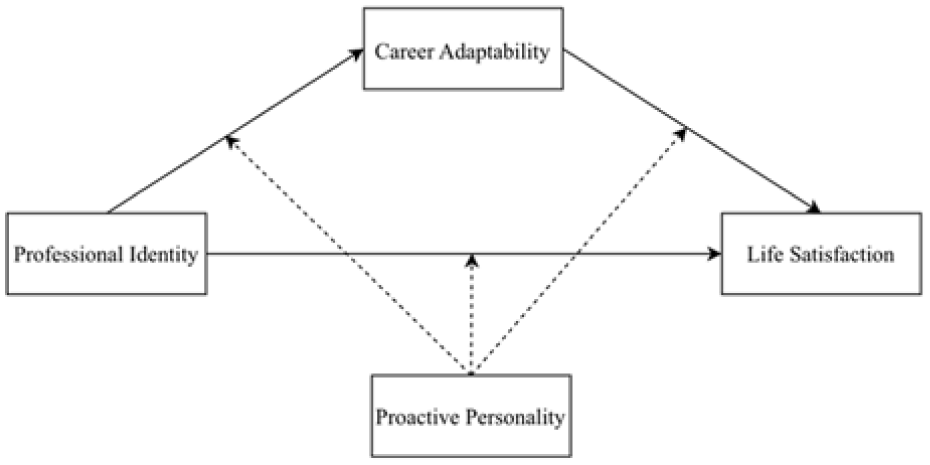
Research model.
Methods
Sample Source and Data Collection
The Ethics Committee approved this investigation, which involves multiple higher education institutions across China. The research procedure was guided by the Declaration of Helsinki’s ethical principles, and it strictly adhered these standards to participant recruitment, data collection, and analysis. Data collection took place between September and October 2025 through the online survey platform Wenjuanxing, with assistance from faculty members at partner universities. Using a convenience sampling approach, participants were recruited after receiving full details of the study and voluntarily providing written informed consent. Although convenience sampling may introduce potential self-selection bias, thereby constraining the generalizability of findings, this method was deemed the most feasible given practical constraints such as available resources and access to participants.
This study employed the participant-to-item ratio method proposed by Kline (2018), with a minimum of 10 respondents per item. The needed sample size was 612 individuals, assuming a 20% attrition rate and a 51-item questionnaire. Given that the target population, pre-service English teachers, is inherently limited in size and distributed across different academic years and institutions, 1,000 questionnaires were distributed to ensure sufficient representation and structural balance. A total of 986 responses were collected, and the following exclusion criteria were applied during data cleaning: (a) questionnaires with over 20% of items unanswered; (b) responses exhibiting extreme response bias, defined as over 80% of answers clustered at the highest or lowest points of the scale, which may introduce ceiling or floor effects; and (c) respondents who were not pre-service English teachers and thus fell outside the study’s scope. This screening process resulted in the removal of 318 invalid responses. Consequently, the final dataset comprised 668 valid questionnaires, meeting the sample size requirement for subsequent statistical model analysis.
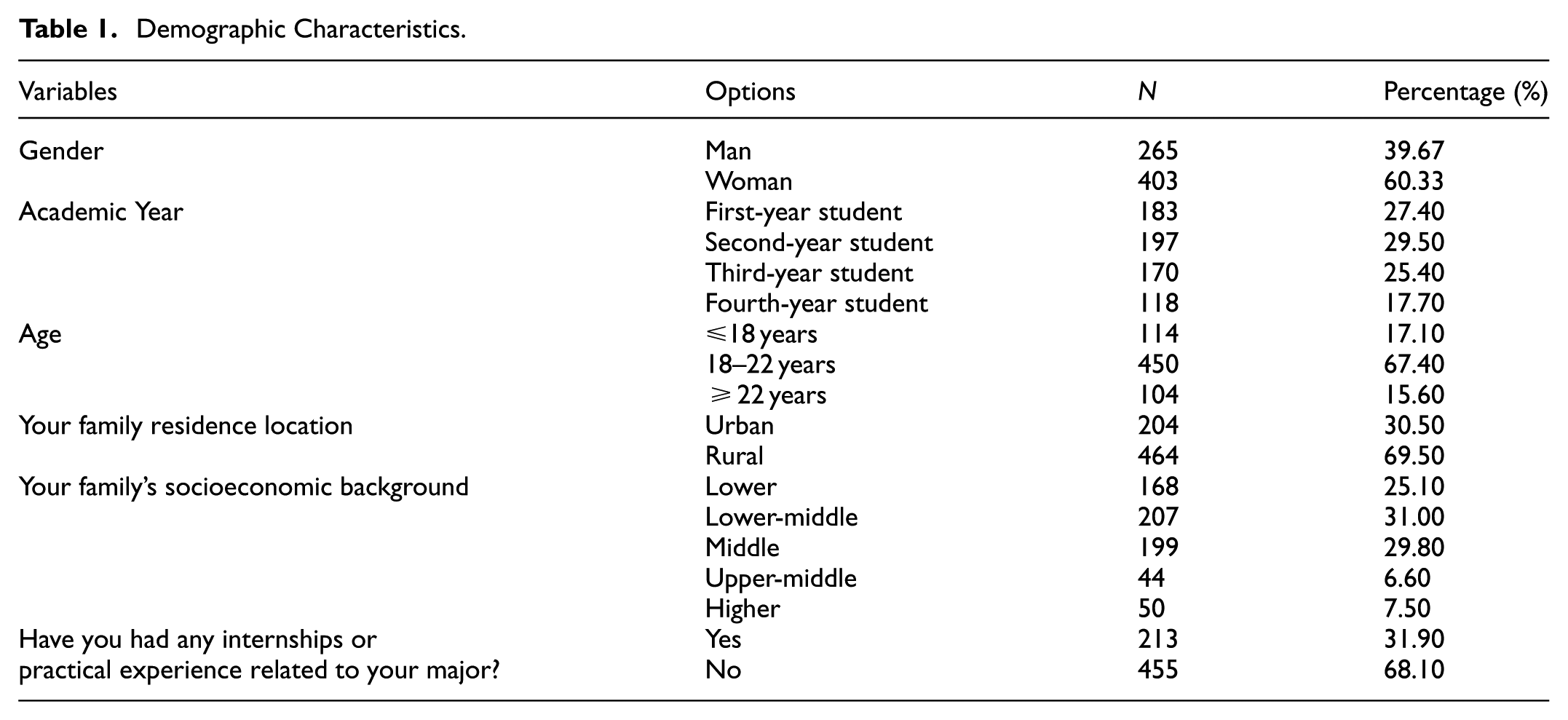
The sampling strategy also considered the well-documented gender imbalance in Chinese normal universities, where female students typically outnumber males in English teacher education programs. Consequently, the final sample reflected this structural pattern. Table 1 presents the demographic information of the final sample, which included 265 male (39.67%) and 403 female (60.33%) participants. Second-year students comprised 29.50% (n = 197) of the sample. Most respondents were aged 18 to 22 years (67.40%, n = 450). A majority were from rural (69.50%, n = 464), and 31.00% (n = 207) reported a lower-middle socioeconomic background. Furthermore, 455 participants (68.10%) reported that they had not participated in internships or practicum experiences related to their major.
Demographic Characteristics.
Measurement Instruments
To ensure cross-cultural equivalence, all scales were translated and adapted following a standard translation and back-translation procedure. First, a bilingual expert in psychology and a linguist independently performed the forward translation. Then, a panel of experts unfamiliar with the original scales conducted the back-translation. The research team compared the versions, resolved semantic discrepancies, and developed a preliminary Chinese draft. The draft’s clarity, cultural appropriateness, and semantic accuracy were piloted with a sample of 20 Chinese university students. Final revisions were made based on their feedback before the formal data collection.
Professional Identity Scale (PIS)
The measurement of professional identity adopted the four-item subscale from Matthews et al.’s (2019) PIS. Higher total scores reflect stronger levels. PIS has demonstrated prior validity in samples of Chinese English majors (B. Song & Liu, 2024), Cronbach’s α is .854.
Career Adapt-Abilities Scale-China Form (CAAS-CF)
This study assessed career adaptability using the 24-item CAAS, originally developed by Savickas and Porfeli (2012) and later revised into the Chinese version by Hou et al. (2012). The scale measures individuals’ capacity to implement strategies for navigating career transitions. Higher total scores reflect a greater level of career adaptability. The CAAS-CF has demonstrated robust psychometric properties in previous studies involving Chinese college students (Pong & Leung, 2023). Cronbach’s α = .960, χ2/df = 2.397, RMSEA = 0.046, GFI = 0.925, AGFI = 0.911, IFI = 0.963, CFI = 0.962, TLI = 0.959.
Proactive Personality Scale (PPS)
To assess proactive personality, this study employed the PPS, which created by Bateman and Crant (1993) and refined by Shang and Gan (2009), comprises 11 unidimensional items. A total proactive personality score was computed by summing all responses. Previously validated with Chinese university students (Fang et al., 2024), Cronbach’s α = .943, χ2/df = 3.567, RMSEA = 0.062, GFI = 0.957, AGFI = 0.935, IFI = 0.977, CFI = 0.977, TLI = 0.972.
Satisfaction With Life Scale (SWLS)
Life satisfaction was measured using the SWLS, originally developed by Diener et al. (1985) and later adapted into the Chinese version by Xiong and Xu (2009). The scale consists of five items. Higher total scores indicating greater life satisfaction. The scale’s single-factor structure and robust psychometric properties among Chinese university students have confirmed (Li et al., 2024). Cronbach’s α = .875, χ2/df = 2.420, RMSEA = 0.046, GFI = 0.994, AGFI = 0.979, IFI = 0.996, CFI = 0.996, and TLI = 0.991.
Data Analysis
Data analysis was conducted using AMOS 26.0 and SPSS 27.0. For normally distributed variables, descriptive statistics (M and SD) were calculated. Pearson correlation analysis was performed to explore the associations among the variables. PROCESS was applied to test both the mediating (Model 4) and moderating (Model 59) effects. Model estimation used 5,000 bootstrap resamples with 95% confidence intervals (95% CI). A confidence interval excluding zero indicated statistical significance. The significance level was set at α = .05.
Results
Construct Reliability and Validity
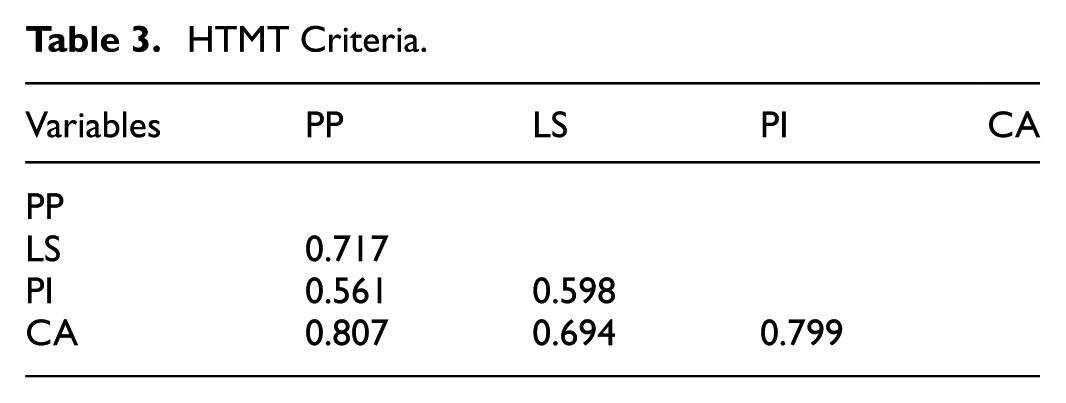
The measuring model’s reliability and validity were evaluated using the guidelines of Hair Jr et al. (2021). All measuring items had factor loadings larger than 0.6 and Cronbach’s α and CR of the constructs surpassed 0.8, indicating reliability (Table 2). The AVE values for all constructions exceeded 0.5. For discriminant validity, all HTMT were less than 0.85 (Table 3), and the square root of the AVE for each construct was more than its correlation coefficient with the other construct, meeting the Fornell-Larcker criteria (Table 4).
Construct Reliability and Validity.
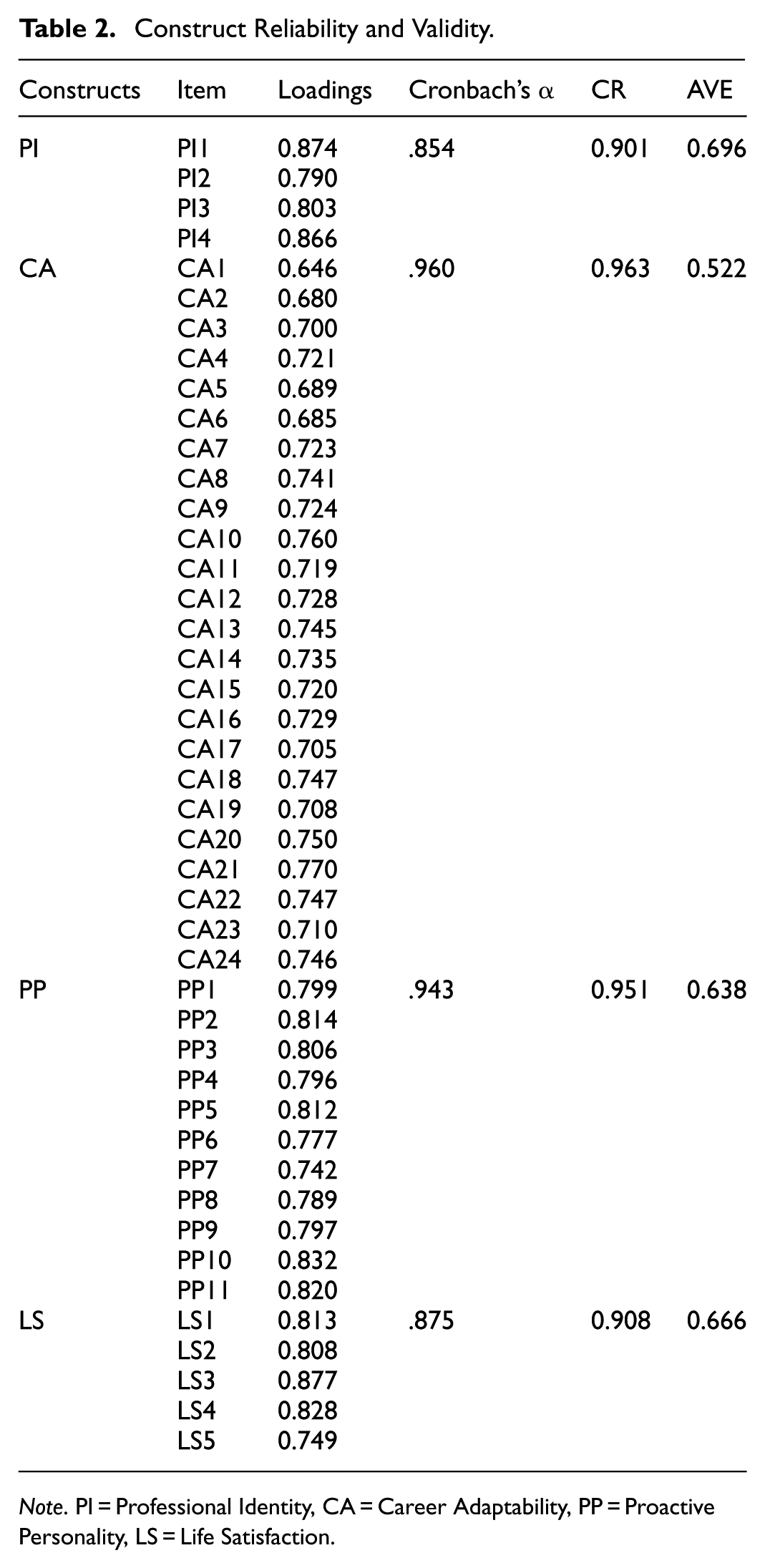
Note. PI = Professional Identity, CA = Career Adaptability, PP = Proactive Personality, LS = Life Satisfaction.
HTMT Criteria.
Fornell-Larcker Criteria.
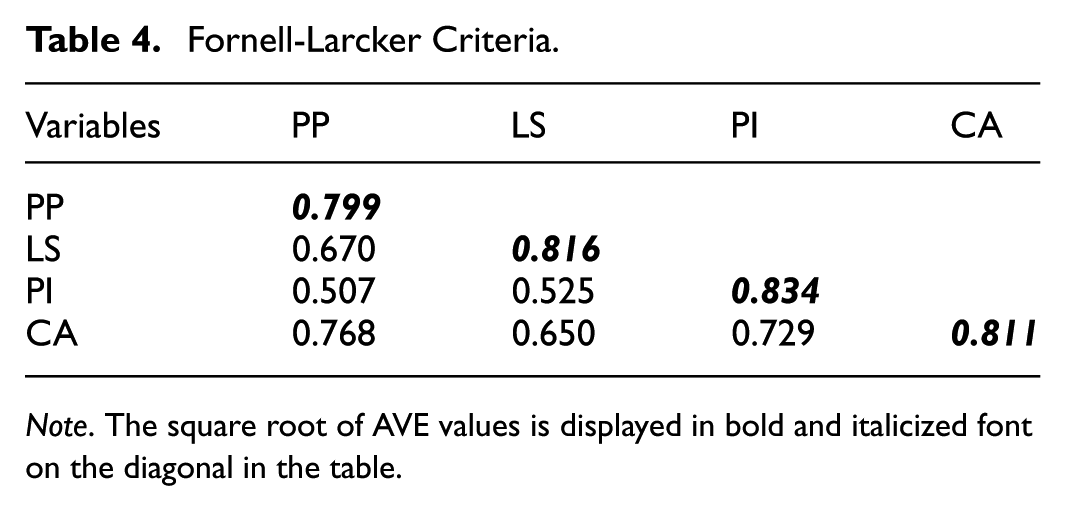
Note. The square root of AVE values is displayed in bold and italicized font on the diagonal in the table.
Common Method Bias (CMB)
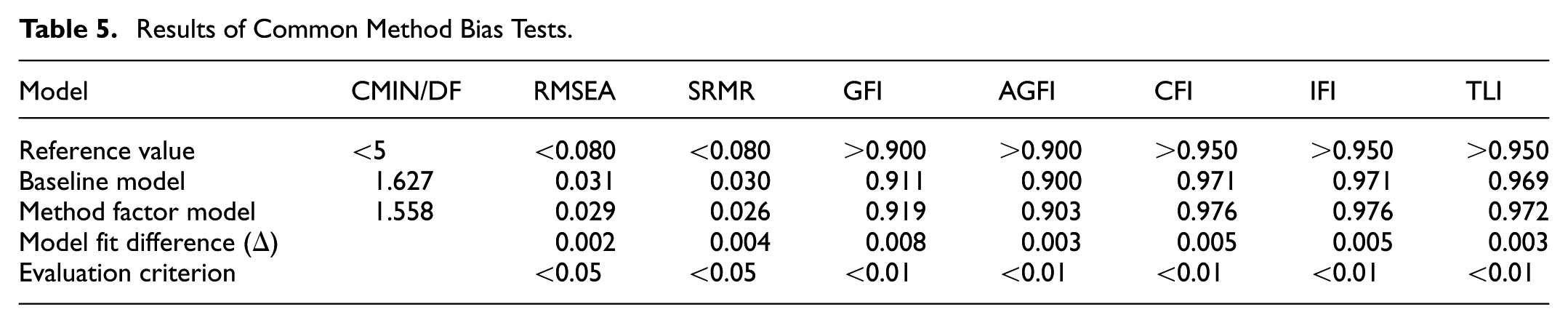
To assess potential CMB, a CFA was performed using AMOS 26.0. The results indicated satisfactory model fit, with all indices meeting recommended thresholds, supporting the sound structural validity of the scales. To account for potential common variance across items, the unmeasured latent method construct (ULMC) approach introduced a latent method factor into the baseline model, providing a further evaluation of CMB. As shown in Table 5, differences in key fit indices, including GFI, AGFI, CFI, IFI, and TLI, before and after incorporating the method factor were all below 0.01, while the change in RMSEA was under 0.05. In line with the guidelines established by Cheung and Rensvold (2002), the absence of meaningful improvements in model fit indicates that CMB was not a major issue.
Results of Common Method Bias Tests.
Descriptive Statistics
Associations among pre-service English teachers’ professional identity, career adaptability, proactive personality, and life satisfaction were examined. The results, displayed in Table 6, professional identity, career adaptability, proactive personality, and life satisfaction were all positively correlated with one another. Supported H1.
Descriptive Statistics.
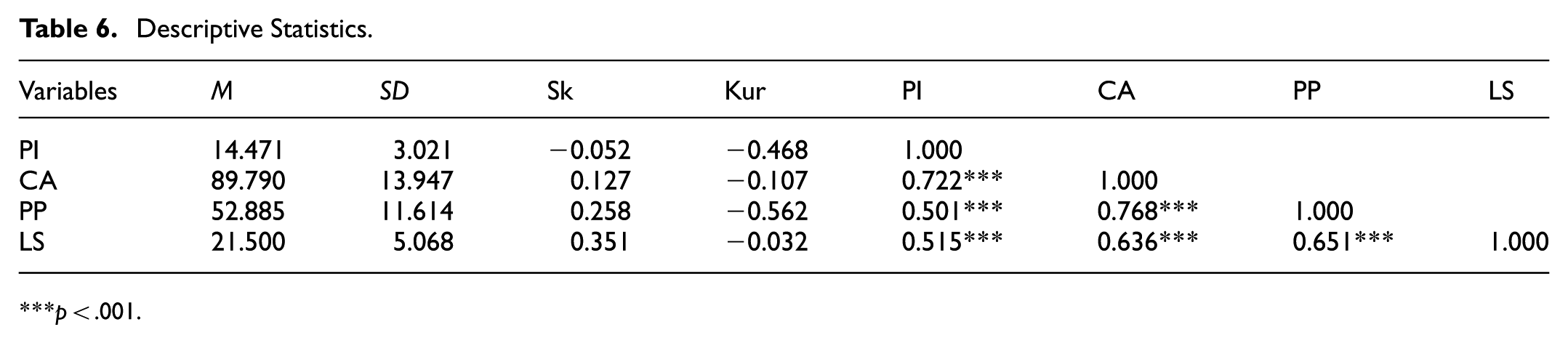
p < .001.
Mediation Analysis
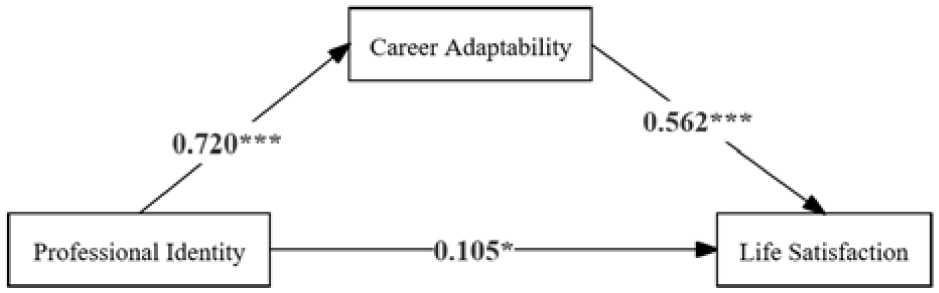
Path analysis was conducted after controlling for key demographic variables. Table 7 indicates that professional identity was positively associated with both career adaptability and life satisfaction. Career adaptability was also positively related to life satisfaction (Figure 2).
Test of the Mediating Role of Career Adaptability.
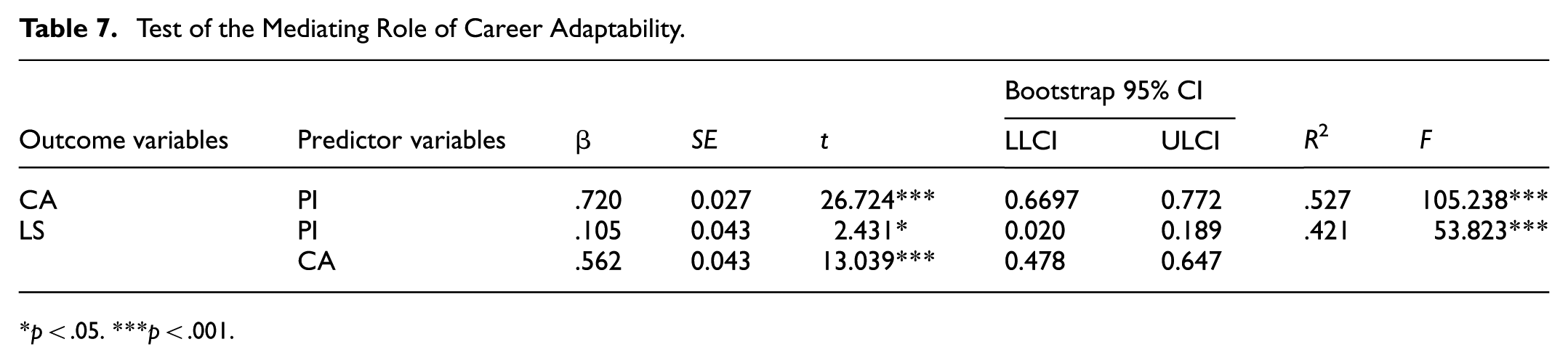
p < .05. ***p < .001.
Path coefficients.
A mediation analysis was conducted using the PROCESS macro (Model 4). Table 8 indicated that analysis revealed a significant total effect of professional identity on life satisfaction (total effect = 0.510). This total effect comprised a direct effect of 0.105 and an indirect effect of 0.405 via career adaptability. Accounting for 79.41% of the total effect, the significant indirect effect supported H2 and identified career adaptability as a partial mediator.
Mediation Analysis.

Moderation Analysis
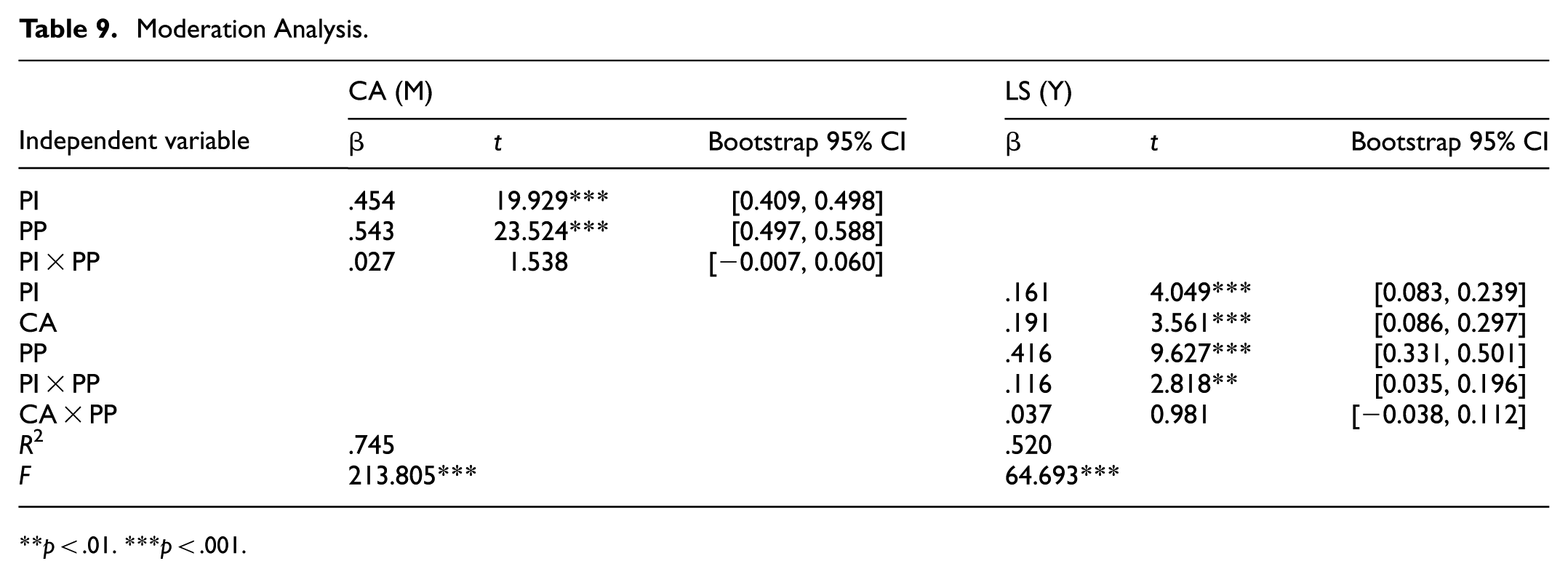
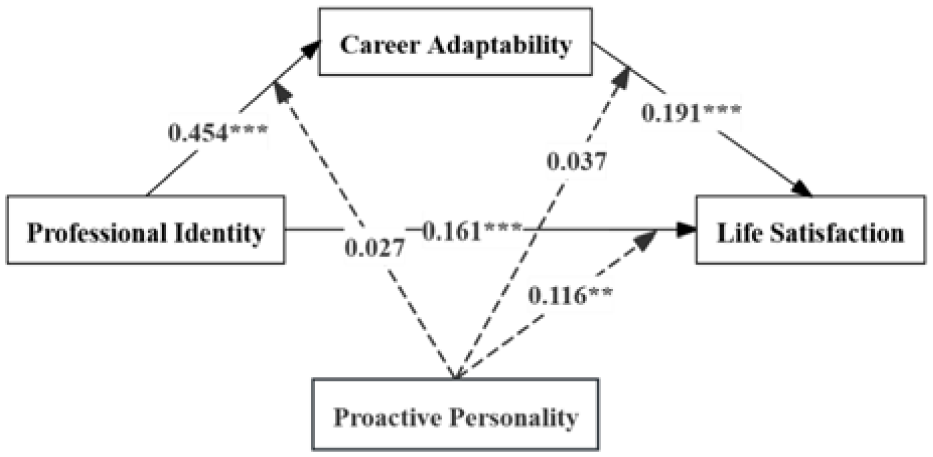
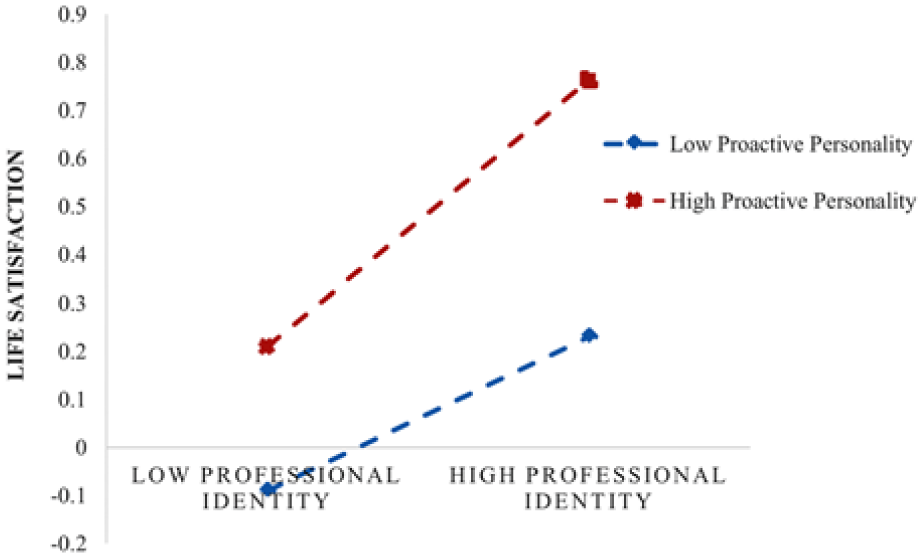
Proactive personality was tested as a moderator of both the direct and indirect pathways. Participants were divided into two subgroups based on standardized proactive personality scores: low proactive personality (M−1 SD) and high proactive personality (M+1 SD). As summarized in Table 9 and Figure 3, proactive personality moderates the association between professional identity and life satisfaction. Simple slope analysis (Figure 4) further revealed a nonsignificant association between professional identity and life satisfaction in the low proactive personality group, suggesting that professional identity variations did not lead to meaningful changes in life satisfaction among these individuals. By contrast, in the high proactive personality group, the relationship was significantly stronger, indicating that higher professional identity was associated with greater life satisfaction. To identify the specific range of the moderating effect, the Johnson–Neyman technique was applied. Results showed that the association between professional identity and life satisfaction became statistically significant when the standardized proactive personality score exceeded −6.205 but remained nonsignificant below this threshold. Based on the sample distribution, approximately 70.81% of participants fell within the significant region, implying that for most pre-service English teachers, proactive personality enhanced the positive association between professional identity and life satisfaction. Notably, only individuals with relatively high proactive personality showed clear increases in life satisfaction as professional identity rose, whereas those with lower proactive personality exhibited weak or nonsignificant associations. However, bootstrapping analyses did not support proactive personality as a significant moderator between professional identity and career adaptability, nor that between career adaptability and life satisfaction.
Moderation Analysis.
p < .01. ***p < .001.
Results of the moderation analysis.
Simple slope plot.
Discussion
The present study revealed a positive association between professional identity and life satisfaction among pre-service English teachers, thereby supporting H1. Viewed through the lens of CCT, individuals with a strong professional identity often integrate language acquisition with authentic teaching scenarios (Savickas, 2005). When pre-service teachers perceive their academic growth as aligned with future professional requirements, they tend to derive a sense of accomplishment from daily learning activities, thereby enhancing life satisfaction (Jue & Ha, 2018). Moreover, these tangible professional achievements, such as successful classroom performance or certification, strengthen their sense of control over career development, which in turn fosters higher life satisfaction (Derakhshan et al., 2020). Therefore, teacher education programs should intentionally integrate identity-oriented learning activities, such as reflective teaching tasks and authentic classroom experiences, to facilitate pre-service English teachers align their academic learning with future professional roles.
Career adaptability serves as a partial mediator between professional identity and life satisfaction, which supports H2. Professional identity systematically facilitates the development of career adaptability (S. Yang, 2024). Cognitively, it encourages a deeper engagement with pedagogical theories and curriculum standards (Y. Chen et al., 2025). Behaviorally, it motivates participation in teaching competitions, preparation for professional certifications, and the pursuit of English proficiency qualifications (Peng & Zhang, 2024). Moreover, enhanced career adaptability contributes to higher life satisfaction. Individuals with stronger career adaptability tend to cope more effectively with internship and employment uncertainties, maintain positive emotions, and develop a greater control, thereby improving their overall life satisfaction (Ouyang et al., 2025). Accordingly, teacher education programs should strengthen training in career adaptability by providing structured opportunities for teaching practice, problem-based learning, and guided reflection to support pre-service English teachers’ life satisfaction.
The results indicate that proactive personality moderates the association between professional identity and life satisfaction among pre-service English teachers. Within the framework of CCT, highly proactive pre-service English teachers tend to convert their professional identity into goal-directed actions (Savickas, 2013), such as intentionally linking learning tasks to prospective teaching contexts and engaging in observation, reflection, and continuous improvement during teaching practicum. These forms of proactive construction behavior, grounded in authentic professional experiences, foster sustained feelings of accomplishment and strengthen the positive association between professional identity and life satisfaction (Sheng & Zhou, 2022). By contrast, students with lower levels of proactivity tend to experience a disconnect between professional cognition and behavioral implementation, which may hinder the development of teaching competence and be associated with lower life satisfaction (Fu et al., 2024). Accordingly, teacher education programs may benefit from creating learning environments that encourage initiative-taking and reflective practice, enabling pre-service English teachers to more effectively translate professional identity into life satisfaction.
Proactive personality, had no moderating effect on the relationships between professional identity and career adaptability, or between career adaptability and life satisfaction. Pre-service teacher education in China is characterized by a high degree of structure and standardization (H. Song & Xu, 2019). Coursework, microteaching training, teaching practicum, and preparation for teacher certification examinations collectively constitute relatively uniform training requirements, leading individuals to follow similar adaptation processes in the development of career adaptability (Tan et al., 2025). Within such a “strong situation,” institutionalized tasks and external demands tend to constrain the influence of individual dispositional differences, thereby reducing the moderating potential of proactive personality along the mediating pathway. Moreover, proactive personality tend to operate at the level of meaning-making and agency, facilitating the translation of professional identity into more positive self-evaluations and life experiences that are directly associated with life satisfaction (Martela, 2024). By contrast, career adaptability reflects longer-term competence accumulation and systematic capability development, which primarily depends on sustained training and practical engagement; as a result, its mediating role remains relatively stable across different levels of proactivity.
From a theoretical perspective, this study validates the applicability of CCT in the context of pre-service English teachers by developing and testing a moderated mediation model grounded in the theory. Specifically, professional identity was conceptualized as a developing vocational self-concept, career adaptability as a key adaptability resource, proactive personality as adaptivity, and life satisfaction as an adaptation outcome. The results indicate that professional identity is associated with life satisfaction both indirectly through career adaptability and more strongly through a direct pathway among individuals with higher proactive personality. These results are consistent with CCT (Savickas, 2005) proposed sequence linking self-concept, adaptability resources, and adaptation outcomes, demonstrating that the theory effectively explains psychological processes and well-being outcomes during the early stage of teacher career development, and extending its application to teacher education and life satisfaction.
Implications
Theoretical Implications
Firstly, the present research identifies a positive association between professional identity and life satisfaction among pre-service English teachers. Within the framework of CCT, this result supports the psychological linkage between career personality and life satisfaction. It moves beyond the traditional view that position’s professional identity merely as a career development indicator, empirically extending its relevance to the broader domain of well-being. This finding offers a new theoretical bridge for understanding how career-related psychology relates to overall happiness.
Moreover, career adaptability was found to serve as a partial mediator between professional identity and life satisfaction. This mediating mechanism clarifies the pathway through which professional identity translates into adaptive behaviors that, in turn, contribute to life satisfaction. The result enriches understanding of how psychological resources are transformed into subjective well-being during pre-service teachers’ career development.
Finally, proactive personality moderates only the direct pathway from professional identity to life satisfaction, with no significant moderating effect on the indirect pathway through career adaptability. This pattern underscores the differentiated influence of personality traits in career-related psychological processes. Individuals with high proactive personality are more capable of deriving satisfaction directly from their sense of professional identity, while personal differences exert limited influence on adaptability processes requiring systematic competence building. These findings give more detailed empirical support for the CCT viewpoint on the interplay of personality and environmental variables.
Practical Implications
First, a key finding centers on the connection between stronger professional identity and enhanced life satisfaction in this population. For students with high professional identity, organizing peer-sharing sessions about internship experiences may foster positive peer influence. For those with lower identity, structured observation in exemplary classrooms and reflective teaching reports can help reconstruct their perceptions of professional identity within authentic teaching contexts.
Second, given the mediating role of career adaptability, cultivating this capability should be emphasized in teacher education programs. It is advisable to integrate an instructional adaptability evaluation into teaching internships, requiring students to submit genuine classroom adaptation cases accompanied by reflective analyses. Supervising teachers can then assess these reports across dimensions such as lesson modification, classroom management strategies, and depth of professional reflection, with the outcomes contributing to the overall internship evaluation.
Finally, the finding that proactive personality moderates only the direct relationship between professional identity and life satisfaction suggests the need for differentiated training strategies. Teacher education institutions could make career adaptability development a compulsory component, ensuring basic competencies through standardized adaptability assessments. Meanwhile, students exhibiting high proactive personality can be encouraged to participate in independent teaching research or cross-school observation projects, allowing them to more fully realize the potential value of their professional identity.
Limitations and Future Research Directions
Despite providing valuable empirical evidence on the relationship between professional identity and life satisfaction, this study has several limitations. First, with regard to sample scope and sampling strategy, the participants were limited to pre-service English teachers. In addition, the use of convenience sampling and voluntary participation may have introduced selection and self-selection biases. Future studies could broaden the target population to encompass pre-service teachers from other subject areas as well as in-service teachers, and employ stratified or probability-based sampling strategies across institutions of different types and regions to enhance sample representativeness and test the proposed model’s robustness and generalizability through cross-group comparisons. Second, this study used a cross-sectional design, with data gathered at a single time point, limiting the capacity to demonstrate temporal precedence and causal links between variables. Although the hypothesized model paths were supported, alternative explanations, such as reverse causality or unmeasured confounding factors, cannot be ruled out. Therefore, the data should be considered more as correlational than causative. Future studies are encouraged to employ longitudinal designs or experimental and intervention-based approaches to more rigorously test the causal mechanisms and dynamic relationships among the variables. Third, the use of self-report questionnaire data may have contributed social desirability bias, response tendencies, and common method variance, which could, to some extent, affect the accuracy and robustness of the estimated relationships. Future study should incorporate multi-source and multi-method data, including third-party assessments, behavioral indicators, or objective records, to reduce biases and improve the reliability and ecological validity of the findings.
Conclusion
This study examined a moderated mediation model, grounded in CCT, to elucidate the relationship between professional identity and life satisfaction among pre-service English teachers. Data collected from 668 pre-service English teachers provided empirical evidence for this model by testing the mediating role of career adaptability and the moderating role of proactive personality. Findings revealed a direct positive relationship between professional identity and life satisfaction, which was partially accounted for by career adaptability. Proactive personality moderated the direct association between professional identity and life satisfaction, but not the indirect pathway through career adaptability. These results, interpreted from the perspective of CCT, contribute to understanding how life satisfaction develops among pre-service English teachers and offer empirical support for extending this theory within teacher education. However, the reliance on small English-major pre-service teachers and the exclusive use of self-report data may limit generalizability. Future research could include participants from multiple subject areas and employ objective or longitudinal methods to further examine the robustness and causal structure of the proposed model.
Footnotes

Ethical Considerations
The researchers confirms that all research was performed in accordance with relevant guidelines/regulations applicable when human participants are involved (e.g., Declaration of Helsinki or similar). This study was approved by the Ethics Committee of Jingchu University of Technology (Approval No. JUT-Ac-0016).
Consent to Participate
The participants received oral and written information and provided written informed consent before participating in the study.
Author Contributions
Conceptualization: Yinpin Huang; Methodology: Qi Tian; Formal analysis and investigation: Qi Tian; Writing–original draft preparation: Yinpin Huang Writing–review and editing: Qi Tian; Supervision: Yinpin Huang. All the authors have read and agreed to the published version of the manuscript.
Funding
The authors disclosed receipt of the following financial support for the research, authorship, and/or publication of this article: This work was supported by the National College Foreign Language Teaching and Research Project of 2025 Shanghai Foreign Language Education Press (202515078HB). The Special Task Project of Philosophy and Social Science Research Program of Hubei Provincial Department of Education (Employment and Entrepreneurship of College Graduates; No. 24Z266).
Declaration of Conflicting Interests
The authors declared no potential conflicts of interest with respect to the research, authorship, and/or publication of this article.
Data Availability Statement
The data that support the findings of this study are available on request from the corresponding author.*