






Abstract
This study examines Vietnam’s representation and engagement in global renewable energy research through a bibliometric lens, with a focus on collaborative frameworks, publication dynamics, and thematic orientations. Using a dataset of 491 publications retrieved from the Web of Science Core Collection, bibliometric techniques were employed to analyze research output, co-authorship patterns, keyword relationships, and bibliographic linkages. Visualization via VOSviewer indicated key trends and knowledge clusters. Since 2011, Vietnam has received growing attention in regard to renewable energy research, primarily through its inclusion in regional and comparative studies. The literature primarily focuses on economic development, environmental sustainability, and energy consumption, with solar energy technology constituting the most frequently examined topic. However, scholars have paid limited attention to wind and hydropower technologies. The involvement of research organizations remains concentrated among a small group of domestic and international studies; meanwhile, detailed research insights into how collaboration, knowledge transfer, and technological spillovers operate in Vietnam are lacking. This study offers a new bibliometric perspective on Vietnam’s role in global renewable energy research. The results offer valuable guidance to researchers and policymakers seeking to enhance Vietnam’s research visibility, improve its capabilities, and increase its involvement in sharing energy information.
Plain Language Summary
Vietnam has strong potential for renewable energy, particularly solar, wind, and hydropower. Over the past decade, research in this field has grown quickly, but until now there has been no comprehensive overview of how this work has developed. This study uses bibliometric analysis, a method that reviews and visualizes large groups of publications, to examine 491 research papers on renewable energy in Vietnam. The analysis looks at publication trends, research themes, institutional participation, and international collaboration. The results show that studies have increased sharply since 2014, with most focusing on solar energy and environmental issues. Research on wind, biomass, and hydrogen energy remains limited. International collaboration is a major strength, with foreign scholars often partnering with leading Vietnamese institutions, which has improved research quality and global visibility. This study highlights both achievements and gaps in Vietnam’s renewable energy research. It suggests that future work should connect technology, policy, and economics more closely, expand into underrepresented energy sources, and diversify publication formats to improve knowledge sharing. Strengthening these areas will help Vietnam’s research community support the national energy transition and contribute to global sustainability goals.
Keywords
Introduction
Renewable energy, involving sources of energy (e.g., solar, hydropower, biomass, and wind, among others) that can be replenished on a human timescale, is a key component of global sustainability. It offers an alternative to fossil fuels and mitigates greenhouse gas emissions, thereby reducing the escalating impacts of global climate change and contributing to the achievement of the United Nations’ 17 Sustainable Development Goals (Pörtner et al., 2022; UNIDO, 2023; Yousef et al., 2024). Beyond its environmental advantages, renewable energy plays a crucial role in ensuring energy security by diversifying supply sources and reducing reliance on imported fuels (Behera et al., 2024). Furthermore, as an outcome of the transition process, renewable energy could support the creation of green jobs, developing local off-grid energy sources in remote or decentralized areas and communities (IRENA & ILO, 2024). In terms of its important roles, renewable energy is not only considered a green solution for the global environment but is also recognized as a tool to improve the well-being of the national economy (Qureshi et al., 2024; Yang et al., 2024).
With abundant solar and wind resources, Vietnam is well positioned to expand its use of renewable energy. However, national energy resources that are renewable are still limited compared to their potential. To address this issue, the Vietnamese government has introduced a series of policies, including Resolution No. 55 NQ/TW (from 2020) and the Power Development Plan VIII (adopted in 2023), designed to strengthen the role of renewable energy and reduce fossil fuel dependence. Such approaches align with the energy transition trend across Asia, addressing the goals of security, equity, and sustainability (Yang et al., 2024).
While government actions provide a fundamental basis for the effectiveness and success of the green energy transition, benefiting both the environment and the economy, recent studies have also shown that good governance and global engagement practices are crucial in enhancing the nation’s renewable energy development processes. From the perspective of governance, research has suggested that transparency, regulatory stability, and citizen participation promote the implementation of clean energy policies across South and Southeast Asia (Shekhawat et al., 2025). In parallel, with regard to innovation, the fact that countries with well-established renewable energy sectors benefit more from energy innovation than those at the earlier stages of adoption leads to less-developed markets (Moghadam & Karami, 2024). In particular, Vietnam needs to build foundational innovation ecosystems to fully benefit from innovation-driven growth.
From a financial standpoint, studies have noted that developing countries lacking stable investment mechanisms continue to encounter barriers to developing renewable energy, especially in high-risk areas such as green hydrogen (Haque et al., 2024; Zubairu et al., 2025). From an economic development perspective, renewable energy investment has demonstrated positive effects on GDP growth and macroeconomic stability in emerging economies, particularly where institutional quality is high and environmental policies are predictable (Tabash et al., 2023). More importantly, globalization could facilitate the spread of renewable technology through trade, investment, and technology transfer; further, to benefit from this process, local institutions must show a strong ability to adopt new knowledge (Hussein & Abdullahi, 2024). To ensure a successful green energy transition, effective cooperation between organizations, strong knowledge networks, and a supportive innovation ecosystem are essential (Haque et al., 2024; Lema et al., 2018).
Despite these opportunities, Vietnam’s research landscape in renewable energy remains fragmented and unevenly developed. Existing studies have tended to focus on specific technologies or high-level policy analyses, with limited integration across technical, economic, and governance perspectives. There is little clarity on the interactions of research communities, the circulation of knowledge between domestic and international partners, and the contribution of institutions to capability building. As Vietnam moves forward with major commitments such as Resolution No. 55, Power Development Plan VIII, and Net-Zero 2050, a systematic analysis of research trends, collaboration structures, and knowledge flows is urgently needed. A bibliometric approach enables this by revealing long-term patterns in publication activity, thematic development, and institutional linkages that are not visible in traditional literature reviews.
Notwithstanding the abovementioned drivers, along with the Vietnamese government’s strong commitment to renewable energy development, academic studies on the renewable energy transition in Vietnam remain underdeveloped, scattered, and limited in scope. Existing research has tended to focus narrowly on solar energy or high-level policy instruments while neglecting issues such as wind and biomass development, institutional collaboration, and knowledge exchange mechanisms. Therefore, a systematic literature review to elucidate how Vietnamese institutions participate in international research collaborations, how and what types of knowledge are transferred, and how organizational factors shape the country’s renewable energy research and application capacity can potentially contribute to accelerating renewable energy adoption and the green transition in Vietnam. Given that bibliometric analysis serves as an effective tool for identifying underexplored areas, tracing intellectual structures, and guiding policy and investment decisions within a sector (Nagdev et al., 2025; Weerakoon et al., 2025), it proves suitable for addressing this research objective. By examining publication trends, thematic structures, institutional affiliations, authorship networks, and thematic clusters and highlighting patterns of collaboration and the role of organizational constructs such as capability building and knowledge governance, the results of this study can not only be interpreted as academic indicators but also representations of absorptive capacity, strategic positioning, and cross-institutional engagement (Ruggeri et al., 2019).
This study is motivated by the urgent need to bridge the gap between Vietnam’s ambitious climate commitments (Net Zero 2050), ESG, the Sustainable Development Goals, and the currently unidentified and fragmented research landscape in renewable energy. Understanding the structural disconnects in scientific knowledge is crucial for policymakers to direct R&D investments effectively, progressing beyond mere capacity expansion to foster deep technological capabilities.
To address the research objective, this study focuses on the following two main research questions:
By answering these questions, this study aims to contribute to a more comprehensive understanding of Vietnam’s position within the global renewable energy literature. It is also expected to offer suggestions for enhancing research capacity, improving interorganizational cooperation in the field of renewable energy, and contributing to climate change prevention and sustainable development.
Literature Review
Renewable energy, as defined by the United Nations, is a source of energy that can be fully replenished on a human timescale after consumption. It can be categorized into several major sources, including solar, wind, geothermal, hydropower, ocean, and bioenergy (United Nations, 2022). This type of energy has the potential to contribute to the United Nations’ Sustainable Development Goals (SDGs), both directly—through Affordable and Clean Energy (SDG7), Decent Work and Economic Growth (SDG8), Sustainable Cities and Communities (SDG11), and Responsible Consumption and Production (SDG12)—and indirectly, by achieving No Poverty (SDG1) and Good Health and Wellbeing (SDG3) for humankind (Yousef et al., 2024). According to UNIDO (2023), the transition toward renewable energy systems in underdeveloped and developing countries could address multidimensional development challenges, including poverty, energy access, and climate vulnerability. Similarly, Behera et al. (2024) have argued that renewable energy not only reduces emissions but also strengthens the economic foundations of energy systems, especially where technological innovation and institutional coordination converge.
In Vietnam, hydropower has long been the central contributor to national energy security. More recently, solar and wind projects have been deployed to expand green power supply, particularly in off-grid areas (K. Q. Nguyen, 2007; Yousef et al., 2024). Hybrid systems combining renewables with storage and conventional sources have been used to reduce costs in remote regions. (Arriaga et al., 2013; V. G. Nguyen et al., 2024). Hydrogen energy, meanwhile, is attracting attention as a complementary solution to traditional renewable energy sources, especially in sectors in which decarbonization is challenging. Regional forecasting has also indicated a sharp rise in hydrogen-related innovation and investment across Asia, suggesting a strong potential for future deployment (Zheng et al., 2023). Although the majority of hydrogen energy is currently produced through carbon-intensive processes, solar-driven energy sources are starting to offer an efficient alternative in terms of increasing the long-term viability of green hydrogen (Qureshi et al., 2024).
Developing an effective renewable energy strategy in Vietnam cannot be accomplished through government policy alone, particularly given the close connection between economic growth initiatives and environmental pressures (Androniceanu et al., 2024; Tran, 2022). Recent studies have shown that green innovation outcomes depend on both internal capabilities and external partnerships, particularly in developing contexts where firms face resource and knowledge constraints (Haque et al., 2024). Interorganizational collaboration, supported by clear incentives and aligned goals, promotes knowledge sharing and reduces innovation-related risks (Nagdev et al., 2025). Moreover, linkages across firms of different sizes play a critical role, as they enable experiential learning and strengthen the absorptive capacity of smaller companies, thereby enhancing the broader renewable energy ecosystem (Lema et al., 2018).
To address the research objectives, this study applies bibliometric analysis to trace the evolution of renewable energy research involving Vietnam, placing emphasis on thematic developments, institutional collaborations, and the dynamics of linkages and technology spillovers. Bibliometric methods provide a systematic and transparent approach to mapping research fields, allowing scholars to uncover knowledge trends, conceptual structures, and collaboration patterns across large bodies of literature (Zupic & Čater, 2015). Despite the wide application of bibliometric approaches in renewable energy studies, no comparable effort has focused specifically on Vietnam. Filling this gap, the present analysis offers both a structural overview of the existing scholarship and relevant insights that can inform future academic work and policy development in the Vietnamese renewable energy sector.
Methodology
The search strategy was developed to capture research concerning general renewable energy topics involving Vietnam. It involved combining terms such as “renewable energy,”“solar energy,”“wind energy,”“biomass energy,” and “green energy” with the keyword “Vietnam.” Following the field-filtering approach used in previous bibliometric studies in the energy field (Androniceanu et al., 2024; Liu, 2024), database-specific search strings were developed for Scopus and Web of Science (WoS). The initial search strategy was limited to article titles, which yielded a small number of records. Therefore, the final search applied these terms to broader topic-related fields to ensure wider coverage of relevant publications. The Scopus comparison search was conducted on November 18, 2025, and the final WoS Core Collection retrieval was conducted on November 19, 2025. In both databases, records were limited to English-language documents and comparable document types, including journal articles, proceedings papers, early-access items, reviews, and book chapters, which are commonly used publication types in bibliometric database retrieval (Vera-Baceta et al., 2019). Retracted papers and corrections were excluded from both database searches to maintain dataset reliability. The complete database-specific search strings were as follows:
Scopus:
TITLE-ABS-KEY((“renewable energy” OR “solar energy” OR “biomass energy” OR green energy” OR “wind energy”) AND “Vietnam”)
Web of Science Core Collection:
TS = ((“renewable energy” OR “solar energy” OR “biomass energy” OR “green energy” OR “wind energy”) AND “Vietnam”)
Ideally, bibliometric research should retrieve data from widely recognized and reputable databases, such as Scopus, WoS, and Dimensions, given their comprehensive coverage of peer-reviewed scientific publications (Donthu et al., 2021; Tahir, 2024). Although studies on renewable energy in Vietnam are available in domestic journals in both Vietnamese and English, fragmented indexing and variable peer-review standards limit the suitability of Vietnamese source for systematic bibliometric analysis.
Combining data from multiple databases, such as Scopus and WoS, can improve representativeness and robustness (Lim et al., 2024), but it also introduces challenges, including metadata inconsistency, citation misalignment, and undetected duplicate records, which can distort co-authorship and bibliographic coupling structures. To assess whether multiple sources were necessary, the authors applied the database-specific search strings and comparable language, document-type, and exclusion filters described above to both Scopus and WoS. The Scopus comparison search yielded 739 documents, while the final WoS retrieval yielded 491 documents. After duplicate removal, the merged dataset contained 831 documents. Although all datasets exceeded the minimum sample size of 264 documents required to detect a 5-point difference in citation impact (μa = 45) with sufficient statistical power (π = .08, Δ = .05), the combined dataset still fell below the 1,049 documents needed to detect a smaller 2.5-point difference (μa = 47.5), implying that merging would offer only marginal gains in statistical precision (Williams & Bornmann, 2016). Moreover, the effort required for data cleaning and synchronization would substantially increase analytical complexity and the risk of bias. Thus, this study proceeded with a single reliable database source. The WoS Core Collection was selected because it provides historical depth, consistent metadata structures, and high-prestige publication indexing suitable for advanced bibliometric analyses (Martín-Martín et al., 2018; Pranckutė, 2021). At the same time, the authors acknowledge that exclusive reliance on WoS introduces potential coverage bias, as Vietnamese-language journals, regionally focused engineering studies, policy reports, and domestic conference proceedings are not indexed in WoS. Therefore, the findings should be interpreted as capturing Vietnam’s internationally visible renewable energy research landscape rather than the full corpus of national scholarship.
Bibliometric analysis was conducted using VOSviewer, a specialized software designed to construct and visualize bibliometric networks. The methodological framework combined two complementary approaches: performance analysis and science mapping. Performance analysis was used to track annual publication trends and identify the most active authors, institutions, and journals contributing to renewable energy research in Vietnam. This provided a descriptive overview of the field’s growth and scope over time.
To enhance methodological transparency and replicability, additional details on VOSviewer parameters were included. An initial keyword occurrence threshold of five was tested based on recommendations for datasets of a similar size (Donthu et al., 2021; van Eck & Waltman, 2009), though this produced a dense and visually overlapping network. Increasing the threshold to six reduced noise and improved cluster separation, consistent with guidance from Zupic and Čater (2015). Similarly, regarding bibliographic coupling, a minimum citation threshold of 15 was selected after lower thresholds generated fragmented clusters, while higher thresholds excluded substantial portions of the relevant literature. Sensitivity checks confirmed that the overall three-cluster structure remained stable across threshold adjustments, indicating robustness. All VOSviewer maps used the LinLog/modularity layout and association strength normalization, which are preferred for reducing node repulsion and enhancing interpretability in science mapping studies.
Moving beyond descriptive patterns, the study employed science mapping techniques to uncover the conceptual and intellectual foundations of the literature. Co-word analysis was applied to assess the co-occurrence of author keywords, enabling the identification of recurring themes and research clusters. Citation and co-citation analyses were then employed to identify the most influential studies, highlighting the intellectual anchors that shape the discourse on renewable energy in Vietnam. Frequently co-cited works revealed shared theoretical perspectives and methodological approaches, pointing to sources of scholarly convergence. In addition, bibliographic coupling was performed to evaluate the similarity of reference lists across publications, shedding light on the coherence of emerging or established areas of inquiry.
Taken together, these methods provided a holistic view of the research landscape. By integrating descriptive indicators with structural mapping, the analysis captured both the productivity dynamics of the field and its conceptual organization. This dual approach offers a comprehensive understanding of the evolution of renewable energy research in Vietnam, the collaboration networks that sustain it, and the intellectual trajectories that may guide its future development (Amirbagheri et al., 2025; Dominković et al., 2022; Zupic & Čater, 2015).
To assess institutional collaboration, co-authorship analysis was conducted to map networks among authors and organizations based on joint publications. This method serves as a reliable proxy for identifying patterns of research cooperation and potential pathways of knowledge diffusion, particularly in the absence of direct qualitative evidence on institutional partnerships (Weerakoon et al., 2025).
In addition to analyzing the general research landscape, a secondary within-dataset screening step was conducted to identify publications that specifically address linkages or technology transfer in the context of renewable energy in Vietnam. This was achieved by screening the final WoS dataset using the keyword “linkage,” enabling the isolation of a focused subset of studies. These records were then analyzed alongside the main dataset to evaluate their thematic orientation, level of institutional engagement, and relative visibility within the broader renewable energy literature.
In this study, “linkages” refer to the channels through which knowledge, technical expertise, and organizational capabilities are exchanged among institutions involved in renewable energy research. Prior work has conceptualized such linkages as collaborative and interactive learning processes connecting firms, universities, government agencies, and international partners within innovation and energy systems (Lema et al., 2018). These connections may occur through co-authorship, shared research projects, institutional networks, or citation-based knowledge flows, each representing potential pathways of knowledge diffusion and capability formation (Ruggeri et al., 2019; Weerakoon et al., 2025). Technology spillovers arise when these interactions enable one organization to benefit from the accumulated expertise or innovations of another, often facilitated through interorganizational cooperation and shared problem-solving (Haque et al., 2024). Within this bibliometric framework, linkages and spillovers are, therefore, interpreted as structural indicators of how knowledge exchange and learning take place across Vietnam’s renewable energy research ecosystem.
The methodological design reflects practices established in high-quality bibliometric research. Over the past decades, bibliometric approaches have been widely used to investigate renewable energy, employing techniques such as co-word analysis and citation mapping to trace thematic developments and identify influential contributions (Amirbagheri et al., 2025; Dominković et al., 2022). Studies have also applied bibliographic coupling and co-citation analysis to uncover intellectual linkages and research clusters in fields such as energy systems modeling. More recently, bibliometric analysis has been integrated with complementary methods, such as systematic reviews, to enhance thematic and methodological depth. For instance, Weerakoon et al. (2025) combined bibliometric mapping with systematic review techniques to explore trends in multi-criteria decision-making concerning the topics of sustainability and the environment.
By adopting and adapting these established techniques, this study provides a rigorous overview of renewable energy research in Vietnam. The combination of co-authorship mapping, targeted linkage analysis, and established bibliometric tools provides a structural map of the field and evidence-based insights into how collaboration, institutional linkages, and technology transfer are represented in academic discourse.
The keyword strategy used to construct the final WoS dataset is summarized in Figure 1. The figure illustrates the search applied to the topic field of the WoS Core Collection, with the language, document-type, and exclusion filters described above.

Keyword searching strategy for research question 1.
After data mining and refinement, the final records were exported in plain text format and processed in VOSviewer, a specialized tool for bibliometric visualization and analysis. The study combined performance analysis with science mapping to comprehensively assess renewable energy research involving Vietnam. Emphasis was placed on institutional and technological linkages, given their central role in facilitating knowledge exchange and building capacity for the energy transition.
To capture these dynamics more explicitly, a secondary within-dataset screening step was conducted using the keyword “linkage.” This refinement identified a focused subset of publications within the final WoS dataset that directly address renewable energy linkages in the Vietnamese context. These records were analyzed in parallel with the broader dataset to evaluate their thematic specificity, the extent of institutional engagement, and their relative visibility within the global renewable energy literature.
Results: Renewable Energy Research in Vietnam
Annual Publications and Publication Types
After applying the keyword strategy described in Section “Methodology,” a total of 491 documents with full references were retrieved from the WoS Core Collection. An initial review using the WoS analysis tool revealed that publications on renewable energy in Vietnam are diverse in both type and year, reflecting the steady expansion of research activity in this field.
Despite the first publication on renewable energy in Vietnam in 1993, output remained sparse for nearly two decades, with fewer than 10 documents appearing annually and very limited citation activity. Research during this early period primarily addressed hydropower and energy access, reflecting Vietnam’s development priorities at the time.
A period-by-period assessment reveals a clearer picture of the evolution of renewable energy research alongside major national energy policies. During the 1993–2010 period, research was limited and dominated by hydropower and electrification themes. Between 2011 and 2016, publication activity showed a moderate increase following the introduction of early renewable energy incentives, grid modernization programs, and the Environmental Protection Law (2014). The sharpest growth occurred between 2017 and 2020, coinciding with the solar Feed-in Tariff (Decision 11/2017/QD-TTg), which triggered widespread investment in solar PV and a corresponding rise in academic studies on performance optimization and grid integration. From 2020 onward, research efforts were diversified toward biomass- and hydrogen-related studies and energy system modeling, reflecting the strategic orientation introduced by Resolution No. 55 (2020). More recently, growth after 2023 aligns with the priorities articulated in Power Development Plan VIII, which emphasizes large-scale renewable deployment and grid modernization.
These periodized developments are consistent with the quantitative trends shown in Figure 2. From 2014 onward, the volume of publications increased steadily, with a rapid surge after 2017. The number of annual publications rose from around 10 in 2017 to more than 80 in 2024, while the total citations increased from fewer than 150 to over 1,600. Citation peaks in 2014 and 2018 mark significant turning points corresponding to influential methodological and policy-oriented contributions.
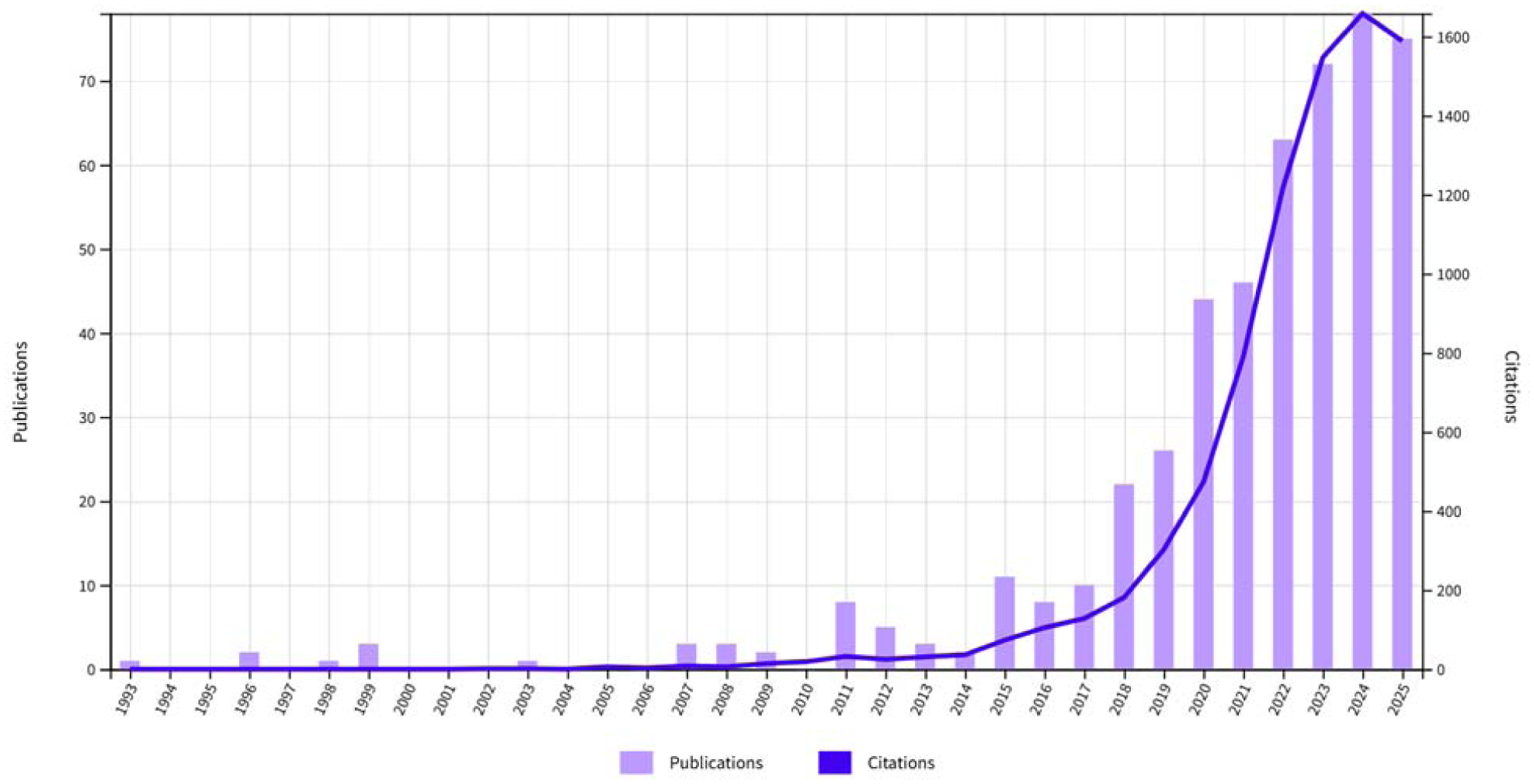
Frequency of publications and overall citations by year.
These increased concerns correspond to Vietnam’s major national initiatives and policies, namely, Power Plan VII (2011), Power Plan VII Revised (2016), Vietnam’s environmental protection law (first introduced in 2014), and feed-in tariffs on solar and wind energy from 2011 to 2020. Internationally, this upward research trend was accompanied by the global momentum for energy transitioning and the rapid expansion of renewable energy activities across Asia in that period (Aleluia et al., 2022). In the context of sustainable development, the Vietnam Sustainable Development Strategy for the 2011 to 2020 period (2012), Vietnam National Green Strategy (2012), and Vietnam National Action Plan for the implementation of the 2030 Agenda for Sustainable Development might constitute the key drivers behind research concerns on renewable energy topics in Vietnam.
To statistically validate the observed growth trends, a segmented regression analysis was performed for structural breaks at key policy milestones (2011, 2015, and 2017). As shown in Table 1, all tested break points yield highly statistically significant results (p < .001), confirming that the growth in renewable energy research is characterized by distinct phases of acceleration. Specifically, the structural break at 2017 shows the strongest acceleration (β = 9.57), aligning with Power Plan VII Revised.
Segmented Regression Analysis of Structural Breaks in Publication Trends.

Source. Created by the authors.
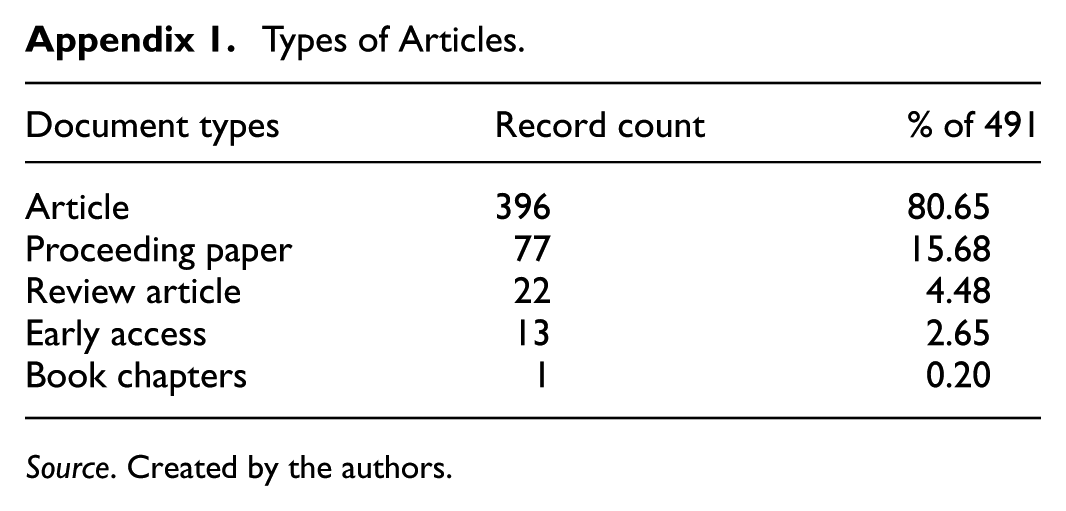
Regarding the publication types, journal articles dominate the dataset, accounting for 80.65% of records. Proceedings represent 15.68%, underscoring the important role of conference-based dissemination in shaping this research area. Review articles comprise 4.48%, indicating efforts to synthesize existing knowledge, while book chapters, though representing only 0.2%, contribute to transferring academic insights into more accessible formats (see Appendix 1).
Top Research Areas
An analysis of subject categories in the WoS, presented in Figure 3, reveals that research on renewable energy in Vietnam is concentrated in energy and fuels (18.91%) and environmental sciences ecology (18.79%). This pattern reflects a strong focus on environmental sustainability and the role of energy development in addressing climate and ecological challenges. Two additional categories, science and technology, other topics (15.78%), and engineering (14.50%), also account for a large share of publications. Their prominence underscores the central role of applied science, technology, and engineering in shaping Vietnam’s renewable energy research agenda. The field of business and economics corresponds to 6.61% of total counts, highlighting a growing interest in the financial, regulatory, and policy-related aspects of renewable energy. This emphasis signals the recognition of the importance of economic instruments, business models, and linkage activities in facilitating Vietnam’s energy transition. Other areas, though representing smaller shares, add to the diversity of the research landscape. Computer science (2.55%), materials science (2.44%), chemistry (1.86%), thermodynamics (1.28%), and geology (1.04%) indicate the potential of complementary sciences to support renewable energy innovations.

Top 10 research areas for renewable energy publications in Vietnam.
Overall, the distribution of subject areas highlights the interdisciplinary character of renewable energy research in Vietnam. It demonstrates a convergence of ecological, technical, and economic perspectives, which is essential for advancing sustainable energy solutions and environmental development.
Top Cited Publications and Top Publication Titles
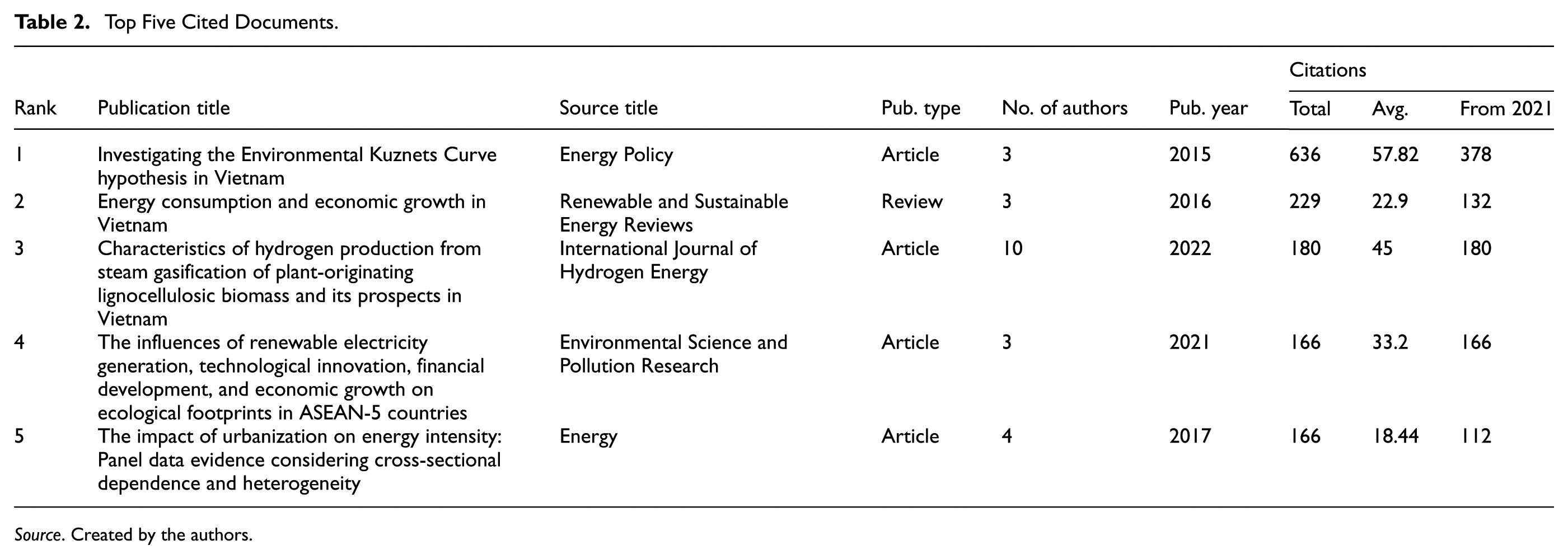
An analysis of the most cited publications on renewable energy in Vietnam provides insights into the intellectual foundations and thematic priorities of the field. The top five cited studies, presented in Table 2, encompass a spectrum of concerns on the macro level, ranging from environmental issues, energy security, and economic factors to more applied solutions for renewable energy deployment. This observation aligns with topics of interest revealed later in sections “Top research areas,”“Top affiliations and author linkages,” and “Research interest and emerging knowledge” of this research study. The concerns of these highly cited works extend beyond the Vietnamese context, encompassing issues not only in Vietnam but also in the ASEAN-5 countries. Such cross-country research not only underscores the potential for renewable energy development across broader geographic scales but also highlights the foundations for international collaboration and institutional linkages. Besides macro-scale concerns, generating hydrogen from biomass is the only specific topic that features among the top five cited papers. This research, published in 2022, is among the five most cited, underscoring the field’s notable importance and focused research interest. The publication years of these influential works span from 2016 to 2022, with the majority of citations occurring in the past 5 years (2021–2025). This pattern indicates both rising scholarly attention to renewable energy in Vietnam and the growing relevance of recent contributions, aligning with the renewable energy and environmental policies of the Vietnamese government mentioned earlier. Notably, the substantial growth in citations observed since 2021 coincides with Vietnam’s commitment to net-zero emissions. This suggests the increasing importance of scientific studies on renewable energy, supporting this long-term agenda.
Top Five Cited Documents.
Source. Created by the authors.
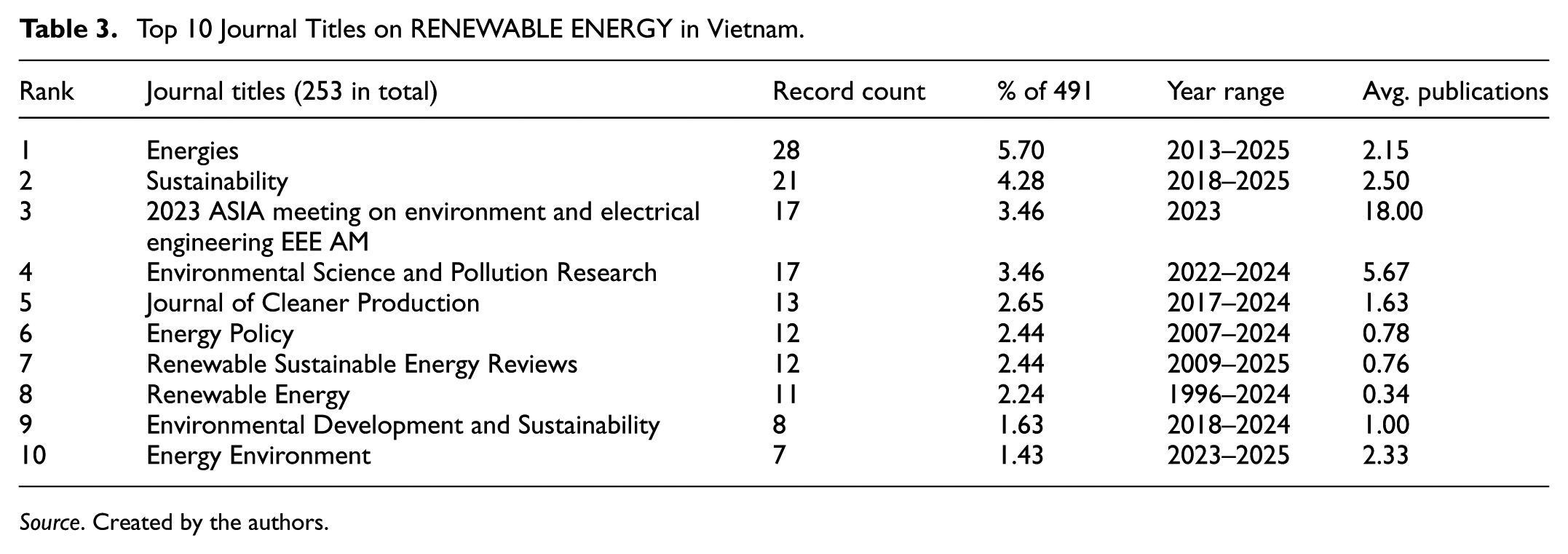
While the most frequently cited documents highlight thematic concerns in renewable energy research on Vietnam, the distribution of publication sources underscores the central role of reputable journals and conference proceedings in disseminating this work. Table 3 shows the relatively even spread of publications across a number of influential outlets. Energies (28 articles) and Sustainability (21 articles) are the most common venues, reflecting the prominence of open-access and interdisciplinary journals, which facilitate the broad visibility and accessibility of research. High-impact contributions are also published in leading journals, including Energy Policy, the Journal of Cleaner Production, and Renewable and Sustainable Energy Reviews. These outlets provide both depth and breadth to the discourse, enhancing the credibility and global reach of Vietnam-related studies. Notably, a significant number of papers were presented at the 2023 Asia Meeting on Environment and Electrical Engineering, highlighting the importance of conference proceedings as a channel for knowledge exchange. The volume of event-based output confirms the dynamic role of international collaborations and signals emerging research trends in the region.
Top 10 Journal Titles on RENEWABLE ENERGY in Vietnam.
Source. Created by the authors.
Taken together, the citation patterns and distribution of publication sources demonstrate the robust and multidisciplinary character of renewable energy research in Vietnam. They also point to the country’s growing integration into regional and global academic communities concerned with sustainability and energy transitions.
Top Affiliations and Author Linkages
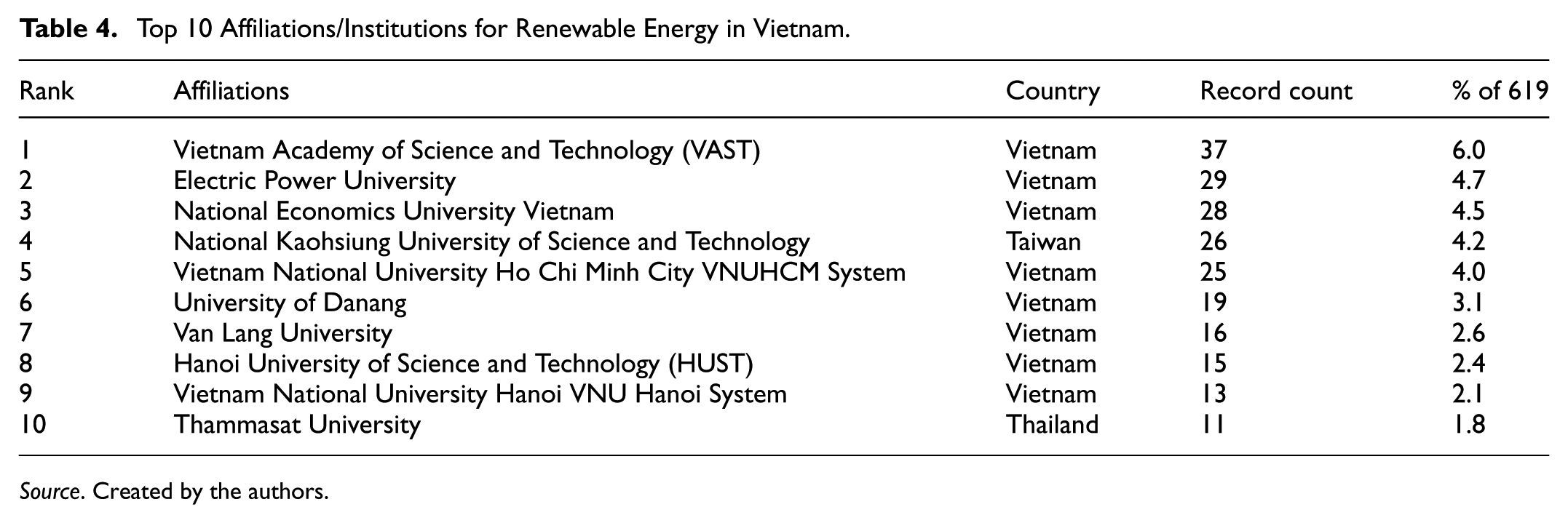
An examination of institutional contributions to renewable energy research in Vietnam reveals strong domestic engagement, alongside a growing presence of international collaboration. A total of 619 institutional affiliations were identified from the dataset of 491 publications, as presented in Table 4. The Vietnam Academy of Science and Technology (VAST) is ranked first, with 37 publications, representing 6% of the total. This leading position reflects the central role of VAST as the national research agency tasked with advancing both basic and applied sciences under the authority of the Vietnamese government. The Electric Power University, with 29 publications, holds the second position and demonstrates the important role of a specialized academic institution dedicated to energy research and training. The prominence of these two organizations illustrates the strong foundation of Vietnam’s professional research infrastructure in the renewable energy sector.
Top 10 Affiliations/Institutions for Renewable Energy in Vietnam.
Source. Created by the authors.
Beyond these leaders, several other institutions also contribute significantly, each accounting for more than 3% of the total affiliations. These include the National Economics University, National Kaohsiung University of Science and Technology in Taiwan, and the Vietnam National University Ho Chi Minh City (VNUHCM), recording 28, 26, and 25 publications, equivalent to 4.5%, 4.2%, and 4% of the dataset, respectively. The dominance of Vietnamese universities in this group confirms the country’s commitment to building research capacity and developing expertise in renewable energy. At the same time, the inclusion of two international universities signals the increasing role of cross-border collaboration, particularly in areas where technological specialization and knowledge transfer are most critical.
The overall distribution of institutional contributions reflects both national dedication and international engagement. Furthermore, it demonstrates the diversity of the organizations involved. National academies, specialized universities, and multidisciplinary institutions all participate actively in renewable energy research. Their combined efforts integrate expertise from engineering, economics, environmental science, and policy studies, thereby reinforcing the interdisciplinary and cross-cutting character of Vietnam’s renewable energy scholarship. Such diversity not only enhances the robustness of the research landscape but also provides fertile ground for collaboration, innovation, and the development of practical solutions to sustainability challenges.
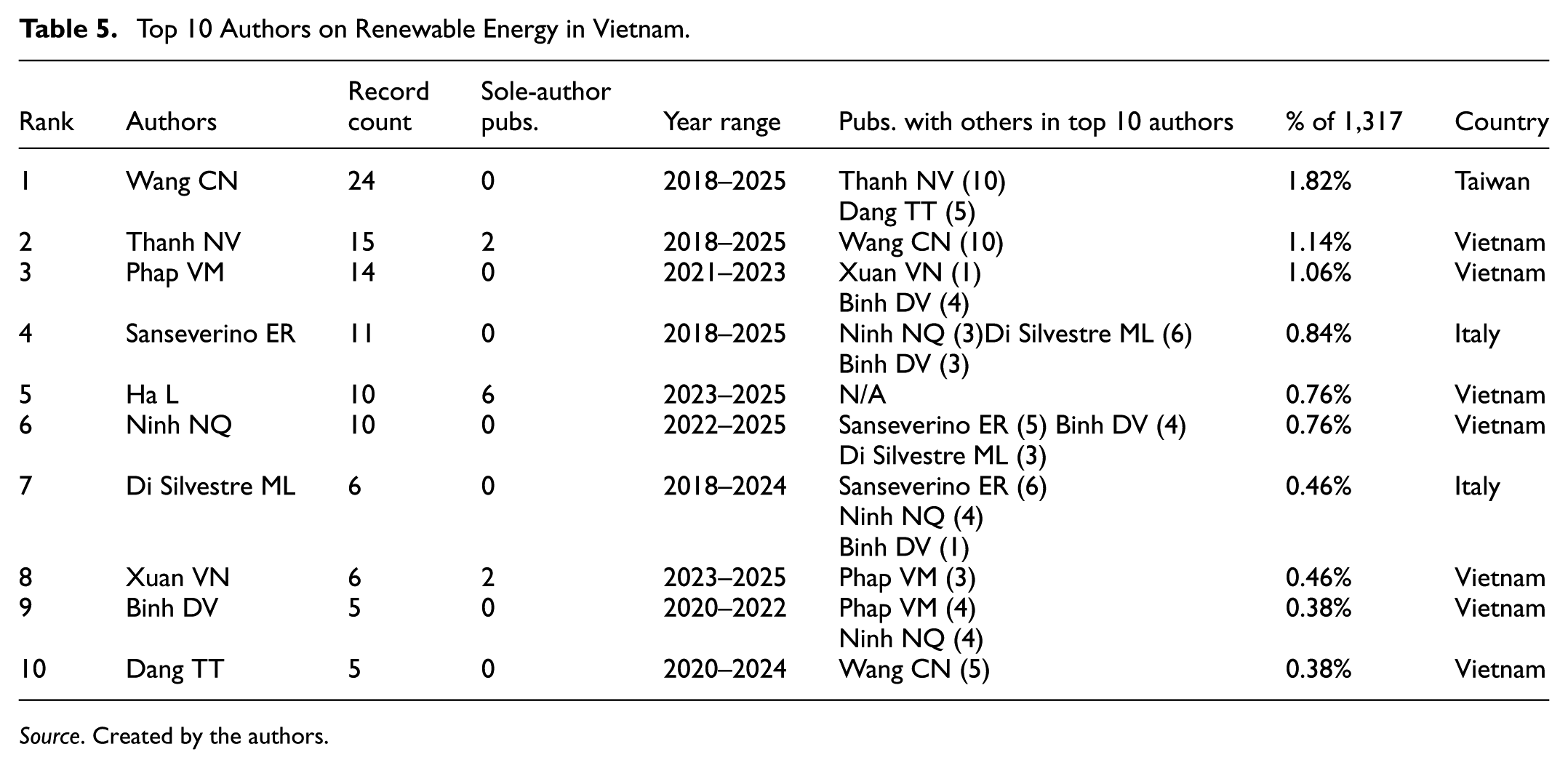
In addition to institutional affiliations, the analysis of authorship provides further insights into the contribution of renewable energy studies in Vietnam to the overall scholarly productivity and advancement of the field. Table 5 shows that the two most prolific authors are C. N. Wang from Taiwan—who has 24 publications, representing 1.82% of the 1,317 author records—and E. R. Sanseverino from Italy, who has 11 publications, or 0.84%. Another significant international contributor, also from Italy, is M. L. Di Silvestre, contributing six publications (representing 0.46% of the total). These three international scholars account for more than 37% of the total publications for the top 10 prolific authors. Among the Vietnamese scholars, V. T. Nguyen ranks the highest, with 15 publications, representing 1.14% of the dataset; he is followed by V. M. Phap and L. Ha, with 14 and 10 publications, respectively. Notably, the top 10 prolific authors, with the exception of L. Ha (whose research scope mainly encompasses renewable energy, economics, and environmental sustainability), tend to cooperate in their work to contribute to renewable energy knowledge in two distinct directions. Solving the complex location, selection, and strategy problems within the fields of sustainable energy, renewable power deployment, and solid waste management constitutes the main focal points of C. N. Wang, N. V. Thanh, and T. T. Dang, involving the application of multi-criteria decision-making (MCDM) techniques combined with Fuzzy Set Theory. Meanwhile, V. M. Phap, N. Q. Ninh, and D. V. Binh collaborate with two authors from Italy, E. R. Sanseverino and M. L. Di Silvestre, who focus on the technical, economic, and strategic feasibility of deploying and integrating various renewable energy sources into Vietnam’s energy infrastructure and specific regional sectors. The presence of and collaboration between international and domestic researchers in the leading group indicate a balanced and favorable cooperation status pattern. Vietnamese authors ensure contextual depth and local knowledge, while international collaborators provide access to expert approaches and expand the international visibility of Vietnam’s renewable energy research. This finding underlines the importance of international engagement in shaping renewable energy research related to Vietnam in specific fields. These partnerships strengthen Vietnam’s connections with global research networks, create opportunities for methodological transfer, and facilitate the exchange of technological expertise.
Top 10 Authors on Renewable Energy in Vietnam.
Source. Created by the authors.
It is also notable that none of the most prolific authors are represented among the 10 most cited publications in this field. This suggests that high productivity does not automatically correspond to a high citation impact. Some of the most influential contributions may come from scholars who publish less frequently but produce work that resonates more widely across the academic community. This distinction underscores the importance of evaluating both productivity and scholarly influence to fully comprehend the dynamics of renewable energy research in Vietnam.
Further analysis on international research collaboration regarding the topic of renewable energy in Vietnam using VOSviewer 1.6 software yielded six clusters, comprising 26 countries, that have more than five publications (Figure 4). Establishing such a threshold is crucial for filtering out marginal collaborations and ensuring that the analysis focuses on established partnerships with significant research output while maintaining the visual interpretability of the network structure, effectively mapping the core collaborative ties involving Vietnam (Donthu et al., 2021; van Eck & Waltman, 2009). As expected from the scope of the study, the analysis reveals Vietnam’s central role in the collaboration network; this is evidenced by its representation as the largest node and its extensive network linkage to 24 of the 25 other countries, except for Turkey. Vietnam is also included in the largest cluster, alongside Australia, Canada, England, France, and Thailand, indicating a strong connection in terms of research on this topic between Vietnam, several developed countries, and its ASEAN neighbor. The density of collaboration, represented by link strengths in this cluster, also indicates strong connections between Vietnam and these countries. The ties in bold are likely rooted in long-standing and shared research interests. While England began sharing co-author activities with Vietnam later than other partners in this cluster, the results still indicate a strong connection between the two countries, signaling an increasing trend and need for research collaboration.

Renewable energy in Vietnam and co-authorship by country.
Through the lens of link strengths, cluster 5 (indicated in red) highlights the significant research partnerships between Vietnam and its ASEAN neighbor, Indonesia. Although being the only country in cluster 6 (indicated in purple) and starting cooperation with Vietnam in renewable energy research later than most of the other countries, Taiwan displays the strongest link strength among the 24 connected countries. This observation, combined with the fact that the top-ranking authors by publication are from Taiwan, underscores the pivotal and highly intensive role of this country in the renewable energy research landscape in Vietnam.
To further evaluate the impact of these collaborations, an independent samples t-test was conducted on the dataset (N = 484, excludes 7 unknown). As shown in Table 6, the results indicate a statistically significant difference in citation impact, with t(339) = 3.30 and p = .001, where publications involving international collaboration received a significantly higher number of citations (M = 22.20) compared to domestic-only publications (M = 11.17). This quantitative finding reinforces the critical role of cross-border partnerships in enhancing research visibility.
T-test Results Comparing Citation Impact by Collaboration Type.

Source. Created by the authors.
Research Interest and Emerging Knowledge
To investigate the thematic evolution of renewable energy research involving Vietnam, a co-word analysis was conducted using VOSviewer, based on Keyword Plus terms. According to Gupta and Singh (2025) this strategy suggests a concise summary of research topics. Initially, a minimum threshold of five occurrences was considered to ensure data representativeness for a dataset of a similar size to the data in this study (Donthu et al., 2021; van Eck & Waltman, 2009). However, this preliminary setting resulted in a dense network (98 nodes) with overlapping clusters, compromising the visual clarity for a scientific map. To reduce noise and enhance the structural interpretability of the map (Zupic & Čater, 2015), the minimum occurrence threshold was raised to six. This refinement finally yielded a streamlined network of 78 nodes, organized into three distinct and well-defined clusters, thereby allowing for a more precise analysis of the field’s core themes.
The results from this analysis revealed other common topics in addition to renewable energy, specifically economic growth, CO2 emissions, and impacts. Their high frequency of occurrence and strong density demonstrated the core thematic concentration and important conceptual linkages within the research domain. This concentration, which aligns with the most popular categories and top-cited documents in the study’s theme, corroborates the importance of studying renewable energy in relation to the United Nations’ SDGs.
While the keyword analysis identified the main thematic areas within renewable energy research involving Vietnam, the patterns also allowed for informed interpretations of how interest in different energy sources has evolved over time. Although the dataset does not provide a year-by-year breakdown for each technology, the combined evidence from the prominence of keywords, citation patterns, and policy milestones suggests clear shifts in research focus. Solar energy appears to have gained increasing attention after 2017, consistent with the strong policy emphasis brought about by Vietnam’s solar Feed-in Tariff. More recent growth in biomass- and hydrogen-related studies is aligned with Vietnam’s strategic orientation toward green hydrogen production under Resolution 55 (2020). In contrast, wind energy research remains comparatively limited, consistent with earlier observations in the literature, persisting despite the presence of FiT incentives between 2018 and 2021. Hydropower studies, which dominated the earliest phase of Vietnam’s renewable energy literature, appear less prominent in recent years, reflecting a national shift toward newer renewable technologies. Together, these interpreted trends suggest that Vietnam’s renewable energy research trajectory broadly mirrors the changes in government priorities and sector-specific policy signals.
Cluster 1, represented in red in Figure 5, focuses on the practical aspects of renewable energy. It includes terms related to energy, policy, management, optimization, technology, models, and systems. The presence of keywords such as “emissions” and “climate change” situates these studies within a broader environmental context. The strongest links in this cluster connect renewable energy with “performance,”“optimization,”“policy,” and “climate change,” indicating that much of the research emphasizes evaluating efficiency, improving technical systems, and designing policy frameworks in response to environmental pressures. Within this cluster, policy is not only linked to renewable energy but is also closely connected to “power,”“emission,” and “solar,” highlighting the centrality of governance practices. Similarly, “optimization” is linked to both “performance” and “system,” forming a subtheme on improving technical and operational efficiency. The relatively recent emergence of “policy” and “optimization” as frequent keywords, alongside “solar,” underscores their growing importance in shaping the current research agenda.

Popular keywords on renewable energy in Vietnam.
Cluster 2, represented in green, groups together macro-level themes, such as economic growth, trade openness, foreign direct investment (FDI), consumption, emissions, and the environmental Kuznets curve. This cluster reflects the economic and policy-oriented drivers of renewable energy development. Cluster 3, shown in blue, emphasizes methodological and analytical approaches. It contains keywords such as “impact” and “nexus,” along with econometric techniques including “cointegration,” which highlight efforts to examine complex causal relationships in the Vietnamese renewable energy context.
Importantly, many of the keywords in clusters 2 and 3 are linked to international cooperation and external economic activities, such as FDI and trade. This suggests that Vietnam’s renewable energy research is often situated within global economic and policy frameworks. By contrast, most keywords in cluster 1, apart from the central term of “renewable energy,” appear relatively isolated from the other clusters. Since linkages are critical for building local capabilities and fostering technology transfer (Lema et al., 2018; Mostafaeipour & Le, 2024), this relative isolation indicates that the technology-focused aspects of renewable energy in Vietnam may benefit from stronger integration with broader economic and policy perspectives. Collaborative initiatives and cross-disciplinary research could help bridge this gap and support a more comprehensive development of the field.
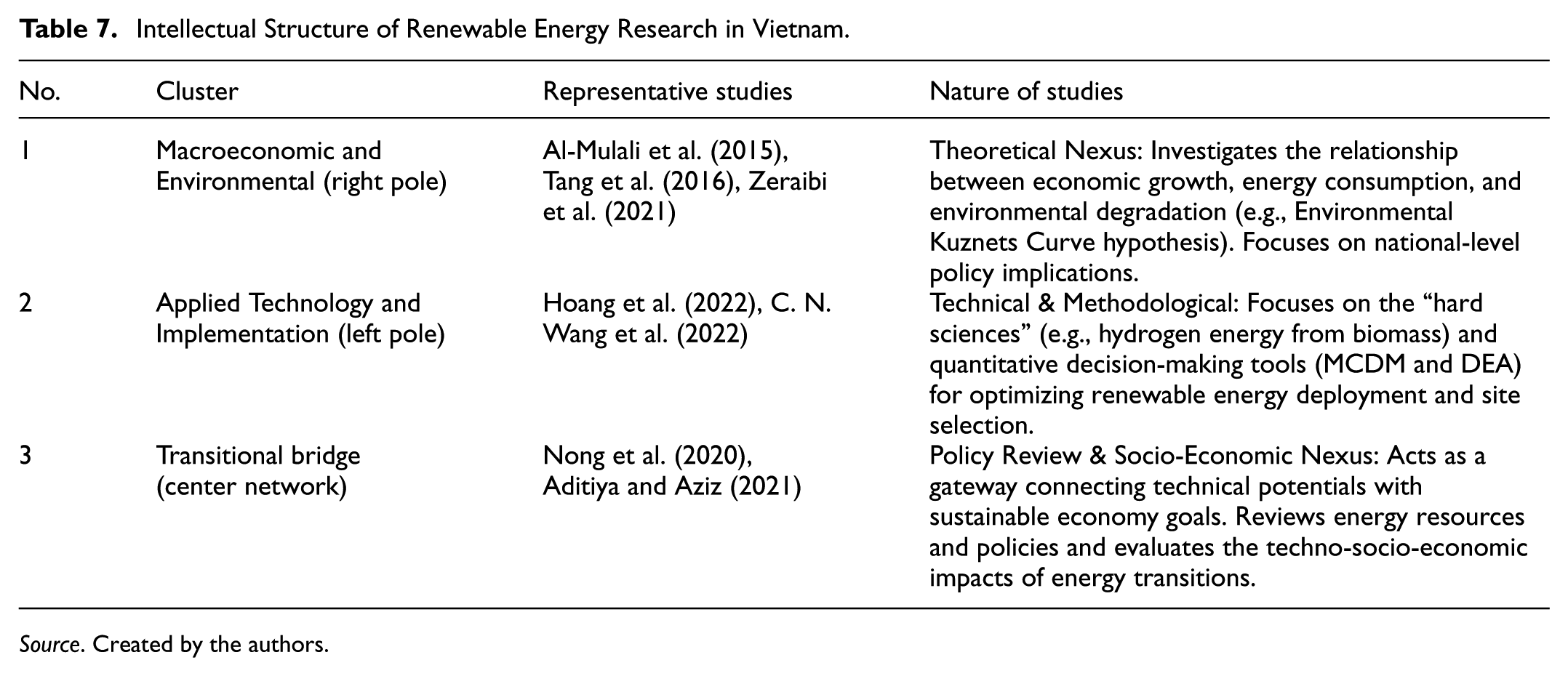
To further explore the intellectual structure of the field, a bibliographic coupling analysis was conducted. Figure 6 illustrates the largest connected set of 127 high-impact documents, based on a minimum citation threshold of 15. The network exhibits a striking bipolar structure, revealing a distinct dichotomy between macroeconomic policy research and technical implementation studies. To provide a structured overview of this intellectual landscape, Table 7 summarizes the distinct clusters, highlighting the representative studies and their specific research nature.

Bibliometric coupling.
Intellectual Structure of Renewable Energy Research in Vietnam.
Source. Created by the authors.
The “macroeconomic and environmental” cluster dominates the right pole of the network. This group is centered on the seminal work of (Al-Mulali et al., 2015) which investigates the Environmental Kuznets Curve hypothesis, serving as a foundational reference. Subsequent studies (e.g., Tang et al., 2016; Zeraibi et al., 2021) have built on this theoretical framework, analyzing the correlations between Vietnam’s economic growth, CO2 emissions, and national energy consumption. In contrast, the left side of the bibliometric coupling map represents the “applied technology and implementation” domain. Two specialized streams emerge within this area. First, the bio-energy stream centers around the work of Hoang et al. (2022); this study on hydrogen production from lignocellulosic biomass highlights a strong interest in advanced fuel technologies suitable for Vietnam’s agricultural context. A distinct methodological subcluster appears around the work of (C. N. Wang et al., 2022); the researchers utilized MCDM and data envelopment analysis (DEA) with a practical focus, such as optimizing site selection for solar PV plants. This indicates a shift toward operationalizing renewable energy projects.
A critical transitional group connects these two distinct poles. The study by Nong et al., (2020) acts as a gateway at the center of the network and provides a critical review of energy resources and policies. By synthesizing scientific studies with policy frameworks, it links technical potentials with broader sustainable economy goals. Similarly, the work by Aditiya and Aziz (2021). bridges the gap through the “techno-socio-economy nexus.” While focusing on hydrogen energy like (Hoang et al., 2022), Aditiya and Aziz (2021) evaluated it through a socioeconomic lens, facilitating an interdisciplinary dialogue between engineering and economics.
Beyond the thematic clusters revealed through bibliographic coupling, a targeted analysis of publications explicitly addressing linkages identified only 10 documents in the entire dataset. A closer examination of these studies indicates several notable patterns. Most of the linkage-focused papers conceptualize linkages in terms of cross-border technology adoption, policy coordination, or the transfer of knowledge from foreign partners to domestic renewable energy initiatives, reflecting an emphasis on international rather than intranational institutional relationships. These studies have frequently discussed capability building and interactive learning processes (Lema et al., 2018), but few offer concrete empirical evidence on how Vietnamese firms, universities, and grid operators actually absorb and apply this knowledge. Several publications have highlighted the importance of institutional cooperation and governance quality, yet they largely remain high-level analyses that do not trace specific mechanisms of knowledge diffusion or technology spillovers. The small number of such studies contrasts sharply with the strong international co-authorship networks observed in Section “Top cited publications and top publication titles,” indicating that while collaboration is active, scholarly understanding of how these collaborations generate real linkages, learning effects, and technological absorption remains limited. This gap underscores the need for more empirical, system-level research on how renewable energy knowledge is transferred, adapted, and institutionalized in Vietnam.
In summary, the network illustrates a mature research landscape. The field spans from macroeconomic theory to technical execution. These domains are integrated by holistic policy reviews and nexus studies that align technical solutions with national sustainable development targets.
Discussion and Conclusions
A bibliometric analysis of the renewable energy domain in Vietnam provided significant insights into the research landscape. The findings on publication trends, thematic development, and collaborative networks provide a valuable foundation for shaping future academic and practical efforts and enhancing institutional and international linkages in this significant area of study.
Publication Trends and Future Research Needs
The increase in renewable energy research involving Vietnam, detailed in Section “Annual publications and publication types,” indicates growing scholarly interest in the country’s energy transition. This trend is suitable and supports the global publication trend on this subject (Q. Wang et al., 2024), alongside national policy efforts highlighted in Section 1, including strategies aimed at diversifying energy sources and attracting investments (Mostafaeipour & Le, 2024). This trend demonstrates Vietnam’s role in international academic hubs. However, the increase in publication volume has not been accompanied by comparable growth in the depth and diversity of scholarly contributions. Beyond descriptive mapping, this study incorporates structural-break modeling and inferential statistical testing to identify the underlying dynamics in Vietnam’s research ecosystem, helping reveal drivers of change rather than merely reporting publication counts.
While structural limitations on the topic are evidenced by the low proportion of review articles and book chapters, thematic narrowness is reflected through the topic subdomains presented in Section “Research interest and emerging knowledge.” To address these gaps, future research should prioritize publication formats that encourage integration and improved knowledge adoption. Further review articles are needed to synthesize fragmented findings and shape coherent research agendas. Similarly, book chapters can help clarify emerging research frontiers and inform both academic and applied audiences (Donthu et al., 2021).
Thematic Focus and Research Directions
The application of co-word analysis and bibliographic coupling (Section “Research interest and emerging knowledge”) revealed an evolving thematic structure within the literature. While early research centered on technology and macro-level concerns related to economics and the environment, the focus has shifted over time to deeper methodological themes to enhance efficiency in Vietnam’s renewable energy practices. Recent studies have emphasized strategies to reduce coal dependence and limit trade-offs between growth and pollution. Supporting this evolution, the bibliographic coupling analysis identified influential conceptual anchors, including the works of Al-Mulali et al. (2015), Tang et al. (2016), Nong et al. (2020), and Hoang et al. (2022). These documents serve as core references guiding the field’s progression from macro-policy foundations to specific technological applications.
Despite this progress, a critical finding from the network analysis is the isolation of the technology cluster (cluster 1). This cluster, focusing on optimization and models, exhibits limited connectivity to macro-policy and international linkage clusters. This isolation underscores fragmentation, where technical elements are studied separately from the broader macroeconomic context, potentially hindering green innovation and economic capability building. This disconnect likely arises because technical studies often prioritize efficiency optimization within isolated systems, overlooking the broader market and regulatory constraints that determine actual deployment. Conversely, macro-policy research often lacks the granular technical data needed to assess feasibility. To bridge this structural gap, future studies should move beyond purely technical simulations. Researchers are encouraged to adopt integrated frameworks—similar to the “transitional bridge” studies identified in Section “Research interest and emerging knowledge”—such as combining techno-economic analysis with policy modeling.
Finally, the results revealed an uneven focus on renewable energy sources. While solar and biomass energy are well represented, crucial sources such as wind energy and hydropower have received significantly less attention. This gap is compounded by challenges in developing economies, such as inadequate financing and institutional frameworks, particularly for emerging sectors such as green hydrogen. Addressing this imbalance is critical; as suggested by Yousef et al. (2024), more focused studies on these under-researched domains can offer high returns in terms of both environmental sustainability and economic development. Future work must, therefore, validate the technical feasibility of these sources against economic viability and regulatory constraints.
Collaborative Networks, Linkages, and Institutional Contributions
The analysis indicates that while Vietnam’s renewable energy research landscape is primarily anchored in domestic institutions such as VAST and the Electric Power University, international collaborations are becoming increasingly vital. Specifically, Section “Top cited publications and top publication titles” highlights productive partnerships with institutions from Taiwan and Italy, with the Vietnam–Taiwan connection emerging as notably intensive, despite its later formation. These international linkages are critical for integrating researchers into global innovation networks and fostering joint solutions to the complex “energy trilemma” of security, sustainability, and equity (Yang et al., 2024). Such partnerships will accelerate Vietnam’s green transition via the spread of technology and institutional learning, enhancing both the quality and global visibility of domestic research (Haque et al., 2024; Lema et al., 2018).
While co-authorship networks provide a valuable structural overview of research collaboration, they do not necessarily reflect the depth, balance, or directionality of knowledge exchange between institutions. Co-authorship may indicate nominal participation rather than substantive involvement; further, prior studies have noted that international collaborations often feature power asymmetries, in which foreign institutions lead conceptual modeling, data processing, and publication tasks, while domestic partners contribute data or contextual expertise (Haque et al., 2024; Lema et al., 2018). These asymmetries shape how learning and technology spillovers occur in practice, influencing whether Vietnamese institutions build long-term research capacity or remain peripheral contributors. Consequently, the co-authorship patterns observed in this study should be interpreted as indicators of potential knowledge pathways rather than definitive evidence of balanced collaboration or effective technology transfer. Future research integrating qualitative analysis or project-level case studies would provide a more nuanced understanding of these dynamics.
Interpreting the observed bibliometric patterns requires grounding them within established theories of knowledge transfer and innovation systems. Prior research has highlighted that technology spillovers and institutional learning emerge through iterative, collaborative interactions among firms, universities, and government agencies, supported by shared problem-solving and complementary capabilities (Haque et al., 2024; Lema et al., 2018). Bibliometric indicators such as co-authorship networks, citation links, and bibliographic coupling reveal the structural patterns through which these interactions may occur, reflecting the potential pathways along which knowledge flows within and across research communities (Ruggeri et al., 2019). However, these metrics capture only the opportunity for knowledge exchange rather than its depth, directionality, or substantive outcomes. Real-world technology transfer depends on factors not visible in publication data, including the distribution of expertise, institutional capacity, resource control, and the nature of engagement between international and domestic partners (Weerakoon et al., 2025). Therefore, the linkages and spillovers identified in this study should be interpreted as indicative of structural foundations for collaboration rather than direct evidence of capability building or technological absorption.
Despite these encouraging collaboration patterns, a notable gap remains regarding the “linkage” domain itself. At present, only 10 publications indexed in the WoS specifically address renewable energy linkages in the Vietnamese context. This suggests that while collaboration is present, the mechanisms of these linkages remain underexplored. Therefore, future studies must investigate the factors shaping these connections, particularly focusing on policy frameworks, institutional collaboration mechanisms, and the private sector (Do & Burke, 2024).
To bridge this gap and maximize the value of partnerships, institutions should actively replicate the successful complementary models identified in Section “ Top affiliations and author linkages.” Specifically, future partnerships should prioritize the transfer of methodological expertise (e.g., decision-making models from Taiwan) and grid integration solutions (e.g., from Italy) to domestic teams. Crucially, since governance quality, including regulatory stability and transparency, is essential for implementing clean energy policies (Shekhawat et al., 2025), policymakers must facilitate this process. This can be achieved by establishing funding mechanisms that specifically mandate cross-border joint ventures in high-tech niches, such as offshore wind or smart grids, conducted under strong government facilitation.
Conclusion
This study employed bibliometric methods to map the development and maturation of renewable energy research in Vietnam, providing an integrated view of publication trends, major research topics, and the role of international collaboration. The findings reveal that Vietnamese scholarship has expanded in line with global research trajectories, with a notable growth in output, topic diversification, and increasing participation in cross-border networks. At the same time, several gaps and opportunities for further exploration remain. Future research would benefit from a closer integration of renewable energy practices with environmental and policy frameworks, a stronger emphasis on international linkages to enhance knowledge transfer, and a deeper exploration of underrepresented energy sources (such as wind and hydrogen energy), which are crucial for advancing the national energy transition. In addition, diversifying research outputs to include more literature reviews and book chapters could improve synthesis, broaden accessibility, and facilitate knowledge dissemination, both within Vietnam and across its regional neighbors. Collectively, these insights underline the importance of sustained scholarly engagement in shaping Vietnam’s renewable energy agenda and contributing to global sustainability debates.
Limitations and Future Research Directions
A key limitation of this study is the exclusive use of the WoS Core Collection as the sole data source. Although WoS provides high-quality metadata, strong citation linking features, and consistent indexing standards suitable for advanced bibliometric mapping, it does not capture the full breadth of the renewable energy research produced in Vietnam. Important publications in Vietnamese-language journals, regional engineering outlets, and local conference proceedings, along with government or technical reports, are often not indexed in WoS. These missing sources may include detailed studies of hydropower projects, rural electrification initiatives, community-based renewable energy models, and policy-oriented analyses that are highly relevant to Vietnam’s energy transition. Their exclusion may lead to bias and the underrepresentation of certain research themes or domestic institutions. Therefore, the results of this study should be interpreted as reflecting the internationally visible segment of Vietnam’s renewable energy literature rather than the complete national research landscape. Future work can consider integrating WoS with Scopus, Google Scholar, or Vietnamese-language databases, supported by rigorous duplicate detection and metadata harmonization procedures, to minimize bias.
Footnotes
Appendix
Types of Articles.
| Document types | Record count | % of 491 |
|---|---|---|
| Article | 396 | 80.65 |
| Proceeding paper | 77 | 15.68 |
| Review article | 22 | 4.48 |
| Early access | 13 | 2.65 |
| Book chapters | 1 | 0.20 |
Source. Created by the authors.
Acknowledgements
AI-based tools were used solely to support spelling, grammar, and language clarity checks. These tools did not contribute to the study’s intellectual content, research design, methodology, data analysis, interpretation of results, or conclusions. The manuscript was subsequently reviewed and proofread by a professional English editor. Phuong V. Nguyen acknowledges International University, VNU-HCM for supporting this study.

Ethical Considerations
This study used secondary bibliometric data retrieved from the Web of Science database, consisting of publicly available publication and citation records. It did not involve human participants, human tissue, personally identifiable or sensitive private information, direct interaction with individuals, or animal subjects. Therefore, ethical review and approval were not required for this study, and informed consent was not applicable.
Consent to Participate
This study did not involve human participants, direct interaction with individuals, or the collection of personal, sensitive, or private information. Therefore, consent to participate was not applicable.
Consent for Publication
This study did not involve human participants or the collection of identifiable personal information, images, or private data. Therefore, consent for publication was not applicable.
Author Contributions
-
-
-
Funding
The authors disclosed receipt of the following financial support for the research, authorship, and/or publication of this article: The authors would like to express gratitude for the financial support provided by the Ministry of Foreign Affairs of Denmark through the project entitled ‘The industrial return on the green transition: Renewable energy in Vietnam (REturn)’ (Research Grant no. 23-M05-DTU).
Declaration of Conflicting Interests
The authors declared no potential conflicts of interest with respect to the research, authorship, and/or publication of this article.
Data Availability Statement
The data that support the results and findings of this study are available from the corresponding author upon reasonable request.
Declaration of Generative AI Use and AI Assistance
During the preparation of this manuscript, the authors used ChatGPT solely to assist with grammar, spelling, and typographical corrections. All research design, data analysis, interpretation of results, and conclusions were conducted by the authors, who accept full responsibility for the content. The manuscript was subsequently reviewed and proofread by a professional English editing service.