






Abstract
The consumption of sports has grown to be a significant factor in the current industrial structure change and urban economic growth. However, carbon emissions caused by sports consumption activities have received little attention. 290 prefecture-level cities in China between 2011 and 2022 serve as the research samples for this study, which uses the sports consumption cities in China pilot policy (SCC) as a quasi-natural experiment. The impact effect and mechanism of the SCC on China’s carbon emission intensity are empirically tested using the difference-in-differences (DID) model. An assessment system for the hard and soft environments of sports consumption is built to investigate its mediating role, and the elements of sports consumption behavior that influence carbon emission intensity are included into the analytical framework from both the supply and demand sides. The results show that: (1) The conclusion that the SCC has significantly weakened the carbon emission intensity of cities remains valid after multiple tests. (2) Both the soft and hard environments have a mediating effect and lessen the influence of pilot initiatives on the intensity of carbon emissions. (3) Heterogeneity analysis indicates that this influence process is more significant in the central and eastern regions, while the western region failed the significance test. At the same time, the effect of the central city is greater than that of the peripheral cities. This study offers a new perspective for understanding the carbon emission impact of sports consumption and provides corresponding policy suggestions for the sustainable development of urban sports management.
Introduction
One crucial step in combating global warming is lowering carbon emissions (X. Feng et al., 2024). The growth of the sports sector has drawn unheard-of attention recently as a green, low-carbon sunrise industry (Y. Li et al., 2024). Sports consumption has emerged as a key growth driver in the global consumer market in recent years due to the improvement in the global economy and the emergence of the upgrade trend in consumption (Q. Wang et al., 2022). Based on this, the Chinese government has issued a number of policies, including the “Guiding Opinions on Building High-Quality Outdoor Sports Destinations,” to actively promote the enrichment of sports consumption scenarios and meet the multi-level consumption demands of the people (G. Li et al., 2023). As the goal of achieving carbon neutrality is proposed and adopted, the connection between the sports industry and sustainable development and environmental protection has been further strengthened (Wicker, 2019). On the one hand, the impact of global warming on sports events, especially ice and snow events, is becoming increasingly severe. If global greenhouse gas emissions maintain the growth trend of the past 20 years, by the end of the 21st century, only Sapporo in Japan can provide suitable snow venues for the Winter Olympics. On the other hand, while sports events generate relatively low carbon emissions compared to industrial sectors, they play a crucial role as a field with broad societal influence. They lead social trends, drive sponsors toward green transformation, and shape audiences’ awareness of low-carbon lifestyles (Wilby et al., 2023). The embodied carbon emissions of China’s sports goods export trade exhibited phased features between 2015 and 2021, according to the export trade statistics (Gao et al., 2021). With an average annual growth rate of 15.71%, embodied carbon emissions increased dramatically between 2015 and 2017, rising from 213.9808 million tons to 227.3845 million tons. Since 2018, the embodied carbon emissions of China’s sports goods export trade have mostly remained constant at about 20 million tons annually, notwithstanding a minor decrease in 2017 (F. Liu & Liu, 2023). Since sports consumption is closely linked to tourism activities, by referring to the existing data trends of carbon emissions in China’s tourism industry, it can be observed that the carbon emissions of China’s tourism industry have generally shown a fluctuating downward trend from 2015 to 2021 (Zou et al. 2024). Especially in 2020 to 2021, the total tourism carbon emissions dropped sharply (Figure 1).
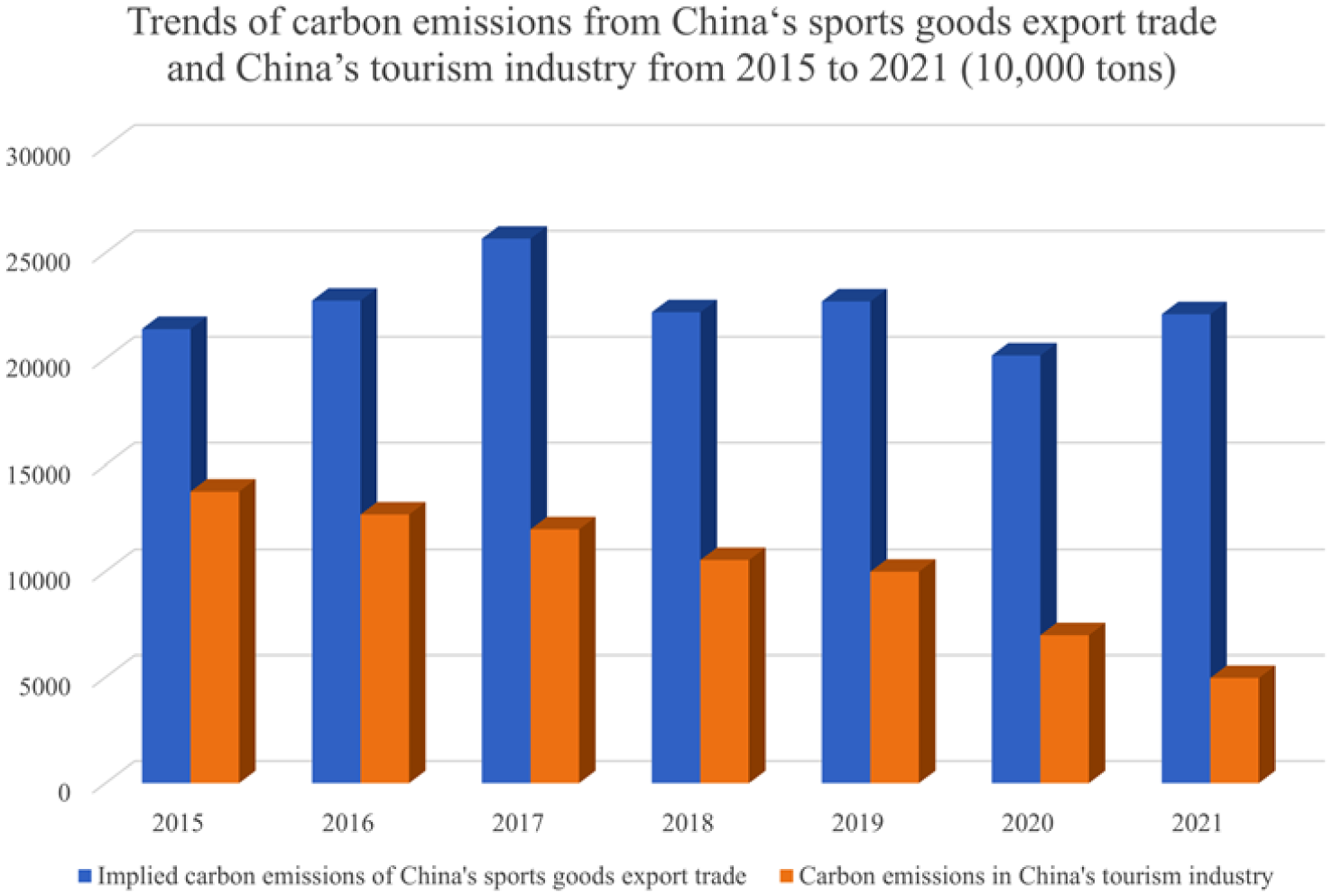
Trends of carbon emissions from China’s sports goods export trade and China’s tourism industry from 2015 to 2021.
Additionally, pertinent research has demonstrated that shifts in the way that people consume sports have had a major effect on carbon emissions (Grofelnik et al., 2023). The hosting of large-scale sports events is an important part of sports consumption. Consumers’ expectations for low-carbon events will prompt event organizers to take low-carbon measures. For instance, priority should be given to utilizing existing sports venues to reduce carbon emissions from new construction. By using renewable energy to power the venues and conducting classified recycling and disposal of event waste, the event operations can be achieved in a low-carbon manner (Piccerillo et al., 2023). According to Zhen et al. (2025) hold that sports consumption encompasses low-carbon products such as sports tourism, camping, and hiking, belongs to the tertiary industry, and has a relatively small impact on the natural environment. Moreover, current large-scale sports events have adopted measures such as low-carbon venues, low-carbon energy, low-carbon transportation, and low-carbon office work to minimize carbon emissions to the greatest extent. At the same time, they have achieved the goal of carbon neutrality through carbon compensation methods such as forestry carbon sinks and corporate donations. In conclusion, scholars have analyzed the connection between sports consumption and carbon emissions from the perspectives of promoting technological innovation, increasing foreign investment, and enhancing environmental awareness, and have proved that sports consumption can reduce carbon dioxide emissions (Ito & Higham 2025; Ruan, 2024). Against this backdrop, the SCC, as a representative sports consumption support policy in China, was launched in 2020, covering 40 cities (General Administration of Sport of China, 2020). This is an important exploration to enrich sports products and services and stimulate the vitality of sports consumption. It should be noted that, on the one hand, the pilot policy for sports consumption cities is not merely an industrial promotion tool. Its essence is a comprehensive urban intervention aimed at guiding residents’ lifestyles, reshaping the functions of urban spaces, and promoting the upgrading of service-oriented consumption structures. The SCC, through hosting major events, building a network of sports facilities, and promoting regular sports consumption, will lead to an increase in traffic flow, energy consumption, and building operation and maintenance demands, potentially resulting in significant direct and indirect carbon emissions. However, existing studies mostly focus on industrial emission reduction or energy structure transformation, while neglecting the new environmental pressures that may arise from the large-scale consumption of services and leisure activities represented by sports. There is still a research gap in this regard (Shi et al., 2026). On the other hand, the impact of the pilot policy for sports consumption cities exhibits typical characteristics of multiplicity and heterogeneity. The SCC may have a substitution effect, where sports consumption competes with other high-carbon consumption, or promotes green travel by enhancing health awareness, thereby generating potential synergistic benefits in carbon reduction. At the same time, it may also lead to a doubling effect of carbon emissions due to increased business activity intensity and stimulation of related industries. How these two opposing forces interact and what the net effect is have not been fully studied.
However, there are still unknown results as to whether the SCC have a significant effect on carbon emissions and what the level of their influence is among different regions. Meanwhile, we will introduce the concepts of the hard environment and soft environment of sports consumption in the mechanism analysis, and achieve carbon reduction through these two paths. The hard environment of sports consumption mainly refers to the physical infrastructure and material carriers required to support sports consumption behavior, including sports venues and facilities, transportation infrastructure, logistics infrastructure and digital infrastructure. Some studies suggest that the implementation of the SCC can guide and motivate investment and upgrading in these areas. Through measures such as optimizing spatial layout, enhancing energy efficiency, promoting green transportation and intelligent management, it can directly reduce the carbon emission intensity in these fields (Gyimah et al., 2025; Su et al., 2022). The soft environment of sports consumption refers to the non-material institutional and atmosphere factors that influence sports consumption activities. It encompasses the environment of technological innovation, the market environment, the government environment, and the cultural environment. We infer that the SCC can create a favorable innovation environment, establish a standardized market order, provide efficient government services, and promote a positive green sports culture. Through these measures, it can encourage the adoption of green technologies, guide people’s preference for low-carbon consumption, and thereby indirectly exert a restraining effect on carbon intensity (Ye et al., 2025).
Consequently, this article aims to respond to the following queries: (1) Will the SCC reduce carbon emission intensity? (2) In the implementation of the SCC, can carbon emissions be reduced through two channels: the hard environment and the soft environment of sports consumption? (3) Does regional heterogeneity have an impact on this influence process? Therefore, this study constructs a DID model based on the panel data of 290 cities in China to examine the causal relationship between the SCC and carbon emissions. It also analyzes the mechanism of their effects from two aspects: the soft environment of marketization and the hard environment of infrastructure construction.
The remainder of the document is structured as follows: Policy Background and Mechanism Analysis elaborates on the causal relationship between the SCC and carbon emissions. Methods and Data introduces the study design, data sources, and definitions of all variables. Research Results and Discussions tests the research hypotheses using a DID regression model and conducts a series of robustness checks to address the aforementioned research concerns. Mechanism Verification further explores the possible pathways through which the SCC affects carbon emissions. Conclusions and Policy Recommendations concludes the study and offers corresponding policy implications (Figure 2).
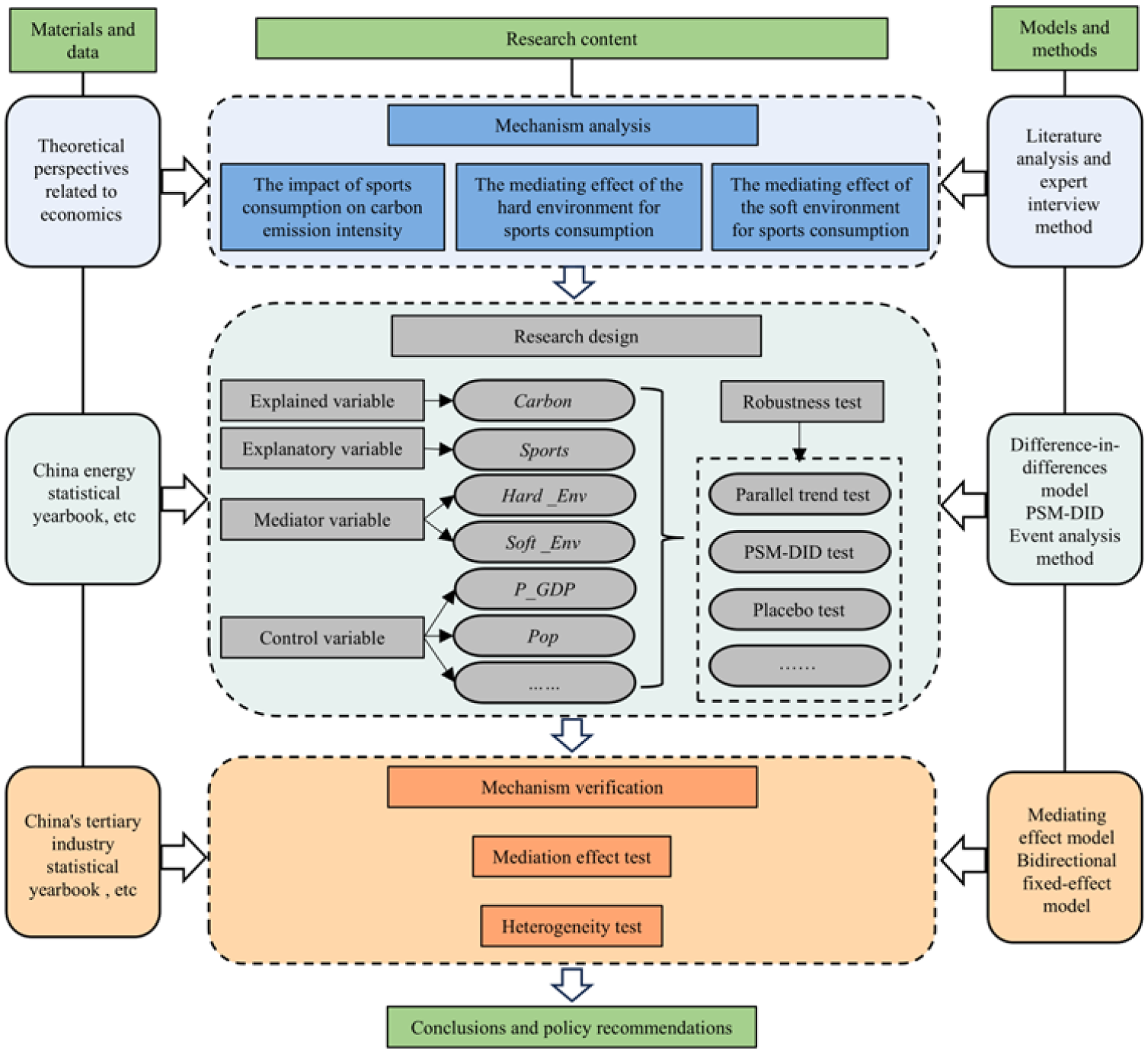
Research framework.
Policy Background and Mechanism Analysis
Policy Background
The global economy’s recovery and expansion have accelerated the upgrading of people’ spending patterns and the deep integration of industry, urbanization, and information technology. To promote consumption upgrading, industrial transformation and improvement of people’s livelihood, in May 2020, the General Office of the General Administration of Sport of China issued the Implementation Plan for the Pilot Work of Promoting Sports Consumption, launching the pilot work of sports consumption in China (General Administration of Sport of China, 2020). In August 2020, a total of 40 cities were selected to be included in the first batch of SCC list, marking the entry into the implementation stage of these pilot cities. The first batch of pilot periods covers the years 2020 to 2022 (Figure 3). Typical implementation methods include building a public service platform for national fitness, implementing a sports consumption subsidy program, and carrying out demonstration projects for the integrated development of the sports industry (Ge & Liu, 2025). Take Shaoxing as an example. During the pilot period, a total of 60-million-yuan worth of sports consumption vouchers were issued, covering 17 sports including swimming and skiing, effectively driving a consumption scale of 138 million yuan. Qingdao has been enhancing residents’ awareness of health and fitness and meeting their fitness consumption demands by launching sports public welfare live broadcasts and organizing new consumption scenarios such as the “Qingdao Fashion Sports Season” which lasted for 3 months. Since 2021, Changsha City has held two consecutive sports consumption festivals. Over 500 merchants participated, directly driving sports consumption to exceed 10 million yuan. Stimulated by a series of policy measures, the per capita sports consumption of residents in the pilot cities for sports consumption has significantly increased. In 2022, inhabitants in the 40 pilot cities spent an average of 2,576 yuan per capita on sports consumption, up 19.65% from the average of 2,153 yuan in 2020. Residents of the 40 pilot cities used 682.1-billion-yuan worth of sports overall, according to the summary and exchange meeting of China’s sports consumption pilot cities held in December 2023. During the 3-year pilot construction period, the pace of expansion often exceeded the growth pace of total retail sales of consumer goods in the whole society in each corresponding year (China Sports Daily, 2023).
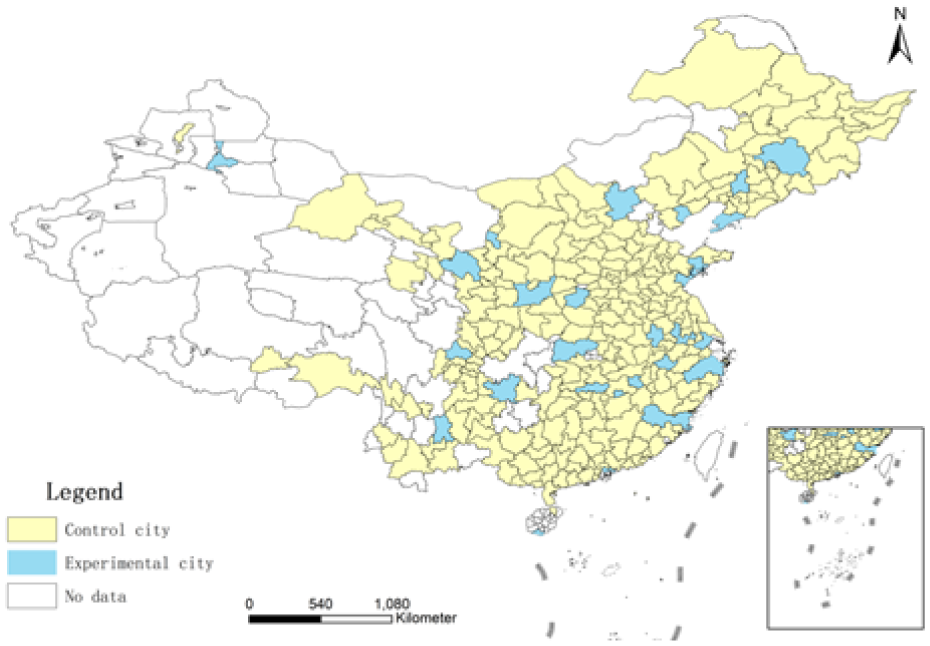
Research area map.
Analysis of Theoretical Mechanism
The amount of sports consumption and the external environment of sports consumption have had a significant impact on carbon emissions since the SCC was proposed in 2020, according to the data above. Therefore, this study suggests that the above variables may have the logical relationship as shown in Figure 4. Therefore, two thoughts of this study are proposed. First, the SCC may have a significant impact on reducing carbon emission intensity. Second, there may be a mediating effect in the impact of the external environment of sports consumption on carbon emissions during the SCC. The study hypotheses of this work are proposed from the following two angles, respectively, and the current literature and theories are reviewed in order to verify the two concerns mentioned above.
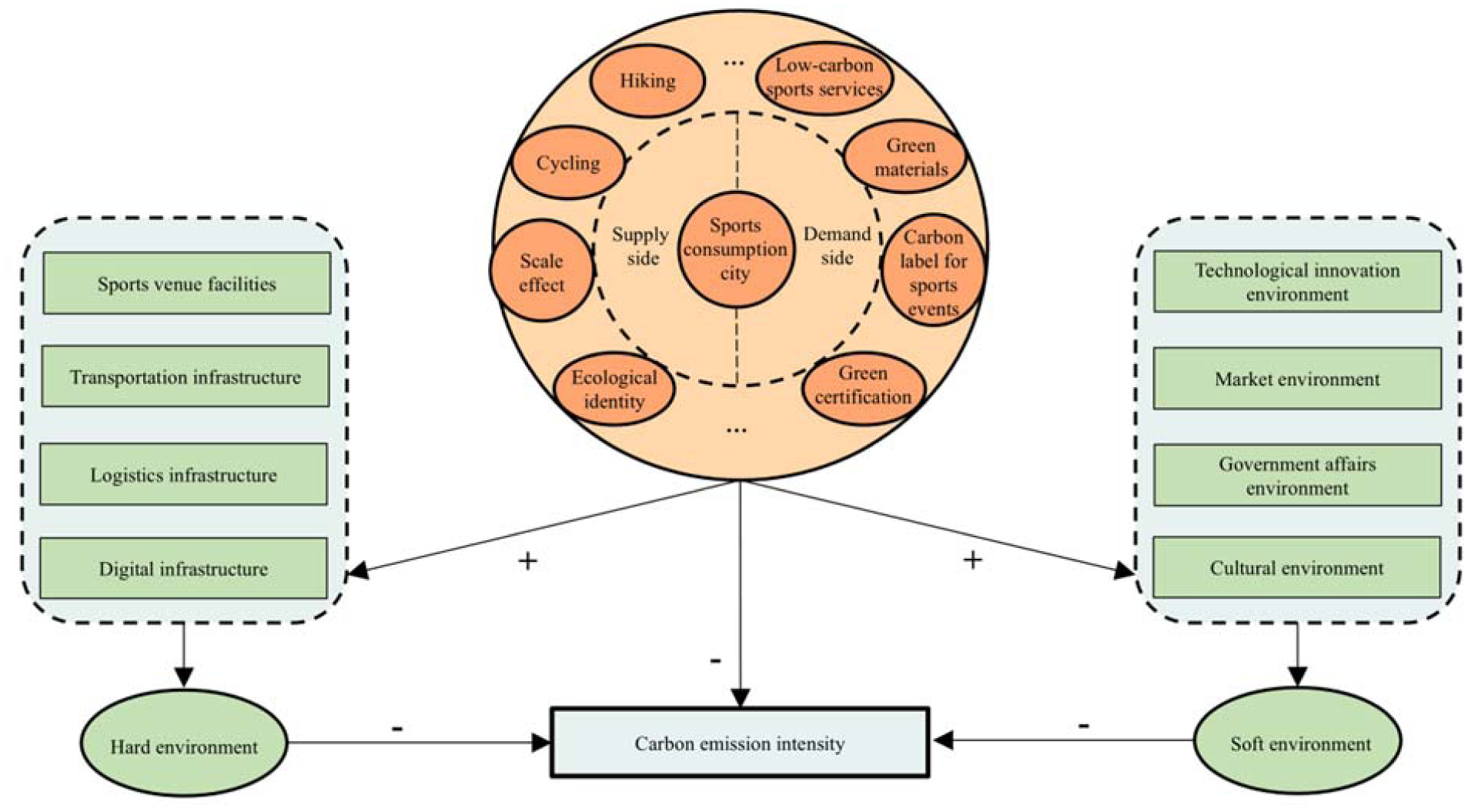
Diagram of the working mechanism of SCC in China.
The Impact of Sports Consumption on Carbon Emission Intensity
The SCC is a typical market-oriented consumption promotion measure. Its characteristic lies in providing economic incentives for relevant enterprises or consumer entities. By directly connecting consumers and suppliers, it shortens the circulation process of commodity transactions between the supply side and the demand side (M. Xu & Lin, 2023). Based on the analysis framework of consumption structure theory and sustainable development theory, the process of sports consumption is essentially a concrete manifestation of the transformation of the urban economic structure from high-carbon-intensive industries to low-carbon service industries. On the demand side, the consumption structure theory emphasizes that as the economy develops and residents’ income levels rise, consumer demand will shift from material consumption to service consumption, and sports consumption precisely represents this trend of consumption upgrade (F. Wang et al., 2024). Consumers are gradually shifting from high-carbon leisure activities such as self-driving tours and motor sports to low-carbon activities like hiking and cycling. This will directly reduce individual carbon footprints and, through the scale effect, lower the overall emission intensity of society (Luthe et al., 2013). Meanwhile, outdoor sports activities strengthen participants’ ecological identity through immersive natural contact, forming a behavioral logic that enhances environmental awareness through sports participation and subsequently leads to low-carbon sports consumption choices. Relevant empirical studies show that people who exercise regularly have a significantly higher willingness to adopt a low-carbon lifestyle than the general population (Zhang et al., 2022). From the supply side, from the perspective of industrial structure theory, the expansion of sports consumption will drive the development of the sports industry and related service industries through a multiplier effect. This optimization and upgrading of the industrial structure also conform to the core concept of coordinated development of economic growth and environmental protection in sustainable development theory. As a typical green and low-carbon industry, the sports industry has much lower carbon emissions per unit of output value than traditional manufacturing. Therefore, when the proportion of the sports industry in the urban economy increases, it will significantly improve the overall carbon emission structure of the city (Murfree & Brison, 2025). The SCC have accelerated this structural transformation process through policy guidance and resource inclination, reducing the dependence of urban economic growth on carbon emissions and thus achieving a decrease in carbon intensity. Meanwhile, the demand side’s preferences for sports fitness training services and event viewing have driven the focus of the sports industry chain to shift from the manufacturing of high-carbon sports goods to low-carbon sports services (Herold et al., 2024). For instance, the intelligent manufacturing system can significantly reduce the energy consumption of sports venues through dynamic adjustment. The innovative application of green materials has also reduced the embodied carbon emissions throughout the entire lifecycle, facilitating the transformation of the sports industry toward a circular economy (Castaignède et al., 2021). Furthermore, the design of systems such as sports green certification and carbon labels for sports events will make the cost of carbon emissions explicit. This will prompt sports enterprises to internalize the environmental externalities and accelerate investment in low-carbon technology research and development, thereby reducing the carbon emission intensity (B. Li, 2024). For instance, the purchase of smart wearable products and event souvenirs, etc. Based on this, Hypothesis 1 is proposed.
The Mediating Effect Between the Hard and Soft Environments of Sports Consumption
The effectiveness of the SCC largely depends on the conditions of the hard and soft environments of the local consumption base. The hard environment of sports consumption primarily refers to the development of the efficiency of public resource utilization and the low-carbon transformation of infrastructure (Ouyang et al., 2024). The hard environment, as a physical supporting element, forms the material basis for low-carbon consumption through well-developed sports venues and facilities, transportation infrastructure, logistics infrastructure, and digital infrastructure. Firstly, the demand for sports consumption fuels the development of smart fitness centers and green sports arenas, encouraging the use of low-carbon technology in the building industry. More importantly, the construction of modern sports infrastructure has been integrated with the core concept of ecological modernization theory, which is to achieve a win-win situation of economic growth and environmental protection through technological innovation and institutional reform. The theory of ecological modernization emphasizes that the resolution of environmental issues should not rely on the slowdown of economic growth, but rather on achieving a fundamental transformation of the development mode through technological progress, management innovation, and institutional optimization (Bailey et al., 2011; Pal et al., 2023). The SCC precisely reflects the practical application of this concept. The construction of sports venues and facilities is often accompanied by the application of green building technologies and energy-saving materials. New sports venues generally adopt low-carbon technologies such as solar photovoltaic and rainwater recycling. These facilities themselves have become important components of the city’s green infrastructure. Intelligent venues achieve dynamic energy monitoring through internet of things sensors and adopt clean energy power supply systems to replace traditional fossil energy, reducing energy consumption intensity (Rashid et al., 2025). In addition, prefabricated sports building technology reduces material waste during the construction process, shortens the construction period, and indirectly cuts embodied carbon emissions (Wanless et al., 2023). Secondly, from the perspective of the systemic impact of the hard environment, the optimization of transportation infrastructure more directly reflects the theoretical viewpoint of the substitution effect (He et al., 2024). While the pilot cities are improving their sports facilities, they will simultaneously build slow traffic networks, public bicycle systems, and bus routes connecting the venues. This transformation of the transportation mode has produced a significant carbon substitution effect. When residents shift from relying on private cars for travel to walking, cycling, or using public transportation for sports consumption, the carbon emissions of unit travel are significantly reduced. This substitution not only occurs in sports consumption scenarios but also extends to residents’ daily travel through habit formation and infrastructure spillover effects, creating a sustained emission reduction effect (Hatamzadeh et al., 2020). The intelligent upgrade of logistics infrastructure optimizes the layout of the sports goods supply chain. Relying on big data algorithms to match supply and demand relationships, it reduces inventory overstock and ineffective transportation, and achieves a full-chain carbon footprint compression. Finally, the improvement of digital infrastructure provides a technical carrier for low-energy-consuming consumption models such as remote viewing and virtual sports. By replacing high-carbon-density physical activities, it weakens the marginal effect of spatial constraints on carbon emissions (Zhang & Wu, 2022).
The soft environment of sports consumption refers to all the intangible factors that can influence the sports production and life in a region and can be changed through human intervention in the short term. It includes dimensions such as the environment for scientific and technological innovation, the market environment, the government environment, and the cultural environment (Tang et al., 2024). Compared with the hard environment, the soft environment, as a man-made intervention in the economy, society, production and life, has stronger sensitivity and flexibility. Decision-makers can adjust it in the short term by using relevant policy tools. The theory of institutional change holds that institutional innovation is the fundamental driving force for the transformation of the economy and society, and policy pilots themselves are a process of institutional experimentation and innovation (de Grosbois & Fennell, 2022). According to the theoretical justifications in the body of existing literature, businesses are compelled to create low-carbon sports equipment due to consumers’ green preferences (Tan et al., 2025). Meanwhile, the artificial intelligence training system optimizes the competitive performance of athletes, thereby reducing the resource waste caused by repetitive training. In terms of the market environment, the carbon label system and the green certification system further guide sports consumers to choose low-carbon sports services, forming a virtuous cycle where the demand side drives the supply-side reform (Min et al., 2024). The sharing economy model will help lessen the environmental burden brought on by overproduction and hasten the growth of sports equipment circulation efficiency. At the level of the administrative environment, the government incorporates the sports industry into the regional emission reduction system through the carbon quota trading mechanism and uses tax incentives to encourage the operation of low-carbon venues (Qi & Han, 2023). Precise control of carbon emissions is possible through the efficient integration of event and activity carbon emission data by the digital supervision platform. It should be highlighted that the public’s pattern of sports consumption behavior can be altered by changes in the cultural milieu around sports consumption (J. Liu & Li, 2022). For instance, the popularization of low-carbon fitness concepts can reduce participation in high-energy-consuming sports activities. The community dissemination effect will accelerate the internalization of green consumption norms and foster a sustainable awareness of emission reduction behaviors. The coupling and interaction of such multi-dimensional soft environmental elements can fully mitigate the expanding effect of sports consumption promoting carbon emissions.
Based on this, the research holds that the hard and soft environments of sports consumption play a significant mediating role in the process of influencing carbon emissions during the implementation of the SCC, that is, hypotheses 2 and 3 are proposed.
Methods and Data
Research Methods
This article aims to examine whether the SCC have reduced the carbon emission intensity in different regions. According to the policy evaluation theory, policy evaluation is an activity that comprehensively assesses the benefits, efficiency, effectiveness and value of policies based on specific standards and procedures, using scientific methods (Y. Liu et al., 2023). Among the literature on the evaluation of policy implementation effects, the more effective method is the DID, which can alleviate endogeneity problems such as reverse causality. This method has been widely applied in existing policy research (X. Feng et al., 2024; Zhao & Dong, 2025). The prefecture-level cities that were chosen as the SCC were designated as the experimental group in this study, while the remaining prefecture-level cities were designated as the control group in order to confirm the research hypothesis. The DID model is implemented using the bidirectional fixed effect, with an emphasis on analyzing the effects of the SCC on carbon emissions. The specific model is as follows:


In Equation 1, i represents the city, t represents the year, and
To further study the mediating effect of sports consumption urban pilot projects on carbon emission intensity (J. Liu & Li, 2022), the following two models were constructed:


Among them,
It should be noted that the setting of Equation 4 is the key to identifying the mediating effect. We simultaneously included the explanatory variable Sports and the mediating variable Mechanism. The economic logic of this setting lies in that it allows us to break down the total effect of the sports consumption pilot policy on carbon intensity into two parts (Cheng et al., 2025). The direct effect part is measured by the coefficient α1. It represents the net impact of the SCC on the carbon intensity of cities after controlling for the influence of the Mechanism. In other words, it reflects the impact of the SCC on carbon intensity not through the hard or soft environment paths we have proposed, but through other unknown channels. The indirect effect part, that is, the mediating effect we are attempting to verify. It is composed of the coefficient α1 of Equation 3 and the coefficient α3 of Equation 4, that is, α1*α3. Specifically, the transmission mode is manifested as follows: Firstly, the policy variable Sports will cause a change in the Mechanism, which is confirmed by the significance result of α1 in Equation 3. Secondly, this changing Mechanism will further affect Carbon, which is confirmed by the significance result of α3 in Equation 4. Therefore, an indirect path for the SCC to affect Carbon by influencing the Mechanism does exist. In addition, we will provide a detailed explanation of the criteria for determining the validity of the mediating effect. If both α1 and α3 are significant, and the absolute value of α1 in Equation 4 is smaller or not significant compared to the total effect α1 in Equation 1, it indicates the existence of a significant mediating effect. In particular, the introduction of the Mechanism variable in Equation 4 is precisely aimed at controlling the influence of the mediation path we have proposed. If the Mechanism variable is the true transmission channel, then when we separate and control it separately, the effect of the policy variable Sports should be weakened. This strongly proves that the Mechanism variable plays an important bridging role between the SCC and carbon emissions, rather than being an irrelevant variable.
Variable Selection
Explained Variable
The selected dependent variable is the city’s carbon emission intensity level (Carbon), which represents the amount of carbon emissions per unit of economic output and is often referred to as carbon emission intensity. By taking into account the balance between carbon emission levels and regional economic growth, this indicator can objectively quantify the extent of synergy between low-carbon development and economic operation. The sustainability of industrial transformation and upgrading can be effectively measured through its value decline, which can accurately reflect the region’s actual progress in reducing carbon emissions. Due to the fact that changes in absolute carbon emissions may be strongly influenced by exogenous factors such as economic cycles and urban expansion. Meanwhile, carbon intensity more directly measures the degree of decoupling between a city’s economic activities and carbon emissions. Specifically in the policy evaluation scenario of this study, the goal of the SCC is to promote urban economic growth and transform toward a service consumption-oriented model. Therefore, to assess the true environmental effect of this policy, the key lies in focusing on whether it promotes economic growth while also achieving more efficient and intensive utilization of carbon emissions, that is, a decrease in carbon intensity. This indicates a more sustainable low-carbon development path. According to the methodology outlined by Shan et al. (2021), this indicator encompasses the indirect emissions associated with purchased electricity and centralized heating, as well as the direct emissions produced by the cement manufacturing process and the consumption of 17 different forms of fossil energy. This analytical framework comprehensively evaluates the true effect of regional carbon emission reductions by considering not only carbon emissions related to energy consumption, but also greenhouse gases generated during local production processes (Shan et al., 2016). Specifically, the Equations 5 and 6 is as follows, where Ei represents the consumption of type i energy and Ci represents the carbon emission coefficient of type i energy.


Explanatory Variables
This paper, referring to the research method of Cheng et al. (2025), regards the SCC as a quasi-natural experiment, taking the dummy variable of the SCC as the core explanatory variable (Sports). This variable actually serves as the interaction term between the policy time dummy variable and the pilot city grouping dummy variable. Notably, the names of cities like Shanghai and Chongqing, which are categorized as municipalities directly under the central government and do not correspond to the levels of other prefecture-level cities, are included in the pilot list but have been left off. Therefore, the experimental group eventually included 37 cities.
Mediating Variables
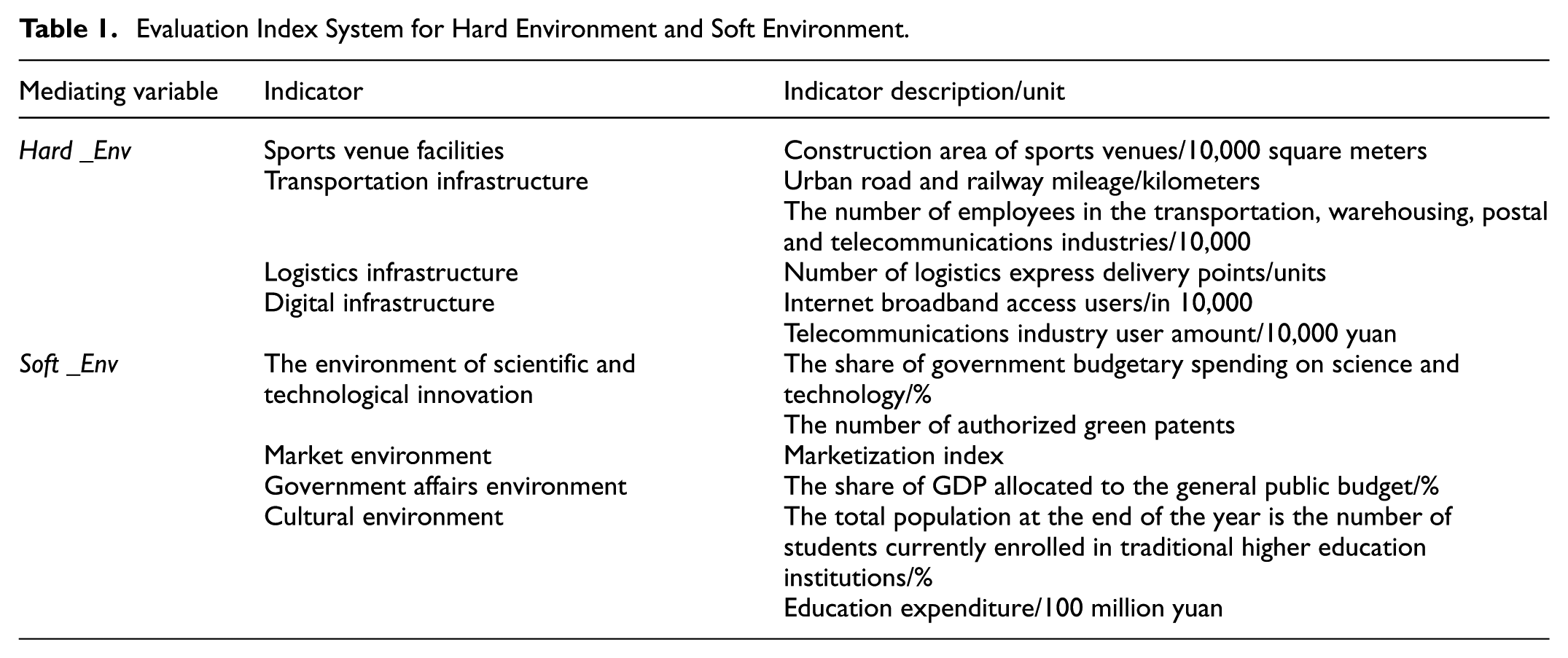
The mediating variables are the hard environment (Hard _Env) and the soft environment (Soft _Env). The entropy weight technique research stages of Cheng et al. (2023) are used to generate the comprehensive development index score of the urban hard and soft environment. Considering that a single weighting method may affect the robustness of the mediation effect results. Therefore, in this study, the principal component analysis method was adopted again to calculate the indicator weights, in order to enhance the reliability of the mediation effect results. The evaluation index system is shown in Table 1. Meanwhile, the following serves as the foundation for the development of the hard environment evaluation system, as determined by the examination of the study hypotheses in the preceding text: (1) The construction area of sports venues is used to gauge the scope of sports facility building, taking into account the data that is currently available. (2) Considering that roads and railways can reflect the traffic conditions between cities, and the number of personnel in the transportation, warehousing, postal and telecommunications industries can indirectly indicate the scale of transportation. Therefore, the urban road and railway mileage and the number of personnel in the transportation, warehousing, postal and telecommunications industries are used to measure the transportation infrastructure. (3) Considering that online consumption is an important component in measuring the development level of sports e-commerce. And online sports consumption requires first transporting the goods to the nearest logistics stations in each region, then distributing and delivering them to the consumers. Therefore, the number of logistics delivery points in each city is used to represent the construction of logistics infrastructure. (4) Digital infrastructure development is assessed by measuring the proportion of Internet users per 100 people, the number of mobile phone users per capita, and the overall volume of postal and telecommunications services at the individual level. The following serves as the foundation for the development of the soft environment evaluation system: (1) The measurement of the scientific and technological innovation atmosphere is based on the number of invention patent applications and the level of R&D investment. (2) The evaluation of the market environment uses marketization indices. (3) Government spending in the general public budget as a percentage of GDP is an indicator of the state of the government. (4) The cultural environment is measured by the number of education practitioners and educational expenditure. From another perspective, educational expenditures also include financial support for sports, entertainment and other related areas.
Evaluation Index System for Hard Environment and Soft Environment.
Control Variables
In order to minimize the impact of external factors on carbon emissions, the following variables have been selected as control measures. (1) The Environmental Kuznets Curve indicates a strong correlation between carbon emissions and economic growth. Consequently, the per capita GDP logarithm (P_GDP) is chosen as the economic growth proxy variable (Cheng et al., 2023). (2) High-density population often increases energy consumption. Therefore, the population density (Pop) was chosen to describe it, which is defined as the number of permanent residents per unit area in an urban area and logarithmic processing is carried out. (3) Q. Wang and Zhang (2021) believe that fixed asset investment will affect the structural changes of the secondary industry. Processes such as the manufacturing and transportation of building materials can lead to higher levels of carbon emissions. As a result, the control variable chosen is the logarithm of fixed asset investment (Invest). (4) Cheng et al. (2025) believes that with the increase of human capital, the purchasing power will increase accordingly, thereby promoting energy consumption and carbon emissions. Therefore, the proportion of employees in the secondary industry (Second_ind) and the average years of education of residents (Edu) were selected as control variables. (5) Q. Wang and Zhang (2022) believes that public fiscal expenditure will promote the development of public transportation, heavy industry and chemical industry, resulting in an increase in the total carbon emissions. Therefore, the logarithm of general public budget expenditure (Bud) is selected as the control variable.
Data Sources
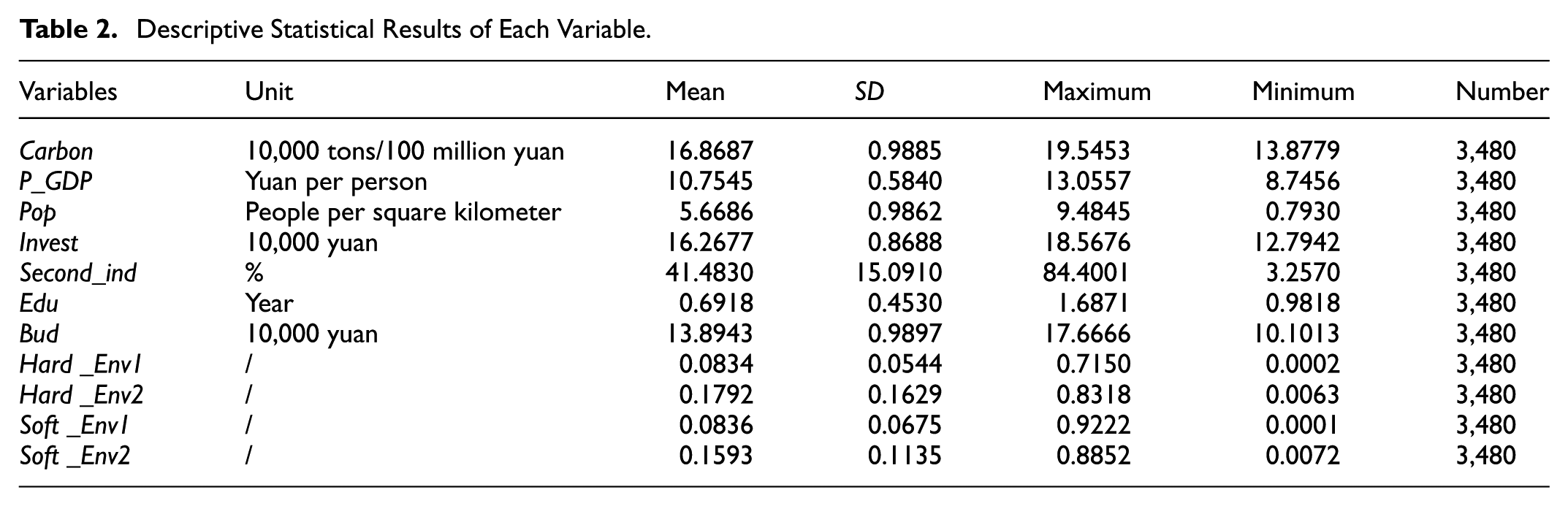
Balanced panel data covering 290 prefecture-level administrative districts from 2011 to 2022 was selected as the focus of the study. Other data are sourced from the China Urban Statistical Yearbook, China Energy Statistical Yearbook, China Industry Statistical Yearbook, China Tertiary Industry Statistical Yearbook, China Regional Economic Statistical Yearbook, and the official websites of regional statistics bureaus. For a few missing values, the linear interpolation method and the GM (1,1) prediction model are adopted for supplementation. Table 2 displays each variable’s descriptive statistics.
Descriptive Statistical Results of Each Variable.
Research Results and Discussions
Benchmark Regression Results
This study tested the net effect of the SCC on carbon emission intensity using a bidirectional fixed-effect model. Control variables were added successively. Table 3 shows the regression results from a full sample analysis of Equation 1. Model (1) shows the regression results without adding control variables. The regression coefficient of the SCC is significantly negative, indicating that the SCC has a significant inhibitory effect on carbon emission intensity. Control variables were progressively incorporated into models (2) through (7) to guarantee the stability of the regression results. According to the analysis results, the regression results of the SCC are consistent in direction and significance, further indicating that the SCC has a significant inhibitory effect on carbon emissions. To ensure the smoothness of the data and eliminate the influence of singular values, a 1% tailing processing was performed on each variable in Model (8). The analysis showed that the coefficient of interaction between policy variables dropped from −0.288 to −0.299, which significantly reduced the estimation bias caused by outliers in the data. The first hypothesis is confirmed. The above regression results are consistent with the research results of Zhang and Wu (2022) and Luo and Chen (2023). They also hold that sports consumption activities can promote the low-carbon development of cities and have passed a series of empirical tests. At 1%, 5% and 10%, respectively, P_GDP, Invest, Bud, and Edu have a substantial positive impact on carbon emission intensity among the control variables. There is a strong correlation between the level of economic development and the intensity of carbon emissions. The reason for this is that with the growth of the economy, residents’ income levels have increased, which in turn has led to improved living standards and increased spending on leisure activities, entertainment, sporting goods, fitness, and related items. The creation, distribution and utilization of these items all generate carbon emissions. The increase in general public budget expenditure will encourage sports enterprises to expand their production scale, thereby leading to energy consumption. The improvement of residents’ educational attainment will have a significant promoting effect on carbon emissions. This might be due to the change in consumption concepts, which makes residents more willing to participate in some high-consumption and high-carbon-emission sports consumption projects such as golf and equestrianism (L. O. Wang et al., 2020).
Benchmark Regression Results.
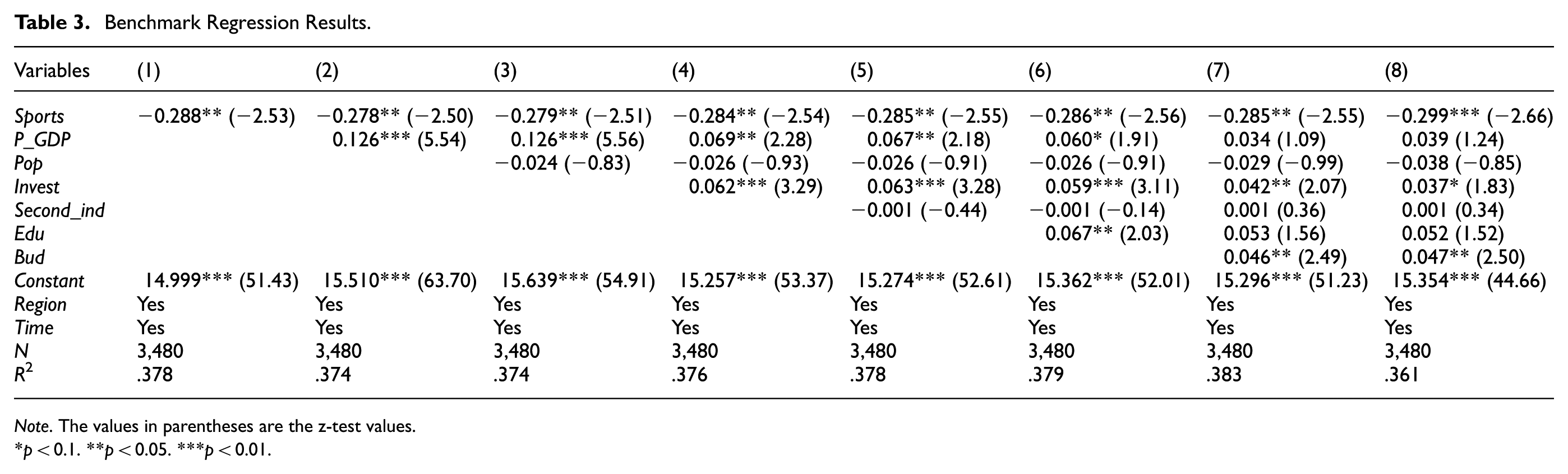
Note. The values in parentheses are the z-test values.
p < 0.1. **p < 0.05. ***p < 0.01.
Robustness Test
Parallel Trend Test
To ensure the authenticity and validity of the treatment effects estimated in Table 3, parallel trend tests are still required (Tidåker et al., 2017). In order to quantify the net effect of the policy in the absence of policy implementation, the parallel trend hypothesis primarily looks at the temporal variation trends of carbon emission intensity between the experimental group and the control group by controlling a number of observable factors. The benchmark group used in this article is the year when the policy was put into effect. This paper, referring to the research of Beck et al. (2010) and sets the form of the parallel trend test model as:

In Equation 7, post remains an annual dummy variable, with the observed value of the current year being 1; otherwise, it is 0. For the convenience of observation, the value of n is from the first 3 years of the launch of the SCC in 2020 to the last year of the study period. Before the implementation of the SCC, there is no significant difference between the estimated coefficient values of each period and 0 (Figure 5). However, the projected coefficient values deviated significantly from 0 in the year the policy was put into effect and in the years that followed. This suggests that the sample data used in this article passed the parallel trend test, meaning that the trends of carbon emission levels in the SCC and the control cities were stable prior to the implementation of the policy.
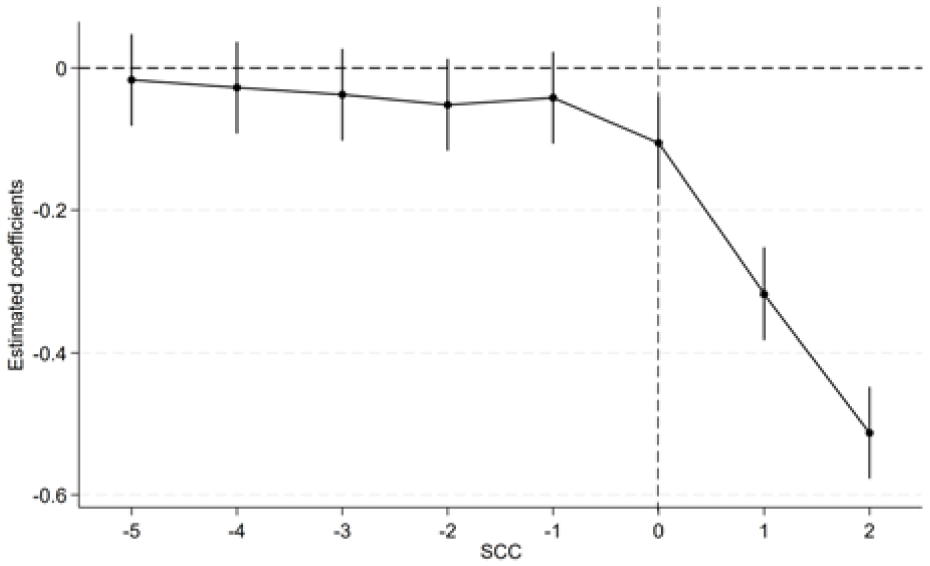
Parallel trend test chart.
PSM-DID Test
To ensure the similarity and comparability of the experimental group and the control group, as well as considering the possible issue of self-selection bias, and to avoid the influence brought by non-random selection due to the implementation of the SCC. This study combines the propensity score matching method (PSM) to address the endogeneity problem caused by sample selection bias. Match the control group samples that are closest to the experimental group for the cities that have not implemented the SCC. Use the control variables P_GDP, Pop, Invest, Second_ind, Edu, and Bud in the benchmark regression model as covariates. Use the Logit model and conduct 1:1 nearest neighbor matching, kernel matching and caliper matching. After matching, the samples are re-fitted for regression. It can be seen from the regression results in Table 4 that the DID estimation coefficients remain negative at the 1% significance level and are basically consistent with the regression results. This eliminates the interference of sample selection bias.
Validity Test Results of PSM-DID.
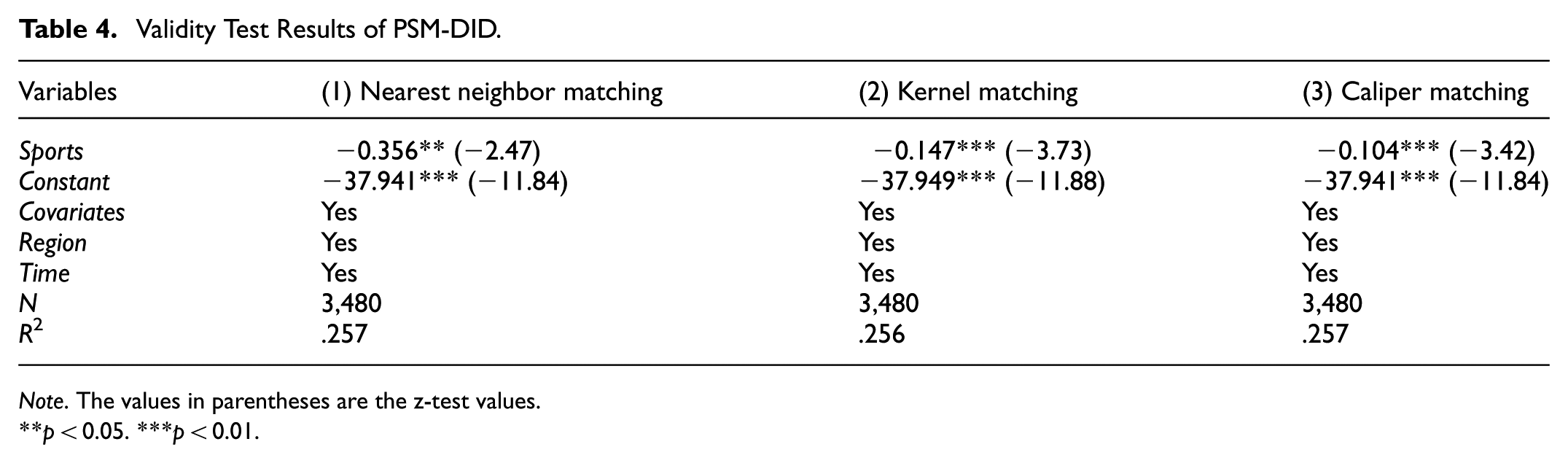
Note. The values in parentheses are the z-test values.
p < 0.05. ***p < 0.01.
Placebo Test
In this study, the initial explanatory variables were replaced with interaction terms that combined a pseudo-experimental group and a pseudo-temporal dummy variable. In addition, pilot cities and years were randomized, and the entire process was repeated 500 times to conduct a placebo test to assess whether the observed empirical results were influenced by unobservable factors (Hu et al., 2021). The kernel density function of the coefficient estimates in the randomization test is shown in Figure 6. Among them, the dotted line perpendicular to the horizontal axis represents the coefficient estimates of the benchmark regression model. The results show that the predicted coefficients of the pseudo-processing impact are far from the genuine value and are mostly focused close to the zero point. This shows that the regression results of the benchmark model are not affected by unmeasured factors, thus supporting the credibility of the study conclusions.
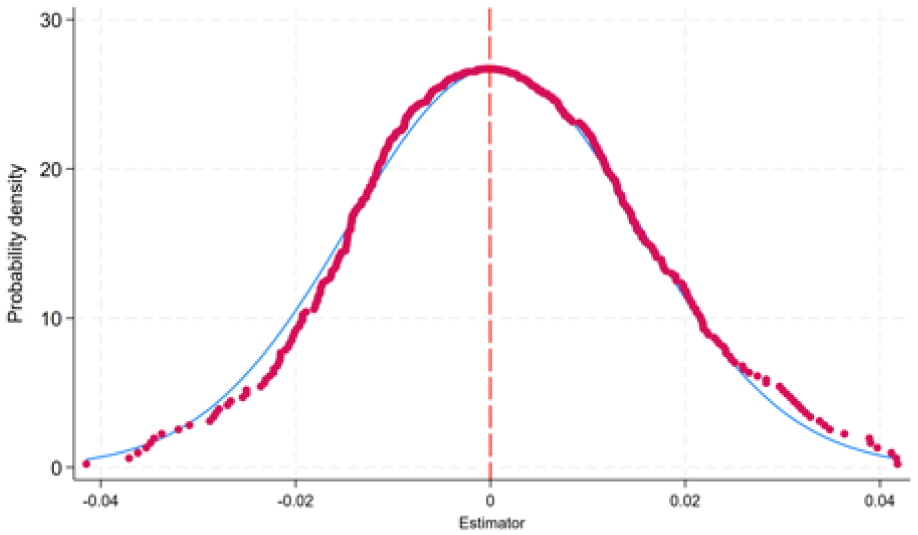
Placebo test.
Double Machine Learning Method
In order to eliminate the “dimension curse” and multicollinearity problems that traditional regression models may encounter. This paper utilizes the dual machine learning model and employs the gradient boosting algorithm for prediction and solution, in order to overcome the strict and specific assumption conditions of traditional models. This is done to improve the accuracy and robustness of causal effect estimation. The results in Table 5 show that through the analysis using random forest, support vector machine, lasso, ridge and elastic net, the SSC remain significant, verifying the reliability of the conclusion of this paper.
Double Machine Learning Results.
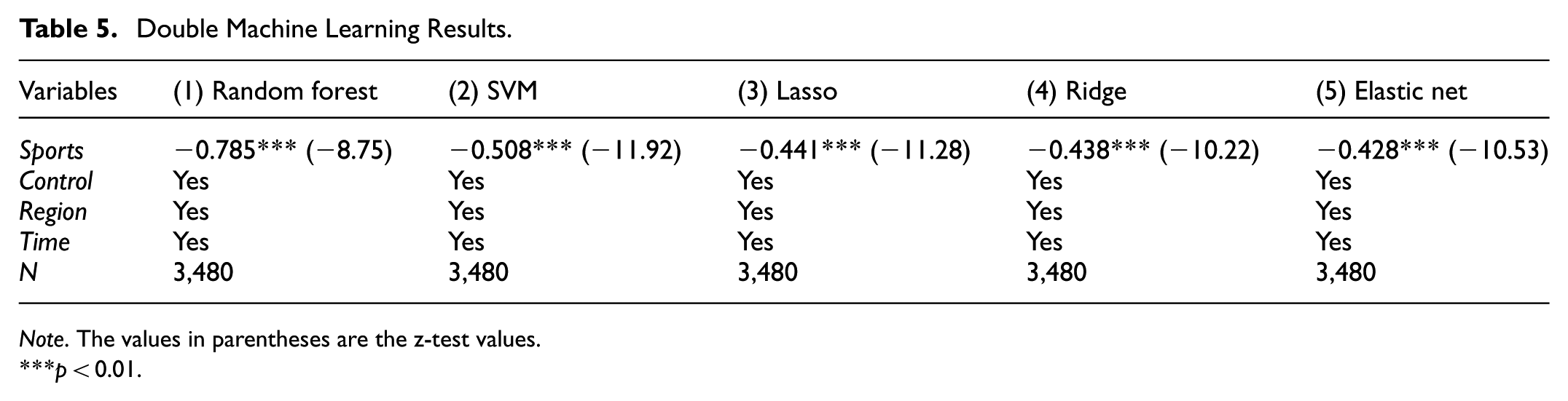
Note. The values in parentheses are the z-test values.
p < 0.01.
Exclude Other Policies From Interfering With the Inspection
Considering that the impact of the SCC on carbon emissions may be disturbed by other relevant policies within the sample period, thereby leading to deviations in the benchmark estimation results of this paper (Y. Feng et al., 2023). By collecting relevant materials, it is found that the relevant policies that may have an impact on this article mainly include the pilot policies on cultural and tourism consumption carried out from 2020 to 2022 and the pilot policies on information consumption carried out in two batches from 2013 to 2022. In order to exclude the impact of other related policies, these two policies are added in the regression in this study, respectively. Table 6 displays the regression results. Each regression coefficient is negative at the 5% significance level, which enhances the reliability of the benchmark regression results. This indicates that the basic assumption that SCC has an inhibitory effect on carbon emission intensity still holds.
Excludes the Interference of Other Policies in the Inspection.
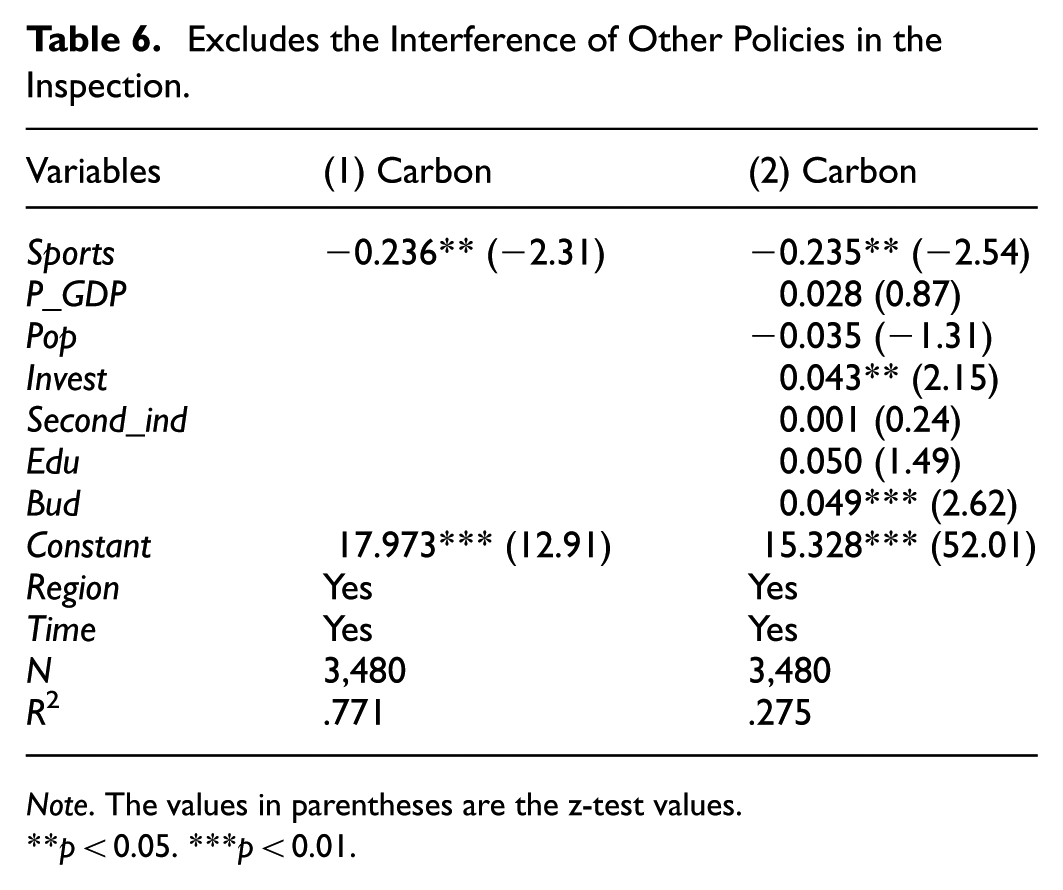
Note. The values in parentheses are the z-test values.
p < 0.05. ***p < 0.01.
Heterogeneity Analysis
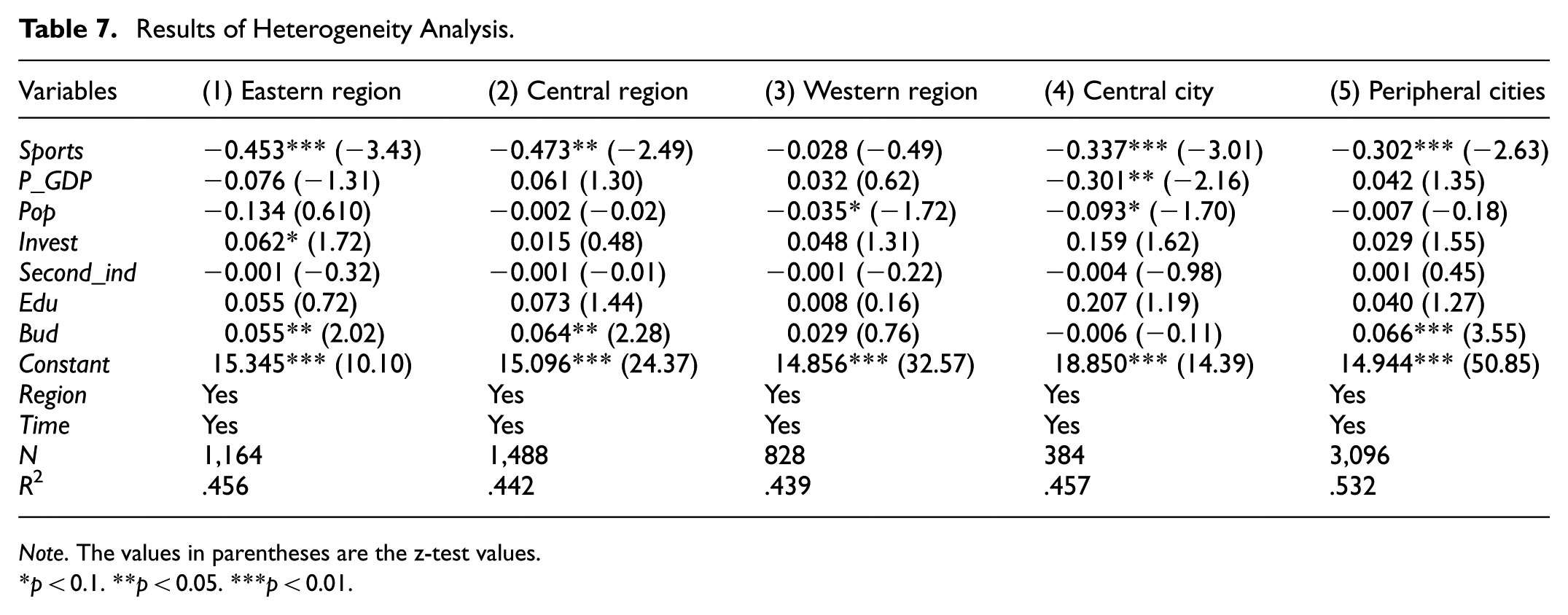
Due to the large east-west span and obvious regional differences in China, it is necessary to conduct an analysis of regional heterogeneity. The samples were divided respectively from the three major regions of east, middle and west. The regression results are shown in models (1), (2), and (3) in Table 7. The results show that the SCC has a significant inhibitory effect on the carbon emission intensity in both the eastern and central regions. Compared with the overall national situation, the sample coefficients in the eastern and central regions are higher than the overall national coefficient. It is notable that the regression results in the western region are not significant. The reasons for this are, on the one hand, that the eastern and central regions, relying on their developed economic levels, transportation infrastructure and complete sports equipment manufacturing bases, have created a wide variety of sports products and services, greatly increasing the consumption rate of sports products and services. In addition, the region’s industrial structure is diversified, effectively releasing various digital consumption demands for sports and curbing carbon emission intensity. On the other hand. The lagging infrastructure construction in the western region and the underdeveloped transportation and economic levels have led to a low willingness to consume sports, posing obstacles to the implementation and promotion of policies. Furthermore, the shortage of fixed asset investment and human capital has exacerbated the insufficient intensity of sports consumption, resulting in the policy implementation effect failing to meet expectations.
Results of Heterogeneity Analysis.
Note. The values in parentheses are the z-test values.
p < 0.1. **p < 0.05. ***p < 0.01.
Additionally, the influence of the SCC on cities with varying economic sizes is examined in this paper. In particular, other cities at the general prefecture level are reported as peripheral cities, whereas province capital cities and sub-provincial cities are consistently recorded as core cities. The regression results are shown in models (4) and (5) of Table 7. The coefficients of the interaction terms are significantly negative at the 1% statistical level, and the regression coefficients of the central cities are slightly larger than those of the peripheral cities. This indicates that the pilot policy for sports consumption has a stronger inhibitory effect on carbon emissions in cities with large economic volumes. Compared with ordinary prefecture-level cities, provincial capitals and sub-provincial cities are mostly the focus of national or regional economic development strategies. They have a higher level of sports consumption and economic foundation, a higher level of green manufacturing of sports goods, and stricter requirements for sustainable event hosting, which is more conducive to curbing carbon emission intensity. In contrast, the industrial focus of peripheral cities is mainly on the secondary industry, and the consumption of chemical energy is even greater, resulting in less obvious effects.
Mechanism Verification
Analysis of the Mediating Effect of the Hard Environment
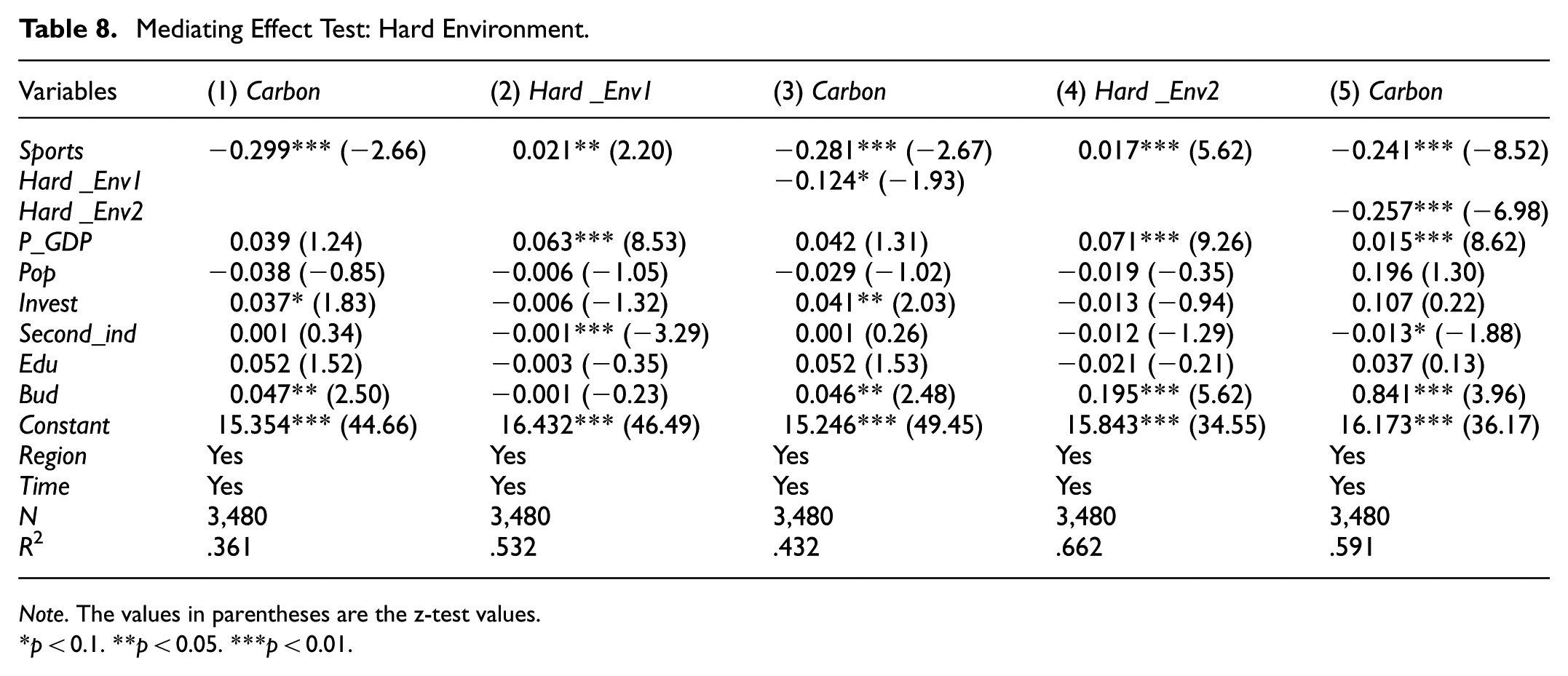
The benchmark regression results show that the SCC can directly exert a significant inhibitory effect on carbon emission intensity, but the specific mechanism of action still needs further verification. Based on Equations 1 to 5, this paper conducts an empirical test on the mediating effect of the hard environment of sports consumption. Table 8 shows the results of the regression analysis. In model (2), with SCC as the independent variable and Hard _Env1 as the dependent variable, Sports coefficient is 0.021. This suggests a statistically significant positive correlation at a significance level of 5%. This suggests that the SCC significantly improves the hard environment. As revealed in the mechanism analysis, the advancement of the SCC can provide favorable support for the development of the hard environment for sports consumption. Secondly, in Model (3), the coefficients of Sports and Hard _Env1 are −0.281 and −0.124 respectively. The above two coefficients passed the significance test at the significance levels of 1% and 10%, verifying Hypothesis 2. Furthermore, models (4) and (5) are the results of regression analysis after changing the calculation method of the mediating variables. The regression results were statistically significant at the 1% level, which fully validates the robustness of this outcome. That is, the mediating effect of the hard environment for sports consumption exists in the weakening path of promoting carbon emissions through the SCC. From the perspective of demand-driven, SCC stimulate the continuous growth of sports-related consumption demands and promote the iteration of new infrastructure through scale effects and structural effects. According to the multiplier effect theory, after the expansion of sports events and consumption activities, the demand for transportation, logistics and digital services grows exponentially. This demand forces cities to upgrade their infrastructure (Zhang & Wu, 2022). Meanwhile, the current new round of digital technologies is constantly penetrating the process of infrastructure upgrading, which can enhance production efficiency and thereby reduce carbon emissions. This further explains the action path of SCC → hard environment → carbon emissions.
Mediating Effect Test: Hard Environment.
Note. The values in parentheses are the z-test values.
p < 0.1. **p < 0.05. ***p < 0.01.
Analysis of the Mediating Effect in the Soft Environment
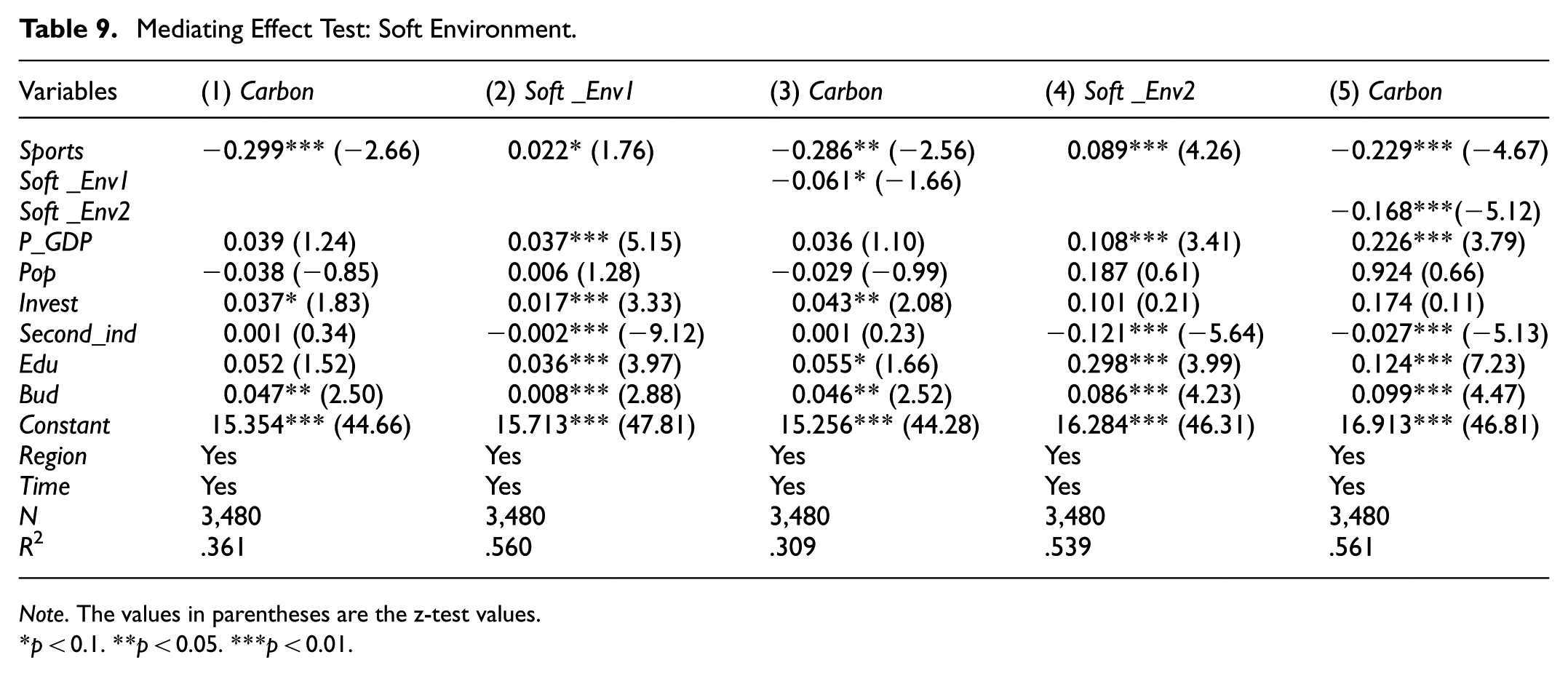
To further verify the action path of SCC → soft environment → carbon emissions, the test findings of the soft environment mediating effect model for sports consumption are shown in Table 9. The findings demonstrate that the SCC has encouraged the enhancement of the soft environment for sports consumption, as evidenced by the regression coefficient of the SCC in model (2) on the soft environment being 0.022 and passing the significance test of 10%. The regression coefficients of the SCC and the soft environment in Model (3) on carbon emissions are −0.286 and −0.061 respectively, it passed the significance tests of 5% and 10% respectively. At the same time, by changing the calculation method of the mediating variable, models (4) and (5) also passed a series of significance tests. This indicates that the SCC can play a partial mediating role in weakening the indirect effect of carbon emissions through a soft environment, which further validates Hypothesis 3. From the perspective of externality theory, the SCC drive the government to correct the negative externalities of the sports industry through policy tools such as tax incentives and fiscal subsidies. For instance, the special funds for low-carbon technology research and development have reduced the innovation costs of sports enterprises, accelerated the commercial application of technologies such as smart wearable devices and photovoltaic sports venues, and thereby reduced carbon emissions. In addition, with the improvement of the integration degree of the sports consumption market, elements of sports products and services can flow across regions at a relatively low cost. Due to the high cost of pollution management, the manufacture of highly polluting sports goods in different regions will not be able to compete with other products. As a result, low-cost and environmentally friendly items will be used to lower the carbon emission intensity of cities (Ito & Higham, 2025). Finally, open sports consumers are more willing to consume green products such as sports competition services and sports tourism. This is conducive to the pilot policies promoting the transformation and upgrading of the consumption structure, increasing the proportion of the tertiary industry in the economy, and thereby reducing the carbon emission intensity.
Mediating Effect Test: Soft Environment.
Note. The values in parentheses are the z-test values.
p < 0.1. **p < 0.05. ***p < 0.01.
Conclusions and Policy Recommendations
Conclusions
Taking the SCC released in 2020 as a quasi-natural experiment, and selecting the panel data of 290 prefecture-level cities in China from 2011 to 2022 as the research sample, a DID model was constructed to test the impact and mechanism of the SCC on urban carbon emission intensity. The main research conclusions are as follows. (1) The benchmark regression results show that the SCC can significantly curb the carbon emissions of the cities. After a number of robustness tests, including the balanced trend test, propensity score matching test, placebo test, and removal of the impact of other policies, this conclusion remains valid. (2) Heterogeneity-wise, the SCC’s impact on carbon emissions is more noticeable in the central and eastern areas as well as in core cities with more advanced economies. (3) By enhancing the hard and soft environments for sports consumption, the SCC primarily lowers the carbon emission intensity of cities, according to test results from mechanism analysis. Meanwhile, this mediating variable plays a mediating effect throughout the process.
Policy Recommendations
Three policy implications are also produced by this study in light of the aforementioned research findings. (1) To accomplish the objective of low-carbon development, deepen the SCC’s layout, progressively increase the coverage of pilot areas, and create a mechanism for cross-regional cooperation. The government should actively promote the multi-subject linkage and collaboration with enterprises and communities, implement the overall resource planning of the entire region, and accelerate the construction of a community sports space service network. Strengthen investment in green technological innovation in the sports industry and guide market entities to deeply integrate the principle of ecological priority into all links of product design, manufacturing, circulation and recycling and treatment. Support the innovation of production processes through special subsidies, focus on breaking through key technologies for clean energy substitution, and promote the sustainable development of the entire industrial chain of sports goods. In addition, government departments can conduct market research and implement differentiated allocation of initial carbon quotas for sub-sectors such as sports equipment manufacturing and event operation through the environmental credit score system. For enterprises that meet the annual carbon intensity reduction standards, a green channel can be opened, and targeted incentives such as immediate refund of value-added tax and subsidies for research and development expenses can be provided to invigorate the sports market.
(2) On the one hand, efforts should be made to promote the construction and creation of a hard urban environment to provide hardware support for achieving the low-carbon goals of the pilot policies. Build an integrated and efficient smart sports infrastructure, with a focus on the construction of new low-carbon and low-pollution infrastructure such as smart wearables, smart sports venues, smart gyms, and smart transportation. At the same time, we should encourage and support all types of market entities to actively explore new models of sports consumption. By introducing intelligent technologies and building smart sports platforms, we can enhance the convenience and personalization of sports services, such as the integration of online and offline, and experiential consumption. On the other hand, efforts should also be made to actively optimize the soft environment level of the city. While focusing on the environment of scientific and technological innovation, the market environment and the government’s administrative environment, efforts should also be made to actively create the financial environment and the consumption culture environment. Develop a multi-level green financial support system for the sports industry, and develop sustainable credit tools, carbon neutrality special bonds, and environmental protection liability insurance products that comply with ESG standards. Specifically, establish an interest subsidy mechanism linked to environmental performance in the field of sports equipment manufacturing. This will force highly polluting sports enterprises to carry out clean production and fully reduce carbon emissions during the production process.
(3) Based on the results of the previous heterogeneity analysis, it can be concluded that the carbon emissions from sports consumption are relatively high in cities with higher economic development levels such as those in the eastern and central regions. However, in cities in the western region with lower economic levels, the carbon emissions are not significant. Therefore, the construction of low-carbon cities for sports consumption should be carried out in combination with the location characteristics of different regions themselves to ensure policy flexibility. For instance, in the eastern and central core regions where a favorable sports consumption ecosystem has been formed and innovative elements are concentrated, efforts should be focused on the core driving force for digital transformation and upgrading. Relying on their endowment advantages of rich scientific and technological talents and complete industrial support, the integrated application of internet of things perception technology, cloud computing and blockchain distributed architecture should be promoted as a priority. Focus on building an intelligent fitness community platform based on user portraits and cultivate a digital innovation demonstration zone for sports consumption with technology spillover effects. The western region should take inclusiveness as the starting point and increase investment in digital infrastructure in underdeveloped areas. Specific supportive policies should be formulated, and by establishing a special construction fund for new sports service facilities, incentives should be provided to local sports enterprises to invest in the digital consumption sector.
Of course, although this study explored and verified the relationship between sports consumption and the reduction of carbon emission intensity, there are still certain limitations. Due to the availability of data at the prefecture-level city level, only the mediating effects of macro data such as infrastructure construction and marketization level have been explored so far. However, the impact of the SCC on carbon emission intensity may still exist in micro-mediating transmission forms such as residents’ environmental awareness and consumption habits. In the future, this mechanism will be further explored through questionnaire surveys or by using other alternative variables.
Supplemental Material
sj-docx-1-sgo-10.1177_21582440261466909 – Supplemental material for Does the Sports Consumption City Pilot Policy Reduce Carbon Intensity? Quasi-Natural Experimental Evidence from Chinese Cities
Supplemental material, sj-docx-1-sgo-10.1177_21582440261466909 for Does the Sports Consumption City Pilot Policy Reduce Carbon Intensity? Quasi-Natural Experimental Evidence from Chinese Cities by Maoteng Cheng and Fugao Jiang in SAGE Open
Footnotes

Ethical Considerations
This article does not contain any studies with human participants or animals.
Consent to Participate
This article does not contain any studies with human participants performed by any of the authors.
Consent for Publication
Not applicable. This manuscript does not contain any individual person’s data, images, or videos.
Funding
The authors disclosed receipt of the following financial support for the research, authorship, and/or publication of this article: This work was supported by the National Social Sciences Funding of China (grant number: 24ATY005).
Declaration of Conflicting Interests
The authors declared no potential conflicts of interest with respect to the research, authorship, and/or publication of this article.
Data Availability Statement
The datasets used or analyzed during the current study are available from the corresponding author on reasonable request*.
Code Availability Statement
The code used or analyzed during the current study are available from the corresponding author on reasonable request.
Supplemental Material
Supplemental material for this article is available online.
References
Supplementary Material
Please find the following supplemental material available below.
For Open Access articles published under a Creative Commons License, all supplemental material carries the same license as the article it is associated with.
For non-Open Access articles published, all supplemental material carries a non-exclusive license, and permission requests for re-use of supplemental material or any part of supplemental material shall be sent directly to the copyright owner as specified in the copyright notice associated with the article.
