






Abstract
Social connectedness reflects an individual’s sense of connection to the world, and has been recognized as a critical factor in personal happiness. Parents and their children are the core members of the family and influence each other significantly. Nevertheless, the effects of their respective social connectedness on the subjective well-being of others remain unclear. This study uses a dyadic perspective grounded in family systems theory to explore the complex relationship between social connectedness and subjective well-being among Chinese parents and their children. The data used were sourced from the 2020 China Family Panel Studies (CFPS 2020), a national-level multistage stratified sampling database. The data include sociodemographic characteristics, family background, mental health, social connectedness, and subjective well-being. This study constructed an Actor-Partner Interdependence Model (APIM) based on family systems theory and social role theory to analyze actor and partner effects. A total of 2,760 participants were enrolled, including minor children (meanage = 13.44, SD = 2.27) and their parents (fathers, meanage = 40.48, SD = 5.54; mothers, meanage = 38.48, SD = 5.18). Shapley decomposition revealed that social connectedness contributed greater value than other factors. The APIM indicated that the individual social connectedness values of fathers, mothers, and children had significant positive actor effects on their own subjective well-being, while only the social connectedness of mothers had a significant partner effect on the subjective well-being of minor children (effect = 0.109, 95% CI [0.060, 0.157]). These results highlight the crucial importance of social connectedness for well-being, and indicate differences in the role effects of fathers and mothers in Chinese families. These findings provide new evidence for understanding parent-child relationships and enhancing their subjective well-being within the sociocultural context of China.
Introduction
Well-being is a major pursuit in human life. Previous research has demonstrated the importance of personal happiness and subjective and psychological well-being in the lives of individuals (Puia et al., 2025). As an essential indicator of well-being, subjective well-being refers to an individual’s overall evaluation and emotional experience of their life (Diener, 1984). Subjective well-being promotes the health and longevity, work performance, civic participation, and psychological resilience of an individual (Diener et al., 2018). These findings indicate the importance of investigating factors contributing to subjective well-being.
Childhood is a critical stage of personal growth and development, and children’s subjective well-being holds unique importance, as has been shown by many studies since the last century. Children’s subjective well-being is a reflection of their subjective perceptions and understanding of their lives (W. J. Xu et al., 2024). In terms of education, children’s well-being is closely linked to their academic performance (Bortes et al., 2021), while, apart from education, it is influenced by a variety of factors associated with themselves, their family and school, and society (B. J. Lee & Yoo, 2015). Children and parents have a unique, close relationship, and there are many ways in which they influence each other. When analyzing problems among adolescents, it is essential to consider the role of their parents. Family systems theory posits that the family exists in dynamic equilibrium in which the emotions and behaviors of its members are interrelated and influence one another (Bowen, 1966; Palombi, 2016). Many researchers have shown a significant correlation between the respective subjective well-being of parents and children (Chi et al., 2019; Fan et al., 2023; Rees & Bradshaw, 2018). The triangular relationship in the family between parents and children influences the ideas, psychological states, and behavior of the individual members.
Social connections within society are closely related to subjective well-being. Self-determination theory posits that individuals have certain fundamental psychological needs, such as competence, autonomy, and relatedness. If these needs are not met, the mental health and well-being of the individual may suffer (Deci & Ryan, 2000; Ryan & Deci, 2000). Social connectedness represents an individual’s sense of connection with others, and their perception of intimacy and distance from society as a whole (R. M. Lee & Robbins, 1995). High levels of social connectedness in individuals can satisfy the basic psychological need of forming connections with others. It has been found that social connectedness can effectively predict the degree of subjective well-being (Liao & Weng, 2018). Studies have also shown that social connectedness contributes more to subjective well-being in married couples than factors such as social status and mental health (R. Li et al., 2025). It has also been found that social connectedness can provide a buffer against diminished well-being caused by aging (Tosi & Van den Broek, 2025). For adolescents, social connectedness also plays an undeniably significant role in their life experiences and developmental journey. A study reported an association between social connectedness and psychological abuse during adolescence, and that social connectedness can significantly predict subjective well-being (Arslan, 2018). Research has also revealed that adolescents with higher levels of social connectedness tend to be more skilled in emotional regulation (Do et al., 2025). It has been noted that children lacking social connections and peer relationships face an increased risk of bullying, while lower levels of subjective well-being are linked to poor family relationships (Chen et al., 2023). Notably, in addition to their own social relationships and peer interactions, adolescents are also influenced by family members, particularly their parents (Wikle & Hoagland, 2020). It is especially important to consider the role of parental factors in their growth and happiness.
Family members, with parents and children at the core, interact and influence one another. Their respective social connectedness may generate a partner effect on others’ subjective well-being, and this partner effect may also vary in terms of their distinct roles. Social role theory posits that an individual’s behavior and performance should conform to the expectations associated with their social status and role (Eagly, 1997). The traditional social culture and Confucian philosophy of China have shaped distinct social roles (Du, 2003). Generally, the father serves as the provider and leader of the family, while the mother manages household affairs and cares for the children (X. X. Xu et al., 2023), with minor children representing the family’s hope and contributing assistance. Due to differences in social roles, the sources of subjective well-being for parents and children within the family may differ. For children, a strong sense of connectedness can help them develop positive emotions while providing emotional support to their parents. It has been reported that the emotional support of adult children for their parents contributes more to happiness than parents’ emotional support for their children (Bar-Tur et al., 2019). For parents, high social connectedness means closer social relationships and more social resources for their families and children, including material and emotional support. Research has found that parents’ perception of social support enhances the mental well-being of the children (Yan et al., 2024).
Several gaps remain in the current understanding of social connectedness and subjective well-being. First, existing research has focused largely on the relationship between individual social connectedness and subjective well-being (Arslan, 2018; Liao & Weng, 2018; Tosi & Van den Broek, 2025), with limited information on the family dynamics of parents and minor children. Second, parents and children represent the core of the family, and while issues related to their subjective well-being have been considered (Hoellger et al., 2023; Ishii et al., 2025; Nagy et al., 2023), few studies have addressed the complex relationship between the social connectedness of minor children and their parents and their subjective well-being from a dual perspective. Finally, China has unique sociocultural contexts and historical traditions (Zhao et al., 2023). Thus, analyzing the subjective well-being of Chinese parents and children requires consideration of sociocultural factors.
The present study used family systems theory, social role theory, and self-determination theory to construct an Actor-Partner-Interdependence Model (APIM), aiming to explore both actor and partner effects of social connectedness on subjective well-being. The specific theoretical framework and hypothesized model are presented in Figure 1. Publicly available data from national databases were used to explore the contribution of various factors to the subjective well-being of Chinese fathers, mothers, and children, analyzing both actor and partner effects of their respective social connectedness. The findings will provide scientific evidence to clarify the value of social connectedness for different groups and its associated mechanisms within families.
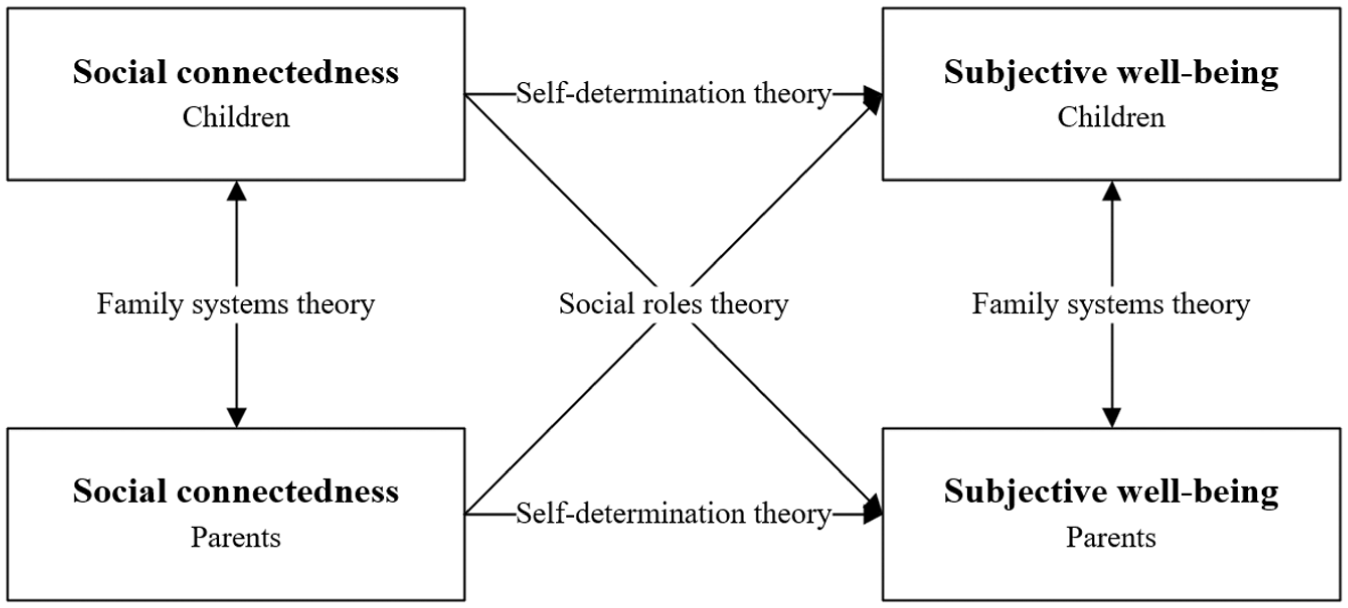
Theoretical framework and hypothetical model diagram.
Methods
Data and Samples
This study analyzed data from the China Family Panel Studies 2020 (CFPS 2020), a dynamic nationwide tracking survey organized and implemented by the China Center for Social Science Research (Institute of Social Science Survey, 2015). The CFPS utilizes a multi-stage implicitly stratified probability sampling method. The sample includes households and individuals in different regions of China, both urban and rural, and is highly representative and reliable. The CFPS employs systematically trained interviewers to conduct in-person household surveys. Respondents were interviewed individually in separate rooms, with no group responses or mutual influence permitted. Additionally, personal attitude questions and other sensitive topics could not be answered by proxy. All participants provided informed consent. The CFPS was approved by the Peking University Biomedical Ethics Committee. The present study included married couples and their minor children who participated in the survey, excluding those with incomplete information. Following the methodology of existing studies (Leung et al., 2022; Yeung, 2015), if more than one eligible child is present in the family, the older child is included, as they demonstrate greater accuracy in understanding and responding to the questionnaire. Details of the data screening are provided in Figure 2.
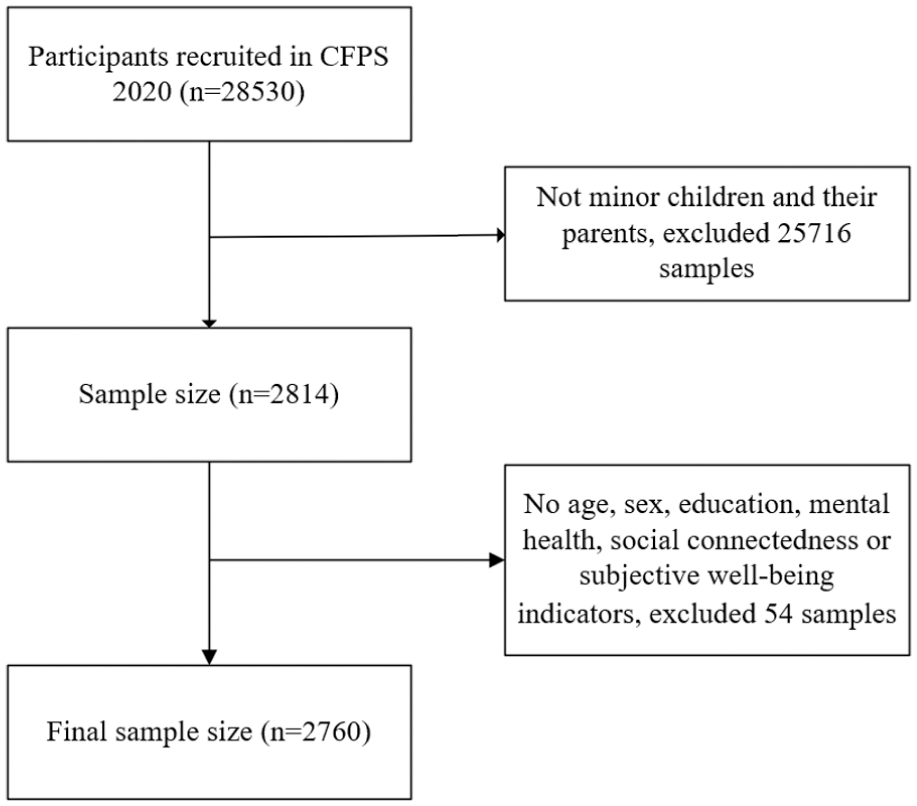
Flowchart of study participants.
Variables
Subjective Well-Being
Subjective well-being was measured using the question “How do you feel about your happiness?” from the China Family Panel Studies. The scores ranged from 0 to 10, with higher scores indicating higher levels of subjective well-being. The validity of this measure has been confirmed by previous studies (Wu et al., 2025; Xie et al., 2024).
Social Connectedness
Social connectedness refers to an individual’s sense of connection with and distance from the world. The question in the CFPS is “How well do you feel connected?” The scores range from 0 to 10, with higher scores indicating greater social connectedness. The validity of this question was confirmed by previous studies (He et al., 2024; R. Li et al., 2025; Peng, 2023).
Control Variables
The following control variables were included in this study: age (continuous), sex (male, female), education (unfinished primary school, primary school, middle school, high school/vocational school, college or above), and mental health (continuous, measured using the CESD-8 with scores ranging from 0 to 24, and higher scores indicating more severe mental health issues; the Cronbach’s alpha coefficient is 0.760).
Statistical Methods and Models
SPSS 24.0, Stata 17.0, and Mplus 8.3 were utilized for data processing and analysis. The basic information on participants is presented as numbers and percentages for categorical variables, and smeans and standard deviations (SD) for continuous variables. The Mann-Whitney U test was used to compare differences in the distribution of variables between children and parents. Spearman correlation coefficients were used to assess associations between variables, while linear regression and Shapley decomposition were applied to explore the contributions and proportions of different variables to subjective well-being. An APIM model was constructed to analyze the effects (Cook & Kenny, 2005; Kenny & Ledermann, 2010). The actor effect refers to the effect of an individual’s own factors on their own variables, while the partner effect refers to the effect of an individual’s factors on their partner’s variables. The effect values and their 95% confidence intervals (CIs) are reported, and a path diagram of the model was constructed. When the 95% CI value did not include zero, the effect was considered significant. The level of significance was set at α = .05.
Results
Basic Information of Participants
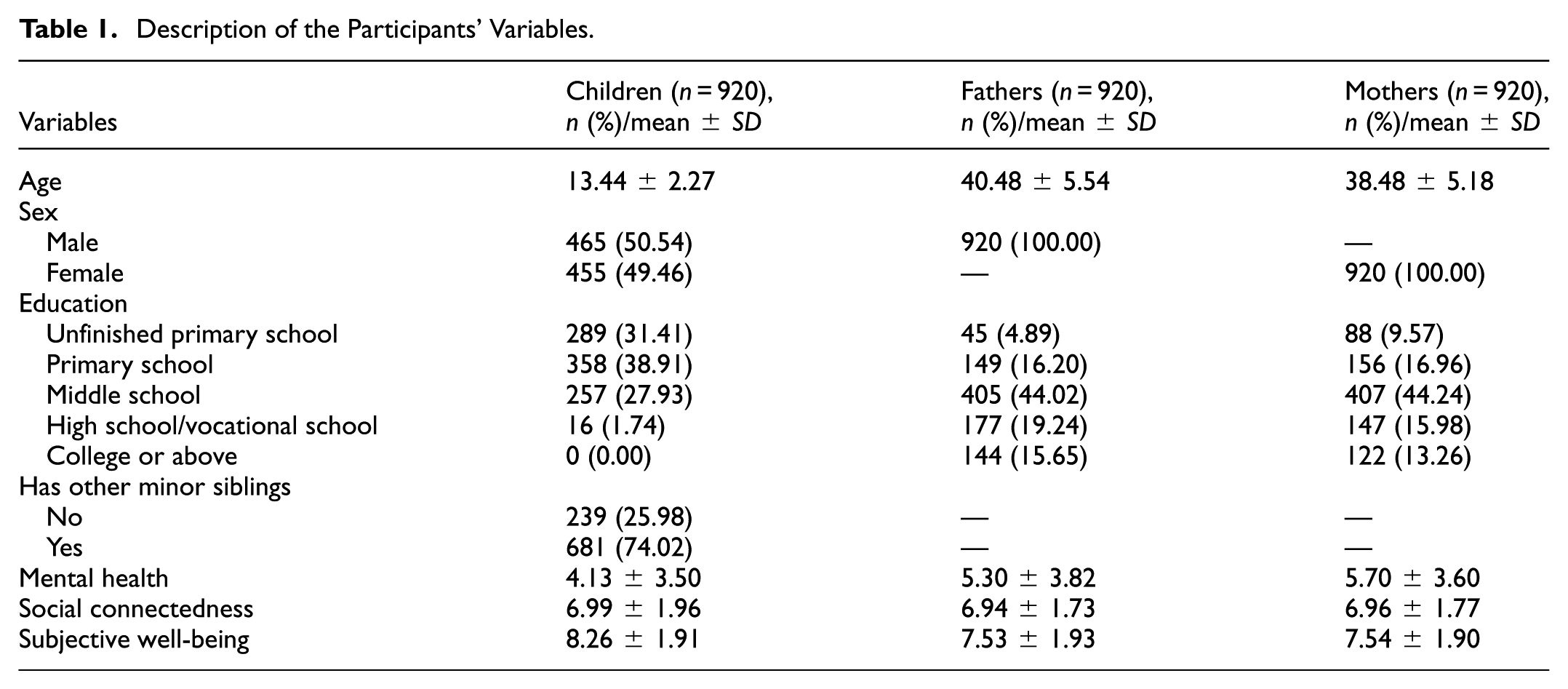
This study included 2,760 participants, and their basic information is shown in Table 1. The mean age of the minor children was 13.44 ± 2.27 years. Among the children, 465 (50.54%) were male and 455 (49.46%) were female. Most of the children 358; 38.91%) had primary school education, while the average mental health score was 4.13 ± 3.50, the average social connectedness score was 6.99 ± 1.96, and the average subjective well-being score was 8.26 ± 1.91. Among the parents, a majority of the participants had a Middle school education, totaling 405 fathers (accounting for 44.02%) and 407 mothers (accounting for 44.24%); the fathers’ average social connectedness score was 6.94 ± 1.73 and the mothers’ average social connectedness score was 6.96 ± 1.77, while the fathers’ average subjective well-being score was 7.53 ± 1.93 and mothers’ average subjective well-being score was 7.54 ± 1.90.
Description of the Participants’ Variables.
Relationship Between Social Connectedness and Subjective Well-Being
No significant difference was found between the parents’ and children’s social connectedness scores (fathers, Z = 0.631, p = .528; mothers, Z = 0.350, p = .727). However, a significant difference was observed between the subjective well-being scores of parents and children (fathers, Z = 8.145, p < .001; mothers, Z = 8.059, p < .001).
The results of the correlation analysis indicated a significant positive correlation between the social connectedness and subjective well-being of the participants (children, ρ = .426, p < .001; fathers, ρ = .416, p < .001; mothers, ρ = .521, p < .001). The results of the correlation analysis are shown in Table 2.
Correlation Analysis of Variables.
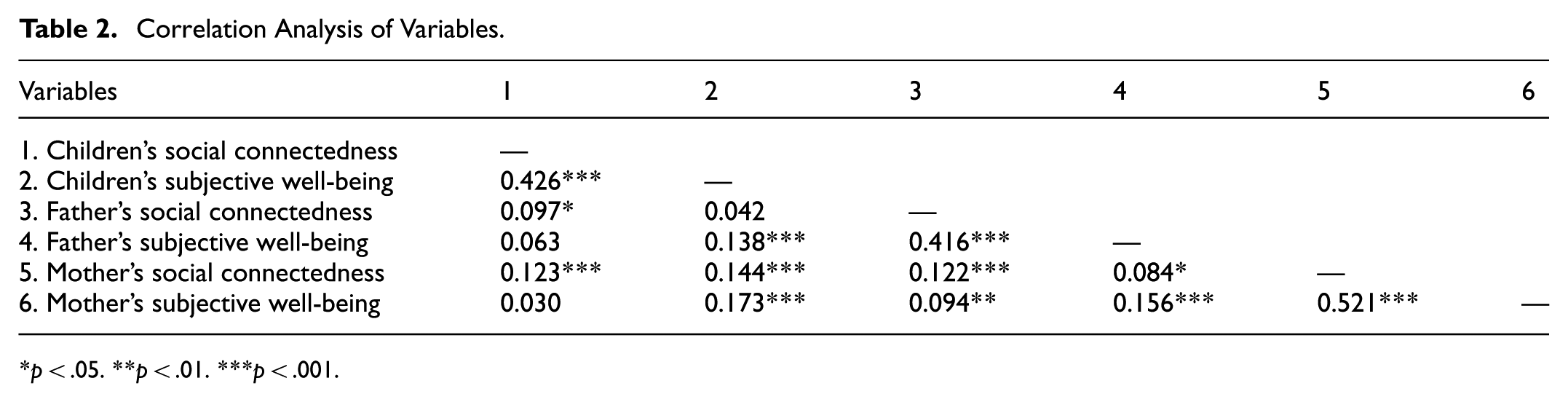
p < .05. **p < .01. ***p < .001.
The linear regression model indicated that the social connectedness of minor children, fathers, and mothers each exerted an independent positive effect on their respective subjective well-being (children, β = .374, p < .001; fathers, β = .366, p < .001; mothers, β = .481, p < .001). Shapley value decomposition revealed that social connectedness consistently contributed the highest proportion of the variance. Among minor children, the value of the contribution of the mothers’ social connectedness (value = 0.01589, accounting for 5.88%) exceeded that of the fathers (value = 0.00062, accounting for 0.23%). Details are shown in Tables 3 and 4.
Linear Regression Estimation of Parents’ and Children’s Subjective Well-Being.
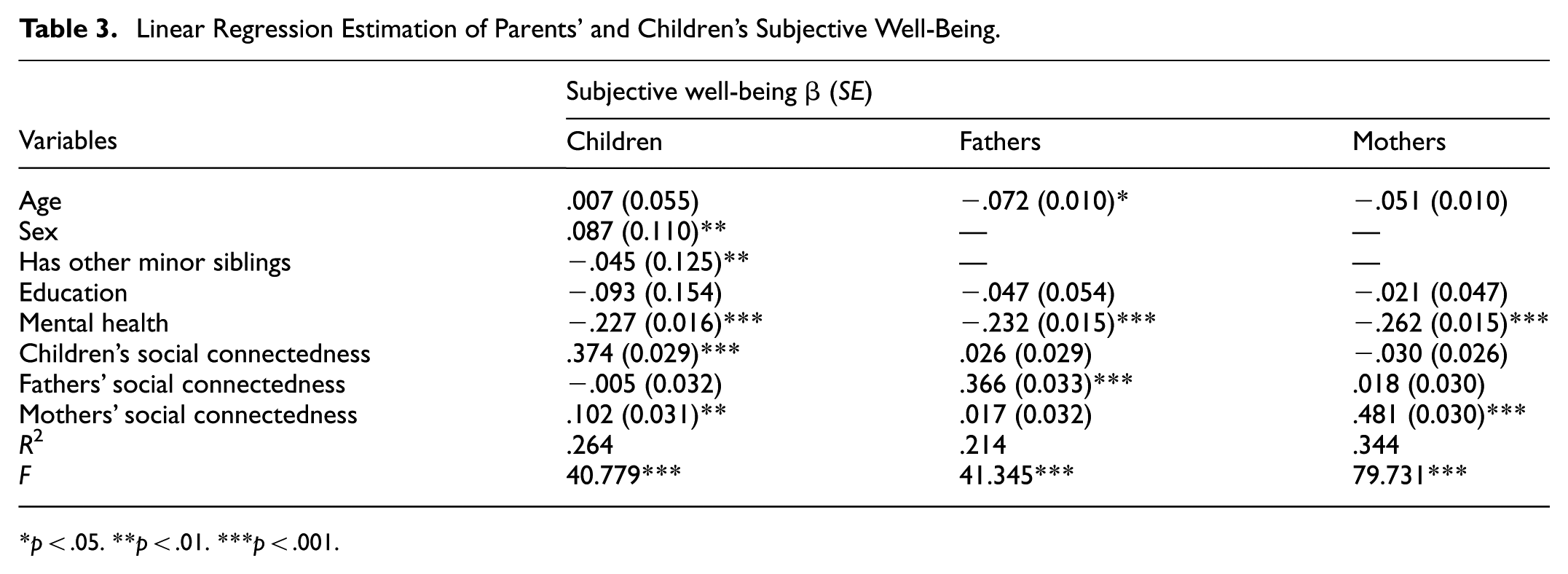
p < .05. **p < .01. ***p < .001.
Shapley Value Decomposition of Variables.
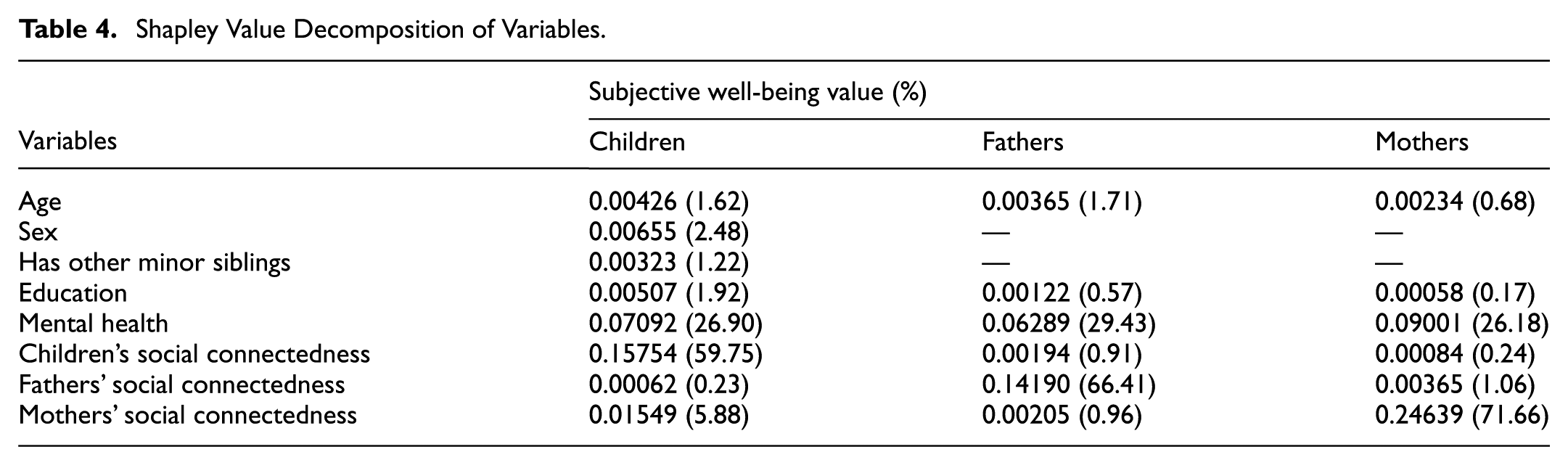
The Actor-Partner-Interdependence Model of Parents and Children
The APIM was constructed to explore the actor and partner effects of the social connectedness of the minor children, fathers, and mothers on subjective well-being. The detailed results and model paths are presented in Table 5 and Figures 3 and 4.
The Effect of the Actor-Partner-Interdependence Model on Social Connectedness and Subjective Well-Being.
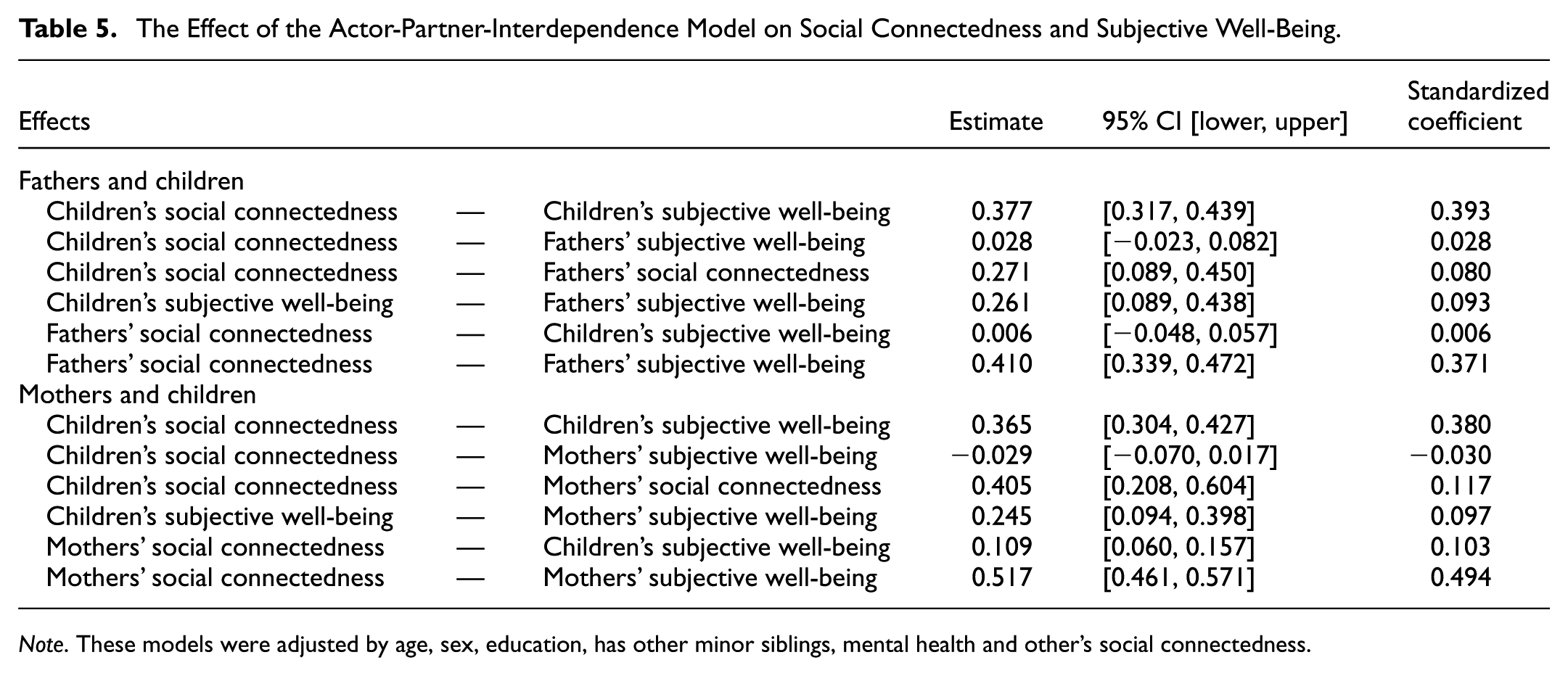
Note. These models were adjusted by age, sex, education, has other minor siblings, mental health and other’s social connectedness.
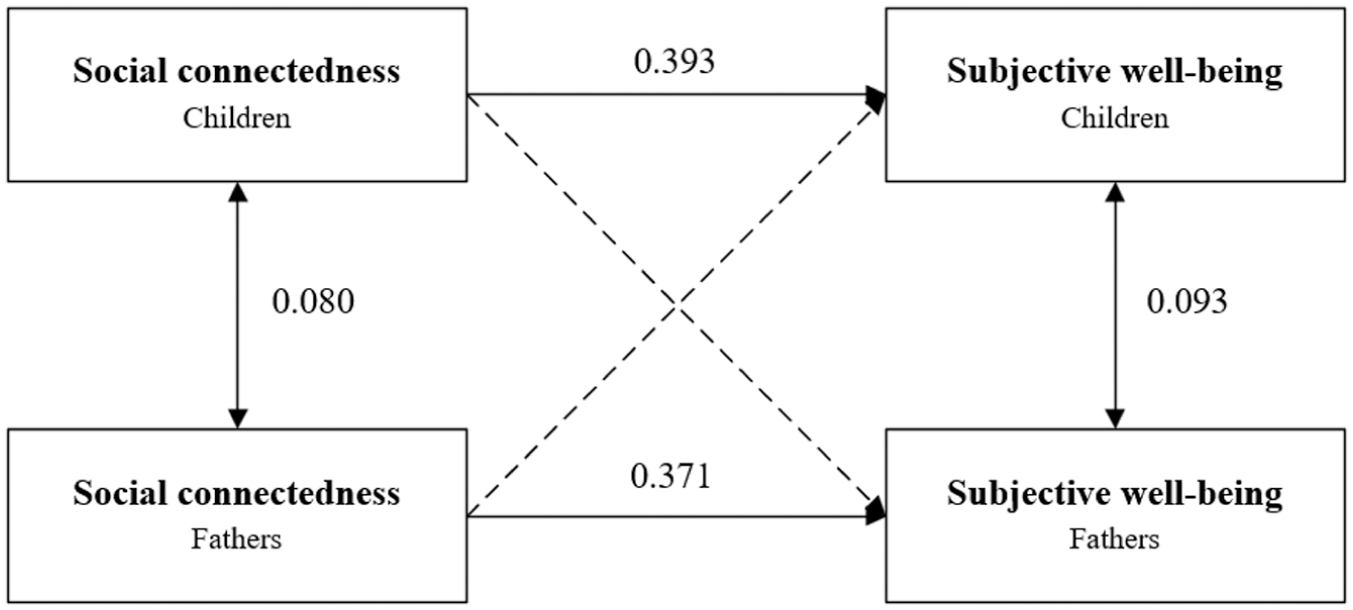
The path results of the fathers-children actor-partner-interdependence model.
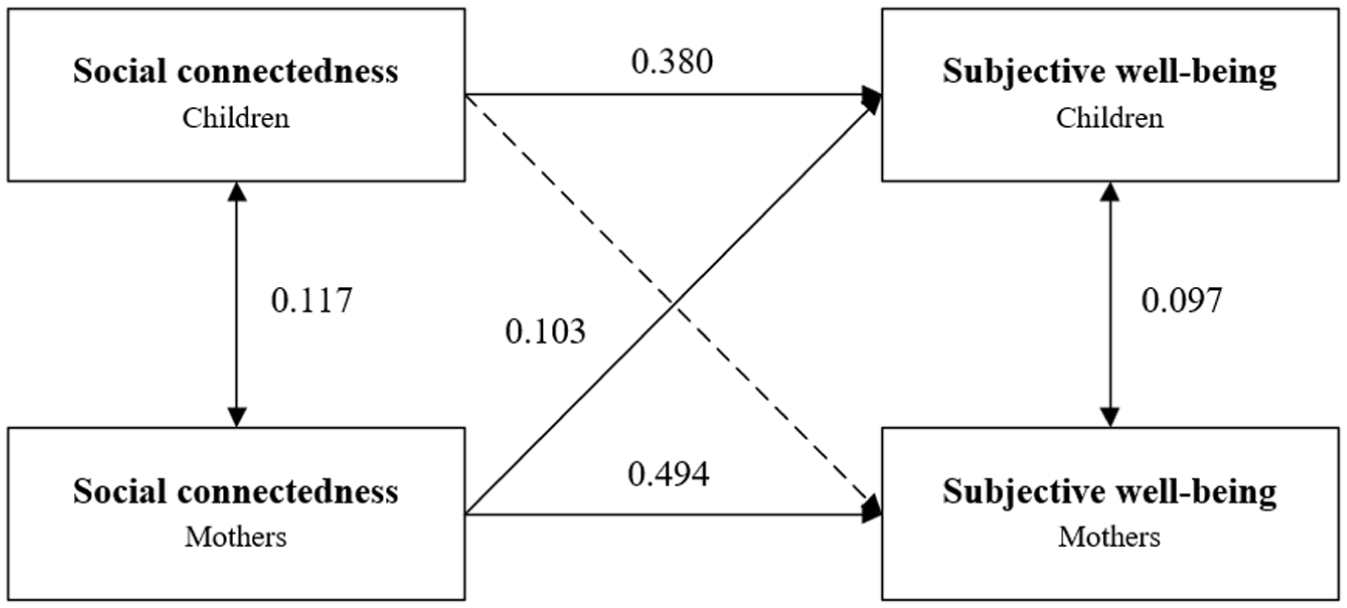
The path results of the mothers-children actor-partner-interdependence model.
In the father-child APIM model, the social connectedness of both the children (effect = 0.377, 95% CI [0.317, 0.439]) and the fathers (effect = 0.410, CI [0.339, 0.472]) exhibited significant positive actor effects on their own subjective well-being. The partner effects of social connectedness in the children both the children (effect = 0.028, CI [−0.023, 0.082] and the fathers (effect = 0.006, CI [−0.048, 0.057]) were not significant.
In the mother-child APIM model, the social connectedness of both the children (effect = 0.365, 95% CI [0.304, 0.427] and the mothers (effect = 0.517, CI [0.461, 0.571]) showed significant positive actor effects on their own subjective well-being. The social connectedness of the mothers exhibited a significant partner effect (effect = 0.109, CI [0.060, 0.157]), while no significant partner effect was found for the children (effect = −0.029, CI [−0.070, 0.017]).
Discussion
Subjective well-being represents the foundation for children’s growth and development, and is also a crucial indicator of family harmony and social stability. This study explored the sources and interactions of subjective well-being among married couples and their minor children in China. The findings showed that for both parents and children, their own social connectedness contributed more significantly to subjective well-being than other factors. The APIM revealed that the individual social connectedness of fathers, mothers, and children each exerted significant positive actor effects on their own subjective well-being; however, only the mothers’ social connectedness had a significant partner effect on the subjective well-being of the children, while the fathers’ did not. In addition, in both the father-child and mother-child models, significant positive associations were found between their respective social connectedness and their subjective well-being. These results indicate the important contributions of both social connectedness and family members to the subjective well-being of Chinese parents and children.
This study revealed that subjective well-being in minor children was significantly higher than that of their parents. Parents are required to deal with social pressures and survival issues, while children have more time to play and enjoy themselves. Child-rearing is a significant source of stress for parents. A previous study observed that child-rearing is associated with increased levels of negative emotions in parents (Negraia & Augustine, 2020). Compared to adults without children, fathers and mothers have lower levels of life satisfaction (López-Bauta et al., 2024). In China, parents are responsible for both caring for their children and supporting their elderly parents. This dual pressure may have marked effects on the subjective well-being of parents with minor children. The study findings demonstrated differences in subjective well-being between Chinese parents and children, which warrant further investigation to determine the underlying causes of these differences.
A significant positive correlation was observed between the social connectedness of minor children and that of their parents, as well as a significant positive correlation between subjective well-being. Previous studies have also demonstrated that subjective well-being can be transmitted between parents and children (Chi et al., 2019; Clair, 2012), which has been explained by both family systems theory (Bowen, 1966) and emotional contagion theory (Barsade, 2002). Parents and children form the core triangular relationship within the family system, and their psychological states and behaviors influence one another. For children, family and friends are their main sources of social connectedness (Arslan, 2018; Malaquias et al., 2015). On one hand, children may learn and imitate their parents’ interpersonal strategies and attitudes. Research indicates similarities between parental and child behaviors in long-term attachment relationships, particularly in terms of interpersonal and social behaviors (Liu et al., 2022). It has also been reported that parental emotional bias can significantly predict emotional bias in adolescents, leading to differences in their identification with groups and interpersonal relationships (Bobba et al., 2024). On the other hand, conflicts and disagreements between children and their friends can also lead to family problems and distance among parents. Research has indicated that the tendency of parents to blame adolescent victims of bullying can lead to anger or antisocial behavior in teenagers (Choi & Park, 2018), both of which can subsequently jeopardize family relationships. From an emotional perspective, optimism and positivity shown by family members can be transmitted to others. Parental well-being is associated with their ability to care, support, and understand children, while children’s well-being provides parents with a sense of accomplishment and familial warmth. Previous research has also supported the presence of intergenerational similarity in subjective well-being between parents and children (Hoellger et al., 2023).
This study found that social connectedness in children, as well as that of their fathers and mothers, exerted a significant positive actor effect on their own subjective well-being. In addition, social connectedness was found to contribute more to subjective well-being than other factors. This finding was similar to those of previous studies on married couples in China (R. Li et al., 2025). Traditional Chinese culture has a profound influence on behavior, particularly as “guanxi” plays a pivotal role in Chinese society. Previous research indicated that Chinese “guanxi” originates from diverse communities and determines convenience, identity, and preference (Tsui & Farh, 1997). Self-determination theory posits that the motivation for human behavior and psychological change stems from basic needs, such as autonomy, relatedness, and competence (Ryan & Deci, 2000). Individuals with high social connectedness have a stronger sense of belonging and connection, thereby satisfying basic psychological needs and leading to positive psychological states and happiness. For parents, high social connectedness satisfies their psychological needs and sense of accomplishment. A UK study reported that social connectedness is an important source of self-worth and happiness for individuals, sometimes even more so than financial factors (Richards, 2016). High social connectedness of adult parents manifests as positive “guanxi” in Chinese society, signifying their recognition and sense of closeness, which ultimately enhances their subjective well-being. This study found that this also holds true for children. Children with strong social connectedness maintain extensive and close ties with their families, classmates, friends, teachers, and other representatives of society. This may promote confidence, a sense of belonging, and a sense of influence. Research has found that low social connectedness in adolescents shows a marked negative association with psychological abuse and significantly predicts subjective well-being (Arslan, 2018). A previous study indicated that adolescents with high social connectedness experienced lower levels of loneliness and more peer support (Lan et al., 2023). This decrease in potential abuse and increase in positive psychological experiences ultimately enhance the subjective well-being of minor children. The present study is the first to highlight the critical importance of social connectedness in Chinese adolescents. Families and communities should pay particular attention to children with low levels of social connectedness, providing early psychological interventions and emotional support, with a focus on preventing potential social isolation and bullying.
The APIM results of this study indicated that the social connectedness of mothers had a significant positive partner effect on the subjective well-being of the children, while no significant partner effects were observed in children or fathers. This may be related to the distinct roles they play within Chinese society. China is a country with a Confucian cultural tradition and a strong emphasis on collectivism (Y. H. Li, 2025), where parents and children are expected to adhere to certain social roles and norms. Social role theory posits that an individual’s behavior and image should align with the expectations of their social environment (Koenig & Eagly, 2014). In traditional Chinese culture, minor children are expected to focus on their studies and maintain harmonious relationships with their family and friends, without needing to worry about or consider other social matters or survival issues. However, parents are expected to fulfill their family-support responsibilities, participate in social activities, and engage in extensive interpersonal interactions, while also serving as the primary decision-makers within the family (Luo et al., 2013). This authoritarian parenting style requires children to obey their parents’ guidance and management (Cheung, 2013). Therefore, the psychological experiences and interpersonal relationships of minor children may go unnoticed by their parents, thereby failing to alter their parents’ sense of happiness. Additionally, in traditional Confucian culture, fathers participate in society and function as the household breadwinners, while mothers act as caregivers for family members (X. X. Xu et al., 2023). This disparity in roles may account for the observed differences in partner effects. Mothers have strong emotional ties with their children, and their involvement in child-rearing also means they spend more time together. A previous study found that Chinese mothers view their children as their report cards, which drives them to exert greater psychological control over their offspring (Ng et al., 2014). The mother’s social connectedness is a reflection of her own psychological state and interpersonal style, and more positive social connectedness can also be transmitted to the children. This manifests as the observed significant partner effect of the mother’s social connectedness on the subjective well-being of her minor children. Previous research has indicated that Chinese fathers tend to provide more instrumental support and authoritative parenting, and their share and quality of parenting involvement are relatively limited compared to mothers (X. Li, 2020, 2024). The father’s social connectedness greatly benefits families through both social relationships and support, although minor children may not recognize this directly. Future research should explore potential mediators of this process.
This study has several limitations. First, the cross-sectional data from the dataset limit the ability to draw causal inferences between variables. Second, although the instruments used for measurements have been validated and supported in prior literature, the reliability of the findings could be enhanced by the use of a variety of scales for testing and validation. Furthermore, differences may exist in the effects of other household structures or children of varying ages, which could also be explored in the future.
Conclusions
Subjective well-being was found to differ significantly between Chinese parents and their minor children. The social connectedness of the minor children was significantly positively correlated with that of both the father and the mother. Shapley decomposition revealed that social connectedness contributed more to the subjective well-being than other factors. The social connectedness of fathers, mothers, and children all exerted significant actor effects on their own subjective well-being, while only mothers generated a significant partner effect on their children. These findings indicate the importance of social connectedness for subjective well-being across different age and demographic groups in China, and also indicate the differences in psychological perceptions and experiences of well-being between parents and children due to their distinct roles. The results also highlight the direct and crucial influence mothers have on the well-being of children in Chinese families. These findings provide novel empirical evidence for understanding the role of subjective well-being in parent-child dynamics within Chinese culture. Future research should further explore mediating variables in this process and also conduct cross-cultural comparisons.
Footnotes
Acknowledgements
We thank the Center for Social Research at Peking University for conducting the China Family Panel Studies (CFPS) data. We thank all the respondents of the survey and those who participated in the study. We thank scholars at Peking University, Washington University, Jilin University, and Shandong University for their assistance.

Ethical Considerations
The CFPS was approved by the Biomedical Ethics Committee of Peking University under the approval number: IRB00001052-14010. This study complies with the Declaration of Helsinki.
Consent to Participate
All survey participants provided informed consent.
Author Contributions
Ranran Li: Conceptualization (lead); Writing—original draft (lead); review and editing (equal); Methodology (lead). Yibing Chen: review and editing (equal); Methodology (equal). Yaqi Chen: writing—review and editing (equal). Xunan Li: writing—review and editing (equal). Lijun Wang: Conceptualization (supporting); Writing—review and editing (supporting).
Funding
The authors disclosed receipt of the following financial support for the research, authorship, and/or publication of this article: This study was supported by grant from Natural Science Foundation of Shandong Province [Grant Number: ZR2022MG039]. The funder had no role in study design, data collection, and preparation of the manuscript.
Declaration of Conflicting Interests
The authors declared no potential conflicts of interest with respect to the research, authorship, and/or publication of this article.