






Abstract
As a shared psychological environment within families, spouses’ perceptions of marital conflict can significantly influence parenting stress and parent-child relationships. However, existing research has paid insufficient attention to the associations among these three factors and their underlying mechanisms. This study used cluster sampling to recruit 399 mother-father dyads from Shanghai, China, and collected data through electronic questionnaires, including the Dyadic Adjustment Scale, the Parenting Stress Index-Short Form, and the Parent-Child Relationship Scale. Based on the Common Fate Mixed Model, this study examined whether spouses’ perceptions of shared marital conflict were correlated and compared their differential responses in parenting stress and parent-child relationships to identify gender-specific patterns. The results indicated that maternal parenting stress partially mediated the relationship between shared marital conflict and mother-child conflict and fully mediated the relationship between shared marital conflict and mother-child closeness. Paternal parenting stress fully mediated the relationship between shared marital conflict and father-child conflict, and partially mediated the relationship between shared marital conflict and father-child closeness. This study demonstrates how shared marital stress influences mothers’ and fathers’ stress appraisals and subsequent parenting behaviors within the same family system, thereby strengthening the explanatory power of the Family Stress ABC-X model. Furthermore, by illustrating the distinct parenting involvement and gatekeeping behaviors exhibited by mothers and fathers under marital conflict, this study extends the applicability of Gatekeeping Theory and provides culturally contextualized evidence for understanding gender-differentiated parent-child relationship pathways in Chinese families.
Plain Language Summary
Family relationships are closely interconnected. This study explored how conflict between husbands and wives is related to parental stress in raising children and to the quality of parent-child relationships. We surveyed 399 pairs of mothers and fathers with preschool-aged children in Shanghai, China. The findings showed that when both parents experience higher levels of marital conflict, they also tend to report greater parenting stress. This stress plays an important role in linking marital conflict to parent-child relationships, but the patterns differ for mothers and fathers. For mothers, parenting stress was strongly associated with both increased mother-child conflict and reduced mother-child closeness. For fathers, parenting stress was also linked to more father-child conflict and less father–child closeness, although the patterns of association differed somewhat from those observed among mothers. Overall, the results suggest that marital tensions do not remain only within the couple relationship. Instead, they may spill over into parenting experiences and shape everyday interactions between parents and children. For families, improving communication and reducing marital conflict may help reduce parenting stress and promote healthier parent-child relationships. For practitioners, including family counselors and early childhood educators, the findings highlight the importance of supporting both mothers and fathers in managing stress and strengthening cooperative parenting practices.
Keywords
Parent-child relationships refer to the qualities of connection and constraint between parents and children in their mutual interactions (Anderson et al., 2010), including two dimensions: parent-child closeness and parent-child conflict (Driscoll & Pianta, 1992). Parent-child closeness is associated with a range of beneficial developmental outcomes. For example, positive parent-child interactions help enhance children’s social competence (Saral & Acar, 2021) and are linked to higher overall developmental levels among preschool children (Pan, Miao, et al., 2025). In contrast, when parent-child interactions involve frequent negative exchanges, children are more likely to experience emotional and behavioral problems (Foster et al., 2022; Vieira et al., 2016). These findings indicate that parent-child relationship quality is a key factor influencing children’s developmental adjustment (Niu et al., 2020; Popov & Ilesanmi, 2015).
As a crucial subsystem within the family, the marital relationship is widely believed to influence the parent-child relationship through the spillover effect. Research has shown that marital conflict may lead parents to display more negative emotions and maladaptive reactions during interactions with their children, thereby increasing the likelihood of parent-child conflict (Mastrotheodoros et al., 2022). At the same time, marital tension reduces partner support and limits the emotional and instrumental resources available to parents during the parenting process, further elevating their perceived stress (Camisasca et al., 2016). Higher levels of parenting stress, in turn, are often associated with more negative parenting behaviors, increased emotional exhaustion, and poorer parent-child interaction quality (Chung et al., 2022). Together, these studies suggest a sequential linkage among marital conflict, parenting stress, and parent-child relationship patterns.
Although previous studies have examined the impact of marital conflict on parent-child relationships, most have treated marital conflict as an individual-level variable and have not fully utilized dyadic data. Even when dyadic approaches such as the Actor-Partner Interdependence Model are used (Leung et al., 2022), the interdependence between spouses’ perceptions of marital conflict is often overlooked. Accordingly, scholars have proposed conceptualizing marital conflict as a shared family-level variable and analyzing it using the Common Fate Model (Kenny & La Voie, 1984; Ledermann & Kenny, 2012).
Moreover, the Double ABC-X model suggests that when family members face the same stressor, they may differ in how they perceive it, mobilize resources, and interpret its meaning, and these differences further shape the accumulation of stress, the family’s coping processes, and its eventual adaptation outcomes (McCubbin & Patterson, 2014). However, existing studies rarely compare fathers’ and mothers’ differential pathways of stress perception and parent-child interactions within a unified theoretical framework, making it difficult to fully understand how marital conflict operates within the family system. At the same time, Gatekeeping Theory suggests that parents may facilitate or restrict their partner’s involvement in childcare, yet prior research has predominantly focused on maternal gatekeeping (Allen & Hawkins, 1999), with limited attention to fathers’ potential gatekeeping roles and gendered differences in these processes. Particularly in the preschool stage, parents’ emotional states and interaction patterns have a pronounced impact on children’s development (Carapito et al., 2020; Pan, Wang, et al., 2025). Therefore, it is necessary to examine, within a single model, how spouses’ shared perceptions of marital conflict influence parent-child relationships through different pathways, while also taking into account potential gender differences and gatekeeping mechanisms.
To address these issues, this study used the Common Fate Mixed Model to more accurately capture parents’ shared perceptions of marital conflict and to compare mothers’ and fathers’ differential pathways in parenting stress and parent-child relationships within the same analytical framework. By examining how marital conflict influences parents’ stress experiences and their interactions with their children, this study provides new evidence on gender differences within family systems and offers insights for developing more targeted family support and intervention strategies, thereby helping to promote children’s development and enhance family functioning.
Literature Review and Theoretical Hypotheses
Shared Marital Conflict and Parent-Child Relationship
The marital relationship is the most basic and crucial subsystem in the family system, and its interaction quality plays a foundational role in the overall functioning of the family (Hards et al., 2020). Marital conflict refers to negative interactions arising from discrepancies in spouses’ values, needs, or everyday matters, including criticism, verbal aggression, emotional hostility, emotional withdrawal, and physical aggression (Grych & Fincham, 1990). In recent years, family research has increasingly adopted a dyadic perspective, treating mothers’ and fathers’ reports of marital conflict as two indicators of a single latent construct to reflect the degree of conflict jointly experienced by the couple (Manalel et al., 2019). Empirical evidence also supports combining mothers’ and fathers’ perceptions of conflict into a measure of shared marital conflict, which allows researchers to distinguish between the common component of conflict experience and each partner’s unique perceptions (Fitzgerald, 2025; Kopystynska et al., 2025). Following this approach, the present study adopts the concept of shared marital conflict to more accurately capture the couple’s jointly perceived marital relationship quality.
A large body of research indicates that marital conflict spills over into the parent-child subsystem through emotional and behavioral processes within the family system (Cox & Paley, 1997). When hostility, blame, or emotional withdrawal persist in the marital relationship, the resulting negative emotional climate is likely to be transmitted to parent-child interactions. As a result, parents tend to display more hostile, overreactive, or inconsistent parenting behaviors, which in turn increase parent-child conflict and reduce parent-child closeness (Kouros et al., 2014; Li et al., 2020; Nuth & Nelson, 2025).
From a dyadic perspective, shared marital conflict reflects the couple’s jointly perceived negative interactions, representing a stable relational characteristic within the marital subsystem. Research shows that a shared high-conflict experience is often accompanied by a tense, hostile, and emotionally withdrawn family climate (Kopystynska et al., 2025). Within such an environment, parents are more likely to exhibit similar negative parenting responses, including reduced sensitivity and diminished emotional engagement (Mphaphuli, 2023). Children, in turn, are more prone to emotional insecurity and may display defensive or hostile behaviors during parent-child interactions, ultimately leading to greater parent-child conflict and lower levels of closeness (Cummings & Davies, 1994).
Shared Marital Conflict, Parenting Stress, and Parent-Child Relationships
Parenting stress refers to the psychological pressure experienced by parents in the process of raising children when they lack sufficient resources to meet the growing needs of their children (Deater-Deckard, 1998; Holly et al., 2019). As a significant family risk factor (Xuan et al., 2018), chronic parenting stress not only undermines parents’ positive emotions and the overall family climate (Zhou & Buehler, 2017) but also increases the likelihood of harsh discipline and psychological aggression (Jackson & Choi, 2018; Liu & Wang, 2015), thereby hindering children’s socioemotional adjustment (Carapito et al., 2020).
In the Double ABC-X model (McCubbin & Patterson, 2014), the pile-up of family demands (aA), available family resources (bB), and the family’s perception of the situation (cC) jointly determine the level of family adaptation (xX). From this perspective, shared marital conflict can be conceptualized as a persistent stressor jointly experienced by both partners. Its long-term patterns of hostility, blaming, or emotional withdrawal constitute relationship-level stress accumulation (aA), which depletes parents’ emotional and psychological resources (bB) and heightens their perceptions of threat or helplessness in parenting situations (cC), thereby increasing their subjective stress in parenting roles. Moreover, dissatisfaction and tension within the couple relationship often spill over into the parenting domain, further intensifying parents’ stress while caring for young children (Kuo & Johnson, 2021).
Higher levels of parenting stress are usually associated with poorer parenting practices and outcomes (Chung et al., 2022), including reduced positive interactions and diminished positive parenting and co-parenting relationships (Kochanova et al., 2021). The negative parenting behaviors and attitudes caused by parenting stress may cause children to feel neglected or misunderstood, thereby reducing parent-child closeness (Chung et al., 2022) and increasing parent-child conflict (Melançon et al., 2019).
The Current Study
This study adopts the Common Fate Model (CFM) to integrate mothers’ and fathers’ perceptions of marital conflict into a single construct, namely shared marital conflict, in order to more accurately capture the stress jointly experienced by both partners. Compared with relying on only one parent’s report, this approach is more consistent with family systems theory, which emphasizes that relationship characteristics arise from interactions within the family system as a whole (Cox & Paley, 1997). Building on this perspective, the present study further examines potential differences in how mothers and fathers respond to stress. Prior research indicates that mothers are generally more sensitive to relational climates and family stress, and are therefore more likely to experience heightened stress and emotional exhaustion when marital tension or emotional demands are high (Trumello et al., 2023). In contrast, fathers in conflictual contexts are more likely to show emotional withdrawal or controlling parenting behaviors (Sturge-Apple et al., 2006a). Accordingly, this study investigates whether mothers’ and fathers’ parenting stress separately mediate the associations between shared marital conflict and the quality of mother-child and father-child relationships.
Based on this rationale, we propose the following hypotheses:
The theoretical hypothesized model diagram for this study is illustrated in Figure 1.
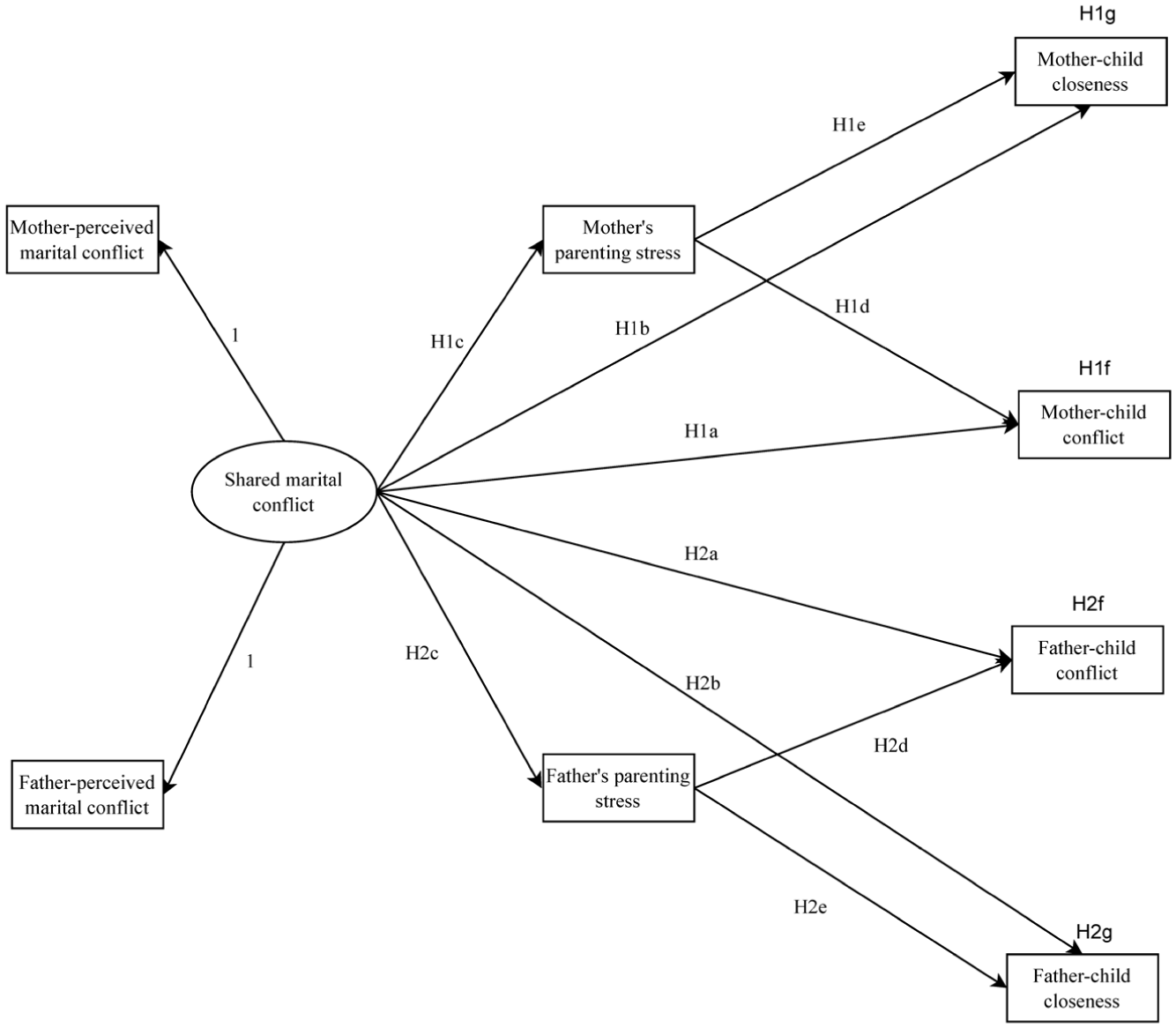
Theoretical hypothesis model of this study.
Materials and Methods
Participants and Procedure
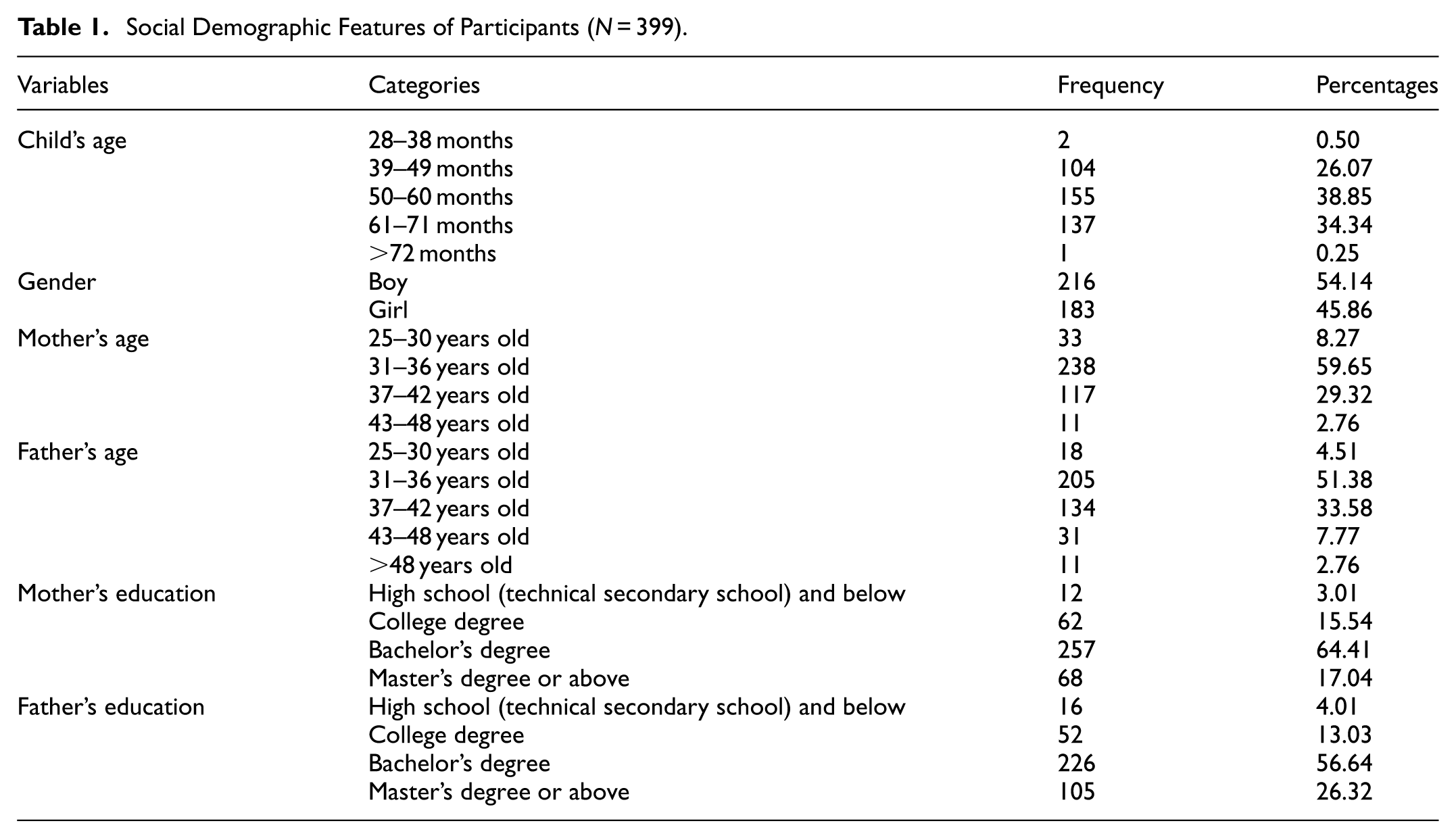
This study employed a cluster sampling design at the kindergarten level. Two kindergartens in Shanghai, China, were selected from a list of eligible kindergartens in Shanghai using a random sampling procedure. All parents of children enrolled in the selected kindergartens were invited to participate in the survey. Data were collected through electronic questionnaires. There were a total of 586 children in the two kindergartens. In May 2022 (T1), we distributed the Dyadic Adjustment Scale, Parenting Stress scale Index-Short Form, and Parent-Child Relationship Scale to the parents of these children. We collected 936 questionnaires, and after matching, we obtained 428 pairs of questionnaires from both parents. In December 2022 (T2), we distributed the Parent-Child Relationship Scale to the parents of the children. We collected 834 questionnaires, and after matching, we obtained 399 pairs of questionnaires from both parents. Samples with data from only one parent were excluded from the statistical analysis. Additionally, 12 couples did not receive their questionnaires at Time 2, and they were considered attrition cases. We conducted Little’s (1988) MCAR test on the missing data, and the results indicated that the data were missing completely at random (χ2 = 65.795, df = 91, p > 0.05). This study ultimately included 399 pairs of parents in the analysis. The age range for mothers was 26 to 47 years old (M = 35.04, SD = 3.65), and for fathers, it was 26 to 60 years old (M = 36.790, SD = 4.799). Specific demographic information is presented in Table 1. Ethical approval for this study was obtained from the relevant institutional research ethics committee prior to data collection. All procedures were conducted in accordance with the principles of the Declaration of Helsinki. Informed consent was obtained from both mothers and fathers before participation, and participants were assured of the confidentiality and anonymity of their responses.
Social Demographic Features of Participants (N = 399).
Measurement
Marital Conflict
In this study, the Dyadic Adjustment Scale developed by Spanier (1976) was selected. As a classic measure of marital relationship quality, the DAS has been widely used in international marriage and family research, and cross-cultural studies have demonstrated its solid structural validity and internal consistency (Chiara et al., 2014; Villeneuve et al., 2015). In the Chinese context, several studies have also confirmed its stable factor structure and good reliability (Wang et al., 2023; J. Zhang et al., 2009), supporting its applicability among Chinese couples. The scale consists of 8 items, and it covers major conflicts in life such as economic issues and children’s education. The scale uses a 4-point scoring system (1 = frequently, 4 = never). Higher scores indicate more conflicts between spouses. In this study, Cronbach’s α for mothers’ perceived marital conflict was 0.843, and for fathers, it was 0.860.
Parenting Stress
This study adopted the Parenting Stress Index-Short Form (PSI-SF) developed by Abidin (1995). The PSI-SF is widely used internationally and has demonstrated strong reliability and validity across diverse cultural groups. Research in China also supports its three-factor structure and high internal consistency (Gao & Lee, 2021; Jiun et al., 2016; Pan, Gong, et al., 2025), indicating that it is appropriate for assessing parenting stress among Chinese parents. The PSI-SF is a 36-item self-report instrument comprising three subscales: Parental Distress, Parent-child Dysfunctional Interaction, and Difficult Child. Parents rate each item on a 5-point Likert scale. Higher scores indicate greater parenting stress. In this study, Cronbach’s α for mothers’ parenting stress was 0.948, and for fathers, it was 0.968.
Parent-Child Relationship
The Parent-Child Relationship Scale developed by Pianta (1992) was used to assess father-child and mother-child relationships. The scale has been widely used in international research and has shown good psychometric properties in Chinese populations as well (Pan, Zhao, et al., 2024; X. Zhang, 2011). The questionnaire consists of 30 items covering the dimensions of closeness and conflict. While the reliability and validity of the closeness and conflict dimensions are well-established, the dependency dimension has shown relatively lower reliability in previous studies (Pianta, 1992). Therefore, this study focused only on the closeness and conflict dimensions of parent-child relationships. The scale uses a 5-point scoring system, with 1 indicating “completely inconsistent” and 5 indicating “completely consistent.” Higher scores indicate higher levels of parent-child closeness and conflict. In this study, Cronbach’s α for mothers’ parent-child relationship was 0.625, with 0.890 for the conflict dimension and 0.880 for the closeness dimension. For fathers, Cronbach’s α for the parent-child relationship was 0.742, with 0.909 for the conflict dimension and 0.880 for the closeness dimension.
Statistical Methods and Analytical Approach
SPSS 22.0 and Mplus 8.3 were employed in this study for data analysis. SPSS was primarily used for data cleaning, descriptive statistical analysis, and correlation analysis. Mplus was utilized for constructing structural equation models. A significant positive correlation was found between mothers’ perceived marital conflict and fathers’ perceived marital conflict, with a relatively high correlation coefficient (r = 0.756, p < .001). This suggests that it is highly suitable for constructing a common fate factor (Ledermann & Kenny, 2012).
The Common Fate Model is a research method based on the fundamental assumption that a variable affects two or more partners in a relationship, and this influence may be similar (shared) or different (unique) for each partner (Ledermann & Kenny, 2012). The variable studied in this context is referred to as a common fate variable, where two or more members influence each other similarly, creating interdependence (Galovan et al., 2017). The Common Fate Model captures interdependence within dyads or groups, aiding a better understanding of relational processes (Kenny, 1996). In this study, the method of dyadic data analysis was applied to parents’ respective parenting stress and parent-child relationships. Research indicates that this mixed model is more effective in revealing the interaction mechanisms of dyadic data, making it an essential innovative method in both theoretical and practical aspects of dyadic data analysis (Wickham & Macia, 2019).
Based on previous literature, in the data analysis of this study, child’s age, gender, mother’s age, father’s age, mother’s education, and father’s education were included as control variables (Nomaguchi & Allen, 2023; Sobkin et al., 2016). Additionally, mother-child conflict at T1, mother-child closeness at T1, father-child conflict at T1, and father-child closeness at T1 were included as control variables.
Results
Harman’s single-factor test was conducted on all variables of fathers and mothers, resulting in 25 factors with eigenvalues greater than 1. The variance explained by the first factor was 21.338%. Harman’s single-factor test was also conducted separately on all variables of mothers and fathers. Mothers yielded 12 factors with eigenvalues greater than 1, and the variance explained by the first factor was 27.776%. Fathers yielded 10 factors with eigenvalues greater than 1, and the variance explained by the first factor was 32.331%. The variance explained by the first factors for mothers, fathers, and the combined parents were all below the critical value of 40% (Podsakoff et al., 2003), indicating that there was no significant common method bias in this study.
Table 2 presents the Pearson correlation coefficients among the major study variables. Maternal parenting stress was positively correlated with maternal perceived marital conflict (r = 0.362, p < .001). Mother-child conflict was positively associated with both maternal perceived marital conflict (r = 0.200, p < .001) and maternal parenting stress (r = 0.449, p < .001), whereas mother-child closeness was negatively correlated with maternal perceived marital conflict (r = −0.118, p < .05) and maternal parenting stress (r = −0.435, p < .001).
Means, Standard Deviations, and Correlations of the Major Study Variables.
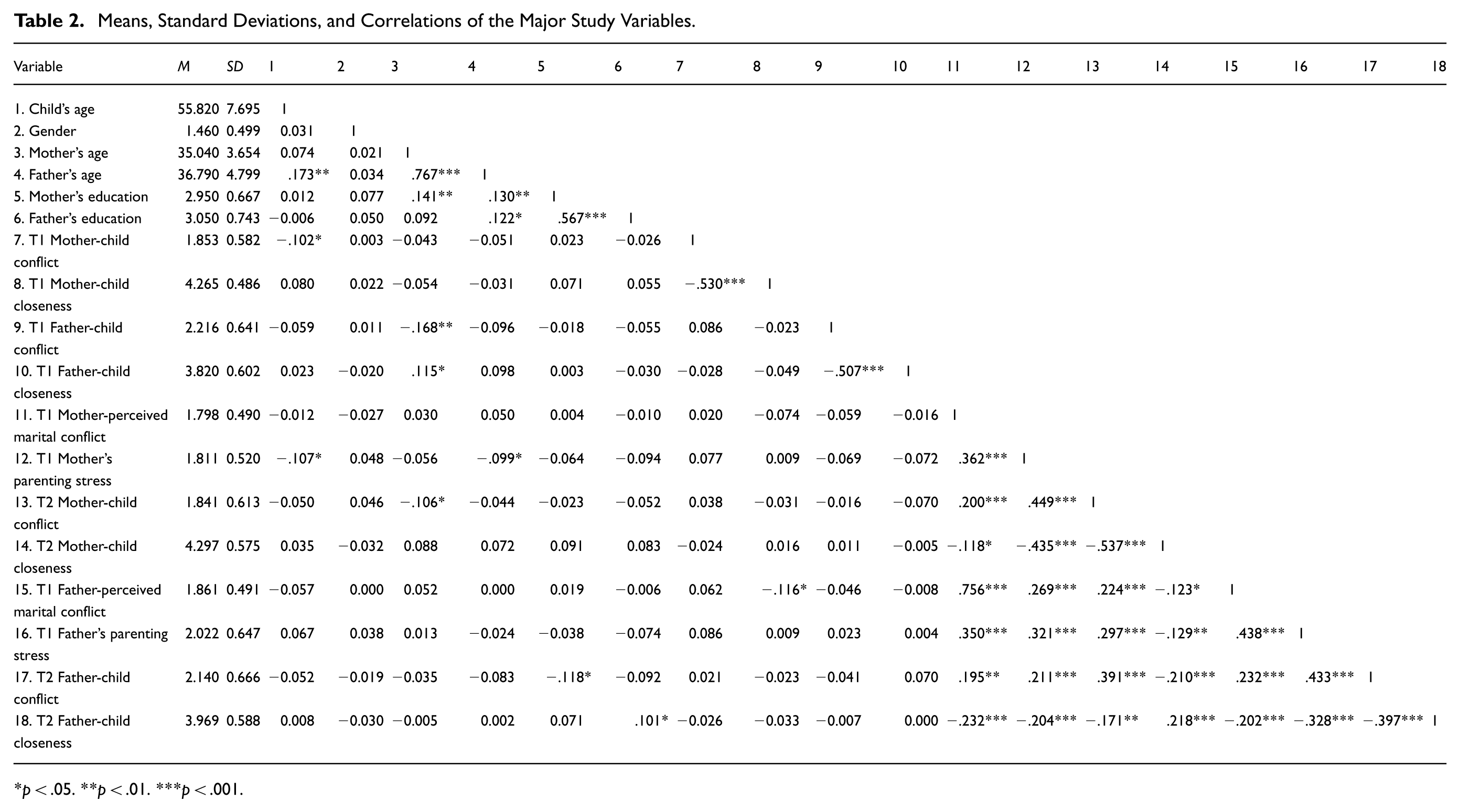
p < .05. **p < .01. ***p < .001.
Similarly, paternal parenting stress was positively correlated with paternal perceived marital conflict (r = 0.438, p < .001). Father-child conflict was positively associated with both paternal perceived marital conflict (r = 0.232, p < .001) and paternal parenting stress (r = 0.433, p < .001), while father-child closeness was negatively correlated with paternal perceived marital conflict (r = −0.202, p < .001) and paternal parenting stress (r = −0.328, p < .001). In addition, maternal and paternal perceived marital conflict were strongly positively correlated (r = 0.756, p < .001).
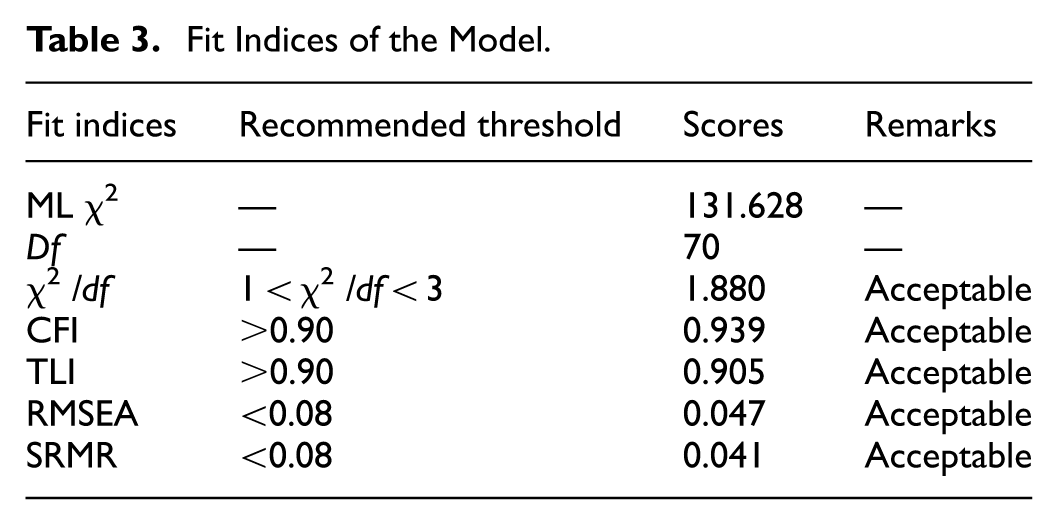
In this study, Mplus was used to construct a structural equation model (SEM). The model fit indices for the SEM were as follows: MLχ2 = 131.628, df = 70, χ2/df = 1.880, CFI = 0.939, TLI = 0.905, RMSEA = 0.047, SRMR = 0.041. All model fit indices were within acceptable ranges, indicating an adequate model fit.
This study further conducted significance tests for the direct paths and mediation effects in the structural equation model. The bootstrap procedure in Mplus was used with 5,000 resamples. The results showed that shared marital conflict significantly and directly positively predicted maternal parenting stress (β = 0.363, p < .001), supporting H1c. Shared marital conflict significantly and directly positively predicted maternal-child conflict (β = 0.118, p = 0.020), supporting H1a. Shared marital conflict did not have a significantly direct effect on maternal-child closeness (β = 0.011, p > .05), thus not supporting H1b. Maternal parenting stress can significantly and directly positively predicted maternal-child conflict (β = 0.393, p < .001), supporting H1d. Maternal parenting stress significantly and directly negatively predicted mother-child closeness (β = −0.425, p < .001), supporting H1e. Shared marital conflict significantly and directly positively predicted paternal parenting stress (β = 0.458, p < .001), supporting H2c. Shared marital conflict did not significantly and directly predicted paternal-child conflict (β = 0.084, p > .05), thus not supporting H2a. Shared marital conflict significantly and directly negatively predicted father-child closeness (β = −0.126, p = 0.036), supporting H2b. Paternal parenting stress significantly and directly positively predicted father-child conflict (β = 0.365, p < .001), supporting H2d. Paternal parenting stress significantly and directly negatively predicted father-child closeness (β = −0.271, p < .001), supporting H2e (see Table 3 and Figure 2).
Fit Indices of the Model.
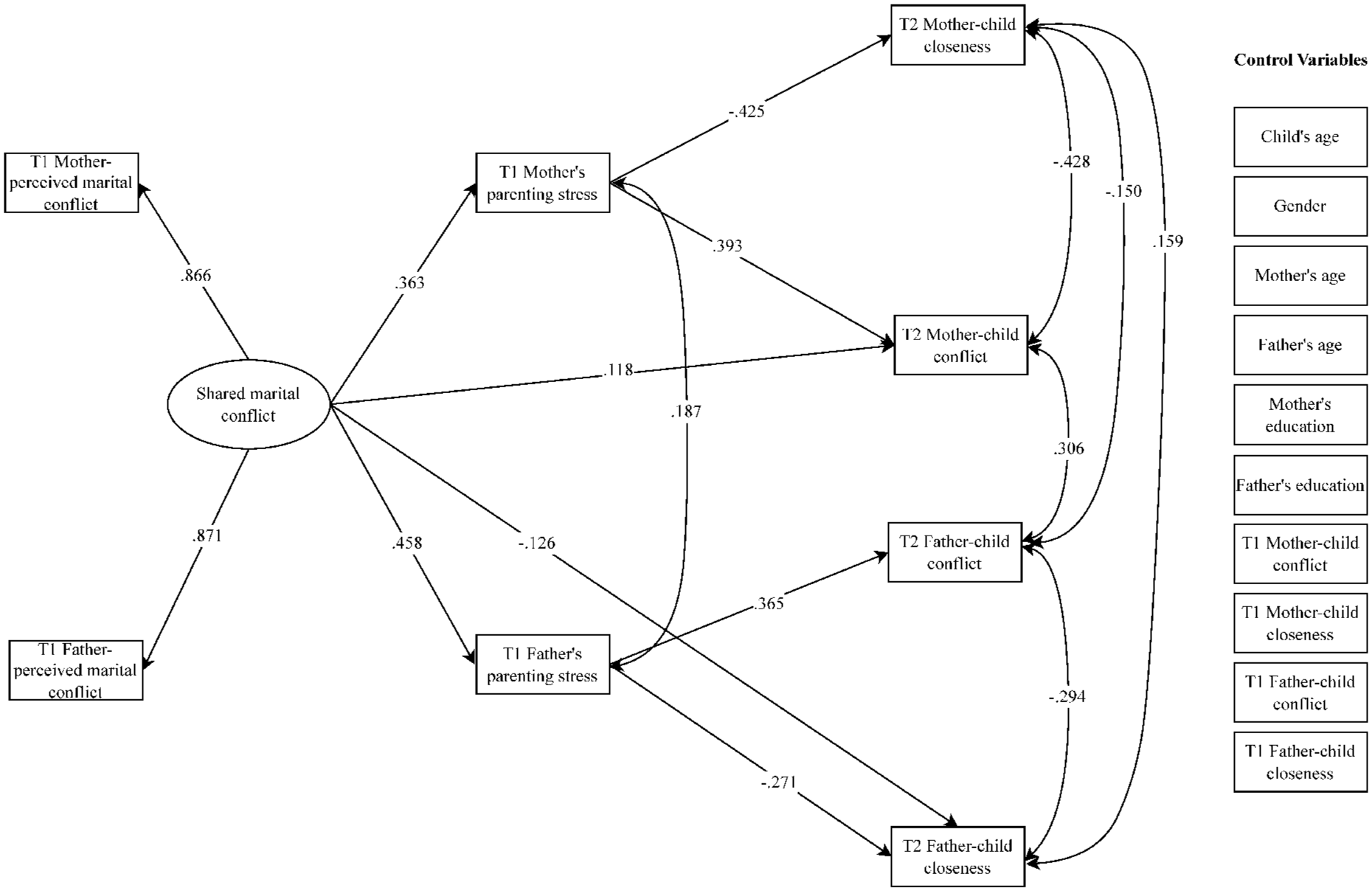
The results of structural equation model of this study.
Table 4 and Table 5 present the direct and indirect effects in the study, respectively. The results show that maternal parenting stress partially mediates the relationship between shared marital conflict and mother-child conflict (β = 0.204, p < .001, 95% CI [0.122, 0.286], not including 0), supporting H1f. Maternal parenting stress fully mediates the relationship between shared marital conflict and mother-child closeness (β = −0.206, p < .001, 95% CI [−0.291, −0.122], not including 0), supporting H1g. Paternal parenting stress fully mediates the relationship between shared marital conflict and father-child conflict (β = 0.258, p < .001, 95% CI [0.153, 0.363], not including 0), supporting H2f. Paternal parenting stress partially mediates the relationship between shared marital conflict and father-child closeness (β = −0.171, p < .001, 95% CI [−0.253, −0.090], not including 0), supporting H2g. The proportion of total indirect effects for mothers is 80.89%, and for fathers, it is 19.11%. The proportions of total indirect effects presented in Figure 2 were calculated based on standardized indirect effect estimates. Specifically, the proportion for mothers was obtained by dividing the total standardized indirect effect through maternal parenting stress by the sum of the total standardized indirect effects for both mothers and fathers. The same procedure was applied to calculate the proportion for fathers. This approach allows for a direct comparison of the relative contribution of maternal and paternal indirect pathways in the overall mediation process.
The Direct Effect of the Research Paths and Research Model Hypothesis Analysis.
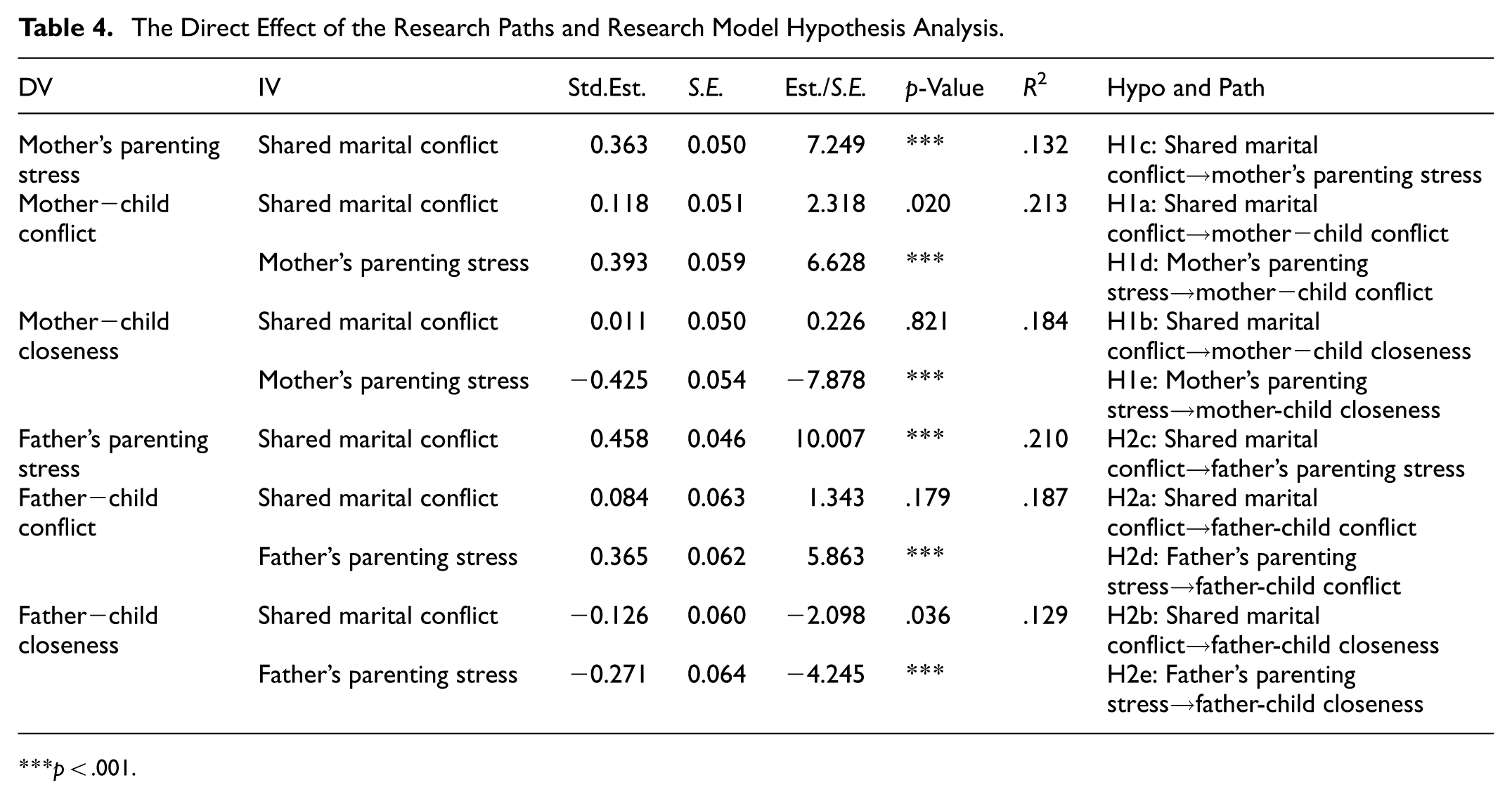
p < .001.
The Indirect Effect of the Research Paths.
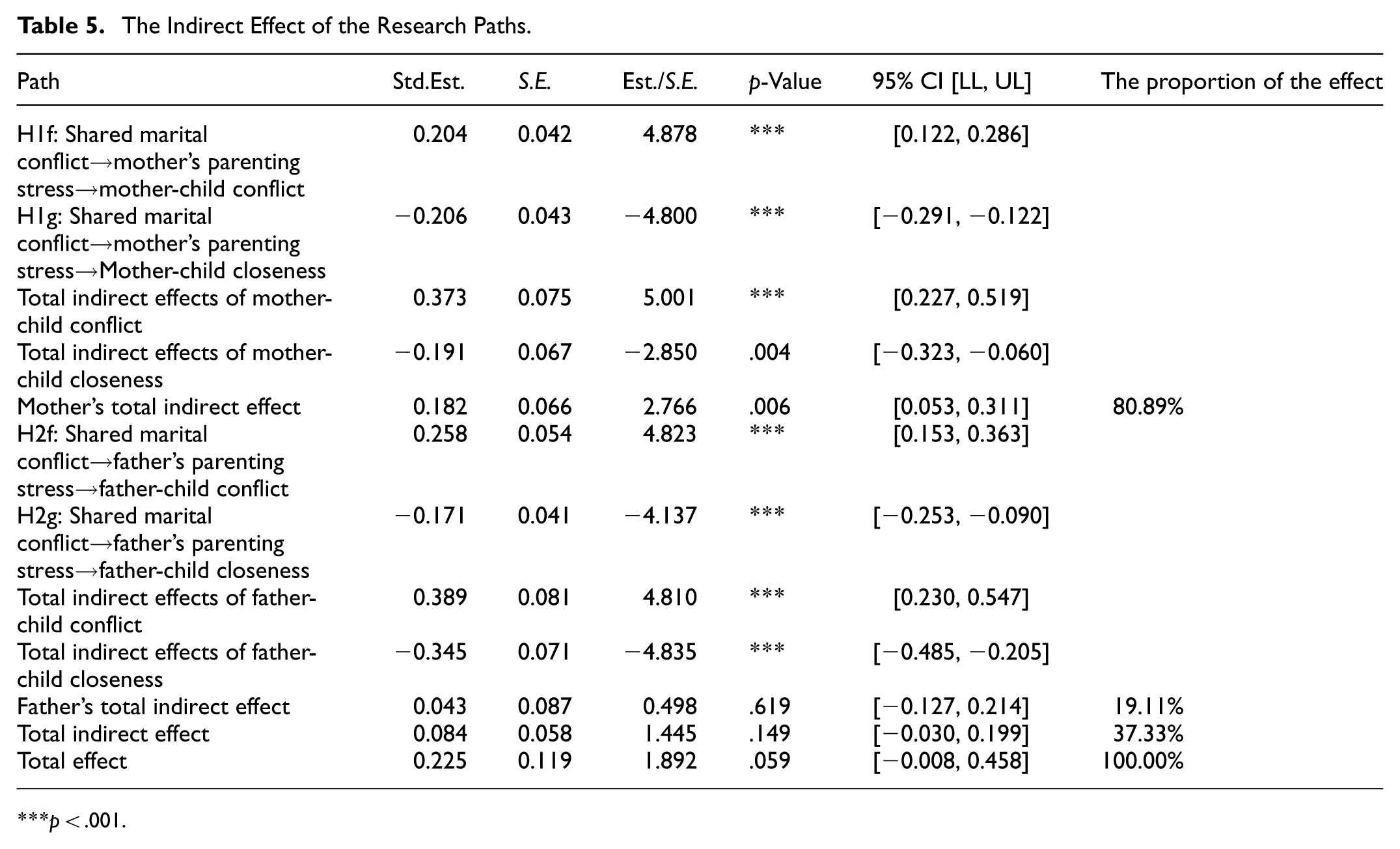
p < .001.
Discussion
The Influence of Shared Marital Conflict on Parent-Child Relationships
The research results indicate that shared marital conflict significantly and positively predicted mother-child conflict but did not affect father-child conflict. At the same time, shared marital conflict significantly and negatively predicted father-child closeness but did not directly influence mother-child closeness. The findings align with conclusions reported in previous studies. For example, Xiao et al. (2017) found that, in the process through which marital conflict affects adolescents’ psychological adjustment, only the mother-child relationship served as a significant pathway, whereas the father-child pathway was nonsignificant. This suggests that marital conflict may exert differentiated effects across parent-child subsystems. In addition, Sturge-Apple et al. (2006b) showed that fathers are more likely to display emotional withdrawal when experiencing marital distress. Such partner disengagement may extend to father-child interactions, reflected not in increased conflict but in reduced emotional availability. This pattern is consistent with the present study’s finding that father-child closeness declined while father-child conflict did not show significant changes.
In contrast, mothers typically assume more daily caregiving responsibilities (Pan, Wang, et al., 2024), making them more vulnerable to emotional burdens in the context of marital conflict and more likely to display heightened tension or conflict during interactions with their children. Moreover, the adverse effects of marital conflict are reflected in the decreased warmth of family interactions (Stroud et al., 2011). Faced with marital conflict, men often express fewer emotions and adopt more defensive postures than women, leading to decreased responsiveness in parent-child interactions and an increased use of withdrawal and obstructive behaviors (Gottman & Levenson, 1988). While this behavioral pattern avoids parent-child conflict, it weakens the closeness between fathers and children.
Mediation of Parenting Stress Between Shared Marital Conflict and Parent-Child Relationships
The study found that mothers’ parenting stress partially mediated relationship between shared marital conflict and mother-child conflict and fully mediated the relationship between shared marital conflict and mother-child closeness. According to the Gatekeeping Theory (Austin et al., 2013), in the context of marital conflict, mothers may overprotectively restrict fathers’ involvement in parenting due to concerns about the adverse effects of tense emotions between parents on children (Trinder, 2008). These patterns are consistent with theoretical perspectives from Gatekeeping Theory. However, it should be noted that gatekeeping behaviors were not directly measured in the present study. When mothers assume childrearing responsibilities alone while also experiencing additional stress stemming from marital tension, their sense of parenting competence may be undermined (Arellano et al., 2019), leading to more negative emotional reactions during interactions with their children (Bugental & Johnston, 2000). Existing research similarly suggests that parental stress reduces sensitivity in parent-child interactions, increases conflict, and decreases closeness (Zou et al., 2020).
The study results also indicate that fathers’ parenting stress fully mediated the relationship between shared marital conflict and father-child conflict, and partially mediated the relationship between shared marital conflict and father-child closeness. Previous studies have shown that fathers are more likely to exhibit emotional withdrawal and stress accumulation under marital tension, making their mental health and family functioning more vulnerable to adverse effects (Cummings et al., 2010). Given the influence of maternal gatekeeping effects and traditional gender divisions of labor, fathers often lack parenting experience and skills, and therefore may encounter greater challenges and stress in parenting practices (Davies et al., 2009). High stress levels may increase fathers’ likelihood of displaying tension or punitive responses during interactions with their children (Cassano et al., 2007), thereby heightening parent-child conflict. At the same time, persistent stress may diminish fathers’ emotional availability, leading to reduced father-child closeness.
Furthermore, the study also found that in the mediation effects, the total effect proportion of mothers is as high as 80.89%, while that of fathers is only 19.11%. Mothers have a 4.23-fold greater impact than fathers. This disparity aligns with existing research showing that mothers typically undertake more daily childcare and emotional labor during the preschool stage (Pan, Wang, et al., 2025). Higher frequency of interactions and greater emotional investment place mothers in a more central position in the transmission process from marital conflict to parenting stress, helping explain why the maternal mediation pathway is more pronounced in this study.
Theoretical Contributions
At the theoretical level, this study extends the Double ABC-X model of family stress and provides empirical support for the Gatekeeping Theory. First, by applying the Common Fate Model hybrid approach (CFM-hybrid model), this study broadens the explanatory framework of the Double ABC-X model regarding stress pile-up and family adaptation pathways. The Double ABC-X model proposes that stressor events (A), stress pile-up (aA), family resources (bB), and perceptions of the situation (cC) jointly influence the family adaptation process (xX) (McCubbin & Patterson, 2014). Prior research typically assessed marital conflict using reports from only one parent, making it difficult to differentiate shared components from individual-specific components. In contrast, this study conceptualizes marital conflict as a systemic stressor jointly experienced by both partners and reduces measurement error through common fate modeling. This approach clarifies how shared stress is transmitted to parent-child relationships through distinct pathways of resource depletion and meaning construction for mothers and fathers.
Additionally, this study provides empirical evidence for the Gatekeeping Theory (Austin et al., 2013). The findings show that in the context of marital conflict, mothers are more likely to intensify gatekeeping behavior as their stress increases, whereas fathers are more prone to emotional withdrawal or reduced emotional availability. These results not only extend the applicability of gatekeeping theory within the context of family stress but also highlight gender differences in stress processing and parenting behaviors. This contributes a new theoretical perspective for understanding gendered patterns of caregiving and parent-child relationship dynamics within families.
Practice Implications
In the family environment, risk factors such as marital conflict and parenting stress may negatively impact children’s sense of security, making it difficult for them to establish stable attachment relationships and thereby hindering their growth and development. Therefore, this study proposes strategies to alleviate parental marital conflict and parenting stress to more effectively promote the healthy development of parent-child relationships. Firstly, marital counseling and education should be provided for parents. Recommending professional marriage counseling courses, books, and other resources can assist couples in establishing healthier marital relationships, enhancing mutual understanding, and strengthening parenting support. Secondly, particular attention should be given to stress relief for mothers, including reducing depression and anxiety. Thirdly, professional counseling services tailored to children’s behavior and development should be provided to help parents better understand their children’s needs and behaviors and develop healthier parent-child communication skills, thereby promoting healthier parent-child relationship. Lastly, parents should be encouraged to participate in community support groups or family service centers to share experiences and gain support from other families.
Limitations
Firstly, despite utilizing longitudinal tracking data, the study only tested two time points with a six-month interval. Future research could employ more time points and longer intervals for tracking studies. Secondly, the sample was drawn from two kindergartens in Shanghai, which may limit the external validity of the findings. As a highly urbanized and socioeconomically developed city, Shanghai may differ from other regions in family resources and parenting contexts. However, this relative homogeneity reduces unobserved contextual variance and allows for a more focused test of dyadic mechanisms of shared marital conflict using the Common Fate Mixed Model. Future studies should replicate the findings in more diverse regions to enhance generalizability. Thirdly, the study only investigated the impact of marital conflict and parenting stress on parent-child relationships for both parents. However, the family is a complex system with diverse sources of stress. Future studies could consider additional factors influencing parent-child relationships. Moreover, this study focused on shared marital conflict and emphasized the relational characteristics jointly perceived by both partners. However, the Common Fate Model can also be used to distinguish parents’ unique perceptions and response patterns. Future research may integrate both shared and individual components to investigate parents’ differential experiences of marital conflict and their distinct pathways. In addition, measurement invariance across gender was not formally tested in the present study. Although the instruments employed have demonstrated good reliability and validity among both mothers and fathers in previous research, the absence of explicit gender-based measurement invariance testing may limit the precision of gender comparisons. Future studies should conduct multi-group confirmatory factor analyses to establish measurement invariance before drawing stronger conclusions regarding gender differences. Meanwhile, the study found that the influence of mothers on parent-child relationships appears to be larger than that of fathers. Future research could pay more attention to the impact of marital conflict or parenting stress on aspects such as maternal depression, anxiety, and well-being, thereby providing a more comprehensive understanding of mothers’ roles and risk factors within family dynamics and offering empirical evidence for the development of support policies for mothers. Finally, although the discussion draws on Gatekeeping Theory to interpret gender-differentiated pathways, gatekeeping behaviors were not directly measured. Therefore, interpretations related to gatekeeping should be considered theoretical in nature. Future studies should include direct assessments of coparenting regulation and gatekeeping practices to validate these proposed mechanisms.
Conclusion
This study employed a Common Fate Mixed Model to examine the relationships among shared marital conflict, parenting stress, and parent-child relationships within the context of Chinese families. The findings indicate that shared marital conflict significantly increases parents’ parenting stress and further affects parent-child relationships through mothers’ and fathers’ respective stress pathways. These results deepen the theoretical understanding of how marital conflict operates within the family system and provide culturally relevant insights for the development of family intervention programs.
Footnotes

Ethical Considerations
This study was reviewed and approved by the Scientific Research Ethics Committee of Shanghai Normal University (Approval No.2022043). All procedures performed in this study involving human participants were conducted in accordance with the ethical standards of the institutional research committee and with the 1964 Helsinki Declaration and its later amendments or comparable ethical standards.
Consent to Participate
Prior to data collection, parents received a detailed explanation of the study’s purpose, procedures, confidentiality safeguards, and voluntary nature. Written informed consent was obtained from all participating parents. Assent was obtained from children before their participation. Participants were informed that they could decline to answer any question or withdraw from the study at any time without penalty.
Author Contributions
The study was carried out through a collaborative effort among all authors. YL conceptualized and supervised the study. YL, YW, and BP developed the methodology. BP, DH, and YG conducted the data collection, data curation, and formal analysis. YW, BP, and YL drafted the original manuscript. YW, BP, LW, and YL revised and edited the manuscript in response to reviewers’ comments. All authors read and approved the final manuscript.
Funding
The authors disclosed receipt of the following financial support for the research, authorship, and/or publication of this article: This work was supported by Brain Science and Brain-like Intelligence Technology-National Science and Technology Major Project (2022ZD0209000). This study was supported by Shanghai Normal University’s Top-Notch Innovative Talent Cultivation Program for Doctoral Students.
Declaration of Conflicting Interests
The authors declared no potential conflicts of interest with respect to the research, authorship, and/or publication of this article.
Data Availability Statement
The datasets used or analyzed during the current study are available from the corresponding author upon reasonable request.