






Abstract
Internal displacement remains a persistent global crisis, drawing considerable attention from international stakeholders. In Nigeria, particularly in the northeastern region, internal displacement has been a recurring challenge since 2009. Despite the scale and longevity of this crisis, limited empirical scholarship has examined how internally displaced persons (IDPs) experience and navigate displacement within camp settings over time. This study addresses this gap by exploring the lived experiences of IDPs across key phases of displacement, with particular attention to the challenges they face within camp environments in northeastern Nigeria. Drawing on qualitative case studies of Bakassi and Dalori IDP camps in Maiduguri, the research adopts a qualitative methodology based on in-depth interviews and focus group discussions, complemented by secondary sources. Findings reveal that armed insurgency, closely intertwined with state fragility and governance failures, remains the primary driver of displacement, while institutional neglect and, in some cases, complicity by state actors have deepened IDPs’ vulnerabilities. Across different phases of displacement, IDPs experience persistent insecurity, gender-based violence, hunger, restricted mobility and limited access to justice, resulting in the erosion of their social, economic and political rights. While host communities initially demonstrate solidarity, prolonged displacement has generated resource pressures and social tensions, complicating everyday survival for both displaced and host populations. By centring IDPs’ voices and experiences, this study contributes to displacement scholarship by highlighting how camp-based displacement is lived, endured and negotiated over time. The findings underscore the need for context-sensitive interventions that address not only humanitarian needs but also the structural conditions sustaining protracted displacement.
Introduction
Internal displacement has become one of the most critical humanitarian crises of the twenty-first century. The number of internally displaced persons (IDPs)—individuals forced to flee their homes due to armed conflict, violence, natural disasters and other interconnected causes—continues to rise globally. By the end of 2024, the global number of IDPs was estimated at 59.1 million, reflecting a sharp increase over previous years (IDMC-GRID, 2021; UNHCR, 2021). This unprecedented figure is largely the result of protracted conflicts and recurring violence in countries such as Sudan, South Sudan, Ethiopia and the Democratic Republic of the Congo (Adepoju, 2020; Cantor & Maple, 2021). For millions of displaced persons, displacement results in long-term vulnerability, deprivation and exposure to human rights abuses (Adeola, 2021a; ICRC, 2017).
In Nigeria, internal displacement has intensified significantly over the past decade, largely as a result of armed insurgency in the northeastern region. Since the outbreak of violent conflict in 2009, Nigeria has consistently ranked among the countries with the highest numbers of newly displaced persons worldwide, with over 3.1 million IDPs recorded in recent years (Gwadabe et al., 2018; IDMC-GRID, 2021). A majority of these displacements have occurred in Borno, Adamawa and Yobe states, where civilian populations have borne the brunt of sustained violence (Ajayi, 2020; Akinola, 2015).
The insurgency is primarily associated with Boko Haram, an armed extremist group that emerged in northeastern Nigeria in the early 2000s and escalated into widespread violence after 2009. Boko Haram’s campaign—characterised by attacks on civilians, abductions and destruction of communities—has been driven by a complex interplay of religious extremism, socio-economic marginalisation, corruption and state fragility (Akinola, 2015; Imhonopi & Ugochukwu, 2013). Recurrent attacks by Boko Haram and affiliated groups, including Ansaru, have resulted in mass displacement across northeastern Nigeria and neighbouring regions (Adesote & Peters, 2015; Lenshie & Yenda, 2016). According to the United Nations Office for the Coordination of Humanitarian Affairs (OCHA), Nigeria recorded approximately 4.5 million IDPs as of December 2023, including both camp-based and non-camp-based populations (OCHA, 2023).
Among the most affected are IDPs residing in formal camp settings, particularly Bakassi and Dalori IDP camps in Maiduguri, Borno State, where population density, prolonged displacement and vulnerability remain acute (Ajayi, 2020; Gwadabe et al., 2018). While some IDPs, especially those from communities such as Gwoza, have been displaced multiple times, many others have lived in camps for over 7 years, often with limited prospects for durable solutions (Aliyu, 2018). Despite the protracted nature of camp-based displacement, there remains a notable gap in empirical research that centres the everyday lived experiences of IDPs within these environments.
Existing scholarship has largely focused on the causes, legal dimensions and macro-level impacts of internal displacement in Nigeria (Abdulazeez & Oriola, 2018; Adewale, 2016; Oladeji et al., 2018). Far fewer studies have examined how displacement is experienced over time within camps, particularly across different phases of displacement and in relation to everyday survival, insecurity and social relations. This gap limits the understanding of how displacement is lived, endured and negotiated by IDPs themselves.
This study seeks to address this gap by examining the lived experiences of IDPs residing in Bakassi and Dalori camps, with particular attention to the phases of displacement and the challenges encountered within camp settings. Specifically, it explores (a) the drivers and actors shaping displacement, (b) the hardships faced by IDPs across different phases of displacement and (c) the nature of social interactions between IDPs and host communities. By centring IDPs’ narratives, the study contributes to a more grounded understanding of camp-based displacement in northeastern Nigeria.
Literature Review
The phenomenon of internal displacement has increasingly attracted scholarly attention, particularly in relation to conflict-affected regions of Sub-Saharan Africa, including Nigeria. Current literature highlights three interrelated themes central to understanding internal displacement: legal and normative protections, the lived experiences of displaced persons and the socio-economic consequences of displacement for both IDPs and host communities. This review situates the present study within these debates, drawing on both international and African legal frameworks, as well as empirical studies on displacement in northeastern Nigeria.
Legal Protections for Internally Displaced Persons: International and African Frameworks
At the international level, the United Nations Guiding Principles on Internal Displacement (1998) serve as the foundational normative framework for IDP protection. While not legally binding, the Principles consolidate norms from international human rights law, humanitarian law and refugee law, establishing widely recognised standards for the protection of displaced populations (Ojeda, 2010). Scholars argue that the Principles are significant because they clarify state obligations towards populations displaced within their borders, including the rights to security, freedom from violence, access to basic necessities and the protection of civil, political, economic and social rights (Adeola, 2021a; Global Protection Cluster, 2010).
Empirical studies, however, consistently highlight the gap between these international norms and the realities faced by IDPs, particularly in protracted camp settings. Research in Nigerian camps such as Bakassi and Dalori documents widespread violations of these rights, including inadequate food and healthcare, unsafe and overcrowded shelters, sexual and gender-based violence, child labour and barriers to obtaining personal documentation (Ajayi, 2020; Akpoghome, 2016; Gwadabe et al., 2018). This body of work underscores the disjuncture between formal protections and lived experiences, highlighting the persistent vulnerability of IDPs despite international and national commitments (Global Protection Cluster, 2010; Ojeda, 2010).
Regionally, the African Union Convention for the Protection and Assistance of Internally Displaced Persons in Africa (Kampala Convention) represents a landmark legal instrument, as it is the first binding regional framework specifically dedicated to IDPs. Adopted in 2009 and entering into force in 2012, the Convention imposes legal obligations on signatory states to prevent displacement, protect and assist IDPs, and pursue durable solutions, while also recognising the responsibilities of non-state actors (Adeola, 2019; African Union, 2009). Scholars highlight the Convention’s significance in addressing conflict-induced, development-induced and disaster-induced displacement, emphasising protection during all phases of displacement, including return, resettlement and local integration (Adeola, 2021b; Dieng, 2017).
Despite its progressive legal framework, studies indicate that the Kampala Convention’s implementation in Nigeria has been inconsistent and largely ineffective. Institutional fragmentation, weak coordination, limited funding and inadequate accountability mechanisms hinder the meaningful protection of IDPs (Akpoghome, 2016; Ibrahim, 2022). Consequently, rights violations and prolonged displacement persist, especially in camp settings where IDPs remain highly dependent on humanitarian aid (Adeola, 2021c; Gwadabe et al., 2018).
Lived Experiences of Displacement and Socio-economic Impacts
Beyond legal frameworks, the literature on displacement in Nigeria emphasises the complex, multi-layered suffering experienced by IDPs. Research documents trauma from violence, family separation, destruction of property, food insecurity, inadequate healthcare, lack of education and social marginalisation (Aliyu, 2018; Lenshie & Yenda, 2016; Tsokwa, 2019). Women and children are particularly vulnerable to sexual and gender-based violence, early marriage and exploitation, highlighting the intersectional dimensions of displacement (Ajayi, 2020; Benedicta, 2014).
Several studies also examine the socio-economic consequences of protracted displacement on both IDPs and host communities. The prolonged presence of displaced populations often exacerbates competition for scarce resources, heightens tensions over employment and housing, and increases pressure on already fragile infrastructure (Cotroneo, 2017; Eweka & Olusegun, 2016; Regasa & Lietaert, 2022). IDPs frequently face high unemployment, lack of vocational opportunities and barriers to formal economic participation, which perpetuate cycles of dependency and vulnerability (Adeola, 2019; Cantor & Maple, 2021). The literature also emphasises the need for sustainable livelihood interventions and integration programmes, linking economic empowerment with social cohesion and peacebuilding in displacement-affected regions (Adepoju, 2020; World Bank, 2021b).
Taken together, the literature underscores a persistent gap between normative protections, practical implementation and the lived realities of IDPs in Nigeria. While international and regional legal frameworks provide a robust rights-based foundation, empirical studies reveal systemic failures in policy enforcement, protection and socio-economic integration. This study builds on these insights by empirically examining the experiences of IDPs in Bakassi and Dalori camps, highlighting how legal gaps intersect with daily hardships, deprivation and survival strategies.
In a nutshell, the literature demonstrates that effective protection of IDPs requires a holistic approach that integrates legal frameworks, humanitarian assistance, socio-economic reintegration and community engagement, ensuring that displaced populations are not only protected from immediate harm but also supported in rebuilding their lives with dignity and resilience (Adeola, 2021a; Dieng, 2017; World Bank, 2021a).
Method
This study is grounded in the ontological and epistemological assumptions of social constructivism, which emphasise the co-construction of meaning through social interaction and lived experience. Consistent with this perspective, the study prioritises participants’ voices in order to understand how IDPs interpret, experience and navigate displacement within camp settings. Exploring the lived realities of IDPs is essential to capturing the everyday challenges and vulnerabilities that characterise protracted displacement, particularly in northeastern Nigeria.
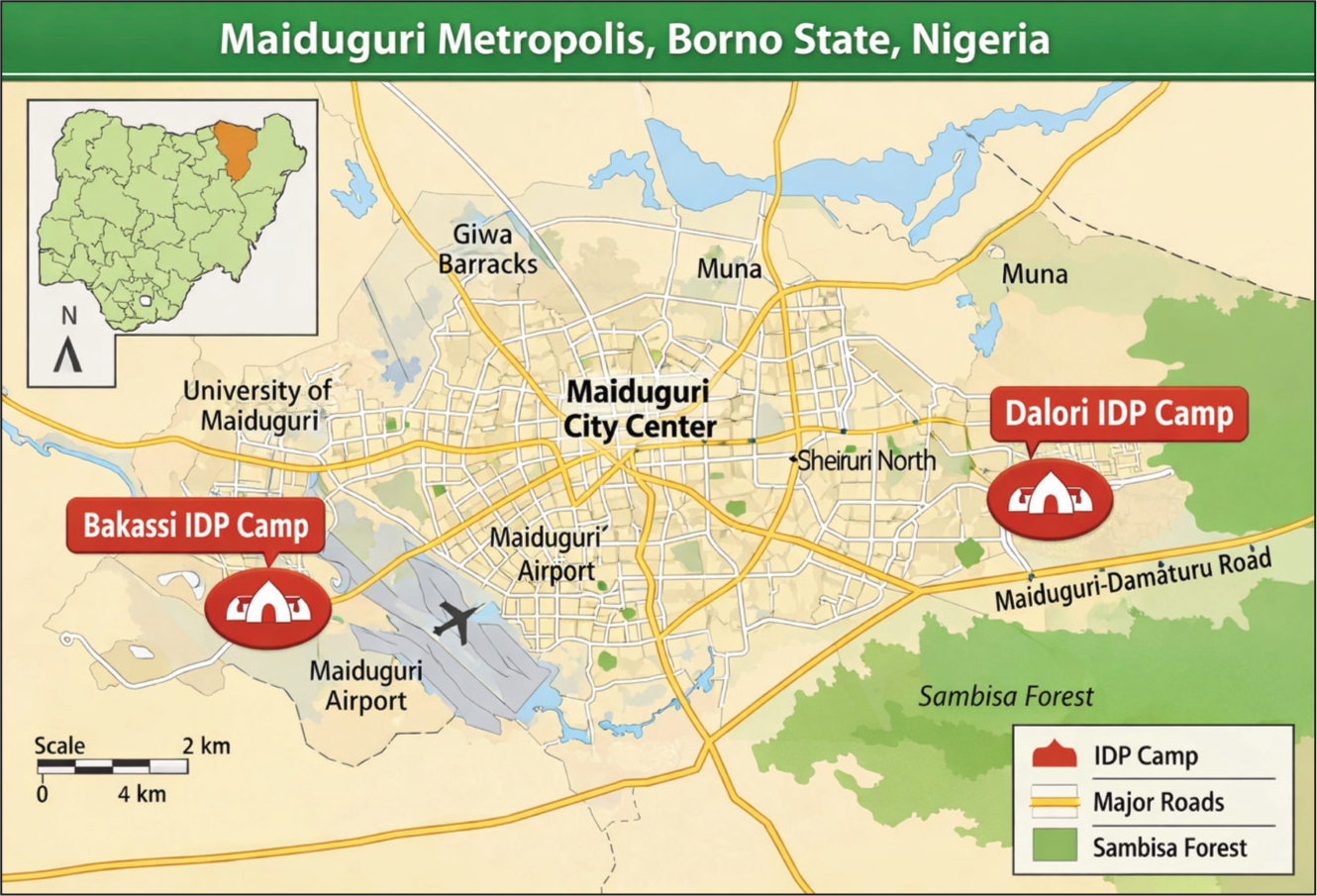
A qualitative case study research design was employed to allow for an in-depth exploration of displacement experiences within a defined social and spatial context. Case study research enables a detailed examination of processes, interactions and meanings as they unfold in real-life settings. Bakassi and Dalori IDP camps were treated as a single embedded case, based on their shared characteristics, including prolonged displacement, demographic diversity and comparable levels of vulnerability. The case was bounded by time (January–October 2024), place (Maiduguri Metropolis) and focus (camp-based displacement experiences) (see Figure 1).
Map of Maiduguri Metropolis, Borno State, Nigeria, Showing the Locations of Bakassi and Dalori Internally Displaced Person (IDP) Camps.
Participants were selected through purposive sampling, a strategy commonly used in qualitative research to identify individuals with relevant knowledge and lived experience. Accordingly, participants included IDPs, camp representatives, host community leaders, social and health workers, and government officials involved in displacement management. Sampling continued until data saturation was reached, at which point no new substantive insights were emerging. Semi-structured interviews formed a core component of data collection, enabling participants to reflect on their experiences while allowing flexibility for probing emerging themes. In total, 40 interviews were conducted with IDPs, camp officials, host community members and government actors within Maiduguri Metropolis. Participants chose to remain anonymous but consented to the use of role-based identifiers, which are used throughout the study to protect confidentiality.
In addition, six focus group discussions (FGDs) were conducted to capture collective perspectives and shared experiences that may not surface in individual interviews. Each FGD consisted of eight participants drawn from IDPs, host community leaders, government officials and social workers. Vulnerable groups, including women, persons with disabilities and older persons, were intentionally included to ensure diverse perspectives. All FGD participants were anonymised.
Non-participant observation was also employed to assess the physical and social conditions of the camps, including shelter quality; access to water, sanitation and hygiene (WASH) facilities; and everyday social interactions. Observational data provided additional insights into coping strategies and survival practices adopted by IDPs within both camp and host community environments.
Fieldwork was complemented by a desk-based review of secondary sources, including academic literature, humanitarian reports, legal frameworks and relevant grey literature on internal displacement (Adeola, 2019, 2021a; ICRC, 2017). This review informed the research design and supported the triangulation of primary data, strengthening the credibility of the findings.
Data analysis followed a thematic analysis approach, involving systematic coding and categorisation of data from interviews, FGDs, observations and documentary sources. Themes were developed inductively and aligned with the study’s focus on lived experiences and phases of displacement, enabling a coherent and integrated interpretation of the data.
Scope of the Study
Geographically, the study focused on Bakassi and Dalori IDP camps in Maiduguri Metropolis, Borno State. At the time of data collection, these camps collectively hosted over 25,000 IDPs. The selection of these sites was guided by three key considerations: First, the prolonged duration of displacement, as both camps have accommodated IDPs for over a decade, offering a valuable lens into protracted camp-based displacement (Gwadabe et al., 2018); second, the demographic diversity of camp populations, which allowed for a nuanced understanding of displacement experiences; And third, the scale and intensity of displacement, making these camps suitable for examining broader displacement dynamics within northeastern Nigeria (IDMC-GRID, 2021).
Ethical Considerations
The study adhered to established ethical research principles, particularly voluntary participation, informed consent, confidentiality and the protection of vulnerable participants. Informed consent was obtained from all participants after clearly explaining the purpose, scope and potential risks of the study. Where appropriate, written consent was secured, while verbal consent was obtained in cases of literacy constraints. Anonymity and confidentiality were strictly maintained throughout the research process.
Findings and Discussion
This study explores the lived experiences of IDPs in Bakassi and Dalori camps, with particular attention to the multi-layered vulnerabilities and coping strategies across three key phases of displacement: pre-displacement, displacement and post-displacement. This framing allows for a narrower, focused discussion that aligns with the empirical data while situating findings within the existing literature on IDPs in northeastern Nigeria (Adeola, 2021a; Ajayi, 2020).
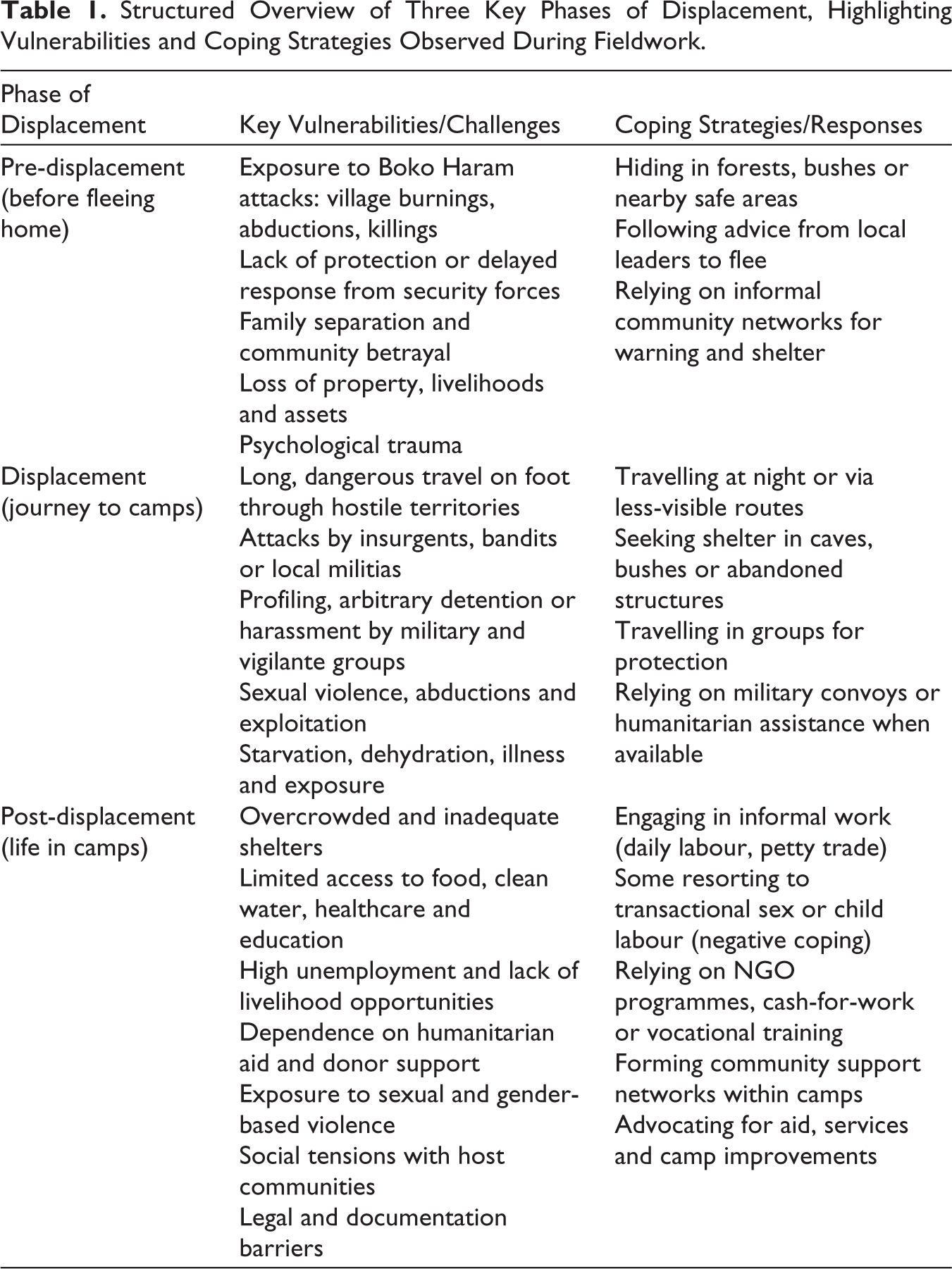
Table 1 provides a structured overview of these phases, highlighting vulnerabilities and coping strategies observed during fieldwork.
Structured Overview of Three Key Phases of Displacement, Highlighting Vulnerabilities and Coping Strategies Observed During Fieldwork.
Pre-displacement Experiences
As Table 1 illustrates, the pre-displacement phase represents a critical period in the trajectory of IDPs, defined by the escalation of insurgent violence, the systemic failure of state protection mechanisms and the early manifestations of sociopolitical marginalisation that precede forced flight. In northeastern Nigeria, particularly in Borno, Adamawa and Yobe states, the rise of Boko Haram in 2009 transformed what were historically peripheral communities into conflict epicentres. These regions, long characterised by chronic underdevelopment, high unemployment and limited state presence, became highly vulnerable to insurgent attacks. In many cases, residents faced an imminent threat to life and livelihood even before they physically fled their homes.
Empirical evidence from Bakassi and Dalori camps shows that many IDPs experienced a protracted period of fear and insecurity in the months and sometimes years leading up to their flight. Communities reported recurring raids on villages, with insurgents targeting schools, markets, religious institutions and public gathering spaces. The attacks were not random but carefully orchestrated to maximise terror, destabilise local governance and weaken community resilience. Women, children and the elderly were disproportionately affected, experiencing direct violence, abduction and forced recruitment, while men and young boys were often executed or coerced into insurgent ranks (Ajayi, 2020; Aliyu, 2018).
Many IDPs recounted that state security forces either withdrew prematurely, redeployed inadequately or failed to respond in time during critical attacks. One 38-year-old woman from Gwoza described her experience:
Before Boko Haram attacked our town, soldiers left their checkpoint. My husband and son were killed while trying to defend our house.
This testimony underscores a recurring pattern documented in the literature: the withdrawal or inaction of security actors significantly contributed to the conditions that made displacement unavoidable (Matfess, 2022). In some instances, the absence of protection was perceived as negligence; in others, as a form of structural betrayal, whereby state authorities implicitly failed to recognise the rights and security of peripheral populations.
Beyond the immediate threat of violence, pre-displacement experiences were often compounded by community-level tensions and social fragmentation. In several communities, some residents collaborated with insurgents, whether voluntarily or under duress, further eroding trust. One elderly woman from Konduga, now living in Dalori camp, recounted:
When Boko Haram entered our village, they didn’t come alone. Some young men from our town joined them. My daughter was raped in front of me. Our neighbours who used to eat with us helped them. That was when I realized our community was gone.
This account highlights how interpersonal betrayal and local complicity intensified the psychological burden of pre-displacement trauma. IDPs were not merely fleeing abstract threats; they were confronting the collapse of familiar social structures and witnessing the perversion of communal relationships, which had historically offered protection and mutual support. Such dynamics illustrate that displacement is as much a social and political phenomenon as it is a humanitarian or military one.
The loss of property and livelihoods during this phase was another significant vulnerability. Boko Haram’s insurgency frequently involved the systematic looting or burning of homes, farms, shops and livestock. IDPs reported fleeing with only the clothes on their backs, abandoning essential assets that would have enabled their post-displacement survival. A young man from Bama recalled:
When the insurgents came, they burned our houses and looted everything. We ran into the forest without food, water, or money. Our livelihoods were gone in minutes.
Such losses are not merely economic but also symbolic and psychological, as homes, land and productive assets represent social identity, stability and cultural belonging. The destruction of these assets before displacement adds a layer of chronic vulnerability, as IDPs enter camps not only traumatised by violence but also materially stripped of the means to reconstruct their lives.
Gendered dimensions of pre-displacement experiences are also critical to understanding vulnerabilities. Women and girls often faced sexual violence, forced marriage or abduction as part of Boko Haram’s broader terror strategy (Ajayi, 2020). Men and boys, while more likely to be executed or forcibly conscripted, also endured profound trauma as witnesses to attacks on female family members or forced participation in violence. A 27-year-old mother in Dalori camp recounted:
Before we fled, my daughter was abducted by Boko Haram. I begged them to let her go, but they refused. We had to leave our home because we could not protect her. Every night, I feared for the rest of my children.
These narratives underscore that pre-displacement trauma is multifaceted, combining threats to physical security, sexual and gender-based violence, family separation and social disintegration. They reveal that displacement is not a sudden event but a slowly accumulating process of chronic insecurity, where the precursors of flight are embedded in everyday life.
In addition, institutional failures at the state level exacerbated these vulnerabilities. The Nigerian state’s response to Boko Haram was often reactive and fragmented, with security deployments concentrated in major towns while rural communities were neglected. IDPs repeatedly reported that military presence was limited, inconsistent or deployed without clear protective mandates, leaving civilians exposed. In some instances, the pre-displacement phase was marked by coercive state practices, such as arbitrary arrests of men suspected of insurgent sympathies, which heightened community distrust and encouraged early flight (Lenshie & Yenda, 2016).
Furthermore, psychological trauma during pre-displacement was compounded by anticipatory stress—the fear of impending attacks even when immediate violence had not yet occurred. IDPs described sleep deprivation, chronic anxiety and hypervigilance as part of daily life in villages under threat. One adolescent from Konduga noted:
Even before the insurgents came, we were afraid to go to school or the market. Every sound at night made us panic. We knew something bad was coming, but no one could tell us when.
This anticipatory stress demonstrates that displacement is preceded by a prolonged period of mental suffering, which is often invisible in official statistics yet profoundly shapes coping strategies and subsequent resilience.
Social networks played a critical role during this phase, even as they were strained or broken. Families and neighbours often acted as early warning systems, sharing information about insurgent movements or offering temporary shelter. Local leaders, in some cases, advised families to flee before attacks occurred. However, these informal strategies could only partially mitigate the structural vulnerabilities created by state neglect, underdevelopment and insurgent predation. The dependency on social networks highlights both community resilience and fragility, as overstretched or compromised networks often failed to provide adequate protection.
From a broader analytical perspective, pre-displacement experiences in northeastern Nigeria illustrate the intersection of structural, political and security dimensions of vulnerability. It is insufficient to consider displacement purely as a reaction to insurgent violence. Instead, displacement must be understood as the outcome of systemic neglect, governance failures and sociopolitical marginalisation that create conditions in which fleeing becomes not only rational but also necessary for survival (Adeola, 2021a; Matfess, 2022). The chronic nature of pre-displacement risk in these communities challenges dominant humanitarian narratives that frame displacement as sudden or episodic, emphasising instead a continuum of vulnerability that begins long before flight.
Pre-displacement experiences also reveal the ethical and legal dimensions of state responsibility. Nigeria, as a signatory to the African Union Kampala Convention and the UN Guiding Principles on Internal Displacement, is mandated to protect civilians and prevent displacement where possible (African Union, 2009; UNHCR, 2016). The consistent reports of state withdrawal, inadequate protection and indirect facilitation of displacement through coercive practices highlight gaps between legal obligations and lived realities, underscoring the need for both preventive and protective interventions prior to flight.
In northeastern Nigeria, the pre-displacement phase is characterised by escalating insurgent violence and inadequate state protection, which leave civilians highly vulnerable. Communities face social fragmentation, betrayal and gendered or age-specific threats, while the destruction of property and livelihoods undermines material security. Chronic psychological trauma and anticipatory stress accumulate during this period, and although informal social networks offer some support, they are often insufficient.
Overall, these experiences reflect the structural and political dimensions of displacement, emphasising that it is a prolonged process rather than a singular event. Together, these factors demonstrate that pre-displacement experiences in Nigeria’s northeast are deeply rooted, multidimensional and enduring, forming the foundation upon which subsequent phases of displacement—journey and post-displacement—are built. Recognising these early vulnerabilities is essential for developing preventive, protective and durable solutions that address not only the immediate aftermath of displacement but also the underlying structural and institutional causes.
Displacement Phase
The displacement phase represents a critical and highly perilous stage in the experience of IDPs in northeastern Nigeria, encompassing not just the act of fleeing but also an extended period of vulnerability, uncertainty and trauma. For many IDPs in Bakassi and Dalori camps, the journey from their communities in Borno, Adamawa and Yobe states to relative safety in Maiduguri or nearby towns is neither short nor straightforward. Often spanning several days, and in some instances weeks, the route is fraught with dangers arising from both insurgent activities and the structural inadequacies of state protection. The experience of displacement in this region is thus best understood as a complex interplay between forced flight, the failure of protective institutions and the ongoing threat of violence in transit.
Displaced persons recounted moving through forests, open savannahs and sparsely populated terrains to avoid detection by Boko Haram operatives or to circumvent military checkpoints that were often perceived as unsafe. These journeys were characterized by exhaustion, hunger and constant anxiety. Many individuals travelled on foot, carrying children and any possessions they could salvage, often improvising shelters at night in the bush or in abandoned buildings. A young man from Marte recounted:
We moved at night to avoid Boko Haram. When we got to a checkpoint, they beat the men and called them Boko Haram. We had no food for days.
This testimony highlights a central tension of the displacement phase: while fleeing conflict is the immediate cause of flight, the journey itself exposes IDPs to further threats, not only from insurgents but also from state actors whose counterinsurgency measures often fail to distinguish between civilians and combatants. Displaced men, particularly young adults, are frequently suspected of being insurgents and subjected to prolonged interrogations or arbitrary detention, while women and children face heightened risks of sexual violence, abduction and coercion.
Sexual violence emerges as a particularly distressing aspect of the displacement phase. Women and adolescent girls report being coerced by both armed groups and, in some cases, opportunistic individuals in transit, including local bandits or even corrupt actors within formal security structures. A 25-year-old widow in Dalori camp explained:
I lost my husband in Gwoza. As I fled with my two children, soldiers stopped us and said we must sleep with them for protection. I refused, and they left us without food or direction.
This form of victimisation underscores the gendered dimensions of displacement, where pre-existing social hierarchies and vulnerabilities are amplified by the conditions of forced mobility. Sexual violence during displacement is compounded by inadequate access to medical, psychosocial or legal support, leaving survivors to navigate both the physical trauma and the social stigma associated with such experiences. As a result, displacement is not merely a physical movement but a period of cumulative harm with long-lasting implications for mental health, social cohesion and individual dignity.
Children, too, face extreme vulnerability during the displacement journey. Separated from family members or travelling with unaccompanied siblings, many children experience not only the physical challenges of long-distance travel but also the psychological trauma of witnessing killings, abductions or sexual assaults. Several IDPs reported that children were left alone during periods of transit because caregivers were forced to divide their attention to manage the group’s survival, increasing the risk of kidnapping or conscription by insurgent forces. These experiences align with findings from regional studies in the Lake Chad Basin, which indicate that children are disproportionately affected by forced migration and often bear the psychological scars of displacement long after reaching camp settlements (Ajayi, 2020; Lenshie & Yenda, 2016).
The displacement phase also brings IDPs into direct contact with Nigerian military operations. While the military is theoretically mandated to protect civilians and combat insurgents, field reports indicate that counterinsurgency strategies often exacerbate civilian suffering. Soldiers manning checkpoints have been accused of profiling displaced men, detaining them without charge and using coercive force. In some cases, families attempting to flee violent areas report being turned back or separated by soldiers who perceive all young men as potential Boko Haram operatives. One 19-year-old IDP from Dikwa, now residing in Bakassi camp, recounted:
They [military] picked all of us at the checkpoint. We were young boys, so they said we were Boko Haram. We slept in their cell for nine days. They beat us and gave us only garri. My cousin is still missing. We don’t know if he is alive.
This demonstrates that displacement is not simply a consequence of insurgent attacks but also a product of securitised governance that can inadvertently produce additional harm. The militarisation of transit routes, combined with weak oversight and limited accountability, leaves civilians doubly exposed—caught between insurgents and the very institutions charged with their protection.
Non-state actors, including local vigilante groups such as the Civilian Joint Task Force (CJTF), further complicate the displacement experience. Although such groups have been instrumental in repelling Boko Haram and providing some security in local areas, they are not formally regulated and have been implicated in rights abuses, including extortion, forced recruitment and physical intimidation of displaced populations (Aliyu, 2018). For instance, in Dalori, a youth reported being recruited by the CJTF at age 15 under the promise of protection and food, only to be forced to carry arms:
They promised food and security, but I ended up carrying a gun. Now I cannot go home. People think I am a fighter.
These accounts reveal how displacement can entangle civilians in cycles of coercion and involuntary militarisation, further complicating post-displacement reintegration and psychological recovery.
In addition to physical threats and institutional failings, the displacement phase is characterised by severe deprivation. Food, water and medical resources are typically scarce during transit. IDPs often rely on sporadic assistance from humanitarian convoys or sympathetic strangers, but such support is inconsistent and insufficient. Many families report walking for days without adequate sustenance, facing dehydration, exhaustion and exposure to harsh climatic conditions. Women, in particular, must navigate these challenges while caring for children and the elderly, highlighting the compounded nature of vulnerability in the displacement process.
Family separation is another pervasive dimension of this phase. Amid chaotic flights, children, elderly relatives and sometimes spouses are inadvertently or forcibly separated from the group. Several IDPs in Bakassi and Dalori report not knowing the fate of family members months or even years after initial displacement. This prolonged uncertainty contributes to psychological stress, grief and a sense of social dislocation, which persists even after arrival at camps or host communities. As one mother recounted:
I am still looking for my eldest son. He ran in a different direction when we fled. We have no idea if he is alive. Every night, I pray he is safe.
The displacement phase also exposes structural vulnerabilities in local governance and humanitarian systems. Unlike some international conflict zones where safe corridors, coordinated evacuation plans or temporary shelters are provided, IDPs in northeastern Nigeria largely traverse unregulated routes. The absence of formal support highlights systemic failures in planning, coordination and accountability. Even when humanitarian convoys are available, access is limited, selective or inconsistent, often leaving the most marginalised—women, elderly, disabled or unaccompanied children—particularly vulnerable.
These dynamics demonstrate that displacement is a multi-dimensional process extending far beyond the moment of flight. It encompasses not only physical relocation but also exposure to violence, deprivation, exploitation and institutional neglect. The phase illustrates the dual role of both conflict actors and state institutions in shaping the experience of displacement. While Boko Haram directly generates the need to flee, failures in governance, weak protective mechanisms and securitised approaches by the state amplify the risks and vulnerabilities of displaced populations.
The displacement phase in Northeastern Nigeria underscores that flight from violence is rarely straightforward or safe. It is a prolonged, hazardous journey shaped by physical danger, institutional failures, social dislocation and psychological trauma. IDPs are forced to navigate multiple layers of risk, including insurgent attacks, state profiling, abuses by non-state actors, deprivation and family separation. The phase highlights how displacement is not merely a humanitarian emergency but also a process rooted in structural vulnerabilities, governance gaps and protracted insecurity (Ajayi, 2020; Akpoghome, 2016; Lenshie & Yenda, 2016).
Understanding the displacement phase is critical not only for humanitarian planning but also for broader policy interventions. It emphasises the need for coordinated protection measures, including safe corridors, emergency shelters, food and medical provision during transit and mechanisms to prevent gender-based and age-specific violence. Moreover, it draws attention to the ethical and legal responsibilities of the Nigerian state under frameworks such as the Kampala Convention and the UN Guiding Principles on Internal Displacement, which mandate the protection of IDPs throughout all stages of displacement (Adeola, 2019; African Union, 2009; Global Protection Cluster, 2010).
By highlighting the lived realities of IDPs during this phase, this study contributes to a deeper understanding of internal displacement as a prolonged, multi-layered process rather than a discrete event. It underscores the importance of integrating protection, humanitarian assistance and legal oversight into all phases of displacement to mitigate the compounded risks faced by civilians in conflict-affected regions. In the context of northeastern Nigeria, the displacement phase demonstrates that the journey itself is a site of vulnerability, suffering and resilience, reflecting broader systemic failures that extend beyond the immediate threat of insurgent violence.
Post-displacement Phase
The post-displacement phase, encompassing life in camps or host communities after fleeing violence, represents a prolonged period of uncertainty, vulnerability and systemic marginalisation for IDPs in northeastern Nigeria. While the immediate threat from Boko Haram may have been temporarily mitigated by relocation to camps such as Bakassi and Dalori, the end of physical displacement does not equate to safety, stability or access to basic human rights. Instead, post-displacement life often presents a complex web of challenges, including inadequate shelter, food insecurity, restricted access to healthcare and education, lack of livelihood opportunities, social exclusion and psychosocial trauma.
In many ways, the post-displacement phase constitutes a second, protracted form of vulnerability. IDPs arrive at camps physically exhausted and psychologically traumatised, only to face overcrowding, under-resourced facilities and poorly coordinated humanitarian assistance. Reports from Bakassi and Dalori indicate that families of six to eight people often share single-room shelters, with multiple households crammed into makeshift structures such as classrooms, tents or partitioned spaces. Overcrowding not only undermines privacy and dignity but also exacerbates health risks, including exposure to communicable diseases such as cholera, malaria and respiratory infections (Ajayi, 2020; Tsokwa, 2019).
A woman from Dalori camp described the situation:
There is no space to sleep. We lay mats close to one another. During the rainy season, water comes in. At night, the heat is too much, and the children cry. It is not a place for human beings.
This account highlights the humanitarian inadequacies that persist long after flight, underscoring the fact that the post-displacement phase is not simply a period of shelter but also one of sustained deprivation. The chronic under-resourcing of camps reflects broader state and institutional failures to implement the provisions of the Kampala Convention and the UN Guiding Principles on Internal Displacement, which emphasise adequate housing, protection from harm and access to basic services as core rights for IDPs (African Union, 2009; UNHCR, 2016).
Healthcare and Psychosocial Needs
Healthcare provision in post-displacement settings is severely limited, often constrained to a single mobile clinic that operates irregularly and lacks essential medications. IDPs frequently report untreated chronic illnesses, including hypertension, diabetes, tuberculosis and complications from injuries sustained during conflict or flight. The lack of accessible mental health support is particularly concerning, given the cumulative trauma experienced during pre-displacement and displacement phases. PTSD, depression and anxiety are widespread, yet scarcely addressed within camps due to both resource constraints and cultural stigmatisation of mental health issues (Adeola, 2021a).
Women and children are especially vulnerable to the psychosocial consequences of post-displacement life. Many have endured sexual violence, forced recruitment of children or the loss of family members. In Dalori, a displaced adolescent girl recounted:
I cannot sleep at night. I keep thinking about my village and my parents. Sometimes I cry alone because there is no one to talk to. We are alive, but we are not living.
Such testimonies illustrate that the post-displacement phase is not merely about physical survival but also encompasses ongoing psychological harm. The lack of trauma-informed interventions leaves many IDPs trapped in cycles of fear, grief and insecurity, which can hinder reintegration and resilience-building.
Education and Child Protection
Access to education remains one of the most acute challenges in post-displacement settings. In Dalori camp, a single functioning school serves over 3,000 children, with classrooms often overcrowded and insufficiently equipped. Educational interruptions have long-term consequences, limiting children’s social development, cognitive growth and future livelihood opportunities. Furthermore, the absence of protective spaces increases the risk of child labour, early marriage and recruitment into armed groups or vigilante networks (Ajayi, 2020; Lenshie & Yenda, 2016).
A parent in Bakassi camp lamented:
My children have not been to school for years. The classrooms are full, and there are no teachers. They sit and wait for something that never comes. What kind of future can they have?
This lack of educational infrastructure illustrates a failure to uphold Article 10 of the Kampala Convention, which guarantees IDPs access to education during displacement (African Union, 2009). Without intervention, prolonged post-displacement education deficits can entrench cycles of marginalisation and limit IDPs’ potential for social and economic reintegration.
Livelihoods and Economic Exclusion
The post-displacement phase is also marked by chronic economic exclusion. Many IDPs have lost all personal property, trade assets and identification documents during flight. In the absence of livelihoods or vocational support, IDPs rely primarily on irregular humanitarian aid, creating dependency and undermining long-term resilience. A former tailor from Bama, now in Bakassi camp, explained:
I had a thriving sewing business. When Boko Haram came, we ran for our lives. My machines and shop were destroyed. Since arriving here, I have done nothing but wait for food. I want to work, but I have no tools, no money, no opportunity.
Even when vocational training programmes exist, they are often insufficiently funded, temporary or inaccessible to the most vulnerable. Youth and women in particular remain trapped in cycles of idleness and frustration, increasing susceptibility to recruitment by armed groups, participation in informal and exploitative economies or engagement in negative coping mechanisms such as transactional sex or early marriage (Ajayi, 2020; Benedicta, 2014).
The lack of economic integration also generates tensions with host communities. Urban centres like Maiduguri are already economically strained, and the influx of IDPs places pressure on informal labour markets, housing and services. Host populations may perceive IDPs as competitors for scarce resources, potentially triggering social friction and undermining prospects for durable peace (Cantor & Maple, 2021; Regasa & Lietaert, 2022). In essence, post-displacement economic exclusion is not just a humanitarian concern but also a structural and political problem that can affect social cohesion and security.
Shelter and Land Tenure
Shelter inadequacy remains a central challenge in the post-displacement phase. Many IDP camps are established on land without formal tenure arrangements, leaving residents vulnerable to eviction or relocation at short notice. The closure of the Bakassi camp in 2022 exemplifies the consequences of this insecurity. IDPs were instructed to leave with minimal notice, often returning to villages still under threat or relocating to informal settlements with substandard infrastructure (Adeola, 2021a; Ibrahim, 2022).
Uncertain land tenure and temporary shelters also exacerbate exposure to natural hazards. During rainy seasons, tarpaulin tents or wooden shacks are prone to flooding and collapse, further endangering the displaced population. The combination of insecure housing, overcrowding and inadequate infrastructure creates an environment where human dignity, safety and privacy are constantly under threat (Ajayi, 2020; Tsokwa, 2019).
Social and Political Marginalisation
Post-displacement life often reveals the political dimensions of displacement. Many IDPs report feeling invisible or excluded from governance processes, decision-making and resource allocation. As one youth leader in Dalori observed:
We are not just victims. We are citizens. And until Nigeria sees us as such, this suffering will continue.
This statement reflects a broader critique of structural and institutional neglect. Displacement in Nigeria is not merely a humanitarian challenge but also a political condition, arising from systemic failures to ensure equitable citizenship, protection and social inclusion (Adeola, 2021c; Maru, 2014). Chronic marginalisation during post-displacement life undermines IDPs’ ability to exercise their rights, access social services and participate fully in civic and economic life.
Protection and Human Rights Concerns
IDPs in post-displacement settings remain exposed to multiple forms of abuse and exploitation. Reports indicate that camp-based security actors, informal vigilante groups and even humanitarian personnel have been implicated in sexual exploitation and abuse, extortion and coercion (UN OCHA, 2023). The lack of accountability mechanisms, coupled with cultural stigma, often silences victims and prevents redress. This environment of impunity compounds the trauma experienced during flight and reinforces a sense of systemic injustice among displaced populations.
Durable Solutions and Reintegration Challenges
Durable solutions—whether return, local integration or resettlement—remain elusive for many IDPs in northeastern Nigeria. Premature returns to insecure villages or uninhabitable areas are common, exposing returnees to renewed violence and displacement. Where local integration is attempted, lack of formal employment opportunities, social support and access to services limit the effectiveness of these solutions. Resettlement programmes are often ad hoc, donor-dependent and poorly coordinated, reflecting the absence of comprehensive state planning (Adeola, 2021b; Eweka & Olusegun, 2016).
A displaced woman from Monguno, now living in an informal settlement, described the precariousness of post-displacement life:
They told us to leave Bakassi, but where are we to go? We’re living in someone’s uncompleted building. Every time it rains, everything is soaked. We’re tired of moving.
Such accounts illustrate the cyclical nature of displacement, where flight from one form of insecurity often leads to exposure to new risks and continued marginalisation. The post-displacement phase, therefore, is not an end point but a continuation of vulnerability and structural neglect.
The post-displacement phase in northeastern Nigeria highlights the protracted nature of displacement, where protection gaps, structural inequalities and humanitarian deficits combine to create long-term vulnerability. IDPs face inadequate shelter, limited access to healthcare and education, economic exclusion, social marginalisation and ongoing exposure to violence and exploitation. Gendered and age-specific vulnerabilities compound these challenges, with women, children and elderly populations experiencing disproportionate risk.
Understanding post-displacement life as a multi-dimensional and prolonged phase underscores the importance of integrated interventions. Durable solutions must combine protection, livelihoods, education, health, psychosocial support and secure housing, alongside formal recognition of IDPs as rights-bearing citizens. Only through such holistic approaches can displacement be transformed from a cycle of vulnerability into a pathway for recovery, resilience and reintegration, in accordance with both the Kampala Convention and international human rights obligations (Adeola, 2021b; African Union, 2009; UNHCR, 2016).
Conclusion
Internal displacement represents one of the most urgent humanitarian and developmental challenges confronting Nigeria today. Conflict-induced displacement, particularly in the northeastern region, continues to rise at an alarming rate, driven by protracted violence from non-state armed groups such as Boko Haram and ISWAP, as well as military counterinsurgency operations, communal clashes and systemic governance failures. Nigeria now experiences some of the highest rates of internal displacement in Sub-Saharan Africa, with over two million people affected in Borno State alone (IOM, 2024).
This study focused on the experiences of IDPs residing in Maiduguri, Borno State, particularly in camps such as Dalori and Bakassi, using a qualitative approach to explore the root causes of displacement, the multi-layered suffering endured by displaced persons and the socio-economic impacts on both IDPs and host communities. Findings reveal that the underlying causes of displacement are deeply structural, stemming from historical governance failures, chronic insecurity, marginalisation of rural areas and uneven state presence, while proximate causes include direct attacks by insurgents, forced conscription, sexual violence, abductions, destruction of villages and collateral impacts of military operations.
The study highlights that IDPs experience multiple, overlapping layers of suffering across the displacement timeline. These include trauma from violence, loss of family members, destruction of homes, food insecurity, limited access to healthcare, restricted educational opportunities and ongoing violations of human rights within camps. The prolonged nature of displacement, with some individuals displaced for over a decade, has generated economic pressures on host communities, particularly in the labour market, housing and access to public services. Overstretched infrastructure and competition for scarce resources have created tensions, social frustrations and heightened risks of instability, even in contexts of generally cordial host–IDP relations.
Despite the scale of the crisis, governmental responses remain fragmented, under-resourced and inconsistently implemented. Programmes for voluntary return or resettlement, while well-intentioned, have often been premature, failing to guarantee safety, dignity or sustainable reintegration. National frameworks, including the national policy on IDPs, remain largely in draft form, while the implementation of the Kampala Convention is constrained by limited political will, budgetary limitations and bureaucratic bottlenecks. These gaps reflect a broader institutional failure to translate legal and policy commitments into concrete protections and livelihood opportunities for displaced populations.
In light of these findings, it is imperative that federal and state governments, humanitarian agencies, international donors and civil society intensify their efforts to address the plight of Nigeria’s IDPs. Action must include the provision of durable solutions aligned with international frameworks, ensuring safe, voluntary and well-planned returns, resettlement or local integration, and strengthening protection and access to basic rights within camps, encompassing shelter, food, healthcare, education and psychosocial support. It is also crucial to facilitate economic reintegration and livelihood opportunities, through vocational training, small business support and inclusive employment programmes, which can reduce dependency and enhance resilience. At the same time, efforts must focus on mitigating pressures on host communities by investing in infrastructure, social services and conflict-sensitive resource allocation. Institutional coordination and political commitment must be strengthened to ensure that the Kampala Convention, national policies and local strategies are operationalised effectively.
Failure to address these structural and immediate needs risks not only exacerbating the humanitarian crisis but also undermining long-term peacebuilding, social cohesion and regional development efforts. The experiences of IDPs in Bakassi and Dalori camps underscore that displacement is not merely a temporary humanitarian concern—it is a chronic sociopolitical condition shaped by systemic neglect, governance failures and insecurity. Addressing it requires comprehensive, rights-based and sustainable interventions that restore dignity, promote economic empowerment and ensure the equitable inclusion of displaced populations in Nigeria’s social and political life.
Generally, safeguarding the rights and livelihoods of IDPs is not only a moral and legal imperative but also a strategic necessity for stabilising northeastern Nigeria and supporting broader national development goals. Ensuring access to shelter, economic opportunities, social services and protection from further displacement is central to restoring hope, security and dignity to millions of internally displaced Nigerians.
Footnotes
Declaration of Conflicting Interests
The author declared no potential conflicts of interest with respect to the research, authorship and/or publication of this article.
Funding
The author received no financial support for the research, authorship and/or publication of this article.