






Abstract
This case study explores an ethical dilemma encountered during a commercial flight duty, in which the crew became aware of a cabin defect prior to passenger boarding. Although the issue did not compromise the aircraft’s airworthiness, it posed a significant risk to passenger comfort and the overall travel experience. The crew faced a critical decision: whether to proceed with the flight, delay its departure, or cancel it entirely. Each option carried meaningful implications for multiple stakeholders, including passengers, flight crew, and the airline. The case highlights the complexities of ethical decision-making under time constraints and organizational pressures, such as financial considerations and rigid scheduling. It prompts reflection on the ethical responsibilities of corporations, the balance between service quality and commercial priorities, and the influence of corporate culture on frontline decision-making. While the case study does not provide predetermined “correct” answers, it emphasizes the importance of ethical reasoning and encourages looking beyond operational efficiency versus passenger comfort to examine transparency, informed consent, and responsible decision-making in complex, real-world contexts.
Background
Thika Airways, a prestigious five-star airline based in the Gulf Cooperation Council region, has redefined luxury air travel since its launch in 1999. With a fleet of state-of-the-art aircraft, including Airbus A350s, Boeing 787 Dreamliners, and the narrow-body Airbus A320 and A321, Thika Airways prides itself on offering a service style that is rooted in Arabian hospitality.
Passengers in premium cabins enjoy warm towels, gourmet Arabic coffee and dates, spacious suites with sliding doors and private minibars, and a curated in-flight dining experience featuring Middle Eastern and international cuisine served on fine bone china. Economy passengers also benefit from high-quality service, with satisfaction ratings above the industry average. All passengers have access to a state-of-the-art entertainment system and complimentary on board Wi-Fi.
Thika Airways has set industry benchmarks, earning multiple international awards, including “World’s Best First Class” and “Best Cabin Crew in the Middle East.” Its business model focuses on enhancing passenger experience across all cabins and includes the “ThikaElite” loyalty program offering VIP airport lounges, personal shopping concierges, and luxury chauffeur services. The airline has also led sustainability efforts, introducing fully carbon-neutral flights using biofuel blends and advanced fuel-efficient technology.
Financially, Thika Airways has reported steady profitability between 2002 and 2019. However, the COVID-19 pandemic has caused financial difficulties and heavy debt for the airline. Table 1 illustrates the airline’s income statements for the years 2023 and 2024. Despite a strong rebound in travel demand after the COVID-19 pandemic, as shown in Figure 1, airline companies faced significant financial challenges that threatened their long-term stability. Additionally, rising fuel prices, increased due to geopolitical tensions and supply chain disruptions, put further pressure on profit margins. Labor shortages and increasing wages added to operating costs, making it difficult for airlines to maintain profitability despite higher ticket prices.
Thika Airways—Income Statement, Year Ended December 31, 2024 (USD Millions).
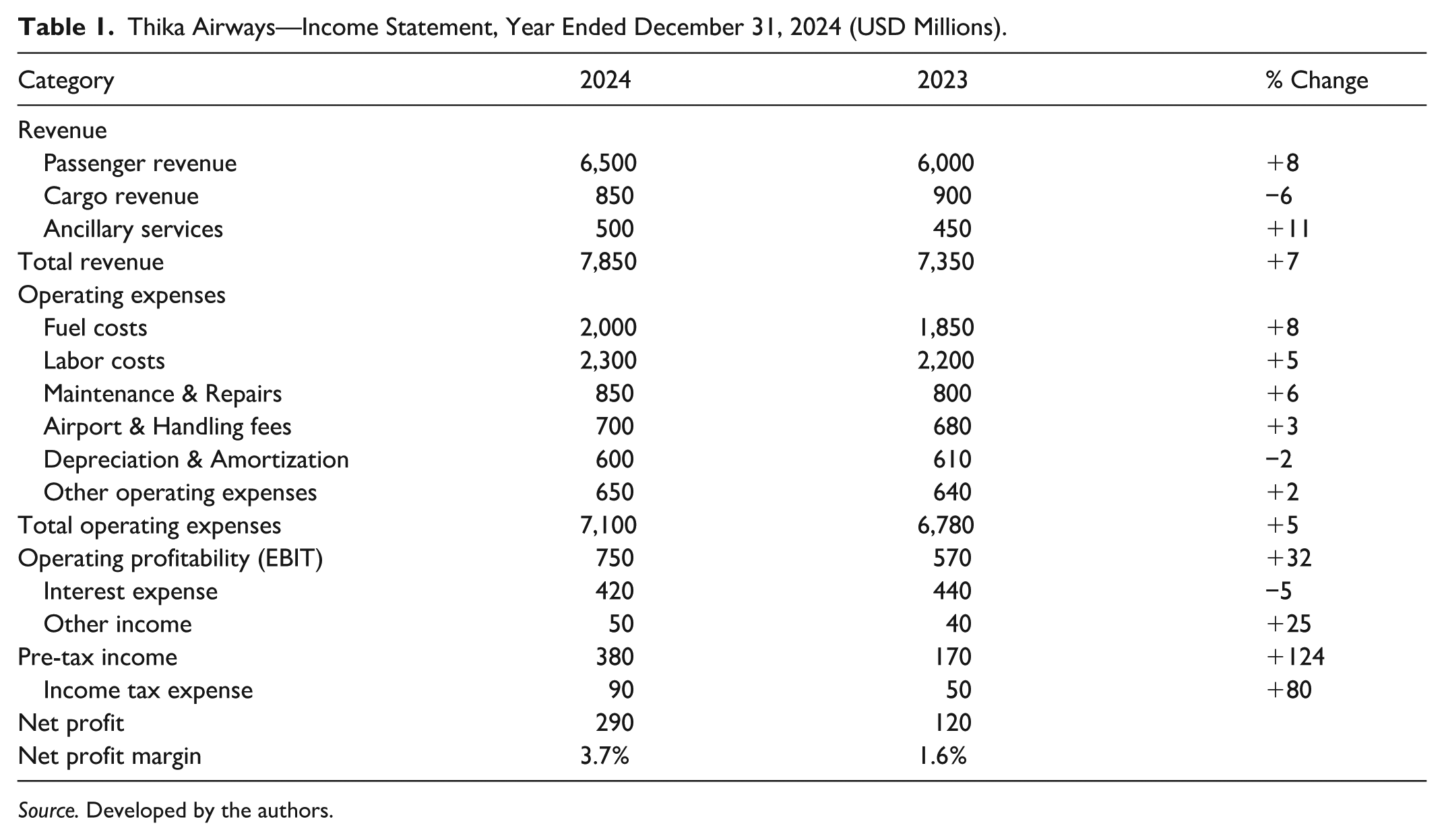
Source. Developed by the authors.
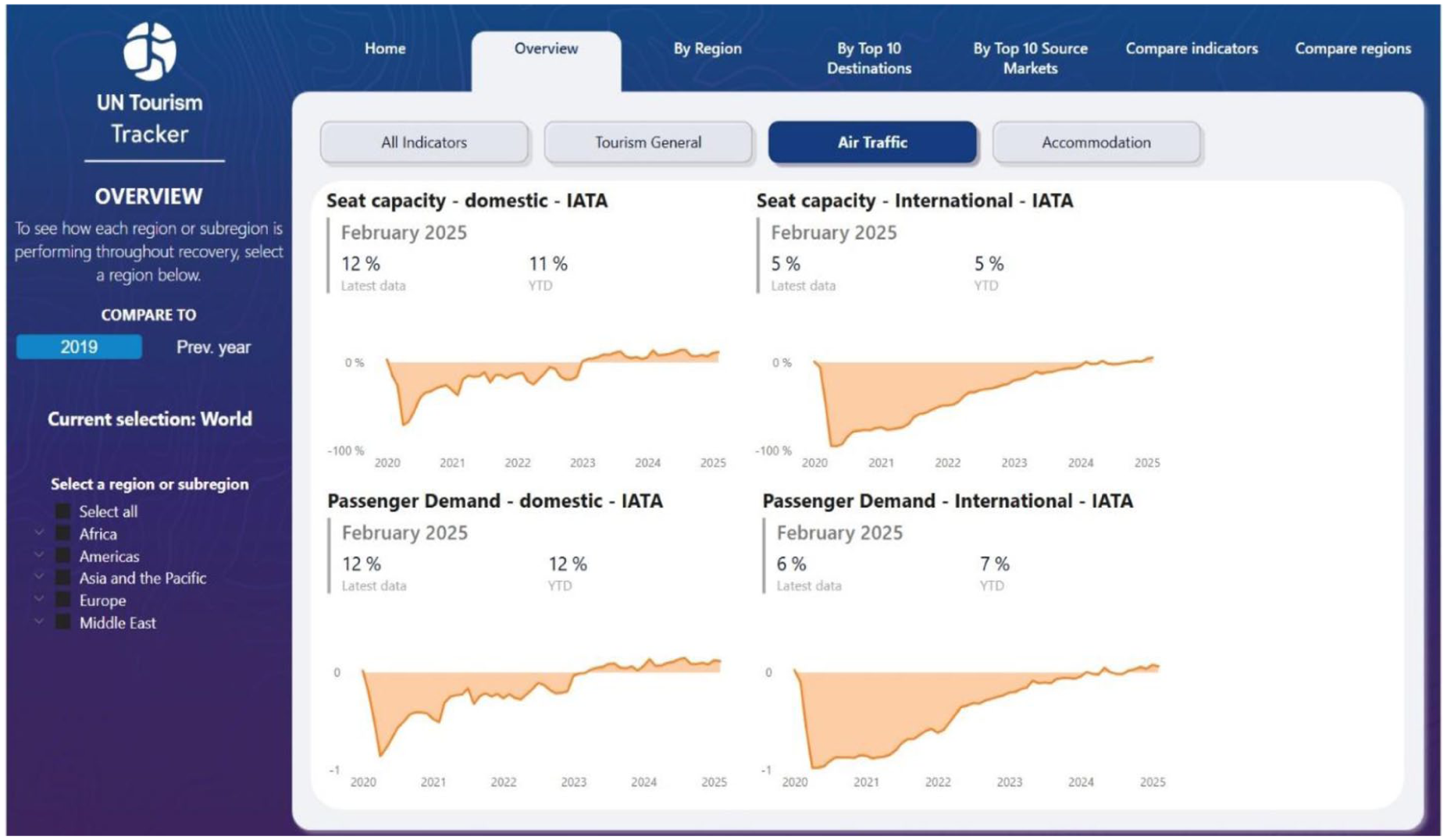
Air traffic trends in the post-pandemic era.
Another major challenge is coming from the low-cost airlines, which have been extraordinarily strong competitors on short and medium-haul flights. Thika Airways is a full-service operator that does not charge fees for services on board its flights. To regain sustainable profitability, Thika Airways launched a program to reduce unnecessary costs across operations. Rayan, the cabin senior for flights TH 214 and TH 215, has received multiple emails from senior management urging on board leaders to optimize resource use. This case study examines a situation in which the flight crew must choose between reducing costs and upholding ethical principles.
The Flight
The crew operating the turnaround flights TH 214 and TH 215 were scheduled to meet at 22:15 Gulf Standard Time in the designated briefing room of the crew terminal. The cabin senior, “Rayan,” arrived 10 min earlier. He checked in with the flight operations officer and collected the general declaration form, which contained updated crew information; Figure 2 displays this document.
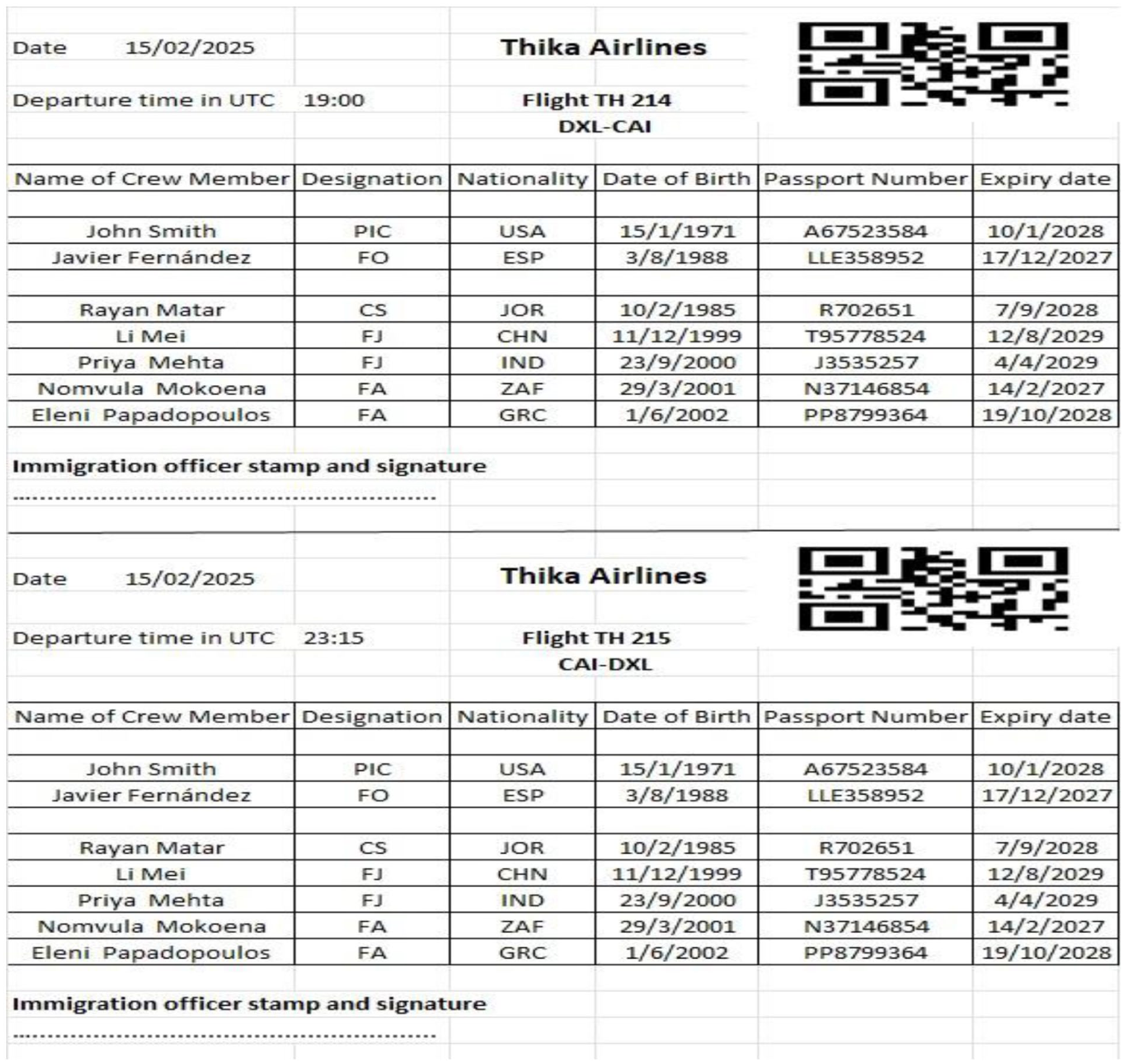
General declaration form for operating crew members.
Turnaround flights are less than 4 h per sector and do not include a layover at the arrival destination. The crew of this type of duty operates the first sector; they stay on the ground for 50 min at the arrival destination, and then they bring the aircraft back to the airline’s base hub on the second sector. The outbound sector TH 214 from DXL 1 to CAI takes 3 h and 15 min of flying time, while the inbound sector CAI-DXL is 10 min shorter.
The cabin crew started their pre-flight briefing. While discussing aircraft type, Rayan explained important safety highlights as per safety requirements. The crew then agreed on F&B service delivery in business and economy cabins. Thika Airways provides their cabin seniors with a tablet that shows real-time passenger information, including any medical concerns, special meals, or unaccompanied minors traveling on this particular flight duty. The flight crew arrived at the briefing room and were provided with information about the expected weather during the flight.
The crew reached the aircraft and started their pre-flight safety and security checks. They only had 20 min before passenger boarding started. A turnaround supervisor came and discussed load limits with the flight crew, and aircraft refueling took place based on the captain’s instructions. The catering vehicle parked next to the forward right-hand side of the aircraft and loaded the carts and equipment required for service delivery. The cleaning team was on board as well, but the cabin crew are used to dealing with this situation, which involves many people working at the same time on the ground. Delays for flights cause fines for the airline, so everybody tries to work in harmony with an on-time performance goal in mind.
The Aircraft
This Airbus A320-200 single-aisle aircraft is configured to host 16 passengers in business class and 120 passengers in economy class. It has two service galleys that contain F&B carts and containers; one is located on the forward side, and the other is located on the rear section of the aircraft. There is only one toilet in business class and two toilets in economy class. Normally, passengers board through the L1 door (or the L1 and L2 doors together); the R1 and R2 doors are used for catering supply loading. The overwing emergency exits are smaller in size and are only used in emergency evacuation. Figure 3 illustrates this aircraft’s cabin.
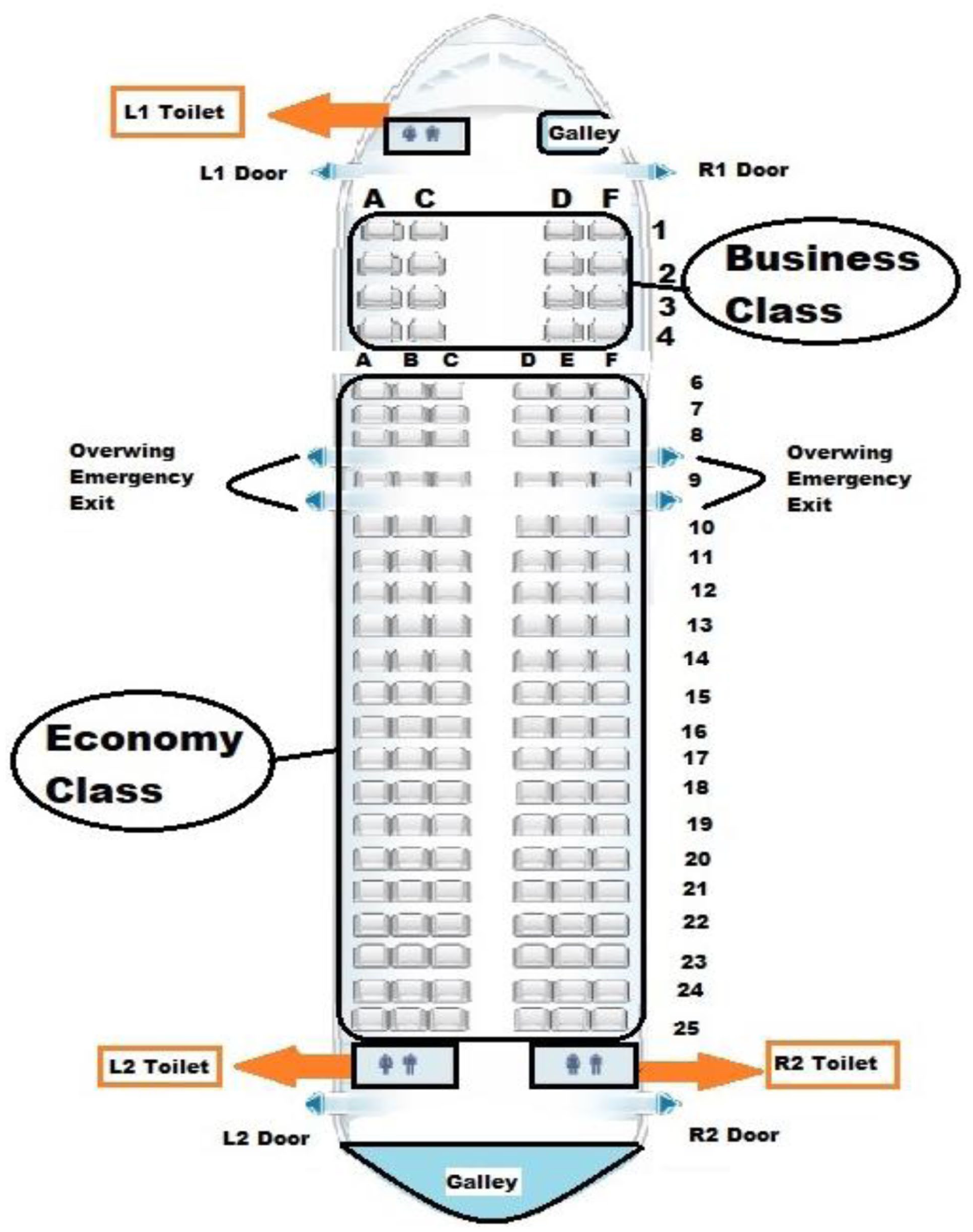
A320-200 Thika Airways’ cabin plan.
The Crew
The minimum cabin crew complement for this aircraft is four; each one is responsible for one main emergency exit, that is, L1, L2, R1, and R2, in addition to one area of responsibility per flight attendant, covering the whole passenger cabin. Overwing emergency-exit passengers, that is, rows 9 and 10, are briefed by cabin crew on how to open them in case of an emergency evacuation before takeoff. Thika Airways adopts a multinational work environment: For flights TH 214 and TH 215, there were seven crew members who came from seven different countries, including one pilot in command (PIC), who is responsible for the overall flight; one first officer pilot; one senior cabin member responsible for the cabin and reporting to the PIC; and four cabin crew members (one is assigned by the airline as an additional crew member to assist in service delivery for busy flights such as flights to Cairo).
English is the only permitted language among the crew, but it is not the primary language for the majority of them; communication training is designed to reduce misunderstandings among the crew. In addition, Aviation Crew Resource Management (ACRM) principles are embedded in these training programs, as ACRM emphasizes structured communication, teamwork, and the effective use of all available resources during flight operations. This is particularly important because resources are limited once the aircraft is thirty thousand feet above ground level; allocating those resources wisely leads to successful flights where passengers are satisfied and company objectives are met.
Upon joining the airline, newly recruited cabin crew members undergo a structured 6-week training program designed to equip them with the foundational skills required for their role. This program begins with a 1-week induction to introduce them to the airline’s policies, corporate culture, and operational standards. It is followed by 2 weeks of intensive safety training, focusing on emergency procedures, regulatory compliance, and passenger evacuation protocols. The fourth week is dedicated to first aid, ensuring crew members are prepared to respond effectively to medical emergencies on board. The final 2 weeks cover service delivery, emphasizing customer service excellence, hospitality standards, and the overall passenger experience.
Once cabin crew members are promoted to the position of cabin senior, they are required to complete an additional 2-week training course tailored to their leadership responsibilities. This advanced program includes modules on leadership principles, assessing crew performance, and delivering constructive feedback. It also offers deeper insights into effective communication, particularly within the dynamic and sometimes high-pressure environment of an aircraft cabin.
Despite the comprehensive nature of both the initial and advanced training programs, there is a notable gap in the curriculum concerning ethics. While all courses emphasize strict adherence to the airline’s standard operating procedures as outlined in the safety and service manuals, there are no dedicated sessions that explore ethical decision-making or provide tools to help crew members navigate complex moral dilemmas. In scenarios where cabin crew are confronted with ethical challenges, there is limited formal guidance on how to evaluate such situations through an ethical lens, including considerations of transparency with passengers and ensuring informed consent in decisions that may affect their comfort, safety, or overall travel experience.
Flight Delays and Cancellations
Flight disorders result in significant financial losses for airlines, amounting to billions of dollars annually (U.S. Passenger Carrier Delay Costs, 2024) due to increased operational costs, lost revenue, and passenger compensation (Flight Delays Explained: Causes, Costs, and Surprising Facts, 2025). One of the primary financial burdens comes from increased operating expenses. Extra fuel consumption occurs when aircraft are held in holding patterns or experience extended ground times, leading to higher fuel expenses. Additionally, airlines must cover crew overtime and rescheduling costs, as delays require adjustments to flight schedules and additional payments to crew members. Maintenance and operational expenses also rise since delayed aircraft often require further servicing. Moreover, airlines must compensate passengers by providing meals, hotel accommodations, and rebooking options, further adding to financial strain.
Beyond operational costs, airlines suffer from lost revenue due to reduced passenger capacity. Delays can disrupt flight schedules, leading to fewer flights being operated at full load as well as a decrease in available seats for passengers. Missed connections caused by delays often result in flight cancellations, leading to further revenue losses. Additionally, persistent delays can reduce overall passenger demand (Lee, 2023), as travelers may choose alternative airlines or modes of transportation to avoid inconvenience.
Flight delays also have broader economic consequences, affecting both passengers and businesses. Lost productivity is a major concern, as passengers experience wasted time that could have been spent on work or other productive activities (Flight Delays Explained: Causes, Costs, and Surprising Facts, 2025). Some passengers may also face additional accommodation costs if they are stranded due to extended delays. For business travelers, flight delays can lead to missed opportunities, disrupted meetings, and financial losses. Altogether, the financial impact of flight delays or cancellations extends beyond airlines, affecting passengers, businesses, and the overall economy.
The Inbound Flight Situation
The first sector was operating normally; 10 min before “Top of Descent”—which is the phase of the flight when the aircraft starts its gradual landing—Rayan received a call through the cabin interphone from Priya, a flight attendant who works in the economy cabin; she said that both toilets were inoperative.
Rayan went to the back of the aircraft to check it out and found that in both toilets the flush function had a failure. He then went to the cockpit and informed the captain, who got in touch with the airline hub’s 24-h engineering team through the ACARS system (Roy, 2001). The PIC gave instructions to the cabin senior to go again to the back galley and reset two specific circuit breakers that are available in the overhead panel. Figure 4 shows an example of an airplane galley’s circuit breaker. However, the reset did not fix the issue.
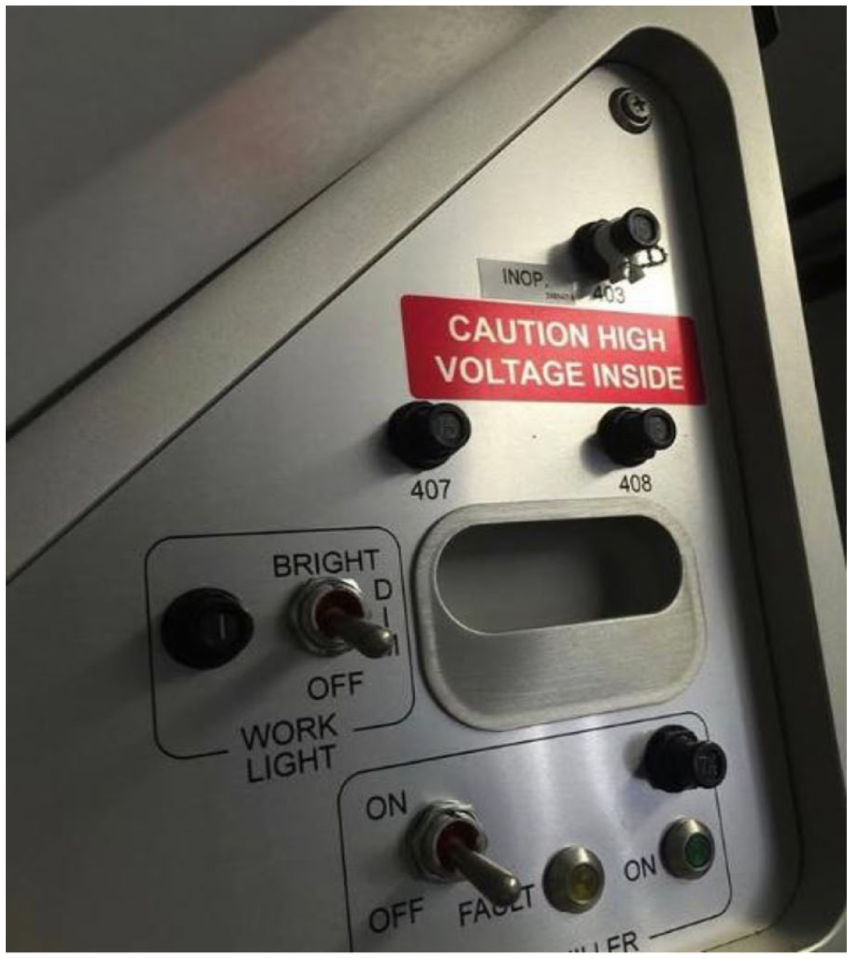
Airplane galley circuit breaker.
At that point, Rayan thought that it was not a big problem because the aircraft would be landing soon anyway, and the ground engineers would fix it. The aircraft landed, and as the ground staff at Cairo opened the L1 door, Rayan immediately told them to bring an aircraft engineer because of the situation in the economy class toilets. Passengers disembarked; cleaning staff boarded to prepare the cabin for the inbound sector. This flight was double catered, which means that all F&B supplies—for both sectors—are loaded at the hub station (i.e., DXL) before departure.
About 25 min to the scheduled departure time and engineers still couldn’t fix the toilets; they said that they would need another 6 to 8 h to resolve the problem. At that time, the cabin was ready for passengers to board, the luggage for passengers on sector CAI-DXL was already loaded in the dedicated space of the aircraft, and passengers were waiting with their boarding passes at the terminal. The captain’s initial thought was to cancel the flight. According to safety regulations established by the International Civil Aviation Organization (ICAO), crew duty time limits must be strictly observed (Dinges et al., 1996). In this case, an additional 3-h delay would render the crew legally unfit to operate the return flight without sufficient rest, necessitating a layover at a hotel in Cairo.
Rayan checked the passenger profile on the “Passenger Information List” (PIL), a document with all passengers’ information sorted by seat numbers that is provided by ground staff when the check-in counter is closed. He noticed that business class had only 7 passengers in the following seats (2A, 2F, 3A, 3C, 3D, 3F, 4F); economy had a total of 105 passengers. The Ground staff agent also reported that 60 passengers represent one tourist group with a connecting flight from DXL to Beijing in China.
Rayan approached the PIC; he had an idea which he tried to persuade the captain to execute. Rayan said, “Let’s assume that the toilets got broken in the middle of the flight to DXL; what would be our options?” He continued, “We would have continued the flight to DXL because there is nothing we can do about it, right?” Then he suggested a plan as follows:
Boarding to commence normally, and no crew members would tell any of the passengers at that time about the bathrooms’ failure.
The additional cabin crew member will not have any service responsibilities; her sole duty is to bring passengers from the economy cabin to use the bathroom in business class and to control the traffic by seating them in the empty first row of business class. Priority is to be given to children.
Rayan will make a public announcement before commencing the F&B service to passengers, informing them that toilets in the economy class are inoperative and that they can use the business class toilet instead.
The captain agreed after a long pause but told Rayan that there will be many complaints and that the cabin crew will be under extreme pressure as a result. Notably, this plan was approved and subsequently implemented without transparency or obtaining the informed consent of passengers and without fully considering their comfort, needs, or potential inconvenience. Rayan stated that it was a night flight, many passengers would likely be sleeping, and that flight time is relatively short, excluding the aircraft climbing and descending times.
The boarding clearance was given to ground staff, passengers boarded, and the flight CAI-DXL took off on time. After Rayan’s public announcement, many passengers reacted with frustration, and some raised their voices due to the inoperative toilets, creating a challenging situation for the cabin crew. Despite this, the additional crew skillfully managed the flow of passengers between the cabins, maintaining order and minimizing further inconvenience, even though it was around 3 AM local time.
Theoretical Underpinnings
Managers operate within complex organizational environments that require continuous and often challenging decision-making. To navigate these settings, they rely on internal frameworks shaped by personal values, professional norms, and established mental models (Mahajan, 2024). These frameworks are influenced by factors such as formal ethics training, organizational culture, individual experiences, and industry expectations (Sims & Brinkmann, 2003). They guide managers in interpreting ambiguous situations, managing conflicting priorities, and justifying their decisions. However, these same frameworks can create ethical blind spots, particularly when organizational goals or operational efficiency is prioritized at the expense of individual rights. For example, making decisions on behalf of customers without obtaining their consent may reflect such lapses. As Bisel and Kramer (2014) observe, employees often legitimize morally questionable actions by appealing to internalized corporate norms or perceived business demands.
Organizational culture plays a pivotal role in shaping ethical decision-making (Schein, 2010). The values, norms, and expectations embedded within an organization influence how managers perceive and respond to ethical challenges. When a company promotes integrity, transparency, and social responsibility, it fosters an environment where ethical conduct is expected. Conversely, a culture that prioritizes financial performance may pressure managers to subordinate ethical considerations in pursuit of organizational goals. As a result, the ethical climate significantly influences whether managers feel empowered to act with integrity or are implicitly guided to compromise ethical standards (Bowie, 2013).
Personal values and moral development are also central to ethical decision-making (Pohling et al., 2016). A manager’s beliefs—shaped by upbringing, cultural background, education, and life experiences—form the basis for distinguishing right from wrong. These values interact with the individual’s stage of moral development, defined as the ability to reason beyond personal gain or organizational directives (Alavi, 2024). Managers operating at higher levels of moral development are more likely to consider the broader consequences of their actions on multiple stakeholders rather than focusing solely on immediate outcomes or hierarchical expectations. Such individuals are better equipped to navigate ethical dilemmas in a principled manner, aligning their decisions with universal ethical standards.
Importantly, compliance with internal regulations does not guarantee ethical soundness. A decision may fully adhere to company policies while remaining ethically problematic (Mathwich, 2019). Internal rules are typically designed to ensure legal compliance, improve efficiency, and mitigate risk, but they may not adequately address values such as fairness, transparency, and respect for individual autonomy. Ethics therefore extends beyond rule adherence and requires a commitment to principles such as honesty, justice, and social responsibility (Velasquez, 2018).
Stakeholder interests further complicate managerial decision-making. Customers, employees, shareholders, and the broader community each bring distinct expectations that can create competing demands (Freeman, 2010). Customers may emphasize transparency and fairness; employees seek equitable treatment and job security; shareholders prioritize profitability; and communities focus on social and environmental responsibility. These competing priorities place managers in the challenging position of balancing conflicting interests. According to Freeman’s (2010) stakeholder theory, ethical decision-making involves identifying affected stakeholders, assessing both short- and long-term consequences, and pursuing outcomes that uphold the rights and well-being of all parties.
Leadership expectations also play a critical role in guiding organizational behavior. The tone set by senior leaders shapes cultural norms and influences decision-making across the organization. When leadership prioritizes ethical conduct, it reinforces values such as accountability and integrity. Conversely, when leaders emphasize financial performance or operational efficiency—as illustrated in this case—it may create an environment in which ethical considerations are sidelined. Ethical leadership is therefore essential in shaping expectations and guiding responsible decision-making (Brown et al., 2005).
In high-pressure industries such as airlines, managers often operate under significant time constraints and performance pressures. The need to maintain operational efficiency and meet strict targets can limit opportunities for ethical reflection. Under such conditions, decision-makers may default to immediate, pragmatic solutions while overlooking ethical implications. Bazerman and Tenbrunsel (2011), in Blind Spots: Why We Fail to Do What’s Right and What to Do About It, argue that time pressure and stress reduce ethical awareness by narrowing attention and impairing moral judgment. As a result, ethical lapses may occur not from intentional wrongdoing but from cognitive blind spots shaped by situational demands.
Reward and punishment systems are powerful drivers of managerial behavior, particularly in ethical contexts (Kerr, 1975). When incentives emphasize outcomes—such as financial targets or efficiency—without considering how those outcomes are achieved, they may unintentionally promote unethical conduct. In such environments, managers may feel compelled to cut corners or overlook ethical principles to secure rewards or avoid penalties. This outcome-focused approach can create a culture where results are prioritized over integrity.
A widely used tool for evaluating ethical decisions is the PLUS framework (Mintz, 2019). This framework encourages decision-makers to assess whether an action aligns with organizational policies (Policies), complies with legal standards (Legal), reflects shared values (Universal), and is consistent with their own ethical beliefs (Self). Figure 5 presents a visual representation of this acronym.
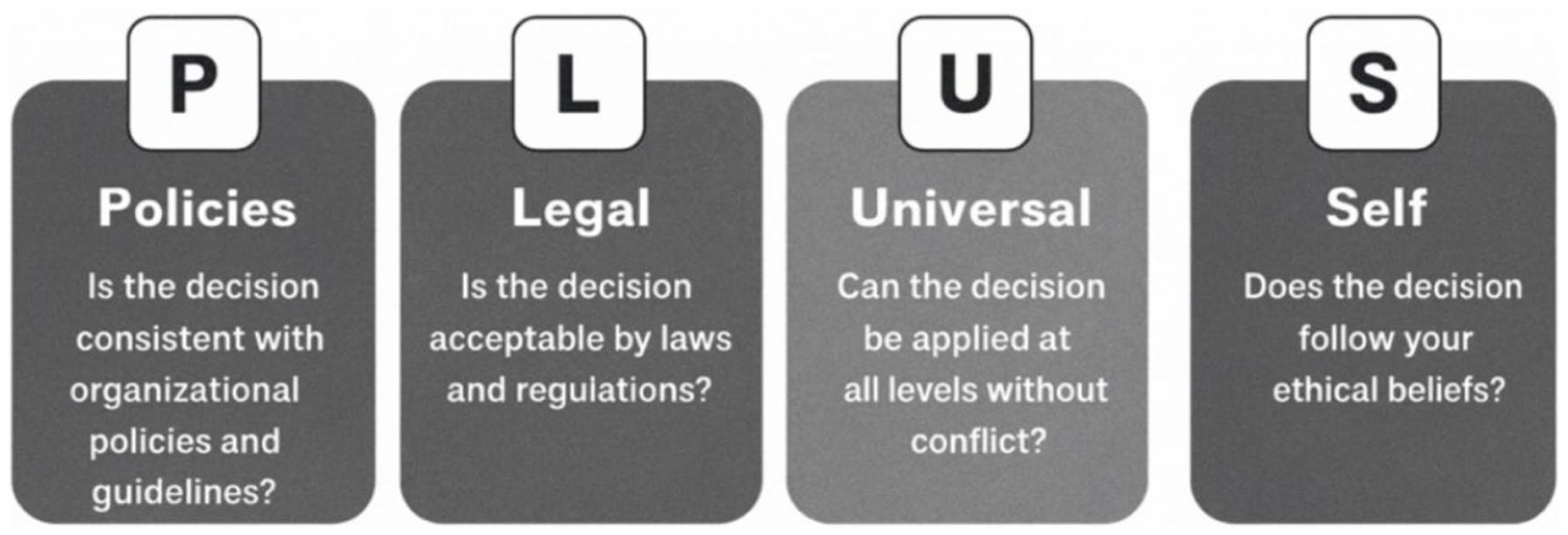
The PLUS ethical decision-making model.
According to the Markkula Center for Applied Ethics (2021), ethical decision-making can also be approached through six lenses: rights, justice, utilitarianism, the common good, virtue ethics, and care ethics. This multidimensional perspective encourages evaluating whether decisions respect individual rights, ensure fairness, maximize overall benefits, promote societal welfare, uphold moral virtues, and consider stakeholder well-being. Together, these principles provide a comprehensive framework for analyzing ethical dilemmas. Figure 6 presents a flowchart illustrating one possible method for making ethically sound decisions.
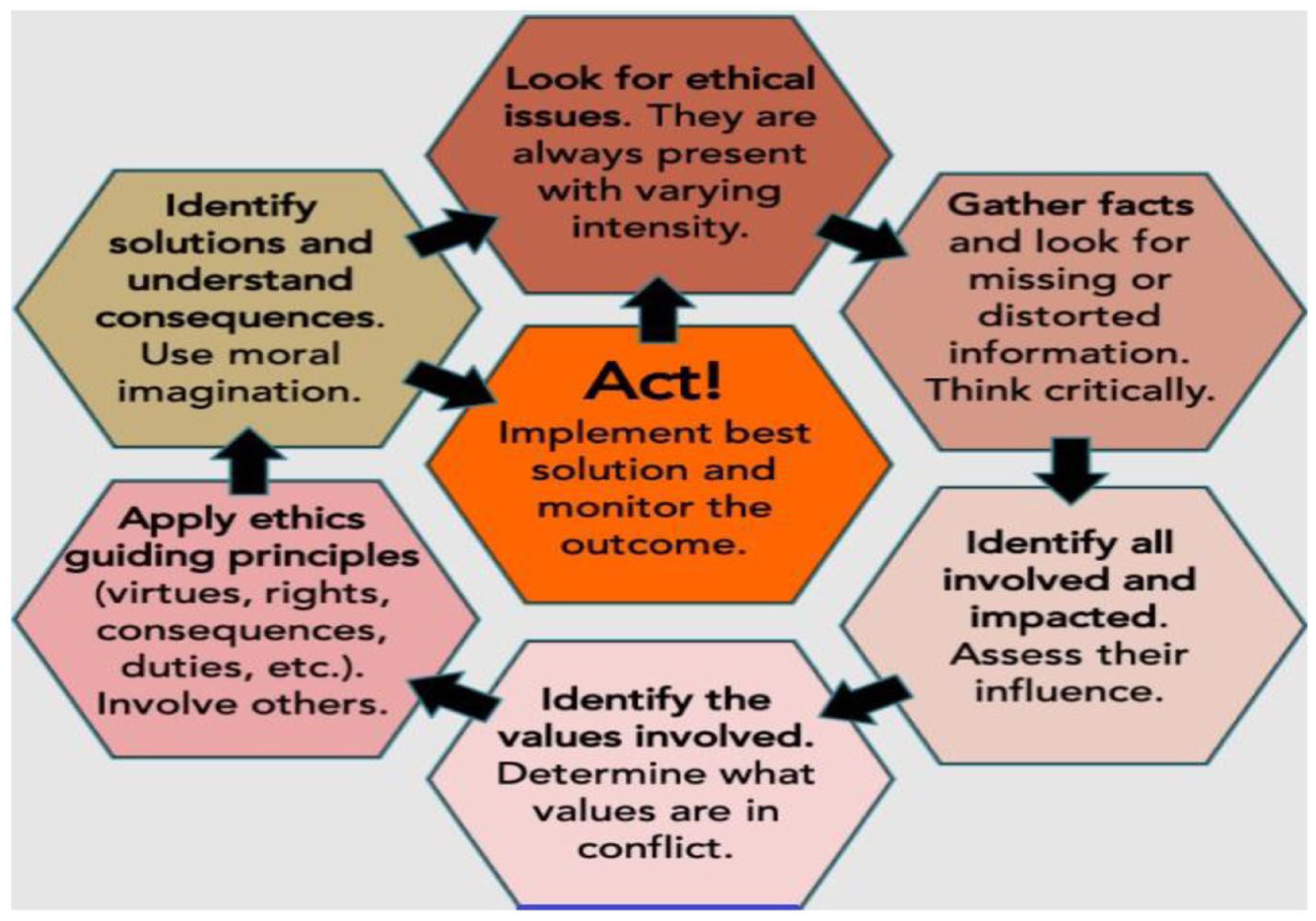
Ethical decision-making process.
In highly competitive environments characterized by financial pressure, maintaining ethical integrity can be challenging. Nevertheless, organizations that prioritize ethical responsibility build trust with stakeholders, strengthen their reputation, and support long-term sustainability (Ateeq & Alqaidoom, 2024). Ethical practices are therefore not only a reflection of organizational values but also a foundation for enduring success.
Discussion Questions
Do you agree or disagree with what the crew did on board the inbound flight TH 215 from CAI-DXL? Why or why not?
From an ethical perspective, was there any harm to the people involved in this incident? And of what type? Support your answers with literature evidence.
If you were one of the operating crew members of this flight, would you have solved/suggested solving the situation in another way, considering the financial situation of the airline and the passengers’ desire not to reschedule their flight?
How does the resolution of Flight TH 215 reveal a gap between Thika Airways’ brand image and its actual operational priorities, and what long-term risks does this pose for stakeholder trust when organizational pressures incentivize outcomes that conflict with what the company appears to value? How can the airline address these tensions to prevent similar incidents in the future?
If you are an ICHRIE member, you can access the Teaching Notes for this case study here: https://ichrie.memberclicks.net/jhtc. If you are not an ICHRIE member, the Teaching Notes will be published in a future Sage Business Cases (SBC) annual collection: https://sk.sagepub.com/cases. For more information, please contact
Footnotes

Funding
The authors received no financial support for the research, authorship, and/or publication of this article.
Declaration of Conflicting Interests
The authors declared no potential conflicts of interest with respect to the research, authorship, and/or publication of this article.