







Abstract
Background:The COVID-19 pandemic disrupted work environments worldwide, increasing productivity loss through absenteeism and presenteeism. Identifying key associated factors is essential for informing workplace health strategies during public health crises. Methods/Project: A systematic review and meta-analysis were conducted following PRISMA guidelines, using comprehensive searches of seven electronic databases from inception through January 2024. Studies were systematically selected based on predefined eligibility criteria, and 24 studies examining individual and work-related factors associated with work productivity loss were included. Risk of bias was assessed using the Joanna Briggs Institute critical appraisal tools. Correlation coefficients were synthesized using a random-effects meta-analysis of correlations in STATA 17.0, and heterogeneity was evaluated using the I2 statistic and Cochran’s Q test. Findings: Twenty-one factors were analyzed. Job stress, fear of COVID-19, mental health problems, job insecurity, turnover intention, exhaustion, and job demands exhibited moderate positive correlations with productivity loss during the COVID-19 pandemic. Fear of COVID-19 and mental health problems showed relatively large positive correlations with presenteeism. General health status was the factor most strongly associated with absenteeism, exhibiting a moderate negative correlation. Conclusions/Application to Practice: These findings identify key individual and work-related determinants of productivity loss during pandemics. The results support the development of targeted workplace health promotion, mental health support, and preparedness strategies to mitigate productivity loss during future public health emergencies.
Background
The Coronavirus disease 2019 (COVID-19) pandemic caused substantial social and occupational disruptions, widespread economic contraction and restructuring, and significant changes in working conditions worldwide. The impact on work productivity was particularly complex (Bloom et al., 2025), increasing interest in various perspectives on work productivity (Yaghoubi et al., 2022). Factors influencing work productivity can be broadly categorized into individual and work-related factors (Aronsson & Gustafsson, 2005; Johns, 2010). At the individual level, productivity loss has been associated with demographic characteristics (e.g., age and gender) and psychosocial factors, including mental and physical well-being (Bierla et al., 2013; Cho et al., 2016; Evans-Lacko & Knapp, 2016; Johnston et al., 2019; Stepanek et al., 2019; Wada et al., 2013). Beyond individual-level determinants, work-related factors, including job characteristics (e.g., job demands and workload) and organizational conditions (e.g., organizational support, safety climate, and job insecurity), also play a significant role in productivity loss (Brunner et al., 2019; Deery et al., 2014). During the COVID-19 pandemic, infection-related risks (World Health Organization, 2020; Zhan et al., 2020) and associated physical and psychological problems have been reported in connection with productivity loss, particularly in high-exposure occupations (Lai et al., 2020). However, evidence-based studies examining productivity loss across diverse occupational sectors during the pandemic remain limited.
Absenteeism and presenteeism are two key concepts used to assess work productivity loss (Brouwer et al., 2023; Hubens et al., 2021; Papakonstantinou & Tomos, 2022). Absenteeism refers to a worker’s absence from work due to personal illness or the illness of a dependent (Howard et al., 2012), whereas presenteeism refers to attending work despite physical or psychological health problems, resulting in reduced work performance (Gosselin et al., 2013; Turpin et al., 2004). Presenteeism has been reported to result in greater productivity loss than absenteeism and poses a particular challenge due to the difficulty in predicting its substantial impact (Brooks et al., 2010; Evans-Lacko & Knapp, 2016; Johns, 2010; Zhang et al., 2011).
Although absenteeism and presenteeism have traditionally been examined separately, recent studies have increasingly emphasized the need to consider both behaviors simultaneously (Bierla et al., 2013; Nowak et al., 2022; Ruhle & Süß, 2020). These behaviors are not independent and represent different outcomes of the same decision-making process, suggesting that they should be studied in an integrated manner (Hansen & Andersen, 2008). From a management perspective, understanding the combined dynamics of absenteeism and presenteeism is essential for developing balanced strategies to effectively reduce overall productivity loss (Brown & Sessions, 2004).
Many studies assess presenteeism using diverse self-reported measures, such as the Stanford Presenteeism Scale (SPS-6; Koopman et al., 2002) and the Work Limitations Questionnaire (WLQ; Lerner et al., 2001). Absenteeism is typically measured using a single question as time missed from work, whereas presenteeism reflects reduced performance while at work. However, these measures differ in their recall periods and response formats, resulting in variability in estimates of productivity loss across studies (Zhang et al., 2011). Such differences pose a challenge for providing consistent evidence on the associations between productivity loss and its related factors. Therefore, there remains a lack of integrated evidence that clearly identifies factors associated with absenteeism and presenteeism.
To address this gap, the current study aimed to evaluate work productivity loss among workers during the COVID-19 pandemic by examining individual and work-related risk factors. Given the substantial global disruption and uncertainty associated with the pandemic, identifying factors related to absenteeism and presenteeism has important implications for occupational health practice. These findings may inform evidence-based workplace health promotion strategies and integrated approaches to managing productivity loss during public health crises.
Methods
This systematic review and meta-analysis identified factors influencing work productivity loss during the COVID-19 pandemic and was conducted in accordance with the Preferred Reporting Items for Systematic Reviews and Meta-Analyses (PRISMA) guidelines (Page et al., 2021).
Search Strategy
Before the systematic literature search, the Medical Subject Headings, Emtree, and free-text terms in the relevant literature were confirmed based on our research question, “What factors affect work productivity loss during the COVID-19 pandemic?” Data were comprehensively searched across seven electronic databases: PubMed, Embase, Cumulative Index to Nursing & Allied Health Literature Complete, Web of Science, Scopus, APA PsycArticles, and Korean Journal Database. The literature search covered the period from the inception of each database to January 2024. The search strategy was developed using three core concepts: (1) work productivity loss, (2) COVID-19, and (3) the working population. Keywords related to work productivity loss included “absenteeism,” “absence from work,” “non-attendance,” “sickness absenteeism,” “sickness absence,” “presenteeism,” “sickness presenteeism,” “sickness attendance,” “working while ill,” “working while sick,” “sickness presence,” and “work limitations.” Terms related to COVID-19 included “COVID-19,” “SARS-CoV-2,” “coronavirus,” and “pandemic.” Keywords describing the working population included “employee” and “worker.” These terms were combined using Boolean operators and adapted for each database. Detailed search strategies are presented in the Supplemental Appendix 1.
Eligibility Criteria
The criteria for identifying articles were set consistently with the purpose of the review as follows: (1) study participants were workers, (2) correlation coefficients related to work productivity loss during COVID-19 were available, (3) factors associated with absenteeism or presenteeism were reported, and (4) articles were peer-reviewed. The exclusion criteria were as follows: (1) gray literature (i.e., conference abstracts), (2) articles not published in English or Korean, and (3) experimental studies. Only English- and Korean-language studies were included to ensure the accurate appraisal and interpretation of evidence, as these are the languages in which the review team possesses full professional proficiency. This restriction minimized potential misclassification or interpretive bias, maintaining methodological rigor. The research team cross-checked all articles.
Data Extraction and Synthesis
Three reviewers (I.C., J.J., and J.M.) independently conducted screening and data extraction. Duplicates were removed using bibliography management software (EndNote, Version X9.1). Prior to title and abstract screening, records were also excluded for other reasons, such as irrelevant publication types or gray literature. Titles and abstracts of the remaining records were screened based on our research question, and irrelevant articles were excluded. Full-text articles were then independently reviewed for eligibility using predefined inclusion and exclusion criteria. In case of disagreement during the selection process, discussions were held to reach a consensus.
To synthesize the extracted data, included studies were coded using a predesigned template that captured information (i.e., authors, year of publication, country of data collection, study design, participant age, sample size, confirmed factors, and study findings). The key results focused on factors affecting work productivity loss during the COVID-19 pandemic. We further categorized main variables of work productivity loss into presenteeism and absenteeism to identify factors that influence them.
Study Quality Assessment
The Joanna Briggs Institute (JBI) critical appraisal tool, designed to assist in evaluating the trustworthiness, relevance, and findings of published studies (Moola et al., 2020) was used for quality assessment of eligible articles (Munn et al., 2020). The JBI critical appraisal tools were selected because the included studies varied in design, requiring design-specific quality assessment criteria. Each quality criterion, depending on study design, consisted of items evaluated as “Yes,” “No,” “Unclear,” or “Not applicable.” The proportion of criteria rated as “Yes” for each study was calculated and presented to indicate how well each study met the methodological criteria. Article quality was independently assessed by two reviewers (I.C. and J.J.). Differences in evaluation were discussed until a consensus was reached. Disagreements were resolved through discussion with a third reviewer.
Statistical Analysis
Data extracted from included studies were analyzed using STATA 17.0. A random-effects model with the restricted maximum likelihood (REML) method was used for the analysis. This method compensates for the reduction in the degrees of freedom during variance estimation, providing more precise results, particularly in cases with small sample sizes or high heterogeneity (Field & Gillett, 2010; Partlett & Riley, 2017). Before performing statistical analyses, we extracted the correlation coefficient (r) and the beta coefficients (β) of each factor in the included studies (Peterson & Brown, 2005) and transformed them into Fisher’s Z with a more normal distribution. Correlation effect sizes were categorized according to Cohen’s guidelines (Cohen, 1992), where r values of approximately .10, .30, and .50 correspond to small, medium, and large effects, respectively. The heterogeneity within studies was estimated using statistics I2 and Cochran’s Q statistic, with I2 thresholds of 25%, 50%, and 75% indicating low, moderate, and high heterogeneity, respectively (Higgins et al., 2003). Subgroup analyses were conducted to explore potential sources of heterogeneity. We also examined whether factors associated with work productivity loss differed between presenteeism and absenteeism, as these represent conceptually distinct dimensions.
Results
Search Results
A preliminary search identified 1,146 records from seven databases. After removing 590 duplicate articles and 107 records for other reasons, 449 studies remained for title and abstract screening. Following this process, 295 studies were excluded, leaving 154 full-text articles for the eligibility assessment. Finally, 24 studies met the inclusion criteria. The study selection process is summarized in the PRISMA flow diagram (Figure 1).
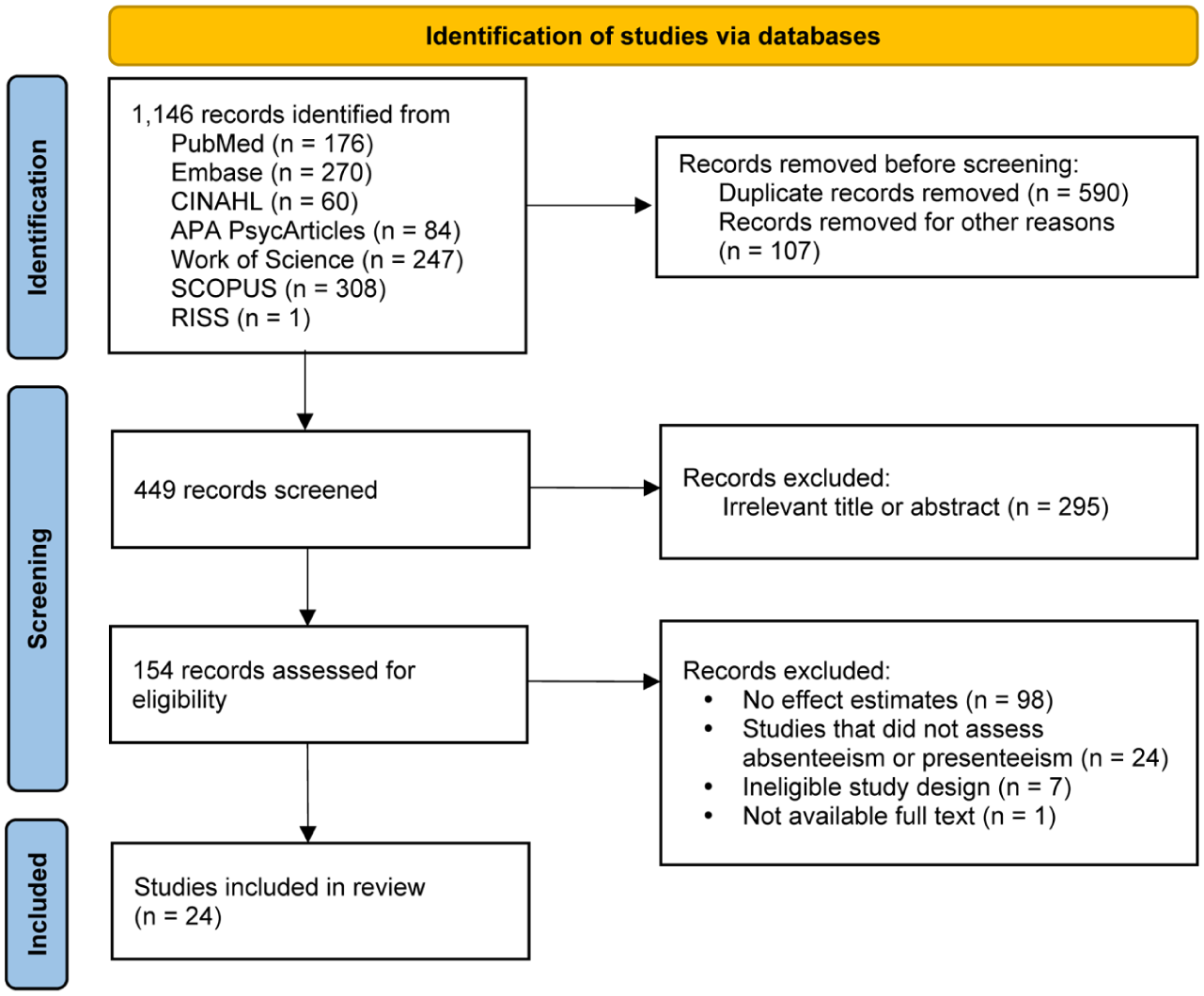
PRISMA flow diagram
Characteristics of the Included Studies
This review included 24 studies with a total of 595,645 participants (Abdollahzade et al., 2024; Biron et al., 2021; Chen et al., 2021; Chou & Mach, 2021; Danquah & Asiamah, 2022; Gerich, 2022; Idris et al., 2023; Jia et al., 2022; Karatepe et al., 2021; Kayaalp et al., 2023; Kim et al., 2023; Lauzier et al., 2024; Lyttelton & Zang, 2022; Mansour et al., 2022; Maurício & Laranjeira, 2023; Mosteiro-Díaz et al., 2020; Ozbozkurt et al., 2024; Parent-Lamarche & Laforce, 2022; Rivkin et al., 2022; Schug et al., 2022; Shimura et al., 2021; Shoss et al., 2023; Taylor et al., 2021; Vinberg et al., 2021). All included studies were published between 2021 and 2024 during or after the COVID-19 pandemic. The included studies were conducted across 16 countries, with the largest contributions from Canada and the United States (four studies each). Taiwan, the United Kingdom, and Turkey each contributed two studies, while nine countries contributed one study each. One multinational study included participants from Spain, Portugal, and Brazil. Most studies were conducted in high- and upper-middle-income countries.
Sixteen studies used a cross-sectional design, and eight used a cohort and longitudinal design. The most frequently studied population comprised healthcare workers (n = 6), including nurses, followed by hotel employees (n = 2). Among these studies, eighteen studies focused on presenteeism, five focused on absenteeism, and one addressed both presenteeism and absenteeism. Presenteeism was most frequently assessed with validated instruments, such as the Stanford Presenteeism Scale (n = 6). Absenteeism was primarily measured using single-item self-report questions/measures (n = 4), including one study that used a single Work Ability Index item. The methodological quality of the included studies was assessed using JBI critical appraisal tools, with scores ranging from 45.5 to 100, indicating overall medium to high quality (Stevenson et al., 2022). Table 1 summarizes the key characteristics of these studies.
Characteristics of Studies Included in the Systematic Review on Work Productivity Loss During the COVID-19 Pandemic (n = 24)
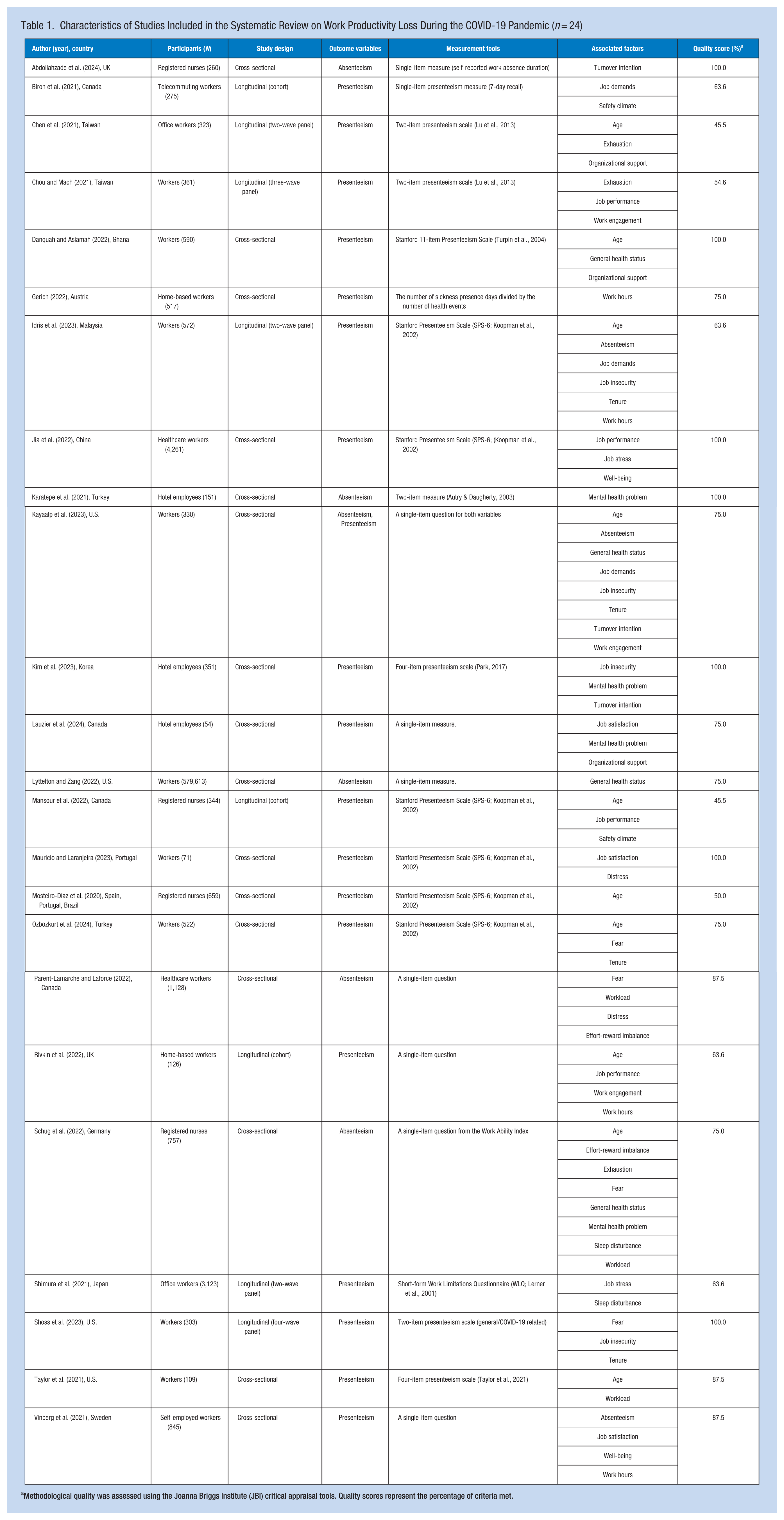
Methodological quality was assessed using the Joanna Briggs Institute (JBI) critical appraisal tools. Quality scores represent the percentage of criteria met.
Factors Associated With Work Productivity Loss During the COVID-19 Pandemic
Twenty-one influencing factors reported in at least two studies were identified as being associated with work productivity loss. These factors were categorized as individual and work-related. Individual factors included age, well-being, sleep disturbance, mental health problems, general health status, fear of COVID-19, exhaustion, distress, turnover intention, job stress, job satisfaction, and job performance. Work-related factors included workload, working hours, work engagement, tenure, safety climate, organizational support, job insecurity, job demands, and effort–reward imbalance. The most frequently reported factors were age (n = 10), fear of COVID-19 (n = 4), job insecurity (n = 4), job performance (n = 4), mental health problems (n = 4), tenure (n = 4), and work hours (n = 4).
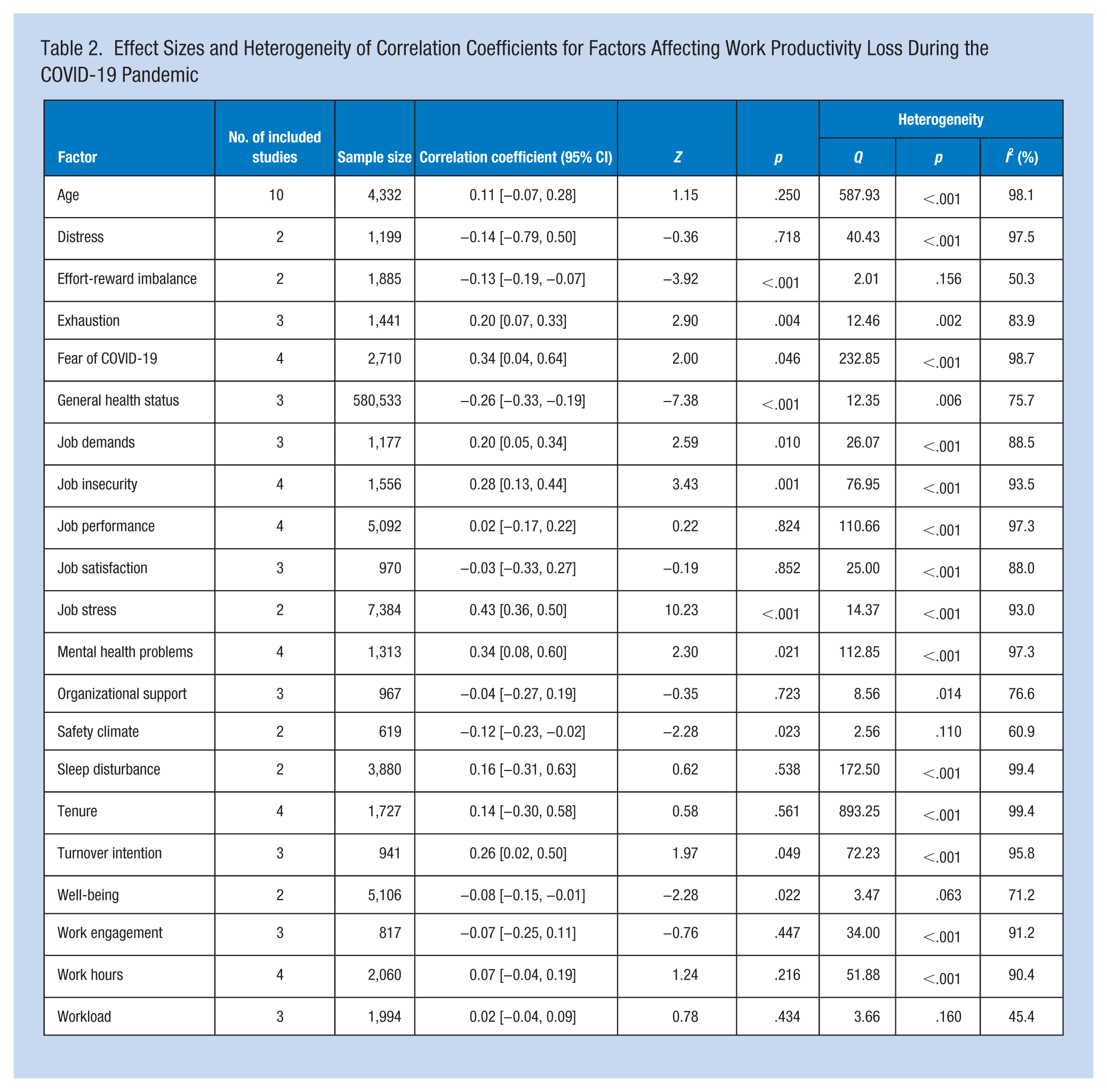
The effect sizes of the correlations between these factors and productive work loss were analyzed across the 24 included studies (Table 2). Figure 2 illustrates the effect sizes of the significant predictors of work productivity loss. Based on these classifications, job stress emerged as the strongest predictor of work productivity loss during the COVID-19 pandemic, with a moderate to large effect size (r = .43; 95% confidence interval [CI] [0.36, 0.50]). Factors with medium effect sizes included fear of COVID-19 (r = .34; 95% CI [0.04, 0.64]) and mental health problems (r = .34; 95% CI [0.08, 0.60]). Factors with small effect sizes included job insecurity (r = .28; 95% CI [0.13, 0.44]), turnover intention (r = .26; 95% CI [0.02, 0.50]), exhaustion (r = .20; 95% CI [0.07, 0.33]), and job demands (r = .20; 95% CI [0.05, 0.34]). These findings suggest that psychological and job-related stressors significantly contributed to productivity loss during the pandemic. In contrast, several factors demonstrated negative correlations with work productivity loss: general health status (r = −.26; 95% CI [−0.33, −0.19]), effort-reward imbalance (r = −.13; 95% CI [−0.19, −0.07]), safety climate (r = −.12; 95% CI [−0.23, −0.02]), and well-being (r = −.08; 95% CI [−0.15, −0.01]).
Effect Sizes and Heterogeneity of Correlation Coefficients for Factors Affecting Work Productivity Loss During the COVID-19 Pandemic
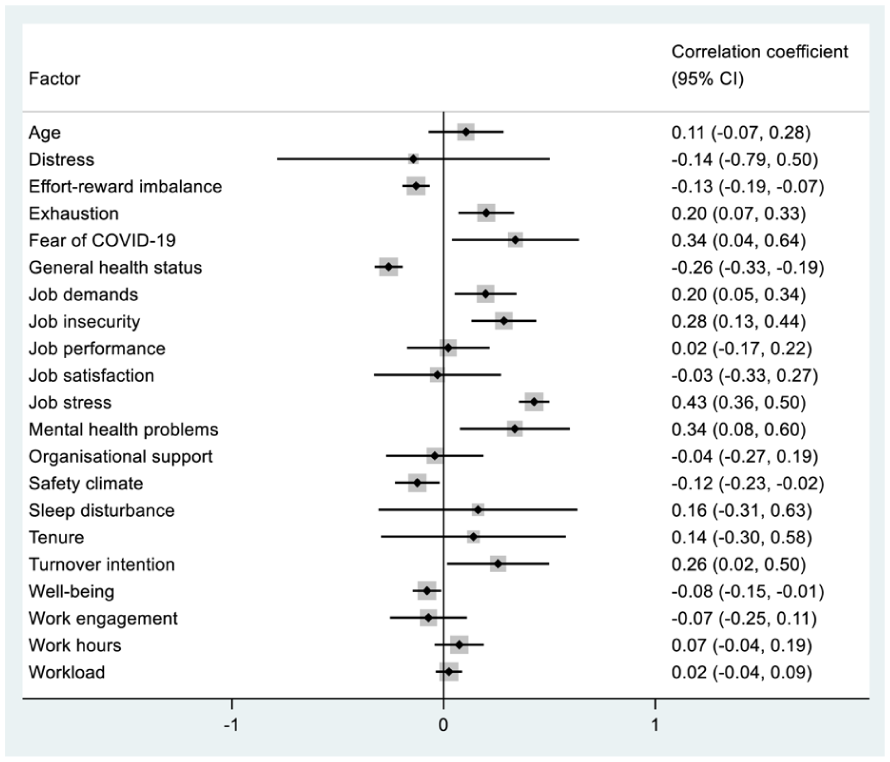
Forest plot of pooled correlation coefficients for factors associated with work productivity loss during the COVID-19 pandemic
Sub-Analysis: Factors Associated With Presenteeism During the COVID-19 Pandemic
A subgroup analysis to identify factors associated with presenteeism revealed that fear of COVID-19 demonstrated the highest correlation (r = .52; 95% CI [0.12, 0.93]), followed by mental health problems (r = .51; 95% CI [0.20, 0.81]; Figure 3). Furthermore, several job-related factors displayed a moderate to large effect size, including job stress (r = .43; 95% CI [0.36, 0.50]) and turnover intention (r = .40; 95% CI [0.06, 0.75]). Other workplace factors exhibited moderate correlations: job insecurity (r = .31; 95% CI [0.10, 0.51]) and job demands (r = .29; 95% CI [0.23, 0.35]). General health status, safety climate, and well-being were negatively correlated with presenteeism.
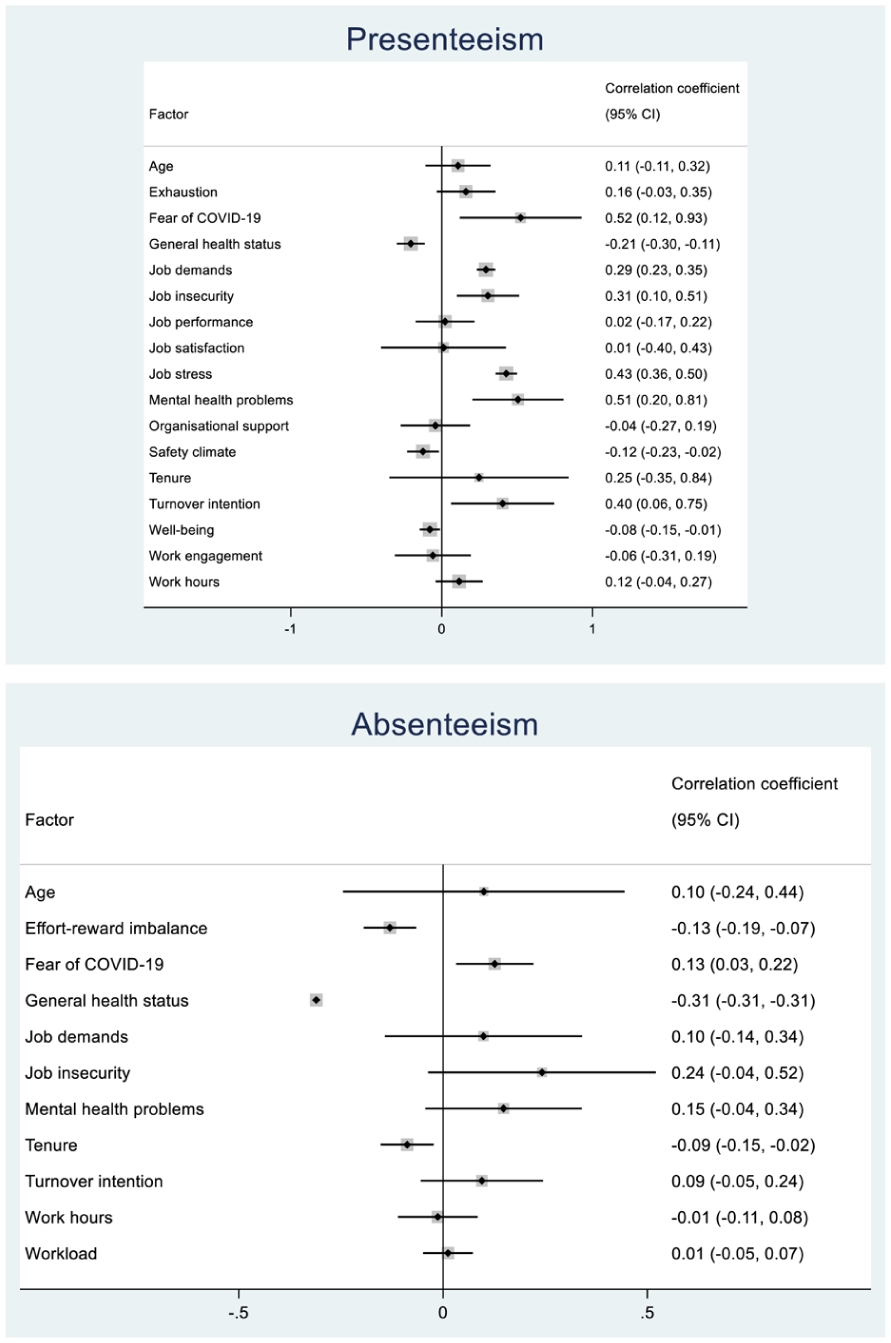
Forest plot of pooled correlation coefficients for factors associated with presenteeism and absenteeism during the COVID-19 pandemic
Sub-Analysis: Factors Associated With Absenteeism During the COVID-19 Pandemic
A subgroup analysis focusing on absenteeism (Figure 3) revealed that general health status, the most influential factor associated with absenteeism, exhibited a significant negative correlation (r = −.31; 95% CI [−0.31, −0.31]). This suggests that better health is associated with lower absenteeism. Effort-reward imbalance also showed a negative association (r = −.13; 95% CI [−0.19, −0.07]). Although fear of COVID-19 was also related to absenteeism, its effect was only small (r = .13; 95% CI [0.03, 0.22]) and considerably weaker than its impact on presenteeism. These differences highlight the fact that the predictors of absenteeism may differ from those influencing presenteeism.
Publication Bias and Sensitivity Analysis
Publication bias was assessed by a funnel plot that showed symmetry for most factors, whereas asymmetry was observed for general health status, job demands, and job insecurity. When the number of included studies was ≥2, Begg’s correlation test was conducted to further assess small-study effects and showed no statistically significant evidence of publication bias among the included studies.
Sensitivity analysis was performed to assess the robustness of our findings. Using leave-one-out analysis, the weights of the included studies were identified and systematically removed individually to evaluate their impact on the overall effects. After removing each study, the mean difference remained similar to the original value calculated using the fixed-effects model. Most factors retained statistical significance after the sensitivity analysis (Supplemental Appendix 2).
Discussion
This study provides an integrated understanding of factors associated with work productivity loss during the COVID-19 pandemic, encompassing both individual and work-related factors. Overall, psychosocial and mental health–related factors—including job stress, fear of COVID-19, and mental health problems—were significantly associated with productivity loss, particularly presenteeism. The association between fear of COVID-19 and presenteeism suggests that workers may continue working despite compromised health in demanding or uncertain work conditions. In contrast, general health status was inversely associated with absenteeism, underscoring the importance of maintaining overall health in preventing work absence.
Consistent with prior research demonstrating that work productivity loss reflects the combined influence of individual and organizational factors (Čikeš et al., 2018; Freeling et al., 2020; Gosselin et al., 2013; Lui et al., 2018), the findings from this study highlight the important role of health-related individual factors in shaping productivity outcomes. In this study, psychosocial and mental health–related factors—including job stress, mental health problems, and fear of COVID-19—were significantly associated with overall productivity loss during the pandemic. These findings align with previous research indicating that workers’ health status is a key determinant of productivity loss across occupational settings. For example, a large-scale UK study identified physical and mental health as major contributors to work productivity loss (Stepanek et al., 2019), while a Japanese study reported strong associations between frequent health problems and decreased work functioning, particularly for mental health conditions (Ishimaru et al., 2020). In addition, a previous systematic review has shown that work-related stress is associated with increased absenteeism and presenteeism, both of which contribute to productivity loss in the workplace (Moe-Byrne et al., 2022).
Notably, several studies included in this review (e.g., Jia et al., 2022; Kim et al., 2023; Lauzier et al., 2024; Shimura et al., 2021) also demonstrated similar associations, supporting the robustness of these findings. However, some studies, including those identified in this review, have reported mixed or context-dependent associations between health-related factors and productivity outcomes (Brunner et al., 2019; Chen et al., 2021; Čikeš et al., 2018), suggesting that workplace conditions and occupational contexts may influence the magnitude of these relationships. Together, these findings underscore individual health as a critical pathway through which productivity loss occurs across occupational settings.
In the sub-analysis focusing on presenteeism, psychosocial factors—particularly fear of COVID-19 and mental health problems—were identified as important factors associated with presenteeism during the pandemic. These findings suggest that workers may continue attending work despite experiencing psychological distress or health concerns during public health crises. Similar patterns have been reported in previous studies indicating that fear of infectious diseases and pandemic-related uncertainty contribute to increased psychological strain and reduced work performance (Hartley et al., 2013; Sarwar et al., 2023). Notably, studies included in this review (e.g., Ozbozkurt et al., 2024; Shoss et al., 2023), along with prior research (Sarwar et al., 2023; Yoshida et al., 2023), demonstrated that pandemic-related fear and psychosocial distress represent critical individual-level pathways through which presenteeism is exacerbated during infectious disease outbreaks. During the COVID-19 pandemic, many workers faced persistent concerns about infection risk, high workload demands, and limited job control, all of which have been linked to heightened stress and burnout (Dennerlein et al., 2020; Hadian et al., 2022; Sinclair et al., 2020; Vizheh et al., 2020). Excessive fear of infectious diseases and psychological distress may impair concentration, sleep, and overall functioning, thereby increasing the likelihood of presenteeism (Cosci & Guidi, 2021; Wahlund et al., 2021).
Taken together, these findings highlight the importance of addressing pandemic-related psychological distress as part of efforts to mitigate presenteeism during infectious disease outbreaks. Building on this evidence, workplace intervention studies suggest that improving workers’ mental and physical health can yield productivity benefits. In particular, workplace-based digital interventions have been shown to improve productivity-related outcomes, especially among workers experiencing higher levels of distress or presenteeism (Deady et al., 2025; Moe-Byrne et al., 2022). These findings underscore the importance of health-focused interventions targeting psychological distress as a key strategy for mitigating presenteeism during infectious disease outbreaks.
In contrast, the sub-analysis examining absenteeism indicated that general health status was inversely associated with work absence, suggesting that workers with poorer overall health may be more likely to miss work during the pandemic. This finding is consistent with studies included in this review (e.g., Kayaalp et al., 2023; Lyttelton & Zang, 2022; Schug et al., 2022), which demonstrate that compromised physical health increases the risk of absenteeism across occupational groups. While psychosocial factors may drive presenteeism behaviors, physical health conditions often play a more prominent role in decisions to take sick leave. This pattern is further supported by both prior research (Brunner et al., 2019; Čikeš et al., 2018) and studies included in this review (e.g., Karatepe et al., 2021; Lyttelton & Zang, 2022), which consistently report associations between poor health status, increased absenteeism, and reduced work functioning among employees. Collectively, these findings highlight the importance of maintaining workers’ overall health and access to appropriate health support systems to prevent work absence and sustain workforce productivity.
Although individual health factors play a central role, work-related and organizational conditions also shape the extent to which these factors translate into productivity loss. Previous studies across diverse occupational settings, as well as studies included in this review (e.g., Danquah & Asiamah, 2022; Idris et al., 2023; Kayaalp et al., 2023; Kim et al., 2023), have consistently shown that job insecurity, high job demands, limited workplace support, and poor safety climate are associated with reduced work productivity (Brunner et al., 2019; Cho et al., 2016; Lui & Johnston, 2019). Evidence from large workforce surveys further suggests that adverse work conditions decrease health-related productivity, whereas adequate job and personal resources may mitigate these negative effects (Brunner et al., 2019). Taken together, these findings indicate that productivity loss is not solely an individual issue but reflects broader organizational conditions that influence workers’ capacity to maintain health and functioning at work.
Limitations
Several limitations should be considered when interpreting the findings of this review. First, the included studies were conducted across multiple countries over a prolonged pandemic period, and national contextual differences may have contributed to variability in the observed results. Previous research has shown substantial cross-national variation in productivity costs related to absenteeism and presenteeism, indicating that unobserved country-level differences may influence productivity outcomes (Evans-Lacko & Knapp, 2016). Second, substantial heterogeneity was observed across studies due to the inclusion of diverse occupational groups and country settings. To address this variability, a random-effects model using REML estimation was applied, which is appropriate for meta-analyses with heterogeneous study characteristics. Third, although occupation-specific factors may play an important role in work productivity loss, subgroup analyses by occupational group could not be comprehensively examined due to the limited number of studies conducted during the COVID-19 pandemic. Evidence from non-pandemic contexts suggests that work productivity loss may vary across occupations (Deery et al., 2014); however, future research is warranted to more precisely examine occupation-specific patterns of work productivity loss under pandemic conditions by stratifying analyses according to occupational groups and countries with similar contextual characteristics, using sufficiently robust and representative datasets. Finally, limiting the search to full-text articles published in English or Korean may have introduced language and publication bias.
Despite these limitations, this study has several notable strengths. It identifies key factors associated with work productivity loss among workers during the COVID-19 pandemic and contributes empirical evidence to the literature. By examining both individual and work-related determinants and conceptualizing productivity loss through presenteeism and absenteeism, the study offers a more integrated understanding of productivity loss during public health crises. These findings contribute valuable evidence to occupational health and industrial nursing practice and advance understanding of work productivity loss in crisis contexts.
Conclusion
The COVID-19 pandemic posed unprecedented challenges to worker health and productivity, while revealing critical vulnerabilities in workforce resilience. This study demonstrates that absenteeism and presenteeism are not merely short-term productivity concerns but may signal early stages of workforce withdrawal, underscoring the importance of timely identification and intervention. By systematically examining individual and work-related factors associated with productivity loss, this study provides an integrated understanding of the mechanisms underlying productivity loss during the pandemic. These findings contribute to occupational health research by emphasizing the need for health-centered and organizationally responsive strategies to support workforce sustainability during public health crises.
Implications for Occupational Health Practice
The findings of this study highlight the need for integrated, health-centered approaches to mitigating work productivity loss during infectious disease outbreaks. Given the strong associations between psychosocial and health-related factors and work productivity loss, occupational health practice should prioritize early identification and management of workers’ mental and physical health problems through routine screening and timely access to appropriate support, particularly under pandemic conditions.
At the organizational level, reducing productivity loss requires addressing modifiable work-related factors such as excessive job demands, job insecurity, and poor safety climate. As chronic absenteeism and presenteeism may signal a gradual transition out of the labor force, early organizational-level interventions are particularly important (Maestas et al., 2021). Strengthening organizational and social support systems, along with ensuring adequate rest and leave, may help mitigate the negative impact of psychological distress on work productivity. In addition, potential variation in psychosocial burden across occupational groups during public health crises highlights the importance of context-sensitive and targeted occupational health strategies. In this context, occupations characterized by high exposure to public health emergencies may warrant particular attention in efforts to enhance workforce resilience and preparedness.
Applying Research to Occupational Health Practice
This review indicates that work productivity loss during infectious disease outbreaks is closely linked to workers’ psychosocial distress, overall health, and modifiable organizational conditions. Absenteeism and presenteeism may serve as early indicators of underlying health and workplace challenges, particularly during prolonged public health emergencies. Early attention to workers’ mental and physical health, alongside management of job demands, job security, and safety climate, may facilitate timely and targeted intervention. These findings reinforce the role of occupational health practice in strengthening workforce resilience through coordinated health and organizational strategies during and beyond public health crises.
Supplemental Material
sj-docx-1-whs-10.1177_21650799261454290 – Supplemental material for Factors Associated With Work Productivity Loss Among Workers During the COVID-19 Pandemic: A Systematic Review and Meta-Analysis of Correlations
Supplemental material, sj-docx-1-whs-10.1177_21650799261454290 for Factors Associated With Work Productivity Loss Among Workers During the COVID-19 Pandemic: A Systematic Review and Meta-Analysis of Correlations by Jiyeon Jung, Inhae Cho and Jihyun Moon in Workplace Health & Safety
Footnotes
Acknowledgements
The authors would like to thank all researchers whose work contributed to this review. This review was not registered in a prospective register such as PROSPERO.
Author Contributions
J.J.: Conceptualization, Data curation, Funding acquisition, Investigation, Project administration, Supervision, Validation, Writing—original draft, Writing—review & editing. I.C.: Data curation, Formal analysis, Investigation, Methodology, Software, Visualization, Validation, Writing—original draft, Writing—review & editing. J.M.: data curation, Investigation, Resources, Writing—review & editing.
Conflict of Interest
The authors declared no potential conflicts of interest with respect to the research, authorship, and/or publication of this article.
Funding
The authors disclosed receipt of the following financial support for the research, authorship, and/or publication of this article: This research was supported by the Korea National Open University Research Fund.

Data Availability Statement
The data used in this study are available upon request from the corresponding author.*
Supplemental Material
Supplemental material for this article is available online.
References
Supplementary Material
Please find the following supplemental material available below.
For Open Access articles published under a Creative Commons License, all supplemental material carries the same license as the article it is associated with.
For non-Open Access articles published, all supplemental material carries a non-exclusive license, and permission requests for re-use of supplemental material or any part of supplemental material shall be sent directly to the copyright owner as specified in the copyright notice associated with the article.
