







Abstract
This study examines international newspaper coverage of the 2013 European Basketball Championship for men. Generalist broadsheet newspapers in 13 countries on five continents were examined over the course of 1 year (from August 2012 until September 2013) to understand the amount and content of coverage dedicated to this major event. Results show that the host country, Slovenia, dedicated the most extensive coverage to the EuroBasket, followed by Croatia, a neighboring country. Media interest in other countries was very limited and focused almost exclusively on competitive aspects of the tournament (as opposed to organizational, tourist, or cultural angles). Of the newspapers examined, only five covered the event in the months leading up to it and only four reported the final outcome of the tournament. Generalist broadsheets thus displayed limited interest in the competition, contradicting organizers’ assertions and popular belief of widespread promotional and economic benefits deriving from the event. Newspapers from countries that fielded teams at the event overwhelmingly focused on their performances. As setters of the public agenda, mainstream broadsheets exhibit very limited interest in the myriad major sports events organized worldwide. Hosting such events are not by default the promotional and economic boon organizers argue and the public believes.
One of the strategies nations use to enhance their image is to host global media events (Giffard & Rivenburgh, 2000). Such events range from political summits to Olympic Games. The Olympics remain “the most widely shared regular event in human history” (Real, 1989, p. 222), but the pool of events that attract global media attention also includes events in sports such as soccer, rugby, tennis, and others (Horky & Nieland, 2013). Organizations and committees bidding to host major sport events typically claim they will bring attention and, by proxy, image enhancement and paying visitors to the host city or country. Empiric analyses, however, show that the impacts of big sport events on local, regional, and national economies are often overstated (Gratton, Dobson, & Shibli, 2000; Matheson, 2011) and can even generate negative externalities (Shin & Li, 2013).
In September 2013, Slovenia hosted the European Basketball Championship for men, or EuroBasket. One of the goals stated by the organizers was to “increase or generate interest in Slovenia as a sports and tourist destination” (EuroBasket, 2013a, para. 17). Interest in an event can be assessed by measuring media coverage dedicated to it. A continental championship can be expected to have international, if not global, media and public appeal, so the aim of this study was to measure international media coverage—specifically, newspaper coverage—of the EuroBasket 2013.
Media Coverage of Sports Events
Mega sports events are by definition “media events” and thus, by extension, “pseudo-events” (Boorstin, 1961), as their very purpose is to attract media publicity. The quintessential such event, the Olympic Games, has even been dubbed “the greatest show on Earth” (Billings, 2008, p. 1). Although media events are usually observed and even defined with regard to their appeal for, and connection to television broadcasting (Katz, 1980), their extensive coverage in newspapers is indisputable. Rather than assessing the sheer amount of dedicated coverage, such happenings can attract more in-depth scholarly analyses; the “index of nationalism,” for instance, assessed the amount of time that national media devote to “native” athletes. Real’s (1989) seminal study recorded a great variability of this index as it spanned from 17 (Mexico) to 79% (United States) in the 11 countries studied during the 1984 Summer Olympics. Later studies examining nationality in Olympic newspaper coverage have explored possibly biased and certainly favorable reporting about “home” athletes (Bijie & Billings, 2015; Darnell & Sparks, 2005) which may result in inadvertent or intentional nationalism (Billig, 1995; Jiang, 2013). Many scholars have then examined Olympic newspaper coverage of identity traits including gender (e.g., Capranica, 2005; Delorme, 2014; Duncan, 1990; King, 2007; Lee, 1992; Urquhart & Crossman, 1999; Vincent, Imwold, Masemann, & Johnson, 2002), ethnicity (Hardin, Dodd, Chance, & Walsdorf, 2004), and ability (Thompson, 2013) from both quantitative and qualitative standpoints. It is thus clear that newspaper coverage of the Olympic Games transcends the domain of athletics and involves broader political and social considerations (Min & Zhen, 2010).
Notching down in scope, multisports events that generated (studies of) newspaper coverage include the Commonwealth Games and the Asian Games. The 2010 rendition of the former, hosted by India, attracted substantial coverage from the press in Western countries. This reporting focused on mismanagement and deficiencies in game preparations. When coupled with biased language and a focus on social, economic, and cultural problems, the press perpetuated the old social and symbolic order established during the colonial era (Mishra, 2012, 2013).
Among single-sport competitions, the European football (soccer) championship has attracted a number of studies focusing on the mediation of national identity in “home” newspapers. Results show that the event is used to nurture patriotism and national unity through the description of invented traditions and the reinforcement of ethnic assertiveness (Maguire & Poulton, 1999). Others point out the xenophobia in reporting and the discourse of warfare which is widespread in popular representations of sport (Garland & Rowe, 1999). Newspaper coverage of the event reaffirms traditional athletic and (perhaps even more saliently) cultural rivalries and produces new ones. These, however, must be comparable to existing foes: Boyle and Monteiro (2005) observed how Portugal, despite being the host of the Euro 2004, was portrayed by British newspapers as “a friendly, but backward, unsophisticated and ultimately unimportant country, offering no economic, cultural or political threat to Britain” (p. 241). In turn, the trend to associate successful national team performance with the prestige of the country was also observed in Portugal (Boyle & Monteiro, 2005). Press coverage of such events thus seems to serve “more to ‘divide’ than to ‘unite’ the nations”—at least in Europe (Maguire & Poulton, 1999, p. 27). Events below this level have not attracted sizable international scholarly attention yet, so no relevant studies examining the mediation of major events can be cited.
Sponsorship theory contends that the impact on image is transferrable from that of the event to that of the sponsor (Gwinner, 1997). This often drives cities and countries to sponsor the hosting of sports events. Positive effects typically associated with hosting and sponsoring events include increased tourism and boosts to local economies (Crompton, 1999; Kim & Morrison, 2005; Richie & Smith, 1991), as well as destination image and community pride (Chalip, 2006; Fredline & Faulkner, 1998; Lee, Lee, & Lee, 2005). The actual link definitively proving positive image transfer between mega events and host image among international publics remains dubious (Chen, 2012). Research does suggest a strong inclination to link positive images of mega events with host country and, to a lesser degree, government among national publics. Mega events are thus an attempt at promoting the nation and its government domestically at least as much as internationally (Chen, 2012).
Sports Journalism
Sports journalism is often referred to as “the toy department of the news media,” 1 where sloppy journalists work in a place of fun and frivolity, rather than applying the serious function of the fourth estate (Rowe, 2004). However, sports journalism has always had a big commercial impact, especially on the popular press (Boyle, 2006). Smith (1976) explained that “the sports journalist is concerned with conveying his sports information in such a way that he is able to attract a large portion of the listening or reading public” (p. 9). Nonetheless, he also argued that “[a] portion of the public expects that sports journalists will serve an ombudsman role in that they will expose injustices and raise controversial issues. In effect they will keep sports promoters honest” (Smith, 1976).
The International Sports Press Survey, a recent international comparative study of the sports press in 22 countries showed that newspaper journalism about sports is primarily concerned with professional sports: Four in five articles focused primarily on previews, game reports, or other performance/competition aspects of elite and professional competitions. Routine reporting—the “beat”—is only occasionally disrupted by articles focusing primarily on financing from private sources (3% of articles on a global level), sports politics (3%), fans and spectators (2%), local and amateur sport, doping, youth sport, and media aspects of sport (1% each). Topics which generated less than 1% of articles on an international level included public funding of sport, health-related aspects (e.g., the link between concussions and permanent brain damage in popular contact-heavy sports), gender issues, and environmental issues in sport (Horky & Nieland, 2013). Thus, Smith’s (1976) contention that sports journalists should fulfill a watchdog role seems unmet as potentially critical topics are barely even discussed.
Sports reporting practices and topics differ considerably between nations. In the period examined by the International Sports Press Survey, the 2011 Rugby World Cup was the mega event that generated the greatest newspaper coverage, attracting 5% of all articles on a global scale. However, when looking at individual countries, the event was the primary focus of 46.4% of sports-related articles in South Africa yet received no coverage in Brazil, Canada, Denmark, Greece, Malaysia, Nepal, Portugal, Slovakia, Slovenia, Switzerland, or the United States. Even an undisputedly popular competition such as the Champions League in soccer was covered in 23.9% of articles in Singapore (interestingly, not a country whose teams take part in the competition) yet not even mentioned in U.S. newspaper coverage 2 (Horky & Nieland, 2012). In total, 37.1% of articles discussed some major or mega international event ranging from the Olympic Games to the Wimbledon tennis tournament and continental ice hockey championships. As acknowledged earlier, however, media coverage of “major” (as opposed to “mega”) events such as continental championships has not been systematically studied thus far.
Major Sports Events and the EuroBasket
The academic community has thus far failed to agree on what exactly constitutes a “major” sports event. Gratton, Dobson, and Shibli (2000, p. 26) described four types of major sports events based on their periodicity, domesticity, generated economic activity, media appeal, and focus on spectators or competitors. “Type A” events include what are usually referred to as “mega events” such as the Olympics, soccer World Cups but also the European soccer championships, while non-mega events of various size and scope fit somewhere among the other types. “Type C” includes “irregular, one-off, major international spectator/competitor events generating limited economic activity” (p. 26); examples provided by the authors range from European Junior Boxing Championships to World Badminton Championships and IAAF World Challenge Meetings. Other events we would include in this category are continental and world championships in team sports such as volleyball and ice hockey, world championships in alpine skiing, Women's Tennis Association (WTA Tour) Championships and Association of Tennis Professionals (ATP) World Tour Finals, the Six Nations Championships—and the European Basketball Championships for men and women.
The men’s European Basketball Championship is the continent’s foremost basketball competition for men’s national teams. First held in 1935, the event has been contested biennially since 1947 and serves as a qualifying tournament for the Olympic basketball tournament and the world championships. Currently, 24 teams take part in the final stage of the tournament. In 2017, it will switch to a 4-year rotation. Recent editions have been (co-)hosted by countries as geographically and economically diverse as Latvia and Lithuania, France and Germany, and Croatia and Slovenia.
Basketball seems to enjoy considerable worldwide popularity. The International Basketball Federation, Fédération Internationale de Basket-ball (FIBA), claims it is the world’s second most popular team sport (FIBA, 2015). Although this claim is difficult to objectively quantify—countries differ widely in the way they measure “interest” in a sport, and pan-European studies such as the Eurobarometer do not investigate such topics—Europe seems to maintain a leading role in international basketball: On the court, it has won a combined 48% of World Cup and Olympic medals (both men and women). In terms of media coverage, basketball ranks sixth in Europe in newspaper coverage behind soccer, tennis, cycling, ice hockey, and cricket, and ahead of rugby, team handball, and track and field (Horky & Nieland, 2012). The continental championship also attracts high, and in some countries record television ratings around Europe (FIBA Europe, 2011).
The 2013 EuroBasket for men was played in Slovenia between September 4 and 22, 2013. Slovenia’s main tourist attractions involve the Julian Alps and the Adriatic coast. Travel and tourism’s total contribution to the national gross domestic product (GDP) was 12.7% in 2014, which ranks Slovenia 63rd out of 184 countries worldwide. Direct travel and tourism GDP was comprised of 86.7% leisure travel spending (as opposed to business travel spending) and 64.6% foreign (as opposed to domestic) spending (World Travel & Tourism Council, 2015). The host cities for the group stage were Celje, Jesenice, Koper, and the capital, Ljubljana, with the latter also hosting the final round. The reported cumulative attendance was 182,700 spectators over 90 games (Eurobasket, 2013b). 3
According to the organizers, one of the goals and “prospected legacies” of the event was to achieve global promotion of the host country (Pavli, 2012). Specifically, the “Promotional Goal” was to “increase or generate interest in Slovenia as a sports and tourist destination” (EuroBasket, 2013a, para. 17). Activities aimed at achieving this goal included devising an English language slogan, “I Feel Basketball,” promoting the event at international fairs, and communicating with foreign embassies in Slovenia (Vrezner, 2014). Also, the organizers anticipated more than 1,000 foreign media representatives would attend the event (Košarkarska zveza Slovenije, 2010).
The magnitude of major events is limited, yet they are considerably more frequent than the Olympics, Commonwealth Games, and FIFA World Cups which are quadrennial events. Per capita, the direct subsidy allocated by the Slovenian government to the EuroBasket exceeded German federal investment related to the 2006 FIFA World Cup (Slabe-Erker & Ličen, 2015). Thus, although the two events are obviously incomparable in prominence, the relative fiscal impacts on the population were actually similar.
To assess whether the goal to promote the country has been achieved, and more generally to assess the amount and scope of media coverage of major sports events that do not meet the “mega” tab, we analyzed newspaper coverage of the EuroBasket 2013 in the year preceding the event in 13 countries. The following research questions guided this study:
Methods
To assess international newspaper coverage and thus global appeal of the EuroBasket 2013, we examined the content of broadsheet newspapers in 13 countries on five continents. The countries selected included successful basketball nations (the United States, Spain, France, Australia, Croatia, Slovenia, and China currently rank in the top 14 countries in the FIBA World Ranking), the current and recent hosts (Poland), and other conveniently selected countries (Germany, Great Britain, New Zealand, and South Africa) with varying degrees of perceived affinity to basketball. In each country, we examined the content of one national generalist broadsheet newspaper; the list of analyzed newspapers appears in Table 1. Articles that only appeared on newspaper websites were not included in the analysis. Generalist newspapers were preferred over sports newspapers (e.g., L’Equipe) because they are published in all countries and typically have higher circulation figures 4 and reach wider readerships. Also, if major events such as the EuroBasket actually generate major promotion, it was expected that they would be “mainstream” news covered by mainstream generalist media. Broadsheet newspapers were chosen over tabloids to assess the coverage of the competition as “serious,” rather than trivial or sensationalist news.
List of Newspapers Analyzed.
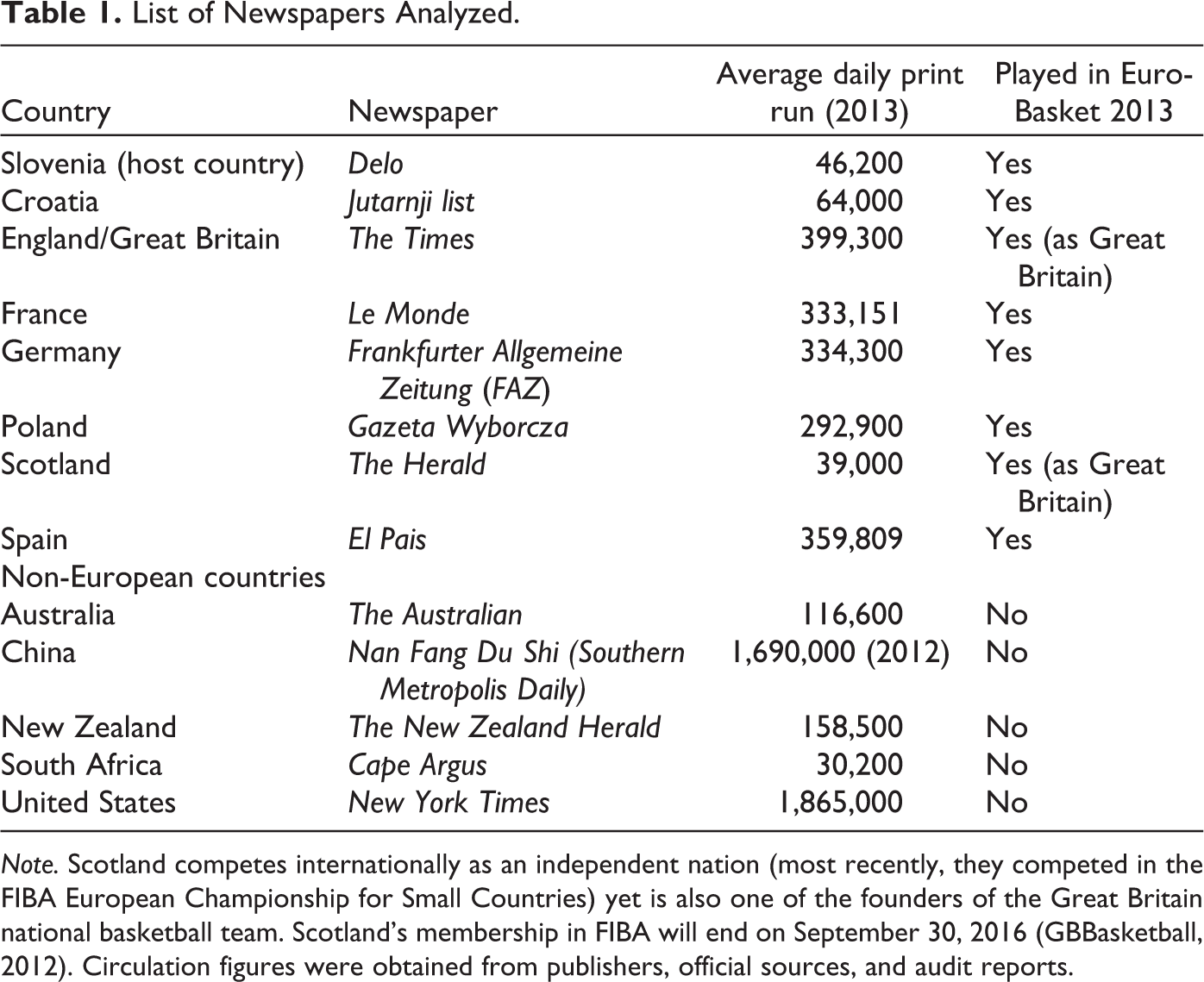
Note. Scotland competes internationally as an independent nation (most recently, they competed in the FIBA European Championship for Small Countries) yet is also one of the founders of the Great Britain national basketball team. Scotland’s membership in FIBA will end on September 30, 2016 (GBBasketball, 2012). Circulation figures were obtained from publishers, official sources, and audit reports.
We examined all articles mentioning the EuroBasket 2013 published in the newspapers listed in Table 1 between August 13, 2012 (the day following the closing of the London Olympics as the major relevant national team competition that immediately preceded the EuroBasket) and September 29, 2013 (a week after the end of the EuroBasket). The articles were obtained by searching through newspapers’ archives (online or hard copy) or the LexisNexis database. The articles were included in the study regardless of the section of the newspaper in which they appeared. Box scores, statistical columns, result pages, pages covering betting and bookmaking, and news briefs or telegraphs were excluded from the study.
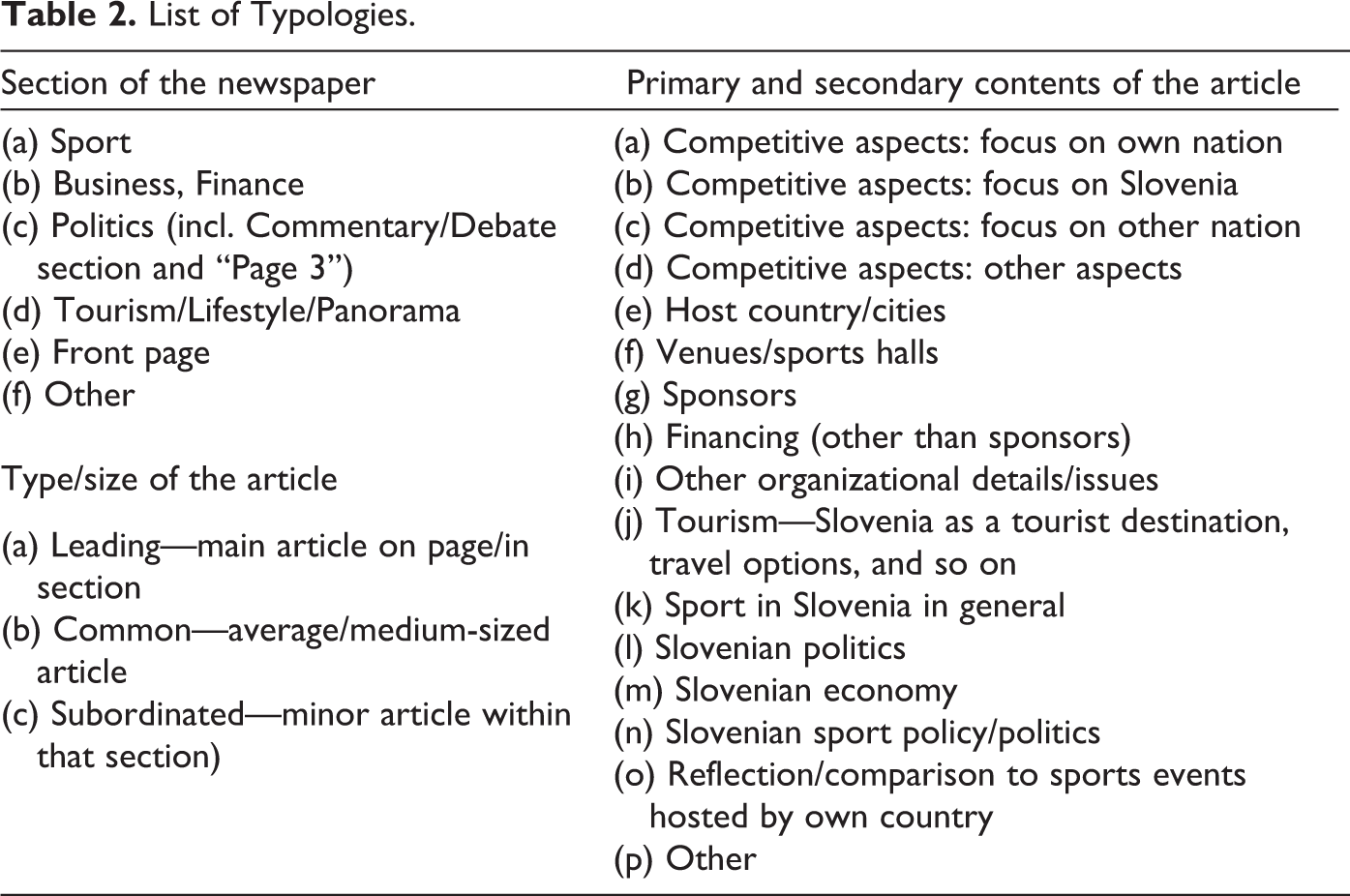
For each article/unit of analysis, the following variables were coded: date of publication, media outlet (name of the newspaper), section of the newspaper in which the article was published, type/size of the article, and primary content and secondary contents of the article (Table 2). Each article had a single primary content topic and up to three secondary content topics. The content typology was inspired by the International Sports Press Survey and developed based on a preliminary review of the articles published in the Slovenian newspaper and on the expected benefits and characteristics of the event predicted by the event organizers in the months preceding the tournament (e.g., Pavli, 2012). The typologies used to code the section of the newspaper and the type/size of the article are the same as in the two iterations of the International Sports Press Survey (Horky & Nieland, 2013; Rowe, 2007).
List of Typologies.
To assure coding consistency across nations and languages, a booklet detailing coding procedures (in the English language) was produced and circulated among the researchers. Additionally, in Slovenia and Croatia, random samples of 30% of relevant articles were coded by a second coder. Intercoder reliability using Cohen’s κ (Cohen, 1960) reached 96% for the Slovenian newspaper and 95% for the Croatian daily. The German newspaper was reviewed by two coders who discussed all discrepancies and reached 100% agreement. Newspapers in China, England, France, New Zealand, Poland, Scotland, South Africa, Spain, and the United States were examined by individual coders.
To analyze the data, absolute and relative frequencies of articles by typologies and timing were computed. For most variables, statistical significance of the differences was not calculated due to very small cell counts in most categories. For the content variable, χ2 goodness-of-fit tests were conducted to compare observed distributions with theoretical expected distributions derived from the International Sports Press Survey (Horky & Nieland, 2012). For Delo, the expected distribution mirrored the distribution of all sports-specific content of Slovenian newspapers (Ličen, 2013). Other newspaper categories (Jutarnji list, 5 combined newspapers from countries that took part in the event, and combined newspapers from countries that did not) were compared against the aggregate international distribution of sports content (Horky & Nieland, 2012). Cramer’s V was calculated to determine effect size. Results of 0.1, 0.3, and 0.5 represent small, medium, and large effect sizes, respectively (Cohen, 1988).
Results
First, we analyzed the number of articles published in each publication. Figure 1 shows the total number of articles, divided by article prominence within that section (leading, common, or subordinated). By far, the country that dedicated most extensive coverage to the event was the host, Slovenia. Over the course of the 14 months studied, the daily newspaper, Delo, published 364 articles on the topic: 56 were “leading,” 115 were “common,” and 193 were “subordinated.” In neighboring Croatia, Jutarnji list published 164 news items: 42 “leading,” 36 “common,” and 86 “subordinated.” All other publications studied ran less than 30 articles over the course of the study period. Spain won the silver medal in the men’s 2012 Olympic basketball tournament yet El Pais only published 29 articles: 16 were “leading,” 9 were “common,” and 4 were “subordinated.” In France, which won the EuroBasket 2013, Le Monde only published three articles. 6 “Leading” articles were only published in the Gazeta Wyborcza (9), in the Frankfurter Allgemeine Zeitung (5), and in Le Monde (1).
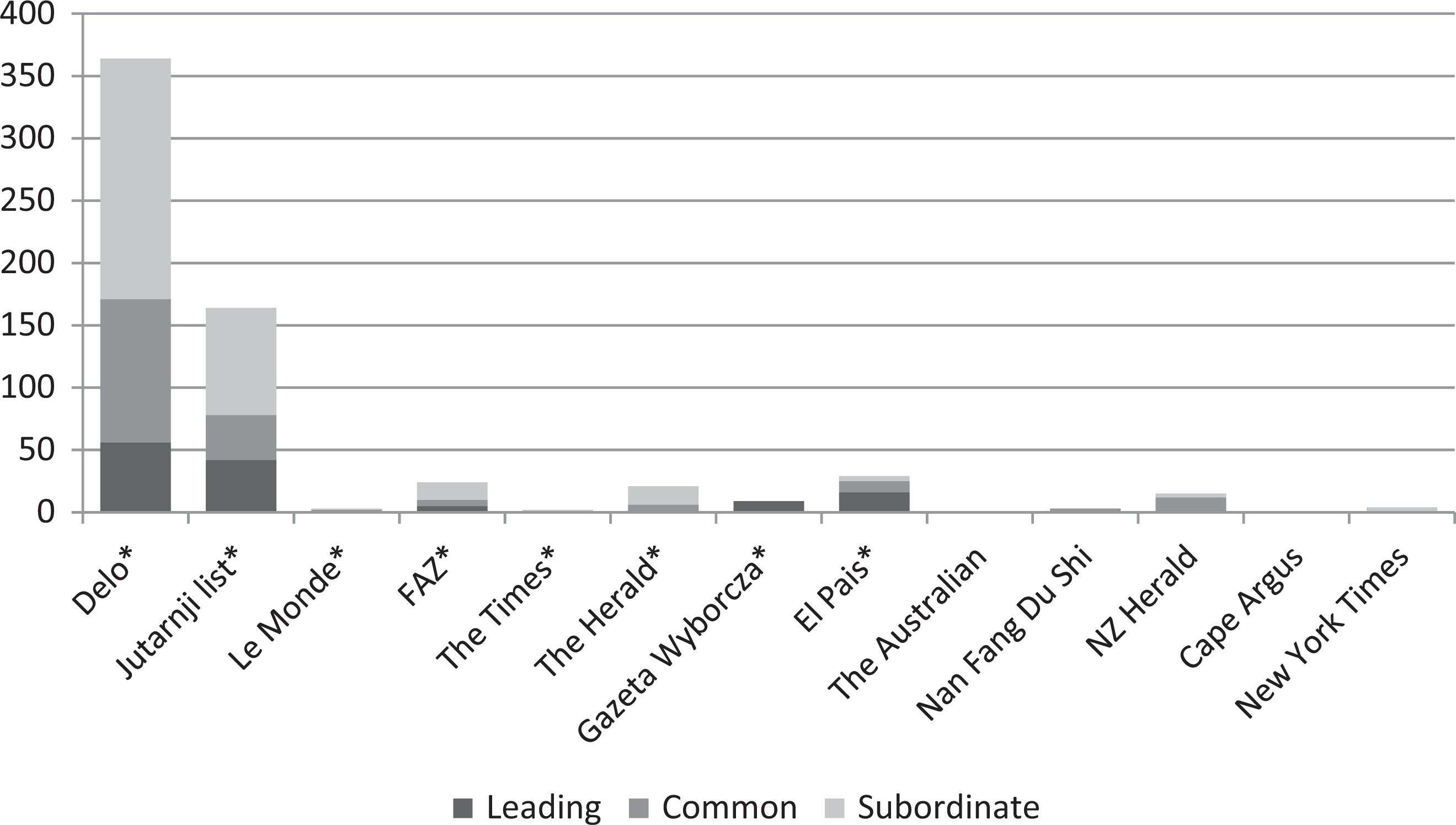
Number of articles by country (publication) and type. Asterisks denote countries that fielded teams in the event.
In addition to the number of articles, it is interesting to note their chronological distribution. For the event which tipped off on September 4, we divided the articles into three groups based on their publication date: The first group includes articles published from the beginning of data collection in August 2012 until August 15, 2013 (approximately 3 weeks before the tournament), the second group comprises articles published between August 16 7 and the end of the tournament on September 22, and the third group involves articles published in the week immediately following the event (starting on Monday, September 23 when game reports for the tournament final played on the preceding day were likely to be published). Table 3 shows the details of this analysis.
Number of Articles by Publication and Period.
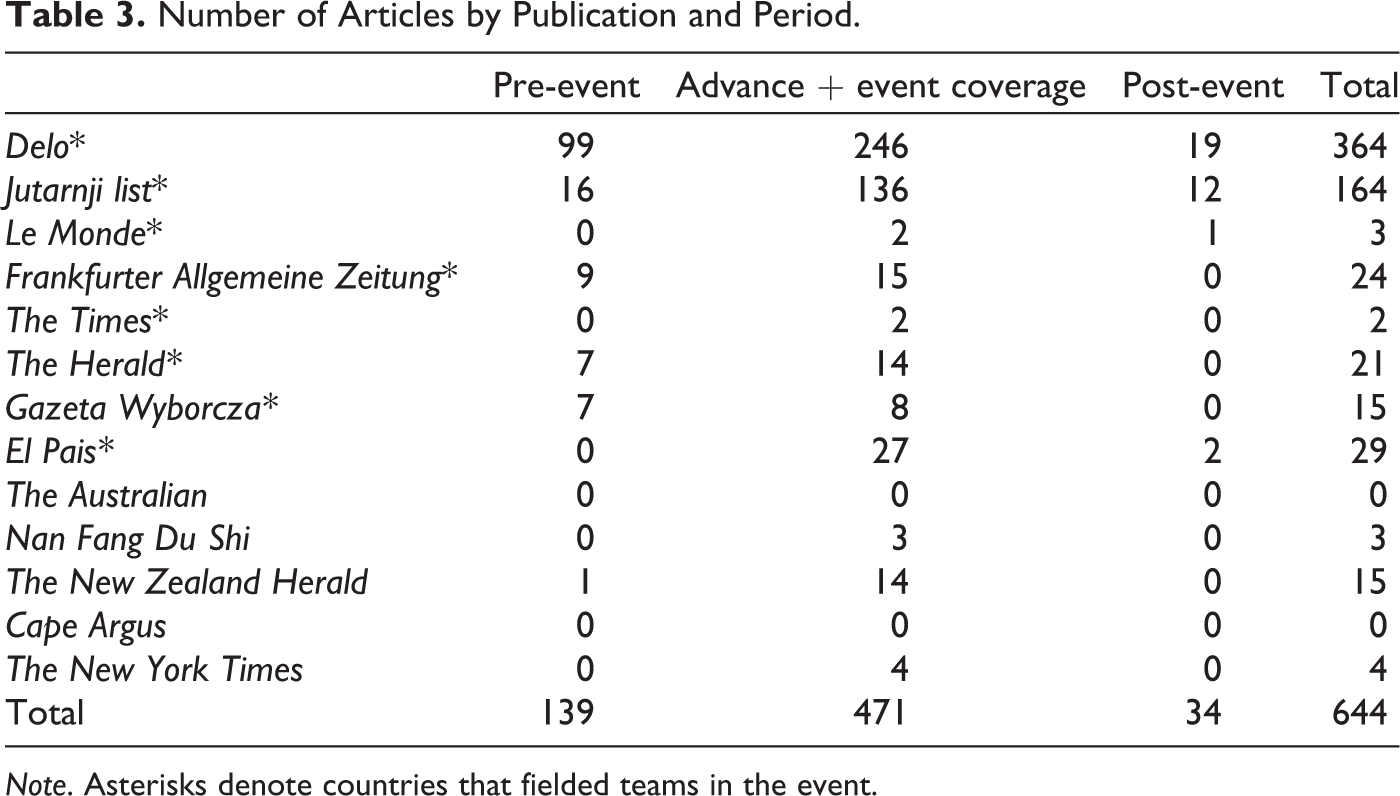
Note. Asterisks denote countries that fielded teams in the event.
The overwhelming majority (84.4%) of all articles were published in Sports sections of newspapers. Exceptions were only found in Delo (272 articles in the Sports section, 25 front-page articles, 1 article in the Business/Finance section, and 66 articles in other sections—mostly local news), Jutarnji list (154 articles in the Sports section, 6 cover stories, and 4 articles in other sections), and Gazeta Wyborcza (13 articles in the Sports section and 2 in the Business/Finance section).
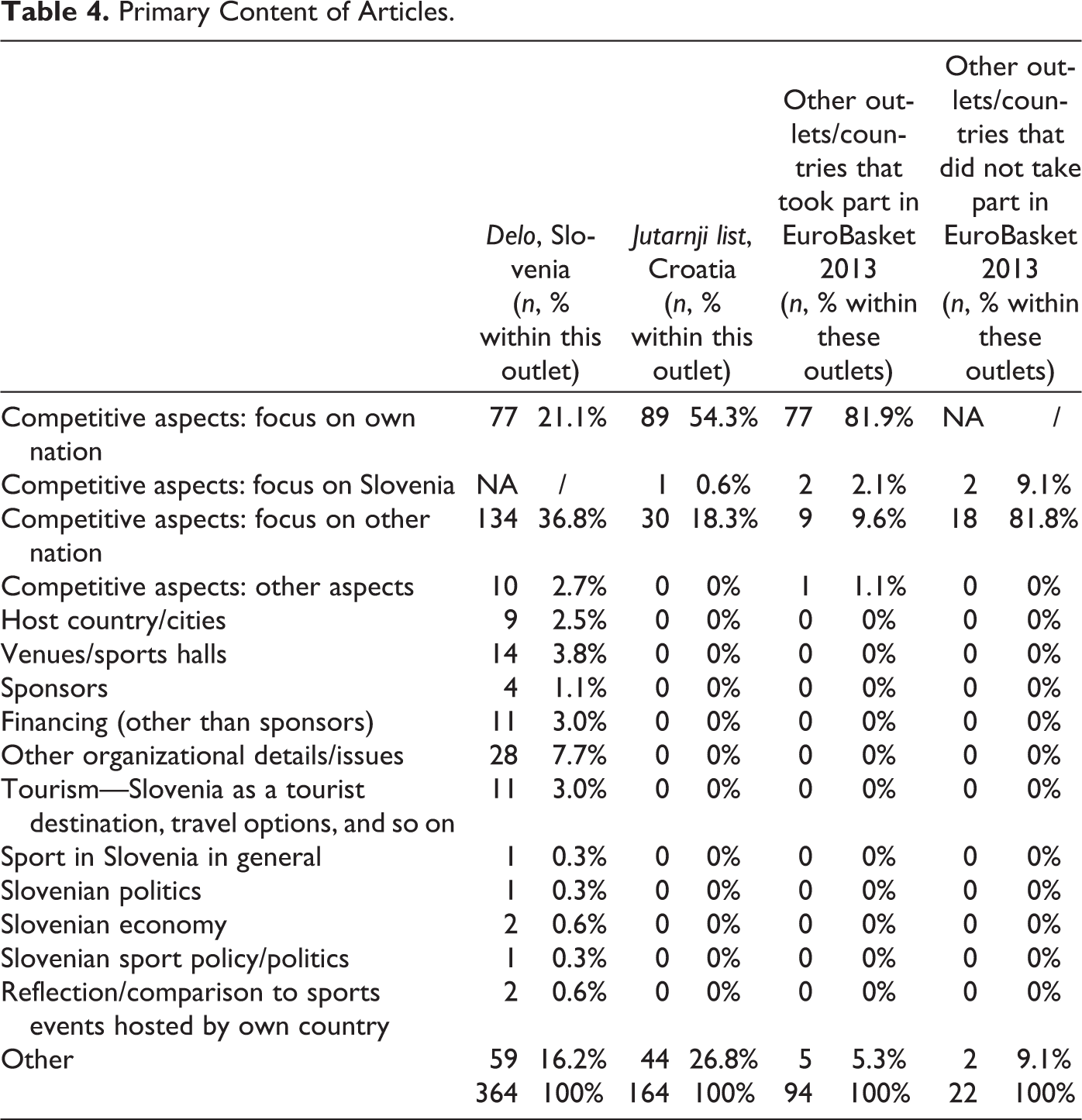
We also examined the content of each article. Due to the very limited number of articles published by newspapers outside Slovenia and Croatia, we combined all remaining publications into two groups based on whether their countries took part in the tournament. Such succinct comparison is presented in Tables 4 and 5; the former offers a review of the primary content of each article and the latter summarizes the topics of secondary relevance that were covered in the articles.
Primary Content of Articles.
Secondary Content of Articles.

Note. Individual articles could cover up to three topics of “secondary” importance.
Discussion
The first research question involved assessing the extent to which newspapers across the globe reported about the EuroBasket 2013. Though basketball claims to be the most popular team sport after soccer (FIBA, 2015) and enjoys a similar amount of overall media coverage as cricket and rugby in Europe (Horky & Nieland, 2012), newspaper coverage of the continent’s foremost event appeared limited: It attracted sizable coverage only in the host country and in neighbor Croatia, whereas reporting in other countries was limited in quantity. Regional, rather than continental or even broader relevance of the event seems to be confirmed by the coverage granted by newspapers in Serbia and Montenegro: An earlier study showed that although the analyses of outlets in these countries were limited to 2 months and 1 month respectively, they would still rank third and fourth if their results were included in the complete study (Ličen, Lončar, Delorme, Begović, & Horky, 2014).
Notable was the lack of coverage in the months leading up to the event despite the organizing committee’s international promotional activities. In addition to the host country, tangible coverage was only afforded by four (of the 12 remaining) newspapers/countries: Jutarnji list in Croatia, FAZ in Germany, Gazeta Wyborcza in Poland, and the Herald in Scotland. Also notable was the lack of coverage in the period immediately following the event, which included the day after the tournament final. Then, only four newspapers offered any kind of coverage: Delo, Jutarnji list, El Pais in Spain, and Le Monde in France—the eventual champion. Readers in other countries, and especially in other continents, were thus not exposed to news about the outcome of the event.
Objectively, this is to a large extent understandable: (newspaper) Readers in Europe are not systematically treated to game reports from tournaments such as the Asian Football Confederation (AFC) Asian Cup in soccer or the AfroBasket. Editors usually claim their editorial choices are informed by reader interest in the competitions they cover and limited staff resources (Gee & Lieberman, 2011; Ličen & Billings, 2012). Perceived interest is often associated with favorable coverage of an outlet’s “home” team in a sport that has local relevance and potential for top placement (Bijie & Billings, 2015; Jiang, 2013). In this, sports writing seems to depart—or perhaps not—from an early notion of sports journalism aiming to attract a “large portion of the … reading public” (Smith, 1976, p. 9). The expense associated with sending a correspondent to events beyond beat coverage is not considered worthwhile; if anything, generalist broadsheet newspapers will rely on news agencies to cover the story. 8
This limited interest contradicts the promotional role and potential of the event touted by organizers (EuroBasket, 2013a). The local population bought into this rhetoric: “world-wide recognition of Slovenia” was the most frequently identified benefit associated with hosting the event, named as such by three in four participants in a survey on the attitudes toward the event (Ličen & Cole, in press). The results of this study, however, seem to disprove their beliefs, as newspaper coverage of the event was actually rather limited. If potential fans and visitors are not aware of the tournament, they are also not likely to plan on attending it. At best, they might visit it in the future or develop a positive opinion about the host country.
The amount of newspaper coverage during the actual event and in the 3 weeks preceding it varied widely across outlets. In the host country, Delo published almost twice as many articles as Jutarnji list in Croatia, and more than 9 times as many as El Pais, the newspaper that was ranked third among the 13 outlets reviewed in this study. In general, newspapers seemed to follow different strategies: Delo, Jutarnji list, but also Frankfurter Allgemeine Zeitung, The Herald (Scotland), and Gazeta Wyborcza provided sustained coverage which started before mid-August and continued during the event, when it eventually subsided as their “home” teams were eliminated from the tournament. El Pais and The New Zealand Herald limited their coverage to the event and (in the case of the newspaper from Spain) the period immediately preceding it. Other newspapers provided either very limited (Le Monde and The Times in Europe, Nan Fang Du Shi in China, and the New York Times in the United States) or no coverage of the EuroBasket 2013 for men at all (The Australian and the Cape Argus in South Africa). Despite French success as the winners of the tournament, basketball is simply not covered much by local newspapers.
The second research question that guided this study asked which topics were discussed in international newspaper coverage of the event. The answer contributes to explaining the coverage pattern described in the preceding paragraphs. Table 4 indicates that Delo’s coverage was reasonably varied, with a primary focus on competitive aspects in 60.6% of articles. The same topic was the primary focus of 73.2% of all articles in Jutarnji list, and more than 90% of the articles published by other news outlets. Delo’s variety of coverage is uncharacteristic when compared to the regular content of the Slovenian sports press, which usually dedicates 79.8% of articles primarily to so-called competitive aspects (Ličen, 2013); the difference between the two is statistically significant, χ2(1) = 16.616, p > .01, V = 0.21. Jutarnji list’s coverage actually aligns with international trends detected by the 2011 International Sports Press Survey (Horky & Nieland, 2012) which put the aggregated share of articles dedicated primarily to competitive aspects at 77.7%, χ2(1) = 0.433, p < .1, V = 0.05. Attention to this topic aligned with international trends among newspapers in other countries, too, χ2(1) = 3.488, p < .05, V = .19, for newspapers published in countries that took part in the event and, χ2(1) = 0.494, p < .1, V = 0.15, for newspapers published in other countries.
The variety of Delo’s coverage is also reflected in the number of articles that included “secondary” aspects. Aspects other than competitive were found as secondary themes in 26.1% of all EuroBasket-related stories published by the Slovenian broadsheet. Jutarnji list published none, while reports from other publications included them in 18.3% of the cases.
Coverage of the EuroBasket 2013 was largely limited to the sports page. Delo again transcended this as it occasionally featured the story on its front page (6.9%) or in other sections (18.1%), most often in the pages dedicated to local news. Jutarnji list and Gazeta Wyborcza were the only other newspapers that did not confine the event to the sports section. Polish interest in the organizational aspect of the tournament likely derives from its own experience, as the country hosted the 2009 EuroBasket for men, the 2011 EuroBasket Women, and the soccer Euro 2012.
The media often limits its coverage of international sports competitions to the outlet’s “own” national team. “Indexes of nationalism” in newspaper coverage of the 1984 Olympic Games ranged from 17 to 79%, with Yugoslavia (as the predecessor of Croatia and Slovenia) reaching 25.5% (Real, 1989). The EuroBasket provided the impetus for varying degrees of self-centeredness: The newspaper’s “own” team was the primary focus of 21.1% articles in Slovenia, the host country, yet reached 54.3% in Croatia and even 81.9% in other countries that took part in the event. Hence, although basketball usually receives a fair share of attention from the press, newspapers did not cover the event as much as their national team playing in it.
The relatively modest index of nationalism in Delo’s coverage can be interpreted as deriving from the relatively broad coverage of the event itself: Articles published in this newspaper were categorized into 15 categories (including “Other”) while all other papers combined ran only eight types of stories. Slovenia’s foremost broadsheet thus provided comprehensive coverage of the largest sports event to be held in Slovenia in recent history. Other newspapers probably treated this tournament like they treat the many other events of similar size and scope, largely focusing on the performance of “their own” teams and their imminent opponents; given the lack of scholarship on the media coverage of major sports events, this study sets a benchmark for the numerous, yet still understudied competitions of this type. Critical reporting focusing on event mismanagement that occasionally surrounds mega events (Mishra, 2012, 2013; Jennings, 2000) did not accompany this tournament—not that there would be need for any though, according to local coverage (Brozović, 2013). Other competitive aspects and organizational details and issues attracted some (largely secondary) international coverage, whereas information about tourism, the host country, or topics about Slovenia in general were not found in any form. This further suggests the promotional potential and tourist aspect of the event may have been overemphasized by the organizers.
Committees organizing or bidding to organize major and mega events anticipate economic benefits to host communities—cities or countries—from the hosting of these events and the promotion associated with it (Andranovich, Burbank, & Heying, 2001; Chalip, 2006). The mere hosting of such events, however, is an opportunity to gain economic benefits rather than an assurance that benefits will occur. To this end, host communities need to invest into their own promotional campaign in addition to contributing public funds to the cost of the event. The effectiveness of event communication is contingent on the advertising of the event itself (Cornwell, 2008).
According to the organizers of the 2013 EuroBasket for men, one of the goals and “prospected legacies” of the event was to “increase or generate interest in Slovenia as a sports and tourist destination” (Eurobasket, 2013a; Pavli, 2012). The lack of visibility of the event in the international press suggests this goal has not been met: The event was largely absent from major newspapers in all but one of the foreign countries examined. The foreign country that did cover the event extensively, namely Croatia, is a neighbor and fellow former Yugoslav country, so arguably one where interest in Slovenia is preexisting. The goal of generating interest in the country was thus not achieved at all. Moreover, newspaper coverage was largely limited to European countries (with a notable exception in New Zealand), disproving the organizers’ claim of “global” relevance (Pavli, 2012).
The results might differ if the study included newspapers devoted exclusively to sports such as L’Equipe in France or La Gazzetta dello Sport in Italy. Generalist broadsheets were chosen to assess the interest in, and coverage of the event by mainstream news outlets with broad, rather than narrower audiences. Although newspapers are often thought of as fading and declining in popularity, especially in the so-called Western world, the latest World Press Trends report (Milosevic, Chisholm, Killman, & Henriksson, 2014) shows daily print newspaper circulation in 2013 has actually increased by 2% on a year-by-year basis (it declined 2% over 5 years). Also, several countries included in the study (including Germany and the United States) do not publish newspapers devoted exclusively to sports. Newspaper circulation—and their content—are thus complex issues; this study documents differing patterns in the latter aspect.
Still, the main value of this study lies in the examination of types of sport events—continental championships and international tournaments—that are smaller in size, yet more numerous than “mega” soccer or multisport competitions, as several are staged on all continents every year. Thus far, these events have flown under the researchers’ radar—so much so that we could not find a single study examining their media coverage on an international scale. This lack of academic interest might derive from their size and budget, both relatively modest. Yet such events often receive public subsidies, usually justified also as promotion expenses; in the case of the 2013 EuroBasket, per capita public funding exceeded the subsidy offered by federal Germany to the 2006 FIFA World Cup. While mega events such as the Olympic Games and soccer World Cups are rare and within reach of relatively few countries with high GDPs, the many smaller “major” events are yearly occurrences hosted by many countries, including nations with relatively modest academic and societal traditions. For these countries, major events are as “mega” as they get. Awareness of the potential downsides of the hosting of mega events became topical in academic circles relatively late (Zimbalist, 2015). This study attempts to expand critical discussion on event management, communication, and sport into territories that lack such critical awareness.
Conclusion
The media in general and the sports press in particular tend to be nationally self-centered. This content analysis of a year’s worth of EuroBasket-themed coverage in 13 countries showed major broadsheets do not care about major international sports events as much as they concentrate on the performance of “their own” national team in them.
This study also indicates a more complex pattern of event relevance. Although basketball is very popular in many of the countries observed in the study (including countries as geographically and culturally distant from each other as China, Spain, and the United States), the EuroBasket 2013 was extensively covered only in the host country, Slovenia, and its neighbor, Croatia. The results of a pilot study indicated the event also received sizable coverage in Serbia and Montenegro (Ličen et al., 2014). These four countries indeed fielded teams at the tournament—yet they were obviously not the only ones to meet this criterion. It is unclear whether newspapers based in these countries found the event to be more newsworthy due to geographic or cultural reasons (all countries are former Yugoslav nations), or if the motives were yet different.
In a way, these results are not particularly surprising: Anecdotal evidence suggests the CONCACAF Gold Cup in soccer and the AfroBasket are seldom covered by European newspapers, and North American readers are seldom treated to reports from any Asian cup or Asia Cup. Nonetheless, bidding and organizing committees as well as local populations remain convinced of the major promotional (and thus tourist and economic) effects that derive from hosting any international sports event. This study has shown that even a relatively popular sport such as basketball does not guarantee major events mainstream international print media prominence. Major events are at best an opportunity that needs to be incorporated into a broader communicative, promotional, and economic frame. This is what sets them apart from mega events, or media events, or “pseudo-events.”
Examining newspaper coverage in 2013 and later may seem like an esoteric decision. Given their propensity to publish original content rather than wire copy, we feel generalist print media, and especially broadsheet newspapers, remain an indicator of mainstream news topics in an age of extremely fragmented broadcast and digital media spaces. Broadcast rights for the EuroBasket were distributed to broadcasters covering a record 167 countries and territories, as well as shown on FIBA’s semi-official digital platform, LiveBasketball.tv (FIBA Europe, 2013). As often happens for such events, many of these broadcasters were sports networks geared toward existing fans but with limited appeal to vast audiences. Such networks, along with specialized websites, meet the interests of the existing fan base but seldom expand it, as they are not consumed by uninitiated fans. The former are likely to be interested in the tournament—but are usually attracted by its performance aspect rather than in the host country as a tourist destination. While the event as a brand benefits from such attention, it is not clear whether the host location enjoys increased popularity, too.
Although newspapers make up only one part of the increasingly complex media environment, digital media and even Internet penetration remain unevenly distributed across the globe. While 89.8% of the British and 84.2% of the American populations use the Internet, only 72.7% of Slovenians do so. This share falls further in Lithuania (68.5%), Croatia (66.8%), and Poland (62.9%)—all countries which hosted the tournament since 2009—and drops below 50% in Philippines (37%) and Ivory Coast (2.6%), countries which hosted the 2013 continental basketball championship for men in Asia and Africa, respectively 9 ( The Economist, 2015). Thus, although digital media represents the present and future of mediated communication in Western countries, this study aimed primarily at informing scholars, officials, and civil society in the Slovenias and Ivory Coasts of the world.
This study sheds light on the content of news articles reporting about the EuroBasket 2013. Future studies could examine the discourse of news reports surrounding such events. A comparison of the countries that provided the most comprehensive coverage—in this case, Delo and Jutarnji list in Slovenia and Croatia, respectively—would be the most logical development and its findings probably more insightful than a large-scale study involving all countries examined above. Future studies might also want to examine tabloid and/or sport dailies, rather than broadsheet coverage of the tournament. In many countries, the popular press dedicates more space to sport.
Following the withdrawal of Ukraine as the host of the 2015 EuroBasket for men due to political instability in the country (FIBA Europe, 2014a), the European governing body of basketball announced in September 2014 that the tournament would be hosted by Germany, Croatia, Latvia, and France, with each of the countries hosting one group of the group stage (FIBA Europe, 2014b). “Multiplying” host nations for sports events has become increasingly popular after South Korea and Japan hosted the FIFA soccer World Cup in 2002. This was the first time a major event was hosted by as many as four nations. The results of this study suggest the group hosted by Croatia might be the most prolific from a communication standpoint. It will be interesting to observe whether this theoretical prediction will be accurate.
Footnotes
Acknowledgments
The authors thank Kerry Marie Hassall (University of Tulsa, formerly with Washington State University), Jonas Giesenhagen and Tobias Kröger (Macromedia University of Applied Sciences, Hamburg), and Jeremy Li (Chengdu Sports University) for their assistance in the data collection process. The authors also thank Marko Begović (Directorate for Youth and Sports, Montenegro) for his participation in the early stages of this study.
Declaration of Conflicting Interests
The author(s) declared no potential conflicts of interest with respect to the research, authorship, and/or publication of this article.
Funding
The author(s) received no financial support for the research, authorship, and/or publication of this article.