







Abstract
This manuscript considers public discourse surrounding the link between playing surface and lower-extremity injuries within the context of a case study on New York Giants’ wide-receiver Sterling Shepard’s anterior cruciate ligament (ACL) tear, with an aim to identify and explain the use of narratives as a function of commenters’ stakeholder groups and expressions of fandom. Such an effort extends scholarship on issues of athlete health policy to non-cognitive and depersonalized injuries and offers insight into which publics are adopting specific cultural frameworks. Bottom-up framing and social identity theory (SIT) were used as frameworks for interpreting the variance in responses. The consideration of 2,633 public tweets revealed six categories, including thematic framing, episodic framing, health-first narratives, performance narratives, sharing the news, and ambiguous negative commentary. Additionally, patterns associated with stakeholder groups and public expressions of fandom offered both support and challenges to heuristic and theoretical bases of knowledge. This manuscript suggests public sporting audiences are embracing more health-conscious frameworks in social media discourse but that the scope of their focus is directed subsequently by their expression and fandom and concern for their teams.
Keywords
Introduction
Anterior cruciate ligament (ACL) tears are significant knee injuries, with between 100,000 and 200,000 annual occurrences in the United States (Evans & Nielson, 2022). These injuries are common in competitive contact sports, including football (Gornitzky et al., 2016). Accordingly, roughly 60 ACL tears occur in the National Football League (NFL) per season (Palmieri-Smith et al., 2021). These injuries are consequential, requiring nearly a year-long recovery period and diminishing performance after returning to play (Carey et al., 2006; Shah et al., 2010). The consequences of ACL tears can outlast athletes’ careers, often leading to long-term costs to social life (e.g., leisure activities), physical wellbeing, work prospects, and self-concept (MacKay et al., 2014; Suter et al., 2017).
While football is a high-risk activity, recent scholarship argues that 16% of ACL injuries could be avoided by playing on natural grass (Mack et al., 2019). When athletes move laterally on natural grass, the surface easily tears, diminishing force on the knee and risk of injury (Kent et al., 2015). Artificial turf, however, is resistant to tears, which heightens the force on athletes’ bodies and increases the risk for lower extremity injuries (Kent et al., 2015). Despite the heightened risks associated with artificial surfaces (Mack et al., 2019), turf stadiums remain popular across the NFL due to aesthetic appeal and low maintenance costs (Cheng et al., 2014). Thus, the economic benefits of artificial turf stadiums conflict with the health and safety costs borne by the athletes who compete on these surfaces (Jastifer et al., 2019) – highlighting the NFL’s prioritization of stakeholders’ interests.
The role of artificial turf in ACL injuries was brought to the forefront of social media discourse during a 2022 Monday Night Football game between the Dallas Cowboys and New York Giants. During the game, Giants’ wide-receiver Sterling Shepard was jogging down the field at MetLife Stadium when he collapsed, grabbing his knee with both hands. The injury would be confirmed as an ACL tear. Shepard’s injury was contextualized in ongoing negotiations between the NFL Players Association (NFLPA) and NFL to play on natural grass until turf products meet comparable safety standards (Tretter, 2020). Odell Beckham Jr., a free agent at the time, who was recovering from his own ACL surgery, vented on Twitter: “Billions made off this game I can’t understand why we can’t play on grass.”
Public conversations about athlete health can influence the management of sporting leagues, the prioritization of wellbeing within sporting cultures, and public understanding of health conditions (Cranmer & Sanderson, 2018; Parrott et al., 2020). To date, scholarship uses cognitive health contexts (e.g., concussion and mental health) to demonstrate shifts favoring athlete wellbeing within sporting culture and media (Anderson & Kian, 2012; Parrott et al., 2021; Thompson et al., 2022). However, it remains unclear whether the public holds the same sentiments regarding more common and less life-threatening injuries. Social media platforms, (i.e., Twitter) are rich sites of public discourse that enable the construction of countervailing or novel social narratives (Seaton et al., 2022; Cranmer et al., 2021). Given that user-controlled media enable publics to rely on normative cultures to construct meaning, Nisbet’s (2010) bottom-up framing is an ideal lens for identifying differences between media and public discourse (Cranmer & Sanderson, 2018; Sanderson & Cassilo, 2019).
Beyond documenting multivocality in public discourse, explaining why such differences exist is imperative for identifying dysfunctional segments of the sporting industry and tailoring interventions to address problematic health issues. Recent scholarship has utilized social identity theory (SIT) (Tajfel & Turner, 1979) to suggest that fandom explains why and how football fans respond to athlete transgressions and activism (Brown et al., 2015; Cranmer et al., 2021; Sanderson et al., 2016; Seaton et al., 2022). The stakeholder groups of commenters (e.g., media members or public) may also account for divergences in discourse, as media more readily recognize thematic attributions of responsibility for health issues while publics often view health through an episodic lens (Holt-White, 2019; Zhang et al., 2016). This manuscript, therefore, considers social media discourse surrounding Sterling Shepard’s injury, as a function of stakeholdership and fandom.
Review of Literature
Artificial Turf and ACL Injuries
ACL tears are common knee injuries for those who play competitive contact sports (e.g., soccer, lacrosse, and football) (Gornitzky et al., 2016). In a study of ACL tear occurrences among NFL players between 2015 and 2019, Palmieri-Smith et al. (2021) identified 314 occurrences of injury (M = 62 per year). These devastating injuries entail yearlong recovery times and diminished performance for NFL players (Carey et al., 2006; Shah et al., 2010) and enduring physical consequences, including early onset knee osteoarthritis and total knee replacement (MacKay et al., 2014; Suter et al., 2017).
Sports medicine scholars investigate the risk factors associated with ACL injuries and have identified playing surfaces as a determining factor. Natural grass limits the horizontal force imposed by an athlete’s foot, whereas artificial turf is more resistant to tears, heightens the potential force applied to the surface during maneuvers, and increases the risk for lower extremity injuries (Kent et al., 2015). Mack et al. (2019) examined regular NFL season games from 2012-2016 and identified a 16% increase in injuries on synthetic turf compared to natural grass. They estimated that if all games were played on natural grass over the period of analysis, 316 lower extremity injuries could have been avoided. The heightened ACL injury risk on turf is markedly stronger when considering noncontact injuries (Mack et al., 2019) – like Shepard’s tear. Although innovations in artificial turf improve its properties, artificial turf still results in higher rates of knee injury among professional football players (Gould et al., 2022).
Despite the risks associated with artificial turf surfaces, it is in 14 of the 30 NFL stadiums (Abdalazem & Roche, 2022). Explanations for its adoption may rest in its economic advantages over natural grass, including lower maintenance costs, higher durability, and year-round aesthetic consistency (Cheng et al., 2014), benefits which are weighed against the health and safety of athletes who compete on the surface (Jastifer et al., 2019). Demonstrating a clear preference for natural grass, the NFLPA has unsuccessfully requested banning artificial turf (Tretter, 2020) on the grounds that ACL injuries threaten career duration (Shah et al., 2010), athlete health outcomes (Suter et al., 2017), and long-term life quality of NFL players (Mackay et al., 2014).
Recent scholarship demonstrates increased concern for athlete safety (e.g., policies aimed at ameliorating undue concussion risks or addressing athlete mental health) (Cranmer & Sanderson, 2018; Thompson et al., 2022). This research disproportionately focuses on cognitive health issues borne by athletes, often on the grounds that these conditions pose immediate threats to players’ life quality (i.e., through stigma and social discrimination) (Parrott et al., 2021). However, other injuries, such as ACL tears, also result in long-term suffering for athletes, affecting their social lives (i.e., leisure activities) and self-concept, in addition to their physical wellbeing (Mackay et al., 2014). Yet, a knee injury is far more depersonalized than someone’s mental wellbeing and functioning. It is especially important to explore public discourse surrounding non-cognitive athlete health issues (i.e., knee injuries) that may go unquestioned but still shape the sporting milieu.
Framing of Health and Sport
Framing theory explicates how media’s selection, exclusion, and emphasis of aspects of news stories shapes interpretations of societal issues, including their causal interpretations and treatment recommendations (Tewksbury & Scheufele, 2019). Framing theory is commonly applied within sport scholarship to investigate how sports media portrays social classifications (e.g., race, sex, and nationality) (Billings & Angelini, 2019; Cranmer et al., 2014) and the effects of such coverage (Brown et al., 2021). Iyengar (1990) posited that frames also direct attributions of responsibility and, in turn, preferences related to public health policy. Episodic frames focus on specificities of events or characteristics of people, promoting the belief that individuals are responsible for improving their own health experiences (Barry et al., 2013). Conversely, thematic frames focus on broader patterns, attributing responsibility for health issues to social considerations and inviting the perception that government agents are responsible for addressing health (Coleman et al., 2011).
While historically, media and the public have viewed health through an episodic lens, recent content analyses demonstrate that media have increased thematic frames that connect public health issues and policies to social and ecological explanations (van Hooft et al., 2018; Zhang et al., 2016). This trend offers promising implications, as public support for health policies is greater when framed thematically within news articles (Coleman et al., 2011; Sun et al., 2016; Temmann et al., 2021). The public, however, often views health through an episodic lens, focusing on individual behavior and personal responsibility (Holt-White, 2019; Robert & Booske, 2011). Thus, the following hypotheses are forwarded:
Bottom-up framing explains the discrepancies between media and public preferences. Nisbet (2010) argued that user-controlled media enhance the public’s ability to construct understandings of social issues that contradict or add to those found within mass media. Individuals’ mental cues, value systems, and emotions may impede influence of frames promoted by media (Nisbet, 2010). Public interpretation of news frames relies on normative cultures, which favor some frames and burden others. Such distinctions are noteworthy as conclusions about shifts in sporting culture around athlete health are based on content analyses of health-related news stories (Anderson & Kian, 2012; Parrott et al., 2021; Thompson et al., 2022). Studies on sports media framing of athlete health humanizes athletes, highlights safety considerations, and reflects a growing cultural awareness of safety risks associated with sports (Anderson & Kian, 2012; Parrott et al., 2021). Yet, examinations of public sentiment reveal audiences still cling to cultural narratives (e.g., pain principle, warrior narratives, and hegemonic masculinity) that frame safety policies in football as evidence for the erosion of masculinity and broader value systems of American society (Cranmer & Sanderson, 2018; Sanderson & Cassilo, 2019).
Sporting audiences draw on cultural narratives rooted in hegemonic masculinity, or the logic of a patriarchal system that forwards an idealized and traditional form of masculinity (Connell & Messerschmidt, 2005). Athletes are positioned as exemplars of masculinity (Connell, 1990) and utilized to socialize men into embracing pain to pursue performance goals (Messner, 1995; Trujillo, 1995). A narrative – known as the “pain principle” – positions injury not as a hindrance to athletic achievement but an opportunity to develop character and moral worth through continued performance (Sabo, 2009). These frameworks manifest in popular culture through performance-oriented narratives that view athletes as commodities whose worth is dependent on task accomplishment (Ruston et al., 2019; Zanin et al., 2020). In contrast, safety-oriented narratives humanize athletes and encourage healthy decisions (Zanin et al., 2020). Such narratives reflect the recent shift in media coverage and the dynamic nature of sporting culture. With this in mind, the following hypotheses are forwarded:
Social Identity Theory
SIT argues that individuals form group memberships that offer social identity and guide intergroup interactions (Tajfel & Turner, 1979). Through a process of social categorization, individuals classify themselves and others based on identity characteristics (i.e., race, nationality, gender). Although SIT is traditionally used to explain intergroup interactions as a function of sociological characteristics (e.g., sex, ethnicity, nationality, religion, or political affiliation), other scholarship demonstrates that this framework is also appropriate for examining sports fandom and its manifestations in public conversations (Cranmer et al., 2021; Sanderson et al., 2016; Seaton et al., 2022). These social categorizations enable understanding of social environments by classifying others as belonging to the same group (i.e., an in-group) or other groups (i.e., an out-group).
Through social identification with groups that hold social prestige or importance, individuals gain self-esteem and a sense of belonging. Sports teams provide fans with a host of social-psychological benefits, as fans derive social connection from sharing in sporting activities (e.g., watch parties or tailgates) (Kim & Kim, 2020; Wann et al., 2017). Others gain enjoyment and esteem from internalizing and basking in the reflected glory of their teams (Cialdini et al., 1976; Fan et al., 2020). In addition to expressing fan identity through wearing team apparel, watching games, or voicing support for teams, social media has become a prominent location for such expressions, with fandom featured in profile and banner photos, biographies, and the use of hashtags (Brown et al., 2015; Cranmer et al., 2021). Group membership also informs social comparisons via in-group favoritism or out-group bias within intergroup evaluations (Brown, 2000). Importantly, in-groups do not compare themselves to all out-groups, but rather judge the need for comparison based on group similarity, proximity, and situational salience (Tajfel & Turner, 1979). By making intergroup distinctions, individuals seek superiority of their own social groups, a competitive act requiring some shared value or goal between the groups – like that between sports teams (Giles & Stohl, 2017).
Regarding athletic injury, SIT presents a promising framework for understanding collective resilience in the face of adversity (Rees et al., 2015). Sterling Shepard’s ACL tear is a potential identity threat (i.e., the season-ending injury of a key player), from which fans may seek to regain positive in-group distinctiveness (Brown, 2000). Previous work shows that fans manage identity threats in several ways, including attacking the source of threat (Sanderson & Truax, 2014) or renouncing fandom (Sanderson et al., 2016). More commonly however, fans support athletes, particularly in the face of health difficulties (Kumble et al., 2022; Parrott et al., 2020). Thus, while Shepard’s inability to compete worsened the Giants’ competitive standing in the league, fans should be expected to express well wishes. Conversely, SIT forwards that fans of other teams are more likely to express negative sentiment (Brown, 2000). Previous works demonstrate that fans consistently demonstrate out-group bias and use derogatory behaviors against out-group fans and athletes (Amiot et al., 2014). The current study presents a unique set of circumstances where the injury of a competitor might signify threats to in-group members, but out-group fans should also be expected to express concern with athlete safety across the league, insofar as they perceive artificial turf as a threat to members of their own teams. Thus, two hypotheses are forwarded:
Method
Sample and Procedure
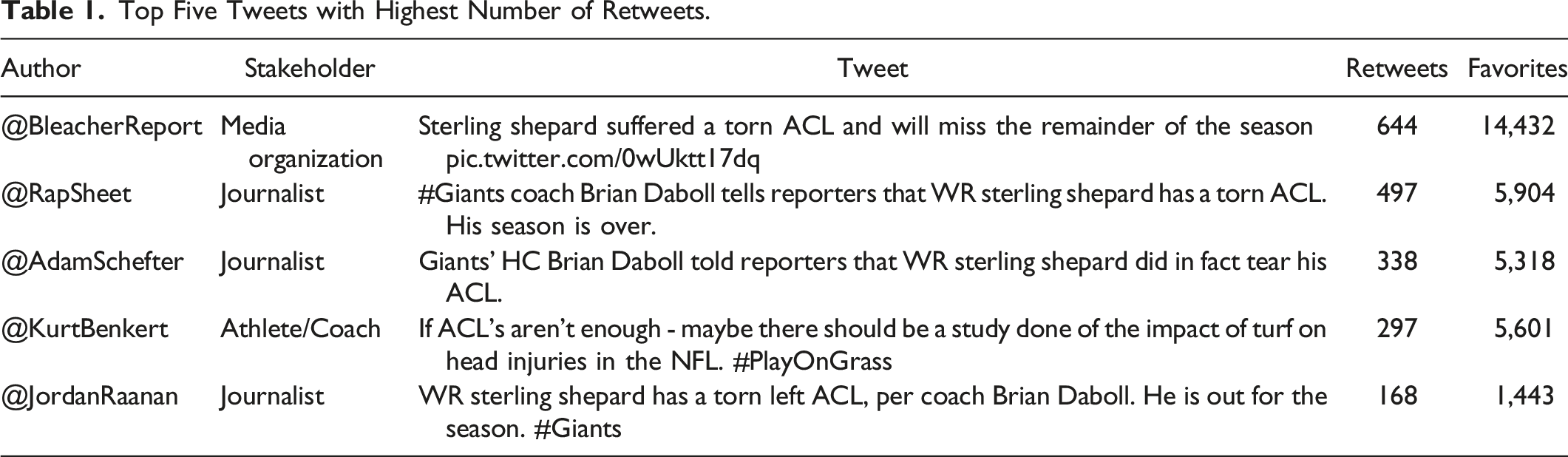
Top Five Tweets with Highest Number of Retweets.
Data Analysis
To examine the hypotheses, tweets were examined via qualitative and statistical analysis, including two cycles of coding and multiple chi-square analyses. Prior to coding, the researchers read the data multiple times to form an intimate understanding of its contents. The iterations of reading were aided with analytic memoing, which noted potential similarities and differences within the data. Within the coding, a single tweet served as the unit of analysis and was assigned a single code/theme. In first cycle coding, initial coding was utilized to identify similarities and differences between tweets and was open to all possible theoretical directions (Saldaña, 2013). Initial coding produced 14 codes based on similarities and differences (e.g., diagnoses, best wishes, and turf is to blame, personal insults [directed at Shepard]). Given that first cycle coding procedures often produce excessive and overlapping codes, second cycle coding was utilized to refine codes and group them into broader categories.
Within second cycle coding, two techniques were utilized in tandem. Pattern coding was used to group initial codes into a smaller number of categories based on similarity (Saldaña, 2013), whereas elaborative coding categorized initial codes into the established frameworks when appropriate, including those that offered attributions of responsibility for Shepard’s injury (i.e., episodic and thematic framing) (Iyengar, 1990) and those with a focus on the interplay between athlete health and the enactment of sport (i.e., health-first and performance narratives) (Ruston et al., 2019). Second-cycle coding produced six categories of responses to Shepard’s injury (episodic framing, thematic framing, performance narrative, health-first narrative, sharing the news, and ambiguous negative commentary), which the researchers applied to 100% of the data. To demonstrate the applicability of the coding scheme to the data, two independent coders were given a codebook, a databook to record values assigned to the data, and 20% of the data. Coders were trained in applying the coding scheme and engaged in the coding process independently. Intercoder agreement was calculated utilizing Cohen’s Kappa and reached acceptable levels (κ = .85).
The profiles of those who tweeted were examined for sporting stakeholder position (H1-H4) and expressions of fandom (H5-H6). Regarding sporting stakeholder position, the profile biographies were examined. The researchers utilized provisional coding, with a preliminary interest in identifying media institutions and journalists (n = 257, 9.8%) and a general public (n = 2326, 88.3%) (i.e., those unaffiliated with the media or the NFL) (Saldaña, 2013). Additional stakeholders, including NFL athletes and coaches (n = 3, 0.1%) and NFL affiliated medical personnel (n = 47, 1.8%) were identified but excluded from the quantitative analysis. To determine if commentary differed as a function of commenters’ status as either media or public, a 2 (stakeholder) × 6 (commentary categories) chi-square analysis was conducted. Commmenters’ profiles (i.e., handles, profile and banner pictures, and biographies) and comments (e.g., hashtag use) were examined for expressions of fandom (Brown et al., 2015; Cranmer et al., 2021). Profile pictures or banners were examined for team logos, athletes, or users in team apparel. Names (e.g., Mark [Giants 3-0]), handles (e.g., @GiantsFan4_Life), hashtags (e.g., #TogetherBlue), or commentary (e.g., “This is why the Giants are my favorite team.”) were also evaluated for expressions of NFL fandom.
Three categories of fan expression were applied to profiles: in-group fans (i.e., Giants fans; n = 368, 14%), out-group fans (i.e., fans of a different NFL team; n = 385, 14.6%), and non-expressive users (i.e., those with no expressions of fandom; n = 1373, 59.7%). To determine if Twitter commentary differed as a function of commenters’ expressions of fandom, a 3 (fan categories) × 6 (commentary categories) chi-square analysis was conducted. For both chi-square analyses the strength of associations was assessed with Cramer’s V, and significant cells were identified via standardized adjusted residuals, with +/− 1.96 indicating significant cells (MacDonald & Gardner, 2000).
Results
Bottom-Up Framing of Commentary
Elaborative Theme Description, Initial Codes, and Examples.
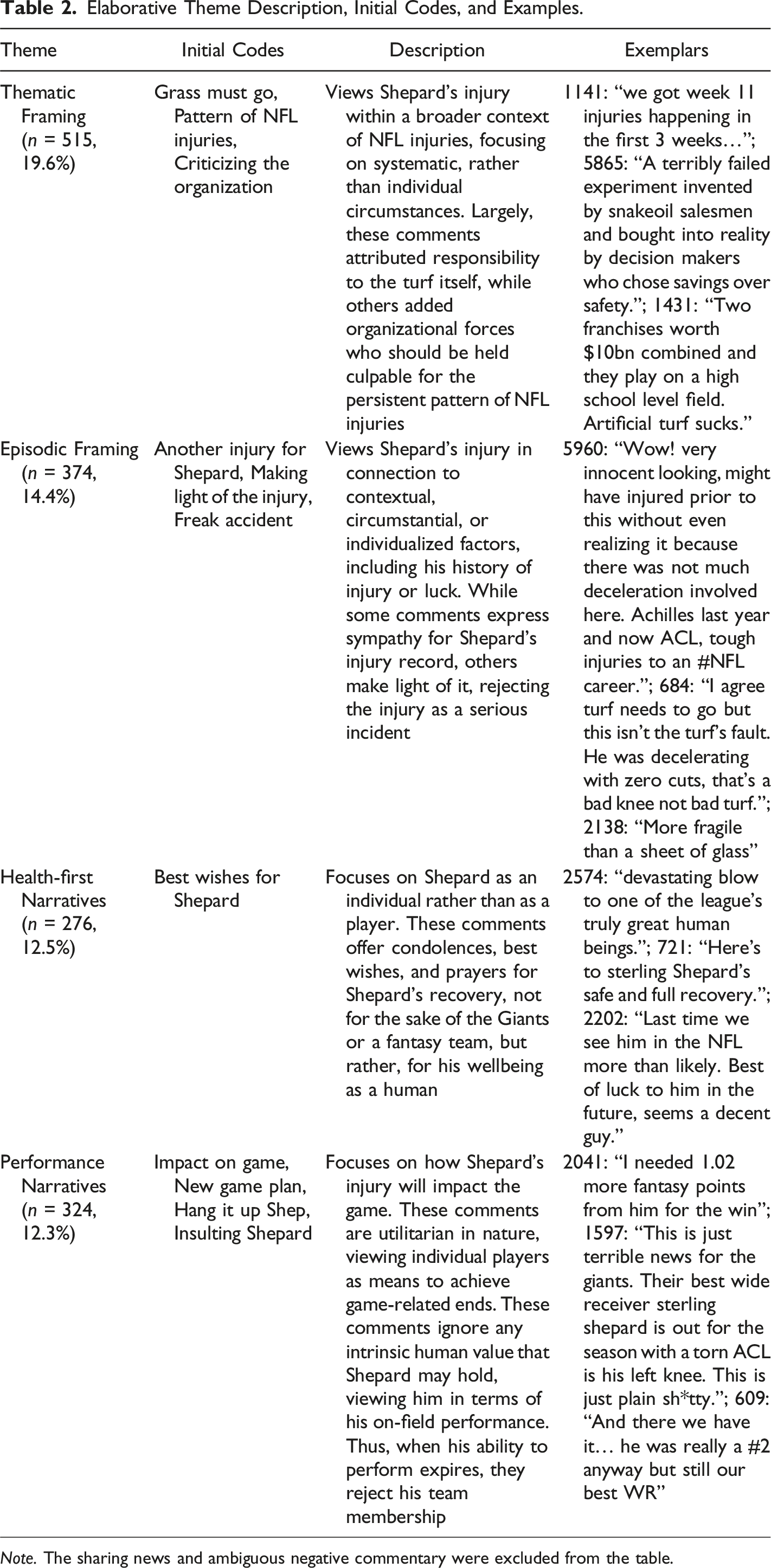
Note. The sharing news and ambiguous negative commentary were excluded from the table.
A second category was episodic framing of Shepard’s injury, which attributed responsibility to event-specific factors and isolated it from the broader pattern of lower extremity injuries related to playing surface (n = 374, 14.4%). Most of these tweets used Shepard’s history of injuries (e.g., injury-prone), characteristics (e.g., fragile or weak), or the fluke-nature of the injury (e.g., as unlucky or a freak accident) to make sense of the event, endorsing an individualized causal explanation of the injury. Importantly, most artificial turf injuries occur through non-contact mechanisms, making Shepard’s tear a typical case – not a freak accident, highlighting the ignorance of social media users regarding health/injury data within sport. Notably, some tweets used event-specific factors to directly counterargue against the notion that artificial turf caused the ACL tear.
In addition to themes attributing responsibility for Shepard’s injury, a third category of comments embraced elements of health-first narratives, through expressions of sympathy for Shepard, not only as a player, but also as a person (n = 276, 12.5%). In many cases, commenters offered well-wishes and prayers for his recovery, while making no reference to his return to the field. These tweets are distinct from those expressing hope for a rushed recovery for the sake of the Giants’ standing. Additionally, many comments highlighted Shepard’s character and praised his worth as transcending the field of play, emphasizing Shepard as a person, rather than an athlete.
A fourth category mirrored aspects of performance narratives identified within previous research on sport and injury (Zanin et al., 2020), characterizing Shepard as an instrument to achieving game-related ends (n = 324, 12.3%). While many of these tweets expressed grief, the negative emotions were directed toward the game-related consequences of Shepard’s injury. Utilitarian in nature, these comments viewed Shepard exclusively as a player, rather than as a person with off-field value. Comments expressed concern about how Shepard’s injury would impact the Giant’s season or the performance of fantasy teams, whereas others immediately contemplated and proposed players to take Shepard’s place on the Giant’s roster. Some added that the ACL tear was a final straw amid Shepard’s history of injuries and marked the end of his career. Though disagreement about Shepard’s remaining position on the Giants team and as an NFL player can be found in these comments, all shared a focus on his value and future being attributable to his potential performance.
Additional categories included comments that focused on sharing the news on Shepard’s injury (n = 181, 7.1%) or ambiguous negative commentary (n = 953, 36.2%). The category of sharing the news merely communicated known facts about the injury, foregoing causal interpretations and additional sentiments. Many of these tweets mirrored head coach Daboll’s confirmation that Shepard’s ACL was indeed torn, and that he would be out for the season (e.g., “giants wr sterling Shepard out for the rest of the season due to a torn acl”-557), whereas others shared news articles from mainstream sports media, such as Fox or CBS sports (e.g., “Giants’ Sterling Shepard suffers season-ending torn ACL on final offensive play of loss to Cowboys - CBS Sports”-466). Ambiguous negative commentary expressed anger, disappointment, or grief, without a clear indication of whether these emotions were directed toward Shepard’s wellbeing or the Giants season (e.g., “Damn shame.”-240; “Nothing but pain.”-2904; “NOOOOOOOOO!!!!!!”-2875). Far from representing the frames that characterize mediated health policy discussions or the narratives that persist within the culture of sport, these tweets leave little room for interpretation, but are prevalent within public conversation.
Stakeholder
Chi-Square Statistics for the Stakeholder Position.
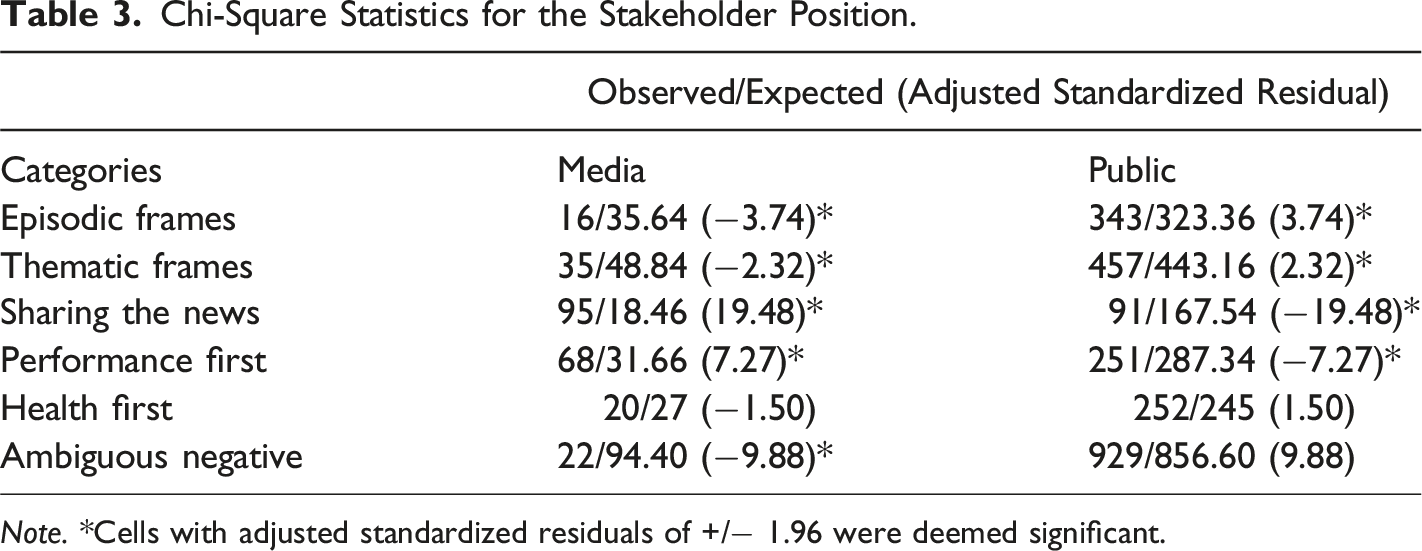
Note. *Cells with adjusted standardized residuals of +/− 1.96 were deemed significant.
Fandom
Chi-Square Statistics for Fan Expression.
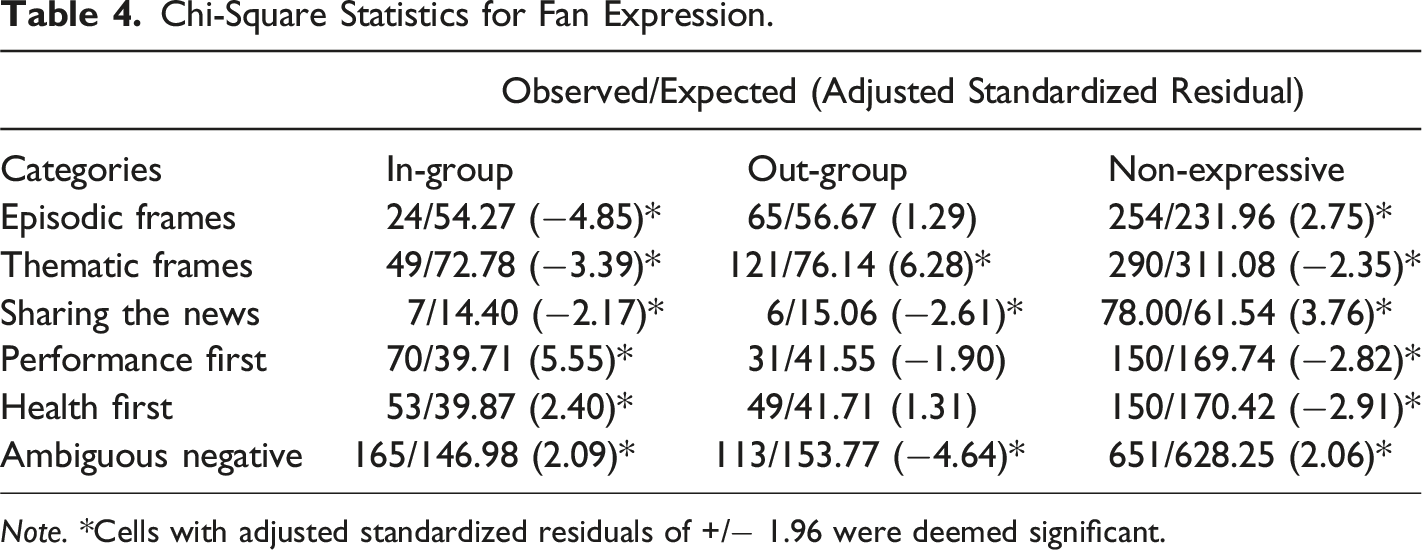
Note. *Cells with adjusted standardized residuals of +/− 1.96 were deemed significant.
Discussion
The present manuscript considered Twitter discourse around Sterling Shepard’s ACL injury, emphasizing commenters’ stakeholdership and fandom as explanatory factors for commentary. Six categories encompassed public commentary on the event, four of which were consistent with literature on health policy framing and cultural narratives surrounding health and sport. First, commentary reflected episodic and thematic framing of health policies (Iyengar, 1990). Episodic comments used a narrow conception of the injury that attributed responsibility to Shepard’s personal dispositions (e.g., injury history), thus burdening the individual athlete with causal responsibility for the ACL tear. Conversely, thematic comments attributed it to unsafe playing conditions (i.e., artificial turf) and assigned solution responsibility to organizational powers such as John Mara, the President of the Giants organization, or ‘the NFL’ more broadly. This divergence in commentary affirms that causal agents are generally viewed as responsible for posing solutions (Iyengar, 1990), demonstrating the importance of framing health issues within broader structural patterns, rather than narrowing in on athlete-specific characteristics.
Second, tensions between common cultural narratives within sport – favoring either the performance narrative or the need-for-safety narrative – were also identified (Ruston et al., 2019; Zanin et al., 2020). Performance-related comments were utilitarian in nature, expressing concerns about how Shepard’s absence would affect the Giants’ competitive standing in the league. Underlying these comments is a view of athletes as mere instruments for achieving task-related goals. Health-first comments, however, expressed sympathy and worry for Shepard’s wellbeing. Considering each of the elaborative categories, the multivocality and tensions within the public discourse become clear; thematic and health-first framing advanced public concern for safety in sport, whereas episodic and performance framing persisted and countered progressive views of athlete health.
Nuance into these patterns was revealed through the consideration of stakeholder positionality (i.e., media versus public). Such considerations revealed that across the six categories media were less inclined to produce thematic framing of Shepard’s injury than expected by chance. This finding contradicts the general trend of news media framing health policy issues more thematically over time, as with coverage of obesity and depression (van Hooft et al., 2018; Zhang et al., 2016). Media organizations’ avoidance of episodic and thematic categories reveals that sports media focused on sharing basic information and contemplating the performative consequences of Shepard’s injury without promoting causal interpretations or treatment recommendations. Recent scholarship has argued that sports media are demonstrating social progress, prioritizing athletes’ health-related needs over performance concerns, particularly concerning cognitive issues like concussions and mental health (Anderson & Kian, 2012; Thompson et al., 2022). The fact that the media did not prioritize athlete health in this case indicates that ACL injuries may be perceived as a less serious, inevitable part of play, or not warranting the level of concern granted to cognitive damage.
In contrast, the public engaged in both episodic and thematic framing more than expected by chance, demonstrating a greater focus on causal and treatment responsibility for Shepard’s injury. The differences in public versus media commentary affirms the propositions of bottom-up framing, that the advent of social media heightens public’s ability to construct and reconstruct the meaning of reality, including in direct opposition to media frames (Nisbet, 2010). Yet, diversity within the public’s attributions was evident; those who embraced episodic commentary considered Shepard’s injury-prone nature or exceptionally unlucky circumstances as causal factors, but those who utilized thematic explanations connected the injury to the broader discussion of playing surface and athlete wellbeing. This is of consequence for health policy as when health issues are viewed episodically, in terms of individual characteristics, the public favors individual-level solutions (e.g., Shepard’s retirement) over policy change (e.g., a league-wide turf ban), while the opposite is true when issues are viewed through a thematic lens (Joslyn & Haider-Markel, 2019; Sun et al., 2016). As such, it is unsurprising that only those who embraced thematic frames called for a league-wide ban on artificial turf.
The public also diverged from the media in their avoidance of performance narratives. This finding invites optimism about growing cultural recognition of athletes as more than just sources of entertainment, especially in conjunction with thematic framing. However, a caveat to this finding is that there were no distinctions in media and public commentary regarding the health-first theme. Previous content analyses that have employed a bottom-up framing lens indicated that media demonstrate more favorable discussion of athlete health, while the public clings to values of hegemonic masculinity (Cranmer & Sanderson, 2018; Sanderson & Cassilo, 2019). That said, other scholarship has revealed that social media commentary on athlete health issues is generally supportive (Kumble et al., 2022; Parrott et al., 2020). The growth of cultural awareness about the need for athlete safety concerns, though contrary to expectations, appears to be growing within the public rather than media organizations.
Finally, online fan expressions were a significant predictor of public commentary on Shepard’s injury. Giants’ fans (i.e., in-group fans) were both more likely to be health-first and performance-driven. Although seemingly at odds with each other, both categories are logical through the lens of SIT. In-group fans can be expected to support their athletes that are experiencing health-related struggles (Kumble et al., 2022; Parrott et al., 2020) while recognizing that the team’s performance has long-term consequences for the group’s identity and accomplishments (Sanderson & Truax, 2014). Thus, in-group bias and identity management are bifurcated into expressing concern for both the injured athlete in the immediate and the group’s performance in the long term. Given these categories were expressed within the same social group, prioritizing athlete health and performance are neither mutually exclusive nor incompatible reactions.
Fans of other NFL teams (i.e., out-group fans) similarly acted to bolster their teams’ competitive standing by constructing thematic frames of the event, transferring the attention from Shepard to threats being posed to the whole league. Out-group fans framed Shepard’s injury as evidence that their own players are vulnerable to artificial turf stadiums and called for policy change that would protect their teams. Notably, while both the health-first and thematic themes encompassed commentary about athlete safety, the themes are distinct in their attention to Shepard’s recovery versus the league’s protection. Non-expressive fans responded with more episodic framing and news sharing, and less thematic, performance, and health-first framing. The attribution of blame to the athlete in question and informative focus of these non-fans is consistent with previous literature on athlete performance (Sanderson & Truax, 2014), activism (Seaton et al., 2022), transgressions (Cranmer, Boatwright, et al., 2021), and membership decisions (Cranmer, Cassilo, et al., 2021). The lack of fan expressions has previously been interpreted as a potentially detached identity or loose following for sport, which facilitates greater hostility and need for information.
Implications
This manuscript offers theoretical, heuristic, and applied implications. The findings provide mixed support for the utilized theoretical frameworks. Regarding SIT, while out-group discrimination was not evident in attacks on Shepard, the concern for broader patterns of injury and risk are congruent with the interests of out-group members as this pattern connects to broader league-wide concerns and rates of injury that would include their teams. Further, comments from in-group members expressed support and concern for Shepard’s wellbeing in the face of health concerns and injury, which should be expected given the circumstances (Kumble et al., 2022; Parrott et al., 2020). Giants’ fans, however, considered performance frames about the potential impact of losing Shepard from the roster. These concerns reflect that (a) the social implications of team performance on group identity would continue to progress, despite Shepard’s absence, and (b) concerns for athletes’ wellbeing and team performance do not have to be mutually exclusive. Concerning framing of responsibility within health policy, despite recent trends in media scholarship indicating more thematic framing of health issues (Zhang et al., 2016), sports media did not readily present thematic – nor episodic – frames of Shepard’s injury; instead, they focused on performance outcomes and sharing non-attribution facts.
The heuristic implications of this manuscript center on introducing thematic and episodic framing into sport communication literature, extending health-centric sport research beyond issues of cognitive and psychological wellbeing, and demonstrating consistency in health framing across contexts. Four of the six categories identified within this manuscript illustrate patterns of either thematic and episodic framing (Iyengar, 1990) or health and performance narratives (Ruston et al., 2019; Zanin et al., 2020). Moreover, this study adds to this literature by positioning identity and stakeholder roles as mechanisms by which these narratives are adopted and promoted. The shift away from concussion and mental health concerns toward more routine and less personalized injuries is noteworthy. It is easy to contemplate how the pervasive attention on concussions and mental health within media and popular culture may enhance support for the prioritization of athlete wellbeing (Anderson & Kian, 2012; Thompson et al., 2022). Yet the observed amount of public concern for Shepard’s health and that of other players suggests these cultural shifts may extend to health issues which have previously been overlooked within scholarship on health and sport. Particularly, the current findings demonstrate that the public views the prevention of ACL injuries (i.e., through policies banning artificial turf) as important interventions to improve athlete wellbeing.
The applied implications rest in encouraging and directing public concern for athlete safety toward refining beneficial health policy. The scientific literature clearly demonstrates that artificial surfaces heighten the risks for lower extremity injuries (Gould et al., 2022; Mack et al., 2019). Despite the NFLPA’s desire to play exclusively on natural grass, these efforts have been unsuccessful (Tretter, 2020), demonstrating that NFL teams prioritize economic and aesthetic concerns over the safety of their players.
Although requiring further consideration, this study may offer a potential resolution; the prominent role of Odell Beckham Jr. within the conversation around Shepard’s injury and the public’s embrace of his thematic view of the event may be consequential. Recent scholarship has documented how professional athletes can build dissent communities directed at league policies through social media (Cranmer et al., 2023), as well as how parasocial relationships between elite athletes and sports fans can be leveraged to alter thoughts and intentions regarding health behaviors (Mikkilineni et al., 2023). The present findings affirm the role of social identity in guiding responses to sports-related health issues. Accordingly, NFL players may utilize their position in the public eye to mobilize public support for policy change or pressure actors (e.g., John Mara, the President of the Giants organization, or the NFL) to provide safer conditions at MetLife Stadium and across the league. When doing so, these athletes should work to place the locus of prevention responsibility onto sporting franchises, rather than individual athletes who lack the power to refuse playing in the risky conditions created by the organizations. Although preventative policies (i.e., a turf ban) cannot wholly eliminate occurrences of lower extremity injuries, they can reduce the risk borne by athletes, thus improving athlete wellbeing across the NFL.
Limitations and Future Directions
The present findings should be considered alongside three limitations. First, there are limitations inherent to analyzing content on Twitter. Tweet content is restricted in characters and, as such, media may have utilized different framing within tweets than in their articles. While analyzing tweets revealed that media organizations avoided thematic frames of Shepard’s injury based upon expectations, it is possible that they engaged in causal interpretation and responsibility attribution within their news articles. At the time of data collection, tweets were limited to 280 characters, which may have forced the priortization of article promotion as opposed to commentary. A new Twitter feature allows journalists to use long-form tweets of up to 4,000 characters and could alter how discourse on the platform unfolds. An additional consideration for the unique findings in this manuscript may be Twitter users’ demographics; users are generally younger, more educated, and wealthier than the broader population, limiting the generalizability of the current findings (Blank, 2017). Second, assessing social identity based on user’s Twitter profiles is limited, despite its commonality (Brown et al., 2015). Given the nature of content analysis, fan identities were inferred from external expressions. As such, some fans may be misclassified in terms of their internalized identities. Third, much of the commentary was ambiguous negative sentiment (36%) that offered limited insight into public responses. Although such findings are common, they invite further consideration of the limited nature of Twitter as a representation of public discourse.
Given the diversity in public and media commentary, future scholarship would benefit from causal examinations of the relationships between media framing and public support for sport safety policies. Experimental research is required to better understand the public’s interpretations of sports-related injuries and willingness to advocate for or support specific steps to address player safety (e.g., those advocated for by the NFLPA). Further, media organizations often hold biases which may influence their framing of controversial issues. Thus, future research should examine how political leaning of news media platforms guides framing of athlete health. Additionally, given how public responses often mirrored Odell Beckham Jr.’s sentiment toward the NFL lacking safety concerns, future works should examine the capacity of athletes to act as advocates for safety policies in sport. Recent scholarship demonstrates that fans support athletes undergoing cognitive health issues (Kumble et al., 2022) and that athletes can guide fans’ health intentions (Mikkilineni et al., 2023). While athletes’ influence may extend to policy issues in sport (i.e., banning turf in the NFL), future research is required to determine whether fans patterns of commentary are in tension with those by athletes. Overall, the present study revealed that the public conversation about Sterling Shepard’s ACL tear is complex and diverse and that identity and stakeholdership explain these expressions. Communication scholars are well positioned to further such findings to resolve pressing safety issues in sport.
Footnotes
Declaration of Conflicting Interests
The author(s) declared no potential conflicts of interest with respect to the research, authorship, and/or publication of this article.
Funding
The author(s) received no financial support for the research, authorship, and/or publication of this article.
