







Abstract
The yips are a complex phenomenon that leaves athletes unable to perform previously mastered athletic skills. Here, we coin the term athletic skills mental blocks (ASMBs) to collectively define the phenomenon, which has garnered several terms across scholarship and media outlets. Previous ASMBs literature is often post-positivist in nature, offers minimal insight into complex firsthand experiences, includes small sample sizes, and/or analyzes one or two sports. Through a pilot study of 12 tumbling athletes, and a primary study including 16 collegiate and professional athletes and coaches from baseball, golf, and tumbling, this study offers an in-depth understanding of ASMBs that highlights shared ASMB rationalizations across multiple sports. Guided by sensemaking theory, we use a rigorous thematic analysis to draw out themes within four aspects of the experience: phenomenon, perceived causes, strategies to overcome, and consequences. We highlight the role communication plays in ASMBs sensemaking through revealing the importance of internal dialogue and communication with coach, family, and teammates. We offer theoretical implications by illuminating how naming/labeling processes and identity are vital components to ASMB sensemaking and generating an ASMB sensemaking model that can be used in future research. Practically, this research serves sports organizations by expanding the vocabulary surrounding ASMBs and helps destigmatize the mental health complexities inherent in ASMBs across sports.
Spectators of the 2021 Tokyo Summer Olympic Games were left awestruck when the “greatest of all time,” 4-time gold Olympic gold medalist gymnast Simone Biles, pulled out of the team competition due to what she called, “the twisties.” (Maine, 2021). “The twisties” is commonly known as “the yips” in other sports, and is characterized as a phenomenon associated with psychological tension or anxiety that leaves athletes unable to perform previously mastered skills (Colman, 2015). Importantly, the twisties surpasses the smaller contexts of gymnastics and Olympic athletes, demonstrating prevalence in various types and levels of competitive sports.
Although the general public and the athletic communities are aware of this phenomenon, hereafter called athletic skill mental blocks (ASMBs), it has proven to be difficult to describe this experience and to richly explain the perceived causal conditions and remedies (Chase et al., 2005; Colman, 2015; Maaranen et al., 2020; Watanabe et al., 2021). Likewise, most existing research on this topic is post-positivist in nature (Clarke et al., 2019; Klämpfl et al., 2013; Papineau, 2014; Watanabe et al., 2021). In the interpretivist literature that does exist, athletes generally describe ASMBs as feeling physically capable of performing the affected skills, yet somehow mentally blocked from doing so (Day et al., 2006). Still, research has not richly captured athletes’ and coaches’ first-hand ASMB experiences and descriptions across multiple sports contexts, which could provide the language and meaning necessary for athletes, coaches, sports physicians, and mental health professionals to collaboratively treat and destigmatize the yips (Tracy, 2020).
Informed by a 12-participant pilot study, we conduct 16 interviews with elite-athletes and coaches and employ a rigorous thematic analysis that builds a nuanced, conceptual understanding of athletes’ ASMBs sensemaking. Our findings build a theoretical model that explains collective experiences and rationalizations of ASMBs, and the multidimensional role communication plays in the sensemaking process.
Literature Review
ASMBs has received considerable media attention, given that celebrated athletes in many sports have confessed to having suffered one at some point in their career (Watanabe et al., 2021), including golf, cricket, archery, and baseball (Aoyama et al., 2021). Athletes in different sports experience similar, yet distinct forms of ASMBs due to the unique nature of the movements performed in their respective sports (Chase et al., 2005; Maaranen et al., 2017). Below, we review the names, perceived causes, solutions, and described feelings of this phenomenon as noted in previous research. We then offer a detailed explanation of how sensemaking theory (Weick, 1995) provides a useful lens for understanding the stages through which athletes cognitively and behaviorally encounter the yips.
The Many Names and Definitions of “Mental Block” in Sport
The term the yips originated in golf and is now most popular in baseball and golf research (Watanabe et al., 2021). Smith et al. (2000), a group of sports medicine scholars, provide perhaps the most accepted model of the yips. They reflect Colman (2015), describing the yips as a type of task-specific focal dystonia associated with psychological tension or anxiety, including behaviors like abnormal posturing and tremors during motor tasks. Clarke et al. (2019), psychology scholars studying golfers and archers, use the term “choking” to characterize the extreme outcome of the anxiety and performance relationship that constitutes the yips.
Lost move syndrome (LMS) was perhaps the first attempt at naming, defining, and documenting this phenomenon in tumbling. LMS first appeared in Tenn’s (1995) study in “Trampoline News,” which offered insight into the condition from a coach’s perspective. LMS is defined as “a psychological condition in which the trampolinist loses the awareness of body position, or the awareness and technique of a particular skill” (Day et al., 2006, p. 152) and is associated with a debilitative focus on aspects such as injury and fear of landing.
Flikikammo is a term crafted specifically for gymnasts to describe “a condition in which athletes lose the ability to perform previously automatic backward moving gymnastics skills as a normal part of a routine” for reasons unrelated to fear of injury (Maaranen et al., 2020, pp. 251–252). In 2021, Simone Biles’ re-labeled this psychological state “the twisties,” describing it as feeling “a little bit lost in the air” (Kowalski, 2021).
In this study, we refer to the phenomenon as an athletic skill mental block (ASMB). A mental block is defined in psychology as “an inability to recall something or to perform a particular mental process” (Oxford University Press, 2021). “Mental block” provides a clear, self-explanatory label for the phenomenon across a variety of sports, and “athletic skill” is placed before “mental block” to clarify that an athletic skill is being mentally blocked. Thus, ASMBs are psychological phenomena wherein athletes are unable to perform previously-mastered athletic skills.
Perceived Causes of ASMBs
An agreed upon cause for ASMBs remains unclear. The research exploring the cause(s) of ASMBs is primarily conducted through a scientific sensorimotor or neuromuscular perspective. For example, Smith and colleagues’ (2000) model places ASMBs somewhere on a continuum between a miscommunication between neurons and anxiety-induced ‘choking’ (see Watanabe et al., 2021). These scholars argue that athletes likely reside at different levels on the continuum while experiencing the same phenomenon.
Papineau (2014) explains sporting movements according to (a) basic actions, which are movements that can be executed precisely without having to cognitively decide to do them, likely as a result of intense training, and (b) components, which are physical behaviors that sequentially constitute the basic actions. Papineau (2014) argues that as athletes become elite, they also become habitual and think in terms of basic actions. ASMBs often surface when athletes begin over-thinking, which stunts their basic actions and reverts them back to focusing on sequential components.
Similarly, other scholars attribute ASMBs to a contextual movement disorder that only occurs under specific circumstances (Maaranen et al., 2017). Reinvestment, defined as “the conscious control of a movement that detrimentally affects automated movements,” is a common explanation for ASMBs as discussed in this literature (Klämpfl et al., 2013, p. 2). Still, the data supporting this idea is inconclusive.
Finally, previous scholarship has also claimed that psychological pressures can trigger ASMBs such as workload, prolonged pain, extreme pressure, and anxiety (Aoyama et al., 2021; Watanabe et al., 2021). For example, Clarke et al. (2019) found that ASMBs were linked to significantly higher levels of reported social anxiety and perfectionistic self-promotion. Altogether, more research is needed to collectively understand the perceived causes of ASMBs from the perception of those who directly experience them.
Strategies to Overcome an ASMB
Due to ambiguity in conventional understandings of ASMB causes, evidence-based treatment for ASMBs is largely under-established (Watanabe et al., 2021). Some research suggests it could be useful for athletes to trust their instincts, rely on their training, and avoid overthinking the movements (Papineau, 2014; Watanabe et al., 2021). Chase et al. (2005) found some of the psychological strategies to overcome fear of injury associated with ASMBs were mental preparation, such as imagery and relaxation, just “going for a skill,” and heeding coaches’ influence. These strategies for overcoming ASMBs could be benefited from a broader exploration of athletes’ ASMB sensemaking process.
Athlete Descriptions of ASMBs
Research investigating athlete’s first-hand, lived experiences of ASMBs is still in its infancy. Extant qualitative literature largely captures athletes’ ASMB descriptions in a single sports context. For example, Philippen and Lobinger’s (2012) qualitative analysis reveals how golfers had strong emotional and psychological reactions to the yips in putting. Maaranen et al. (2017) revealed how gymnasts experiencing flikikammo (mental blocks on backwards movements) knew they were unable to perform skills due to a gut feeling, feeling ill when thinking about the skill, or feeling like there was a brick wall behind them. Finally, Chase et al. (2005) interviewed female gymnasts with ASMBs specifically associated with the fear of injury. However, both the yips in golf and flikikammo in tumbling and are experienced for reasons unrelated to fear (Clarke et al., 2019; Maaranen et al., 2020; Montero, 2010). Thus, these study’s results are not transferrable across ASMB phenomena or sport, which is important given that Tracy (2020) explains transferability (i.e., the applicability of results to other contexts and participants) as a quality criterion of qualitative research.
Other previous ASMB research focuses on athletes’ first-hand descriptions of ASMBs, yet involve small sample sizes (<5) and/or analyze ASMBs in one to two sports (Martin, 2014; O’Brien, 2019). Thus, we contribute to ASMB literature by providing a larger sample size, examining elite athletes and coaches across three different sports, and adopting a new theoretical lens—sensemaking theory (Weick, 1995). Sensemaking intentionally privileges a rich description of athletes’ and coaches’ first-hand ASMB accounts.
Sensemaking Theory and ASMBs
Sensemaking is the process of socially constructing reality in everyday life—within groups, organizations, and across communities—by assigning meaning and plausible explanations to experiences through communication (Weick, 1995). Sensemaking offers an insightful theoretical framework to study ASMBs because it can account for how athletes and coaches retroactively derive meaning from complex ASMB experiences through the interview process (see Barrett, 2022). Through communication events, like reflective interviews, participants transform what might previously have been indescribable phenomena into rationalized accounts and sequenced stages of cognition and action.
There are seven properties of sensemaking theory, including: sensemaking is retrospective, driven by plausibility, grounded in identity construction, enactive, guided by extracting environmental cues, social, and ongoing, (Weick, 1995). We elaborate on a few of these principles to show how sensemaking theory sheds meaningful light on athletes’ ASMB encounters. First, Weick (1995) claims sensemaking is retrospective, meaning that individuals are only able to make sense of and commit to a particular interpretation of an event after the event occurs (Kramer, 2016). Indeed, athletes are unable to make sense of ASMBs until after they have experienced and wrestled with the mental block for a period of time. Some are never able to fully make sense of it or recover.
Second, sensemaking is driven by plausibility rather than accuracy, and plausible explanations do not have to be objective. Weick (1995) claims sensemaking is like “a good story that holds disparate elements together long enough to energize and guide action, [and] plausibly enough to allow people to make retrospective sense of whatever happens” (p. 61). Thus, we seek to uncover the plausible explanations that affected athletes craft and attribute to their ASMB, and to adjacently theorize how this plausibility produces their immediate actions and strategies for overcoming ASMBs.
Third, sensemaking is rooted in identity construction. People often make sense of ambiguous stimuli in ways that respond to their own identity needs, namely needs for self-enhancement, self-efficacy, and self-consistency (Brown et al., 2008; Weick, 1995). To elaborate, people tend to selectively bracket, interpret, and remember events in ways that support (a) positive self-concept, (b) self-efficacy, and (c) identity coherence and continuity (Brown et al., 2008). In our study, we focus on elite athletes—or athletes that excel to the collegiate and/or professional level. At this level, athletics is a core pillar of athletes’ identity, as it requires a significant amount of time, dedication, and sacrifice and is often associated with pay. Thus, elite athletes’ identity needs for self-enhancement and self-efficacy through athletics likely plays an important role in their sensemaking of ASMBs—which can create identity crises.
Given there is a dearth of rich qualitative research on ASMBs and how athletes and coaches across multiple sports generally make sense of this phenomenon, we first ask: RQ1: How do athletes and coaches retroactively make sense of their ASMB experiences?
Finally, and perhaps most importantly, a guiding property of sensemaking describes the process as social, ongoing, and constructed through communication. It involves individuals interacting to construct a meaning for understanding experiences (Kramer, 2016). Through interviews, athletes and coaches will re-enact the ASMB sensemaking process, recounting the messages and sources that brought meaning to previous ASMB ambiguity (see Barrett, 2022). Different sources of communication (e.g., coach communication, family communication) will likely be important factors in how athletes make sense of ASMBs. Kassing et al. (2004) theorizes that communication constitutes and gives meaning to the experience of sport. Cranmer & colleagues (2015, 2020) have discovered that social support from families, coaches, and teammates can impact athlete’s mental health, resulting in positive outcomes and outlooks. Therefore, we pose our final research question: RQ2: What role does communication play in athletes’ and coaches’ ASMB accounts and sensemaking?
Methodology
Pilot Study
The first author conducted an exploratory pilot study aided by network sampling. Participants were tumbling athletes and were recruited through social media by the first author who has a collegiate tumbling background. In total, twelve 45-min interviews were conducted. Results informed the primary study through (a) revising interview protocols to be less structured to further enable rich dialogue and storytelling, (b) evidencing that individual sports have nuanced basic actions and components, which can jeopardize the transferability of qualitative findings from a one-sport study, and (c) offering a preliminary model theorizing the ASMB experience, which provided insight into future data analysis. However, this model needed to be expanded upon in a larger study to more robustly depict collective ASMBs sensemaking across multiple sports.
Primary Study
Participants
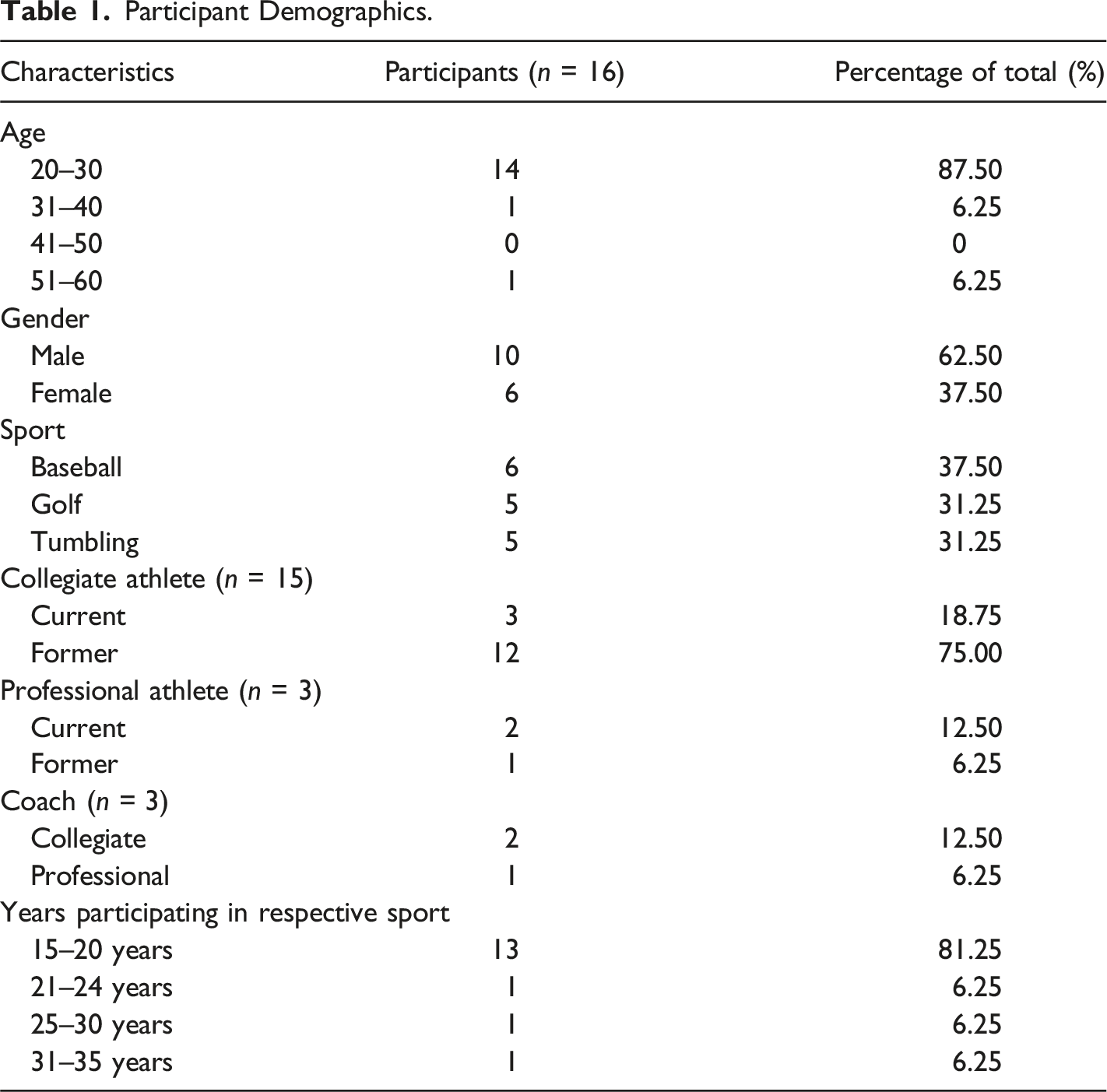
Participants were eligible for inclusion if they had first-hand accounts of ASMB experiences. Participants were current or former baseball, golf, or tumbling athletes and/or coaches at the collegiate Division I or professional level. These three sports were chosen strategically (a) based on the occurrence of ASMBs in previous literature, and (b) to advance the findings from the pilot study into other mainstream sports. Tumblers included those in gymnastics, acrobatics and tumbling, STUNT, and cheerleading who competed or performed at the collegiate level.
Participant Demographics.
Data Collection
Interviews were conducted via Zoom between October 2022 and January 2023. Consent forms were sent to participants and returned via email. To ensure privacy and confidentiality, identifiers and pseudonyms were used. Interviews were semi-structured in nature and lasted an average of 37 minutes (M = 37.46, SD = 13.12). In total, 10 hours of data was recorded, which resulted in around 210 single-spaced pages of transcribed text (M = 13.13, SD = 4.06). Field notes were recorded during and after each interview to build rigor into data analysis.
Data Analysis
Data analysis included multiple stages. First, the first author read through each page and fixed any disparities that occurred during the automated transcription service. This cleaning process was the first full read-through of the data and resulted in 35 hand-written pages of memos, including notes for open coding. NVivo software was utilized during additional rounds of coding data. Guided by the constant comparative method (Charmaz, 2015), several rounds of axial coding were conducted that focused on iteratively reducing the data into refined categories. Categories were created largely following Strauss and Corbin’s (1990) Coding Paradigm, given its inherent phenomenological focus on phenomena, potential causes, strategies, and consequences, made the paradigm ideal for coding sensemaking research. Self-reflexivity was imperative during this study and informed data conduction and analysis, as the first author is a former elite athlete and is fluent in the related sports jargon. Intercoder reliability was not assessed, given the first author single-handedly coded the data. Still, throughout axial coding stages, all authors met to analyze and discuss her coding choices, collaboratively talk through perceived differences, and to further refine code definitions. Thus, the authors engaged in data conferencing, which built validity into code interpretations during code development (Braithwaite et al., 2017).
Findings
Athletes’ Sensemaking of ASMB Experiences
To answer RQ1, we used Strauss and Corbin’s (1990) coding framework to further understand the ASMB phenomenon, perceived causal conditions, strategies, and consequences. See Figure 1 for a visual representation of these categories and how they interact. Participants varied in their levels of ASMB frequency, intensity, and recovery, and the environments at the onset of the ASMBs looked vastly different. Below, we begin with the phenomenon findings. RQ1 ASMB experience thematic findings.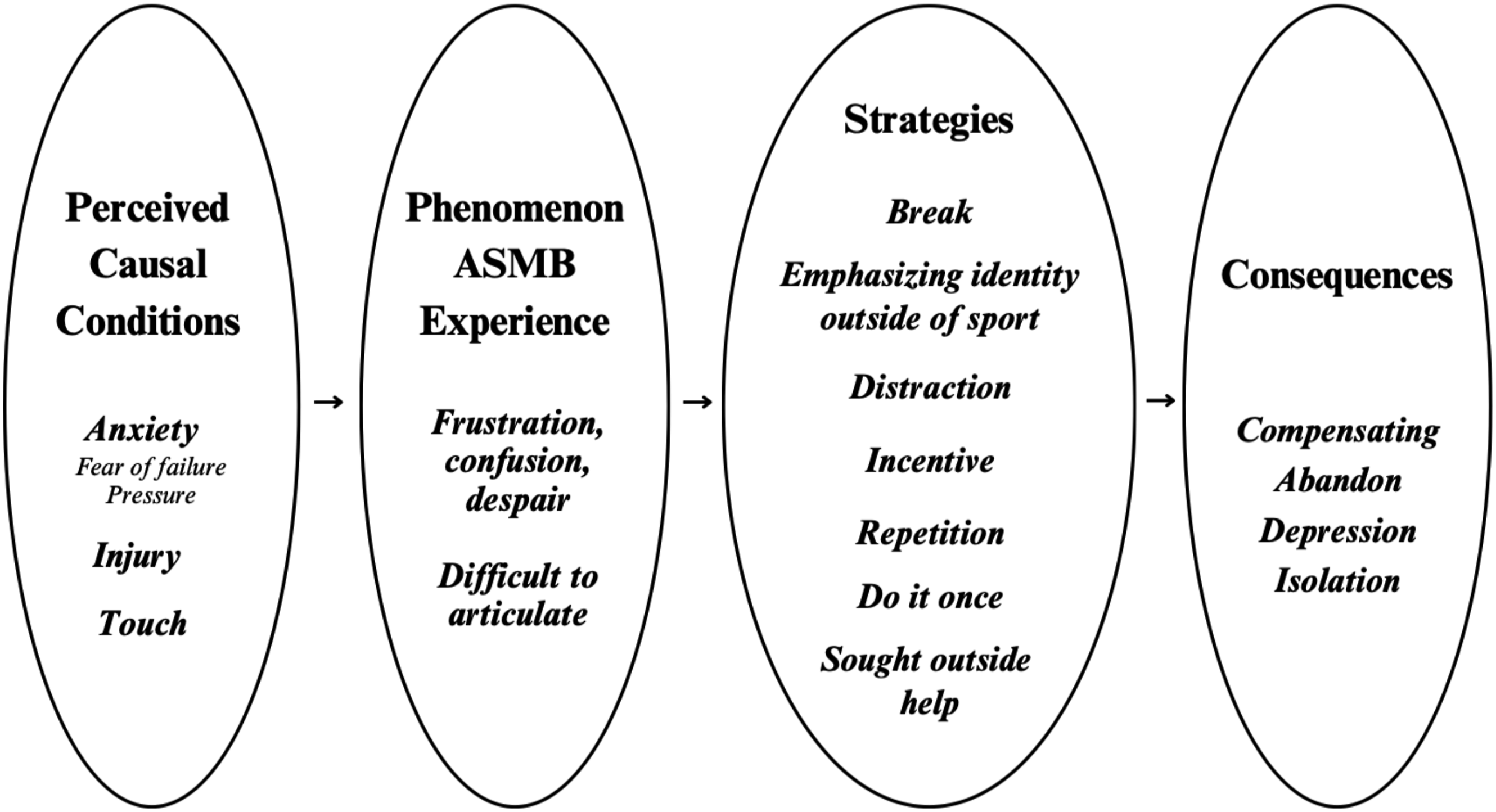
Phenomenon
The ASMB phenomenon was typically characterized with feelings of frustration, confusion, and despair. Participants often attributed these feelings to their inability to complete the skill and shared a lack of understanding about the culmination of the ASMB. Jen, a collegiate acro-tumbler, illustrated her frustration, “the back handspring was my best skill, like that was just the easy skill that I had. And it was a textbook style back handspring. So, I was like, why, like, why am I struggling so hard on this skill that's so easy for me? I just…I didn't understand it.” Another theme that emerged within ASMB phenomenon was participants’ difficult time describing the ASMB experience itself, often simply concluding that their mind and body were battling or in disagreement. For example, Lauren, a former college cheerleader, explained, “it literally feels like your body is fighting against itself. I don’t know how to describe it.”
Perceived Causal Conditions
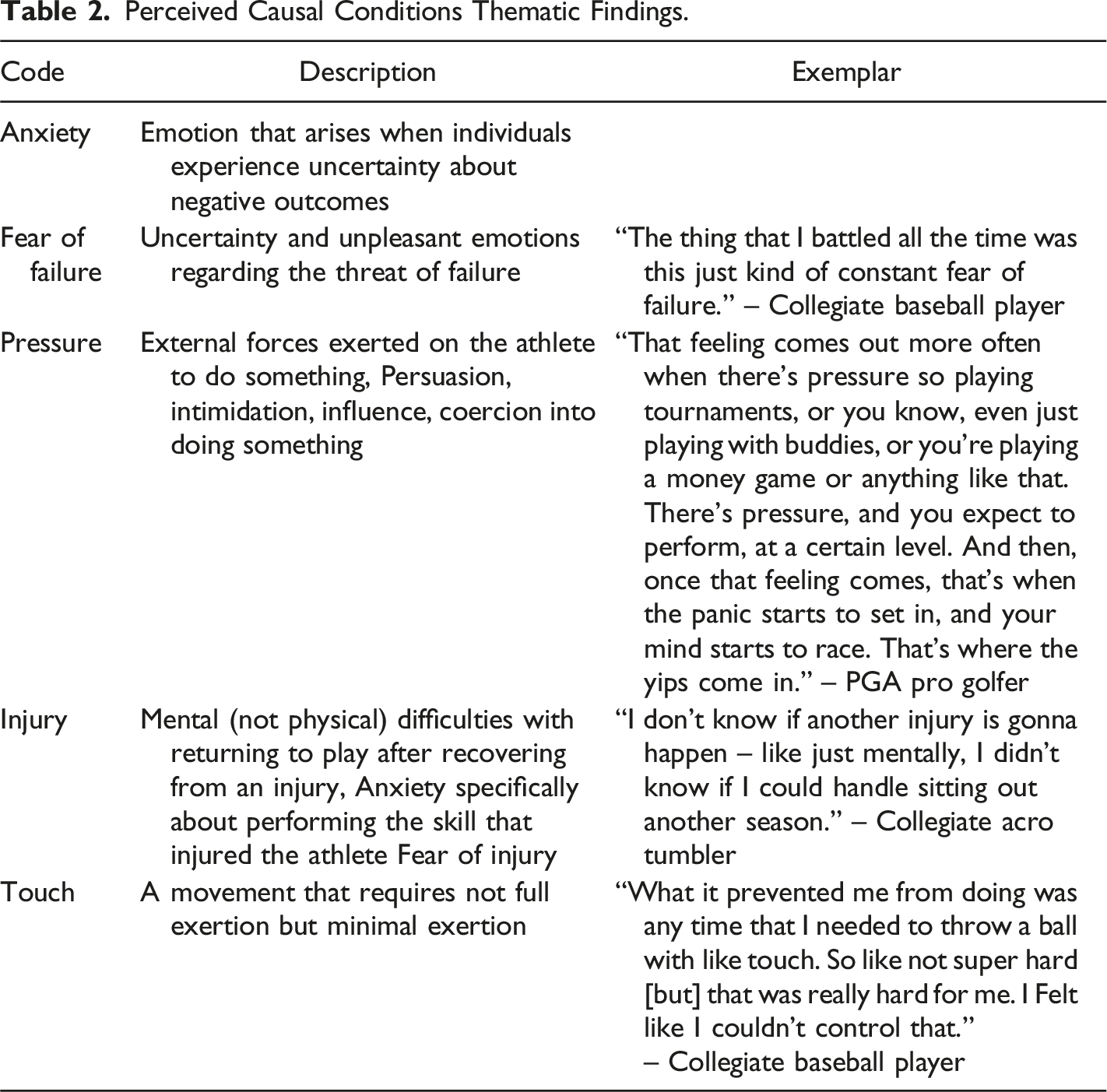
Perceived Causal Conditions Thematic Findings.
Anxiety
Anxiety caused ASMBs due to fear of failure and pressure. With high stakes came heightened emotions. Jen, a college acro-tumbler, discussed how environmental pressure caused her ASMB, as she was one of the youngest athletes on her co-ed cheerleading team and competitively performed on multiple teams. Katie, a PGA golf coach, explained, Much of the [ASMB] issue is all the psychological background. And I can see how [the] professional [level] would definitely get into that as opposed to a beginner because they’re in their head. There’s too much downtime in the sport. Way too much. I mean, you’ve got so many hours that you’re out there, but you’re not really doing the sport.
Injury
Injury manifested as a perceived cause or trigger for ASMBs in a variety of ways. Importantly, difficulties with coming back from an injury was a distinctive mental obstacle. John, a collegiate baseball player, explained: It doesn’t have anything to do with your arm, it doesn’t have anything to do with your physical attributes. It's really all a mental head case. It's like, okay, I know my arm is healthy. I know I can throw a baseball 60 feet. You know, we’re not even talking hard. I'm just throwing a ball 60 feet. I know I can do it.
Multiple participants described that returning from an injury and attempting to perform the specific skill that injured them was also a distinct mental challenge. Yet, others, conversely made sense of their experience. Sam explained thinking, “okay I had surgery. I build back up. I'm fine pitching, like no matter what I can pitch. But now I couldn’t pickoff to first base consistently.”
Severity of injury was a more intensely felt causal condition for high-performance tumblers. Jen, an acro-tumbler, explained she was specifically fearful of catastrophic injuries such as injuring her head or neck. Lauren, a cheerleader, described the mental complexity of returning after injury because she was removed from her usual routine. She thought to herself, “What if I’m never as good as I used to be? What if I never reach that level again?”
Touch
Many athletes toiled over the right amount of exertion, or touch, to successfully perform a skill, which ultimately caused them to spiral. Don, a college baseball player, suggests a reason why this feat is so difficult: We’re trained at 100% but then you have to make an accurate throw at 80%, 75%, this tempered throw somewhere in there. The body kicks in like this is unfamiliar. This is foreign. I’m gonna show a lack of accuracy.
Strategies
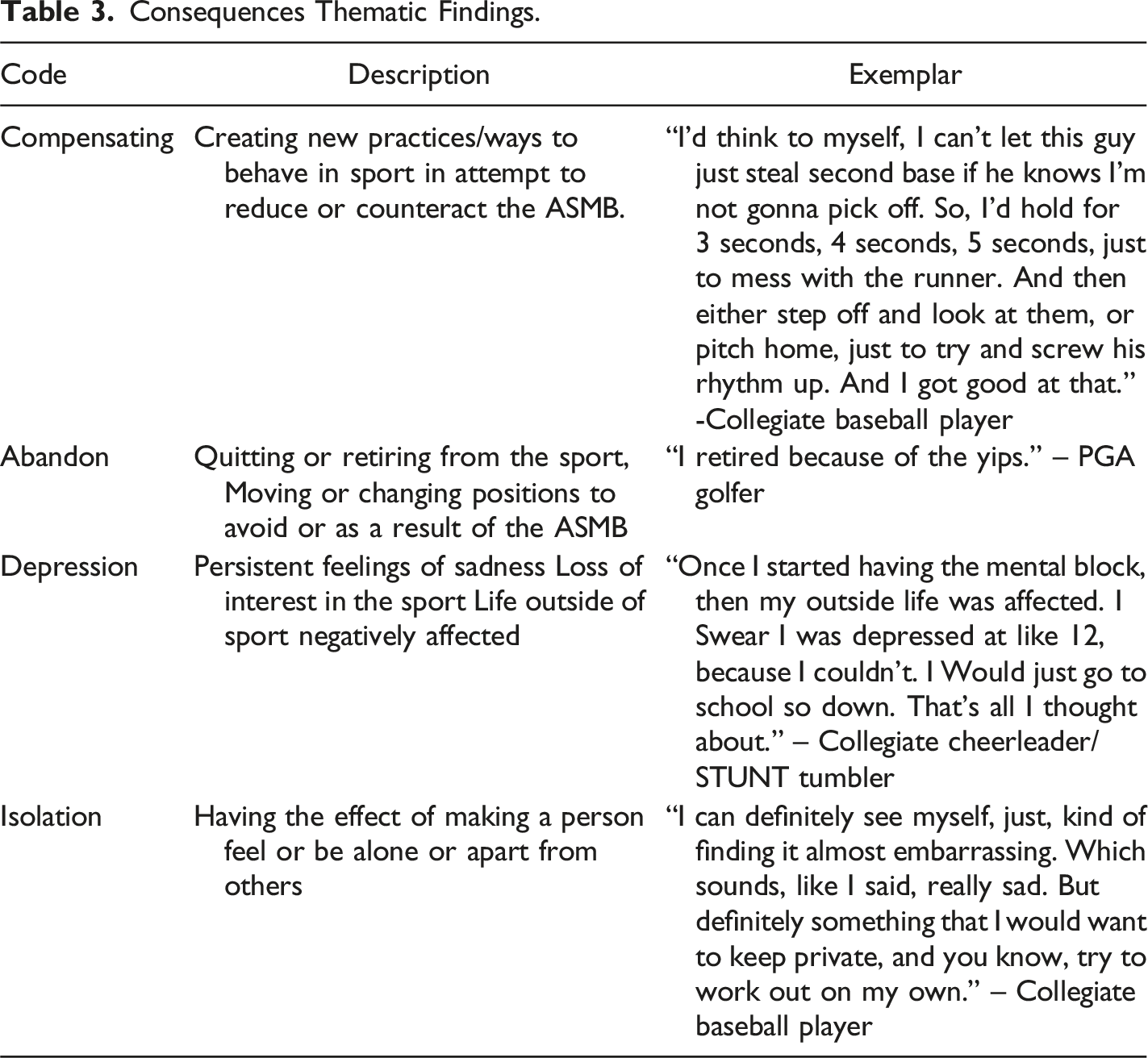
Consequences Thematic Findings.
Break
Taking a break from the sport action/movement, or even the sport in general, was a strategy that many athletes used in their attempt to overcome the ASMB. Participants described athletes leaving the field, course, or gym environment on a continuum, ranging from a couple hours, to days, weeks, or even months. Athletes generally described needing to escape from the pressurized context and reset in an unaffiliated setting. Tim, a PGA pro golfer, described, “Like it's gonna be more beneficial for me just to go work on something else, or just leave the course entirely.” Phil, a collegiate coach and former professional golfer, said, “I think [golfers need] some time away. Ultimately, they need to become obsessed with something else for a period of time, to almost like, reset or bring back to zero.”
Emphasizing Identity Outside of Sport
Many athletes described minimizing their sport identity and emphasizing an alternative identity—such as that of a Christian, student, spouse, or family member—which they perceived to be more stable, safe, and therefore more comforting. Ben, a college baseball player, exemplifies this, claiming, “eventually I did get to the place where ‘Okay, He's [God’s] enough and oddly enough, like that helped. You would get better because of that…I'm okay…my identity is still the same. And for me I can find that as a Son of God.” Another college baseball player, Don, explained how “my identity is wrapped up in who I am as a baseball player, in my success as a baseball player” but “when you're able to kind of like diffuse that lie, that's crucial.”
Stopping the Spiral
One overarching strategy that participants consistently discussed was finding different ways to stop the spiraling, negative thoughts that further fueled ASMBs once they started. Coaches discussed trying to encourage athletes to stay present in the moment rather than focus on outside pressures or domino effects. Phil, a collegiate coach and former professional golfer, explained, “The greatest thing you can do is to be fully present...it’s one of the hardest things with all of our digital distractions and everything going on around us. But…the best ones are able to consistently get into that mindset of being present, and in that there are no past experiences or future endeavors… Being present ultimately can tackle all of this.”
Athletes commonly discussed trying to stop the spiral by distracting their mind while performing the skill. Tim, a professional golfer, described a scene from the golf movie “Tin Cup” to summarize how distraction can be a beneficial strategy to halting cyclical negative thoughts: There's a scene in the movie…where he qualifies for the U.S. Open, and…he starts shanking the ball and then he turns around to his caddy…He's like “I'm freaking out like I don't know what I'm doing”…so his caddy says ‘Okay, bend down and tie your left shoe in a double knot, and your right shoe like in a single knot and then move all your change from your left pocket to your right pocket…Okay, now, hit a shot,” …and he hit it good. So, it’s the whole concept of distracting your mind…[this] describes perfectly how I view the yips and how to get over it.
Katie, a PGA golf coach, explained how she distracts her player from ASMBs by asking them to try something new: One of the first things that you read is you have to change something about it. Typically, you're always gonna see it in putting. And what's the first thing? Change your grip. Okay, well, why do you change your grip? Because it's something different.
Finally, Lauren a former cheerleader and STUNT tumbler, would attempt to distract herself by engaging in ritual performances surrounding the affected skill, claiming, “I would always have to fix my shoes before I did my double…I was very superstitious about that, because if I didn't do it, I was afraid I was going to get into another block.”
Offering Incentives
Several participants described strategizing to overcome the ASMB by associating something positive, such as rewards, with performing the affected skill. These attempts to deliberately foreground productive thoughts and actions and de-emphasize unproductive, negative feelings enabled participants to reframe the context surrounding the skill. Ava, a collegiate acro tumbler exemplifies: “If there was something positive associated with achieving and overcoming that [skill], then, one, there was more of a motivation to do it. And then, two, it was starting to form a positive mindset associated with that skill instead of something negative, like…that I’m scared.”
Lauren, a former collegiate STUNT tumbler, described how her mom, “would give me prizes” when she encountered an ASMB. “She's like, ‘Hey, if you throw your tumbling 4 times, I'll get you your Beats headphones that you want.’ Which is kind of a motivator…those things work.”
Regaining Trust and Confidence
Another overarching strategy that participants frequently discussed using to overcoming ASMBs was regaining of trust and confidence in athlete abilities. Ironically, athletes and coaches re-built trust and confidence in ability by underscoring both repetition of the affected skill and doing the skill once. For example, John, a college baseball player, explained, “My experience with yips, I guess you could say, just repetition. It is just simply building confidence…throwing, hitting, over and over. Getting yourself back to where you used to be.” Somewhat contrarily, Lauren, a collegiate cheerleader and STUNT tumbler, claimed, “but after that first one, it really it propels you to get out of it. You just have to get that first one out of the way.” Don went so far as to say that “doing it once” was the ultimate cure of ASMBs: “what would spark getting out of a slump was that experience of success again.” Thus, Lauren and Don rebuilt trust by reminding themselves of what success felt like and using that one successful occasion to propel themselves forward. Regardless of the specificities, it was clear in the data that the time elements associated with skill attempts was a common denominator in rebuilding athletes’ trust within their abilities.
Seeking Outside Help
Many participants sought outside help from professionals in efforts to learn routines for overcoming ASMBs. For example, Forest, a golf professional, worked with sport psychologists and Jen, a collegiate acro-tumbler, worked with a sports hypnotist.
Jen also attended a practice facility specifically targeted toward ASMB-affected athletes, explaining “I went to a gym called Tumble Dynasty [pseudonym]. They helped me a lot. That gym is specifically for mental blocks. And they just knew exactly how to work with me.”
Consequences
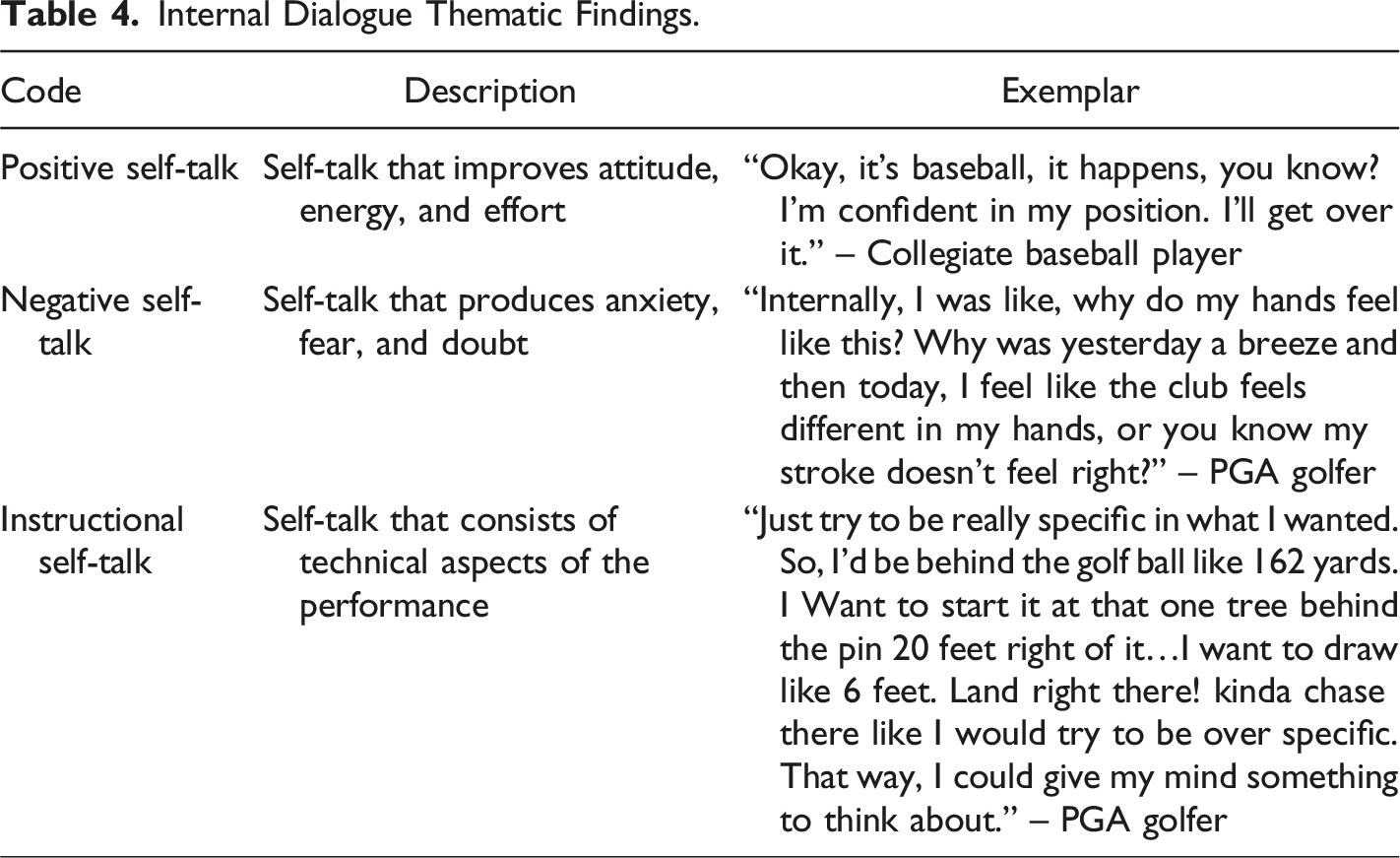
Internal Dialogue Thematic Findings.
Compensating
Athletes often created new practices to compensate for the skill affected by ASMBs. For example, Sam, a college baseball player, invented a strategy to throw off the base runner to mask the fact that the ASMB prevented him from picking off first base.
Abandon
One extreme consequence to ASMBs was quitting the sport as a whole or changing positions to avoid the blocked movement. Forest described retiring from professional golf as a whole due to his ASMBs, but plans to maintain his professional status on the PGA golf tour. Cam, a collegiate baseball player, said, “I never resolved my infield throwing yips… I moved to the outfield.”
Depression
Depression was a major theme for consequences of ASMB experiences. Below, Lauren and Jen—both competitive tumblers—explain that their mental block resulted in depression at a young age: I also wanted to emphasize how much it impacted outside life. It was just a constant weight on my shoulders, like if I didn't have a good day at cheer, I didn't have a good week at school – it just wasn’t gonna happen. It definitely affects every part of your life. Not just cheer. (Lauren) I got into a really depressive stage at a really young age, at 13, when it happened. It was 6 months into my block, and I got really, really depressed. I was having really bad thoughts, and I ended up having to go to the hospital for it. I was so young-- you shouldn't be feeling that at that age. And cheer at that time, that's your whole life. Like you eat, sleep, breathe cheer - that's all you do. (Jen)
Isolation
Athletes repeatedly discussed isolating themselves when dealing with the ASMB experience. John, a college baseball player, said, “I wouldn't say I leaned on too many people.” This experience of isolation was closely linked with the feeling that no one could understand or empathize with the ASMB experience. ASMB-affected athletes constituted an ingroup into which one must earn membership. Ben, another baseball player, stated that he only accepted advice from his peer who had also experienced ASMBs: “I like the advice from him because he struggled with it. And then he got over it… So, I liked his advice, but not other people's advice.”
The Role of Communication in Athletes’ ASMB Experiences
RQ2 inquired into the role that communication plays in the ASMB sensemaking experience. Results demonstrate how communication occurred in an exchange between the athlete and themselves, coaches, teammates, and family. See Figure 2 for a representation of RQ2 themes. RQ2 Communication in and around ASMBs visual.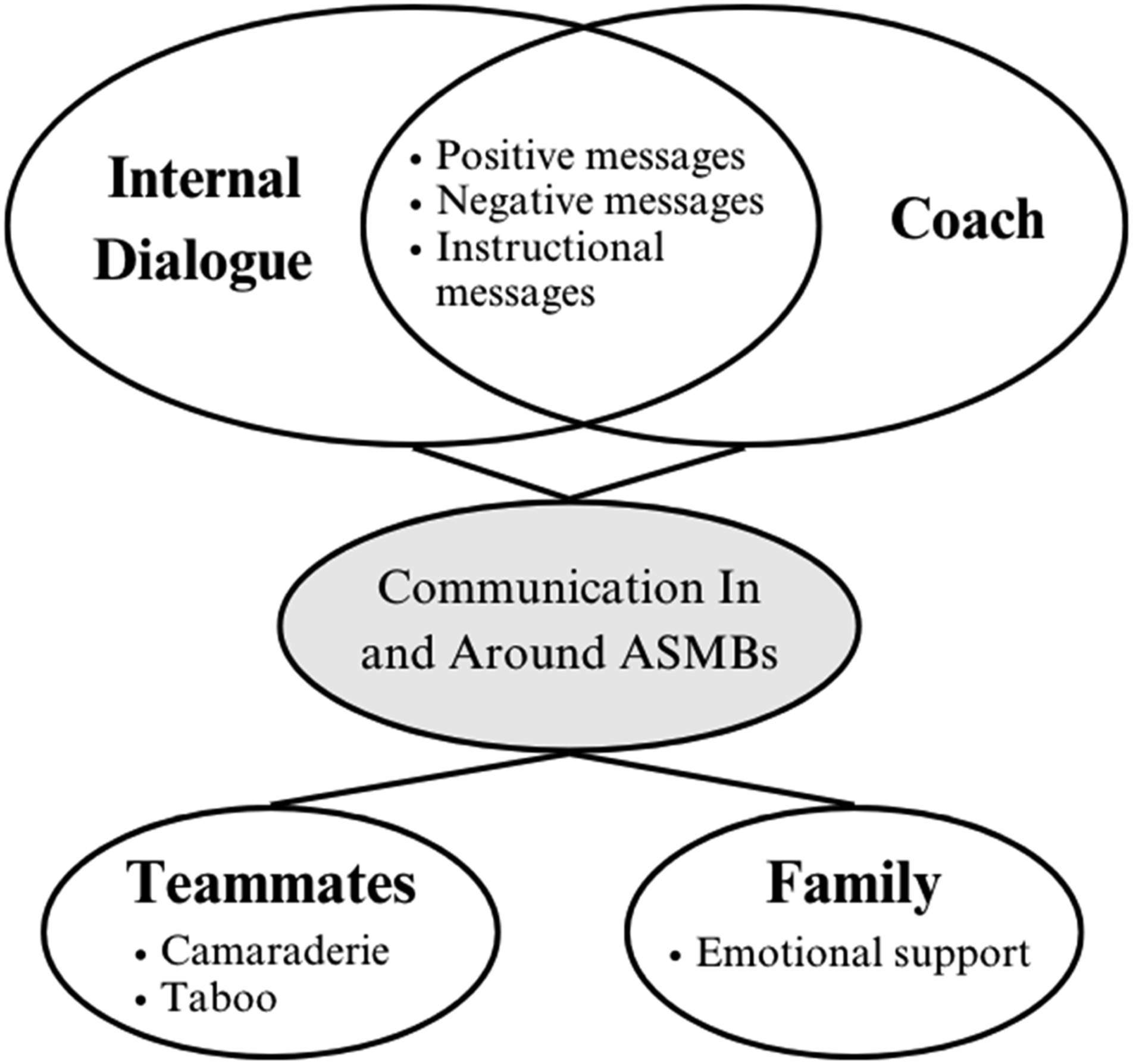
Internal Dialogue
Internal dialogue consisted of the mental conversations that athletes had with themselves through self-talk. Hackfort and Schwenkmezger (1993) define self-talk as “dialogue [through which] the individual interprets feelings and perceptions, regulates and changes evaluations and convictions, and gives him/herself instructions and reinforcement” (p. 355). The internal dialogue subcategory has three sub-themes: positive self-talk, negative self-talk, and instructional self-talk. Findings are found in Table 4 and summarized below.
Positive Self-Talk
Positive self-talk is self-talk that improves attitude, energy, and effort (Guay, 2020). However, we found that even though positive self-talk was being enacted, an athlete still might not experience success, leading to feelings of frustration. For instance, Lauren described, “it becomes a mind game of ‘you can do it, you can do it,’ but then you continually fail. You’re battling your mind and your physical body, and it just takes over everything.”
Negative Self-Talk
Negative self-talk produces anxiety, fear, and doubt (Guay, 2020). Most of the internal dialogue described by participants was negative self-talk and was in the form of rhetorical questions reflecting and escalating anxiety related to general ability.
Instructional Self-Talk
Instructional self-talk focused on the technical aspects/cues of performance (Guay, 2020). It was logical and specific in nature (i.e., how golfers should place their hands, move their arms, stand and so on).
Communication With Coach
Communication with coach finding details can be found in Table 5. During ASMBs, it was typical for athletes to turn to different coaches for different types of communication. Forest, a professional golfer, describes below: My swing coach is more of a technical guy who’s on the technical side of it. He was more X’s and O’s… and then my sport psychologist was obviously trying to work on the mind, try to get around it… and then my trainer he’s like ‘let’s just lift heavy things and see if it gets out of it.’ Coach Communication Thematic Findings.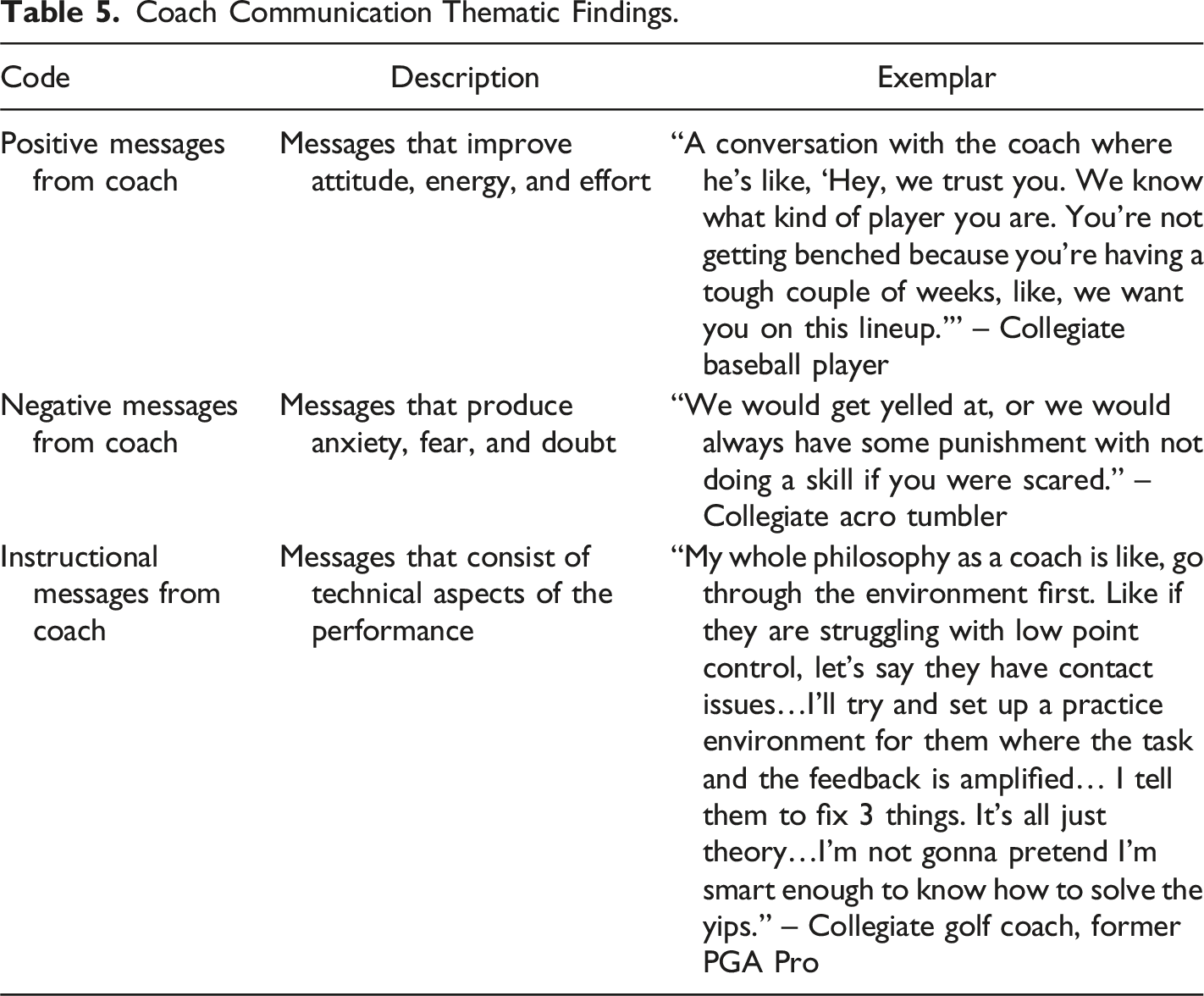
Positive Messages From Coach
Positive coach communication included (non)verbal communication that produced healthy athlete outcomes, such as prolonged time working with the athlete. This communication demonstrated that the coach supports, trusts, and cares about the athlete’s success. Lauren, a collegiate cheerleader, stated that one of her coaches “just let me work through it like, if I needed to do this 25 times, she would just let me do it, which was nice.”
Negative Messages From Coach
Negative coach communication produced negative athlete outcomes. An example, is when Kendra’s coach told her “You have to do it or else you are wasting everyone’s time.” This communication often included punishment from coaches and dismissal of athletes. Ava, an acro-tumbler, explained how punishments were enforced for fear-induced failure to complete a skill, such as running, conditioning, having objects thrown at her, and getting kicked out of practice.
Instructional Messages From Coach
Instructional coach communication included coaches communicating technical aspects of skills to athletes. Although crucial to an athlete’s performance, this talk could frustrate the affected athlete during ASMBs. For collegiate baseball player, Jaden, his coaches were unclear in their instructional critiques. He stated that too many instructional critiques can sometimes overwhelm the athlete: “they just add more pressure and then when you're out there [competing], you're thinking about it when you shouldn’t be. You should just be doing your thing.” Bill, a collegiate golf coach, described how he is careful when providing instructional messages, “I’m almost more cautious as a coach, meaning I protect what I say…[I] go through the environment first to solve the problem.”
Communication With Family
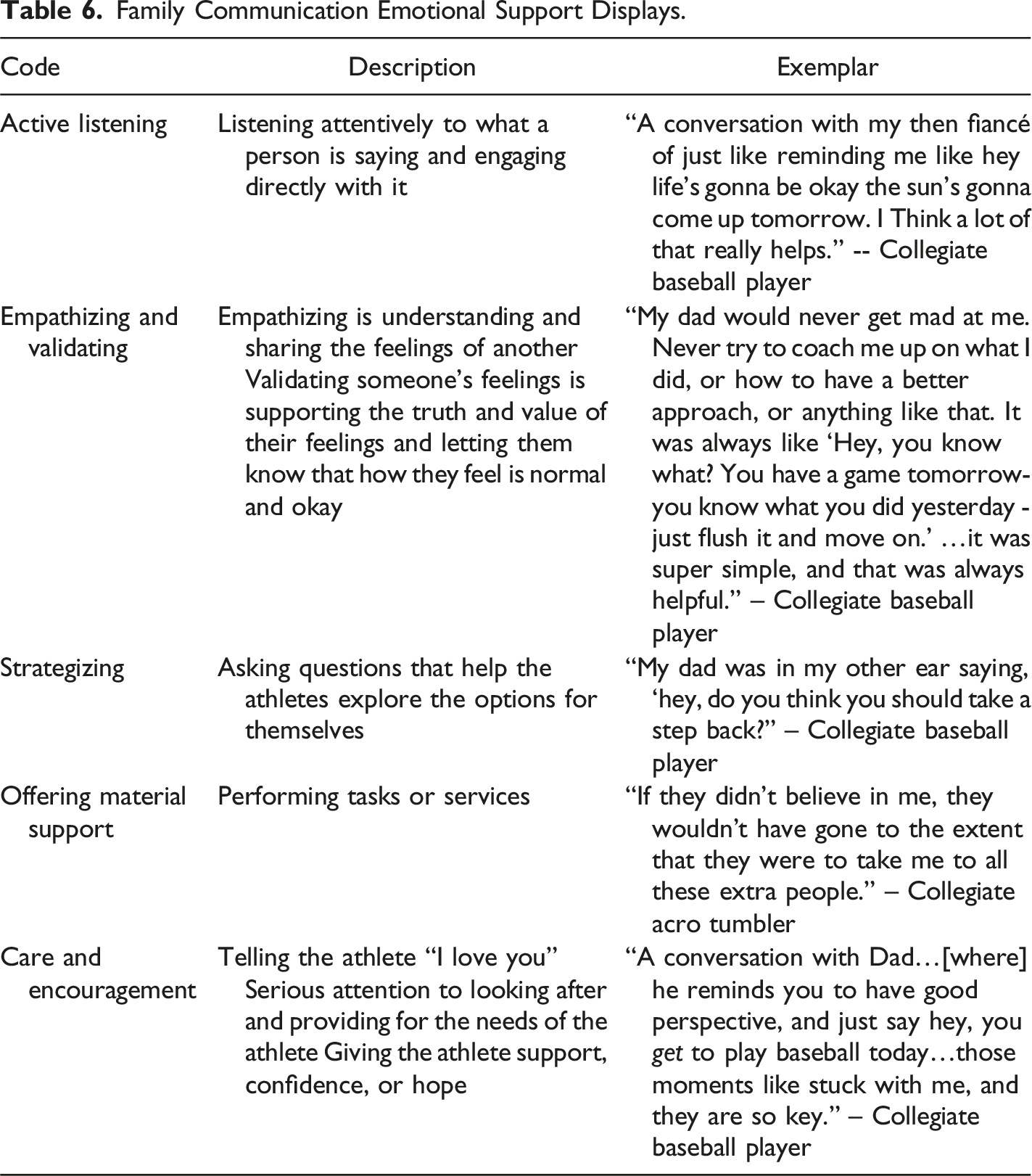
Another common aspect of ASMB communication was athletes’ communication with their family members, including significant others and spouses. Lauren described her mother as being “harsh” on her, yet she recognized the good intentions. My mom was pretty harsh...She didn't intentionally try to be harsh, but she was gonna make me quit because she could see the toll it was taking on me and my outside life, and how upset I would get. I would literally just come home bawling…And she was like, ‘this [sport] isn't making you happy anymore. You're missing the sport that you love, if you don't get it [the skill] back, I'm gonna make you quit. And you're gonna explore something else because this isn't worth it.’ So she was trying to help basically take the mental health out of it, because it was just…it was ruining me outside of cheer.
Emotional Support
Family Communication Emotional Support Displays.
Communication With Teammates
Communication with teammates about the ASMB experience was also very common, which took shape as either camaraderie or taboo communication.
Camaraderie
Participants often described teammates offering words of encouragement. It was also common for participants to describe teammates as best friends and to use jokes and humor during the experience. Collegiate acro-tumbler, Ava, said, “I always felt like all of my teammates had my back.” Kendra concluded, “the culture of the team I was on definitely helped.” Sam, a collegiate baseball player, explained how his teammates helped him laugh it off, “it wasn’t like I was giving up 5 runs, we weren’t losing games because of me.”
Taboo
ASMBs were commonly treated as taboo among teammates. Collegiate baseball player, Cam, explicitly used the term “yips” with a close friend, but would be cautious around others, because “baseball players can be weird about speaking things into existence.” Kendra explained her coaches never used the term with teammates, “none of them ever really said it. They're like ‘you either tumble or you don't.’” Jaden, a college baseball player, explained his team would avoid talking about their teammate’s ASMB: You didn't want to talk about it, cause it was like he knows he's messing up…so it's just like why bring it up? It's gonna make them feel worse.”
Discussion
Theoretical Implications
Previous ASMBs research is often post-positivist and inconclusive of perceived causes or strategies to overcome ASMBs. Our research uses sensemaking theory to better understand the subjective experiences of elite athletes encountering ASMBs. Through the sensemaking process, athletes used language to create social realities that provided the space for discussing these ideas as a discipline. Naming and labeling are important concepts in sensemaking that involve selecting and attaching labels to concepts in effort to make sense of the experience (Weick, 1995). Thus, our research emphasizes the cognitive experience and language of ASMBs which can help athletes and coaches develop a vocabulary to better understand and potentially overcome ASMBs. Through the communication unearthed during our interview processes, we were able to bring this complex cognitive struggle into the light. We also coin and define the collective term ASMBs in our literature review, which will hopefully encourage a cross-disciplinary and cross-sport academic conversation about mental blocks in sports.
One strength of our study is its transferability. Existing research on ASMBs has often examined one sport with small sample sizes, which has resulted in fragmented findings. Our research offers a quota sampling technique including elite athletes and coaches across three different sports. Inclusion of three sports was crucial to our study’s goal to discovering the collective hallmarks of the ASMB experience. Our pilot study produced codes that were grounded within one sports context, portraying ASMB practices relevant to one sport’s actions and components. Our primary study results broadened and sophisticated this academic focus.
Our research also has implications for the process of organizing by evidencing community-wide sensemaking across dispersed elite athletes and coaches. We build on prior research by evidencing the sensemaking process across unique communities rather than within organizations. By examining first-hand accounts of ASMBs from a community of elite athletes, we showcased the unique external pressures that elite athletes face—such as environmental and increased identity pressures—which collectively aided their sensemaking process. Future research should continue to explore the added pressures associated with elite athletes’ ASMB sensemaking, especially within the contemporary media environment.
Relatedly, this study highlights the value of using organizational communication theories to study sports communication across vast sport communities. Past sports organizational communication research generously focuses on communication within sports organizations (i.e., teams, leadership, goal setting, motivation, culture, cohesion) (see Ishak, 2021). Theoretical approaches to sport communication that emphasize the community perspectives of distributed athletes and the process of organizing in sport (as opposed to the organization in sport) present a trending area for future research in the sports organizational communication.
Finally, our study offers contributions to current sports and coach communication literature. We provide qualitative evidence for Cranmer and Sollitto’s (2015) findings that social support from coaches can improve athletes’ experiences. Moreover, existing sport communication research demonstrates that coach confirmation functions uniquely in elite athletes, such that challenging athletes is beneficial for athletes’ satisfaction, motivation, and learning (Cranmer et al., 2020). Yet, our findings suggest that negative, and even instructional, messages from coaches during ASMBs can be frustrating for athletes. Therefore, our study emphasizes how coach communication during ASMBs should be considered an isolated context with distinct recommendations. Future research could build on our work to offer best practices for strategic coach communication with ASMB-affected athletes.
Second, we further contribute to research on family communication in sport by evidencing how familial communication functions during unique ASMB experiences. For example, Lauren’s account of how her mother threatened to make her quit cheer if she could not regain her skill, stating “this isn’t worth it,” builds on Cranmer’s (2021) claim that families are agents of socialization that instill attitudes shaping how we understand sport and ourselves.
Practical Implications
Given the taboo nature of the ASMBs described in the results, this research meaningfully contributes to community discourse by offering a open, shared vocabulary for ASMBs. Our study can help athletes and coaches engage in more sophisticated discussions about the phenomenon, helping to normalize the experience. Furthermore, normalizing the experience can help athletes and coaches navigate the heavy emotion associated with ASMB events, which played a crucial role in ASMB sensemaking. Our findings demonstrate that a good rule of thumb is for coaches to communicate how they support, trust, and care about their athlete’s success during ASMB experiences and to be cautious of offering too many instructional messages as they could further frustrate the athlete.
Finally, our study emphasizes the importance of mental health resources for athletes, which sports organizations are also beginning to recognize. As of 2023, both the National Basketball Association (NBA) and National Football League (NFL) now require teams to retain at least one mental health professional (Choulet, 2023). Our study provides support for the necessity of sophisticated mental health resources for elite athletes and offers beneficial insights for sports performance psychologists.
Limitations and Conclusion
This research has limitations. First, most participants were in their early 20s, resided in the South, and had a college degree. Thus, our results are not representative of all collegiate athletes or professional athletes. Additionally, the elite nature of these athletes might have produced results that are different from ASMBs experienced for amateur athletes. Second, participants were asked to retrospectively recall and make sense of their first-hand accounts of ASMBs, yet we know retrospection can result in memory recall issues where participants overestimate negative affects and quantities of behavior (Shiffman et al., 1997). Finally, given this study focused on the collective benchmarks of ASMB sensemaking, we did not ask participants how athletes in their sport distinctly experienced or made sense of ASMBs. It is very possible such differences existed.
Using sensemaking theory, this study highlights the perceived causes, experiences, strategies, and consequences associated with ASMBs. We also offer new theoretical insights into the role communication plays in and around the ASMB experience. One important area for future research could be exploring how potential intervening variables—like athletes’ levels of self-awareness, self-confidence, resilience, and motivation—impact ASMB sensemaking, utilizing the mental skills survey for athletes (MSSA), among other survey instruments.
Footnotes
Declaration of Conflicting Interests
The author(s) declared no potential conflicts of interest with respect to the research, authorship, and/or publication of this article.
Funding
The author(s) received no financial support for the research, authorship, and/or publication of this article.
