







Abstract
Grounded in the Cognitive Theory of Multimedia Learning and the cognitive–affective–conative model, this study examines how the presence versus absence of sports commentary shapes viewers’ cognitive and affective responses and, ultimately, viewing intention, as well as whether these pathways vary by prior knowledge. An experiment using a one-factor, two-level (commentary present vs. absent) between-subjects design was conducted with 124 undergraduate and graduate students in South Korea. Data were analyzed using structural equation modeling with bootstrapped confidence intervals. Results showed that viewers exposed to commentary reported higher subjective attention and processing fluency than those in the no-commentary condition. Serial indirect effects were supported, indicating that commentary strengthened viewing intention via cognitive responses (attention and fluency) and affective responses (enjoyment and excitement). Regarding conditional serial indirect effects, the results suggested an expertise-reversal pattern in which the benefits of commentary were attenuated as prior knowledge increased, primarily through fluency-based pathways rather than attention-based pathways. These findings clarify the psychological mechanisms through which commentary shapes sports viewing experiences and suggest that personalized audio and information formats aligned with viewers’ knowledge levels may enhance engagement.
Keywords
Introduction
In contemporary society, sport has evolved beyond the mere broadcasting of games to become a major media industry. The global sports media market is projected to continue growing, and broadcasters and platforms are increasingly focusing on experience-oriented innovations in live coverage to increase viewers’ time spent watching and their engagement (Pete et al., 2025; Zion Market Research, 2024). In particular, sports commentary plays a crucial role in framing and structuring the live broadcast environment, which helps viewers organize what and how to watch the game, and provides useful information in real time (Barnfield, 2013; da Silva & Scelles, 2025). Furthermore, by performing various communicative and narrative functions, commentary enables viewers to establish a micro-distance from the screen, which forms an independent perception of time and space (Barnfield, 2013). From this perspective, prior research has reported that the format of commentary or message characteristics in sports broadcasts (e.g., biased, conflicting, or complementary commentary) influences viewers’ enjoyment, satisfaction, and responses related to reviewing (Lee et al., 2016; Zhou et al., 2013).
Alongside this commentary-centered broadcasting style, some broadcasters have recently introduced options that minimize or remove commentary and instead emphasize in-venue ambient sound. For example, certain NCAA American football broadcasts on ESPN have offered the Geico Skycast, which delivers only stadium sound without commentary. Likewise, Formula 1 TV’s Pro option provides coverage centered on circuit ambient audio and team radio with commentary removed. While this choice architecture can facilitate the personalization of viewing experiences, empirical evidence remains limited regarding the pathways through which the presence versus absence of sports commentary alters viewers’ psychological responses. It is also unclear for whom such effects may be amplified or attenuated.
To address this gap, sports commentary should be approached not merely in terms of “information quantity,” but rather from the perspective of the “information-processing environment.” Watching sports typically entails continuous exposure to a vast amount of sensory information which creates a high-load context in which viewers must select essential cues and construct meaning within the constraints of limited working-memory resources. According to the Cognitive Theory of Multimedia Learning (Mayer, 2002), individuals actively select, organize, and integrate both visual and auditory information to build mental models, and the modality of incoming sensory information serves as a key determinant of the level and nature of cognitive processing (Mayer, 2024).
This theoretical standpoint can help in understanding the hybrid characteristics of sports commentary, in which visual and auditory information are combined (Barnfield, 2013). Specifically, commentary (an auditory stimulus) may redistribute processing load that is otherwise concentrated in the visual channel and provide signals that highlight key game cues, thereby increasing viewers’ attentional focus and enhancing processing fluency. Nevertheless, existing sports commentary research has tended to focus relatively more on the effects of commentary types (e.g., biased or conflicting commentary) or on affective responses (Lee et al., 2016; Zhou et al., 2013), which leaves a lack of empirical work that integrates how the presence or absence of commentary translates via cognitive processing into affect and subsequent behavioral intentions.
Moreover, the sports viewing experience does not end with cognitive processing (Madrigal, 1995). Activated cognitive responses can elicit affective responses such as enjoyment and excitement, which may in turn influence behavior (Neyrinck et al., 2006). That is, when commentary enables viewers to concentrate on the game or to comprehend the provided information more easily (cognitive responses), these experiences may foster enjoyment or excitement (affective responses), ultimately leading to a desire to watch similar games again. As a theoretical basis for this mechanism, the cognitive–affective–conative model (Lavidge & Steiner, 1961) posits that cognition, affect, and intention are sequentially activated which forms the psychological process underlying human decision (Mischel & Shoda, 1995). Building on this framework, this study examines the viewing-experience mechanism in which the presence versus absence of commentary shapes viewers’ cognitive responses (subjective attention and processing fluency), which in turn form affective responses (enjoyment and excitement) and ultimately lead to behavioral intention.
Meanwhile, the effects of commentary in sports broadcasting may not follow the same pattern for all viewers. The knowledge that viewers possess about a given sport varies, and the influence of auditory information such as commentary on cognitive responses may differ as a function of prior knowledge (Kalyuga, 2021). For instance, viewers with low prior knowledge may be able to enjoy the game more through commentary because they lack broader understanding and contextual information, whereas viewers with substantial prior knowledge may prefer to focus on the game itself rather than on commentary. Accordingly, testing the effects of commentary presence versus absence requires additional investigation of conditional effects that take viewers’ prior knowledge into account.
Based on these notions, this study aims to (1) test differences in viewers’ cognitive responses as a function of the presence versus absence of sports commentary, (2) explore how such differences influence viewers’ cognitive, affective, and conative responses sequentially, and (3) examine how these sequential effects are moderated by viewers’ prior knowledge. Through these efforts, the study aims to provide new theoretical implications for the sports media domain by empirically testing the substantive effects of sports commentary from a novel theoretical perspective. In addition, this study aims to offer practical insights for industry practitioners, such as informing the development of content strategies centered on broadcast-format personalization.
Theoretical Background and Hypothesis Development
Cognitive Theory of Multimedia Learning: Sports Commentary and Cognitive Responses
The Cognitive Theory of Multimedia Learning (CTML; Mayer, 2002) is an evidence-based framework that explains how individuals process information when words and pictures are presented together. In particular, CTML has predominantly been used as a learning theory to understand multimedia effects in educational settings (e.g., Yue et al., 2013). Although sports viewing differs from general educational learning, the sports viewing environment exposes viewers to a vast amount of information with complex visual and auditory inputs that can exceed cognitive capacity, which creates a similar context where viewers must efficiently process and integrate such information within limited cognitive resource (Cummins, 2014; Rumpf & Breuer, 2015). Therefore, this study adopts the mechanisms of CTML as a theoretical lens to understand the effects of sports commentary.
According to CTML, the human cognitive system operates under three core assumptions: (1) the dual-channel assumption, which posits separate channels for processing both visual and auditory information; (2) the limited-capacity assumption, which holds that working memory has constraints in storing and processing information; and (3) the active-processing assumption, which indicates that individuals are not passive receivers of information but become active agents who search for relevant inputs, organize them into meaningful structures, and incorporate them with previously established knowledge (Mayer, 2002).
Mayer (2005) further proposed that human memory consists of three stores: (1) sensory memory, (2) working memory, and (3) long-term memory. Specifically, sensory memory briefly registers visual and auditory images that rapidly decay (Mayer, 2005). Working memory processes and temporarily retains selected information from sensory memory (Mayer, 2005). Long-term memory functions as a permanent knowledge repository that can be activated during learning to retrieve relevant information into working memory (Mayer, 2005). Learners often experience meaningful learning when they process cognitively process information via both visual and auditory information, use that information to organize meaningful structures, and link them with previously learned information (see Figure 1; Mayer, 2024). Based on this structure, this study conceptualizes viewers’ information-processing experiences within working memory as cognitive responses, operationalized as subjective attention and processing fluency, and identifies prior knowledge, which is kept in long-term memory, as a moderator that may shape these cognitive processes in sports viewing contexts. Mayer’s cognitive theory of multimedia learning. Note. Adapted from Mayer (2024)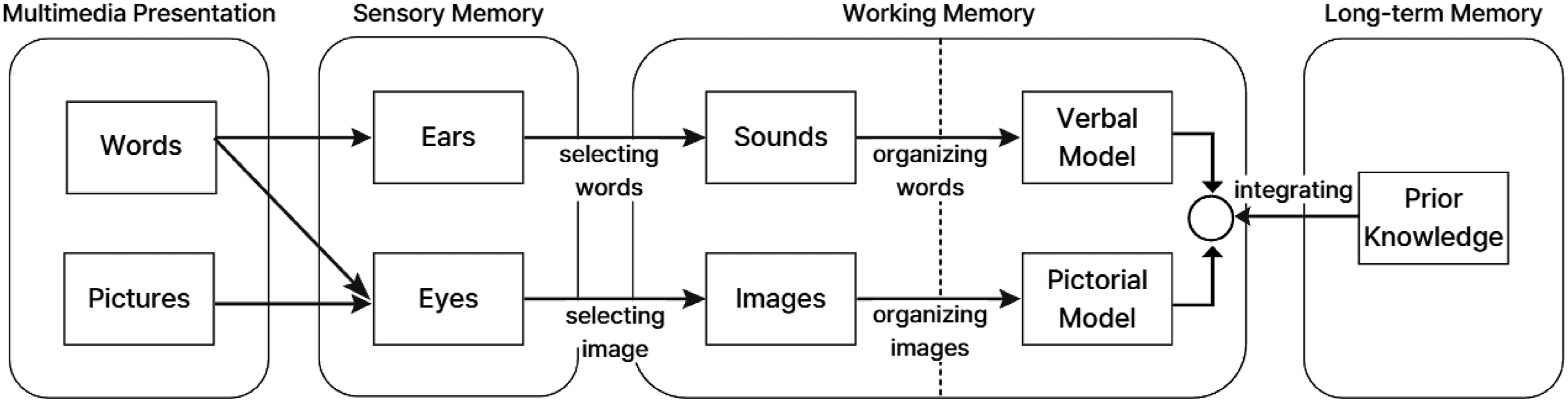
CTML offers important implications for understanding sports viewing experiences. When viewers rely solely on visual information in the absence of commentary, they may experience difficulty processing the incoming information effectively due to working-memory limitations (limited-capacity assumption; Mayer, 2005). In this context, sports commentary as an auditory stimulus may leverage the dual-channel system by distributing cognitive load across channels. More specifically, commentary can serve a signaling function by highlighting relevant cues in complex scenes, thereby facilitating sustained attention (Mayer, 2002). Moreover, when verbal explanations accompany visual information, viewers can more easily perceive relationships among events, which reduces the effort required to process information and increases processing fluency (Dragojevic & Giles, 2016). In this sense, commentary may operate as a key mechanism that optimizes information processing within limited working-memory capacity and supports the construction of clearer cognitive representations of the game.
Prior research grounded in CTML suggests that the simultaneous provision of visual (e.g., animation) and auditory information (e.g., narration) enhances information processing and yields more favorable cognitive outcomes (e.g., Aysolmaz et al., 2022; Hinkin et al., 2014). Specifically, Aysolmaz et al. (2022) demonstrated that narration improves comprehension of process models which indicates that the combined use of both visual and auditory information is effective for communicating process-related information and mitigating attentional dispersion across inputs. Furthermore, Hinkin et al. (2014) conducted an experiment to verify that presenting verbal and visual information simultaneously in an entertainment medium (film) is a highly effective method of conveying information. In particular, the results indicated that the group receiving both audio and subtitles in the film demonstrated better performance in information recognition compared to the group without audio, which highlights the importance of verbal explanations not only in multimedia but also in entertainment environments.
Building on CTML and related empirical evidence, the present study posits that, in sports viewing contexts, commentary (auditory information) may enhance viewers’ subjective attention and processing fluency by facilitating information processing within working memory. Rather than treating the effect of commentary as ending at enhanced cognitive responses, this study extends the theoretical account by examining whether these cognitive responses translate into affective experiences and ultimately into viewing intention through a serial (sequential) mechanism. That is, the effect of commentary may be understood as an indirect pathway that begins with cognitive activation and unfolds across affective and conative stages.
Prior Knowledge and Expertise Reversal Principle: Conditional Effects of Sports Commentary
According to the active-processing assumption of CTML, viewers do not merely receive incoming information passively; instead, they integrate it with existing knowledge to build meaningful mental models (Mayer, 2005). A critical resource in this process is prior knowledge, which is stored in memory and can be used to retrieve information that support comprehension and interpretation (Mayer, 2005). Prior knowledge refers to the cognitive resources in long-term memory that individuals draw upon to construct meaning in new tasks (Guterman, 2003).
The effectiveness of informational support can vary depending on an individual’s level of prior knowledge. This phenomenon is captured by the expertise reversal principle (Kalyuga, 2021), which proposes that instructional guidance or explanations that benefit novices may become redundant for experts, and consequently impose unnecessary cognitive load and hinder performance (Sweller et al., 2011). In multimedia learning contexts, learners who possess low prior knowledge often utilize additional information to engage in cognitive processing (Kühl, 2021). In contrast, learners with high prior knowledge may already possess relevant schemas in long-term memory, and thus, additional information support may be unnecessary or even disruptive to cognitive processing (Kalyuga, 2021).
Consistent with this notion, Kühl (2021) found that learners without prior knowledge benefited from animation, whereas those with prior knowledge did not show the same benefit. Furthermore, Khacharem et al. (2013) demonstrated an expertise reversal effect in learning through soccer animations based on the players’ expertise level, in which novices showed more positive learning outcomes when the animation format was segmented. Although sports broadcasts are primarily designed for entertainment rather than education, sports viewing requires fulfilling cognitive needs, which entails processing knowledge about the sports, the leagues, and the ongoing game (Raney, 2013). Just as learners use background knowledge to comprehend educational materials, sports viewers may rely on their pre-existing knowledge of the game to instantly process and understand the situations occurring on the screen.
Specifically, this suggests that viewers with limited prior knowledge may rely more heavily on commentary to process and understand game information, while viewers with extensive prior knowledge may draw on internalized schemas and therefore derive less incremental benefit from commentary. Accordingly, the positive effect of commentary on cognitive responses (attention and processing fluency) is expected to be weaker among viewers with higher prior knowledge. Importantly, if prior knowledge attenuates the effect of commentary on cognitive responses, then the influence of commentary on viewing intention through cognitive and affective responses may also be conditional. In other words, higher prior knowledge may diminish the cognitive advantage afforded by commentary, which in turn may weaken the serial indirect effects linking commentary to affective experiences and ultimately to viewing intention.
Cognitive–Affective–Conative Model and Sports Viewers’ Responses
The cognitive–affective–conative (CAC) model builds on the hierarchy-of-effects tradition introduced by Lavidge and Steiner (1961). The CAC model posits that situational characteristics activate cognitive responses based on the individuals’ prior experiences (Mischel & Shoda, 1995), which then stimulate affective responses such as emotions and feelings, ultimately shaping behavioral tendencies or intentions (Neyrinck et al., 2006). Thus, the CAC framework presents a hierarchical process in which cognition, affect, and conation are sequentially triggered as part of decision-making processes (Kim & Chen, 2021). Within this framework, cognitive components reflect evaluative and interpretive states, affective components reflect emotional experiences, and conative components reflect desire or intention to engage in a particular behavior (Lavidge & Steiner, 1961).
The hierarchical structure of the CAC model has been empirically supported across diverse domains. For example, Hsiao (2020) reported that the perceived value of internet use (cognition) increases satisfaction with the internet and life (affect), which in turn promotes online content sharing (conation or behavior). Similarly, Song et al. (2025) showed that cognitive factors related to sport-event scenarios influence emotional identification, which then drives conative tendencies such as reparticipation and information seeking. Synthesizing this evidence, subjective attention and processing fluency during sports viewing can be understood as key cognitive antecedents of affective responses. When individuals attend to information and process it smoothly, they show a stronger tendency to experience positive emotions such as enjoyment and excitement (Reber et al., 2004; Wang & Lee, 2020).
Furthermore, affective experiences function as proximal determinants of conative outcomes (Kwak et al., 2011). As an entertainment product, sport viewing is particularly likely to translate emotional experiences into choices and behavioral intentions (e.g., re-watching or continued viewing) (Kwak et al., 2011). Prior research has consistently documented that affective responses in sport viewing contexts positively predict conative outcomes such as viewing intention (Behrens & Uhrich, 2022), consumption intention (Chung et al., 2025), and subjective well-being (Guo et al., 2024). For instance, Behrens and Uhrich (2022) reported that exposure to visual content depicting stadium atmospherics increased viewers’ emotional arousal, which subsequently strengthened broadcast viewing intention.
Applying the CAC perspective to the present study, sports commentary is expected to stimulate cognitive responses (attention and processing fluency), which enhance affective experiences during viewing (enjoyment and excitement), and ultimately increase viewing intention through a serial indirect pathway.
Hypothesis Development: Serial Indirect Effects and Conditional Indirect Effects
Integrating CTML and the CAC model suggests a serial mechanism in which sports commentary promotes cognitive processing (attention and fluency), which heightens positive affect (enjoyment and excitement), thereby increasing viewers’ intention to watch similar games in the future. Accordingly, the present study decomposes the effect of commentary on viewing intention into four serial indirect effects and proposes the following hypotheses:
Sports commentary (present vs. absent) will exert a positive indirect effect on viewing intention through subjective attention and enjoyment in sequence (Commentary → Attention → Enjoyment → Viewing intention).
Sports commentary (present vs. absent) will exert a positive indirect effect on viewing intention through subjective attention and excitement in sequence (Commentary → Attention → Excitement → Viewing intention).
Sports commentary (present vs. absent) will exert a positive indirect effect on viewing intention through processing fluency and enjoyment in sequence (Commentary → Processing fluency → Enjoyment → Viewing intention).
Sports commentary (present vs. absent) will exert a positive indirect effect on viewing intention through processing fluency and excitement in sequence (Commentary → Processing fluency → Excitement → Viewing intention).
In addition, drawing on the expertise reversal principle, the benefits of commentary as informational support are expected to diminish as viewers’ prior knowledge increases. Therefore, the serial indirect effects linking commentary to viewing intention are hypothesized to vary across levels of prior knowledge, reflecting moderated serial mediation. Specifically, the following moderated indirect-effect hypotheses are proposed:
The serial indirect effect of commentary on viewing intention via subjective attention and enjoyment will be weaker as prior knowledge increases.
The serial indirect effect of commentary on viewing intention via subjective attention and excitement will be weaker as prior knowledge increases.
The serial indirect effect of commentary on viewing intention via processing fluency and enjoyment will be weaker as prior knowledge increases.
The serial indirect effect of commentary on viewing intention via processing fluency and excitement will be weaker as prior knowledge increases.
Based on these hypotheses, this study proposes a research model that captures the serial pathways through which commentary influences viewing intention via cognitive and affective responses and the moderation of these indirect effects by prior knowledge (Figure 2). Proposed research model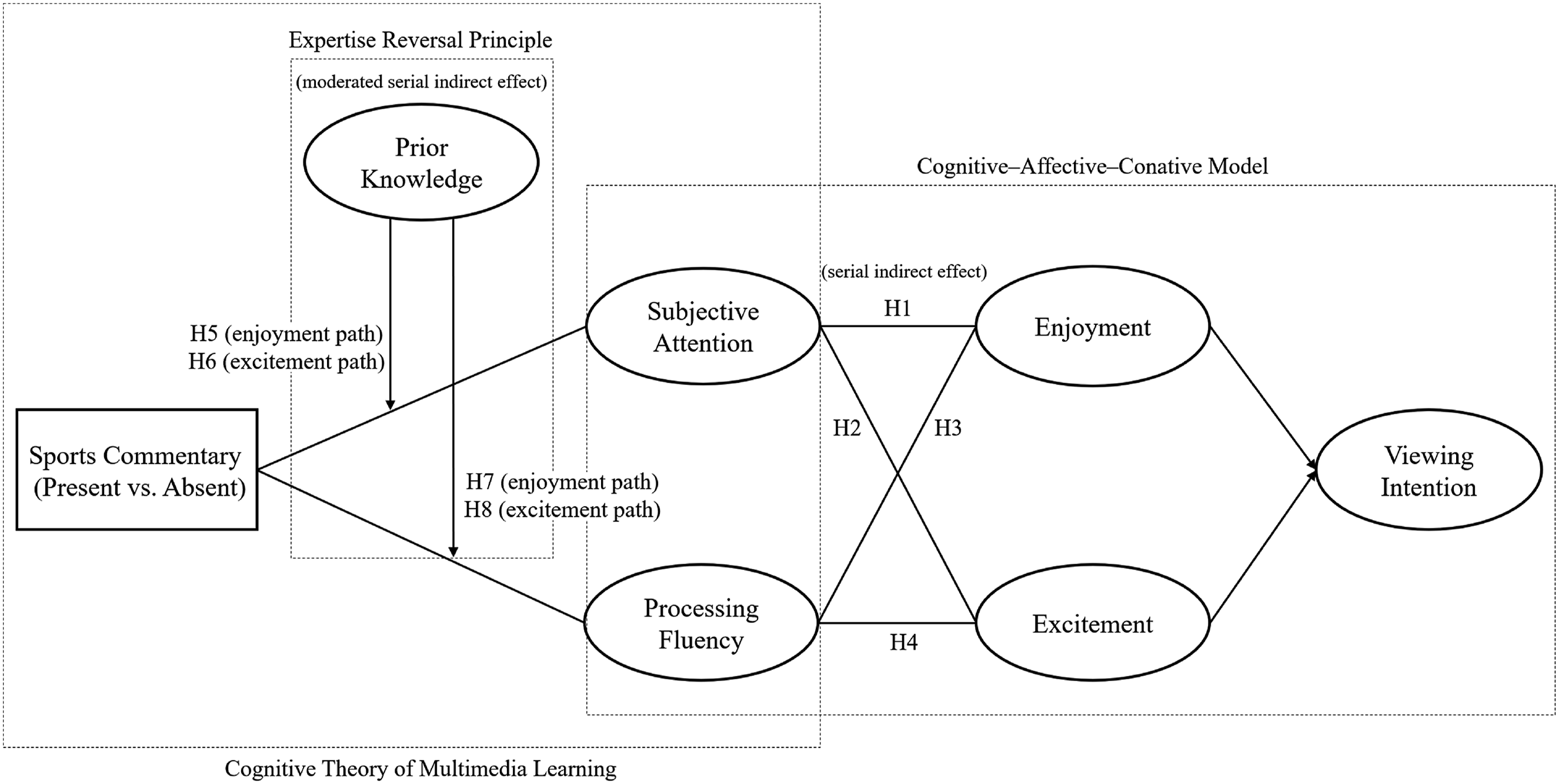
Methods
Design and Participants
This experiment employed a one-factor, two-level (sports commentary: present vs. absent) between-subjects design. The required sample size, based on a calculation using G*Power 3.1.9.4 (effect size = .25, α = .05, power = .80, groups = 2), was 124 participants (Faul et al., 2009). Participants were recruited through campus bulletin boards and online communities at a national university in Busan, South Korea, using convenience sampling. Given the nature of the study, eligibility was restricted to individuals with adequate vision and no reported hearing impairments. A total of 124 valid participants were included in the final analysis. After completing the experiment, each participant received approximately USD 4 in compensation. Participants were randomly assigned (via a random-number table) to view either the commentary-present or commentary-absent video. The mean age of the sample was 23.09 years (SD = 3.31), and 64 participants (51.61%) were male.
Stimuli
To minimize researchers’ subjective judgment and to ensure objectivity in selecting the sport stimulus, a pilot test was conducted. Thirty undergraduate and graduate students from the same university in Busan were recruited via convenience sampling and completed a survey. Among seven globally popular sports (WorldAtlas, 2025) that are generally familiar to Korean audiences, participants rated (a) familiarity (Kent & Allen, 1994; “I am familiar with this sport”), (b) preference (Dam, 2020; “Overall, I like this sport”), and (c) involvement (Zaichkowsky, 1994; “This sport is important to me”) on 7-point Likert scales. If a completely unfamiliar sport were used, all participants’ prior knowledge would converge at the floor level, which may reduce variation in the measure; thus, the sport closest to the median was selected for this study. Results indicated that basketball corresponded to the median for familiarity (M = 5.07, SD = 1.70), preference (M = 5.03, SD = 1.69), and involvement (M = 3.20, SD = 1.85). Although basketball is generally a popular sport, it is characterized by greater complexity compared to other types of sports due to its diverse skills and tactical formations (Wang, 2016) which makes it the optimal sport to test the differential effects of commentary based on prior knowledge levels. Accordingly, basketball was selected as the experimental sport.
For the main experiment, an approximately 6-min segment of the first quarter of the 2024 Paris Olympics men’s basketball final (United States vs. France) was used, ending immediately before the first substitution. This segment was selected since it precedes disruptions such as substitutions or timeouts, which allows participants to process information within a relatively continuous game context. The stimulus was selected for three additional reasons. First, the game did not involve the Korean national team which helped control for team specific fandom. Second, to ensure baseline interest in the stimulus, an international championship final was used. Third, because the present study investigates the effects of commentary on cognitive and affective responses, an early-game segment was expected to provide a comparatively stable context for observing these effects relative to later stages when responses may fluctuate more sharply.
In the commentary-present condition, the original broadcast from KBS (Korean Broadcasting System) was used. The overall commentary of the game video consisted of explanations of basketball skills and tactics. The script of the actual commentary provided is presented in Supplemental Table 1. In the commentary-absent condition, the commentator’s voice was removed using the LALAL.AI vocal removal algorithm. Crowd noise and in-arena sound effects (e.g., whistles) were preserved to ensure that the two conditions contrasted only in the presence versus absence of commentary.
Procedure
The experiment was conducted in an independent, sound-controlled laboratory to examine the effects of commentary presence versus absence. Participants viewed the assigned video on a 24-inch LED monitor, and audio volume was standardized. After providing informed consent, participants watched the basketball video corresponding to their randomly assigned condition. Immediately after viewing, they completed a questionnaire. Upon completion, participants were briefly debriefed about the purpose of the study, and the session concluded.
Measurement
Summary Results of CFA
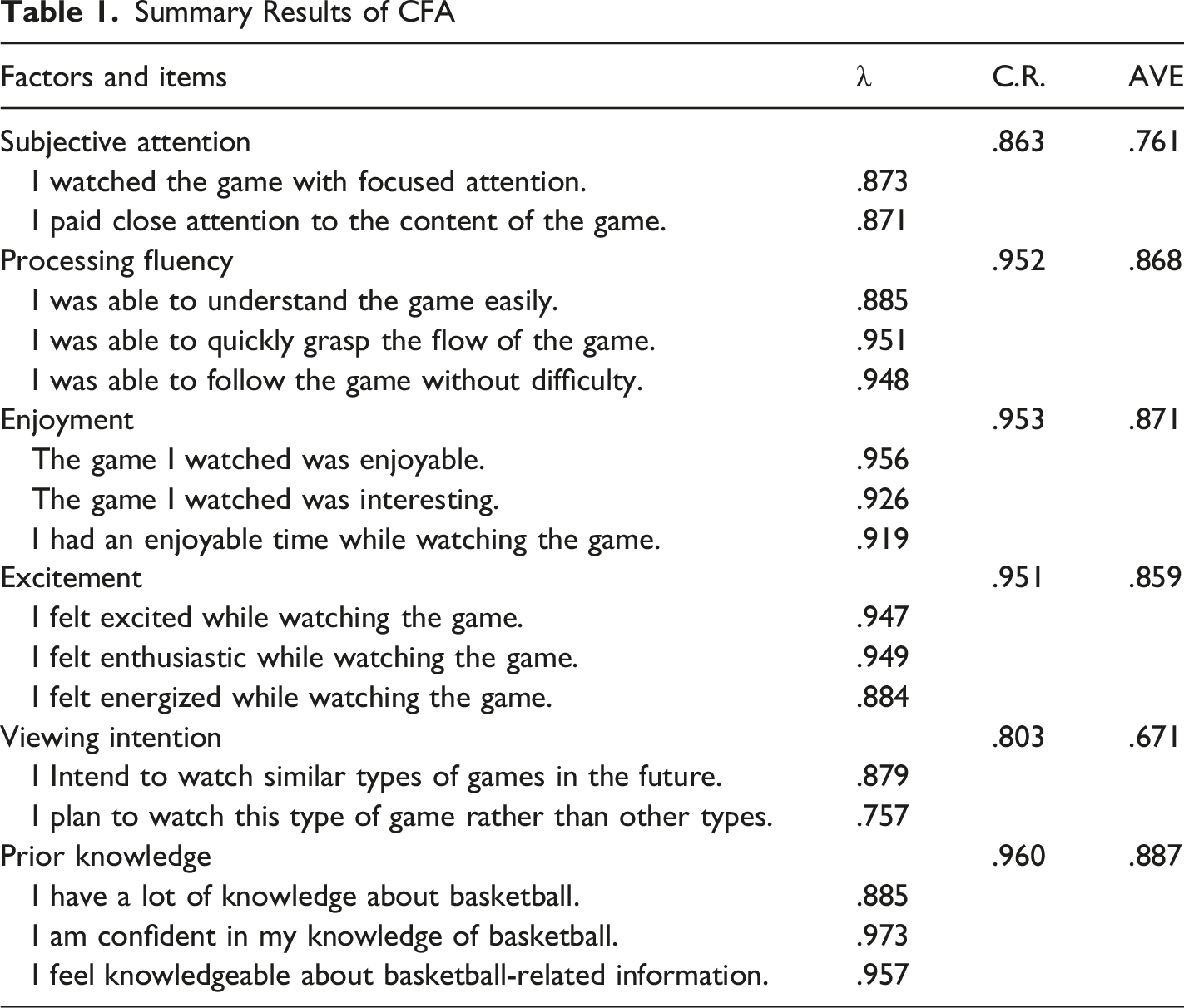
Excitement referred to high-arousal positive affect experienced during sports viewing (Hirschman & Holbrook, 1982) and was measured using items adapted from Jones et al. (2005) (e.g., “I felt excited while watching the game.”). Viewing intention indicated participants’ intention to continue watching similar sports games and was measured using items adapted from Lee et al. (2016) and Hu et al. (2017) (e.g., “I intend to watch similar types of games in the future.”). The moderator, prior knowledge, reflected subjective knowledge about the sport and was measured using items adapted from Flynn and Goldsmith (1999) and Hu et al. (2024) (e.g., “I have a lot of knowledge about basketball.”).
A single-item manipulation check assessed whether participants correctly recognized whether the video contained commentary. In addition, perceived sound quality was measured with a single-item semantic differential scale (“The sound of the sports game video I just watched…,” 1 = rough, 7 = smooth; Dal Palù et al., 2017) and was included as a control variable.
Data Analysis
Data were analyzed using structural equation modeling (SEM). First, we utilized a confirmatory factor analysis (CFA) to access the measurement model (i.e., reliability and validity). Next, the structural model specified paths from commentary (coded 0 = absent, 1 = present) to cognitive responses (subjective attention and processing fluency), from cognitive responses to affective responses (enjoyment and excitement), and from affective responses to viewing intention. To test moderation aligned with the expertise reversal principle, the model incorporated first-stage moderation, which specifies that the interaction term between commentary and prior knowledge predicts the cognitive responses. Serial indirect effects (H1–H4) and moderated serial indirect effects (H5–H8) were tested using bias-corrected (BC) bootstrap confidence intervals with 5,000 resamples.
Results
Measurement Model Validation
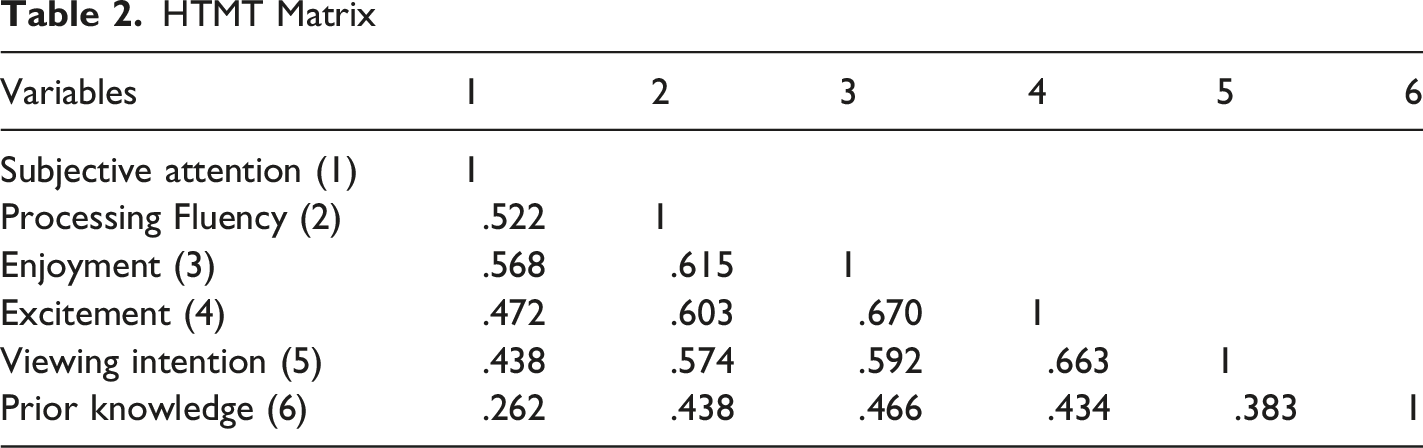
The results of the CFA are shown in Table 1. The initial CFA that included all indicators revealed improper estimates for one item of subjective attention and one item of viewing intention, which indicated potential threats to measurement validity. Following the two-indicator rule (Bollen, 1989; Kline, 2016), these items were removed, and the measurement model was re-specified and re-estimated.
HTMT Matrix
Manipulation Check
Results of Manipulation Check
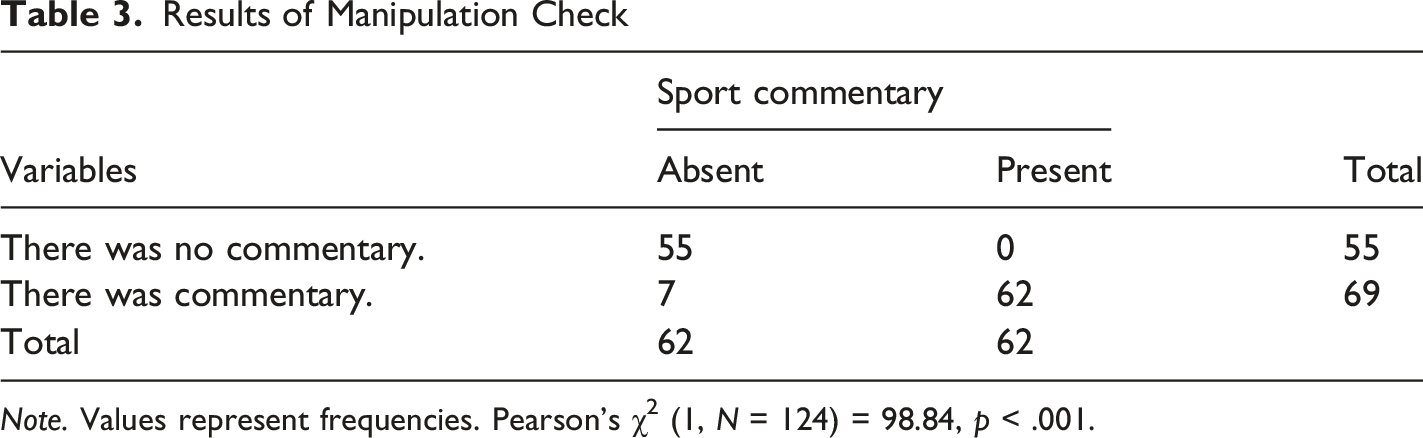
Note. Values represent frequencies. Pearson’s χ2 (1, N = 124) = 98.84, p < .001.
Hypothesis Testing
This study tested serial indirect effects (H1–H4) through which sports commentary influences viewing intention via cognitive responses (subjective attention and processing fluency) and affective responses (enjoyment and excitement), as well as moderated serial indirect effects (H5–H8). Indirect and moderated indirect effects were evaluated using bootstrap confidence intervals. Moderated serial indirect effects were interpreted using a one-tailed criterion, consistent with the directional prediction derived from the expertise reversal principle.
Structural Paths
The structural model exhibited the following fit indices: χ2/df = 1.804, CFI = .937, TLI = .926, RMSEA = .086, and SRMR = .205 (Hair et al., 2009). Although SRMR exceeded commonly suggested cutoffs, this may reflect the sensitivity of standardized residual-based indices to data characteristics such as dichotomous predictors (Shi et al., 2020). Prior research recommends evaluating SRMR in conjunction with other fit indices rather than using a single cutoff (Hu & Bentler, 1998). In particular, CFI and RMSEA have been highlighted as relatively informative indices because of their sensitivity to model misspecification and their implications for estimation precision (MacCallum & Austin, 2000). Given that CFI and TLI met conventional standards and RMSEA fell within an acceptable range, overall fit was judged to be acceptable based on a holistic evaluation across multiple indices (Marsh et al., 2004).
Controlling for perceived sound quality across all structural paths, the presence of sports commentary had significant positive effects on subjective attention (γ = .258, p < .05) and processing fluency (γ = .204, p < .05). Prior knowledge significantly moderated the effects of commentary on both subjective attention (γ = −.183, p < .05) and processing fluency (γ = −.203, p < .05), which indicates that the positive effects of commentary on cognitive responses weakened as viewers’ prior knowledge increased. Subjective attention positively influenced enjoyment (β = .480, p < .001) and excitement (β = .317, p < .01), and processing fluency positively affected enjoyment (β = .490, p < .001) and excitement (β = .567, p < .001). Finally, enjoyment (β = .297, p < .01) and excitement (β = .628, p < .001) significantly predicted viewing intention.
Serial Indirect Effects (H1–H4)
Bootstrapped indirect-effect analyses supported all four specific serial indirect effects. The indirect effect of commentary on viewing intention via subjective attention and enjoyment (H1) was estimated at β = .128, BC 90% CI [.026, .373], which supports H1. The indirect effect via subjective attention and excitement (H2) was β = .183, BC 90% CI [.044, .492] which supports H2. The indirect effect via processing fluency and enjoyment (H3) was β = .096, BC 90% CI [.019, .309] which also supports H3. The indirect effect via processing fluency and excitement (H4) was β = .240, BC 90% CI [.088, .531] which supports H4.
Moderated Serial Indirect Effects (H5–H8)
Pathway-specific moderated serial indirect effects were tested using indices of moderated mediation. Results indicated that the moderated serial indirect effect indices for the attention-based pathways were not statistically supported. The index corresponding to the commentary → attention → enjoyment → viewing intention pathway (H5) was estimated at β = −.038, BC 90% CI [−.184, .004], and thus H5 was not supported. Similarly, the index corresponding to the commentary → attention → excitement → viewing intention pathway (H6) was β = −.054, BC 90% CI [−.264, .004], and thus H6 was not supported. In contrast, moderation was supported for the fluency-based pathways. The index for the commentary → processing fluency → enjoyment → viewing intention pathway (H7) was β = −.033, BC 90% CI [−.142, −.002], which supports H7. The index for the commentary → processing fluency → excitement → viewing intention pathway (H8) was β = −.082, BC 90% CI [−.205, −.011], which supports H8.
Taken together, the results supported all serial indirect effects (H1–H4) and provided partial support for moderated serial indirect effects, with evidence for expertise-related attenuation emerging specifically along the processing-fluency-based pathways (H7–H8), but not along the attention-based pathways (H5–H6) (Figure 3). Summary of the results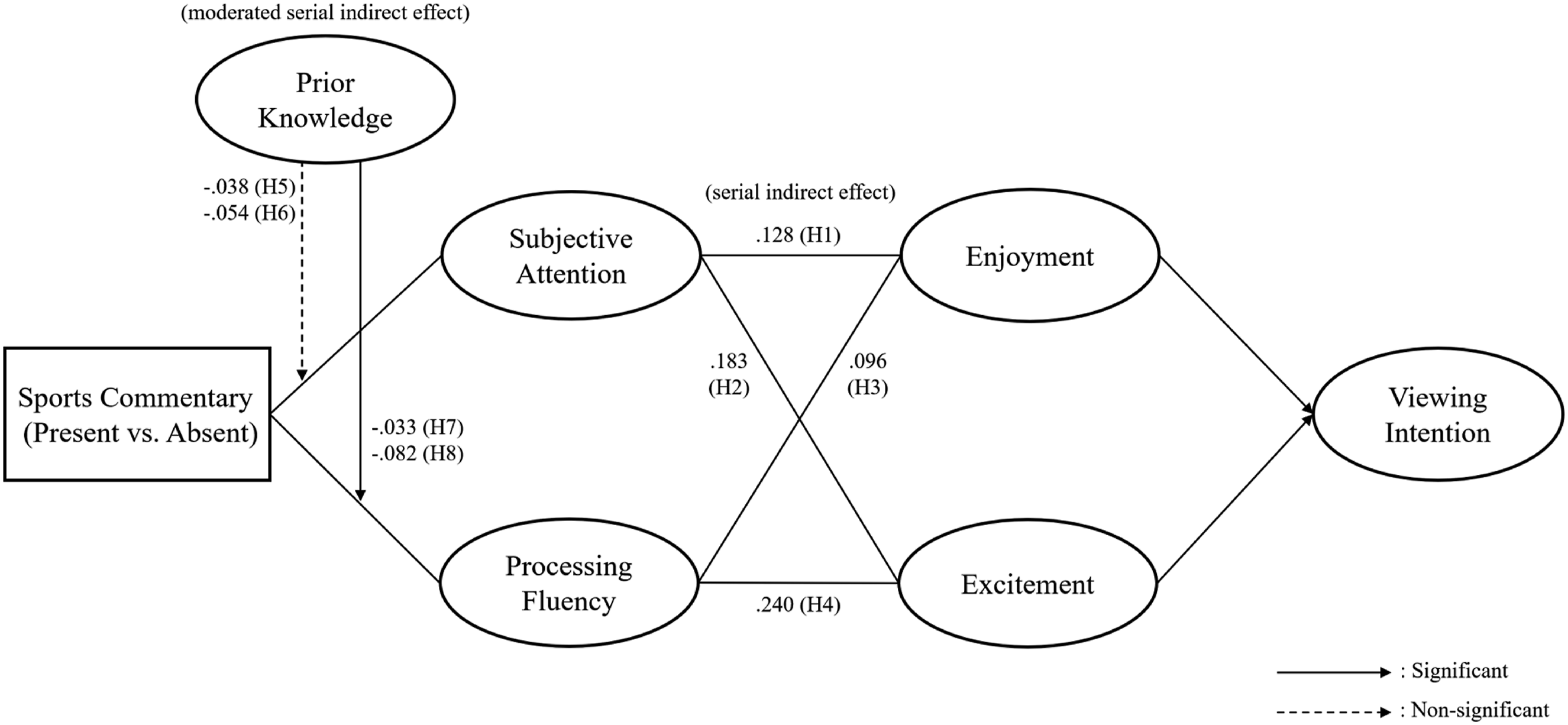
Discussion
This study integrated the CTML (Mayer, 2002) and the CAC model (Lavidge & Steiner, 1961) to examine how the presence versus absence of sports commentary shapes viewers’ cognitive responses (subjective attention and processing fluency), affective responses (enjoyment and excitement), and viewing intention. In addition, this study tested whether prior knowledge attenuates the benefits of commentary consistent with the expertise reversal principle and whether the impact of prior knowledge differs depending on the specific psychological pathway. Overall, the results supported the proposed sequential processes, which indicate that commentary activates cognitive responses that foster affective experiences and subsequently strengthen viewing intention. With respect to moderation, a general attenuation pattern was observed such that the cognitive benefits of commentary diminished as prior knowledge increased. Interestingly, this knowledge-based conditionality affected selectively, which altered the pathways based on processing fluency, but not those based on subjective attention. These findings support industry shifts toward commentary-minimized or commentary-free audio options and underscore that the psychological impact of commentary may vary depending on both viewers’ knowledge levels and the specific cognitive processes engaged during viewing.
Extending CTML to Sports Viewing: Commentary as Cognitive Scaffolding
By conceptualizing sports viewing not as a matter of information quantity but as an information-processing environment, this study supports CTML-based predictions that commentary can facilitate working-memory processes. Specifically, viewers exposed to commentary reported higher subjective attention and greater processing fluency which suggests that commentary helps manage cognitive load in information-dense and rapidly unfolding visual environments. From a CTML perspective, commentary can be interpreted as cognitive scaffolding that supports the selection, organization, and integration of incoming information (Mayer, 2002, 2005). In dynamic sports scenes characterized by rapid event transitions, commentary may reduce unnecessary mental distraction by signaling key cues and clarifying relations among events, which enables viewers to allocate more resources to meaningful interpretation and deep understanding. This pattern is consistent with multimedia learning literature that shows the benefits of narration for comprehension and cognitive outcomes (Aysolmaz et al., 2022; Hinkin et al., 2014), as well as perspectives suggesting that verbal explanations can enhance processing fluency (Dragojevic & Giles, 2016). Importantly, whereas prior sports commentary research has often emphasized message characteristics (e.g., biased, conflicting, or complementary commentary) and affective outcomes (e.g., enjoyment and satisfaction; Lee et al., 2016; Zhou et al., 2013), this study addresses a theoretical gap by showing that the mere presence of commentary can restructure cognitive processing in ways that meaningfully shape subsequent experiences and intentions.
CAC-Based Sequential Process
A central contribution of this study is to demonstrate that the influence of commentary extends beyond cognitive responses and unfolds hierarchically through cognition, affect, and behavioral intentions. The supported chain of psychological responses indicates that commentary increases subjective attention and processing fluency, which intensify enjoyment and excitement and ultimately enhance viewing intention. This pattern provides empirical support for the CAC model in sports viewing contexts and clarifies how cognitive processing experiences translate into affective engagement and intentions to watch similar games. The findings also correspond with fluency-based accounts of affect, which posit that the subjective experience of ease in information processing fosters positive emotion (Reber et al., 2004; Wang & Lee, 2020). When commentary facilitates comprehension of game events, viewers may experience lower cognitive costs and greater experiential comfort, which can heighten enjoyment. Moreover, because sports are high-arousal entertainment products, increased comprehension may amplify immersion and perceived intensity of events, thereby elevating excitement. Consistent with prior sport research that highlights affective responses as direct drivers of behavioral outcomes (Behrens & Uhrich, 2022; Kwak et al., 2011), the results suggest that commentary can strengthen viewing intention not only by enhancing understanding but also by fostering affective immersion, with excitement functioning as a particularly influential immediate driver.
Selective Effects of the Expertise Reversal Principle
This study further demonstrates that commentary as informational support may not benefit all viewers equally. The findings on viewers’ knowledge levels indicated that the positive effects of commentary on subjective attention and processing fluency weakened as prior knowledge increased, which broadly aligns with the expertise reversal principle (Kalyuga, 2021; Sweller et al., 2011). However, this knowledge-dependent conditionality across the entire psychological chain was observed only for the fluency-based pathways, whereas attention-based sequential pathways were not supported. These findings suggest that the diminishing returns associated with prior knowledge may be pathway-specific rather than uniform across cognitive processes. Commentary can guide attention through signaling, which may remain useful even for knowledgeable viewers, and thus, moderation may be weaker for attention-based mechanisms. In contrast, processing fluency is more directly tied to schema-based comprehension processes that rely on long-term memory. For viewers with high prior knowledge, explanatory commentary may become redundant and increase unnecessary mental burden, which reduces the incremental benefit of commentary for fluency and, consequently, weakens the fluency-driven chain of responses. This interpretation aligns with redundancy-based explanations of expertise reversal effects (Kalyuga, 2021) and extends them to sports viewing as an entertainment context.
Theoretical Implications
The findings of this study offer theoretical implications. First, this study extends CTML to sports broadcasting by conceptualizing commentary as a component of the cognitive processing environment. Whereas CTML has largely developed within instructional and learning contexts, the present findings indicate that the core assumptions (dual channels, limited capacity, and active processing) of the theory can also explain psychological processes in sports media consumption. By framing commentary as auditory scaffolding that supports interpretation of rapidly changing visual inputs and linking it to specific cognitive responses (subjective attention and processing fluency), the current study offers a theoretically grounded account of commentary’s function in sports media. Second, by integrating CTML with the CAC model, this study advances beyond fragmented accounts of commentary effects on isolated cognitive or affective outcomes. Instead, the results of this study provide empirical evidence for a sequential mechanism through which commentary shapes intention via cognition and affect. In particular, the supported pathways involving processing fluency highlight that fluency can serve as a cognitive basis of positive affect in sports viewing, which extends fluency-based affect theories to a sports media context.
Lastly, by applying the expertise reversal principle, the study demonstrates that the impact of viewers’ knowledge operates differently depending on the specific psychological pathway, which emerges more clearly for fluency-based mechanisms than for attention-based mechanisms. This suggests that future sports communication research should treat cognitive responses as multidimensional by distinguishing attentional allocation from comprehension-related fluency when examining different types of audiences and how media affects them differently.
Practical Implications
The results of this study also offer actionable guidance for broadcasters and streaming platforms that aim to implement commentary options and personalization strategies. First, since commentary generally strengthens the step-by-step psychological process that leads to viewing intention, commentary can serve as a key experience-enhancement feature for novice viewers by facilitating comprehension-oriented processing. Platforms may therefore benefit from offering an explanatory or beginner-mode commentary track that structures rules, tactics, and contextual information in a way that supports fluency and engagement.
Second, for viewers with high prior knowledge, commentary may yield smaller fluency-related benefits and may become redundant, which creates unnecessary mental distraction. Accordingly, rather than applying uniform commentary formats, platforms should adopt differentiated approaches that reduce reliance on verbal explanation and instead enhance information delivery through other modalities. Specifically, guided by the dual-channel assumption, platforms could reduce audio commentary and strengthen visual analytical information, such as real-time game statistics, data overlays, and graphics visualizing players’ tactical movements and spatial patterns. This visual, data-centered broadcast option can provide value-added insights while minimizing redundancy and preserving cognitive efficiency for expert viewers who already possess relevant schemas. In parallel, platforms may offer alternative audio tracks that emphasize stadium immersion, such as surround ambient sound or selectively curated team radio, which enable knowledgeable fans to leverage their prior knowledge to analyze the game independently and remain engaged in a personalized viewing environment.
Third, the findings indicate that sports commentary first activates viewers’ cognitive responses, and that such cognitive processing can subsequently translate into affective responses and, ultimately, behavioral intention. This suggests that positive affect is strengthened when viewers can clearly comprehend unfolding game situations and sustain their attention. Accordingly, commentators should adopt a staged approach rather than relying on indiscriminate excitement or overly emotional delivery. For example, when complex situations or officiating controversies arise, commentators should prioritize accurate and concise information that helps viewers recognize the situation and focus their attention. Once viewers’ understanding is established, commentators may then add expressive cues or storytelling elements that heighten emotional engagement. In other words, by lowering viewers’ cognitive barriers as information providers and subsequently facilitating emotional excitement, commentators can more effectively reinforce viewers’ intention to continue watching.
Limitations and Future Research Agendas
The present study has several limitations that suggest directions for future research. First, this experiment was conducted in a controlled setting with undergraduate and graduate students from a university in Busan, South Korea. Although this sampling strategy helped ensure internal validity, it reduced the generalizability of the findings to wider populations. Audience demographics and cultural backgrounds may shape information-processing strategies and broadcast preferences (Nisbett et al., 2001). Future studies should therefore employ more heterogeneous samples across age cohorts, fandom segments, and cultural settings to strengthen external validity.
Second, the study relied on a single sport (basketball) and a specific game segment (the first quarter) as the experimental stimulus. Since sports differ in key content features that drive enjoyment, such as suspense and the closeness of the contest (Raney, 2013), results from a basketball context may not fully extend to other sports such as baseball, soccer, or volleyball. Moreover, while the early-game segment was chosen to minimize the influence of team identification and provide a stable viewing context, the effects of commentary may differ in high-stakes moments such as late-game situations, lead changes, or critical officiating decisions. Future research should replicate and extend the current model across multiple sports and systematically vary game situations (e.g., close game vs. blowout, early vs. late phases, routine play vs. critical events) to test whether commentary effects are contingent on sport- and situation-specific dynamics.
Third, the present study operationalized commentary as a binary manipulation (present vs. absent). However, real-world broadcasts vary not only in whether commentary is present but also in its informational density, explanatory depth, tone, pace, and emotional expressiveness. As such, the current design cannot address the more nuanced question of which kinds of commentary are most effective, for whom, and under what conditions. Future studies should manipulate specific features of auditory information, such as the amount of explanatory content, level of tactical analysis, degree of emotional amplification, or the balance between description and interpretation. Such work would enable more precise tests of how different commentary designs shape cognitive and affective pathways and would provide stronger guidance for broadcast-format personalization.
Fourth, prior knowledge was the only viewer characteristic modeled as a moderator in this study. Yet audience responses to commentary may also depend on other psychological and cognitive individual differences (Kozhevnikov, 2007). For example, information-processing styles such as analytic thinking versus holistic thinking may influence how viewers attend to, interpret, and integrate commentary with visual game cues. Future research should incorporate a broader set of individual-difference variables (e.g., cognitive style, need for cognition, sports involvement, processing preferences) and examine how these characteristics jointly condition commentary effects. A more comprehensive approach to audience heterogeneity would help clarify which viewer profiles benefit most from specific commentary formats and would further advance theory on conditional media effects in sports viewing contexts.
Finally, the controlled experimental setting limits ecological validity, as participants’ cognitive attention was likely unusually high. In reality, television viewing is often a secondary task, and much of the enjoyment derived from televised sports heavily involves the social milieu (Denham, 2004). Because this study measured responses in an isolated environment, future research should explore how commentary effects operate in more naturalistic, socially embedded, and distracting settings to better reflect the actual viewing experience.
Conclusion
In sum, this study demonstrates that sports commentary functions as a key element that shapes viewing experiences by activating cognitive responses that foster enjoyment and excitement and ultimately increase viewing intention through a serial mechanism. Moreover, the benefits of commentary are not uniform across viewers; the results suggest that expertise-related attenuation emerges selectively, particularly along fluency-based pathways. These findings highlight the value of viewing commentary as a design feature that structures cognitive processing and provide actionable implications for developing knowledge-aligned, personalized audio options in sports media.
Supplemental Material
Supplemental Material - The Role of Sports Commentary: Viewer’s Cognitive and Affective Responses and Moderating Effect of Prior Knowledge
Supplemental Material for The Role of Sports Commentary: Viewer’s Cognitive and Affective Responses and Moderating Effect of Prior Knowledge by Siye Kim, Byungjae Min, Daehwan Kim, Wonseok Jang in Communication & Sport.
Footnotes

Ethical Considerations
This study was approved by the Institutional Review Board (IRB) of Pukyong National University.
Consent to Participate
Informed consent was obtained from all participants prior to their participation in the study.
Funding
The authors received no financial support for the research, authorship, and/or publication of this article.
Declaration of Conflicting Interests
The authors declared no potential conflicts of interest with respect to the research, authorship, and/or publication of this article.
Data Availability Statement
The data that support the findings of this study are available from the corresponding author upon reasonable request.
Supplemental Material
Supplemental material for this article is available online.
References
Supplementary Material
Please find the following supplemental material available below.
For Open Access articles published under a Creative Commons License, all supplemental material carries the same license as the article it is associated with.
For non-Open Access articles published, all supplemental material carries a non-exclusive license, and permission requests for re-use of supplemental material or any part of supplemental material shall be sent directly to the copyright owner as specified in the copyright notice associated with the article.
