







Abstract
Although sexual behavior has been linked to mental health and well-being in adolescence and adulthood, relatively little is known about how sexual behavior is associated with well-being in emerging adulthood. This article uses data from college students (N = 364; M age = 18.4; range = 16.9–20.8; 57.4% female; 29.1% Hispanic/Latino [HL], 25.0% non-HL European American, 17.3% non-HL Asian American, 17.0% non-HL African American, and 11.5% non-HL multiracial) who reported vaginal intercourse on at least 1 day during six semesters of 14-day data collection (n = 26,609 total days; n = 2,313 vaginal sex days). Multilevel models showed that students reported higher levels of positive affect on days they had vaginal sex compared to days they did not. Students reported higher levels of negative affect if they had sex with a nondating partner or experienced more negative consequences of sex. Findings suggest that sex is associated with better short-term well-being in emerging adulthood, but this association differs by situational factors.
Keywords
Positive and negative affect, or the frequency of positive and negative emotions an individual experiences, are considered two important aspects of well-being (Myers & Diener, 1995). Recently, researchers have emphasized how sexual behavior is associated with mental health and well-being (Coleman, 2002; O’Sullivan, McCrudden, & Tolman, 2006; Vasilenko, Lefkowitz, & Welsh, 2014). For example, engaging in sexual intercourse before age 16 is linked to negative mental health outcomes for adolescent girls (Meier, 2007; Spriggs & Halpern, 2008). In adulthood, sexual behavior is an important part of marital relationships. Research demonstrates that married partners’ frequency of sexual behavior or sexual satisfaction is associated with better individual well-being or relationship satisfaction (Blanchflower & Oswald, 2004; Edwards & Booth, 1994; Sprecher & Cate, 2004). However, less is known about how sexual behavior is associated with well-being in emerging adulthood, especially how sexual behavior is linked to more immediate, within-person fluctuations in affect. In this study, we use daily reports from emerging adult college students collected over 3 years to determine (1) whether positive and negative affect differ on days students have sex compared to days they do not, (2) what factors of their sexual experiences are associated with higher levels of positive or negative affect on days they have sex, and (3) whether gender moderates these associations.
Theoretical Perspectives on Sexual Behavior and Well-Being
Theoretical perspective on life events suggest that on a day to day basis, small life events or stressors, also known as daily hassles and uplifts, can influence individuals’ daily or momentary affective state and, cumulatively, their broader well-being (McCullough, Huebner, & Laughlin, 2000; Zautra, Guarnaccia, & Dohrenwend, 1986). Recent conceptual models have examined sexual behaviors as a life event that can influence individuals’ mental health and well-being (Lefkowitz & Vasilenko, 2014). From this perspective, individual episodes of sexual activity may be viewed as small life events that could be associated with well-being (either positively or negatively). As a result, the aggregate of multiple instances of sexual behavior may contribute to individuals’ broader well-being, as high levels of negative affect and low levels of positive affect are associated with psychological distress (Watson, Clark, & Tellegen, 1988).
However, the association between sexual behavior and well-being may differ depending on life stage. Emerging adulthood is an important period for sexuality development, as it involves exploration in the areas of relationships and sexuality (Arnett, 2000; Lefkowitz & Gillen, 2006). During this period, individuals are relatively free from both the dependency of childhood and adolescence and the responsibility of adult social roles (Arnett, 2000). Sex is more normative during emerging adulthood than adolescence, with the majority of individuals engaging in first intercourse during their late teens (Abma, Martinez, Mosher, & Dawson, 2004; Herbenick et al., 2010). Although most emerging adults have some sexual experience, it may be more infrequent and exploratory than sex in adult relationships. The vast majority of traditionally aged college students, for example, are unmarried (Jacobs & King, 2002), and the average age of first marriage in the United State is 26 for women and 28 for men (U.S. Census Bureau, 2009). Sexual behavior in emerging adulthood is also a relatively infrequent occurrence, particularly for younger emerging adults, with many young emerging adults reporting no sex in the past month and low rates of sexual behaviors in 2 weeks of daily surveys of college students (Herbenick et al., 2010; Vasilenko, Lefkowitz, & Maggs, 2012). Because of its position between adolescence, when sex is generally discouraged, and adulthood, when sex is considered a healthy aspect of committed relationships, emerging adulthood is a period when sexual behavior may be experienced differently for different individuals, as they move from more exploratory sexual and relationship behaviors toward establishing more committed, long-term relationships. Thus, it is important not only to understand whether sexual behavior is associated with emerging adults’ well-being but also to understand what factors are associated with better well-being when individuals have sex.
Prior Research on Sexual Behavior and Well-Being
Most studies that have examined how within-person differences in sexual behavior (e.g., differences between periods where an individual is sexually active vs. periods when they are not) are associated with the affect or other measures of well-being have shown generally positive outcomes of sexual behavior. In adulthood, more frequent sex in the past year is associated with greater happiness (Blanchflower & Oswald, 2004), and engaging in sexual behavior is associated with higher levels of positive affect and lower levels of daily negative affect for women (Burleson, Trevathan, & Todd, 2007). In a longitudinal study of college students, affect did not differ during months that participants engaged in penetrative sex compared to months they did not, although these associations did differ based on maturity and attitudes toward sexual behavior (Dalton & Galambos, 2009). However, daily and ecological momentary assessment (EMA) studies of adolescents and adults suggest that sexual behavior on a given day is linked with higher positive and lower negative affect (Burleson et al., 2007; Shrier, Koren, Aneja, & de Moor, 2010; Shrier, Shih, Hacker, & de Moor, 2007). Although this research has shown how sexual behavior is associated with short-term well-being for the average individual, positive and negative outcomes of sexual behavior may differ for different types of individuals.
Relationship with partner
An individual’s relationship with his or her sexual partner may also play a role in how his or her sexual behavior is associated with well-being. Most diary or EMA studies of sexual behavior and affect have not examined the role of relationship with the sexual partner; however, studies of sexual behaviors and mental health have documented relationship status as an important moderator. Adolescents who engage in first intercourse with a nondating partner experience an increase in depressive symptoms, whereas adolescents who have first intercourse with a dating partner do not (Grello, Welsh, Harper, & Dickson, 2003). Sex with nondating partners has been linked to regret and depressive symptoms for female adolescents and college students but to fewer depressive symptoms for male college students (Eshbaugh & Gute, 2008; Grello, Welsh, & Harper, 2006; Shulman, Walsh, Weisman, & Schelyer, 2009). Although to our knowledge this has not been tested, similar patterns may be observed for daily-level associations between engaging in sexual behavior and affect; sex with a partner an individual is in a dating relationship with may be associated with a higher level of positive and lower level of negative consequences compared to sex with a nondating partner.
Perceived consequences
Although research has examined associations between sexual behavior and well-being, little is known about this process. Individuals’ perceptions of their sexual behavior may serve as a mechanism by which sexual behavior may be associated with positive or negative outcomes (Vasilenko et al., 2014). Theoretical models of depression (Abramson, Metalsky, & Alloy, 1989; Beck, 1987) and subjective well-being (Diener, Oishi, & Lucas, 2003; Lyubomirsky, 2001) state that positive or negative events by themselves may not be associated with well-being, but that such associations depend on how individuals perceive or evaluate these events. Thus, individuals’ daily affect may be related to their perceptions of the day’s events including perceptions of their sexual behavior. College students often report both positive (e.g., feeling closer to partner) and negative consequences (e.g., worrying about sexually tranmitted infections) of sexual behavior and, on average, report more positive than negative consequences (Vasilenko et al., 2012). Thus, based on prior theory and literature, we would expect variability in positive and negative affect on days emerging adults engage in sexual behavior based upon how positively or negatively they experience the behavior, but that they may experience primarily positive affect due to experiencing more positive consequences.
Gender
To our knowledge, little work has examined how gender moderates daily associations between sexual behavior and affect. However, research on sexual behavior and mental health suggests that sexual behavior may be associated with more negative consequences for adolescent girls compared to boys. For example, first intercourse may be associated with an increase in depressive symptoms for girls, but not boys (Hallfors, Waller, Bauer, Ford, & Halpern, 2005; Meier, 2007). These differences may be due to sexual double standards, which suggest that sex outside of marriage is more acceptable for men than for women (Crawford & Popp, 2003). However, there may be fewer gender differences in consequences of recent sexual behavior than of first intercourse (Darling, Davidson, & Passarello, 1992), and some studies of sexual behavior and affect in adolescents and emerging adults have not found gender differences (Shrier et al., 2007, 2010). Thus, prior research suggests the importance of examining gender as a moderator of associations between sexual behavior and well-being, although these differences may be less pronounced for recent episodes of sexual behavior among emerging adults than early episodes of sexual behavior among adolescents.
Other potential correlates
A number of additional factors may impact college students’ affect. For example, college students’ affect follows a weekly cycle with higher levels of positive affect on weekends than weekdays (Larsen & Kasimatis, 1990), which may confound associations between sexual behavior and affect. Similarly, drinking is associated with positive affect (Howard, Patrick, & Maggs, 2015; Rankin & Maggs, 2006), and college students drink frequently and in relatively large quantities (Patrick, Maggs, & Osgood, 2010). Thus, we control for these variables in our models.
Research Aims
This article expands on prior work on sexual behavior and well-being by using daily data to examine college students’ sexual behavior and associations with daily positive and negative affect. To our knowledge, this article is the first to examine how sexual behavior is associated with daily affect in college students and to examine what specific factors are associated with more positive and negative affect on days individuals engage in vaginal sex. Specifically, we have the following aims and hypotheses:
Method
Participants
Participants were part of the University Life Study (ULS; Patrick, Maggs, & Lefkowitz, 2015), a longitudinal study of college students at a large, public, Northeastern University, which involved 14 consecutive days of daily data collection per semester in multiple semesters. A stratified random sampling procedure with replacement was used to achieve a diverse sample of first-year college students. In total, 744 students provided informed consent and participated in the initial first semester baseline survey of the ULS (65.6% response rate). As this article is primarily focused on within-person variability in affect as a function of sex, only participants who responded yes to the item “Did you have vaginal sex yesterday?” on at least 1 of the 84 days of daily data collection during Semesters 1–6 (S1–S6) were included in analyses. Vaginal sex was defined as “sex in which the penis penetrates the vagina.” Of the total study participants, 48.9% reported vaginal sex on at least 1 sampled day (N = 364 participants; S1 mean age = 18.4; range = 16.9–20.8; 57.4% female; 29.1% Hispanic/Latino [HL]; 25.0% non-HL European American, 17.3% non-HL Asian American, 17.0% non-HL African American, and 11.5% non-HL multiracial). Most participants in this analytic sample (97.8%) reported a heterosexual orientation (1.6% bisexual; less than 1% either homosexual or other). Because individuals’ sexual identity may differ from their sexual behaviors (Diamond, 2002) and some sexual minority students in our sample reported engaging in vaginal sex in the daily surveys, we kept these participants in the analyses. To examine how the analytic sample differed from the full sample, we ran a series of eight χ2 tests on S1 variables. Participants in the analytic sample were more likely to be female (57% vs. 44%), HL (29% vs. 21%), and to have reported lifetime vaginal sex (73% vs. 24%), and were less likely to be Asian (17% vs. 25%; ps < .05). Participants did not significantly differ on the other four variables (White, Black, multiracial, or sexual identity).
Procedures
Participants completed web-based surveys each semester. Each participant received an e-mail containing a secure link to the study. After completing an initial survey each semester, participants were invited to complete 14 days of daily surveys. Students could receive up to US$70–$100 each semester for completing all surveys (US$20–$40 for baseline semester survey, US$3 for each day, and a US$8–$18 bonus for completing all 14 days, with incentive increasing in later semesters). Nearly, all participants (97.3%) completed at least one daily survey in S1, and the majority of participants (about 86% each semester) completed at least 12 of the 14 daily surveys, resulting in 50,087 days of daily data for all participants and 26,609 days for participants in our analytic sample. Vaginal sex was reported on 2,313 days (8.7% of analytic sample participant days). About two thirds of these vaginal sex days (1,541) were reported by female students.
Measures
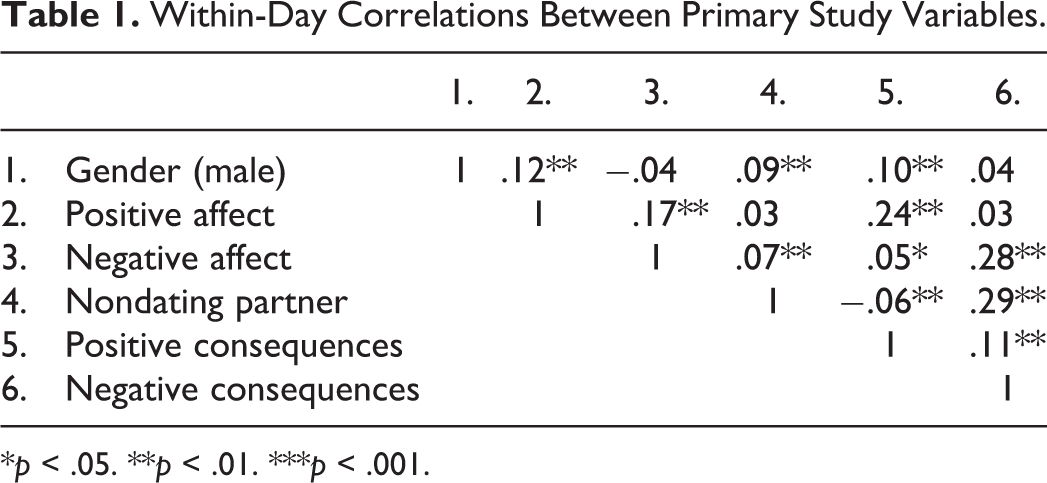
All measures are drawn from the daily surveys, with the exception of gender, which was based on an item from the baseline survey. Correlations between the primary study variables are presented in Table 1.
Within-Day Correlations Between Primary Study Variables.
*p < .05. **p < .01. ***p < .001.
Daily positive and negative affect
Participants reported their daily affect using the Positive and Negative Affect Scale (Watson et al., 1988). Participants responded to a scale with the stem question “To what extent did you feel the following different emotions and feelings?” about the prior day. Ten items assessing positive affect (e.g., excited) and 10 assessing negative affect (e.g., distressed) were each rated on a scale from 1 (very slightly or not at all) to 5 (extremely), and we created mean scores for positive and negative affect (M positive = 2.2, SD = 0.86, M negative = 1.5, SD = 0.57). Reliability within days was high for positive affect (α = .92) and negative affect (α = .87).
Vaginal sex
In each daily survey, participants reported if they had engaged in vaginal sex on the previous day (0 = no, 1 = yes).
Relationship with sexual partner
On days that participants reported sexual behavior, they were asked “How would you describe this partner?” with seven responses. Consistent with prior research using these data (Vasilenko et al., 2012) and our desire to separate relationships with some romantic/dating context from those without one, we recoded this item into a dichotomous variable such that 0 = dating partner (casual dating partner, regular dating partner, living with, engaged, or married) and 1 = nondating partner (stranger or friend). Participants reported sex with a nondating partner on 15.7% of sex days (n = 364).
Daily positive and negative consequences of sex
On days participants reported sexual behavior, they were asked whether they experienced 19 consequences of sex (Vasilenko et al., 2012). The checklist contains 7 positive consequences (e.g., “feel more intimate or closer to partner”) and 12 negative consequences (e.g., “wish you had not had sex”). We summed items for positive and negative consequences to create two total scores (positive: M = 2.7, SD = 1.6; negative: M = 0.4, SD = 1.2).
Covariates
Because college students’ affect differs between weekends and weekdays (Larsen & Kasimatis, 1990), and sexual behavior was more common on Fridays, Saturdays, and Sundays, we included a variable indicating whether a day was a weekday or weekend day (Monday, Tuesday, Wednesday, and Thursday = 0; Friday, Saturday, and Sunday = 1). In addition, we included the number of drinks consumed on a given day as a covariate, which was assessed each day by an open-ended question asking participants how many drinks they consumed the previous day.
Results
We applied multilevel modeling (MLM; Raudenbush & Bryk, 2002) in HLM 6.04 to six semesters of daily data to assess whether levels of positive and negative affect differ on days when an individual had sex compared to days they do not. First, to test Aims 1 and 2, we ran three-level models (person days nested within semesters nested within individuals) using all days of diary data, with positive and negative affect as the outcomes. At Level 1, we included controls for weekend and number of drinks consumed, along with our primary predictor, the effect of having sex on a given day. All Level-1 variables were group mean centered (e.g., centered on each individual’s mean) in order to examine within-person variations. We included no predictors at Level 2 but included random effects (R 0jk, R 3jk) that take into account how individuals’ affect and the effect of sexual behaviors on affect may differ systematically across semesters. At Level 3, we included gender as a predictor of each individual’s intercept and moderator of the impact of vaginal sex, with female students as the reference group. In addition, we included random effects (U 00k, U 30k) referring to how affect, and the association between affect and sexual behavior, may vary across individuals. Note that MLM allows for different numbers and spacing of measurement occasions across individuals at Level 1 but uses listwise deletion whereby individuals missing any data at Level 2 or 3 would have all Level-1 reports dropped from the analysis. However, because we included no Level-2 predictors and only gender at Level 3, we did not drop any participants for this reason and can include all individuals with at least 1 valid day of data.
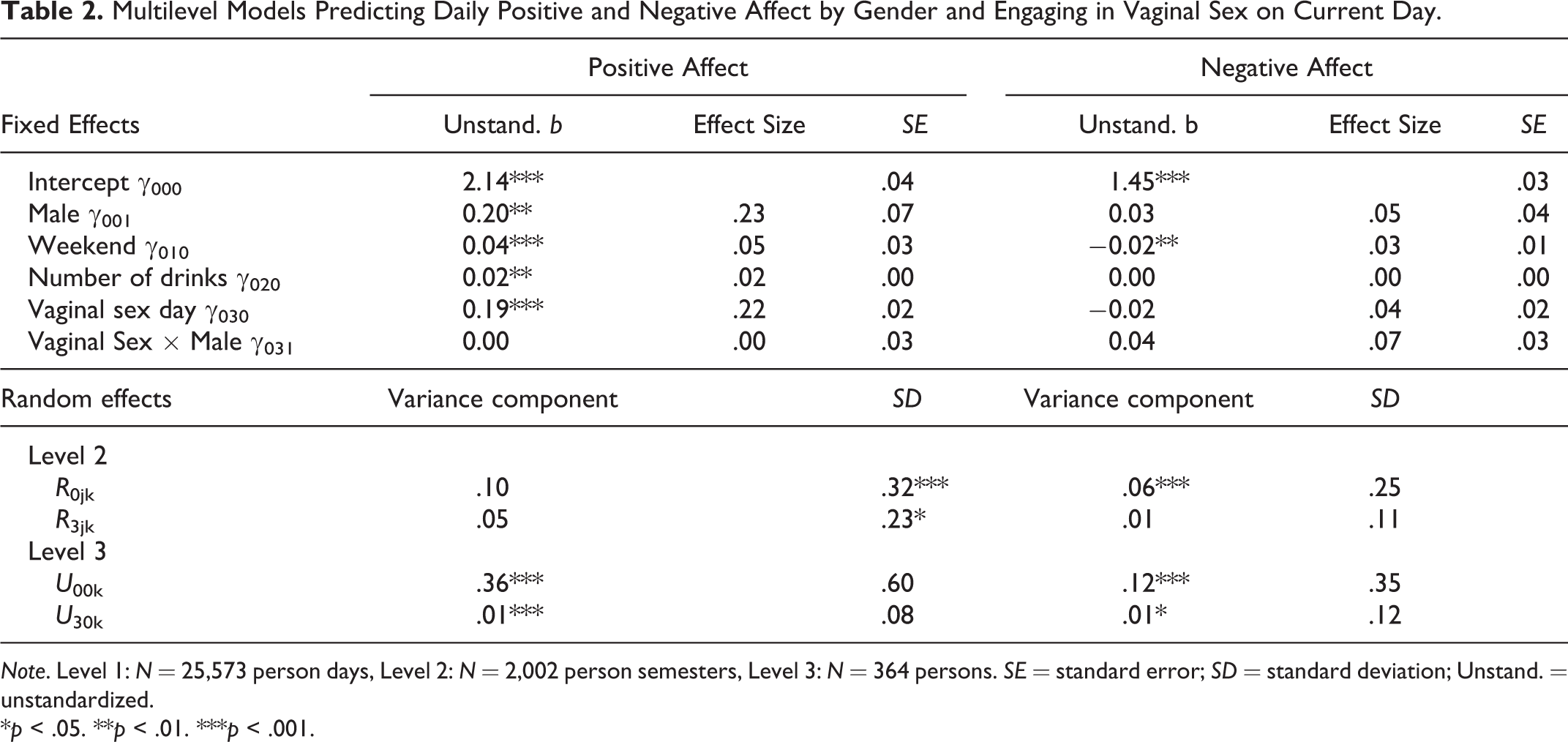
We ran bivariate models examining how vaginal sex predicted positive and negative affect as well as full models with controls. The findings were substantively similar across both sets of models, with one exception. The effect of vaginal sex on negative affect was only significant in the bivariate model (b = −.03, p < .05) and not the full model with controls. Thus, we present the results of the full models in Table 2. Male students reported higher levels of positive affect than female students (γ001). Students reported higher levels of positive affect and lower levels of negative affect on weekends (γ010) and higher levels of positive affect on days they drank more (γ020). For Aim 1 testing how affect differed on days participants had sex compared to days they did not, we found that participants reported higher levels of positive affect on days they had vaginal sex (γ030; b = .19, 0.22 SD increase). Thus, we found evidence supporting our hypothesis for Aim 1. For our second aim, we predicted that female students would experience lower positive and higher negative affect as a result of vaginal sex than male students; however, we found no gender differences in these associations (γ031). Thus, we found no evidence for our Aim 2 hypothesis.
Multilevel Models Predicting Daily Positive and Negative Affect by Gender and Engaging in Vaginal Sex on Current Day.
Note. Level 1: N = 25,573 person days, Level 2: N = 2,002 person semesters, Level 3: N = 364 persons. SE = standard error; SD = standard deviation; Unstand. = unstandardized.
*p < .05. **p < .01. ***p < .001.
Next, we examined how situational factors of sex predicted affect on days of vaginal sex using three-level MLMs to test Aims 3 and 4. Within-person (Level 1) predictors included relationship with partner and positive and negative consequences of sex as well as controls for weekend and alcohol use. Level-1 variables were group mean centered, with the exception of type of partner, as 70% of participants reported sex with only a dating partner on the days sampled, and thus, there was not enough within-person variability to calculate deviations from individuals’ means. At Level 3, we modeled the impact of gender on the intercept and associations between the type of partner and affect. Random effects representing how affect may vary across semesters and individuals were included (R 0jk, U 00k).
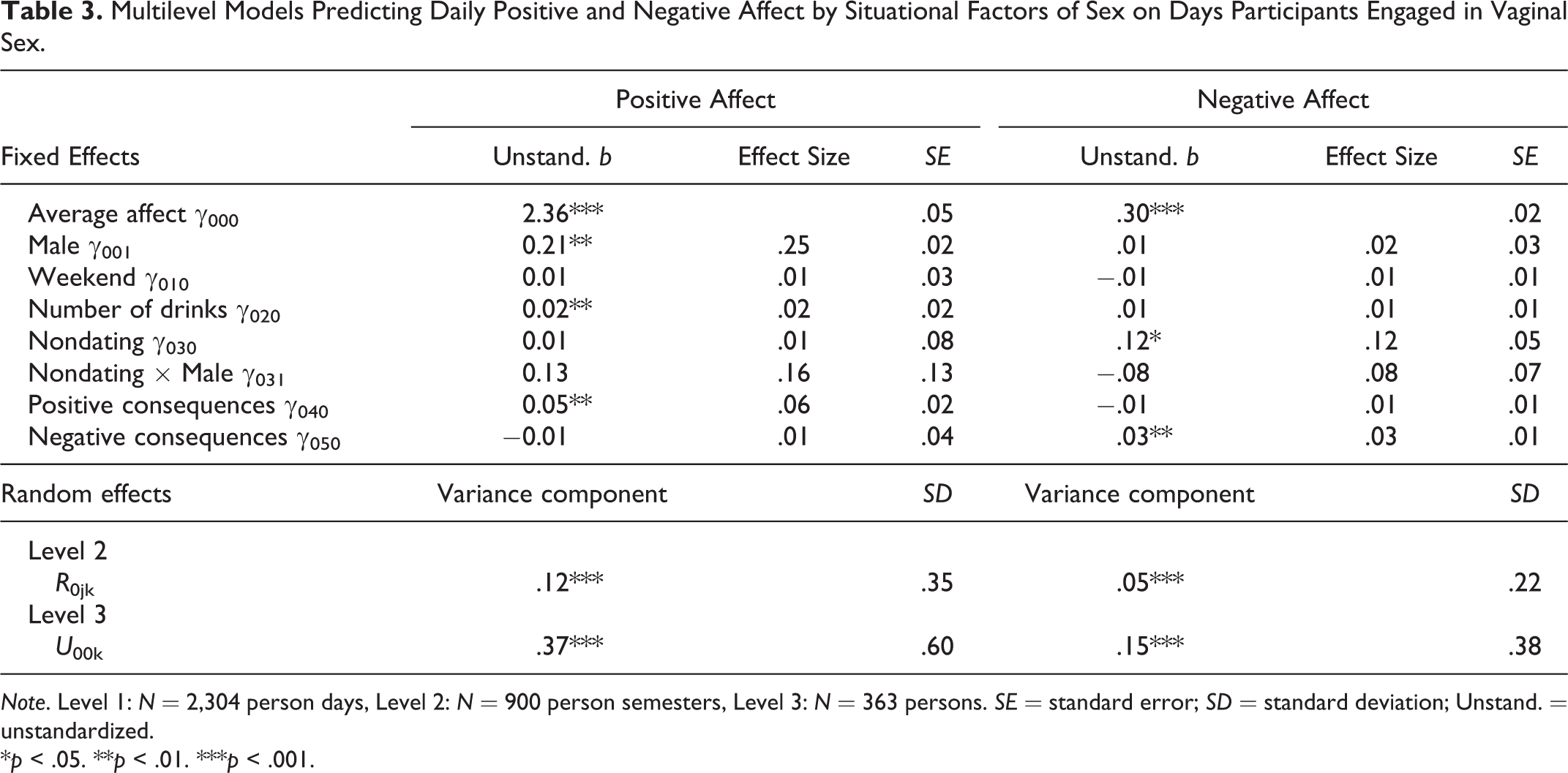
We ran bivariate models for each predictor (positive consequences, negative consequences, and relationship with partner) and full models with controls; results were substantively the same across both models. Thus, we present results of the full models in Table 3. Male students reported higher levels of positive affect than female students (γ001), and students reported higher levels of positive affect on days they drank more (γ020). For our third aim, we predicted that sex with a nondating partner would be associated with lower levels of positive and higher levels of negative affect and that this association would be stronger for female compared to male students. We found no differences in positive affect depending on the type of sexual partner. However, sex with a nondating partner was associated with higher levels of negative affect (γ030; b = .12, 0.20 SD increase), and there were no gender differences in this association (γ031). Thus, our Aim 3 hypothesis was partially supported. For Aim 4, we predicted that students would report higher levels of positive affect and lower levels of negative affect on days they perceived more positive and fewer negative consequences. Students reported higher levels of positive affect on days they perceived more positive consequences (γ040; b = .05, 0.06 SD increase) and higher levels of negative affect on days they reported more negative consequences (γ050; b = .03, 0.05 SD increase). Thus, we found partial support for our Aim 4 hypothesis.
Multilevel Models Predicting Daily Positive and Negative Affect by Situational Factors of Sex on Days Participants Engaged in Vaginal Sex.
Note. Level 1: N = 2,304 person days, Level 2: N = 900 person semesters, Level 3: N = 363 persons. SE = standard error; SD = standard deviation; Unstand. = unstandardized.
*p < .05. **p < .01. ***p < .001.
Discussion
We investigated how engaging in vaginal sex on a given day was associated with daily affect and how situational factors of the sexual experience predicted variations in affect. Consistent with prior work on adolescent and emerging adult sexual behavior (Shrier et al., 2007, 2010), we found that college students experienced higher levels of positive affect on days they engaged in vaginal sex. Thus, it appears that, on average, sexual behavior is associated with better short-term well-being in emerging adult college students. Because daily affect may cumulatively play a role in psychological distress (McCullough et al., 2000), sexual behavior may contribute to individuals’ broader well-being, and more frequent sexual behavior may be associated with better mental health, as it is in adulthood (Blanchflower & Oswald, 2004). Future research should examine how daily occurrences of sexual behavior are associated with long-term well-being. In addition, measuring affect at only one point during a day makes it difficult to determine whether changes in affect occur prior to or after sex, and future research should attempt to understand this temporal ordering. However, prior work with EMA data suggests that affect increases prior to intercourse, peaks around the time of intercourse, and returns to baseline levels about 8 hr after, which gives some indication of the process that may be occurring in our study (Shrier et al., 2010).
Contrary to our prediction, we did not find any gender differences in associations between vaginal sex and affect. Theories of the sexual double standard (Crawford & Popp, 2003) and prior research on first intercourse (Meier, 2007; Spriggs & Halpern, 2008) suggest more positive and less negative outcomes for men compared to women. However, studies using experience sampling have found no gender differences (Shrier et al., 2007, 2010), suggesting that although first intercourse may be associated with poorer mental health for female, compared to male, adolescents and emerging adults, later occurrences of sexual behavior may be similarly associated with well-being. It is also possible that individuals may perceive an occurrence of sexual behavior differently after more time has passed; for example, a female student’s initial feelings about an occasion of sexual behavior may be positive but may change after she has time to reflect or experience changes in her relationship with her sexual partner.
Although having vaginal sex is, on average, associated with increased positive affect, situational factors of individuals’ experiences can influence affect. Participants reported higher levels of negative affect on days they engaged in sex with a nondating partner, compared to dating partner, and there were no gender differences in this association. Past research has demonstrated between-person associations in nondating sexual behavior and depressive symptoms; female adolescents and college students who have engaged in sex with a nondating partner have more depressive symptoms than those who have not, whereas male college students who have engaged in nondating sex have fewer depressive symptoms than those who have not (Grello et al., 2006; Shulman et al., 2009). However, qualitative research has suggested that male college students do feel regret about their nondating sexual experience (Epstein, Calzo, Smiler, & Ward, 2009). Taken with prior research, our findings suggest that between-person and within-person associations of nondating sexual behavior and well-being may differ. For example, male emerging adults who seek out sex in nondating relationships may be less depressed overall than those who engage in sex only in dating relationships, but they may feel worse when they engage in nondating sex.
In addition, we found that individuals experienced higher levels of positive affect on days they perceived more positive consequences and higher levels of negative affect on days they perceived more negative consequences. This finding is consistent with theoretical and conceptual models suggesting perceptions play a role in well-being (Abramson et al., 1989; Beck, 1987; Diener et al., 2003; Lyubomirsky, 2001; Vasilenko et al., 2014). However, negative consequences did not predict positive affect, and positive consequences did not predict negative affect. These findings suggest that although individuals may seek out sexual experiences to cope with unpleasant feelings (Cooper, Shapiro, & Powers, 1998), a more positive sexual experience will not decrease negative affect. Because prevention programs may be more effective when they include accurate information tailored to a specific population (Rotheram-Borus et al., 2009), health educators and prevention scientists should take into account that sexual behavior may not be associated with well-being in the same way in all situations and frame programming accordingly. For example, programs focusing on abstaining from sex altogether ignore the positive impact of sexual behavior, whereas more nuanced messages about sex with nondating partners or avoiding negative consequences may better reflect college students’ experiences.
There are several limitations of this article. First, although we demonstrated that positive affect is higher on days of vaginal sex, we were not able to determine the directionality of this association, and researchers should examine potential bidirectional associations by collecting multiple reports of affect each day. Our sample consisted only of college students; thus, we have no information about emerging adults who do not attend college or individuals at younger or older ages. Future studies could examine whether associations between sexual behavior and well-being change over development by following individuals from adolescence into adulthood. Using reports of daily sexual behavior limited the individuals included in our analysis to those who reported vaginal sex during a data collection period, and thus, these results may not be generalizable to individuals who are sexually active but engage in sex infrequently. Our focus on vaginal sex limited our sample to only individuals who engaged in one type of sexual activity with an opposite-sex partner, and future research should explore links between other types of sex and affect as well as how sexual behavior and affect are associated in sexual minority students. Our measure of relationship context did not differentiate all the types of relationships emerging adults are involved in such as hookups (Paul, McManus, & Hayes, 2000) and sex with an ex (Halpern-Meekin, Manning, Giordano, & Longmore, 2013), and future research should examine the effects of a full range of relationship types. The effects demonstrated were relatively small, particularly for the effect of consequences, suggesting there are many other important factors to consider and there may be considerable heterogeneity in how sexual behavior is associated with affect. Finally, although we examined how several factors are associated with well-being (e.g., gender, relationship with partner, and perceived consequences of sex), there are many other factors that may be linked to sexual behavior and well-being. For example, future research could examine how between-persons factors such as religiosity or attitudes about sexual behavior may be associated with both perceptions of sexual behavior and well-being. In addition, individuals’ prior sexual experiences likely play a role in how they perceive their current sexual behaviors, and future research should further test this idea.
Despite these limitations, this article contributes to the knowledge of sexual behavior and well-being in several ways. First, we examine associations between sexual behavior and short-term well-being in emerging adulthood, whereas most research in this area has examined associations between first intercourse and longer term mental health in adolescence. Our findings suggest that, on average, sexual behavior is associated with better short-term well-being. Second, this article used reports obtained the day after participants engaged in vaginal sex, eliminating confounds of memory, passage of time, and changes in relationship with a sexual partner. Finally, this article examined how affect differed depending on situational factors of the sexual experience, demonstrating, for example, that students report higher negative affect on days they have sex with a nondating, compared to dating, partner. These findings underscore the importance of examining how associations between sexual behavior and well-being may differ across individuals and situations.
Footnotes
Authors’ Note
An earlier version of this article was submitted as a part of Sara Vasilenko’s doctoral dissertation and presented to the 2011 Society for Research on Child Development Meeting in Montreal, Canada.
Acknowledgments
The authors would like to thank the following individuals for commenting on a prior draft of this article: H. Harrington Cleveland, Eric Loken, and D. Wayne Osgood. They also would like to thank Nicole Morgan, Meg Small, and the rest of the University Life Study team for their work on study design and data collection.
Author Contributions
Sara A. Vasilenko contributed to conception, design, acquisition, analysis, and interpretation; drafted the manuscript; gave final approval; and agreed to be accountable for all aspects of work ensuring integrity and accuracy. Eva S. Lefkowitz contributed to conception, design, acquisition, analysis, and interpretation; critically revised the manuscript; gave final approval; and agreed to be accountable for all aspects of work ensuring integrity and accuracy.
Declaration of Conflicting Interests
The author declared no potential conflicts of interest with respect to the research, authorship, and/or publication of this article.
Funding
The author disclosed receipt of the following financial support for the research, authorship, and/or publication of this article: Sara Vasilenko was supported by NIDA grants 2T32DA017629-06A1, P50-DA010075-15, and P50-DA039838. This work was funded by a grant from NIAAA (R01-AA-016016) to Jennifer Maggs.