







Abstract
Life scripts dictate the culturally appropriate order, content, and timing of autobiographical events. In the current study, we examined the ethnic-racial life scripts of American emerging adults from three ethnic-racial backgrounds. One hundred ninety-five Asian, 165 Latinx, and 45 White undergraduates produced and rated seven life events they believed to be prototypical of their ethnic-racial group and self-reported desired and perceived script normality, ethnic-racial identity (ERI), and psychological health. The resulting life scripts differed in meaningful ways between the three ethnic-racial groups. Relations between script normality, ERI, and psychological health were similarly varied between groups. These findings provide a descriptive basis for understanding the normative expectations associated with certain ethnic-racial enclaves and how life scripts may vary across these and other such groups. Moreover, the manner in which these scripts are perceived may carry divergent implications for adjustment, across ethnic-racial groups.
Culture (i.e., shared “ideas, practices, and social institutions that enable coordination of behavior”; Morris et al., 2015, p. 632) informs the content and perception of personal events that are recalled, retold, and transmitted (Bohn et al., 2017; Fivush et al., 2011). Vital to the interplay between culture and the self is the life script, which represents shared knowledge regarding how lives ought to progress (McLean & Syed, 2016). Prior work has emphasized culture as critical in shaping life script content (what events) and structure (timing and sequence of events; Berntsen & Rubin, 2004; Bohn et al., 2017). Most studies on this topic, however, equate nationality with culture. Comparably few have sought to assess within-country differences in life scripts, such as those based on ethnicity and race 1 (but see Coleman, 2014; Hatiboğlu & Habermas, 2016; Janssen & Haque, 2018).
Increasing ethnic-racial diversity in the United States underscores the need to examine the psychological realities associated with ethnic-racial group memberships (Morris et al., 2015; Phinney, 1996). Life scripts are optimal constructs for assessing how individuals’ recollection and perception of events are shaped by ethnicity and race because they provide an organizational framework for considering differences in biographical events across groups. In the present study, we analyzed the content and structure of the ethnic-racial life scripts produced by Asian, Latinx, and White American emerging adults to determine whether and the degree to which life scripts varied across these ethnic-racial groups. We also examined how emerging adults’ evaluations of desired and perceived ethnic-racial life script normality related to measures of ethnic-racial identity (ERI) and psychological health (operationalized as greater life satisfaction and lower depression/anxiety) both within and across three ethnic-racial groups.
Life Scripts and Emerging Adulthood
Life scripts are shared beliefs about the expected order, content, and timing of events in a prototypical life (Berntsen & Rubin, 2004; Dunlop et al., 2017; Zaragoza Scherman et al., 2017). Theory on this topic unites the script concept developed by Schank and Abelson (1977; Abelson, 1981) with sociological and anthropological research on the age stratification of culturally sanctioned norms (e.g., Fry, 1980). Scripts embody knowledge about the protocol associated with a particular event (e.g., ordering at a restaurant; Berntsen & Rubin, 2004), whereas life scripts designate the typical content, timing, and sequence of events throughout the life span. As such, life scripts represent a cultural concept of biography that is central to identity formation (Habermas, 2007). 2
Identity (i.e., a sense of personal continuity across time and contexts; Erikson, 1968) is a primary concern of emerging adulthood, the developmental period between adolescence and young adulthood (roughly ages 18–29; Syed & Mitchell, 2013) that involves cognitive, personal, and sociocultural changes which prompt identity work (Arnett, 2000; Habermas & Köber, 2015; McLean et al., 2018). Arnett (2004) argued that societal and economic changes have led to a new developmental stage in adulthood taking place between one's late adolescence and mid-to-late 20s. Within this period of emerging adulthood, identity exploration is both salient and protracted. During this time, young people pursue higher education and training, experience frequent job fluctuations, and engage in premarital sex and cohabitation (Arnett, 2007; Schwartz, 2016). Critics argue that emerging adulthood is exclusive to youth with greater privilege (e.g., White middle class; Hendry & Kloep, 2007). Yet those who may not identify as “conventional” emerging adults (e.g., young parents) still negotiate an identity amid changing notions of adulthood (Syed & Mitchell, 2013). In this way, the experience of emerging adulthood varies based on sociodemographic factors including ethnicity and race. Examining how emerging adults’ perception of the life course differs based on ethnicity/race can provide insight into how these constructs may guide individuals’ life expectations and identities.
Understanding ethnicity and race is a major task for emerging adults, one that becomes more complex during college wherein individuals are able to take classes and participate in events that foster ethnic-racial awareness (Syed, 2010; Syed & Azmitia, 2008; Umaña-Taylor et al., 2014). Consequently, ethnic-racial expectations may be clearer and impact one’s understanding of ethnicity and race more during emerging adulthood. In this way, exploring ethnic-racial differences in the life course may shed light on how individuals make sense of membership in an ethnic-racial group. In addition, previous work on life scripts finds that biographical knowledge culminates during emerging adulthood (Habermas, 2007). Thus, it is particularly important to examine life course expectations that drive emerging adults’ identity during this period of increased identity focus, ethnic-racial salience, and biographical understanding.
Measuring Life Scripts
Researchers assessing life scripts typically prompt participants to list several events (most commonly seven) that are believed to be likely to occur in the life of a newborn child belonging to their own gender and culture. Participants then rate each event for perceived age of occurrence, prevalence, importance, and valence (see Berntsen & Rubin, 2004; Bohn et al., 2017; Dunlop et al., 2017). To derive the life script(s) from the aggregate data, the researcher identifies events that are mentioned by at least 4% of the relevant sample. The resulting life scripts represent empirical measures of the events considered prototypical in a given culture (Bohn, 2010). Research in this area has revealed that life script events are (a) mostly positive, (b) occur primarily within the first 10–30 years of life (i.e., the reminiscence bump; see Berntsen & Rubin, 2004; Bohn et al., 2017; Wolf & Zimprich, 2020; Zaragoza Scherman et al., 2017), and (c) are generally shared across age and gender (Bohn, 2010; Janssen et al., 2014).
Given its idealized nature, the life script is believed to influence and engender individual behavior (Berntsen & Rubin, 2004). For instance, in certain regions of China, one is typically expected to attend college in their late teens and early 20s, secure the “right” job by their mid-20s, and begin a family shortly thereafter (Zaragoza Scherman et al., 2017). Thus, individuals’ thoughts (planning for college), behaviors (applying to college), and life choices (attending college) are driven in part by life script expectations. Consequently, life scripts serve not only to describe but also to create and endorse expectations regarding how individual lives should progress. Culture, however, is constituted by a variety of factors besides nationality, including ethnic-racial identification (Benet-Martínez & Oishi, 2008). As such, there may exist distinct life scripts pertaining to different ethnic-racial communities, given the differing values, customs, and norms associated with these cultural groups (Schwartz, Unger, et al., 2010).
Inter- and intra-country differences in life scripts
To date, researchers interested in examining how life scripts vary across people, places, and groups have primarily considered inter-country differences in life scripts. Such studies have found that while there is significant overlap in key life script events across countries (e.g., “own birth,” “begins school”; Zaragoza Scherman et al., 2017), certain life expectations may be culturally distinct (e.g., 15th birthday party or “quinceañera” in Mexico). For instance, Erdoğan et al. (2008) found that, when compared to the Danish life scripts collected by Berntsen and Ruben (2004), the Turkish life script contained events unseen in the Danish life script (e.g., military service, circumcision) as well as more negative events. Thus, certain life script events are unique and may contribute to differing cognition and/or behavior (see Janssen & Haque, 2018, for parallel argument). Still, inter-country differences are not reducible to differences at the individual level (Na et al., 2010), and it is important to discern life script differences that exist within countries. In pursuit of this aim, Hatiboğlu and Habermas (2016) examined differences in generalized life scripts based on subcultures (urban vs. rural, migrant vs. indigenous) and noted that overlap between individual and national life scripts (i.e., normativity) was higher for collectivistic (Turks and Turkish migrants) than for individualistic subcultures (native Germans), suggesting that cultural values influence life script content and evaluations of normality. It is important to note, however, that this study prompted participants to consider generalized (or macro-level; Coleman, 2014) life scripts rather than those pertaining to a particular domain (e.g., ethnicity/race).
The Contextualized Approach
Although previous work has contrasted life script expectations that exist between (and, to a certain extent, within) individuals from different countries (Erdoğan et al., 2008; Hatiboğlu & Habermas, 2016; Janssen & Haque, 2018; Janssen et al., 2014; Zaragoza Scherman et al., 2017), these studies have collected a script pertaining to life in general rather than a specific domain (e.g., race, ethnicity, or class; but see Coleman, 2014). In contrast to this more “generalized” approach, the “contextualized” approach considers how norms and expectations vary depending on certain roles and contexts (e.g., ethnicity/race; see Dunlop, 2015). This is done by eliciting events, goals, or, perhaps, trait ratings from within a particular domain (e.g., work contexts, the romantic domain; Dunlop et al., 2017; Roberts & Donahue, 1994). Past work demonstrates that considering contextualized self-representations (i.e., domain-specific self-evaluations) yields a differing and often complimentary pattern of results when compared to a generalized approach (Dunlop, 2015; Dunlop et al., 2017; Roberts et al., 2003; Roberts & Donahue, 1994). As such, this method may reveal how life scripts and evaluations of script normality vary systematically based on ethnicity and race (among other contexts and social identities).
Applying a contextualized approach to the study of life scripts, Dunlop and colleagues (2017) identified differences between the life script generated about the romantic domain and the general Danish life script collected by Berntsen and Rubin (2004). Similarly, Coleman (2014) found that a contextualized prompt elicited more events that are disproportionately faced by African Americans (e.g., incarceration) when comparing African American participants’ general life script to a contextualized life script pertaining to their race/ethnicity. For certain intents and purposes, a contextualized paradigm may be preferable to a generalized approach, in part because the former is more culturally sensitive and suited for detecting life script variations within countries. Consequently, the present study used a contextualized approach to examine similarities and differences in life scripts within the ethnic-racial domain.
Desired and Perceived Script Normality, ERI, and Psychological Health
In addition to beginning to study life scripts from a contextualized perspective, researchers have begun to examine how personal evaluations of desired and perceived life script normality relate with psychological functioning (Dunlop et al., 2017). Self-reported normality allows the participant to gauge for themselves the extent to which they feel their life aligns (or should align) with the relevant life script. Prior work on life scripts within the romantic domain found that greater desired love life normality (i.e., desire for overlap between one’s own love life and the love life script) was related with maladaptive romantic domain functioning, whereas participants with greater perceived love life normality (i.e., self-perceived overlap between one’s own love life and the love life script) exhibited adapative romantic domain functioning.
The extent to which one desires to meet ethnic-racial expectations and perceives normality relative to such norms may correspond with psychological health and features of ERI itself. ERI encompasses one’s sense of commitment and belonging to their ethnic-racial group as well as their positive regard, knowledge of, and involvement in the traditions of that group (Phinney, 1996; Phinney & Ong, 2007; Sellers et al., 2006; Umaña-Taylor et al., 2014). According to Phinney (1996), the psychological impact of membership in an American ethnic-racial group is partly due to a subjective understanding of ERI and related experiences. Research suggests experiences that trigger ethnic-racial understanding are especially pervasive among college-going emerging adults (Ethier & Deaux, 1994; Syed & Azmitia, 2008). As follows, we assessed ethnic-racial life scripts and script normality in conjunction with ERI, as the value that emerging adults place on script normality may differ based on ERI (Phinney, 1992; Umaña-Taylor et al., 2004).
Understanding factors that promote ERI is critical, as stronger ERI often enhances psychological functioning. For example, feeling positive about one’s ethnicity and race (i.e., affirmation/private regard; Sellers et al., 2006; Umaña-Taylor et al., 2004) is related with greater well-being and lower depressive symptoms for Asian and Pacific Coast Islander, African American, American Indian, and Latinx youth (Neblett et al., 2012; Rivas-Drake, Syed, et al., 2014). Further, ethnic exploration and belonging are linked with greater self-esteem and lower depression among Asian and Latinx youth and public regard (i.e., extent to which one feels others evaluate their group positively; Sellers et al., 2006) is negatively related with depressive and somatic symptoms among Asian and Latinx youth, respectively (Rivas-Drake, Seaton, et al., 2014).
While ERI often corresponds with positive outcomes (Douglass & Umaña-Taylor, 2016), this relation is complex and varies based on race/ethnicity (Rivas-Drake, Seaton, et al., 2014; Yip, 2018). For example, ethnic-racial belonging is more often protective when observed among Latinx and Asian Americans as opposed to African Americans, whereas negative effects of private regard (i.e., positive evaluation of one’s ethnic-racial group) are often observed among Asian American as opposed to African American and Latinx participants (Yip, 2018). Given that relations between ERI and positive functioning are mixed, and no studies have examined links between script normality, ERI, and psychological health, we remained agnostic regarding the nature of relations between script normality, ERI, and psychological health.
The Present Study
The present study was guided by three research questions. With respect to Research Question 1, we asked whether life script content and structure varied between Asian, Latinx, and White emerging adults. With respect to Research Question 2, we asked whether emerging adults’ self-reported desired and perceived script normality varied by ethnic-racial self-identification. Finally, with respect to Research Question 3, we asked whether emerging adults’ script normality related with ERI and psychological health (operationalized via measures of subjective well-being and depression/anxiety) both within and across ethnic-racial groups. For reasons outlined above, we refrained from constructing formal directional hypotheses but suspected that differences would exist between ethnic-racial groups due to (1) our contextualized prompt and (2) the differing values, customs, and norms associated with these ethnic/racial groups.
Method
Participants
Four hundred five undergraduates (Mage = 19.86 years, standard deviation [SD] = 1.63, range: 18–33, 264 females) at the University of California Riverside (UCR) participated in a study examining “events relevant to your cultural/ethnic group” in exchange for research credit. Data collection occurred over the course of a 10-week quarter, with the intent being to recruit as many individuals as possible. To be eligible, individuals were required to be at least 18 years or older and self-identified as Asian, Latinx, or White/Caucasian. We examined differences between Asian, Latinx, and White emerging adults, because the UCR population is composed primarily of Asian (33.8%), Latinx (41.5%), and White/Caucasian (11%) students (UCR Institutional Research, 2018). One hundred ninety-five participants self-identified as Asian (Mage = 19.48, SD = 1.80), 165 as Latinx (Mage = 19.48, SD = 1.80), and 45 (Mage = 19.27, SD = 2.34) as White/Caucasian. This ethnic-racial composition is representative of the demographic of UCR students. Within each ethnic-racial group, 115 Asian, 122 Latinx, and 27 White participants identified as female (see Table 1).
Descriptive Statistics for Study Participants.
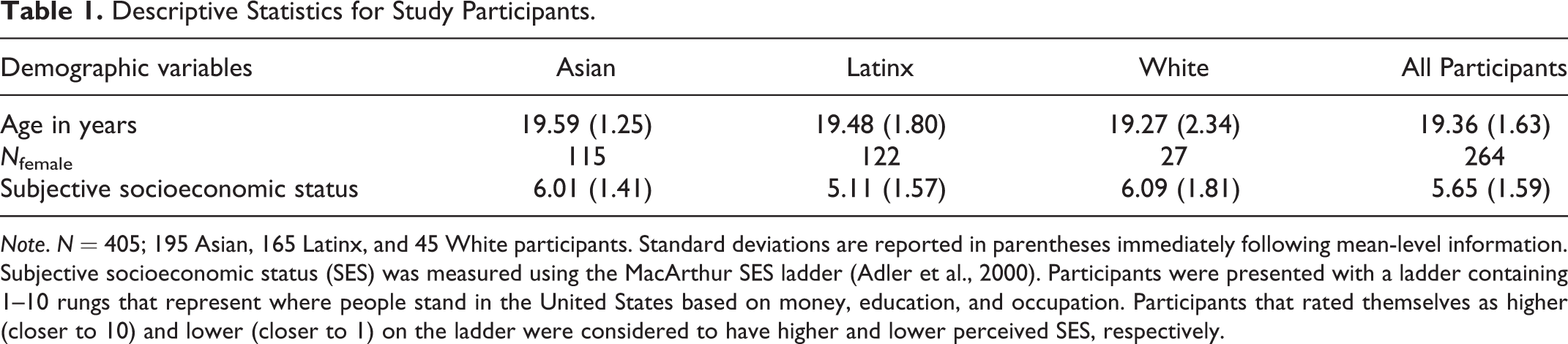
Note. N = 405; 195 Asian, 165 Latinx, and 45 White participants. Standard deviations are reported in parentheses immediately following mean-level information. Subjective socioeconomic status (SES) was measured using the MacArthur SES ladder (Adler et al., 2000). Participants were presented with a ladder containing 1–10 rungs that represent where people stand in the United States based on money, education, and occupation. Participants that rated themselves as higher (closer to 10) and lower (closer to 1) on the ladder were considered to have higher and lower perceived SES, respectively.
Procedure
Participants were first asked to select their primary ethnic-racial identification from a broader list to ensure they met study inclusion criteria. They then provided informed consent and were prompted to complete a measure of their ethnic-racial life script based on their self-identified ethnic-racial group. Following this portion of the survey, emerging adult participants completed measures assessing their desired and perceived ethnic-racial life script normality, ERI, psychological health, and demographics. In what follows, we present descriptive statistics and internal reliabilities for each self-report measure including participants from all ethnic-racial groups (see Table 2).
Relations Between Script Normality and Outcome Variables.
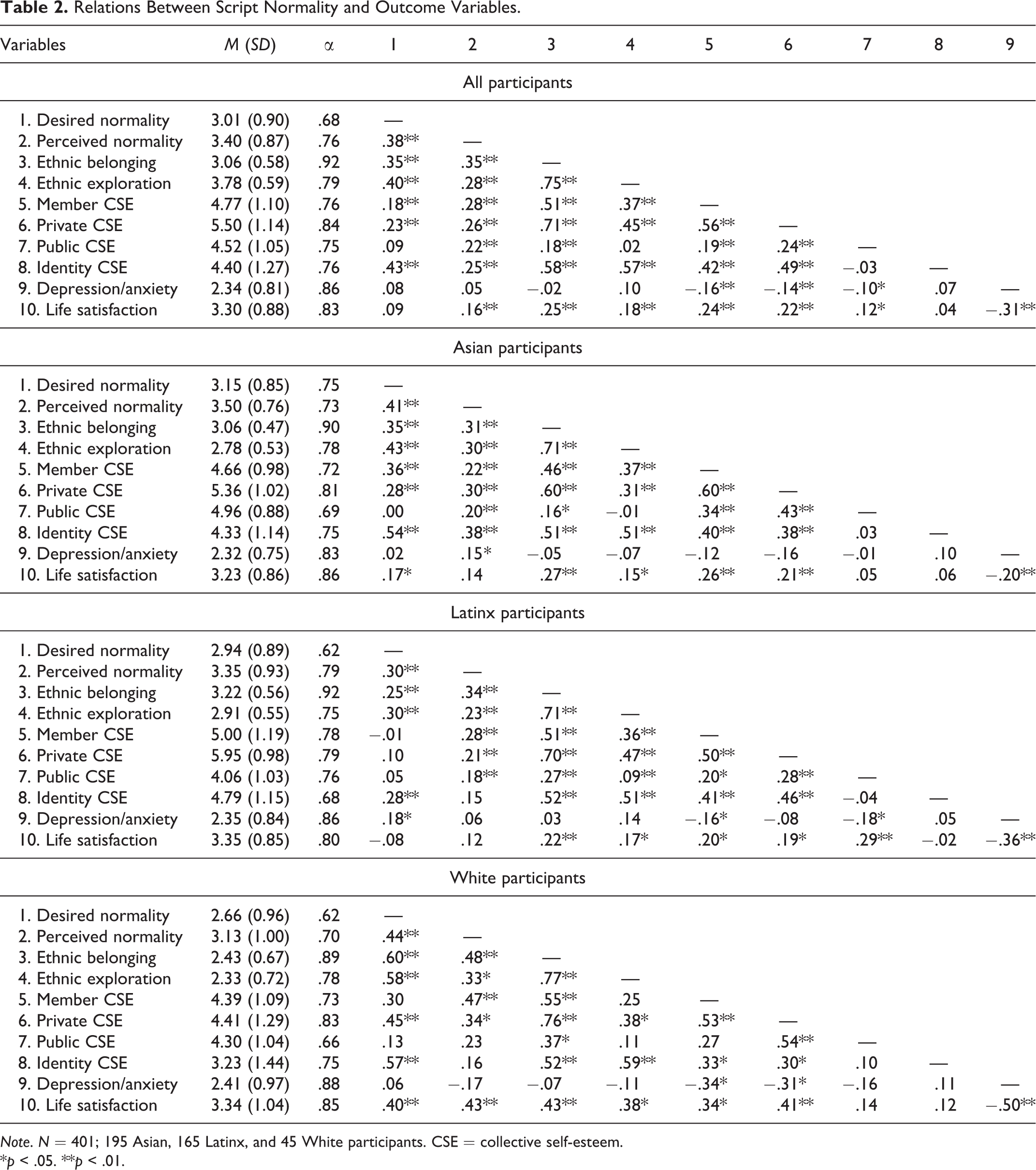
Note. N = 401; 195 Asian, 165 Latinx, and 45 White participants. CSE = collective self-esteem.
*p < .05. **p < .01.
Measures
Ethnic-racial life script
Our ethnic-racial life script measure mirrored that of prior research, with the exception that, here, emerging adult participants provided and rated seven significant events believed to be prototypical to a member of their ethnic-racial group rather than to their nationality or love life as have been examined in previous works (see Berntsen & Rubin, 2004; Dunlop et al., 2017). Participants were then presented with the following prompt: Imagine an ordinary [Asian, Latinx, or White/Caucasian] infant (choose boy or girl according to your own gender). It cannot be a specific infant that you know, but a prototypical [Asian, Latinx, or White/Caucasian] infant with a quite ordinary life ahead of him or her. Your task is to list the seven most important events that you imagine are highly likely to take place in this prototypical individual’s life. On each of the following seven pages, please list the specific event as well as answer the additional questions about it. These events may be listed in any order you would like. Please give each event a short title that specifies its content.
Desired and perceived ethnic-racial life script normality
Desired script normality is the degree to which one wants their life to map on to the normative life script, whereas perceived script normality is the extent to which one believes that their life adheres to this script. Here, we adapted Dunlop and colleagues’ (2017) love life script normality measure for use in the ethnic-racial domain. Participants rated their agreement with eight statements including “I want my life to be similar to the ‘typical’ life of a member of my cultural/ethnic group” and “My life is similar to most other members of my cultural/ethnic group who are my age” on a 5-point Likert-type scale (1 = strongly disagree, 5 = strongly agree) for scores of desired (M = 3.01, SD = 0.89, α = .68) and perceived normality (M = 3.39, SD = 0.87, α = .76), respectively.
ERI Measures
To capture the multidimensional nature of ERI and measure components typically assessed in past research on racial and ethnic identity, we used Phinney’s (1992) multigroup ethnic identity measure (MEIM) and Luhtanen and Crocker’s (1992) race-specific collective self-esteem (CSE) measure, which captures four components of ERI described below.
MEIM
The MEIM (Phinney, 1992) is a 12-item measure that quantifies ethnic-racial affirmation (positive feelings about one’s group), belonging, and commitment as well as ethnic exploration, two important components of ERI (Roberts et al., 1999). Emerging adult participants rated items such as “I have a strong sense of belonging to my own ethnic group” (ethnic belonging; M = 3.06, SD = 0.58, α = .92) and “I think a lot about how my life will be affected by my ethnic group membership” (ethnic exploration; M = 2.79, SD = 0.59, α = .79) on a 4-point Likert-type scale ranging from 1 = strongly disagree to 4 = strongly agree.
CSE
The race-specific version of the CSE Scale was used to measure participants’ evaluation of their ethnic-racial group (Luhtanen & Crocker, 1992). This 16-item measure quantifies (1) the degree to which one feels that they are a worthy member of their ethnic-racial group, (2) how positively one views their ethnic-racial group (i.e., affirmation/private regard; Umaña-Taylor et al., 2014), (3) how positively one thinks that others view one’s ethnic-racial group (i.e., public regard; Douglass & Umaña-Taylor, 2016), and (4) how important ethnic-racial identification is to one’s personal identity (i.e., centrality; Sellers et al., 2006). Emerging adult participants rated items such as “I am a worthy member of my race/ethnic group” (member CSE; M = 4.77, SD = 1.10, α = .76), “I often regret that I belong to my racial/ethnic group” (reverse-scored, private CSE; M = 5.49, SD = 1.14, α = .84), “Overall, my racial/ethnic group is considered good by others” (public CSE; M = 4.52, SD = 1.05, α = .75), and “The racial/ethnic group I belong to is an important reflection of who I am” (identity CSE; M = 4.40, SD = 1.27, α = .76) on a 7-point Likert-type scale with higher values indicating greater endorsement (1 = strongly disagree, 7 = strongly agree).
Psychological Health Measures
Depression and anxiety
The Patient Health Questionnaire (PHQ-4; Kroenke et al., 2009) was used to measure participants’ depression and anxiety. Exemplary items include “feeling down, depressed, or hopeless” and “feeling nervous, anxious, or on edge” (M = 2.34, SD = 0.81, α = .86). Emerging adult participants rated the frequency at which they experienced these items on a 4-point Likert-type scale ranging from 1 = not at all to 4 = nearly every day.
Satisfaction with life (SWL)
The SWL Scale was used to assess emerging adult participants’ subjective well-being (Diener et al., 1985). The SWL (M = 3.30, SD = 0.88, α = .84) is a 5-item measure, where participants rate items such as “I am satisfied with my life”. In the current study, these ratings were provided on a 5-point Likert-type scale (1 = strongly disagree, 5 = strongly agree).
Quantifying the Ethnic-Racial Life Script
The resulting ethnic-racial life script events were separated into three different spreadsheets based on emerging adult participants’ self-identified ethnic-racial group (i.e., Asian, Latinx, or White/Caucasian). In the interest of blind coding, we randomized the events contained within each spreadsheet such that the seven events provided by each emerging adult participant did not appear subsequently. The first author then read through each event, noting the types of events that were prominent, and subsequently designed three coding manuals to quantify the content of each groups’ events. This author next coded the entirety of each subsample using the appropriate coding manual.
To establish interrater reliability, the applicable coding manual and a spreadsheet containing 400 events were disseminated on a weekly basis to two research assistants until coding was complete (approximately 3 hr of coding per week). Coders met each week to discuss major coding discrepancies and were given the chance to change or maintain discrepant codes following a group discussion. Research assistants were also asked to provide any novel event types that were not already contained within the coding manual for each group.
In line with coding conventions in the published literature (Bohn, 2010), events mentioned by at least 4% of each subsample were included in the final coding manual for each ethnic-racial group. This resulted in 41 Asian, 33 Latinx, and 26 White life script events (see Tables 3–5). There was 96.3% agreement between the first author’s and the primary research assistant’s codes (average κ = .96).
Events Mentioned by at Least 4% (Eight Times) of Asian Participants and Their Sum of Records, Age at Event, Estimated Life Prevalence, Importance, and Valence.
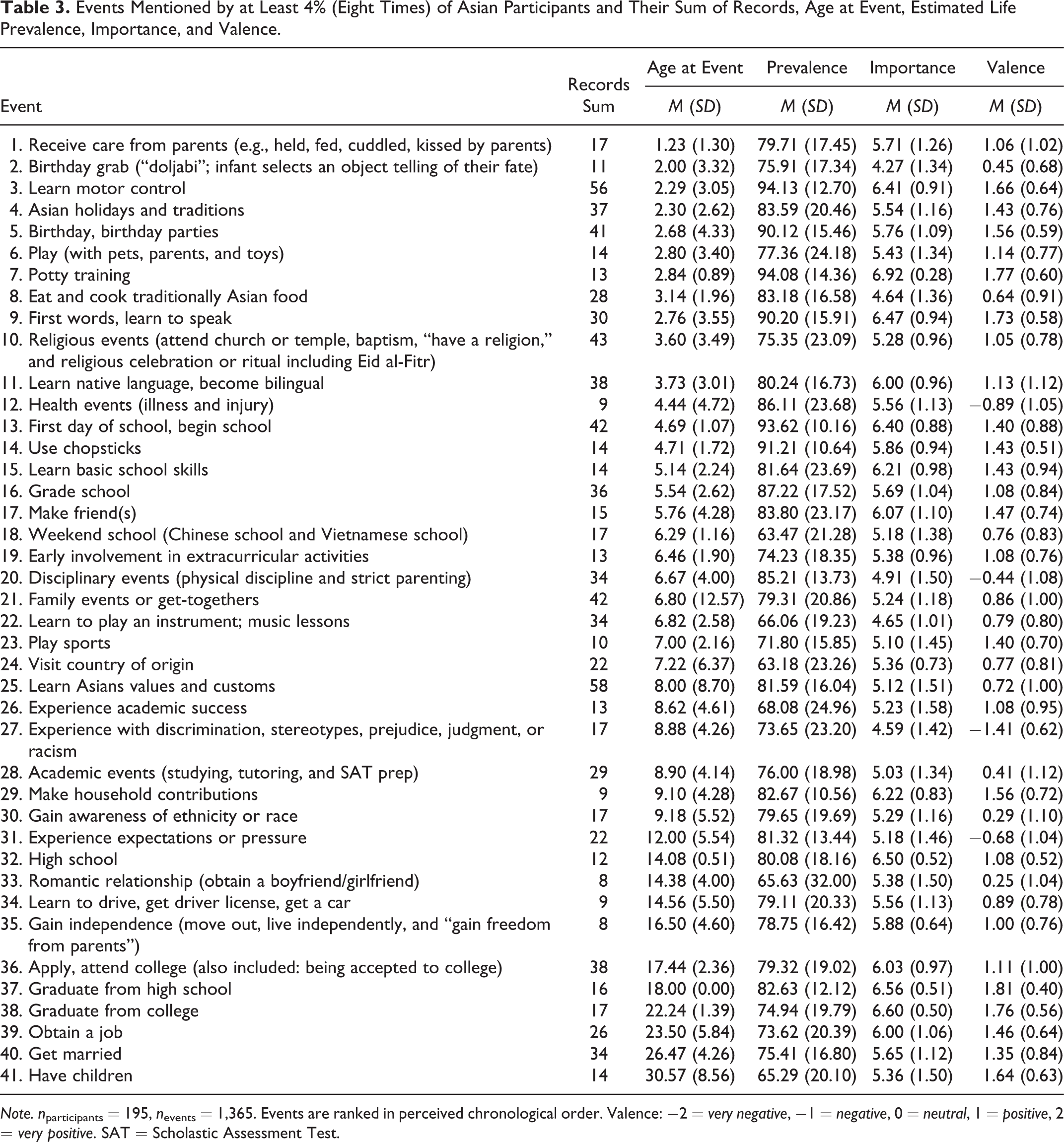
Note. nparticipants = 195, nevents = 1,365. Events are ranked in perceived chronological order. Valence: −2 = very negative, −1 = negative, 0 = neutral, 1 = positive, 2 = very positive. SAT = Scholastic Assessment Test.
Events Mentioned by at Least 4% (Seven Times) of Latinx Participants and Their Sum of Records, Age at Event, Estimated Life Prevalence, Importance, and Valence.
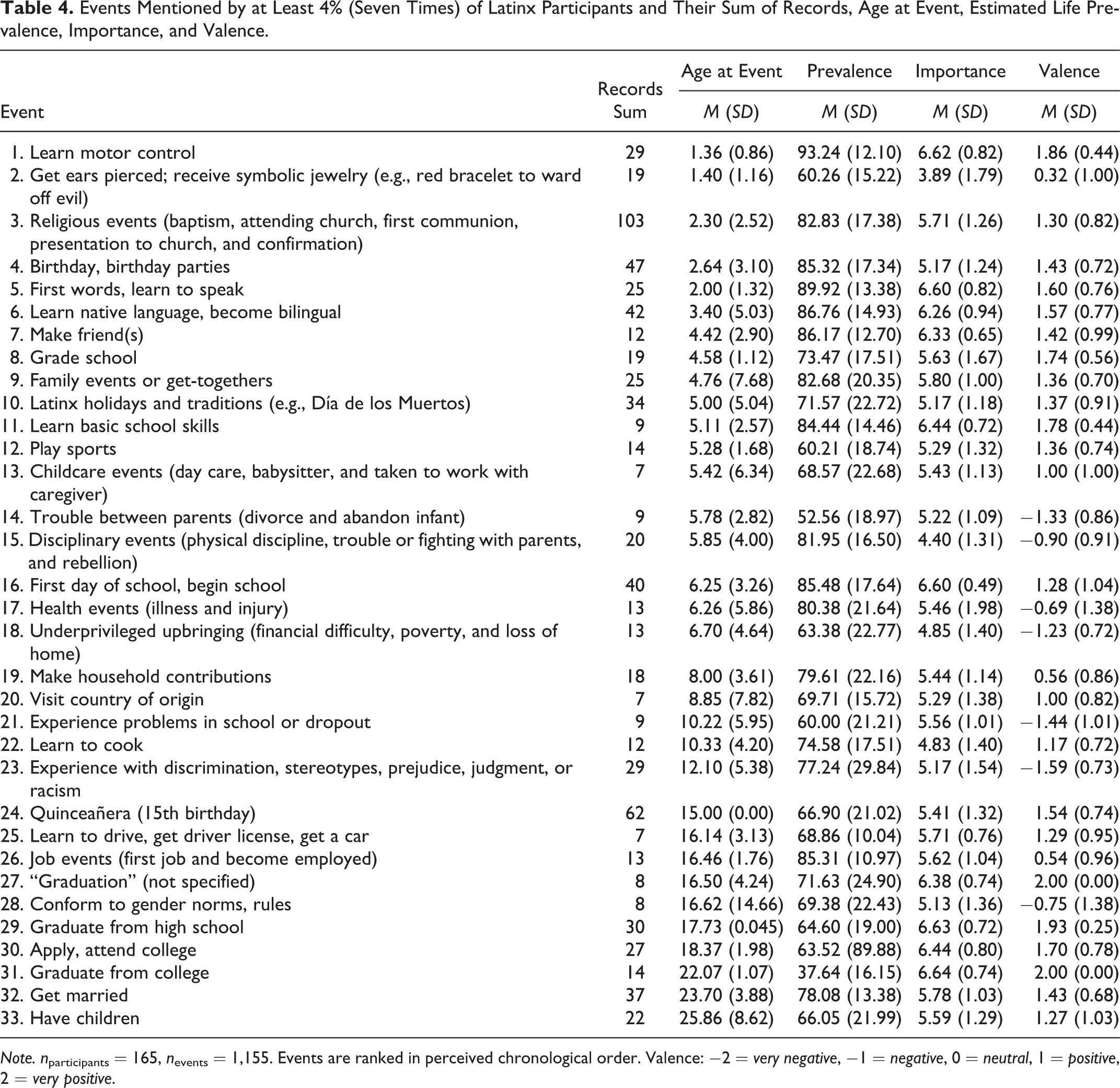
Note. nparticipants = 165, nevents = 1,155. Events are ranked in perceived chronological order. Valence: −2 = very negative, −1 = negative, 0 = neutral, 1 = positive, 2 = very positive.
Events Mentioned by at Least 4% of White Participants (Three Times) and Their Sum of Records, Age at Event, Estimated Life Prevalence, Importance, and Valence.
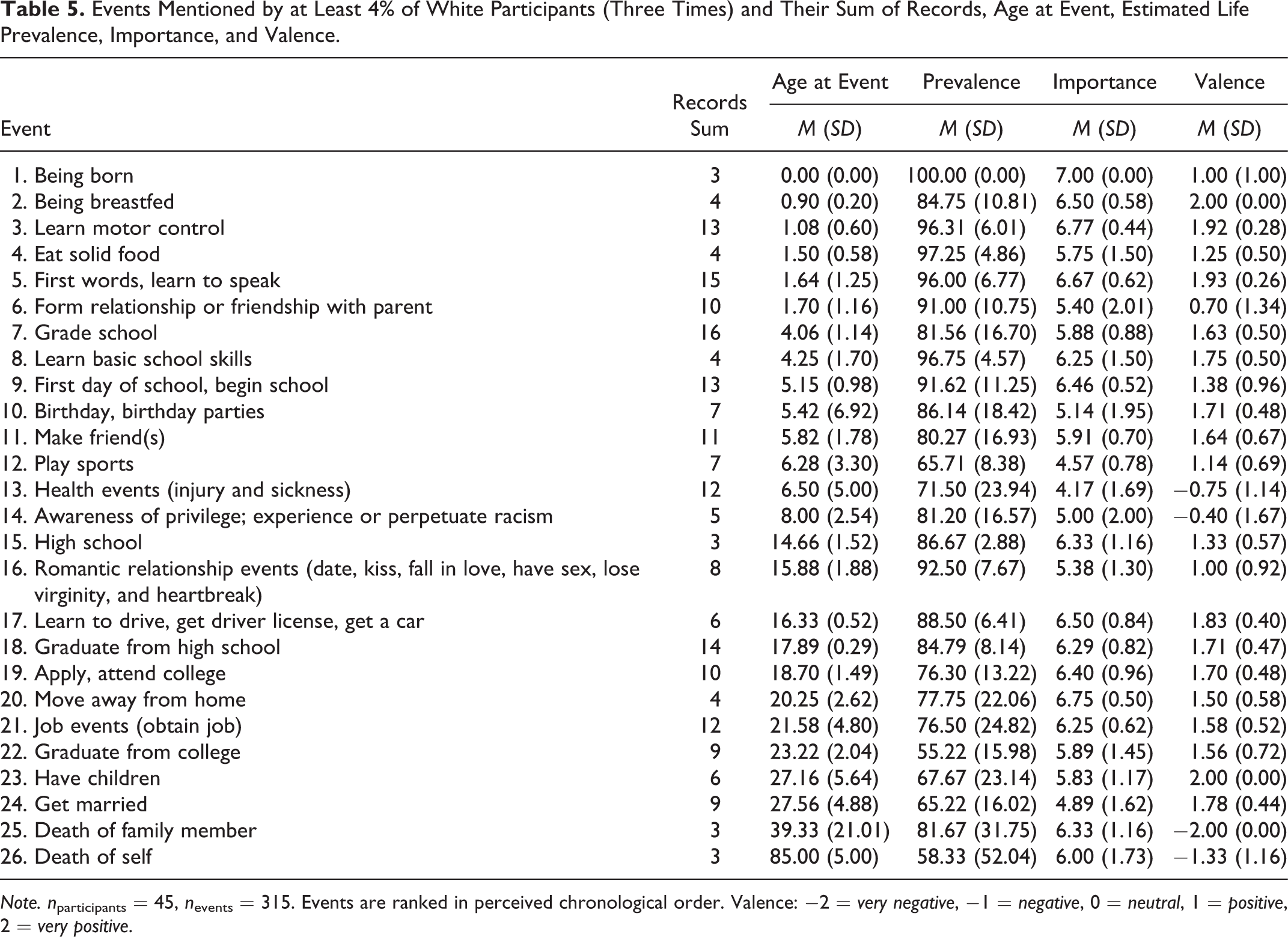
Note. nparticipants = 45, nevents = 315. Events are ranked in perceived chronological order. Valence: −2 = very negative, −1 = negative, 0 = neutral, 1 = positive, 2 = very positive.
Results
Below, we first consider the content and structure of emerging adults’ ethnic-racial life script (Research Question 1) and then report mean differences of desired and perceived script normality across the three ethnic-racial groups (Research Question 2). Afterward, we explore relations between desired/perceived script normality, ERI, and psychological health (Research Question 3).
Ethnic-Racial Life Scripts (Research Question 1)
Tables 3–5 present the 41 Asian, 33 Latinx, and 26 White life script events provided by at least four percent4% of the applicable sample. These events are ordered on the basis of the perceived age of occurrence. Evident from these tables, certain dimensions of the structure of life scripts (i.e., valence and age of occurrence) were similar across ethnic-racial groups. Life script content, however, varied meaningfully between ethnic-racial groups. Fifty-three percent (22 events) and 44% (18 events) of events present in the Asian life script also appeared in the Latinx and White life scripts, respectively. Sixty-nine percent and 48% (16 events) of events present in the Latinx life script also appeared in the Asian and White life scripts, respectively. Finally, with the highest degree of overlap, 69% and 61% of events in the White life script also appeared in the Asian and Latinx life scripts, respectively. Sixteen events were shared among our three scripts (average 49% overlap across all three ethnic-racial life scripts; see Table 6).
Sixteen Events Shared Across the Asian, Latinx, and White Life Scripts.
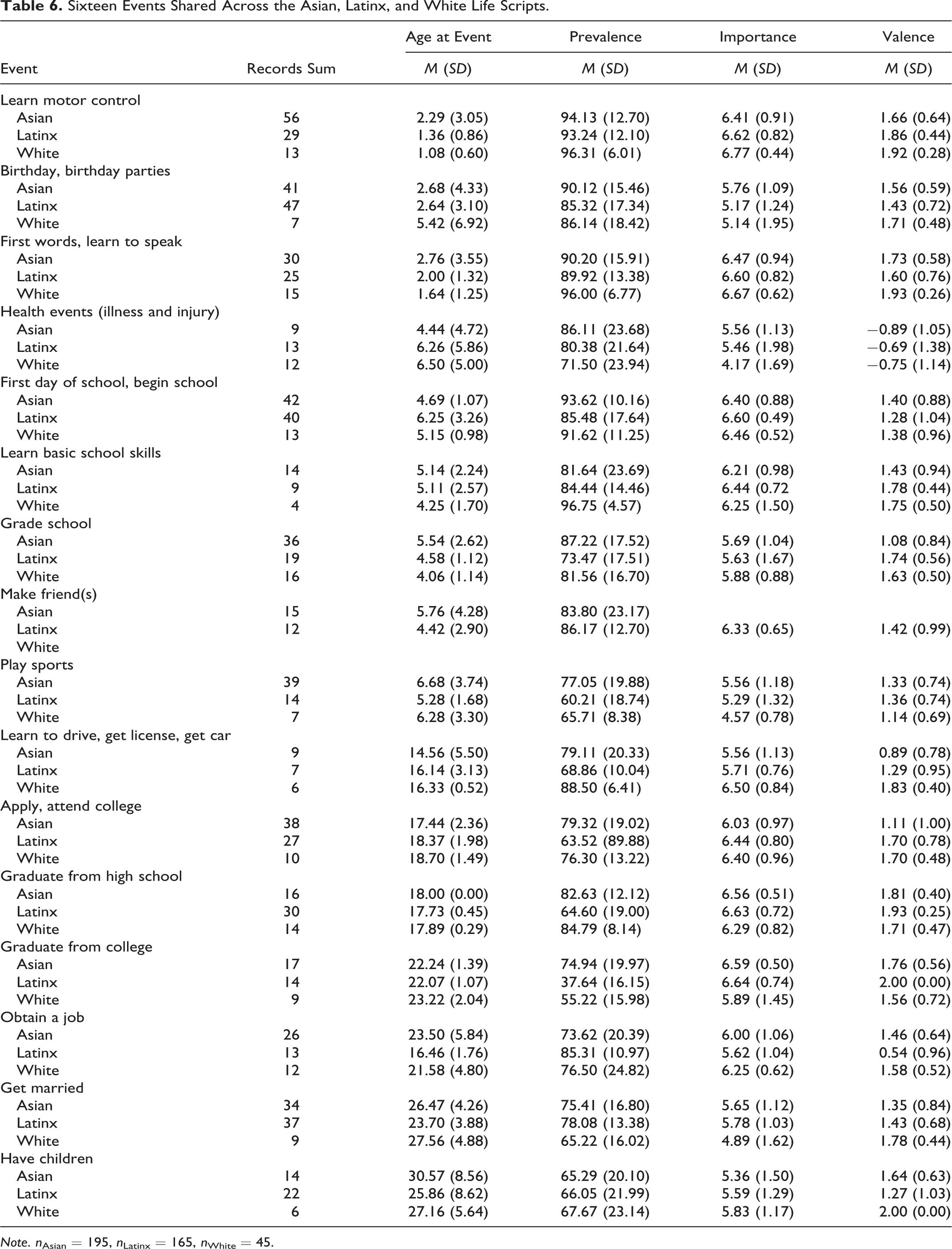
Note. nAsian = 195, nLatinx = 165, nWhite = 45.
Asian life script
Asian emerging adults generated a total of 1,365 life script events. In line with previous findings (Berntsen & Rubin, 2004; Dunlop et al., 2017; Rubin & Berntsen, 2003; Zaragoza Scherman et al., 2017), a majority of Asian life script events occurred within the first 30 years of life (97%) and were positive (89%). “Learn motor control” was the most frequently reported and rated as the most prevalent event among Asian respondents (out of 100 Asian people). This category included learning to crawl, walk, or run. “Potty training” was perceived to be the most important and positive event followed closely by “college graduation,” and “experience with prejudice, stereotypes, discrimination, judgment, or racism” was rated as the most negative event (see Table 3).
Latinx life script
Latinx emerging adults generated a total of 1,155 life script events. Consistent with our Asian sample, most Latinx life script events occurred within the first 30 years of life (100%) and were positive (78%). “Church events” was the most frequent category mentioned event by Latinx respondents. This category included baptism, attending church, first communion, presentation to church, and confirmation. “Learn motor control” was viewed as the most prevalent event (rated out of 100 Latinx people), “college graduation” was considered the most important and positive event, and, finally, “experience with prejudice, stereotypes, discrimination, judgment, or racism” was rated as the most negative event (see Table 4).
White life script
White emerging adults generated a total of 315 life script events. As with Asian and Latinx responses, White life script events occurred mostly during the first 30 years of life (92%) and were primarily positive (85%). “Grade school” was the event most frequently reported by White participants, “being born” was considered the most prevalent and important event, “being breastfed” and “have children; start a family” were both rated as the most positive events, and “death of a family member” was rated as the most negative event (see Table 5).
Shared life script events
The 16 events that appeared within all three ethnic-racial life scripts included “college graduation,” “obtain a job,” and “have children” (see Table 6 for a list of all shared events). Although these events were shared across all three ethnic-racial life scripts, participants’ ratings of these events varied between ethnic-racial groups. For instance, Latinx emerging adults estimated that, on average, 37% of Latinx people would graduate from college as compared to the 74% and 55% reported by Asian and White participants, respectively. In addition, “obtain a job” was rated as occurring earlier on average among Latinx respondents (age 16) when compared to Asian (age 24) and White (age 22) participants. This may be because Latinx participants are considering the age at which members of their group obtain their first job as opposed to begin a career. Alternatively, this may reflect when Latinx emerging adults feel that group members begin to contribute financially to the household. The incongruous event ratings suggest that even shared events were not necessarily perceived the same by the members of each ethnic-racial group.
Unique life script events
Evident from Table 7, events unique to each ethnic-racial group included “learn Asian values and customs” (i.e., learn to have a future focus, the importance of family, study habits, and parent expectations for academic success) among Asian respondents, “quinceañera” (i.e., celebration of 15th birthday) among Latinx respondents, and “awareness of privilege; experience or perpetuate racism” among White respondents. Thirty-six percent (15 events), 30% (10 events), and 30% (8 events) of events generated by Asian, Latinx, and White emerging adults were unique to these groups.
Life Script Events Unique to Each Ethnic-Racial Group.
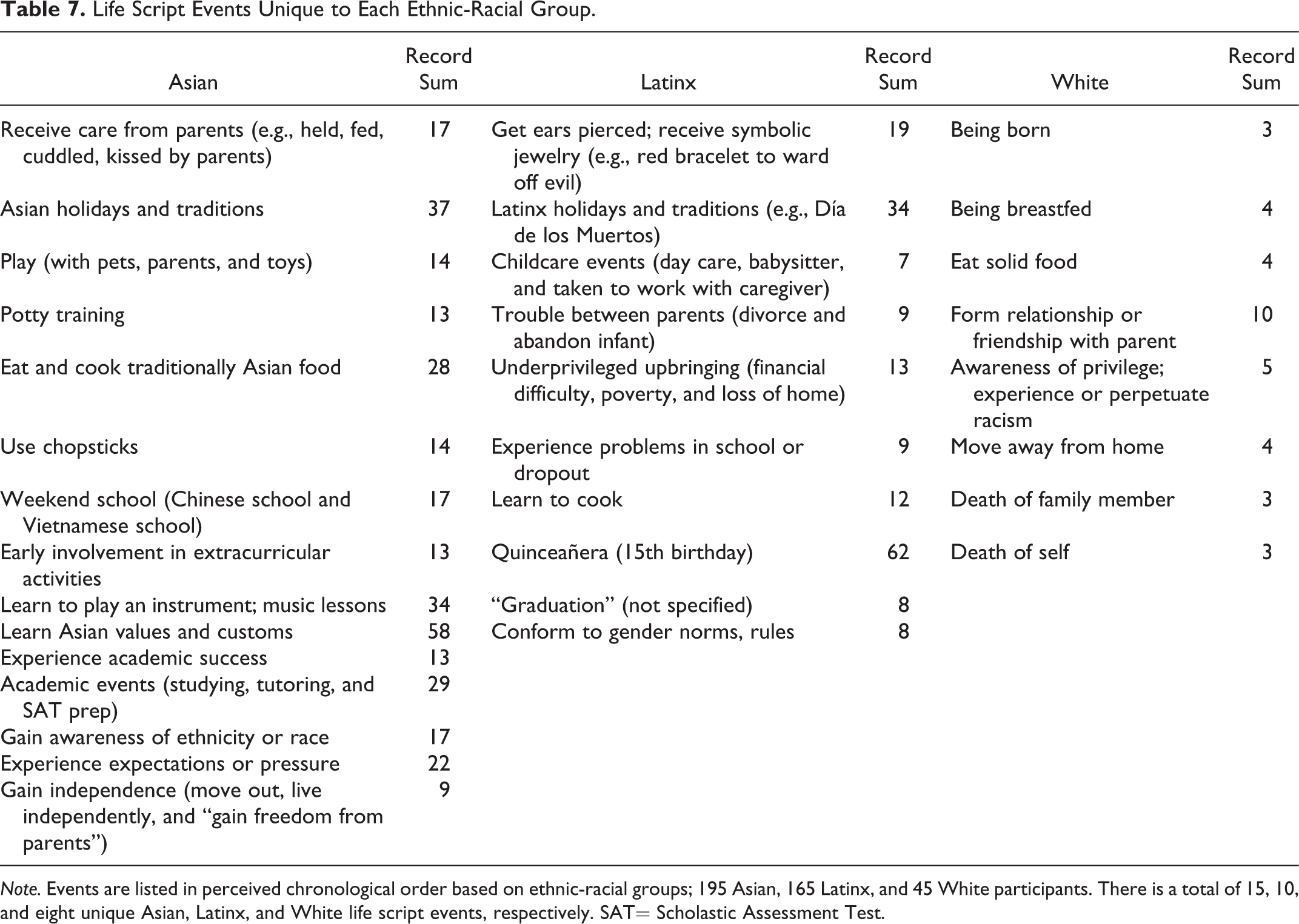
Note. Events are listed in perceived chronological order based on ethnic-racial groups; 195 Asian, 165 Latinx, and 45 White participants. There is a total of 15, 10, and eight unique Asian, Latinx, and White life script events, respectively. SAT= Scholastic Assessment Test.
Ethnic-Racial Group Differences in Script Normality (Research Question 2)
To investigate mean differences in script normality based on ethnicity and race, we first assessed the measurement invariance of our desired and perceived normality measures (see Table 8). We found evidence for the equivalence of factor loadings and intercepts of desired and perceived normality between Asian and Latinx emerging adults (comparative fit index [CFI] Δs = .00–.01). We also found evidence for the equivalence of factor loadings for desired and perceived normality (CFI Δs = .00–.01) and the intercepts of perceived normality between Latinx and White participants. We did not, however, find evidence for the equivalence of intercepts for desired normality between Latinx and White participants (CFI Δs = .06). Finally, the model testing equivalence between Asian and White participants failed to converge, given the uneven group sizes. For this reason, mean differences between Asian and White participants should be interpreted with caution (see Cheung & Rensvold, 2002).
Measurement Invariance for Desired and Perceived Normality.
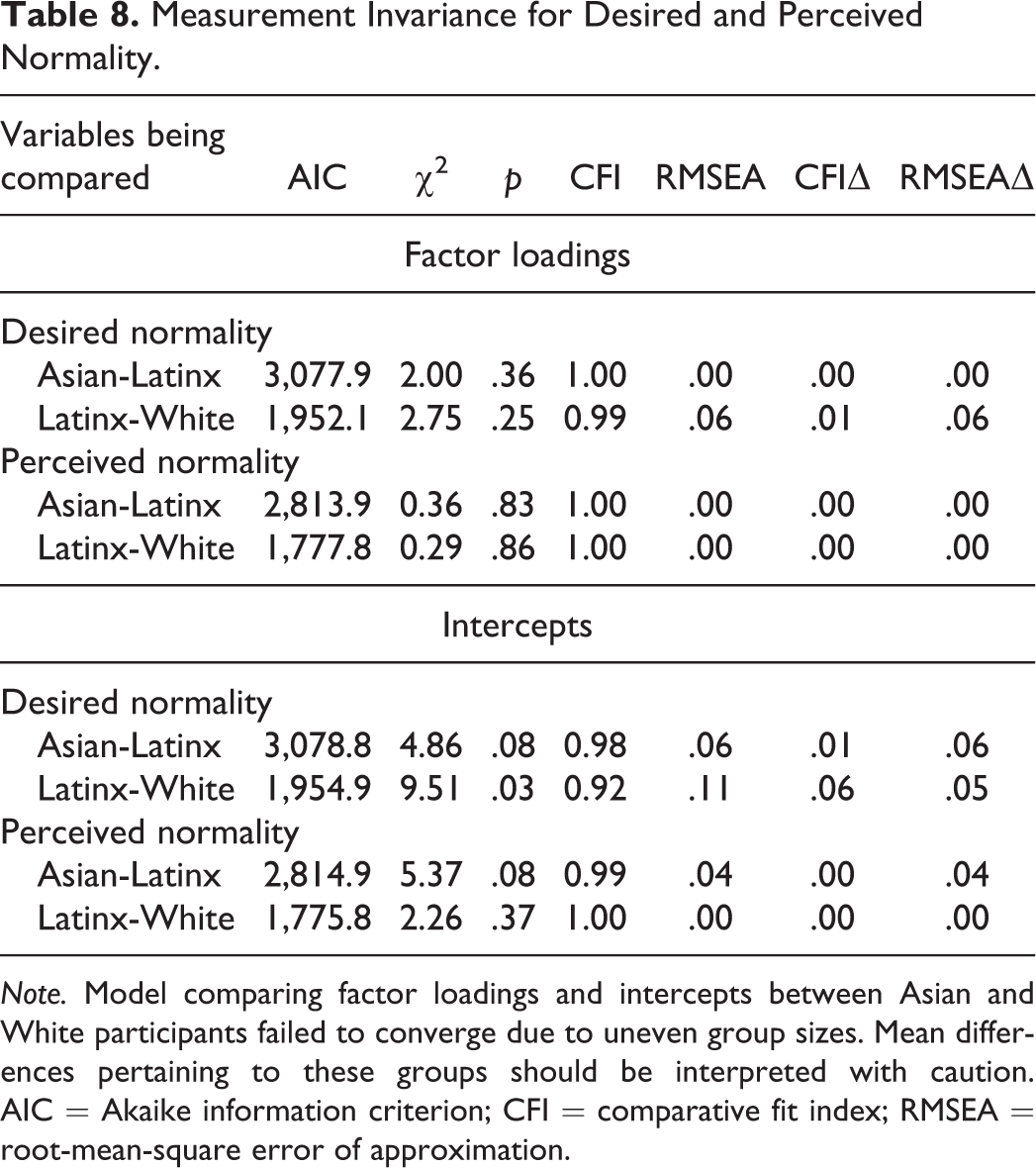
Note. Model comparing factor loadings and intercepts between Asian and White participants failed to converge due to uneven group sizes. Mean differences pertaining to these groups should be interpreted with caution. AIC = Akaike information criterion; CFI = comparative fit index; RMSEA = root-mean-square error of approximation.
To determine mean differences in desired and perceived script normality across groups, we conducted a categorical regression (see Table 9). We found that White participants reported lower desired (M = 2.66) and perceived (M = 3.13) normality than Asian participants (mean difference desired = .49, p < .001, d = .54; mean difference perceived = .35, p = .01, d = .41). Asian participants also reported greater desired normality (M = 3.15) than Latinx participants (mean difference = .21, p = .02, d = .24). These mean differences suggest that script normality is particularly salient among Asian emerging adults and, perhaps, less clear for White emerging adults. We return to these points in the general Discussion section.
Mean Differences in Desired and Perceived Script Normality Across Ethnic-Racial groups.
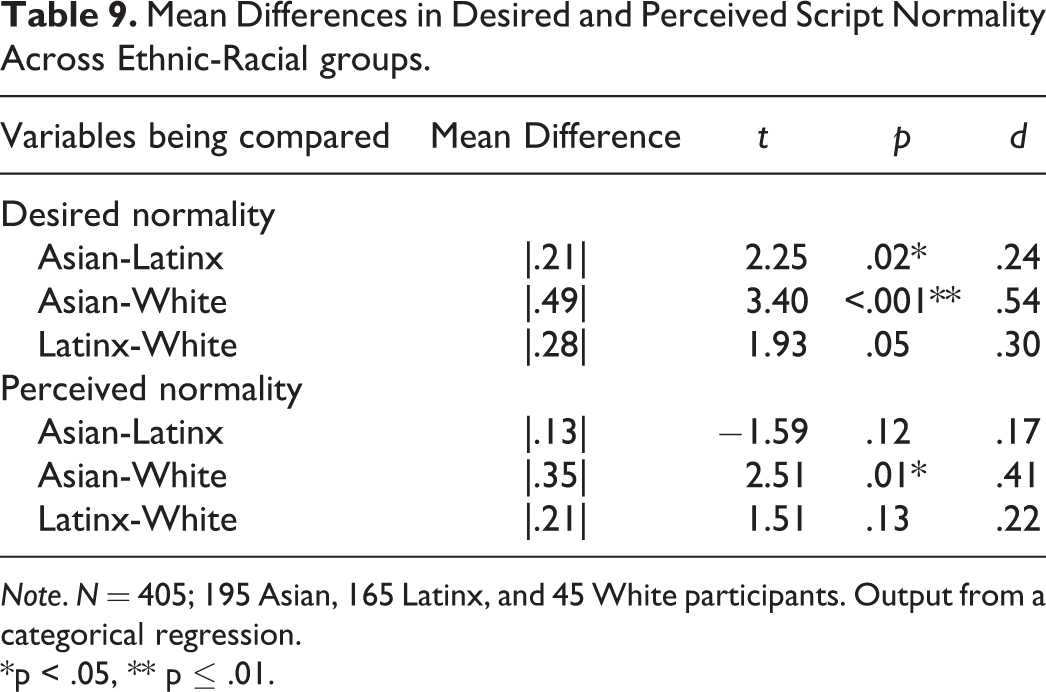
Note. N = 405; 195 Asian, 165 Latinx, and 45 White participants. Output from a categorical regression.
*p < .05, ** p ≤ .01.
Correlates of Desired and Perceived Script Normality (Research Question 3)
Finally, to address Research Question 3, we examined the correlates of desired and perceived script normality across and within Asian, Latinx, and White emerging adults (see Table 2). There were minimal differences in the magnitude of correlations across ethnic-racial groups. 3
Script normality across all ethnic-racial groups
First, we assessed relations between desired/perceived script normality, ERI, and psychological health including all ethnic-racial groups. Evident from Table 2 (first panel), evaluations of desired script normality related positively with ethnic belonging (r = .35, p < .01), ethnic exploration (r = .40, p < .01), member CSE (r = .18, p < .01), private CSE (r = .23, p < .01), and identity CSE (r = .43, p < .01) across groups. Perceived script normality related positively with ethnic belonging (r = .35, p < .01), ethnic exploration (r = .28, p < .01), member CSE (r = .28, p < .01), private CSE (r = .26, p < .01), public CSE (r = .22, p < .01), identity CSE (r = .25, p < .01), and life satisfaction (r = .16, p < .01) across groups. Thus, relations with desired and perceived normality among our total sample ranged from small to moderate in sizes with the smallest effect being between perceived normality and life satisfaction and the largest effect being between desired normality and ethnic exploration.
Script normality among Asian participants
Effect sizes for significant relations with desired normality among Asian emerging adults were moderate to large with the largest being relations between ethnic exploration and identity CSE. Evident from Table 2 (second panel), greater desired script normality among Asian emerging adults corresponded with higher levels of ethnic belonging (r = .35, p < .01), ethnic exploration (r = .43, p < .01), member CSE (r = .36, p < .01), private CSE (r = .28, p < .01), identity CSE (r = .54, p < .01), and life satisfaction (r = .17, p < .05). Effect sizes for relations with perceived normality among Asian emerging adults were small to moderate with the largest being between perceived normality and identity CSE. Greater perceived script normality among Asian emerging adults related with ethnic belonging (r = .31, p < .01), ethnic exploration (r = .30, p < .01), member CSE (r = .22, p < .01), private CSE (r = .30, p < .01), public CSE (r = .20, p < .01), and identity CSE (r = .38, p < .01). Asian emerging adults’ ratings of perceived script normality also related with greater depression/anxiety (r = .15, p < .05) and marginally higher life satisfaction (r = .14, p = .06).
Script normality among Latinx participants
Effect sizes for relations with desired normality among Latinx emerging adults were small to moderate with the largest being the relation between desired normality and ethnic exploration. Greater desired script normality among Latinx emerging adults corresponded with greater ethnic belonging (r = .25, p < .01), ethnic exploration (r = .30, p < .01), identity CSE (r = .28, p < .01), and also greater depression/anxiety (r = .18, p < .05). Effect sizes for relations with perceived normality among Latinx emerging adults were small to moderate with the smallest and largest effects being relations with public CSE and ethnic belonging, respectively. Latinx emerging adults with greater perceived script normality scored higher on measures of ethnic belonging (r = .34, p < .01), ethnic exploration (r = .23, p < .01), member CSE (r = .28, p < .01), private CSE (r = .21, p < .01), public CSE (r = .18, p < .01), and marginally higher on identity CSE (r = .15, p = .05; see Table 2, third panel).
Script normality among White participants
Effect sizes for relations with desired normality among White emerging adults ranged from moderate to large with the largest effect being between desired normality and ethnic belonging. Greater desired script normality among White emerging adults was associated with greater ethnic belonging (r = .60, p < .01), ethnic exploration (r = .58, p < .01), private CSE (r = .45, p < .01), identity CSE (r = .57, p < .01), life satisfaction (r = .40, p < .01), and marginally higher member CSE (r = .30, p = .05). Likewise, effect sizes for relations with perceived normality among White emerging adults were moderate in size with the largest effect being between perceived normality and ethnic belonging. Greater perceived script normality among White emerging adults related with greater ethnic belonging (r = .48, p < .01), ethnic exploration (r = .33, p < .01), member CSE (r = .47, p < .01), private CSE (r = .34, p < .01), and life satisfaction (r = .43, p < .01; see Table 2, fourth panel).
Discussion
Life scripts create expectations about how lives ought to progress (Berntsen & Rubin, 2004; Dunlop et al., 2017). Such scripts are rooted in a cultural context and thought to be learned from family, friends, and broader cultural forces (e.g., the media; Janssen & Haque, 2018; McLean, 2015). However, researchers interested in life script variation have primarily documented differences in the generalized life script based on nationality, at the expense of other cultural systems such as ethnicity and race. In the present study, we explored whether (1) life scripts differed across Asian, Latinx, and White emerging adults, (2) mean differences in script normality existed based on ethnicity and race, and (3) desired and perceived script normality related with ERI and psychological health within and across ethnic-racial groups.
Variations in Life Scripts Based on Ethnic-Racial Group (Research Question 1)
In assessing Research Question 1, we found that the structure of our three ethnic-racial life scripts demonstrated the well-known “reminiscence bump” such that Asian, Latinx, and White life script events occurred mainly within the first 30 years of life and were primarily positive (Berntsen & Rubin, 2004; Bohn et al., 2017; Dunlop et al., 2017; Erdoğan et al., 2008; Haque & Hasking, 2010). These results align with the proposal that life script structure is cross-culturally similar (Coleman, 2014). Indeed, the bump observed here for events occurring before age 30 was particularly concentrated. This may be due to the fact that (1) the cultural concept of biography becomes crystalized during emerging adulthood (Habermas, 2007) and (2) ERI becomes more abstract and complex during this life stage, potentially increasing the salience of recent ethnic-racial experiences and accelerating the age bump (Syed, 2010). As follows, emerging adults may focus on events occurring before age 30, because these experiences are perceived as forthcoming or occurred recently, thereby, increasing their salience.
Life script content, however, varied in important ways between ethnic-racial groups. An average of 32% of ethnic-racial life script events were unique to one group (see Table 6). In addition, the average 49% overlap in the events recognized across our three ethnic-racial groups is lower than the 82.9% overlap between Australian life scripts and the Malaysian life script (Janssen & Haque, 2018) and the 84% overlap noted between American and Danish life scripts (Rubin et al., 2009). Further, the life script events that were rated as most frequent and important varied based on ethnic-racial group, as did the number of events included in each life script (see Tables 3–5). Specifically, Asian and Latinx life scripts were longer than the White life script thereby supporting past work that found minority group members possessed broader and less dominant life scripts (Coleman, 2014). As a group, White individuals may possess more homogenous life scripts, as they are apt to adopt experiences considered “universal” or that are contained within a culturally endorsed life story (i.e., “master narrative”; McLean & Syed, 2016). For Asian and Latinx individuals, life scripts may help them to make sense of ethnic-racial expectations alongside broader cultural norms. Our results support the notion that life scripts differ to a greater extent upon activation of specifically ethnic-racial domains (i.e., when a contextualized approach is adopted) and that while certain life expectations are shared (e.g., “motor control,” “first words, learn to speak,” “high school”), others vary systematically (e.g., “experience expectations or pressure” among Asian participants, “underprivileged upbringing” among Latinx participants, and “death of family member” among White participants).
In addition to our contextualized life script prompt, the fact that our sample was diverse, college-going, and composed of emerging adults may have enhanced life script variability. Our sample was situated within an environment and developmental context that potentially enriched participants’ ethnic-racial understanding (Syed & Azmitia, 2008). College is often considered a conscious raising experience, replete with new individuals and perspectives that can foster ERI (Eccles et al., 2003). For example, the greater representation of Asian and Latinx students at UCR may have facilitated in-group interactions that supplied a clearer, more differentiated understanding of the ethnic-racial life script. This is in line with past work that found understanding of ethnic-racial expectations is higher in universities with greater ethnic-racial diversity (e.g., Brittian et al., 2013). In addition, emerging adults possess the cognitive capacity and biographical insight to generate more comprehensive life scripts (Habermas, 2007). In this way, context (i.e., age and college status) and ethnic-racial diversity may have increased ethnic-racial life script variability.
Mean Differences in Script Normality (Research Question 2)
In assessing Research Question 2, we found that desired normality was significantly higher among Asian emerging adults when compared to Latinx and White emerging adults. Past work has evidenced Asian individuals often report higher collectivistic values (Heine, 2001; Kitayama et al., 1997; Wang, 2016), with recent work finding that collectivism is not only about maintaining group harmony but enforcing group norms (Liu et al., 2019). Desired script normality may thus be higher for Asian participants because conforming to societal expectations is, perhaps, comparably culturally enforced. This tendency may be exacerbated by the fact that ethnicity and race are more salient identity components during emerging adulthood (Phinney, 2006). In contrast, White respondents reported significantly lower perceived normality in comparison to Asian participants. This may indicate that White emerging adults are less attuned to pressures to conform to ethnic-racial expectations, or, potentially, understand less what such expectations entail than Asian emerging adults. This, in turn, may be because ethnicity and race are less salient components of White individuals’ identity when compared to ethnic-racial minorities (Loyd & Gaither, 2018; Pasupathi et al., 2012; Syed & Azmitia, 2010).
Relations With Desired and Perceived Script Normality (Research Question 3)
When assessing Research Question 3, relations among our entire sample indicated that perceived normality related positively with life satisfaction and that desired and perceived normality related positively with all measures of ERI excluding public CSE. Interestingly, only perceived normality related positively with public CSE (i.e., how positively one believes others view one’s ethnic-racial group; Luhtanen & Crocker, 1992). This asymmetry suggests that desired normality may function as an internal as opposed to socially relevant construct (Dunlop et al., 2017). Nonetheless, relations between script normality, ERI, and psychological health varied systematically based on ethnic-racial groups.
Script normality and ERI
Among Asian and Latinx emerging adults, desired and perceived normality exhibited positive relations with each ERI measure considered but, again, only perceived normality related positively with public CSE. This suggests that perceived normality may be more relevant to ERI overall, whereas desired normality may matter more for how important ethnicity/race is to the personal sense of self.
For White emerging adults, desiring and perceiving overlap with a White life script was also associated with stronger ethnic-racial belonging and exploration as well as greater personal self-esteem about being White, but there was no relation between script normality and public CSE. It may be that White emerging adults consider less how conforming to ethnic-racial expectations is viewed by others outside their group. Overall, our findings indicate that desired and perceived normality each involve greater consideration of ethnic-racial expectations and may each contribute to a well-developed sense of ERI (Pasupathi et al., 2012).
Script normality and psychological health
Relations between script normality and psychological health were similarly varied between ethnic-racial groups. Among Asian emerging adults, the positive relation between desired normality and life satisfaction suggests that desiring normality may be beneficial rather than a source of undue pressure. By desiring normality, Asian emerging adults may feel that they are meeting an expectation of their group. This is further evidenced by the event category mentioned exclusively by Asian emerging adults: “experiencing pressure/expectations”. The pressure to meet expectations (e.g., from parents) may be more pervasive for Asian people, rendering desired normality a customary and perhaps beneficial desire (Schwartz, Weisskirch, et al., 2010).
Perceived normality was, comparably, more complex for Asian emerging adults such that perceiving normality was associated with more depression/anxiety and marginally more life satisfaction. In line with Keyes (2005), this finding demonstrates that adaptive and maladaptive functioning are not necessarily inverses of one another. It is possible that Asian group members perceive a constant need to meet ethnic-racial group expectations, meaning that they experience marginally greater life satisfaction at meeting expectations but are pressured to maintain a sense of normality that, ultimately, corresponds with greater depression/anxiety. Subsequent research should prompt for more specific ethnic-racial identifications (e.g., Chinese, Korean, Japanese, Vietnamese, Indian) to discern whether relations with perceived normality shift depending on these more distinct identifications (Bracey et al., 2004). Alternatively, Asian participants may feel they are meeting norms relevant to their ethnic-racial group may experience greater depression/anxiety at, ostensibly, not meeting incompatible American cultural norms (see Schwartz, Unger, et al., 2010, for a parallel argument). Future studies should assess the role of bicultural identity in determining how perceived normality relates to greater conflict in adopting a particular life script (Huynh et al., 2018).
In contrast, greater desired normality among Latinx emerging adults was related to higher depression/anxiety. This may be due to the fact that Latinx emerging adults who desire greater normality do so because their lives are objectively less like other members of their ethnic-racial group (Dunlop et al., 2017). Future research should examine whether self-reported desired normality is negatively associated with objective overlap between events in the life script and one’s personal life. It is also possible that Latinx emerging adults with greater desired normality are, perhaps, more attuned to the pressure to align with ethnic-racial group expectations, thereby corresponding with increased depression/anxiety. This explanation parallels our argument pertaining to the internal (as opposed to socially relevant) nature of desired normality.
Finally, White emerging adults appeared to evaluate their lives more positively when they were both striving for and felt that they were achieving script normality. One explanation for this finding is that when generating a White life script, individuals may provide events akin to a generalized American life script. Accordingly, White group members may experience less conflict over desiring and accomplishing overlap with events prototypical for an average American (e.g., “birth,” “grade school,” “high school,” “own death”), whereas minority group members may need to reconcile expectations they perceive from their ethnic-racial group with those of American culture more broadly (Phinney, 1996). This bicultural conflict may make it difficult to consider how much one perceives and desires alignment to the expectations of only one group. Again, future research is needed that explores the role of bicultural identity in life script normativity.
Limitations and Future Directions
Despite the contributions made by the present study, several limitations must be noted. First, recruiting participants from three distinct ethnic-racial groups (i.e., Asian, Latinx, and White) allowed us to draw comparisons between groups. However, this process also slotted participants into monoethnic categories and excluded individuals identified as mixed. Still, it is certainly not the case that this sample exists in isolation from additional cultural influences (e.g., other ethnic-racial identifications, nationality, gender, college population). In future, researchers should adopt an intersectional approach to the study of ethnic-racial life scripts by collecting data that more directly assesses the influence of various group identities. Second, the sample size of each ethnic-racial group was not equivalent in this study and the White sample, in particular, was relatively small. Future studies assessing within-country variability should endeavor to collect more proportional group sizes. Finally, this study did not assess overlap between the life script and the personal life story, or narrative identity (see McAdams, 2013), as has been done in previous works (see Rubin et al., 2009), and we were unable to assess how self-reported normality corresponded with overlap between life scripts and autobiographical events. Future work should seek to assess whether these indices of life script normality converge or relate with differential outcomes.
Nonetheless, our findings illuminate the felt expectations associated with certain ethnic-racial enclaves and provide indication that life scripts contextualized within ethnic-racial domains differ across relevant cultural groups. This study also supports the notion that examining life scripts during emerging adulthood is particularly fruitful, given the heightened identity focus and increased biographical salience that exists during this time. Additionally, our results demonstrate how subjective life script evaluations carry different implications for ERI and psychological health, across Asian, Latinx, and White emerging adults. On the basis of this work, we contend that greater attention should be paid to contextualized self-representations that engender domain-specific life scripts and, perhaps, nuanced patterns of thought and behavior.
Footnotes
Author Contributions
Dulce E. Wilkinson contributed to conception, design, acquisition, analysis, and interpretation; drafted the manuscript; critically revised the manuscript; gave final approval; and agreed to be accountable for all aspects of work ensuring integrity and accuracy. William L. Dunlop contributed to conception, design, analysis, and interpretation; drafted the manuscript; critically revised the manuscript; gave final approval; and agreed to be accountable for all aspects of work ensuring integrity and accuracy.
Declaration of Conflicting Interests
The authors declared no potential conflicts of interest with respect to the research, authorship, and/or publication of this article.
Funding
The authors received no financial support for the research, authorship, and/or publication of this article.

Notes
Open Practices
Data and materials for this study have not been made publicly available but are available upon request from the authors. The design and analysis plans were not preregistered.