







Abstract
The current study extends the literature on emerging adults by examining their communication with parents and peers simultaneously. Specifically, emerging adults’ communication patterns and the relationships among communication, well-being, and their perceptions of parents’ involvement and autonomy support are explored. Emerging adults (N = 328) reported their frequency of communication in person, over the phone, via text message, and on social networking sites with mother, father, and closest friend. A Latent Profile Analysis revealed four communication patterns (Low communication, Friend-oriented, Parent-oriented, and Multimedia). Communication patterns with mothers and fathers were similar; youth used more text messaging and social networking with friends. A Friend-oriented communication pattern was associated with psychological well-being while the Multimedia group reported higher social well-being.
Keywords
Emerging adulthood is the period from age 18 to 29, between adolescence and adulthood—the time during which young people face many transitions and are focused on self-development through jobs and relationships (Arnett, 2007). Emerging adults (EA) spend a significant amount of time with peers as they seek more autonomy from their family (Parra et al., 2015; Smetana, 1988). EA search for new companionship impacts their social identity and psychological well-being (Haslam et al., 2009; Helsen et al., 2000). In fact, peer support during emerging adulthood is found to be a more powerful predictor of psychological adjustment than parental support (Dennis et al., 2005). The companionship of those who share similar life transitions—an expressive aspect of social interaction— is crucial for psychological well-being, coping with minor stresses, and social satisfaction (Rook, 1987). For young people today, this companionship is found both offline and online. Manago et al. (2012) determined that EA who had larger social networks and greater numbers of contacts on Facebook had higher levels of life satisfaction and perceived social support than those with smaller networks.
Although the overall frequency of interactions with parents decreases as adolescents become EA (Arnett, 2000), relationships with parents improve, especially after the transition to university (Aquilino, 2006; Lefkowitz, 2005) or to work (Buhl, 2007; Crocetti et al., 2012). Parents still play a crucial role in EA lives, impacting psychological well-being (Needham, 2008). Positive parent–child communication enables parents to act as a protective factor and promote pro-social values that prepare young people to deal with stressful situations and avoid potentially adverse consequences (Waylen et al., 2008). Adolescents who perceived lower attachment to their parents had significantly lower scores on measures of well-being (Raja et al., 1992). In addition, adolescents who perceived that their parents gave honest answers and were good listeners had higher family satisfaction, self-esteem and well-being (Jackson et al., 1998). Applying family communication patterns theory (Koerner & Fitzpatrick, 1997), a conversation-oriented communication pattern, where all family members are encouraged to participate in family interactions, was positively associated with EA mental health and well-being (Schrodt et al., 2007).
Despite this preliminary evidence, the influence of communication with parents and peers on EA well-being is understudied. Preventive intervention studies have primarily focused on adolescent well-being, individually or as part of a dyad, not as part of a larger system. The current study begins to fill this gap by examining the simultaneous influence of family and peer communication on EA well-being.
Balanced Communication and Well-being
While most research on communication with parents and peers is focused on the dyadic relationship, some scholars have suggested that EA can be highly connected to both parents and peers. For instance, Raja et al. (1992) found that most adolescents in their study showed relatively high levels of attachment to both parents and peers. The authors also found that adolescents who perceived high attachment to both their parents and peers had the highest scores on a measure of self-perceived strengths. Meeus et al. (2002) found that adolescents’ attachment to parents was positively associated with school identity while peer attachment was positively associated with relational identity. In a study examining the relationship between parent/peer attachment and adolescent adjustment, adolescents with high peer and parent attachment were the best adjusted group with the lowest levels of aggression and depressive symptoms, and high reports of being sympathetic; adolescents with low peer and parent attachment were the least well-adjusted (Laible et al., 2000).
While peers are clearly important for adolescents and emerging adults, for most, attachment to peers does not occur at the expense of attachment to parents. Based on previous research, maintaining strong relationships with both parents and peers can provide multiple advantages to EA. EA can receive emotional support from both parents and their peers (Lefkowitz, 2005; Meeus et al., 1999); secure attachment relationships can lead to greater social and emotional competence and increased well-being (Ben-Zur, 2009; Hefner & Eisenberg, 2009; Lundberg et al., 2008). Moreover, EA can learn lessons from parents who have a wealth of past experiences (Kerr et al., 2003) and peers who are sharing similar experiences at the same time (Helsen et al., 2000). Rather than being either/or, balanced communication with both parents and peers can serve as complementary supports to EA (Crocetti & Meeus, 2014; Diener et al., 1985; Luhtanen & Crocker, 1992). With high rates of technology use for communication, EA have even more ways to stay connected to both parents and peers regardless of geographic proximity (Lenhart, 2012). Understanding how EA maintain relationships with both parents and peers requires that we recognize the many ways in which they are staying connected; with the near ubiquitous use of technology by EA, it is essential we consider the range of technologies they are using to communicate.
Media Multiplexity Theory
Media multiplexity theory (Haythornthwaite, 2005) suggests that stronger relationships will rely on more media to communicate; number of channels used to communicate is referred to as one’s Communication Repertoire Size (Haythornthwaite, 2005; Schon, 2014). Relationships with strong ties rely on multiple media to maintain their interdependence, in contrast to relationships with weak ties who may communicate via only one or two types of media. Media multiplexity represents the association between tie strength and diversity of media use (Haythornthwaite, 2005). The current study is focused on three critical relationships for EA - with mother, father, and closest friend—and the communication channels used in those relationships.
Current Study
The main purpose of this study was to explore EA’s patterns of communication, and the relationship of that communication with their own well-being and their perceptions of their parents’ involvement and autonomy support. Building on media multiplexity theory, the range of ways EA are communicating both in-person and online, are considered through two research questions:
Research Question 1: What is the pattern of EA communication with mother, father, and closest friend? To the best of our knowledge, this study is the first to explore EA communication across multiple relationships, both parents (mother and father), and friends, in the same analyses. A person-centered approach to examining communication pattern is important as it accounts for differences in the frequency and method of communication with multiple individuals. With limited existing research to build on, these analyses are exploratory; we cannot hypothesize the number of profiles of EA’s communication methods. However, we do expect to find meaningful heterogeneous communication groups within EA.
Research Question 2: What are the associations between EA communication patterns and their perception of parental involvement, autonomy support, and their well-being? Communicating with multiple others involves both giving and receiving assistance, support, and advice (Rickwood et al., 2005). However, beyond recognizing the important role of communication, little is known about how EA’s communication profiles are associated with their well-being and perceptions of parenting.
Methods
Participants were recruited to complete a 20-minute online survey through Amazon’s Mechanical Turk (MTurk). MTurk is an online labor market that can be used to recruit a sample of participants diverse in age, geography, and race (Buhrmester et al., 2011; Dworkin et al., 2016; Schleider & Weisz, 2015) with low cost. While MTurk provides a unique opportunity to collect a national sample of EA who are both in college and not in college, it can be limited in who participates and in their quality of responses (Chmielewski & Kucker, 2020). Consistent with the recommendations of Peer et al. (2014) we only included participants with an approval rating of at least 95%. In addition, we closely monitored data and removed participants with patterned answers and those who entered nonsensical responses to open ended questions (Edelman et al., 2020). Participants were paid $.50, a rate to comparable to other similar MTurk studies at the time, to answer questions about their well-being, family and peer relationships, and their use of various in-person and online communication methods with parents and peers.
Participants
A total of 490 EA were recruited to participate; those who failed to consent or did not complete at least 75% of the survey or included nonsensical responses (n = 110, 22.4%), reported only one parent (n = 21, 4.3%), or did not respond to any of the communication questions (n = 31, 6.3%) were excluded. Nonsensical responses were those where a participant responded to an open ended question with gibberish (e.g., xdcfes), or a response that did not answer the question (e.g., OK). This led to a final sample of 328, with all EA reporting at least one communication method for both a mother and father. The sample consisted of 18–29 years old (M = 25.5, SD = 2.8); 40.2% were male. Nearly three-quarters (74.1%) identified as white, 7.3% as African American, 8.5% as Asian, 6.7% as Latinx, and 3.3% as another race.
Measures
Communication Channels
EA self-reported frequency of communication in the past 12 months, including how often they talked in person, called over the phone, sent text messages (including apps like WhatsApp), and reached out on social networking sites (e.g., share a link/photo, comment on or “like” status, and write on timeline) individually with mother, father, and closest friend using a 7-point Likert-type scale from 1 (Never) to 7 (Several times a day; Connell, 2011). Participants were asked to report on the frequency of both making and receiving phone calls, sending and receiving text messages, and connecting through a social networking site: “how often do you call/send” and “how often do you receive.” However, the receiving and sending items were highly correlated, with correlations ranging from .82 to .91, suggesting high similarities between those variables. Therefore, to consider all communication regardless of who initiated it, a composite score was created by computing the mean of the sending and receiving items.
Well-being
To measure EA well-being, participants completed the Adolescent Mental Health Continuum (Keyes, 2005). They responded to 14-items using a 6-point Likert-type scale from 1 (Never) to 6 (Every day). This measure included three subscales: emotional (α = .867, e.g., How often did you feel happy?), social (α = .881, e.g., How often did you feel that you belonged to a community?) and psychological (α = .909, e.g., How often did you feel that you liked most parts of your personality?) well-being.
Perceptions of Parenting
EA completed the Perceptions of Parents measure (Robbins, 1994), separately for each parent. In the current study, two subscales were used, the 6-item scale of perceived parent involvement (e.g., finds time to talk with me), and the 9-item scale of perceived autonomy support (e.g., allows me to decide things for myself). Participants responded using a 7-point Likert-type scale from 1 (Very not true) to 7 (Very true). The reliability ranged from .891 to .912. Average composite scores were computed for each of these four scales (two for each parent).
Demographic Information
Participants provided general demographic information including biological gender, age, race, living with parents, parent marital status and school enrollment. Gender was coded to have female serve as a reference group (0 = female, 1 = male), and race was recoded into a binary variable (0 = Non-White, 1 = White). Because no racial group other than White had a sample size greater than 28, there was insufficient power to detect further differences by race. Living arrangements were determined by asking if EA “have lived with [mom/dad] the majority of the time during the past 12 months.” Parent marital status was dichotomized as “married" (1) (married or living together but not married) and “not married” (0) (divorced/separated, never married, or widowed). Participants were considered to be “in school” if they were enrolled in school part-time (11.8%) or full time (22.0%), and “not in school” if on leave (2.2%) or not enrolled in school (64.1%).
Statistical Analyses
There was little missing data on the variables of interest (ranging from .3% to 1.8% for demographic questions and ranging from .3% to 8.5% for communication questions). A missing value analysis revealed no patterns of missing data in the sample and Little’s MCAR test was not significant (χ2 (127) = 125.91, p = .51), suggesting that data were missing at random. Therefore, we used the full-information maximum-likelihood estimation to handle missing data which is a recommended approach to represent the sample data compared to listwise, pairwise deletion and mean imputation (Enders & Bandalos, 2009; Johnson & Young, 2011).
To identify patterns of EA communication with mothers, fathers, and closest friend, Mplus 7.2 was used to conduct latent profile analysis (LPA), a person-centered statistical method for categorizing samples into unmeasured class membership. To determine the optimal number of classes, information criteria, likelihood-based tests and quality of classification were considered (Masyn, 2013). The information criteria include Akaike Information Criterion (AIC; Akaike, 1974), Bayesian Information Criterion (BIC; Schwarz, 1978), and Sample-Adjusted BIC (SABIC; Sclove, 1987), with lower values indicating a better model fit. The likelihood-based tests, Lo-Mendel-Rubin Likelihood Ratio test (LMR LRT; Lo et al., 2001) and Bootstrap Likelihood Ratio test (BLRT; McLachlan & Peel, 2000), were used to compare class models; a significant p-value supports the higher-class model. Entropy value, ranging between 0 and 1, indicates the quality of classification and a value closer to one suggests that the group has a more distinct classification (Ramaswamy et al., 1993). These statistical criteria were compared among latent profile models with two-to six-classes.
After group identification, and fixing class membership to the highest classification probability, descriptive statistics were computed, including chi-square tests and Pearson correlations to identify significant differences in demographic variables between classes. Next, demographic variables that showed significant differences between classes or were significantly associated with the outcome variables were included in the multinomial logistic regression model. The multinomial logistic regression model was designed to investigate the associations between well-being (emotional, psychological, and social) and perception of parents (involvement and autonomy support) as independent variables and the EA communication classes as the dependent variable.
Results
Model Fit Indices of LPA Classes.
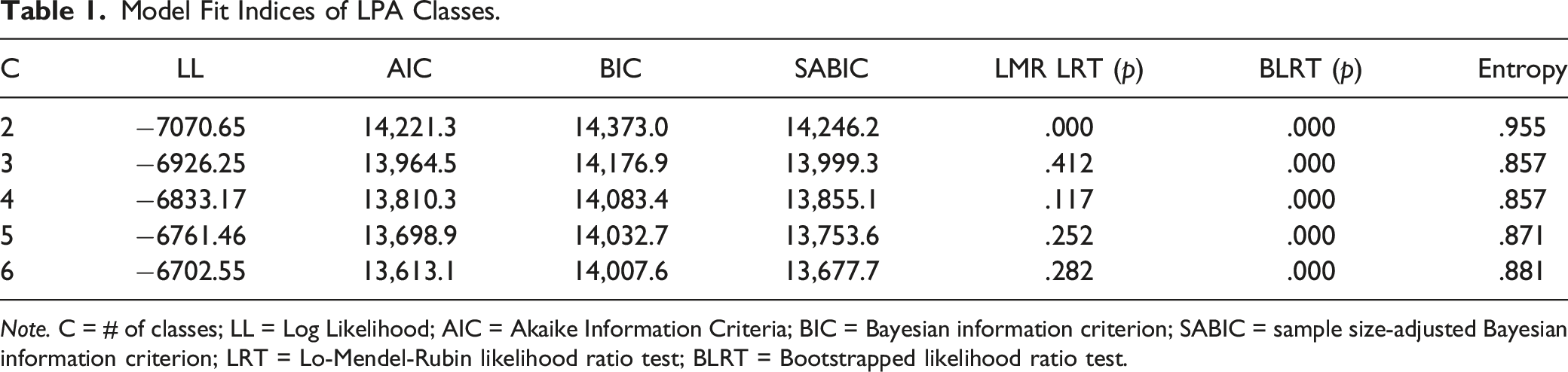
Note. C = # of classes; LL = Log Likelihood; AIC = Akaike Information Criteria; BIC = Bayesian information criterion; SABIC = sample size-adjusted Bayesian information criterion; LRT = Lo-Mendel-Rubin likelihood ratio test; BLRT = Bootstrapped likelihood ratio test.
The 4-class model is depicted in Figure 1; the four classes were named to reflect their patterns of communication with mother, father, and friend, relative to the other classes, such that low and high are not absolutes but rather relative to the other groups. The first class (“Low Communication,” 40.9%, n = 134) was the largest group, reporting relatively low communication across most communication methods with mother, father, and closest friend (on average every few weeks). The second class (“Friend-oriented,” 27.1%, n = 89) reported relatively high frequency of in-person and text communication with closest friend when compared to both mother and father. When comparing mothers and fathers, frequency of communication with fathers was generally lower compared to mothers (similar to the frequency of the “Low Communication” group). The third class (“Multimedia,” 16.5%, n = 54) reported relatively high frequency of social networking with mother, father, and closest friend. Also, this group showed consistently frequent (a few times a week) use of other communication methods such as in-person, calling and texting across mother, father, and friend. Last, the fourth class (“Parent-oriented,” 15.5%, n = 51) reported the highest in-person communication with mother and father but low use of social networking with mother, father, and closest friend. This group also reported more frequent calling with parents compared to closest friend. Latent profiles of EA communication patterns with parents and closest friend.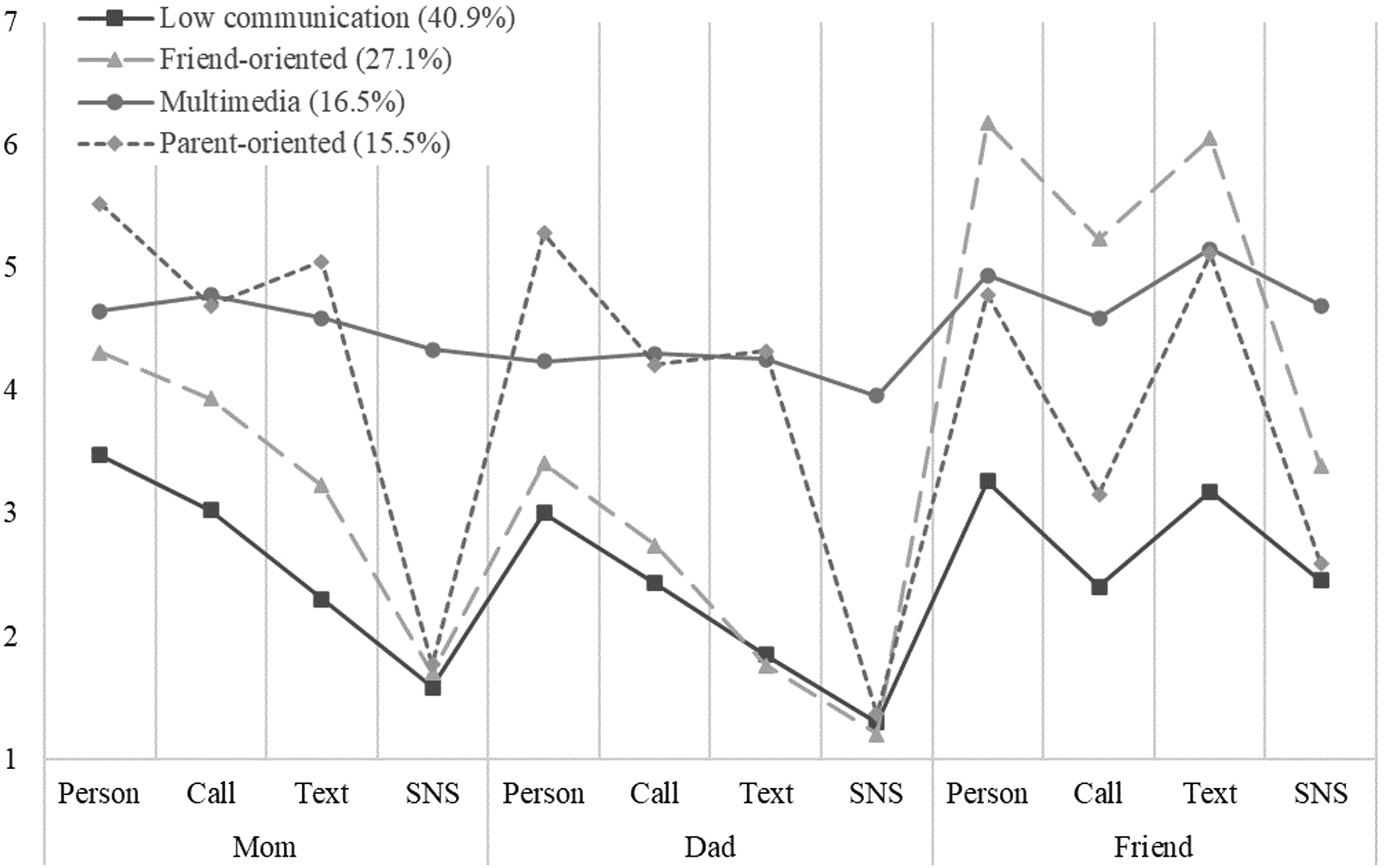
Descriptive Statistics by Subgroups.
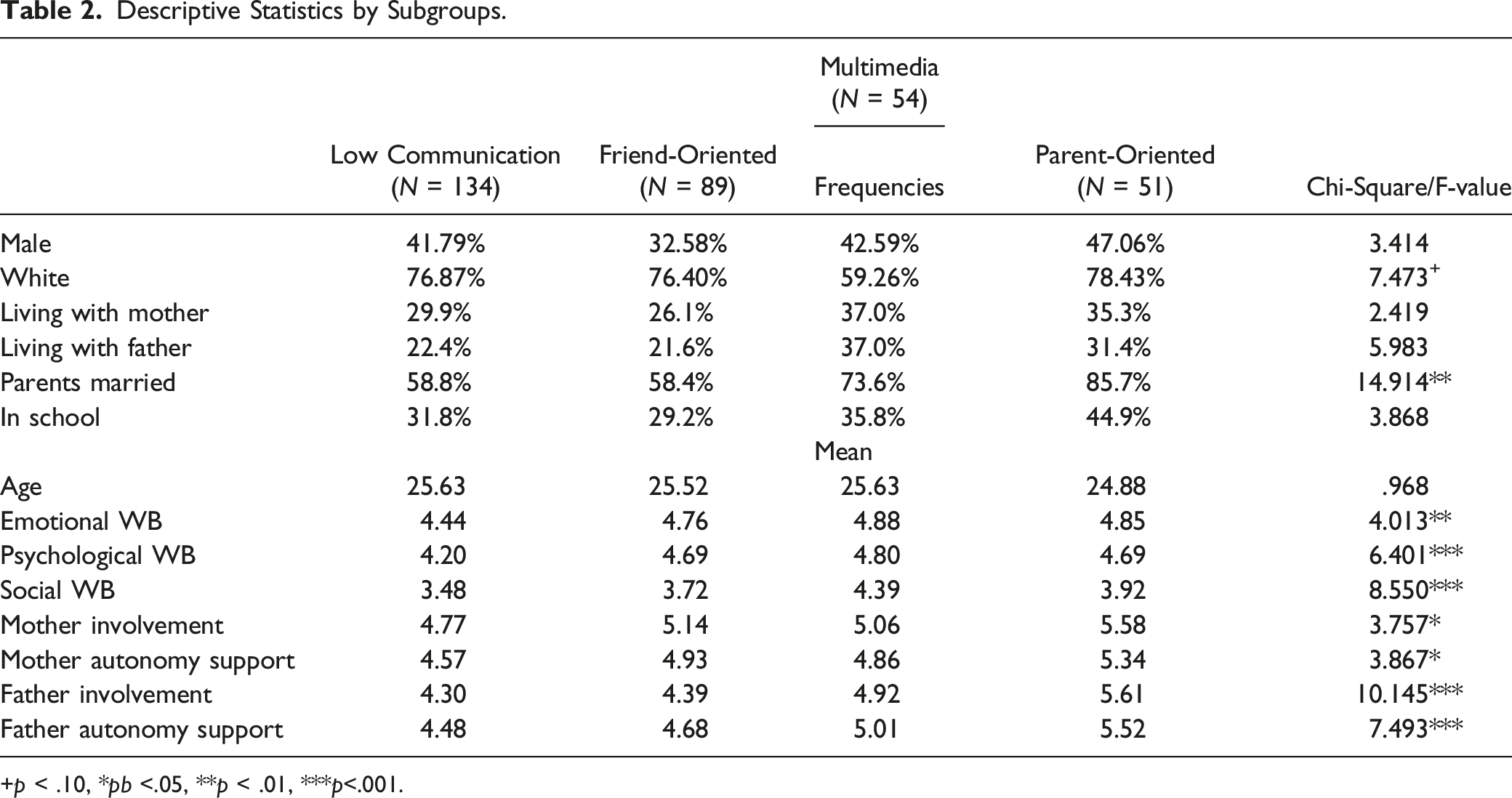
+p < .10, *pb <.05, **p < .01, ***p<.001.
Correlations of Key Continuous Variables.
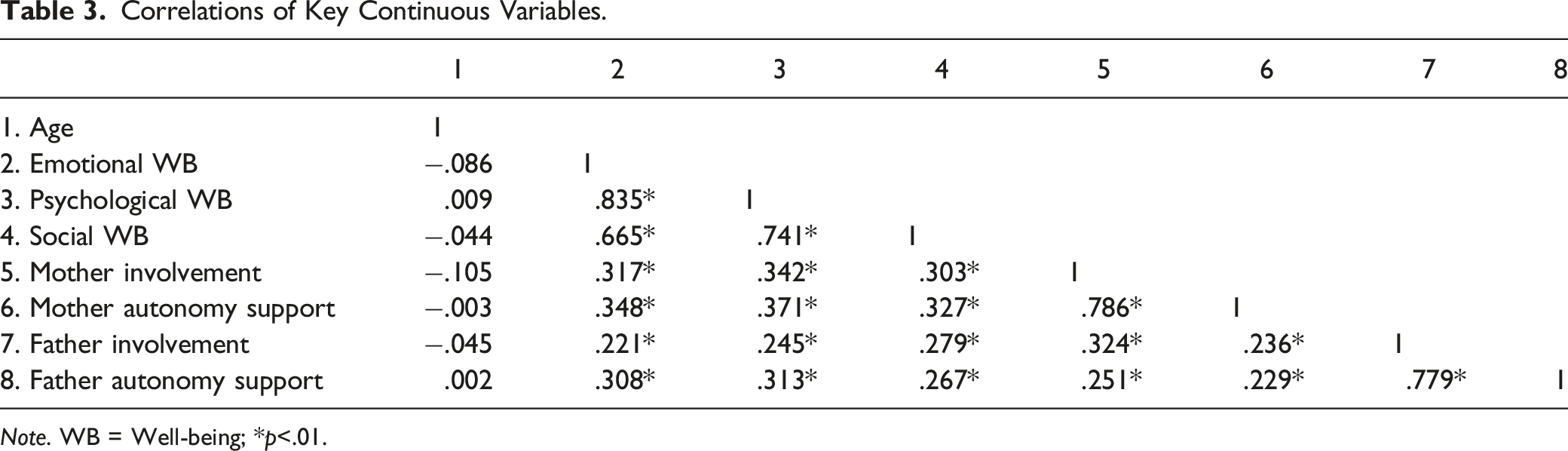
Note. WB = Well-being; *p<.01.
Estimates for the Multinomial Logistic Regression (N =328).
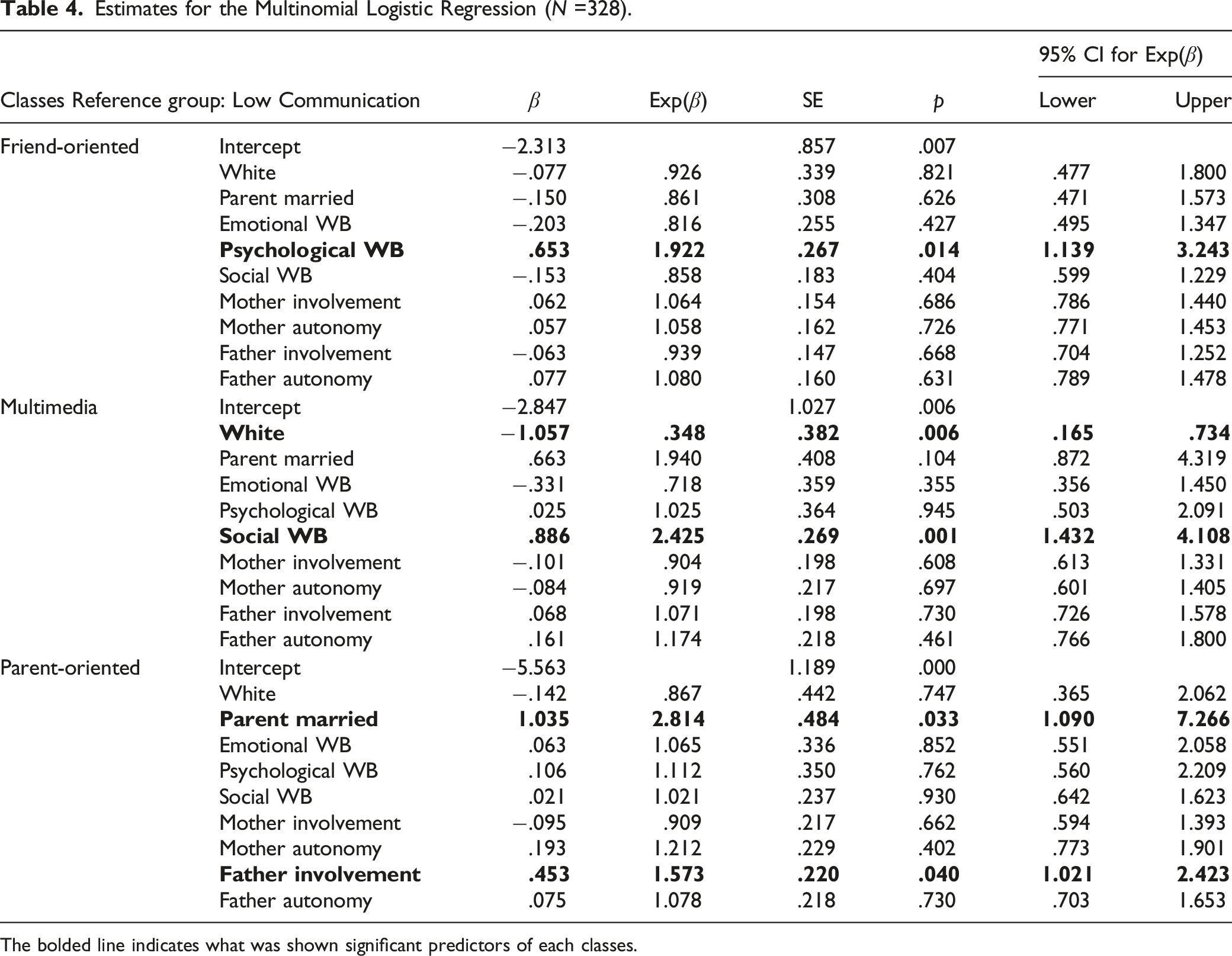
The bolded line indicates what was shown significant predictors of each classes.
Discussion
Building on media multiplexity theory, this study extends the literature on EA’s use of various communication methods specifically to communication with mother, father, and closest friend with a consideration of how communication was associated with perceptions of parenting and well-being. Four patterns of communication with parents and closest friend emerged (Figure 1). Despite anecdotal evidence that EA are only communicating via technology, classes suggest that in fact, EA are using a range of communication methods to stay connected to both parents and peers. In fact, in-person communication was often the most frequent method of communication across all classes regardless of who EAs were communicating with. Related, it is important to provide context for interpreting the patterns of the Low Communication group. These findings represent the average pattern of EAs, and thus they are comparatively infrequent communicators when compared to the other groups, ranging from once in a while to every few weeks across communication methods regardless of whether they were communicating with mother, father, or closest friend. Further, it is important to note that gender, school enrollment, or whether EA were living with parents did not differ across classes. Some studies have found evidence of demographic differences in communication, for example, girls text more than boys (Baron, 2004; Lenhart, 2012), but these findings have not been consistent (Underwood et al., 2012), and are not supported in the current study.
Although EA seem to communicate more frequently with mothers than fathers, in general, the communication patterns between mothers and fathers were similar. EA are using the same tools to connect with both parents, just using them at different rates. For example, the Multimedia group reported using social networking sites frequently but relatively more with mothers (1–2 days per week) than fathers (3–5 days per week), and the Parent-oriented group reported texting frequently, texting with mothers (once a day) relatively more than fathers (1–2 days per week). Overall, EA reported more frequent use of multiple channels to communicate with peers than with parents, suggesting stronger ties with peers than parents. Corresponding to media multiplexity theory (Haythornthwaite, 2005), those who rely on more media to communicate with strong ties (in this study closest friend) had higher social well-being.
This study advances our understanding of EA socialization by examining communication patterns with parents and peers simultaneously. There were notable differences between the tools EA were using to communicate with their closest friend and the tools they were using to communicate with parents. EA more frequently used text messaging and social networking with friends than with parents; only the Multimedia class had a more balanced communication pattern using social networking sites with both parents and friends. The Friend-oriented group, with strong communication ties with peers, had positive psychological well-being (there was no association with social well-being) compared to the Low Communication group, while the Parent-oriented and Multimedia communication groups did not. Overall, the results suggest peers and parents fulfill different needs for EA. This is consistent with previous literature (Crocetti & Meeus, 2014; Laible et al., 2000; Meeus et al., 2002), similar to adolescents, EA are best served by maintaining positive relationships with both parents and peers.
Lastly, parents’ being married or living together was a strong indicator of face-to-face communication with parents and was associated with EA perception of positive father involvement in parenting. Parental cohabitation provides EA with more consistent access to both parents. Previous qualitative research revealed that EA receive advice from their parents about academic and career concerns, work–life balance, social/relationship concerns, and finances. In fact, they often act on this advice because of the perceived utility of the advice, the authority or wisdom of the parent, and perceived parental autonomy support (Carlson, 2014). Talking with their father in-person provides an opportunity to seek advice which in turn is likely related to perceptions of father involvement in parenting.
While this study fills a gap in the literature and makes an important contribution, there are limitations that should be recognized. First, the use of cross-sectional data limits the ability to discuss causation in these relationships. Future research, using longitudinal data would be better able to consider how communication patterns with parents and friends change over time. A longitudinal design would also allow for consideration of prediction and whether for example, communication predicts well-being, vice versa, or whether the relationship is perhaps more bidirectional; in the current study, one moment in time was captured. Second, the measures of communication were limited to the frequency of communication using different methods; quality of communication was not considered. Future studies should explore how the quality of communication impacts well-being as it may matter less how often EA are communicating with parents or friends and matter more what happens during those times. Similarly, while we tried to discern differences in sending and receiving messages, there were no differences in the current study. This is an area for future research to explore who initiates communication and why, and what responses to that communication look like. Third, the sample in the current study had limited demographic diversity. All participants in this study reported on both a mother and a father; future research should recruit EA with different family structures. In addition, inconsistency in findings across studies regarding different patterns of communication by race and gender suggest the need for further investigation of demographic differences in communication; it would be meaningful to explore friend’s gender to see if there are dyadic gender differences in communication. Targeted recruitment would allow researchers to consider race and ethnicity in a more meaningful and nuanced way.
Despite these limitations, the current data are unique in the independent measurement of communication with mother, father, and closest friend; this sets the stage for future research to consider how communication with relationships that might include both strong and weak ties, differs across medium and over time. This should include recognizing that technology and what tools EAs and their parents adopt and use for communication will change over time. Research often reveals that parents and EA have different perceptions of EA and parent behavior (Schwarz et al., 1985; Steinberg, 1990), and perhaps also different perceptions of the impact of those behaviors on well-being. Future research should consider changes in communication across time from the perspective of multiple family members.
This is likely the first study to explore communication patterns of EA across parents (mother and father) and closest friend; and results suggest that EA have different communication patterns with parents and friends. In addition, although EA are heavy technology users, they still reported frequent in-person communication. EA preferred to talk on the phone with parents but text with friends. Findings are consistent with media multiplexity theory, use of multiple media is related to maintaining close relationships and increases EA social well-being; peers were important agents for psychological well-being. Building on these findings, future studies of EA should include parents and peer simultaneously to understand their relationship processes and how these contexts influence their overall well-being.
This nuanced understanding of the ways in which EA well-being is associated with support from both family and friends is essential for promoting overall well-being and more specifically suggests a novel strategy of simultaneously engaging both parents and peers in support of EA, rather than only engaging parents or peers. For example, encouraging positive use of multiple media for communication and connection with parents and peers during EA should be considered a pathway to support overall well-being. This provides essential groundwork for policymakers and practitioners to ensure both parents and peers are recognized as essential for positive developmental outcomes for emerging adults. For instance, programs targeting for EA can be provided with strategies for communicating with parents and also strategies for providing opportunities for parents and friends to positively communicate and connect. With the prevalence of technology use, creating these opportunities for communication and connection are easier than ever before. Results provide insight into the ways in which different technologies can be used to engage both parents and peers in support of EA.
Footnotes
Declaration of Conflicting Interests
The author(s) declared no potential conflicts of interest with respect to the research, authorship, and/or publication of this article.
Funding
The author(s) received no financial support for the research, authorship, and/or publication of this article.
Transparency and Openness Statement
The raw data, analysis code/syntax, and materials used in this study are not openly available. The raw data contained in this manuscript are not openly available due to privacy restrictions set forth by the institutional ethics board. The study does not include a pre-registration plan for data collection and/or analysis.
