







Abstract
Previous studies have shown that sleep quality is associated with risk-taking behaviors, but the psychological mechanism of this relationship is unclear among emerging adults at university. In the present study, we examined the relationship among sleep quality, resilience, and risk-taking behaviors in college students. A sample of 1221 college students (50.4% females, M age = 22.58, SD = 1.28) was enrolled in our survey. The Pittsburgh sleep quality index (PSQI), domain-specific risk-taking scale, and Connor–Davidson resilience scale were used to test sleep quality, risk-taking behaviors, and resilience. The results showed that PSQI scores positively correlated with risk-taking behaviors, and the poor sleep quality increased participants’ risk-taking behaviors by decreasing resilience. The findings suggested that resilience played a mediating role between sleep quality and risk-taking behaviors among college students. The relationships between sleep quality and risk-taking behaviors, and sleep quality and resilience were moderated by gender. Specifically, the association between sleep quality and resilience was greater in females than in males; however, the association between sleep quality and risk-taking behaviors was greater in males than in females. The present study revealed that prevention and intervention aimed at improving sleep are needed to enhance resilience and reduce risk-taking behaviors.
Introduction
A risk-taking behavior is defined as any behavior that puts an individual or others around them at an increased chance of harm, where the individual weighs up the possible outcomes of their actions (Sitkin & Pablo, 1992). Risk-taking can be divided into various domains, including physical, financial, ethical, and recreational behaviors (Shang & Zhang, 2011). Emerging adulthood (approximately 18–25 years) refers to a distinct period of lifetime between adolescence and adulthood, and is generally characterized by higher levels of autonomy relative to adolescence, but fewer responsibilities relative to adulthood (Arnett, 2000). This developmental period is characterized by greater independence and exploration, but also a sense of instability and uncertainty. In addition, there are cultural, contextual, and geographic differences in how this age group experiences emerging adulthood. Specifically, emerging adults have increased autonomy (e.g., reaching legal age for drinking) and often experience changes in living situations, like moving away from direct parental supervision (Arnett, 2007). In addition, they have a fixed source of income and a higher amount of money at their disposal, so they have more opportunities and reasonable reasons to participate in various risk-taking pastimes (e.g., gambling, smoking, drug use, and alcohol drinking). Therefore, it is critical for developmental researchers to understand the relating factors of emerging adults’ risky behaviors.
A significant factor associated with risk-taking behavior among emerging adults at university is sleep (e.g., Murdock et al., 2017; Peach & Gaultney, 2013). Sleep plays a critical role in growth, development, and health of emerging adults. The newfound independence and freedoms that come with attending college may result in college students choosing to forgo sleep to enhance their social activities and work commitments. Prevalence of sleep problems (e.g., insomnia, sleep disorders, and poor sleep quality) among college students vary across studies, ranging from 9.7 to 54.7% (Cheng et al., 2012; Fernández-Mendoza et al., 2009). That is, emerging adults often prove unhealthy sleep behaviors resulting in poor sleep quality and daytime sleepiness (Owens, 2014). In the past decade, a number of studies have documented an association between sleep and adolescent risk-taking behaviors (e.g., McKnight-Eily et al., 2011; Smith et al., 2014; Thomas et al., 2014), while the survey of emerging adults is still an important gap in literatures (Arnett, 2000). Therefore, this study aimed to explore the influencing factors (sleep quality) and internal mechanisms of emerging adults’ risk-taking behaviors at university.
Sleep Quality and Risk-Taking Behaviors
What is wrong with losing a bit of sleep? Most people cut back on sleep now and then, and they generally seem to get away with it without much consequence other than feeling somewhat sluggish, inefficient, and cranky for a time—at least so they think. Emerging adulthood is a time during which many changes occur (Arnett, 2000). One significant change experienced by many emerging adults is the transition to university. Although many students do well in university, others experience insufficient sleep duration (fewer than 8 hours per night) and poor sleep quality, and have a high risk for sleep-related problems (Buboltz et al., 2001). Some evidences suggest that sleep problems, both chronic and acute, actually increased more risky behaviors and the willingness to take potentially dangerous chances (Killgore, 2007; Killgore et al., 2008).
Researchers generally have found that poor sleep quality is associated with multiple risky behaviors in adults, including taking greater risks gambling, alcohol consumption, substance abuse, and serious behavior problems such as violence and delinquency (Breslau et al., 1996; Kamphuis et al., 2012). For example, Wong et al. (2015) found that sleep duration is a significant negative predicator for alcohol-related problems, such as binge drinking and drunken driving. Additionally, a study has shown that young adults who obtain the least amount of sleep on nights report the highest prevalence of alcohol use (Weissman et al., 1997). Individuals classified as “poor-sleeper” have been found to report consuming significantly more alcohol per day relative to individuals who were classified as “optimal-sleepers” (Lund et al., 2010). In a study of a large sample of high school students, for each hour of sleep lost, the odds of participation in risky behaviors such as tobacco, alcohol, and marijuana use increased by 23% (Winsler et al., 2014). A large epidemiological study of a random sample of young adults in Michigan (n = 979) reported that insomnia increased the risk of any illicit drug use disorder and nicotine dependence (Breslau et al., 1996). Therefore, a comprehensive presentation of the associations between sleep quality and risk-taking behaviors among university students is necessary for a holistic understanding of the implications of sleep quality.
Resilience as a Mediator
Resilience refers to a dynamic process of adapting successfully and remaining healthy following exposure to stress and adversity (Seery et al., 2010). Resilience, characterized by a sense of control, commitment, self-efficacy, and dispositional optimism, is an essential psychological resource against many public health issues (Tusaie & Dyer, 2004). Sleep can be viewed as a psychological resource reservoir that is depleted when a person is tired or has not enough sleep and is replenished after a person has had a good night’s sleep or is well rested (Barnes & Van Dyne, 2009). Accordingly, resilience may be an important mediating variable between sleep quality and risk-taking behaviors among emerging adults at university.
A study has observed that, when faced with equal sleep problems, some people suffered from psychological distress while others seemed to function well and were thought to be resilient (McGillivray & Pidgeon, 2015). That is, people who are higher resilience tend to have more positive adaptive behaviors toward sleep abnormalities like insomnia, reduced sleep quality, and nightmares (Seelig et al., 2016). For instance, Arbinaga (2018) studied the relationship between sleep quality and resilience among 116 students. They found that students reporting the poorer sleep quality had lower resilience scores than did students with good sleep quality. A cross-sectional study involving 681 Spanish university students demonstrated that males and females with poor sleep quality, as tested by the Pittsburgh Sleep Quality Index (PSQI), had significantly lower resilience levels (Notario-Pacheco et al., 2011). Other studies have reported that irregular bedtimes, greater sleep disturbance, and less sleep time reduced resilience (Doi et al., 2018; Wang et al., 2020). A longitudinal study assessing children (ages 3–5) to emerging adults (ages 21–26) found that higher sleep rhythmicity and fewer sleep difficulties in childhood were related to higher behavioral control in adolescence, which in turn was related to higher resilience in young adulthood (Wong et al., 2018).
Youth who have good or desirable responses in the face of high risk are described as being resilient (Rutter, 1993). From the perspective of resilience theory, a higher resilient level may be linked to a greater capacity for planning, guiding, and monitoring one’s behavior flexibly in the face of changing circumstances (Campbell-Sills et al., 2006). An examination revealed that students who reported high levels of resilience during university education are less prone to exhibit risky behaviors (Ciydem & Bilgin, 2021). Risk-taking for young adults include smoking, alcohol and substance use, dropping out, poor eating habits, suicidal tendencies, and antisocial behaviors (Genctanirim, 2014). Numerous studies emphasized that a lower resilient level is related to a remarkable rise in rates of substance abuse. Specifically, those with lower resilience have been shown to be more likely to smoke, drink alcohol, and use illegal drugs (Ali et al., 2010; Belcher et al., 2014; Kennedy et al., 2019).
The studies above indicated that both sleep and resilience are related to risky behaviors. Specially, poor sleep quality and low level of resilience are significant warning signs of risk-taking. Therefore, the present study hypothesized that sleep quality would be indirectly related to risk-taking via resilience among university students.
Gender Differences
Some studies have separately examined the gender difference in sleep, resilience, and risk-taking, but no consensus has been observed among them. With regard to sleep, the findings for males and females are inconsistent. Some studies suggested that females tend to report more sleep-related problems (e.g., lower sleep efficiency and higher levels of daytime sleepiness) compared to males (Laberge et al., 2001; Oginska & Pokorski, 2006); other studies have reported contradictory results (e.g., Marks & Monroe, 1976); while no gender differences existed in other studies (Bailly et al., 2004; Park et al., 2001). With regard to resilience, some studies have indicated that male participants reported significantly higher resilience levels than did female participants (Erdogan et al., 2015), whereas others observed no difference in resilience between males and females (Wagnild, 2009). With regard to risk-taking behaviors, Croson and Gneezy (2009) reviewed 10 different experiments designed to examine gender differences in risky preferences. The consensus from the review is that males are more willing to take risks. Other studies have shown similar results: females have proven riskier averse than males, that is, the risky behaviors seem to be more common among males than females (Dohmen et al., 2011).
However, mean differences in sleep, resilience, and risk-taking behaviors between males and females do not necessarily translate into gender differences in the relationship among sleep, resilience, and risk-taking behaviors. Although there are no studies focused on gender differences in the relationship among sleep quality, resilience, and risk-taking behaviors, there is evidence suggesting gender would be a potential moderator. Therefore, will the differences in sleep, resilience, and risk-taking behaviors between males and females lead to differences in the mediation mechanism? In the present study, we tried to test the moderating role of gender in the relationship among sleep quality, resilience, and risk-taking behaviors, to see whether the relationship could be differed from males and females.
The Present Study
The findings reviewed above indicate that: (a) sleep (e.g., sleep quality, sleep duration, and sleep problems) are associated with domain-specific risk-taking behaviors (e.g., gambling, stealing, smoking, and driving while intoxicated), although the findings are inconsistent and few studies focused on emerging adults at university. (b) Resilience is related to sleep-related problems and risk-taking behaviors. These findings suggest that resilience may be a significant mechanism between sleep quality and risk-taking behaviors. Specifically, better sleep quality may facilitate higher resilience, and, subsequently, higher resilience may lead to less risk-taking. The present study investigated the relationship among sleep quality, resilience, and risk-taking behaviors of emerging adults in China. In addition, we examined the moderating role of gender as it was likely that the associations among sleep quality, resilience, and risk-taking behaviors may be different between males and females. The purpose of this study was to reveal the harm of poor sleep quality to the development and provide empirical supports for the prevention and intervention of risk-taking behaviors among college students. Based on the literature review, the following hypotheses are proposed:
sleep quality has both direct and indirect associations with risk-taking behaviors, resilience might function as a mediator in the relationship between sleep quality and risk-taking among emerging adults at university.
The relationship between sleep quality and risk-taking, sleep quality and resilience, and resilience and risk-taking is moderated by gender, and the associations are greater in males than in females.
Methods
Participants
Participants in this study were 1221 (50.4% females) emerging adults who remained enrolled at three mid-sized universities in Xi’an, China. The research used paper and pencil questionnaires to assess the sleep quality, resilience, risk-taking, and demographic variables. Participants ranged in age from 19 to 26 years (M age = 22.58, SD = 1.28). This study was approved by the Ethical Committee for Scientific Research at the authors’ institution. The written informed consent was obtained from the school administers, teachers, and participants.
Measures
Sleep Quality
Sleep quality was assessed using the Chinese version of the Pittsburg Sleep Quality Index (PSQI), which has been validated for use among Chinese students (Liu et al., 1996). The PSQI is an 18-item self-report questionnaire used to evaluate participants’ overall sleep quality over the past month. Some of the items require open-ended responses that are recoded using a four-point scale; other questions require that respondents rate items using four-point Likert scales. These 18 items are grouped into seven components (Buysse et al., 1989). Subjective sleep quality has one item: “How would you rate your sleep quality?” Sleep latency has two items: “How long (in minutes) did it usually take you to fall asleep each night?” and “How often have you had trouble sleeping because you could not get to sleep within 30 minutes?” Sleep duration has one item: “How many hours of actual sleep did you get at night?” (<5 h scored 3 points, 5–6 h scored 2 points, 6–7 h scored 1 point, and >7 h scored 0 points). Sleep efficiency (time spent asleep divided by total recording period) has three items: “When have you usually gone to bed at night?” “When have you usually gotten up in the morning?” and “How many hours of actual sleep did you get at night? (This may be different than the number of hours you spend in bed).” Sleep disturbance has nine items, such as “How often have you had trouble sleeping because you wake up in the middle of the night or early morning or because you have to get up to use the bathroom”. Use of sleep medication has one item: “How often have you taken medicine (prescribed or over the counter) to help you sleep?” Daytime dysfunction has two items: “How much of a problem has it been for you to keep up enough enthusiasm to get things done?” and “How often have you had trouble staying awake?” Each component is weighted equally on a 0–3 scale, with higher scores indicating worse quality for that component. The seven component scores are then summed to yield a global PSQI score, which has a range of 0–21 with higher scores indicating poorer sleep quality. In the present study, reliability analyses indicated that the sleep efficiency and use of sleeping medication were weakly or negative correlated with the total scale and diminished the reliability of the scale. We therefore omitted the sleep efficiency and use of sleeping medication from further analyses. Together, the remaining five subscales were used as indicators of the latent variable of sleep quality. The Cronbach’s alpha coefficient was 0.80 for the total scales.
Resilience
Resilience was assessed using the Connor-Davidson Resilience Scale (CD-RISC; Connor & Davidson, 2003). Previous studies showed that the validity of CD-RISC in a Chinese sample is adequate (Yu & Zhang, 2007). The scale consists of 25 items measuring three components of resilience: tenacity (13 items, e.g., “I am not easily discouraged by failure”; α = 0.90), self-improvement (8 items, e.g., “I tend to bounce back after illness or hardship”; α = 0.83), and optimism (4 items, e.g., “I can see the humorous side of things”; α = 0.73). The Cronbach’s alpha coefficient was 0.93 for the overall scale. Each item is rated on a 5-point Likert scale ranging from 0 (not true at all) to 4 (true nearly all of the time). Participants were asked to rate according to the extent to which they agree with each item as it applied to them over the previous month. Higher scores indicated higher levels of resilience. In the current study, mean scores on the three subscales were used as indicators of the latent construct of resilience.
Risk-Taking Behaviors
Risk-taking behaviors were measured using a revised version of domain-specific risk-taking (DOSPERT) scale, which has been shown to be valid and reliable in Chinese students (Shang & Zhang, 2011). The DOSPERT scale contains 33 self-report items assessing the likelihood of engaging in risky behaviors. The specific behaviors represent four domains: health/safety (10 items, e.g., “Not wearing a seatbelt when being a passenger in the front seat”; α = 0.85), ethical (10 items, e.g., “Cheating on an exam”; α = 0.86), recreational (8 items, e.g., “Going down a ski run that is beyond your ability or closed”; α = 0.76), and social (5 items, e.g., “Arguing with a friend about an issue on which he/she has a very different opinion”; α = 0.71). All items are rated on a 5-point Likert scale ranging from 1 (extremely unlikely) to 5 (extremely likely) with higher scores indicating greater risk-taking. Cronbach’s alpha coefficient was 0.92 for the overall scale. In the present study, means scores on the four domains were used as indicators of the latent construct of risk-taking behaviors.
Analytic Strategy
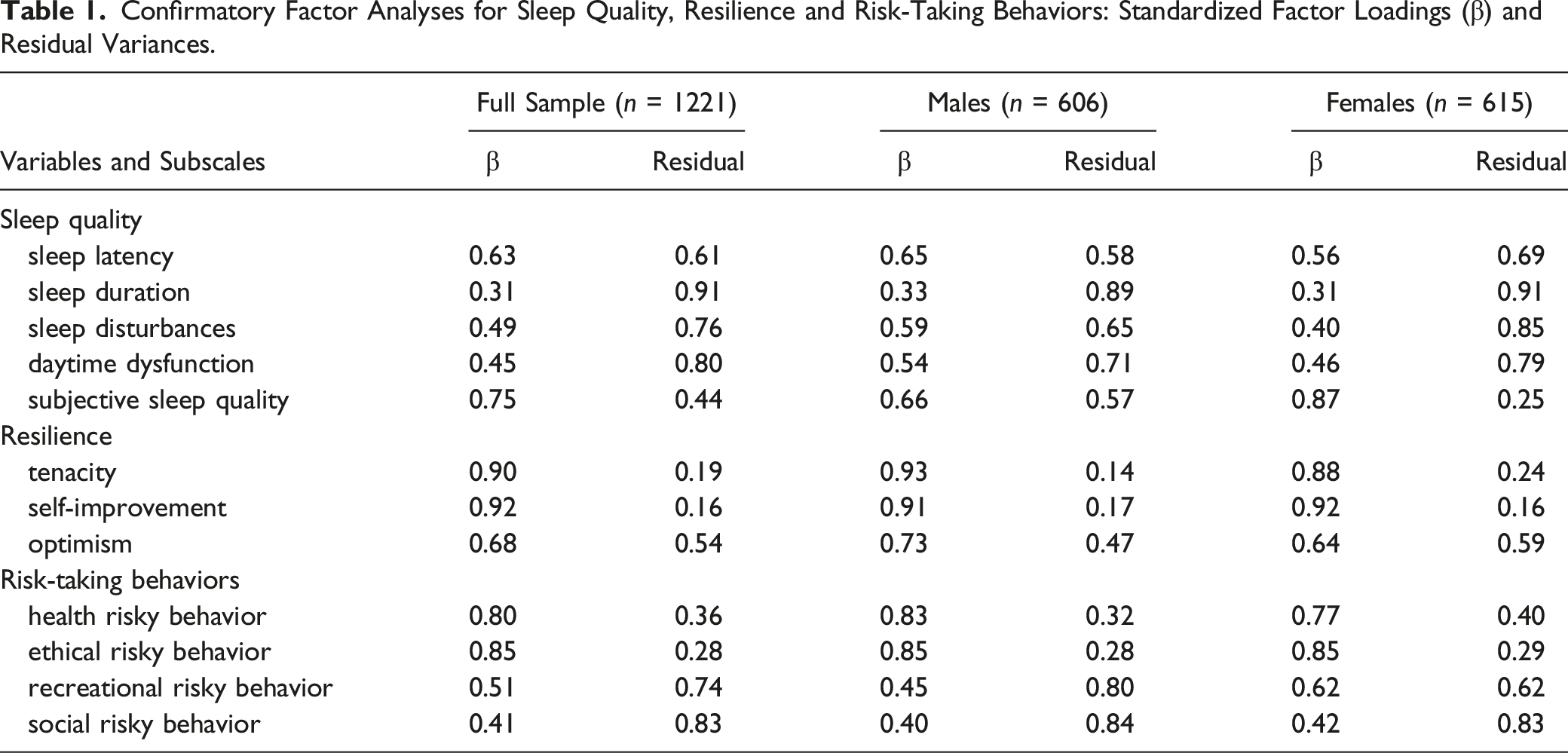
As the first step, to test the measurement models of the latent variables in this study, the latent constructs of the sleep quality, resilience, and risk-taking behaviors were successively tested by confirmatory factor analyses.
In the second step, mean and standard deviation (SD) were used to describe the total and subscale scores of PSQI, CD-RISC, and risk-taking behaviors. In order to test sampling bias, we ran a series of t-test to examine the differences of subscale scores in PSQI, CD-RISC, and risk-taking behaviors between males and females. Then, Pearson correlation analysis explored the relationships among sleep quality, resilience, and risk-taking behaviors subscales.
In the third step, the structural equation model (SEM) bootstrap method was employed to examine the mediating role of resilience on the relationship between sleep quality and risk-taking. In order to test the significance of the mediating role, we conducted bias-corrected bootstrap tests with a 95% confidence interval.
Finally, the multiple-group analyses were used to test the gender differences of the structure pathway. The chi-square difference test (Δχ2) was performed to compare whether the model was significantly different between males and females. A nonsignificant difference in the chi-square analysis would indicate that the model fit equally well for different groups (e.g., males and females) and that the regression paths did not vary in magnitude between different groups. A significant difference in the chi-square analysis indicated nonequivalence across groups and requires follow-up tests to determine which individual paths in the model differed significantly across the groups.
All statistical analyses were performed using SPSS Version 25.0 and Mplus 7.0 (Muthén & Muthén, 2012). The model fit was assessed through the chi-square ratio (χ2/df), comparative-fit index (CFI), Tucker-Lewis’s index (TLI), and root mean square error of approximation (RMSEA). The general cutoffs for accepting a model are equal to or more than 0.90 for TLI and CFI, and equal to or less than 0.08 for RMSEA (Hu & Bentler, 1999).
Results
Confirmatory Factor Analyses
Confirmatory Factor Analyses for Sleep Quality, Resilience and Risk-Taking Behaviors: Standardized Factor Loadings (β) and Residual Variances.
Preliminary Analyses
Correlations and Gender Difference of the Study Variables (n = 1221).
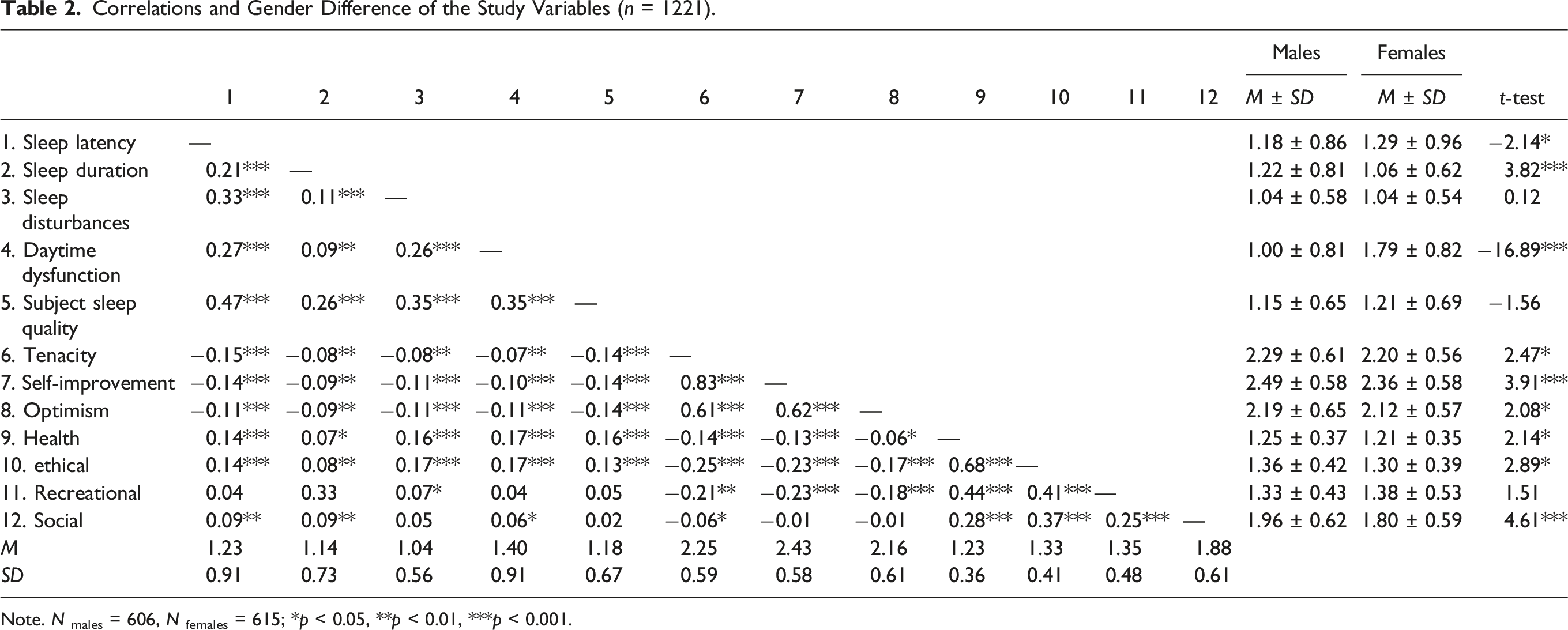
Note. N males = 606, N females = 615; *p < 0.05, **p < 0.01, ***p < 0.001.
Testing for Mediation Role of Resilience
To assess the potential mediating role of resilience between sleep quality and risk-taking behaviors, we performed the structural equation model analyses in Mplus 7.0 to test the hypothetical structural model (see Figure 1). The model fit the data well, χ2/df = 3.55, CFI = 0.97, TLI = 0.96, RMSEA = 0.05. The results showed that the PSQI scores was positively related to risk-taking behaviors (β = 0.23, p < .001), and negatively related to resilience (β = −0.22, p < .001). Resilience significantly negatively related risk-taking behaviors (β = −0.22, p < .001). The bias-corrected bootstrap tests with a 95% CI were used to test the mediating role of resilience. The association was regarded as significant if the 95% CI did not include zero. The results showed that the total association from sleep quality to risk-taking was significant (β = 0.16, p < .001, [95% CI (0.02, 0.05)]). Bootstrap method analyses for indirect associations indicated a significant indirect path from sleep quality to risk-taking behaviors through resilience (β = 0.03, p < .001, [95% CI (0.11, 0.22)]). Therefore, resilience played a mediating role between sleep quality and risk-taking, and the effect size was 18.75% (Figure 1). Mediating effect model.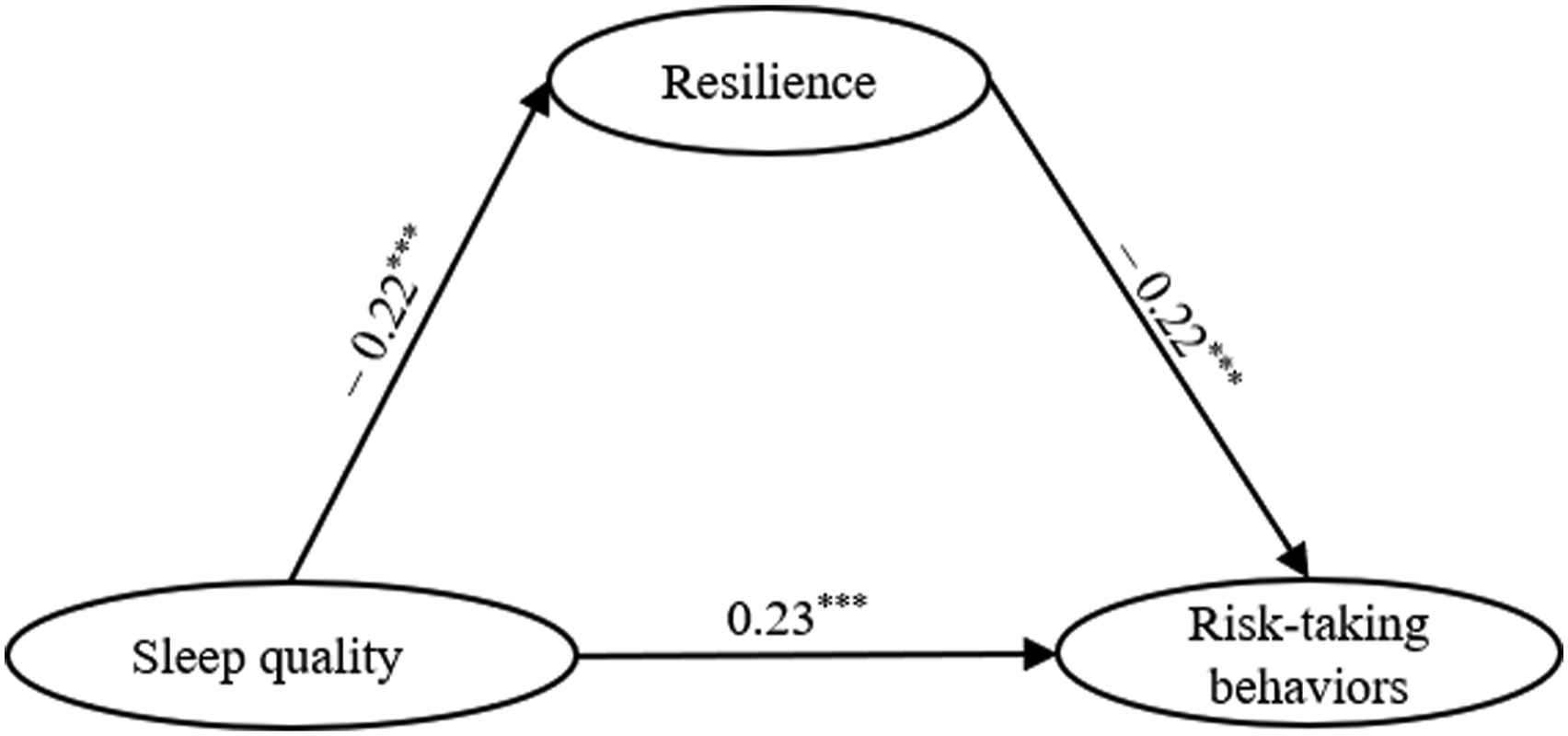
Multiple-Group Analyses
The structural equation model was separately tested in males and females to analyze the mediating role of resilience between sleep quality and risk-taking. The baseline model provided acceptable model-data fit indices for the both groups, indicating that one common model is plausible across the gender (males: χ2/df = 2.41, CFI = 0.97, TLI = 0.96, RMSEA = 0.05; females: χ2/df = 3.13, CFI = 0.95, TLI = 0.94, RMSEA = 0.06). Figure 2 described full path in the two groups under study. The analyses found that sleep quality was positively related to risk-taking behaviors (males: β = 0.28, p < .001; females: β = 0.15, p = .02) and negatively related to resilience (males: β = −0.16, p = .01; females: β = –0.30, p < .001). Resilience was negatively related to risk-taking behaviors (males: β = −0.24, p < .001; females: β = −0.23, p < .001). As shown in Table 3, the total association from sleep quality to risk-taking behaviors (males: β = 0.22, p < .001, [95% CI (0.14, 0.34)]; females: β = 0.11, p = .001, [95% CI (0.05, 0.18)]), and the indirect association from sleep quality to risk-taking behaviors through resilience were significant in both groups (males: β = 0.03, p = .03, [95% CI (0.01, 0.06)]; females: β = 0.04, p = .001, [95% CI (0.02, 0.06)]). These results indicated that resilience played mediating role between sleep quality and risk-taking, and the effect size was 13.64% in males and 36.36% in females. Mediating effect model cross gender difference. (Note. The data outside the parentheses correspond to the males, and the data inside the parentheses correspond to the females). Bia-Corrected Bootstrap Test in Mediating Effect. Note. 95% CI = 95% confidence interval.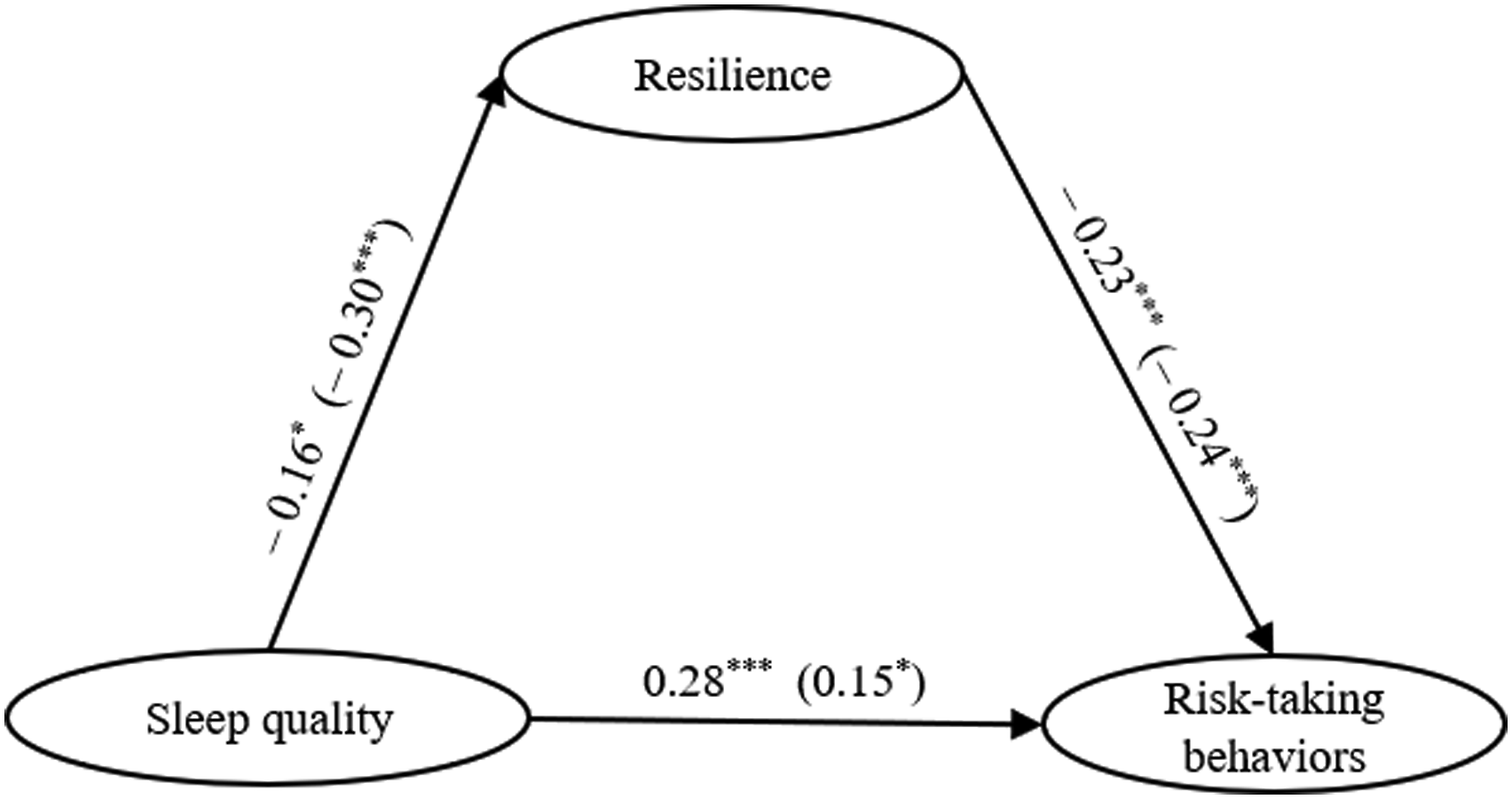
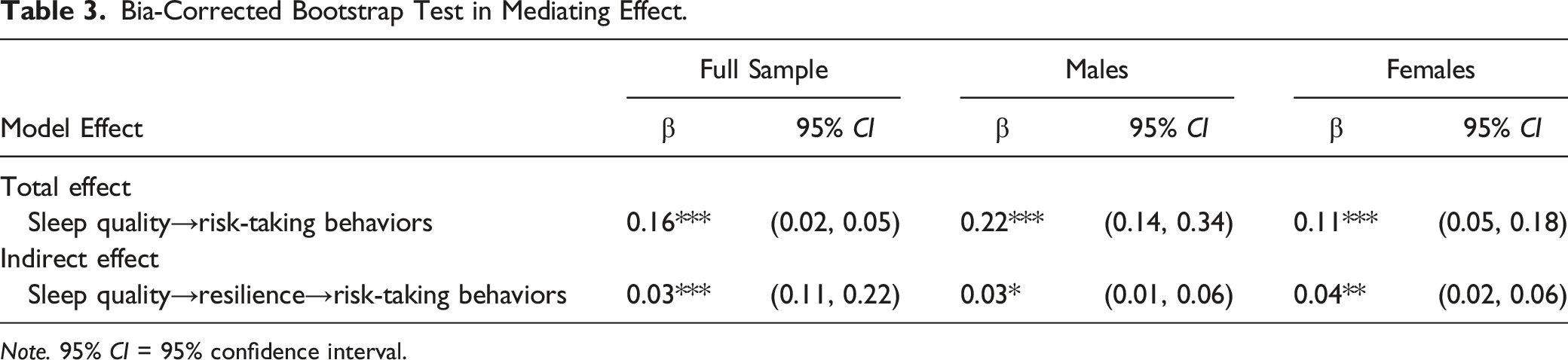
Multi-group SEM analyses were performed to examine the possible moderating effects of gender on the structural paths. First, we tested whether a significant structural difference exists between males and females. The unconstrained model was then compared to a partially constrained model, where all the regression coefficients were set to be equal across the two groups. The results showed that the chi-square difference between the partially constrained model and the unconstrained model was significant (Δχ2 = 43.91, Δdf =12, p < .001), indicating that there were significant differences between males and females. Second, critical ratio (CR) tests were conducted to pinpoint which paths in the structural model are significantly different across the two investigated samples. The results indicated that there were two significantly different paths: sleep quality→resilience (CR = 12.73) and sleep quality→risk-taking behaviors (CR = 67). In sum, the relationship between sleep quality and resilience and sleep quality and risk-taking behaviors were moderated by gender. Specifically, the association of sleep quality to resilience was greater in females than in males; however, the association of sleep quality to risk-taking behaviors was greater in males than in females (Table 3, Figure 2).
Discussion
During the life stage of emerging adulthood, college students experienced continuous (re)negotiations with themselves and environments over the transition from late adolescence to early adulthood to solve internal and external conflicts, which may, in turn, heighten the risk for sleep problems and mental health issues over the college years. The major goal of the present study is to investigate the mediating role of resilience in the relationship between sleep quality and risk-taking among emerging adults at university. Another goal is to examine the moderating role of gender in the relationship among sleep quality, resilience, and risk-taking behaviors.
First, the results of the study supported Hypothesis 1. The mediating analyses revealed that resilience played a mediating role between sleep quality and risk-taking behaviors among emerging adults at university. That is, sleep quality has both direct and indirect associations with risk-taking behaviors. The direct association found that the poorer sleep quality these students faced, the higher their odds were of showing risk-taking behaviors. This finding is consistent with previous studies that have shown a significant association between sleep duration and delinquency (Clinkinbeard et al., 2011), insufficient sleep and a greater incidence of a variety of risky behaviors (McKnight-Eily et al., 2011). College youth undergo dramatic developmental changes in biological, psychological, and social systems (Arnett, 2014). The poor sleep quality reduces the perception of individual risk, lead to an increased willingness to participate in risky behaviors, and thus increase the probability and frequency of various risky behaviors (Backman et al., 2015; Barnes & Meldrum, 2015).
At the same time, previous studies have shown that both sleep and resilience are important influencing factors of risk-taking behaviors of individuals (Breslau et al., 1996; Kamphuis et al., 2012; McGillivray & Pidgeon, 2015; Seelig et al., 2016). The results of the indirect association indicate that resilience was one of the key psychological process between sleep quality and risk-taking behaviors, and the effect size was 18.75%. The present study reveals that both sleep quality and resilience are significant predictive factors of risk-taking behaviors among emerging adults at university. Existing studies have separately explored the relationship between any two of the three variables of sleep quality, resilience, and risk-taking behaviors (Arbinaga, 2018; Belcher et al., 2014; Womack et al., 2013), but none have examined all three in a single study. To our knowledge, this is the first study to test this assumption among college students in China. Previous studies suggested that individuals with a high level of resilience have more cognitive flexibility to alleviate risky factors (Ali et al., 2010) and sleep-related problems symptoms and bounce back from sleep deprivation or adversity much sooner (Matzner et al., 2013). Additionally, people with high resilience may have more psychological advantages and accessible resources, such as optimism, self-esteem, self-confidence, active coping strategies, and social support (Connor & Davidson, 2003). Resilience is regarded not only as a byproduct of exposure to moderate adversity (Liu et al., 2017), it also offers protective factors, such as the ability to maintain a close relationship with other capable adults, emotional regulation, self-efficacy, self-control, motivation, and problem-solving skills that counteract potential risks and vulnerabilities (Gray et al., 2015). Thus, resilience can buffer or mitigate the associations of poor sleep quality on risk-taking behaviors and was seen to facilitate successful adaptation in the present study.
Second, the results supported our Hypothesis 2. The study revealed that the moderating role of the gender indicated a significant structural difference between males and females. Specifically, the direct path of sleep quality to risk-taking behavior was moderated by gender, and the associations were greater in males than in females. The relationship between sleep quality and resilience was also moderated by gender, and the associations were greater in females than in males. However, the relationship between resilience and risk-taking behavior was not moderated by gender. We found that although the mediation pathway from sleep quality to risk-taking behavior through resilience was significant for both males and females, the strength of the mediation role was significantly stronger for females than males. The difference in the indirect associations across gender was attributable to the difference in the path between sleep quality and resilience. Our analyses offer a complex description of the role gender in the association among sleep quality, resilience, and risk-taking behaviors.
Based on the findings above, the present study provides significant implications for the protection of college students’ health and for intervention on their behalf. Sleep, as an individual factor, is closely related to risk-taking behaviors. Emerging adults—particularly those at university—may have increased autonomy in setting their sleep–wake patterns (Orzech et al., 2011; Zimmermann, 2011). Furthermore, unlike high school where class start times tend to be fixed from day-to-day, university students have some flexibility in selecting class schedules, which may have great implications for sleep–wake patterns and overall sleep quality (Onyper et al. 2012). Typically, risk-taking may threaten and impair the physical and mental health of individuals, lead to unintentional injury, and affect social security. Therefore, these results indicate that it is necessary to pay attention to and improve the sleep quality of college students to reduce individual risk-taking behaviors. Adequate sleep promises to promote the healthy development of individuals and society. The results of the present study further reveal the important influence of sleep on resilience and risk-taking of college students, which suggests that research is needed to propose effective ways to improve sleep quality. In order to have a good life in adulthood, increasing resilience in the face of risky factors is an important intervention approach that emphasizes strengthening protective factors and reducing risk factors. In addition, the present study also found that the relationship among sleep quality, resilience, and risk-taking behaviors was moderated by gender. It reminded us that the impact of sleep quality on males and females was different. Therefore, when carrying out mental health activities and crisis intervention, different implementations should be provided according to the gender of students.
Limitations and Future Directions
Although some limitations of the current study may restrict generalization of our findings, they simultaneously shed light on future directions for research. First, this is a cross-sectional study. Although the analyses verified the research hypotheses, the cross-sectional nature of the data limits understanding of the temporal relations and developmental progression among sleep quality, resilience and risk-taking. To understand the complex interplay among sleep quality, resilience, and risk-taking behaviors, longitudinal studies are necessary. Second, measurement of all indicators was collected by the self-rating scale in the present study. While self-report measures are valid and appropriate in many circumstances, the results may be contaminated by social desirability effect. In addition, self-reported sleep data represent individuals’ subjective perceptions of their sleep. Future research should use objective sleep measurements (e.g., actigraphy recordings) to determine whether the patterns of associations found in the present study are repeatable. Third, our study was based on a sample of college students in the same city, which may not be abundant to represent all college students or all emerging adults. Future research should examine the pattern of results found in the present study with diverse populations, including high school students, emerging adults who do not attend university, and the elderly. Finally, neurophysiological evidence could potentially be considered as objective evidence for examining the effect of sleep (Galván, 2020). Brain activity and connectivity may also influence sleep quality, which should also be considered in future mediation and moderation models.
Conclusions
Overall, the findings of this study indicated that college students with poorer sleep quality have more risk-taking behaviors. Resilience can mediate the relationship between sleep quality and risk-taking behaviors. Furthermore, gender plays a moderating role in the relationships between sleep quality and resilience, as well as between sleep quality and risk-taking behaviors. Specifically, females showed stronger negative relationship between sleep quality and resilience, while males showed stronger positive relationship between sleep quality and risk-taking behaviors. These results suggested that poor sleep quality may have greater association with resilience in females than in male, but the association with risk-taking behaviors is greater in males than in females.
Footnotes
Author Contributions
Xiaoting Liu, contributed to conception and design, acquisition, analysis, and interpretation; gave final approval; and agrees to be accountable for all aspects of work ensuring integrity and accuracy. Xiaoli Wang, drafted manuscript, critically revised manuscript. Guoqiang Wu, contributed to analysis. Lijin Zhang, agrees to be accountable for all aspects of work ensuring integrity and accuracy.
Declaration of Conflicting Interests
The author(s) declared no potential conflicts of interest with respect to the research, authorship, and/or publication of this article.
Funding
The author(s) disclosed receipt of the following financial support for the research, authorship, and/or publication of this article: This work was supported by the Social Science Foundation of Xinjiang Uygur Autonomous Region (21BJYX170); and the Philosophy and Social Science Foundation of Gansu Province (2021YB100)
Open Practices
The raw data, materials and analysis for this study are not openly available but are available upon request to the corresponding author. The design, data collection and analysis were not pre-registered.
